


MODEL PORTFOLIO
THE GIST
NEWS AND FEATURES
Global Philippines Fine Living
INSIGHTS
INVESTMENT STRATEGY
Economy Stocks Bonds Currencies
THE BASICS
Investment Tips Explainers Retirement
WEBINARS
2024 Mid-Year Economi Briefing, economic growth in the Philippines
2024 Mid-Year Economic Briefing: Navigating the Easing Cycle
June 21, 2024
Investing with Love
Investing with Love: A Mother’s Guide to Putting Money to Work
May 15, 2024
retirement-ss-3
Investor Series: An Introduction to Estate Planning
September 1, 2023
View All Webinars
DOWNLOADS
grocery-2-aa
Inflation Update: Target breached
DOWNLOAD
Container ship carrying container boxes import export dock with quay crane. Business commercial trade global cargo freight shipping logistic and transportation worldwide oversea concept. Generative AI
Economic Updates
Philippines Trade Update: Wider deficit on strong imports
DOWNLOAD
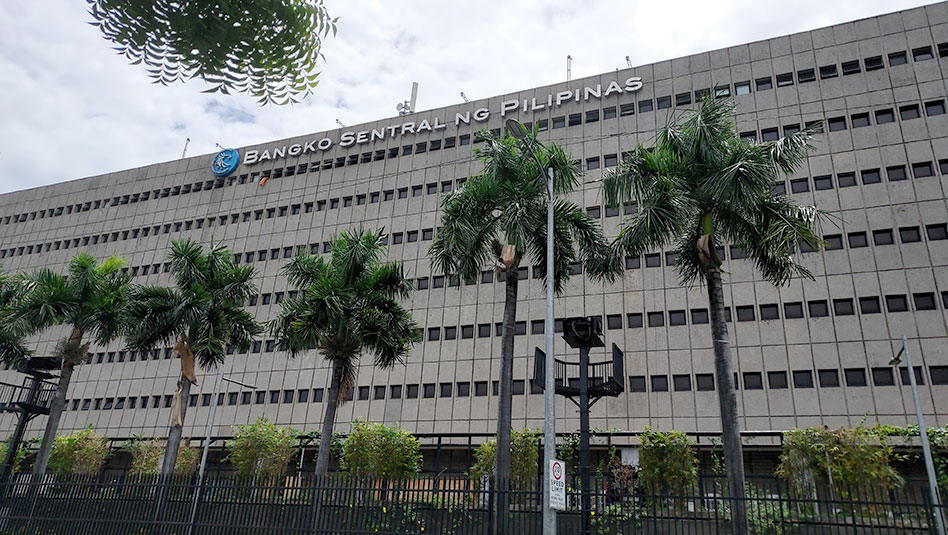
Frick collection with palm trees 
Economic Updates
Policy Rate Updates: Policy rate updates to reassure 
DOWNLOAD
View all Reports
Metrobank.com.ph How To Sign Up
Follow us on our platforms.

How may we help you?

TOP SEARCHES
  • Where to put my investments
  • Reports about the pandemic and economy
  • Metrobank
  • Webinars
  • Economy
TRENDING ARTICLES
  • Investing for Beginners: Following your PATH
  • On government debt thresholds: How much is too much?
  • Philippines Stock Market Outlook for 2022
  • Deficit spending remains unabated

Login

Access Exclusive Content
Login to Wealth Manager
Visit us at metrobank.com.ph How To Sign Up
Access Exclusive Content Login to Wealth Manager
Search
MODEL PORTFOLIO THE GIST
NEWS AND FEATURES
Global Philippines Fine Living
INSIGHTS
INVESTMENT STRATEGY
Economy Stocks Bonds Currencies
THE BASICS
Investment Tips Explainers Retirement
WEBINARS
2024 Mid-Year Economi Briefing, economic growth in the Philippines
2024 Mid-Year Economic Briefing: Navigating the Easing Cycle
June 21, 2024
Investing with Love
Investing with Love: A Mother’s Guide to Putting Money to Work
May 15, 2024
retirement-ss-3
Investor Series: An Introduction to Estate Planning
September 1, 2023
View All Webinars
DOWNLOADS
grocery-2-aa
Inflation Update: Target breached
April 7, 2026 DOWNLOAD
Container ship carrying container boxes import export dock with quay crane. Business commercial trade global cargo freight shipping logistic and transportation worldwide oversea concept. Generative AI
Economic Updates
Philippines Trade Update: Wider deficit on strong imports
March 27, 2026 DOWNLOAD
Frick collection with palm trees 
Economic Updates
Policy Rate Updates: Policy rate updates to reassure 
March 26, 2026 DOWNLOAD
View all Reports

Archives: Business World Article

Inflation cools to 4.1% in November

Inflation cools to 4.1% in November

Headline inflation cooled to its slowest pace in 20 months in November amid easing prices of food as well as restaurant and accommodation services, the Philippine Statistics Authority (PSA) said on Tuesday.

Preliminary data from the PSA showed headline inflation climbed 4.1% in November, slower than 4.9% in October and 8% in November 2022.

This was the slowest inflation rate in 20 months or since the 4% seen in March 2022.

Headline inflation rates in the PhilippinesIt was also lower than the median estimate of 4.4% in a BusinessWorld poll of 15 analysts conducted last week, and at the lower end of the 4-4.8% forecast range of the Bangko Sentral ng Pilipinas (BSP).

However, November inflation was still above the 2-4% target for the 20th straight month.

Month on month, the consumer price index was nil in November from -0.3% in the previous month.

For the January-to-November period, inflation averaged 6.2%, faster than 5.6% in the same period a year ago. This is still above the BSP’s full-year baseline forecast of 6%.

“(Inflation) is going down and without shocks that will happen in the next three weeks, we will see inflation going down,” National Statistician Claire Dennis S. Mapa said in mixed English and Filipino at a briefing on Tuesday.

Core inflation, which discounts volatile prices of food and fuel, also eased to 4.7% in November from 5.3% in October and 6.5% in November 2022.

In the eleven months to November, core inflation averaged 6.8%.

“However, there are risks such as rice and oil prices. The situation in November was good because prices of gasoline and diesel have been going down. But we will see what the prices are this December,” Mr. Mapa said.

He said the sharp slowdown in November inflation was mainly due to easing food prices, as the heavily weighted food and non-alcoholic beverages index fell to 5.7% in November from 7% in the previous month.

Food inflation decelerated to 5.8% in November from 7.1% in October and 10.3% a year prior. This was the slowest rise in food inflation since 5.2% in May 2022.

Mr. Mapa said the deceleration in food inflation was mainly due to the 2% decline in the vegetables, tubers, plantains, cooking bananas and pulses index, a reversal from the 11.9% growth a month ago.

The slower annual increases in fish and other seafood (4.9% in November from 5.6% in October) and sugar, confectionery and desserts (1.5% from 4.9%) also contributed to the downward trend in food inflation.

On the other hand, higher year-on-year growth rates were observed in the indices of rice (15.8% from 13.2%), and milk, other dairy products and eggs (7.6% from 7.5%).

The average price of regular milled rice last month went up to PHP 46.73 per kilo from PHP 45.42 per kilo in October. The average price of well-milled rice also rose to PHP 51.99 per kilo in November from an average of PHP 51 per kilo a month earlier.

The slowdown in November inflation is also attributed to the 0.8% decrease in the transport index from the 1% growth a month ago. The restaurants and accommodation services index also slowed to 5.6% in November from 6.3% in the previous month.

In November alone, oil companies cut pump prices by PHP 1.90 a liter for gasoline, PHP 4.45 a liter for diesel, and PHP 3.3 a liter for kerosene, data from the Energy department showed.

Meanwhile, inflation in the National Capital Region slowed to 4.2% in November from 4.9% in October, while inflation in areas outside Metro Manila eased to 4.1% from 4.9% in the prior month.

The November inflation rate for the bottom 30% of income households slowed to 4.9% from 5.3% in October and 9.2% last year. The 10-month average stood at 6.9%.

The National Economic and Development Authority (NEDA) in a statement said the slower November inflation can be attributed to the timely implementation of measures to stabilize food supply amid domestic and external headwinds.

“With the right interventions in place, including the proper and timely deployment of trade policy, we are confident that we can effectively manage inflation and prevent unnecessary upticks in prices of goods and commodities to safeguard the purchasing power of Filipino families, especially those from the most vulnerable sectors,” NEDA Secretary Arsenio M. Balisacan said.

‘Sufficiently tight’
Meanwhile, the Bangko Sentral ng Pilipinas (BSP) said it needs to “keep monetary policy settings sufficiently tight until a sustained downtrend in inflation becomes evident.”

“The latest inflation outturn is consistent with the BSP’s projections that inflation will likely moderate over the near term due to easing supply-side price pressures and negative base effects,” it said in a statement.

The BSP said the balance of risks to the inflation outlook “still leans significantly towards the upside.”

“Key upside risks are associated with the potential impact of higher transport charges, electricity rates, and international oil prices, as well as higher-than-expected minimum wage adjustments in areas outside the National Capital Region,” it said.

A weaker-than-expected global recovery and government measures to mitigate the impact of El Niño could further reduce inflation.

The BSP sees inflation averaging at 6% in 2023 and 3.7% in 2024, before falling further to 3.2% in 2025.

“The BSP will continue to monitor inflation expectations and second-round effects and take appropriate action as needed to bring inflation back to the target, in keeping with the BSP’s price stability mandate,” it said.

Last month, the BSP kept its target reverse repurchase rate at a 16-year high of 6.5%. The BSP raised borrowing costs by a total of 450 basis points (bps) from May 2022 to October 2023 to tame inflation.

Bank of the Philippine Islands (BPI) Lead Economist Emilio S. Neri, Jr. said it is possible for inflation to fall below 4% in December and may even reach 3% in the first quarter of 2024 in the absence of supply shocks.

However, Mr. Neri said inflation could rebound to 4% or higher in the second quarter, especially if the effect of El Niño is worse than expected, Mr. Neri said.

“Rice prices are likely to remain the primary factor contributing to inflation in the near future. Local supply continues to be at a level where rice inflation is usually double digit… The price of rice may stay high as long as supply stays at this level,” he said.

Globally, rice supply remains a concern due to a decline in production in major exporting countries like India. The Philippines imports around 15% of its rice requirement every year.

Mr. Neri said BPI sees inflation averaging at 6% this year, before easing to 3.7% in 2024.

“It might be premature to expect rate cuts in the near future despite the improving outlook for inflation. The BSP might need to keep interest rates elevated for most of next year especially given the possibility of an inflation rebound in the second quarter of 2024,” he said.

HSBC economist for ASEAN Aris Dacanay said the consistent inflation downtrend should give the BSP room to pause at the Dec. 14 Monetary Board meeting, but rate cuts are still not on the table as there are many upside risks to inflation. 

“That said, we continue to expect the BSP to stay pat for longer based on inflation — more so with the need to mind the gap between the Fed and the BSP policy rates to help support the peso,” he said.

The US central bank kept borrowing costs unchanged at 5.25-5.5% for the second straight month in November. This was after it hiked policy rates by 525 bps from March 2022 to July 2023.

Following the release of the November inflation data, the peso closed at PHP 55.32 per dollar on Tuesday, strengthening by two centavos from its PHP 55.34 finish on Monday.

This was the peso’s strongest close since its PHP 55.19 per dollar finish on Aug. 2.

“We only expect the BSP to begin its easing cycle right after the Fed does its first rate cut. Our baseline view is for the Fed to do its first policy rate cut in the third quarter of 2024,” Mr. Dacanay added. — By Keisha B. Ta-asan, Reporter


World Bank keeps PH growth forecast for this year, 2024

World Bank keeps PH growth forecast for this year, 2024

The World Bank maintained its Philippine gross domestic product (GDP) growth outlook for this year and 2024.

In its latest Philippine Economic Update, the multilateral lender said it expects GDP to expand by 5.6% this year and by 5.8% next year, unchanged from its projections last October.

The World Bank’s forecasts are below the government’s 6-7% and 6.5-8% growth targets for this year and 2024, respectively.

“We haven’t changed our projections (from) October. The reason is we haven’t seen many shocks or policy surprises, which is by itself, good news,” World Bank Philippines Senior Economist Ralph van Doorn said at a media briefing on Tuesday.

The Philippine economy grew by 5.9% in the third quarter, bringing the nine-month average GDP growth at 5.5%.

The World Bank said an improvement in domestic demand is expected to fuel a “modest increase” in GDP growth to an average of 5.8% in 2024 to 2025.

“Services are expected to drive growth due to the ongoing recovery of the tourism sector and the consistent performance of the IT-BPO industry, which is likely to spur job creation, increase household incomes, and benefit consumption and tourism-adjacent industries,” it added.

On the demand side, the World Bank said that household spending will remain the main growth driver amid a strong labor market, steady remittances, and easing inflation.

Meanwhile, investments are expected to slow this year before picking up next year until 2025 thanks to recent investment reforms and the Philippine government’s “commitment to public investment despite ongoing fiscal consolidation.”

World Bank Country Director for the Philippines Ndiame Diop said that the Philippines continues to outperform many of its peers in the region in terms of growth.

“Despite the challenging global environment that resulted in a slowdown for many countries in the region, the Philippines stands out as among the top performers. This achievement can be attributed to the country’s resilience, resilient domestic demand, which helps mitigate the impact of external headwinds,” he said.

“We anticipate that the Philippine economy will continue to exhibit strong performance in the next few years. This growth will be propelled by a healthy labor market and declining inflation, which will stimulate robust household consumption,” Mr. Diop added.

However, Mr. Van Doorn said that risks are tilted to the downside and could dampen growth, citing external factors such as geopolitical tensions, trade restrictions on agricultural products, and persistent inflation.

On the domestic front, El Niño and other climate risks could also threaten food supply, he added.

To sustain growth in the long term, the World Bank said the Philippines should focus on structural reforms to boost productivity and improve its competitiveness.

“In the medium term, it’s important to implement investment reforms, implement fiscal consolidation, invest in human capital, strengthen water security and sanitation which are key to safeguard growth, reduce poverty, and increase the country’s growth potential,” Mr. Van Doorn said.

Meanwhile, the World Bank kept inflation forecasts unchanged at 5.9% for this year and 3.6% next year.

“While headline inflation is expected to remain elevated in 2023, it is projected to decline to within the target range in 2024,” the bank said.

“Following a year and a half of tight monetary policy, the return of headline inflation to within the target range in the first quarter of 2024 is expected to keep the policy rate steady in the short term,” it added.

Headline inflation eased further to 4.1% in November, slower than 4.9% in October and 8% in the same month in 2022.

November marked the 20th straight month that inflation was above the central bank’s 2-4% target range.

“Concerns over a possible resurgence of high inflation and tight monetary policies in advanced economies will continue to weigh on the Bangko Sentral ng Pilipinas’ (BSP) decision to reduce interest rates,” the World Bank added.

The BSP kept its key policy rate at 6.5% at its latest meeting, the highest in 16 years. Since May 2022, the central bank has raised borrowing costs by a total of 450 basis points.

The BSP’s next policy meeting is on Dec. 14. — Luisa Maria Jacinta C. Jocson

Holiday spending unlikely to give ‘meaningful’ boost to full-year growth

Holiday spending unlikely to give ‘meaningful’ boost to full-year growth

The expected surge in household spending during the holiday season may not be enough to ensure that Philippine annual gross domestic product (GDP) growth will hit the government’s 6-7% target, analysts said.

“We don’t think the holiday spending will provide a meaningful boost to annual growth, as pandemic-related restrictions were already mostly loosened during the same period last year so this will likely not affect annual comparison much,” Makoto Tsuchiya, assistant economist at Oxford Economics, said in an e-mail.

Economic managers have kept the 6-7% full-year target range, even as GDP growth averaged 5.5% as of end-September.

The economy would need to grow by 7.2% in the fourth quarter to meet the lower end of the government’s GDP growth goal.

“I don’t see the government’s target for 2023 as being feasible, at all, despite the stronger-than-expected result for the third quarter… the holiday shouldn’t matter too much in year-on-year growth terms, which by definition strips out the impact of such seasonality,” Pantheon Chief Emerging Asia Economist Miguel Chanco said in an e-mail.

Philippine GDP expanded by 5.9% in the third quarter, ending three consecutive quarters of slowing growth.

Mr. Chanco said the third-quarter growth print was mainly driven by the spike in government spending.

“More importantly, the third-quarter headline growth bounce masked a continued slowdown in private consumption growth, which is the economy’s main engine,” he added.

Household consumption, which typically accounts for about three-fourths of the economy, grew by 5% in the third quarter. This was slower than the 8% growth a year ago and 5.5% in the previous quarter. It was also the weakest rise in household consumption in two years.

Domestic consumption is expected to surge in the fourth quarter as consumers spend more during the holidays. However, elevated inflation may put a damper on holiday spending.

“From third-quarter data, it is obvious that the private sector has been softening, and the growth was led by the public sector. However, given the accumulated debt and limited fiscal space, the government won’t be able to fully offset the weakness in the private sector,” Mr. Tsuchiya said.

Oxford Economics expects Philippine GDP growth to average 5% this year amid muted demand.

“External demand will remain subdued given the slowing global economy, while investment will be hampered by elevated interest rates and low external demand. This will translate to the labor market weakness, when households already need to tighten their purse strings given the need to rebuild savings,” he added.

Mr. Chanco also noted that the Bangko Sentral ng Pilipinas (BSP) could cut rates to support economic growth as inflation eases.

“As fiscal policy is still stretched from the COVID-era expansion of the deficit, the only real macroeconomic policy lever that’s available in the Philippines is a gradual unwinding of the BSP’s aggressive rate hikes, which should be doable in the not-too-distant future, as long as inflation continues to trend downwards in the coming months,” he added.

At last month’s policy meeting, the BSP kept borrowing costs steady at 6.5%, the highest in 16 years. From May 2022 to October, BSP raised policy rates by a total of 450 bps to curb inflation.

BMI Country Risk and Industry Research last month said it projects household spending in the Philippines to grow by 6.3% in 2024.

“Our consumer spending outlook will be more positive, relative to 2023, as economic growth persists, and consumption levels normalize. Easing inflationary pressures and healthy employment will form the base for stable consumer spending,” BMI, a unit of Fitch Solutions, said in a note in November.

However, it said that high levels of household debt remain a risk to the consumer outlook.

“It limits the future availability of debt, but also draws on current disposable income levels, especially as debt servicing costs increase on the back of interest rate increases,” BMI added. — By Luisa Maria Jacinta C. Jocson, Reporter

Gov’t makes full award of bonds as inflation eases further in November

Gov’t makes full award of bonds as inflation eases further in November

The government made a full award of the reissued Treasury bonds (T-bonds) it auctioned off on Tuesday at a lower average rate after headline inflation eased in November.

The Bureau of the Treasury (BTr) raised PHP 20 billion as planned via the reissued 10-year bonds it offered on Tuesday as total bids reached PHP 40.651 billion, or more than twice the amount on the auction block.

The bonds, which have a remaining life of nine years and eight months, were awarded at an average rate of 6.224%, with accepted yields ranging from 6.15% to 6.244%.

The average rate of the reissued bonds dropped by 55.7 basis points (bps) from 6.781% quoted for the papers when they were last offered on Nov. 14. This was also 40.1 bps below the 6.625% coupon for the series.

However, the average yield was 1.1 bps higher than the 6.213% quoted for the 10-year bond and 6.3 bps above the 6.161% seen for the same bond series at the secondary market before Tuesday’s auction, based on PHP Bloomberg Valuation Service Reference Rates data provided by the Treasury.

The average rate of the reissued bonds declined from the previous award following slower inflation last month, Rizal Commercial Banking Corp. Chief Economist Michael L. Ricafort said in a Viber message.

“The release of softer-than-expected Philippine headline inflation for November 2023 has likewise lowered expectations for bond yields,” a trader said in an e-mail.

Headline inflation slowed to a 4.1% in November from 4.9% in October and 8% in November 2022, data released by the Philippine Statistics Authority on Tuesday showed. This was the lowest rate seen since March 2022’s 4%.

This was near the lower end of the Bangko Sentral ng Pilipinas’ (BSP) 4-4.8% estimate for the month and was below the 4.4% median estimate of 15 economists in a BusinessWorld poll conducted last week.

For the first 11 months, inflation averaged 6.2%, faster than 5.6% in the same period last year and still well above the BSP’s 2-4% target and 6% baseline forecast for 2023.

T-bond rates declined amid expectations of rate cuts by the US Federal Reserve next year, Mr. Ricafort added.

Markets are pricing in a rate cut from the Fed by the first half of 2024.

The US central bank kept its target rate steady at the 5.25%-5.5% range for a second straight time during its Oct. 31-Nov. 1 meeting.

It has hiked rates by a cumulative 525 bps since it began its tightening cycle in March 2022.

The Fed will hold its last policy review for this year on Dec. 12-13.

The BTr wants to raise PHP 60 billion from the domestic market this month, or PHP 20 billion via T-bills and PHP 40 billion via T-bonds.

The government borrows from local and foreign sources to help fund its budget deficit, which is capped at 6.1% of gross domestic product this year. — A.M.C. Sy

PH stocks climb as inflation slows in November

PH stocks climb as inflation slows in November

Philippine shares ended in positive territory on Tuesday on last-minute bargain hunting and as investor sentiment got a boost from data showing that inflation slowed further last month.

The 30-member Philippine Stock Exchange index (PSEi) rose by 24.58 points or 0.39% to close at 6,308.95 on Tuesday, while the broader all shares index climbed by 4.58 points or 0.13% to finish at 3,352.02. 

“Stocks went up on a last-minute surge, driven by the better inflation numbers for November,” AB Capital Securities, Inc. Vice-President Jovis L. Vistan said in a Viber message. 

“The main index initially encountered resistance at the 6,300 level before ending the day on a positive note,” he added.

The market closed higher on last-minute bargain hunting amid slower November inflation, Philstocks Financial, Inc. Research and Engagement Officer Mikhail Philippe Q. Plopenio likewise said in a Viber message.

“The local bourse was in the red territory for the most part of the day before a last-minute push from the buyers ended the session above the 6,300 level,” he added.

Headline inflation slowed to a 4.1% in November from 4.9% in October and 8% in November 2022, data released by the Philippine Statistics Authority on Tuesday showed. This was the lowest rate seen since March 2022’s 4%.

This was near the lower end of the Bangko Sentral ng Pilipinas’ (BSP) 4-4.8% estimate for the month and was below the 4.4% median estimate of 15 economists in a BusinessWorld poll conducted last week.

For the first 11 months, inflation averaged 6.2%, faster than the 5.6% in the same period last year and still well above the BSP’s 2-4% target and 6% baseline forecast for 2023.

Sectoral indices were mixed on Tuesday. Services rose by 24.45 points or 1.6% to 1,548.31; property increased by 14.36 points or 0.52% to 2,765.88; and holding firms climbed by 11.29 points or 0.19% to 5,960.34. 

On the other hand, mining and oil fell by 100.61 points or 1.02% to 9,752.77; financials dropped by 3.95 points or 0.22% to 1,747.83; and industrials retreated by 2.11 points or 0.02% to 8,829.05.   

Value turnover climbed to PHP 4.01 billion on Tuesday with 622.4 million issues changing hands from the PHP 3.77 billion with 446.56 million shares logged the previous trading day.

“Among the index members, International Container Terminal Services, Inc. was at the top, climbing 4% to PHP 228.80. Nickel Asia Corp. lost the most, dropping 2.65% to PHP 5.14,” Mr. Plopenio said.   

Decliners outnumbered advancers, 94 versus 82, while 41 names closed unchanged.

Net foreign selling stood at PHP 182.43 million on Tuesday versus the PHP 287.54 million in net buying recorded on Monday.

Rizal Commercial Banking Corp. Chief Economist Michael L. Ricafort put the PSEi’s immediate major support at 6,080-6,120 and resistance at the 6,300 level. — R.M.D. Ochave

BSP releases USD 1.22B of FX swaps

BSP releases USD 1.22B of FX swaps

The Bangko Sentral ng Pilipinas (BSP) released USD 1.221 billion worth of foreign exchange (FX) swaps in October, latest data showed.

FX swaps stood at USD 1.719 billion in October, 41.5% or USD 1.221 billion lower than USD 2.94 billion seen in September, according to data posted on the central bank’s website.

In October 2022, the BSP only transacted USD 970 million of FX swaps in short positions.

Of the USD 1.719 billion in October this year, USD 1.269 billion were long positions in forwards and futures with residual maturity of up to one month. This is lower by 39.1% from the USD 2.085 billion recorded a month prior.    

The central bank also transacted USD 450 million of swaps with up to three months in maturities, decreasing by 47.3% from the USD 855 million seen in September.

Rizal Commercial Banking Corp. Chief Economist Michael L. Ricafort said some market players could borrow US dollars from the BSP through FX swaps.

“Then [market players] could use the US dollars to sell/short, in the hopes of buying it back at a lower price in the future, then realizing trading gains on the difference,” Mr. Ricafort said in a Viber message.

He said the FX swaps could be used to hedge foreign exchange risks.

“Some foreign banks could lend their US dollars in the FX swap market to get pesos to finance peso loans and other peso investments in the financial markets,” Mr. Ricafort said.

“This also aids further peso appreciation during the seasonal increase in OFW (overseas Filipino workers) remittances and conversion to pesos, so any reduction in FX swap levels recently would be consistent,” he added.

In October alone, the peso closed at PHP 56.73 on Oct. 31, down by 15.5 centavos or 0.27% from its PHP 56.575 finish on Sept. 29.

The Philippine central bank uses its swap positions to release foreign currency to the financial system as a tool to intervene in the exchange market or as a defensive mechanism against speculative flows.

The central bank revived its FX swap facility in September last year after being inactive for almost two years.

FX swap transactions are also a type of financial instrument used by the central bank to manage its foreign exchange reserves. They are part of the BSP’s open market operations.   

The country’s gross international reserves (GIR) stood at USD 101.09 billion as of end-October, up by 3% from USD 98.12 billion as of end-September. This was also 7.5% higher than the dollar reserves of USD 94.03 billion as of end-October 2022.

Ample foreign exchange buffers protect the country from market volatility and ensure that it is capable of paying its debts in the event of an economic downturn.

The level of dollar reserves as of end-October is enough to cover about 5.9 times the country’s short-term external debt based on original maturity and 3.7 times based on residual maturity.

It is also equivalent to 7.5 months’ worth of imports of goods and payments of services and primary income.

The BSP is expecting a GIR of USD 99.5 billion for this year and USD 102 billion for 2024. — Keisha B. Ta-asan

Digital lenders unlikely to shake up PH banking industry

Digital lenders unlikely to shake up PH banking industry

Digital banks in the Philippines might be unable to compete strongly against lenders with brick-and-mortar presence in the medium term, Fitch Ratings said on Monday.

In a commentary written by Tamma Febrian and Willie Tanoto, directors of its Asia-Pacific banking team, the debt watcher said the Philippines offers “significant potential” for digital banks because of its large unbanked population.

“(But) we do not believe it will shake competitive dynamics within the Philippine banking sector significantly in the medium term. We expect their impact on the ratings of Fitch-rated banks will be limited,” it added.

In 2021, the Bangko Sentral ng Pilipinas (BSP) capped the number of digital banking licenses to six to monitor the development of the sector, ensure competition, and boost its regulatory capacity.

The six online lenders that got licenses to operate in the country were Tonik Digital Bank, Inc.; GoTyme of the Gokongwei group and Singapore-based Tyme; Maya Bank of Voyager Innovations, Inc.; Overseas Filipino Bank, a subsidiary of Land Bank of the Philippines; UNObank of DigibankASIA Pte. Ltd.; and UnionDigital of Union Bank of the Philippines, Inc.

Despite rapid growth in the past two years, the market share of system deposits of all digital banks was still less than 0.4% as of end-June, according to Fitch Ratings.

Low average deposits per customer also suggest that digital lenders have yet to capture most of their depositors’ operating accounts, the debt watcher said. 

“We expect digital banks will continue to compete aggressively for deposits over the next two years as they seek to refine their business models and build the scale necessary for sustainable operations,” it said.

Fitch noted that most digital lenders compete with pricing to attract new customers. However, this has become more difficult due to the higher interest rate environment.

“We believe that this pricing-focused strategy is unlikely to be sustainable in the long run, though it should support continued expansion of the digital bank segment over the next two to three years,” Fitch said.

Digitalization has also allowed easier account-switching and clients tend to move deposits quickly when promotional rates run out, it said. Digital banks, especially those that compete solely on pricing, may not be able to retain customers for long.

“We believe those digital banks that are backed by established corporates with complementary business lines and extensive customer bases will enjoy a competitive advantage relative to other digital peers in the longer run and are likely to enjoy stronger growth in the near to medium term,” Fitch said.

The debt watcher also said that high funding costs influence online lenders’ risk appetite, which encourages lending to higher-yielding but higher-risk segments such as unsecured personal and small- to medium-sized enterprise (SME) loans.

“This should help the banks maintain positive credit spreads, though we expect most digital banks to continue to make a loss in the near term due to high credit costs and sustained investments as they build their franchises and expand their customer base,” it said.

The BSP raised borrowing costs by 450 basis points from May 2022 to October 2023, bringing the benchmark interest rate to a 16-year high of 6.5%.

“Retail-loan quality in the Philippines has historically been more volatile and weaker than that for corporate loans, and we believe digital banks will face a difficult challenge in managing their retail-loan risks — in light of their focus on higher risk segments and the underbanked population,” Fitch said.

Based on the latest BSP data, the total nonperforming loan (NPL) ratio of digital banks stood at 8.5% as of September, significantly higher than the 3.4% NPL ratio of the whole Philippine banking system.

“(Digital banks’) weaker asset quality has weighed on their profitability, with impairment charges equivalent to more than 40% of revenue in the first nine months of the year,” Fitch said.

BSP data also showed that digital banks’ return on assets stood at -2.73% as of end-September, equivalent to an annualized net loss of PHP 2.25 billion. 

Meanwhile, the total assets of the digital banking group were at PHP 82.29 billion in the first nine months of the year.

“Robust economic growth prospects for the Philippines should provide some support to borrower-repayment capacity and asset quality in 2024-2025 for both digital and incumbent banks,” Fitch said.

The debt watcher sees the Philippine economy growing by 6.3% on average over the medium term.

“This could improve the prospects for digital banks to achieve profitability and operational sustainability, it said. However, we believe the nature of digital banks’ loan books and customer base means they will be more exposed if there is an economic shock outside of Fitch’s baseline assumptions.”   

In November, Fitch Ratings affirmed the Philippines’ investment grade rating at “BBB” and maintained its “stable” outlook, citing the economy’s strong medium-term growth prospects. — By Keisha B. Ta-asan, Reporter

Low single-digit growth expected for PH exports next year

Low single-digit growth expected for PH exports next year

Philippine goods and service exports are likely to grow by low single digits next year, according to an industry group.

Philippine Exporters Confederation, Inc. (Philexport) President Sergio R. Ortiz-Luis, Jr. said the outlook is better for next year, as the industry missed this year’s export target under the Philippine Export Development Plan (PEDP).

“But one of the big parts of our exports are semiconductors and they don’t expect to meet their original target, that is why it is services that will drive the growth,” he told reporters on the sidelines of the National Exporters Week on Monday.

“Most of these will be in tourism and allied industries like transportation. The business process outsourcing (BPO) industry will also be a big part because as a matter of fact we are number one in voice BPO despite competing with India.”

Last week, the Semiconductor and Electronics Industries in the Philippines Foundation, Inc. said the industry’s exports would contract by 9-10% this year and will be flat next year.

For this year, Mr. Ortiz-Luis said the industry is still trying to reach at least USD 100 billion in export value.

Under the PEDP, merchandise and service exports were initially projected to hit USD 126.8 billion this year and USD 143.4 billion in 2024.

Asked about the export growth target for next year, Mr. Ortiz-Luis said: “Most probably, it will post a (low) single-digit growth. If we are able to register double-digit growth, we will be able to reach USD 126 billion [in export value] next year.”

He noted the USD 126-billion target would most likely be reached by 2025 due to weak external demand amid rising geopolitical tensions and high inflation.

The Development Budget Coordination Committee (DBCC) projected the export of goods to grow by 6% starting next year until 2028.

Meanwhile, Mr. Ortiz-Luis said the PEDP would be under constant recalibration because of changing geopolitical and economic conditions.

“But while we are recalibrating it, slowly but surely, we are seeing that our exports are growing,” he added.

Bianca Pearl R. Sykimte, director of the Department of Trade and Industry Export Marketing Bureau, said there is a need to revisit the PEDP to take external developments into consideration.

“The international trading environment has been very volatile and the emphasis of the PEDP is really to develop agile exporters,” she told reporters.

“We cannot really predict what will happen in the future but what is crucial is that our exporters are very competitive so they can easily adjust to opportunities and threats in the international economy,” she added.

Ms. Sykimte said recalibrated targets would take into account economic growth and supply capability.

The DTI earlier projected exports of goods and services to grow by at least 5% this year or just a bit more favorable than the DBCC’s projected export growth target of 1% for goods and 6% for services.

“Most likely, we will still meet the targets for service exports, but in terms of merchandise exports, that is where it will be difficult because 60% of what we export are electronic products,” Ms. Sykimte said.

“On the agriculture front there has been a decline in the value of prices of coconut oil, which is a billion-dollar commodity export for us. These are the factors affecting our exports,” she added. — Justine Irish D. Tabile

Government partially awards Treasury bills

Government partially awards Treasury bills

The government made a partial award of the Treasury bills (T-bills) it offered on Monday as demand dropped from the previous week’s level, causing rates to rise.

The Bureau of the Treasury (BTr) raised PHP 9.685 billion via the T-bills it offered on Monday, short of the PHP 10-billion program, even as total bids reached PHP 34.732 billion or more than three times the amount on the auction block.

Broken down, the Treasury made a PHP 4.2-billion award of the 91-day T-bills, above the PHP 3-billion program, as tenders for the tenor reached PHP 15.512 billion. The three-month paper was quoted at an average rate of 4.996%, 24.3 basis points (bps) above the 4.753% seen last week. Accepted rates ranged from 4.875% to 5.073%.

Meanwhile, the government raised just PHP 2.5 billion through the 182-day securities, short of the planned PHP 3 billion, despite bids for the paper reaching PHP 9.26 billion. The average rate for the six-month T-bill stood at 5.267%, up by 8.6 bps from the 5.181% quoted for a full award last week, with accepted yields ranging from 5.175% to 5.5%.

Lastly, the BTr borrowed PHP 2.985 billion via the 364-day debt papers, below the PHP 4-billion program, even as bids reached PHP 9.96 billion. The average rate of the one-year T-bill slipped by 0.5 bp to 5.732% from 5.727% fetched for last week’s full award. Accepted rates were from 5.5% to 5.988%.

At the secondary market on Monday, the 91-, 182-, and 364-day T-bills were quoted at 5.3645%, 5.6329%, and 5.7766%, respectively, based on PHP BVAL Reference Rates data published on the Philippine Dealing System’s website.

T-bill yields corrected higher on Monday following their plunge last week amid strong demand, with this week’s auction bids also normalizing, Rizal Commercial Banking Corp. Chief Economist Michael L. Ricafort said in a Viber message.

“The higher rates for this week reflected investors’ demand for better yields after T-bill rates declined substantially last week,” a trader added in an e-mail.

Last week, total bids for the BTr’s PHP 10-billion offer reached PHP 72.215 billion. The government made a full award of the papers on the auction block, with rates for the 91-, 182-, and 364-day papers last week falling by 137 bps, 133.2 bps, and 83.3 bps, respectively.

T-bill rates rose ahead of the release of November inflation data, Mr. Ricafort added.

A BusinessWorld poll of 15 analysts conducted last week yielded a median estimate of 4.4% for November headline inflation, hitting the midpoint of the Bangko Sentral ng Pilipinas’ (BSP) 4% to 4.8% forecast for the month.

If realized, last month’s consumer price index would be slower than 4.9% in October and 8% seen last year but would mark the 20th straight month of inflation breaching the BSP’s 2-4% target.

The Philippine Statistics Authority will release the November inflation report on Tuesday.

“The partial award may have to do with the recent debut USD 1-billion Sukuk bonds and P15-billion maiden one-year tokenized Treasury bonds, both of which gave the ability to reject relatively higher bid yields,” Mr. Ricafort said.

Last week, the government raised USD 1 billion from its maiden sale of 5.5-year Sukuk bonds. The notes, which will have a Ijara and Wakala structure with a Commodity Murabaha aspect, were priced at 5.045%.

Meanwhile, the BTr last month raised PHP 15 billion through the country’s first-ever offering of tokenized bonds, with demand reaching PHP 31.426 billion or more than three times the target issue size of PHP 10 billion. The bonds were priced at 6.5%.

On Tuesday, the government will offer PHP 20 billion in reissued 10-year Treasury bonds (T-bonds) with a remaining life of nine years and eight months.

The BTr wants to raise PHP 60 billion from the domestic market this month, or PHP 20 billion via T-bills and PHP 40 billion via T-bonds.

The government borrows from local and foreign sources to help fund its budget deficit, which is capped at 6.1% of gross domestic product this year. — A.M.C. Sy

PSEi up after strong manufacturing data, Wall St.

PSEi up after strong manufacturing data, Wall St.

Philippine shares climbed on Monday amid strong manufacturing activity data, Wall Street’s rise, and expectations of slower inflation last month.

The Philippine Stock Exchange index (PSEi) went up by 39.19 points or 0.62% to close at 6,284.37 on Monday, while the broader all shares index rose by 15.22 points or 0.45% to end at 3,347.44.

“The local bourse gained… thanks to the strong S&P Global Philippines Manufacturing PMI (purchasing managers’ index) [data],” Philstocks Financial, Inc. Research Analyst Claire T. Alviar said in a Viber message.

The S&P Global Philippines Manufacturing Purchasing Managers’ Index rose to 52.7 in November from 52.4 in October amid robust demand and growth in new orders and production, a report released on Friday showed.

A PMI reading above the 50 mark denotes better operating conditions, while a reading below 50 signals deterioration.

“Moreover, hopes that the Philippine inflation last month would slow down helped lift the sentiment. However, many were still seen on the sidelines as they wait for the release of the inflation rate,” she added.

Value turnover fell to PHP 3.77 billion on Monday with 446.56 million shares changing hands from the PHP 4.41 billion with 1.68 billion issues traded on Friday.

Meanwhile, a BusinessWorld poll of 15 analysts yielded a median estimate of 4.4% for November headline inflation, at the midpoint of the 4-4.8% forecast of the Bangko Sentral ng Pilipinas (BSP) for the month.

If realized, the November consumer price index (CPI) would be slower than the 4.9% print in October and the 8% logged in the same month last year. However, November would mark the 20th straight month that inflation exceeded BSP’s 2-4% annual target.

November CPI data will be released on Tuesday.

Shares increased due to the “positive sentiment spillover” from US markets’ rally on Friday, China Bank Securities Corp. Research Associate Lance U. Soledad said in an e-mail.

“Moreover, we think that prospects of a continued easing in local inflation further boosted risk-on appetite,” he added.

On Friday, the Dow Jones Industrial Average rose 294.61 points or 0.82% to 36,245.50; the S&P 500 gained 26.83 points or 0.59% to 4,594.63; and the Nasdaq Composite added 78.81 points or 0.55% to 14,305.03, Reuters reported.

At home, all sectoral indices rose on Monday. Mining and oil increased by 219.87 points or 2.28% to 9,853.38; industrials went up by 84.89 points or 0.97% to 8,831.16; financials jumped by 16.37 points or 0.94% to 1,751.78; holding firms advanced by 30.85 points or 0.52% to 5,949.05; services climbed by 3.65 points or 0.24% to 1,523.86; and property rose by 5.67 points or 0.2% to 2,751.52.

Decliners outnumbered advancers, 91 versus 83, while 46 names closed unchanged.

Net foreign buying declined to PHP 287.54 million on Monday from PHP 1.38 billion on Friday. — S.J. Talavera with Reuters

Posts navigation

Older posts
Newer posts

Recent Posts

  • Metrobank US-Iran Risk Index: A new hope
  • A guide for your peso bond portfolio amid higher for longer rates
  • Investment Ideas: April 8, 2026
  • Inflation Update: The case to tighten
  • Investment Ideas: April 7, 2026

Recent Comments

No comments to show.

Archives

  • April 2026
  • March 2026
  • February 2026
  • January 2026
  • December 2025
  • November 2025
  • October 2025
  • September 2025
  • August 2025
  • July 2025
  • June 2025
  • May 2025
  • April 2025
  • March 2025
  • February 2025
  • January 2025
  • December 2024
  • November 2024
  • October 2024
  • September 2024
  • August 2024
  • July 2024
  • June 2024
  • May 2024
  • April 2024
  • March 2024
  • February 2024
  • January 2024
  • December 2023
  • November 2023
  • October 2023
  • September 2023
  • August 2023
  • July 2023
  • June 2023
  • May 2023
  • April 2023
  • March 2023
  • February 2023
  • January 2023
  • December 2022
  • November 2022
  • October 2022
  • September 2022
  • August 2022
  • July 2022
  • June 2022
  • May 2022
  • March 2022
  • December 2021
  • October 2021

Categories

  • Bonds
  • BusinessWorld
  • Currencies
  • Economy
  • Equities
  • Estate Planning
  • Explainer
  • Featured Insight
  • Fine Living
  • How To
  • Investment Tips
  • Markets
  • Portfolio Picks
  • Rates & Bonds
  • Retirement
  • Reuters
  • Spotlight
  • Stocks
  • Uncategorized

You are leaving Metrobank Wealth Insights

Please be aware that the external site policies may differ from our website Terms And Conditions and Privacy Policy. The next site will be opened in a new browser window or tab.

Cancel Proceed
Get in Touch

For inquiries, please call our Metrobank Contact Center at (02) 88-700-700 (domestic toll-free 1-800-1888-5775) or send an e-mail to customercare@metrobank.com.ph

Metrobank is regulated by the Bangko Sentral ng Pilipinas
Website: https://www.bsp.gov.ph

Quick Links
The Gist Webinars Wealth Manager Explainers
Markets
Currencies Rates & Bonds Equities Economy
Wealth
Investment Tips Fine Living Retirement
Portfolio Picks
Bonds Stocks
Others
Contact Us Privacy Notice Terms of Use
© 2026 Metrobank. All rights reserved.

Access this content:

If you are an existing investor, log in first to your Metrobank Wealth Manager account. ​

If you wish to start your wealth journey with us, click the “How To Sign Up” button. ​

Login HOW TO SIGN UP