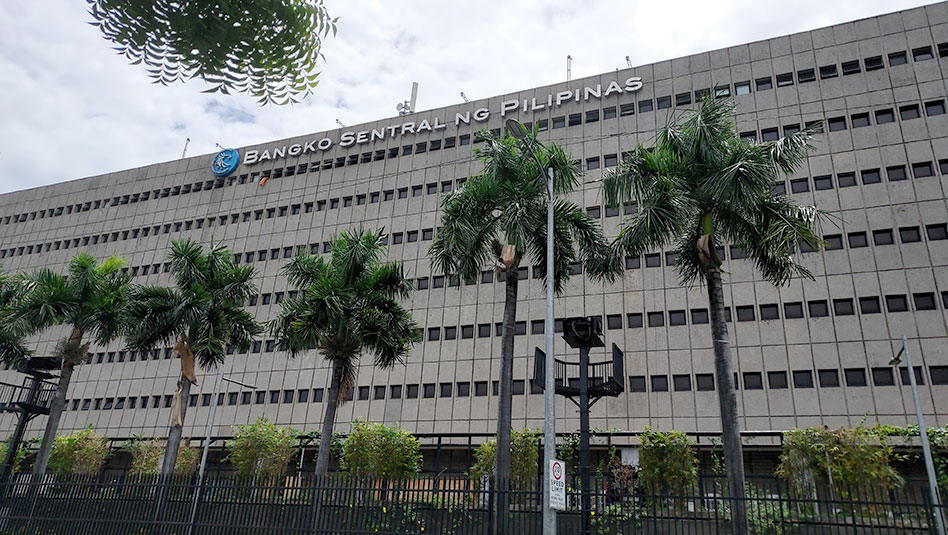
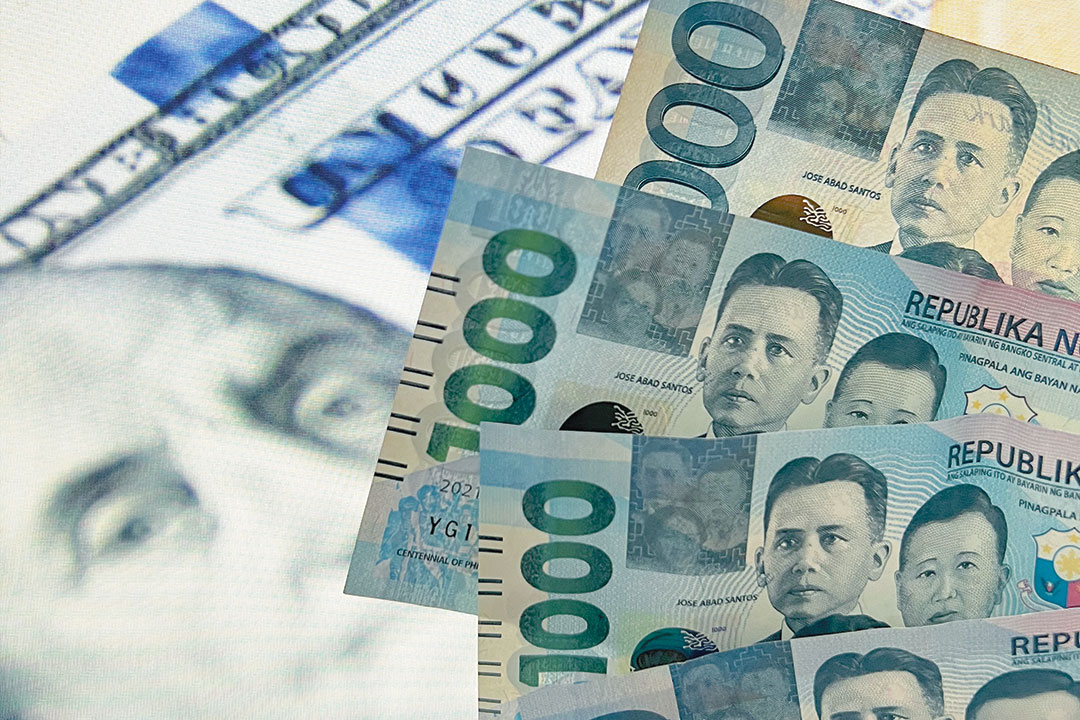
THE PESO could trade sideways against the dollar this week ahead of the policy meetings of the US Federal Reserve and the Bangko Sentral ng Pilipinas (BSP).
The local unit closed at PHP 55.30 per dollar on Thursday, inching up by less than a centavo from its PHP 55.305 finish on Wednesday.
Week on week, the peso appreciated by 10 centavos from its PHP 55.40 close on Dec. 1. The market was closed on Friday for a nonworking day.
For this week, the peso is seen to take its cue from the policy meetings of the Fed and the BSP, Security Bank Corp. Chief Economist Robert Dan J. Roces said in a Viber message.
Markets expect the Fed to pause at this week’s meeting, with the BSP likely to follow suit, Rizal Commercial Banking Corp. Chief Economist Michael L. Ricafort said in a Viber message.
The Federal Open Market Committee will hold its final review for the year on Dec. 12-13, while the BSP’s Monetary Board will meet to discuss policy on Dec. 14.
The Fed has hiked its target rate by a cumulative 525 basis points (bps) to the 5.25%-5.5% range since it began its tightening cycle in March 2022.
While the Fed is expected to keep rates steady on Wednesday for a third straight meeting, investors will watch for signs from policymakers that confirm the market’s view for rate cuts as early as March 2024. The Fed will also release its summary of economic projections, which will show officials’ rate expectations for next year, Reuters reported.
Meanwhile, the BSP has raised benchmark interest rates by a cumulative 450 bps since May 2022 to help bring down inflation, with its policy rate now at a 16-year high of 6.5%.
A BusinessWorld poll last week showed 15 out of 17 analysts expect the Monetary Board to keep its target reverse repurchase rate steady on Thursday, with the BSP remaining vigilant amid lingering upside risks to prices despite easing inflation recently.
Mr. Roces expects the peso to move between PHP 55.30 and PHP 55.60 per dollar this week, while Mr. Ricafort sees it ranging from PHP 55 to PHP 55.50. — AMCS with Reuters
December marks the year’s end and a time for holidays and festivities. Dazzling decorations are up; Christmas carols are often on replay; and streets and neighborhoods are filled with colorful lights. Globally, celebrating Christmas differs in each country; and in the Philippines, people have more unique ways of celebrating the holiday.
Unlike other countries, a Filipino Christmas is quite lengthy; and the Christmas season here is known to be the longest Christmas season in the world. Filipinos are starting to decorate and light up their surroundings, play popular Christmas songs, and planning for festivities as early as September.
Christmas is a festive time when loved ones come together. The season is a reminder of the love and strong bond that ties families for a long time. Many families travel a long way to celebrate the holiday to reunite with families and friends over delicious meals and fun stories that fill homes with laughter and joy.
Season of feasting
Photo from Wikimedia Commons
For many Filipino households, Christmas is not complete without the food. Most Filipinos start celebrating Christmas at midnight with the traditional Filipino Christmas feast of Noche Buena. The most common dishes served at Noche Buena include lechon, spaghetti, hamon, fruit salad, and queso de bola; albeit the options nowadays are endless.
For sweet treats, there are rice cakes such as bibingka — a traditional soft and sweet rice cake that is baked in clay pots or leaves and paired with egg, cheese, or unsweetened coconut shreds as a topping; and puto bumbong, purple-steamed rice cakes cooked in bamboo tubes.
Season of giving
Christmas is also known as the season of giving. In addition to exchanging well-thought gifts, there is another means of giving that puts a twist to the usual gift-giving. “Monito Monita” is usually done among family, friends, schoolmates, or workmates. In the gift exchange, before giving the gift straightforwardly, you must describe the person. A further twist to this giving is where participants give something related to a given theme, such as “something cute,” “something heavy,” etc.
While unwrapping gifts is great, there’s nothing as exciting as opening a red envelope with money inside, which is called ang pao, often given by godparents (ninong or ninang) to their godchildren (inaanak).
Accentuating with decorations
Photo from Wikimedia Commons
Enchanting decorations also make Christmas in the Philippines more unique, from blinking colorful lights, our very own parol, and other unique fixtures.
One of the most popular Christmas decorations in the country is our own version of the Christmas lantern, the parol, which comes in a large circle with a star in the center. Today, parols are hung everywhere — on lampposts, houses, malls and offices, shining bright at night. It also comes in a variety of shapes, sizes, designs, patterns, and materials.
Also, parols are admired because of their unique designs that leave people mesmerized every time they see them. Parols have always been a part of Filipino Christmas celebrations and they are always a part of every feast and parade across the country. Aside from being a decoration, parols are also considered a beacon of hope, a symbol of the vibrant Christmas culture and of hard work.
Belen, or the nativity scene, is another symbol unique to the Filipino Christmas celebration, which is a combination of different materials and can be seen in churches, homes, schools and office buildings. It is a three-dimensional art representing the birth of Jesus Christ: the baby Jesus in a manger, surrounded by the Virgin Mary, St. Joseph, the shepherds, their flock, the Three Kings and some animals and angels. Derived from the Spanish name for Bethlehem, the birthplace of Jesus Christ, the belen was introduced in the Philippines by the Spanish Franciscans during the colonial period.
Christmas trees are also a common fixture in homes and offices; and in the Philippines, these trees are more than evergreens, and they differ in size, color, and design.
Strings of blinking tivoli lights, snowflake ornaments, and Santa Claus with his reindeer are also some of the decorations that bring joy and comfort on the streets or at home.
Season of gathering
Christmas carols have been a tradition worldwide, but Filipinos are found to do caroling differently. Singing carols from house to house, the way it was done in the country, has a little twist and more humor. In addition to the traditional caroling with costumes or lyric books, Filipinos use recycled instruments and made-up lyrics.
Another tradition that lives on in the Philippines is celebrating mass during Christmas. There are many religious practices that Filipinos observe during the season. For instance, they attend the night mass (Simbang Gabi), where they spend the nine days leading up to Christmas attending mass early in the morning or late at night. There is a belief that when people finish the nine days, they can be granted a wish.
On Christmas Eve, they also attend the Christmas mass or the Misa de Gallo, a celebration involving the lighting of candles, projecting displays, or sometimes the reenactment of the birth story of baby Jesus.
This year, there are several performances available for public viewing that embody the genuine essence of the Filipino Christmas tradition. These shows include the first all-Filipino Christmas ballet Puso ng Pasko, performed by the artists of Alice Reyes Dance Philippines and the Cultural Center of the Philippines’ Professional Artist Support Program. The performance was premiered at the Metropolitan Theater in Manila last Dec. 1 and 2, and there will be a free public tour across Luzon, with stops at Pampanga, Tarlac, Nueva Ecija, Makati City, and the Malacañan Palace.
Stronger relationships, physically and virtually
In recent years, Filipinos celebrated Christmas differently. Due to the coronavirus pandemic, the holiday celebration was more restricted; but that was not a hindrance for still celebrating the season with each other. Many families used digital platforms to communicate with their loved ones; buying and sending gifts are made online; and gatherings are held through videoconferences.
Now, as the world returns to a new normal, Christmas celebrations are gradually returning to how they used to be. There are more people flocking to malls for shopping, gathering in churches for worship and reflection, and families will surely reconnect over a rich feast of sumptuous food and drinks, celebrating the fruits of hard work done for almost a year.
Whether it is celebrated physically or virtually, the season is about a celebration of love, the joy of giving, sharing blessings, and spending time and creating memories with loved ones — this is the true essence of Filipino Christmas. — Angela Kiara S. Brillantes
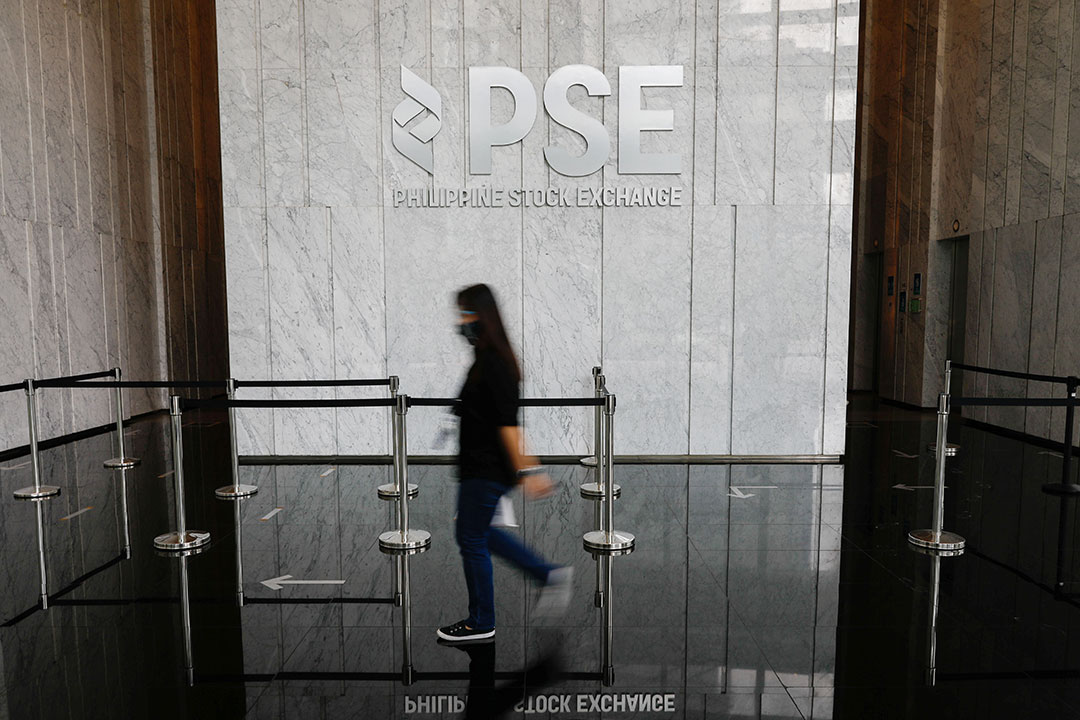
THE UPCOMING policy meetings of the US Federal Reserve and the Bangko Sentral ng Pilipinas (BSP) will be the main drivers of this week’s stock trading as investors await guidance on the direction of benchmark interest rates here and abroad.
On Thursday, the Philippine Stock Exchange index (PSEi) declined by 71.08 points or 1.12% to end at 6,234.77, while the broader all shares index retreated by 22.08 points or 0.65% to close at 3,329.58.
Week on week, the PSEi fell by 10.41 points from its 6,245.18 close on Dec. 1. The stock market was closed on Friday for a nonworking day.
“The local bourse was range-bound for the week amid steady local inflation in November,” online brokerage 2TradeAsia.com said in a market report.
The market has been on a losing streak for two straight weeks amid profit-taking, Philstocks Financial, Inc. Senior Research Analyst Japhet Louis O. Tantiangco said in a Viber message.
“The local market remains at bargain levels with a price-earnings ratio of 13.46 times, below the 2018-2022 average of 19.08 times. However, strong buying may only happen if investors see catalysts that would brighten our economic outlook,” he added.
For this week, the policy meetings of the Fed and the BSP will be the main trading drivers, Mr. Tantiangco said.
The Federal Open Market Committee will hold its final review for the year on Dec. 12-13, while the BSP’s Monetary Board will meet to discuss policy on Dec. 14.
“[This] week, investors are expected to focus on the policy meetings of the Federal Reserve and the BSP as they look for clues on the outlook for interest rates. Hints of easing may spur optimism in the market while hints of further tightening is expected to weigh on sentiment,” he said.
“The BSP is likely to echo the Fed in a status quo in rates. Philippine inflation has further eased to 4.1% in November from October’s 4.9%, and prior rate hikes have seemingly impacted foreign exchange and money supply as intended,” 2TradeAsia.com said.
The market will also await hints on the timing of Fed and BSP rate cuts, it said.
The BSP has raised benchmark interest rates by a cumulative 450 basis points (bps) since May 2022 to help bring down its inflation, with its policy rate now at a 16-year high of 6.5%.
Meanwhile, the US central bank has hiked rates by a cumulative 525 bps to the 5.25%-5.5% range since it began its tightening cycle in March 2022.
Investors expect both the BSP and the Fed to start easing their policy stances by 2024.
“Investors may also look towards our upcoming foreign trade, foreign investment, and overseas Filipino workers cash remittances data for clues on our local economy,” Mr. Tantiangco added.
He expects the PSEi to retest its 10-day exponential moving average this week.
“The market’s major support is seen at 6,000. Major resistance is seen at 6,400,” he added. — R.M.D. Ochave
BANGKO SENTRAL ng Pilipinas (BSP) Governor Eli M. Remolona, Jr. said it is premature to discuss policy easing in 2024, with the Monetary Board still prepared to hike borrowing costs if needed to make sure inflation returns to the 2-4% target range.
“The risks are still there so we have to assess the situation. I think it’s premature to say we will start to ease,” he told reporters on Wednesday evening.
Mr. Remolona said the BSP remains hawkish as frequent supply shocks could lead to higher inflation expectations and second-round effects.
“We want to be sure (inflation) stays within the target range, comfortably within the target range, and then when we are comfortable about that, we can start to think about easing,” he said.
“If inflation is within the target range for one month, it’s not enough. It has to be there and it has to look like it will stay there until we can start to consider not being hawkish,” he said.
The BSP chief said the goal is to keep inflation expectations anchored to mitigate second-round effects.
Headline inflation slowed for a second straight month in November to 4.1%, its lowest in 20 months. Year to date, inflation averaged 6.2%, still above the central bank’s 6% forecast.
From May 2022 to October this year, the BSP has raised interest rates by 450 basis points (bps), bringing the benchmark interest rate to a 16-year high of 6.5%.
Mr. Remolona also said there will be no cut in banks’ reserve requirement ratio (RRR) while the central bank remains hawkish.
The RRR for big banks is currently at 9.5%, while the ratio for digital banks is at 6%. The BSP also set the RRR for thrift banks, and rural and cooperative banks to 2% and 1%, respectively.
Despite the aggressive rate increases since last year, Mr. Remolona noted Philippine economic growth is still very strong and robust. He noted the impact of policy tightening is gradual, with the effects taking some time to materialize due to prolonged lags.
“We wish (the lags) were shorter,” he said. “We have to improve the transmission mechanism of monetary policy.”
Mr. Remolona also said the central bank does not want to make any unnecessary tightening.
“We want to make just enough tightening so that we get within the target range and expectations remain anchored to our target,” he said.
However, monetary policy may be kept tighter for longer since inflation may go up again next year.
“It’s sort of tricky because we think inflation should be within the (2-4%) target range in the next month or so, and then there’s kind of a base effect then it will go up and maybe exceed the target range (again),” Mr. Remolona said. “Hopefully not, we hope we can settle within the target range for the rest of 2024.”
In early 2024, he noted inflation may ease to below 3% before picking up again to 4% by midyear.
At its November meeting, the BSP lowered its risk-adjusted inflation forecast for 2023 to 6.1% (from 6.2%), to 4.4% (from 4.7%) for 2024, and to 3.4% (from 3.5%) for 2025.
On the other hand, the BSP’s baseline inflation forecast stood at 6% in 2023 and at 3.7% in 2024, before easing to 3.2% in 2025.
Moving forward, Mr. Remolona said the BSP will use the risk-adjusted inflation forecast and emphasized that policy will be based on “likely events.”
Meanwhile, HSBC economist for ASEAN Aris Dacanay in a note said the BSP will keep its policy rate steady on Dec. 14 after inflation eased in November.
“All in all, the economy’s macroeconomic fundamentals are improving and there is no impending need to adjust monetary policy to be even more restrictive,” he said.
However, inflation may rise again and breach the 2-4% target in the second quarter of next year when the tariff rates for agricultural items could increase due to the expiration of Executive Order No. 10 on Dec. 31.
“With upside risks to inflation still heavily tilted to the upside, it may still be too early to put rate cuts on the table. The economy will need time to pause, to ensure that the BSP’s tight monetary stance filters through to the economy,” Mr. Dacanay said.
The BSP may also begin its easing cycle gradually after the US Federal Reserve does its first rate cut within the third quarter of 2024.
“By then, we expect headline CPI to be softening on a consistent basis. Cutting at the same rate as the Fed will also mitigate the volatility of the peso against the dollar given how wide the current account deficit still is for the Philippine economy,” Mr. Dacanay said.
The BSP projects the current account deficit to reach USD 11.1 billion, or equivalent to -2.5% of gross domestic product (GDP).
In the first semester, the current account deficit stood at USD 8.2 billion (-4% of GDP), 32.2% lower than the USD 12.1 billion deficit (-6.1% of GDP) a year ago. — Keisha B. Ta-asan, Reporter
STOCKS dropped further on Thursday to track Wall Street’s and Asian markets’ decline on continued profit taking and as the market looked for fresh trading drivers.
The Philippine Stock Exchange index fell by 71.08 points or 1.12% to end at 6,234.77 on Thursday, while the broader all shares index declined by 22.08 points or 0.65% to 3,329.58.
“This Thursday, the local market dropped by 71.08 points to 6,234.77. Investors took cues from Wall Street’s overnight performance wherein trading was cautious as investors await the US’ November labor market data,” Philstocks Financial, Inc. Research and Engagement Officer Mikhail Philippe Q. Plopenio said in a Viber message.
Market sentiment was also affected by the 2022 Program for International Student Assessment rankings, where the Philippines placed 77th out of 81 countries, he said.
“Additionally, the dismal ranking of the Philippines in the recent 2022 Program for International Student Assessment… was digested by investors. The results reflected our relatively challenged educational sector, which can have consequences on our economy’s competitiveness in the long run,” Mr. Plopenio said.
“The market was weaker today in tandem with most of the Asian markets. Local market weakness was exacerbated by profit-taking as we encountered resistance at the 6,300 level,” AB Capital Securities, Inc. Vice-President Jovis L. Vistan added in a Viber message.
Asian shares fell with Wall Street on Thursday, while a sharp fall in oil prices to a six-month low and a soft reading on the US labor market boosted the global bond market, Reuters reported.
MSCI’s broadest index of Asia-Pacific shares outside Japan fell 0.8%, pulling it down 1.9% so far this month after a 7.3% rally in November. Japan’s Nikkei fell 1.7%.
Overnight, Wall Street was dragged lower by energy stocks as oil prices slid and by tech shares. The Dow Jones slipped 0.2%; the S&P 500 lost 0.4%; and the Nasdaq Composite fell 0.6%.
At home, sectoral indices declined on Thursday. Financials dropped by 26.47 points or 1.52% to 1,705.73; services retreated by 21.33 points or 1.36% to 1,541.36; holding firms went down by 65.63 points or 1.09% to 5,912.04; property lost 13.84 points or 0.5% to end at 2,744.38; mining and oil dropped by 48.05 points or 0.49% to 9,640.50; and industrials declined by 41.13 points or 0.46% to 8,762.70.
“Among the index members, Wilcon Depot, Inc. was at the top, climbing 1.99% to P20.50. Ayala Corp. lost the most, dropping 3.1% to P640.00,” Mr. Plopenio said.
Value turnover went down to P3.67 billion with 270.24 million shares switching hands from the P5.67 billion with 345.22 million issues seen the prior day.
Advancers edged out decliners, 83 against 82, while 49 names closed unchanged.
Net foreign selling stood at P410.52 million on Thursday versus the P378.57 million in net buying logged on Wednesday. — RMDO with Reuters
The Philippines’ debt levels are expected to remain sustainable in the medium term, the World Bank said.
“The National Government debt ratio is projected to decline over the forecast horizon, reaching around 60% of GDP by 2025, although financing needs remain elevated compared to pre-pandemic levels,” the bank said in its latest Philippine Economic Update.
“However, debt is set to remain sustainable, as the debt-to-GDP ratio is expected to revert to a downward trajectory beginning in 2023 due to fiscal consolidation and robust growth,” it added.
The National Government (NG) debt as a share of gross domestic product (GDP) stood at 60.2% at the end of the third quarter, data from the Treasury showed.
This was lower than 61% at the end of the second quarter and the 63.6% posted a year ago.
However, it is still slightly above the 60% threshold considered by multilateral lenders to be manageable for developing economies.
The Philippine government is targeting to bring down its debt-to-GDP ratio to below 60% by 2025.
“Currently, the country’s financial system may still be relatively deep enough to accommodate the large financing needs, although excess liquidity may diminish over the medium term,” the World Bank said.
“Moreover, the composition of debt is expected to remain stable, with low shares of short-term debt and foreign currency-denominated debt, in line with the government’s debt management strategy,” it added.
NG debt reached a record PHP 14.48 trillion as of end-October, rising 6.16% from PHP 13.64 trillion a year ago.
As of end-October, the bulk or 68.38% of the NG’s debt portfolio came from domestic sources.
Meanwhile, the ASEAN+3 Macroeconomic Research Office (AMRO) said that an increase in the debt-to-GDP ratio in ASEAN+3 countries may raise the likelihood of a fiscal crisis.
“Overall, the result reveals that the higher the debt ratio, the higher the probability of a crisis, with that experience less likely in developed economies than emerging market economies,” it said in a recent report.
“At their respective debt levels as of 2022, the average probability of a fiscal crisis is estimated to be 37% for an average emerging market economy and 7% for an average developed economy,” it added.
AMRO said that excessively high debt levels may also threaten a government’s fiscal sustainability.
“This raises the risk of fiscal crisis, which can, in turn, erode investor confidence. Moreover, if the value of debt falls due to concerns about the government’s debt repayment capacity, financial sectors including banks, would incur valuation losses in their holdings of government debt,” it said.
“Foreign investors may take fright and pull out from the market, leading to capital outflows. The heightened volatility in exchange rates and increased capital flight would compound the difficulties,” it added.
Estimates from AMRO show that the average probability of a fiscal crisis for the region’s emerging markets increased to 26% in 2022 from 15% in 2008. However, it noted this was lower than the average in global emerging markets.
The think tank recommended that governments in the region should establish a “sound debt structure” with an appropriate maturity profile and proper currency distribution.
It also recommended diversifying the investor base to mitigate impact from shocks, enhance market liquidity, utilize emergency liquidity facilities, and maintain a sustainable debt level and growth rate. — Luisa Maria Jacinta C. Jocson
Term deposit yields inched up on Wednesday even as inflation hit a 20-month low in November, which may prompt the Bangko Sentral ng Pilipinas (BSP) to keep borrowing costs steady at its meeting next week.
Demand for the BSP’s term deposit facility (TDF) reached PHP 336.436 billion on Wednesday, above the PHP 290 billion auctioned off by the central bank and the PHP 295.971 billion in bids for a PHP 300-billion offering seen last week.
The BSP Auction Committee said in a statement that strong demand was observed for Wednesday’s TDF offer.
“Looking ahead, the BSP’s monetary operations will continue to be guided by its assessment of prevailing liquidity conditions and market developments,” it added.
Broken down, bids for the one-week term deposits amounted to PHP 178.186 billion, above the PHP 160 billion on the auction block and the PHP 164.686 billion in tenders logged the previous week for a PHP 180-billion offer.
Accepted rates were from 6.65% to 6.72%, narrower than the 6.62% to 6.75% band seen a week ago. This brought the average rate of the seven-day papers to 6.6927%, increasing by 0.52 basis point (bp) from the 6.6875% quoted previously.
Meanwhile, the 14-day papers fetched bids totaling PHP 158.250 billion, surpassing the P130 billion bid out by the central bank and the PHP 131.285 billion for a PHP 120-billion offer recorded on Nov. 29.
Lenders asked for yields ranging from 6.6892% to 6.6550%, higher than the 6.6886% to 6.60% margin logged a week earlier. With this, the average rate of the two-week deposits inched up by 0.06 bp to 6.6892% from 6.6886% in the prior auction.
The central bank has not auctioned off 28-day term deposits for three years to give way to its weekly offering of securities with the same tenor.
The term deposits and the 28-day bills are used by the BSP to mop up excess liquidity in the financial system and to better guide market rates.
TDF yields were higher week on week following the release of data showing slower November inflation, as this could prompt the Monetary Board to keep borrowing costs unchanged at its last monetary policy meeting for the year on Dec. 14, Rizal Commercial Banking Corp. Chief Economist Michael L. Ricafort said in a Viber message.
Headline inflation eased to 4.1% in November from 4.9% in October and 8% in November 2022. This was the slowest rate in 20 months or since the 4% seen in March 2022.
It was also lower than the median estimate of 4.4% in a BusinessWorld poll of 15 analysts conducted last week and was near the lower end of the 4-4.8% forecast range of the BSP for the month.
In the first eleven months, inflation averaged 6.2%, faster than 5.6% in the same period a year ago and still above the central bank’s 2-4% target and baseline forecast of 6% for 2023.
The BSP last month kept its target reverse repurchase rate at a 16-year high of 6.5%.
The central bank has raised borrowing costs by a total of 450 bps since May 2022 to tame inflation. — K.B. Ta-asan
The insurance sector saw its overall net income grow by 9.38% in the first nine months, the industry regulator said on Wednesday, with its combined assets, invested assets, and net worth also increasing.
The net income of the insurance industry stood at PHP 38.28 billion at end-September, up from PHP 35 billion in the same period last year, the Insurance Commission (IC) said in a statement.
This came as the life and nonlife insurance sectors saw higher premiums and as mutual benefit associations (MBAs) posted increased contributions in the period.
The premium income of life insurance companies grew by 13.93% to PHP 229.89 billion in the first nine months, with PHP 46.57 billion coming from new business.
The sector posted a net income of PHP 28.79 billion in the period, up by 10.32% from PHP 26.10 billion last year.
Meanwhile, the nonlife insurance sector’s total net premiums written rose by 15.56% to PHP 48.21 billion at end-September.
The segment’s net profit increased by 14.99% to PHP 5.48 billion from PHP 4.76 billion a year prior.
Lastly, MBAs saw contributions rise by 7.43% to PHP 11.494.4 billion in the first nine months.
However, the net earnings of MBAs declined by 3.05% to PHP 4.01 billion from PHP 4.14 billion last year due to a 32.72% rise in total underwriting expenses amounting to PHP 9.64 billion.
Meanwhile, the insurance industry’s combined assets went up by 9.93% to PHP 2.23 trillion as of September from P2.03 trillion a year prior, while total liabilities increased by 9.77% to PHP 1.78 trillion from P1.62 trillion.
The sector’s total invested assets likewise rose by 14.96% year on year to PHP 1.98 trillion in the period from PHP 1.73 trillion.
Overall net worth grew by 10.6% to PHP 450.15 billion from PHP 407 billion.
Lastly, total paid-up capital and guaranty fund went up by 5.10% to PHP 83.04 billion from PHP 79.01 billion. — AMCS
The peso hit a new four-month high against the dollar on Wednesday after inflation eased to a 20-month low in November and amid weakening global prospects as China’s credit rating outlook was downgraded.
The local unit closed at PHP 55.305 per dollar on Wednesday, strengthening by 1.5 centavos from its PHP 55.32 finish on Tuesday, based on Bankers Association of the Philippines data.
This was the peso’s strongest close since its PHP 55.19 per dollar finish on Aug. 2.
The peso opened Wednesday’s session stronger at PHP 55.30 against the dollar. Its intraday best was at PHP 55.295, while its weakest showing was at PHP 55.36 versus the greenback.
Dollars exchanged went down to $1.03 billion on Wednesday from USD 1.35 billion on Tuesday.
The peso continued to be supported by easing inflation, as well as lower global crude oil prices, Rizal Commercial Banking Corp. Chief Economist Michael L. Ricafort said in a Viber message.
Headline inflation slowed to 4.1% in November from 4.9% in October and 8% in the same period last year. This was within the Bangko Sentral ng Pilipinas’ (BSP) 4-4.8% forecast and below the median estimate of 4.4% by 15 economists in a BusinessWorld poll conducted last week.
Year to date, inflation averaged 6.2%, faster than 5.6% in the same period last year.
The peso was also supported by weakening global sentiment after China’s credit outlook was downgraded by Moody’s Investors Service and softer US job openings data, a trader said in an e-mail.
The dollar was near a two-week high against a basket of currencies on Wednesday as investors assessed US economic data that showed a cooling labor market, while wagering the Federal Reserve will cut rates next year, Reuters reported.
The spotlight in Asia was on China, where the yuan extended losses as markets grappled with rating agency Moody’s cut to the Asian giant’s credit outlook.
The dollar index, which measures the US currency against six rivals, was 0.029% lower at 103.93, having climbed 0.3% overnight. The index is up 0.5% this month, after sliding 3% in November, its steepest monthly decline in a year.
Data on Tuesday showed US job openings fell to more than a 2-1/2-year low in October, the strongest sign yet that higher interest rates were dampening demand for workers. Data also showed there were 1.34 vacancies for every unemployed person in October, the lowest since August 2021.
For Thursday, the trader sees the peso moving between PHP 55.20 and PHP 55.45 per dollar, while Mr. Ricafort expects it to range from PHP 55.20 to PHP 55.45. — AMCS with Reuters
Philippine shares closed lower on Wednesday as investors pocketed their profits after the market’s three-day rally amid a lack of fresh leads and as the country’s outstanding debt reached another record high.
The bellwether Philippine Stock Exchange index (PSEi) dropped by 3.10 points or 0.04% to finish at 6,305.85 on Wednesday, while the broader all shares index inched down by 0.36 point or 0.01% to close at 3,351.66.
“The local bourse declined by 3.10 points to 6,305.85 as investors booked some gains after the three consecutive days of market rally. In addition, the national government’s outstanding debt, which reached a record of PHP 14.48 trillion as of end-October, somehow weighed on sentiment,” Philstocks Financial, Inc. Research Analyst Claire T. Alviar said in a Viber message.
The National Government’s outstanding debt went up by 1.49% from PHP 14.27 trillion as of end-September, data from the Bureau of the Treasury showed.
Year on year, the debt stock rose by 6.16% from PHP 13.64 trillion. It also increased by 7.91% from PHP 13.42 trillion at the end of December 2022.
“Philippine shares closed almost flat, with investors trying to get more cues from overseas that the world’s largest economy is still on an uninterrupted path to recovery,” Regina Capital Development Corp. Head of Sales Luis A. Limlingan said in a Viber message.
“Despite the losses in the US [overnight], the past five weeks of consecutive gains means that all three stock indexes are still on track to end the quarter and year with big gains,” he added.
Wall Street finished mixed on Tuesday after fresh employment data bolstered bets that the US Federal Reserve will cut interest rates as soon as March, Reuters reported.
The S&P 500 declined 0.06% to end the session at 4,567.18 points.
The Nasdaq gained 0.31% to 14,229.91 points, while Dow Jones Industrial Average declined 0.22% to 36,124.56 points.
“The stock market is down as 6,300 is proving to be a tough resistance. The market awaits more catalyst for 6,399 to become new support,” First Metro Investment Corp. Head of Research Cristina S. Ulang said in a Viber message.
The majority of sectoral indices closed lower on Wednesday. Financials declined by 15.63 points or 0.89% to 1,732.20; mining and oil retreated by 64.22 points or 0.65% to 9,688.55; industrials went down by 25.22 points or 0.28% to 8,803.83; and property dropped by 7.66 points or 0.27% to 2,758.22.
Meanwhile, services climbed by 14.38 points or 0.92% to 1,562.69, and holding firms rose by 17.33 points or 0.29% to 5,977.67.
Value turnover rose to PHP 5.67 billion on Wednesday with 345.22 million issues changing hands from the PHP 4.01 billion with 622.4 million issues seen on Tuesday.
Decliners outnumbered advancers, 92 versus 79, while 50 names closed unchanged.
Net foreign buying stood at PHP 378.57 million on Wednesday versus the PHP 182.43 million in net selling logged on Tuesday. — R.M.D. Ochave with Reuters
You are leaving Metrobank Wealth Insights
Please be aware that the external site policies may differ from our website Terms And Conditions and Privacy Policy. The next site will be opened in a new browser window or tab.
If you are an existing investor, log in first to your Metrobank Wealth Manager account.
If you wish to start your wealth journey with us, click the “How To Sign Up” button.





 DOWNLOAD