MODEL PORTFOLIO
THE GIST
NEWS AND FEATURES
Global Philippines Fine Living
INSIGHTS
INVESTMENT STRATEGY
Economy Stocks Bonds Currencies
THE BASICS
Investment Tips Explainers Retirement
WEBINARS
2024 Mid-Year Economi Briefing, economic growth in the Philippines
2024 Mid-Year Economic Briefing: Navigating the Easing Cycle
June 21, 2024
Investing with Love
Investing with Love: A Mother’s Guide to Putting Money to Work
May 15, 2024
retirement-ss-3
Investor Series: An Introduction to Estate Planning
September 1, 2023
View All Webinars
DOWNLOADS
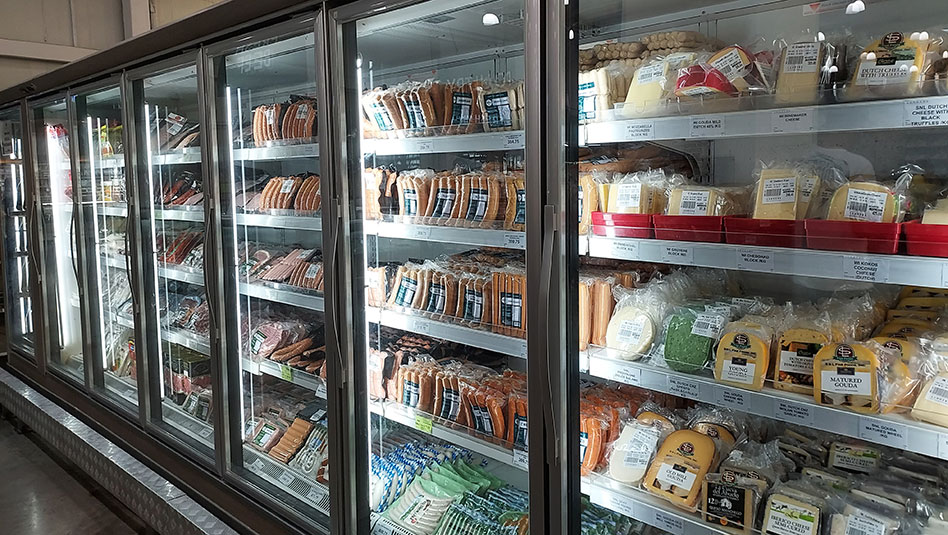
grocery-2-aa
Inflation Update: Target breached
DOWNLOAD
Container ship carrying container boxes import export dock with quay crane. Business commercial trade global cargo freight shipping logistic and transportation worldwide oversea concept. Generative AI
Economic Updates
Philippines Trade Update: Wider deficit on strong imports
DOWNLOAD
Frick collection with palm trees 
Economic Updates
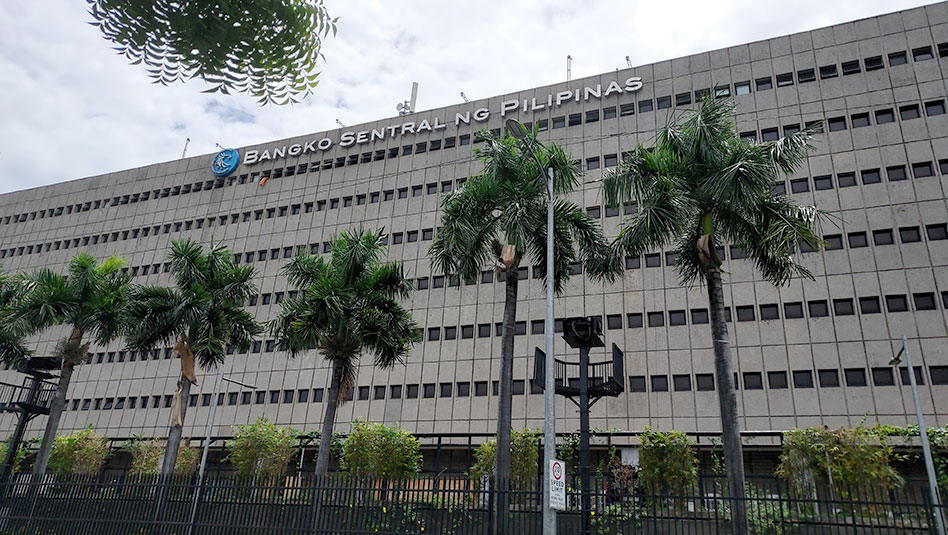
Policy Rate Updates: Policy rate updates to reassure 
DOWNLOAD
View all Reports
Metrobank.com.ph How To Sign Up
Follow us on our platforms.

How may we help you?

TOP SEARCHES
  • Where to put my investments
  • Reports about the pandemic and economy
  • Metrobank
  • Webinars
  • Economy
TRENDING ARTICLES
  • Investing for Beginners: Following your PATH
  • On government debt thresholds: How much is too much?
  • Philippines Stock Market Outlook for 2022
  • Deficit spending remains unabated

Login

Access Exclusive Content
Login to Wealth Manager
Visit us at metrobank.com.ph How To Sign Up
Access Exclusive Content Login to Wealth Manager
Search
MODEL PORTFOLIO THE GIST
NEWS AND FEATURES
Global Philippines Fine Living
INSIGHTS
INVESTMENT STRATEGY
Economy Stocks Bonds Currencies
THE BASICS
Investment Tips Explainers Retirement
WEBINARS
2024 Mid-Year Economi Briefing, economic growth in the Philippines
2024 Mid-Year Economic Briefing: Navigating the Easing Cycle
June 21, 2024
Investing with Love
Investing with Love: A Mother’s Guide to Putting Money to Work
May 15, 2024
retirement-ss-3
Investor Series: An Introduction to Estate Planning
September 1, 2023
View All Webinars
DOWNLOADS
grocery-2-aa
Inflation Update: Target breached
April 7, 2026 DOWNLOAD
Container ship carrying container boxes import export dock with quay crane. Business commercial trade global cargo freight shipping logistic and transportation worldwide oversea concept. Generative AI
Economic Updates
Philippines Trade Update: Wider deficit on strong imports
March 27, 2026 DOWNLOAD
Frick collection with palm trees 
Economic Updates
Policy Rate Updates: Policy rate updates to reassure 
March 26, 2026 DOWNLOAD
View all Reports

Archives: Business World Article

Ban stays on transfer fee hikes

Ban stays on transfer fee hikes

The Bangko Sentral ng Pilipinas (BSP) is maintaining the moratorium on transfer fee increases to encourage Filipinos to use digital payments.

The central bank released Memorandum No. M-2023-037, which states that the moratorium on fee increases remains in effect.

“Participants who currently charge transfer fees for person-to-person fund transfers via InstaPay and PESONet are directed to maintain said fees,” it said.

The BSP first imposed the moratorium in 2021 through Memorandum No. M-2021-071. It aimed to boost digital finance.

PESONet caters to high-value transactions and is considered as an electronic alternative to paper-based checks while InstaPay is a real-time electronic fund transfer facility for low-value transactions of up to P50,000.

“Institutions planning to introduce fees for new fund transfer services shall apply for prior BSP approval. These fees must also be reported to the BSP 60 days before implementation,” the BSP said.

“Moreover, a transfer fee that is currently waived may only be restored up to the amount reported to the BSP before the waiver,” it added.

The central bank said it is also working on lowering and ultimately eliminating fees on small electronic payments.

“The reduction or removal of transfer fees for small e-payments supports our vision of digitalization and inclusivity. We are engaging the industry through dialogue to explore ways to reduce or completely eliminate fees for small-value transactions,” BSP Governor Eli M. Remolona, Jr. said in a statement.

The BSP did not give a set date for when the moratorium will be lifted.

“Accordingly, the moratorium on fee increases for InstaPay and PESONet transactions shall be lifted, subject to BSP review, once zero fees are operationalized by the payments industry for small e-payments,” it added.

The BSP is targeting to digitalize 50% of total retail transactions and onboard at least 70% of Filipino adults to the financial system by the end of this year.

“The BSP encourages Filipinos to actively use their accounts for digital payments, savings, and investments. The central bank is working with the industry to bring more of our countrymen into the fold of the formal financial system,” Mr. Remolona added. — Luisa Maria Jacinta C. Jocson

Bill seeks waiver of fees for small transactions in electronic wallets

Bill seeks waiver of fees for small transactions in electronic wallets

A bill seeking to waive additional fees in electronic wallet (e-wallet) transactions of up to PHP 1,000 has been filed at the House of Representatives.

“Waiving fees for small transactions will encourage wider adoption among low-income individuals, increasing financial inclusion and economic growth,” Cagayan de Oro City Rep. Lordan G. Suan said in the bill’s explanatory note.

Under the proposed law, “all e-wallet providers and electronic fund transfer service providers operating in the Philippines shall be required to waive all fees associated with small-value transactions.”

The fee waiver will be applied when sending money to another e-wallet user, cashing in or cashing out to an e-wallet account, and transferring funds to a bank account.

The central bank has the authority to adjust the transaction amount subject to waived fees based on the daily cost of living, current exchange rate, and inflation rate.

The proposed law also mandates increasing public awareness of the benefits and use of e-wallets, as well as the fee waiver for small transactions.

Mr. Suan said the bill “promotes financial inclusion by eliminating fees for small transactions in e-wallets.” It would also ensure transparency in fee disclosure and competition among e-wallet providers, he added.

E-money accounts are the most owned bank accounts with 36% or 27.5 million users, according to the Bangko Sentral ng Pilipinas’ (BSP) 2021 financial inclusion survey.

The number is more than four times the number of e-money users in 2019, which then stood at 8% or 5.7 million.

Cashless payments through payment terminals and mobile applications increased in 2021 to 13% and 9%, respectively, from almost zero in 2019. Meanwhile, cashless transactions for online purchases jumped to 18% in 2021 from 1% two years ago.

The central bank added that individuals who did not own a bank account cited cost issues and the lack of documents. — Beatriz Marie D. Cruz

Local shares rise on positive economic outlook

Local shares rise on positive economic outlook

Philippine shares rose on Tuesday amid an improved economic outlook and as investors anticipate a year-end window dressing.

The benchmark Philippine Stock Exchange index (PSEi) went up by 45.77 points or 0.7% to end at 6,521.27 on Tuesday, while the broader all shares index climbed by 16.57 points or 0.48% to close at 3,432.71.

“Investors digested positive economic narratives today including the International Monetary Fund’s sound assessment of the Philippines fiscal consolidation, and the Philippine Economic Zone Authority’s positive outlook on its investment approvals for full year 2023,” Philstocks Financial, Inc. Research and Engagement Officer Mikhail Philippe Q. Plopenio said in a Viber message.

The International Monetary Fund said in a Dec. 15 statement that the Bangko Sentral ng Pilipinas (BSP) should keep interest rates higher for longer until inflation fully returns to target.

The Monetary Board last week kept rates steady at a 16-year high of 6.5% for a second straight meeting, after a 25-basis-point (bp) off-cycle hike on Oct. 26.   

The BSP raised borrowing costs by a total of 450 bps from May 2022 to October 2023.

Mercantile Securities Corp. Head Trader Jeff Radley C. See said the market continued its rally as investors are bullish for next year.

“Looks like we are experiencing a Christmas rally,” Mr. See said in a Viber message, adding that investors are bullish on hopes of a rate cut next year.

Jayniel Carl S. Manuel, an equities trader at Seedbox Securities, Inc., said in an e-mail that the index’s recent uptick was due to “the phenomenon of year-end window dressing.”

“Additionally, we have observed an influx of investor cash into the market, further contributing to the upward momentum. As the fiscal year concludes, investors are strategically allocating extra funds, taking advantage of market opportunities and positioning themselves for potential year-end gains,” Mr. Manuel said.

Most of the sectoral indices rose on Tuesday. Financials went up by 33.04 or 1.93% to 1,738.24; property gained 25.53 points or 0.89% to 2,886.32; services increased by 12.67 points or 0.8% to 1,595.20; industrials jumped by 5.11 points or 0.05% to 8,883.39.

Meanwhile, mining and oil declined by 40.71 points or 0.42% to 9,494.28; and holding firms decreased by 6.97 points or 0.11% to 6,352.92.

Value turnover went down to PHP 4.37 billion on Monday with 748.67 million issues changing hands from the PHP 5.4 billion with 602.65 million shares on Monday.

Decliners outnumbered advancers, 96 against 88, while 47 names ended unchanged.

Net foreign buying declined to PHP 394.99 million on Tuesday from PHP 625.25 million on Monday. — By Sheldeen Joy Talavera

PEZA investments seen to hit over PHP170B

PEZA investments seen to hit over PHP170B

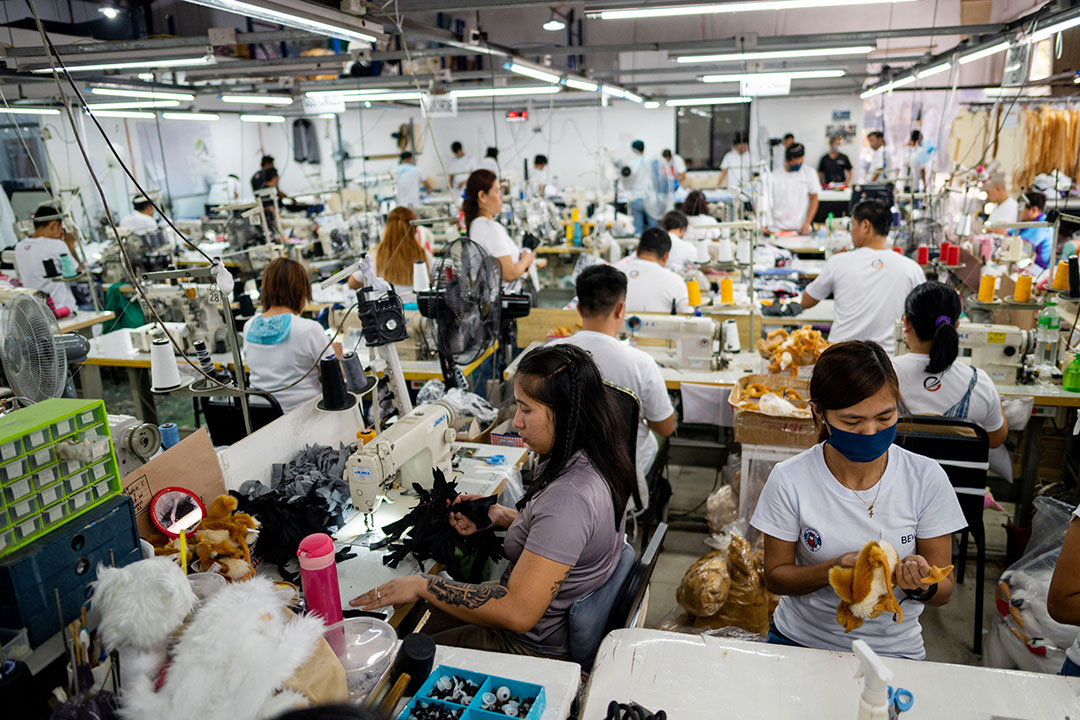
Investments approved by the Philippine Economic Zone Authority (PEZA) this year would likely reach over PHP 170 billion, its top official said.

The PEZA Board is set to hold its final meeting on Tuesday, with several investments up for approval.

“As of Dec. 7, we have approved a total of PHP 160.44-billion (investments). We expect to approve an additional PHP 12 billion during our board meeting (Dec. 19),” PEZA Director-General Tereso O. Panga said in a Viber message, putting the estimated PEZA-approved investments for this year at PHP 172 billion.

To date, PEZA has already exceeded its full-year target of PHP 154.77 billion.

Mr. Panga said locator investments would likely account for 60% of this year’s total, adding that most of these are in the export manufacturing industry.

“That’s been our mix of our investment: 60% for locator investments, and 40% for developer investments.”

Mr. Panga said 37% of the investments this year have come from the electronics sector, while around 15% come from the information technology-business process outsourcing (IT-BPO) sector.

“We are also getting investments in areas outside the metropolis,” he said.

Most PEZA-approved investments are located in some areas in the Calabarzon Region, particularly Cavite, Laguna and Batangas, he added.

Samar and Cebu provinces in central Philippines as well as some areas in Central Luzon also bagged significant investments, he added.

PEZA attributed the strong investments to the Philippines’ “sound macroeconomic fundamentals” as well as the country’s participation in free trade agreements. 

Mr. Panga said PEZA has recorded a significant increase in investments from China and Australia, both members of the Regional Comprehensive Economic Partnership (RCEP) that was ratified by the Philippine Senate in February.

“There’s also a big increase in investment coming from the EU (European Union),” he added.

He said PEZA expects more investments from South Korea next year, citing the signing of a free trade agreement (FTA) between Seoul and Manila last month. The country’s FTA with South Korea is expected to be ratified by the Philippine Senate in January.

PEZA said it is bracing itself for global supply chain disruptions and other external headwinds that may affect new investments.

“In the electronics sector, they are forecasting a flat growth for 2024. Electronics, being the predominant source of investments, we will be affected by that,” the PEZA chief said.

The Semiconductor and Electronics Industries in the Philippines Foundation, Inc. (SEIPI) last month said electronic exports could decline 10-12% this year, against the 5% growth previously forecast for 2023, amid global recession, high interest rates, and geopolitical uncertainties.

“On the other hand, we see a bullish forecast for IT-BPO. The sector has been at 10-15% growth for several years now. We remain bullish with the growth of IT-BPO,” he said.

The IT and Business Process Association of the Philippines (IBPAP) earlier said it is targeting at least 7% revenue growth for 2024. The IBPAP is expecting the industry’s revenues to grow by 8.8% to $35.4 billion this year.

Mr. Panga said PEZA also anticipates an increase in investments involving metal fabrication or skilled manufacturing, especially in the electronic vehicle (EV) sector.

“These will drive the growth of PEZA and new ecozone development in new areas.”

He said EV players from China, the United States, Indonesia, South Korea, and Japan are expected to put up production sites in the country next year.

Mr. Panga, meanwhile, said PEZA hopes to benefit from the decision of major foreign companies, especially those in the technology sector, to diversify their production away from China.

“It’s not just multinational companies that are relocating from China, but also mainland Chinese manufacturing businesses to be able to avail of GSP+ privileges for their exports,” he said.

The European Parliament and Council have agreed to extend the existing Generalized Scheme of Preferences Plus (GSP+) arrangements for another four years as an interim measure while they negotiate proposed reforms to the trade scheme.

Under the scheme, the Philippines enjoys zero duties on 6,274 locally made products. The current arrangement was originally set to expire by end-2023. With the four-year extension, the Philippine participation in the GSP+ will run through 2027.

On Friday, Presidential Adviser on Investment and Economic Affairs Frederick D. Go said Manila is working to get a “respectable” market share of firms moving out of China, particularly in the semiconductors industry, citing a “catch-up plan” that seeks to realize the country’s “untapped” export potential of $49 billion.

Mr. Go, who is also president and chief executive officer of Robinsons Land Corp., said he wants to ensure the Philippines “gets a respectable market share of this pivot away from China, especially in the semiconductors sector.”

“There is a pivot now away from China by a lot of the Western as well as the Asian countries and a lot of the attention is now going to our neighboring countries such as Thailand, Indonesia, and Vietnam,” he said at the general meeting of the Philippine Exporters Confederation, Inc., based on a press release.

Michael L. Ricafort, chief economist at Rizal Commercial Banking Corp., said the Philippines has been a “lower cost alternative” for developed countries.

“The diversification of global supply chains and ecosystems for electronics, electric vehicles, renewable power/energy would also be one of the major sources of foreign investments/locators in the country,” he said in a Facebook Messenger chat.

Mr. Ricafort said investors are also likely interested in the resurgence of mining activities in the Philippines, “especially minerals used in the global supply chain for batteries, electric vehicles, and renewable energy.”

Meanwhile, Leonardo A. Lanzona, who teaches economics at the Ateneo de Manila University, welcomed the higher investments approved by PEZA but noted it does not “guarantee immediate implementation.”

“The actual investment may occur over time as the approved projects progress and are implemented. Also, it is also important to determine how many workers are being employed into these investments. A significant portion of these skilled manufacturing, involving digital gadgets and even robotics,” he said via Messenger chat. 

“PEZA needs to be more transparent about how this capital formation will impact the local economy, particularly the labor markets.” — By Kyle Aristophere T. Atienza, Reporter


PH fiscal consolidation efforts on track — IMF

PH fiscal consolidation efforts on track — IMF

The Philippines’ fiscal consolidation efforts are on track but the government can still implement further revenue mobilization and expenditure reforms to create more fiscal space, the International Monetary Fund (IMF) said.

“Even with public spending projected to accelerate in the second half of 2023, the fiscal outturn is expected to fall below the deficit ceiling of 6.1% of gross domestic product (GDP) from a deficit of 7.3% of GDP last year mainly due to lower transfers to local government units (LGUs),” the IMF said in its latest country report.

This year, the government’s deficit ceiling is set at PHP 1.49 trillion or equivalent to 6.1% of GDP. This consists of PHP 3.847 trillion in revenues and PHP 5.34 trillion in disbursements. The assumptions for revenues and spending were recently revised upward by the Development Budget Coordination Committee.

“Revenue collection in 2023 thus far is better than targeted but is projected to be lower than in 2022 as a percent of GDP, largely due to the implementation of the second tranche of the personal income tax rate reduction and the negative cash flow impact resulting from the transition from monthly to quarterly value-added tax (VAT) payment,” the IMF said.

Latest data from the Bureau of the Treasury (BTr) showed that the National Government’s (NG) budget gap narrowed by 8.45% to PHP 1.018 trillion in the January-October period.

Revenues rose by 9.41% to PHP 3.224 trillion while government expenditures went up by 4.52% to PHP 4.242 trillion.

For 2024, the IMF said it expects the government to continue its fiscal consolidation efforts, noting that the pace of consolidation is “appropriate.”

Based on the DBCC assumptions, the deficit-to-GDP ratio is seen to further ease to 5.1% next year. The government is targeting to bring the ratio to 3% by 2028.

The IMF said that continued fiscal consolidation will “ensure debt sustainability and restore fiscal space.”

However, it noted that the government should explore additional measures to boost revenues.

“Exploring additional avenues for revenue mobilization will create more fiscal space to support policy priorities. Improving expenditure efficiency, curtailing contingent liabilities, and effectively managing the process of decentralization and public-private partnerships would help reduce fiscal risks,” the IMF said.

“The authorities could introduce a tax-policy oriented medium-term revenue strategy which lays out more ambitious tax measures to protect and finance more social spending and recover from natural disasters while keeping the consolidation path unchanged,” it added.

The IMF identified key tax measures such as broadening the value-added tax (VAT) and corporate income tax bases, amendments to the Corporate Recovery and Tax Incentives for Enterprises Act, and the rationalization of the mining fiscal regime.

The Finance department is pushing for the passage of key tax measures that could raise up to PHP 120.5 billion in revenues by 2024. These include the Passive Income and Financial Intermediary Taxation Act, VAT on digital transactions, the new mining fiscal regime, motor vehicle road user’s tax, and the excise tax on single-use plastics, pre-mixed alcohol, sweetened beverages and junk food.

On the spending side, the multilateral lender said that the government should also implement expenditure reforms, citing the military and uniformed personnel (MUP) pension reform and the devolution.

Reforming the MUP pension system will help create additional fiscal space while fiscal decentralization will help improve public services and accountability, it added.

The Marcos administration has made it a priority to reform the MUP pension system, which continues to put a strain on government finances.  The House of Representatives has already approved the bill, which would require new personnel to contribute to the pension fund. MUPs under the current pension system are not required to contribute to the pension fund, which is entirely paid for by the National Government.

The IMF also noted the importance of fiscal consolidation as a complement to monetary tightening.

“Fiscal consolidation envisaged as part of the medium-term fiscal framework serves an important dual role: it complements the tight monetary policy and creates more policy space to respond to adverse shocks down the road (including climate shocks),” it said.

The Philippine central bank has raised borrowing costs by a cumulative 450 basis points from May 2022 to October 2023 to curb inflation. This brought the key rate to a 16-year high of 6.5%.

Policy tightening and fiscal consolidation both help support disinflation through “taming demand pressures and anchoring inflation expectations.”

“Prudent fiscal policy not only rebuilds buffers for future stimulus but also helps reduce inflationary pressures, augmenting interest rate hikes, and creating more conventional policy space,” the IMF added. — Luisa Maria Jacinta C. Jocson

Financial resources reach nearly PHP30T as of end-Oct.

Financial resources reach nearly PHP30T as of end-Oct.

The total resources of the Philippines’ financial system hit close to PHP 30 trillion as of end-October, preliminary data from the Bangko Sentral ng Pilipinas (BSP) showed.

Resources of banks and nonbank financial institutions increased by 8.3% to PHP 29.986 trillion as of end-October from PHP 27.683 trillion in the same period a year ago.

It was also up by 0.2% from PHP 29.935 trillion as of end-September.

These resources include funds and assets such as deposits, capital, as well as bonds or debt securities.

Rizal Commercial Banking Corp. Chief Economist Michael L. Ricafort said the increase in resources in the Philippine financial system largely reflects “the continued growth in loans and deposits, as well as the continued growth in earnings that are added to capital, as the economy further recovered since the pandemic.”

“Higher net income, earnings and new capital fund-raising activities also further increased capitalization levels that enabled more lending activities and investments, thereby further boosting the total resources of the financial system,” he said in a Viber message.

However, Mr. Ricafort noted that the growth of total resources may have been tempered by higher interest rates, which dampened demand for loans.

To combat inflation, the BSP has raised borrowing costs by a cumulative 450 basis points (bps) from May 2022 to October this year. This brought the benchmark rate to 6.5%, the highest in 16 years.

Data from the BSP showed banking resources jumped by 9.1% to PHP 24.836 trillion as of end-October from PHP 22.758 trillion in the same period a year ago. These include universal and commercial banks, thrift banks, as well as rural and cooperative banks.

Broken down, total resources held by universal and commercial banks climbed by 8.7% to PHP 23.276 trillion as of end-October from PHp 21.406 trillion a year ago.

Thrift banks held PHP 1.067 trillion of total resources as of end-October, higher by 10.8% from PHP 963 billion.

Resources of rural and cooperative banks went up by 4.6% to PHP 408 billion as of end-October from PHP 390 billion.

Meanwhile, the resources of nonbank financial institutions rose by 4.6% to PHP 5.151 trillion as of end-October from PHP 4.926 trillion.

Nonbank financial institutions include investment houses, finance companies, security dealers, pawnshops and lending companies. 

Institutions such as nonstock savings and loan associations, credit card companies, private insurance firms, the Social Security System and the Government Service Insurance System are also considered nonbanks.

“For the coming months, easing headline inflation and possible Fed rate cuts in 2024 that could be matched locally could lead to faster growth in loans and total resources,” Mr. Ricafort added. 

The BSP expects inflation to ease to 3.7% next year, within its 2-4% target band.

Market players are anticipating the US Federal Reserve to begin easing monetary policy next year. The Fed’s latest projections have penciled in a median 75 bps of cuts in 2024. — By Luisa Maria Jacinta C. Jocson, Reporter

Peso weakens amid hawkish Fed comments

Peso weakens amid hawkish Fed comments

The peso depreciated against the dollar on Monday amid signals from a US Federal Reserve official that borrowing costs may need to remain elevated in 2024.

The local unit closed at PHP 55.87 per dollar on Monday, weakening by 21.5 centavos from its PHP 55.655 finish on Friday, Bankers Association of the Philippines data showed.

The peso opened Monday’s session sharply weaker at PHP 55.80 against the dollar. Its intraday best was at PHP 55.76, while its worst showing was at PHP 55.875 versus the greenback.

Dollars exchanged went down to USD 798.7 million on Monday from the USD 846.7 million recorded on Friday.

The peso was dragged down amid signals from a Fed official that rates may need to remain high in 2024 to tame inflation, Rizal Commercial Banking Corp. Chief Economist Michael L. Ricafort said in a Viber message.

“The peso [weakened] after [New York Federal Reserve President John Williams] remarked that US policy makers did not discuss any rate cuts in their latest policy meeting,” a trader said in an e-mail.

Just days after a Federal Reserve meeting that penciled in an ample course of interest rate cuts next year, which in turn unleashed a broad rally in financial markets, one of the US central bank’s top policy makers pushed back on the ebullience on Friday, Reuters reported.

“We aren’t really talking about rate cuts right now,” New York Fed President John Williams said in an interview with CNBC. When it comes to the question of lowering rates, “I just think it’s just premature to be even thinking about that” as the central bank continues to mull whether monetary policy is in the right place to help guide inflation back to its 2% target, he said.

Mr. Williams was the first Fed official to speak in the wake of a policy meeting last week in which the central bank left its benchmark overnight interest rate unchanged in the 5.25%-5.5% range. With rates steady, the big shift in the Fed outlook was tied to projections of an easing of monetary policy next year.

Fed officials’ forecasts collectively priced in three-quarters of a percentage point in cuts in 2024, which would leave the policy rate in the 4.5%-4.75% range by the end of 2024. Those forecasts summarize the views of policy makers and are not an official Fed view, but they are nevertheless closely watched and the numbers helped spur sharp drops in bond yields while driving stock prices up.

The US central bank raised rates by a total of 525 basis points from March 2022 to July 2023.

For Tuesday, the trader said the peso could recover as the dollar could weaken due to hawkish bets on the Bank of Japan’s policy decision this week.

The trader sees the peso ranging from PHP 55.70 to PHP 55.95 per dollar on Tuesday, while Mr. Ricafort expects it to move between PHP 55.75 and PHP 55.95. — AMCS with Reuters

PSEi slips as investors pocket profits from rally

PSEi slips as investors pocket profits from rally

The main index declined on Monday as investors pocketed their gains after the bellwether’s ascent to the 6,400 level late last week.

The benchmark Philippine Stock Exchange index (PSEi) went down by 2.94 points or 0.04% to end at 6,475.50 on Monday, while the broader all shares index climbed by 6.59 points or 0.19% to close at 3,416.14.

“The index closed slightly lower as selling pressure emerged in the 6,500 area. In terms of technicals, the market is nearly overbought after last week’s rally, so some traders have started to take profits,” China Bank Capital Corp. Managing Director Juan Paolo E. Colet said in a Viber message.

“News flows were also not that favorable as US Federal Reserve officials tempered expectations of interest rate cuts next year,” Mr. Colet added.

AB Capital Securities, Inc. Vice-President Jovis L. Vistan said “initially positive momentum waned as the trading session drew to a close.”

“Local stock prices concluded marginally lower as the index confronted a technical resistance at around the 6,500 level. The market commenced with strength, buoyed by increasing optimism that global interest rates had topped out,” Mr. Vistan said in a Viber message.

Just days after a Federal Reserve meeting that penciled in an ample course of interest rate cuts next year, which in turn unleashed a broad rally in financial markets, one of the US central bank’s top policy makers pushed back on the ebullience on Friday, Reuters reported.

“We aren’t really talking about rate cuts right now,” New York Fed President John Williams said in an interview with CNBC. When it comes to the question of lowering rates, “I just think it’s just premature to be even thinking about that” as the central bank continues to mull whether monetary policy is in the right place to help guide inflation back to its 2% target, he said.

The PSEi finished the session almost flat as stocks consolidated, “with investors making moves ahead before the end of the year,” Regina Capital Development Corp. Head of Sales Luis A. Limlingan likewise said in a Viber message.

Sectoral indices were split on Monday. Industrials fell by 85.14 points or 0.95% to 8,878.28; financials dropped by 15.38 points or 0.89% to 1,705.19; and holding firms went down by 35.27 points or 0.55% to 6,359.89.

Meanwhile, property rose by 49.41 points or 1.75% to 2,860.79; services increased by 18.67 points or 1.19% to 1,582.53; and mining and oil went up by 13.13 points or 0.13% to 9,534.99.

Value turnover went down to PHP 5.4 billion on Monday with 602.65 million issues changing hands from the PHP 10.2 billion with 897.2 million shares on Friday.

Advancers outnumbered decliners, 100 against 77, while 46 names ended unchanged.

Net foreign buying rose to PHP 625.25 million on Monday from PHP 448.43 million on Friday.

AB Capital’s Mr. Vistan put the PSEi’s support at 6,300 and resistance at 6,530 for the rest of the week. — S.J. Talavera with Reuters

Rates to stay higher for longer — IMF

Rates to stay higher for longer — IMF

The Philippine central bank should keep interest rates higher for longer until inflation fully returns to target, the International Monetary Fund (IMF) said.

This comes after the Executive Board of the IMF concluded its 2023 Article IV Consultation with the Philippines.

“Directors agreed that monetary policy has been tightened appropriately to anchor inflation expectations. They emphasized the need to maintain a restrictive policy stance until inflation fully returns to target and to remain ready to tighten further should upside risks to inflation materialize,” the IMF said in a Dec. 15 statement.

The Monetary Board last week kept rates steady at a 16-year high 6.5% for a second straight meeting, after a 25-basis-point (bp) off-cycle hike on Oct. 26.     

From May 2022 to October 2023, the BSP raised borrowing costs by a cumulative 450 bps.

“The Bangko Sentral ng Pilipinas (BSP) should stand ready to raise interest rates further should upside risks continue to materialize and maintain a higher-for-longer policy rate path until inflation firmly falls within the target range,” the IMF said in a staff report.

“The BSP should remain vigilant to surges in commodity prices and potential second-round effects,” it added.

The IMF raised its inflation outlook for the Philippines to 3.7% for next year, slightly higher than the 3.5% projection it gave in October. 

This would be in line with the BSP’s 3.7% full-year forecast for 2024 and still within its 2-4% target range.

“Inflation is projected to gradually approach the target in early 2024, though recurrent supply shocks cloud the disinflation trajectory,” the IMF said.

The multilateral lender also kept its inflation projection at 6% this year, matching the BSP’s forecast. In the first 11 months of the year, headline inflation averaged 6.2%. 

The IMF said that risks to the inflation outlook are “firmly tilted” to the upside.

“Global oil prices have moved up and a prolonged elevation could result in inflationary pressure, particularly in the transportation and electricity sectors where petitions for price rises have increased. Higher global or domestic food prices, particularly rice due to potential typhoons affecting the harvest, the El Niño weather phenomenon, or export bans by rice-exporting countries could exert renewed price pressures,” it said.

The risks of second-round effects continue amid political pressure to further hike the daily minimum wage, the IMF said.

To relieve price pressures, the IMF recommended measures such as cutting tariffs on imports.

The National Economic and Development Authority Board last week approved a proposed executive order that would extend the reduced most favored nation tariff rates on several commodities, including rice, pork, and corn until Dec. 31, 2024.

Growth to bottom out
Meanwhile, the IMF retained its Philippine gross domestic product (GDP) forecasts at 5.3% this year and 6% next year.

“Growth is expected to bottom out in 2023. Real GDP growth is expected to bounce back in the second half of 2023 and reach 6% in 2024, supported by an acceleration in public investment and improved external demand for the Philippines’ exports,” the IMF said.

“The government’s infrastructure program, opening up of sectors to greater foreign investment, and private sector participation through PPP (public-private partnership) modalities will gradually crowd in private investment and help realize a growth potential of about 6-6.5% over the medium term,” it added.

Philippine GDP growth averaged 5.5% in the first nine months of the year, still below the government’s 6-7% target.

The Development Budget Coordination Committee on Friday narrowed its GDP growth assumption for 2024 to 6.5-7.5% from 6.5-8%.

End of tightening
Meanwhile, analysts said that the BSP is unlikely to deliver any more rate hikes next year as inflation is expected to continue on its easing downtrend.

“We now expect no more rate hikes. The BSP appears satisfied with latest indicators on inflation expectations, while easing of headline and core inflation rates in October to November also offer comfort, even amidst sustained robust domestic demand,” Citi Economist for the Philippines Nalin Chutchotitham said in a note.

Inflation eased to 4.1% in November, the slowest in 20 months.

Citi expects the BSP to maintain its 6.5% benchmark rate through the first half of next year before cutting rates by the third quarter.

“The BSP continues to cite that it would need to see continued decline of inflation to be more confident that inflation is properly under control, and hence maintaining a hawkish tone. In any case, it seems to assess that it can afford to wait for past monetary tightening and the government’s non-monetary measures to work through the economy and aid in the disinflation process,” Ms. Chutchotitham added.

HSBC Global Research also sees the easing cycle to begin by the third quarter next year.

“We expect the BSP to start with a modest 25-bp cut and then follow the Fed’s pace, cutting by 25 bps in each quarter until the BSP rate normalizes to 5% by 2025,” HSBC Association of Southeast Asian Nations (ASEAN) economist Aris Dacanay said in a note.

China Banking Corp. Chief Economist Domini S. Velasquez said she expects “limited action” from the BSP in the first half of the year.

“However, it is important to note that domestic inflation in 2024 is still expected to surpass the 4% target from April to July, which suggests that the BSP will likely maintain its policy rate at 6.5%, at least in the first half of 2024, to manage inflationary pressures effectively,” she said in a Viber message.

Sumitomo Mitsui Banking Corp. economist Ryota Abe said in a note that if inflation and inflation expectations decrease further, this could signal the start of rate cuts.

“Although inflation concerns prevail, I believe BSP has started to consider cutting rates in 2024,” he added.

On the other hand, ANZ Research Chief Economist Sanjay Mathur and economist Debalika Sarkar said that they do not forecast any rate cuts next year.

“We believe that the BSP’s tightening cycle is already over. Considering the inflation risks, we do not see any case for rate cuts in 2024. Our 2024 end year policy rate forecast stands at 6.5%,” they said in a note. — By Luisa Maria Jacinta C. Jocson, Reporter

PH external debt hits USD118.8B as of end-Sept.

PH external debt hits USD118.8B as of end-Sept.

The Philippines’ external debt hit a record USD 118.833 billion at end-September, the Bangko Sentral ng Pilipinas (BSP) said.

Preliminary data from the BSP showed external debt increased by 10.1% from USD 107.91 billion in the same period a year ago. It also inched up by 0.8% from USD 117.9 billion as of end-June.

External debt includes all types of borrowings by residents from nonresidents.

“The rise in the debt level was due to prior periods’ adjustments (i.e., borrowings made in previous quarters) amounting to $2 billion, of which $1.9 billion were borrowings by private sector nonbank firms,” the BSP said.

The central bank said that the rise in the external debt stock was also tempered by “negative foreign exchange revaluation of USD 655 million; the sale of Philippine debt papers to residents by nonresidents of USD 220 million; and net repayments of USD 200 million.”

The year-on-year increase was due to net availment worth $6 billion, mainly due to borrowings by the National Government (NG).

Higher external debt was also due to the “change in the scope of the external debt to include nonresidents’ holdings of peso-denominated debt securities issued onshore reported in the first quarter of 2023 (USD 3.3 billion); prior periods’ adjustments of USD 1.5 billion; and positive foreign exchange revaluation of USD 291 million.”

Rizal Commercial Banking Corp. Chief Economist Michael L. Ricafort said the increase in external debt was due to NG borrowings.

“Most of the increases in external debt in recent months, especially since the start of 2023, largely due to higher NG borrowings to diversify funding sources amid the need to hedge versus rising global interest rates since 2022,” he said in a Viber message.

This brought the external debt ratio, or the external debt as a percentage of gross domestic product (GDP), to 28.1%. This is slightly lower than 28.5% in the previous quarter, mainly due to improved Philippine GDP in the third quarter.

“The external debt-to-GDP ratio of the country at 20% levels in recent years could still be considered relatively lower compared to other Asian countries, as a matter of prudence and learning from the lessons related to foreign exchange risks entailed on external borrowing during past crisis periods,” Mr. Ricafort added.

The debt service ratio, or principal and interest payments as a fraction of export receipts and primary income, jumped to 10.3% at the end of the third quarter from 4.8% in the same period a year ago.

The BSP said this was due to higher principal and interest payments this year.

Meanwhile, public sector debt slipped by 1% to USD 73.7 billion as of end-September from USD 74.5 billion in the previous quarter.

BSP data showed that the bulk or 91.1% of the total debt was from National Government borrowings, while the remainder came from government-owned and -controlled corporations, government financial institutions and the BSP.

Borrowings by the private sector rose by 3.9% to USD 45.1 billion as of the end of the third quarter from USD 43.4 billion in end-June.

“The rise in the debt level was driven mainly by prior periods’ adjustments of USD 1.9 billion arising from the late registration application/reporting of borrowings by various private sector borrowers; and the sale of debt securities by residents to nonresidents of USD 231 million,” the BSP added.

At end-September, the Philippines’ top creditor countries were Japan (USD 14.8 billion), the United Kingdom (USD 4.1 billion) and Singapore (USD 3.3 billion).

Loans from multilateral (USD 32.1 billion) and bilateral sources ($13.4 billion) accounted for 38.3% of all external borrowings.

This was followed by bonds (USD 38.8 billion or 32.7%) and foreign banks and other financial institutions (USD 26.7 billion or 22.5%), while the rest (USD 7.8 billion or 6.6%) were owed to suppliers and foreign exporters.

Debt service bill
Data from the Bureau of the Treasury (BTr) last week showed that the NG’s debt service bill nearly doubled to PHP 77.76 billion in October from PHP 39.817 billion a year ago.

In the 10-month period, the NG’s debt service bill rose by an annual 59% to PHP 1.478 trillion.

Interest payments accounted for more than three-fourths or 75.9% of the total debt payments during October.

In October, interest payments surged by 77.7% to PHP 58.983 billion from PHP 33.185 billion in the same month in 2022.

Broken down, interest on local debt climbed by 76.8% to PHP 39.619 billion, while interest on foreign debt jumped by 79.7% to PHP 19.364 billion.

Meanwhile, principal payments almost tripled (183%) to PHP 18.777 billion from PHP 6.632 billion a year ago.

Amortization on foreign obligations surged by 193% to PHP 16.835 billion while domestic debt payments more than doubled to PHP 1.942 billion. — Luisa Maria Jacinta C. Jocson

Posts navigation

Older posts
Newer posts

Recent Posts

  • Metrobank US-Iran Risk Index: Fragile ceasefire 
  • Investment Ideas: April 10, 2026 
  • Metrobank US-Iran Risk Index: A new hope
  • A guide for your peso bond portfolio amid higher for longer rates
  • Investment Ideas: April 8, 2026

Recent Comments

No comments to show.

Archives

  • April 2026
  • March 2026
  • February 2026
  • January 2026
  • December 2025
  • November 2025
  • October 2025
  • September 2025
  • August 2025
  • July 2025
  • June 2025
  • May 2025
  • April 2025
  • March 2025
  • February 2025
  • January 2025
  • December 2024
  • November 2024
  • October 2024
  • September 2024
  • August 2024
  • July 2024
  • June 2024
  • May 2024
  • April 2024
  • March 2024
  • February 2024
  • January 2024
  • December 2023
  • November 2023
  • October 2023
  • September 2023
  • August 2023
  • July 2023
  • June 2023
  • May 2023
  • April 2023
  • March 2023
  • February 2023
  • January 2023
  • December 2022
  • November 2022
  • October 2022
  • September 2022
  • August 2022
  • July 2022
  • June 2022
  • May 2022
  • March 2022
  • December 2021
  • October 2021

Categories

  • Bonds
  • BusinessWorld
  • Currencies
  • Economy
  • Equities
  • Estate Planning
  • Explainer
  • Featured Insight
  • Fine Living
  • How To
  • Investment Tips
  • Markets
  • Portfolio Picks
  • Rates & Bonds
  • Retirement
  • Reuters
  • Spotlight
  • Stocks
  • Uncategorized

You are leaving Metrobank Wealth Insights

Please be aware that the external site policies may differ from our website Terms And Conditions and Privacy Policy. The next site will be opened in a new browser window or tab.

Cancel Proceed
Get in Touch

For inquiries, please call our Metrobank Contact Center at (02) 88-700-700 (domestic toll-free 1-800-1888-5775) or send an e-mail to customercare@metrobank.com.ph

Metrobank is regulated by the Bangko Sentral ng Pilipinas
Website: https://www.bsp.gov.ph

Quick Links
The Gist Webinars Wealth Manager Explainers
Markets
Currencies Rates & Bonds Equities Economy
Wealth
Investment Tips Fine Living Retirement
Portfolio Picks
Bonds Stocks
Others
Contact Us Privacy Notice Terms of Use
© 2026 Metrobank. All rights reserved.

Access this content:

If you are an existing investor, log in first to your Metrobank Wealth Manager account. ​

If you wish to start your wealth journey with us, click the “How To Sign Up” button. ​

Login HOW TO SIGN UP