


MODEL PORTFOLIO
THE GIST
NEWS AND FEATURES
Global Philippines Fine Living
INSIGHTS
INVESTMENT STRATEGY
Economy Stocks Bonds Currencies
THE BASICS
Investment Tips Explainers Retirement
WEBINARS
2024 Mid-Year Economi Briefing, economic growth in the Philippines
2024 Mid-Year Economic Briefing: Navigating the Easing Cycle
June 21, 2024
Investing with Love
Investing with Love: A Mother’s Guide to Putting Money to Work
May 15, 2024
retirement-ss-3
Investor Series: An Introduction to Estate Planning
September 1, 2023
View All Webinars
DOWNLOADS
grocery-2-aa
Inflation Update: Target breached
DOWNLOAD
Container ship carrying container boxes import export dock with quay crane. Business commercial trade global cargo freight shipping logistic and transportation worldwide oversea concept. Generative AI
Economic Updates
Philippines Trade Update: Wider deficit on strong imports
DOWNLOAD
Frick collection with palm trees 
Economic Updates
Policy Rate Updates: Policy rate updates to reassure 
DOWNLOAD
View all Reports
Metrobank.com.ph How To Sign Up
Follow us on our platforms.

How may we help you?

TOP SEARCHES
  • Where to put my investments
  • Reports about the pandemic and economy
  • Metrobank
  • Webinars
  • Economy
TRENDING ARTICLES
  • Investing for Beginners: Following your PATH
  • On government debt thresholds: How much is too much?
  • Philippines Stock Market Outlook for 2022
  • Deficit spending remains unabated

Login

Access Exclusive Content
Login to Wealth Manager
Visit us at metrobank.com.ph How To Sign Up
Access Exclusive Content Login to Wealth Manager
Search
MODEL PORTFOLIO THE GIST
NEWS AND FEATURES
Global Philippines Fine Living
INSIGHTS
INVESTMENT STRATEGY
Economy Stocks Bonds Currencies
THE BASICS
Investment Tips Explainers Retirement
WEBINARS
2024 Mid-Year Economi Briefing, economic growth in the Philippines
2024 Mid-Year Economic Briefing: Navigating the Easing Cycle
June 21, 2024
Investing with Love
Investing with Love: A Mother’s Guide to Putting Money to Work
May 15, 2024
retirement-ss-3
Investor Series: An Introduction to Estate Planning
September 1, 2023
View All Webinars
DOWNLOADS
grocery-2-aa
Inflation Update: Target breached
April 7, 2026 DOWNLOAD
Container ship carrying container boxes import export dock with quay crane. Business commercial trade global cargo freight shipping logistic and transportation worldwide oversea concept. Generative AI
Economic Updates
Philippines Trade Update: Wider deficit on strong imports
March 27, 2026 DOWNLOAD
Frick collection with palm trees 
Economic Updates
Policy Rate Updates: Policy rate updates to reassure 
March 26, 2026 DOWNLOAD
View all Reports

Archives: Business World Article

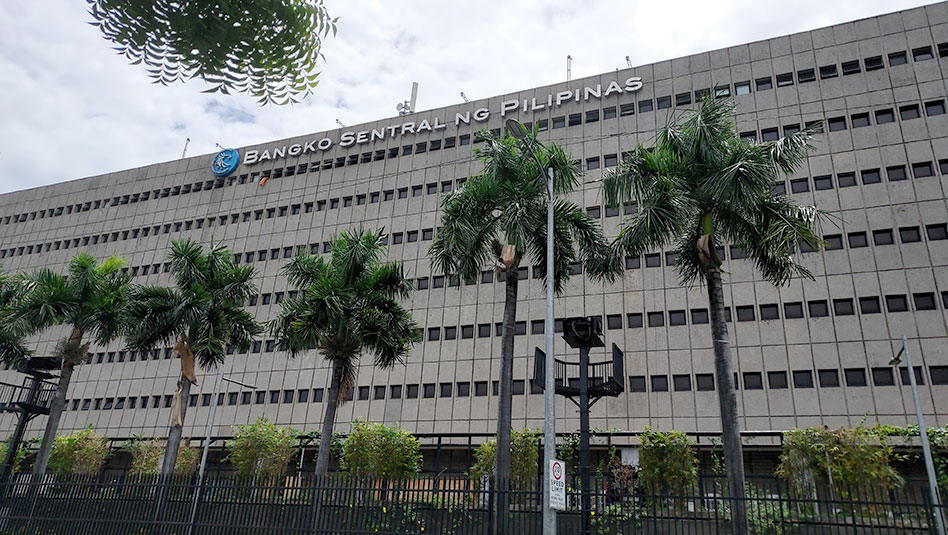
BSP’s policy easing expected to support economy in 2024

BSP’s policy easing expected to support economy in 2024

THE WIDELY expected monetary policy easing from the Bangko Sentral ng Pilipinas (BSP) next year will likely spur economic activity especially if inflation is kept in check.

However, the BSP and the banking industry should remain vigilant against risks amid a prolonged period of volatility and uncertainty, analysts said.

Security Bank Corp. Chief Economist and Senior Assistant Vice-President Robert Dan J. Roces said the BSP is expected to start monetary policy easing by mid-2024.

“It’s expected that there might be a shift towards policy easing, potentially starting in mid to late 2024. Such rate cuts could stimulate economic growth by encouraging consumer spending and business investments, provided that inflation is kept under control,” he said in an e-mail.

At its last meeting for the year, the Monetary Board maintained its target reverse repurchase rate at a 16-year high of 6.5%. The BSP has raised borrowing costs by a cumulative 450 basis points from May 2022 to October 2023 to curb inflation.

Bank of America Country Executive for the Philippines Vincent Valdepeñas said he expects the BSP to start rate cuts by the second quarter.

“A moderate acceleration of rate cuts can further increase economic activity and can help boost growth. We view a 100-basis-point (bps) cut in 2024 starting second quarter next year, which will bring down the key policy rate to 5.5%,” he said in an e-mail interview.

Mr. Valdepeñas said Philippine gross domestic product (GDP) will likely expand by 5.5% in 2024, lower than the revised 6.5-7% government target for next year.

Krisjanis Krustins, director for Asia Pacific sovereigns at Fitch Ratings, also see a 100-bp worth of rate cuts from the BSP next year.

“We assume BSP will cut rates to 5.5% by end-2024 and 4.5% by end-2025, under our forecast of consumer price inflation moderating to an average of 3.5% by 2025 on lower commodity prices, base effects and monetary tightening up to 2023,” he said in an e-mail.

Headline inflation slowed to 4.1% in November, which marked the 20th straight month that inflation breached the central bank’s 2-4% target range.

Year to date, inflation averaged 6.2%.

RISING RISKS

However, Fitch’s Mr. Krustins said risks remain despite the slowdown in November inflation, citing elevated inflation expectations, supply-side price pressures, and potential second- round effects from higher minimum wages and transport fares.

The BSP’s risk-adjusted inflation forecast for 2023 stood at 6% this year, 4.2% for 2024 and 3.4% for 2025.

The BSP also maintained its average inflation baseline forecasts at 6% for 2023, 3.7% for 2024, and 3.2% for 2025.

Mr. Valdepeñas said some of the key risks to the Philippine economy next year would be geopolitical uncertainties, higher interest rates that may lead to sluggish growth, and climate-environment worries.

“A key challenge for the (banking) industry in 2024 would be maintaining profitability with a prolonged higher rates environment and market volatility while navigating through the credit cycle,” he said.

He said the Philippine banking industry has so far done well in an environment of higher interest rates.

Banks have seen increased revenues and profits this year due to higher net interest margins, while also better managing their credit portfolios.

The banking industry’s cumulative net income rose by 10.4% to PHP 270.352 billion as of end-September from PHP 244.876 billion last year, based on the latest central bank data.

As of end-September, banks’ net interest income jumped by 20.4% to PHP 663.24 billion from PHP 550.666 billion last year.

The Philippine banking industry wrote off PHP 457.88 million worth of bad debts in the nine-month period, 80.1% lower than PHP 2.3 billion a year ago.

Banks have also spent a lot of resource on digitization and technology to remain competitive, Mr. Valdepeñas said.

“A competitive landscape is always good as it leads to better outcomes for clients, for the business community and for the broader economy,” he said.

Meanwhile, Mr. Roces said banks had to adapt when the BSP aggressively tightened monetary policy to tame inflation.

“High interest rates typically lead to more expensive loans, dampening borrowing enthusiasm, and slowing down loan growth. However, this also provides an opportunity for banks to achieve higher net interest margins,” he said.

“The industry has had to enhance its risk management practices, with a more prudent credit risk assessment to mitigate the risks. In addition, banks have been adjusting their investment portfolios,” he said.

However, stubborn inflation remains a significant concern as it could prompt the BSP to keep interest rates higher for longer, which could continue to hurt consumer spending and investments.

“The global economic environment also poses a risk, especially if a slowdown affects sectors reliant on exports and foreign investments. Domestic and regional political stability is crucial for maintaining investor confidence and economic stability,” Mr. Roces said.

DIGITAL TRANSFORMATION

The increased adoption of digital technology in the banking sector also requires a “substantial investment” in cybersecurity and digital infrastructure.

The BSP has been proactive in promoting digital transformation in the financial sector. The BSP aims to convert 50% of retail payments into digital form and expand financial inclusion.

The BSP has said it is working closely with the industry to introduce new digital payment streams and facilitate the growth of financial technology (fintech) businesses engaged in e-commerce.

“Overall, the banking industry faces evolution in 2024, primarily centered around adapting to the digital revolution. This involves enhancing digital platforms and services, offering innovative products, and focusing on personalized customer services,” Mr. Roces said.

Banks and financial institutions need to manage market volatility and enhance strategies such as asset diversification and strengthened liquidity management, he said.

“The prolonged period of volatility and uncertainty has also changed the competitive landscape, with increased competition from fintech and digital banking platforms. Banks are now more focused than ever on improving customer experience and service efficiency,” he added. — Keisha B. Ta-asan, Reporter

Why market players are optimistic about equities in 2024

Why market players are optimistic about equities in 2024

THE PHILIPPINE stock market is expected to improve in 2024 amid more opportunities for capital raising and growth, according to industry players and analysts.

Ramon S. Monzon, president and chief executive officer of local bourse operator the Philippine Stock Exchange, Inc. (PSE), said in an interview that about P160 billion worth of capital-raising activities is expected next year, higher than the expected P120 billion this year.

“Next year, we’re going to ramp it up to P150 billion to P160 billion worth of capital raising,” Mr. Monzon said.

“I projected a capital raising of P160 billion [in 2023]. We’re only going to hit about P120 billion,” he added.

As of end-September, the PSE said that total capital raised was at P91.88 billion, of which 58.4% were from follow-on offerings, followed by private placements at 21.9%, stock rights offerings at 15%, and initial public offerings (IPOs) at 4.7%.   

China Bank Capital Corp. Managing Director Juan Paolo E. Colet said in a Viber message that the PSE’s main index could hit the 7,000 level next year on the back of a better interest rate environment.

“There are reasons to be optimistic about the equity market next year, and I see a reasonable chance that the index will reach the 7,000 level,” Mr. Colet said.

“There are potentially three major drivers of better market performance: first, a dovish shift in monetary policy that creates a more favorable interest rate environment; second, higher economic growth on the back of improved domestic and external demand; and third, implementation of capital markets reforms, such as the proposed reduction of the stock transaction tax to 0.10%,” he added.

As of the Dec. 15 close, the PSE index rose 67.96 points or 1.06% to 6,478.44 while the broader all shares index improved by 14.59 points or 0.43% to 3,409.55.

Rizal Commercial Banking Corp. Chief Economist Michael L. Ricafort said in a Viber message that there is a good chance for market conditions to improve next year and hit the 7,000 level.

“There is a good chance for market conditions to improve so some local listed companies could revive share sale and IPO plans in 2024 as they can sell shares at the highest possible price especially if the Fed starts cutting rates in 2024, [which] would reduce borrowing costs, spur more investments, increase profits and boost stock market valuations, on top of the further recovery of the economy,” Mr. Ricafort said.

Mr. Ricafort added that higher investment valuations for the local stock market are expected following the government’s move in July to lift the state of public health emergency due to the coronavirus disease 2019 (COVID-19) pandemic.   

“This boosted employment and generated more business opportunities, all of which would help support higher investment valuations,” Mr. Ricafort said.

He warned that although the lifting improved revenues, “these could be offset by still relatively higher prices and still relatively higher interest rates.”   

Alvin D. Lao, president and chief executive officer of listed oleochemicals and specialty food ingredients manufacturer D&L Industries, Inc., said that next year is expected to be better as interest rates are seen to ease. 

“It is possible that next year would be quite different because one thing that happened this year is that interest rates went up by a lot. When interest rates rapidly change, definitely it’s disruptive. In this case, when interest rates go up so much, financing becomes very expensive,” Mr. Lao said in an interview. 

“For next year, even though the conditions are similar to where we are now, the increase in rates is not as bad anymore because we’re starting at a higher level. So for next year, I don’t think there’s a chance that interest rates will go up even more. From that perspective, next year would be better than this year,” he added.

The Bangko Sentral ng Pilipinas (BSP) on Dec. 14 decided to keep its key rate unchanged at 6.5% for a second straight meeting but signaled a “tighter-for-longer” policy until inflation expectations have become more firmly anchored.    

“The Monetary Board continues to see the need to keep monetary policy settings sufficiently tight to allow inflation expectations to settle more firmly within the target range,” BSP Governor Eli M. Remolona, Jr. said in a statement.

The country’s headline inflation slowed to 4.1% in November compared with 4.9% in October. The inflation figure for November signaled the 20th consecutive month that inflation exceeded the central bank’s 2-4% target range. Inflation averaged 6.2% during the January-to-November period. 

Henry D. Antonio, president and chief executive officer of listed construction firm EEI Corp., said that 2024 would be a different year for listed companies, citing the resurgence of the US economy.

“I think next year would be different for listed companies because the US has already started to get on this run. The US always has a significant impact on the equities market. If the rates start easing, confidence will return,” Mr. Antonio said in an interview.

The US Federal Reserve opted to maintain its benchmark overnight borrowing rate at the 5.25% to 5.5% range on the back of easing inflation. It also announced that there would be at least three rate cuts next year. 

In terms of IPOs, analysts and stakeholders predict about four stock launches next year.

PSE’s Mr. Monzon said the possible listings consist of Sy-led SM Prime Holdings, Inc.’s real estate investment trust (REIT) IPO, as well as companies in the mining, industrial, and food sectors.

“As of now, we have about four big IPOs in line [for next year],” Mr. Monzon said.

For 2023, the PSE saw three conducted IPOs, namely: Alternergy Holdings Corp. in March, Upson International Corp. in April, and Repower Energy Development Corp. in July.

Eduardo V. Francisco, president of top investment house BDO Capital and Investment Corp., projected that the PSE could see two to three IPOs next year. 

“Realistically, I see about two to three IPOs,” Mr. Francisco said in an interview.   

“Five IPOs are already optimistic because [the] first half [of next year] will be muted if rates are still high. If the rates don’t go down, no one would do an IPO because the yield is too high. Those (IPOs) might all come in the second half of next year,” he added. 

EEI’s Mr. Antonio projected that IPOs could come by the latter part of 2024, adding that the local bourse has been “very resilient.” 

“We will see more IPOs coming in. Probably not in the beginning of next year, maybe towards the end of next year is what I would expect. But the nice thing is that the Philippines is very resilient in terms of the market,” Mr. Antonio said. 

Meanwhile, Mr. Colet said that more IPOs and equity deals are projected in 2024 but warned that risks such as hawkish monetary policy and geopolitical tensions could hamper the projection. 

“Given this backdrop, we can expect IPOs and equity deals next year, especially as interest rates start to move down. Delistings are not out of the picture, but hopefully, we see more listings,” Mr. Colet said. 

“As always, there are risks. Among those we should watch out for are a hawkish monetary policy overshoot that stuns economic growth, a failure by China to shore up the world’s second-largest economy, and geopolitical flareups or natural calamities that severely destabilize supply chains and financial markets,” he added. — By Revin Mikhael D. Ochave, Reporter

IMF pushes for better liquidity management, debt pricing and supply

IMF pushes for better liquidity management, debt pricing and supply

THE BANGKO SENTRAL ng Pilipinas (BSP) can further improve liquidity management and debt pricing and supply in the country by developing more instruments and collaborating with the Treasury for its open market operations, the International Monetary Fund (IMF) said.

The IMF, in its staff report for the Philippines following its Article IV consultation, said the BSP could further refine its operational framework as it aims to reduce the reserve requirement ratio (RRR).   

In June, the BSP cut the RRR for big banks by 250 basis points (bps) to 9.5%. It also lowered the ratio for digital banks by 200 bps to 6% and by 100 bps for thrift banks, and rural and cooperative banks to 2% and 1%, respectively.

However, the adjustment in reserve requirements coincided with the expiration of a pandemic relief measure and was combined with an introduction of the 56-day securities, which mopped up any excess liquidity from the RRR cuts. 

“In the future, the BSP could manage banking system liquidity more flexibly by expanding the use of market-based operations like reverse repurchase operations (RRPs). This approach is now viable due to large-scale purchases of government bonds during the COVID-19 (coronavirus disease 2019),” the IMF said.

The IMF also noted that the BSP has shifted to a variable rate format in the auction for the overnight RRP facility in September, which introduced a formal overnight RRP rate and renamed the BSP’s key policy rate to the target RRP rate.

“As the BSP is exiting from the extraordinary liquidity support measures introduced during the pandemic and letting maturing treasury securities run-off, its communication of the desired size of its balance sheet in normal times including the use of its portfolio of treasury securities would be helpful,” it said. 

The changes to the RRP facility are part of BSP reforms that started in 2016, which was when the central bank adopted the interest rate corridor (IRC) framework to help bring short-term market rates closer to its policy rate for better monetary policy transmission.

The RRP facility is part of BSP’s monetary operations to help manage the amount of money circulating in the economy by selling government securities, which the central bank commits to buy back at a later date.   

The BSP and the Bureau of the Treasury (BTr) could also collaborate more to improve the securities market and to further develop a credible yield curve, the IMF said in its report.

“The main issue facing the short-end of the curve is a large discrepancy between yields on BSP bills and Treasury bills. This discrepancy has created challenges for the banking sector in pricing debt instruments accurately, with the Bloomberg valuation tool relying exclusively on government bond yields and banks starting to use the RRP rate explicitly for pricing working capital loans,” it said.

A smooth yield curve would help support the development of a derivatives market for hedging purposes, the IMF said.

“To harmonize the two markets, the BTr should refrain from keeping supply at the short end artificially low by transitioning to a price-taker model during bond auctions. Reducing the number of individual bond series on offer and consolidating maturities into a reduced number of benchmark bonds would help concentrate trading activity,” it said.

The BSP and the BTr could also work on streamlining approved participants in each market because the exclusion of nonbanks from the BSP bill market is a large contributing factor for the observed yield discrepancy, it added.

“Other issues in the two markets, such as the obligations and performance of primary dealers including market-making and facilitating the use of repos of government securities, should also be addressed,” the IMF said.

Meanwhile, the BSP intends to utilize its government securities holdings to support its monetary operations and enhance the transmission of monetary policy.

The central bank is also working on expanding the list of market players with access to BSP bills and has requested follow-up technical assistance from the IMF on developing a benchmark yield curve.

“The BTr has the view that the yield differential is partly due to excess structural liquidity which will decline over time,” the IMF added. — K.B. Ta-asan

Yields on government debt go down

Yields on government debt go down

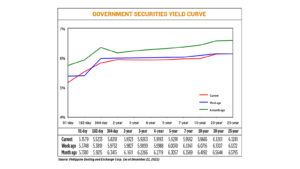
YIELDS on government securities (GS) continued to decline last week due to a lack of catalysts as the end of the year nears.

GS yields at the secondary market fell by an average of 6.21 basis points (bps) week on week, based on the PHP Bloomberg Valuation (BVAL) Service Reference Rates as of Dec. 22 published on the Philippine Dealing System’s website.

Most tenors saw their yields decline last week, with rates of the 91- and 364-day Treasury bills (T-bill) dropping by 21.69 bps and 15.14 bps to 5.1579% and 5.8218%, respectively. On the other hand, the 182-day T-bill went up by 13.42 bps to yield 5.5233%.

Rates of tenors at the belly likewise dropped. Yields on the two-, three-, four-, five-, and seven-year Treasury bonds (T-bonds) went down by 5.04 bps (5.9323%), 6.96 bps (5.9203%), 7.95 bps (5.9193%), 7.79 bps (5.9291%), and 5.69 bps (5.9592%), respectively.

Yields at the long end were mixed. The 10- and 20-year papers saw their rates decline by 10.51 bps and 1.06 bps to 5.9665% and 6.1201%, respectively, while the 25-year paper inched up by 0.09 bp to yield 6.1281%.

Total GS volume traded reached P22.51 billion on Friday, more than three times the P7.46 billion recorded on Dec. 15.

The continued drop in GS yields last week was due to a lack of catalysts and bond supply, a bond trader said in a Viber message.

“Bond yields dropped as investors scramble to find investment outlets. The move was also supported by a drop in global yields,” the bond trader said.

The lack of catalysts was likely due to risk aversion and the “higher for longer” policy stance of local monetary authorities, Oikonomia Advisory & Research, Inc. President and Chief Economist John Paolo R. Rivera said in a separate Viber message.

However, increased consumption and various economic activities brought by the holiday season can help drive trading in the last week of the year, he said.

“Trading is usually active in the latter parts of the year in anticipation of slower flow of funds as the new year starts. Increased consumption due to holidays is also indicative of an active economy,” Mr. Rivera added.

“Total borrowing remains to be constrained as interest rates will remain elevated given the hawkish stance of BSP (Bangko Sentral ng Pilipinas),” he added.

The BSP is unlikely to start policy easing in the next few months and will only consider cutting rates if inflation settles at the midpoint of the 2-4% target, its chief said last week. 

“We’re unlikely to cut rates in the next few months. We’re in a higher for longer (scenario). When I say hawkish, that basically means high for a while,” BSP Governor Eli M. Remolona, Jr. told reporters.

The Monetary Board this month kept its benchmark rate at a 16-year high of 6.5% for a second straight meeting. Interest rates on the overnight deposit and lending facilities were also left unchanged at 6% and 7%, respectively.

From May 2022 to October this year, the BSP raised borrowing costs by a cumulative 450 bps to tame inflation.

The BTr plans to borrow a total of P435 billion during the first quarter, with the bulk coming from T-bond auctions, based on its borrowing plan released last week.

For the week, Mr. Rivera said trading may pick up as traders may take advantage of the momentum seen in the past weeks.

“As expectations level off and as traders harness the holiday effects, trading may increase albeit at a slower rate. The last [three] days are crucial as it can make or break annual targets,” he said.

“Bond trading will remain to be constrained given a foreseeable elevated policy rates. Higher cost of borrowing inhibits bond issuance,” Mr. Rivera added.

GS yields may move sideways with an upward bias, with investors expected to cash in on their gains, the bond trader said.

“For next year, it will be bumpy as the market’s pricing in of rate cuts and the corresponding reaction in bonds assume that yield curve inversion will remain. This may not be consistent with expectations on inflation,” the trader added. — Bernadette Therese M. Gadon

Peso seen to climb further amid holiday season

Peso seen to climb further amid holiday season

THE PESO could strengthen further against the dollar when trading resumes this week, mainly driven by the seasonal increase in foreign exchange inflows amid the holidays. 

The local unit closed at P55.40 per dollar on Friday, gaining 17 centavos from its P55.57 close on Thursday, Bankers Association of the Philippines data showed.

Week on week, the peso appreciated by 25.5 centavos from its P55.655 close on Dec. 15.

The peso opened Friday’s session at P55.35 against the dollar. Its intraday best was at P55.33, while its weakest showing was at P55.435 versus the greenback.

Dollars exchanged rose to $1.083 billion on Friday from $841.25 million on Thursday.

Philippine financial markets were closed on Dec. 25-26 due to non-working days for Christmas.

The peso strengthened on Friday amid the seasonal surge in remittances from overseas Filipino workers (OFWs) to help finance holiday-related spending, Rizal Commercial Banking Corp. Chief Economist Michael L. Ricafort said in a Viber message.

The peso also appreciated as the dollar weakened on Friday after the slower-than-expected US economic growth print in the third quarter, he added.

US gross domestic product (GDP) grew by 4.9% in the third quarter, revised down from the previously reported 5.2%, Reuters reported. However, this was above the 2.1% print in the second quarter and still marked the fastest pace of expansion since the fourth quarter of 2021.

The US economy has been expanding at a pace higher than what officials from the US Federal Reserve regard as the non-inflationary growth rate of around 1.8%. 

The slower US GDP print in the third quarter could support Fed rate cuts in 2024, as priced in by markets, Mr. Ricafort said.

The Fed held its target interest rate steady at the 5.25-5.5% range during its December meeting. Since March 2022, the US central bank hiked its target policy rate by 525 basis points (bps).

For this week, the peso may continue to strengthen as remittances continue to rise amid the holiday season, Security Bank Corp. Chief Economist Robert Dan J. Roces said in a Viber message.

For the first 10 months of 2023, cash remittances increased by 2.8% year on year to $27.49 billion, central bank data showed.

The Bangko Sentral ng Pilipinas expects remittances to grow by 3% this year.

For this week, Mr. Ricafort expects the peso to move between P55.20 and P55.60 per dollar, while Mr. Roces sees the peso ranging from P55.30 to P55.50. — Keisha B. Ta-asan with Reuters

PHL shares may rise in last trading days of 2023

PHL shares may rise in last trading days of 2023

PHILIPPINE SHARES may rise this week as investors rebalance their portfolios before the year’s close and look towards 2024, focusing on the outlook for interest rates and the economy.

The Philippine Stock Exchange index (PSEi) climbed by 31.77 points or 0.49% to close at 6,501 on Friday, while the broader all shares index rose by 23.04 points or 0.67% to end at 3,427.30.

Week on week, the PSEi climbed by 22.56 points or 0.35% from its 6,478.44 close on Dec. 15.

Philippine financial markets were closed on Sept. 25-26 due to non-working days for Christmas.

“The final three trading days of the year will see a mix of window dressing and bargain hunting, with the index poised to end 2023 on a positive note,” China Bank Capital Corp. Managing Director Juan Paolo E. Colet said in a Viber message.

“The local rally in stocks is still driven mainly by growing expectations of interest rate cuts next year even after the Bangko Sentral ng Pilipinas (BSP) has signaled that policy may need to remain tight for some time,” Mr. Colet added.

The local bourse may move sideways this week as investors cautiously assess the economic and monetary policy outlook for next year, Philstocks Financial, Inc. Senior Research Analyst Japhet Louis O. Tantiangco said in a Viber message.

“The upside risks to inflation due to supply side issues and the tighter for longer monetary policy of the Bangko Sentral ng Pilipinas, all of which may slow down our economic growth, may weigh on sentiment,” Mr. Tantiangco said.

“In the last week of the year, investors are also expected to still watch out for further catalysts that could give us a clearer picture of how our economy would be in 2024,” he added.

The BSP is unlikely to start policy easing in the next few months and will only consider cutting rates if inflation settles at the midpoint of the 2-4% target, its chief said last week.

“We’re unlikely to cut rates in the next few months. We’re in a higher for longer (scenario). When I say hawkish, that basically means high for a while,” BSP Governor Eli M. Remolona, Jr. said.

The Monetary Board this month kept its benchmark rate at a 16-year high of 6.5% for a second straight meeting. Interest rates on the overnight deposit and lending facilities were also left unchanged at 6% and 7%, respectively.

From May 2022 to October this year, the BSP raised borrowing costs by a cumulative 450 basis points to tame inflation.

Meanwhile, the Development Budget Coordination Committee set next year’s gross domestic product growth goal at 6.5-7.5%.

There may be “more buoyant movement” in the market in the coming sessions as December and January have historically been “the most successful trading months for the benchmark index,” online brokerage 2TradeAsia.com said in a report.

For this week, 2TradeAsia.com put the PSEi’s support at 6,350 and resistance at 6,600, while Mr. Tantiangco sees the benchmark index trading between 6,400 and 6,700. — S.J. Talavera

BoI-approved investments hit PHP 1.16T

BoI-approved investments hit PHP 1.16T

THE BOARD of Investments (BoI) said on Tuesday that total approved investments reached a record PHP 1.16 trillion so far this year, thanks to a surge in renewable energy projects as the sector was opened up to full foreign ownership.

In a statement, the BoI said it had greenlit PHP 1.16 trillion as of Dec. 18, 59% up from PHP 729 billion approved in 2022.

“There are three more projects worth about PHP 350 billion that are currently being assessed and, if they are able to comply with both the substantive and transparency requirements, they may be able to make it to the BoI Board and Mancom deliberations on Dec. 28 — our last for the year,” Trade Undersecretary and BoI Managing Head Ceferino S. Rodolfo said in a statement.

The PHP 1.16-trillion figure so far is still 29% below the revised PHP 1.5-trillion investment approval target set by the Department of Trade and Industry (DTI) for the year. The DTI earlier upwardly revised the BoI’s initial PHP 1-trillion target for 2023.

“The BoI hitting PHP 1.16 trillion for 2023 reaffirms strong investor confidence in the administration of President Ferdinand R. Marcos, Jr. — their responsiveness to the policy initiatives of the President and the effectiveness of the aggressive investment promotion activities,” Trade Secretary and BoI Chairman Alfredo E. Pascual said.

“We are all-the-more optimistic about opportunities that lie ahead in 2024, with the BoI poised to further catalyze smart- and sustainability-driven investments in the country,” he added.

Domestic approvals hit PHP 398.76 billion, accounting for 34% of the total approvals, and 26% higher than the year-ago figures.

On the other hand, foreign investment approvals soared by 452% to PHP 763.22 billion this year.

The BoI said it approved PHP 968.14 billion worth of investments for the renewable energy and power sector, accounting for 83.45% of the total for the year.

This was more than double the PHP 409.03 billion investments approved a year ago, as the Philippine government allowed full foreign ownership in the renewable energy (RE) sector starting November 2022.

Foreign nationals and foreign-owned entities are now allowed to explore, develop and use RE resources in the country such as solar, wind, biomass, ocean or tidal energy. Foreign ownership of RE projects was previously limited to 40%.

“Noteworthy projects approved for January to December were seven offshore wind power projects located in Cavite, Laguna, Dagupan, San Miguel Bay, Negros, and Northern Samar, amounting to a total of PHP 759.84 billion,” it added.

Mr. Pascual, in June, said that investments in renewable energy projects could make up about a third of the agency’s investment approval targets for the year.

Meanwhile, the BoI approved PHP 96.16 billion worth of projects in the information and communication sector this year.

The manufacturing sector had PHP 22.03 billion worth of approved investments, while infrastructure (toll roads) had PHP 20 billion, and PHP 15.63 billion was for mass housing.

The BoI said these investment approvals are expected to generate 47,195 jobs from a total of 303 projects.

In terms of domestic investments, Western Visayas made up the largest share with PHP 316.89 billion worth of investments, followed by Calabarzon (PHP 211.89 billion), Bicol Region (PHP 162.92 billion), Eastern Visayas (PHP 128.62 billion) and Ilocos Region (PHP 122.18 billion).

Meanwhile, foreign investments from Germany contributed the largest share with PHP 393.28 billion, followed by the Netherlands with PHP 333.61 billion, Singapore with PHP 17.38 billion, and the United States with PHP 3.38 billion. — A.H. Halili

Upside inflation risks seen to linger

Upside inflation risks seen to linger

THE BANGKO SENTRAL ng Pilipinas (BSP) retained its 2-4% inflation target range through 2026, although risks to the outlook remain “strongly tilted to the upside.”

“The inflation target range of 3% ± 1.0 ppt (2-4%) remains an appropriate representation of the medium-term goal for price stability, given the current structure of the Philippine economy, recent economic developments, and the overall macroeconomic outlook over the next few years,” the BSP said in a statement on Thursday.

It noted the latest forecasts show inflation will likely decelerate next year and in 2025, “given limited demand-based inflation pressures amid improving supply conditions.”

“However, the risks to the inflation outlook remain strongly tilted to the upside for both years (2024-2025), which requires close monitoring as well as readiness for further action as needed,” it added.

The BSP has raised borrowing costs by a total of 450 basis points (bps) from May 2022 to October this year, bringing the benchmark rate to a 16-year high of 6.5%.

“The prevailing higher-for-longer stance of monetary policy, together with the implementation of the non-monetary measures by the government, is intended to ensure the sustained return of inflation to the medium-term target and keep inflation expectations anchored,” the BSP said.

The central bank expects inflation to average 3.7% next year and 3.2% in 2025.

The BSP earlier said that risks that could stoke inflation include higher transport costs, electricity rates, and oil prices. It also cited the strong El Niño episode that is seen to persist until the second quarter of 2024, as well as upcoming water wage hikes in Metro Manila.

Estimates by the BSP show that the El Niño weather event could impact inflation by 0.02 percentage point next year.   

The BSP said the current and projected inflation environment supports the economy’s steady growth.

The Development Budget Coordination Committee set next year’s gross domestic product (GDP) growth goal at 6.5-7.5%. It targets 6.5-8% GDP growth for 2025-2028.

“At the same time, enactment of structural reforms is expected to help boost prospects for domestic economic activity, raise productivity, and help build a sustainable non-inflationary economic growth,” it said.

The BSP said it will remain vigilant and data dependent in its monetary policy decisions in order to “steer inflation to a target-consistent path, fostering price and financial stability in the country.”

BSP Governor Eli M. Remolona, Jr. on Wednesday said that the central bank is unlikely to deliver any policy cuts in the next few months and is leaning towards keeping interest rates higher for longer.

The BSP will only begin policy easing if inflation settles into a “comfortable” range or the midpoint of its target band, he added.

The central bank earlier said inflation will settle within the 2-4% target in the first quarter but could potentially spike above target from April to July partly due to the El Niño weather event.

In November, headline inflation eased to 4.1%, marking the 20th straight month that it breached the central bank’s 2-4% target band.

In the first 11 months of 2023, inflation averaged 6.2%. This was still above the BSP’s 6% full-year forecast. — Luisa Maria Jacinta C. Jocson

PHL expected to import more rice due to El Niño

PHL expected to import more rice due to El Niño

THE EL NIÑO weather event’s impact on agriculture production in the Philippines could lead to a surge in rice imports to account for the supply shortfall, the World Bank said.

“El Niño is expected to dampen farm production and increase the need for rice imports,” the multilateral lender said in its latest Food Security Update.

A strong El Niño is expected to continue until January next year and is seen to persist until May 2024, according to the latest advisory by the Philippine Atmospheric, Geophysical and Astronomical Services Administration (PAGASA).

The weather event increases the likelihood of below-normal rainfall conditions, which could bring dry spells and droughts in some areas of the country.

By the end of May 2024, 65 provinces are projected to experience a drought while six will face a dry spell.

The Philippines, one of the world’s biggest rice importers, will likely grapple with soaring prices of the staple.

The World Bank said global sugar and rice prices have increased by double-digits due to the El Niño and its impact on production and trade.

“El Niño has led to dry conditions in South and Southeast Asia, affecting sugar production in India and Thailand, the two largest exporters after Brazil,” it added.

Federation of Free Farmers Chairman Raul Q. Montemayor said that the El Niño will more likely affect the wet season harvest in the Philippines, which normally begins in the middle of the year.

“It could affect plantings for the next (wet season) crop which usually starts in May or June.  There will be less rainfall in rainfed areas while irrigation dams may not be fully replenished and filled to capacity,” he said in a Viber message.

“This will result in delayed planting and/or reduced planted area. Crops may not survive if the drought lingers during the July-September lean months. The impact in terms of production will be felt when farmers harvest again in September-November,” he added.

The latest crop condition assessment by PAGASA showed that most of the provinces in Luzon received “inadequate amounts of water required to support both the rice and corn crops.”

Mr. Montemayor warned that securing imports may be difficult or expensive if other Southeast Asian countries like Thailand or Vietnam are also hit by the El Niño.

“Additionally, other countries that normally do not import but also want to ensure their food security through imports, such as Indonesia, will start competing with us for the available supply and this could drive up prices,” he said.

Rice imports have reached 3.22 million metric tons (MT) as of Dec. 7, according to the Bureau of Plant Industry.

The US Department of Agriculture is projecting rice imports to hit 3.8 million MT this year.

To address spiraling rice prices, the government earlier placed a temporary price cap on regular and well-milled rice from September to October this year.

The government should not just rely on imports as a stopgap measure and instead must provide further support to farmers and the agriculture sector, Mr. Montemayor said.

“Helping our farmers produce as much as possible despite less rainfall is the most important step.  This would involve the rehabilitation of irrigation systems, water harvesting and impounding, and installation of irrigation pumps. This could be complemented by a public campaign to save water, reduce rice wastage, and promote rice substitutes,” he added.

The World Bank also noted other steps being taken by the Philippine government to ensure adequate rice supply, such as expediting rice importers’ clearances.

“In addition, a law has been proposed designed to minimize food waste and promote balanced eating habits by mandating that restaurants serve smaller-portioned, half-cup rice orders,” it added. — Luisa Maria Jacinta C. Jocson, Reporter

Peso up on hawkish BSP stance

Peso up on hawkish BSP stance

THE PESO appreciated against the dollar on Thursday after the Bangko Sentral ng Pilipinas (BSP) said it would keep borrowing costs elevated next year.

The local unit closed at PHP 55.57 per dollar on Thursday, strengthening by 18 centavos from P55.75 on Wednesday, based on Bankers Association of the Philippines data.

The peso opened the session at PHP 55.78 against the dollar. Its intraday best was at PHP 55.57, while its weakest showing was at PHP 55.785 versus the greenback.

Dollars exchanged fell to USD 841.25 million on Thursday from USD 1.59 billion on Wednesday.

“The peso appreciated amid hawkish remarks from the BSP that local policy rates will remain elevated until inflation approaches near the 3% level,” a trader said in an e-mail.

BSP Governor Eli M. Remolona, Jr. told reporters on Wednesday that the Monetary Board was not likely to cut rates in the next few months unless inflation settles at 3%.

“We’re unlikely to cut rates in the next few months. We’re in a higher for longer [scenario]. When I say hawkish, that basically means high for a while,” Mr. Remolona said.

“If most of the numbers point in the right direction, including expectations, if they really settle into this comfortable range of 3% for inflation, then we would consider cutting rates,” he added.

The BSP has raised its policy rate by a cumulative 450 basis points to a 16-year high of 6.5% since May 2022.

Meanwhile, headline inflation slowed to 4.1% in November from 4.9% in October, marking the 20th straight month that inflation breached the BSP’s 2-4% target. Year to date, inflation averaged 6.2%. 

The peso was also supported by “strong US housing and consumer confidence data” amid the seasonal increase of remittances, Security Bank Corp. Chief Economist Robert Dan J. Roces said in a Viber message.

The Conference Board’s consumer confidence index increased to 110.7 this month, the highest reading since July, from a downwardly revised 101.0 in November. Economists polled by Reuters had forecast the index would rise to 104.0 from the previously reported 102.0. The increase in confidence was largest among households in the 35-54 age group and with annual incomes of USD 125,000 and above. 

Meanwhile, US single-family homebuilding surged to more than a 1-1/2-year high in November and could gain further momentum, with declining mortgage rates and incentives from builders likely to draw potential buyers back into the housing market, Reuters reported.

Single-family housing starts, which account for the bulk of homebuilding, jumped 18% to a seasonally adjusted annual rate of 1.143 million units last month, the Commerce Department’s Census Bureau said. That was the highest level since April 2022.

For Friday, the trader said the peso could strengthen further against the dollar ahead of a likely softer US inflation report.

The trader expects the peso to move between PHP 55.40 and PHP 55.65 per dollar on Friday, while Mr. Roces sees it ranging from PHP 55.50 to PHP 55.80. — Aaron Michael C. Sy with Reuters

Posts navigation

Older posts
Newer posts

Recent Posts

  • Metrobank US-Iran Risk Index: Fragile ceasefire 
  • Investment Ideas: April 10, 2026 
  • Metrobank US-Iran Risk Index: A new hope
  • A guide for your peso bond portfolio amid higher for longer rates
  • Investment Ideas: April 8, 2026

Recent Comments

No comments to show.

Archives

  • April 2026
  • March 2026
  • February 2026
  • January 2026
  • December 2025
  • November 2025
  • October 2025
  • September 2025
  • August 2025
  • July 2025
  • June 2025
  • May 2025
  • April 2025
  • March 2025
  • February 2025
  • January 2025
  • December 2024
  • November 2024
  • October 2024
  • September 2024
  • August 2024
  • July 2024
  • June 2024
  • May 2024
  • April 2024
  • March 2024
  • February 2024
  • January 2024
  • December 2023
  • November 2023
  • October 2023
  • September 2023
  • August 2023
  • July 2023
  • June 2023
  • May 2023
  • April 2023
  • March 2023
  • February 2023
  • January 2023
  • December 2022
  • November 2022
  • October 2022
  • September 2022
  • August 2022
  • July 2022
  • June 2022
  • May 2022
  • March 2022
  • December 2021
  • October 2021

Categories

  • Bonds
  • BusinessWorld
  • Currencies
  • Economy
  • Equities
  • Estate Planning
  • Explainer
  • Featured Insight
  • Fine Living
  • How To
  • Investment Tips
  • Markets
  • Portfolio Picks
  • Rates & Bonds
  • Retirement
  • Reuters
  • Spotlight
  • Stocks
  • Uncategorized

You are leaving Metrobank Wealth Insights

Please be aware that the external site policies may differ from our website Terms And Conditions and Privacy Policy. The next site will be opened in a new browser window or tab.

Cancel Proceed
Get in Touch

For inquiries, please call our Metrobank Contact Center at (02) 88-700-700 (domestic toll-free 1-800-1888-5775) or send an e-mail to customercare@metrobank.com.ph

Metrobank is regulated by the Bangko Sentral ng Pilipinas
Website: https://www.bsp.gov.ph

Quick Links
The Gist Webinars Wealth Manager Explainers
Markets
Currencies Rates & Bonds Equities Economy
Wealth
Investment Tips Fine Living Retirement
Portfolio Picks
Bonds Stocks
Others
Contact Us Privacy Notice Terms of Use
© 2026 Metrobank. All rights reserved.

Access this content:

If you are an existing investor, log in first to your Metrobank Wealth Manager account. ​

If you wish to start your wealth journey with us, click the “How To Sign Up” button. ​

Login HOW TO SIGN UP