



MODEL PORTFOLIO
THE GIST
NEWS AND FEATURES
Global Philippines Fine Living
INSIGHTS
INVESTMENT STRATEGY
Economy Stocks Bonds Currencies
THE BASICS
Investment Tips Explainers Retirement
WEBINARS
2024 Mid-Year Economi Briefing, economic growth in the Philippines
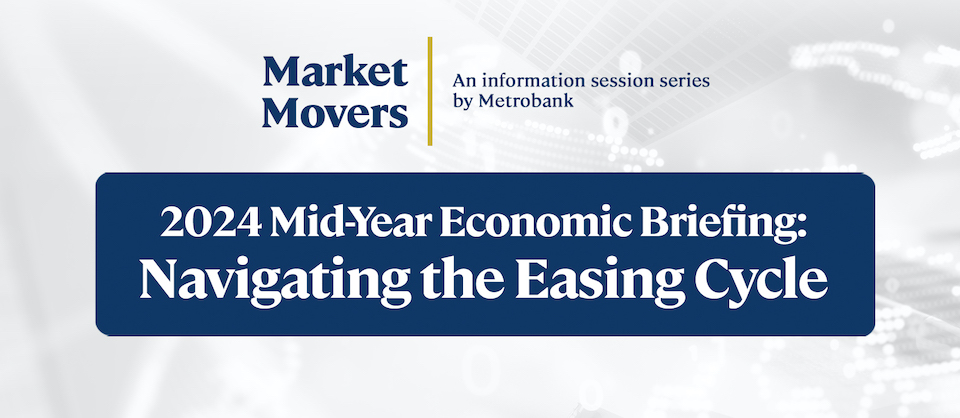
2024 Mid-Year Economic Briefing: Navigating the Easing Cycle
June 21, 2024
Investing with Love
Investing with Love: A Mother’s Guide to Putting Money to Work
May 15, 2024
retirement-ss-3
Investor Series: An Introduction to Estate Planning
September 1, 2023
View All Webinars
DOWNLOADS
grocery-2-aa
Inflation Update: Target breached
DOWNLOAD
Container ship carrying container boxes import export dock with quay crane. Business commercial trade global cargo freight shipping logistic and transportation worldwide oversea concept. Generative AI
Economic Updates
Philippines Trade Update: Wider deficit on strong imports
DOWNLOAD
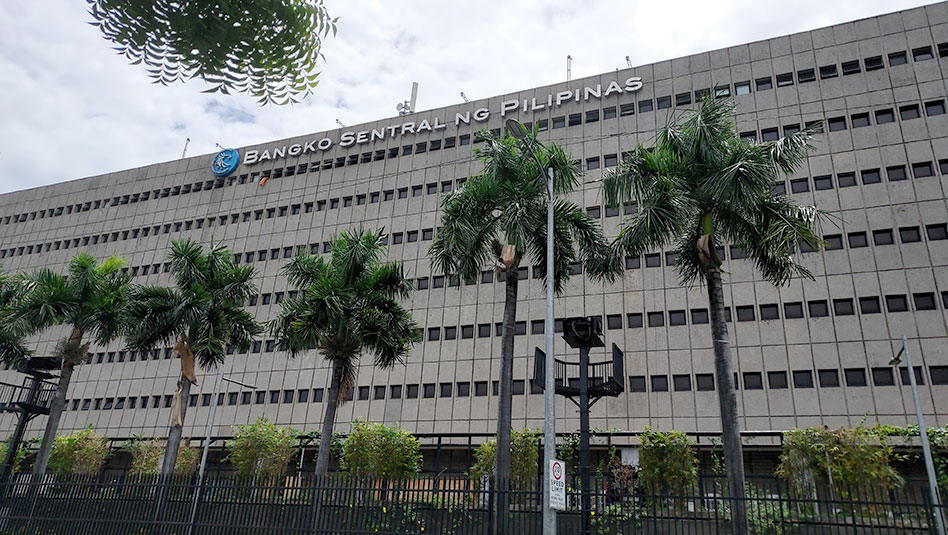
Frick collection with palm trees 
Economic Updates
Policy Rate Updates: Policy rate updates to reassure 
DOWNLOAD
View all Reports
Metrobank.com.ph How To Sign Up
Follow us on our platforms.

How may we help you?

TOP SEARCHES
  • Where to put my investments
  • Reports about the pandemic and economy
  • Metrobank
  • Webinars
  • Economy
TRENDING ARTICLES
  • Investing for Beginners: Following your PATH
  • On government debt thresholds: How much is too much?
  • Philippines Stock Market Outlook for 2022
  • Deficit spending remains unabated

Login

Access Exclusive Content
Login to Wealth Manager
Visit us at metrobank.com.ph How To Sign Up
Access Exclusive Content Login to Wealth Manager
Search
MODEL PORTFOLIO THE GIST
NEWS AND FEATURES
Global Philippines Fine Living
INSIGHTS
INVESTMENT STRATEGY
Economy Stocks Bonds Currencies
THE BASICS
Investment Tips Explainers Retirement
WEBINARS
2024 Mid-Year Economi Briefing, economic growth in the Philippines
2024 Mid-Year Economic Briefing: Navigating the Easing Cycle
June 21, 2024
Investing with Love
Investing with Love: A Mother’s Guide to Putting Money to Work
May 15, 2024
retirement-ss-3
Investor Series: An Introduction to Estate Planning
September 1, 2023
View All Webinars
DOWNLOADS
grocery-2-aa
Inflation Update: Target breached
April 7, 2026 DOWNLOAD
Container ship carrying container boxes import export dock with quay crane. Business commercial trade global cargo freight shipping logistic and transportation worldwide oversea concept. Generative AI
Economic Updates
Philippines Trade Update: Wider deficit on strong imports
March 27, 2026 DOWNLOAD
Frick collection with palm trees 
Economic Updates
Policy Rate Updates: Policy rate updates to reassure 
March 26, 2026 DOWNLOAD
View all Reports

Archives: Business World Article

PH likely to miss 2024 growth target — analysts

PH likely to miss 2024 growth target — analysts

Philippine economic growth will likely miss the government’s target next year amid external headwinds and risks that could derail the country’s recovery, analysts said.

To support growth, the government will need to focus on ramping up investments and ensuring inflation continues to ease, they added.

“The probability of recession is moderate, but everything must go right, including effective and efficient spending by the government, to achieve the target growth rate range,” Moody’s Analytics Chief Asia-Pacific Economist Steven Cochrane said in an e-mail.

The Development Budget Coordination Committee on Dec. 15 revised its growth target for 2024 to 6.5-7.5%, narrower than the previous 6.5-8% goal.

Most multilateral institutions’ gross domestic product (GDP) growth forecasts for the Philippines next year are below the government’s revised goal.

The World Bank expects Philippine GDP to expand by 5.8% in 2024, while the Asian Development Bank sees growth averaging 6.2% next year.

For its part, the International Monetary Fund (IMF) said the economy could grow by 6% in 2024, while the ASEAN+3 Macroeconomic Research Office sees GDP expanding by 6.3%, and the Organisation for Economic Co-operation and Development has a 6.1% growth forecast for the Philippines next year.

Latest data from the Philippine Statistics Authority (PSA) showed GDP growth averaged 5.5% in the first nine months of the year. To meet the lower end of the government’s 6-7% target for 2023, the economy must expand by 7.2% in the fourth quarter.

In 2022, Philippine GDP grew by a stronger-than-expected 7.6%, the highest since 1976.

Mr. Cochrane said he expects Philippine GDP growth to be below the government’s target in 2024.

“The greatest risks to the forecast that keep our baseline growth rate somewhat modest are the lack of consistency of fiscal spending and its resulting stimulus, the remaining potential for high inflation, and weak external demand for Philippine export products,” he said.

Elevated inflation will continue to be one of the biggest risks to growth next year, IMF Representative to the Philippines Ragnar Gudmundsson said.

“Downside risks could stem from persistently high inflation — globally and locally — that would necessitate further interest rate increases, an abrupt global slowdown that would dampen global trade, and an intensification of geopolitical tensions that could undermine the investment climate,” Mr. Gudmundsson said in an e-mail.

Headline inflation averaged 6.2% in the first 11 months of 2023, faster than 5.6% in the same period a year prior. This was above the central bank’s baseline forecast of 6% and target of 2-4% for 2023.

The Bangko Sentral ng Pilipinas (BSP) sees inflation easing to 3.7% in 2024 and to 3.2% in 2025.   

To help bring down inflation, the BSP raised benchmark borrowing costs by a total of 450 basis points from May 2022 to October 2023. It has since kept the policy rate at a 16-year high of 6.5% for two straight meetings.

BSP Governor Eli M. Remolona, Jr. this month said the Monetary Board sees the need to keep policy settings “sufficiently tight” until inflation settles within target.

“Inflation also has been quite volatile and could continue to be volatile depending upon the path of food-price inflation. Another spike in inflation would slow consumer spending and the broader economy,” Mr. Cochrane added.

ING Bank N.V. Manila Senior Economist Nicholas Antonio T. Mapa said persistently high inflation could dampen consumption.

“Household consumption, which contributes the bulk to spending, has remained in expansion but has seen a gradual moderation in pace. The slower pace of expansion can be attributed to tight budgets amidst still elevated inflation,” he said in an e-mail.

Household spending typically accounts for three-fourths of GDP. In the third quarter, it grew by 5%, the slowest pace in two years.

“Meanwhile, the borrowing binge from the sustained rise in consumer loans will eventually take its toll on the households. We note spending on food items, which accounts for more than 20% of GDP, is now crawling at less than 1%,” Mr. Mapa added.

Weaker trade prospects may also affect growth, Mr. Cochrane said.

“While the risks to the global economy appear to be easing and global trade is slowly edging upward, the rebound in goods exports and service exports — including international tourism — is bound to be slow, at least through the first half of 2024,” he said.

Data from the PSA showed exports of goods and services grew by 2.6% in the third quarter, slower than 13.6% a year ago and 4.4% in the second quarter.

“Net exports, which was a key contributor to the surprise third-quarter GDP, delivering roughly 1.6 percentage points to GDP, will likely revert to weighing on overall GDP as early as the fourth quarter and going into 2024,” Mr. Mapa added.

Security Bank Corp. Chief Economist Robert Dan J. Roces also cited factors that could derail trade recovery next year, such as the slowdown in China.

“This is because the Philippines is a major exporter of goods, and China’s economic woes would lead to a decrease in demand for Philippine exports,” Mr. Roces said in an e-mail.

For the first 10 months of the year, the country’s trade in goods deficit narrowed by 11.9% to USD 44.07 billion from a year ago. Exports declined by 7.8% to USD 60.91 billion, while imports fell by 9.6% to USD 104.97 billion.

“Geopolitical tensions in the region also provide risks, such as the posturing in the South China Sea that could also have a negative impact on the Philippine economy. This is because businesses may be hesitant to invest in the Philippines if they are concerned about the stability of the region,” Mr. Roces added.

Mr. Mapa said higher government expenditures, which helped drive third-quarter GDP growth, may not be sustained in the long run.

“Government spending, which bounced back niftily in the third quarter, will stay in positive territory but we remain unsure whether fiscal authorities can provide the type of support to offset the slowdown in other factors,” he said.

“The 2024 budget is an increase from this year but we remain skeptical we will see a strong double-digit effort in terms of government spending with a rising proportion of expenditure going towards interest expenses,” he added.

Gross capital formation is also unlikely to be a major driver of growth, Mr. Mapa said.

“Capital formation turned negative in the third quarter and dropped to the worst downturn in more than 10 years, excluding of course COVID-19,” he said.

Elevated borrowing costs could also affect investments, he added.

The Philippines is prone to natural disasters such as typhoons and earthquakes, as well as weather phenomena like El Niño, Mr. Roces added, which could affect inflation.

Latest data from Philippine Atmospheric, Geophysical and Astronomical Services Administration showed that a strong El Niño is present in the tropical Pacific and is showing signs of further intensification in the coming months.

National Economic and Development Authority Secretary Arsenio M. Balisacan said that the El Niño weather event could potentially stoke inflation and fuel price pressures.

Modest growth seen
Despite lingering risks to the outlook, the country could still post modest GDP growth figures in 2024, the analysts said.

“We are cautiously optimistic that the Philippine economy will show decent growth in 2024,” Mr. Roces said. “There are a number of factors that are expected to contribute to the Philippines’ healthy growth in 2024.”

A rebound in consumer spending due to lower interest rates in the second half of the year and improved wages could boost domestic demand in 2024, he said.

“Second, the Philippine government has been working to improve the investment climate in the country, and these reforms should be able to attract more foreign investment to the Philippines,” Mr. Roces added.

Growth next year may be driven by accelerated public investments and improved external demand for exports, Mr. Gudmundsson said.

“Flagship infrastructure projects should notably benefit from stronger foreign direct investments and private sector participation through public-private partnership modalities,” he added.

Mr. Gudmundsson also cited positive spillovers from a resilient US economy and easing financial conditions, as these could support electronics and service exports and a rebound in domestic demand. — By Luisa Maria Jacinta C. Jocson, Reporter

Stock investors seen to take more risks in 2024

Stock investors seen to take more risks in 2024

Investors are on the lookout for opportunities to buy stocks next year amid expectations of easing inflation and favorable interest rates, analysts said.

“We are bullish on the local equity market’s prospects next year given the prevailing outlook for a continued easing in inflation, and rate cut prospects,” Rastine Mackie D. Mercado, research director at China Bank Securities Corp., said in an e-mail interview.

“These should help boost risk appetite amongst investors, improving trade liquidity and fund flows,” he added.

Toby Allan C. Arce, head of sales at Globalinks Securities and Stocks, Inc. said that investors are anticipated to show increased interest in stocks next year, driven by “favorable interest rates” and “accelerated economic growth.”

“This positive shift follows a period of skepticism throughout much of 2023 when investors had largely dismissed the market,” Mr. Arce said. “Anticipated is a shift in market sentiment towards a more risk-on attitude during the initial quarter of 2024.”

The Bangko Sentral ng Pilipinas recently kept its policy rate steady at a 16-year high of 6.5% for a second straight meeting.

From May 2022 to October 2023, the central bank raised borrowing costs by a cumulative 450 basis points to tame inflation.

Headline inflation cooled to 4.1% in November amid easing prices of food as well as restaurant and accommodation services, data from the Philippine Statistics Authority showed.

The November figure is slower than the 4.9% in October and 8% in November 2022. However, this was still above the BSP’s 2-4% target for the 20th straight month.

Analysts said the Philippine Stock Exchange index (PSEi) could still surge to the 7,000 level on major catalysts for economic growth.

“With respect to the index, our initial target is at 7,100, based on conservative valuations amid expectations of modest earnings growth of just under 10%,” Mr. Mercado said.

“There are reasons to be optimistic about the equity market next year, and I see a reasonable chance that the index will reach the 7,000 level,” Juan Paolo C. Colet, vice-president of AB Capital Securities, Inc. said in a Viber message.

According to Mr. Colet, the three potential major drivers of better market performance next year are a dovish shift in monetary policy, higher economic growth, and the implementation of capital market reforms.

The Philippine economy expanded by 5.9% for the third quarter, faster than 4.3% in the second quarter but slower than 7.7% a year earlier.

The expansion in the third quarter also ended three consecutive quarters of slowing growth.

“As always, there are risks. Among those we should watch out for are a hawkish monetary policy overshoot that stuns economic growth; a failure by China to shore up the world’s second-largest economy; and geopolitical flareups or natural calamities that severely destabilize supply chains and financial markets,” Mr. Colet said. — By Sheldeen Joy Talavera, Reporter

Peso strengthens amid decline in oil prices, dollar

Peso strengthens amid decline in oil prices, dollar

The peso rose against the dollar on Thursday amid easing global crude oil prices and a weaker greenback.

The local unit closed at PHP 55.48 per dollar on Thursday, strengthening by seven centavos from its PHP 55.55 finish on Wednesday, Bankers Association of the Philippines data showed.

The peso opened Thursday’s session weaker at PHP 55.65 against the dollar. Its intraday best was at PHP 55.48, while its weakest showing was at PHP 55.69 versus the greenback.

Dollars exchanged fell to USD 1.03 billion on Thursday from USD 1.53 billion on Wednesday.

The peso strengthened on Thursday due to falling global crude oil prices, Rizal Commercial Banking Corp. Chief Economist Michael L. Ricafort said in a Viber message.

“The peso appreciated tracking the decline in international oil prices amid concerns on the global economic outlook,” a trader likewise said in an e-mail.

Oil prices were subdued having slid on Wednesday as concerns over supplies eased after major shippers announced they would return to the Red Sea, Reuters reported.

Brent edged up 10 cents to USD 79.75 a barrel, while US crude fell 3 cents to USD 74.08 per barrel.

The peso was supported by a weakening dollar amid market expectations of rate cuts by the US Federal Reserve next year, Mr. Ricafort added.

The dollar nursed steep losses on Thursday and was headed for a yearly decline on expectations that 2024 will bring deep rate cuts, Reuters reported.

The dollar index, which measures the US currency against six rivals, fell to a fresh five-month low of 100.76. The index is on course for a 2.6% decline this year, snapping two straight years of strong gains.

Investor focus remains on the timing of the interest rate cuts from the Federal Reserve, with markets pricing in an 88% chance of a cut in March 2024, according to CME FedWatch tool. Futures imply more than 150 basis points of Fed easing next year.

For Friday, the trader said the peso could strengthen further amid year-end demand for the currency.

The trader sees the peso moving between PHP 55.35 and PHP 55.60 per dollar on Friday, while Mr. Ricafort sees it ranging from PHP 55.35 to PHP 55.55. — AMCS with Reuters

PSEi climbs to 6,500 level as rate cut bets grow

PSEi climbs to 6,500 level as rate cut bets grow

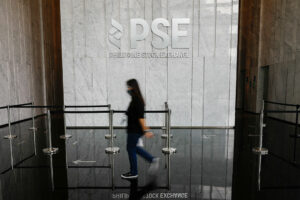
The main index climbed to the 6,500 level on Thursday despite low trading volume as market sentiment improved amid expectations of lower benchmark interest rates next year.

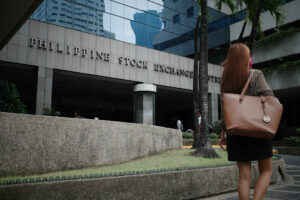
The Philippine Stock Exchange index (PSEi) climbed by 56.31 points or 0.87% to end at 6,519.11 on Thursday, while the broader all shares index went up by 24.70 points or 0.72% to close at 3,440.59.

“The index returned above the 6,500 level in thin trading as investor sentiment remained positive about the local market’s prospects for 2024,” China Bank Capital Corp. Managing Director Juan Paolo E. Colet said in a Viber message.

“We saw the same optimism across most Asian markets on the back of growing bets on the dovish direction of interest rates next year,” Mr. Colet added.

The PSEi rallied as investors see a “better year” in 2024, Mercantile Securities Corp. Head Trader Jeff Radley C. See likewise said in a Viber message.

“Interest rates are about to go down due to better economic data coming from the US,” he said.

Value turnover went down to PHP 2.8 billion on Thursday with 385.53 million issues changing hands from the PHP 3.95 billion with 1.44 billion shares on Wednesday.

Asian shares scaled five-month peaks on Thursday as market wagers on ever-more aggressive rate cuts extended a huge rally in US stocks and bonds, while also leaving plenty of scope for disappointment in the new year, Reuters reported.

MSCI’s broadest index of Asia-Pacific shares outside Japan added another 1.4% to be up 11% in two months and at its highest since August. Futures now imply an 88% chance of a rate cut as early as March, a huge swing from a month ago when the probability was just 21%.

The market has about 157 basis points of easing priced in for 2024, and sees rates reaching 3-3.25% over 2025.

“SPNEC (SP New Energy Corp.) is the only stock that is still making noise aside from index names. Recent corporate news of MVP Group taking control of SPNEC made it shoot up, ending today’s session at PHP 1.35,” Mr. See added.

Manuel V. Pangilinan, chairman and chief executive officer of Manila Electric Co., has taken over SPNEC after the completion of a PHP 15.9-billion investment.

“Philippine equities recorded modest gains as investors braced themselves to end the year 2023. Traders will monitor economic data on jobless claims and pending home sales,” Regina Capital Development Corp. Head of Sales Luis A. Limlingan said in a Viber message.

All sectoral indices rose on Thursday. Industrials went up by 100.20 points or 1.12% to 9,008.21; services increased by 15.38 points or 0.97% to 1,593.34; holding firms jumped by 59.75 points or 0.95% to 6,321.60; mining and oil climbed by 74.63 points or 0.76% to 9,801.69; financials inched up by 9.75 points or 0.56% to 1,736.83; and property added 10.70 points or 0.37% to end at 2,879.58.

Advancers outnumbered decliners, 124 to 61, while 36 names closed unchanged.

Net foreign buying went down to PHP 12.79 million on Thursday from PHP 114.06 million on Wednesday. — S.J. Talavera with Reuters

Extension of tariff cuts seen to mitigate El Niño impact on food prices

Extension of tariff cuts seen to mitigate El Niño impact on food prices

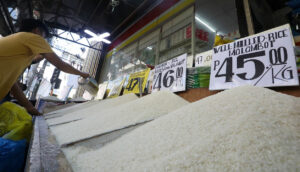
The extension of reduced tariffs on rice and other key agricultural commodities will help cushion the inflationary impact of the El Niño weather phenomenon, analysts said.

“This will ensure stable, if not lower, prices for these products, particularly during the El Niño next year which will hit our agriculture sector. This move is most welcome,” former Agriculture Undersecretary Fermin D. Adriano said in a Viber message.

President Ferdinand R. Marcos, Jr. last week signed Executive Order (EO) No. 50, which extends the reduced Most Favored Nation (MFN) tariff rates on rice, corn, and pork until Dec. 31, 2024.

The rates for rice imports will be kept at 35% for shipments both within or over the minimum access volume (MAV) quota.

Tariff rates for swine, fresh, chilled or frozen meat are retained at 15% for in-quota and 25% for out-quota imports.

Imports for corn maintained the MFN duty at 5% and 15% for in-quota and out-quota shipments, respectively.

“The present economic condition warrants the continued application of the reduced tariff rates on rice, corn, and meat of swine (fresh, chilled or frozen) to maintain affordable prices for the purpose of ensuring food security, managing inflationary pressures, help augment the supply of basic agricultural commodities in the country, and diversify the country’s market sources,” the EO stated.

There will also be a review of the tariff rates on rice, pork, and corn every six months, it added.

Philippine Chamber of Commerce and Industry President George T. Barcelon said that the lower tariff rates will help tame inflation.

“Extending the tariffs on key food commodities (will help) deal with inflation. That would help somewhat, because of the projected El Niño there could be price increases for these food commodities. I think that’s a good move,” he said via phone call.

In the first 11 months of the year, inflation averaged 6.2%. This was still above the central bank’s 6% full-year forecast and 2-4% target range.

“The reduced MFN tariff rates would help cushion agriculture and food production and supply and eventually price and inflation issues that may be brought by El Niño — a positive impact,” retired Pampanga State Agricultural University professor Roy S. Kempis said in a Viber message.

Mr. Kempis said that domestic production will be adversely affected by the dry weather event, particularly palay (unmilled rice) and corn.

“Supply would be compromised for these crops and eventually rice and feeds; following the value chain, feeds will also be a challenge — which uses corn as an ingredient to the extent of 70% per unit volume or weight, and pork may be more expensive,” he added.

The latest bulletin by the Philippine Atmospheric, Geophysical and Astronomical Services Administration (PAGASA) showed that a strong El Niño is seen to persist in the country until January 2024.

The weather event increases the likelihood of below-normal rainfall conditions, which could bring dry spells and droughts in some areas of the country.

The state weather bureau also projected that by the end of May 2024, 65 provinces will experience a drought while six will face a dry spell.

PAGASA also reported in its latest crop condition assessment that most of the provinces in Luzon received “inadequate amounts of water required to support both the rice and corn crops.”

Frontloading imports
National Economic and Development Authority (NEDA) Secretary Arsenio M. Balisacan earlier recommended frontloading rice imports to mitigate inflationary pressures.

“Frontloading of imports next year is an act to bring in imported goods for the year at the earliest possible time. Since domestic supply grows as a result of the frontloading, prices tend to go down, thus, inflation is tamed,” Mr. Kempis said.

However, he noted that the scheduling of these frontloaded imports must be consistent with the country’s agricultural production patterns.

“Timing is important such that frontloading happens way before and/or months after domestic production is available for harvesting. This is a way of a counterbalance to have decent farmgate prices for palay, swine, and corn such that rice, pork, and feeds are reasonably priced,” he added.

The reduced tariff rates will also boost free trade and improve the country’s trade relations, Mr. Kempis said.

“The countries from where the Philippines gets its imported rice, pork, and corn are able to export more because Philippine importers find it cheaper to import the commodities involved, from these exporting countries,” he said.

On the other hand, Samahang Industriya ng Agrikultura Executive Director Jayson H. Cainglet said that the extension of lower tariffs will only benefit importers and traders.

“Local producers have nothing to do with the spiraling costs of staples, especially rice. Local traders and even those not usually involved in local production have been scrambling to source palay given the rising global prices of rice,” he said in a Viber message.

“It is this mindset of ‘importation as the only solution’ that has put us in this dire situation. The greatest tragedy of our times is this self-inflicted destruction of our capacity to produce our own food. The folly to rely on the global markets is again exposed as expensive, unreliable, and reckless,” he added.

Mr. Cainglet noted the foregone revenues from these tariff cuts, which could have been used to support the agriculture sector.

“There is a downside though in extending the reduced MFN treatment by the Philippines. Revenue collection primarily from import taxes on the above-said products that are covered by the reduced MFN tariff rates, is consequently reduced,” Mr. Kempis said. 

Mr. Kempis also said that there may be a need for more subsidies and overall government spending to manage the impacts of the weather event.

In 2019, the El Niño caused agricultural damage of up to P8 billion in the Philippines. — Luisa Maria Jacinta C. Jocson

BSP streamlines public disclosure rules for banks 

BSP streamlines public disclosure rules for banks 

The Bangko Sentral ng Pilipinas (BSP) is streamlining rules for banks on the publication of their quarterly balance sheets, giving them a choice to publish either in print or online.

In Circular No. 1186 signed by BSP Governor Eli M. Remolona, Jr. on Dec. 21, a bank’s quarterly balance sheet report can either be published in print or online within 35 banking days following the end of the reference quarter.

“As an alternative mode of compliance…, a bank may upload its quarterly balance sheet and consolidated balance sheet on its website and shared for a period of at least one year,” the BSP circular stated.

“In addition to this, banks may also display a tabletop standee with QR (quick response) codes in a conspicuous place in the head office, all its branches and other offices, or through other digital/electronic means to make available their balance sheets, as applicable, in digital format,” it added.

The BSP previously required the publication of balance sheets for lenders with resources of P1 billion and above in a newspaper circulated in the city or province where the principal office is located.

The new rules now allow banks to publish their balance sheets in the printed or online version of a newspaper in general circulation.

The new circular stated that stand-alone small banks can publish their balance sheets in print or online version of a newspaper or post in the “most conspicuous area of its premises.” The printed copy must be of sufficient size and easily readable by the public and shared for a period of at least three months. 

Previous rules stated that thrift, rural, and cooperative banks with resources of less than P1 billion, should publish their balance sheets on a 12”x18” white paper in an area of its premises, such as in the municipal building, barangay hall, or a public market. 

Banks are required by the BSP to publish reports which reflect their financial condition, performance, corporate governance policies, and risk management strategies.

“It is the thrust of the Bangko Sentral to promote market discipline and greater transparency through the provision of comprehensive, relevant, reliable, and comparable disclosures,” the BSP said. 

The BSP said the bank’s board of directors must also ensure that information intended for public disclosure is supported by an effective internal control structure, has undergone review and approval by its management, and is compliant with governance processes. 

“The board of directors shall have the overall responsibility in ensuring that reports prescribed under this Section fully disclose the minimum information required. The board of directors may delegate its oversight function to a board-level committee,” it added.

China Bank Capital Corp. Managing Director Juan Paolo E. Colet said the amendments will benefit the banking industry and the investing public, as it gives the public more access to banks’ financial information.

“Online posting is not only cost-efficient for banks, but it also makes information more accessible to the public. The amendments also align with broader moves by the BSP and the banking industry toward increased digitalization of operations and the promotion of online channels for service delivery,” he said in a Viber message.

Regina Capital Development Corp. Head of Sales Luis A. Limlingan said that online disclosure of financial information will benefit the public.

“Especially for publicly listed banks, this will create more accessibility to all participants who want to get as much readily available information as easily as possible,” he said in a Viber message.

The circular amends Section 175 of the Manual of Regulations for Banks. The prescribed reportorial template of the published or posted balance sheet for banks on both solo and consolidated bases is attached on the circular posted on BSP’s website. 

The circular will take effect in 15 days following its publication in the Official Gazette or in a newspaper. — By Keisha B. Ta-asan, Reporter

Term deposit yields drop on Fed cut bets

Term deposit yields drop on Fed cut bets

Yields on the Bangko Sentral ng Pilipinas’ (BSP) term deposits went down on Wednesday despite hawkish signals from the central bank chief recently as investors expect rate cuts in the United States next year.

The central bank’s term deposit facility (TDF) attracted bids amounting to PHP 242.295 billion on Wednesday, above the PHP 230 billion on the auction block. However, this was below the PHP 324.325 billion in tenders seen a week ago for the same offer volume as the 14-day tenor went undersubscribed on Wednesday.

Broken down, tenders for the seven-day papers reached PHP 137.115 billion, higher than the PHP 120 billion auctioned off by the central bank but lower than the PHP 194.105 billion in bids last week.

Banks asked for yields ranging from 6.6% to 6.63%, a tad narrower than the 6.6% to 6.65% band seen a week ago. This caused the average rate of the one-week deposits to decline by 1.82 basis points (bps) to 6.6147% from 6.6329% previously.

Meanwhile, bids for the 14-day term deposits amounted to PHP 105.18 billion, below the PHP 110-billion offering and the PHp 130.22 billion in tenders seen on Dec. 20.

Accepted rates were from 6.6% to 6.68%, slightly wider than the 6.625% to 6.68% margin recorded a week ago. With this, the average rate for the two-week deposits inched down by 1.61 bps to 6.6402% from the 6.6563% logged in the prior week’s auction.

The BSP has not auctioned off 28-day term deposits for more than three years to give way to its weekly offerings of securities with the same tenor.

The term deposits and the 28-day bills are used by the central bank to mop up excess liquidity in the financial system and to better guide market rates.

TDF yields went down despite signals of “higher for longer” rates from the BSP chief, Rizal Commercial Banking Corp. Chief Economist Michael L. Ricafort said in a Viber message, as market players continue to expect 150 bps in rate cuts from the US Federal Reserve as early as March 2024.

These cuts could be matched locally amid easing inflation in the Philippines, Mr. Ricafort added.

BSP Governor Eli M. Remolona, Jr. last week said the central bank is unlikely to deliver any benchmark interest rate cuts in the next few months and is leaning towards keeping borrowing costs higher for longer.

The BSP will only begin policy easing if inflation settles within a “comfortable” range or the midpoint of its 2-4% target band, Mr. Remolona said.

The central bank raised borrowing costs by a total of 450 bps from May 2022 to October this year, bringing the policy rate to a 16-year high of 6.5%.

The BSP has said inflation will settle within the 2-4% target in the first quarter of 2024 but could overshoot the target again from April to July partly due to the El Niño weather event.

In the first 11 months of 2023, headline inflation averaged 6.2%, still above the BSP’s 6% forecast and 2-4% target for the year.

Meanwhile, the US central bank kept borrowing costs unchanged at 5.25-5.5% for the third straight time earlier this month. This was after it hiked policy rates by 525 bps from March 2022 to July 2023.

Markets are now pricing in a 79% chance of a rate cut starting in March 2024, according to CME FedWatch tool, with over 150 bps of cuts priced in for next year, Reuters reported. — Keisha B. Ta-asan with Reuters

Peso weakens on bargain hunting

Peso weakens on bargain hunting

The peso weakened against the dollar on Wednesday due to bargain hunting and even as the greenback dropped versus major global currencies amid expectations of rate cuts from the US Federal Reserve. 

The local currency finished at PHP 55.55 per dollar on Wednesday, weakening by 15 centavos from its PHP 55.40 close on Friday, data from the Bankers Association of the Philippines showed.

The peso opened Wednesday’s trading session weaker at PHP 55.45 versus the dollar, which was already its intraday best. Meanwhile, its worst showing was at PHP 55.888 against the greenback.

Dollars traded rose to USD 1.531 billion on Wednesday from the USD 1.083 billion seen on Friday.

Philippine financial markets were closed on Dec. 25-26 due to nonworking days for Christmas.

“The local currency weakened from bargain-hunting after the peso hit new [highs] last Friday,” a trader said in an e-mail.

Friday’s close of PHP 55.40 was a near one-month high for the peso as it was its best finish since PHP 55.30 on Dec. 7.

The peso weakened as holiday spending tapered off, Rizal Commercial Banking Corp. Chief Economist Michael L. Ricafort said in a Viber message.

“The Christmas holiday spending rush together with the seasonal surge in OFW (overseas Filipino worker) remittances and conversion to pesos (is) already done and over with, though could still be somewhat offset by some seasonal increase spending ahead of the New Year holidays this coming long weekend,” Mr. Ricafort said.

The peso dropped even as the dollar was weaker against major global currencies on Wednesday amid market expectations of policy easing from the Fed by next year, he noted.

The dollar remained under pressure on Wednesday as expectations that the Federal Reserve would soon cut interest rates took hold in the market, with thin year-end flows keeping movements limited, Reuters reported.

The dollar index, which measures the US currency against six rivals, was at 101.47, just shy of the five-month low of 101.42 it touched last week. The index is on course for a 1.9% drop in 2023 after two straight years of strong gains, driven by first the anticipation of and then the actual hiking of rates by the Fed to battle inflation.

Markets are now pricing in a 79% chance of a rate cut starting in March 2024, according to CME FedWatch tool, with over 150 basis points of cuts priced in for next year.

For Thursday, the peso may rebound on the back of demand for the currency as the year closes, the trader said.

The trader expects the peso to move between PHP 55.4 and PHP 55.65 on Thursday, while Mr. Ricafort sees the local unit ranging from PHP 55.45 to PHP 55.65 versus the dollar. — Keisha B. Ta-asan with Reuters

Stocks drop due to profit taking, lack of leads

Stocks drop due to profit taking, lack of leads

Philippine shares went  down on Wednesday as investors took profits and stayed on the sidelines while looking for fresh leads after the Christmas break.

The benchmark Philippine Stock Exchange index (PSEi) declined by 38.20 points or 0.58% to end at 6,462.80 on Wednesday, while the broader all shares index decreased by 11.41 points or 0.33% to close at 3,415.89.

“The local bourse dropped… as investors took some gains while awaiting fresh catalysts towards the yearend. Many were observed on the sidelines, with a net market value turnover of PHP 3.42 billion, lower than this month’s average of PHP 4.18 billion thus far,” Philstocks Financial, Inc. Research Analyst Claire T. Alviar said in a Viber message.

“The PSEi headed lower today due to the pickup in profit-taking activities amidst the lack of catalysts,” China Bank Securities Corp. Research Associate Lance U. Soledad likewise said in an e-mail on Wednesday.

Value turnover went up to PHP 3.95 billion on Wednesday with 1.44 billion issues changing hands from the PHP 3.21 billion with 536.25 million shares seen on Friday.

Seedbox Securities, Inc. equity trader Jayniel Carl S. Manuel said that the index declined due to the “lingering effects of the Christmas hangover,” causing thin trading volume as investors continued to “ease back into the market after the holiday festivities.”

The market was closed on Dec. 25-26 due to non-working days for Christmas.

“Moreover, some market participants appear to be cashing out gains from the earlier Christmas rally. As the market enters the final two days of trading for the year, expectations are optimistic for a potential upswing. The anticipation is fueled by a combination of year-end window dressing and opportunistic bargain hunting, suggesting a potential reversal in the trend as the year concludes,” Mr. Manuel said in an e-mail.

Most sectoral indices went down on Wednesday. Holding firms declined by 105.74 points or 1.66% to 6,261.85; services dropped by 7.52 points or 0.47% to 1,577.96; financials decreased by 6.13 points or 0.35% to 1,727.08; and industrials fell by 8.56 points or 0.09% to 8,908.01.

Meanwhile, mining and oil climbed by 184.32 points or 1.93% to 9,727.06 and property increased by 18.73 points or 0.65% to end at 2,868.88.

Decliners narrowly outnumbered advancers, 88 versus 82, while 52 names closed unchanged.

“Among the index members, Semirara Mining and Power Corp. was at the top, gaining by 4.06%, while Wilcon Depot, Inc. declined the most by 4.19%,” Philstocks Financial’s Ms. Alviar said.

Net foreign buying stood at PHP 114.06 million on Wednesday versus the PHP 87.05 million in net selling seen on Friday.

“In case the market continues to move lower, the 6,380-6,420 is seen as the immediate support level,” China Bank Securities’ Mr. Soledad said. — S.J. Talavera

External debt service burden surges to USD 10.8 billion as of end-September

External debt service burden surges to USD 10.8 billion as of end-September

THE PHILIPPINES’ external debt service burden more than doubled in the January-to-September period, according to preliminary data from the Bangko Sentral ng Pilipinas (BSP).        

Based on data posted on the BSP’s website, the country’s debt service burden on its external borrowings skyrocketed by 130.7% to USD 10.846 billion from USD 4.702 billion in the same period in 2022.   

Month on month, it rose by 22% from $8.89 billion recorded as of end-August.   

As of end-September, the debt service burden is equivalent to 3.5% of gross domestic product (GDP), higher than 1.6% recorded in the comparable year-ago period.

The debt service burden refers to the amount of money a country needs to pay back its foreign creditors. It includes both the principal and interest payments on its external debt.   

BSP data showed principal payments jumped by 110.6% to USD 5.861 billion in the January-to-September period from USD 2.78 billion during the same period in 2022.   

Interest payments surged by 159.7% to USD 4.985 billion in the first nine months of the year from $1.919 billion a year ago.

Principal external debt service is mostly fixed medium- to long-term credit, while interest payments are on fixed and revolving short-term credit from banks and nonbanks.

“The sharp increase in foreign debt payments may have to do with increased foreign borrowings by the government since last year amid the need to hedge against rising interest rates as well as to diversify its sources of borrowings/funding in the global markets, both from commercial and multilateral sources,” Rizal Commercial Banking Corp. Chief Economist Michael L. Ricafort said in a Viber message.   

Central banks across the world have tightened monetary policy to tame inflation. The BSP was regarded as one of the most aggressive central banks in the region after it hiked the key interest rate by 450 basis points (bps) from May 2022 to October 2023.    

Meanwhile, separate BSP data showed the country’s outstanding external debt increased by 10.1% to USD 118.833 billion at end-September from USD 107.91 billion in the same period a year ago. It also inched up by 0.8% from USD 117.9 billion as of end-June.

External debt refers to all types of borrowings by Philippine residents from nonresidents, following the residency criterion for international statistics.

The external debt ratio, or the external debt as a percentage of GDP, was equivalent to 28.1% of GDP. This was slightly lower than 28.5% in the previous quarter.

“For the coming months, external debt servicing costs could remain elevated amid increased foreign borrowings in recent months amid the further diversification of the government’s funding sources in global markets as well as to provide continued supply/liquidity of Philippine sovereign bonds in the world market as part of capital market development,” Mr. Ricafort said. 

However, possible rate cuts from both the US Federal Reserve and the Monetary Board due to easing inflation may help mitigate external debt servicing costs, he added.   

BSP Governor Eli M. Remolona, Jr. earlier said the BSP is unlikely to cut interest rates in the coming months, as monetary policy in the Philippines is in a “higher for longer” scenario.   

The Monetary Board kept its benchmark rate at a 16-year high of 6.5% for a second straight meeting during its December meeting. Interest rates on the overnight deposit and lending facilities were also left unchanged at 6% and 7%, respectively.

Policy easing will only be considered if inflation and inflation expectations are within a “comfortable” range, Mr. Remolona added.   

Headline inflation eased to 4.1% in November and brought the 11-month inflation average to 6.2%. November marked the 20th straight month that inflation breached the BSP’s 2-4% target band for this year.

The central bank expects inflation to average 6% this year. — Keisha B. Ta-asan, Reporter

Posts navigation

Older posts
Newer posts

Recent Posts

  • Metrobank US-Iran Risk Index: Fragile ceasefire 
  • Investment Ideas: April 10, 2026 
  • Metrobank US-Iran Risk Index: A new hope
  • A guide for your peso bond portfolio amid higher for longer rates
  • Investment Ideas: April 8, 2026

Recent Comments

No comments to show.

Archives

  • April 2026
  • March 2026
  • February 2026
  • January 2026
  • December 2025
  • November 2025
  • October 2025
  • September 2025
  • August 2025
  • July 2025
  • June 2025
  • May 2025
  • April 2025
  • March 2025
  • February 2025
  • January 2025
  • December 2024
  • November 2024
  • October 2024
  • September 2024
  • August 2024
  • July 2024
  • June 2024
  • May 2024
  • April 2024
  • March 2024
  • February 2024
  • January 2024
  • December 2023
  • November 2023
  • October 2023
  • September 2023
  • August 2023
  • July 2023
  • June 2023
  • May 2023
  • April 2023
  • March 2023
  • February 2023
  • January 2023
  • December 2022
  • November 2022
  • October 2022
  • September 2022
  • August 2022
  • July 2022
  • June 2022
  • May 2022
  • March 2022
  • December 2021
  • October 2021

Categories

  • Bonds
  • BusinessWorld
  • Currencies
  • Economy
  • Equities
  • Estate Planning
  • Explainer
  • Featured Insight
  • Fine Living
  • How To
  • Investment Tips
  • Markets
  • Portfolio Picks
  • Rates & Bonds
  • Retirement
  • Reuters
  • Spotlight
  • Stocks
  • Uncategorized

You are leaving Metrobank Wealth Insights

Please be aware that the external site policies may differ from our website Terms And Conditions and Privacy Policy. The next site will be opened in a new browser window or tab.

Cancel Proceed
Get in Touch

For inquiries, please call our Metrobank Contact Center at (02) 88-700-700 (domestic toll-free 1-800-1888-5775) or send an e-mail to customercare@metrobank.com.ph

Metrobank is regulated by the Bangko Sentral ng Pilipinas
Website: https://www.bsp.gov.ph

Quick Links
The Gist Webinars Wealth Manager Explainers
Markets
Currencies Rates & Bonds Equities Economy
Wealth
Investment Tips Fine Living Retirement
Portfolio Picks
Bonds Stocks
Others
Contact Us Privacy Notice Terms of Use
© 2026 Metrobank. All rights reserved.

Access this content:

If you are an existing investor, log in first to your Metrobank Wealth Manager account. ​

If you wish to start your wealth journey with us, click the “How To Sign Up” button. ​

Login HOW TO SIGN UP