



MODEL PORTFOLIO
THE GIST
NEWS AND FEATURES
Global Philippines Fine Living
INSIGHTS
INVESTMENT STRATEGY
Economy Stocks Bonds Currencies
THE BASICS
Investment Tips Explainers Retirement
WEBINARS
2024 Mid-Year Economi Briefing, economic growth in the Philippines
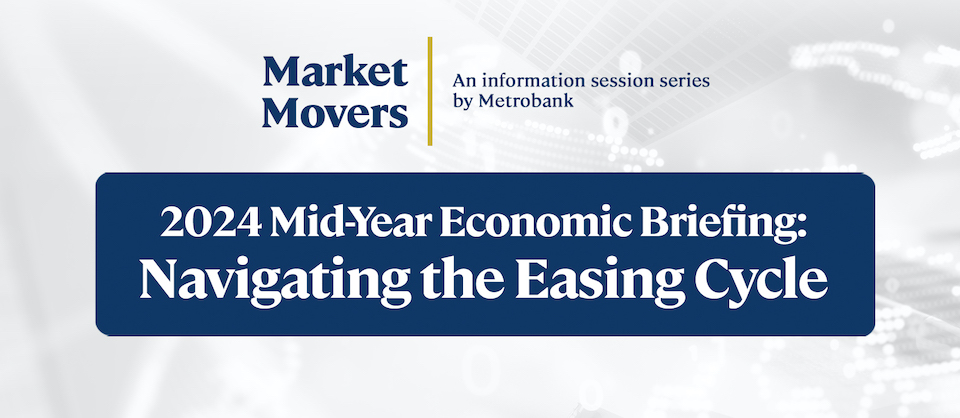
2024 Mid-Year Economic Briefing: Navigating the Easing Cycle
June 21, 2024
Investing with Love
Investing with Love: A Mother’s Guide to Putting Money to Work
May 15, 2024
retirement-ss-3
Investor Series: An Introduction to Estate Planning
September 1, 2023
View All Webinars
DOWNLOADS
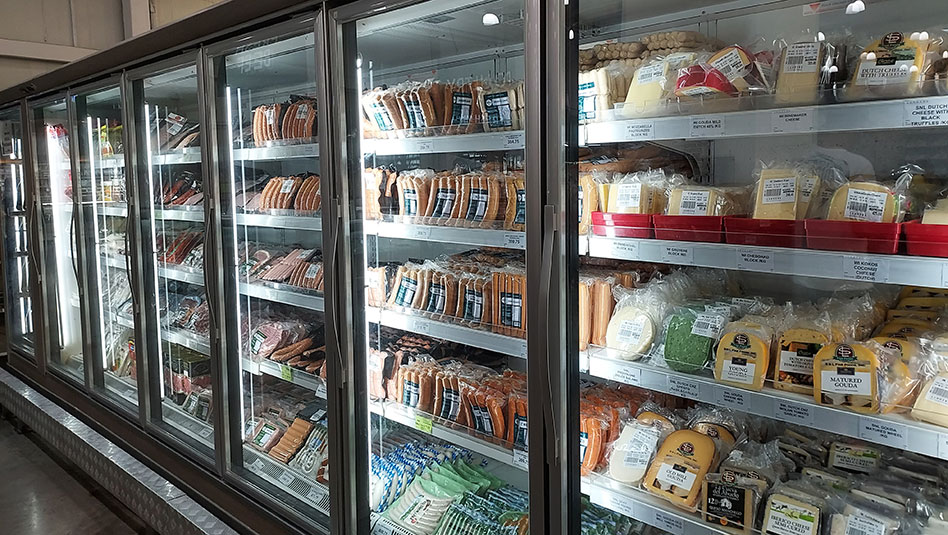
grocery-2-aa
Inflation Update: Target breached
DOWNLOAD
Container ship carrying container boxes import export dock with quay crane. Business commercial trade global cargo freight shipping logistic and transportation worldwide oversea concept. Generative AI
Economic Updates
Philippines Trade Update: Wider deficit on strong imports
DOWNLOAD
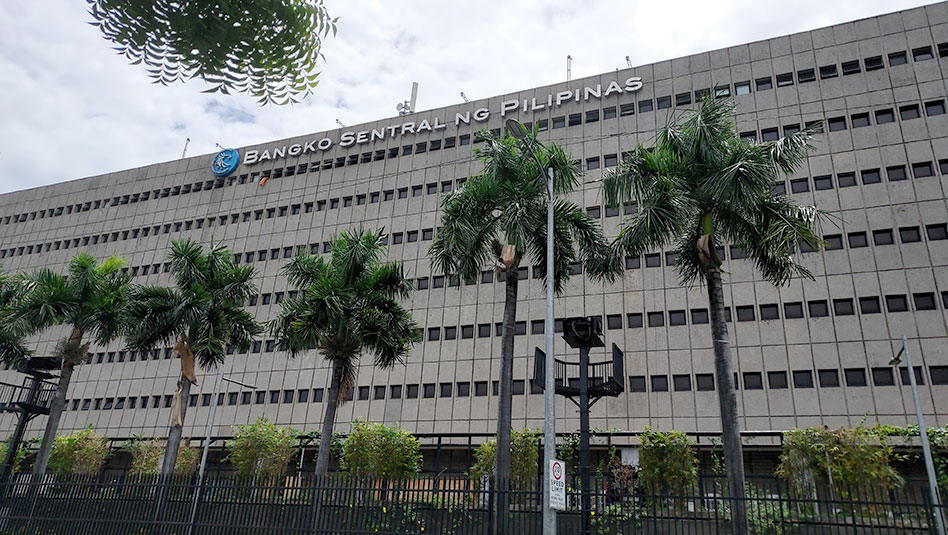
Frick collection with palm trees 
Economic Updates
Policy Rate Updates: Policy rate updates to reassure 
DOWNLOAD
View all Reports
Metrobank.com.ph How To Sign Up
Follow us on our platforms.

How may we help you?

TOP SEARCHES
  • Where to put my investments
  • Reports about the pandemic and economy
  • Metrobank
  • Webinars
  • Economy
TRENDING ARTICLES
  • Investing for Beginners: Following your PATH
  • On government debt thresholds: How much is too much?
  • Philippines Stock Market Outlook for 2022
  • Deficit spending remains unabated

Login

Access Exclusive Content
Login to Wealth Manager
Visit us at metrobank.com.ph How To Sign Up
Access Exclusive Content Login to Wealth Manager
Search
MODEL PORTFOLIO THE GIST
NEWS AND FEATURES
Global Philippines Fine Living
INSIGHTS
INVESTMENT STRATEGY
Economy Stocks Bonds Currencies
THE BASICS
Investment Tips Explainers Retirement
WEBINARS
2024 Mid-Year Economi Briefing, economic growth in the Philippines
2024 Mid-Year Economic Briefing: Navigating the Easing Cycle
June 21, 2024
Investing with Love
Investing with Love: A Mother’s Guide to Putting Money to Work
May 15, 2024
retirement-ss-3
Investor Series: An Introduction to Estate Planning
September 1, 2023
View All Webinars
DOWNLOADS
grocery-2-aa
Inflation Update: Target breached
April 7, 2026 DOWNLOAD
Container ship carrying container boxes import export dock with quay crane. Business commercial trade global cargo freight shipping logistic and transportation worldwide oversea concept. Generative AI
Economic Updates
Philippines Trade Update: Wider deficit on strong imports
March 27, 2026 DOWNLOAD
Frick collection with palm trees 
Economic Updates
Policy Rate Updates: Policy rate updates to reassure 
March 26, 2026 DOWNLOAD
View all Reports

Archives: Business World Article

Term deposit yields decline on BSP rate cut hints

Term deposit yields decline on BSP rate cut hints

YIELDS on the Bangko Sentral ng Pilipinas’ (BSP) term deposits went down on Wednesday, with investors betting on rate cuts this year amid easing inflation.

The central bank’s term deposit facility (TDF) attracted bids amounting to PHP 345.778 billion on Wednesday, below the PHP 360 billion on the auction block as well as the PHP 368.126 billion seen a week ago for a PHP 300-billion offer.

Broken down, tenders for the seven-day papers reached PHP 189 billion, a tad higher than the PHP 185 billion auctioned off by the central bank. However, this was below the PHP 203.117 billion in bids for a PHP 160-billion offer seen the previous week.

Banks asked for yields ranging from 6.5% to 6.615%, a wider and lower band compared with the 6.5525% to 6.6175% seen a week ago. This caused the average rate of the one-week deposits to decline by 1.06 basis points (bps) to 6.5877% from 6.5983% previously.

Meanwhile, bids for the 14-day term deposits amounted to PHP 156.778 billion, lower than the PHP 175-billion offering and the P165.009 billion in tenders for a PHP 140-billion offer on Jan. 3.

Accepted rates were at 6.5675% to 6.65%, narrower than the 6.5625% to 6.65% margin recorded a week ago. With this, the average rate for the two-week deposits inched down by 0.03 bp to 6.6200% from the 6.6203% logged in the prior auction.

The BSP has not auctioned off 28-day term deposits for more than three years to give way to its weekly offerings of securities with the same tenor.

The term deposits and the 28-day bills are used by the central bank to mop up excess liquidity in the financial system and to better guide market rates.

TDF yields went down following signals of possible cuts in borrowing costs after inflation eased to a 20-month low in December, Rizal Commercial Banking Corp. Chief Economist Michael L. Ricafort said in a Viber message.

Finance Secretary and Monetary Board member Benjamin E. Diokno on Monday said the BSP could cut borrowing costs by as much as 100 bps this year and mirror the future policy moves of the US Federal Reserve.

“So, a 75-basis-point cut by the Fed this year could actually be matched by the central bank. Or even 100 bps. Right now, the policy rate is at 6.5%, so I see something like 5.5% by the end of 2024,” Mr. Diokno said in an interview with Bloomberg TV. 

The BSP kept its policy rate steady at a 16-year high of 6.5% at its December meeting. This was after the Monetary Board tightened rates by 450 bps from May 2022 to October 2023 to help bring down elevated inflation.

Preliminary data released by the Philippine Statistics Authority on Friday showed headline inflation slowed to 3.9% in December from 4.1% in November and 8.1% a year ago.

This is the first time inflation hit the 2-4% target in nearly two years and was the slowest reading in 22 months or since 3% in February 2022.

However, the 2023 inflation average stood at a 14-year high of 6%. This was above the 5.8% in 2022 and marked the second straight year that average inflation breached the BSP’s 2-4% target.

BSP Governor Eli M. Remolona, Jr. earlier said the Monetary Board is not considering any rate cuts in the coming months or until inflation is firmly within their 2-4% goal.

The BSP will have its first policy review for this year on Feb. 15. — Keisha B. Ta-asan

Philippine bank assets grew by 9.9% at end-Nov.

Philippine bank assets grew by 9.9% at end-Nov.

THE PHILIPPINE banking sector’s total assets climbed by 9.9% year on year as of end-November 2023, mainly driven by the continued growth in loans.

Preliminary data from the Bangko Sentral ng Pilipinas (BSP) showed banks’ assets stood at PHP 24.37 trillion as of November from PHP 22.18 trillion a year ago.

Banks’ assets are mainly supported by deposits, loans, and investments. These include cash and due from banks as well as interbank loans receivable (IBL) and reverse repurchase (RRP), net of allowances for credit losses. 

The banking industry’s total loan portfolio inclusive of IBL and RRP rose by 9.4% to PHP 12.88 trillion as of end-November from PHP 11.77 trillion in the comparable year-ago period.

Net investments — or financial assets and equity investments in subsidiaries — increased by 9.7% to PHP 7.02 trillion from PHP 6.4 trillion in the previous year.

On the other hand, cash and due from banks dropped by 2.6% to PHP 2.66 trillion in the eleven-month period against PHP 2.73 trillion a year ago.

Net real and other properties acquired (ROPA) inched up by 1.8% to PHP 105.02 billion from PHP 103.15 billion in the same period in 2022.

Other assets stood at PHP 1.72 trillion, surging by 47% from PHP 1.17 trillion a year ago.

Meanwhile, the total liabilities of the banking system grew by 9.5% to PHP 21.34 trillion in the first eleven months of 2023 from PHP 19.49 trillion in the comparable year-ago period.

“The improvement in loan growth, as well as the continued growth in deposits largely led to the high single-digit growth in banks’ total assets,” Rizal Commercial Banking Corp. Chief Economist Michael L. Ricafort said in a Viber message.

“Furthermore, sustained strong growth in banks’ net income also contributed to the continued growth in total assets and capital, as this also showed more lending and investment activities, as well as the continued growth in banks’ capital,” he said. 

Latest BSP data showed outstanding loans by big banks rose by 7.1% to $11.3 trillion in October from USD 10.55 trillion a year earlier.   

The October credit growth was faster than the 6.5% expansion seen in September, marking the fastest pace in bank lending in two months or since the 7.2% seen in August.

The banking industry’s nonperforming loan (NPL) ratio also inched down to 3.41% in November from 3.44% in the previous month but still above 3.35% a year prior. It marked the lowest NPL ratio since the 3.4% in September.   

However, bad loans inched up by 1.1% to PHP 454.281 billion in November from PHP 449.454 billion in the prior month. Year on year, it rose by 11.3% from PHP 408.097 billion in November 2022.

Lenders’ total loan portfolio expanded by 9.3% year on year to PHP 13.34 trillion as of November.

Separate BSP data also showed the Philippine banking industry’s profits climbed by 10.4% to PHP 270.352 billion in the January-to-September period from PHP 244.876 billion last year. — Keisha B. Ta-asan

BSP may match Fed rate cuts to help prevent peso volatility

BSP may match Fed rate cuts to help prevent peso volatility

THE BANGKO SENTRAL ng Pilipinas (BSP) will likely cut benchmark interest rates starting June this year right after the US Federal Reserve starts its own policy easing cycle to help prevent peso volatility.

HSBC economist for ASEAN (Association of Southeast Asian Nations) Aris D. Dacanay said the inflation outlook in the Philippines is better in 2024 compared with previous years, which gives the BSP room to start cutting borrowing costs. 

“Of course, there’s a limit to that, and that limit is the Fed. We don’t think the BSP will be able to cut ahead of the Fed, mainly because our current account deficit is still pretty wide,” Mr. Dacanay told reporters on Wednesday.

He said since the Philippine economy is still sensitive to volatility in the peso, the BSP should ease alongside the Fed to support the local currency against the dollar.

The US Federal Reserve may ease policy rates by 25 basis points (bp) in June and cut by a total of 75 to 100 bps this year, he said, which means the BSP could also reduce borrowing costs by the same amount.

“If the BSP cuts ahead of the Fed, that would lead to depreciation pressures. So that would lead to a weaker peso. If it doesn’t cut, it’s going to lead to a stronger peso. But I think if it cuts in line with the Fed, it limits the volatility, which is the more important aspect,” Mr. Dacanay said.

He noted that the BSP needs to maintain at least a 100-bp interest rate differential with the US central bank.

The Monetary Board hiked benchmark interest rates by 450 bps from May 2022 to October 2023 to help tame elevated inflation. This brought the policy rate to 6.5%, the highest in 16 years. 

Meanwhile, the Fed hiked borrowing costs by a cumulative 525 bps from March 2022 to July 2023, bringing its target rate to 5.25-5.5%.

However, there are still risks to domestic inflation, especially amid the rising protectionism of rice and trade barriers of rice exports globally, Mr. Dacanay said.

“With rice prices the highest ever since a food crisis year, this elevated global rice prices will put a floor under how much inflation can actually moderate in the Philippines,” he said.

“We do think inflation will stay within the BSP’s 2-4% target band, except for the second quarter because of base effects. But once that wears off, it will return to 3%. But we don’t think it will fall below 3% given that global rice prices are elevated,” Mr. Dacanay added. 

Headline inflation slowed to 3.9% in December from 4.1% in November and 8.1% in the same month a year ago, the Philippine Statistics Authority reported last week.

This marked the first time the consumer price index (CPI) settled within the central bank’s 2-4% target and was the slowest in 22 months or since the 3% reading in February 2022.

However, for 2023, inflation averaged 6%, faster than 5.8% in 2022 and marking the second straight year that the CPI exceeded the BSP’s 2-4% target.

Rice inflation also accelerated to 19.6% in December from 15.8% in November. This was the highest print since the 22.9% recorded in March 2009.

Meanwhile, HSBC sees the peso depreciating to PHP 56 to PHP 57 per dollar in the coming months, as the support from holiday inflows dissipates, Mr. Dacanay said.

A weaker peso can also cause inflation to rise again this year, he said.

“That’s the reason why the BSP needs to be in lockstep with the Fed, to basically keep it at that range. It’s not so matter about the level of the peso, but it’s more about the volatility,” he added.

The BSP will hold its first policy review this year on Feb. 15. — Keisha B. Ta-asan

Peso weakens versus dollar with wider trade deficit in November

Peso weakens versus dollar with wider trade deficit in November

THE PESO depreciated to a two-month low against the dollar on Wednesday after the country’s trade deficit widened in November.

The local unit closed at PHP 56.275 per dollar on Wednesday, weakening by 26.5 centavos from its PHP 56.01 finish on Tuesday, based on Bankers Association of the Philippines data.

This was the peso’s worst close in more than two months or since its PHP 56.73-per-dollar close on Oct. 31, 2023.

The peso opened Wednesday’s session at PHP 56.15 against the dollar, which was also its intraday best. Its weakest showing was at PHP 56.41 versus the greenback.

Dollars exchanged rose to USD 2.55 billion on Wednesday from USD 2.22 billion on Tuesday.

The peso declined against the dollar after the Philippines’ trade deficit widened in November, Rizal Commercial Banking Corp. Chief Economist Michael L. Ricafort said in a Viber message.

“The peso weakened significantly after the decline in the country’s trade balance in November,” a trader likewise said in a text message.

The Philippines’ trade-in-goods deficit widened by 26.3% to USD 4.69 billion in November from the USD 3.72-billion gap a year prior. It was also wider than the revised USD 4.39-billion deficit in October.

This marks the widest trade deficit in seven months or since the USD 4.84 billion in April.

In the 11 months through November, the trade deficit reached USD 48.98 billion, 8.8% narrower than the USD 53.72-billion gap in the same period in 2022.

The peso was also dragged down by higher global crude oil prices recently, Mr. Ricafort said.

For Thursday, the trader said the peso could recover against the dollar ahead of potentially softer US consumer inflation.

The trader sees the peso moving between PHP 56.05 and PHP 56.30 per dollar on Thursday, while Mr. Ricafort sees it ranging from PHP 56.20 to PHP 56.40. — AMCS

PSEi tracks Wall Street drop before US inflation

PSEi tracks Wall Street drop before US inflation

PHILIPPINE SHARES closed lower on Wednesday to track the decline on Wall Street as investors awaited the release of latest US consumer inflation data.

The bellwether Philippine Stock Exchange index (PSEi) declined by 72.41 points or 1.09% to end at 6,546.11 on Wednesday, while the broader all shares index fell by 34.04 points or 0.97% to close at 3,469.64.

“Philippine equities followed the sentiment of US markets, which closed lower as many await the latest inflation print. [On Thursday], analysts and fund managers will shift their focus to the US consumer price inflation report that is expected to show headline inflation rose 0.2% in December and 3.2% on an annual basis given the slight uptick in fuel and heating prices,” Regina Capital Development Corp. Head of Sales Luis A. Limlingan said in a Viber message.

The US consumer price index (CPI) edged up 0.1% in November after being unchanged in October.

In the 12 months through November, the CPI increased 3.1% after rising 3.2% in October.

The S&P 500 and Dow lost ground and closed lower on Tuesday, pressured by a modest rise in Treasury yields as investors assessed the timing and size of any US Federal Reserve interest rate cuts in 2024 ahead of inflation data this week, Reuters reported.

Expectations the central bank could begin cutting rates as soon as March have been slowly decreasing, with CME’s FedWatch Tool showing a 65.7% chance for a cut of at least 25 basis points for the month, down from 79% a week ago.

The Dow Jones Industrial Average fell 157.85 points or 0.42% to 37,525.16. The S&P 500 lost 7.04 points or 0.15% at 4,756.50, and the Nasdaq Composite gained 13.94 points or 0.09% at 14,857.71.

A late move higher helped push the Nasdaq back into positive territory for the day.

“Meanwhile, oil prices experienced an uptick… [as] the market is weighing the concerns over Middle East tensions and worries about demand and increasing OPEC (Organization of the Petroleum Exporting Countries) supply,” Mr. Limlingan added.

Back home, almost all of the market’s sectoral indices ended lower on Wednesday, except for financials, which rose by 6.84 points or 0.38% to 1,793.44. 

Meanwhile, holding firms retreated by 117.17 points or 1.83% to 6,261.10; services decreased by 24.39 points or 1.48% to 1,615.17; industrials declined by 130.63 points or 1.42% to 9,068.98; mining and oil went down by 135.34 points or 1.4% to 9,484.68; and property dropped by 15.49 points or 0.53% to 2,882.53. 

Value turnover jumped to PHP 11.57 billion on Wednesday with 518.12 million issues switching hands from the PHP 5.75 billion with 405.37 million shares logged the prior trading day.

Decliners outnumbered advancers, 129 versus 59, while 37 names closed unchanged.

Net foreign buying dropped to PHP 557.38 million on Wednesday from PHP 915.94 million on Tuesday. — RMDO with Reuters

November jobless rate falls to 18-year low

November jobless rate falls to 18-year low

The country’s unemployment rate dropped to another record low in November, as businesses ramped up hiring ahead of the holiday season, the Philippine Statistics Authority (PSA) said on Tuesday.

Preliminary results of the PSA’s Labor Force Survey (LFS) showed the unemployment rate fell to 3.6% in November from 4.2% in the previous month and in November 2022.   

November’s jobless rate was the lowest record since the PSA revised the definition of “unemployed” in April 2005 to refer to people aged 15 years and older without a job and are available for work and actively seeking one.

Philippine Labor Force Situation

The number of unemployed Filipinos decreased by 12.3% or 257,000 to 1.83 million in November from 2.09 million in October. It was also 15.8% or 343,000 lower than the 2.18 million jobless Filipinos in November 2022.

For the first 11 months of 2023, the unemployment rate stood at 4.5%, well below the 5.3%-6.4% target under the Philippine Development Plan.

“We noticed there are more employed persons (in November) at 49.64 million compared to October’s 47.8 million. In terms of numbers, this is a significant increase month on month. Of course, we saw this not just in November but during the fourth quarter because of the holidays,” PSA Undersecretary and National Statistician Claire Dennis S. Mapa said in Filipino during a briefing. 

The underemployment rate — the share of those already working but still looking for more work or longer working hours to total employed population — remained at 11.7% for a second straight month in November. Year on year, it was lower than the 14.4% in November 2022.

This translated to 5.79 million Filipinos looking for additional jobs or longer working hours, 188,000 more than October’s 5.6 million. On a yearly basis, this was lower by 1.37 million from 7.16 million underemployed Filipino workers.

Year on year, the underemployment rate averaged 12.4%, lower than 14.4% in 2022.

PSA data showed the labor force participation rate (LFPR) — the proportion of the total labor force in the working-age population of 15 years old and over — increased to 65.9% from 63.9% in October and was the highest since 66.1% in June 2023.

Month on month, the size of the labor force grew by 1.58 million to 51.47 million.

Year on year, the LFPR was lower than 67.5% in the same month in 2022. The size of the labor force in November decreased by 413,000 from last year’s 51.88 million.

“The (annual) decline was mainly due to reduced participation of young people (34.4% from 40%) and women (55.4 % from 57.8%) in the labor force, influenced by family responsibilities, schooling, and age-related factors,” the National Economic and Development Authority (NEDA) said in a statement.

For the first 11 months, the LFPR averaged 64.8% from 64.5% in the same period a year ago.

NEDA Secretary Arsenio M. Balisacan said expanding the digital economy, particularly micro, small, and medium enterprises, would help address the year-on-year drop in the labor force and boost jobs this year.

“Digitalization enables alternative work arrangements, particularly for the youth, women, and those in the creative sector. This will help address the declining labor force,” he said in a statement.

The employment rate — the share of the employed Filipinos to the total working force — rose to 96.4% in November from 95.8% in October and November 2022.

Mr. Mapa said the employment rate was also the highest since April 2005.

The number of employed people stood at 49.64 million in November, up by 1.83 million from October’s 47.8 million and by around 70,000 from 49.7 million in November 2022.

From January to November, the employment rate averaged 95.5%, slightly up from 94.5% a year ago.

“We will take full advantage of the liberalization reforms intended to attract investments in the Philippines, especially in digital infrastructure. Upgrading our infrastructure will attract investments that generate high-quality jobs,” Mr. Balisacan said.

The services sector remained the top employer in November with an employment rate of 59.5% of the total population, followed by agriculture and industry at 24.6% and 15.9%, respectively.

Year on year, higher employment was seen in agriculture and forestry with a 1.24 million increase. This was followed by construction (up by 453,000), and transportation and storage (308,000).

“Agricultural employment is extremely variable because of the seasonality of work and because it is still the sector of last resort for so many Filipino jobseekers,” Sonny A. Africa, executive director of think tank Ibon Foundation said in a Viber message.

Meanwhile, the manufacturing sector recorded the highest year-on-year job losses at 1.39 million in November.

“Brisk economic activities continued to drive down the country’s unemployment rate. This is partially helped by seasonal factors but still below 2022’s comparable figure,” China Banking Corp. Chief Economist Domini S. Velasquez said in an e-mail.

On average, an employed Filipino worked 40.2 hours, down from October’s 41.2 average hours but higher compared with 39.3 hours in November 2022.

Philippine Institute for Development Studies Senior Research Fellow Roehlano M. Briones expects the labor market to continue to improve.

“I don’t expect it to go down much further, [as] it is already approaching the natural rate of unemployment. [It] cannot be attributed only to seasonality because the rate was higher 12 months ago,” Mr. Briones said in a Viber message.

Ms. Velasquez also sees higher employment opportunities from the services sector amid slowing inflation.

“The industry sector will likely be a mix of improving construction outlook and moderating manufacturing activities,” she added. — Mariedel Irish U. Catilogo

Banks’ NPL ratio slips to two-month low

Banks’ NPL ratio slips to two-month low

Philippine banks’ asset quality improved in November as the banking industry’s gross nonperforming loan (NPL) ratio slipped to its lowest in two months.

Preliminary data from the Bangko Sentral ng Pilipinas (BSP) showed banks’ NPL ratio stood at 3.41% in November, easing from the five-month high of 3.44% in October but still above 3.35% a year prior.

The November bad loan ratio marked the lowest in two months or since 3.4% logged in September.

However, bad loans inched up by 1.1% to PHP 454.281 billion in November from PHP 449.454 billion in the prior month. Year on year, it rose by 11.3% from PHP 408.097 billion in November 2022.

Lenders’ total loan portfolio expanded by 9.3% year on year to PHP 13.34 trillion as of November.

Loans are considered nonperforming once they remain unpaid for at least 90 days after the due date. They are deemed as risk assets given borrowers are unlikely to settle such loans.

Despite high borrowing costs, Union Bank of the Philippines, Inc. Chief Economist Ruben Carlo O. Asuncion noted the NPL ratio in November remained low due to strong economic growth.

“Even with the high interest rate environment, the view of BSP Governor [Eli M. Remolona, Jr.] on 6.5% still being appropriate for growth and expansion to thrive must be lent apt credence,” Mr. Asuncion said. 

At its November meeting, the Monetary Board decided to keep the key interest rate unchanged at 6.5%, its highest print in 16 years. The BSP hiked borrowing costs by 450 basis points (bps) from May 2022 to October 2023 to tame inflation. 

Mr. Remolona earlier said that at 6.5%, the benchmark rate still remains supportive of economic growth. He noted the BSP’s hawkish stance has not derailed the economy’s growth momentum.

The BSP chief had said gross domestic product (GDP) likely expanded by around 5.9% in the fourth quarter of 2023. He expects stronger GDP growth in the first six months of 2024.

Mr. Asuncion said the economy likely grew by 6.2% in the fourth quarter last year, which would bring the full-year average to 5.7%. This is below the government’s 6-7% goal and the 7.6% seen in 2022. 

Rizal Commercial Banking Corp. Chief Economist Michael L. Ricafort said the seasonal uptick in economic activity ahead of the holidays led to better business and livelihood conditions, which allowed borrowers to pay their loans.

BSP data showed past due loans rose by 14.3% to PHP 563.384 billion as of November from PHP 492.528 billion a year ago. These accounted for 4.22% of the total loans, slightly higher than 4.04% a year ago.

In the same month, restructured loans fell by 6.7% to PHP 305.81 billion from PHP 327.76 billion a year ago. This brought its ratio to 2.29% of banks’ gross loan portfolio from 2.69% in November 2022.

Lenders’ loan loss reserves jumped by 6.8% year on year to PHP 460.953 billion, equivalent to 3.46% of the total loans. The latest ratio is lower than 3.54% seen in the same month in 2022.

NPL coverage ratio — which indicates banks’ allowance for potential losses due to bad loans — was a tad lower at 101.47% from 105.73% a year ago.     

“Possible local policy rate cuts for the coming months would help boost loan demand, investments, and other economic activities, thereby would help further reduce the NPL ratio for the coming months,” Mr. Ricafort said.

The BSP may likely cut borrowing costs by as much as 100 bps this year as inflation is seen to stay mostly within the 2-4% target band, Finance Secretary and Monetary Board member Benjamin E. Diokno said on Monday.

Most analysts also expect the Philippine central bank to start its policy easing in the second half of the year. 

“A more expansive monetary policy into 2024 will definitely bode well for lower and more stable NPLs,” Mr. Asuncion likewise said.

However, Mr. Remolona has said that the Monetary Board will only consider rate cuts if inflation is seen staying firmly within the 2-4% target range.

The BSP will have its first policy review this year on Feb. 15. — Keisha B. Ta-asan

BIR waives annual registration fee for business taxpayers

BIR waives annual registration fee for business taxpayers

Business taxpayers will no longer have to pay the annual registration fee with the Bureau of Internal Revenue (BIR) starting this year.

In an advisory, the BIR said it will stop collecting the annual registration fee from business taxpayers effective Jan. 22 in compliance with the Republic Act No. 11976 or the Ease of Paying Taxes Act.

President Ferdinand R. Marcos, Jr. signed the Ease of Paying Taxes Act into law on Jan. 5.

“As a result, business taxpayers are exempt from filing BIR Form No. 0605 and paying the PHP 500 annual registration fee on or before Jan. 31 every year,” it said.

The BIR said that business taxpayers with existing certificate of registration, which includes the registration fee, will remain valid. They can have the certificate of registration updated or replaced at the Revenue District Office where they are registered on or before Dec. 31, 2024.

The Ease of Paying Taxes Act aims to modernize tax administration, update the taxation system, and protect taxpayer rights and welfare.

The law amends several sections of the National Internal Revenue Code of 1997, such as the introduction of a taxpayer classification system and a risk-based classification for VAT refund claims.

Taxpayers may also now file returns electronically or manually to any authorized agent bank, Revenue District Office, or authorized tax software provider.

The law also mandates the BIR to adopt an “integrated digitalization strategy by providing automated end-to-end solutions for the benefit of taxpayers.”

The agency is also ordered to develop an Ease of Paying Taxes and digitalization roadmap to ensure ease of tax compliance and streamlining of tax processes.

Rizal Commercial Banking Corp. Chief Economist Michael L. Ricafort said that the amendments under the Ease of Paying Taxes Act will improve the ease of doing business in the country.

“This is consistent with the overall efforts to reduce business costs, make it more convenient, and encourage more people to do business and also pay taxes for their fair share of nation-building,” he said in a Viber message.

Mr. Ricafort said that simplifying tax processes for businesses will help boost revenues and promote better transparency.

Philippine Chamber of Commerce and Industry President Eunina V. Mangio said in a statement that the passage of the law is a welcome development for the business community.

“I hope this law, coupled with proper implementation and monitoring, will significantly ease the paying of taxes in the country,” she said.

Ms. Mangio also said that the law could help attract more foreign investors.

“We need to harmonize and streamline our processes for us to attract investors into the country. Otherwise, we will remain low in the ease of doing business,” she added.

BIR collection
Meanwhile, Finance Secretary Benjamin E. Diokno said the BIR should surpass its collection target for this year.

“We have much to accomplish in 2024. Thus, I urge the agency to not just meet, but exceed its collection targets this year and beyond,” Mr. Diokno said in a press release on Monday.

The BIR is expected to collect PHP 3.05 trillion this year, based on the latest Budget of Expenditures and Sources of Financing.

Data from the Treasury showed that BIR revenues stood at PHP 2.34 trillion in the January-to-November period, accounting for 88.77% of its PHP 2.64-trillion full-year target.

The agency collects about 70% of government revenue.

DoF data also showed that the BIR filed a total of 221 cases against tax evaders before the Department of Justice in the 11-month period. These cases had estimated liabilities worth PHP 13.24 billion.

“Meanwhile, 38 cases with an estimated tax liability of PHP 5.06 billion were filed with the Court of Tax Appeals (CTA) during the said period,” the department added.

In the first 11 months, the BIR also collected PHP 410.94 million and issued 186 closure orders against businesses in violation of value-added tax (VAT) requirements. — By Luisa Maria Jacinta C. Jocson, Reporter

Manufacturing output up 1.9% in November

Manufacturing output up 1.9% in November

Factory output expanded in November, but the activities related to food items continued to drag the overall manufacturing sector.

Preliminary results of the Philippine Statistics Authority’s (PSA) latest Monthly Integrated Survey of Selected Industries showed factory output, as measured by the volume of production index (VoPI), rose by 1.9% year on year in November.

The November output was faster than the revised 1.5% recorded in October.

This is the highest print in two months or since the 10.4% recorded in September.

On a monthly basis, November’s output grew by 2.7%, a reversal from the 1.2% contraction in the previous month. Stripping out seasonality factors, manufacturing that month edged up by 0.7%, a reversal from the 4.1% drop in October.

Year to date, factory output averaged 5.1%, lower than the 45% growth a year ago.

To compare, S&P Philippines Manufacturing Purchasing Managers’ Index (PMI) rose to 52.7 in November, higher than the of 52.4 in October. A PMI reading of above 50 means improvement in operating conditions compared with the previous month, while a reading below 50 shows deterioration.

PSA said the annual growth of the VoPI in November can be attributed to  the faster rise in transport equipment (17.1% from 5.8% in October), as well as the smaller declines in beverages (-11.6% in November from -34.4% in October), and chemical and chemical products (-2.4% from -10.9%).

Several industry divisions posted slower growth, such as printing and reproduction of recorded media (8.6% from 26.3%), basic pharmaceutical products and pharmaceutical preparations (15.5% from 16.5%), electrical equipment (29.9% from 30.5%), and coke and refined petroleum products (37% from 46.9%).

However, the PSA said 13 industry divisions recorded annual declines during the month, led by machinery and equipment except electrical (-27% from -23.1%); leather and related products, including footwear (-26% from -29%); fabricated metal products, except machinery and equipment (-25.4% from -16.4%); wearing apparel (-24.3% from -20%); and wood, bamboo, cane, rattan articles, and related products (-20.2% from -42%).

Average capacity utilization — the extent to which industry resources are used in the production of goods — averaged 74.8% in November, slightly higher than October’s 74.3% in the previous month.

All industry divisions have reached an average capacity utilization rate of more than 60%.

“Manufacturing activity related to food items were the drag on overall manufacturing with production of other items compensating for the decline in those items. This may reflect the struggles experienced by the agriculture sector which posted negative growth in the third quarter,” ING Bank N.V. Manila Senior Economist Nicholas Antonio T. Mapa said in an e-mail.

Mr. Mapa added that the manufacturing industry will likely help support growth, but gross domestic product (GDP) growth will likely remain largely driven by the services sector. — By Lourdes O. Pilar, Researcher

Gov’t fully awards PHP30B in fresh 5-year bonds amid high demand

Gov’t fully awards PHP30B in fresh 5-year bonds amid high demand

The Bureau of the Treasury fully awarded fresh five-year Treasury bonds (T-bonds) that it auctioned off on Tuesday with a coupon rate higher than secondary market levels amid waning expectations of an earlier rate cut by the US Federal Reserve.

It raised PHP 30 billion from the bonds as total bids reached PHP 74.329 billion, more than twice as much as the program, according to auction results posted by the bureau on its website.

The bonds were awarded at a coupon rate of 6.125%. Accepted yields ranged from 5.86% to 6.125% for an average rate of 6.073%.

The coupon rate was 9.5 basis points (bps) above the 6.03% quoted for the five-year bond on the secondary market before the auction, based on PHP Bloomberg Valuation Service Reference Rates data provided by the Treasury.

“The higher rates fetched today reflected the impact of stronger US employment reports last Friday,” a trader said in an e-mail. “This economic release has dampened expectations of an earlier policy rate cut by the Federal Reserve.”

The monthly nonfarm payroll report showed the US economy added 216,000 jobs in December, while the jobless rate was steady at 3.7%, Reuters reported.

It was down from expectations from most forecasters for it to rise, prompting concerns that the US Federal Reserve’s battle to tame inflation might get prolonged.

The Fed hiked borrowing costs by 525 bps to 5.25-5.5% from March 2022 to July 2023. The Federal Open Market Committee will hold its first policy meeting this year on Jan. 30-31.

The lower T-bond yield from the last five-year bond offer came amid “unusually strong” demand, Michael L. Ricafort, chief economist at Rizal Commercial Banking Corp. said in a Viber message.

On Oct. 10, 2023, the Treasury bureau raised PHP 30 billion from reissued 10-year bonds with a remaining life of five years and three months for an average rate of 6.512%.

The coupon rate for Tuesday’s fresh bonds at 6.125% is 38.7 bps lower than the 6.512% fetched for the reissued 10-year bonds sold in October.

The Treasury wants to raise PHP 195 billion from the domestic market this month — PHP 75 billion via Treasury bills and PHP 120 billion through T-bonds.

The government borrows from local and foreign sources to help fund its budget deficit, which is capped at 5.1% of the gross domestic product this year. — By Aaron Michael C. Sy, Reporter

Posts navigation

Older posts
Newer posts

Recent Posts

  • Metrobank US-Iran Risk Index: Fragile ceasefire 
  • Investment Ideas: April 10, 2026 
  • Metrobank US-Iran Risk Index: A new hope
  • A guide for your peso bond portfolio amid higher for longer rates
  • Investment Ideas: April 8, 2026

Recent Comments

No comments to show.

Archives

  • April 2026
  • March 2026
  • February 2026
  • January 2026
  • December 2025
  • November 2025
  • October 2025
  • September 2025
  • August 2025
  • July 2025
  • June 2025
  • May 2025
  • April 2025
  • March 2025
  • February 2025
  • January 2025
  • December 2024
  • November 2024
  • October 2024
  • September 2024
  • August 2024
  • July 2024
  • June 2024
  • May 2024
  • April 2024
  • March 2024
  • February 2024
  • January 2024
  • December 2023
  • November 2023
  • October 2023
  • September 2023
  • August 2023
  • July 2023
  • June 2023
  • May 2023
  • April 2023
  • March 2023
  • February 2023
  • January 2023
  • December 2022
  • November 2022
  • October 2022
  • September 2022
  • August 2022
  • July 2022
  • June 2022
  • May 2022
  • March 2022
  • December 2021
  • October 2021

Categories

  • Bonds
  • BusinessWorld
  • Currencies
  • Economy
  • Equities
  • Estate Planning
  • Explainer
  • Featured Insight
  • Fine Living
  • How To
  • Investment Tips
  • Markets
  • Portfolio Picks
  • Rates & Bonds
  • Retirement
  • Reuters
  • Spotlight
  • Stocks
  • Uncategorized

You are leaving Metrobank Wealth Insights

Please be aware that the external site policies may differ from our website Terms And Conditions and Privacy Policy. The next site will be opened in a new browser window or tab.

Cancel Proceed
Get in Touch

For inquiries, please call our Metrobank Contact Center at (02) 88-700-700 (domestic toll-free 1-800-1888-5775) or send an e-mail to customercare@metrobank.com.ph

Metrobank is regulated by the Bangko Sentral ng Pilipinas
Website: https://www.bsp.gov.ph

Quick Links
The Gist Webinars Wealth Manager Explainers
Markets
Currencies Rates & Bonds Equities Economy
Wealth
Investment Tips Fine Living Retirement
Portfolio Picks
Bonds Stocks
Others
Contact Us Privacy Notice Terms of Use
© 2026 Metrobank. All rights reserved.

Access this content:

If you are an existing investor, log in first to your Metrobank Wealth Manager account. ​

If you wish to start your wealth journey with us, click the “How To Sign Up” button. ​

Login HOW TO SIGN UP