MODEL PORTFOLIO
THE GIST
NEWS AND FEATURES
Global Philippines Fine Living
INSIGHTS
INVESTMENT STRATEGY
Economy Stocks Bonds Currencies
THE BASICS
Investment Tips Explainers Retirement
WEBINARS
2024 Mid-Year Economi Briefing, economic growth in the Philippines
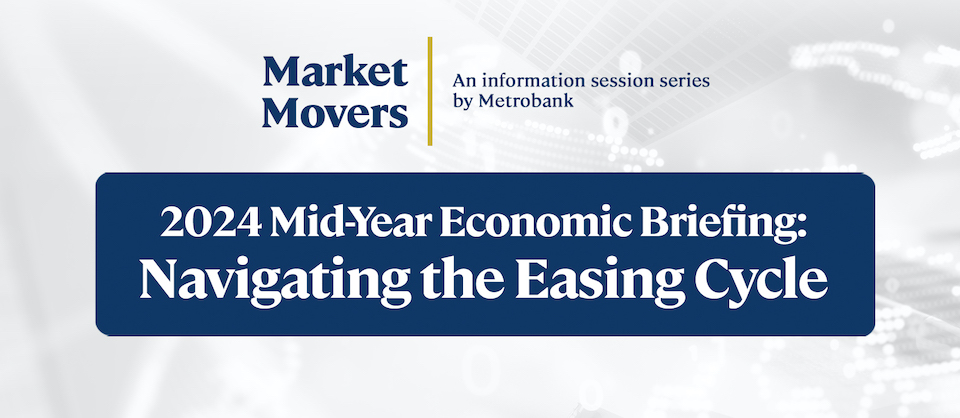
2024 Mid-Year Economic Briefing: Navigating the Easing Cycle
June 21, 2024
Investing with Love
Investing with Love: A Mother’s Guide to Putting Money to Work
May 15, 2024
retirement-ss-3
Investor Series: An Introduction to Estate Planning
September 1, 2023
View All Webinars
DOWNLOADS
grocery-2-aa
Inflation Update: Target breached
DOWNLOAD
Container ship carrying container boxes import export dock with quay crane. Business commercial trade global cargo freight shipping logistic and transportation worldwide oversea concept. Generative AI
Economic Updates
Philippines Trade Update: Wider deficit on strong imports
DOWNLOAD
Frick collection with palm trees 
Economic Updates
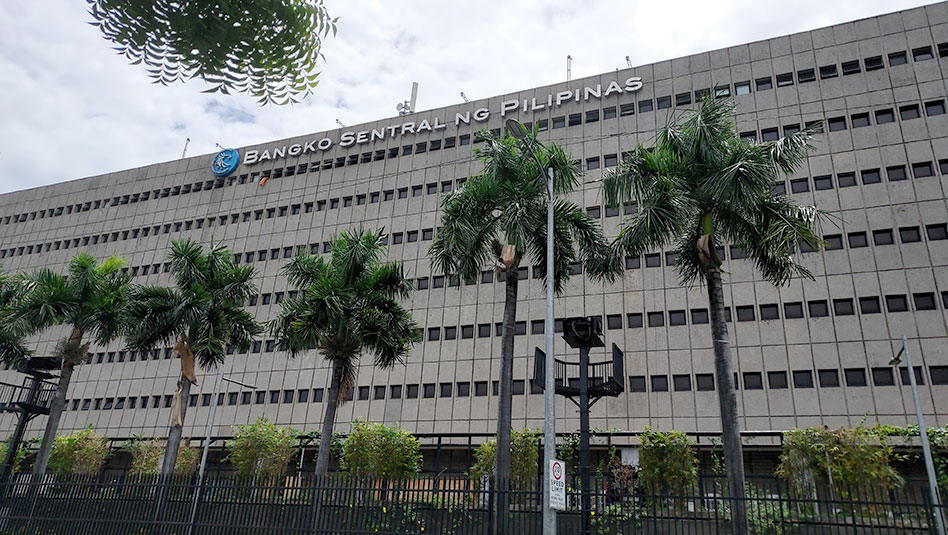
Policy Rate Updates: Policy rate updates to reassure 
DOWNLOAD
View all Reports
Metrobank.com.ph How To Sign Up
Follow us on our platforms.

How may we help you?

TOP SEARCHES
  • Where to put my investments
  • Reports about the pandemic and economy
  • Metrobank
  • Webinars
  • Economy
TRENDING ARTICLES
  • Investing for Beginners: Following your PATH
  • On government debt thresholds: How much is too much?
  • Philippines Stock Market Outlook for 2022
  • Deficit spending remains unabated

Login

Access Exclusive Content
Login to Wealth Manager
Visit us at metrobank.com.ph How To Sign Up
Access Exclusive Content Login to Wealth Manager
Search
MODEL PORTFOLIO THE GIST
NEWS AND FEATURES
Global Philippines Fine Living
INSIGHTS
INVESTMENT STRATEGY
Economy Stocks Bonds Currencies
THE BASICS
Investment Tips Explainers Retirement
WEBINARS
2024 Mid-Year Economi Briefing, economic growth in the Philippines
2024 Mid-Year Economic Briefing: Navigating the Easing Cycle
June 21, 2024
Investing with Love
Investing with Love: A Mother’s Guide to Putting Money to Work
May 15, 2024
retirement-ss-3
Investor Series: An Introduction to Estate Planning
September 1, 2023
View All Webinars
DOWNLOADS
grocery-2-aa
Inflation Update: Target breached
April 7, 2026 DOWNLOAD
Container ship carrying container boxes import export dock with quay crane. Business commercial trade global cargo freight shipping logistic and transportation worldwide oversea concept. Generative AI
Economic Updates
Philippines Trade Update: Wider deficit on strong imports
March 27, 2026 DOWNLOAD
Frick collection with palm trees 
Economic Updates
Policy Rate Updates: Policy rate updates to reassure 
March 26, 2026 DOWNLOAD
View all Reports

Archives: Business World Article

Gov’t fully awards T-bills at higher rates

Gov’t fully awards T-bills at higher rates

The government made a full award of the Treasury bills (T-bills) it offered on Monday at higher rates, even as investors are pricing in that the Bangko Sentral ng Pilipinas (BSP) has finished its tightening cycle and is ready to cut borrowing costs this year.

The Bureau of the Treasury (BTr) raised PHP 15 billion as planned via its offering of T-bills on Monday as total bids reached PHP 43.188 billion, or nearly three times the amount on the auction block.

Broken down, the Treasury made a full PHP 5-billion award of the 91-day T-bills as tenders for the tenor reached PHP 13.752 billion. The three-month paper was quoted at an average rate of 5.226%, 12.4 basis points (bps) higher than the 5.102% seen for the PHP 7-billion award last week. Accepted rates ranged from 5.193% to 5.25%.

The government also raised PHP 5 billion as planned from the 182-day securities as bids for the tenor reached PHP 13.06 billion. The average rate for the six-month T-bill was at 5.685%, up by 10.3 bps from 5.582% seen for the PHP 7 billion raised from the tenor last week, with accepted rates at 5.668% to 5.7%.

Lastly, the BTr borrowed the programmed PHP 5 billion via the 364-day debt paper as demand for the tenor stood at PHp 16.376 billion. The average rate of the one-year T-bill went up by 2.6 bps to 5.999% from the 5.973% quoted last week. Accepted yields were from 5.985% to 6%.

At the secondary market on Monday, the 91-, 182-, and 364-day T-bills were quoted at 5.337%, 5.5956%, and 5.9734%, respectively, based on PHP Bloomberg Valuation Service Reference Rates data provided by the BTr.

The government made a full award of its T-bill offer amid strong market demand for the securities, a trader said in a Viber message.

“We continue to see good demand as bid-to-cover [ratio] remains above two times… Looks like the market is quite convinced that the period of policy tightening may end this year,” the trader said.

BSP Governor Eli M. Remolona, Jr. earlier said the central bank will likely keep rates higher for longer and would only consider cutting borrowing costs once inflation settles firmly within the 2-4% target.

Headline inflation slowed to 3.9% in December from 4.1% in November and 8.1% a year ago.

However, the 2023 inflation average stood at a 14-year high of 6%. This was above the 5.8% in 2022 and marked the second straight year that average inflation breached the BSP’s 2-4% target.

Meanwhile, Monetary Board member and former Finance chief Benjamin E. Diokno last week said the central bank may cut borrowing costs by as much as 100 bps later this year to keep a healthy rate differential with the US Federal Reserve and amid expectations of easing domestic inflation.

The BSP raised borrowing costs by a cumulative 450 bps from May 2022 to October 2023 to help bring down elevated inflation, bringing the policy rate to a 16-year high of 6.5%.

The Monetary Board will hold its first policy meeting for this year on Feb. 15.

T-bill rates rose on Monday amid a healthy correction after yields went down significantly late last year, tracking secondary market movements, Rizal Commercial Banking Corp. Chief Economist Michael L. Ricafort said.

“The core US consumer price index and producer price index data eased further. That could still support or justify possible Fed rate cuts in the latter part of 2024,” Mr. Ricafort added, noting the US central bank’s policy easing could be matched locally.

Financial markets still see more than a 60% chance of a rate cut at the Fed’s March 19-20 policy meeting, according to CME Group’s FedWatch Tool, Reuters reported.

The Fed has hiked its policy rate by 525 bps to the current 5.25%-5.5% range since March 2022.

It will hold its first policy review for 2024 on Jan. 30-31.

On Tuesday, the BTr will auction off PHP 30 billion in fresh seven-year Treasury bonds (T-bonds).

The Treasury plans to raise PHP 195 billion from the domestic market this month, or PHP 75 billion via T-bills and PHP 120 billion through T-bonds.

The government borrows from local and foreign sources to help fund its budget deficit, which is capped at 5.1% of gross domestic product this year or PHP 1.39 trillion. — Luisa Maria Jacinta C. Jocson with Reuters

BSP to grant incentive to early adopters of new small business loan form

BSP to grant incentive to early adopters of new small business loan form

The Bangko Sentral ng Pilipinas (BSP) will grant a regulatory incentive for banks and financial institutions that are already using the standard business loan application form (SBLAF) ahead of the mandatory adoption in April. 

The central bank, in a memo signed by BSP Deputy Governor Chuchi G. Fonacier on Jan. 10, said the Monetary Board has approved the grant of an incentive for the early adoption of the SBLAF templates as provided in Circular No. 1156 dated Sept. 30, 2022. 

“The regulatory incentive for early adoption by covered entities under Circular No. 1156 shall be in the form of a reduction in the annual supervisory fee (ASF) for each of the years 2024 and 2025. The reduction shall be equivalent to twenty percent (20%) of the assessed ASF or PHP 2 million, whichever is lower,” it said. 

Banks, BSP-supervised non-bank government financial institutions, and leasing companies with quasi-banking licenses that are not subsidiaries of banks are considered as covered entities, the BSP said.

These entities must also fully implement the SBLAF templates six months before the start of the mandatory adoption on April 28. 

The templates must be used for all covered loan applications, the BSP said. It should also be accessible through all applicable channels such as in bank branches, offices, agents, online portals, or apps where borrowers may submit their loan applications. 

“The submission of SBLAF reporting requirements as stipulated in Circular No. 1156 is not a condition for the early adoption, thus, the said report will be submitted in the same manner and submission deadline for those covered entities that have not early adopted,” the BSP said. 

In October 2022, the BSP started requiring financial institutions to use the SBLAF to make credit more accessible for small businesses. 

The SBLAF is expected to help borrowers better familiarize themselves with the loan process and find loan applications less intimidating. 

To be eligible for the regulatory incentive, the president or an officer of the bank should issue a certification and a sworn statement attesting to their full implementation of the SBLAF templates.

An electronic copy of the signed certification and certified true copy of the resolutions should be submitted within 15 banking days to the BSP. 

“Post-verification of the covered entity’s eligibility for the early adoption incentive may be conducted, as deemed necessary,” the BSP said.

Any misrepresentation will require an institution to return the incentive, the central bank said. The financial institution will also be subjected to applicable enforcement actions. — Keisha B. Ta-asan

Peso advances vs dollar after BSP posts higher Nov. remittances

Peso advances vs dollar after BSP posts higher Nov. remittances

The peso strengthened further against the dollar on Monday as data from the Bangko Sentral ng Pilipinas (BSP) showed remittance inflows grew in November.

The local currency ended at PHP 55.77 against the greenback on Monday, up by 14.1 centavos from Friday’s PHP 55.911 close, data from the Bankers Association of the Philippines’ website showed.

The peso opened Monday’s session stronger at PHP 55.85 per dollar. Its weakest showing for the day stood at PHP 55.95, while its intraday best was its close of PHP 55.77 versus the greenback.

Dollars traded dropped to USD 1.31 billion from USD 1.69 billion on Friday.

The peso appreciated on Monday following the continued growth in cash remittances in November, Rizal Commercial Banking Corp. Chief Economist Michael L. Ricafort said in a Viber message.

Money sent home by overseas Filipino workers (OFWs) grew by 2.8% to USD 2.719 billion in November from USD 2.644 billion seen in November 2022, BSP data released on Monday showed.

The growth in cash remittances was the slowest annual pace in two months or since 2.6% in September.   

On the other hand, the amount of money sent by OFWs in November was also the lowest in six months or since USD 2.494 billion in May 2023. It also declined by 9.3% from USD 2.998 billion in October.

For the January-to-November period, cash remittances coursed through banks rose by 2.8% to USD 30.211 billion from USD 29.38 billion a year earlier.

This was below the BSP’s 3% remittance growth projection for 2023.

The peso strengthened on Monday as the local stock market continued to gain for the third straight day, Mr. Ricafort added. 

Security Bank Corp. Chief Economist Robert Dan J. Roces added that the lower-than-expected US producer price index (PPI) in December “fueled selling opportunities despite ongoing rallies.” 

Data from the US Labor department released on Friday showed the US PPI dipped by 0.1% in December, marking its third straight month of decline.

Mr. Ricafort said easing producer prices in the US could support rate cuts from the Federal Reserve in the second half of 2024.

“As a result, the gauge of the US dollar versus major global currencies also corrected slightly lower recently from three-week highs,” he said.

The Fed kept borrowing costs steady at 5.25-5.5% for the third straight time at its December meeting. This was after it hiked policy rates by 525 basis points (bps) from March 2022 to July 2023.

Back home, the BSP raised interest rates by 450 bps from May 2022 to October 2023 to tame inflation and mirror the US Fed, bringing the key rate to 6.5%, the highest level in 16 years.

For Tuesday, Mr. Ricafort gave a forecast range of PHP 55.70 to PHP 55.90, while Mr. Roces expects the local unit to move within a wider range of PHP 55.70 to PHP 56 per dollar. — Keisha B. Ta-asan

PSEi advances as US CPI data boost Fed cut hopes

PSEi advances as US CPI data boost Fed cut hopes

PHILIPPINE SHARES climbed further on Monday following the release of US consumer price index (CPI) data, which could affect the next move of the US Federal Reserve.

The Philippine Stock Exchange index (PSEi) rose by 37.27 points or 0.56% to end at 6,680.45 on Monday, while the broader all shares index went up by 17.16 points or 0.48% to close at 3,523.77.   

“The index sustained last week’s positive momentum as it closed higher on the back of softer than expected US December producer price data and increasing market bets that the Federal Reserve will start cutting its policy rate in March,” China Bank Capital Corp. Managing Director Juan Paolo E. Colet said in a Viber message. 

US producer prices unexpectedly fell in December amid declining costs for goods such as diesel fuel and food, suggesting inflation would continue to subside and allow the Federal Reserve to start cutting interest rates this year, Reuters reported.

The producer price index (PPI) for final demand dipped 0.1% last month, the Labor department’s Bureau of Labor Statistics said. Data for November was revised to show the PPI falling 0.1% instead of being unchanged as previously reported. The PPI has now declined for three consecutive months.

In the 12 months through December, the PPI increased 1% after advancing 0.8% in November.

“Philippine shares continued to be bought up in January as funds continued to make bets on the issues that would outperform for 2024,” Regina Capital Development Corp. Head of Sales Luis A. Limlingan said in a Viber message.

Shares rose following the appointment of Ralph G. Recto as Finance chief, Philstocks Financial, Inc. Research Analyst Claire T. Alviar said in a Viber message.

“The local bourse extended its gains, up by 37.27 points, attributed to the expectation that the country will use non-monetary measures moving forward to stabilize prices this year, a strategy we believe is crucial to addressing inflation,” Ms. Alviar said. “If this materializes, investors can anticipate further rate cuts ahead, boosting the market sentiment.”

All sectoral indices ended higher on Monday. Mining and oil went up by 128.60 points or 1.35% to 9,637.49; services rose by 16.43 points or 1% to 1,644.71; holding firms jumped by 46.87 points or 0.73% to 6,407.62; financials climbed by 7.13 points or 0.38% to 1,843.15; property increased by 9.14 points or 0.31% to 2,900.93; and industrials added 22.24 points or 0.24% to end at 9,225.82. 

“Among the index members, Globe Telecom, Inc. led the gainers, increasing by 4.56%, while Wilcon Depot, Inc. found itself at the bottom, losing by 4.52%,” Ms. Alviar said.

Value turnover increased to P5.82 billion on Monday with 460.92 million issues changing hands from the P5.64 billion with 362.59 million shares seen on Friday.

Advancers outnumbered decliners, 107 versus 78, while 52 names ended unchanged.

Net foreign selling stood at P244.01 million versus the P360.76 million in net buying seen the previous trading day. — R.M.D. Ochave with Reuters

PSEi advances as US CPI data boost Fed cut hopes

PSEi advances as US CPI data boost Fed cut hopes

PHILIPPINE SHARES climbed further on Monday following the release of US consumer price index (CPI) data, which could affect the next move of the US Federal Reserve.

The Philippine Stock Exchange index (PSEi) rose by 37.27 points or 0.56% to end at 6,680.45 on Monday, while the broader all shares index went up by 17.16 points or 0.48% to close at 3,523.77.   

“The index sustained last week’s positive momentum as it closed higher on the back of softer than expected US December producer price data and increasing market bets that the Federal Reserve will start cutting its policy rate in March,” China Bank Capital Corp. Managing Director Juan Paolo E. Colet said in a Viber message. 

US producer prices unexpectedly fell in December amid declining costs for goods such as diesel fuel and food, suggesting inflation would continue to subside and allow the Federal Reserve to start cutting interest rates this year, Reuters reported.

The producer price index (PPI) for final demand dipped 0.1% last month, the Labor department’s Bureau of Labor Statistics said. Data for November was revised to show the PPI falling 0.1% instead of being unchanged as previously reported. The PPI has now declined for three consecutive months.

In the 12 months through December, the PPI increased 1% after advancing 0.8% in November.

“Philippine shares continued to be bought up in January as funds continued to make bets on the issues that would outperform for 2024,” Regina Capital Development Corp. Head of Sales Luis A. Limlingan said in a Viber message.

Shares rose following the appointment of Ralph G. Recto as Finance chief, Philstocks Financial, Inc. Research Analyst Claire T. Alviar said in a Viber message.

“The local bourse extended its gains, up by 37.27 points, attributed to the expectation that the country will use non-monetary measures moving forward to stabilize prices this year, a strategy we believe is crucial to addressing inflation,” Ms. Alviar said. “If this materializes, investors can anticipate further rate cuts ahead, boosting the market sentiment.”

All sectoral indices ended higher on Monday. Mining and oil went up by 128.60 points or 1.35% to 9,637.49; services rose by 16.43 points or 1% to 1,644.71; holding firms jumped by 46.87 points or 0.73% to 6,407.62; financials climbed by 7.13 points or 0.38% to 1,843.15; property increased by 9.14 points or 0.31% to 2,900.93; and industrials added 22.24 points or 0.24% to end at 9,225.82. 

“Among the index members, Globe Telecom, Inc. led the gainers, increasing by 4.56%, while Wilcon Depot, Inc. found itself at the bottom, losing by 4.52%,” Ms. Alviar said.

Value turnover increased to P5.82 billion on Monday with 460.92 million issues changing hands from the P5.64 billion with 362.59 million shares seen on Friday.

Advancers outnumbered decliners, 107 versus 78, while 52 names ended unchanged.

Net foreign selling stood at P244.01 million versus the P360.76 million in net buying seen the previous trading day. — R.M.D. Ochave with Reuters

PH faces blacklisting risk by FATF

PH faces blacklisting risk by FATF

 The Philippines’ continued inclusion in the Financial Action Task Force’s (FATF) “gray list” may result in reputational consequences, as well as increases the likelihood of inclusion in the dirty money watchdog’s blacklist, the Anti-Money Laundering Council (AMLC) said. 

This, as President Ferdinand R. Marcos, Jr. earlier directed the AMLC and all government agencies to work on exiting the gray list by October this year, after failing to meet the January deadline. 

The Philippines has been under the FATF’s gray list of countries under increased monitoring for money laundering and terrorism financing risks for two years and seven months or since June 2021.

In an e-mail interview with BusinessWorld, AMLC Executive Director Matthew M. David said the FATF only encourages its members and all jurisdictions to consider the FATF information on the listed country in their financial dealings.   

“Nevertheless, continued inclusion in the gray list may pose some reputational consequences, with some financial institutions considering Philippine-related transactions to be of higher risk,” he said.   

“Continuous inclusion in the FATF gray list also increases risk of blacklisting.”

Despite remaining in the gray list, Mr. David noted the FATF has not called for enhanced due diligence or any countermeasures against the Philippines.   

“In published statements of the FATF, it has recognized the high-level political commitment of the Philippine government in addressing its deficiencies,” he said.

“Furthermore, the FATF has recognized progress made by the Philippines in strengthening its anti-money laundering and combating the financing of terrorism regime.”

In October 2023, the FATF said the country needs to further strengthen its action plan to address strategic deficiencies related to casino junkets, nonprofit organizations, and beneficial ownership.   

Bangko Sentral ng Pilipinas (BSP) Governor Eli M. Remolona, Jr. earlier said that if the Philippines failed to exit the gray list this year, correspondent banks may start to cut ties with the Philippines. These are financial institutions that provide services to another bank, usually in another country.

But Mr. Remolona has said the country is unlikely to be blacklisted by the FATF.

According to Mr. David, if a country is placed on the FATF’s blacklist of countries with high risk of money laundering and terrorism financing, countermeasures may be imposed.

Financial institutions from other jurisdictions may be prohibited from establishing subsidiaries, branches, or offices in the country. These institutions will not be able to rely on third parties located in the blacklisted country as well.

Financial institutions would be required to review, amend, or terminate any correspondent relationships with banks and other financial firms in the blacklisted country, Mr. David said.   

Other countries would also increase its supervisory examination and external audit requirements for branches and subsidiaries of financial institutions.

Asked if there is a possibility that the Philippines will be blacklisted, Mr. David said the AMLC is optimistic the country will be able to address all deficiencies identified by the FATF within the year.

He said all measures needed to strengthen the country’s anti-money laundering/countering the financing of terrorism (AML/CFT) system are producing good results. 

“All agencies should continue this momentum to eventually exit the gray list. What is crucial now is the support from the private sector,” he said.   

The Paris-based FATF re-included the Philippines in the gray list in June 2021 after the country failed a mutual evaluation by the Asia Pacific Group on Money Laundering. 

The body earlier identified 18 deficiencies in the country’s measures against money laundering and terrorist and proliferation financing. The AMLC said eight are still outstanding.   

To avoid being blacklisted, a whole-of-nation approach is needed to address the eight strategic deficiencies identified by the FATF, which are clustered into five action plans, Mr. David said.

First, relevant government agencies should demonstrate effective risk-based supervision of designated nonfinancial businesses and professions (DNFBPs), he said.

“This includes the registration as covered persons by lawyers, accountants, company service providers, jewelry dealers and real estate developers and brokers with the AMLC,” he said.

“Corporations should also increasingly submit their beneficial ownership declarations to the Securities and Exchange Commission (SEC) to further enhance the country’s beneficial ownership database.”

He said all registered DNFBPs are subjected to risk profiling and compliance examinations. These nonfinancial firms should also increase the filing of transaction reports to the AMLC. 

Meanwhile, designated authorities or nonpublic bodies should use the proper AML/CFT controls to mitigate risks in casino junkets.   

“The Philippine Amusement and Gaming Corp. should ensure that casinos are able to apply fit and proper rules and conduct customer due diligence on both the junket operator and the individual junket players. The appropriate sanctions should be implemented on casinos who fail to do so,” he said.   

The Philippines should also increase its money laundering and terrorism financing investigations and prosecutions, he said.

Aside from the AMLC, relevant law enforcement agencies should file more ML/TF financing criminal cases with the Department of Justice and courts.   

Cross-border measures should also be applied to all main sea or airports of the country, Mr. David said.

“The Bureau of Customs should continue to enhance implementation of cross-border declaration measures across all international air and seaports. This should include increasing capacity for the detection of false declarations and corresponding confiscation actions should be made,” he said.   

All AML/CTF stakeholders such as supervisors, regulators, law enforcement agencies, prosecutors, other government agencies, and covered persons in the private sectors should address the deficiencies wherever applicable, he added.

In October 2023, Mr. Marcos required the urgent implementation of the government’s National Anti-Money Laundering, Counter-Terrorism Financing and Counter-Proliferation Financing Strategy 2023-2027 and ordered concerned agencies to support efforts against money laundering and terrorism financing.

Only three countries are currently in the FATF’s blacklist — North Korea, Iran and Myanmar.

In 2002, the FATF blacklisted the Philippines for having no legal anti-money laundering framework.

The Philippines was removed from the blacklist in 2003 after the passage of Republic Act (RA) No. 9160 or the Anti-Money Laundering Act of 2001 as well as its amendments through RA 9194. — By Keisha B. Ta-asan, Reporter

Recto urged to prioritize reforms to boost tax compliance, not new taxes

Recto urged to prioritize reforms to boost tax compliance, not new taxes

Newly appointed Finance chief Ralph G. Recto must focus on tax reforms that will address issues preventing efficient tax collection and compliance, as well as consider more progressive taxes to boost revenues, analysts and business groups said.

“Reducing the burden of compliance with tax laws is a major concern for investors, and we look forward to the Department of Finance (DoF) and its attached agencies continuing to engage the private sector to resolve challenges related to this,” Ebb Hinchliffe, American Chamber of Commerce of the Philippines, Inc. executive director, said in a Viber message.

Enrico P. Villanueva, senior lecturer of economics at the University of the Philippines Los Baños said in a Facebook Messenger chat that he hopes Mr. Recto will focus on tax collection efficiency and reduction of corruption.

Mr. Recto on Friday took his oath as Finance secretary, replacing Benjamin E. Diokno, who is returning to the central bank as a Monetary Board member.

The former senator and Batangas congressman said that he will be continuing the strategies under the Philippine Development Plan and the Medium-Term Fiscal Framework. “There is a plan, there is a roadmap that essentially we will continue,” he added.

Mr. Recto also committed to reaching the tax collection targets this year. The Bureau of Internal Revenue is expected to raise P3.05 trillion and the Bureau of Customs is seen to collect P1 trillion, based on the Budget of Expenditures and Sources of Financing.

“So, every night, when I wake up in the morning, we should have collected more or less P20 billion to fund all the needs of our people and the requirements of government, and to make sure that money is spent wisely because we have to stretch every peso, including acting faster on investment,” he said.

In a statement on Friday, Mr. Recto said he will push for the immediate passage of key tax reforms endorsed by the President as priority measures in Congress.

“I agree that we need funds to finance growth and our people’s growing needs and install a system that promotes fair and fast tax administration. These measures will not only finance development but will reduce the deficit and our dependence on debt,” he said.

Filomeno S. Sta. Ana III, coordinator of Action for Economic Reforms, said that Mr. Recto must be able to push for reforms as soon as possible, ideally within the first half of Mr. Marcos’ term.

Mr. Sta Ana said that pushing for reforms later is “dangerous” as legislators will become more “sensitive to politicking and pressure from lobbying by vested interests that dangle campaign financing to politicians.”

“The incoming Finance secretary has to pursue the reforms that the DoF has endorsed, but which have been sidelined or derailed. Where Mr. Diokno failed, the new Finance secretary must succeed. Whether the new secretary will have the courage to pursue the tax reforms remains to be seen,” he said.

“It is a big challenge, given that the window to have the reforms legislated is closing amid the politicking and infighting as we get closer to the midterm election cycle,” he added.

Wealth tax
Sonny A. Africa, executive director of think tank Ibon Foundation, said he hopes that Mr. Recto will be open to moderating “regressive consumption taxes that disproportionately burden the poor and ordinary Filipinos.”

“Still, even limiting new consumption taxes to single-use plastics and digital services does not go far enough,” he said, adding that Mr. Recto should also correct the “growing regressiveness” of the tax system.

Mr. Africa also urged the new Finance chief to revisit the proposed wealth tax, which would help the government significantly ramp up revenue generation.

Data from Ibon Foundation showed that a 1% tax on wealth over P1 billion, 2% tax on wealth over P2 billion, and 3% tax on wealth over P3 billion could generate around half a trillion annually.

“I hope Mr. Recto can use his stature to advocate for wealth sharing tax or a mandatory contribution to social equity based on net worth,” Mr. Villanueva added.

Mr. Diokno earlier bucked proposals of a billionaire’s tax, preferring taxes on consumption over income.

Mr. Africa said a more progressive tax system is a “no-brainer” because of the widening gap between the super-rich and the poor.

“Improving revenue generation from the narrow but extremely resource-rich tax base of profitable firms and wealthy families is also the most rational way to control deficits and moderate debt,” he added.

PwC Philippines Vice Chairman and Tax Managing Partner Maria Lourdes P. Lim said that Mr. Recto’s background in the legislature should ensure that priority measures are “not only geared to increase revenue collection but should aim to promote economic growth, investment, competitiveness and be consistent with international standards.”

“We trust that Mr. Recto will ensure that the tax measures of the government will be implemented fairly and properly (i.e. without going beyond the provisions and spirit of the law),” she said in a Viber message.

Ms. Lim noted the value-added tax (VAT) on digital services and Passive Income and Financial Intermediary Taxation Act (PIFITA) must be given priority.

“We also ask that the private sector be consulted in the crafting of the implementing rules and regulations on the recently passed Ease of Paying Taxes (EOPT) law,” Ms. Lim added.

The Department of Finance earlier said that its priority tax reform measures could generate as much as P120.5 billion this year.

These include PIFITA, VAT on digital service providers, a new mining fiscal regime, motor vehicles road user’s tax, the excise tax on single-use plastics, pre-mixed alcohol, sweetened beverages and junk food.

Drop tax on junk food
Calixto V. Chikiamco, Foundation for Economic Freedom (FEF) president, said that Mr. Recto should prioritize the passage and implementation of the VAT on digital service providers, the new mining fiscal regime, and the excise tax on single-use plastics.

However, Mr. Chikiamco said Mr. Recto should also drop the proposed junk food tax, which is “controversial and debatable.”

Mr. Diokno last year proposed a tax on junk food as well as a tax increase on sweetened beverages to address health-related diseases attributed to poor diets. A bill has yet to be filed in Congress.

Meanwhile, Senate President Juan Miguel F. Zubiri said that he is looking forward to Mr. Recto’s support for the amendments to the Corporate Recovery and Tax Incentives for Enterprises (CREATE) law, which has been approved by the House committee.

“(This) would give back the power to the freeport zones and economic zones to grant the fiscal incentives rather than going to the Fiscal Incentives Review Board, which is another layer of bureaucracy,” Mr. Zubiri said in a Viber message.

“This is a priority of the President as it has gotten investors confused and frustrated and is contrary to our Ease of Doing Business regime in the country,” he added.

Inflation
Apart from key fiscal reforms, analysts also noted other issues that Mr. Recto must address, including inflation.

“As a member of the economic team, he should prioritize tackling food inflation. This is the number one concern among Filipinos, surveys show,” Mr. Chikiamco said.

Ateneo de Manila economics professor Leonardo A. Lanzona said via Facebook Messenger chat that Mr. Recto is facing a major problem in elevated debt that is worsened by high interest rates.

“As inflation remains, these interest rates will continue to remain high. The challenge for the DoF secretary now is how to raise the funds or generate tax revenues to pay for the maturing debts,” he added.

The Philippine Stock Exchange, Inc. board of directors and management in a statement expressed confidence Mr. Recto will be able to “fast-track fiscal reforms needed to ensure the country’s economic growth, which will help boost investor confidence.”

The Makati Business Club also said that they will support Mr. Recto in “including continuous improvement of laws and policies to attract job-creating investment and expansion.”

For his part, Mr. Recto said he will be “employing measures to shield consumers, especially the vulnerable, from the impact of elevated prices, while fully realizing the promises of game-changing reform laws.”

He also said that the Maharlika Investment Fund will be managed “in fidelity with the law and fulfill its intended objectives.”

Mr. Recto also committed to support the passage of the Capital Markets Development Act, as well as “pursue reforms in public and private pensions, prioritizing the best interests of beneficiaries while ensuring actuarial health and fund sustainability.”

In a separate Viber message to reporters, Mr. Diokno also said that he will have more free time in his new capacity as a member of the Monetary Board.

“For the last eight years, I feel like I’ve run nonstop on a treadmill — from DBM to BSP at the height of the pandemic, and then DoF. Now, I’m in the cooling down phase of that long run, which I think I truly deserve,” he added.

Mr. Diokno was appointed BSP governor by then-President Rodrigo R. Duterte. He served as Mr. Duterte’s Budget secretary from 2016 to 2019 and headed the Budget department under the Estrada administration.

Mr. Marcos said Mr. Diokno was initially offered a position in the Maharlika Investment Corp. (MIC), which is tasked to oversee the country’s first sovereign wealth fund.

“Once again, I cannot thank (Mr. Diokno) enough for setting the economy on to the right path, he has guided, he has put the essentials into place, he has made the structural changes that we need. And therefore, he has… these economic figures, the results that we are getting a lot of that can certainly be attributable to the work that he did as Department of Finance secretary,” Mr. Marcos said. — By Luisa Maria Jacinta C. Jocson, Reporter


PH to use nonmonetary tools to tame prices — Marcos

PH to use nonmonetary tools to tame prices — Marcos

The Philippines will use nonmonetary measures including plugging supply gaps to stabilize prices this year, President Ferdinand R. Marcos, Jr. said on Friday after appointing a new Finance chief. 

Finance Secretary Ralph G. Recto was ordered to “devise strategies that will tame inflation through a bastion of responses,” the President told a news briefing at the presidential palace, where the Finance chief took his oath. 

Mr. Marcos said the government would stick to fiscal discipline under Mr. Recto, a former senator who pushed higher value-added taxes in the early 2000. He was serving as Batangas congressman before his appointment. 

“When the seductive call of populism beckons, I am sure that Secretary Recto will counsel us on the merits of fiscal discipline, to remind us of the price tag of dreams and to stick to the kind of stewardship that bequeaths no huge generational debt for our children,” he said. 

Runaway inflation forced global central banks to drive up interest rates to the fastest in decades last year, though the World Bank last month said prices are poised to continue easing in the coming months. 

Philippine inflation averaged 6% last year compared with 5.8% a year earlier, marking the second straight year that the Bangko Sentral ng Pilipinas (BSP) breached its 2-4% target.  

Mr. Marcos said he had also asked Mr. Recto to be at the forefront of the government’s anti-smuggling drive. The government would pursue tax cheats “starting with the habitual ones who have [turned] tax evasion not just into an art but into a business.” 

Benjamin E. Diokno, Mr. Recto’s successor, would return to the BSP as a Monetary Board member after declining an appointment to the Philippines’ first sovereign wealth fund, the President said. Mr. Diokno was BSP governor for years under ex-President Rodrigo R. Duterte. 

“The fiscal policies will remain the same,” the President said. “The fiscal discipline will remain the same. However, we are looking to see if there are any new ways to handle that.” 

Mr. Recto should focus on further taming inflation while enforcing measures to increase household income and spending, said Terry L. Ridon, a public investment analyst and convenor of InfraWatch PH. 

He said the new Finance chief should also strengthen private sector participation in the state’s flagship infrastructure projects. 

Mr. Recto told the same briefing he would ensure that the government hits its revenue goal of P4.3 trillion this year. “You have a national development plan to fund. Incidentally, we will be borrowing P2.7 trillion next year.” 

The Finance chief said the Marcos government would ensure that the Senate passes priority tax measures approved by the House of Representatives. 


‘POLITICAL SKILLS’ 

Mr. Recto, the grandson of the late Filipino statesman Claro M. Recto, lost his Senate reelection bid in 2007 after pushing to raise value-added taxes by 2 points to 12%. 

Then-President Gloria Macapagal-Arroyo appointed him director-general of the National Economic and Development Authority in 2008 but left a year later to prepare for his senatorial run in 2010. He served as a senator from 2010 to 2022. 

“Ideologically, Secretary Recto will continue to pursue neoliberal programs by strengthening the role of markets and minimizing the regulatory role of the state,” Gary Ador Dionisio, dean of the De La Salle – College of Saint Benilde School of Diplomacy and Governance, said in a Facebook Messenger chat. 

“He became NEDA secretary but he’s also a politician,” Foundation for Economic Freedom President Calixto V. Chikiamco said in a Viber message. “He needs to use his political skills to get critical fiscal measures passed by Congress.” 

At the briefing, Mr. Marcos said El Niño and geopolitical risks could “trample” the optimistic growth outlook for the Philippines, which grew by 5.9% in the third quarter. “Abroad, escalating geopolitical tensions could dampen global trade, tighten global financing, as well as trigger fuel and food shocks that could tow inflation back up.” 

“That is why we are watching it very, very closely,” he said. “There is the distinct possibility of the beginnings of El Niño starting now and extending until the end of the first quarter, or perhaps even extending into the second quarter.” 

The Philippine leader called for timely interventions “so that food prices will not surge as a result of farm outputs falling short.”  

“The question is whether this replacement is going to matter at all,” Leonardo A. Lanzona, who teaches economics at the Ateneo de Manila University, said via Messenger chat. “Unless there are significant and comprehensive reforms in the structure of the economy, none of these is going to matter.” — By Kyle Aristophere T. Atienza 


Marcos gives cautious economic outlook on El Nino, geopolitical risks

Marcos gives cautious economic outlook on El Nino, geopolitical risks

Philippine President Ferdinand Marcos Jr on Friday painted a cautious outlook for his country’s economy given risks stemming from geopolitical tensions and El Nino weather phenomenon.

“While the future looks bright, dark clouds still gather on the horizon, unleashing headwinds that will temper, maybe even damage or trample on our optimistic outlook,” Mr. Marcos said in a press conference.

Mr. Marcos on Thursday announced the appointment of Ralph Recto as his new finance secretary, replacing Benjamin Diokno who is returning to the Bangko Sentral ng Pilipinas, this time as member of the monetary board. Mr. Diokno was former central bank governor.

“He has a true understanding of how the Philippine economy works,” Mr. Marcos said of Mr. Recto, who prior to his appointment was serving as congressman and deputy speaker of the lower house of Congress. — Reuters

Rates of T-bills, bonds may climb after US data

Rates of T-bills, bonds may climb after US data

Rates of the Treasury bills (T-bills) and Treasury bonds (T-bonds) on offer this week could track the rise in secondary market yields following the latest US inflation data and US Federal Reserve rate cut bets.

The Bureau of the Treasury (BTr) will auction off PHP 15 billion in T-bills on Monday, or PHP 5 billion each in 91-, 182- and 364-day papers.

On Tuesday, it will offer PHP 30 billion in fresh seven-year T-bonds.

T-bill and T-bond rates may track the increases seen in secondary market yields, which came amid volatility in the peso-dollar exchange rate, high global crude oil prices and geopolitical tensions in the Middle East, Rizal Commercial Banking Corp. Chief Economist Michael L. Ricafort said in a Viber message.

At the secondary market on Friday, rates of the 91-, 182-, and 364-day T-bills went up by 11.05 basis points (bps), 8.72 bps, and 14.6 bps week on week to end at 5.337%, 5.5956%, and 5.9734% respectively, based on PHP Bloomberg Valuation Service Reference Rates data published on the Philippine Dealing System’s website.

The yield on the seven-year bond also rose by 8.47 bps week on week to end at 6.1662% on Friday.

On Friday, the peso closed at PHP 55.911 against the dollar, strengthening by 3.9 centavos from its PHP 55.95 close on Thursday, data from the Bankers Association of the Philippines’ website showed.

Week on week, however, the local unit weakened by 21.1 centavos from its PHP 55.70 close on Jan. 5.

Meanwhile, Brent crude futures rose 88 cents, or 1.1%, to settle at USD 78.29 a barrel. The session high was more than USD 80, the highest this year so far. US West Texas Intermediate crude futures climbed 66 cents, or 0.9%, to settle at USD 72.68, paring gains after touching a 2024 high of USD 75.25, Reuters reported.

On the other hand, a trader expects the seven-year bonds on offer this week to fetch a coupon rate of 6.25%.

“Ultimately, the seven-year Dutch auction [this] week will be highly anticipated as it could actually fetch a coupon rate of 6.25%, forcing the yield curve to adjust,” a trader said in an e-mail.

T-bill and T-bond rates could climb amid recent US inflation data, which could support the possibility of a rate cut by the Fed as early as March, Mr. Ricafort added.

US consumer prices increased more than expected in December, with Americans paying more for shelter and healthcare, suggesting it was probably too early for the Federal Reserve to start cutting interest rates, Reuters reported.

The consumer price index (CPI) rose 0.3% last month after nudging up 0.1% in November, the Labor department’s Bureau of Labor Statistics said.

In the 12 months through December, the CPI rose 3.4% after increasing 3.1% in November.

Inflation averaged 4.1% in 2023, down from 8% in 2022.

Financial markets still see more than a 60% chance of a rate cut at the Fed’s March 19-20 policy meeting, according to CME Group’s FedWatch Tool. The Fed has hiked its policy rate by 525 bps to the current 5.25%-5.5% range since March 2022.

Meanwhile, US producer prices unexpectedly fell in December amid declining costs for goods such as diesel fuel and food, suggesting inflation would continue to subside and allow the Federal Reserve to start cutting interest rates this year.

The producer price index (PPI) for final demand dipped 0.1% last month, the Labor department’s Bureau of Labor Statistics said. Data for November was revised to show the PPI falling 0.1% instead of being unchanged as previously reported. The PPI has now declined for three consecutive months.

In the 12 months through December, the PPI increased 1% after advancing 0.8% in November.

Last week, the BTr raised PHP 19 billion via the T-bills, more than the original PHP 15-billion program, as total bids reached PHP 46.875 billion.

Broken down, the Treasury raised PHP 7 billion from the 91-day T-bills, above the PHP 5-billion program, as tenders for the tenor reached PHP 18.36 billion. The three-month paper was quoted at an average rate of 5.102%, down by 3.8 bps from the previous week. Accepted rates ranged from 4.98% to 5.25%.

The government also raised PHP 7 billion through the 182-day securities, more than the planned PHP 5 billion, as bids for the paper reached PHP 16.91 billion. The average rate for the six-month T-bill stood at 5.582%, inching up by 0.4 bp, with accepted yields ranging from 5.29% to 5.7%.

Lastly, the BTr borrowed PHP 5 billion as programmed via the 364-day debt papers as bids for the tenor reached PHP 11.605 billion. The average rate of the one-year T-bill went up by 14.4 bps to 5.973%. Accepted rates were from 5.83% to 6.025%.

The Treasury plans to raise PHP 195 billion from the domestic market this month, or PHP 75 billion via T-bills and PHP 120 billion through T-bond offerings.

The government borrows from local and foreign sources to help fund its budget deficit, which is capped at 5.1% of gross domestic product this year or PHP 1.39 trillion. — Luisa Maria Jacinta C. Jocson with Reuters

Posts navigation

Older posts
Newer posts

Recent Posts

  • Metrobank US-Iran Risk Index: Fragile ceasefire 
  • Investment Ideas: April 10, 2026 
  • Metrobank US-Iran Risk Index: A new hope
  • A guide for your peso bond portfolio amid higher for longer rates
  • Investment Ideas: April 8, 2026

Recent Comments

No comments to show.

Archives

  • April 2026
  • March 2026
  • February 2026
  • January 2026
  • December 2025
  • November 2025
  • October 2025
  • September 2025
  • August 2025
  • July 2025
  • June 2025
  • May 2025
  • April 2025
  • March 2025
  • February 2025
  • January 2025
  • December 2024
  • November 2024
  • October 2024
  • September 2024
  • August 2024
  • July 2024
  • June 2024
  • May 2024
  • April 2024
  • March 2024
  • February 2024
  • January 2024
  • December 2023
  • November 2023
  • October 2023
  • September 2023
  • August 2023
  • July 2023
  • June 2023
  • May 2023
  • April 2023
  • March 2023
  • February 2023
  • January 2023
  • December 2022
  • November 2022
  • October 2022
  • September 2022
  • August 2022
  • July 2022
  • June 2022
  • May 2022
  • March 2022
  • December 2021
  • October 2021

Categories

  • Bonds
  • BusinessWorld
  • Currencies
  • Economy
  • Equities
  • Estate Planning
  • Explainer
  • Featured Insight
  • Fine Living
  • How To
  • Investment Tips
  • Markets
  • Portfolio Picks
  • Rates & Bonds
  • Retirement
  • Reuters
  • Spotlight
  • Stocks
  • Uncategorized

You are leaving Metrobank Wealth Insights

Please be aware that the external site policies may differ from our website Terms And Conditions and Privacy Policy. The next site will be opened in a new browser window or tab.

Cancel Proceed
Get in Touch

For inquiries, please call our Metrobank Contact Center at (02) 88-700-700 (domestic toll-free 1-800-1888-5775) or send an e-mail to customercare@metrobank.com.ph

Metrobank is regulated by the Bangko Sentral ng Pilipinas
Website: https://www.bsp.gov.ph

Quick Links
The Gist Webinars Wealth Manager Explainers
Markets
Currencies Rates & Bonds Equities Economy
Wealth
Investment Tips Fine Living Retirement
Portfolio Picks
Bonds Stocks
Others
Contact Us Privacy Notice Terms of Use
© 2026 Metrobank. All rights reserved.

Access this content:

If you are an existing investor, log in first to your Metrobank Wealth Manager account. ​

If you wish to start your wealth journey with us, click the “How To Sign Up” button. ​

Login HOW TO SIGN UP