

MODEL PORTFOLIO
THE GIST
NEWS AND FEATURES
Global Philippines Fine Living
INSIGHTS
INVESTMENT STRATEGY
Economy Stocks Bonds Currencies
THE BASICS
Investment Tips Explainers Retirement
WEBINARS
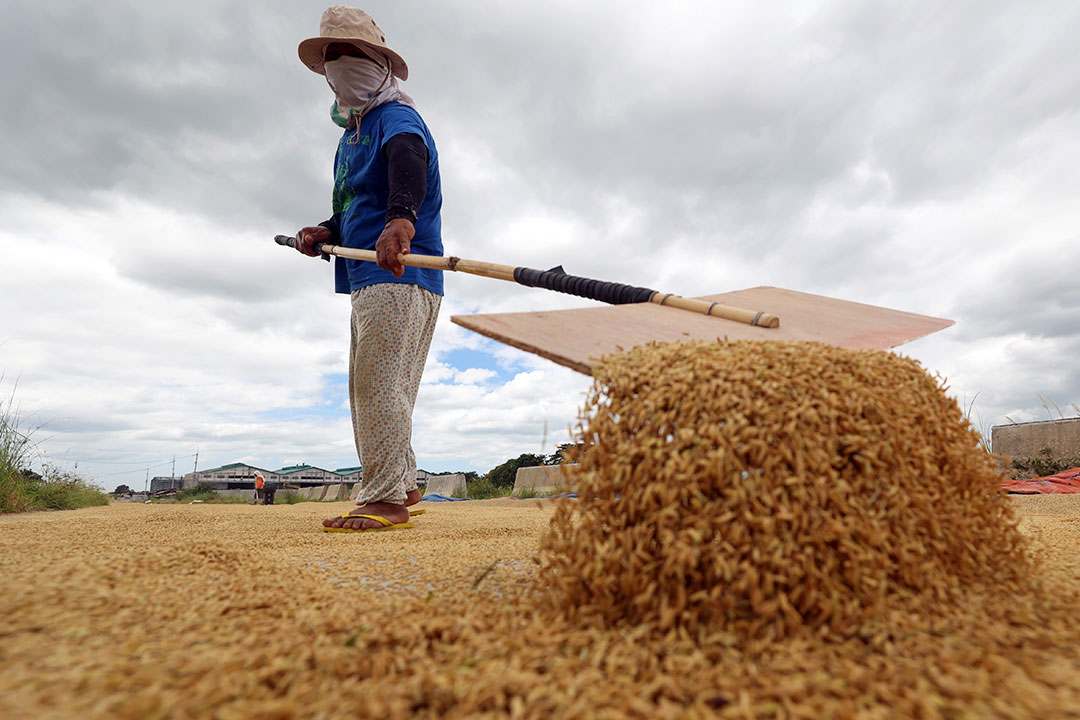
2024 Mid-Year Economi Briefing, economic growth in the Philippines
2024 Mid-Year Economic Briefing: Navigating the Easing Cycle
June 21, 2024
Investing with Love
Investing with Love: A Mother’s Guide to Putting Money to Work
May 15, 2024
retirement-ss-3
Investor Series: An Introduction to Estate Planning
September 1, 2023
View All Webinars
DOWNLOADS
grocery-2-aa
Inflation Update: Target breached
DOWNLOAD
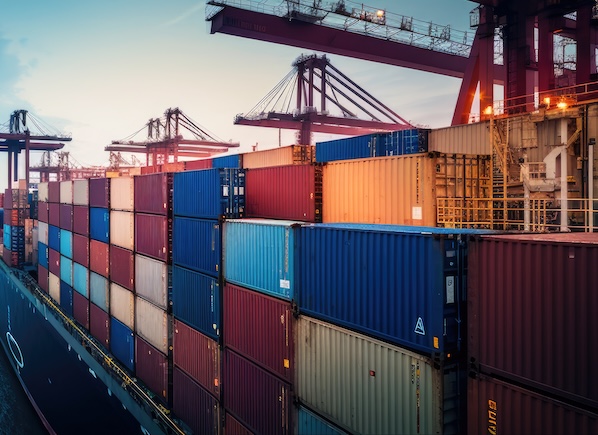
Container ship carrying container boxes import export dock with quay crane. Business commercial trade global cargo freight shipping logistic and transportation worldwide oversea concept. Generative AI
Economic Updates
Philippines Trade Update: Wider deficit on strong imports
DOWNLOAD
Frick collection with palm trees 
Economic Updates
Policy Rate Updates: Policy rate updates to reassure 
DOWNLOAD
View all Reports
Metrobank.com.ph How To Sign Up
Follow us on our platforms.

How may we help you?

TOP SEARCHES
  • Where to put my investments
  • Reports about the pandemic and economy
  • Metrobank
  • Webinars
  • Economy
TRENDING ARTICLES
  • Investing for Beginners: Following your PATH
  • On government debt thresholds: How much is too much?
  • Philippines Stock Market Outlook for 2022
  • Deficit spending remains unabated

Login

Access Exclusive Content
Login to Wealth Manager
Visit us at metrobank.com.ph How To Sign Up
Access Exclusive Content Login to Wealth Manager
Search
MODEL PORTFOLIO THE GIST
NEWS AND FEATURES
Global Philippines Fine Living
INSIGHTS
INVESTMENT STRATEGY
Economy Stocks Bonds Currencies
THE BASICS
Investment Tips Explainers Retirement
WEBINARS
2024 Mid-Year Economi Briefing, economic growth in the Philippines
2024 Mid-Year Economic Briefing: Navigating the Easing Cycle
June 21, 2024
Investing with Love
Investing with Love: A Mother’s Guide to Putting Money to Work
May 15, 2024
retirement-ss-3
Investor Series: An Introduction to Estate Planning
September 1, 2023
View All Webinars
DOWNLOADS
grocery-2-aa
Inflation Update: Target breached
April 7, 2026 DOWNLOAD
Container ship carrying container boxes import export dock with quay crane. Business commercial trade global cargo freight shipping logistic and transportation worldwide oversea concept. Generative AI
Economic Updates
Philippines Trade Update: Wider deficit on strong imports
March 27, 2026 DOWNLOAD
Frick collection with palm trees 
Economic Updates
Policy Rate Updates: Policy rate updates to reassure 
March 26, 2026 DOWNLOAD
View all Reports

Archives: Business World Article

Finance secretary eyes free trade deal with US

Finance secretary eyes free trade deal with US

FINANCE SECRETARY Ralph G. Recto is eyeing a free trade agreement (FTA) with the United States after meeting with US officials on Monday to discuss efforts to boost ties, according to his office.

They discussed efforts to “boost economic and investment cooperation between the Philippines and the US,” the agency said in a statement. “He also broached the potential of having an FTA with the US and further enhancing security and military ties between the two nations.”

The government of President Ferdinand R. Marcos, Jr. would seek to address investor concerns by improving the ease of doing business, Mr. Recto said in the statement, citing a push for lower corporate income tax under changes to the Corporate Recovery and Tax Incentives for Enterprises Act.

A House of Representatives committee last week endorsed to members the substitute bill that will also streamline the tax refund system for corporations.

“In response, US officials welcomed these developments and expressed optimism about further deepening partnership with the Philippines, pointing out that the country’s young, English-speaking population and strong macroeconomic fundamentals underscore its attractiveness as a viable investment destination,” the Finance department said.

“The US likewise expressed interest in helping the Philippines establish an investment mechanism to help the country screen foreign direct investments (FDI) for national security purposes,” it added.

Meanwhile, Trade Undersecretary Allan B. Gepty said negotiations for a free trade deal are welcome.

“The Philippines has been advocating an FTA with the US, which is one of our major trading and investment partners,” he said in a Viber message. “However, the US is not yet keen or open to the arrangement. We welcome any move that will lead to an eventual FTA.”

In April, US Trade Representative Katherine Tai said the US is not seeking any free trade agreements with the Philippines or any of its trading partners.

The Philippines has been pushing readmission into the US Generalized System of Preference program, which expired in 2020. Participation in the trade program requires the approval of the US Congress.

Calixto V. Chikiamco, Foundation for Economic Freedom president, said Mr. Recto’s proposal is a positive development but is not realistic.

“The US has been moving away from free trade agreements due to political pressure from US labor,” he said in a Viber message. “In fact, even the limited agreements under the Indo-Pacific Economic Cooperation haven’t gotten approval from the US Senate.”

“It would be better if the Philippines joined the Comprehensive and Progressive Agreement for Transpacific Partnership led by Japan,” he added.

Signed in 2018, the free trade deal includes Australia, Brunei, Canada, Chile, Japan, Malaysia, Mexico, New Zealand, Peru, Singapore and Vietnam.

The Philippines should also forge free trade agreements with the EU and Canada, Mr. Chikiamco said. “The Philippines, however, should also develop its defense industries to take advantage of the increased defense spending of allies like the US, Japan, Australia and the EU.”

The Finance department said the US officials present at the meeting included Robert Kaproth, Treasury Department deputy assistant secretary for Asia; Treasury Financial Attaché to Southeast Asia Daniel Hall; and US Embassy Chargé d’affaires and Deputy Chief of Mission Robert Ewing.

It said a “high-level delegation” from the US would visit the Philippines in March to strengthen bilateral ties. – Luisa Maria Jacinta C. Jocson, Reporter


IMF: AI may boost Philippine labor productivity

IMF: AI may boost Philippine labor productivity

THE SHIFT to artificial intelligence (AI) technologies could increase labor productivity in the Philippine service sector, the International Monetary Fund (IMF) said. 

“Because of the Philippine economy’s early structural transformation to a service-based economy, raising the level of service sector labor productivity through digital skills and portability will be essential,” IMF Resident Representative to the Philippines Ragnar Gudmundsson said in an e-mail. 

“This will require upskilling of the labor force to leverage artificial intelligence tools and continue to move up value chains, as well as efforts to develop the country’s digital infrastructure especially outside urban centers,” he added.

Mr. Gudmundsson said the IMF is working on a study on how AI technologies could affect the Philippines.

Last week, the IMF said AI could affect nearly 40% of global employment. While it is seen to complement human work, it might replace other jobs and would likely worsen economic inequality. 

It said about 60% of jobs in advanced economies are exposed to AI. About half of these jobs will benefit from AI integration by boosting labor productivity.

But the other half showed that AI could perform tasks done by humans, effectively lowering labor demand and leading to lower wages and reduced hiring, the IMF said.

In emerging markets and low-income countries, AI exposure is expected at 4% and 26%, respectively.

“These findings suggest emerging market and developing economies face fewer immediate disruptions from AI,” IMF Managing Director Kristalina Georgieva earlier said.

“At the same time, many of these countries don’t have the infrastructure or skilled workforces to harness the benefits of AI, raising the risk that over time the technology could worsen inequality among nations,” she added. 

Senti AI Founder and Chief Executive Officer Ralph Vincent J. Regalado cited risks in jobs that can be automated with technology.

“Given the rise of generative AI technologies, we’ve seen that adoption has increased and most observed that it aids productivity,” he said in an e-mail. “It’s important that we invest in the education of our people, teaching them how to use these technologies to boost their work and be competitive in the job market.”

Mr. Regalado noted that companies and organizations should support affected employees by helping them acquire new skills.

AI would likely affect several industries including the technology, banking, and the pharmaceutical and medical product sector, he said.

STATE SUPPORT

“The sectors identified by the IMF in high-income countries would also be the same here in the Philippines,” he said. “Mid- and high-level positions can definitely increase their productivity by using AI tools to offload some of their tasks.”

AI can enhance public services, modernize finance, and boost the agriculture and healthcare sectors, according to the IMF report.

Regardless of the industry, any job that requires menial, low-level tasks that can be digitalized will be affected the most by AI, Mr. Regalado said. These include sales, customer service, and data encoding jobs.

“This is not to say that all workers in these lines of work will be removed,” he said. “Companies that use conversational AI to handle inbound calls or customer chats may employ fewer workers to just monitor the logs and intervene if the customer requests a human agent.”

“Finance and accounting departments can spend less on staff manually encoding paperwork and just have them double-check the accuracy of data extracted through Document AI,” he added.

However, the Philippines is behind advanced economies due to the lack of infrastructure and manpower, Mr. Regalado said.

Businesses might also find it more expensive to invest in a new system versus relying on human labor, he added.

The Philippines fell 11 places to 65th out of 193 countries in the 2023 Government AI Readiness Index by Oxford Insights. It scored 51.98 out of 100, higher than the 44.94 global average.

Mr. Regalado said the government should lead in advocating AI adoption.

“Investing more in AI companies and research is one way,” he said. “The public sector shouldn’t shy away from collaborating with the private sector to look into ways the Philippines can benefit from increased AI adoption.”

The government should improve infrastructure to accommodate AI, including stable energy and internet connections.

“Mandating and even providing incentives to encourage businesses and government agencies to adopt and use tools that can improve productivity is another good idea,” Mr. Regalado said. – Keisha B. Ta-asan, Reporter

T-bill yields rise as BSP says rate cuts still far off

T-bill yields rise as BSP says rate cuts still far off

THE GOVERNMENT made a full award of the Treasury bills (T-bills) it offered on Monday at higher rates after the Bangko Sentral ng Pilipinas (BSP) said it is unlikely to cut rates this semester.

The Bureau of the Treasury (BTr) raised PHP 15 billion as planned via its offering of T-bills on Monday as total bids reached PHP 34.985 billion or more than twice the amount on the auction block.

Broken down, the Treasury made a full P5-billion award of the 91-day T-bills as tenders for the tenor reached PHP 11.94 billion. The three-month paper was quoted at an average rate of 5.306%, 8 basis points (bps) higher than 5.226% seen last week. Accepted rates ranged from 5.275% to 5.5.35%.

The government raised PHP 5 billion as planned from the 182-day securities as bids for the tenor reached PHP 10.97 billion. The average rate for the six-month T-bill was at 5.766%, up by 8.1 bps from the 5.685% fetched last week, with accepted rates at 5.743% to 5.795%.

Lastly, the BTr borrowed the programmed PHP 5 billion via the 364-day debt paper as demand for the tenor stood at PHP 12.075 billion. The average rate of the one-year T-bill went up by 3.8 bps to 6.037% from the 5.999% quoted last week. Accepted yields were from 6% to 6.075%.

At the secondary market on Monday before the auctions, the 91-, 182-, and 364-day T-bills were quoted at 5.3587%, 5.6655%, and 5.9991%, respectively, based on PHP Bloomberg Valuation Service Reference Rates data provided by the BTr.

T-bill rates rose on Monday after BSP Governor Eli M. Remolona, Jr., said they are unlikely to bring down benchmark interest rates before June, Rizal Commercial Banking Corp. Chief Economist Michael L. Ricafort said in a Viber message.

“The higher tender rates today reflected the prevailing market view that the BSP will unlikely cut policy rates earlier this year, as echoed recently by BSP Governor Remolona,” a trader likewise said in an e-mail on Monday.

Mr. Remolona said over the weekend that it is unlikely that the BSP will begin easing policy rates within the first half amid lingering upside risks to inflation.

The Monetary Board raised borrowing costs by 450 bps from May 2022 to October 2023, bringing the policy rate to a 16-year high of 6.5%.

The BSP expects headline inflation to average 3.7% this year, slower than 6% seen in 2023.

The central bank will hold its first policy meeting for this year on Feb. 15.

On Tuesday, the BTr will auction off PHP 30 billion in fresh 10-year Treasury bonds (T-bonds).

The Treasury plans to raise PHP 195 billion from the domestic market this month, or PHP 75 billion via T-bills and PHP 120 billion through T-bonds.

The government borrows from local and foreign sources to help fund its budget deficit, which is capped at 5.1% of gross domestic product this year or PHP 1.39 trillion. — A.M.C. Sy

Peso slumps to near three-month low

Peso slumps to near three-month low

THE PESO declined to a near three-month low against the dollar on Monday as strong US data dampened expectations of an early rate cut by the US Federal Reserve.

The local unit closed at PHP 56.33 per dollar on Monday, weakening by 36 centavos from its PHP 55.97 finish on Friday, data from the Bankers Association of the Philippines showed.

This was the peso’s weakest close in nearly months since its PHP 56.73 finish on Oct. 31, 2023.

The peso opened Monday’s session stronger at PHP 55.95 against the dollar, which was also its intraday best. Its weakest showing was its close of PHP 56.33 versus the greenback.

Dollars traded went up to USD 1.71 billion on Monday from USD 1.39 billion on Friday.

The peso was dragged down by a stronger dollar amid dampened hopes of early policy easing by the Fed, Rizal Commercial Banking Corp. Chief Economist Michael L. Ricafort said via Viber.

“The peso weakened significantly following the upbeat US consumer sentiment report for January and fading views of an early March US rate cut,” a trader said in an e-mail.

The Fed raised borrowing costs by a total of 525 basis points from March 2022 to July 2023 to the 5.25-5.5% range.

It will hold its first policy meeting for the year on Jan. 30-31.

For Tuesday, the trader said the peso could rebound on profit-taking and possible dollar weakness ahead of the Bank of Japan’s policy decision.

The trader sees the peso moving between PHP 56.10 and PHP 56.35 per dollar, while Mr. Ricafort expects it to range from PHP 56.25 to PHP 56.45. — AMCS

PSEi snaps four-day skid amid BSP easing hopes

PSEi snaps four-day skid amid BSP easing hopes

THE MAIN INDEX ended its four-day skid on Monday as the central bank chief said they could consider cutting benchmark rates this year and following US markets’ rise last week.

The benchmark Philippine Stock Exchange index (PSEi) improved by 79.93 points or 1.22% to end at 6,583.47 on Monday, while the broader all-shares index rose by 28.04 points or 0.81% to close at 3,479.82. 

China Bank Capital Corp. Managing Director Juan Paolo E. Colet said the local bourse improved after Bangko Sentral ng Pilipinas (BSP) Governor Eli M. Remolona, Jr., said rate cuts are “possible but maybe not likely” within this semester.

“BSP Governor Remolona’s remarks that a policy rate cut is possible, though not likely, in the first half of this year was also viewed positively by some investors who saw it as a signal that the Monetary Board (MB) was not totally closed to a dovish shift in the next few months,” Mr. Colet said.

The BSP chief earlier said that it may need to keep policy settings tighter for longer until inflation settles more firmly within target.

The Monetary Board hiked benchmark borrowing costs by 450 basis points from May 2022 to October 2023 to help bring down elevated inflation, bringing the policy rate to a 16-year high of 6.5%.

Mr. Colet said US markets’ gains on Friday also pushed the local bourse up.

“The local bourse gained by 79.93 points to 6,583.47 on a technical bounce following four consecutive days of decline. Moreover, positive cues from the US markets last Friday contributed to lifting the market,” Philstocks Financial, Inc. Research Analyst Claire T. Alviar likewise said in a Viber message.

She however noted that the rally was “weak” as value turnover remained low, falling to PHP 4.56 billion on Monday with 301.17 million issues switching hands from the PHP 6.19 billion with 301.39 million shares seen on Friday.

The S&P 500 posted a record- high close on Friday for the first time in two years, fueled by a rally in chipmakers and other heavyweight technology stocks on optimism around artificial intelligence, Reuters reported.

The S&P 500 jumped 1.23% to end the session at 4,839.81 points. The Nasdaq jumped 1.7% to 15,310.97 points, while Dow Jones Industrial Average rose 1.05% to 37,863.80 points.

Back home, the majority of the market’s sectoral indices closed higher on Monday, with industrials being the lone decliner, losing 11.43 points or 0.12% to end at 9,066.51. 

Mining and oil rose by 151.91 points or 1.64% to 9,362.11; holding firms climbed by 94.85 points or 1.52% to 6,317.30; property went up by 42.94 points or 1.52% to 2,859.62; financials increased by 24.51 points or 1.35% to 1,837.19; and services added 15.23 points or 0.95% to end at 1,610.32.

Advancers beat decliners, 94 against 85, while 48 names closed unchanged.

Net foreign buying stood at PHP 97.27 million on Monday versus the PHP 802.43 million in net selling seen the previous trading day. — R.M.D. Ochave with Reuters

Supply shocks may derail inflation fight

Supply shocks may derail inflation fight

Supply shocks that could arise from the El Niño weather event may derail efforts to bring inflation back to the 2-4% target range, Bangko Sentral ng Pilipinas (BSP) Governor Eli M. Remolona, Jr. said.   

“Supply shocks may derail (our) forecast including what’s going on with rice, the imports of rice. El Niño is a factor. So, it depends on those risks,” he told reporters during a Media Information Session on Saturday.

The Bangko Sentral ng Pilipinas (BSP) sees inflation easing to 3.7% this year and to 3.2% in 2025. Full-year inflation averaged 6% in 2023, marking the second straight year that average inflation breached the 2-4% target band.

The central bank earlier said that inflation will likely settle within the 2-4% range in the first quarter but could potentially accelerate to above target from April to July due to the El Niño, the lag impact of wage adjustments in 2023, and positive base effects.

“We began to realize the supply shocks are very important for the inflation outlook, not because of the shocks themselves, we expect them to dissipate, but because of the second-round effects from those shocks,” Mr. Remolona said.

“They affect expectations, and those expectations affect second-round effects which we see in prices of services for example, in wages, transport fares. So, we’re not out of the woods,” he added.

The Philippine Atmospheric, Geophysical and Astronomical Services Administration  projects that El Niño will likely persist until May this year.

Earlier estimates by the BSP also showed that the dry weather event could impact inflation by 0.02 percentage point.

National Economic and Development Authority Secretary Arsenio M. Balisacan has also flagged the risk of elevated inflation due to the onset of the El Niño, which could impact the agriculture sector and stoke food prices.

‘Not likely’
Meanwhile, Mr. Remolona said it is unlikely that the BSP will begin easing policy rates within the first half of the year.

“It depends on the data as we always say, but it’s looking good. We like the trend so far. I would say it’s possible but maybe not likely,” he said.

To tame inflation, the Monetary Board hiked borrowing costs by 450 basis points (bps) from May 2022 to October 2023, bringing the key interest rate to a 16-year high of 6.5%.

The BSP chief earlier said that it may need to keep policy settings tighter for longer until inflation settles more firmly within target.

Mr. Remolona also said that the BSP will be keeping an eye on policy moves by the US Federal Reserve.

“As you know, we’ve been watching what the other central banks have been doing, especially what the Fed has been doing, how the markets have been reacting to statements by the Federal Open Market Committee,” he added.

From March 2022 to July 2023, the Fed has raised rates by 525 bps to 5.25-5.5%.

The BSP will have its first policy meeting for this year on Feb. 15. — Luisa Maria Jacinta C. Jocson and Keisha B. Ta-asan

PH braces for impact of Red Sea crisis on goods

PH braces for impact of Red Sea crisis on goods

The ongoing crisis in the Red Sea is disrupting the movement of goods, which is resulting in delays in shipments and higher costs for Philippine businesses.

Ayala Corp. Chairman Jaime Augusto Zobel de Ayala said ongoing geopolitical tensions such as the disruptions in the Red Sea could have cost implications for Philippine businesses.

“I do believe that there will be disruptions. I believe that there will be cost implications. I believe that in the current environment, there will be difficulties that we all face,” Mr. Zobel told reporters on Thursday. “I think right now (the movement of goods and services) is a little bit under fire particularly in the Middle East.”

Tensions in the Red Sea, a major shipping route, have remained elevated as Houthi rebels continue to attack cargo ships and tankers. About 12% of global trade or 30% of overall global container traffic goes through its northern part — the Suez Canal — which brings goods to and from Asia and Europe.

“We can expect delays particularly on our ecozone shipments going to and coming from Europe particularly those countries located in the Mediterranean region given the resulting port congestions with the longer dwell time for containerized cargoes,” Philippine Economic Zone Authority (PEZA) Director-General Tereso O. Panga said in a Viber message to BusinessWorld last week.

The Red Sea crisis may also drive shipping rates higher as vessels use alternative routes between Europe and Asia, Mr. Panga said.

“Shipping lines are rerouting their cargo away from the Suez Canal following militant attacks on vessels in the Red Sea. As an alternative, vessels are doing a detour via Cape of Good Hope in Africa, but this is more expensive for shipments,” he said.

Rerouting ships around the Red Sea could bring costs of up to $1 million for additional fuel per trip between Asia and Northern Europe, Mr. Panga said.

Bianca Pearl R. Sykimte, director of the Department of Trade and Industry Export Marketing Bureau, said the Red Sea crisis has a global impact and the Philippines will not be spared.

“The impact of the issue is global in scale, and we will not be immune to it. About one-third of global container cargo passes through the area and alternative routes are expected to add weeks of additional shipping time and cost,” she said in a Viber message.

Sea-Intelligence, a provider of research and data analysis focusing on shipping and supply chain, said in a press release that the Red Sea crisis will likely result in “uncertainty” on the services from Asia to Europe.

Alan Murphy, chief executive officer of Sea-Intelligence, noted the Red Sea crisis is now considered as “the largest single event” to result in the largest vessel capacity decline in recent years, even surpassing pandemic level.

Data provided by Sea-Intelligence showed that vessel capacity dropped by 60% due to the Red Sea crisis compared to the pandemic levels where it declined by 20-40%.

“The Philippines is not feeling it yet but definitely we have to brace up for its impact,” PEZA’s Mr. Panga said.

He said PEZA is coordinating with affected locators to look for alternative routes and suppliers of imported goods as part of efforts “to de-risk the global supply chain.”

“For the Philippines, initially, the impact will be more muted since it will largely affect trade in and out of Europe. In contrast, trade with the US and Asia especially agriculture products such as rice are likely not yet directly affected,” China Banking Corp. Chief Economist Domini S. Velasquez said in a Viber message on Sunday.

She noted shipping costs are expected to increase eventually as the Red Sea crisis continues.

“This could lead to some pickup in overall international shipping costs, some shipping disruptions especially the Asia-Europe trade (exports and imports) could also have some indirect impact on some global supply chains, thereby could lead to some pickup in prices and overall inflation,” Rizal Commercial Banking Corp. Chief Economist Michael L. Ricafort said in a Viber message. — By Ashley Erika O. Jose, with input from Revin Mikhael D. Ochave

Philippine-China tensions seen to affect Asia-Pacific trade — Moody’s

Philippine-China tensions seen to affect Asia-Pacific trade — Moody’s

Tensions between the Philippines and China may lead to trade disruptions that could escalate across the Asia-Pacific region, according to Moody’s Investors Service.   

“While not our baseline, an escalation of tensions in the South China Sea could lead to disruptions in trade, not just between China and the Philippines, but also for the region at large given that the South China Sea is a critical trade route that delivers goods between Northeast Asia and Southeast Asia,” Moody’s Investors Service Senior Vice-President and Manager Christian de Guzman told BusinessWorld in an e-mail interview.

He said these disruptions may weigh on growth prospects in the region due to Asia-Pacific’s overall reliance on trade.

“In turn, this could accelerate the trend of gradual trade and investment diversion that has been prompted by separate geopolitical considerations, namely US-China strategic rivalry,” Mr. De Guzman said.   

“Moreover, rising geopolitical risks will constrain the ability of governments to more aggressively pursue fiscal consolidation as defense budgets remain elevated, even as other expenditures are curtailed in the aftermath of the pandemic,” he added.

Relations between the Philippines and China have soured as confrontations in the South China Sea between their coast guards have become more frequent.

The Philippines has cited incursions by Chinese vessels around South China Sea features closest to the Southeast Asian nation.

The situation has worsened after the Chinese Coast Guard in December fired water cannons to block Manila’s attempt to deliver food and other supplies to troops stationed at BRP Sierra Madre, a World War II-era warship intentionally grounded to stake the Philippines’ claim on the waterway.

A United Nations-backed tribunal in 2016 said China’s claim to nearly the entire South China Sea has no legal basis, but Beijing has largely ignored the ruling and continued its island-building activities.

Asked if the tensions between the country and China would affect the Philippines’ sovereign rating, Mr. De Guzman said Moody’s has not observed any material impact of the sea dispute.

“We consider political risk — which encompasses both domestic and geopolitical risk —under our assessment of a sovereign’s susceptibility to event risk; as such, our concern is the degree to which associated developments will affect economic, institutional and fiscal fundamentals,” he said.

“In this context, we have not yet seen a material impact from the shift in the Philippines’ foreign policy stance with regards to the South China Sea under President [Ferdinand R. Marcos, Jr.].”

In September 2022, the credit rater affirmed the country’s long-term local and foreign currency issuer and senior unsecured ratings at “Baa2.” Moody’s has kept its “Baa2” rating for the Philippines since December 2014. 

Despite the tensions, Mr. De Guzman said bilateral trade between the Philippines and China continues to be driven by supply and demand rather than the overarching political considerations.

“More broadly, we assess a low probability of an emergence of political stress that could have a moderate impact on the Philippines’ rating,” he said.   

China is the Philippines’ top trading partner. Bilateral trade in 2022 grew by 7.1% year on year to USD 87.7 billion, according to China Customs data.

Bilateral trade between the Philippines fell by 16% from a year earlier to USD 54.1 billion in January to September. China imported USD 14.36 billion worth of Philippine goods in the first nine months of this year, down by 19%.

Don McLain Gill, a geopolitical analyst and international studies lecturer at De La Salle University, said the conflict in the Indo-Pacific has not critically affected trade between the Philippines and China, Vietnam and China, or India and China.   

“Hence, Manila’s desire to stand up for its sovereignty and sovereign rights should not be simplified as directly proportional to its trade relations, especially when China has given so little in terms of ODI (outward direct investment) whereas it is gaining more than us in terms of our asymmetric trade,” he said.   

Based on central bank data, foreign direct investment inflows from China fell by 19.1% to USD 12.53 million as of October 2023 from USD 15.49 million a year ago.   

Hansley A. Juliano, a political economy researcher studying at Nagoya University’s Graduate School of International Development in Japan, said Southeast Asian economies are dependent on East Asia.

“The most direct risk of any possible economic boycotts between the Philippines and China, be it both sides or one way, is whether China would then favor one of our neighbors and relocate supply chains there instead,” Mr. Juliano said.   

This can destabilize economic community agreements in the Association of Southeast Asian Nations.   

“While China is our biggest individual trading partner, it’s not the majority. There’s either the strategy of releveraging or re-establishing our supply chains with other countries too, especially since Chinese trade with us ultimately serves transnational corporations and brands,” he added. — By Keisha B. Ta-asan, Reporter

Cautious Fed may affect Treasury bill, bond rates

Cautious Fed may affect Treasury bill, bond rates

Rates of Treasury bills (T-bills) and Treasury bonds (T-bonds) on offer this week could track the mixed movements in secondary market yields amid cautious signals from US Federal Reserve officials.

The Bureau of the Treasury (BTr) will auction off PHP 15 billion in T-bills on Monday, or PHP 5 billion each in 91-, 182-, and 364-day papers.

On Tuesday, it will offer PHP 30 billion in new 10-year T-bonds.

T-bill rates could rise while T-bond yields could inch down, tracking secondary market movements on Friday, due to “cautious or less dovish” comments from Fed officials and higher global crude oil prices, Rizal Commercial Banking Corp. Chief Economist Michael L. Ricafort said in a Viber message.

At the secondary market on Friday, rates of the 91-, 182-, and 364-day T-bills went up by 2.17 basis points (bps), 6.99 bps, and 2.57 bps week on week to end at 5.3587%, 5.6655%, and 5.9991% respectively, based on PHP Bloomberg Valuation Service Reference Rates data published on the Philippine Dealing System’s website.

Meanwhile, the 10-year bond’s yield went down by 2.07 bps week on week to 6.2186%.

A steady stream of Fed officials, starting with Governor Christopher Waller on Tuesday, have pushed back on market expectations the central bank will embark on a path of fast reductions to interest rates. Mr. Waller said the Fed should proceed “methodically and carefully” until it is clear lower inflation will be sustained, Reuters reported.

On Friday, Chicago Fed President Austan Goolsbee said weeks more of inflation data need to be in hand before any decision could be made to cut interest rates.

In addition, Federal Reserve Bank of San Francisco President Mary Daly said there is still a lot of work left to do on inflation and it is premature to think rate cuts are around the corner.

Expectations for a cut from the Fed in March of at least 25 bps have dipped below 50% according to CME’s FedWatch Tool, with traders now targeting May as the likely month for a rate cut announcement.

The US central bank raised borrowing costs by a total of 525 bps from March 2022 to July 2023 to the 5.25-5.5% range.

It will hold its first meeting for the year on Jan. 30-31.

Meanwhile, crude prices dipped on Friday but were higher for the week as supply concerns arising from mounting tensions in the Middle East outweighed worries over softening demand.

There was an unwinding in yields at the secondary market on Friday after newly appointed Finance Secretary Ralph G. Recto said the government is looking to issue retail Treasury bonds (RTBs) this quarter, a trader said in an e-mail.

In February 2023, the government raised PHP 283.711 billion from its offering of the 29th tranche of 5.5-year RTBs with a coupon rate of 6.125%.

This week’s auctions could be well received amid “ample liquidity and strong portfolio demand,” the trader added.

The trader sees the 10-year T-bonds on offer this week fetching yields from 6.25% to 6.375%.

Last week, the BTr raised PHP 15 billion as planned via its offering of T-bills as total bids reached PHP 43.188 billion.

Broken down, the Treasury made a full PHP 5-billion award of the 91-day T-bills as tenders for the tenor reached PHP 13.752 billion. The average rate for the three-month paper rose by 12.4 bps week on week to 5.226%. Accepted rates ranged from 5.193% to 5.25%.

The government also raised PHP 5 billion as planned from the 182-day securities as bids for the tenor reached PHP 13.06 billion. The average rate for the six-month T-bill was at 5.685%, up by 10.3 bps, with accepted rates at 5.668% to 5.7%.

Lastly, the BTr borrowed the programmed PHP 5 billion via the 364-day debt paper as demand for the tenor stood at PHP 16.376 billion. The average rate of the one-year T-bill went up by 2.6 bps week on week to 5.999%. Accepted yields were from 5.985% to 6%.

The Treasury plans to raise PHP 195 billion from the domestic market this month, or PHP 75 billion via T-bills and PHP 120 billion through T-bonds.

The government borrows from local and foreign sources to help fund its budget deficit, which is capped at 5.1% of gross domestic product this year or PHP 1.39 trillion. — A.M.C. Sy with Reuters

PH net external liability position widens in Q2 2023

PH net external liability position widens in Q2 2023

The Philippines’ net external liability position expanded in the second quarter of 2023 from the prior quarter due to nonfinancial corporations and the government, preliminary data from the central bank showed.

The country’s net financial liability position widened by 4.8% quarter on quarter to PHP 2.4 trillion at end-June 2023 from PHP 2.3 trillion, the Bangko Sentral ng Pilipinas (BSP) said on Friday.

The BSP said this was “due to the higher net external liability positions of the nonfinancial corporations and the general government.”

“However, this was partly offset by the lower net external liability position of the other financial corporations,” it said.

Year on year, the country’s net external liability position widened by 79.5% from PHP 1.3 trillion.

The nonfinancial corporations sector was the largest net debtor, with its net financial liability position widening by 3.8% to P8.8 trillion from PHP 8.5 trillion in the previous quarter.

“This resulted from the increase in the other financial corporations’ holdings of equity and investment fund shares and debt securities issued by the nonfinancial corporations. Further, loans from nonresidents and other depository corporations increased,” the central bank said.

Year on year, nonfinancial corporations’ net financial liability position widened by 10.2% from P8 trillion.

The general government’s net external liability position expanded by 2.7% quarter on quarter to PHP 8.7 trillion from PHP 8.5 trillion amid lower deposits with other depository corporations and higher holdings of government securities of the other depository corporations and other financial corporations.

Year on year, the sector’s net financial liability position widened by 19.7% from PHP 7.3 trillion.

Meanwhile, households’ net financial asset position rose by 1.2% to PHP 12.4 trillion in the second quarter of 2023 from PHP 12.2 trillion in the prior three-month period amid increased holdings of equity and investment fund shares issued by other financial corporations.

“Consistent with the quarterly development, the households’ net creditor position increased year on year due primarily to the increase in the sector’s holdings of other financial corporations-issued equity and investment fund shares,” the BSP said.

“Likewise, the sector’s net creditor position to the other depository corporations grew as the households’ deposits increased. Despite the increase in its financial liabilities, the households’ stock of financial assets was three times more than the amount of its financial obligations,” it added.

The net financial asset position of other depository corporations likewise widened by 7.3% to P1.9 trillion at end-June 2023 from P1.7 trillion as of March amid lower government deposits, as well as and higher holdings of government securities and bank loans to nonfinancial enterprises.

However, year on year, the net creditor position of other depository corporations declined by 9.2% from PHP 2 trillion.

Lastly, the central bank’s net financial asset position increased by 5.9% to PHP 836.5 billion at end-June 2023 from PHP 789.7 billion in the previous quarter amid lower deposits from other depository corporations.

The central bank’s net creditor position rose by 5.4% year on year from PHP 793.4 billion. — AMCS

Posts navigation

Older posts
Newer posts

Recent Posts

  • Peso GS Weekly: Geopolitics drive a volatile curve
  • Ask Your Advisor: Can my portfolio survive a market crash?
  • Stock Market Weekly: Middle East stalemate weighs on market 
  • Investment Ideas: April 13, 2026 
  • Metrobank US-Iran Risk Index: Fragile ceasefire 

Recent Comments

No comments to show.

Archives

  • April 2026
  • March 2026
  • February 2026
  • January 2026
  • December 2025
  • November 2025
  • October 2025
  • September 2025
  • August 2025
  • July 2025
  • June 2025
  • May 2025
  • April 2025
  • March 2025
  • February 2025
  • January 2025
  • December 2024
  • November 2024
  • October 2024
  • September 2024
  • August 2024
  • July 2024
  • June 2024
  • May 2024
  • April 2024
  • March 2024
  • February 2024
  • January 2024
  • December 2023
  • November 2023
  • October 2023
  • September 2023
  • August 2023
  • July 2023
  • June 2023
  • May 2023
  • April 2023
  • March 2023
  • February 2023
  • January 2023
  • December 2022
  • November 2022
  • October 2022
  • September 2022
  • August 2022
  • July 2022
  • June 2022
  • May 2022
  • March 2022
  • December 2021
  • October 2021

Categories

  • Bonds
  • BusinessWorld
  • Currencies
  • Economy
  • Equities
  • Estate Planning
  • Explainer
  • Featured Insight
  • Fine Living
  • How To
  • Investment Tips
  • Markets
  • Portfolio Picks
  • Rates & Bonds
  • Retirement
  • Reuters
  • Spotlight
  • Stocks
  • Uncategorized

You are leaving Metrobank Wealth Insights

Please be aware that the external site policies may differ from our website Terms And Conditions and Privacy Policy. The next site will be opened in a new browser window or tab.

Cancel Proceed
Get in Touch

For inquiries, please call our Metrobank Contact Center at (02) 88-700-700 (domestic toll-free 1-800-1888-5775) or send an e-mail to customercare@metrobank.com.ph

Metrobank is regulated by the Bangko Sentral ng Pilipinas
Website: https://www.bsp.gov.ph

Quick Links
The Gist Webinars Wealth Manager Explainers
Markets
Currencies Rates & Bonds Equities Economy
Wealth
Investment Tips Fine Living Retirement
Portfolio Picks
Bonds Stocks
Others
Contact Us Privacy Notice Terms of Use
© 2026 Metrobank. All rights reserved.

Access this content:

If you are an existing investor, log in first to your Metrobank Wealth Manager account. ​

If you wish to start your wealth journey with us, click the “How To Sign Up” button. ​

Login HOW TO SIGN UP