


MODEL PORTFOLIO
THE GIST
NEWS AND FEATURES
Global Philippines Fine Living
INSIGHTS
INVESTMENT STRATEGY
Economy Stocks Bonds Currencies
THE BASICS
Investment Tips Explainers Retirement
WEBINARS
2024 Mid-Year Economi Briefing, economic growth in the Philippines
2024 Mid-Year Economic Briefing: Navigating the Easing Cycle
June 21, 2024
Investing with Love
Investing with Love: A Mother’s Guide to Putting Money to Work
May 15, 2024
retirement-ss-3
Investor Series: An Introduction to Estate Planning
September 1, 2023
View All Webinars
DOWNLOADS
grocery-2-aa
Inflation Update: Target breached
DOWNLOAD
Container ship carrying container boxes import export dock with quay crane. Business commercial trade global cargo freight shipping logistic and transportation worldwide oversea concept. Generative AI
Economic Updates
Philippines Trade Update: Wider deficit on strong imports
DOWNLOAD
Frick collection with palm trees 
Economic Updates
Policy Rate Updates: Policy rate updates to reassure 
DOWNLOAD
View all Reports
Metrobank.com.ph How To Sign Up
Follow us on our platforms.

How may we help you?

TOP SEARCHES
  • Where to put my investments
  • Reports about the pandemic and economy
  • Metrobank
  • Webinars
  • Economy
TRENDING ARTICLES
  • Investing for Beginners: Following your PATH
  • On government debt thresholds: How much is too much?
  • Philippines Stock Market Outlook for 2022
  • Deficit spending remains unabated

Login

Access Exclusive Content
Login to Wealth Manager
Visit us at metrobank.com.ph How To Sign Up
Access Exclusive Content Login to Wealth Manager
Search
MODEL PORTFOLIO THE GIST
NEWS AND FEATURES
Global Philippines Fine Living
INSIGHTS
INVESTMENT STRATEGY
Economy Stocks Bonds Currencies
THE BASICS
Investment Tips Explainers Retirement
WEBINARS
2024 Mid-Year Economi Briefing, economic growth in the Philippines
2024 Mid-Year Economic Briefing: Navigating the Easing Cycle
June 21, 2024
Investing with Love
Investing with Love: A Mother’s Guide to Putting Money to Work
May 15, 2024
retirement-ss-3
Investor Series: An Introduction to Estate Planning
September 1, 2023
View All Webinars
DOWNLOADS
grocery-2-aa
Inflation Update: Target breached
April 7, 2026 DOWNLOAD
Container ship carrying container boxes import export dock with quay crane. Business commercial trade global cargo freight shipping logistic and transportation worldwide oversea concept. Generative AI
Economic Updates
Philippines Trade Update: Wider deficit on strong imports
March 27, 2026 DOWNLOAD
Frick collection with palm trees 
Economic Updates
Policy Rate Updates: Policy rate updates to reassure 
March 26, 2026 DOWNLOAD
View all Reports

Archives: Business World Article

IMF: Philippines must sustain fiscal consolidation

IMF: Philippines must sustain fiscal consolidation

The Philippines should sustain its gradual fiscal consolidation to strengthen its fiscal space and external balance, and ultimately lower its debt-to-gross domestic product (GDP) ratio to its target, the International Monetary Fund (IMF) said. 

“Over the medium term, the authorities should implement gradual fiscal consolidation, in line with their targets, to reinforce fiscal space and support external balance,” the IMF said in a report on its Article IV Consultation with the Philippines. 

“With no new tax policy measures, staff’s baseline projections for 2027 (to 2028) assume the consolidation will be achieved largely through lower spending,” it added. 

The Legislative-Executive Development Advisory Council (LEDAC) included the excise tax on single-use plastics and the extension of the general tax amnesty in its list of 44 priority bills for the 20th Congress. 

Both measures are pending in both chambers. The House of Representatives having nine pending bills proposing an excise tax on single‑use plastics, while the Senate has four similar measures. 

Earlier, Finance Undersecretary Karlo Fermin S. Adriano said that the proposal is primarily not a tax bill but an environmental measure to curb the use of plastics. 

Mr. Adriano has said at a PHP 100-per-kilogram excise tax, the resulting revenue will be PHP 8 billion. 

However, the IMF frowned upon the administration’s proposed general tax amnesty, saying that it could lessen regular voluntary tax compliance. 

“Implementing voluntary disclosure programs should be preferred,” it said. 

Earlier this month, House approved on third and final reading the bill to extend the coverage of the estate tax amnesty to the estates of individuals who died on or before Dec. 31, 2028. 

The IMF also urged the Philippine government to adopt “concrete and durable” tax and spending measures to prevent potential cuts on its primary expenditures. 

“Underpinning MTFF (medium-term fiscal framework) targets with concrete tax and expenditure measures would further improve transparency and confidence in the fiscal targets,” the IMF said. 

“The authorities can also consider embedding their fiscal targets within a formal and well-designed fiscal rule to enhance their credibility, while minimizing pro-cyclical fiscal policies,” it added.

The IMF also said the government should prioritize reforms in its tax administration, particularly by improving compliance risk management and leveraging data analytics. 

The Philippines could likewise work on improving the efficiency of its value added tax (VAT), including reducing VAT exemptions on dwelling ownership, or introduce excise taxes on unhealthy food and beverages, it added. 

However, the government earlier said it does not plan to introduce new taxes on top of the LEDAC’s proposed measures as part of the administration’s fiscal consolidation efforts. 

“They do not plan to implement additional tax policy measures, but efforts to digitalize tax administration and stricter enforcement of tax compliance should continue to support revenue mobilization,” the IMF added. 

Meanwhile, the IMF noted that a favorable interest rate-growth differential will allow the country bring down the debt-to-GDP ratio. 

“Staff projects national government debt to decline gradually to about 60% of GDP by 2030, supported by a favorable interest rate-growth differential,” it said. 

As of end-September, the National Government (NG) debt as a share of GDP climbed to 63.1% from 60.1% in the same period last year. This exceeds the 60% threshold deemed sustainable for developing countries. 

The Department of Finance projects the NG debt-to-GDP ratio to settle at 61.3% by yearend, before eventually easing to 58% by 2030. — KKC


PHL’s foreign debt service bill falls to $10B at end-Sept.

PHL’s foreign debt service bill falls to $10B at end-Sept.

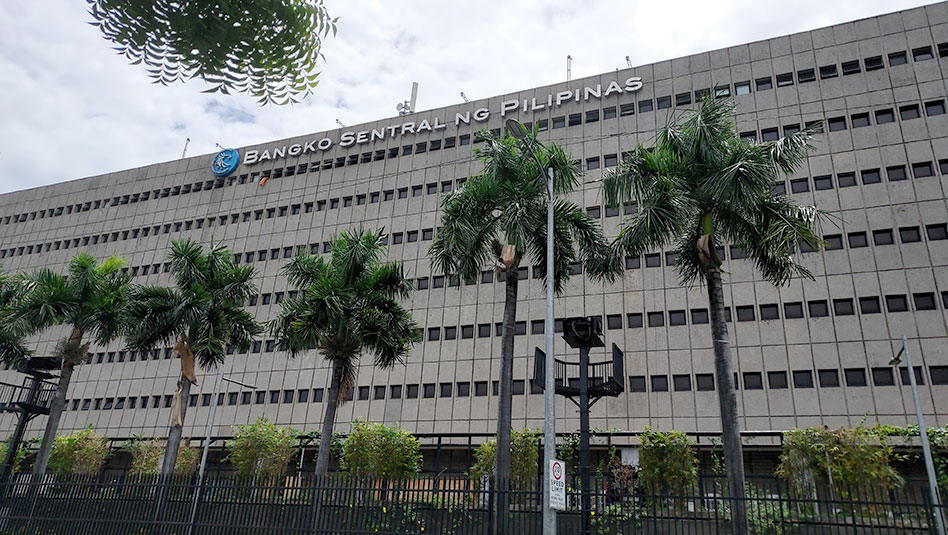
The country’s external debt service burden fell to $10.08 billion as of end-September due to lower principal and interest payments, preliminary data from the Bangko Sentral ng Pilipinas (BSP) showed.

Based on BSP data, the debt service bill on foreign borrowings came in at $10.08 billion in the nine-month period, dropping by 21.16% from $12.785 billion in the same period in 2024.

This was the fourth month in a row that the country’s external debt service burden posted an annual decline.

Broken down, principal payments fell by 39.05% to $4.168 billion as of September from $6.838 billion in the comparable year-ago period.

On the other hand, interest payments dipped by an annual 0.59% to $5.912 billion at end-September from $5.947 billion previously.

“Lower year-on-year foreign debt principal payments may have to do with reduced maturities of external debts (as) most have long-term maturities,” Michael L. Ricafort, chief economist at Rizal Commercial Banking Corp., said in a Viber message.

Mr. Ricafort also noted that the US Federal Reserve’s rate cuts since last year has lowered the Philippines’ interest payments.

The Fed has so far delivered a total of 175 basis points (bps) in cuts since September 2024, including its 25-bp cut earlier this month that lowered its target rate to the 3.5%-3.75% range.

The debt service burden represents principal and interest payments after rescheduling, according to the BSP.

This includes principal and interest payments on fixed medium- and long-term credits, including International Monetary Fund credits, loans covered by the Paris Club and commercial bank rescheduling, and New Money Facilities.

It also covers interest payments on fixed and revolving short-term liabilities of banks and nonbanks.

However, the debt service data exclude prepayments on future years’ maturities of foreign loans and principal payments on fixed and revolving short-term liabilities of banks and nonbanks.

In the January-to-September period, the debt service burden as a share of gross domestic product (GDP) fell to 2.9% from 3.9% in the previous year.

Meanwhile, the country’s outstanding external debt reached $149.093 billion as of September, climbing by 6.77% from $139.643 billion a year ago.

Of the total, $96.298 billion came from the public sector, while $52.796 billion is private sector debt.

This brought the external debt as a percentage of GDP to 30.9% in the nine months to September from 30.6% in the same period last year.

The BSP’s external debt data cover borrowings of Philippine residents from nonresident creditors, regardless of sector, maturity, creditor type, debt instruments or currency denomination.

The central bank gathers data on external debt through reports submitted by borrowers, banks, and major foreign creditors.

Mr. Ricafort said fiscal policy and governance reforms could lessen the National Government’s (NG) reliance on domestic and foreign borrowing as a means to cover the country’s budget deficit.

“Fiscal reform, tax reform, anti-corruption (and) good governance reform measures would help narrow the budget deficit and, in turn, reduce the need for the NG to borrow more locally and from abroad to finance the budget deficit,” he said.

For this year, the NG plans to source at least 81% or P2.11 trillion of its P2.6-trillion borrowing program from local lenders, and 19% from foreign sources. — Katherine K. Chan

Go: Economy back on track by Q1

Go: Economy back on track by Q1

Finance Secretary Frederick D. Go is confident the economy will be back on track by the first quarter, once individuals linked to the flood control scandal are swiftly prosecuted.   

In a Dec. 18 briefing with reporters, Mr. Go said government revenues may rebound in early 2026, depending on the swift resolution of cases related to the corruption mess.

“If we’re able to successfully prosecute certain personalities, then the faster the effect will be on economic growth in the first quarter. But to me, I’m confident that we will get back on track in the first quarter,” he said.

In the third quarter, the country’s economic growth slumped to 4%, the slowest expansion seen in over four years. In the nine-month period, gross domestic product growth averaged 5%, below the government’s 5.5-6.5% target.   

A wide-scale controversy linking Public Works officials, lawmakers and private contractors to multibillion-peso corruption in anomalous flood control projects dragged government spending and consumption.

“The whole key to all of this is for us to get over the hump of this public works investigation. The sooner people move on from it, the better for the economy and the better, therefore, for revenue collection,” Mr. Go said.

“So, if all goes according to plan, then we should be looking at a much brighter 2026 in the first quarter.”

A decline in infrastructure spending dented government revenue collections.

Mr. Go said the Bureau of Customs (BoC) and the Bureau of Internal Revenue (BIR) saw “softer” revenue collection this year due to the corruption probe, as well as the four-month ban on rice imports.

“Growth is growth. (Collections were) softer versus the DBCC (Development Budget Coordination Committee) targets,” he said.

Total revenue collection during the January-to-October period slipped by 1.13% to P3.81 trillion, which is only 84.25% of the P4.52-trillion revised full-year program. The target is 2.23% higher than the P4.42-trillion actual collection in 2024.

“For Customs, we banned, for example, the importation of rice for practically four months out of 12 months of the year. It definitely affected Customs collections,” he said.

He also attributed the lower Customs revenue to the adverse weather conditions that trimmed working days.

BoC Commissioner Ariel F. Nepomuceno last week said revenue collection may fall short of its full‑year goal.

BoC’s emerging revenue forecast for 2025 is P939.4 billion, 2% below the P958.7-billion full-year goal.

“Every time the peso depreciates, it usually results in higher Customs collections because imports are dollar-based. Maybe December should be a good month for collections,” Mr. Go said.

The peso has breached the P59-a-dollar mark several times since November and sank to a record low of P59.22 on Dec. 9.

Meanwhile, Mr. Go said the BIR’s collections for the month of December seem “encouraging.”

“For BIR, I think it was doing very well for the first half of the year and then slowly softened as time went on. But fortunately, it still records an increase in collections every month,” Mr. Go said.

In the first 10 months, BIR collections rose by 9.55% to P2.65 trillion, accounting for 82.35% of the P3.22-trillion full-year target.

Mr. Go said it is unlikely that there will be any adjustments to the revenue targets.

Economic managers met this month to review the macroeconomic assumptions and targets but have yet to release a statement.

Analysts say the economic recovery and stronger revenue collections by early 2026 remain doable if catch‑up government spending is paired with credible anti‑corruption and governance reforms.

Rizal Commercial Banking Corp. Chief Economist Michael L. Ricafort said the economic rebound next year is possible.

“(Government spending) is an important driver of faster economic growth. This was the drag in the third quarter due to political noise related to anomalous flood control projects,” he said.

Governance reforms, alongside fiscal measures, could also help narrow the budget deficit and reduce reliance on borrowing, Mr. Ricafort said.

“The revenue collection may continue to improve, given the large increases in activity during the holiday season and possibly next year as well,” Reinielle Matt M. Erece, an economist at Oikonomia Advisory and Research, Inc., said in a Viber message.

However, he flagged the loss of confidence in the government due to the corruption scandal as a potential downside risk, which could lead to lower investments.

“Households, especially those earning through the informal sector, may find it bothersome to file taxes given the damaged reputation on the public budget,” he said. — Aubrey Rose A. Inosante

PSEi surges to 6,000 level on holiday optimism

PSEi surges to 6,000 level on holiday optimism

Philippine shares surged on Monday to push the bellwether index back above the 6,000 line on improved business optimism amid the holidays and positive spillovers from both Wall Street and regional markets.

The benchmark Philippine Stock Exchange index (PSEi) jumped by 2.03% or 120.39 points to end at 6,041.26, while the broader all shares index increased by 1.43% or 48.58 points to 3,446.30.

“Philippine equities surged higher and joined the regional upswing as businesses are more optimistic this fourth quarter with the expectations that accelerated holiday spending will improve margins,” AP Securities, Inc. said in a market note.

“The local market bounced back as investors hunted for bargains following two straight days of decline,” Philstocks Financial, Inc. Research Manager Japhet Louis O. Tantiangco said in a Viber message. “The positive cues from Wall Street’s closing performance last week also helped in Monday’s session.”

Early on Monday, Asian shares rose broadly, tracking tech-driven gains on Wall Street, Reuters reported.

Despite it being a holiday-shortened week for much of the world, momentum funds were still flowing to equities, precious metals and commodities ahead of delayed data that is forecast to show the US economy had continued to grow strongly in the third quarter.

Median forecasts tip annualized growth of 3.2%, due in part to a sharp pullback in imports after a run-up earlier in the year ahead of the introduction of tariffs.

Japan’s Nikkei climbed 1.9%, extending Friday’s bounce as a steep decline in the yen promised to boost export earnings for Japanese corporates.

MSCI’s broadest index of Asia-Pacific shares outside Japan added 0.8%, while South Korea jumped 1.7% on optimism over artificial intelligence-related earnings.

Chinese blue chips gained 0.8%, while Singapore’s main index climbed 1% to a record top.

All sectoral indices closed higher on Monday. Services surged by 3.13% or 72.69 points to 2,395.42; mining and oil jumped by 3.09% or 434.72 points to 14,485.72; financials went up by 2.61% or 52.19 points to 2,051.31; property increased by 1.32% or 29.41 points to 2,251.03; industrials rose by 1.13% or 97.13 points to 8,640.34; and holding firms climbed by 0.41% or 19.32 points to 4,708.66.

“International Container Terminal Services, Inc. was the day’s top index gainer, rising 4.55% to P574.50. ACEN Corp. was the worst index performer, dropping 2.53% to P2.70,” Mr. Tantiangco said.

Advancers overwhelmed decliners, 130 to 69, while 57 names closed unchanged.

Value turnover went down to P8.28 billion on Monday with 7.16 billion shares traded from the P18.72 billion with 26.2 billion issues that changed hands on Friday.

Net foreign selling increased to P975.15 million from P103.39 million. — Alexandria Grace C. Magno with Reuters

Inflation risks may limit BSP easing

Inflation risks may limit BSP easing

Emerging risks to inflation may limit the Philippine central bank’s ability to ease further in 2026 despite an expected economic slowdown, analysts said.

John Paolo R. Rivera, a senior research fellow at the Philippine Institute for Development Studies, said another 25-basis-point (bp) cut signaled by the central bank for 2026 would not suffice to spur the economy.

“A final 25-bp rate cut would help at the margin, but it may not be enough on its own to materially lift growth if fourth-quarter (growth) comes in around 3.8%,” he told BusinessWorld in a Viber message.

Last week, Bangko Sentral ng Pilipinas (BSP) Governor Eli M. Remolona, Jr. said gross domestic product (GDP) growth in the fourth quarter might settle at 3.8%, easing from 4% in the third quarter.

If realized, it would be the slowest growth rate since 3% in the third quarter of 2011 and bring full-year expansion to 4.7%, under the government’s 5.5-6.5% target.   

However, Mr. Rivera said the central bank’s current easing cycle will likely end soon as food prices and peso’s weakness pose inflationary risks.

“As for easing space, the BSP likely has limited room left,” he said. “With growth projected to stay below target but inflation risks still present (from food prices and the (peso’s) depreciation), BSP must balance support for growth with price and financial stability.”

ANZ Research Chief Economist for Southeast Asia and India Sanjay Mathur and economist Arindam Chakraborty noted that the peso’s recent performance against the dollar has not affected inflation, amplifying calls for another 25-bp cut in February. 

“In our view, the subdued growth and inflation prospects suggest there is room for further rate cuts,” they said in a note released late on Thursday. “We anticipate another 25-bp rate cut in Q1 2026, bringing the terminal policy rate to 4.25%.”

The peso has hit the P59-per-dollar several times since November, even slumping to a fresh low of P59.22 against the greenback on Dec. 9.

The Monetary Board last week lowered key borrowing costs for a fifth straight meeting by 25 bps to an over three-year low of 4.5%, citing subdued inflation and slowing growth. It has so far delivered a total of 200 bps in cuts since it began its easing cycle in August 2024.

Mr. Remolona earlier said they might cap off their easing cycle with a final 25-bp rate cut in 2026 if economic figures turn out worse than they anticipated.

ING Chief Economist and Regional Head of Research for Asia‑Pacific Deepali Bhargava said benign inflation could allow the BSP to ease further but warned that real interest rates may climb if inflation rates fall below expectations.

“Inflation should remain within central bank targets in 2026, allowing rate-cutting cycles to continue in… the Philippines… and supporting a generally easier monetary stance across the region,” he said in a statement.

“However, ING cautions that if inflation were to undershoot expectations, real interest rates could rise again, creating a more challenging environment for both business investment and consumer demand.”

Headline inflation slowed to 1.5% in November from 1.7% in the previous month and 2.5% in the same month last year, bringing inflation to an average of 1.6% in the 11-month period.    

ING expects inflation to return within the central bank’s 2-4% target next year at 3%, a tad slower than the 3.2% revised forecast of the BSP.

Citi Research said the central bank might ease more in 2026 as the rise of jobless Filipinos could pull down consumption and inflation.

“With a cooling job market possibly dragging down consumption and inflation, we still expect a final 25-bp cut in (February 2026) to 4.25%, with still some (albeit reduced) risk of a further 25-bp cut,” it said in an e-mailed note on Friday.

The country’s unemployment rate climbed to a three-month high of 5% in October from 3.8% in September and 3.9% in the same month last year.

Governance

Meanwhile, analysts said the economy would need fiscal action and governance reforms on top of monetary policy easing to fully recover.

“Gradual cuts could still surprise, but don’t rely on rates alone,” Jonathan L. Ravelas, a senior adviser at Reyes Tacandong & Co., told BusinessWorld via Viber. “Real boost will come if (the) government speeds up action on governance, fiscal discipline, and sector reforms. Without that, impact stays limited amid political noise and corruption concerns.”

Reinielle Matt M. Erece, an economist at Oikonomia Advisory and Research, Inc., also noted that the stock market’s recent recovery is also not enough to offset slower government spending and waning investor confidence.

“Despite recovery in the equities market and the recent short rallies observed, these factors won’t be enough to offset the decline in government spending and investor sentiment,” he said in a Viber message. “A large part of GDP is government spending, hence declines in this sector will have a large impact on growth indicators.”

On Friday, the Philippine Stock Exchange index climbed by 0.78% or 46.72 points to end at 6,036.72. Week on week, it rose by 87.5 points from its 5,949.22 close on Dec. 5.

“The BSP can release money to the financial system, cut interest rates, but if the fiscal sector is tight, economic growth can only go so far,” he added.

President Ferdinand R. Marcos, Jr. earlier vowed to boost government spending in the fourth quarter in a bid to support economic growth. — Katherine K. Chan

Car sales to grow 5% next year, says CAMPI

Car sales to grow 5% next year, says CAMPI

The Chamber of Automotive Manufacturers of the Philippines, Inc. (CAMPI) is eyeing a 5% growth in vehicle sales next year amid improving supply chains, introduction of new models, and public acceptance of electrified vehicles (EVs).

CAMPI President Rommel R. Gutierrez told reporters on Friday that the industry is on track to meet the 500,000 sales target for this year.

“Next year, it has to be higher… On average [we are growing] 5%… I think 5% will be a conservative figure. We will maintain (this),” he said.

If CAMPI and the Truck Manufacturers Association (TMA) achieve its 500,000 sales target this year, a 5% growth would mean vehicle sales of 525,000 in 2026.

The latest industry report showed new passenger car sales stood at 383,424 units as of the end of October, making up 76.68% of the target set for the year.

Mr. Gutierrez said sales growth will be driven by the improvement in supply, introduction of new vehicle models, and the wider adoption of EVs.

For next year, Mr. Gutierrez said he expects more sales of EVs, which is on track to account for 12% of the industry’s total sales this year.

“I think that was the target, and I think it is possible even next year, or even higher. Even the Vios model now has a hybrid, so we are moving towards that,” he said. “And I feel we see that consumers are already embracing and accepting EVs more than ever.”

In CAMPI’s report, total EV sales hit 24,265 units in the first 10 months, accounting for 6.33% of the total industry sales. However, it is important to note that some car manufacturers are not members of CAMPI and TMA, whose sales will not be reflected in the industry groups’ report.

Meanwhile, Mr. Gutierrez said car sales may also be driven by rising demand for ride-hailing services.

“Those drivers buy vehicles to use for ride-hailing services… There’s really a lot more potential… The more the players, the merrier,” he added.

Toby Allan C. Arce, head of sales trading at Globalinks Securities and Stocks, Inc., said that the 5% growth in sales is plausible and “reflects a rebound narrative that has been building over the past couple of years.”

“After several years of elevated vehicle prices, supply-chain constraints, and tighter consumer credit, the industry saw improved affordability and inventory normalization in 2025, contributing to stronger sales,” he said in a Viber message.

“If those conditions persist into 2026, a 5% uptick is reasonable — especially if consumer confidence remains stable, financing costs ease slightly alongside broader monetary easing, and manufacturers continue to introduce refreshed models that attract buyers,” he added.

Other growth drivers include urbanization, rising middle-class incomes, and infrastructure improvements, Mr. Arce said.

“I find CAMPI’s 5% growth outlook for 2026 credible if economic conditions remain broadly supportive — stable consumption, manageable interest rates, and steady employment will help sustain auto demand,” he said.

“However, structural hurdles such as cost of ownership, regulatory shifts, and potential macro headwinds (exchange rates, fuel prices, and credit costs) could limit upside. The industry’s performance will hinge on whether these drivers align to keep new vehicle purchases both desirable and affordable to a broad segment of Filipino consumers,” he added.

John Paolo R. Rivera, a senior research fellow at the Philippine Institute for Development Studies, said that CAMPI’s 5% sales forecast assumes easing interest rates and a recovery in consumer confidence.

“If rates fall and incomes stabilize, sales can grow modestly but without that, upside may be limited,” he said in a Viber message.

“Demand will likely be driven by replacement purchases, the continued expansion of ride-hailing and logistics fleets, improved availability of models, and growing interest in hybrid and entry-level vehicles,” he added.

However, Mr. Rivera said that the industry will continue to be challenged by high borrowing costs, the peso weakness which raises vehicle prices, and cautious household spending.

For next year, Rizal Commercial Banking Corp. Chief Economist Michael L. Ricafort said that reduction in borrowing costs as a result of recent rate cuts would help increase demand for vehicles.

He said that the Bangko Sentral ng Pilipinas’  recent cuts, which brought the key policy rate to a three-year low of 4.5%, coupled with the reduction in banks’ reserve requirement ratio, have increased the loanable funds of banks.

“These are passed also in terms of lower vehicle loan rates, which would help increase demand for vehicles, especially those financed by loans,” Mr. Ricafort said in a Viber message.

“Better weather conditions towards the end of 2025 and into 2026, especially into the Christmas holiday spending season, would help fundamentally support increased demand for vehicles, alongside increased demand for EVs amid increased competition that helped reduce prices and increased options for Filipino buyers,” he added.

 Meanwhile, CAMPI signed a memorandum of understanding with the Intellectual Property Office of the Philippines (IPOPHL) to go after counterfeit auto products sold online.

“We hope this will be a deterrent for those wanting to sell fake parts online. It is really for the protection of our consumers,” said Mr. Gutierrez.

The partnership will allow CAMPI members to flag counterfeit products and have the listings taken down from the online platforms.

IPOPHL data showed that two out of the 44 counterfeit-related reports it received this year involved vehicle products, including fake oils and motorcycle parts.

Last year, the agency received four vehicle-related reports involving oil, coolants, and components for the Japanese car brand Honda. — Justine Irish D. Tabile, Reporter

Growth in big banks’ assets, loans slowed sharply in Q3

Growth in big banks’ assets, loans slowed sharply in Q3

The Philippines’ largest banks saw the weakest asset growth in over three years in the third quarter as the flood control mess weighed on economic activity.

At the same time, loan growth also logged its slowest expansion in over a year.

According to the latest release of BusinessWorld’s quarterly banking report, the aggregate assets of 44 universal and commercial banks grew annually by 7.42% in the third quarter to PHP 27.91 trillion from PHP 25.98 trillion in the same period a year earlier.

Asset growth slowed from the 9.05% seen in the previous quarter and the 11.17% in the same period last year.

This was the weakest growth in assets in 14 quarters or since the 7.37% expansion in the first quarter of 2022.

Total loans grew by 10.91% to PHP 14.6 trillion at end-September, slowing from the 12.38% in the second quarter and from 15.07% a year ago.

This was the weakest loan expansion in seven quarters or since the 10.22% growth logged in the last three months of 2023.

The third-quarter slowdown in asset and loan growth came amid the investigation into anomalous flood control projects, which has dampened consumer and investor confidence.

Some government officials, lawmakers and contractors were accused of getting kickbacks from substandard or nonexistent infrastructure projects.

The economy grew by 4.5% in the third quarter — the slowest in four years, mainly due to sluggish government spending and household expenditure.

At the same time, big banks’ nonperforming loans saw a higher share of the total loan portfolio in the July-to-September period.

Data showed that the ratio of bad loans, or those with unpaid principal and/or interest beyond 90 days, to total loans reached 3.49%, the highest share in six quarters or since 3.6% in the first quarter of 2024.

Meanwhile, the median return on equity, which measures how much shareholders earn for every peso invested, fell to 7.09% in the third quarter.

This was lower than the 8.05% median return in the same period last year and the 7.67% in the second quarter. It also marked an 11-quarter low in profitability since 6.36% in the fourth quarter of 2022.

The median capital adequacy ratio (CAR), on the other hand, rose to the highest in two quarters at 20.32%. However, it was still lower than 20.52% logged in the third quarter last year.

The CAR shows how much a bank’s capital weighs against its risk-weighted assets, indicating its capacity to absorb losses.

As of end-September, Philippine big banks’ CAR remained clearly above standard, surpassing the 10% regulatory minimum of the BSP and the international 8% lower bar under the Basel III framework.

Meanwhile, the leverage ratio, which gauges the institution’s ability to absorb shocks by measuring the bank’s capital relative to total exposure, dropped to a median of 11.05% from 11.39% in the previous quarter and 11.53% a year ago.

This continued to surpass the minimum 5% guideline of the central bank and the 3% international standard.

The net interest margin (NIM) went up to 3.82% in the third quarter from 3.54% in the second quarter but was lower than 3.91% as of end-September last year.

The NIM measures a bank’s investment profitability by dividing its net income by average earning assets.

Return on assets in the July-September period slipped to 1.59% from 1.62% in the second quarter and 1.69% a year ago.

BDO Unibank, Inc. (BDO) retained its top spot among all banks in terms of assets in the third quarter with PHP 5.22 trillion.

It was followed by Metropolitan Bank & Trust Co. (Metrobank) with P3.69 trillion, and Bank of the Philippine Islands (BPI) with PHP 3.55 trillion.

The same three banks topped the list in terms of total loans in the quarter.

BDO led all banks as it lent a total of PHP 3.47 trillion, followed by BPI with PHP 2.4 trillion, and Metrobank with PHP 1.86 trillion.

In terms of total deposits, BDO remained the leader with PHP 4.1 trillion in deposits, followed by Land Bank of the Philippines with P3.08 trillion, and BPI with PHP 2.68 trillion.

Among banks in the PHP 100 billion-and-above-tier, Asia United Bank Corp. (AUB) had the fastest asset growth in the third quarter with 19.53%, followed by Bank of Commerce with 17.35% and Security Bank with 15.18%.

AUB also led the industry in annual loan growth at 36.19% in the third quarter, followed by Bank of Commerce and Philippine Trust Co. with 18.49% and 14.54%, respectively.

BusinessWorld Research has been tracking the financial performance of the country’s large banks quarterly since the late 1980s using banks’ published statements. — Matthew Miguel L. Castillo, Researcher

ADB approves USD 500-million loan to support Philippines’ blue economy

ADB approves USD 500-million loan to support Philippines’ blue economy

The Asian Development Bank (ADB) has approved a USD 500-million (around PHP 29.56-billion) policy-based loan to support the development of the Philippines’ blue economy and improve the resilience of coastal communities.

The financing for the Marine Ecosystems for Blue Economy Development Program Subprogram 1 was approved on Thursday, the multilateral lender said in a statement.

This loan seeks to “strengthen the productivity and diversity of the country’s ocean-based economy, and improve the health and adaptability of coastal areas and communities,” the ADB said.

The program also aims to improve the plastic and solid waste management value chain to ensure long-term ecological and economic resilience in the Philippines.

“More than half of the Philippine population is dependent on the country’s oceans and rich marine biodiversity for food and livelihoods, with the blue economy having great potential to be central to attaining inclusive, resilient, and low-carbon development,” ADB Country Director for the Philippines Andrew Jeffries said.

“This is ADB’s first extensive cross-sector program focused on fostering national blue economy development in the region. We are committed to assisting our host country in achieving its climate resilience and low-carbon objectives,” he added.

In addition, Agence Française de Développement and Germany’s KfW Development Bank are set to provide cofinancing of up to EUR 200 million (about PHP 13.82 billion) each for Subprogram 1.

Last year, key blue economy sectors generated PHP 1.01 trillion (USD 17.17 billion) to the country’s economy, accounting for 3.8% of gross domestic product.

The blue economy includes fisheries, manufacturing of ocean-based products, tourism-related services, shipping, and offshore energy.

However, marine ecosystems in the Philippines are being affected by plastic and solid waste pollution, as well as extreme weather.

The Philippines, the world’s second-largest archipelagic nation, is battered by around 20 typhoons each year, with cyclones growing stronger in recent years.

The Marine Ecosystems for Blue Economy Development Program is aligned with the Philippine Development Plan 2023-2028 and supports the implementation of the National Adaptation Plan (NAP) 2023-2050.

The NAP is a joint initiative of the Climate Change Commission and the Department of Environment and Natural Resources to craft fit‑for‑purpose, science‑based adaptation strategies for sectors already facing and expected to face the impacts of climate change.

The program leverages ADB’s backing for climate action under the Climate Change Action Program, the bank’s first climate policy‑based loan in the region.

The loan complements the Philippines Flyway Project, which focuses on conserving and managing three priority wetlands, such as Candaba in Luzon, and Lake Mainit and Sibugay wetlands in Mindanao. This aims to bolster biodiversity, expand sustainable livelihoods, and improve climate resilience.

Earlier this year, ABD expressed its support for the proposed Blue Economy Act to improve marine-based livelihoods and ensure the long-term sustainability of the ocean economy.

The Senate passed Senate Bill No. 2450 in August last year, while the House approved its counterpart in December 2023. However, lawmakers failed to ratify a reconciled measure before the end of the 19th Congress.

Senators Lorna Regina “Loren” B. Legarda and Senator Risa N. Hontiveros-Baraquel have refiled the measure since the 20th Congress opened.

President Ferdinand R. Marcos, Jr. will support renewed efforts to pass the Blue Economy Act, Palace Press Officer Clarissa A. Castro said in July.

The ADB was the second-biggest development partner of the Philippines in 2024 with 59 loans and grants worth USD 11.05 billion. — Aubrey Rose A. Inosante

BSP cuts key rate, signals easing cycle nears end

BSP cuts key rate, signals easing cycle nears end

The Bangko Sentral ng Pilipinas (BSP) on Thursday lowered its benchmark policy rate anew by 25 basis points (bps) to 4.5% and signaled the current easing cycle is nearing its end.

The Monetary Board cut its target reverse repurchase rate for a fifth meeting in a row, bringing the rate to its lowest in over three years or since September 2022.

It likewise trimmed rates on the overnight deposit and lending facilities by 25 bps each to 4% and 5%, respectively.

This was in line with a BusinessWorld poll conducted last week where 17 out of 18 analysts anticipated a 25-bp cut at the Board’s last meeting of the year.

“Depending on the data, (the easing cycle) may have ended already. This may be the last cut,” BSP Governor Eli M. Remolona, Jr. said during a press briefing. “But depending on what else we see, we can still con-sider another cut.”

The central bank has so far lowered key borrowing costs by 200 bps since it began its easing cycle in August last year. It delivered a 25-bp cut at each of its meetings in April, June, August and October this year.

“On balance, the Monetary Board sees the monetary policy easing cycle nearing its end,” it said in a statement.

The Monetary Board’s decision to deliver a fifth straight cut came on the back of expectations that the economy will continue to weaken due to downbeat business sentiment amid the ongoing flood control controversy.

“The Monetary Board noted that the outlook for domestic economic growth has weakened further. Overall business sentiment has continued to decline on concerns about governance issues and lingering uncertainty over global trade policy,” it said.

“Nevertheless, domestic demand is expected to rebound slowly as the full impact of monetary policy easing works its way through the economy and as the pace and quality of public spending improves.”

The Philippine economy saw its weakest growth in over four years at 4%, a slump from the 5.5% seen in the second quarter and the 5.2% a year ago. This brought gross domestic product (GDP) growth to an average of 5% as of September, below the government’s 5.5-6.5% growth target.

“Sentiment remains weak due to the corruption issue as we can gauge from various sentiment indices,” Mr. Remolona said.

Business and investor sentiment has weakened as an ongoing probe revealed some government officials, lawmakers and private contractors received billions in kickbacks from anomalous infrastructure projects.

“The (rate) cut will revive economic activity a bit at a time when painful governance issues around infrastructure investments have weakened government spending, business confidence, and domestic demand,” Mr. Remolona said.

BSP Deputy Governor Zeno Ronald R. Abenoja said the GDP growth may settle around 5% by yearend.

The central bank chief said the economy might only start to rebound by the second half of 2026, noting that rate cuts usually take one to two years to take full effect.

“I was hoping we would recover by the first half,” Mr. Remolona said. “With the new data we’re getting, it looks like it’s more (going to) be in the second half rather than the first half.”

“And we’re hoping by 2027, we will be more or less back on target,” he added.

Still benign inflation likewise prompted the BSP to cut benchmark rates, after the consumer price index (CPI) eased to 1.5% in November on negative food inflation, slower than the 1.7% in October and 2.5% a year ago.

November marked the ninth consecutive month that inflation settled below the central bank’s 2%-4% target and brought the 11-month CPI to average 1.6%.

“The outlook for inflation continues to be benign, and inflation expectations remain firmly anchored,” the BSP said.

The central bank now expects inflation to end at 1.6% this year, lower than its earlier projection of 1.7%. However, it hiked its inflation forecasts for next year to 3.2% from 3.1% and for 2027 to 3% from 2.8%.

Mr. Remolona noted that supply shocks may push inflation faster, but negative investor sentiment could help it slow down.

“The high inflation scenario would be due to possible supply shocks such as power rate adjustments and increased rice tariffs. The low inflation scenario would be if investor sentiment remained negative for a protracted period,” he said.

The peso hitting the P59-per-dollar level has not impacted inflation “for now,” he said.

“It hasn’t weakened enough, and the oil prices have been benign,” the BSP chief said. “It’s when the two of them move in an adverse direction together that we begin to worry about.”

On Tuesday, the peso sank to its lowest ever at PHP 59.22 against the dollar after the greenback strengthened on expectations of a Fed cut.

However, it recovered on Thursday after closing at PHP 58.99 per dollar, up 22 centavos from its PHP 59.21 finish on Wednesday, Bankers Association of the Philippines data showed.

Further easing limited

While Thursday’s cut may be the end of the central bank’s easing cycle, Mr. Remolona still left the door open for another reduction if economic conditions turn “worse than they thought.”

“Any additional easing will likely be limited and will be guided by incoming data,” the BSP said in a statement.

“Looking ahead, the BSP will ensure that overall policy settings remain consistent with maintaining price stability conducive to sustainable economic growth.”

Oxford Economics Lead Economist Sunny Liu also said that this could be the last cut following the BSP’s cautious monetary policy signals, but dismal economic growth may still call for further easing.

“We expect no further rate cuts in 2026. That said, a sharper-than-expected slowdown in economic activity could still prompt additional easing,” she said in a note.

However, Pantheon Macroeconomics Chief Emerging Asia Economist Miguel Chanco said the Monetary Board may deliver another 25-bp cut at its first meeting next year.

“We continue to believe that the Board won’t stop easing until its benchmark interest rate falls to a terminal level of 4.25%; we now expect the last 25-bp move to come almost immediately at its first meeting in 2026,” he said in a note.

“It’s clear that the Board still sees space and a reason to potentially ease further in the foreseeable future,” he added.

Rizal Commercial Banking Corp. Chief Economist Michael L. Ricafort said that benign inflation and the need to boost economic growth provide the BSP additional room to ease more next year.

He projects inflation to remain below target until March next year, before accelerating to between 2% and 3% by April until December. — Katherine K. Chan

FDI inflows sink to over 5-year low

FDI inflows sink to over 5-year low

Net inflows of foreign direct investments (FDI) into the Philippines plunged to their lowest monthly level in over five years in September, the Bangko Sentral ng Pilipinas (BSP) reported on Wednesday.

Based on preliminary central bank data, FDI net inflows fell by 25.8% to USD 320 million from USD 432 million a year ago.

This marked the lowest monthly FDI inflow in more than five years or since the USD 313.79 million recorded in April 2020.

Month on month, inflows sank by 37.7% from USD 514 million in August.

“Foreign direct investments into the Philippines posted net inflows of USD 320 million in September 2025,” the BSP said in a statement on Wednesday. “Japan was the top source of FDIs, while manufacturing was the biggest recipient of FDIs during the month.”

Investments in equity and investment fund shares rose by 27.8% to USD 120 million in September from USD 94 million in the same month in 2024.

Net investments in equity capital other than reinvestment of earnings soared to USD 35 million, nearly five times (378.2%) the USD 7 million seen a year earlier.

Broken down, equity capital placements jumped by an annual 20.8% to USD 99 million, while withdrawals fell by 14.4% to USD 64 million.

Nonresidents’ reinvestment of earnings also dipped by 2.1% to USD 84 million in September from USD 86 million last year.

Meanwhile, net investments in debt instruments dropped by 40.7% to USD 201 million from USD 338 million a year prior.

These consisted mainly of intercompany borrowing or lending between foreign direct investors and their subsidiaries or affiliates in the Philippines, according to the central bank.

Union Bank of the Philippines Chief Economist Ruben Carlo O. Asuncion said a combination of global and domestic factors dragged FDI net inflows to an over five-year low.

“Globally, investors remain cautious amid slower growth in major economies and persistent geopolitical uncertainties,” he said in a Viber message.

“Domestically, while reforms like CREATE MORE (Corporate Recovery and Tax Incentives for Enterprises to Maximize Opportunities for Reinvigorating the Economy) and infrastructure programs are positive signals, structural bottlenecks and policy clarity issues continue to weigh on investor confidence.”

Economic managers have said that the ongoing flood control controversy that linked government officials, lawmakers and private contractors to massive corruption in public infrastructure projects weighed on business and investor sentiment.

Meanwhile, Jonathan L. Ravelas, a senior adviser at Reyes Tacandong & Co., also attributed the slump in foreign investments to high borrowing costs.

“September’s FDI slump to a five-year low reflects global uncertainty, high borrowing costs, and lingering policy gaps,” he said in a Viber message.

Lower nine-month FDI

For the first nine months of 2025, FDIs dropped by 22.2% to USD 5.537 billion from USD 7.118 billion in the same period last year.

This, as investments in equity and investment fund shares stood at USD 1.905 billion as of September, down by 16.8% from USD 2.289 billion the previous year.

Net foreign investments in equity capital, excluding reinvestment of earnings, went down by 33.3% year on year to USD 905 million at end-September from USD 1.357 billion a year ago.

Equity capital placements declined by 18.3% to USD 1.463 billion, while withdrawals rose by 28.7% to USD 558 million.

In the nine-month period, placements mostly came from Japan, the United States and Singapore, the central bank said.

“Industries that received most of these investments were manufacturing, wholesale and retail trade, and real estate,” the BSP added.

On the other hand, reinvestment of earnings climbed by 7.3% year on year to USD 1 billion by the end of September from USD 932 million previously.

BSP data also showed that nonresidents’ net investments in debt instruments of local affiliates declined by 24.8% to USD 3.632 billion as of September from USD 4.829 billion in the comparable year-ago period.

According to the central bank, the total FDI net inflows in the nine months to September accounted for 1.6% of the country’s gross domestic product.

Mr. Ravelas said meeting the BSP’s USD 7.5-billion FDI net inflow forecast for 2025 is “possible but tough.”

“With USD 5.5 billion so far, hitting BSP’s USD 7.5-billion target will need a strong Q4 rebound — possible but tough without fresh reforms,” he said. “[There could be] modest inflows in manufacturing and real estate if confidence improves.”

He added that the local manufacturing and real estate sectors may see modest gains in foreign investments if investor confidence rebounds.

“For businesses, now’s the time to push clarity and competitiveness to attract capital,” he said.

Meanwhile, Mr. Asuncion noted that the country’s policy implementation and investment climate will determine whether it can sustain improvements in FDI inflows.

“Looking ahead, we expect modest recovery in FDI inflows as reforms gain traction, but sustained improvement will depend on consistent policy execution and a more competitive investment environment,” he said. — Katherine K. Chan


Posts navigation

Older posts
Newer posts

Recent Posts

  • Metrobank US-Iran Risk Index: Fragile ceasefire 
  • Investment Ideas: April 10, 2026 
  • Metrobank US-Iran Risk Index: A new hope
  • A guide for your peso bond portfolio amid higher for longer rates
  • Investment Ideas: April 8, 2026

Recent Comments

No comments to show.

Archives

  • April 2026
  • March 2026
  • February 2026
  • January 2026
  • December 2025
  • November 2025
  • October 2025
  • September 2025
  • August 2025
  • July 2025
  • June 2025
  • May 2025
  • April 2025
  • March 2025
  • February 2025
  • January 2025
  • December 2024
  • November 2024
  • October 2024
  • September 2024
  • August 2024
  • July 2024
  • June 2024
  • May 2024
  • April 2024
  • March 2024
  • February 2024
  • January 2024
  • December 2023
  • November 2023
  • October 2023
  • September 2023
  • August 2023
  • July 2023
  • June 2023
  • May 2023
  • April 2023
  • March 2023
  • February 2023
  • January 2023
  • December 2022
  • November 2022
  • October 2022
  • September 2022
  • August 2022
  • July 2022
  • June 2022
  • May 2022
  • March 2022
  • December 2021
  • October 2021

Categories

  • Bonds
  • BusinessWorld
  • Currencies
  • Economy
  • Equities
  • Estate Planning
  • Explainer
  • Featured Insight
  • Fine Living
  • How To
  • Investment Tips
  • Markets
  • Portfolio Picks
  • Rates & Bonds
  • Retirement
  • Reuters
  • Spotlight
  • Stocks
  • Uncategorized

You are leaving Metrobank Wealth Insights

Please be aware that the external site policies may differ from our website Terms And Conditions and Privacy Policy. The next site will be opened in a new browser window or tab.

Cancel Proceed
Get in Touch

For inquiries, please call our Metrobank Contact Center at (02) 88-700-700 (domestic toll-free 1-800-1888-5775) or send an e-mail to customercare@metrobank.com.ph

Metrobank is regulated by the Bangko Sentral ng Pilipinas
Website: https://www.bsp.gov.ph

Quick Links
The Gist Webinars Wealth Manager Explainers
Markets
Currencies Rates & Bonds Equities Economy
Wealth
Investment Tips Fine Living Retirement
Portfolio Picks
Bonds Stocks
Others
Contact Us Privacy Notice Terms of Use
© 2026 Metrobank. All rights reserved.

Access this content:

If you are an existing investor, log in first to your Metrobank Wealth Manager account. ​

If you wish to start your wealth journey with us, click the “How To Sign Up” button. ​

Login HOW TO SIGN UP