





MODEL PORTFOLIO
THE GIST
NEWS AND FEATURES
Global Philippines Fine Living
INSIGHTS
INVESTMENT STRATEGY
Economy Stocks Bonds Currencies
THE BASICS
Investment Tips Explainers Retirement
WEBINARS
2024 Mid-Year Economi Briefing, economic growth in the Philippines
2024 Mid-Year Economic Briefing: Navigating the Easing Cycle
June 21, 2024
Investing with Love
Investing with Love: A Mother’s Guide to Putting Money to Work
May 15, 2024
retirement-ss-3
Investor Series: An Introduction to Estate Planning
September 1, 2023
View All Webinars
DOWNLOADS
Container ship carrying container boxes import export dock with quay crane. Business commercial trade global cargo freight shipping logistic and transportation worldwide oversea concept. Generative AI
Economic Updates
Philippines Trade Update: Wider deficit on strong imports
DOWNLOAD
Frick collection with palm trees 
Economic Updates
Policy Rate Updates: Policy rate updates to reassure 
DOWNLOAD
Man using his smartphone
Reports
Fed to cut just once 
DOWNLOAD
View all Reports
Metrobank.com.ph How To Sign Up
Follow us on our platforms.

How may we help you?

TOP SEARCHES
  • Where to put my investments
  • Reports about the pandemic and economy
  • Metrobank
  • Webinars
  • Economy
TRENDING ARTICLES
  • Investing for Beginners: Following your PATH
  • On government debt thresholds: How much is too much?
  • Philippines Stock Market Outlook for 2022
  • Deficit spending remains unabated

Login

Access Exclusive Content
Login to Wealth Manager
Visit us at metrobank.com.ph How To Sign Up
Access Exclusive Content Login to Wealth Manager
Search
MODEL PORTFOLIO THE GIST
NEWS AND FEATURES
Global Philippines Fine Living
INSIGHTS
INVESTMENT STRATEGY
Economy Stocks Bonds Currencies
THE BASICS
Investment Tips Explainers Retirement
WEBINARS
2024 Mid-Year Economi Briefing, economic growth in the Philippines
2024 Mid-Year Economic Briefing: Navigating the Easing Cycle
June 21, 2024
Investing with Love
Investing with Love: A Mother’s Guide to Putting Money to Work
May 15, 2024
retirement-ss-3
Investor Series: An Introduction to Estate Planning
September 1, 2023
View All Webinars
DOWNLOADS
Container ship carrying container boxes import export dock with quay crane. Business commercial trade global cargo freight shipping logistic and transportation worldwide oversea concept. Generative AI
Economic Updates
Philippines Trade Update: Wider deficit on strong imports
March 27, 2026 DOWNLOAD
Frick collection with palm trees 
Economic Updates
Policy Rate Updates: Policy rate updates to reassure 
March 26, 2026 DOWNLOAD
Man using his smartphone
Reports
Fed to cut just once 
March 19, 2026 DOWNLOAD
View all Reports

Archives: Business World Article

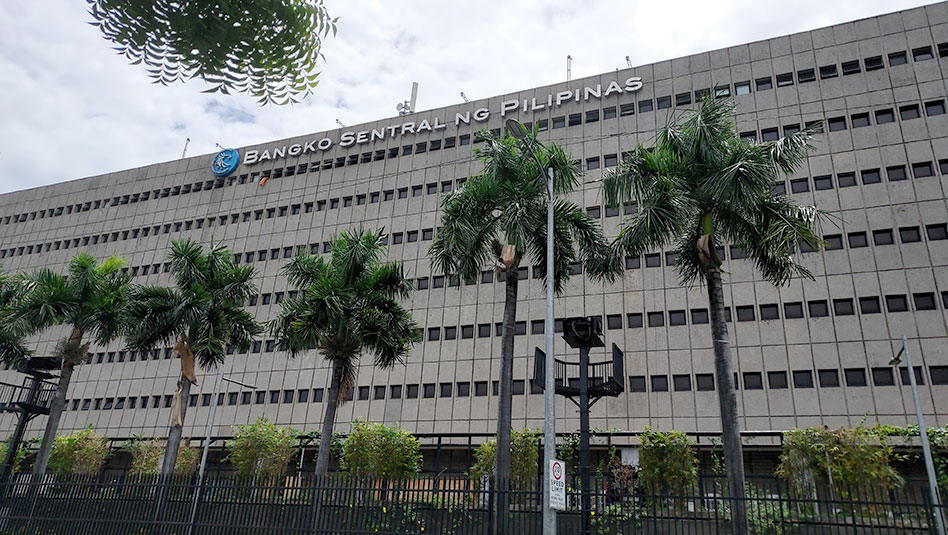
Philippine banks’ loan growth steadies in Nov.

Philippine banks’ loan growth steadies in Nov.

Philippine banks’ loan growth held steady in November, preliminary data from the Bangko Sentral ng Pilipinas (BSP) showed.

Outstanding loans of universal and commercial banks, net of reverse repurchase agreements, grew by 10.3% year on year to PHP 13.988 trillion in November from PHP 12.676 trillion in the same month in 2024.

November’s growth rate matched the pace of October. October saw the slowest growth in bank lending since the 10.1% recorded in June 2024.

On a seasonally adjusted basis, bank lending expanded by 0.9% month on month.

“Outstanding loans from universal and commercial banks (U/KBs) to businesses and individual consumers expanded in November,” the central bank said in a statement released late on Tuesday.

“Preliminary data show that loans from U/KBs grew at a steady rate of 10.3% year on year in November,” it added.

BSP data showed that big banks’ outstanding loans to residents grew by an annual 10.7% to PHP 13.681 trillion in November, slightly easing from the 10.9% growth seen in the previous month.

On the other hand, loans to nonresidents fell by 4.5% year on year to PHP 307.253 billion from the 11.1% drop logged in October.

Banks’ loans to residents for production activities grew by 9% to PHP 11.789 trillion in November, slowing from 9.1% in the previous month.

This as lending for electricity, gas, steam, and air-conditioning supply sector jumped by 26.6%. Other segments that showed growth in lending include transportation and storage (12.7%); wholesale and retail trade, repair of motor vehicles and motorcycles (11.6%); real estate activities (9%); information and communication (7%); and financial and insurance activities (3.5%).

Meanwhile, big banks’ consumer loans to residents — which account for credit card, motor vehicle, and general-purpose salary loans but exclude residential real estate loans — rose by 22.9% in November to PHP 1.892 trillion, slightly slower than the 23.1% growth in October.

Broken down, credit card loans jumped by 29.5% to PHP 1.158 trillion, picking up from the 29.2% growth in October, while lending growth for motor vehicles eased to 16.3% at P524.037 billion from 17.6% in the previous month.

On the other hand, loans for general-purpose salaries reached PHP 164.932 billion in November, climbing by 6.4%. This is a tad faster than 5.8% a month ago.

Rizal Commercial Banking Corp. Chief Economist Michael L. Ricafort said the consistent double-digit expansion in bank lending can help spur the local economy, especially after the sharp slowdown in the third quarter of 2025.

“Banks’ loan growth still at double-digit levels could still bode well as a leading indicator to the broader economic growth,” he said in a Viber message.

Mr. Ricafort noted that the 10.3% loan growth in November was mainly because of the fast growth in consumer loans, particularly credit card and motor vehicle loans, “amid the country’s favorable demographics.”

In the coming months, banks may see more demand for loans if the BSP lowers key borrowing costs and the reserve requirement ratio (RRR) further to match the Federal Reserve’s moves.

“Loan growth could continue to sustain at double-digit growth levels if the Fed cuts rates further in the coming months that could be matched by the BSP, alongside possible cut/s in local banks’ RRR, all of which could further reduce borrowing costs that could spur greater demand for loans or credit and help boost investments and overall economic growth,” Mr. Ricafort said.

The Monetary Board has so far slashed the benchmark policy rate by a total of 200 bps since August 2024, bringing it to its lowest in over three years at 4.5%.

BSP Governor Eli M. Remolona, Jr. left the door open for another 25-bp cut at its first meeting this year on Feb. 19, though noted that the current easing cycle is nearing its end as the current policy rate is approaching their neutral rate.

On the other hand, the Fed has so far delivered 175 bps in cuts since September 2024, bringing its key policy rate to the 3.5%-3.75% range. It is scheduled to have its first meeting this year on Jan. 27-28.

Money supply

Meanwhile, separate BSP data showed that domestic liquidity (M3) rose by 7.6% year on year to PHP 19.439 trillion in November from PHP 18.071 trillion. This was slower than the 8.3% climb in October.

M3 is considered as the broadest measure of liquidity in an economy.

The country’s money supply expanded by 1.2% month on month on a seasonally adjusted basis.

Domestic claims, which include claims from private and government entities, jumped by an annual 10.6% year on year to PHP 21.984 trillion, picking up from the 10.5% growth in October.

This as higher borrowings boosted net claims on the central government by 11% to PHP 5.888 trillion. This was up from 10% growth a month earlier.

Meanwhile, claims on the private sector rose by 11.1% to PHP 14.162 trillion, faster than the 11% the previous month, amid “continued expansion in bank lending to non-financial private corporations and households.”

Claims on a sector refer to that sector’s liabilities to depository corporations such as banks and the central bank.

Central bank data also showed net foreign assets (NFA) in peso terms climbed by 4.4% in November versus the 2.1% expansion in October.

“NFAs of the BSP increased by 1.9%,” the BSP said. “Similarly, NFAs of banks grew primarily on account of lower foreign currency-denominated bills payable.”

Broken down, the central bank’s NFAs grew by 1.9% year on year, a turnaround from the 0.4% decline in October, while banks’ NFA climbed by 26.9%, slightly faster than the 26.3% the previous month.

NFAs reflect the difference between depository corporations’ claims and liabilities to nonresidents.

“The BSP monitors bank loans because they are a key transmission channel of monetary policy,” the central bank said. “Looking ahead, the BSP will ensure that domestic liquidity and bank lending conditions remain aligned with its price and financial stability objectives.” — Katherine K. Chan

Philippine stocks extend slide as peso hits record low

Philippine stocks extend slide as peso hits record low

Philippine shares fell for a second session on Wednesday after the peso slid to a record low, weighing on investor sentiment.

The benchmark Philippine Stock Exchange index dropped 0.29% to 6,389.81, while the broader all-share index slipped 0.06% to 3,635.94.

Late selling pulled the market lower, with sentiment pressured by the peso’s weakness and higher global oil prices amid tensions in Iran, Philstocks Financial, Inc. Research Manager Japhet Louis O. Tantiangco said.

“The peso’s weakness also weighed on the bourse,” he said in a Viber message.

The local currency closed at PHP 59.44 a dollar, down 9.9 centavos from its previous finish, according to Bankers Association of the Philippines data. This marked its weakest close on record, surpassing the PHP 59.355 logged on Jan. 7.

Rizal Commercial Banking Corp. Chief Economist Michael L. Ricafort said the decline reflected mild profit-taking after recent gains, following the government’s decision to trim its infrastructure spending target.

The Department of Budget and Management lowered the infrastructure spending goal to 4.3% of gross domestic product this year from 5.1%, citing the need for more cautious disbursement after a corruption scandal weighed on spending and growth last year.

Acting Budget Secretary Rolando U. Toledo said the revised target translates to about PHP 1.3 trillion.

Despite Wednesday’s dip, Mr. Ricafort said the index remains at its highest levels in more than five months, supported by gains since late December and continued foreign inflows.

Sectoral performance was mixed. Mining and oil stocks rose 1.81%, while holding firms gained 1.57% and industrials added 0.58%.

On the other hand, services fell 1.76%, while financials declined 1.2%.

JG Summit Holdings, Inc. led index gainers, climbing 4.8% to PHP 26.20. China Banking Corp. was the worst performer, sliding 3.72% to PHP 60.70.

Decliners beat advancers 97 to 95, with 71 stocks unchanged. Value turnover rose to PHP 6.92 billion, with 1.86 billion shares traded, compared with PHP 6.75 billion and 1.26 billion shares in the previous session.

Foreign investors remained net buyers, though inflows eased to PHP 291.46 million from PHP 506.15 million a day earlier.

Markets also tracked global developments, including softer US equities and higher oil prices, which added pressure on risk assets.

Analysts said the peso’s direction and policy signals from the Bangko Sentral ng Pilipinas would remain key drivers in the near term. — Alexandria Grace C. Magno

Philippine FDI net inflows plunge nearly 40% in October

Philippine FDI net inflows plunge nearly 40% in October

Net inflows of  foreign direct investments (FDI) into the Philippines plunged nearly 40% year on year in October, as foreigners’ net investments in debt instruments slumped.

Based on preliminary Bangko Sentral ng Pilipinas (BSP) data, FDI net inflows declined by 39.8% to USD 642 million in October from USD 1.067 billion in the same month in 2024.

Despite this, October saw the highest monthly FDI level in three months or since the USD 1.271-billion net inflows posted in July.

Month on month, inflows more than doubled (100.6%) from the five-year low of USD 320 million in September.

“Foreign direct investments into the Philippines posted net inflows of USD 642 million in October 2025,” the BSP said in a statement released late on Monday. “Japan was the top source of FDIs, while corporations engaged in financial and insurance activities were the biggest recipients of FDIs during the month.”

The year-on-year decline came as nonresidents’ net investments in debt instruments plummeted by an annual 50.7% to USD 437 million from USD 888 million.

However, this was tempered by higher inflows recorded across other FDI components.

Investments in equity and investment fund shares jumped by 14.5% to USD 205 million in October 2025 from USD 179 million in the same month in the previous year.

Nonresidents’ net investments in equity capital, other than the reinvestment of earnings, jumped by 17.1% to USD 117 million in October from USD 100 million a year earlier.

Broken down, equity capital placements grew by 10.7% to USD 135 million in October from USD 122 million a year ago, while withdrawals dropped by 17.4% to USD 19 million from USD 23 million a year ago.

Meanwhile, reinvestment of earnings rose by 11.3% year on year to USD 88 million in October from USD 79 million a year ago.

HSBC economist for ASEAN Aris D. Dacanay noted that the annual drop indicated that the ongoing corruption scandal curbed FDI inflows, prompting investors to adopt a cautious “wait-and-see” stance.

“I think it does show that it is affected by the scandal,” he told a press briefing on Tuesday. “The dip in itself has led foreign investors to have this wait-and-see approach on what’s happening in the Philippines. So, I can’t say that it doesn’t (affect FDIs). What I have to say is that it won’t totally reverse it.”

Last year, a series of widespread flooding across the country exposed multiple anomalous flood control projects and embroiled Public Works officials, lawmakers and private contractors in corruption allegations.

Mr. Dacanay said the Philippines’ favorable demographics, tariff advantage and strong business process outsourcing sector will keep FDIs on track and could even help attract more investments into the country’s export-oriented industries.

On the other hand, Jonathan L. Ravelas, a senior adviser at Reyes Tacandong & Co., said the October figures suggest that corporate financing decisions weighed more on foreign investments than political factors.

“Month on month, though, we bounced back simply because September was (at) a five‑year low — so October looked stronger as funding cycles normalized,” he said via Viber. “The flood control scandal added noise, but the data show the bigger driver was corporate financing decisions, not politics.”

10-month slide

Meanwhile, BSP data also showed that FDI net inflows fell by 24.5% to USD 6.179 billion as of October from USD 8.184 billion in the comparable year-ago period.

“Net foreign direct investments declined year on year for the month of October 2025 (-39.8%) and from January-October 2025 (-24.5%) amid external risk factors particularly Trump’s higher tariffs, trade wars (and) protectionist policies that slowed down the US and global economy,” Rizal Commercial Banking Corp. Chief Economist Michael L. Ricafort said in a Viber message.

Nonresidents’ investments in equity and investment fund shares amounted to USD 2.11 billion in the 10 months to October, 14.5% lower than the USD 2.468 billion a year earlier.

Investments in equity capital, other than the reinvestment of earnings, slid by 29.8% to USD 1.022 billion during the period from USD 1.456 billion in the prior year.

This as placements dropped by 16.4% year on year to USD 1.599 billion as of October from USD 1.912 billion a year ago. On the other hand, withdrawals climbed 26.5% to USD 577 million from USD 456 million a year ago.

Most equity capital placements in the 10-month period came from Japan, the United States and Singapore.

“Industries that received most of these investments were manufacturing, wholesale and retail trade, and real estate,” the central bank said.

Meanwhile, nonresidents’ reinvestment of earnings increased by 7.6% to USD 1.088 billion as of October from USD 1.011 billion.

However, net investments in debt instruments dropped by 28.8% to USD 4.069 billion in the period ending October from USD 5.717 billion a year ago.

Mr. Ravelas said the BSP’s forecast of USD 7 billion in FDI net inflows by end-2025 remains within reach, especially if investments stabilize in the last two months of the year.

“What will help? Strong capital from Japan, the US, and Singapore, continued investments in manufacturing, retail, and real estate, and clearer governance signals that reassure investors. If we stay focused on stability and reforms, the Philippines can keep pulling in long‑term capital despite the noise,” he added.

FDIs account for foreign investors’ investments in local businesses where they hold at least a 10% equity capital, as well as investments by a nonresident subsidiary or associate in its resident direct investor. It can be in the form of equity capital, reinvestment of earnings or borrowings.

The BSP’s FDI data cover actual investment flows, compared to the Philippine Statistics Authority’s foreign investments data which include investment commitments that may not be fully realized in a given period. — Katherine K. Chan, Reporter

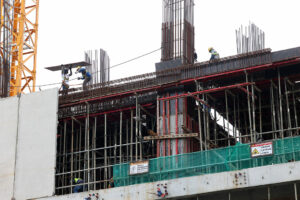
Philippines targets 4.3% of GDP for infrastructure spending this year

Philippines targets 4.3% of GDP for infrastructure spending this year

The Department of Budget and Management (DBM) cut its infrastructure spending target to 4.3% of gross domestic product (GDP) this year from 5.1% previously, as a corruption scandal weighed on government spending and economic growth last year.

The lower target translates to about PHP 1.3 trillion in infrastructure outlays, Acting Budget Secretary Rolando U. Toledo said on Tuesday, signaling a more cautious spending stance as the government works to restore confidence and streamline disbursements.

“Based on our approved General Appropriations Act, we’re looking at achieving our infrastructure target as [a percentage of our] GDP at 4.3%, and even at a nominal level, that is equivalent to PHP 1.3 trillion,” he told a Palace briefing in mixed English and Filipino.

Infrastructure spending has been a key pillar of President Ferdinand R. Marcos, Jr.’s growth strategy, though execution slowed last year due to budget adjustments and project bottlenecks amid a massive graft scandal involving flood control projects.

The government had earlier set a target of 5.1% of GDP for infrastructure spending in 2026, equivalent to PHP 1.56 trillion, lower than the 2025 target of 5.3% of GDP or PHP 1.51 trillion.

In 2024, infrastructure spending accounted for 5.8% of GDP or PHP 1.545 trillion.

Mr. Toledo said the government is still determined to boost investments in infrastructure in the medium term.

He said there is little risk of delays in infrastructure projects this year, after a “clean” budget process.

“There is no reason for us to delay,” Mr. Toledo said, adding that the 2026 national budget contains no “ghost projects” and that allocations across programs are fully specified, supporting the government’s ability to meet its infrastructure goals.

Mr. Marcos on Jan. 5 signed a record PHP 6.793-trillion national budget amid a graft scandal, which has prompted tighter scrutiny of public spending and a more cautious approach to the release of funds for infrastructure and other major projects.

John Paolo R. Rivera, a senior research fellow at the Philippine Institute for Development Studies, said slower public works spending may temper economic momentum because infrastructure has one of the highest multiplier effects in the economy.

“It may cap growth momentum, as public works have one of the highest multiplier effects in the economy,” he said via Viber.

“The more cautious stance may help restore governance credibility, but it also means less crowding-in of private investment, weaker job creation in construction and allied sectors, and slower productivity gains,” he added.

Economy Secretary Arsenio M. Balisacan last week said economic growth in the Philippines likely eased to between 4.8% and 5% in 2025, reflecting the impact of the graft scandal on the economy.

The Philippine Statistics Authority is set to publish official fourth-quarter and full-year 2025 GDP figures on Jan. 29.

Without faster execution, improved project selection, or stronger private investment to offset the slowdown, the Philippines’ economic growth could fall short of its potential even as confidence gradually improves, Mr. Rivera said.

Michael L. Ricafort, chief economist at Rizal Commercial Banking Corp., said higher government spending — particularly on infrastructure — is likely to be the primary driver of economic growth in 2026.

He expects authorities to accelerate public works as early as the first quarter to make up for underspending last year, which he said was partly due to tighter anti-corruption measures and governance reforms.

A catch-up spending program could help bolster investor confidence and sentiment, Mr. Ricafort said, reinforcing the growth outlook.

He said prospective interest rate cuts by the US Federal Reserve and the Bangko Sentral ng Pilipinas would lower borrowing costs, supporting credit demand, investment and overall economic expansion. — Chloe Mari A. Hufana, Reporter

Peso weakens further on geopolitical risks

Peso weakens further on geopolitical risks

The peso weakened further on Tuesday to end near its record low following fresh tariff threats from US President Donald J. Trump and rising political risk in Japan.

The local unit closed at PHP 59.341 versus the greenback, declining by 8.1 centavos from its PHP 59.26 finish on Monday, data from the Bankers Association of the Philippines data showed.

This was its worst showing in nearly a week or since its all-time low close of PHP 59.355 per dollar recorded on Jan. 7.

The peso opened Tuesday’s trading session slightly weaker at PHP 59.28 versus the dollar. Its intraday best was at PHP 59.26, while it dropped to as low as PHP 59.36 against the greenback.

Dollars traded increased to USD 999.22 million from USD 887.3 million on Monday.

“The dollar-peso closed higher mainly due to geopolitical concerns after Trump said that any country that does business with Iran will get a 25% tariff,” a trader said in a phone interview.

The peso was also dragged by a weaker yen after signals from the camp of Japanese Prime Minister Sanae Takaichi on a possible snap election next month, Rizal Commercial Banking Corp. Chief Economist Michael L. Ricafort said in a Viber message.

For Wednesday, the trader said the peso could weaken further and even test the PHP 59.50 level as heightening geopolitical tensions may lead to safe-haven demand for the greenback.

For Wednesday, the trader expects the peso to move between PHP 59.10 and PHP 59.50 per dollar, while Mr. Ricafort sees it ranging from PHP 59.20 to PHP 59.40. — Aaron Michael C. Sy

Stocks go down on profit taking before US data

Stocks go down on profit taking before US data

Philippine stocks ended lower on Tuesday as investors pocketed their gains following the market’s three-day climb and awaited the release of key US data that could affect the US Federal Reserve’s policy decision this month.

The bellwether Philippine Stock Exchange index (PSEi) went down by 0.17% or 11.20 points to close at 6,408.76, while the broader all shares index slipped by 0.07% or 2.75 points to finish at 3,638.38.

“The local market retreated ever so slightly after the three-day win streak, as investors await fresh leads,” AP Securities, Inc. said in a market note.

“The local market pulled back as investors took profits following three days of rallying. The market digested the Philippines’ October foreign direct investments (FDI) data, which posted a 40% decline in net inflows,” Philstocks Financial, Inc. Research Manager Japhet Louis O. Tantiangco said in a Viber message.

FDI net inflows dropped by 39.8% to USD 642 million in October from USD 1.067 billion in the same month in 2024, the Bangko Sentral ng Pilipinas (BSP) reported late on Monday.

For the first 10 months, net inflows fell by 24.5% to USD 6.179 billion from USD 8.184 billion in the comparable year-ago period.

“Investors are also waiting for the US December consumer price index (CPI) data, which is expected to provide clues on the Federal Reserve’s policy outlook,” Mr. Tantiangco added.

US consumer prices likely accelerated in December as some of the distortions related to the government shutdown that had artificially lowered inflation in November unwound, which would cement expectations of the US Federal Reserve leaving interest rates unchanged this month, Reuters reported.

The CPI likely increased by 0.3% last month amid higher food and energy prices, mostly electricity because of data centers, a Reuters survey of economists predicted. In the 12 months through December, the CPI is forecast to have increased 2.7%, matching November’s gain.

The Fed tracks the Personal Consumption Expenditures Price indexes for its 2% inflation target. The US central bank is expected to keep its benchmark overnight interest rate in the 3.5%-3.75% range at its Jan. 27-28 meeting.

Back home, most sectoral indices closed lower on Tuesday. Industrials fell by 0.55% or 50.97 points to 9,088.80; property decreased by 0.44% or 10.44 points to 2,336.77; financials went down by 0.21% or 4.60 points to 2,174.57; and holding firms retreated by 0.16% or 8.51 points to 5,018.4.

Meanwhile, mining and oil jumped by 2.09% or 359.21 points to 17,475.64; and services increased by 0.47% or 12.26 points to 2,575.43.

Advancers outnumbered decliners, 104 to 94, while 70 names closed unchanged.

Value turnover rose to PHP 6.75 billion on Tuesday with 1.26 billion shares traded from the PHP 6.64 billion with 1.02 billion issues that changed hands on Monday.

Net foreign buying decreased to PHP 506.15 million from PHP 534.17 million. — Alexandria Grace C. Magno with Reuters

Wage hike for domestic workers eyed

Wage hike for domestic workers eyed

Philippine wage regulators opened talks on a possible increase in the minimum pay for domestic workers in Metro Manila, a move that could raise household costs for millions of families even as authorities grapple with weak compliance and uneven ability to pay.

The Regional Tripartite Wages and Productivity Board-National Capital Region on Monday held a public hearing on adjusting the minimum wage for a kasambahay (domestic worker), marking the start of deliberations that could result in a decision after Jan. 15, according to the board chairperson Sarah Buena S. Mirasol.

“We are hopeful that there will also be an increase for domestic workers, following last year’s adjustment for formal sector workers,” she told BusinessWorld.

Ms. Mirasol said the hearing in Pasay City gathered views from local governments, labor groups, employer representatives, and domestic workers themselves.

Ms. Mirasol said the board is weighing several factors, including cost of living, inflation, prevailing wages, and employers’ capacity to pay. Unlike the formal sector, household employers are largely workers themselves rather than businesses, she added.

Data presented during the hearing indicated that the average wage of domestic workers in Metro Manila is around PHP 9,000 a month, above the current minimum of PHP 7,000. This was set by the last minimum wage order effective Jan. 4, 2025.

“That already reflects the prevailing wage in NCR,” she said.

The board is also seeing a shift toward part-time and live-out arrangements for domestic workers, Ms. Mirasol added.

The board is currently relying on the Philippine Statistics Authority’s Labor Force Survey, while awaiting the release of a more detailed results from the rider questions on kasambahays. The results are expected later this year.

Employer representative Federico R. Marquez, Jr. said any wage hike for domestic helpers would be felt most by middle- and low-income households.

“Those earning below P50,000 a month are the ones who will really feel the increase,” he said, noting that “elite-income” households already pay above the minimum.

“For those in the top group, such as families living in gated subdivisions, the increases are negligible. In fact, the current PHP 7,000 minimum wage is almost nothing for them. Most already pay PHP 10,000 to PHP 11,000 for their kasambahays. They can easily afford this,” Mr. Marquez said.

“But for employees… earning less than PHP 50,000 — the increase is substantial. These are the households that will truly feel the impact of a wage hike for a kasambahay,” he added.

Mr. Marquez stressed the need to balance affordability with worker welfare, warning that steep increases could lead some households to forgo hiring domestic help or to circumvent the law.

He also expressed concern about weak compliance, particularly the lack of written employment contracts, which are mandatory under the Kasambahay Law (Republic Act No. 10361), also known as the Domestic Workers Act.

The law establishes comprehensive labor rights and protections for domestic workers, including a written contract, minimum wage, humane working conditions, and social security benefits.

Labor groups, meanwhile, pushed for a meaningful adjustment and stronger enforcement.

Helena Simplina, project officer of the Federation of Free Workers, said the hearing highlighted persistent noncompliance, citing cases of domestic workers earning as low as PHP 2,000 a month.

“There are still employers who do not comply with the minimum wage and registration requirements,” she said, adding that many households remain unregistered with barangays, contributing to data gaps.

Labor sector representative Angelita D. Señorin said workers are expecting a “good increase,” noting that most domestic workers in Metro Manila already refuse jobs paying only the minimum wage.

“No one is really accepting PHP 7,000 anymore,” she said.

Rizal Commercial Banking Corp. Chief Economist Michael L. Ricafort told BusinessWorld that cost of living and inflation, which vary by region, “are key inputs in wage decisions.”

According to the PSA, full-year NCR inflation averaged 2.4% in 2025, down from 2.6% in 2024, driven by slower food price growth, though higher housing and utility costs exerted upward pressure.

“(The wage) may look low but many of them are stay in. Free or subsidized rent, food, utilities, among others, but mostly free,” Mr. Ricafort added.

Benjamin B. Velasco, an assistant professor at the University of the Philippines Diliman School of Labor and Industrial Relations, said domestic workers deserve higher wages.

“Definitely kasambahays deserve a raise. It’s been a year since they had a wage hike,” he told BusinessWorld in a Facebook Messenger chat.

While the law mandates 10-point criteria for wage adjustments, in practice it boils down to the cost of living and the capacity of employers to pay, Mr. Velasco said.

“In the case of kasambahays, their employers are the rich, the middle class and the small number of higher paid workers in which both parents are most probably working so they need a househelp for domestic and care work,” Mr. Velasco said. “Given the sustained economic growth, I believe they have the capacity to pay kasambahays a higher salary.”

Mr. Velasco said given the option to work abroad and the high cost of living, the reservation wage — the rate at which a kasambahays is willing to work — has gone up. — Erika Mae P. Sinaking

Meralco rates go down in January

Meralco rates go down in January

Over eight million customers of Manila Electric Co. (Meralco) will see lower electricity bills this month as the power distributor announced a rate cut on Monday.

The overall electricity rate declined by PHP 0.1637 per kilowatt-hour (kWh) to PHP 12.9508 per kWh in January from PHP 13.1145 per kWh in December, the company said in a statement.

Residential households consuming 200 kWh will see their monthly electricity bills go down by PHP 33. Customers using 300 kWh, 400 kWh, and 500 kWh will see reductions of PHP 49, PHP 65, and PHP 82, respectively.

Meralco Vice-President and Head of Corporate Communications Joe R. Zaldarriaga said the decline in power rates was driven by the lower transmission charge.

“While there were upward pressures on certain cost components this January, the overall electricity bill still went down for the second consecutive month. We hope this will help our customers, especially at the start of the new year,” Mr. Zaldarriaga said in Filipino during a briefing.

The residential transmission rate dropped by PHP 0.10 per kWh to PHP 1.0368 per kWh mainly due to lower ancillary service charges incurred by the National Grid Corp. of the Philippines from its bilateral contracts and the reserve market.

Contributing to the downward adjustment was the lower generation charge, which declined by PHP 0.0171 per kWh to PHP 7.7471 per kWh due to lower costs from the Wholesale Electricity Spot Market (WESM) and power supply agreements (PSAs).

Charges from WESM fell by PHP 1.1898 per kWh as the supply situation in the Luzon grid improved. PSA charges likewise declined by PHP 0.0516 per kWh as a coal plant in Quezon province returned to operations.

Meanwhile, the cost of electricity charged by independent power producers (IPPs) increased due to higher fixed fees from a major gas plant, as well as the peso depreciation, affecting their costs that are mostly dollar denominated.

The peso closed at PHP 58.79 per dollar on Dec. 29, weakening by P0.145 from its PHP 58.645 finish on Nov. 28.

WESM, PSAs, and IPPs accounted for 7%, 71%, and 22%, respectively, of Meralco’s total energy requirement for the period.

Taxes and other charges slipped by PHP 0.0837 per kWh, further pulling down the overall rate.

The lower charges cushioned the increase arising from the implementation of the green energy auction allowance equivalent to PHP 0.0371 per kWh, in accordance with the directive of the Energy Regulatory Commission.

The amount is charged to all on-grid electricity end-users to fund the incentives of new renewable energy projects under the government’s green energy auctions.

“Pass-through charges for generation and transmission are paid to the power suppliers and the grid operator, respectively, while taxes, universal charges, and renewable energy subsidies are all remitted to the government,” Meralco said.

Meralco’s distribution charge has not been adjusted since the PHP 0.0360 per kWh reduction in August 2022.

Summer forecast

With the anticipation of higher demand during the summer months, Mr. Zaldarriaga assured consumers that there will be adequate power supply.

“We have always ensured that we have adequate capacity in coming into our system to make sure that we will be able to supply efficient, reliable, and adequate electricity to all our customers,” he said.

On the distribution side, Meralco First Vice-President and Head of Networks Froilan J. Savet said the company is implementing proactive and preventive maintenance of its facilities.

“We continue to implement our capex (capital expenditure) projects, including the installation of additional lines and the construction of substations, to ensure we provide reliable and quality service to our customers,” Mr. Savet said in Filipino.

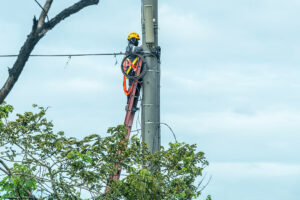
Meralco also warned against theft of electrical facilities, including power cables, following a recent attempt in Quezon City that resulted in a temporary disruption of electricity service to nearly 8,000 customers.

In 2025 alone, the power distributor reported 285 theft incidents of electrical facilities, including power cables. Most of these resulted in service interruptions while four resulted in physical injuries.

“Beyond the inconvenience caused by service interruptions, these acts pose life-threatening risks due to the high voltage of Meralco facilities. Any contact with energized facilities can lead to electric shock, severe injuries, or even death,” Mr. Savet said.

Meralco’s controlling stakeholder, Beacon Electric Asset Holdings, Inc., is partly owned by PLDT Inc. Hastings Holdings, Inc., a unit of PLDT Beneficial Trust Fund subsidiary MediaQuest Holdings, Inc., has an interest in BusinessWorld through the Philippine Star Group, which it controls. — Sheldeen Joy Talavera

Peso slips versus dollar as markets eye Fed policy path

Peso slips versus dollar as markets eye Fed policy path

The peso slipped against the dollar on Monday as markets keep a close eye on the US Federal Reserve, with data showing it could keep rates steady but with fresh attacks by US President Donald J. Trump on Fed Chair Jerome H. Powell threatening its independence.

The local unit closed at PHP 59.26 versus the greenback, declining by 1.5 centavos from its PHP 59.245 finish on Friday, data from the Bankers Association of the Philippines data showed.

The peso opened Monday’s trading session slightly stronger at PHP 59.22 versus the dollar. Its intraday best was at PHP 59.17, while its weakest showing was at PHP 59.28 against the greenback.

Dollars traded fell to USD 887.3 million from USD 1.23 billion on Friday.

“The local currency continued to weaken after the latest US labor reports broadly narrowed the probability of a US rate cut,” a trader said in an e-mail.

The Bureau of Labor Statistics monthly report showed 50,000 workers were added to nonfarm payrolls in December, compared with expectations in a Reuters poll for a rise of 60,000, just above November’s downwardly revised increase of 56,000. The unemployment rate eased, as expected, to 4.4%.

Threats to the Fed’s independence and geopolitical concerns also affected foreign exchange markets, Rizal Commercial Banking Corp. Chief Economist Michael L. Ricafort said in a Viber message.

For Tuesday, the trader said the peso could depreciate further as US consumer inflation is expected to remain steady for December, which could solidify views that the Fed will hold borrowing costs steady this month.

The trader sees the peso moving between PHP 59.10 and PHP 59.35 per dollar on Tuesday, while Mr. Ricafort expects it to range from PHP 59.15 to PHP 59.35.

The dollar on Monday fell sharply against the euro and the Swiss franc while edging lower versus the Japanese yen after the Trump administration threatened Mr. Powell with a criminal indictment, a move that could endanger the greenback’s safe-haven status.

The dollar index, which measures the greenback’s strength against a basket of six currencies, was recently 0.37% lower at 98.759, snapping a five-day winning streak.

Some analysts said markets had not yet panicked because they expect Mr. Trump to appoint a credible successor to Mr. Powell and let that person steer policy.

The Swiss franc was the best performer on Monday, rising 0.52% to 0.7968 against the dollar, while the euro continued to benefit as US politics triggered a sell-off in American assets. The single currency rose 0.44% to 1.1688 in its biggest daily rise since Dec. 10.

The dollar advanced in early Asian trade to a one-month high after Friday’s jobs report bolstered expectations that the Federal Reserve will hold interest rates steady later this month, while reports of hundreds of deaths during protests in Iran heightened geopolitical tensions and stoked demand for safe-haven assets.

Against the yen, the US dollar was recently 0.1% weaker at 157.80 yen, not far from its highest point in a year.

Geopolitical tensions in Iran “should be positive for the US dollar but we haven’t seen any upside there yet,” said Kyle Rodda, senior market analyst at Capital.com in Melbourne. “The question from here is whether the momentum behind the protest movement continues and whether the regime cracks down even harder, opening the door to some US involvement.”

Mr. Trump said the US might meet Iranian officials and was in contact with the opposition, as he weighed a range of responses including military options.

Financial markets are preparing for a busy data calendar this week, with Tuesday’s release of the US consumer price index for December providing one of the last key economic releases before the Fed’s next monetary policy meeting at the end of January.

A ruling from the US Supreme Court on the legality of Mr. Trump’s emergency tariffs could also be released as soon as Wednesday. The US Treasury has more than adequate funds to pay any tariff refunds ordered if the Supreme Court rules against Trump’s emergency tariffs, US Treasury Secretary Scott Bessent said on Friday. — A.M.C. Sy with Reuters

PSEi soars to 6,400 level on BSP rate cut hopes

PSEi soars to 6,400 level on BSP rate cut hopes

The main index soared to the 6,400 level on Monday to hit a near six-month high amid growing hopes for another rate cut from the Bangko Sentral ng Pilipinas (BSP) next month.

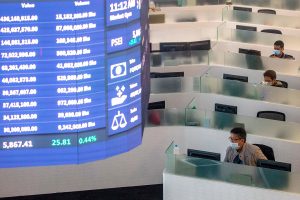
The Philippine Stock Exchange index (PSEi) surged by 1.13% or 71.82 points to end at 6,419.96, while the broader all shares index increased by 0.94% or 34.13 points to 3,641.13.

This was the PSEi’s best finish in nearly six months or since it closed at 6,444.16 on July 24.

“Philippine equities have officially risen back to index levels seen prior to the flood control fiasco, driven by the dovish tone sung by the BSP chief, hinting at a high chance of a 25-basis-point (bp) cut this upcoming February meeting,” AP Securities, Inc. said in a market note.

Last week, BSP Governor Eli M. Remolona, Jr. said a cut remains on the table at the Monetary Board’s Feb. 19 meeting, even as he noted that the policy rate is already “very close” to where they want it to be, signaling an imminent end to their easing cycle.

The Monetary Board has lowered benchmark borrowing costs by a total of 200 bps since its rate cut cycle began in August 2024. In 2025 alone, it delivered a cumulative 125 bps in cuts for five straight meetings to bring the key rate to an over three-year low of 4.5%.

“The PSEi ended in the green, supported by sustained buying momentum throughout the session. Market sentiment further improved following Nomura’s forecast that the BSP could possibly deliver 25-bp rate cuts in both February and April,” Regina Capital Development Corp. Head of Sales Luis A. Limlingan said in a Viber message.

“Expectations of a more accommodative policy stance further encouraged risk-taking among investors,” he said.

Nomura Global Markets Research said in a Jan. 9 report that the BSP may ease its policy stance further this year as the corruption scandal may continue to dampen government spending and economic growth.

Nomura Chief ASEAN (Association of Southeast Asian Nations) Economist Euben Paracuelles and Macroeconomic Research Analyst Yiru Chen said the BSP could deliver one 25-bp cut each at its February and April meetings.

All sectoral indices closed higher on Monday. Mining and oil surged by 5% or 815.87 points to 17,116.43; financials increased by 2.13% or 45.62 points to 2,179.17; property went up by 1.87% or 43.28 points to 2,347.21; industrials climbed by 0.81% or 73.53 points to 9,139.77; holding firms jumped by 0.7% or 34.99 points to 5,026.91; and services increased by 0.33% or 8.53 points to 2,563.17.

Advancers outnumbered decliners, 142 to 80, while 53 names closed unchanged.

Value turnover went up to PHP 6.64 billion on Monday with 1.02 billion shares traded from the PHP 6.11 billion with 1.57 billion issues that changed hands on Friday.

Net foreign buying increased to PHP 534.17 million from PHP 320.68 million. — Alexandria Grace C. Magno

Posts navigation

Older posts
Newer posts

Recent Posts

  • Peso GS Weekly: Risk relief drives curve‑wide rally
  • Metrobank US-Iran Risk Index: Dire straits
  • Investment Ideas: April 6, 2026
  • Investment Ideas: April 1, 2026
  • Metrobank US-Iran Risk Index: Signals of an end

Recent Comments

No comments to show.

Archives

  • April 2026
  • March 2026
  • February 2026
  • January 2026
  • December 2025
  • November 2025
  • October 2025
  • September 2025
  • August 2025
  • July 2025
  • June 2025
  • May 2025
  • April 2025
  • March 2025
  • February 2025
  • January 2025
  • December 2024
  • November 2024
  • October 2024
  • September 2024
  • August 2024
  • July 2024
  • June 2024
  • May 2024
  • April 2024
  • March 2024
  • February 2024
  • January 2024
  • December 2023
  • November 2023
  • October 2023
  • September 2023
  • August 2023
  • July 2023
  • June 2023
  • May 2023
  • April 2023
  • March 2023
  • February 2023
  • January 2023
  • December 2022
  • November 2022
  • October 2022
  • September 2022
  • August 2022
  • July 2022
  • June 2022
  • May 2022
  • March 2022
  • December 2021
  • October 2021

Categories

  • Bonds
  • BusinessWorld
  • Currencies
  • Economy
  • Equities
  • Estate Planning
  • Explainer
  • Featured Insight
  • Fine Living
  • How To
  • Investment Tips
  • Markets
  • Portfolio Picks
  • Rates & Bonds
  • Retirement
  • Reuters
  • Spotlight
  • Stocks
  • Uncategorized

You are leaving Metrobank Wealth Insights

Please be aware that the external site policies may differ from our website Terms And Conditions and Privacy Policy. The next site will be opened in a new browser window or tab.

Cancel Proceed
Get in Touch

For inquiries, please call our Metrobank Contact Center at (02) 88-700-700 (domestic toll-free 1-800-1888-5775) or send an e-mail to customercare@metrobank.com.ph

Metrobank is regulated by the Bangko Sentral ng Pilipinas
Website: https://www.bsp.gov.ph

Quick Links
The Gist Webinars Wealth Manager Explainers
Markets
Currencies Rates & Bonds Equities Economy
Wealth
Investment Tips Fine Living Retirement
Portfolio Picks
Bonds Stocks
Others
Contact Us Privacy Notice Terms of Use
© 2026 Metrobank. All rights reserved.

Access this content:

If you are an existing investor, log in first to your Metrobank Wealth Manager account. ​

If you wish to start your wealth journey with us, click the “How To Sign Up” button. ​

Login HOW TO SIGN UP