



MODEL PORTFOLIO
THE GIST
NEWS AND FEATURES
Global Philippines Fine Living
INSIGHTS
INVESTMENT STRATEGY
Economy Stocks Bonds Currencies
THE BASICS
Investment Tips Explainers Retirement
WEBINARS
2024 Mid-Year Economi Briefing, economic growth in the Philippines
2024 Mid-Year Economic Briefing: Navigating the Easing Cycle
June 21, 2024
Investing with Love
Investing with Love: A Mother’s Guide to Putting Money to Work
May 15, 2024
retirement-ss-3
Investor Series: An Introduction to Estate Planning
September 1, 2023
View All Webinars
DOWNLOADS
grocery-2-aa
Inflation Update: Target breached
DOWNLOAD
Container ship carrying container boxes import export dock with quay crane. Business commercial trade global cargo freight shipping logistic and transportation worldwide oversea concept. Generative AI
Economic Updates
Philippines Trade Update: Wider deficit on strong imports
DOWNLOAD
Frick collection with palm trees 
Economic Updates
Policy Rate Updates: Policy rate updates to reassure 
DOWNLOAD
View all Reports
Metrobank.com.ph How To Sign Up
Follow us on our platforms.

How may we help you?

TOP SEARCHES
  • Where to put my investments
  • Reports about the pandemic and economy
  • Metrobank
  • Webinars
  • Economy
TRENDING ARTICLES
  • Investing for Beginners: Following your PATH
  • On government debt thresholds: How much is too much?
  • Philippines Stock Market Outlook for 2022
  • Deficit spending remains unabated

Login

Access Exclusive Content
Login to Wealth Manager
Visit us at metrobank.com.ph How To Sign Up
Access Exclusive Content Login to Wealth Manager
Search
MODEL PORTFOLIO THE GIST
NEWS AND FEATURES
Global Philippines Fine Living
INSIGHTS
INVESTMENT STRATEGY
Economy Stocks Bonds Currencies
THE BASICS
Investment Tips Explainers Retirement
WEBINARS
2024 Mid-Year Economi Briefing, economic growth in the Philippines
2024 Mid-Year Economic Briefing: Navigating the Easing Cycle
June 21, 2024
Investing with Love
Investing with Love: A Mother’s Guide to Putting Money to Work
May 15, 2024
retirement-ss-3
Investor Series: An Introduction to Estate Planning
September 1, 2023
View All Webinars
DOWNLOADS
grocery-2-aa
Inflation Update: Target breached
April 7, 2026 DOWNLOAD
Container ship carrying container boxes import export dock with quay crane. Business commercial trade global cargo freight shipping logistic and transportation worldwide oversea concept. Generative AI
Economic Updates
Philippines Trade Update: Wider deficit on strong imports
March 27, 2026 DOWNLOAD
Frick collection with palm trees 
Economic Updates
Policy Rate Updates: Policy rate updates to reassure 
March 26, 2026 DOWNLOAD
View all Reports

Archives: Business World Article

Philippines likely to post one of the fastest growth rates in Asia this year, 2025 — IMF

Philippines likely to post one of the fastest growth rates in Asia this year, 2025 — IMF

The Philippines will likely post the second-fastest growth in Asia this year and in 2025, the International Monetary Fund (IMF) said.

In its latest World Economic Outlook report, the IMF maintained its gross domestic product (GDP) growth forecast for the Philippines at 6% this year and 6.2% in 2025.

If realized, the Philippine economic growth would be the second fastest among selected Asian economies, after India’s 7.5% GDP growth forecast.

IMF's World Economic Outlook growth forecasts for select Asian economies

The Philippines’ growth forecast for 2024 is faster than China (5%), Indonesia (5%), Malaysia (4.4%), Kazakhstan (3.5%), and Iran (3.3%), the IMF said.

It would also surpass Thailand (2.9%), Egypt (2.7%), Korea (2.5%), Pakistan (2%), Saudi Arabia (1.7%), and Japan (0.7%).

“Asia’s emerging market economies remain the main engine for the global economy,” Pierre-Olivier Gourinchas, economic counsellor and the director of research of the IMF, said in a statement.

The IMF maintained its global growth projection at 3.2% in 2024 and 3.3% in 2025, “broadly unchanged” from the previous report’s forecasts.

The IMF cut the United States growth forecast to 2.6% this year, but kept the growth estimate at 1.9% for 2025.

“The forecast for growth in emerging market and developing economies is revised upward; the projected increase is powered by stronger activity in Asia, particularly China and India,” it said.

The IMF raised its forecasts for emerging market and developing Asia, which is seen to grow by 5.4% this year and by 5.1% in 2025.

The growth projection for China was also raised to 5% for this year, “primarily on account of a rebound in private consumption and strong exports in the first quarter.” China’s growth is expected to slow to 4.5% next year, and “to continue to decelerate over the medium term to 3.3% by 2029, because of headwinds from aging and slowing productivity growth.”

However, “prospects for the next five years remain weak, largely because of waning momentum in emerging Asia,” IMF said.

The IMF said risks to the outlook “remain balanced” although upside risks to inflation “stem from a lack of progress on services disinflation and price pressures emanating from renewed trade or geopolitical tensions.”

“The risk of elevated inflation has raised the prospects of higher-for-even-longer interest rates, which in turn increases external, fiscal, and financial risks,” it said.

“Prolonged dollar appreciation arising from rate disparities could disrupt capital flows and impede planned monetary policy easing, which could adversely impact growth. Persistently high interest rates could raise borrowing costs further and affect financial stability if fiscal improvements do not offset higher real rates amid lower potential growth.”

During its last policy meeting, the US Federal Reserve left interest rates unchanged at 5.25%-to-5.5%. Fresh projections from policymakers showed them dialing back expectations for rate cuts this year from three to just one, Reuters reported. — BMDC

Reissued bonds fetch lower rates

Reissued bonds fetch lower rates

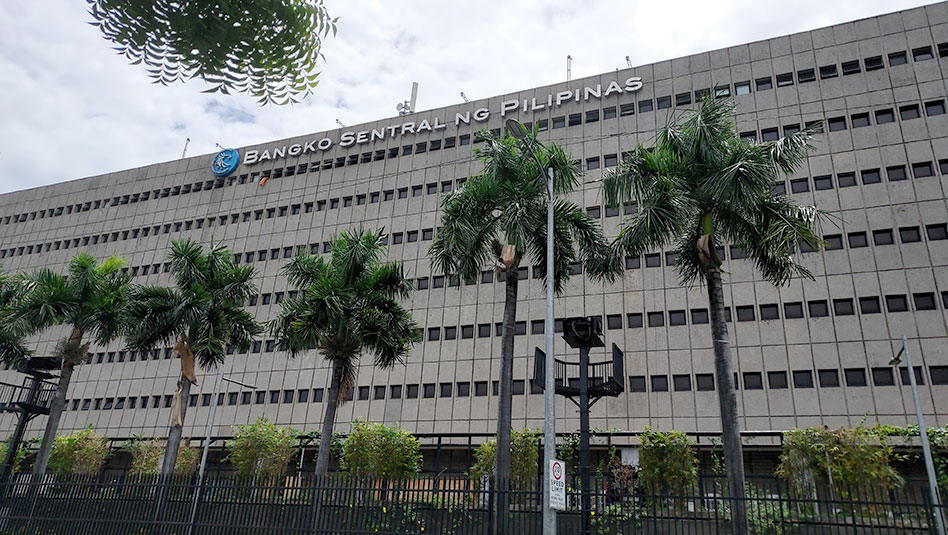
The government made a full award of the reissued Treasury bonds (T-bonds) on Tuesday at lower rates as the offer was met with robust demand amid expectations of monetary easing by the Bangko Sentral ng Pilipinas (BSP).

The Bureau of the Treasury (BTr) raised PHP 30 billion as planned via the reissued 10-year bonds it auctioned off on Tuesday as total bids reached P96.605 billion, or more than thrice the amount on the auction block.

The bonds, which have a remaining life of nine years and six months, were awarded at an average rate of 6.212%. Accepted yields ranged from 6.18% to 6.223%.

The average rate of the reissued seven-year bonds dropped by 54.2 basis points (bps) from the 6.754% fetched for the series’ last award on June 11 and was 3.8 bps lower than the 6.25% coupon for the issue.

This was also 5.6 bps below the 6.268% quoted for the 10-year bond and 0.8 bp lower than the 6.220% seen for the same bond series at the secondary market before Tuesday’s auction, based on PHP Bloomberg Valuation Service Reference Rates data provided by the BTr.

To accommodate the strong demand seen for Tuesday’s offer, the BTr opened its tap facility window to raise P20 billion more via the bonds at the same average rate.

The government made a full award of the reissued 10-year debt as the offer fetched lower rates on strong demand amid “growing confidence that the BSP will cut sooner and by at least 50 bps total for the year,” a trader said via text message.

BSP Governor Eli M. Remolona, Jr. last month said the Monetary Board may deliver its first rate cut in over three years at its Aug. 15 review — the only policy meeting scheduled in the third quarter — as they expect inflation to continue easing this semester.

The Monetary Board could reduce borrowing costs by 25 bps in the third quarter and by another 25 bps in the fourth quarter, he said.

The BSP last month kept its policy rate at a 17-year high of 6.5% for a sixth straight meeting after raising interest rates by 450 bps from May 2022 to October 2023.

The T-bonds on offer fetched lower yields following dovish signals from US Federal Reserve officials, Rizal Commercial Banking Corp. Chief Economist Michael L. Ricafort said in a Viber message.

Fed Chair Jerome H. Powell said on Monday the three US inflation readings over the second quarter of this year do “add somewhat to confidence” that the pace of price increases is returning to the Fed’s target in a sustainable fashion, remarks that suggest a turn to interest rate cuts may not be far off, Reuters reported.

“In the second quarter, actually, we did make some more progress” on taming inflation, Mr. Powell said at an event at the Economic Club of Washington. “We’ve had three better readings, and if you average them, that’s a pretty good place.”

“What we’ve said is that we didn’t think it would be appropriate to begin to loosen policy until we had greater confidence” that inflation was returning sustainably to 2%, Mr. Powell continued. “We’ve been waiting on that. And I would say that we didn’t gain any additional confidence in the first quarter, but the three readings in the second quarter, including the one from last week, do add somewhat to confidence.”

Last week, the Labor department reported that its consumer price index fell in June from the month before, the first decline in four years. Economists now estimate the gauge the Fed uses for its inflation target, due out later this month, will show yearly price increases have eased closer toward 2%.

The betting among investors has tilted strongly towards the Fed starting rate cuts in September. Changes to the policy statement in July could provide a strong signal of that by updating how inflation is described and assessing how recent data has added to policymakers’ confidence that the pandemic-era outbreak of inflation has subsided.

After rapidly lifting interest rates starting in 2022 to combat the worst inflation outbreak since the 1980s, the Fed has left its benchmark policy rate unchanged since last July in a range of 5.25%-to-5.5%.

As Mr. Powell spoke, financial markets all but abandoned what had been rising bets on a July rate cut. Traders continue to expect a September rate cut followed by additional cuts in November and December, bringing the policy rate down to 4.5%-4.75% by yearend.

The BTr wants to raise P215 billion from the domestic market this month, or P100 billion from Treasury bills and P115 billion via T-bonds.

The government borrows from local and foreign sources to help fund its budget deficit, which is capped at P1.48 trillion or 5.6% of gross domestic product for this year. — A.M.C. Sy with Reuters

PHL financial system’s resources expand by 10.69% as of end-May

PHL financial system’s resources expand by 10.69% as of end-May

The total resources of the Philippine financial system expanded by 10.69% as of May, mainly driven by big banks, preliminary data from the Bangko Sentral ng Pilipinas (BSP) showed.

Based on central bank data, the resources of banks and non-bank financial institutions stood at PHP 31.787 trillion as of May from PHP 28.716 trillion in the same month last year.

These resources include funds and assets such as deposits, capital, as well as bonds or debt securities.

Broken down, banks’ resources rose by 12.3% to PHP 26.463 trillion at end-May from PHP 23.565 trillion in the comparable year-ago period, BSP data showed.

Total resources held by universal and commercial banks increased by 12.32% year on year to PHP 24.799 trillion from PHP 22.078 trillion.

Meanwhile, resources of thrift banks reached PHP 1.102 trillion as of May, 9.76% higher than the PHP 1.004 trillion recorded in the same period a year prior.

Resources held by digital banks stood at PHP 105 billion in the period, surging by 32.91% from PHP 79 billion the previous year.

Lastly, rural and cooperative banks’ resources stood at PHP 458 billion as of end-May, increasing by 13.33% year on year from PHP 404 billion.

On the other hand, nonbanks’ resources also grew by 3.34% year on year to PHP 5.323 trillion as of May from PHP 5.151 trillion.

Nonbanks include investment houses, finance companies, security dealers, pawnshops, and lending companies.

Institutions such as nonstock savings and loan associations, credit card companies, private insurance firms, the Social Security System, and the Government Service Insurance System are also considered nonbank financial institutions.

The expansion of the financial system’s resources as of May reflected the banking industry’s growth in terms of income, loans, and deposits, Rizal Commercial Banking Corp. Chief Economist Michael L. Ricafort said in a Viber message.

The Philippine banking system’s net income grew by 2.95% year on year to PHP 92.11 billion in the first quarter of this year, the latest data from the BSP showed.

​​Meanwhile, banks’ net loan portfolio increased by 10.39% year on year to PHP 13.419 trillion as of the end of May, separate central bank data showed. Total deposits likewise rose by 9.03% to PHP 19.11 trillion.

“Rate cuts from the US Federal Reserve and the BSP in the coming months would lead to more trading income by banks and faster growth in the demand for credit moving forward,” Mr. Ricafort added.

BSP Governor Eli M. Remolona, Jr. last month said the Monetary Board may deliver its first rate cut in over three years at its Aug. 15 review as they expect inflation to continue easing this semester.

He said the central bank may slash borrowing costs by 25 basis points in the third quarter and by another 25 basis points (bps) in the fourth quarter.

The BSP last month kept its policy rate at a 17-year high of 6.5% for a sixth straight meeting. — A.M.C. Sy

Peso rebounds vs dollar as dovish Powell comments bolster easing view

Peso rebounds vs dollar as dovish Powell comments bolster easing view

The peso rebounded against the dollar on Tuesday as dovish comments from the US Federal Reserve chief bolstered bets of a rate cut from the central bank soon.

The local unit closed at PHP 58.385 per dollar on Tuesday, strengthening by 9.5 centavos from its PHP 58.48 finish on Monday, Bankers Association of the Philippines data showed.

The peso opened Tuesday’s session slightly stronger at PHP 58.455 against the dollar. Its intraday best was its closing level of PHP 58.385, while its weakest showing was at PHP 58.52 versus the greenback.

Dollars exchanged rose to USD 1.42 billion on Tuesday from USD 1.095 billion on Monday.

The peso rose as the dollar remained relatively weak on Tuesday due to dovish comments from Fed Chair Jerome H. Powell overnight, a trader said by phone.

The dollar inched away from five-week lows on Tuesday, as investors weighed the case for a September rate cut after comments by Mr. Powell and pondered rising odds for the reelection of former US President Donald J. Trump, Reuters reported.

On Monday, Mr. Powell said the second quarter’s three US inflation readings “add somewhat to confidence” that the pace of price increases is returning to the Fed’s target in a sustainable way.

Markets now anticipate 68 basis points of easing this year, with a rate cut in September fully priced in, the CME FedWatch tool showed.

The dollar index, which measures the US unit against six peers, was 0.12% higher at 104.36, not far from the one-month low of 104 it touched on Monday.

The peso was also supported by lower global crude oil prices and improved global market risk appetite, Rizal Commercial Banking Corp. Chief Economist Michael L. Ricafort said in a Viber message.

On Tuesday, Brent futures fell 0.3% to USD 84.63 a barrel, while US West Texas Intermediate crude slipped 0.3% to USD 81.64, Reuters reported.

For Wednesday, the trader expects the peso to move between PHP 58.20 and PHP 58.60 per dollar, while Mr. Ricafort sees it ranging from PHP 58.30 to PHP 58.50. — AMCS with Reuters

Fastest in five months: Cash remittances jump by 3.6% in May — BSP

Fastest in five months: Cash remittances jump by 3.6% in May — BSP

Money sent home by overseas Filipino workers (OFWs) rose by 3.6% in May, its fastest pace in five months, data from the Bangko Sentral ng Pilipinas (BSP) showed.

The BSP on Monday reported that cash remittances coursed through banks grew by 3.6% to USD 2.58 billion in May from USD 2.49 billion in the same month a year ago.

The growth in cash remittances was its fastest in five months or since the 3.8% logged in December 2023.

Overseas Filipinos’ Cash Remittances

Month on month, remittances inched up by 0.8% from USD 2.56 billion in April.

“The expansion in cash remittances in May 2024 was due to growth in receipts from both land- and sea-based workers,” the BSP said in a statement.

Remittances from land-based workers jumped by 3.8% to USD 2.06 billion while money sent home by sea-based workers grew by 2.6% to USD 519.373 million.

In the January-to-May period, cash remittances increased by 3% to USD 13.365 billion from USD 12.981 billion a year ago.

This was also its fastest pace of annual growth in a year or since the 3.1% recorded in May 2023.

“The growth in cash remittances from the United States, Saudi Arabia, and Singapore contributed mainly to the increase in remittances in January-May 2024,” the central bank said.

In the first five months, the United States accounted for 40.9% of total remittances.

This was followed by Singapore (7.2%), Saudi Arabia (6.1%), Japan (5.1%), the United Kingdom (4.7%), the United Arab Emirates (4%), Canada (3.4%), Korea (2.8%), Qatar (2.8%) and Taiwan (2.7%).

“This 3.6% increase (in May), reaching $2.58 billion, suggests a combination of positive factors. Economic growth in key remittance source countries like the US, Saudi Arabia, and Singapore might be putting more money in the pockets of OFWs,” Security Bank Corp. Chief Economist Robert Dan J. Roces said in a Viber message.

Mr. Roces said that rising wages of OFWs could also be another factor behind faster remittance growth.

“Finally, favorable exchange rates incentivize sending more money back as it translates to a bigger bump in Philippine pesos received,” he added.

In May, the peso sank to the PHP 58-per-dollar level for the first time since November 2022.

“The continued growth nevertheless is still a good signal for the overall economy as an important growth driver, especially in terms of consumer spending, which accounts for about 74% of the Philippine economy,” Rizal Commercial Banking Corp. Chief Economist Michael L. Ricafort said in a Viber message.

Mr. Ricafort also noted there was a seasonal increase in remittances due to the summer holiday.

Meanwhile, personal remittances rose by 3.7% to $2.88 billion during the month from $2.78 billion. This brought personal remittances at end-May to USD 14.89 billion, higher by 3% from USD 14.46 billion in the same period a year ago.

“The increase in personal remittances in May 2024 was due to remittances from land-based workers with work contracts of one year or more and sea- and land-based workers with work contracts of less than one year,” the BSP added.

For the coming months, Mr. Ricafort said he expects modest growth in remittances as OFW families “still need to cope up with relatively higher prices locally that would require the sending of more remittances.”

For the first six months of the year, headline inflation averaged 3.5%. This was slightly higher than the central bank’s 3.3% full-year forecast.

Mr. Ricafort also noted there is a seasonal increase in remittances during the July-August period due to the need to pay for school tuition payments.

The central bank expects cash remittances to grow by 3% this year. – Luisa Maria Jacinta C. Jocson, Reporter

PHL likely to grow by 5-6% this year — House think tank

PHL likely to grow by 5-6% this year — House think tank

The government of President Ferdinand R. Marcos, Jr. might have done enough pump-priming and should let the private sector take on a bigger role in boosting the economy, according to a congressional think tank.

“The resilience and ingenuity demonstrated by Filipinos, particularly in crises, should serve as a reminder that the government can trust the private sector to do its part in growing the economy. To realize this potential, policymakers must prioritize providing a favorable environment for businesses to thrive,” the Congressional Policy and Budget Research Department (CPBRD) said in a report on Monday.

“This includes lowering regulatory burdens, improving infrastructure, investing in education and skills development in areas that offer the highest economic returns, and fostering competition,” it added.

The Philippine economy would probably grow by 5.02% to 6.17% this year, compared with the government target of 6-7%, the CPBRD said, noting that heightened inflationary pressures, tightening fiscal constraints, weak capital formation and anemic growth in critical productive sectors could further hamper growth.

The think tank said inflation is still a “large and growing threat to economic growth and stability.”

“If prevailing inflationary pressure remains unabated, the likelihood of an economic slowdown is heightened,” it added.

For the first six months of 2024, headline inflation averaged 3.5%, slightly higher than the central bank’s 3.3% full-year forecast.

“Anticipated shifts in regional and global value chains, tightening fiscal constraints, growing geopolitical instability, and the Philippines’ vulnerability to climatic shocks (i.e., a single typhoon that hits Central Luzon has the outsized potential to severely aggravate existing agricultural productivity issues) are other potential threats on the horizon,” the think tank said.

The CPBRD expects growth momentum to continue in the second and third quarters, before decelerating in the fourth quarter.

In a low-growth trajectory, the think tank sees gross domestic product (GDP) expanding by 5.05% in the second quarter, 5.7% in the third quarter and 3.56% in the fourth quarter.

“The low-growth trajectory can be viewed as the expected scenario if inflation accelerates and begins eroding productivity — sooner rather than later,” it said.

On the other hand, the CPBRD’s high-growth scenario sees GDP expanding by 6.3% in the second quarter, 7.04% in the third quarter and 5.35% in the fourth quarter.

“While the Philippine economy faces significant headwinds, it also has the potential for robust and inclusive growth. The path forward necessitates a balanced approach that addresses immediate challenges while laying the foundation for long-term sustainable development,” the CPBRD said.

The think tank said a strong partnership between the government and the private sector can help the Philippines realize its full economic potential.

The Philippine economy faces both challenges and opportunities in the current global economic landscape, it said.

“Exploiting its strengths in services, manufacturing, and agriculture, the country can position itself as a competitive player in emerging regional markets — and eventually the global market,” it said.

“This, however, requires a collaborative effort from both the public and private sectors to build robust markets, foster innovation, and leverage emerging technologies.”

Meanwhile, Security Bank Corp. Chief Economist Robert Dan J. Roces said the government’s 6-7% GDP growth target is not out of reach despite elevated interest rates and high inflation.

“Rising remittances and a potential infrastructure spending boost offer promising signs,” he said in a Viber message.

“Streamlining regulations, investing in vital infrastructure, and nurturing a skilled workforce can unlock private sector potential beyond restrictive requirements,” Mr. Roces said adding that the Marcos administration’s focus on infrastructure and public-private partnerships is a step in the right direction.

The government should also limit its intervention in the economy to allow the private sector to stimulate the local economy, Leonardo A. Lanzona, an economics professor at the Ateneo de Manila, said in a Facebook Messenger chat.

“The economy is so dependent on government expenditures that any underspending causes a negative effect on growth,” he told BusinessWorld. “With private consumption and investment declining, the government in turn has crowded out the private sector and hence not been able to meet its targets.”

Rizal Commercial Banking Corp. Chief Economist Michael L. Ricafort said Philippine GDP growth could normalize to around 5.5-6.5% annually in the coming years.

In a Viber message, he said it would be possible for the Philippines to achieve 6% GDP growth in the following quarters due to the continued recovery of businesses and increases in government spending in preparation for the 2025 midterm elections. – Kenneth Christiane L. Basilio

Demand for T-bills surges on rate cut bets

Demand for T-bills surges on rate cut bets

The government upsized the volume of Treasury bills (T-bills) it awarded on Monday even as rates mostly inched up as it saw strong demand for the short-term papers amid growing expectations of rate cuts by both the Bangko Sentral ng Pilipinas (BSP) and the US Federal Reserve within the year.

The Bureau of the Treasury (BTr) raised PHP 22.6 billion from the T-bills it offered on Monday, higher than the PHP 20-billion program, as total bids reached PHP 46.736 billion, or more than twice the amount placed on the auction block.

Broken down, the BTr borrowed PHP 6.5 billion as programmed from the 91-day T-bills as tenders for the tenor reached PHP 15.51 billion. The three-month paper was quoted at an average rate of 5.717%, 1.9 basis points (bps) above the 5.698% seen last week. Accepted rates ranged from 5.702% to 5.74%.

Meanwhile, the government awarded P9.1 billion in 182-day securities, higher than the P6.5-billion plan, as bids for the tenor reached PHP 17.525 billion. The average rate for the six-month T-bill stood at 5.978%, inching up by 1 bp from the 5.968% fetched last week, with accepted rates at 5.95% to 5.998%.

The BTr doubled the accepted volume of noncompetitive bids for the 182-day T-bills to PHP 5.2 billion as the paper fetched strong demand, it said in a statement.

Lastly, the Treasury raised the planned PHP 7 billion via the 364-day debt papers as demand totaled PHP 13.701 billion. The average rate of the one-year debt decreased by 0.1 bp to 6.072% from the 6.073% quoted last week. Accepted yields were from 6% to 6.09%.

At the secondary market before the auction, the 91-, 182-, and 364-day T-bills were quoted at 5.6845%, 5.9839%, and 6.0480%, respectively, based on PHP Bloomberg Valuation Service Reference Rates data provided by the Treasury.

The Treasury made a full award of its T-bill offer as it saw “overwhelming” demand, with the six-month tenor almost thrice oversubscribed, a trader said in a text message.

Investors swamped the offering as they priced in potential cuts in benchmark interest rates here and abroad, the trader said.

“Although higher week on week, the yields in the T-bill space remain lower compared to BSP facilities and the BSP policy rate,” the trader added.

Expectations of a BSP rate cut as early as next month led to good demand for the T-bills as investors want to lock in high yields ahead of the start of the central bank’s easing cycle, Rizal Commercial Banking Corp. Chief Economist Michael L. Ricafort said in a Viber message.

Increased odds of the Fed kicking off its own rate cut cycle by September and dovish signals from the US central bank chief also affected T-bill yield movements, Mr. Ricafort added.

BSP Governor Eli M. Remolona, Jr. last month said the Monetary Board may deliver its first rate cut in over three years at its Aug. 15 review as they expect inflation to continue easing this semester.

The BSP last month kept its policy rate at a 17-year high of 6.5% for a sixth straight meeting.

Meanwhile, the “last mile” of the Federal Reserve’s battle against inflation may have shortened to a last lap after US consumer prices unexpectedly fell in June, shoring up policy makers’ confidence that they are winning the fight and paving the way to interest rate cuts in the coming months, Reuters reported.

At the Fed’s July 30-31 meeting, the policy makers are expected to maintain the policy rate at 5.25%-5.5%, but they may set the table to lower rates in light of renewed progress on easing price pressures.

After July, the Fed’s next policy meeting is in mid-September.

In two days of testimony before Congress last week, Fed Chair Jerome H. Powell appeared to edge the door open to a September rate cut, saying that the US economy was “no longer overheated” and that “more good data” on inflation would lay the groundwork to reduce the benchmark policy interest rate.

On Tuesday, the BTr will offer PHP 30 billion in reissued 10-year Treasury bonds (T-bonds) with a remaining life of nine years and six months.

The Treasury wants to raise PHP 215 billion from the domestic market this month, or PHP 100 billion from T-bills and PHP 115 billion through T-bonds.

The government borrows from local and foreign sources to help fund its budget deficit, which is capped at PHP 1.48 trillion or 5.6% of gross domestic product for this year. — AMCS with Reuters

Peso drops amid broad dollar strength

Peso drops amid broad dollar strength

The peso weakened further on Monday as the dollar was generally stronger on the back of election bets in the United States.

The local unit closed at PHP 58.48 per dollar on Monday, weakening by 10 centavos from its PHP 58.38 finish on Friday, Bankers Association of the Philippines data showed.

The peso opened Monday’s session weaker at PHP 58.43 versus the dollar, which was already its intraday best. Its worst showing was at PHP 58.58 versus the greenback.

Dollars exchanged rose to USD 1.095 billion on Monday from USD 944.01 million on Friday.

“The peso weekend against the dollar due to risk aversion following the failed assassination attempt on [Republican presidential candidate and former US President Donald J. Trump over the weekend,” a trader said in a phone interview.

The local unit dropped as “the gauge of the dollar versus major global currencies corrected slightly higher from one-month lows after some market volatility after the failed assassination attempt versus Trump that could bolster his chances of winning the US presidency later this year,” Rizal Commercial Banking Corp. Chief Economist Michael L. Ricafort noted in a Viber message.

The dollar rose broadly on Monday as trades for a victory by Mr. Trump in the upcoming US elections gathered steam in the wake of an attempted assassination of the former US president, Reuters reported. 

Mr. Trump, 78, was holding a campaign rally in Pennsylvania over the weekend when shots rang out, hitting his right ear and leaving his face streaked with blood. His campaign said he was doing well.

Investors reacted by narrowing the odds of a Trump victory come November, which in turn pushed the dollar and US Treasury yields higher on Monday, alongside cryptocurrencies.

The dollar index was little changed at 104.21.

Against the dollar, the euro fell 0.2% to $1.0888, while sterling dipped 0.13% to USD 1.2973.

Long-dated US bond yields, meanwhile, ticked higher on expectations that a Trump win would see policies that would drive up government debt and stoke inflation.

The benchmark 10-year Treasury yield was last up roughly 3 basis points at 4.2158%.

For Tuesday, the trader expects the peso to move between PHP 58.20 and PHP 58.60 per dollar, while Mr. Ricafort sees it ranging from PHP 58.40 to PHP 58.60. — A.M.C. Sy with Reuters

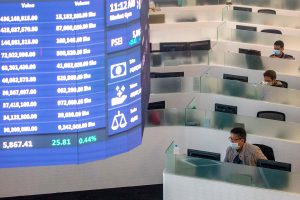
PSEi hits over two-month high on rate cut view

PSEi hits over two-month high on rate cut view

Philippine shares ended higher on Monday, inching closer to the 6,700 mark, as positive sentiment overseas spilled over to the local market and amid growing monetary easing expectations here and abroad.

The Philippine Stock Exchange index (PSEi) rose by 0.61% or 41.14 points to close at 6,689.37 on Monday, while the broader all shares index gained by 0.5% or 18 points to finish at 3,594.22.

This was the PSEi’s best close in over two months or since it finished at 6,700.49 on April 30.

“The local bourse gained… due to the positive spillover from the US markets’ performance last Friday,” Philstocks Financial, Inc. Research Analyst Claire T. Alviar said in a Viber message.

Wall Street closed higher on Friday, with the S&P 500 and the Dow Jones Industrial Average hitting intraday record highs, on bets that the US Federal Reserve will cut interest rates in September, Reuters reported.

The S&P 500 climbed 0.55% to end the session at 5,615.35 points. The Nasdaq gained 0.63% at 18,398.45 points, while Dow Jones Industrial Average rose 0.62% to 40,000.90 points.

Data showed producer prices were slightly hotter-than-expected in June but that did little to change bets on the first rate cut in September. The report follows data showing a surprise fall in US consumer prices on Thursday.

Traders are betting on a 94% chance of a rate cut by September, up from 78% a week prior, according to CME Group’s FedWatch.

Ms. Alviar added that expectations of bets on the Bangko Sentral ng Pilipinas (BSP) monetary easing path also boosted Philippine stocks.

“Philippine shares made a challenge towards the 6,700 level, settling just a few points off, as investors await more data that will fuel expectations of rate cuts for both the BSP and Fed,” Regina Capital Development Corp. Head of Sales Luis A. Limlingan said in a Viber message.

BSP Governor Eli M. Remolona, Jr. last month said the Monetary Board may deliver its first rate cut in over three years at its Aug. 15 review as they expect inflation to continue easing this semester.

The BSP last month kept its policy rate at a 17-year high of 6.5% for a sixth straight meeting.

Majority of sectoral indices closed higher on Monday. Property surged by 1.9% or 49.58 points to 2,651.18; holding firms climbed by 1.73% or 98.89 points to 5,785.36; mining and oil rose by 1.07% or 91.75 points to 8,646.25; and industrials went up by 0.27% or 25.27 points to 9,156.50.

Meanwhile, services fell by 1.07% or 22.15 points to 2,046.62, and financials inched down by 0.08% or 1.65 points to 2,027.42.

Value turnover rose to PHP 5.22 billion on Monday with 460.5 million issues changing hands from the PHP 4.38 billion with 319.13 million shares traded on Friday.

Advancers overwhelmed decliners, 117 against 59, while 52 names closed unchanged.

Net foreign selling stood at PHP 46.18 million on Monday versus the PHP 257.15 million in net buying posted on Friday. — R.M.D. Ochave with Reuters

PEZA investments plunge in June

PEZA investments plunge in June

The Philippine Economic Zone Authority (PEZA) approved PHP 8.65 billion worth of projects in June, 73.4% lower than a year ago.

In a statement over the weekend, the investment promotion agency said the PEZA Board approved 25 new and expansion projects at its June 28 meeting, up from 22 projects a year ago.

These projects are expected to contribute USD 416 million in export value and 5,881 direct jobs.

However, the amount of PEZA-approved investments in June was 73.4% lower than the PHP 32.56 billion worth of investments approved in the same month last year.

Of the 25 projects, 22 are from locator companies and three are from economic zone (ecozone) developers, PEZA said.

“These locator companies comprise 11 export manufacturing projects, followed by six projects in information technology and business process management (IT-BPM), three in domestic markets, one in facilities development, and one in logistics services,” it added.

Calabarzon was still the top investment destination in June, accounting for 15 projects. The other investment destinations were the National Capital Region, Region III (Central Luzon), Region V (Bicol Region), Region VII (Central Visayas), and Region XII (Soccsksargen).

LOWER INVESTMENTS
For the first half, PEZA said it approved PHP 45.48 billion worth of investments, plunging by 43.6% from the PHP 80.59 billion worth of investments approved in the same period last year.

The PEZA approved 120 projects which are expected to create over 25,000 jobs and generate $1.61 billion in export value.

“The new projects approved recorded an 18% increase from 102 to 120, with projected direct employment reaching a remarkable 64% uptick from 15,424 to 25,259 this year,” PEZA said.

PEZA Director-General Tereso O. Panga said that the approval of the 120 projects signals confidence in the country’s business environment and economic potential.

“Creating more jobs for Filipinos signifies the agency’s proactive efforts in positioning the Philippines as a premier investment destination in Asia,” he said.

During the six-month period, PEZA said it approved five big-ticket projects worth PHP 31.36 billion.

In June, it approved two projects worth PHP 6.15 billion. A Malaysian company will set up a manufacturing and assembly facility for hair stylers, while a Japanese company will manufacture biomass fuel products, oxygen reducers, and activated charcoal made from coconut shells in General Santos City.

From January to June, the top investment sources were the Cayman Islands (PHP 8.86 billion), Japan (PHP 8.02 billion), Malaysia (PHP 4.53 billion), Hong Kong (PHP 1.62 billion), and Singapore (PHP 1.27 billion).

The electronic manufacturing services sector attracted the most investments, accounting for PHP 19.77 billion. This was followed by the ecozone development (PHP 16.21 billion), IT-BPM industry (PHP 2.89 billion), and automotive (PHP 1.04 billion).

“Eastern European countries are also quite interested in the Philippines, with visits from Ukrainian, Polish, and Russian delegations conducting inquiries and site visits preparatory to investing in the country,” PEZA said.

PEZA is hoping to approve between PHP 200 billion and PHP 250 billion worth of investments this year. If realized, this will be at least a 15% growth from the PHP 175.71 billion worth of investments approved in 2023. — Justine Irish D. Tabile

Posts navigation

Older posts
Newer posts

Recent Posts

  • Metrobank US-Iran Risk Index: Fragile ceasefire 
  • Investment Ideas: April 10, 2026 
  • Metrobank US-Iran Risk Index: A new hope
  • A guide for your peso bond portfolio amid higher for longer rates
  • Investment Ideas: April 8, 2026

Recent Comments

No comments to show.

Archives

  • April 2026
  • March 2026
  • February 2026
  • January 2026
  • December 2025
  • November 2025
  • October 2025
  • September 2025
  • August 2025
  • July 2025
  • June 2025
  • May 2025
  • April 2025
  • March 2025
  • February 2025
  • January 2025
  • December 2024
  • November 2024
  • October 2024
  • September 2024
  • August 2024
  • July 2024
  • June 2024
  • May 2024
  • April 2024
  • March 2024
  • February 2024
  • January 2024
  • December 2023
  • November 2023
  • October 2023
  • September 2023
  • August 2023
  • July 2023
  • June 2023
  • May 2023
  • April 2023
  • March 2023
  • February 2023
  • January 2023
  • December 2022
  • November 2022
  • October 2022
  • September 2022
  • August 2022
  • July 2022
  • June 2022
  • May 2022
  • March 2022
  • December 2021
  • October 2021

Categories

  • Bonds
  • BusinessWorld
  • Currencies
  • Economy
  • Equities
  • Estate Planning
  • Explainer
  • Featured Insight
  • Fine Living
  • How To
  • Investment Tips
  • Markets
  • Portfolio Picks
  • Rates & Bonds
  • Retirement
  • Reuters
  • Spotlight
  • Stocks
  • Uncategorized

You are leaving Metrobank Wealth Insights

Please be aware that the external site policies may differ from our website Terms And Conditions and Privacy Policy. The next site will be opened in a new browser window or tab.

Cancel Proceed
Get in Touch

For inquiries, please call our Metrobank Contact Center at (02) 88-700-700 (domestic toll-free 1-800-1888-5775) or send an e-mail to customercare@metrobank.com.ph

Metrobank is regulated by the Bangko Sentral ng Pilipinas
Website: https://www.bsp.gov.ph

Quick Links
The Gist Webinars Wealth Manager Explainers
Markets
Currencies Rates & Bonds Equities Economy
Wealth
Investment Tips Fine Living Retirement
Portfolio Picks
Bonds Stocks
Others
Contact Us Privacy Notice Terms of Use
© 2026 Metrobank. All rights reserved.

Access this content:

If you are an existing investor, log in first to your Metrobank Wealth Manager account. ​

If you wish to start your wealth journey with us, click the “How To Sign Up” button. ​

Login HOW TO SIGN UP