


MODEL PORTFOLIO
THE GIST
NEWS AND FEATURES
Global Philippines Fine Living
INSIGHTS
INVESTMENT STRATEGY
Economy Stocks Bonds Currencies
THE BASICS
Investment Tips Explainers Retirement
WEBINARS
2024 Mid-Year Economi Briefing, economic growth in the Philippines
2024 Mid-Year Economic Briefing: Navigating the Easing Cycle
June 21, 2024
Investing with Love
Investing with Love: A Mother’s Guide to Putting Money to Work
May 15, 2024
retirement-ss-3
Investor Series: An Introduction to Estate Planning
September 1, 2023
View All Webinars
DOWNLOADS
grocery-2-aa
Inflation Update: Target breached
DOWNLOAD
Container ship carrying container boxes import export dock with quay crane. Business commercial trade global cargo freight shipping logistic and transportation worldwide oversea concept. Generative AI
Economic Updates
Philippines Trade Update: Wider deficit on strong imports
DOWNLOAD
Frick collection with palm trees 
Economic Updates
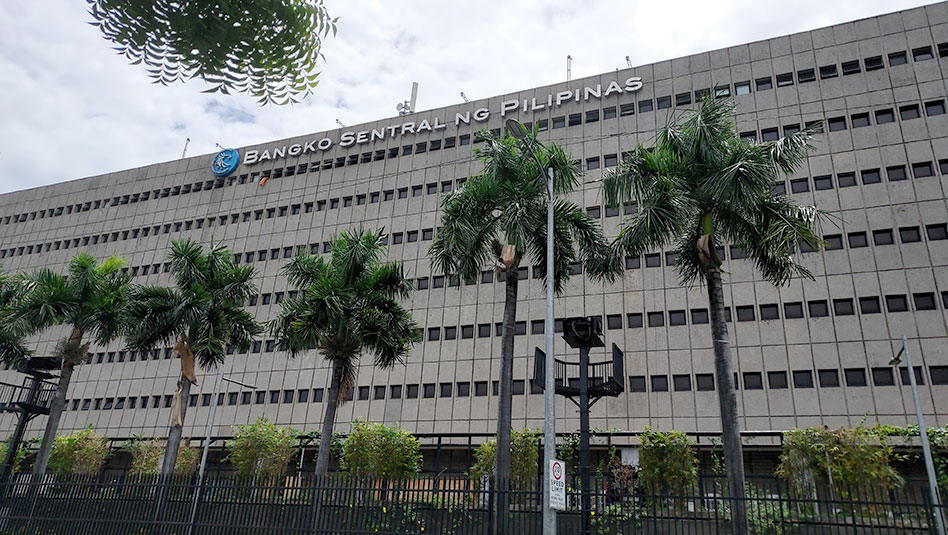
Policy Rate Updates: Policy rate updates to reassure 
DOWNLOAD
View all Reports
Metrobank.com.ph How To Sign Up
Follow us on our platforms.

How may we help you?

TOP SEARCHES
  • Where to put my investments
  • Reports about the pandemic and economy
  • Metrobank
  • Webinars
  • Economy
TRENDING ARTICLES
  • Investing for Beginners: Following your PATH
  • On government debt thresholds: How much is too much?
  • Philippines Stock Market Outlook for 2022
  • Deficit spending remains unabated

Login

Access Exclusive Content
Login to Wealth Manager
Visit us at metrobank.com.ph How To Sign Up
Access Exclusive Content Login to Wealth Manager
Search
MODEL PORTFOLIO THE GIST
NEWS AND FEATURES
Global Philippines Fine Living
INSIGHTS
INVESTMENT STRATEGY
Economy Stocks Bonds Currencies
THE BASICS
Investment Tips Explainers Retirement
WEBINARS
2024 Mid-Year Economi Briefing, economic growth in the Philippines
2024 Mid-Year Economic Briefing: Navigating the Easing Cycle
June 21, 2024
Investing with Love
Investing with Love: A Mother’s Guide to Putting Money to Work
May 15, 2024
retirement-ss-3
Investor Series: An Introduction to Estate Planning
September 1, 2023
View All Webinars
DOWNLOADS
grocery-2-aa
Inflation Update: Target breached
April 7, 2026 DOWNLOAD
Container ship carrying container boxes import export dock with quay crane. Business commercial trade global cargo freight shipping logistic and transportation worldwide oversea concept. Generative AI
Economic Updates
Philippines Trade Update: Wider deficit on strong imports
March 27, 2026 DOWNLOAD
Frick collection with palm trees 
Economic Updates
Policy Rate Updates: Policy rate updates to reassure 
March 26, 2026 DOWNLOAD
View all Reports

Archives: Business World Article

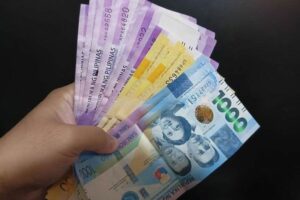
Peso climbs further as Fed officials boost hopes of September rate cut

Peso climbs further as Fed officials boost hopes of September rate cut

The peso extended its rise against the dollar on Thursday as comments from US Federal Reserve officials supported bets of a September rate cut in the world’s largest economy.

The local unit closed at PHP 58.25 per dollar on Thursday, strengthening by 4.5 centavos from its PHP 58.295 finish on Wednesday, Bankers Association of the Philippines data showed.

This was the peso’s best close in more than a month or since its PHP 57.97-a-dollar finish on May 28.

The peso opened Thursday’s session stronger at PHP 58.25 against the dollar. It climbed to as high as PHP 58.17 during the session, while its worst showing was at PHP 58.333 versus the greenback.

Dollars exchanged went down to USD 1.17 billion on Thursday from USD 1.24 billion on Wednesday.

The peso was supported by stronger bets of a dovish Fed, a trader said in a phone interview.

“However, trading was cautious ahead of the ECB’s (European Central Bank) decision overnight,” the trader added.

The local unit climbed as Fed officials signaled a rate cut in the coming months, Rizal Commercial Banking Corp. Chief Economist Michael L. Ricafort added in a Viber message.

Top Federal Reserve officials said on Wednesday the US central bank is “closer” to cutting interest rates given inflation’s improved trajectory and a labor market in better balance, remarks that set the stage for a first reduction in borrowing costs in September, Reuters reported.

Fed Governor Christopher Waller and New York Fed President John Williams both noted the shortening horizon toward looser monetary policy, with Mr. Waller highlighting it in a speech at the Kansas City Fed and Mr. Williams voicing it in a Wall Street Journal interview.

Separately, Richmond Fed President Thomas Barkin said he is “very encouraged” that declines in inflation had begun to broaden. “I’d like to see that continue,” he told a business group in Maryland.

The remarks are the latest in a rush this week of commentary from top US central bank officials — including Fed Chair Jerome H. Powell — to note their increased confidence that the disinflationary trend that began last year is continuing, despite a short-lived bump in inflation earlier this year.

Price pressures appear to be easing across the board, the Fed officials said, with goods prices falling, housing cost increases slowing, and more moderate wage growth feeding into a long-awaited easing of price increases in the services sector.

Mr. Williams and Mr. Waller appeared to rule out a rate cut at the Fed’s July 30-31 policy meeting, a view reflected in financial markets that are now pricing the probability of a move at that meeting at less than 5%.

All three policymakers who spoke on Wednesday were “pointing to September” for a start to the policy easing, Karim Basta, chief economist at III Capital Management, wrote.

More Fed policymakers have suggested they are getting increasingly comfortable that the pace of price increases is more firmly on track back down to 2%, after higher-than-expected readings earlier in the year.

Mr. Powell on Monday also said that inflation readings over the second quarter of this year “add somewhat to confidence” on its downward path, suggesting a start of an easing cycle may not be far off.

For Friday, Mr. Ricafort sees the peso ranging from PHP 58.15 to PHP 58.35 per dollar. Meanwhile, the trader said the local unit may inch closer to the PHP 57 level ahead of the release of the latest US labor data. — AMCS with Reuters

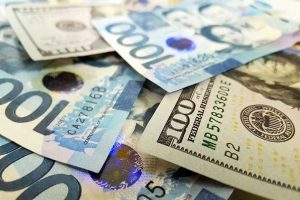
ADB keeps PHL growth forecasts unchanged

ADB keeps PHL growth forecasts unchanged

The Asian Development Bank (ADB) kept Philippine economic growth forecasts for this year and in 2025 unchanged as expected monetary easing will likely lift investments and consumption.

In its latest Asian Development Outlook, the multilateral lender said it expects Philippine gross domestic product (GDP) to grow by 6% this year, at the low end of the government’s 6-7% target.

For 2025, the ADB sees Philippine GDP expanding by 6.2%, below the government’s 6.5-7.5% goal.

“Moderating inflation and expected monetary easing in the second half of 2024 will support household consumption and investment,” it said.

The Bangko Sentral ng Pilipinas (BSP) has kept its key rate at a 17-year high of 6.5% since October 2023 to tame inflation.

BSP Governor Eli M. Remolona, Jr. has signaled the central bank could begin cutting rates by August, as inflation continues to slow.

The ADB noted that household consumption remained the main driver of Philippine growth, even as it slowed in the first quarter.

The economy grew by a weaker-than-expected 5.7% in the first quarter. Household spending, which accounts for nearly three-fourths of economic output, rose by 4.6% in the January-to-March period, the slowest since the coronavirus pandemic.

The ADB said economic expansion is also supported by low unemployment, cash remittances and faster infrastructure spending.

The multilateral lender also kept its inflation forecast for the Philippines at 3.8% this year, and 3.4% in 2025. The BSP expects inflation to settle at 3.3% this year and 3.1% next year.

FASTEST IN SOUTHEAST ASIA
The Philippines and Vietnam are expected to be the fastest-growing economies in Southeast Asia in 2024 and 2025, ahead of Indonesia, Malaysia, Singapore and Thailand.

Southeast Asia’s growth is expected to average 4.6% in 2024 and 4.7% in 2025.

“Consumption — fueled in part by stable prices and increasing tourism-related activities — continued to lift Southeast Asian economies, though tempered a bit by the tight monetary environment,” the ADB said.

An increase in infrastructure spending in the region is boosting investment demand and growth, it added.

Export recovery is also driving Southeast Asia’s growth.

The Philippines and Vietnam would also be the second-fastest growing economy in developing Asia this year and next, just behind India. India is forecast to grow by 7% this year and by 7.2% in 2025.

Meanwhile, the ADB upgraded its growth forecast for developing Asia, which comprises 46 economies in the Asia-Pacific, to 5% this year from 4.9%. The 2025 growth projection for developing Asia was unchanged at 4.9%.

“Resilient domestic demand along with improved exports and manufacturing will support growth this year,” the multilateral lender said.

The ADB also upgraded its growth forecast for developing China excluding Asia to 5.1% this year from 5%. The 5.3% forecast for next year was unchanged.

ADB Chief Economist Albert Park said in a statement that the region’s fundamentals are strong, but policy makers should “pay attention to a number of risks that could affect the outlook.”

“Policy uncertainty related to elections in major economies, particularly the US, clouds the outlook,” the ADB said.

“Heightened geopolitical tensions — including potential escalations in the Middle East and Russia’s war in Ukraine — and trade fragmentation could once again disrupt supply chains and induce commodity price volatility.”

For China, the ADB also maintained its forecasts at 4.8% for 2024 and 4.5% for 2025.

“The (China) property slump could deepen, leading to weaker growth prospects. In addition, adverse weather conditions and climate change impacts could threaten crop production,” it said.

The robust global demand for electronics, especially for semiconductors used for high-technology and artificial intelligence applications, is seen driving export growth in several Asian economies, the ADB said.

The Philippines and Vietnam, which specialize in integrated circuit packaging and electronics assembly, stand to benefit from the semiconductor boom, the ADB said.

“One positive development is that El Niño has ended and La Niña, which tends to bring cooler temperatures and more rain to parched areas, such as in Southeast Asia, could begin during the latter half of this year,” it said. — Beatriz Marie D. Cruz

BSP may impose up to PHP 1-M fine for violations of foreign exchange rules

BSP may impose up to PHP 1-M fine for violations of foreign exchange rules

The Bangko Sentral ng Pilipinas (BSP) has approved amendments to the reporting guidelines for foreign exchange (FX) transactions, including the imposition of fines up to PHP 1 million for policy violations.

“The Monetary Board has approved further amendments to FX regulations to allow the BSP to gather more accurate and relevant information on FX transactions to promote and maintain price stability and ensure financial stability and effective supervision of banks,” it said in a statement on Wednesday.

This comes after weeks of volatility in the foreign exchange markets, which saw the peso drop to a 20-month low in May.  The peso closed at PHP 58.295 per dollar on Wednesday, strengthening by nine centavos from its PHP 58.385 close on Tuesday.

The Monetary Board in its Resolution No. 764 approved revisions to the Manual of Regulations on Foreign Exchange Transactions, according to a circular.

One of the main amendments is the imposition of a maximum penalty for violations by authorized agent banks (AAB), AAB forex companies, offshore banking units (OBU), representative offices and their directors, trustees, officers and employees (DTOE), pursuant to the amended New Central Bank Act.

The BSP can impose a “maximum monetary penalty of PHP 1 million for each transactional violation or PHP 100,000 per calendar day for violations of a continuing nature.”

It defines a transactional violation as an “act or omission constituting violation of any applicable law, or any order, instruction/directive or regulation issued by the Monetary Board (MB), or any order, instruction/directive or ruling by the governor which is consummated and concluded in a single instance/occasion.”

On the other hand, a continuing violation is one that “persists or lingers over time from the instant the particular act was committed or omitted until the violation is stopped.”

“To ensure fairness, consistency, and reasonableness in the imposition of monetary or nonmonetary penalties, the BSP takes into consideration the attendant circumstances of each case, such as the nature and gravity of the violation or irregularity, the size of the financial institution and other aggravating and mitigating factors,” according to the circular.

The BSP also included definitions of reports that are not compliant with reporting standards, such as delayed, erroneous and unsubmitted reports.

The revised rules also provide clear penalties for violations of reporting standards. Monetary penalties for reporting violations on primary reports range from PHP 300 for representative offices to PHP 3,000 for universal, commercial or Islamic banks.

For instance, the penalty for a delayed report will be computed by multiplying the fine by the number of calendar days delayed.

The revised rules also include the notification process of concerned BSP-supervised financial institutions (BSFI) on their policy violation, as well as appeals and requests for reconsideration.

“The amended guidelines will facilitate timely submission of reports by banks in accordance with the BSP’s reporting standards and instill accountability among BSFIs and/or their DTOEs,” the central bank said.

Reports submitted to the BSP must be “complete, accurate, consistent, reliable and timely” to be compliant with its reporting standards. It must also conform to the relevant submission and validation guidelines.

“These regulations will likewise enable the BSP to efficiently generate reports being used for policy studies and monitoring of the economy and financial system, among others,” it added.

Ruben Carlo O. Asuncion, chief economist at Union Bank of the Philippines, Inc., said the amended rules would help the central bank achieve stability in the foreign exchange markets.

“This is good in general to achieve the BSP’s goal of FX stability and the prevention of unnecessary volatility in FX markets. The eventual compliance of banks will be advantageous for the industry,” he said in a Viber message.

In April, the Monetary Board approved amendments to the Manual of Regulations on Foreign Exchange Transactions to better facilitate access to FX resources of authorized agent banks or their units for legitimate transactions and streamline documentary requirements, procedures and reporting. — Luisa Maria Jacinta C. Jocson

Term deposit yields go down as Fed turns dovish

Term deposit yields go down as Fed turns dovish

Yields on the term deposits offered by the Bangko Sentral ng Pilipinas (BSP) inched lower on Wednesday amid dovish signals from the US Federal Reserve chief, which boosted rate cut expectations in the world’s largest economy.

The central bank’s term deposit facility (TDF) attracted bids amounting to PHP 250.521 billion on Wednesday, below the P260 billion on the auction block and the PHP 268.701 billion for a PHP 250-billion offer seen a week ago as the longer tenor went undersubscribed.

Broken down, tenders for the seven-day papers reached PHP 132.134 billion, higher than the PHP 120 billion auctioned off by the central bank but lower than the PHP 134.407 billion in bids for the PHP 130-billion offering seen the previous week.

Banks asked for yields ranging from 6.49% to 6.525%, slightly lower than the 6.495% to 6.53% band seen a week ago. This caused the average rate of the one-week deposits to slip by 0.06 basis points (bps) to 6.5099% this week from 6.5105% previously.

Meanwhile, bids for the 14-day term deposits amounted to PHP 118.387 billion on Wednesday, lower than the PHP 140-billion offering as well as the PHP 134.294 billion in tenders for the PHP 120 billion placed on the auction block on July 10.

Accepted rates for the two-week tenor were from 6.5245% to 6.568%, a tad wider than the 6.535% to 6.569% margin seen a week ago. With this, the average rate for the 14-day term deposits decreased by 0.83 bp to 6.5463% from the 6.5546% logged in the prior week’s auction.

The BSP has not auctioned off 28-day term deposits for more than three years to give way to its weekly offerings of securities with the same tenor.

The term deposits and the 28-day bills are used by the central bank to siphon off excess liquidity from the financial system and to better guide market rates.

Term deposit yields inched down amid Fed rate cut bets following dovish remarks from the US central bank chief, Rizal Commercial Banking Corp. Chief Economist Michael L. Ricafort said in a Viber message.

Fed Chair Jerome H. Powell said on Monday the three US inflation readings over the second quarter of this year do “add somewhat to confidence” that the pace of price increases is returning to the Fed’s target in a sustainable fashion, remarks that suggest a turn to interest rate cuts may not be far off, Reuters reported.

“In the second quarter, actually, we did make some more progress” on taming inflation, Mr. Powell said at an event at the Economic Club of Washington. “We’ve had three better readings, and if you average them, that’s a pretty good place.”

Last week, the Labor department reported that its consumer price index fell in June from the month before, the first month-to-month decline in four years. Coupled with a reading of wholesale inflation a day later, economists now estimate the gauge the Fed uses for its inflation target, due out later this month, will show yearly price increases have eased closer toward 2%.

The betting among investors has tilted strongly towards the Fed starting rate cuts in September. Changes to the policy statement in July could provide a strong signal of that by updating how inflation is described and assessing how recent data has added to policy makers’ confidence that the pandemic-era outbreak of inflation has subsided.

After rapidly lifting interest rates starting in 2022 to combat the worst inflation outbreak since the 1980s, the Fed has left its benchmark policy rate unchanged since last July in a range of 5.25%-to-5.5%.

As Mr. Powell spoke, financial markets all but abandoned what had been rising bets on a July rate cut. Traders continue to expect a September rate cut followed by additional cuts in November and December, bringing the policy rate down to 4.5%-4.75% by yearend.

Mr. Ricafort added that expectations of a BSP rate cut by next month also caused TDF yields to go down on Wednesday.

BSP Governor Eli M. Remolona, Jr. has said the Monetary Board could fire off its first rate cut in over three years at its Aug. 15 review on expectations of easing inflation this semester.

He said the BSP could slash borrowing costs by up to 50 bps this year. — Luisa Maria Jacinta C. Jocson with Reuters

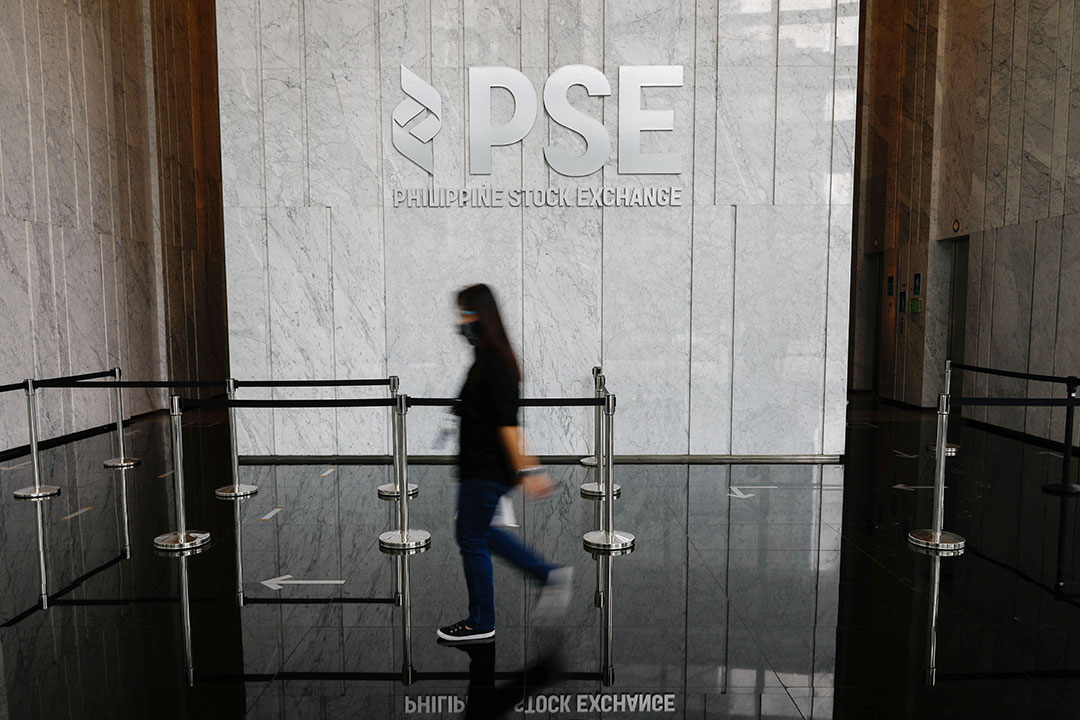
PSEi rebounds as investor sentiment improves

PSEi rebounds as investor sentiment improves

Shares rose on Wednesday as growing expectations of interest rate cuts in the United States and positive prospects for the Philippine economy boosted sentiment.

The Philippine Stock Exchange index (PSEi) rose by 0.3% or 20.62 points to end at 6,687.71 on Wednesday, while the broader all shares index improved by 0.24% or 8.69 points to finish at 3,594.62.

“Philippine shares closed in the positive territory as investors continued rotating across the board into names that would be prime beneficiaries of a rate cut,” Regina Capital Development Corp. Head of Sales Luis A. Limlingan said in a Viber message.

“The local bourse rose… due to positive cues from Wall Street overnight, amid optimism towards second-quarter corporate results and hopes of a rate cut soon by the Federal Reserve,” Philstocks Financial, Inc. Research Analyst Claire T. Alviar said in a Viber message.

Wall Street stocks rose and the Dow Jones Industrial Average hit an all-time closing high on Tuesday after US retail sales data supported the view that the US Federal Reserve is approaching its easing cycle, reining in inflation while avoiding a recession, Reuters reported.

The Dow Jones Industrial Average rose 742.76 points or 1.85% to 40,954.48; the S&P 500 gained 35.98 points or 0.64% at 5,667.20; and the Nasdaq Composite added 36.77 points or 0.2% at 18,509.34.

“Sentiment was further lifted as some institutions maintained their economic growth projections for the Philippines,” Ms. Alviar added.

The Asian Development Bank and International Monetary Fund have kept their gross domestic product (GDP) growth forecasts for the Philippines at 6% for this year and 6.2% in 2025, they said in separate reports this week.

The 2024 outlook is at the low end of the government’s 6-7% growth target. Meanwhile, the 2025 projection is below the 6.5-7.5% goal for that year.

For its part, the ASEAN+3 Macroeconomic Research Office (AMRO) trimmed its Philippine economic growth forecasts for this year and in 2025. AMRO sees Philippine GDP expanding by 6.1% this year, slightly lower than the 6.3% in the April report. It also downgraded its 2025 growth forecast to 6.3% from 6.5%.

The Philippine economy expanded by 5.5% in 2023.

Sectoral indices were split. Mining and oil climbed by 4.26% or 366.97 points to 8,964.24; holding firms went up by 1.14% or 65.91 points to 5,831.82; and industrials increased by 0.43% or 39.63 points to 9,171.38. Meanwhile, property fell by 0.34% or 9.24 points to 2,687.80; financials decreased by 0.3% or 6.18 points to 1,994.35; and services inched down by 0.22% or 4.48 points to 2,024.79.

Value turnover went down to PHP 4.22 billion on Wednesday with 694.38 million shares changing hands from PHP 5.4 billion with 352.93 million shares traded on Tuesday.

Advancers narrowly beat decliners, 97 versus 95, while 42 issues ended unchanged.

Net foreign buying rose to PHP 715.58 million on Wednesday from PHP 304.96 million on Tuesday. — R.M.D. Ochave with Reuters

Peso strengthens on US rate cut bets

Peso strengthens on US rate cut bets

The peso hit a new near two-month high against the dollar on Wednesday on growing expectations of a September rate cut by the US Federal Reserve.

The local unit closed at PHP 58.295 per dollar on Wednesday, strengthening by nine centavos from its PHP 58.385 finish on Tuesday, Bankers Association of the Philippines data showed.

This was the peso’s strongest close in almost two months or since its PHP 57.97-a-dollar finish on May 28.

The peso opened Wednesday’s session stronger at P58.33 against the dollar. Its intraday best was at its close of PHP 58.295, while its weakest showing was at PHP 58.40 versus the greenback.

Dollars exchanged went down to USD 1.24 billion on Wednesday from USD 1.42 billion on Tuesday.

“A softer dollar lifted the region’s currencies including the peso on the back of US rate cut bets and risk on sentiment overnight,” Security Bank Corp. Chief Economist Robert Dan J. Roces said in a Viber message.

The dollar was broadly weaker on Wednesday after a modest but short-lived boost following better-than-expected US retail sales data, as traders focused on the prospect of Federal Reserve rate cuts as early as September, Reuters reported.

The dollar index ticked marginally lower to 104.19. Investors have fully priced in a rate cut from the Fed come September and are expecting more than 60 basis points worth of easing by the yearend.

Dovish comments from the US central bank chief also boosted the peso, Rizal Commercial Banking Corp. Chief Economist Michael L. Ricafort said in a Viber message.

“Most players have squared their positions ahead of the Fed speakers overnight,” a trader said by phone.

For Thursday, the trader and Mr. Ricafort said they see the peso ranging from PHP 58.20 to PHP 58.40 per dollar. — AMCS with Reuters

SEC to share corporate data with BIR

SEC to share corporate data with BIR

THE SECURITIES and Exchange Commission (SEC) will start sharing its data with the Bureau of Internal Revenue (BIR) to help the government improve tax collections.

The SEC signed a memorandum of agreement on data sharing with the BIR, which will allow the latter to access documents needed for tax assessments and collections.

On the other hand, the BIR will provide the SEC with tax identification number (TIN) verification for the latter’s online digital services to improve monitoring of the capital market.

“From our side, we have noticed a number of incorporators that have fake TIN. That is a ground for revocation. We’re trying to plug holes. We should be on our toes,” SEC Chairperson Emilio B. Aquino said during the launch of the agency’s new digital services.

The SEC is also in talks with the Bureau of Customs to use corporate data in improving the collection of Customs duties, excise and other taxes.

The commission is also eyeing to collaborate with the Bureau of Immigration to monitor foreign nationals doing business in the country, and with the Philippine Government Electronic Procurement System to look at the legitimacy of corporations participating in the government procurement process.

The Finance department is banking on improved tax administration and ramping up nontax revenues such as privatizing state assets to meet its revenue collection targets.

On Wednesday, the SEC launched five new digital platforms, namely the Swift Corporate And Other Records Exchange (SCORE) protocol, Zuper Easy Registration Online (ZERO), Electronic Submission Authentication Portal (eSAP), Foreign Investments Registration Station (FIRST) green lane unit, and Electronic Application for Modification of Entity Name and Data (eAMEND).

The SCORE protocol will cater to the requests of partner regulatory and enforcement agencies, such as the BIR, for company information such as articles of incorporation, general information sheet and audited financial statements.

“We have to improve constantly. If we are not fast enough to adopt changes, we will be left behind. Our neighboring countries are adopting and leveraging technology,” Mr. Aquino said.

“We are harnessing digital technologies not only to improve the ease of doing business. Ultimately, the SEC is harnessing digital technologies to champion sustainability and help accelerate the attainment of Sustainable Development Goals,” he added.

SEC ZERO is a service under the Electronic Simplified Processing of Application for Registration of Company (eSPARC) that lets applicants digitally authenticate forms via the eSAP.

The eSAP platform, integrated with SEC ZERO, removes the requirement to affix wet signatures and submit hard copies of registration requirements. The platform uses one-time passwords for the electronic authentication of documents.

The SEC ZERO and eSAP platforms allow applicants to register their companies anywhere any time.

The commission also established the FIRST green lane unit to entice more foreign investments. The registration, licensing and amendment of foreign entities, as well as foreign and multinational companies will go through the green lane. 

“Foreign-owned applications will no longer have to be queued together with all other applications in the online registry, as they will be redirected to a special lane of the SEC FIRST unit, making the processing time more efficient,” the SEC said.

The eAMEND online portal will be in charge of processing and approving the payment for the amendments in applications of corporations. It will also issue a digital copy of the certificate of amendment of corporations. — R.M.D.Ochave

SEC to share corporate data with BIR

SEC to share corporate data with BIR

THE SECURITIES and Exchange Commission (SEC) will start sharing its data with the Bureau of Internal Revenue (BIR) to help the government improve tax collections.

The SEC signed a memorandum of agreement on data sharing with the BIR, which will allow the latter to access documents needed for tax assessments and collections.

On the other hand, the BIR will provide the SEC with tax identification number (TIN) verification for the latter’s online digital services to improve monitoring of the capital market.

“From our side, we have noticed a number of incorporators that have fake TIN. That is a ground for revocation. We’re trying to plug holes. We should be on our toes,” SEC Chairperson Emilio B. Aquino said during the launch of the agency’s new digital services.

The SEC is also in talks with the Bureau of Customs to use corporate data in improving the collection of Customs duties, excise and other taxes.

The commission is also eyeing to collaborate with the Bureau of Immigration to monitor foreign nationals doing business in the country, and with the Philippine Government Electronic Procurement System to look at the legitimacy of corporations participating in the government procurement process.

The Finance department is banking on improved tax administration and ramping up nontax revenues such as privatizing state assets to meet its revenue collection targets.

On Wednesday, the SEC launched five new digital platforms, namely the Swift Corporate And Other Records Exchange (SCORE) protocol, Zuper Easy Registration Online (ZERO), Electronic Submission Authentication Portal (eSAP), Foreign Investments Registration Station (FIRST) green lane unit, and Electronic Application for Modification of Entity Name and Data (eAMEND).

The SCORE protocol will cater to the requests of partner regulatory and enforcement agencies, such as the BIR, for company information such as articles of incorporation, general information sheet and audited financial statements.

“We have to improve constantly. If we are not fast enough to adopt changes, we will be left behind. Our neighboring countries are adopting and leveraging technology,” Mr. Aquino said.

“We are harnessing digital technologies not only to improve the ease of doing business. Ultimately, the SEC is harnessing digital technologies to champion sustainability and help accelerate the attainment of Sustainable Development Goals,” he added.

SEC ZERO is a service under the Electronic Simplified Processing of Application for Registration of Company (eSPARC) that lets applicants digitally authenticate forms via the eSAP.

The eSAP platform, integrated with SEC ZERO, removes the requirement to affix wet signatures and submit hard copies of registration requirements. The platform uses one-time passwords for the electronic authentication of documents.

The SEC ZERO and eSAP platforms allow applicants to register their companies anywhere any time.

The commission also established the FIRST green lane unit to entice more foreign investments. The registration, licensing and amendment of foreign entities, as well as foreign and multinational companies will go through the green lane. 

“Foreign-owned applications will no longer have to be queued together with all other applications in the online registry, as they will be redirected to a special lane of the SEC FIRST unit, making the processing time more efficient,” the SEC said.

The eAMEND online portal will be in charge of processing and approving the payment for the amendments in applications of corporations. It will also issue a digital copy of the certificate of amendment of corporations. — R.M.D.Ochave

SEC to share corporate data with BIR

SEC to share corporate data with BIR

THE SECURITIES and Exchange Commission (SEC) will start sharing its data with the Bureau of Internal Revenue (BIR) to help the government improve tax collections.

The SEC signed a memorandum of agreement on data sharing with the BIR, which will allow the latter to access documents needed for tax assessments and collections.

On the other hand, the BIR will provide the SEC with tax identification number (TIN) verification for the latter’s online digital services to improve monitoring of the capital market.

“From our side, we have noticed a number of incorporators that have fake TIN. That is a ground for revocation. We’re trying to plug holes. We should be on our toes,” SEC Chairperson Emilio B. Aquino said during the launch of the agency’s new digital services.

The SEC is also in talks with the Bureau of Customs to use corporate data in improving the collection of Customs duties, excise and other taxes.

The commission is also eyeing to collaborate with the Bureau of Immigration to monitor foreign nationals doing business in the country, and with the Philippine Government Electronic Procurement System to look at the legitimacy of corporations participating in the government procurement process.

The Finance department is banking on improved tax administration and ramping up nontax revenues such as privatizing state assets to meet its revenue collection targets.

On Wednesday, the SEC launched five new digital platforms, namely the Swift Corporate And Other Records Exchange (SCORE) protocol, Zuper Easy Registration Online (ZERO), Electronic Submission Authentication Portal (eSAP), Foreign Investments Registration Station (FIRST) green lane unit, and Electronic Application for Modification of Entity Name and Data (eAMEND).

The SCORE protocol will cater to the requests of partner regulatory and enforcement agencies, such as the BIR, for company information such as articles of incorporation, general information sheet and audited financial statements.

“We have to improve constantly. If we are not fast enough to adopt changes, we will be left behind. Our neighboring countries are adopting and leveraging technology,” Mr. Aquino said.

“We are harnessing digital technologies not only to improve the ease of doing business. Ultimately, the SEC is harnessing digital technologies to champion sustainability and help accelerate the attainment of Sustainable Development Goals,” he added.

SEC ZERO is a service under the Electronic Simplified Processing of Application for Registration of Company (eSPARC) that lets applicants digitally authenticate forms via the eSAP.

The eSAP platform, integrated with SEC ZERO, removes the requirement to affix wet signatures and submit hard copies of registration requirements. The platform uses one-time passwords for the electronic authentication of documents.

The SEC ZERO and eSAP platforms allow applicants to register their companies anywhere any time.

The commission also established the FIRST green lane unit to entice more foreign investments. The registration, licensing and amendment of foreign entities, as well as foreign and multinational companies will go through the green lane. 

“Foreign-owned applications will no longer have to be queued together with all other applications in the online registry, as they will be redirected to a special lane of the SEC FIRST unit, making the processing time more efficient,” the SEC said.

The eAMEND online portal will be in charge of processing and approving the payment for the amendments in applications of corporations. It will also issue a digital copy of the certificate of amendment of corporations. — R.M.D.Ochave

AMRO trims PHL growth forecasts

AMRO trims PHL growth forecasts

The ASEAN+3 Macroeconomic Research Office (AMRO) trimmed its Philippine economic growth forecast for this year and in 2025, amid slowing external demand.

In its latest update, AMRO sees the Philippine gross domestic product (GDP) expanding by 6.1% this year, slightly lower than the 6.3% in the April report.

Despite the downgrade, this is still faster than the 5.5% GDP growth in 2023, and within the government’s 6-7% target for this year.

AMRO'S ASEAN+3 GDP growth forecasts

“We have shaved down the growth for not just the Philippines but many of the countries in the region. The recovery in the external sector was weaker than expected,” AMRO Chief Economist Hoe Ee Khor said in a virtual briefing on Tuesday.

“We may revise it up in the second half if the data show that the economy becomes more strongly,” Mr. Khor said.

AMRO also downgraded its GDP growth forecast for 2025 to 6.3% from 6.5% in the previous report. This is within the government’s 6.5-7.5% goal for next year.

Mr. Khor said Philippine growth has been weakened by gaps in infrastructure.

“I think the government is very conscious of that and is trying to fill the gap. Unfortunately, fiscal space has been used up to some extent during the pandemic,” he said.

The Philippine government aims to spend PHP 1.47 trillion on infrastructure this year. The Marcos administration has committed to maintaining high investments in infrastructure or around 5-6% of GDP from 2024 to 2025.

To complement domestic savings, the Philippines still has “a mo00derate business space” to attract more foreign investments. However, its economy remains one of the most restrictive in the region, Mr. Khor said.

“We think the policy measures by the government will continue to attract more investment, and also with the improvement in infrastructure gap, will help to lift the (Philippines’) growth potential,” he said.

Also, AMRO lowered its inflation forecast for the Philippines to 3.3% for this year from 3.6% in the April report. It raised its inflation projection to 3.1% for 2025 from 2.9% previously.

AMRO said the BSP may maintain a tight monetary policy until a downward trend in inflation is sustained.

Despite this, the Philippines is still projected to be the second-fastest growing economy among Association of Southeast Asian Nations (ASEAN) members this year, behind only Vietnam (6.3%).

Philippine growth is expected to be ahead of Cambodia (5.6%), Indonesia (5.2%), Malaysia (4.7%), Laos (4.5%), Brunei (4%), Thailand (2.7%), Singapore (2.4%), and Myanmar (1.8%).

AMRO sees the ASEAN+3 region, which includes China, Hong Kong, Japan and South Korea, expanding by 4.4% this year and 4.3% in 2025.

The ASEAN region is projected to grow by 4.8% this year and next year.

“External trade is set to return to positive territory this year, which will supplement strong domestic consumption and the continuing recovery in tourism,” AMRO said in the report.

AMRO said the global economy is expected to continue stabilizing next year, and monetary easing is seen to resume in major economies.

The think tank lowered its inflation forecast for ASEAN+3 (excluding Laos and Myanmar) to 2.1% for this year from 2.5% previously “due to softer-than-expected food prices in several economies and lower imported inflation.”

“Higher cost pressures could emerge in 2025 as economic momentum gains traction, but these are unlikely to trigger a large spike in ASEAN+3 inflation under the baseline scenario,” it said.

AMRO said the overall balance of risks to the outlook has improved since April, but several risks such as a spike in commodity and shipping prices and tighter-than-expected US monetary policy.

Other risks include a sharp slowdown in the US and Europe, weaker growth in China, and possible adverse spillovers from the US presidential election.

“The bad news is that the region’s outlook next year could be significantly affected by the outcome of the US elections. The good news is, the region has weathered similar shocks before,” Mr. Khor said.

The US presidential elections will be held on Nov. 5.

Also, AMRO said geopolitical tensions are becoming “more pertinent” for ASEAN+3 economies.

“The threat of geoeconomic fragmentation continues to rear its head as more economies announce trade controls or protectionist measures, following recent US tariff action against China. The ongoing shifts in global trade — including longer supply chains — can exacerbate the negative impact of these trade frictions, especially for ASEAN+3 economies, which are highly integrated in global trade,” AMRO said. — Beatriz Marie D. Cruz

Posts navigation

Older posts
Newer posts

Recent Posts

  • Metrobank US-Iran Risk Index: Fragile ceasefire 
  • Investment Ideas: April 10, 2026 
  • Metrobank US-Iran Risk Index: A new hope
  • A guide for your peso bond portfolio amid higher for longer rates
  • Investment Ideas: April 8, 2026

Recent Comments

No comments to show.

Archives

  • April 2026
  • March 2026
  • February 2026
  • January 2026
  • December 2025
  • November 2025
  • October 2025
  • September 2025
  • August 2025
  • July 2025
  • June 2025
  • May 2025
  • April 2025
  • March 2025
  • February 2025
  • January 2025
  • December 2024
  • November 2024
  • October 2024
  • September 2024
  • August 2024
  • July 2024
  • June 2024
  • May 2024
  • April 2024
  • March 2024
  • February 2024
  • January 2024
  • December 2023
  • November 2023
  • October 2023
  • September 2023
  • August 2023
  • July 2023
  • June 2023
  • May 2023
  • April 2023
  • March 2023
  • February 2023
  • January 2023
  • December 2022
  • November 2022
  • October 2022
  • September 2022
  • August 2022
  • July 2022
  • June 2022
  • May 2022
  • March 2022
  • December 2021
  • October 2021

Categories

  • Bonds
  • BusinessWorld
  • Currencies
  • Economy
  • Equities
  • Estate Planning
  • Explainer
  • Featured Insight
  • Fine Living
  • How To
  • Investment Tips
  • Markets
  • Portfolio Picks
  • Rates & Bonds
  • Retirement
  • Reuters
  • Spotlight
  • Stocks
  • Uncategorized

You are leaving Metrobank Wealth Insights

Please be aware that the external site policies may differ from our website Terms And Conditions and Privacy Policy. The next site will be opened in a new browser window or tab.

Cancel Proceed
Get in Touch

For inquiries, please call our Metrobank Contact Center at (02) 88-700-700 (domestic toll-free 1-800-1888-5775) or send an e-mail to customercare@metrobank.com.ph

Metrobank is regulated by the Bangko Sentral ng Pilipinas
Website: https://www.bsp.gov.ph

Quick Links
The Gist Webinars Wealth Manager Explainers
Markets
Currencies Rates & Bonds Equities Economy
Wealth
Investment Tips Fine Living Retirement
Portfolio Picks
Bonds Stocks
Others
Contact Us Privacy Notice Terms of Use
© 2026 Metrobank. All rights reserved.

Access this content:

If you are an existing investor, log in first to your Metrobank Wealth Manager account. ​

If you wish to start your wealth journey with us, click the “How To Sign Up” button. ​

Login HOW TO SIGN UP