




MODEL PORTFOLIO
THE GIST
NEWS AND FEATURES
Global Philippines Fine Living
INSIGHTS
INVESTMENT STRATEGY
Economy Stocks Bonds Currencies
THE BASICS
Investment Tips Explainers Retirement
WEBINARS
2024 Mid-Year Economi Briefing, economic growth in the Philippines
2024 Mid-Year Economic Briefing: Navigating the Easing Cycle
June 21, 2024
Investing with Love
Investing with Love: A Mother’s Guide to Putting Money to Work
May 15, 2024
retirement-ss-3
Investor Series: An Introduction to Estate Planning
September 1, 2023
View All Webinars
DOWNLOADS
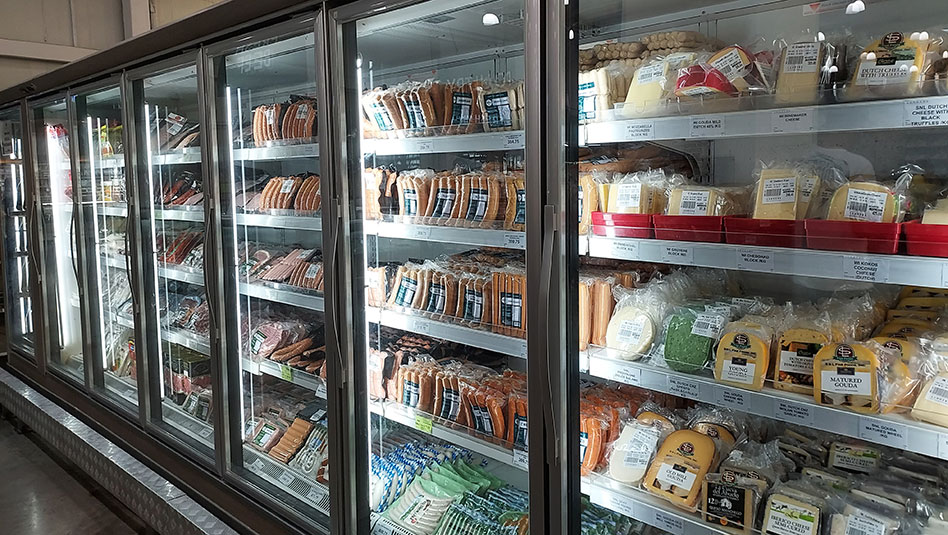
grocery-2-aa
Inflation Update: Target breached
DOWNLOAD
Container ship carrying container boxes import export dock with quay crane. Business commercial trade global cargo freight shipping logistic and transportation worldwide oversea concept. Generative AI
Economic Updates
Philippines Trade Update: Wider deficit on strong imports
DOWNLOAD
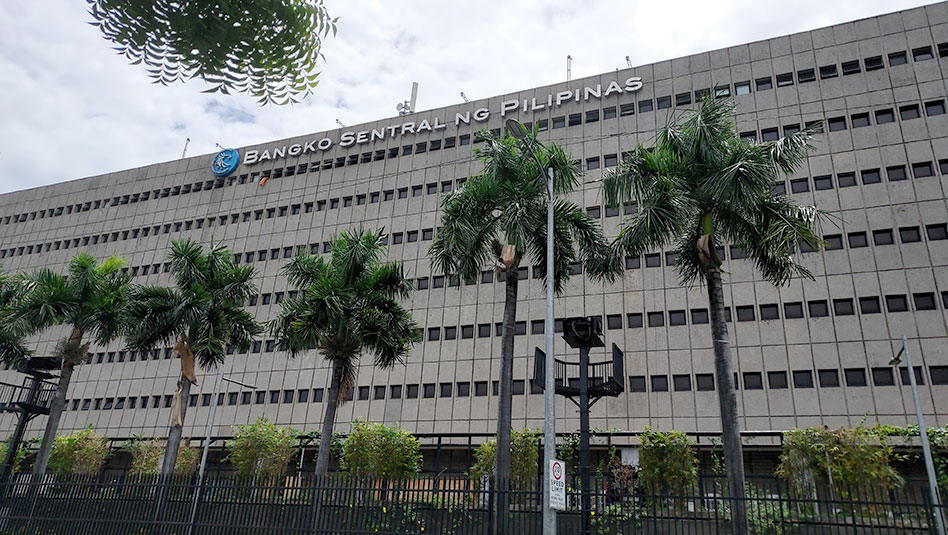
Frick collection with palm trees 
Economic Updates
Policy Rate Updates: Policy rate updates to reassure 
DOWNLOAD
View all Reports
Metrobank.com.ph How To Sign Up
Follow us on our platforms.

How may we help you?

TOP SEARCHES
  • Where to put my investments
  • Reports about the pandemic and economy
  • Metrobank
  • Webinars
  • Economy
TRENDING ARTICLES
  • Investing for Beginners: Following your PATH
  • On government debt thresholds: How much is too much?
  • Philippines Stock Market Outlook for 2022
  • Deficit spending remains unabated

Login

Access Exclusive Content
Login to Wealth Manager
Visit us at metrobank.com.ph How To Sign Up
Access Exclusive Content Login to Wealth Manager
Search
MODEL PORTFOLIO THE GIST
NEWS AND FEATURES
Global Philippines Fine Living
INSIGHTS
INVESTMENT STRATEGY
Economy Stocks Bonds Currencies
THE BASICS
Investment Tips Explainers Retirement
WEBINARS
2024 Mid-Year Economi Briefing, economic growth in the Philippines
2024 Mid-Year Economic Briefing: Navigating the Easing Cycle
June 21, 2024
Investing with Love
Investing with Love: A Mother’s Guide to Putting Money to Work
May 15, 2024
retirement-ss-3
Investor Series: An Introduction to Estate Planning
September 1, 2023
View All Webinars
DOWNLOADS
grocery-2-aa
Inflation Update: Target breached
April 7, 2026 DOWNLOAD
Container ship carrying container boxes import export dock with quay crane. Business commercial trade global cargo freight shipping logistic and transportation worldwide oversea concept. Generative AI
Economic Updates
Philippines Trade Update: Wider deficit on strong imports
March 27, 2026 DOWNLOAD
Frick collection with palm trees 
Economic Updates
Policy Rate Updates: Policy rate updates to reassure 
March 26, 2026 DOWNLOAD
View all Reports

Archives: Business World Article

Fiscal plan for Marcos’ 3rd year missed in SONA

Fiscal plan for Marcos’ 3rd year missed in SONA

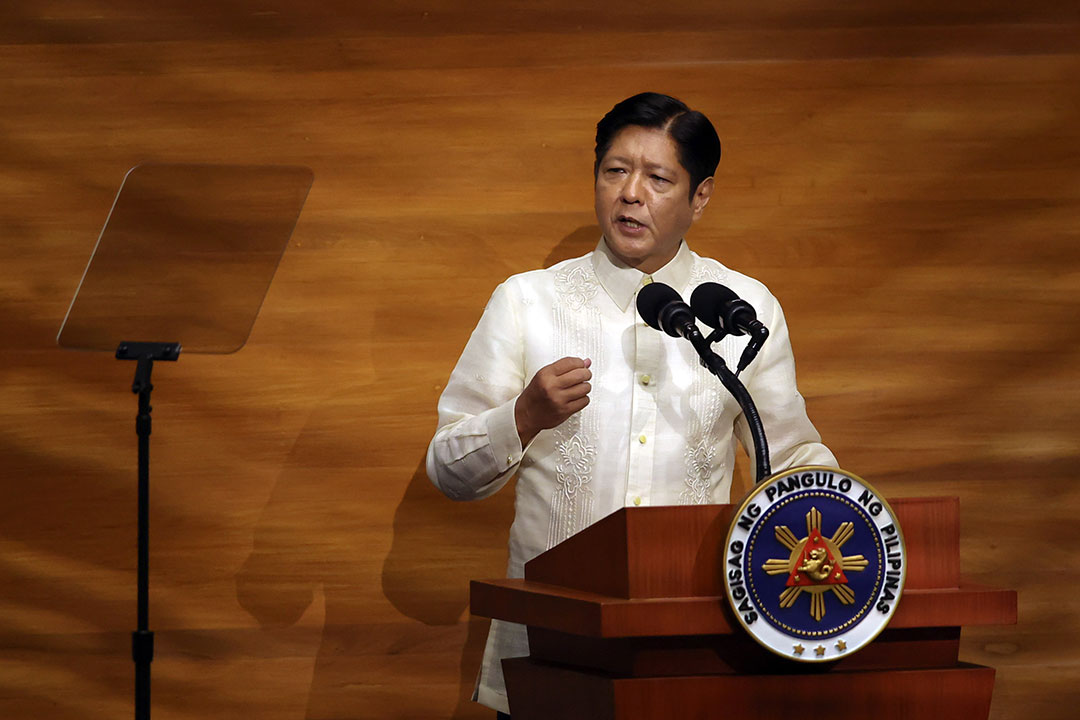
President Ferdinand R. Marcos, Jr. failed to discuss plans to address the country’s fiscal situation in his third State of the Nation Address (SONA), despite his vows to pursue “aggressive” infrastructure projects and push for a wage hike for government workers and teachers, economists said.

“There were no concrete sources of funds from the President’s SONA,” Emy Ruth Gianan, who teaches economics at the Polytechnic University of the Philippines, said in a Facebook Messenger chat.

“There was also no reminder for the Bureau of Internal Revenue to beef up tax collections or other levying units to improve revenue generation,” she added.

In his third SONA on Monday, Mr. Marcos said his government is pursuing an “aggressive” infrastructure development in line with the country’s goal to become an upper middle-income economy by next year.

“Our power and internet services are continuously being upgraded in both capacity and connectivity,” Mr. Marcos said, adding that the government is building “essential infrastructure and linkages” to support artificial intelligence systems “for high-impact practical applications.”

He said the government will boost scholarships and research grants in line with the “agenda to foster startups” and “commercialize and mass produce research and development outputs.”

Mr. Marcos also vowed to pursue a wage hike for government employees and implement an expanded career progression system for public school teachers.

Even though these programs will require massive funding, the President did not call for new taxes or discuss other sources of revenues.

“The President’s declarations on infrastructure and other key initiatives cost money. If we adhere to the policy of simply improving our tax administration without new forms or higher rates of appropriate taxes, the only option is to increase our borrowings,” Diwa C. Guinigundo, a former central bank deputy governor, said in a Viber message.

The National Government (NG) borrows from both foreign and domestic lenders to fund its budget deficit as it spends more than its revenues to support infrastructure projects and boost economic growth. The budget deficit in the January-May period widened by 24.06% to PHP 404.8 billion.

“In time, if borrowings are not translated into growth, debt servicing could even divert public money away from supporting more infrastructure and productive activities in the future,” Mr. Guinigundo said.

Economic managers are targeting 6-7% gross domestic product (GDP) growth this year.

Government debt hit a record high of PHP 15.35 trillion at the end of May, according to the Bureau of the Treasury (BTr), which largely pointed to the weakening of the local currency against the greenback.

“Any form of public goods will require substantial amounts of funds. Hence, a good measure of how SONA should consider not just the type of public goods that will be delivered but also how the public will have to pay in order to acquire them,” said Leonardo A. Lanzona, Jr., who teaches economics at the Ateneo de Manila University.

“In the face of substantial debts and huge budget deficits, this dream that the government will supply for all of this infrastructure and higher wages for government officials will be impossible,” he said in an e-mail.

At a post-SONA briefing on Tuesday, Budget Secretary Amenah F. Pangandaman said the department had set aside some PHP 9.5 billion for the new medical allowance for government employees announced by Mr. Marcos.

The appropriation was allocated under the Miscellaneous Personnel Benefits Fund for 2025, she noted, adding that government workers will each receive a medical allowance as a subsidy to avail themselves of Health Maintenance Organization (HMO) benefits.

The allowance covers employees under National Government agencies, state universities and colleges, and government-owned and -controlled corporations (GOCCs).

Ms. Pangandaman also said Mr. Marcos will issue an executive order detailing the four-tranche salary hike for government workers.

About P70 billion has been set aside under the 2025 National Expenditure Program to ensure the implementation of the first and second tranches, she said.

The last time government workers’ salaries were increased was in 2023, she said, referring to the fourth and last tranches of the Salary Standardization Law of 2019.

At the post-SONA briefing, Finance Secretary Ralph G. Recto said the government is targeting to double its revenue from nontax collections this year.

“Last year it was about P200 billion. This year, we will get about P400 billion… We are on track to hit our fiscal target for the entire year and that’s roughly about PHP 4.25 trillion,” Mr. Recto said.

At its June meeting, the Development Budget Coordination Committee retained the PHP 4.27-trillion revenue target, as well as the PHP 5.75-trillion expenditure program for this year. The fiscal deficit ceiling is set at PHP 1.48 trillion or -5.6% of GDP this year.

A large portion of the nontax revenues collected by the government in the first six months of the year came from remittances from GOCCs, the privatization of government assets, as well as income from the National Treasury, he noted.

In his speech, Mr. Marcos said the Philippine financial system remains robust and resilient, adding that tax and nontax revenue collection was “also efficient.”

“Notably, for the past two years, our GOCCs remitted dividends to the National Government with a combined tally exceeding their contributions in 2022,” he said.

BUDGET

Mr. Marcos also called on Congress to ensure that the proposed budget for 2025 — pegged at PHP 6.352 trillion, which is higher than this year’s PHP 5.768 trillion — is not just approved in a timely manner but also “be adhered to as closely as possible.”

“We expect all agencies to ensure that every centavo allocated will be judiciously spent for our urgent priorities and socially impactful programs,” he said.

The Budget department is scheduled to submit its proposed 2025 National Expenditure Plan to Congress on July 29.

Mr. Lanzona said the government should have a strategy also in terms of financing its programs and plans.

“This means priorities need to be instituted first and then as the time progresses as resources become available, then other promised goods can be obtained until towards the end of the President’s term,” he added.

“Without such a strategy, none of these become feasible unless greater debts and more budget deficits are incurred.” – Kyle Aristophere T. Atienza, Reporter

Gov’t makes full award of reissued 20-year bonds

Gov’t makes full award of reissued 20-year bonds

The government made a full award of the reissued 20-year Treasury bonds (T-bonds) it offered on Tuesday at an average rate lower than the previous award but slightly above secondary market levels, as investors wanted higher returns for the longer tenor despite expectations of monetary easing this year.

The Bureau of the Treasury (BTr) raised PHP 25 billion as planned via the reissued 20-year bonds it auctioned off on Tuesday as total bids reached PHP 44.975 billion, higher than the amount on the auction block.

This brought the outstanding volume for the series to PHP 77.7 billion, the Treasury said in a statement.

The bonds, which have a remaining life of 19 years and 10 months, were awarded at an average rate of 6.43%. Accepted yields ranged from 6.35% to 6.47%.

The average rate of the reissued seven-year bonds dropped by 43 basis points (bps) from the 6.86% fetched for the series’ last award on June 26 and was also 44.5 bps lower than the 6.875% coupon for the issue.

However, the average yield fetched for the debt paper was 3.9 bps above the 6.391% quoted for the 20-year bond and 3 bps higher than the 6.4% seen for the same bond series at the secondary market before Tuesday’s auction, based on PHP Bloomberg Valuation Service Reference Rates data provided by the BTr.

The Treasury fully awarded its bond offer as demand remained ample and as the average yield fetched for the papers dropped from the previous award, even as it was at the higher end of market expectations, a trader said in a text message.

“Investors wanted higher yields to compensate for the tenor,” the trader added.

The reissued papers fetched a lower average yield versus the previous award as investors continue to expect the Bangko Sentral ng Pilipinas (BSP) to begin cutting benchmark interest rates by next month, Rizal Commercial Banking Corp. Chief Economist Michael L. Ricafort said in a Viber message.

BSP Governor Eli M. Remolona, Jr. last month said the Monetary Board may deliver its first rate cut in over three years at their Aug. 15 review — the only policy meeting scheduled this quarter — as they expect inflation to continue easing until yearend, barring any shocks.

The Monetary Board could reduce benchmark borrowing costs by 25 bps this quarter and by another 25 bps in the fourth quarter, Mr. Remolona said.

The BSP last month kept its policy rate at a 17-year high of 6.5% for a sixth straight meeting following cumulative hikes worth 450 bps from May 2022 to October 2023 to help tame elevated inflation.

On Tuesday, Finance Secretary and Monetary Board member Ralph G. Recto said the BSP remains “on track” to cut rates within the year to support economic growth.

The BTr wants to raise PHP 215 billion from the domestic market this month, or PHP 100 billion through Treasury bills and PHP 115 billion via T-bonds. — A.M.C. Sy

Stocks climb on positive data, Wall Street’s rise

Stocks climb on positive data, Wall Street’s rise

Philippine stocks rebounded on Tuesday as sentiment was boosted by data showing poverty incidence in the country declined last year and US markets’ positive performance overnight.

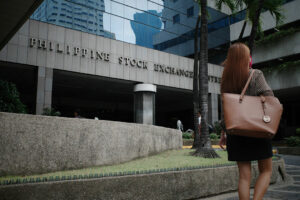
The Philippine Stock Exchange index rose by 0.61% or 41.07 points to end at 6,753.12 on Tuesday, while the broader all shares index gained by 1.06% or 38.50 points to close at 3,638.48.

“The local market rose as investors digested President Ferdinand R. Marcos, Jr.’s latest State of the Nation Address (SONA) this Monday. Also, the improvement in the country’s poverty incidence level was cheered by many,” Philstocks Financial, Inc. Research and Engagement Officer Mikhail Philippe Q. Plopenio said in a Viber message.

In his SONA, Mr. Marcos announced a total ban on all offshore gaming operations in the Philippines, saying these have been linked to illegal activities including money laundering and financial scams.

Meanwhile, about 17.54 million Filipinos were living in poverty in 2023, significantly lower than the nearly 20 million in 2021, the Philippine Statistics Authority (PSA) reported on Monday.

Based on preliminary results of the PSA’s Family Income and Expenditure Survey, the poverty incidence among the population fell to 15.5% from the 18.1% estimate in 2021.

The latest figure is lower than the government’s development target for poverty incidence in 2023 at 16-16.4% under the Philippine Development Plan 2023-2028.

“Philippine shares followed Wall Street’s positive sentiment, with technology stocks rebounding from last week’s sell-off,” Regina Capital Development Corp. Head of Sales Luis A. Limlingan added in a Viber message.

Wall Street’s three benchmarks ended higher on Monday as investors returned to megacap growth stocks, helping both the S&P 500 and the Nasdaq Composite recover from their worst weekly performance since April, Reuters reported.

The S&P 500 gained 59.41 points or 1.08% at 5,564.41 points, while the Nasdaq Composite climbed 280.63 points or 1.58% to 18,007.57. The Dow Jones Industrial Average rose 127.91 points or 0.32% to 40,415.44.

Back home, majority of sectoral indices closed higher. Holding firms increased by 1.66% or 95.67 points to 5,842.49; services went up by 1.51% or 30.33 points to 2,026.51; industrials climbed by 0.64% or 58.79 points to 9,113.28; and mining and oil rose by 0.12% or 11.10 points to 8,728.94.

Meanwhile, property dropped by 1.62% or 44.24 points to 2,681.82, and financials went down by 0.17% or 3.61 points to 2,083.18.

Value turnover declined to PHP 5.49 billion on Tuesday with 401.94 million shares changing hands from the PHP 6.23 billion with 531.62 million issues traded on Monday.

Market breadth was negative as decliners outnumbered advancers, 93 to 67, while 74 names closed unchanged.

Net foreign buying went down to PHP 442.93 million on Tuesday from PHP 1.01 billion on Monday. — R.M.D. Ochave with Reuters

Peso weakens on rate cut talk

Peso weakens on rate cut talk

The peso weakened against the dollar on Tuesday after the Finance chief reiterated that the Bangko Sentral ng Pilipinas (BSP) would cut benchmark interest rates within the year.

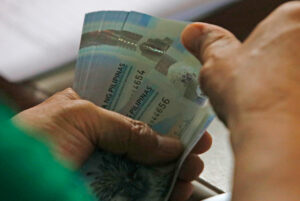
The local unit closed at PHP 58.435 per dollar on Tuesday, dropping by 5.5 centavos from its PHP 58.38 finish on Monday, Bankers Association of the Philippines data showed.

The peso opened Tuesday’s session lower at PHP 58.44 against the dollar. Its intraday best was at PHP 58.30, while its weakest showing was at PHP 58.46 versus the greenback.

Dollars traded climbed to USD 1.15 billion on Tuesday from USD 858.75 million on Monday.

“Most Asian currencies rose against the dollar as US yields slipped, but the peso lagged behind its Asian peers as Finance Secretary Ralph G. Recto signaled a preference for a rate cut in August,” Security Bank Corp. Chief Economist Robert Dan J. Roces said in a Viber message.

Mr. Recto, who is also a member of the central bank’s Monetary Board, said on Tuesday the country is on track for a cut in policy rates this year due to easing inflation, though the timing would be up to the central bank.

The central bank, which has kept interest rates steady at 6.5% in its last six meetings, has previously flagged a possible cut of 25 basis points (bps) at its Aug. 15 meeting as its sees inflation easing in the second half.

BSP Governor Eli M. Remolona, Jr. last month said the Monetary Board could reduce borrowing costs by 25 bps in the third quarter and by another 25 bps in the fourth quarter.

The peso was also dragged down by a steady dollar on Tuesday, Rizal Commercial Banking Corp. Chief Economist Michael L. Ricafort said in a Viber message.

World markets steadied on Tuesday as investors looked beyond Joseph R. Biden’s exit from the US presidential race, turning their focus to corporate earnings and economic data, Reuters reported.

The US dollar, which had edged higher on Monday, was unchanged against a basket of currencies on Tuesday.

For Wednesday, Mr. Ricafort sees the peso ranging from PHP 58.30 to PHP 58.50 per dollar. — AMCS with Reuters

Marcos orders total ban on POGOs

Marcos orders total ban on POGOs

President Ferdinand R. Marcos, Jr. on Monday announced a total ban on all offshore gaming operations in the Philippines, saying these have been linked to illegal activities including money laundering and financial scams.

“Effective today, all POGOs are banned,” he said during his State of the Nation Address (SONA), referring to Philippine offshore gaming operators (POGOs).

He also ordered the Philippine Amusement and Gaming Corp. (PAGCOR) to wind down and end the operations of all POGO facilities by the end of 2024. He also ordered the Labor department to find new jobs for POGO workers that will be displaced.

“We hear the loud cry of the people against POGOs… The grave abuse and disrespect to our system of laws must stop,” Mr. Marcos said.

Mr. Marcos received a standing ovation after announcing the ban in his third SONA, which analysts said lacked details on the reform agenda and failed to discuss medium-term economic goals.

POGOs have been “disguising” as “legitimate entities” but their operations have ventured into illicit areas, he said.

He linked POGOs to financial scams, money laundering, prostitution, human trafficking, kidnapping, brutal torture, and “even murder.”

The reputational risk from POGOs, which mostly involve Chinese nationals and cater to Chinese markets, could cost the government P55.36 billion in forgone investments due to crimes linked to them, and P29.01 billion in forgone revenues in tourism, the Finance department earlier said.

Several business groups led by the Makati Business Club recently called for a total ban on POGOs, saying their investments accounted for just 0.2% of the Philippines’ gross domestic product (GDP) in 2023 and pointed out significant social costs.

Over 50% of kidnapping cases in 2022 were POGO-related, according to Philippine National Police (PNP) data.

Even Senator Ana Theresia Hontiveros-Baraquel, the highest elected official among opposition personalities, joined the crowd in applauding Mr. Marcos’ announcement.

“This was something people were expecting, thus the standing ovation,” Maria Ela L. Atienza, a political science professor at the University of the Philippines, said in a Viber message. “Hopefully, this can bolster his popularity and trust ratings.”

Mr. Marcos’ performance and trust ratings dropped in the latest Pulse Asia Research, Inc. poll, which was released as he completed his second year in office.

Ms. Atienza noted that POGOs are viewed by many in the government as “negligible” because they are no longer bringing in much revenues.

Foundation for Economic Freedom, Inc. President Calixto V. Chikiamco also expressed support for the phaseout of all POGOs.

“This will help reduce criminality and corruption and even improve our relations with China, which has called for dismantling of POGOs,” he said.

Finance Secretary Ralph G. Recto said the President’s decision to ban POGOs would not lead to major revenue losses for the government.

“When you look at the cost-benefit analysis done by the DoF (Department of Finance), we are spending more than we are earning from POGOs,” he told BusinessWorld after the SONA.

Mr. Marcos began his third SONA speech, which was longer than last year’s, with a discussion of government efforts to address rising prices, touting his executive order that further reduced tariff rates for rice and other key commodities until 2028, as well as the temporary price cap on rice in October.

The Philippine leader said his government had seized more than PHP 2.7 billion worth of smuggled agro-fishery products through modernized Customs procedures and heightened enforcement, “preventing them from entering the market and negatively influencing prices.”

Mr. Marcos said the government would soon enforce a pre-border technical verification and cross-border electronic invoicing of imports. “This will send a strong signal that we mean serious business.”

He also focused on his administration’s “aggressive” infrastructure development program, which he said is key to making the Philippines an upper middle-income economy.

“With the results that we have seen two years into this administration, we can claim that despite challenges, we are steadily progressing towards our targets in the medium term,” he said.

The Marcos administration targets a 6-7% gross domestic product (GDP) growth this year. Under the Philippine Development Plan (PDP) 2023-2028, GDP annual growth target was set at 6.5-8% until 2028.

By 2028, the country also aims for a gross national income (GNI) per capita of $6,044-$6,571, a 3% deficit-to-GDP ratio, and debt-to-GDP ratio of 48-53%.

“To sustain the country’s economic gains, we are promoting investment-led growth. We have set in motion policies and programs to create an environment conducive for businesses to thrive, like reforms in the capital markets, and implementation of ‘green lanes,’” Mr. Marcos said.

Fiscal analyst Zy-za Nadine M. Suzara said Mr. Marcos’ third SONA heavily focused on the government’s accomplishments in the implementation of existing programs that were mostly initiated during previous administrations.

“He did not detail a reform agenda on improving bureaucratic efficiency and sound fiscal management even if these two are part of his eight-point socioeconomic agenda,” she said in an e-mail.

“It appears that these are not among his governance priorities even if these are actually at the core of achieving the rest of his socioeconomic agenda.”

On industrial policy, Mr. Marcos said the IT and creative sectors are burgeoning industries, “knowing no territorial bounds, and holding great promise for our talented and hardworking people.”

Cielo D. Magno, a professor at the University of the Philippines School of Economics, praised Mr. Marcos for touching on the creative and IT sectors, but said he should have discussed a “comprehensive industrial policy.”

“I appreciate clear instructions regarding human capital,” she added.

Mr. Marcos said in his speech that “schools will serve as the preeminent incubators of the innovative and creative energies of all Filipinos.”

He said the government would bank on Technical and Vocational Education and Training (TVET) to address joblessness, which hit a four-month high in June.

“Eight out of 10 graduates of TVET ultimately land decent jobs. So with its high employability rate, TVET will definitely be instrumental in capacitating our people.”

Jesus Felipe, director of the Angelo King Institute for Economic and Business Studies at De La Salle University, noted that the manufacturing sector accounts for only about 8% of the country’s employment share, making it more impossible for the country to produce jobs that are tech-driven.

“Look at the jobs that this economy generates — people riding motorcycles for delivery, etc.,” he said in a phone call. “Do you really believe that you can have a high-income economy?”

PHL ‘CANNOT WAVER’
Mr. Marcos gained a standing ovation after saying that the Philippines would not yield or waver in defending its features in the South China Sea.

Philippine officials “continuously try to find ways to de-escalate tensions in contested areas with our counterparts without compromising our position and our principles,” he said.

“The Philippines cannot yield, the Philippines cannot waver.”

Mr. Marcos, who has visited over 20 countries since his presidency in June 2022, said a substantial number of investment pledges have already commenced operations, “with many more at various stages of development.” These could create over 200,000 jobs for Filipinos, he added.

Among the administration’s priority bills, Mr. Marcos only mentioned the proposed amendments to the Electric Power Industry Reform Act of 2001 and the Corporate Recovery and Tax Incentives for Enterprises Act of 2021, which significantly lowered taxes on domestic and foreign corporations. 

“While it’s good to hear promises and instructions, it is important for the public to continuously monitor and engage the government to hold them accountable,” Ms. Magno said. “Promises can dissipate once the spotlights on his speech are turned off.”

Diwa C. Guinigundo, a former central bank deputy governor, said Mr. Marcos’ headline messages were sound “although we need to dissect them.”

The President should have disclosed why the Philippine Health Insurance Corp. needed to remit P80 billion to the National Government “when this amount could have secured wider and higher health coverage for its members,” he said in a Viber message.

British Chamber of Commerce of the Philippines Executive Director and Trustee Christopher James Nelson told BusinessWorld in a phone call that he was pleased to hear the President discuss agriculture policies, and hoped for Congress’ swift passage of the Anti-Agricultural Smuggling Act.

He said the real issue for foreign investors is whether the Philippines will continue to open up markets and remove foreign restrictions.

Senate President Francis G. Escudero told reporters on the sidelines of the President’s address to Congress that Mr. Marcos’ speech showed that he was serious about improving public transportation, agriculture and dealing with crimes linked to POGOs.

However, the POGO ban could also negatively affect the country’s real estate market, Albay Rep. Jose Ma. Clemente “Joey” S. Salceda, who heads the House ways and means committee, told BusinessWorld. 

“We just have to find the lost revenues, lost employment [due to the POGO ban],” he said after Mr. Marcos’ SONA. “And of course, it will dampen the real estate market.”

“I hope they make a differentiation with IGLs (internet gaming license), [so that] when they ban POGOs it will not lead to a banning of the entire IGL, because that’s PHP 43 billion [that could be lost],” he added.

Philippine Exporters Confederation, Inc. and Employers Confederation of Philippines President Sergio R. Ortiz-Luis told BusinessWorld by telephone that a less than six-month transition for licensed POGOs to wind down operations would mitigate immediate joblessness within the industry.

“The problem is whether we like it or not, there are a lot of investments and contracts, services that revolve around legal POGOs, and I’m sure they are hoping for a way to find an extension (to wind down operations).”

“One area I was hoping he would stress on is the ease of doing business. Although he mentioned the CREATE More bill, it is important to make this point with local governments to reduce the bureaucracy and make it easier for businesses to expand here,” Philippine Chamber of Commerce Chairman George T. Barcelon told BusinessWorld by telephone.

He said legal POGO firms affected by the ban could get back on their feet by pursuing other legitimate businesses that would hire Filipino workers instead of Chinese immigrants serving a Chinese market. – Kyle Aristophere T. Atienza, Reporter, with Chloe Mari A Hufana, Kenneth Christiane L. Basilio and John Victor D. Ordoñez

Poverty falls to below pre-pandemic level in 2023

Poverty falls to below pre-pandemic level in 2023

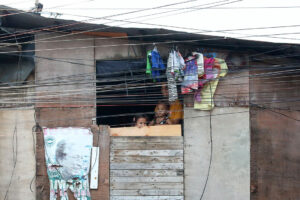
About 17.54 million Filipinos were living in poverty in 2023, significantly lower than the nearly 20 million in 2021, the Philippine Statistics Authority (PSA) reported on Monday. 

Based on preliminary results of the PSA’s Family Income and Expenditure Survey (FIES), the poverty incidence among the population fell to 15.5% from the 18.1% estimate in 2021.

“This present figure is even lower than the pre-pandemic level of 16.7% in 2018,” President Ferdinand R. Marcos, Jr. said in his State of the Nation Address on Monday. He added that almost 2.5 million Filipinos were lifted from poverty.

The latest figure is also lower than the government’s development target for poverty incidence in 2023 at 16-16.4% under the Philippine Development Plan (PDP) 2023-2028. 

Meanwhile, the poverty incidence among families was recorded at 10.9%, or about three million poor families. 

The PSA defines poverty incidence as the proportion of Filipino families with incomes that are not sufficient to buy their minimum basic food and nonfood needs as estimated by the poverty threshold.   

Meanwhile, 2.7% of Filipino families or about 740,000 families did not have enough income to meet their basic food needs.

Among the population, 4.3% or about 4.84 million Filipinos were living below the food poverty threshold.

With these results, the poverty situation in the Philippines has returned to its pre-pandemic levels, the PSA said. 

National Economic and Development Authority Secretary Arsenio M. Balisacan said the lower poverty incidence reflects government efforts to implement effective policies and initiatives to improve the lives of Filipinos.

“High inflation during the first half of 2023 likely partially offset the positive effects of income growth on poverty reduction. The decline in poverty could have been sharper had inflation been more moderate,” Mr. Balisacan said in a statement. 

He said economic growth was progressive, given that the average income per person for the poorest Filipinos grew more quickly than those in the top decile class and faster than the rate at which the poverty threshold increased.

Mr. Balisacan also said food security remains a top government priority, and creating more high-quality jobs and developing human capital to improve the earning potential of Filipinos are areas to focus on. 

The local statistics agency added that the decline in poverty from 2021 was due to the poverty threshold and income data from 2021 to 2023.

Preliminary data showed that the poverty threshold, which is mainly influenced by changes in food prices, grew by 15.3% from 11.8% previously (2018-2021).

Meanwhile, 2023 FIES data also showed that the mean per capita income, particularly for families near the poverty threshold, jumped by 22.9% from 9.2%, higher than the increase in the poverty threshold.

Security Bank Corp. Chief Economist Robert Dan J. Roces said poverty reduction likely stemmed from a combination of some economic growth, job creation, government aid programs, and stable but high inflation, particularly among food.

“While this is positive, the unbanked population may not have fully benefited yet. Increased per capita income, possibly due to economic growth or rising wages, is encouraging,” Mr. Roces said in a Viber message.

Jesus Felipe, a professor of economics at De La Salle University, said the poverty incidence would continue to decline in the coming years but not as fast as hoped.

“Since poverty in the Philippines is mostly a rural phenomenon, the decline in poverty is linked to improvements in agriculture, in particular to the decline in the share of employment in this sector,” he said in an e-mail.

Headline inflation in 2023 averaged 6%, slightly higher than 5.8% in 2022. Meanwhile, the jobless rate hit an all-time low of 4.3% last year, the lowest in two decades, according to the local statistics agency. — Abigail Marie P. Yraola

In 2023, the agriculture sector grew by 1.2% from 0.5% in 2022 and the 0.3% contraction in 2021. Meanwhile, the Philippine economy grew by 5.5% in 2023 from 7.6% in 2022 and 5.7% in 2021.

“We forecast that the poverty incidence will decline to 14% in 2026, 13.3% in 2028 and 12.2% in 2030,” Mr. Felipe said. — Abigail Marie P. Yraola

Central bank, Treasury launch fully automated intraday settlement facility

Central bank, Treasury launch fully automated intraday settlement facility

The Bangko Sentral ng Pilipinas (BSP) and Bureau of the Treasury (BTr) have launched a fully automated intraday settlement facility (ISF) to address timing issues and make transactions for banks more efficient.

In a statement on Monday, the central bank said it officially rolled out the automated ISF on June 27.

“The facility is available to all eligible financial institutions that encounter timing mismatches when settling their transactions through the Peso Real-Time Gross Settlement (RTGS) Payment System operated by the BSP.”

The automated ISF was developed by linking the BSP’s RTGS system or the Philippine Payment and Settlement System (PhilPaSS) Plus with the BTr’s National Registry of Scripless Securities (NRoSS).

The BSP said the facility’s full automation promotes a “safe, efficient, and reliable mode of fund transfer in support of financial stability.”

“Aside from preventing gridlocks in the PhilPaSS Plus from timing mismatches in the settlement of payments between participants, the ISF is designed to support a quick and efficient paperless process,” the central bank said.

“This allows PhilPaSS Plus participants to obtain funds within a few minutes after initiating a repurchase agreement or repo transaction with the BSP. These funds can cover the participants’ queued or expected outgoing payment instructions in the PhilPaSS Plus,” it added.

A repurchase agreement (repo) is a transaction in which the borrower temporarily lends a security to the lender for cash with an agreement to buy it back in the future at a pre-determined price, the BSP said, citing the International Monetary Fund.

PhilPaSS Plus is a real-time gross settlement system that processes and settles high-value transactions between financial institutions.

The growing number of settlements by financial institutions prompted the BSP to upgrade the PhilPaSS system to PhilPaSS Plus in July 2020.

“This system also settles the clearing results of retail payments made by individuals, businesses, and the government using checks, ATMs, InstaPay, and PESONet,” the central bank added.

Meanwhile, the NRoSS is one of the electronic registry systems the Treasury uses for the issuance of government securities.

In January, the BSP amended the regulations on the return of banks’ bounced checks, as well as reintroduced the intraday liquidity facility to also prevent timing mismatches in the settlement of payments. — Luisa Maria Jacinta C. Jocson

Gov’t fully awards T-bills amid robust demand

Gov’t fully awards T-bills amid robust demand

The government made a full award of the Treasury bills (T-bills) it offered on Monday even as rates continued to inch up as it saw strong demand from the market, with investors looking to lock in high yields before the Bangko Sentral ng Pilipinas (BSP) and US Federal Reserve start their respective monetary easing cycles.

The Bureau of the Treasury (BTr) raised PHP 20 billion as planned from the T-bills it auctioned off on Monday as total bids reached PHP 47.372 billion, or more than twice the amount on offer.

Broken down, the BTr borrowed PHP 6.5 billion as programmed from the 91-day T-bills as tenders for the tenor reached PHP 14.86 billion. The three-month papers were quoted at an average rate of 5.743%, 2.6 basis points (bps) above the 5.717% seen last week. Accepted rates ranged from 5.724% to 5.755%.

The government likewise made a full P6.5-billion award of the 182-day securities as bids for the tenor reached P15.01 billion. The average rate for the six-month T-bill stood at 5.991%, up by 1.3 bps from the 5.978% fetched last week, with accepted rates at 5.98% to 5.998%.

Lastly, the Treasury raised the planned PHP 7 billion via the 364-day debt papers as demand totaled PHP 17.502 billion. The average rate of the one-year debt inched up by 0.9 bp to 6.081% from the 6.072% quoted for the tenor last week. Accepted yields were from 6.05% to 6.095%.

At the secondary market before the auction, the 91-, 182-, and 364-day T-bills were quoted at 5.7355%, 6.0223%, and 6.1053%, respectively, based on PHP Bloomberg Valuation Service (BVAL) Reference Rates data provided by the Treasury.

T-bill yields rose in line with market expectations as investors continued to price in potential rate cuts from the BSP, a trader said in a phone interview.

“Treasury bill average auction yields were again slightly higher week on week, similar to the weekly rise in the comparable PHP BVAL yields,… as investors lock in longer-term tenors ahead of a possible 25-bp policy rate cut as early as August and another 25-bp cut by the fourth quarter, as reiterated by local monetary authorities, and also amid more dovish signals by some Fed officials recently,” Rizal Commercial Banking Corp. Chief Economist Michael L. Ricafort said in a Viber message.

BSP Governor Eli M. Remolona, Jr. last month said the central bank may deliver its first rate cut in over three years at the Monetary Board’s Aug. 15 review — the only policy meeting scheduled this quarter — as they expect inflation to continue easing this semester.

The Monetary Board could slash borrowing costs by 25 bps this quarter and by another 25 bps in the fourth quarter, he added.

The BSP last month kept its policy rate at a 17-year high of 6.5% for a sixth straight meeting after raising interest rates by 450 bps from May 2022 to October 2023 to help tame red-hot inflation.

Mr. Remolona also said the better-than-expected June inflation print gives policymakers “a bit more scope for easing” in their August meeting.

Headline inflation eased to 3.7% in June from 3.9% in May. This was within the BSP’s 3.4-4.2% forecast for the month, and also marked the seventh straight month that inflation settled within the central bank’s 2-4% annual target.

For the first six months, the consumer price index averaged 3.5%, slightly faster than the BSP’s 3.3% full-year forecast.

Meanwhile, top Federal Reserve officials last week said the US central bank is “closer” to cutting interest rates given inflation’s improved trajectory and a labor market in better balance, remarks that set the stage for a first reduction in borrowing costs in September, Reuters reported.

Fed Governor Christopher Waller and New York Fed President John Williams both noted the shortening horizon toward looser monetary policy, with Mr. Waller highlighting it in a speech at the Kansas City Fed and Mr. Williams voicing it in a Wall Street Journal interview.

Separately, Richmond Fed President Thomas Barkin said he is “very encouraged” that declines in inflation had begun to broaden. “I’d like to see that continue,” he told a business group in Maryland.

The remarks are the latest in a rush of commentary from top US central bank officials — including Fed Chair Jerome H. Powell — to note their increased confidence that the disinflationary trend that began last year is continuing, despite a short-lived bump in inflation earlier this year.

More Fed policymakers have suggested they are getting increasingly comfortable that the pace of price increases is more firmly on track back down to 2%, after higher-than-expected readings earlier in the year.

Mr. Powell also said that inflation readings over the second quarter of this year “add somewhat to confidence” on its downward path, suggesting a start of an easing cycle may not be far off.

On Tuesday, the BTr will offer PHP 25 billion in reissued 20-year Treasury bonds (T-bonds) with a remaining life of 19 years and 10 months.

The Treasury wants to raise P215 billion from the domestic market this month, or PHP 100 billion through T-bills and PHP 115 billion via T-bonds.

The government borrows from local and foreign sources to help fund its budget deficit, which is capped at PHP 1.48 trillion or 5.6% of gross domestic product for this year. — AMCS with Reuters

Peso drops on market caution after Biden decision

Peso drops on market caution after Biden decision

The peso declined against the dollar on Monday as market players chose to stay cautious after US President Joseph R. Biden, Jr. withdrew from his re-election campaign.

The local unit closed at PHP 58.38 per dollar on Monday, weakening by 4.5 centavos from its PHP 58.335 finish on Friday, Bankers Association of the Philippines data showed.

The peso opened Monday’s session weaker at PHP 58.40 against the dollar. Its intraday best was at PHP 58.375, while its worst showing was at PHP 58.48 versus the greenback.

Dollars exchanged went down to USD 858.75 million on Monday from USD 979.27 million on Friday.

“The dollar-peso traded relatively sideways on market caution amid US political noise and ahead of US GDP (gross domestic product) data this week,” a trader said by phone.

The dollar was broadly steady on Monday after Mr. Biden dropped his re-election bid, increasing former President Donald J. Trump’s chances of another term, Rizal Commercial Banking Corp. Chief Economist Michael L. Ricafort said in a Viber message.

The dollar eased slightly against a basket of currencies on Monday as investors focused on Mr. Biden’s decision to end his re-election campaign and the next moves from the US Federal Reserve and the Bank of Japan, Reuters reported.

The dollar index — a measure of the value of the US dollar relative to a basket of foreign currencies — fell 0.1% at 104.30.

Mr. Biden announced he was exiting the race on Sunday and endorsed Vice-President Kamala Harris to replace him as the Democratic candidate in the November election. Ms. Harris quickly received the backing of many within the party, but several high-profile names stayed quiet.

Mr. Trump, the Republican nominee, sits well ahead in betting markets following Mr. Biden’s disastrous debate performance last month and questions about his age and health.

Cautious signals from Federal Reserve Bank of San Francisco President Mary Daly last week also lifted the dollar, Mr. Ricafort said. Ms. Daly said on Thursday she is looking for more confidence that inflation is moving back to the Fed’s 2% target before calling for an interest rate cut.

For Tuesday, Mr. Ricafort sees the peso ranging from PHP 58.30 to PHP 58.50 per dollar, while the trader expects it to move between PHP 58.20 and PHP 58.50. — A.M.C. Sy with Reuters

PHL shares decline on profit-taking before SONA

PHL shares decline on profit-taking before SONA

Philippine shares declined on Monday as investors pocketed their gains from the market’s three-day climb ahead of the third State of the Nation Address (SONA) of President Ferdinand R. Marcos, Jr.

The benchmark Philippine Stock Exchange index (PSEi) fell by 1.17% or 79.64 points to close at 6,712.05 on Monday, while the broader all shares index declined by 0.76% or 27.85 points to end at 3,599.98.

“The local bourse dropped as investors took profits following the market’s rally,” Philstocks Financial, Inc. Research Analyst Claire T. Alviar said in a Viber message.

“Investors were also waiting for the President’s SONA. There are many issues that investors want to hear about, especially the government’s plan to meet the economic growth target in the coming years,” Ms. Alviar added.

Philippine stocks closed lower along with most regional markets following US President Joseph Biden’s withdrawal from the 2024 presidential race, Regina Capital Development Corp. Head of Sales Luis A. Limlingan said in a Viber message.

Mr. Biden announced he was exiting the race on Sunday, and endorsed Vice-President Kamala Harris for the Democratic ticket, Reuters reported.

Asian shares slid anew on Monday, getting little lift from a surprise rate cut by China’s central bank, while Wall Street futures firmed in the wake of Mr. Biden’s decision to bow out of the election race.

The People’s Bank of China cut short-term rates by 10 basis points, which pulled down long-term borrowing costs and bond yields. The move follows Beijing’s release of a policy document on Sunday outlining its ambitions for the economy.

MSCI’s broadest index of Asia-Pacific shares outside Japan lost another 0.7%, having shed 3% last week. Japan’s Nikkei dropped 1.2% and South Korea’s benchmark index fell 1.3%.

Majority of sectoral indices closed lower. Services went down by 2.6% or 53.44 points to 1,996.18; industrials retreated by 1.99% or 184.59 points to 9,054.49; holding firms dropped by 1.11% or 64.62 points to 5,746.82; and financials declined by 0.48% or 10.20 points to 2,086.79.

Meanwhile, property rose by 0.66% or 18 points to 2,726.06; and mining and oil climbed by 0.23% or 20.59 points to 8,717.84.

“Among the index members, only five stocks were able to stay in the green, led by DMCI Holdings, Inc., up by 1.82%. On the other hand, Metropolitan Bank & Trust Co. was at the bottom, losing 4.43%,” Ms. Alviar said.

Value turnover dropped to PHP 6.23 billion on Monday with 531.62 million shares changing hands from the PHP 6.84 billion with 587.69 million issues traded on Friday.

Decliners outnumbered advancers, 107 versus 72, while 60 names closed unchanged.

Net foreign buying dropped to PHP 1.01 billion on Monday from PHP 1.44 billion on Friday. — R.M.D. Ochave with Reuters

Posts navigation

Older posts
Newer posts

Recent Posts

  • Metrobank US-Iran Risk Index: Fragile ceasefire 
  • Investment Ideas: April 10, 2026 
  • Metrobank US-Iran Risk Index: A new hope
  • A guide for your peso bond portfolio amid higher for longer rates
  • Investment Ideas: April 8, 2026

Recent Comments

No comments to show.

Archives

  • April 2026
  • March 2026
  • February 2026
  • January 2026
  • December 2025
  • November 2025
  • October 2025
  • September 2025
  • August 2025
  • July 2025
  • June 2025
  • May 2025
  • April 2025
  • March 2025
  • February 2025
  • January 2025
  • December 2024
  • November 2024
  • October 2024
  • September 2024
  • August 2024
  • July 2024
  • June 2024
  • May 2024
  • April 2024
  • March 2024
  • February 2024
  • January 2024
  • December 2023
  • November 2023
  • October 2023
  • September 2023
  • August 2023
  • July 2023
  • June 2023
  • May 2023
  • April 2023
  • March 2023
  • February 2023
  • January 2023
  • December 2022
  • November 2022
  • October 2022
  • September 2022
  • August 2022
  • July 2022
  • June 2022
  • May 2022
  • March 2022
  • December 2021
  • October 2021

Categories

  • Bonds
  • BusinessWorld
  • Currencies
  • Economy
  • Equities
  • Estate Planning
  • Explainer
  • Featured Insight
  • Fine Living
  • How To
  • Investment Tips
  • Markets
  • Portfolio Picks
  • Rates & Bonds
  • Retirement
  • Reuters
  • Spotlight
  • Stocks
  • Uncategorized

You are leaving Metrobank Wealth Insights

Please be aware that the external site policies may differ from our website Terms And Conditions and Privacy Policy. The next site will be opened in a new browser window or tab.

Cancel Proceed
Get in Touch

For inquiries, please call our Metrobank Contact Center at (02) 88-700-700 (domestic toll-free 1-800-1888-5775) or send an e-mail to customercare@metrobank.com.ph

Metrobank is regulated by the Bangko Sentral ng Pilipinas
Website: https://www.bsp.gov.ph

Quick Links
The Gist Webinars Wealth Manager Explainers
Markets
Currencies Rates & Bonds Equities Economy
Wealth
Investment Tips Fine Living Retirement
Portfolio Picks
Bonds Stocks
Others
Contact Us Privacy Notice Terms of Use
© 2026 Metrobank. All rights reserved.

Access this content:

If you are an existing investor, log in first to your Metrobank Wealth Manager account. ​

If you wish to start your wealth journey with us, click the “How To Sign Up” button. ​

Login HOW TO SIGN UP