MODEL PORTFOLIO
THE GIST
NEWS AND FEATURES
Global Philippines Fine Living
INSIGHTS
INVESTMENT STRATEGY
Economy Stocks Bonds Currencies
THE BASICS
Investment Tips Explainers Retirement
WEBINARS
2024 Mid-Year Economi Briefing, economic growth in the Philippines
2024 Mid-Year Economic Briefing: Navigating the Easing Cycle
June 21, 2024
Investing with Love
Investing with Love: A Mother’s Guide to Putting Money to Work
May 15, 2024
retirement-ss-3
Investor Series: An Introduction to Estate Planning
September 1, 2023
View All Webinars
DOWNLOADS
grocery-2-aa
Inflation Update: Target breached
DOWNLOAD
Container ship carrying container boxes import export dock with quay crane. Business commercial trade global cargo freight shipping logistic and transportation worldwide oversea concept. Generative AI
Economic Updates
Philippines Trade Update: Wider deficit on strong imports
DOWNLOAD
Frick collection with palm trees 
Economic Updates
Policy Rate Updates: Policy rate updates to reassure 
DOWNLOAD
View all Reports
Metrobank.com.ph How To Sign Up
Follow us on our platforms.

How may we help you?

TOP SEARCHES
  • Where to put my investments
  • Reports about the pandemic and economy
  • Metrobank
  • Webinars
  • Economy
TRENDING ARTICLES
  • Investing for Beginners: Following your PATH
  • On government debt thresholds: How much is too much?
  • Philippines Stock Market Outlook for 2022
  • Deficit spending remains unabated

Login

Access Exclusive Content
Login to Wealth Manager
Visit us at metrobank.com.ph How To Sign Up
Access Exclusive Content Login to Wealth Manager
Search
MODEL PORTFOLIO THE GIST
NEWS AND FEATURES
Global Philippines Fine Living
INSIGHTS
INVESTMENT STRATEGY
Economy Stocks Bonds Currencies
THE BASICS
Investment Tips Explainers Retirement
WEBINARS
2024 Mid-Year Economi Briefing, economic growth in the Philippines
2024 Mid-Year Economic Briefing: Navigating the Easing Cycle
June 21, 2024
Investing with Love
Investing with Love: A Mother’s Guide to Putting Money to Work
May 15, 2024
retirement-ss-3
Investor Series: An Introduction to Estate Planning
September 1, 2023
View All Webinars
DOWNLOADS
grocery-2-aa
Inflation Update: Target breached
April 7, 2026 DOWNLOAD
Container ship carrying container boxes import export dock with quay crane. Business commercial trade global cargo freight shipping logistic and transportation worldwide oversea concept. Generative AI
Economic Updates
Philippines Trade Update: Wider deficit on strong imports
March 27, 2026 DOWNLOAD
Frick collection with palm trees 
Economic Updates
Policy Rate Updates: Policy rate updates to reassure 
March 26, 2026 DOWNLOAD
View all Reports

Archives: Business World Article

Expected rate cuts, earnings brighten Ghost Month outlook

Expected rate cuts, earnings brighten Ghost Month outlook

Despite August’s historical reputation as the weakest month for the stock market, some analysts are bullish, driven by anticipated rate cuts and strong second-quarter profit projections.

“Historically speaking, August is the worst month for the stock market. The stock market posted negative month-on-month returns for the month of August in 13 out of the past 20 years. This is typically a broad-based decline, meaning almost all the sectors are affected,” AP Securities, Inc. Research Head Alfred Benjamin R. Garcia told BusinessWorld in a Viber message.

“However, we’re a bit more optimistic this year, with rate cuts on the horizon and good earnings outlook for the second-quarter reports due to come out in early August,” he added.

Ghost Month, which typically falls in August, originates from an ancient Chinese belief that the gates of hell open, allowing ghosts to return to the living world.

This year, Ghost Month, the seventh month in the Chinese lunar calendar, runs from Aug. 4 to Sept. 2.

In light of this, Mr. Garcia advised investors to consider any market declines in August as a ‘buying opportunity.”

“Historically speaking, in 13 out of the past 20 years, stock market returns from September to December has been positive,” he said.

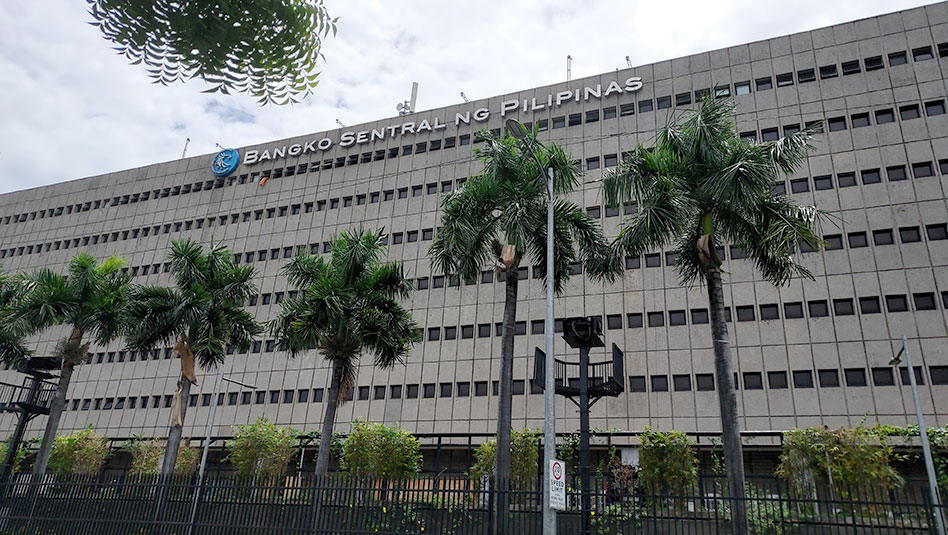
Finance Secretary Ralph G. Recto said last week that the Philippines is on track for a rate cut this year, as inflation slowed to 3.7% in June. The Bangko Sentral ng Pilipinas (BSP) has kept interest rates steady at 6.5% in its last six meetings.

BSP Governor Eli M. Remolona, Jr. has indicated that a rate cut is likely at the Monetary Board’s August 15 meeting.

Rastine Mackie D. Mercado, research director at China Bank Securities Corp., noted that since 1998, August has typically shown weak month-on-month price performance, with both average and median returns just under 2%, and over 65% of Augusts recording month-on-month losses.

“It’s also worthy to note that around 65% of Julys over the same period also posted positive month-on-month returns, which may offer some insight that August may be a month which typically sees profit taking,” he added.

Despite this, Mr. Mercado said it is better to focus on the catalysts that will drive the market in the near term.

“Given that the month-to-date return for July is at around 4.7%, we think that this coming August may be a month where we’ll see profit-taking. If the index stages a consolidation, then we think that a successful test of the 6,550 support could present some redeployment opportunities,” he noted.

“With respect to specific sector performance, we think that the upcoming earnings season will be a key driver in price action,” he added.

For the rest of the year, Mr. Mercado said the prospect of a rate cut will drive the local equity market.

“However, the key to sustaining the uptrend would be an expansion in earnings expectations,” he added.

Mark V. Santarina, Senior Trader at Globalinks Securities and Stocks, Inc., is also optimistic about the market’s outlook for September, aligning with the anticipated rate cuts.

“August presents a good opportunity to accumulate blue-chip stocks as the PSEi is likely to trade sideways,” he said in a Viber message.

Meanwhile, Michael L. Ricafort, Chief Economist at Rizal Commercial Banking Corp., said in a separate Viber message that the market slowdown in August coincides with bad weather and the vacation season in Northern Hemisphere countries such as the United States.

“Any slowdown in trading, economic, business activities is not only due to Ghost Month, but it is also a factor,” he said. – Revin Mikhael D. Ochave, Reporter

Rates of Treasury bills, bonds likely to be mixed

Rates of Treasury bills, bonds likely to be mixed

Rates of Treasury bills (T-bills) and Treasury bonds (T-bonds) to be auctioned off this week may end mixed as the market looks ahead to the Bangko Sentral ng Pilipinas’ (BSP) policy meeting next month, where it is expected to slash benchmark borrowing costs for the first time in over three years.

The Bureau of the Treasury (BTr) will auction off PHP 20 billion in T-bills on Monday, or PHP 6.5 billion each in 91- and 182-day papers, and PHP 7 billion in 364-day debt.

On Tuesday, the government will offer PHP 30 billion in reissued 20-year T-bonds with a remaining life of three years and one month.

Yields on the T-bills and T-bonds on offer this week could track the mixed movements in secondary market yields on Friday after Finance Secretary Ralph G. Recto said the central bank remains on track for a rate cut, Rizal Commercial Banking Corp. Chief Economist Michael L. Ricafort said in a Viber message.

Secondary market yields ended mixed on Friday amid some “two-way interest” after strong US data overnight, a trader said in an e-mail.

The 20-year T-bonds on offer this week could fetch rates ranging from 6% to 6.15% following the release of US June personal consumption expenditures (PCE) index data on Friday, the trader added.

At the secondary market on Friday, the rate of the 91-day T-bill went down by 0.621 basis point (bp) week on week to end at 5.7294%, based on PHP Bloomberg Valuation Service Reference Rates data published on the Philippine Dealing System’s website. Meanwhile, the 182-day and 364-day T-bills went up by 1.67 bps and 5.3 bps to end at 6.0390% and 6.1583%, respectively.

On the other hand, the 20-year bond dropped by 2.46 bps week on week to fetch 6.0893% on Friday, while the three-year debt, the tenor closest to the remaining life of the papers on offer this week, rose by 1.91 bps to yield 6.4019%.

Mr. Recto, who is also a member of the central bank’s policy-setting Monetary Board, said on Tuesday the country is on track for a cut in benchmark interest rates this year due to easing inflation, though the timing would be up to the central bank, Reuters reported.

The central bank, which has kept interest rates steady at 6.5% in its last six meetings, has previously flagged a possible cut of 25 bps at its Aug. 15 meeting as it sees inflation easing in the second half.

BSP Governor Eli M. Remolona, Jr. earlier said the Monetary Board could reduce borrowing costs by 25 bps in the third quarter and by another 25 bps in the fourth quarter. Next month’s review is the only meeting scheduled this quarter.

The central bank last slashed benchmark borrowing costs by 25 bps in November 2020 to bring the policy rate to a record low of 2% to boost economic activity during the height of the coronavirus pandemic.

Meanwhile, US prices increased moderately in June as the declining cost of goods tempered a rise in the cost of services, underscoring an improving inflation environment that could position the Federal Reserve to begin cutting interest rates in September, Reuters reported.

The PCE price index nudged up 0.1% last month after being unchanged in May, the Commerce department’s Bureau of Economic Analysis reported. The increase in PCE inflation was in line with economists’ expectations.

In the 12 months through June, the PCE price index climbed 2.5%. That was the smallest year-on-year gain in four months and followed a 2.6% advance in May.

The Fed tracks the PCE price measures for monetary policy.

The Fed has maintained its benchmark overnight interest rate in the current 5.25%-5.5% range since July 2023. It has hiked its policy rate by 525 bps since 2022.

Last week, the BTr raised PHP 20 billion as planned from the T-bills it auctioned off as total bids reached PHP 47.372 billion, or more than twice the amount on offer.

Broken down, the Treasury borrowed PHP 6.5 billion as programmed from the 91-day T-bills as tenders for the tenor reached PHP 14.86 billion. The average rate of the three-month papers rose by 2.6 bps week on week to end at 5.743%. Accepted rates ranged from 5.724% to 5.755%.

The government likewise made a full PHP 6.5-billion award of the 182-day securities as bids for the tenor reached PHP 15.01 billion. The average rate for the six-month T-bill stood at 5.991%, up by 1.3 bps from the prior week, with accepted rates at 5.98% to 5.998%.

Lastly, the Treasury raised the planned PHP 7 billion via the 364-day debt papers as demand totaled PHP 17.502 billion. The average rate of the one-year debt inched up by 0.9 bp to 6.081%. Accepted yields were from 6.05% to 6.095%.

Meanwhile, the reissued 20-year bonds to be offered on Tuesday were last auctioned off on Nov. 29, 2022, where the government raised just PHP 22.969 billion out of the PHP 35-billion program at an average rate of 6.568%, 205.7 bps below the 8.625% coupon rate.

The BTr wants to raise PHP 215 billion from the domestic market this month, or PHP 100 billion from T-bills and PHP 115 billion via T-bonds.

The government borrows from local and foreign sources to help fund its budget deficit, which is capped at PHP 1.48 trillion or 5.6% of gross domestic product for this year. — A.M.C. Sy with Reuters

In the aftermath of Typhoon Carina: ‘Ineffective’ flood-control projects hit

In the aftermath of Typhoon Carina: ‘Ineffective’ flood-control projects hit

Experts and lawmakers are now focusing on how flood-control projects have failed to prevent massive flooding in Metro Manila and nearby provinces during the onslaught of Typhoon Carina (Gaemi).

A southwest monsoon enhanced by Typhoon Carina on Wednesday triggered torrential rains that caused heavy flooding in the capital region, with authorities putting the death toll at 21 as of Thursday morning.

Most climate-related programs at the local and national levels have been solely focused on flood-control projects, said Dr. Pamela Cajilig, who teaches at the Building Science Studio Laboratory of the University of the Philippines’ College of Architecture.

“They have failed precisely because the mindset is ‘flood-control,’ which leads to measures that do not work well with nature and therefore lead to maladaptation, ‘solutions’ that negate their very aims, which is to reduce flood risks,” she said.

“We are not acting fast enough in terms of long-term disaster prevention and disaster mitigation.”

“Greater preparedness can reduce the need for post-disaster relief and ensure that allocated funds are able to reach further,” she said, noting that based on evidence globally, every dollar invested in preparedness not only saves lives but also reduces the financing needed for disaster response by at least USD 4 to USD 11 million.

On Wednesday, torrential rains and floods forced many residents to evacuate, while vehicles were swept away by raging floodwaters.

The Marikina River, which spans 16 bridges, reached as high as 20 meters. Its water level rose to 21.5 meters during the 2009 devastation of Typhoon Ondoy, which killed over 700 people, and to 22 meters during 2020’s Typhoon Ulysses, which killed about 100 people.   

The House of Representatives said it would look into the government’s flood management budget to determine if it was properly spent.

“We have to have accountability if the budget [on flood mitigation projects] was spent properly,” Mr. Romualdez said in Filipino, based on a document from his office. “We will check [if the budget] was spent effectively, efficiently, and properly.”

Senator Maria Imelda Josefa Remedios R. Marcos has said almost PHP 1.4 billion is spent on flood-control projects daily.

Her brother, President Ferdinand R. Marcos, Jr., said in his third address to Congress on Monday that the government had already put up 5,500 flood-control projects. “Many more are still under construction.”

Mr. Romualdez said funding for flood mitigation projects will remain in the proposed 2025 national budget.

“Of course, [funding for flood mitigation projects] will always be there. We just need to update it, check if the projects are effective and whether they were implemented,” he added.

The Department of Public Works and Highways (DPWH) allocated PHP 244.5 billion for its flood management program this year, according to a copy of the 2024 General Appropriations Act. It allotted an additional PHP 104.7 billion for the construction and maintenance of flood mitigation structures protecting public infrastructure.

“That is almost PHP 1 billion of funds a day, but they failed catastrophically to do their jobs,” Deputy Minority Leader and Party-list Rep. France L. Castro said in a statement.

‘CHRONIC’ FLOODING

Metro Manila has been placed under a state of calamity amid the massive flooding.

Senate President Francis “Chiz” G. Escudero said legislators should work to determine why — over a decade after Typhoon Ondoy — “chronic, severe flooding continues to afflict the nation’s capital.”

The capital region has been undergoing a “repetitive cycle” after massive rains, he said.

“Swaths of the National Capital Region are flooded so work and classes are suspended; we deploy our frontliners who rescue and evacuate affected families; generous volunteers and groups organize donation efforts and distribute aid; after the rains end, we assess the costs of the damage and evacuees are sent home,” he said in a statement. “Repeat.”

He urged the DPWH and the Metropolitan Manila Development Authority to work with LGUs in inspecting flooded areas and “recommend medium- and long-term solutions.”

The senator earlier said 2024 allocation for flood-control projects was “disproportionately large” compared with other critical sectors.

It far “exceeded the allocations” for irrigation (PHP 31 billion) and even the capital outlay budgets of the Department of Agriculture (PHP 40.13 billion) and the Department of Health (PHP 24.57 billion), he noted.

It also surpassed the proposed budgets of entire departments, including the Department of National Defense (P232.2 billion) and the Department of Social Welfare and Development (PHP 209.9 billion), he added.

The Department of Budget and Management (DBM) will submit the proposed PHP 6.352-trillion budget for 2025 to Congress on July 29.

Mr. Escudero said the Senate Committee on Public Works, chaired by Senator Ramon “Bong” Revilla, Jr., a known ally of the Marcos administration, will conduct an inquiry into the apparent “inefficacy of the flood control projects despite the substantial funding.”

There is a need to increase funding for flood mitigation efforts to support the construction and maintenance of flood drainage systems, Pangasinan Rep. Maria Rachel J. Arenas told BusinessWorld in a Viber message.

“We are actively advocating for increased funding to support the construction and maintenance of flood-mitigation structures and drainage systems such as retention ponds, floodwalls, levees, and stormwater,” she said.

There should be new drainage facilities that can withstand disasters, said Ms. Arenas, a vice chairperson of the House Public Works and Highways Committee.

“We are committed to implementing resilient design practices in the construction of new drainage facilities to withstand extreme weather events and minimize the impact of flooding.”

Ms. Cajilig said the government has failed to engage communities that will be most affected by flood intervention. “[It] ends with the construction of the intervention rather than monitoring long-term impact on areas like housing and livelihood.”

Mr. Marcos has proposed the implementation of 10 flood control projects worth PHP 500 billion from 2024 to 2037, including the Central Luzon-Pampanga River Floodway Project, Parañaque Spillway/Tunnel Project, Ambal-Simuay River and Rio Grande de Mindanao River Flood Control and Riverbank Protection, and Davao City Flood Control and Drainage Project.

A SHIFT IN ‘MINDSET’

“The future is a moving target — just recently the global warming predictions have been found to be worse than initially thought,” Ms. Cajilig said. “We need an agile and responsive mindset that is open to change at any time.”

Ms. Cajilig said the government needs a “flood management” mindset that opens more possibilities for “non-structural approaches” like revisiting land use plans and soft-structural approaches like wetland restoration.

“These are less environmentally destructive and are more likely to provide socio-ecological benefits such as livelihood,” she added. “They are also premised on the fact that we humans are part of nature, not superior to it.”

A proposal to implement a National Land Use policy was included in the first year of the Marcos administration. But it was nowhere to be found in the latest list of over a dozen priority bills that both houses of Congress plan to pass before the midterm elections in 2025.

The House already approved the bill on final reading in May last year, while a counterpart measure remains pending in the Senate.

Negros Occidental Rep. Jose Francisco Benitez said the Department of Human Settlements and Urban Development’s land use and urban planning bureau was in the process of “crafting new guidelines for the development of green open spaces and resilient urban design.”

“I hope LGUs will apply these new guidelines in updating their Land Use Plans and Comprehensive Development Plans,” he said in an e-mail to BusinessWorld sent by his staff.

Mr. Benitez, chair of the House Committee on Housing and Urban Development, also cited the need to promote “biophilic urbanism,” which calls for nature-based solutions in cities, to “support natural circularity.”

“Our cities should be designed to become sponge cities with more porous or permeable surfaces that will allow rainwater to percolate into the soil,” he said.

The House has already passed a bill mandating cities to invest more in urban greening and climate change adaptation on third and final reading, but it is not among the Marcos administration’s priority legislation.

Mr. Benitez, meanwhile, urged the government to revisit and fully implement an old law for the development of rainwater harvesting infrastructure or Republic Act No. 6716.

Renowned Filipino urban planner and architect Felino “Jun” A. Palafox, Jr. said he was not surprised with the massive floods because “the solutions were put forward in the mid-70s,” noting that he had sent recommendations to former four Philippine presidents but to no avail.

“It’s 90% less expensive to address the hazards before,” he said in a text message.

Maria Ela L. Atienza, a political scientist who has conducted research on the impacts of disasters on Philippine communities, said there have been significant improvements after Typhoon Ondoy, including the passage of the Philippine Disaster Risk Reduction and Management (DRRM) Act of 2010. However, she said there is still no national land use plan and climate-centered urban planning, and “not all officials, both national and local, have done well in terms of implementation of the laws.”

Economic plans and environmental plans have not been integrated properly, she added.

Ms. Atienza said some LGUs and their constituents have fared relatively well in learning lessons, including Marikina, in introducing preemptive evacuation plans and disaster preparedness. “Deaths have been minimized in succeeding calamities in areas that have prepared well.”

“There is still a need to have more integrated plans that combine urban planning, geographic data, climate change, and economic growth,” she added, lamenting that the Duterte administration invested more in reclamation projects, infrastructure projects, and economic activities that are “destructive” and “lead to more flooding and other hazards.”

She also noted that the Duterte administration stopped funding Project NOAH, which was then the Philippines’ primary disaster risk reduction and management program that was initially administered by the Department of Science and Technology from 2012 to 2017 and has since been housed at the University of the Philippines.

Ms. Atienza also said climate funds have been prone to corruption. Unless there is feedback from experts, politicians may use these funds for infrastructure and other projects that are “not actually useful,” she added.


Faster infrastructure development needed to ensure growth — S&P

Faster infrastructure development needed to ensure growth — S&P

More investments in infrastructure assets are needed to unlock faster growth rates for emerging Asian economies like the Philippines, S&P Global said.

“A marked improvement in infrastructure and logistics will support the next leg of growth for the emerging markets of Asia,” it said in a report.

“Economies can unlock higher growth rates through accelerated investment in infrastructure assets on top of infrastructure efficiency gains.”

S&P Global said that efficient and improved infrastructure will underpin robust growth in emerging Asia-Pacific, excluding China.

If infrastructure projects are accelerated, it said the Asia-Pacific region can nearly double its economy to $11.4 trillion by 2033 from $6.6 trillion in 2023.

“This translates to an annual real growth rate of about 5.5%. Our baseline forecast incorporates improved infrastructure as a cornerstone supporting these strong growth outcomes,” S&P Global said.

In the region, several governments, such as the Philippines, Indonesia, India, Malaysia, and Vietnam, are prioritizing infrastructure development in their policies and reforms.

“The National Economic and Development Authority (NEDA) coordinates flagship infrastructure projects such as a new airport in Manila, a heavy rail project linking ports in Subic, Manila, and Batangas, and several highway projects,” it said.

Infrastructure is one of the Marcos administration’s priority investment areas. The NEDA Board has so far approved 185 infrastructure flagship projects with a total value of P9.5 trillion.

The flagship projects cover physical and digital connectivity, water resources, agriculture, health, and energy, among others.

The government targets to spend 5-6% of gross domestic product (GDP) on infrastructure annually.

The latest data from the Budget department showed that infrastructure spending jumped by 18.2% to P335.7 billion as of end-April.

Meanwhile, S&P Global said the public sector usually undertakes more infrastructure projects, since the return on investments is spread over two or more decades “meaning duration risk for the private sector is high.”

Infrastructure operators may also find it difficult to turn a profit on these projects, putting more onus on the public sector.

“This does not rule out a role for the private sector. The private sector favors bottom lines and is hence better at innovating and can typically operate faster and more efficiently.”

“Private capital can ease the capital outlay burden on cash-strapped governments already committed to wide-ranging spending priorities. Still, the durations, regulated rates of return, and other project risks mean that the public sector dominates the space.”

S&P Global noted that the region’s public assets relative to economic size “have not been deepening significantly.”

It said that public fixed-investment assets are “relatively low” in the Philippines and Indonesia.

“However, in the Philippines and Indonesia public-private partnership (PPP) capital assets are higher than global averages. In the Philippines they are about 6.7% of GDP; in Indonesia, it is about 4.2% of GDP, which would add to the available total public assets,” it added.

The government has also been pushing for more PPP projects. In December, President Ferdinand R. Marcos, Jr. signed the PPP Code, which seeks to streamline the framework for PPPs.

S&P Global said that the logistics sector has shown improvements in recent years.

“India and the Philippines have seen the largest improvement since 2014 whereas Vietnam, Thailand, and Malaysia saw more modest improvements. In Indonesia, the logistics performance score declined marginally.”

Antonio A. Ligon, a law and business professor at De La Salle University in Manila, noted that the government is “doing its best” to implement the necessary reforms to attract investments in infrastructure.

“However, the implementation of these measures must be strengthened. For example, an efficient implementation of the ease of doing business (and) effective marketing showcasing areas where infrastructure development can be done,” he said in a Viber message.

Nigel Paul C. Villarete, senior adviser on PPP at the technical advisory group Libra Konsult, Inc., said local government units (LGUs) must increase support to fast-track infrastructure projects.

“Oftentimes the National Government (NG) machinery is somewhat cumbersome rolling our projects,” he said in a Viber message. “Many of the upcoming projects may be achieved through PPP with the LGUs.  This will also free up the NG to just deal with the major ones.”

Terry L. Ridon, a public investment analyst and convenor of think tank InfraWatch PH, said that infrastructure investments “have always provided a backdrop for economic growth in other areas of the economy.”

“New routes will have faster travel times, and economic efficiencies such as lower fuel costs may translate to lower prices of goods,” he said via e-mail.

“Resolving the traffic gridlock, whether through better and more railways or more efficient transport systems, allows commuters to spend more time doing other productive or economy-impactful activities instead of being stuck in traffic,” he added.

POWER

In a separate report, S&P Global also noted the need to increase investments in the power sector amid expectations of more demand.

“Power demand over 2024-2025 will grow 5-7% in India, Indonesia, and the Philippines, (and) about 3% in Singapore, Malaysia and Thailand.”

S&P Global said that increasing investments for the energy transition will “keep capital expenditures and leverage elevated.”

“Moderating fuel costs provide some relief to lagging generation and distribution firms,” it added.

In his State of the Nation Address on Monday, Mr. Marcos said that he expects the country’s power supply to “increase at a steady pace to meet our growing demand in the next few years.”

“Nonetheless, we are continuously diagnosing and urgently addressing power shortages, as well as the systemic causes of blackouts in unserved and underserved areas,” he added.

The government is aiming to increase the share of renewable energy in the country’s power mix to 35% by 2030 and 50% by 2040. — Luisa Maria Jacinta C. Jocson with input from Beatriz Marie D. Cruz

JICA keen on funding more road, railway projects in PHL

JICA keen on funding more road, railway projects in PHL

The Japan International Cooperation Agency (JICA) is keen on providing more funding support for road and railway projects in the Philippines.

“We are very keen and enthusiastic not just to maintain but to expand our cooperation with the Philippines as a most reliable partner,” JICA Chief Representative in the Philippines Takema Sakamoto told reporters on the sidelines of a forum on Tuesday.

“In the SONA (State of the Nation Address), President Ferdinand R. Marcos, Jr. mentioned several project names we are involved in,” Mr. Sakamoto said, citing the Plaridel Bypass Road, the Metro Manila Subway, and the North-South Commuter Railway (NSCR).

The Finance department and JICA have already signed loan deals for those projects. However, the huge funding requirements of these projects may require “further financial intervention” from JICA, he added.

While JICA has yet to finalize how much in total loans would be approved this year, Mr. Sakamoto said he hopes it would be higher than the ¥300 billion to ¥400 billion (around PHP 115 billion to PHP 153 billion) approved last year.

“I would like to convince Tokyo to mobilize more money. Of course, it depends on the decision of the government of Japan and taxpayers or the Japanese congressmen. So, I cannot say an exact figure or specific output now,” Mr. Sakamoto said.

In March, the Department of Finance (DoF) and JICA signed the third tranche of the loan agreement worth ¥150 billion (around PHP 57 billion) for the first phase of the Metro Manila Subway Project.

Both sides also inked a ¥100-billion loan agreement that covers the first tranche for the Dalton Pass East Alignment Road Project that will connect San Jose City, Nueva Ecija to Aritao, Nueva Vizcaya.

JICA has also extended PHP 4.25 billion in funding for the Plaridel Bypass Project-Phase 3, which traverses Balagtas, Guiguinto, Plaridel, Bustos, and San Rafael in Bulacan.

The PHP 873-billion NSCR is being co-financed by JICA and the Asian Development Bank. The 147-kilometer NSCR will connect Malolos, Bulacan with Clark International Airport, and Tutuban, Manila with Calamba, Laguna. It will have 35 stations and three depots.

Mr. Sakamoto also emphasized the need to address the persistent traffic congestion in the capital region. An earlier study by the JICA showed traffic congestion costs the Philippine economy PHP 3.5 billion a day.

“We need to make (roads) more modernized, in collaboration with a modernized railway system, it’s a combination. For example, feeder transportation should be developed further,” he said.

Mr. Sakamoto said the condition of roads in Metro Manila is “another very important challenge” that should be tackled. He wants to consult with the Departments of Transportation, Public Works and Highways, and the Metro Manila Development Authority (MMDA) on this matter.

JICA is also exploring a new technical cooperation with the MMDA that will modernize the latter’s intelligent transport system, Mr. Sakamoto said.

Last week, JICA and DoTr inked a three-year technical cooperation project that aims to improve the services of public utility vehicles and help decongest Metro Manila.

The Philippines heavily relies on official development assistance (ODA) to fund key projects amid limited fiscal space.

Japan was the country’s second-largest source of ODA in 2022, accounting for 30.75% or $9.96 billion of the total, the latest data from the National Economic and Development Authority showed. — Beatriz Marie D. Cruz

PSEi falls following typhoon, Wall Street’s drop

PSEi falls following typhoon, Wall Street’s drop

Philippine Stocks ended in the red on Thursday as trading resumed after Typhoon Carina (international name: Gaemi) hit the capital, and following Wall Street’s decline overnight.

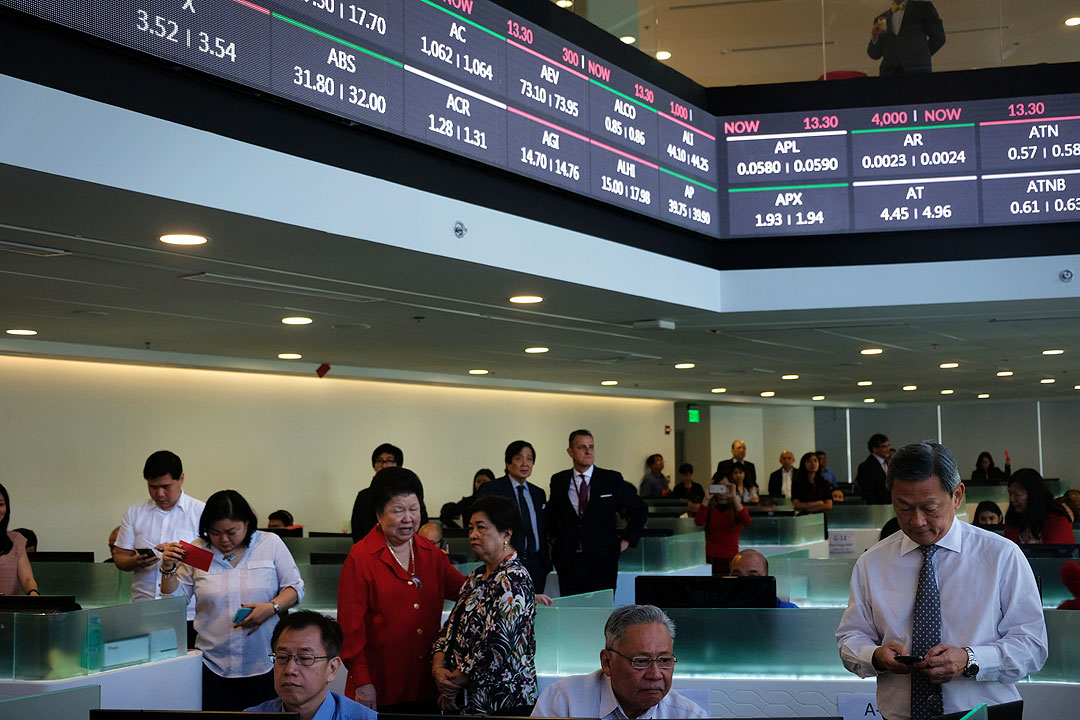
The bellwether Philippine Stock Exchange index (PSEi) dropped by 1.22% or 82.85 points to end at 6,670.27 on Thursday, while the broader all shares index fell by 0.87% or 31.67 points to finish at 3,606.81.

Financial markets were closed on Wednesday due to the typhoon.

“The local market dropped as investors tracked Wall Street’s sell-off overnight amid dismal second-quarter corporate results from the tech sector,” Philstocks Financial, Inc. Research and Engagement Officer Mikhail Philippe Q. Plopenio said in a Viber message. “Also, concerns over the economic damage to the country caused by Typhoon Carina weighed on the bourse.”

“Philippine shares followed the sentiment of regional equities dropping more than 1% after resuming trading following the suspension from Typhoon Carina,” Regina Capital Development Corp. Head of Sales Luis A. Limlingan likewise said in a Viber message.

Asian shares were hammered on Thursday as a slump in global tech stocks sent investors fleeing into less risky assets, Reuters reported. MSCI’s broadest index of Asia-Pacific shares outside Japan lost 1%, while Japan’s Nikkei tumbled 3.3%.

On Wall Street, the S&P 500 lost 128.61 points or 2.31% to 5,427.13 points on Wednesday, while the Nasdaq lost 654.94 points or 3.64% to 17,342.41. The Dow Jones Industrial Average fell 504.22 points or 1.25% to 39,853.87.

“Investors also digested the government’s latest fiscal position data,” Mr. Plopenio added.

The National Government’s (NG) budget deficit narrowed by 7.24% year on year to PHP 209.1 billion in June from PHP 225.4 billion a year ago, Treasury data showed.

For the first six months, the NG’s budget gap widened by 11.2% to PHP 613.9 billion from PHP 551.7 billion a year ago.

The six-month deficit was 7.24% below the PHP 661.8-billion program for the period as revenues were better than expected.

All sectoral indices closed lower on Thursday. Mining and oil retreated by 3.78% or 330.37 points to 8,398.57; property lost 1.98% or 53.10 points to end at 2,628.72; services went down by 1.39% or 28.21 points to 1,998.30; holding firms dropped by 1.08% or 63.49 points to 5,779; financials decreased by 0.89% or 18.57 points to 2,064.61; and industrials declined by 0.43% or 39.32 points to 9,073.96.

Value turnover dropped to PHP 4.01 billion on Thursday with 594.95 million shares changing hands from the PHP 5.49 billion with 401.94 million issues traded on Tuesday.

Decliners overwhelmed advancers, 121 versus 59, while 54 names were unchanged.

Net foreign selling stood at PHP 205.72 million on Thursday versus the PHP 442.93 million in net buying seen on Tuesday. — Revin Mikhael D. Ochave with Reuters

NG budget deficit narrows in June

NG budget deficit narrows in June

The national government’s (NG) budget deficit narrowed by 7.24% year on year in June, as revenue collection grew at a faster clip than spending, the Bureau of the Treasury (BTr) said on Wednesday.

Treasury data showed the budget gap shrank to PHP 209.1 billion in June from PHP 225.4 billion a year ago.

Month on month, the budget deficit widened by 19.54% from PHP 174.9 billion in May.

National Government fiscal performanceIn June alone, revenue collections jumped by 10.93% to PHP 296.5 billion from PHP 267.3 billion in the same month last year.

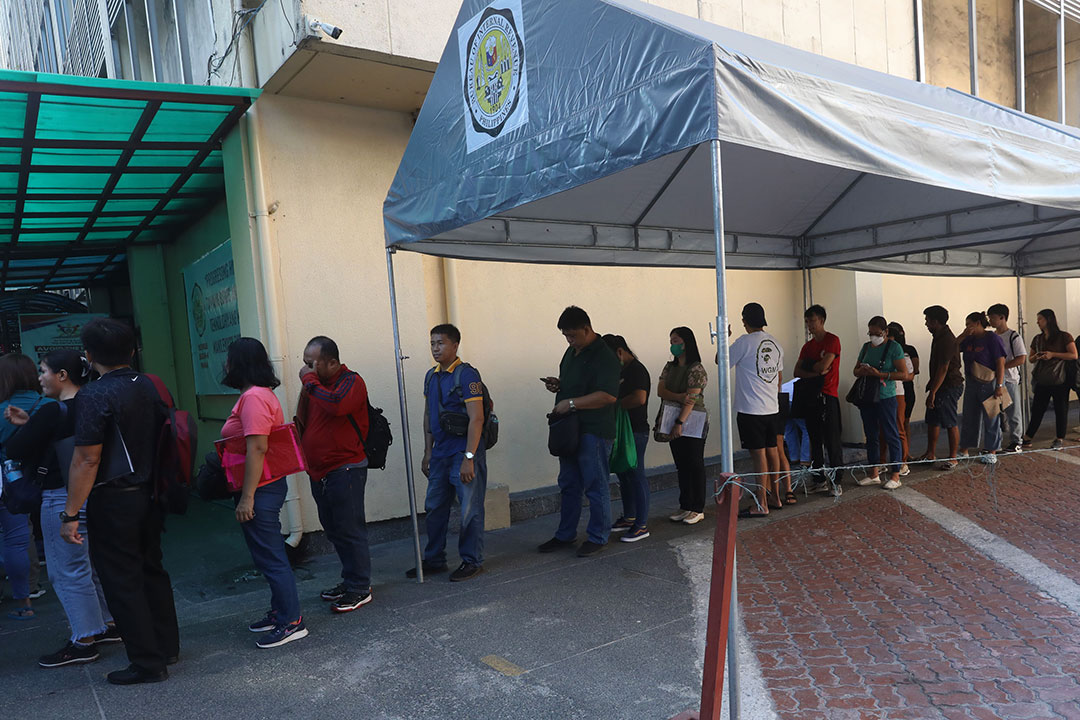
Tax revenues rose by 3.37% to PHP 249.3 billion in June, mainly driven by the 4.71% increase in collections by the Bureau of Internal Revenue (BIR) to PHP 172.5 billion, net of a PHP 4.3-billion tax refund.

Collections by the Bureau of Customs (BoC) inched up by 0.67% to PHP 74.6 billion, while those by other offices fell by 5.54% to PHP 2.2 billion.

Nontax revenues surged by 80.6% to PHP 47.2 billion in June, driven by the 158.57% jump in revenues by other offices to PHP 39.8 billion. Revenues by the Treasury declined by 31% to PHP 7.4 billion in June, “due to lower dividend remittance and income from BTr-managed funds.”

On the other hand, state spending increased by 2.62% year on year to PHP 505.6 billion in June.

“The increase was mostly attributed to the implementation of capital outlay projects of the Department of Public Works and Highways, and the Department of National Defense under its Revised AFP Modernization Program, the preparatory activities of the Commission on Elections for the 2025 National and Local Elections, and the higher National Tax Allotment shares of local government units (LGUs),” the Treasury said.

However, this was tempered by lower subsidy releases and lending to government-owned and -controlled corporations (GOCCs).

Primary expenditure (net of interest payment) rose by 2.3% to PHP 450 billion in June. Interest payments went up by 5.22% to PHP 55.6 billion.

GAP WIDENS

For the first six months, the budget gap widened by 11.2% to PHP 613.9 billion from PHP 551.7 billion a year ago.

The six-month deficit was 7.24% below the PHP 661.8-billion program for the period as revenues were better than expected.

For the January-to-June period, revenue collections jumped by 15.56% to PHP 2.15 trillion from PHP 1.86 trillion last year. It exceeded the PHP 2.08-trillion target for the first half by 3.49%.

Tax revenues, which accounted for 85% of the total revenues, rose by 10.05% to PHP 1.84 trillion as of end-June. This was 1.43% lower than the government’s first-semester goal of PHP 1.86 trillion.

BIR collections went up by 11.72% to PHP 1.36 trillion but missed the PHP 1.4-trillion target by 2.92%.

Revenues by Customs increased by 5.1% to PHP 455 billion and also exceeded the PHP 442.6-billion goal by 2.91%.

Nontax revenues in the first six months surged by 63.3% to PHP 314.2 billion from P192.4 billion last year. This was 46.10% higher than the PHP 215.1-billion target.

Treasury income jumped by 76% to PHP 163.9 billion “on account of higher dividend remittance, interest on advances from GOCCs, and NG share from PAGCOR (Philippine Amusement and Gaming Corp.) income.”

The Treasury exceeded the revised midyear program by 26.91% and is only PHP 23.1 billion short of the PHP 187-billion full-year target.

Meanwhile, expenditures for the January-to-June period increased by 14.6% to P2.76 trillion from PHP 2.41 trillion a year ago. It was 0.9% higher than the P2.74-trillion target for the six-month period.

Primary expenditure increased 12.06% to PHP 2.39 trillion in the first half from PHP 2.13 trillion a year prior.

In the first six months, interest payments jumped by 33.55% to PHP 377.2 billion from PHP 282.5 billion last year.

“While June showed improvement in deficit reduction, the first-half deficit widened year over year. However, the government’s ability to exceed revenue targets and keep the deficit below the midyear goal indicates some level of fiscal discipline,” Security Bank Corp. Chief Economist Robert Dan J. Roces said in a Viber message.

Mr. Roces said the challenge for the government is to keep a balance between revenue growth and spending to ensure the budget deficit is under control.

Jonathan L. Ravelas, senior adviser at professional service firm Reyes Tacandong & Co., said the government would still need additional funding for the priority programs that President Ferdinand R. Marcos, Jr. identified in his third State of the Nation Address (SONA).

“(Programs for) agriculture, infrastructure, and disaster preparedness needs funding, so where will it come from? The DoF said no new taxes. Likely from higher borrowings,” he said in a Viber message.

The NG’s borrowing program is set at PHP 2.57 trillion this year, of which 75% will come from domestic sources and the rest from foreign sources.

Rizal Commercial Banking Corp. Chief Economist Michael L. Ricafort said the collection of withholding taxes from online sellers, which started on July 15, is expected to boost tax revenues for the rest of the year.

“(The withholding tax collection) will help increase the country’s recurring tax revenues, narrow the budget deficit, and improve the overall fiscal performance,” he said.

For this year, the government set the deficit ceiling at 5.6% of gross domestic product, equivalent to PHP 1.48 trillion.

At the end of 2023, the budget deficit stood at PHP 1.51 trillion, exceeding the PHP 1.499-trillion ceiling. — Beatriz Marie D. Cruz

BSP says on track with study and testing of its own digital currency

BSP says on track with study and testing of its own digital currency

The study and testing of a central bank digital currency (CBDC) is on track, with implementation eyed by 2029, a Bangko Sentral ng Pilipinas (BSP) official said.

“We’re already about to conclude proof of concept. This is an innovative payment instrument. In fact, there’s no central bank in the world that has already launched wholesale CBDC, I guess with the exception of the Swiss National Bank,” BSP Deputy Governor Mamerto E. Tangonan said at a briefing on Tuesday.

Mr. Tangonan said they will make sure there will be users of this BSP-issued digital currency before it is launched.

“Otherwise, you create a white elephant,” he added.

In September, the BSP designated Hyperledger Fabric as the distributed ledger technology for Project Agila, its pilot project for CBDCs.

Since 2021, the BSP has been reviewing use cases for wholesale CBDCs.

BSP Governor Eli M. Remolona, Jr. earlier said that the central bank could launch CBDCs within his six-year term, which ends in 2029.

“If after a proof of concept that now brings the literacy and the knowledge of both BSP and the banks to a level that they are ready to launch it, then only such time will we make a decision whether to go or not go,” Mr. Tangonan said.

“This is an entirely new thing, and we have to make sure that we can offer it and operate. It’s a BSP-issued digital currency so we have to make sure we can offer it, maintain it, and operate it safely, and that the banks can do likewise and that they have business use cases for it.”

The identified potential uses for CBDCs include liquidity management, securities settlement, and cross-border payments, Mr. Tangonan added.

BSP Payments Policy and Development Department Director Bridget Rose M. Mesina-Romero said they have completed the first phase of Project Agila with the selection of Hyperledger Fabric for the project’s sandbox experiments.

The BSP is aiming to assess if the distributed ledger technology can facilitate inter-institution fund transfer across participating financial institutions.

“The goal here is to obtain enhanced knowledge of the CBDC technology… then eventually come up with a baseline assessment to determine the CBDC roadmap moving forward,” she said.

The central bank has completed the first set of the test run, having tested a distributed measuring technology and tokenization of wholesale CBDC, Ms. Mesina-Romero said.

The BSP is studying the functionality and performance of the CBDC, she added.

“One is the functionality criteria. We assess it against our usual currency life cycle. This time, we pattern it to the CBDC life cycle of creation; creating CBDC, issuing CBDC, making inter-institution fund transfers to CBDC, and then finally redemption and retirement.”

“We also assess the criteria of its performance, meaning whether it can facilitate 24/7 transfers, its security on the user interface, because the next phase will govern cybersecurity assessment of the blockchain technology, and finally, the data end-to-end testing among the BSP and financial institutions.”

By the end of the year, the central bank will be able to release the findings of its pilot testing.

“At the end of this project, which will be towards the end of this year, we will be issuing a report containing all of our findings and assessment with respect to our sandbox test experiments,” Ms. Mesina-Romero said.

RETAIL CBDCs?

Mr. Tangonan also said that the central bank is open to studying the possibility of offering retail CBDCs but does not see the need for it just yet.

“Of course, that will always be under consideration, except that we have to be convinced that there is indeed something that a retail CBDC can offer that current digital payments cannot,” he said.

“At present, with how consumers, businesses, and the government use digital payments, we see no gap yet. But as you know, the world changes every day, so one day there might be a clear use case for retail CBDC.”

The BSP earlier defined CBDCs as a form of digital money denominated in the national unit of account and are direct liabilities of the central bank.

Wholesale CBDCs may be issued to commercial banks and other financial institutions to settle interbank payments, securities transactions, and cross-border payments, among others, it added.

The International Monetary Fund last year said that CBDCs are crucial in expanding financial inclusion and improving cross-border payments. – Luisa Maria Jacinta C. Jocson, Reporter

Metro Manila placed under a “State of Calamity”

Metro Manila placed under a “State of Calamity”

The Metro Manila Council has declared a “State of Calamity” in the National Capital Region due to massive floods caused by the Typhoon Carina-enhanced Southwest Monsoon. 

“Metro Manila is now in a state of Calamity,” Department of Interior and Local Government Benjamin “Benhur” De Castro Abalos announced after the resolution was approved by the members of the council on Wednesday afternoon. 

The state of calamity declaration would allow the national government to use its “quick response funds” among affected areas and impose a price freeze on basic commodities.  

12 out of 17 Metro Manila mayors have approved a “State of Calamity” resolution, while the mayors of Marikina, Malabon, Las Piñas, Valenzuela, and Parañaque were absent, as their cities are significantly affected. 

“My recommendation is to declare a state of calamity, makakatulong po talaga yan sa atin (it will be helpful for us),” Quezon City Mayor, Josefina Tanya Go Belmonte said during a consultation with Metro Manila Council.   

During the discussion, some Metro Manila mayors reported on their respective city’s conditions, highlighting the following situations:  

  • Pasay – The city has tallied at least 1,800 evacuees.  
  • Pateros – As of 10 a.m., all areas in Pateros are affected by flooding, impacting around 3,000 to 3,500 families. 
  • Muntinlupa – No major flooding or evacuees have been recorded. 
  • Mandaluyong – The city is monitoring evacuation centers as nearly 300 individuals have been evacuated. The city’s main road is inaccessible due to high flood waters. 
  • Quezon City – Almost 22,000 individuals, or 7,231 families, have evacuated. All 154 evacuation centers are full, and 80 out of 142 barangays are affected by flooding. 
  • Makati City – 100 evacuees have occupied 3 evacuation centers. 
  • Navotas – More than 80% of the city is affected by flooding.

– Edg Adrian A. Eva

Property stocks slide amid POGO ban

Property stocks slide amid POGO ban

Property stocks slumped on Tuesday amid concern the ban on Philippine offshore gaming operators (POGOs) will leave many office and residential buildings empty.

At the Philippine Stock Exchange (PSE), the property index closed 1.62% or 44.24 points lower to 2,681.82, a day after President Ferdinand R. Marcos, Jr. ordered a total ban on POGOs in the country. The main PSE index rose by 0.61% or 41.07 points to end the trading day at 6,753.12.

In his State of the Nation Address on Monday, Mr. Marcos also instructed the Philippine Amusement and Gaming Corp. (PAGCOR) to wind down and cease operations of all POGO facilities by the end of 2024.

“(Tuesday’s) performance of the property index was largely influenced by the POGO ban. In the sector, we can see that DoubleDragon Corp. and DDMP REIT, Inc. were the biggest losers, plunging by 5.2% and 5.17% respectively, as these two have the most exposure to POGOs among the property firms in the market,” Philstocks Financial, Inc. Research Analyst Claire T. Alviar said in a Viber message.

DDMP REIT shares fell by 5.17% or six centavos to PHP 1.10 apiece, while DoubleDragon stocks retreated by 5.2% or 62 centavos to PHP 11.30 each.

Stocks of SM Prime Holdings, Inc. also dropped by 2.45% or 75 centavos to PHP 29.90 per share, while Ayala Land, Inc. shares dipped by 0.94% or 30 centavos to PHP 31.60 apiece.

“The ban will definitely have a negative impact on exposed firms, particularly DDMP REIT as 51% of their total rental income for fiscal year 2023 came from a mix of POGO and PAGCOR-accredited business process outsourcing firms,” AP Securities, Inc. Research Analyst Jose Antonio B. Cipres told BusinessWorld in a Viber message.

Some analysts noted that several developers have already made significant efforts to lower their POGO exposure during the pandemic.

Ms. Alviar said most property companies have “less than 5%” exposure to POGOs, so the revenue impact could be “minimal to insignificant for some.”

“It’s important to remember that all the major real estate players have already limited their exposure to POGOs, so any loss in lease income should not materially affect their earnings outlook or long-term prospects,” China Bank Capital Corp. Managing Director Juan Paolo E. Colet said in a Viber message.

Richard G. Laneda, COL Financial Group, Inc. research senior manager, said in a market note that the POGO ban will have a “minimal” impact on the companies being covered by the stock brokerage.

“While some listed companies still have POGO operations, their exposure to POGOs has significantly decreased since its peak in 2019. The direct impact on listed companies is now minimal, compared to in 2019 when Megaworld Corp.’s exposure was 10% and Filinvest Land, Inc. was 15%,” he added.

“However, industry-wide gross leasable area occupied by POGOs will significantly lower average occupancy rates,” he added.

However, Ms. Alviar said the decline in property stocks is just a “knee-jerk reaction.”

“Bargain hunting is anticipated especially to property firms with low exposure to POGOs,” she said.

IMPACT ON BAY AREA

Some real estate consultants said they expect office vacancy levels to rise in certain areas where POGOs are concentrated such as the so-called Bay Area.

“We anticipate an increase in vacancy levels in the office and residential markets in select areas of the Metro where they are concentrated,” JLL Philippines Head of Research and Strategic Consulting Jan-Loven C. de los Reyes told BusinessWorld on Tuesday.

In an e-mail to BusinessWorld, Prime Philippines said the Bay Area, which hosts a substantial number of POGO companies, is expected to be the most affected. Other areas that may experience “slight to moderate impacts” from the POGO ban include Makati, Cavite, Mandaluyong, and Clark, Pampanga, it added.

Mr. Cipres said one area that could see an uptick in residential vacancy rates is the Bay Area, where many condominiums are home to POGO workers.

Leechiu Property Consultants, Inc. Founder and Chief Executive Officer (CEO) David Leechiu said the POGO ban will be detrimental to the recovery of the local property sector.

“POGOs will vacate a million square meters of office space and probably the same amount of condominium space. The office spaces in the Bay Area will be affected and vacated at a time when there is still so much office space in the market. Rents will continue to come down and become softer,” Mr. Leechiu said.

Mr. Leechiu said the harder-hit segment will likely be the midrange residential condominium market, which has many spaces for lease. He expects vacancies to be “quite high for a long time.”

“We have to see how the market will absorb the additional supply of office spaces and residential units from POGO tenants and landlords. A potential glut could put downward pressure on real estate rents and prices in certain locations with high POGO exposure,” Mr. Colet said.

Joe Curran, CEO of real estate brokerage and consultancy firm KMC Savills, said in a Viber message that the overall impact of the ban will be “minimal and manageable.”

“The advantages of the restrictions on this (POGO) industry could outweigh the associated risks. This could also further help position the country as a transparent and world-class destination for inward investment,” he said.

Mr. Leechiu also expects the recovery of the property sector to be delayed due to the POGO ban.

“The ban will delay the recovery of the office market by a year, with 2028 now seen as a full recovery. For the residential market, it will be two more years, now in 2029,” he said.

“The biggest impact there is on sentiment because there’s supply overhang, many buyers will not want to buy. If people don’t buy, the developers will not build. This will hit the construction industry more,” he added.

Meanwhile, Maria Rochelle S. Diaz, executive vice-president for commercial of listed luxury developer Shang Properties, Inc., told reporters at a media briefing that the POGO ban will not affect the company.

“The profile of our buyers is mostly Filipinos. We have a healthy mix of foreign buyers which are not China-based, so we’re not as affected,” she said.

BENEFITS OF POGO BAN

National Economic and Development Authority Secretary Arsenio M. Balisacan told reporters that the benefits of banning POGOs outweigh its costs, citing its low contribution to growth.

“We are likely losing from the presence of these POGOs because of, for example, tourism. China has made it clear that cross-border tourism is likely to be regulated by them for countries that host those POGOs,” he said.

POGOs contributed less than 1% to gross domestic product in 2022 alone, Mr. Balisacan said.

“When I said that one-half of 1% of GDP is what the POGOs contribute, that already takes into account the properties,” he said. “The social cost and reputational cost to the country of hosting these kinds of businesses is not good at all.”

Mr. Balisacan said affected POGO workers could be absorbed by the information technology-business process management sector.

Meanwhile, Finance Secretary Ralph G. Recto said firms using legitimate internet gaming licenses will not be affected by the POGO ban.

“I don’t think they’re POGOs, that’s different,” he told reporters on Tuesday.

Mr. Recto had recommended the POGO ban to the President.

“It only shows that the President is also sensitive and listening, especially with regard to issues of this nature… criminality, and its reputational risks to us… so, it’s hard to quantify that,” he said. — Revin Mikhael D. Ochave, Reporter and Aubrey Rose A. Inosante, with inputs from B.M.D.Cruz

Posts navigation

Older posts
Newer posts

Recent Posts

  • Metrobank US-Iran Risk Index: Fragile ceasefire 
  • Investment Ideas: April 10, 2026 
  • Metrobank US-Iran Risk Index: A new hope
  • A guide for your peso bond portfolio amid higher for longer rates
  • Investment Ideas: April 8, 2026

Recent Comments

No comments to show.

Archives

  • April 2026
  • March 2026
  • February 2026
  • January 2026
  • December 2025
  • November 2025
  • October 2025
  • September 2025
  • August 2025
  • July 2025
  • June 2025
  • May 2025
  • April 2025
  • March 2025
  • February 2025
  • January 2025
  • December 2024
  • November 2024
  • October 2024
  • September 2024
  • August 2024
  • July 2024
  • June 2024
  • May 2024
  • April 2024
  • March 2024
  • February 2024
  • January 2024
  • December 2023
  • November 2023
  • October 2023
  • September 2023
  • August 2023
  • July 2023
  • June 2023
  • May 2023
  • April 2023
  • March 2023
  • February 2023
  • January 2023
  • December 2022
  • November 2022
  • October 2022
  • September 2022
  • August 2022
  • July 2022
  • June 2022
  • May 2022
  • March 2022
  • December 2021
  • October 2021

Categories

  • Bonds
  • BusinessWorld
  • Currencies
  • Economy
  • Equities
  • Estate Planning
  • Explainer
  • Featured Insight
  • Fine Living
  • How To
  • Investment Tips
  • Markets
  • Portfolio Picks
  • Rates & Bonds
  • Retirement
  • Reuters
  • Spotlight
  • Stocks
  • Uncategorized

You are leaving Metrobank Wealth Insights

Please be aware that the external site policies may differ from our website Terms And Conditions and Privacy Policy. The next site will be opened in a new browser window or tab.

Cancel Proceed
Get in Touch

For inquiries, please call our Metrobank Contact Center at (02) 88-700-700 (domestic toll-free 1-800-1888-5775) or send an e-mail to customercare@metrobank.com.ph

Metrobank is regulated by the Bangko Sentral ng Pilipinas
Website: https://www.bsp.gov.ph

Quick Links
The Gist Webinars Wealth Manager Explainers
Markets
Currencies Rates & Bonds Equities Economy
Wealth
Investment Tips Fine Living Retirement
Portfolio Picks
Bonds Stocks
Others
Contact Us Privacy Notice Terms of Use
© 2026 Metrobank. All rights reserved.

Access this content:

If you are an existing investor, log in first to your Metrobank Wealth Manager account. ​

If you wish to start your wealth journey with us, click the “How To Sign Up” button. ​

Login HOW TO SIGN UP