



MODEL PORTFOLIO
THE GIST
NEWS AND FEATURES
Global Philippines Fine Living
INSIGHTS
INVESTMENT STRATEGY
Economy Stocks Bonds Currencies
THE BASICS
Investment Tips Explainers Retirement
WEBINARS
2024 Mid-Year Economi Briefing, economic growth in the Philippines
2024 Mid-Year Economic Briefing: Navigating the Easing Cycle
June 21, 2024
Investing with Love
Investing with Love: A Mother’s Guide to Putting Money to Work
May 15, 2024
retirement-ss-3
Investor Series: An Introduction to Estate Planning
September 1, 2023
View All Webinars
DOWNLOADS
grocery-2-aa
Inflation Update: Target breached
DOWNLOAD
Container ship carrying container boxes import export dock with quay crane. Business commercial trade global cargo freight shipping logistic and transportation worldwide oversea concept. Generative AI
Economic Updates
Philippines Trade Update: Wider deficit on strong imports
DOWNLOAD
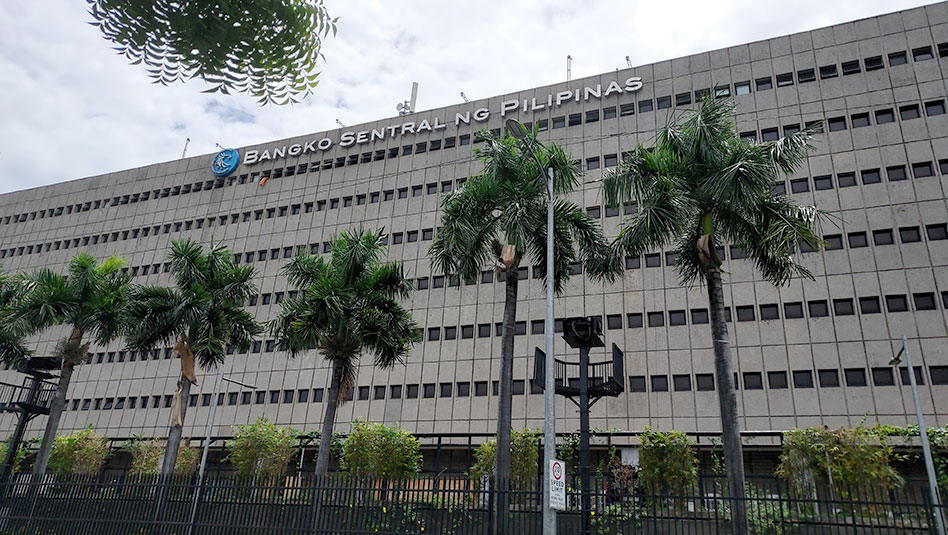
Frick collection with palm trees 
Economic Updates
Policy Rate Updates: Policy rate updates to reassure 
DOWNLOAD
View all Reports
Metrobank.com.ph How To Sign Up
Follow us on our platforms.

How may we help you?

TOP SEARCHES
  • Where to put my investments
  • Reports about the pandemic and economy
  • Metrobank
  • Webinars
  • Economy
TRENDING ARTICLES
  • Investing for Beginners: Following your PATH
  • On government debt thresholds: How much is too much?
  • Philippines Stock Market Outlook for 2022
  • Deficit spending remains unabated

Login

Access Exclusive Content
Login to Wealth Manager
Visit us at metrobank.com.ph How To Sign Up
Access Exclusive Content Login to Wealth Manager
Search
MODEL PORTFOLIO THE GIST
NEWS AND FEATURES
Global Philippines Fine Living
INSIGHTS
INVESTMENT STRATEGY
Economy Stocks Bonds Currencies
THE BASICS
Investment Tips Explainers Retirement
WEBINARS
2024 Mid-Year Economi Briefing, economic growth in the Philippines
2024 Mid-Year Economic Briefing: Navigating the Easing Cycle
June 21, 2024
Investing with Love
Investing with Love: A Mother’s Guide to Putting Money to Work
May 15, 2024
retirement-ss-3
Investor Series: An Introduction to Estate Planning
September 1, 2023
View All Webinars
DOWNLOADS
grocery-2-aa
Inflation Update: Target breached
April 7, 2026 DOWNLOAD
Container ship carrying container boxes import export dock with quay crane. Business commercial trade global cargo freight shipping logistic and transportation worldwide oversea concept. Generative AI
Economic Updates
Philippines Trade Update: Wider deficit on strong imports
March 27, 2026 DOWNLOAD
Frick collection with palm trees 
Economic Updates
Policy Rate Updates: Policy rate updates to reassure 
March 26, 2026 DOWNLOAD
View all Reports

Archives: Business World Article

T-bond yields go down as market awaits BSP cut

T-bond yields go down as market awaits BSP cut

The government made a full award of the reissued 20-year Treasury bonds (T-bonds) it offered on Tuesday at a lower average rate than the previous award, as the market expects the Bangko Sentral ng Pilipinas (BSP) to kick off its easing cycle by next month.

The Bureau of the Treasury (BTr) raised PHP 30 billion as planned via the reissued 20-year bonds it auctioned off on Tuesday as total bids reached PHP 62.603 billion, or more than double the amount on the auction block.

The bonds, which have a remaining life of three years and one month, were awarded at an average rate of 6.009%. Accepted yields ranged from 5.97% to 6.034%.

The average rate of the reissued three-year bonds dropped by 55.9 basis points (bps) from the 6.568% fetched for the series’ last award on Nov. 29, 2022, and was also 261.6 bps lower than the 8.625% coupon for the issue.

This was likewise 6.2 bps below the 6.071% quoted for the three-year bond, the tenor closest to the remaining life of the papers on offer, at the secondary market before Tuesday’s auction, based on PHP Bloomberg Valuation Service Reference Rates data provided by the BTr. However, this was 2.7 bps higher than the 5.982% seen for the same bond series at the market.

The Treasury made a full award of its T-bond offer amid strong demand and as the average rate fetched for the papers was below the prevailing secondary market benchmark, it said in a statement after the auction.

“With its decision, the committee raised the full program of PHP 30 billion, bringing the total outstanding volume for the series to PHP 91.1 billion,” the BTr added.

The awarded yield for the bonds was within market expectations as investors await a possible rate cut by the BSP next month, a trader said by phone.

BSP Governor Eli M. Remolona, Jr. earlier said the Monetary Board may deliver its first rate cut in over three years at its Aug. 15 review — the only policy meeting scheduled in the third quarter — as they expect inflation to continue easing this semester.

The Monetary Board could reduce borrowing costs by 25 bps in the third quarter and by another 25 bps in the fourth quarter, he said.

The BSP last month kept its policy rate at a 17-year high of 6.5% for a sixth straight meeting after raising interest rates by a cumulative 450 bps from May 2022 to October 2023 to help tame elevated inflation.

The central bank last slashed benchmark borrowing costs by 25 bps in November 2020 to bring the policy rate to a record low of 2% to boost economic activity during the height of the coronavirus pandemic.

Mr. Remolona also said the better-than-expected June inflation print gives them “a bit more scope for easing” by next month.

Headline inflation eased to 3.7% in June from 3.9% in May. This was within the BSP’s 3.4-4.2% forecast and also marked the seventh straight month that inflation settled within the central bank’s 2-4% annual target.

For the first six months, the consumer price index averaged 3.5%, slightly faster than the BSP’s 3.3% full-year forecast.

The central bank chief also said the BSP does not need to wait for the US Federal Reserve before it begins cutting rates.

T-bond yields declined ahead of the Fed’s policy meeting this week, where it is widely expected to keep rates steady but set the stage for monetary easing by September, Rizal Commercial Banking Corp. Chief Economist Michael L. Ricafort added in a Viber message.

The BTr is looking to raise PHP 220 billion from the domestic market in August, or PHP 80 billion from Treasury bills and PHP 140 billion via T-bonds.

The government borrows from local and foreign sources to help fund its budget deficit, which is capped at PHP 1.48 trillion or 5.6% of gross domestic product for this year. — AMCS


NG debt to rise to PHP 17.35-T in 2025

NG debt to rise to PHP 17.35-T in 2025

The national government’s (NG) outstanding debt is projected to hit a record PHP 17.35 trillion at the end of 2025, the Department of Budget and Management (DBM) said.

The 2025 Budget of Expenditures and Sources of Financing showed the NG’s debt stock is expected to increase by 8.08% from the projected PHP 16.06-trillion debt at the end of 2024.

The bulk will come from outstanding domestic debt, which is expected to rise by 9.64% to PHP 11.98 trillion by end-2025 from PHP 10.92 trillion by yearend.

Outstanding external debt is also seen to jump by 4.76% to PHP 5.38 trillion by end-2025 from PHP 5.13 trillion by end-2024.

Budget Undersecretary Joselito R. Basilio said the debt reflects the massive borrowings incurred by the government during the coronavirus pandemic, which means debt will likely peak in the next few years.

However, he said the government has a fiscal consolidation plan and could repay the debt as the economy continues to grow.

For 2025, the NG set its borrowing program at PHP 2.55 trillion, 0.97% lower than PHP 2.57 trillion this year.

National Treasurer Sharon P. Almanza said next year’s gross borrowings are lower as it expects fewer refinancing requirements.

“The decline is on the refinancing requirement. Refinancing requirements for both external and domestic are lower,” she told BusinessWorld in a Viber message.

Broken down, 80% of the borrowings will come from domestic sources while the remaining 20% will come from foreign sources.

Gross domestic borrowings were set at PHP 2.04 trillion for 2025, 5.91% higher than the PHP 1.92-trillion program in 2024.

On the other hand, next year’s gross external borrowings were set at PHP 507.41 billion, 21.46% lower than PHP 646.08 billion this year. 

“[Some] program loans, for example, and other project loans, will decrease by 2025 because many of our 2024 projects or programs already received a loan,” Mr. Basilio said.

Gross domestic borrowings will include PHP 1.98 trillion in fixed-rate Treasury bonds and PHP 60 billion in Treasury bills.

On the other hand, gross foreign debt will include PHP 236.11 billion in program loans, PHP 73.55 billion in project loans and PHP 197.75 billion in bonds and other inflows.

The NG borrows from foreign and domestic lenders to fund its budget deficit as it spends more than its revenues.

“The outstanding NG debt level in pesos could continue to post new record highs amid continued budget deficits that would be financed by additional NG borrowings,” Rizal Commercial Banking Corp. Chief Economist Michael L. Ricafort said in a Viber message. 

He noted that an offsetting factor could be the country’s gross domestic product (GDP) growth.

The government is targeting 6.5-7.5% GDP growth next year.

“Relatively faster GDP growth would help reduce the NG debt-to-GDP ratio to below the international threshold of 60% to help maintain the country’s favorable credit ratings,” he added.

The NG’s debt as a share of GDP stood at 60.2% at the end of the first quarter. The government is targeting a 60.3% debt-to-GDP ratio by yearend, slightly above the 60% threshold deemed manageable for developing economies.

Mr. Ricafort said the government should intensify tax collections, impose new or higher taxes and ensure efficient spending to narrow the budget deficit and further bring down the debt-to-GDP ratio.

Meanwhile, the government set its debt servicing program at PHP 2.05 trillion next year, 1.19% higher PHP 2.03 trillion this year.

Payments for domestic debt are programmed at PHP 1.61 trillion, while foreign debt payments are at PHP 436.78 billion.

TAX REVENUES
For 2025, the NG aims to collect PHP 4.64 trillion in revenues, 8.77% higher than the PHP 4.27-trillion projected collection this year.

The government expects to collect PHP 4.33 trillion in tax revenues in 2025, 13.41% lower than its PHP 3.82-trillion projection this year.

The Bureau of Internal Revenue is expected to collect PHP 3.23 trillion, while the Bureau of Customs is expected to generate PHP 1.06 trillion.

On the other hand, nontax revenues are expected to fall by 48.27% to PHP 210.79 billion next year from PHP 407.49 billion this year.

The target collection from privatization more than doubled to P101.02 billion in 2025 from PHP 42.12 billion this year.

Next year’s budget also has a PHP 13-billion contingent fund, which includes safeguards to prevent its abuse, Ms. Pangandaman said.

“The fund can only be used for specific urgent needs such as government legal obligations with final decisions from authorities, needs of newly created agencies, and the fund cannot be used for confidential and intel funds for nonsecurity agencies unless the President certifies in necessity, and buying or improving of vehicles.” — B.M.D.Cruz

POGO ban may support PHL exit from ‘gray list’ 

POGO ban may support PHL exit from ‘gray list’ 

The recent ban on Philippine offshore gaming operators (POGO) would help expedite the country’s exit from a global financial watchdog’s “gray list” of jurisdictions under increased monitoring for money laundering risks, the central bank governor said.

“With the POGO ban, we do see a drop in money laundering, which should help us exit the gray list,” Bangko Sentral ng Pilipinas (BPS) Governor Eli M. Remolona, Jr. told BusinessWorld in a text message.

Last week, President Ferdinand R. Marcos, Jr. ordered a total ban on all offshore gaming operations due to their ties to illicit activities such as financial scams, money laundering, prostitution, and human trafficking.

Mr. Marcos directed the Philippine Amusement and Gaming Corp. (PAGCOR) to shutter all POGO facilities by the end of the year. 

This comes after the Financial Action Task Force (FATF) in June kept the Philippines in its gray list for a third straight year.

The global watchdog said the country still needs to address three remaining action items, one of which is “demonstrating that supervisors are using anti-money laundering and counter financing of terrorism (AML/CFT) controls to mitigate risks associated with casino junkets.”

Mr. Remolona earlier said the Philippines would likely exit the gray list by next year as it still needs to address the remaining deficiencies cited by the FATF.

From 2018 to 2023, the Philippines was among the top five countries in Southeast Asia with money laundering activities added over the five-year period, earlier data from Moody’s showed.

The number of money laundering events added in the Philippines jumped by 45% from 2022 to 2023, it said.

Chester B. Cabalza, founding president of Manila-based International Development and Security Cooperation, said Mr. Marcos’ order to ban POGOs would encourage more “legitimate” investments to enter the country.

“With the expected ban, the Philippines may be relieved with the gray list tag and re-strategize for fulfilling more legal and moral entertainment investments for the inclusive growth of the country,” he said via Facebook Messenger.

Bienvenido S. Oplas, Jr., president of a research consultancy and of the Minimal Government Thinkers think tank, said the POGO ban would be a “big push” for tourism in the country.

“When POGOs are banned, then gamblers from China will be forced to travel to the Philippines and do their gambling in big casinos,” he said.

Mr. Oplas noted that the POGO ban should not be rushed due to its impact on the property market.

On the other hand, Filomeno S. Sta. Ana III, coordinator of Action for Economic Reforms, said there are still many other sources of money laundering aside from POGOs.

“(POGO) might not even be the main vehicle for money laundering in the Philippines,” he said via Facebook Messenger chat. “POGOs offer online gambling catering to a foreign country, specifically China. But what about online gambling within the Philippines? What about the proliferation of physical casinos in the Philippines? Money laundering thrives in said activities and places.”

Mr. Sta. Ana noted that there are many sectors that are vulnerable to money laundering.

“There are many ways to launder money — real estate, mineral extraction, setting up shell companies, establishing low-key businesses, purchasing artworks, jewelry, luxury automobiles, etc. A major step to get out of the gray list is to lift the strict secrecy rules on bank deposits.”

IMPACT ON BANKS

In a separate report, Fitch Ratings said the Philippine financial system is resilient enough to withstand the spillover effects of the POGO ban.

“The government’s ban on POGOs may hurt Fitch-rated banks’ asset quality and performance, but their loss-absorption buffers will be sufficient to withstand associated losses, which are likely to be limited in scale,” it said.

Banks have ample buffers to “absorb POGO-related losses without pressuring their current standalone viability ratings.”

“Moreover, banks’ record-high margins and higher loan growth — the key drivers of our ‘improving’ sector outlook for Philippine banks — are likely to compensate for higher credit costs associated with potential new impairments from the POGO ban,” it added.

The Philippine banking industry’s net income rose by 2.95% to PHP 92.107 billion at end-March, latest data from the central bank showed.

Separate data showed that bank lending grew by 10.1% in May to PHP 12 trillion, the fastest in 14 months.

Fitch Ratings noted that POGOs’ influence on the property market has waned due to tighter regulations. Travel restrictions also affected the sector, which is heavily dependent on workers from China, it added.

“One property consultant, Colliers, has indicated that POGOs currently occupy 3.5% of Metro Manila’s office stock, down from 10% in 2019, with most large developers’ leasing portfolios having at most a 5% exposure,” it said.

It also said real estate developers have been limiting their exposure to POGOs. The expected vacancies from the ban “may also pressure rental yields, with broader impacts on real estate firms.”

“Most of these large players have diversified real estate portfolios, so these effects could also be offset partially by better residential sales if interest rates fall as we expect in the second half of 2024 and 2025.”

With this, Fitch said banking-asset impairments from real estate companies would be “relatively contained.”

Fitch data showed that the residential mortgage nonperforming loan (NPL) ratio improved to 7% in the first quarter of 2024 from 9.6% in the third quarter of 2021, though this was still higher than pre-pandemic levels.

It said this “reflects in part a fallout from speculative activity and more lax housing loan credit standards during the POGO boom years in 2016-2019.”

“Since then, many banks have become more averse to lending to POGO workers, given high policy risk,” it added.

Property-related losses due to closures from the ban are also not expected to be significant for banks.

“Even in the event of a greater impact than we anticipate, regulations require banks to demonstrate common equity Tier 1 (CET1) and total capital ratios of 6% and 10%, respectively, after writing off 25% of their real estate exposures. This should ensure that loss-absorption buffers are aligned with their exposure to the sector,” it added. – Luisa Maria Jacinta C. Jocson, Reporter 

DBM submits PHP 6.352-T national budget to House

DBM submits PHP 6.352-T national budget to House

The Department of Budget and Management (DBM) on Monday submitted to the House of Representatives its proposed PHP 6.352-trillion national budget for 2025, which increases allocations for education by less than 1% and for defense by 6.4%, while more than doubling the budget for transportation.

However, the DBM slashed the proposed budgets for agriculture, health, and social welfare for next year.

The proposed national budget is equivalent to 22.1% of gross domestic product, and 10.1% higher than the PHP 5.768-trillion budget this year.

2025 National Expenditure Program“Education remains the top priority with PHP 977.6 billion, equivalent to 15.4% of the budget, aligned with UNESCO’s (United Nations Educational, Scientific and Cultural Organization) education 2030 framework for action,” Budget Secretary Amenah F. Pangandaman said during turnover ceremonies at the House.

Next year’s proposed budget for the education sector inched up by 0.9% to PHP 977.6 billion from PHP 968.9 billion this year, according to a summary from the Budget department. This covers the Education department, Commission on Higher Education, Technical Education and Skills Development Authority and state universities.

However, education’s share in the 2025 budget fell to 15.4%, compared with 16.8% this year.

The allotted budget for the education sector is not on par with the 10% increase in the proposed 2025 budget and the country’s economic growth, Rizal Commercial Banking Corp. Chief Economist Michael L. Ricafort said in a Viber message.

“The PHP 977.6 billion for education barely scratches the surface of the sector’s needs, especially considering the learning crisis exacerbated by the pandemic,” Party-list Rep. France L. Castro told BusinessWorld in a Viber message.

The government should ensure ample funding for more teaching positions to improve education quality, IBON Foundation Executive Director Jose Enrique A. Africa told BusinessWorld.

“The most glaring and most fundamental flaw is that the number of teaching positions isn’t being increased, which means that those on the frontlines of teaching will be as overtasked and overburdened as ever,” he said in a Viber Message.

The Department of Public Works and Highways (DPWH) saw its budget fall by 9% to PHP 900 billion. Of this, PHP 226.7 billion will go to flood management projects, while PHP 140.9 billion will be allotted for road network development.

“The ‘Build Better More’ infrastructure program, through the Department of Public Works and Highways, will be allocated with PHP 900 billion or 14.2% of the proposed budget to finance various public infrastructure [projects],” Ms. Pangandaman said.

In the aftermath of the massive floods caused by Super Typhoon Carina last week, Terry L. Ridon, a public investment analyst and convenor of think tank InfraWatch PH, said Congress would have to tweak the infrastructure budget, particularly for proposed flood management projects.

“Expert calls for more upland intervention such as dams might not have been reflected as yet in the current budget,” he said in a Viber message.

On the other hand, next year’s budget for the Department of Transportation (DoTr) more than doubled to PHP 180.9 billion from this year’s PHP 73.9 billion.

The increase is due to the need to “develop and modernize… the country’s infrastructure,” according to Ms. Pangandaman.

The DoTr budget would fund key connectivity infrastructure such as the North-South Commuter Railway System and the first phase of the Metro Manila Subway project, she added.

“Metro Manila Subway project Phase 1 is [allotted] PHP 39.3 billion… while the North-South Commuter Railway Commuter System is [allocated] with almost PHP 64 billion,” Ms. Pangandaman told reporters after the turnover ceremony.

Meanwhile, the Defense budget will increase by 6.4% to PHP 256.1 billion next year amid growing tensions with China over contested waters.

The Philippine Army, Air Force, and Navy will collectively receive PHP 204.4 billion under the proposed budget, while PHP 50 billion will go to the Armed Forces’ modernization efforts, according to the Budget department’s summary.

The increase in defense spending due to “escalating conflicts” with China is acceptable and shows the government is consistent in supporting the country’s efforts to modernize its military, Chester B. Cabalza, founding president of Manila-based International Development and Security Cooperation, told BusinessWorld.

“The AFP (Armed Forces of the Philippines) should emphasize wiser defense expenditure and effective procurement process to accelerate the frugal budget of the government,” he said in a Facebook Messenger chat.

Rocio Salle Gatdula, a defense economist at the University of Asia and the Pacific, said the increased support for the military would help ensure it can counter China’s military capabilities.

“The Philippines needs to continue investing in the modernization of its armed forces. Additionally, it is important to maintain a thorough understanding of China’s weaponry to ensure the acquisition of appropriate defense equipment,” she said via Messenger chat.

For the agriculture sector, the government is allotting PHP 211.3 billion, 4.7% less than this year’s PHP 221.7-billion funding. The budget will be used to fund the country’s agriculture modernization efforts and provide cash aid to farmers and fisherfolk.

Of the amount proposed for the agriculture sector, PHP 24.6 billion will go to irrigation services, PHP 10 billion for the rice fund under a law that liberalized the rice industry, and PHP 2.8 billion for the agricultural credit program, according to the DBM’s summary.

Next year’s funding for the Department of Social Welfare and Development (DSWD) stood at PHP 230.1 billion, which is 7.6% lower than PHP 248.1 billion in 2024.  It will fund the Pantawid Pamilyang Pilipino Program and social pension for indigent senior citizens, said Ms. Pangandaman.

The health sector, comprising the Health department and Philippine Health Insurance Corp., will receive PHP 297.6 billion for next year’s proposed budget, 3.4% less than PHP 308.3 billion this year. – Kenneth Christiane L. Basilio

Philippines ranks 4th in Southeast Asia for IPO proceeds in first half

Philippines ranks 4th in Southeast Asia for IPO proceeds in first half

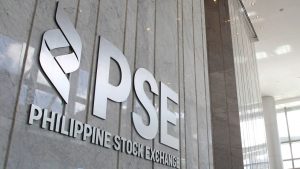
The Philippine Stock Exchange (PSE) ranked fourth in Southeast Asia for proceeds generated from initial public offerings (IPOs) in the first half of the year, according to a report by multinational professional services network Deloitte.

“Despite only having two new listings during the first half of 2024, the Philippines’ capital market had once again clinched the fourth spot in the region, with both new entrants securing positions in the Top 10 IPOs of 2024 H1,” Deloitte said in its Southeast Asia Mid-Year IPO Snapshot 2024 report.

“The energy and resources industry remains a strong sector for the country’s capital market,” it added.

During the first half, the PSE saw the public listings of OceanaGold Philippines, Inc., a gold and copper mining company, and Citicore Renewable Energy Corp., a renewable energy company. These IPOs were the second and fifth largest in the region, respectively.

The Philippines accounted for 14% or USD 194 million of the total IPO proceeds raised by Southeast Asian countries, higher than Vietnam’s 3% or USD 37 million and Singapore’s 1% or USD 20 million.

However, the Philippines trailed countries such as Malaysia, which accounted for 33% or USD 450 million of all IPO proceeds raised, as well as Thailand with 31% or USD 427 million, and Indonesia with 18% or USD 248 million.

For the first half, Deloitte noted that the Southeast Asia IPO market had 67 IPOs, down by 21% from the 85 IPOs last year.

The region also saw a 59% drop in IPO proceeds to USD 1.4 billion, and a 71% decline in IPO market capitalization to USD 5.8 billion.

“Despite a positive growth outlook and increasing foreign direct investment in Southeast Asia, the prolonged geopolitical instability and high interest rates environment have significantly impacted market conditions and investor sentiment in Southeast Asia, leading to a lukewarm record of IPOs in 2024 H1,” Deloitte Southeast Asia Accounting & Reporting Assurance Leader Tay Hwee Ling said.

“The ongoing inflation concerns and efforts to stabilize the global economy suggest that the high interest rate environment could persist into 2024,” she added.

Meanwhile, Ms. Hwee Ling is cautiously optimistic that Southeast Asia’s IPO market will improve beyond 2024, despite being subdued so far.

“As investors and IPO candidates adapt to the new norm of higher interest rates and reduced liquidity, they are becoming more adept at navigating the complexities of geopolitical tensions and the global economic landscape. Looking further ahead, the potential for interest rates to decrease could spur the return of real estate investment trust listings in the region,” she said.

“Additionally, many artificial intelligence (AI) and AI-associated businesses are still in the early seeding stages within the private domain. We anticipate a significant wave of AI IPOs tapping into the IPO capital markets in the coming years, bringing innovation and new opportunities to the market,” she added.

The PSE also saw the public listing of NexGen Energy Corp. in July, nearing the market operator’s target of six IPOs this year. — Revin Mikhael D. Ochave

T-bill rates rise across all tenors ahead of Fed’s policy meeting

T-bill rates rise across all tenors ahead of Fed’s policy meeting

The government made a full award of the Treasury bills (T-bills) it offered on Monday even as rates inched up across all tenors amid slightly weaker demand and ahead of the US Federal Reserve’s policy meeting this week.

The Bureau of the Treasury (BTr) raised PHP 20 billion as planned from the T-bills it auctioned off on Monday as total bids reached PHP 35.99 billion, or almost twice the amount on offer. Demand this week was lower than the PHP 47.4 billion in tenders recorded for the July 22 T-bill auction.

Broken down, the BTr borrowed PHP 6.5 billion as programmed from the 91-day T-bills as tenders for the tenor reached PHP 12.01 billion. The three-month papers were quoted at an average rate of 5.779%, 3.6 basis points (bps) higher than the 5.743% recorded last week. Accepted rates ranged from 5.759% to 5.799%.

The government likewise made a full PHP 6.5-billion award of the 182-day securities as bids for the tenor reached PHP 12.12 billion. The average rate for the six-month T-bill stood at 6.014%, up by 2.3 bps from the 5.991% fetched last week, with accepted rates at 5.95% to 6.042%.

Lastly, the Treasury raised the planned PHP 7 billion via the 364-day debt papers as demand totaled PHP 11.86 billion. The average rate of the one-year debt increased by 2.7 bps to 6.108% from the 6.081% quoted for the tenor last week. Accepted yields were from 6.04% to 6.16%.

At the secondary market before the auction, the 91-, 182-, and 364-day T-bills were quoted at 5.7294%, 6.0390%, and 6.1583%, respectively, based on PHP Bloomberg Valuation Service Reference Rates data provided by the Treasury.

The T-bills on offer on Monday fetched higher rates across the board due to slower buying momentum as the market turned defensive ahead of the Fed’s policy meeting this week, a trader said in a phone interview.

“A possible 25-bp local policy rate cut as early as Aug. 15 led to some locking in of longer-term interest rates by some investors,” Rizal Commercial Banking Corp. Chief Economist Michael L. Ricafort added in a Viber message.

T-bill yield movements were also driven by expectations of Bangko Sentral ng Pilipinas (BSP) and Fed rate cuts this year, he said.

The Fed is widely expected to keep its target rate at the current 5.25%-5.5% range for the eighth straight time at their July 30-31 meeting. However, markets are awaiting more hints from Fed Chair Jerome H. Powell on the central bank’s easing cycle, which investors expect to begin by September.

Meanwhile, Finance Secretary Ralph G. Recto, who is also a member of the central bank’s policy-setting Monetary Board, last week said the country is on track for a cut in benchmark interest rates this year due to easing inflation, though the timing would be up to the central bank, Reuters reported.

The central bank, which has kept interest rates steady at 6.5% in its last six meetings, has previously flagged a possible cut of 25 bps at its Aug. 15 meeting as it sees inflation easing in the second half.

BSP Governor Eli M. Remolona, Jr. earlier said the Monetary Board could reduce borrowing costs by 25 bps in the third quarter and by another 25 bps in the fourth quarter. Next month’s review is the only meeting scheduled this quarter.

The central bank last slashed benchmark borrowing costs by 25 bps in November 2020 to bring the policy rate to a record low of 2% to boost economic activity during the height of the coronavirus pandemic.

Monday’s auction was the last T-bill offering for July. The Treasury raised PHP 102.1 billion from the short-term debt papers versus the PHP 100-billion program as it made full awards of all its offerings and even upsized its award at one auction.

On Tuesday, the BTr will offer PHP 25 billion in reissued 20-year Treasury bonds with a remaining life of three years and one month.

The government borrows from local and foreign sources to help fund its budget deficit, which is capped at PHP 1.48 trillion or 5.6% of gross domestic product for this year. — A.M.C. Sy with Reuters

PHL to resume sugar exports to US

PHL to resume sugar exports to US

The Philippines will resume exports of raw sugar to the United States amid an increase in domestic production this year, the Sugar Regulatory Administration (SRA) said in an order.

In Sugar Order No. 3 dated July 26, the SRA said the Philippines will ship 25,300 metric tons (MT) of raw sugar to the United States to fulfill the sugar quota allocation for 2024.

“The intention of this voluntary US export of 25,300 MT of locally produced raw sugar is to allow the Philippines to fulfill, after noncompliance of more than three years, its obligations under the significantly reduced US Raw Sugar Tariff-Rate Quota World Trade Allocation,” the SRA said in the order.

The Philippines last shipped raw sugar, totaling 112,008 MT, to the US during the 2020-2021 crop year. Since then, the country has not exported raw sugar to the US due to domestic supply concerns.

Last May, the US had granted the Philippines’ request for a reallocation of the quota for crop year 2023-2024, with a volume of 25,300 MT.

“The current total production of locally produced sugar for crop year 2023-2024 has exceeded 1,920,000 MT, thereby exceeding the previous crop year’s total production by more than 120,000 MT, and likewise allowing the Philippines to fulfill its US quota allocation of 25,300 MT,” the SRA said.

The country exports raw sugar to the US to stabilize prices during times of overproduction in local sugar mills.

According to the SRA, the eligible participants in the export program are those who have purchased raw sugar from local farmers at a premium price to stabilize millgate prices.

SRA Administrator Pablo Luis S. Azcona had said that the regulator would allow the export of raw cane sugar to the US by August. The Philippines has until Sept. 30 to fulfill its quota during the current crop year.

Asked to comment, United Sugar Producers Federation of the Philippines President Manuel R. Lamata said that the export would help stabilize the millgate prices of sugar.

“This sugar, if exported in the months of December to January, will decongest our local sugar stocks thereby maintaining a stable price for our millgate sugar,” he said in a Viber message.

He noted that millgate prices have dropped due to the excess supply of sugar.

During the current crop year raw sugar stocks rose by 35.5% year on year to 374,474 MT as of July 7.

“What is important for us planters are stable millgate prices from start to finish. Thereby managing stock to ensure high prices all season round is important,” Mr. Lamata said.

Mr. Lamata added that stocks would be replenished with the approval of the importation of refined sugar during the off-milling season.

“We are going to import refined sugar during the end of milling season to replenish what the country needs,” he said.

Earlier, Agriculture Secretary Francisco P. Tiu Laurel, Jr. said that the department is planning to import refined sugar to bolster local supply during the end of the local milling season.

The SRA’s order allows exporters of raw sugar to the US to import refined sugar in approved volumes to replenish sugar stocks.

Meanwhile, the Sugar Council — a group composed of three planter federations — said that the export plan may not offer any benefit for local producers.

“We cannot readily accept the premise that the Philippines is obliged to fill whatever US quota it is granted, especially when domestic supply situation will necessitate an importation program,” the group said in a letter to Mr. Tiu Laurel dated July 8.

The letter was signed by the Confederation of Sugar Producers Associations, Inc., the National Federation of Sugarcane Planters, Inc., and the Panay Federation of Sugarcane Farmers, Inc. and addressed to the President and Agriculture Secretary.

The group added that any importation program should be based on “a trigger point, data-based, carefully calibrated, and decided in a transparent manner immune from manipulation or cartelization.” – Adrian H. Halili, Reporter

High rates seen to weigh on growth

High rates seen to weigh on growth

Metropolitan Bank & Trust Co. (Metrobank) Research trimmed its gross domestic product (GDP) forecast for the Philippines this year as elevated interest rates continue to crimp domestic demand.

“We continue to believe that the country’s economic growth should remain robust, albeit at a moderated pace as investment momentum remains constrained by tight monetary policy, making it harder for businesses to invest and expand,” it said in a report.

Metrobank Research sees the economy growing by 5.7% this year, lower than its previous 6% forecast.

If realized, this would fall short of the government’s 6-7% growth target this year, but slightly faster than the 5.5% GDP expansion in 2023.

Metrobank noted that “additional efforts” would be needed to reach the government’s goal.

In the first quarter, GDP expanded by 5.7%. Second-quarter GDP data will be released on Aug. 8.

Metrobank also noted that many Filipinos are not spending as much as before amid higher borrowing costs.

“Some households have also incurred more debt. Despite these challenges, the economy continues to move forward, just at a more measured pace than initially hoped,” it said.

In June, the Bangko Sentral ng Pilipinas (BSP) kept its key rate steady at 6.5%, the highest in over 17 years.

The Monetary Board has raised borrowing costs by a cumulative 450 basis points (bps) from May 2022 to October 2023.

For 2025, economic growth is seen to average 6%. This would also miss the government’s 6.5-7.5% target range.

Meanwhile, Metrobank Research said it expects inflation to settle within the BSP’s 2-4% target this year and in 2025.

“The price of rice, which has been a major reason for rising costs in the Philippines, is expected to go down. This should help keep overall prices more stable. We agree with the BSP that inflation will stay within acceptable levels this year and next.”

For this year, it sees inflation averaging 3.3%, and 3.1% in 2025, in line with the BSP’s baseline forecasts.

Headline inflation eased to 3.7% in June, marking the seventh straight month that it settled within the BSP’s 2-4% target band.

Rice inflation eased to 22.5% in June from 23% a month ago. This marked the third straight month of slower rice inflation.

“However, some challenges loom ahead. A strong La Niña weather event could affect crop production and prices,” Metrobank Research said.

“Also, geopolitical events could affect supply chains and push prices up as well. While the future looks promising for stable prices, our outlook may change.”

Meanwhile, Metrobank Research sees the central bank possibly delivering up to three rate cuts this year.

“We believe the BSP might lower rates twice this year, with a possible third cut in December if prices remain stable and the financial markets stay calm,” it said.

BSP Governor Eli M. Remolona, Jr. has previously signaled that they are on track to begin policy easing by August. He earlier said the central bank can cut by up to 50 bps this year.

If the BSP reduces rates in August, this would be the first rate cut since November 2020.

“However, these decisions are also dependent on what the United States Federal Reserve does with its own interest rates. The BSP will keep a close eye on how quickly the US lowers its rates, as this can affect the Philippine economy and the value of the peso,” it said.

The peso is also seen to rebound by yearend, settling at around P57.20 against the dollar, according to the report.

The Development Budget Coordination Committee expects the peso to range from P56 to P58 per dollar this year.

The peso closed at P58.35 per dollar on Friday, strengthening by 8.5 centavos from its P58.435 finish on Tuesday.

In May, the local currency sank to the P58-per-dollar level for the first time since November 2022.

“The US dollar’s strength is expected to wane when the Fed lowers interest rates. Meanwhile, the Philippine central bank is also likely to reduce its rates, which could increase imports as the economy grows,” Metrobank Research said.

Markets are currently pricing in a near-certainty that the Fed will begin cutting interest rates at its September meeting and expect 66 bps in total cuts by the end of the year, according to CME’s FedWatch Tool, Reuters reported.

“Looking ahead, a wider current account, where the Philippines buys more from other countries than it sells, could also establish a new baseline for the peso’s value,” Metrobank added. – Luisa Maria Jacinta C. Jocson, Reporter

Banks maintain lending standards in 2nd quarter

Banks maintain lending standards in 2nd quarter

Philippine banks continued to maintain tighter credit standards in the second quarter, a Bangko Sentral ng Pilipinas (BSP) survey showed.

The BSP’s latest Senior Bank Loan Officers’ Survey (SLOS) published late on Friday showed most respondent banks maintained their lending standards for both enterprises and households, based on the modal approach.

Based on the diffusion index (DI), the study showed there was a net tightening of credit standards imposed for businesses, while lending standards were unchanged for households in the April-June period.

By using the modal approach, the results of the survey are analyzed by looking at the option (tightening, easing, or unchanged) with the highest share of responses.

Under the DI approach, a positive DI for credit standards indicates that the number of banks that have tightened their credit standards exceeds those that eased (net tightening), while a negative DI indicates the opposite (net easing). Unchanged means the number of banks that have tightened is equal to those that eased their credit standards. 

“Most survey participants (87%) retained credit standards for businesses based on the modal approach. The share of banks that reported unchanged credit standards in Q2 2024 was slightly higher than in Q1 2024 (86.3%),” the central bank said.

The BSP said the net tightening of credit standards in the second quarter was also due to the “deterioration of borrowers’ profiles and profitability of banks’ portfolios.”

Meanwhile, more banks likewise maintained their credit standards for household loans in the second quarter (84.2%) versus the previous quarter (77.1%).

The BSP attributed this to “stable profiles of borrowers and banks’ unchanged tolerance for risk.”

For the next quarter, banks are expected to keep their lending standards for businesses generally unchanged.

“However, DI results showed banks’ anticipation of a net tightening in credit standards given the deterioration in borrowers’ profiles and in the profitability and liquidity of banks’ portfolios,” the BSP said.

Meanwhile, most bank respondents also expect unchanged household loan standards.

“The DI method revealed banks’ expectations of a net easing of lending standards due to banks’ higher risk tolerance and improvement in the profitability of banks’ loan portfolios as well as a less uncertain economic outlook.”

LOAN DEMAND

Based on the DI approach, loan demand from businesses grew in the second quarter due to “increased inventory and accounts receivable financing needs, as well as an improvement in the economic outlook.”

For the third quarter, banks see “broadly steady” loan demand from enterprises.

“DI results showed that bank participants anticipate a net rise in credit demand from businesses in Q3 2024 given firms’ higher inventory and accounts receivable financing needs.”

Meanwhile, an increase in loan demand from retail borrowers was seen in the second quarter amid attractive financing terms and a rise in consumption and investment.

“For the next quarter, modal results indicated that most respondent banks (60.5%) anticipate steady demand for loans to households,” the central bank said.

“On one hand, DI results showed an expected net increase in household loan demand driven by rising household consumption and banks’ more attractive lending terms.”

The SLOS is a quarterly survey conducted by the BSP to gather qualitative information on lending conditions and demand from businesses and consumers.

For this round of the SLOS, the BSP sent questions to 60 banks, but only 55 lenders were able to respond. This is equivalent to a response rate of 91.7%. Information was gathered from May 29 to July 10. — Luisa Maria Jacinta C. Jocson

Gov’t urged to look for new sources of revenue

Gov’t urged to look for new sources of revenue

The National Government (NG) should look for new sources of revenues and improve tax administration, as it seeks to reduce dependence on borrowings to fund the national budget, lawmakers and analysts said over the weekend.

The Department of Budget and Management (DBM) on Monday will hand over to Congress the proposed P6.352-trillion National Expenditure Program for 2025, which is equivalent to 22% of the gross domestic product (GDP). This is also 10.1% higher than this year’s PHP 5.768-trillion budget.

“[The] increase in budget is determined by the taxes we collect. We can’t spend too much, more than our means, a reason why we only increased the budget by 10%,” Finance Secretary Ralph G. Recto told BusinessWorld on July 22 in mixed English and Filipino.

“We are not maximizing the Philippine national credit card. We cannot loan too much [from domestic and multilateral lenders], only what is well within the means of what we can repay,” he added.

However, the government faces pressure to generate fresh revenues amid the ban on Philippine Offshore Gaming Operators (POGOs). Philippine Amusement and Gaming Corp. earlier estimated it will lose between P7 billion and P7.5 billion in annual revenue due to the closure of POGOs.

“There’s some pressure to generate new sources due to the POGO ban,” Albay Rep. Jose Ma. Clemente S. Salceda, Ways and Means Committee chairman, said in a Viber message, adding that he will discuss this matter with his Senate counterpart Senator Sherwin T. Gatchalian and Mr. Recto.

“[The POGO ban] has become an opportunity… We now have a basis to go after other taxes.”

Mr. Salceda said the government should resume reclamation projects along the Manila Bay, which will generate much-needed tax revenues.

“I continue to be a strong advocate of allowing the validly permitted Manila Bay reclamation projects to continue,” he said. “No reason why they shouldn’t be allowed to resume operations.”

In 2023, Mr. Marcos ordered the suspension of reclamation projects in Manila Bay, citing the need to conduct an environmental assessment. Mr. Salceda last year said the government could lose up to P432 billion in tax revenues from the suspension.

While he previously said there will be no new taxes, Mr. Recto said the Finance department is pushing for the approval of priority bills such as the proposed reform of the mining fiscal regime, excise tax on single-use plastics, and the Corporate Recovery and Tax Incentives for Enterprises to Maximize Opportunities for Reinvigorating the Economy bill.

Party-list Rep. Marissa P. Magsino, a member of the House Appropriations and Ways and Means committees, said pending tax measures in Congress could generate up to PHP 135.9 billion in revenues.

“Strict implementation of our existing revenue policies is the key in sustaining our funding needs,” Party-list Rep. Joseph Stephen S. Paduano, a member of the House Appropriations Committee, said in a Viber message.

He said “some entities” are using tax loopholes to evade obligations, harming the country’s fiscal stability. “We in Congress should also see to it that policy gaps in our tax system are minimized, if not eliminated.”

BORROWINGS

“Based on the revised medium-term fiscal program of the Marcos administration, the deficit will be higher next year despite higher tax revenues,” Zy-za Nadine M. Suzara, a public budget analyst and former executive director of policy think tank Institute for Leadership, Empowerment, and Democracy, said in a Viber message. “That means higher borrowing is inevitable to finance the national budget for 2025.”

For next year, the Development Budget Coordination Committee has set a PHP 4.644-trillion revenue collection target, while spending is set at PHP 6.182 trillion. Next year’s budget deficit ceiling is set at PHP 1.537 trillion, equivalent to 5.3% of GDP.

The NG borrows from both foreign and domestic lenders to fund its budget deficit as it spends more than its revenues.

“With such liberal economic assumptions and limited actual revenues, it is almost a certainty that the government will undertake domestic and foreign borrowing to fund next year’s budget,” Terry L. Ridon, a public investment analyst and convener of think tank InfraWatch PH, said in a Viber message.

As the NG outstanding debt hit a fresh high of PHP 15.35 trillion as of end-May, Mr. Ridon said it is critical for the government to keep a manageable debt-to-GDP ratio.

The NG’s debt as a share of the GDP stood at 60.2% as of the end of the first quarter. The government is targeting a 60.3% debt-to-GDP ratio by yearend, slightly above the 60% threshold deemed manageable for developing economies.

CASH SWEEP

Meanwhile, a provision in the 2024 budget authorizing the government to do cash sweeps of unutilized funds from government-owned and -controlled corporations (GOCCs) will not be included in the 2025 budget proposal, Mr. Recto said.

The insertion of the provision was at the behest of Congress, he added, noting that the clause is justifiable as money parked at GOCCs could be used to fund projects that could spur the economy.

“We just followed the instruction of Congress,” he said in Filipino. “The instruction is with merit because the money left sleeping in GOCCs could be used to grow the economy and create more jobs.”

Remittances by GOCCs to the government should be strictly limited to “unused and idle” funds so they may still perform its mandates, said Mr. Paduano.

According to Ms. Suzara, letting the government sweep unused GOCC funds should not be continued as it could lead to corruption.

PRIORITIES

As for the priorities in next year’s budget, the government has allocated at least a trillion for the funding of education and infrastructure agencies in next year’s budget, according to Mr. Recto.

“More or less… It’s about one trillion [each] for education and infrastructure,” he said.

Aside from increasing funding, there is also a need to improve resource utilization in the education sector to enhance the quality of Philippine education, said Ms. Magsino.

“Benchmarking against targets and comparison with other countries’ indicators show that there are significant gaps in the provision of school infrastructure in the Philippines, including instructional materials, water, school sanitation and hygiene facilities,” she said.

“We also emphasize that Philippine expenditure on education as a percentage of national GDP is not as high as our neighboring countries,” she added.

The Philippines only allocated 3.6% of its GDP to education in 2022 according to World Bank data, below the 4-6% benchmark set by the Incheon Declaration.

The Department of Education should involve teachers in assessing issues hounding schools to come up with holistic solutions, Jose Enrique A. Africa, executive director of think tank IBON Foundation, said in a Viber message.

On infrastructure, the government should continue funding “secondary and farm-to-market roads” to spur economic growth in provinces, said Mr. Ridon. – Kenneth Christiane L. Basilio

Posts navigation

Older posts
Newer posts

Recent Posts

  • Metrobank US-Iran Risk Index: Fragile ceasefire 
  • Investment Ideas: April 10, 2026 
  • Metrobank US-Iran Risk Index: A new hope
  • A guide for your peso bond portfolio amid higher for longer rates
  • Investment Ideas: April 8, 2026

Recent Comments

No comments to show.

Archives

  • April 2026
  • March 2026
  • February 2026
  • January 2026
  • December 2025
  • November 2025
  • October 2025
  • September 2025
  • August 2025
  • July 2025
  • June 2025
  • May 2025
  • April 2025
  • March 2025
  • February 2025
  • January 2025
  • December 2024
  • November 2024
  • October 2024
  • September 2024
  • August 2024
  • July 2024
  • June 2024
  • May 2024
  • April 2024
  • March 2024
  • February 2024
  • January 2024
  • December 2023
  • November 2023
  • October 2023
  • September 2023
  • August 2023
  • July 2023
  • June 2023
  • May 2023
  • April 2023
  • March 2023
  • February 2023
  • January 2023
  • December 2022
  • November 2022
  • October 2022
  • September 2022
  • August 2022
  • July 2022
  • June 2022
  • May 2022
  • March 2022
  • December 2021
  • October 2021

Categories

  • Bonds
  • BusinessWorld
  • Currencies
  • Economy
  • Equities
  • Estate Planning
  • Explainer
  • Featured Insight
  • Fine Living
  • How To
  • Investment Tips
  • Markets
  • Portfolio Picks
  • Rates & Bonds
  • Retirement
  • Reuters
  • Spotlight
  • Stocks
  • Uncategorized

You are leaving Metrobank Wealth Insights

Please be aware that the external site policies may differ from our website Terms And Conditions and Privacy Policy. The next site will be opened in a new browser window or tab.

Cancel Proceed
Get in Touch

For inquiries, please call our Metrobank Contact Center at (02) 88-700-700 (domestic toll-free 1-800-1888-5775) or send an e-mail to customercare@metrobank.com.ph

Metrobank is regulated by the Bangko Sentral ng Pilipinas
Website: https://www.bsp.gov.ph

Quick Links
The Gist Webinars Wealth Manager Explainers
Markets
Currencies Rates & Bonds Equities Economy
Wealth
Investment Tips Fine Living Retirement
Portfolio Picks
Bonds Stocks
Others
Contact Us Privacy Notice Terms of Use
© 2026 Metrobank. All rights reserved.

Access this content:

If you are an existing investor, log in first to your Metrobank Wealth Manager account. ​

If you wish to start your wealth journey with us, click the “How To Sign Up” button. ​

Login HOW TO SIGN UP