


MODEL PORTFOLIO
THE GIST
NEWS AND FEATURES
Global Philippines Fine Living
INSIGHTS
INVESTMENT STRATEGY
Economy Stocks Bonds Currencies
THE BASICS
Investment Tips Explainers Retirement
WEBINARS
2024 Mid-Year Economi Briefing, economic growth in the Philippines
2024 Mid-Year Economic Briefing: Navigating the Easing Cycle
June 21, 2024
Investing with Love
Investing with Love: A Mother’s Guide to Putting Money to Work
May 15, 2024
retirement-ss-3
Investor Series: An Introduction to Estate Planning
September 1, 2023
View All Webinars
DOWNLOADS
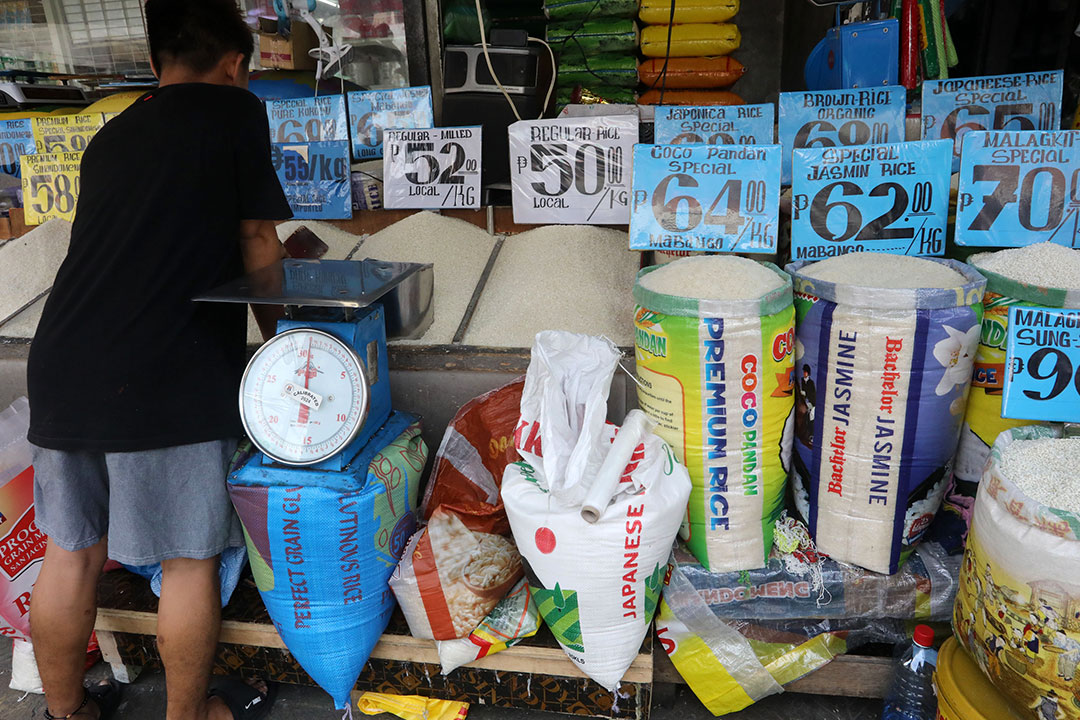
grocery-2-aa
Inflation Update: Target breached
DOWNLOAD
Container ship carrying container boxes import export dock with quay crane. Business commercial trade global cargo freight shipping logistic and transportation worldwide oversea concept. Generative AI
Economic Updates
Philippines Trade Update: Wider deficit on strong imports
DOWNLOAD
Frick collection with palm trees 
Economic Updates
Policy Rate Updates: Policy rate updates to reassure 
DOWNLOAD
View all Reports
Metrobank.com.ph How To Sign Up
Follow us on our platforms.

How may we help you?

TOP SEARCHES
  • Where to put my investments
  • Reports about the pandemic and economy
  • Metrobank
  • Webinars
  • Economy
TRENDING ARTICLES
  • Investing for Beginners: Following your PATH
  • On government debt thresholds: How much is too much?
  • Philippines Stock Market Outlook for 2022
  • Deficit spending remains unabated

Login

Access Exclusive Content
Login to Wealth Manager
Visit us at metrobank.com.ph How To Sign Up
Access Exclusive Content Login to Wealth Manager
Search
MODEL PORTFOLIO THE GIST
NEWS AND FEATURES
Global Philippines Fine Living
INSIGHTS
INVESTMENT STRATEGY
Economy Stocks Bonds Currencies
THE BASICS
Investment Tips Explainers Retirement
WEBINARS
2024 Mid-Year Economi Briefing, economic growth in the Philippines
2024 Mid-Year Economic Briefing: Navigating the Easing Cycle
June 21, 2024
Investing with Love
Investing with Love: A Mother’s Guide to Putting Money to Work
May 15, 2024
retirement-ss-3
Investor Series: An Introduction to Estate Planning
September 1, 2023
View All Webinars
DOWNLOADS
grocery-2-aa
Inflation Update: Target breached
April 7, 2026 DOWNLOAD
Container ship carrying container boxes import export dock with quay crane. Business commercial trade global cargo freight shipping logistic and transportation worldwide oversea concept. Generative AI
Economic Updates
Philippines Trade Update: Wider deficit on strong imports
March 27, 2026 DOWNLOAD
Frick collection with palm trees 
Economic Updates
Policy Rate Updates: Policy rate updates to reassure 
March 26, 2026 DOWNLOAD
View all Reports

Archives: Business World Article

Inflation likely rose in July — poll

Inflation likely rose in July — poll

Headline inflation likely accelerated in July but remained within the central bank’s 2-4% target range, analysts said.

A BusinessWorld poll of 15 analysts this week yielded a median estimate of 4% for the consumer price index (CPI) in July. This matches the lower end of the 4%-4.8% forecast of the Bangko Sentral ng Pilipinas (BSP). 

July inflation could be faster than 3.7% in June but slower than 4.7% a year earlier.

Analysts’ July inflation rate estimates

July could also mark the eighth straight month that inflation settled within the BSP’s 2-4% target.

The Philippine Statistics Authority (PSA) is set to release inflation data on Tuesday (Aug. 6).

BSP Governor Eli M. Remolona, Jr. told reporters late on Wednesday that inflation should have peaked in July, based on central bank projections.

Finance Secretary Ralph G. Recto separately said July inflation was expected to have accelerated though still within target.

“Coming from a low base, inflation will be higher, but still within target (2-4%),” he told reporters late Tuesday.

However, Mr. Remolona noted that the full impact of Super Typhoon Carina and the southwest monsoon would not yet be reflected in the July print.

“It won’t affect the July number. Usually, the effects come with a lag so it may not even affect August in terms of the aggregate CPI basket.”

Mr. Recto likewise said July inflation would be spared from the impact of typhoon losses. “Most likely, the impact will be seen in August. It won’t be in July.”

The latest data from the Agriculture department showed that agricultural damage due to the typhoon and southwest monsoon had hit P1.21 billion as of July 31. Rice was the most affected crop, accounting for more than half of the damage.

RISING FOOD PRICES

On the other hand, HSBC economist for ASEAN (Association of Southeast Asian Nations) Aris D. Dacanay said there could be a “slight uptick” in food prices due to the typhoon’s impact on logistical costs.

Sarah Tan, an economist from Moody’s Analytics, said the immediate impact of the storm might not register yet in July but could still potentially stoke inflation.

“However, given that the typhoon destroyed crop harvests in agricultural provinces like Pampanga, where the agricultural damage reportedly totaled more than P300 million, the impact on food supply could add price pressures in the coming months,” she said in an e-mail.

Ruben Carlo O. Asuncion, chief economist at Union Bank of the Philippines, Inc., said inflation likely accelerated to 4.6% due to higher prices of some food items, particularly vegetables, fruits, and condiments.

Price pressures will also come from higher electricity rates, analysts said.

“Headline inflation may have also jumped month on month due to the steep increase in Metro Manila’s electricity rates after being deliberately kept low in June,” Mr. Dacanay said.

In July, Manila Electric Co. raised rates by PHP 2.1496 per kilowatt-hour (kWh) to bring the overall rate for a typical household to PHP 11.6012 per kWh.

“For July, higher electricity rates, elevated agricultural commodity prices and increased domestic oil costs drove inflation, and this was partially offset by lower rice and fruit prices, as well as the peso’s appreciation,” Security Bank Corp. Chief Economist Robert Dan J. Roces said in an e-mail.

Rizal Commercial Banking Corp. Chief Economist Michael L. Ricafort said the stronger peso and the rollback in fuel prices could have offset inflationary pressures during the month.

Pump price adjustments stood at a net increase of PHP 1.30 a liter for gasoline for the month of July. Diesel and kerosene had a net decrease of P0.90 and P1.70, respectively, per liter.

The potential breach of July inflation would be temporary, Mr. Roces said.

“Despite the recent typhoon’s possible, albeit transitory, impact on food prices, inflation is expected to return to target in August due to favorable base effects,” he said.

“Inflation is still expected to immediately return to within the 2-4% target band once base effects fade and then ease to the range of 2-3% once the lower tariff rates on rice eventually begin to bring rice prices down,” Mr. Dacanay added.

President Ferdinand R. Marcos, Jr. in June signed an executive order that slashed tariffs on rice imports to 15% from 35% until 2028. It is widely expected to bring down the retail price of rice.

Mr. Remolona said the tariff cut would “significantly moderate inflation” in the coming months. “That’s a good thing that will help us ease monetary policy.”

RATE CUT

The BSP chief again signaled cutting rates as early as this month. “I think Aug. 15 is still a possibility. Of course, it will depend on the numbers,” Mr. Remolona said.

He said they could cut possibly by 25 basis points (bps) at their Aug. 15 meeting, and by another 25 bps later in the year. The Monetary Board’s (MB) last two policy meetings for the year are scheduled for Oct. 17 and Dec. 19.

“Less hawkish is the term that we’ve been using. So, it’s still hawkish, which means we will still remain tight, but maybe less tight than before,” Mr. Remolona said.

“It’s a tricky thing because we’re so close to the point where we might be getting to below capacity. We want to reduce demand so that income falls just to the level of capacity of the economy,” he added.

On the other hand, analysts noted that the central bank could keep rates steady amid continued risks.

“Softer-than-expected inflation for July could prompt BSP to pull the trigger when the Monetary Board meets in August, but risks to food inflation and a weak peso could make them lean towards a rate hold,” Ms. Tan said.

“We maintain our expectation that the BSP is unlikely to leapfrog the Fed, keeping the policy rate at 6.5% in August,” she added.

Philippine National Bank economist Alvin Joseph A. Arogo said inflation breaching the target could derail the central bank’s planned rate cuts.

“Although supply side-driven, a breach of the 2-4% target inflation band of the BSP could complicate the timing of the forthcoming easing cycle,” he said in an e-mail.

Mr. Remolona said the BSP would also be taking into consideration the upcoming second-quarter gross domestic product (GDP) data, among other key data points.

The PSA is set to release second-quarter GDP data on Aug. 8.

“A weaker-than-expected second-quarter GDP print will more likely mean that the MB will start easing rather than remaining unchanged as the MB looks to longer-term economic growth prospects amid high borrowing costs,” Mr. Asuncion said.

Metropolitan Bank & Trust Co. Chief Economist Nicholas Antonio T. Mapa said the BSP’s anticipated easing cycle would “stimulate economic growth by encouraging new investments across various sectors.”

“As a result of all this, a potential resurgence in investment momentum is expected to accelerate GDP growth in the medium term, likely pushing it beyond the 6% pace of expansion and possibly even higher,” he said in a Wealth Insights report. “This increased investment activity is anticipated to have both immediate and long-term positive effects on the economy.” – Luisa Maria Jacinta C. Jocson, Reporter
Manufacturing growth slows slightly in July

Manufacturing growth slows slightly in July

Manufacturing growth slowed slightly in July amid weaker expansion in production and orders, S&P Global said on Thursday.

The S&P Global Philippines Manufacturing Purchasing Managers’ Index (PMI) stood at 51.2 in July, easing from 51.3 in June.

“The latest index reading signaled only a modest improvement in the health of the Filipino manufacturing sector, and one that was the weakest since March (when PMI stood at 50.9 reading),” it said.

Manufacturing Purchasing Managers’ Index (PMI) of select ASEAN economies, July 2024July also marked the 11th straight month of improvement in operating conditions. A PMI reading above 50 signals improvement in operating conditions, while a reading below 50 means the opposite.

Among Association of Southeast Asian Nations (ASEAN) member countries with available data, the Philippines had the third-highest reading in July after Vietnam (54.7) and Thailand (52.8).  Malaysia (49.7), Indonesia (49.3), and Myanmar (48.4) all recorded contractions.

Philippine PMI was also lower than the ASEAN average of 51.6 in July.

“The second half of the year started modestly, with the Filipino manufacturing sector signaling further upticks in output and new orders,” Maryam Baluch, an economist at S&P Global Market Intelligence, said in a report.

“Though in both cases, the rates of increase were weaker than their respective long-run averages, thereby indicating relatively subdued growth across the sector.”

S&P Global said the latest data showed production activity grew at the slowest pace in the last four months due to longer supplier delivery times.

“The incidence of delay was the most pronounced since February as port congestion hampered the timely delivery of inputs,” it said.

On the other hand, demand improved in the Philippine manufacturing sector.

“New orders rose at a rate faster than June’s five-month low. However, firms recorded modest and cooling demand from overseas markets,” S&P Global said.

Despite this, a sustained increase in production requirements allowed manufacturers to boost purchasing activity in July.

“Though the rate of growth softened since the preceding survey period, it was solid overall. Firms remained keen to expand their holdings of finished goods and purchased items. Both pre-and post-production inventories were accumulated at rates stronger than their respective long-run averages,” S&P Global said.

Even though the backlog fell for the 13th month in a row, manufacturing firms raised staffing levels in July after seeing a “strong uptick” in new orders. S&P said this was the first increase in employment since April, although it was still “modest overall.”

It said the July data showed costs slightly increased in July even though the rate of input price inflation went up to a five-month high. On the other hand, the pace of the rise in charges slipped to a three-month low.

The effects of Super Typhoon Carina had likely caused disruptions in manufacturing and other business activities in Metro Manila and nearby provinces, said Rizal Commercial Banking Corp. Chief Economist Michael L. Ricafort.

Last week, Metro Manila and nearby provinces experienced torrential rains and heavy flooding brought by Carina (international name: Gaemi) and the southwest monsoon.

OUTLOOK

Meanwhile, Ms. Baluch said easing inflation, as seen in the PMI data, could allow the Philippine central bank to begin cutting rates.

“Easing financial conditions should help solidify and strengthen growth in the coming months,” she noted.

“Moreover, sustained expansions in purchasing activity and the renewed uptick in workforce numbers, indicate that goods producers are likely banking on the strengthening of demand conditions in the coming months.”

The Monetary Board has kept its key policy rate at an over 17-year high of 6.5% to tame inflation. Bangko Sentral ng Pilipinas Governor Eli M. Remolona, Jr. signaled a possible rate cut at their Aug. 15 meeting.

Mr. Ricafort said the slower PMI growth “could help support/justify” a 25-basis-point rate cut as early as next week.

S&P Global said manufacturing firms expect production to increase in the next 12 months.

“The Future Output Index, which printed comfortably above the neutral 50 mark in July, indicated optimism regarding the outlook across the sector,” it said.

However, there was a slight dip in the degree of confidence as some firms remained cautious of future demand.

Security Bank Corp. Chief Economist Robert Dan J. Roces noted that manufacturing firms’ cautious optimism is reflected by their hiring activity and inventory accumulation.

“While risks such as global economic conditions and supply chain disruptions persist, the overall outlook for Philippine manufacturing remains positive, with growth expected to continue, albeit at a modest pace, in the coming months,” he said in a Viber message.

Mr. Ricafort said there is a seasonal increase in imports and production in the third quarter in preparation for higher demand in the fourth quarter.

“This would help boost manufacturing/production growth in the coming months,” he said, although business activity might slow during the “ghost month” of August. — Beatriz Marie D. Cruz

PHL economy likely grew more than 6% in Q2 — Finance chief

PHL economy likely grew more than 6% in Q2 — Finance chief

The Philippine economy likely grew faster in the second quarter amid better state spending and increased household consumption, the Department of Finance (DoF) said.

“If you’re talking about growth rate for the second quarter, I think we’re pretty optimistic. It will be higher than the first (quarter),” Finance Secretary Ralph G. Recto told reporters on the sidelines of an event late Tuesday.

In the first quarter, gross domestic product (GDP) expanded at a weaker-than-expected 5.7% due to slower consumption and state spending.

Mr. Recto said he is “crossing his fingers” that GDP growth would be above 6%, driven by consumption, government spending and lower inflation.

The government is targeting 6-7% GDP growth this year.

Headline inflation eased to 3.7% in June due to a slower rise in power and transport costs, ending four straight months of acceleration.

Last week, National Economic and Development Authority Secretary Arsenio M. Balisacan said GDP growth in the April-to-June period would likely be near the lower end of the government’s 6-7% target.

The Philippine Statistics Authority is scheduled to release second-quarter GDP growth data on Aug. 8.

Jonathan L. Ravelas, senior adviser at professional service firm Reyes Tacandong & Co., forecasts GDP growth at 6.1% in the second quarter, driven by infrastructure spending and a recovery in private spending.

However, he expects full-year growth to average at 5.8% this year, and 6.3% for 2025.

IBON Foundation Executive Director Jose Enrique A. Africa said state spending growth in the second quarter might be subdued due to debt service.

“The stimulus effect of higher government spending is also diminished to the extent that these are spent on debt service or on imported materials, equipment or contractors for infrastructure projects,” he said in a Viber message.

The National Government’s debt service bill, which refers to state payments on its domestic and foreign debt, rose by 48% to PHP 1.22 trillion in the January-to-May period from PHP 819.53 billion a year ago. — Beatriz Marie D. Cruz

BSP sees July inflation at 4%-4.8%

BSP sees July inflation at 4%-4.8%

Headline inflation may have accelerated in July, possibly ending seven straight months of within-target inflation, the Bangko Sentral ng Pilipinas (BSP) said on Wednesday.

The central bank’s month-ahead forecast showed that inflation likely settled within the 4%-to-4.8% range in July.

This would be faster than the 3.7% print in June. Inflation stood at 4.7% in July 2023.

Inflation has been within the 2-4% target from December 2023 to June 2024.

The central bank previously said that inflation could temporarily overshoot the target band in July before returning to target by August.

The Philippine Statistics Authority is scheduled to release July inflation data on Aug. 6.

“Higher electricity rates along with the increased prices for agricultural commodities like vegetables, meat, and fruits along with higher domestic oil prices are the primary sources of upward price pressures for the month,” the BSP said.

In July, households served by Manila Electric Co. saw an upward adjustment of PHP 2.1496 per kilowatt-hour (kWh) in the electricity rate for the month. This brought the overall rate for a typical household to PHP 11.6012 from the previous month’s PHP 9.4516 per kWh.   

Pump price adjustments stood at a net increase of PHP 1.30 a liter for gasoline for the month of July. Meanwhile, diesel and kerosene had a net decrease of PHP 0.90 and PHP 1.70, respectively, per liter.

“These factors are expected to be offset in part by lower rice and fruit prices along with the peso appreciation,” the BSP said.

The average price of a kilogram of well-milled rice ranged from PHP 45-PHP 55 as of end July from PHP 48-PHP 55 at end-June. Regular milled rice was priced at PHP 45-PHP 50 from PHP 45-PHP 52.

Rice inflation eased to 22.5% in June from 23% a month ago, marking the third straight month of slower rice inflation.

The peso appreciated to PHP 58.365 per dollar on July 31, strengthening by 24.5 centavos from its PHP 58.61 finish on June 28.

WITHIN TARGET?

Meanwhile, analysts expect inflation to accelerate month on month but still see it settling within the 2-4% target range.

“Headline inflation may fall within target again in July, reaching 3.8%, with price pressures fading at a more favorable pace to start the second half of the year,” Metropolitan Bank & Trust Co. (Metrobank) Chief Economist Nicholas Antonio T. Mapa said in the bank’s latest Wealth Insights report.

Rizal Commercial Banking Corp. Chief Economist Michael L. Ricafort expects inflation to quicken to 4%, but still within the central bank’s target band.

Mr. Ricafort noted the inflationary impact from Typhoon Carina and the southwest monsoon.

“Realistically, there may be some temporary pickup in prices in hard-hit areas until logistics normalize, also in view on some damage on agriculture… that could lead to some transitory pickup in food prices,” he said.

The latest data from the Agriculture department showed that agricultural damage due to the typhoon and southwest monsoon hit PHP 1.21 billion as of July 31.

Rice was the most affected crop, accounting for more than half (52.47%) of the damage or PHP 635.17 million.

For the coming months, inflation is seen to ease further, with Mr. Mapa expecting the headline print possibly slowing to as low as around 2% by September.

“This significant decrease is primarily due to the government’s tariff reduction lowering rice prices, which heavily impacts the consumer price index (CPI) basket,” he said.

In June, President Ferdinand R. Marcos, Jr. signed an executive order which slashed tariffs on rice imports to 15% until 2028 to tame rice prices.

“The combination of lower rice prices and favorable base effects could push inflation towards the lower end of the central bank’s target range. This trend suggests a potential shift towards a more stable price environment, which may influence future economic policies,” Mr. Mapa added.

The central bank is also expected to start cutting rates soon amid easing inflation, analysts said.

“The BSP is anticipated to begin a cycle of interest rate cuts. This monetary policy shift could stimulate economic growth by encouraging new investments across various sectors,” Mr. Mapa said.

Mr. Ricafort said that the Monetary Board will likely cut by 25 basis points (bps) at its Aug. 15 meeting, especially if inflation remains within target.

The Monetary Board has raised borrowing costs by a cumulative 450 bps from May 2022 to October 2023, bringing the key rate to an over 17-year high of 6.5%.

BSP Governor Eli M. Remolona, Jr. has said they are on track to cut by August, for a total of up to 50 bps for the entire 2024. – Luisa Maria Jacinta C. Jocson, Reporter

Gov’t looking to raise USD 500 million from Samurai bonds

Gov’t looking to raise USD 500 million from Samurai bonds

The Philippine government is eyeing to raise about USD 500 million (PHP 29.22 billion) from an offering of Japanese yen-dominated bonds within the year, Finance Secretary Ralph G. Recto said on Tuesday.

Mr. Recto said the government is also targeting to issue euro bonds in the second half, alongside its planned offerings of yen- and dollar-denominated papers.

“I think we will begin issuing the USD 3 billion that we need to borrow this year soon,” he told reporters on the sidelines of an event late on Tuesday. “The process has started, I’ll put it that way, because I signed (the authority) already.”

The bonds will likely be issued in tranches within the year, with the Samurai bonds possibly issued last, Mr. Recto said.

The government planned to borrow $5 billion this year, of which USD 2 billion was raised from the issuance of global bonds last May. The remaining USD 3 billion has yet to be raised.

The Philippines last issued Samurai bonds in April 2022, raising ¥70.1 billion.

“Based on our advisors, I think it is the optimum time to get lower rates. The idea is to do it to get the cheapest borrowing cost,” Mr. Recto said in mixed English and Filipino.

Union Bank of the Philippines, Inc. Chief Economist Ruben Carlo O. Asuncion said the government will likely start borrowing once the Philippine and US central banks begin cutting rates.

“Government will wait until cuts start coming in (both from the Bangko Sentral ng Pilipinas and US Federal Reserve). With lower interest rates, this means cheaper debt, so you’re looking at cost efficiency for government-issued debts,” he said in a Viber message.

The Fed is expected to keep interest rates steady this week, but easing may start as early as September as inflation neared the 2% target.

On the other hand, the BSP earlier signaled a potential 25-basis-point cut as early as August.

“The best time to borrow is when you need it. The dollar is strong versus the peso, but the yen is weaker against the peso these days, so it’s probably gonna be more or less a wash,” House Ways and Means Committee Chairman and Albay Rep. Jose Ma. Clemente S. Salceda said in a Viber message.

The government’s plan to issue Samurai bonds reflects how strapped for resources it has become, said Ateneo de Manila University economics professor Leonardo A. Lanzona.

He also noted that these borrowings could fan inflation.

“The problem with lower interest rates which they expect to do once the Fed reduces their policy rates is the possible splurge of government money into the system. As such, inflation may increase, which could force the BSP to raise its interest rates again,” Mr. Lanzona said in a Facebook Messenger chat.

On Tuesday, Mr. Recto also told reporters that it will wait for the BSP and the Fed’s monetary policy decisions before its planned external borrowings for next year.

The National Government (NG) set its borrowing program at P2.55 trillion for 2025, of which PHP 507.41 billion will come from gross external borrowings.

In the coming months, the government must be “more introspective and be aware of the inflationary consequences of their actions” and be more cautious of their spending, Mr. Lanzona said.

As of end-June, the NG’s outstanding debt rose to a fresh high of PHP 15.48 trillion, with 31.71% of the total or PHP 4.91 trillion coming from foreign sources. – Beatriz Marie D. Cruz, Reporter

Pascual resigns as Trade chief

Pascual resigns as Trade chief

Trade Secretary Alfredo E. Pascual has resigned from his post to return to the private sector, according to the Presidential Communications Office (PCO).

In a statement, the PCO said President Ferdinand R. Marcos, Jr. accepted Mr. Pascual’s resignation during a meeting at the Palace.

“His focus on micro, small, and medium enterprises was absolutely correct, and we are beginning to see the fruits of that policy,” Mr. Marcos was quoted as saying.

“We are sorry to lose him, but we respect his decision that this is the time for him to return to the private sector.”

Mr. Pascual’s resignation will take effect on Aug. 2.

In a separate statement, Mr. Pascual said that his role at the helm of the Department of Trade and Industry has been “one of the most challenging yet fulfilling experiences of (his) career.”

“After much reflection, I have decided it is time for me to return to the private sector. There, my roles will allow me to continue contributing my expertise and experience while being able to spend quality time with my family,” he said.

The PCO said the search for Mr. Pascual’s successor will commence “immediately” “to ensure a seamless transition and continuity” in the department.

Mr. Pascual, 76, was appointed as Trade secretary in June 2022, joining the President on his foreign trips in a bid to attract foreign investments.

He served as president of the Management Association of the Philippines and was the president of the University of the Philippines from 2011–2017.

He also held different positions in the Institute of Corporate Directors and Asian Development Bank and was a finance professor at the Asian Institute of Management.

Mr. Pascual was also previously an independent director of listed companies such as SM Investments Corp., Megawide Construction Corp., and Concepcion Industrial Corp. — Kyle Aristophere T. Atienza

NG debt hits new high of PHP 15.48-T

NG debt hits new high of PHP 15.48-T

The National Government’s (NG) outstanding debt jumped to a fresh high of PHP 15.48 trillion as of end-June, reflecting the impact of the peso depreciation against the US dollar, the Bureau of the Treasury (BTr) said.

Data from the BTr on Tuesday showed that outstanding debt inched up by 0.9% to PHP 15.48 trillion as of end-June from PHP 15.35 trillion as of end-May.

Year on year, the debt stock increased by 9.4% from PHP 14.15 trillion a year ago.

National Government outstanding debtIn a statement, the BTr said that the rise in debt was “due to the net issuance of both domestic and external debt and the effect of peso depreciation.”

“This was partially offset by the impact of third-currency depreciation on the valuation of corresponding debt denominated in those currencies,” it added.

According to the BTr, the peso depreciated by 13.4 centavos to PHP 58.658 per dollar as of end-June from PHP 58.524 per dollar as of end-May.

The bulk or 68.29% of the total debt stock came from domestic sources.

As of end-June, outstanding domestic debt edged up by 1.2% to PHP 10.57 trillion from PHP 10.44 trillion in the previous month. Year on year, it increased by 9% from PHP 9.7 trillion.

“The increase in domestic debt was primarily driven by the PHP 129.89-billion net issuance of government securities and the PHP 0.39-billion effect of peso depreciation on foreign currency-denominated domestic debt,” the Treasury said.

Government securities accounted for nearly all of the domestic debt at end-June.

Meanwhile, external debt, which accounted for 31.71% of the total, inched up by 0.1% to PHP 4.91 trillion as of end-June from PHP 4.9 trillion in the previous month.

External debt jumped by 10.5% from PHP 4.45 trillion in June 2023.

“The increment is attributed to PHP 7.95 billion in net availment and the PHP 11.23 billion upward revaluation of US dollar-denominated debt due to peso depreciation. This was partially offset by the PHP 13.56-billion effect of favorable third-currency adjustments,” the BTr said.

External debt was composed of PHP 2.29 trillion in loans and PHP 2.62 trillion in global bonds.

This consisted of PHP 2.22 trillion in US dollar bonds, PHP 217.39 billion in Euro bonds, PHP 62.92 billion in Japanese yen bonds, PHP 58.66 billion in Islamic certificates, and PHP 54.77 billion in peso global bonds.

Meanwhile, the NG’s guaranteed obligations dropped by 1.9% to PHP 343.65 billion as of end-June from PHP 350.2 billion as of end-May. It also declined by 7.1% from PHP 369.73 billion in the same period in 2023.

“The decline was primarily driven by the net repayment of both domestic and external guarantees amounting to PHP 5.02 billion and PHP 0.73 billion, respectively,” the BTr said.

“Additionally, the impact of third-currency adjustments against the US dollar amounting to PHP 1.18 billion was able to offset the PHP 0.37-billion increase caused by peso depreciation.”

Security Bank Corp. Chief Economist Robert Dan J. Roces said that the higher debt as of end-June was partly due to the peso’s depreciation against the US dollar, “which inflated the value of foreign-denominated debt.”

“To manage this, the government may need to boost revenue through efficient tax collection and spending and prioritize economic growth to increase its capacity to repay debt,” he said in a Viber message.

Jonathan L. Ravelas, senior adviser at Reyes Tacandong & Co., said the higher debt stock could also be attributed to “increased economic recovery efforts (subsidies and infrastructure spending).”

Ruben Carlo O. Asuncion, chief economist at Union Bank of the Philippines, Inc., said the higher debt level can be blamed on elevated interest rates.

UNPROGRAMMED APPROPRIATIONS

Meanwhile, Finance Secretary Ralph G. Recto on Tuesday warned against additional borrowings to fund unprogrammed appropriations next year, saying these could raise the country’s debt-to-gross domestic product (GDP) ratio to 61.4% by end of the year, from the targeted 60.3%.

As of the first quarter, the NG’s debt as a share of GDP stood at 60.2%, slightly above the 60% threshold deemed manageable for developing economies.

At a Senate Health and Demography Committee hearing, Mr. Recto said using debt to fund mostly official development assistance (ODA) projects would hike the deficit-to-GDP ratio to 6.4% by end-2024. The government has set the deficit ceiling at 5.6% of GDP this year.

“In effect, we will not hit our medium-term fiscal program, and this may put pressure on our investment grade rating. If we deny (foreign-assisted projects) of funding, the implementation is delayed, and we rack up opportunity costs that will be borne by the public deprived of the convenience such projects bring,” he said.

The Finance chief said the additional borrowings would mean interest payments would rise by P12.7 billion annually.

Projects funded by unprogrammed appropriations include the Davao City By-Pass Construction Project, Samal Island Davao City Connector Project, Panay-Guimaras-Negros Island Bridges, Bataan-Cavite Interlink Bridge Project and the Metro Manila Subway Project among others, according to a DoF statement.

Mr. Recto was defending the Department of Finance’s (DoF) order to withdraw from the idle funds of government-owned and -controlled corporations (GOCCs), which he said was aboveboard.

The DoF had consulted the Commission on Audit, the Governance Commission for GOCCs, and the Office of the Government Corporate Counsel before making the fund transfers, he said.

“But please curate the expenditure program without inflating the unprogrammed appropriations side, because this distorts the country’s fiscal plan,” Mr. Recto urged lawmakers at the hearing. — Beatriz Marie D. Cruz, Reporter, with John Victor D. Ordoñez

DoF to wait for rate cuts before borrowing abroad

DoF to wait for rate cuts before borrowing abroad

The Philippine government will wait for rate cuts from the US Federal Reserve and Bangko Sentral ng Pilipinas (BSP) before its planned external borrowings next year, according to the Finance chief.

“We’re waiting for the Fed to reduce interest rates, and I think the Philippines, our central bank, will also reduce policy rates,” Finance Secretary Ralph G. Recto told reporters at the Senate when asked about the government’s planned borrowings next year.

For 2025, the National Government set its borrowing program at PHP 2.55 trillion, 0.97% lower than PHP 2.57 trillion this year.

Gross domestic borrowings were set at PHP 2.04 trillion for 2025, while gross external borrowings were set at PHP 507.41 billion.

Mr. Recto told reporters earlier this month that the government is planning on issuing Japanese yen-dominated and US dollar-denominated bonds within the year.

Asked on Tuesday about the plans to issue these bonds, he replied: “We will be starting now.”

The Philippine central bank, which has kept interest rates steady at 6.5% in its past six meetings, earlier flagged a possible 25-basis-point (bp) cut at its meeting on Aug. 15.

The US Federal Reserve is expected to keep interest rates steady at a two-day policy meeting this week, Reuters reported.

“By awaiting potential rate cuts from both the Fed and BSP, the government aims to secure more favorable terms for its international debt issuance,” Security Bank Corp. Chief Economist Robert Dan J. Roces said in a Vibes message.

“To maintain low interest rates for its substantial domestic borrowing plan, the government could focus on…implementing fiscal consolidation, fostering investor confidence, which can help the country achieve its financing goals while managing debt costs effectively.”

Jonathan L. Ravelas, senior adviser at professional service firm Reyes Tacandong & Co., said in a Viber message that the government should focus on boosting its revenue collection and efficiency to lower debt.

“There should be a balance in infrastructure spending to push growth, while reigning the spending of agencies,” he said.

Mr. Recto, who is a member of the central bank’s policy-setting Monetary Board, earlier said the country is on track for a cut in benchmark interest rates this year.

The BSP’s next policy meeting is on Aug. 15.

“In view of the National Government’s limited financial resources, it (government) needs to better manage the country’s debt over the long-term,” Rizal Commercial Banking Corp. Chief Economist Michael L. Ricafort said in a Viber message.

“Foreign borrowings also need to be reduced and we need to increase local borrowings to manage foreign exchange risks, as a matter of prudence.” – John Victor D. Ordoñez, Reporter

Gov’t allots PHP 1.28-T for infrastructure in 2025

Gov’t allots PHP 1.28-T for infrastructure in 2025

The National Government (NG) is expected to spend PHP 1.28 trillion on infrastructure and capital outlays next year, the Department of Budget and Management said.

Under next year’s Budget of Expenditures and Sources of Financing, infrastructure, and other capital outlays are expected to jump by 3.04% from PHP 1.24 trillion this year.

This excludes infrastructure subsidy and equity to government-owned and -controlled corporations (GOCCs) and infrastructure transfers to local government units.

The administration seeks to spend 5-6% of gross domestic product (GDP) on infrastructure annually.

Infrastructure outlays, which refer to appropriations for each infrastructure expense class, are expected to dip to PHP 1.506 trillion next year from PHP 1.51 trillion this year.

Infrastructure disbursements, or the actual payments made for completed projects, are projected to rise by 4.46% to PHP 1.54 trillion next year from PHP 1.47 trillion this year.

The government may be constrained in increasing infrastructure spending due to limited financial resources, Rizal Commercial Banking Corp. Chief Economist Michael L. Ricafort said.

“In view of this, there is a need to focus on priority infrastructure spending that has the greatest benefit to the greatest number of persons and for the whole economy, in view of limited funds, amid the budget deficits,” he said in a Facebook Messenger chat.

The latest data from the DBM showed that infrastructure spending jumped by 21.7% to PHP 472.1 billion in the first five months of the year.

Meanwhile, there are 185 projects worth PHP 9.56 trillion in the pipeline, according to the latest data from the National Economic and Development Authority. The bulk of these projects comes from the Department of Public Works and Highways (DPWH) with 74 and the Department of Transportation (DoTr) with 69.

For next year, the DPWH is seeking PHP 70.7 billion for foreign-assisted projects, while the DoTr seeks PHP 122.6 billion for its projects.

Under the DPWH, PHP 40.33 billion in foreign assistance will be used to construct roads and bridges, PHP 2.8 billion for buildings, and PHP 27.57 billion for flood control projects.

For 2025, the NG seeks a total of PHP 215.65 billion in foreign assistance.

These include PHP 132.64 billion from the Japan International Cooperation Agency, PHP 32.47 billion from the Asian Development Bank, and PHP 29.89 billion from the World Bank’s International Bank for Reconstruction and Development.

It also eyes loans from the Asian Infrastructure Investment Bank (PHP 2.88 billion), China (PHP 7.93 billion), Korea’s Economic Development Cooperation Fund (PHP 7.69 billion), and International Fund for Agricultural Development (PHP 906.74 million), among others.

Meanwhile, next year’s climate fund more than doubled (122.93%) to PHP 1.02 trillion from PHP 457.41 billion allocated this year. — B. M. D. Cruz

House to start budget deliberations next week

House to start budget deliberations next week

The House of Representatives will start hearings on the proposed PHP 6.352-trillion national budget for 2025 next week so it can meet its self-imposed September deadline for third reading approval, a lawmaker said on Tuesday.

The House seeks to send a copy of the approved budget bill to the Senate by October, Majority Leader and Zamboanga City Rep. Manuel Jose M. Dalipe told a news briefing.

Mr. Dalipe said the Development Budget Coordination Committee (DBCC) is scheduled to hold a briefing before the House Committee on Appropriations next week.

The DBCC is composed of Budget Secretary Amenah F. Pangandaman, Socioeconomic Planning Secretary Arsenio M. Balisacan, Finance Secretary Ralph G. Recto, and Special Assistant to the President for Investment and Economic Affairs Frederick D. Go.

“As much as possible we want to work on the deadline and transmit it before the October break,” Mr. Dalipe said. “Because we have to understand that our counterparts in the Senate have to also work on it.”

The Department of Budget and Management (DBM) on Monday submitted to the House its proposed national budget for 2025, which sought to increase allocations to education, infrastructure, and defense sectors.

The PHP 6.352-trillion budget is equivalent to 22.1% of gross domestic product, and 10.1% higher than the PHP 5.768-trillion budget this year.

Meanwhile, Senate President Francis Joseph G. Escudero said the DBCC will hold a briefing before the Senate on Aug. 13.

“We will strive to finish [the budget] before the year ends, including the Bicameral Conference Committee report for the President’s signature,” he told reporters at the Senate in Filipino.

Mr. Dalipe said the House is targeting to approve the budget bill by September, giving the Senate enough time for its own hearings.

“Come the October break, we are expecting our counterparts in the Senate to be ready to deliberate on it,” he said in mixed English and Filipino. “Hopefully, when we all go back in session, they can already discuss it in plenary.”

Arjan P. Aguirre, who teaches political science at the Ateneo de Manila University, said lawmakers are expected to make insertions in the budgets of agencies that “directly affect” the lives of Filipinos, such as Public Works, Education, Health, and Agriculture departments.

“Additional funding is expected to be directed to these departments with the purpose of mobilizing governmental resources to support the political machinery of the ruling coalition,” he said in a Facebook Messenger chat.

Michael Henry Ll. Yusingco, a fellow at the Ateneo de Manila University Policy Center, said that the House should ensure that civil society has a chance to “intervene” in the budget deliberations.

“Their primary motivation must be the assurance that the budget passed actually leads to solutions and not to even more problems,” he said in a Facebook Messenger chat.

Even with the budget deliberations, Mr. Dalipe said the House will continue its committee hearings on “important” issues such as inquiries on alleged extrajudicial killings related to the previous administration’s anti-narcotics campaign and crimes linked to Philippine offshore gaming operators. — Kenneth Christiane L. Basilio

Posts navigation

Older posts
Newer posts

Recent Posts

  • Metrobank US-Iran Risk Index: Fragile ceasefire 
  • Investment Ideas: April 10, 2026 
  • Metrobank US-Iran Risk Index: A new hope
  • A guide for your peso bond portfolio amid higher for longer rates
  • Investment Ideas: April 8, 2026

Recent Comments

No comments to show.

Archives

  • April 2026
  • March 2026
  • February 2026
  • January 2026
  • December 2025
  • November 2025
  • October 2025
  • September 2025
  • August 2025
  • July 2025
  • June 2025
  • May 2025
  • April 2025
  • March 2025
  • February 2025
  • January 2025
  • December 2024
  • November 2024
  • October 2024
  • September 2024
  • August 2024
  • July 2024
  • June 2024
  • May 2024
  • April 2024
  • March 2024
  • February 2024
  • January 2024
  • December 2023
  • November 2023
  • October 2023
  • September 2023
  • August 2023
  • July 2023
  • June 2023
  • May 2023
  • April 2023
  • March 2023
  • February 2023
  • January 2023
  • December 2022
  • November 2022
  • October 2022
  • September 2022
  • August 2022
  • July 2022
  • June 2022
  • May 2022
  • March 2022
  • December 2021
  • October 2021

Categories

  • Bonds
  • BusinessWorld
  • Currencies
  • Economy
  • Equities
  • Estate Planning
  • Explainer
  • Featured Insight
  • Fine Living
  • How To
  • Investment Tips
  • Markets
  • Portfolio Picks
  • Rates & Bonds
  • Retirement
  • Reuters
  • Spotlight
  • Stocks
  • Uncategorized

You are leaving Metrobank Wealth Insights

Please be aware that the external site policies may differ from our website Terms And Conditions and Privacy Policy. The next site will be opened in a new browser window or tab.

Cancel Proceed
Get in Touch

For inquiries, please call our Metrobank Contact Center at (02) 88-700-700 (domestic toll-free 1-800-1888-5775) or send an e-mail to customercare@metrobank.com.ph

Metrobank is regulated by the Bangko Sentral ng Pilipinas
Website: https://www.bsp.gov.ph

Quick Links
The Gist Webinars Wealth Manager Explainers
Markets
Currencies Rates & Bonds Equities Economy
Wealth
Investment Tips Fine Living Retirement
Portfolio Picks
Bonds Stocks
Others
Contact Us Privacy Notice Terms of Use
© 2026 Metrobank. All rights reserved.

Access this content:

If you are an existing investor, log in first to your Metrobank Wealth Manager account. ​

If you wish to start your wealth journey with us, click the “How To Sign Up” button. ​

Login HOW TO SIGN UP