MODEL PORTFOLIO
THE GIST
NEWS AND FEATURES
Global Philippines Fine Living
INSIGHTS
INVESTMENT STRATEGY
Economy Stocks Bonds Currencies
THE BASICS
Investment Tips Explainers Retirement
WEBINARS
2024 Mid-Year Economi Briefing, economic growth in the Philippines
2024 Mid-Year Economic Briefing: Navigating the Easing Cycle
June 21, 2024
Investing with Love
Investing with Love: A Mother’s Guide to Putting Money to Work
May 15, 2024
retirement-ss-3
Investor Series: An Introduction to Estate Planning
September 1, 2023
View All Webinars
DOWNLOADS
Container ship carrying container boxes import export dock with quay crane. Business commercial trade global cargo freight shipping logistic and transportation worldwide oversea concept. Generative AI
Economic Updates
Philippines Trade Update: Wider deficit on strong imports
DOWNLOAD
Frick collection with palm trees 
Economic Updates
Policy Rate Updates: Policy rate updates to reassure 
DOWNLOAD
Man using his smartphone
Reports
Fed to cut just once 
DOWNLOAD
View all Reports
Metrobank.com.ph How To Sign Up
Follow us on our platforms.

How may we help you?

TOP SEARCHES
  • Where to put my investments
  • Reports about the pandemic and economy
  • Metrobank
  • Webinars
  • Economy
TRENDING ARTICLES
  • Investing for Beginners: Following your PATH
  • On government debt thresholds: How much is too much?
  • Philippines Stock Market Outlook for 2022
  • Deficit spending remains unabated

Login

Access Exclusive Content
Login to Wealth Manager
Visit us at metrobank.com.ph How To Sign Up
Access Exclusive Content Login to Wealth Manager
Search
MODEL PORTFOLIO THE GIST
NEWS AND FEATURES
Global Philippines Fine Living
INSIGHTS
INVESTMENT STRATEGY
Economy Stocks Bonds Currencies
THE BASICS
Investment Tips Explainers Retirement
WEBINARS
2024 Mid-Year Economi Briefing, economic growth in the Philippines
2024 Mid-Year Economic Briefing: Navigating the Easing Cycle
June 21, 2024
Investing with Love
Investing with Love: A Mother’s Guide to Putting Money to Work
May 15, 2024
retirement-ss-3
Investor Series: An Introduction to Estate Planning
September 1, 2023
View All Webinars
DOWNLOADS
Container ship carrying container boxes import export dock with quay crane. Business commercial trade global cargo freight shipping logistic and transportation worldwide oversea concept. Generative AI
Economic Updates
Philippines Trade Update: Wider deficit on strong imports
March 27, 2026 DOWNLOAD
Frick collection with palm trees 
Economic Updates
Policy Rate Updates: Policy rate updates to reassure 
March 26, 2026 DOWNLOAD
Man using his smartphone
Reports
Fed to cut just once 
March 19, 2026 DOWNLOAD
View all Reports

Archives: Business World Article

NG debt service bill drops by 25% in June

NG debt service bill drops by 25% in June

The National Government’s (NG) debt service bill fell by 25.25% in June as amortization payments declined, the Bureau of the Treasury (BTr) said.

Data from the BTr showed that the NG’s debt repayments dropped to PHP 66.08 billion in June from PHP 88.4 billion in the same month a year ago.

Month on month, the debt service bill also dipped by 4.21% from PHP 68.98 billion in May.

The debt service refers to payments made by the National Government on its domestic and foreign debt.

The bulk or 84.21% of the total debt service bill in June went to interest payments.

BTr data showed that interest payments for the month climbed by 5.22% to PHP 55.64 billion in June from PHP 52.88 billion a year ago.

Broken down, interest paid on local debt slid by 8.98% year on year to PHP 36.66 billion.

Domestic interest payments consisted of PHP 13.84 billion in fixed-rate Treasury bonds, PHP 19.18 billion in retail Treasury bonds (T-bonds), PHP 2.3 billion in Treasury bills (T-bills), and others (PHP 1.34 billion).

Interest paid on foreign obligations surged by 50.58% to PHP 18.98 billion in June from PHP 12.6 billion in the same month a year ago.

On the other hand, amortization during the month dropped by 70.63% to PHP 10.43 billion from PHP 35.52 billion a year earlier.

Domestic principal payments fell by 90.79% to PHP 2.58 billion in June from PHP 27.98 billion in the same month in 2023.

Amortization on foreign debt rose by 4.23% to PHP 7.86 billion in June from PHP 7.54 billion a year ago.

The lower year-on-year debt repayments may be linked to the peso depreciation and higher funding needs amid a “persistent” budget deficit, Philippine Institute for Development Studies Senior Research Fellow John Paolo R. Rivera said in a Viber message.

“It can also be due to reallocation of funds to finance areas requiring attention such as recovery from the dry spell and other calamities that hit in June,” he added.

The NG’s budget deficit narrowed by 7.24% to PHP 209.1 billion in June from PHP 225.4 billion a year ago, the BTr said.

FIRST-HALF BILL

Meanwhile, the debt service bill in the first half of the year rose by 41.29% to PHP 1.28 trillion from PHP 907.93 billion in the same period a year ago.

Principal payments accounted for more than 70.59% of the total in the first half.

In the January-to-June period, amortization payments rose by 44.78% to PHP 905.56 billion from PHP 625.47 billion in 2023.

Principal payments made on domestic debt reached PHP 757.43 billion, while payments for foreign obligations reached PHP 148.13 billion during the period.

Meanwhile, total interest payments during the first six months increased by 33.55% to PHP 377.23 billion from PHP 282.46 billion last year.

Foreign interest payments in the first six months amounted to PHP 109.19 billion, while domestic interest payments stood at PHP 268.04 billion.

In the first half, interest payments made to the domestic market include PHP 170.5 billion in fixed-rate Treasury bonds, PHP 74.66 billion in retail Treasury bonds, PHP 15.78 billion in T-bills, and others at PHP 8 billion.

In a Viber chat, Rizal Commercial Banking Corp. Chief Economist Michael L. Ricafort said that the debt service bill could decline in the coming months amid lower maturities of government securities for the remainder of the year.

The NG plans to borrow PHP 630 billion from the domestic market in the third quarter.

Broken down, the BTr is looking to raise P260 billion from T-bills and PHP 370 billion via T-bonds in the period.

The NG’s debt stock rose to a fresh high PHP 15.48 trillion as of end-June from PHP 15.35 trillion as of end-May.

Under the latest Budget of Expenditures and Sources of Financing, this year’s debt service program is set at PHP 2.03 trillion. – Beatriz Marie D. Cruz, Reporter

Philippine property developers unfazed by gov’t ban on POGOs

Philippine property developers unfazed by gov’t ban on POGOs

Local property developers are unfazed by the government’s ban on Philippine offshore gaming operators (POGO), saying that it has minimum or no effect on their office and residential businesses.

Anna Ma. Margarita Bautista-Dy, president and chief executive officer of Ayala Land, Inc. (ALI), said during a media briefing last week that the POGO exposure of the company’s residential and office space businesses is “limited.”

“Our direct exposure to POGO is rather limited. Only 1% of our office portfolio is occupied by POGOs,” she said.

“We were never a big POGO locator. It has even gone down over the years. Now, we’re down to 1%. In terms of our sales, we have very little sales to Chinese buyers in general, whether POGO or not,” she added.

Ms. Dy said that ALI conducted checks across its residential buildings following the announcement of the ban and found that only less than 5% are occupied by POGOs or probable POGO employees.

“Our products are not that exposed to the POGO market, either directly in the office or indirectly as tenants for our residential buildings,” she said.

Sy-led conglomerate SM Investments Corp. (SMIC) said the POGO ban also has no impact on their property business. SM Prime Holdings, Inc. develops residential and commercial properties through SM Development Corp.

“Fortunately, (the POGO ban) has no impact on us,” SMIC President and Chief Executive Officer Frederic C. DyBuncio said in a mobile phone message after being asked for comment.

In a recent disclosure, Gotianun-led Filinvest REIT Corp. (FILRT) said that it is not affected by the POGO ban.

The company is the real estate investment trust (REIT) of Filinvest Land, Inc.

“FILRT has no POGO exposure and has been free of POGOs since the second quarter of 2022,” it said.

“The company has been deliberately diversifying its tenant mix, with the addition of traditional tenants and coworking locators,” it added.

Luxury property developer Shang Properties, Inc. recently said that the POGO ban will have no effect on the company’s residential business.   

“The profile of our buyers is mostly Filipinos. We have a healthy mix of foreign buyers which are not China-based, so we’re not as affected,” Shang Properties Executive Vice-President for Commercial Maria Rochelle S. Diaz said at a recent media briefing.

President Ferdinand R. Marcos, Jr. ordered a total ban on POGOs during his third State of the Nation Address last month, citing their links to illicit activities such as financial scams, money laundering, prostitution, and human trafficking.

He also ordered the Philippine Amusement and Gaming Corp. to close all POGO facilities by yearend.

Other companies have also disassociated themselves from POGOs and internet gaming licensees such as listed digital gaming company DigiPlus Interactive Corp., which previously said that it is not covered by the ban. DigiPlus operates platforms such as BingoPlus, ArenaPlus, Perya Game, and BingoPlus Poker. – Revin Mikhael D. Ochave, Reporter

PHL surprises with 6.3% GDP growth

PHL surprises with 6.3% GDP growth

The Philippine economy expanded faster than expected in the second quarter, as higher government spending and investments offset “anemic” household consumption, government data showed.

Preliminary data released by the Philippine Statistics Authority (PSA) showed gross domestic product (GDP) expanded by an annual 6.3% in the April-to-June period, the fastest in five quarters or since the 6.4% in the first quarter of 2023.

It was stronger than the revised 5.8% growth in the first quarter and 4.3% in the second quarter of 2023.

Philippines' quarterly GDP performanceIt also beat the 6% median forecast in a BusinessWorld poll of 19 economists last week.

On a seasonally adjusted quarter-on-quarter basis, the country’s GDP expanded by 0.5%, slowing from 1.1%.

National Economic and Development Authority (NEDA) Secretary Arsenio M. Balisacan said the second-quarter GDP print kept the Philippines among Asia’s best-performing economies.

At 6.3%, the Philippines’ GDP growth was the second-fastest in the April-to-June period, only behind Vietnam (6.9%). It was ahead of Malaysia (5.8%), Indonesia (5%) and China (4.7%).

“While these numbers are encouraging, our growth performance could have been even more impactful on all Filipinos if not for the high inflation and interest rates the country experienced,” Mr. Balisacan said at a news briefing on Thursday.

For the first half, GDP growth averaged 6%, hitting the low end of the government’s target of 6%-7% this year.

“In the second half, (the economy) would have to grow by [at least] 6% to fall within that range of the target,” Mr. Balisacan said.

Among the main contributors to growth were construction (16%); wholesale and retail trade, repair of motor vehicles and motorcycles (5.8%), and financial and insurance activities (8.2%).

“On the demand side, the acceleration in GDP growth was driven by a significant increase in total investments by 11.5%, fueled by robust construction activities,” Mr. Balisacan said.

Gross capital formation, the investment component of the economy, grew by 11.5% on the second quarter, faster than the 0.5% growth in the previous quarter and 0.7% a year ago.

Public construction grew by 21.8% in the second quarter, faster than the 12.1% a year ago as the government ramped up infrastructure and rehabilitation projects. Private construction also rose by 9.9%, faster than the 5.3% a year ago, with commercial construction increasing by 13.6%.

“Our impressive growth performance clearly demonstrates that infrastructure is our way forward. We need to build more, build better, and build faster so that Filipinos can reap the benefits of these high-impact projects at the soonest possible time,” Finance Secretary Ralph G. Recto said in a separate statement.

Government spending rose by 10.7%, faster than the 1.7% in the previous quarter and a reversal from the 7.1% contraction a year earlier. This was the fastest growth since the second quarter of 2022.

‘ANEMIC’ CONSUMPTION

Household final consumption, which accounts for over 70% of the economy, rose by 4.6% year on year in the second quarter, slowing from the 5.5% growth in the same quarter in 2023.

Mr. Balisacan said household final consumption expenditure continued to be “a bit anemic” in the second quarter.

“The growth is not as strong as one would expect… Which meant that the impact of the high inflation and the high interest rates that were implemented months earlier, quarters earlier, are now being felt and are likely to continue,” he said.

The PSA said spending on health, recreation and restaurants remained strong, but there was a decline in spending on clothing, footwear and household furnishings.

Pantheon Economics’ Chief Emerging Asia Economist Miguel Chanco said household spending fell by 0.1% quarter on quarter, extending the 0.2% dip seen in the first quarter.

How each segment contributed to Q2 2024 GDP“The main story from our perspective is that private consumption — the Philippines’ primary engine — has entered a technical, if shallow, recession,” he said in a note.

Mr. Chanco said household spending is expected to remain constrained by “deteriorating balance sheets and waning consumer confidence.”

“The only real bright spot in the Q2 GDP report was merchandise exports, which rose quarter on quarter for the first time in three quarters,” he said.

Exports of goods and services grew by 4.2% year on year in the second quarter, slowing from the 8.4% growth in the previous quarter and 4.7% a year earlier.

Imports also grew by an annual 5.2% in April to June from 2.2% in the first quarter and a turnaround from the 0.6% contraction a year ago.

STRONGER THAN EXPECTED

“The stronger-than-expected GDP print was probably due to a faster growth pace for both public and private construction as election-related spending has already begun way ahead of the May 2025 midterm elections,” Bank of the Philippine Islands (BPI) Lead Economist Emilio S. Neri, Jr. said in an e-mail.

However, Mr. Neri noted the GDP data suggest that the second-half and full-year 2024 growth are likely to fall below the government’s target for the year.

Shivaan Tandon, Capital Economics markets economist, said that year-on-year GDP growth picked up due to favorable base effects.

“The latest data suggest that after a year of resilience amid tight monetary policy and high inflation, domestic demand has now come under pressure and we expect this weakness to persist in the near term,” he said in a research note.

While easing inflation should support private consumption, Mr. Tandon said the boost to real incomes would be offset by the slowdown in remittances.

Sunny Liu, lead economist at Oxford Economics, said GDP could expand by 5.8% this year, improving from the 5.5% GDP growth in 2023.

“However, we remain wary of the possible real impact if the recent volatility in global markets persists. There are downside risks to our forecasts,” she said in a research note.

HSBC ASEAN (Association of Southeast Asian Nations) economist Aris D. Dacanay said in a research note that GDP growth was in line with expectations, but private demand remained weak.

“Consumers might still be reeling in their expenses from the brunt of high inflation while private investors likely delayed some of their investment projects due to high interest rates,” he said.

TO CUT OR NOT

Meanwhile, ANZ Research economist Arindam Chakraborty and Head of Asia Research Khoon Goh said investment growth will be the main driver of growth this year, as external demand is unlikely to be robust.

‘Overall, we do not think the Q2 GDP and July inflation data together warrant an interest rate cut in next week’s policy meeting,” they said.

Inflation in July quickened to a nine-month high to 4.4% from 3.7% in June, breaching the BSP’s 2-4% target.

On the other hand, BPI’s Mr. Neri said that the probability of rate cut on Aug. 15 has slightly increased following the GDP print.

“If not in August, they can do an off-cycle reduction in early September or during their scheduled meeting in October [if monthly consumer price index] prints decline from their July and August print,” Mr. Neri said. – Abigail Marie P. Yraola, Deputy Research Head

Q2 agricultural output falls by 3.3%

Q2 agricultural output falls by 3.3%

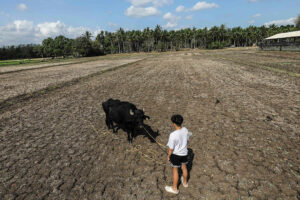
The Philippines’ agricultural output fell in the second quarter, as the crops and livestock sector continued to bear the brunt of the El Niño weather phenomenon.

Data from the Philippine Statistics Authority (PSA) showed the value of production in agriculture and fisheries at constant 2018 prices dropped by 3.3% to PHP 413.91 billion in the April-to-June period, worsening from the 1.2% contraction a year earlier.

It was the first decline in agricultural output since the 0.2% drop in the third quarter of 2023, and the biggest drop since the 3.4% contraction in the first quarter of 2021.

Performance of Philippine Agriculture“The reduction was due to the decreases in the value of crops and livestock production. Meanwhile, expansions were recorded in the value of poultry and fisheries production,” the PSA said.

The agriculture sector accounts for about a tenth of the country’s gross domestic product (GDP) and provides about a quarter of all jobs.

The PSA is scheduled to release second-quarter GDP data on Aug. 8.

For the first half, the value of production in agriculture and fisheries slipped by 1.5%, a reversal of the 0.4% growth a year ago.

“The Philippine agriculture sector has demonstrated resilience, bolstered by strategic interventions from the Department of Agriculture (DA), in the face of challenges posed by the adverse impact of El Niño on crop harvest and the stubborn African Swine Fever (ASF) on hog production, particularly during the second quarter,” Agriculture Assistant Secretary and Spokesperson Arnel V. de Mesa said on Wednesday.

Crops production, which accounted for half of the agriculture sector’s total production, slumped by 8.6% year on year in the second quarter. This was a reversal of the 1.2% growth a year ago.

Year to date, crops production dropped by 4.4%, reversing the 1.5% growth a year earlier.

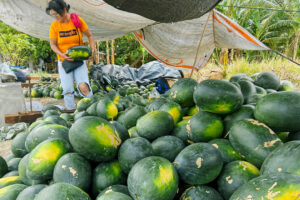
In the second quarter, palay (paddy rice) production declined by 9.5%, while corn plunged by 20.3%.

Also posting double-digit declines in production were sugarcane (-42.3 %), onion (-37.4 %), tomato (-15.6 %), mongo (-14%), and abaca (-12.4%).

Lower output was also seen in rubber (-7.5%), cassava (-7.2%), eggplant (-7%), sweet potato (-5.8%), ampalaya (-5.1%), coconut (-4%), banana (-3.3%), mango (-2.8%), pineapple (-2.7%), tobacco (-1.9%), coffee (-1.87%) and potato (-1%).

Only calamansi (6.4%), cacao (5.9%), and cabbage (2.7%) posted growth in production in the second quarter.

“These drops are the effects of El Niño during the first semester of the year. Crops, particularly rice and corn, either did not survive or suffered yield losses due to lack of water,” Federation of Free Farmers National Manager Raul Q. Montemayor said in a Viber message.

The state weather bureau declared the start of the El Niño weather event in June 2023, bringing below-normal rainfall conditions, dry spells and droughts. El Niño ended in early June, but dry conditions are expected to continue.

Based on the Agriculture department’s final bulletin, farm damage from El Niño hit PHP 15.3 billion, with total crop losses at 784,344 metric tons. Rice and corn were the most affected crops.

“The explanation of (the DA) that the drop was due to delayed planting by some farmers does not seem realistic… So it was not a delay in planting but an inability to plant due to lack of rain,” Mr. Montemayor said.

However, Mr. De Mesa said the DA had supported the agriculture sector during El Niño, earmarking PHP 14.54 billion in financial aid for affected farmers, production support and loans.

LIVESTOCK DROP

Livestock production shrank by 0.3% in the quarter ending June, reversing the 0.7% expansion a year ago. It accounted for 15.3% of the total agricultural output during the April-to-June period.

Data from the PSA showed a drop in the value of production for goat (-2.7%), carabao (-2.4%) and hog (-0.3%). Higher production was seen in dairy (9.7%) and cattle (0.2%).

In the January-to-June period, the value of livestock production slid by 1.9%, a reversal of the 2.4% growth in 2023.

Former Agriculture Secretary William D. Dar said in a text message that the livestock industry, particularly hogs, is still affected by ASF.

“The 0.3% decline (in hogs) is small. Most likely, the market weights of hogs are smaller due to extreme heat, which affected the feed intake and therefore the feed conversion as well,” National Federation of Hog Farmers, Inc. Vice-Chairman Alfred Ng said in a Viber message.

Hogs account for 12.4% of livestock production.

GAINS IN POULTRY, FISHERIES

Poultry output, which accounts for 16.9% of the total agricultural output, jumped by 8.7% in the April-to-June period, an improvement from the 1.5% growth a year ago.

Higher production was seen for chicken eggs (9%), chicken (8.9%), duck (1.3%) and duck eggs (0.8%).

From January to June, the value of poultry production rose by 7.3% from 2.3% a year ago.

Former Agriculture Undersecretary Fermin D. Adriano said the growth in poultry output during the period was due to poultry growers’ improved efforts to curb the spread of bird flu.

“It is easy for poultry production to recover because there are now chicken breeds which can be harvested for less than a month. Old stock affected by bird flu can easily be replenished,” he said in a Viber message.

Mr. Dar said the growth in poultry was driven by the sustained investments of large poultry companies including small- and medium-sized growers.

Meanwhile, fishery production increased by 2.2% in the second quarter, a turnaround from the 13.8% decline a year ago. The subsector made up 14.6% of the total farm output.

Year to date, the value of fishery output inched up by 1.1%, a turnaround from the 7.5% decline last year.

“Fisheries were coming from a very low base, so it was relatively easy for the sector to show an uptick.  Maybe the hot weather induced more phytoplankton production,” Mr. Montemayor said.

Gains were seen in skipjack or gulyasan (141.2%), bigeye tuna (94.1%), yellowfin tuna (43.2%), frigate tuna or tulingan (33.7%), P. Vannamei (33.6%), blue crab (7.4%), fimbriated sardines (5.9%) and cavalla or talakitok (4%).

On the other hand, production declined for tiger prawn or sugpo (-40.3%), grouper or lapu-lapu (-34.8%), seaweed (-25.8%), slipmouth or sapsap (-24.7%), big-eyed scad or matangbaka (-22.3%), mudcrab or alimango (-18.3%), round scad or galunggong (-13.6%), squid (-6.8%), tilapia (-6%), milkfish or bangus (-4.6%), threadfin bream or bisugo (-4.4%), and Bali sardinella or tamban (-0.1%).

Mr. Adriano noted that the open fishing season in Philippine waters coupled with better weather contributed to the increase in fishery production.

The DA is targeting 1-2% agricultural growth in 2024, taking into account the effects of the El Niño and La Niña weather events. – Adrian H. Halili, Reporter

June jobless rate falls to lowest in two decades

June jobless rate falls to lowest in two decades

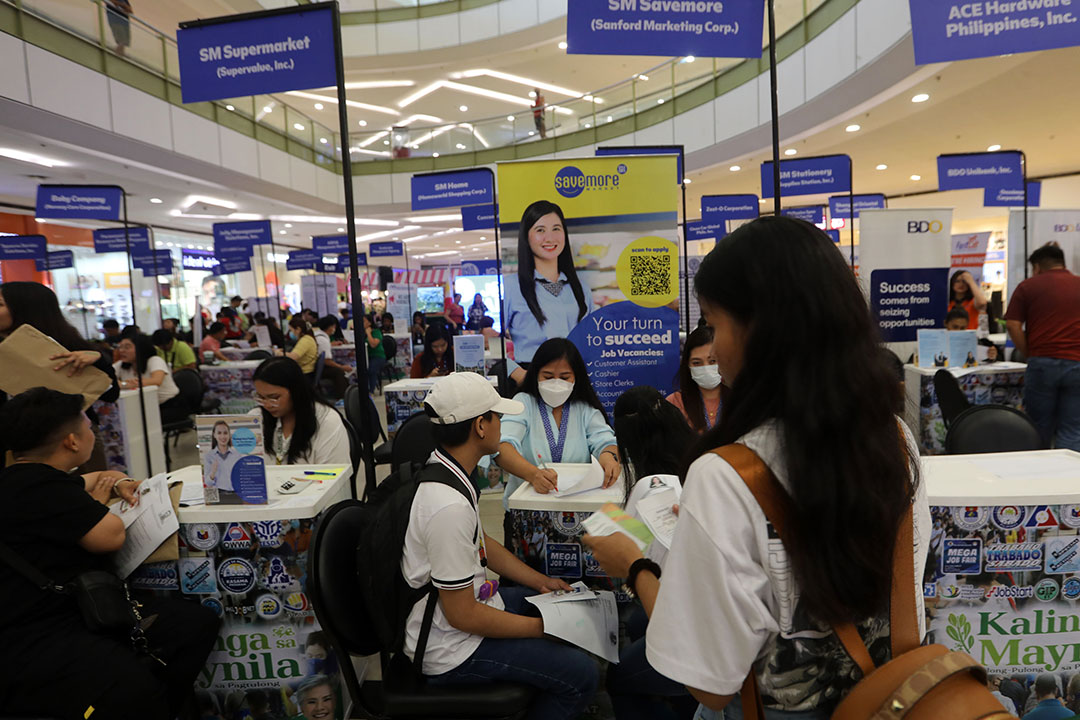
The unemployment rate in June fell to 3.1%, the lowest in two decades, as hiring in the construction sector surged, the Philippine Statistics Authority (PSA) reported on Wednesday.

Preliminary data from the Philippine Statistics Authority (PSA) showed the jobless rate slipped from 4.1% in May and 4.5% in June 2023.

The June unemployment rate was the same as in December 2023. It was also the lowest jobless rate since April 2005, when the statistics agency revised its definition of unemployed to Filipinos aged 15 years and older without a job, available for work, and actively seeking one.

Philippine Labor Force Situation

This translated to 1.62 million unemployed Filipinos in June, down by 486,000 from 2.11 million in May.

Year on year, unemployment went down by 707,000 from 2.33 million in June 2023.

This was also the lowest number of unemployed Filipinos since the 1.6 million recorded in December last year.

In the first half, the unemployment rate averaged 3.9%, lower than the 4.6% average a year ago.

“We can see the economic activity linked to construction activities substantially increased… (In construction) we added 938,000 jobs (year on year),” PSA Undersecretary and National Statistician Claire Dennis S. Mapa said in mixed English and Filipino during the press briefing on Wednesday.

However, underemployment — those who want longer hours or an additional job — went up to 12.1% in June from 9.9% in May. This was a tad higher than 12% in June 2023.   

The ranks of the underemployed Filipinos reached 6.08 million, up by 1.27 million month on month and 208,000 year on year.

As of end-June, the average underemployment rate stood at 12.3%, lower than 12.5% last year.

“Year on year, the labor force participation rate increased substantially… What happens is that the labor market cannot absorb this, so not everyone can get full-time jobs… This is why there is an increase in underemployed people,” Mr. Mapa said.

Security Bank Corp. Chief Economist Robert Dan J. Roces said in a Viber message the higher underemployment rate could have been due to the sectoral slowdowns and lack of available part-time work.

In June, the employment rate rose to 96.9%, equivalent to 50.28 million Filipinos. This was slightly higher than 95.9% (equivalent to 48.87 million) in May, and 95.5% (48.84 million) in June 2023.

In the first half, the employment rate averaged 96.1%, up from 95.4% a year ago.

The service sector remained the top employer, accounting for 58.7% of jobs in June, followed by agriculture (21.1%) and industry (20.2%).

In June, month-on-month job gains were recorded in construction (up 680,000 to 5.77 million), agriculture and forestry (up 571,000 to 9.53 million), and wholesale and retail trade (490,000 to 10.6 million).

“The government’s swift implementation of infrastructure projects and the continued improvement of operating conditions for manufacturing firms have led to these employment gains. Increasing investments in renewable energy, water supply, and mining and quarrying have also supported employment growth in these areas,” National Economic and Development Authority Secretary Arsenio M. Balisacan said in a statement.

On the other hand, the biggest monthly job loss was seen in public administration and defense, which cut 466,000 jobs to 2.67 million. Job losses were also seen in education (down 184,000 to 1.51 million), and transportation and storage (down 152,000 to 3.57 million).

Meanwhile, construction saw the largest annual increase in jobs, adding 938,000 jobs to 5.77 million. Significant job gains were also seen in wholesale and retail trade (up 527,000 to 10.6 million), and accommodation and food service activities (up 396,000 to 2.62 million).

Year on year, agriculture and forestry cut 916,000 jobs to 9.53 million. Annual job losses were also seen in public administration and defense (down 340,000 to 2.67 million) and fishing and aquaculture (down 81,000 to 1.09 million).

Sentro ng mga Nagkakaisa at Progresibong Manggagawa Secretary-General Josua T. Mata questioned what he called the “flawed employment strategy” of the government.

“Worker underutilization remains high. The combined underemployment and unemployment rate rose from 14% in May 2024 to 15.2% in June 2024. This means nearly one in six workers are either unemployed or underemployed and unable to fully contribute to the economy,” he said in a Viber message.

The country’s labor force reached 51.9 million in June, increasing by 926,000 from 50.97 million in May.

On an annual basis, the labor force increased by 730,000 from 51.17 million.

This translated to a labor force participation rate of 66%, higher than the 64.8% in the previous month, but lower than 66.1% last year.

The average Filipino employee worked 40.9 hours a week, up from 40.6 hours in May and from 40 hours in June 2023. — Charles Worren E. Laureta

Forex buffer hits over 2-year high of USD 105.6B

Forex buffer hits over 2-year high of USD 105.6B

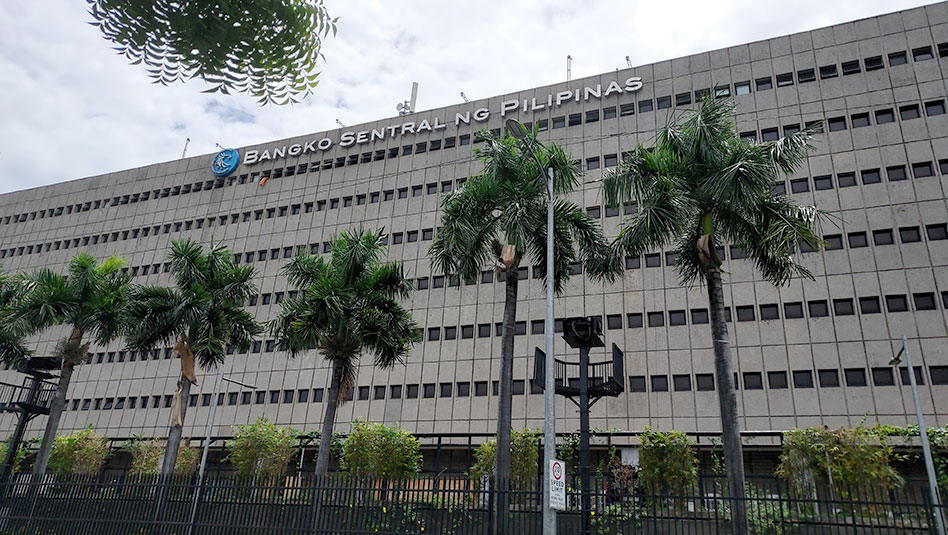
The country’s gross international reserves (GIR) jumped to USD 105.65 billion as of end-July, its highest level in over two years, the Bangko Sentral ng Pilipinas (BSP) said.

Preliminary data from the BSP showed gross dollar reserves inched up by 0.4% from USD 105.19 billion as of end-June.

Dollar reserves rose by 5.7% from USD 99.95 billion year on year.

This was also the highest level of reserves in 28 months or since the USD 107.3-billion level recorded in March 2022.

“The month-on-month increase in the GIR level reflected mainly the upward valuation adjustments in the BSP’s gold holdings due to the increase in the price of gold in the international market, net income from the BSP’s investments abroad, and the National Government’s (NG) net foreign currency deposits with the BSP,” it said.

As of end-July, the level of dollar reserves was enough to cover about 6.1 times the country’s short-term external debt based on original maturity and 3.8 times based on residual maturity.

It was also equivalent to 7.8 months’ worth of imports of goods and payments of services and primary income.

Ample foreign exchange (forex) buffers protect an economy from market volatility and ensure the country can pay its debts in the event of an economic downturn.

BSP data showed that foreign investments edged higher by 0.09% to USD 90.07 billion from USD 89.99 billion a month ago. Year on year, investments increased by 7.6% from $83.68 billion.

Reserves in the form of gold were valued at USD 10.31 billion as of end-July. This was up by 4.1% from USD 9.9 billion in the previous month and by 0.09% from $10.3 billion a year ago.

On the other hand, net foreign currency deposits slipped by 1.4% to USD 791.2 million from USD 802.2 million month on month. It also fell by 42.1% from USD 1.37 billion a year earlier.

As of end-July, net international reserves edged up by 0.4% to USD 105.62 billion from USD 105.16 billion the  month prior.

Net international reserves are the difference between the BSP’s reserve assets or GIR and reserve liabilities, such as short-term foreign debt and credit and loans from the International Monetary Fund (IMF).

Meanwhile, the country’s reserve position in the IMF slid by 2.8% to USD 719.9 million as of end-July from USD 740.4 million as of end-June.

Special drawing rights, or the amount the country can tap from the IMF, was unchanged at USD 3.75 billion.

“The Philippines’ gross international reserves slightly increased in July, primarily due to higher gold valuations and positive investment returns. This maintains a robust external liquidity buffer, essential for safeguarding the country’s financial stability,” Security Bank Corp. Chief Economist Robert Dan J. Roces said in a Viber message.

Rizal Commercial Banking Corp. Chief Economist Michael L. Ricafort said the GIR level continued to rise due to the new record highs in world gold prices, which boosted the value of the BSP’s gold holdings.

Mr. Ricafort said the country’s dollar reserves could improve in the coming months amid steady growth in overseas Filipino worker remittances, business process outsourcing revenues, foreign tourism revenues, and foreign direct investments.

The BSP expects the GIR level to settle at USD 104 billion by yearend. – Luisa Maria Jacinta C. Jocson, Reporter

First-quarter GDP growth revised upwards to 5.8%

First-quarter GDP growth revised upwards to 5.8%

The Philippine economy grew slightly faster than initially reported in the first quarter, the Philippine Statistics Authority (PSA) said on Wednesday.

The PSA said in a statement the gross domestic product (GDP) growth rate for the January-to-March period was raised to 5.8% from the 5.7% previously reported. This was the fastest GDP growth since 6% in the third quarter of 2023.

The PSA said the main sources of the revision were financial and insurance activities (10.3% from 10%); wholesale and retail trade and repair of motor vehicles and motorcycles (6.6% from 6.4%); and electricity, steam, water and waste management (6.9% from 6.3%).

On the other hand, the largest downward revisions were recorded in education (3.7% from 4.6%), accommodation and food service activities (13.1% from 13.9%), and professional and business services (7% from 7.5%).

On the expenditure side, household and government spending growth remained unchanged at 4.6% and 1.7%, respectively.

Exports of goods and services, on the other hand, were revised upwards to 8.4% from 7.5%, while imports were revised downwards to 2.2% from 2.3%.

Gross capital formation growth was downgraded to 0.5% from the preliminary estimate of 1.3%.

The net primary income from the rest of the world was also higher at 57.6% from 57%.

Meanwhile, the gross national income — the sum of the nation’s GDP and net primary income from the rest of the world — for the first quarter was revised upwards to 9.8% from 9.7%.

National account revisions are based on approved revision policy, which is consistent with international standard practices, the PSA said.

The PSA will release second-quarter GDP data on Aug. 8. — Karis Kasarinlan Paolo D. Mendoza

BSP could still cut rates next week, Recto says

BSP could still cut rates next week, Recto says

The Bangko Sentral ng Pilipinas (BSP) may still cut benchmark interest rates at its policy meeting next week, Finance Secretary Ralph G. Recto said on Wednesday.

“I expect a reduction in rates within the year. It could happen in August, it could happen off-cycle, it could happen in the next board meeting. I would prefer lower rates so we can borrow domestically at lower rates as well,” Mr. Recto, who is also a member of the BSP’s policy-setting Monetary Board, told reporters on Wednesday.

“The Fed (US Federal Reserve) will probably do a rate cut in September, then us in August. The difference is just one month,” he added.

The Finance chief said he expects 50 basis points (bps) worth of BSP cuts this year. “But (that) could even be higher, but it depends on what the Fed does also. It depends on our inflation expectations,” he added.

The Monetary Board in June kept its policy rate at an over 17-year high of 6.5% for a sixth straight meeting.

BSP Governor Eli M. Remolona, Jr. said on Tuesday they are now “a little bit less likely” to cut rates at their Aug. 15 policy review amid “slightly worse than expected” inflation.

Headline inflation quickened to 4.4% in July, the fastest pace in nine months or since the 4.9% recorded in October 2023 and marking the first time that it breached the central bank’s 2-4% annual target range since November.

Mr. Recto said he is also open to an off-cycle cut if necessary.

“I’m definitely open to reducing interest rates. That is the objective. Whether it’s a regular cycle or off-cycle. I think the BSP governor also said that we could do an off-cycle. There’s no meeting in September, but he can call for an off-cycle. It depends. Like I said, it all depends on our briefings. We will get market updates,” he added.

Meanwhile, Nomura Global Markets Research said it still sees the BSP starting its easing cycle this month as the spike in July inflation is likely temporary.

“In terms of monetary policy, the July consumer price index (CPI) outturn does not change our latest view that BSP’s rate-cutting cycle could begin in August given its pickup is likely to have been temporary,” it said in a report.

“BSP also retained in its post-CPI statement that headline inflation will start easing in August and assessed that the balance of risks to the inflation outlook has “shifted to the downside.”

Nomura expects the central bank to slash benchmark rates by 25 bps at its meeting next week.

“If inflation has indeed already peaked, then BSP may not have to wait for its next meeting, which is two months away (Oct. 17),” it added.

Meanwhile, it expects full-year inflation to average 2.8% this year, well below the BSP’s 3.3% forecast, noting that this outlook was primarily due to the impact of the recent cut in tariffs on rice imports.

“Assuming full pass-through, we estimate the tariff cut could lower headline inflation sharply to around 2.1% in August before settling between 1.7% and 2.1% by the fourth quarter. This suggests the pickup in July is likely to have been temporary and will prove to be the peak,” Nomura said. — Luisa Maria Jacinta C. Jocson

Inflation quickens to 9-month high

Inflation quickens to 9-month high

Headline inflation accelerated to a nine-month high in July, mainly driven by a spike in electricity rates and food costs, data from the Philippine Statistics Authority (PSA) showed.

The consumer price index quickened to 4.4% year on year in July from 3.7% in June, falling within the Bangko Sentral ng Pilipinas’ (BSP) 4%-4.8% forecast.

It was higher than the 4% median estimate in a BusinessWorld poll of 15 analysts conducted last week.

Inflation rates in the Philippines

The July print was also the fastest in nine months or since the 4.9% clip in October 2023.

July also ended seven straight months of inflation settling within the central bank’s 2-4% target band. Inflation had been within target from December 2023 to June 2024.

In the first seven months of the year, headline inflation averaged 3.7%, above the central bank’s 3.3% full-year forecast.

Core inflation, which excludes volatile prices of food and fuel, sharply eased to 2.9% in July from 6.7% a year ago. Core inflation averaged 3.3% in the first seven months.

“The latest inflation outturn is consistent with the BSP’s latest assessment that inflation will temporarily settle above the target range in July 2024 due mainly to higher electricity rates and positive base effects but will likely follow a general downtrend beginning in August 2024,” the central bank said in a statement.

National Statistician Claire Dennis S. Mapa said that the main source of faster inflation in July was the housing, water, electricity, gas, and other fuels index which rose to 2.3% in July from 0.1% in June.

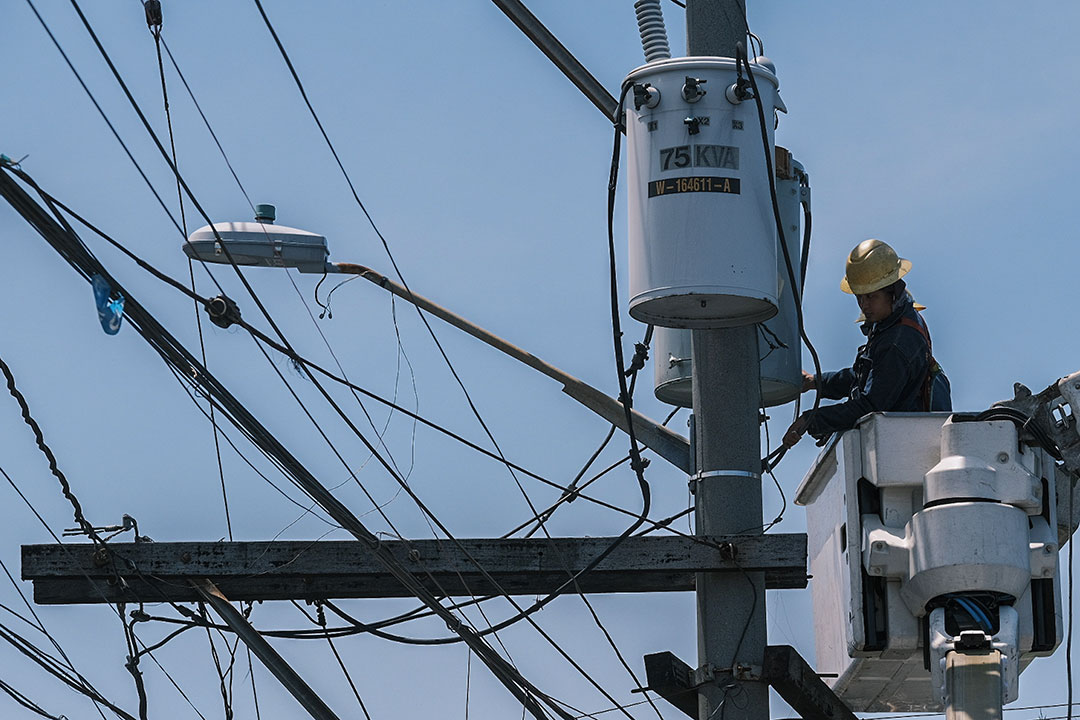
“For power, we really expected that, because Meralco (Manila Electric Co.) adjusted rates in July. That’s where we saw a significant contribution to inflation,” Mr. Mapa said in mixed English and Filipino.

In July, Meralco raised rates by PHP 2.1496 per kilowatt-hour (kWh) to bring the overall rate for a typical household to PHP 11.6012 per kWh.

Inflation of liquefied petroleum gas (LPG) surged to 20.2% in July from 14.7% in the previous month, as LPG prices rose by PHP 0.55 per kilogram.

Mr. Mapa also noted the heavily-weighted food and non-alcoholic beverages index, which increased to 6.4% in July from 6.1% a month earlier and 6.3% a year ago.

Food inflation accelerated to 6.7% from 6.5% in June. This was primarily driven by faster prices in meat and other parts of slaughtered land animals (4.8% in July from 3.1% in June) and fruits and nuts (8.4% from 5.6%).

Meanwhile, rice inflation further eased to 20.9% in July from 22.5% a month prior, marking the fourth straight month of slower rice inflation.

PSA data showed that the average price of regular milled rice fell to PHP 50.90 per kilogram in July from PHP 51.10 in June; while well-milled rice declined to PHP 55.85 per kilo from PHP 55.96 in June.

While it is possible that Typhoon Carina hurt food prices in July, Mr. Mapa said its impact will be most likely reflected in August inflation.

“It’s possible that the impact of the storm has started, normally based on our historical data, prices of vegetables rise after a typhoon. That is the expectation we have, that this could rise in August.”

Agricultural damage due to Typhoon Carina and the southwest monsoon, which hit Metro Manila and nearby provinces in late July, stood at PHP 3.04 billion.

Transport inflation was also one of the main drivers of the uptick in July inflation, Mr. Mapa said.

In July, transport inflation picked up to 3.6% from 3.1% a month ago.

“This increase was driven by increasing global petroleum prices due to the unexpected large withdrawals of United States gasoline stocks, optimistic fuel demand forecasts, and the ongoing geopolitical tension in the Middle East,” the National Economic and Development Authority said in a statement.

In July, pump price adjustments stood at a net increase of PHP 1.30 a liter for gasoline. Diesel and kerosene had a net decrease of PHP 0.90 and PHP 1.70, respectively, per liter.

Meanwhile, the inflation rate for the bottom 30% of income households accelerated to 5.8% in July from 5.5% in June and 5.2% a year ago.

In the seven months to July, the inflation rate for the bottom 30% averaged 4.9%.

In the National Capital Region (NCR), inflation eased to 3.7% in July from 5.6% a year prior. Inflation in areas outside NCR averaged 4.6%, faster than 4.4% a year ago.

How much did each commodity group contribute to July inflation?

OUTLOOK

The BSP said that risks to the inflation outlook have shifted to the downside for this year and the next, primarily due to the tariff cut on rice imports.

President Ferdinand R. Marcos, Jr. in June signed an executive order which slashed tariffs on rice imports to 15% from 35% previously, until 2028.

“Nonetheless, higher prices of food items other than rice, as well as higher transport and electricity charges continue to pose upside risks to inflation,” the central bank added.

Finance Secretary Ralph G. Recto said that the uptick in July inflation is only temporary.

“Inflation rate is expected to stabilize and fall within target for the rest of the year as the impact of government interventions, particularly the reduced rice tariffs, will be more pronounced starting this August,” he said in a statement.

PSA’s Mr. Mapa said that rice inflation could continue to ease in the coming months, which would support slower headline inflation.

He said the reduction in tariffs on rice imports could “significantly” bring down rice prices in August. Rice inflation could possibly be slower than 20% in August, he added.

RATE CUT OFF THE TABLE?

The BSP said that it will consider the latest inflation data and upcoming second-quarter gross domestic product (GDP) data at its Aug. 15 meeting.

“Moving forward, the BSP will ensure that monetary policy settings remain in line with its primary mandate to safeguard price stability conducive to sustainable economic growth,” it said.

Pantheon Macroeconomics Chief Emerging Asia Economist Miguel Chanco said that the “bigger-than-expected jump” in inflation may prompt the BSP to keep rates steady next week.

“In terms of the outlook for monetary policy, the July breach of the BSP’s target range, while well within the range of outcomes projected by the (central) bank, likely means that an August rate cut is now off the table,” he said in an e-mail note.

Bank of the Philippine Islands Lead Economist Emilio S. Neri, Jr. said in a report that the probability of a rate cut in August has declined as inflation breached the target band.

On Tuesday, BSP Governor Eli M. Remolona, Jr. said the central bank is “a little bit less likely” to ease rates at its August meeting as inflation was “slightly worse than expected.”

“It would be extremely odd for BSP to cut rates next week after this, though we don’t believe we will have to wait for too long before cuts are on their way,” ING Regional Head of Research for Asia-Pacific Robert Carnell said in a note.

Meanwhile, Mr. Neri said that the BSP’s easing cycle is still “on the horizon” amid easing core inflation and if second-quarter GDP data “significantly misses the forecasts.”

“A big upside miss to today’s figures could push back BSP aspirations to cut rates in August. But with the (peso) gaining some support as the USD weakens in the current market volatility, an August cut remains a possibility,” ING Bank said in a note.

Mr. Chanco said that 75 basis points (bps) worth of cuts is still possible this year amid expectations of the US Federal Reserve’s easing cycle beginning September.

“Accordingly, our revised base case for the BSP is a 25-bp cut in October, followed by a 50-bp in December. To be sure, if we’re right about a likely huge miss in Thursday’s second-quarter GDP report, then an August cut could come swiftly back into the discussion,” Mr. Chanco added.

Mr. Neri ruled out “aggressive” rate cuts in the coming months amid domestic and external headwinds.

“The BSP will likely prioritize domestic data in its policy decision on Aug. 15, but it may also consider global developments,” he said.

“Any signals from the Federal Reserve suggesting a substantial rate cut in September could increase the chances of a rate cut from the BSP in the next policy meeting.”

After Aug. 15, the Monetary Board’s remaining policy-setting meetings this year are on Oct. 17 and Dec. 19. – Luisa Maria Jacinta C. Jocson, Reporter


BSP chief says ‘a little bit less likely’ to cut rates

BSP chief says ‘a little bit less likely’ to cut rates

The Bangko Sentral ng Pilipinas (BSP) is now “a little bit less likely” to cut rates at its Aug. 15 meeting after inflation breached the 2-4% target band in July, its governor said.

“A little bit less likely (to ease) because inflation is high. But we have to look at other numbers,” BSP Governor Eli M. Remolona, Jr. told reporters in mixed English and Filipino on the sidelines of an event on Tuesday.

Mr. Remolona said that July inflation was “slightly worse than expected.”

“That 4.4% (inflation print), there is a base effect there of 0.3 percentage point. Without the base effect, it’s really 4.1%, which is still worse than expected but not that bad because it only slightly breached the ceiling.”

Headline inflation accelerated to 4.4% in July from 3.7% in June. This was the fastest inflation print in nine months or since the 4.9% recorded in October 2023.

The July print also ended the seven straight months of inflation settling within the central bank’s 2-4% target range.

Asked if the BSP is on track to cut rates this month, Mr. Remolona replied: “Medyo (Somewhat).”

Mr. Remolona earlier signaled that the Monetary Board is on track to begin easing by August, possibly by 25 basis points (bps).

Asked if the BSP will hold rates steady, he said: “We are not sure because there is still a lot of data we are looking at.”

The BSP chief said they will be able to cut rates if gross domestic product (GDP) growth is weaker than expected. Second-quarter GDP data will be released on Aug. 8 (Thursday).

“If growth is unexpectedly weak, then it looks like our projections of inflation and inflation expectations suggest lower inflation going forward. Then we can cut,” he said.

A BusinessWorld poll of 19 economists and analysts yielded a median GDP estimate of 6% for the second quarter. If realized, this would be faster than the preliminary 5.7% expansion in the first quarter and 4.3% in the second quarter of 2023.

The government is targeting 6-7% GDP growth this year.

Mr. Remolona also said he expects the US Federal Reserve to cut in September. “It looks like they will cut because the employment report was a triple whammy.”

Global stock markets plunged on Monday amid concern the US central bank has waited too long to begin cutting interest rates. Interest rate futures contracts at the day’s end reflected overwhelming bets that the Fed will start cutting borrowing costs next month with a bigger-than-usual 50-bp reduction to its policy rate, Reuters reported.

The Fed kept its benchmark interest rate unchanged in the current 5.25%-5.5% range last week and signaled it was on course to begin cutting rates in September, but that decision was followed by worrying signs the labor market might already have turned.

The central bank is also open to the possibility of an off-cycle rate cut if it does not ease rates next week, Mr. Remolona said.

“We’re always open to off-cycle (moves),” he said.

After Aug. 15, the Monetary Board’s remaining policy-setting meetings this year are on Oct. 17 and Dec. 19

The Monetary Board has raised borrowing costs by a cumulative 450 bps from May 2022 to October 2023, bringing the key rate to an over 17-year high of 6.5%. — Luisa Maria Jacinta C. Jocson

Posts navigation

Older posts
Newer posts

Recent Posts

  • Investment Ideas: April 1, 2026
  • Metrobank US-Iran Risk Index: Signals of an end
  • Eye on Earnings: Demand for connection supports telcos
  • Inflation Preview: March madness
  • Investment Ideas: March 31, 2026

Recent Comments

No comments to show.

Archives

  • April 2026
  • March 2026
  • February 2026
  • January 2026
  • December 2025
  • November 2025
  • October 2025
  • September 2025
  • August 2025
  • July 2025
  • June 2025
  • May 2025
  • April 2025
  • March 2025
  • February 2025
  • January 2025
  • December 2024
  • November 2024
  • October 2024
  • September 2024
  • August 2024
  • July 2024
  • June 2024
  • May 2024
  • April 2024
  • March 2024
  • February 2024
  • January 2024
  • December 2023
  • November 2023
  • October 2023
  • September 2023
  • August 2023
  • July 2023
  • June 2023
  • May 2023
  • April 2023
  • March 2023
  • February 2023
  • January 2023
  • December 2022
  • November 2022
  • October 2022
  • September 2022
  • August 2022
  • July 2022
  • June 2022
  • May 2022
  • March 2022
  • December 2021
  • October 2021

Categories

  • Bonds
  • BusinessWorld
  • Currencies
  • Economy
  • Equities
  • Estate Planning
  • Explainer
  • Featured Insight
  • Fine Living
  • How To
  • Investment Tips
  • Markets
  • Portfolio Picks
  • Rates & Bonds
  • Retirement
  • Reuters
  • Spotlight
  • Stocks
  • Uncategorized

You are leaving Metrobank Wealth Insights

Please be aware that the external site policies may differ from our website Terms And Conditions and Privacy Policy. The next site will be opened in a new browser window or tab.

Cancel Proceed
Get in Touch

For inquiries, please call our Metrobank Contact Center at (02) 88-700-700 (domestic toll-free 1-800-1888-5775) or send an e-mail to customercare@metrobank.com.ph

Metrobank is regulated by the Bangko Sentral ng Pilipinas
Website: https://www.bsp.gov.ph

Quick Links
The Gist Webinars Wealth Manager Explainers
Markets
Currencies Rates & Bonds Equities Economy
Wealth
Investment Tips Fine Living Retirement
Portfolio Picks
Bonds Stocks
Others
Contact Us Privacy Notice Terms of Use
© 2026 Metrobank. All rights reserved.

Access this content:

If you are an existing investor, log in first to your Metrobank Wealth Manager account. ​

If you wish to start your wealth journey with us, click the “How To Sign Up” button. ​

Login HOW TO SIGN UP