MODEL PORTFOLIO
THE GIST
NEWS AND FEATURES
Global Philippines Fine Living
INSIGHTS
INVESTMENT STRATEGY
Economy Stocks Bonds Currencies
THE BASICS
Investment Tips Explainers Retirement
WEBINARS
2024 Mid-Year Economi Briefing, economic growth in the Philippines
2024 Mid-Year Economic Briefing: Navigating the Easing Cycle
June 21, 2024
Investing with Love
Investing with Love: A Mother’s Guide to Putting Money to Work
May 15, 2024
retirement-ss-3
Investor Series: An Introduction to Estate Planning
September 1, 2023
View All Webinars
DOWNLOADS
Container ship carrying container boxes import export dock with quay crane. Business commercial trade global cargo freight shipping logistic and transportation worldwide oversea concept. Generative AI
Economic Updates
Philippines Trade Update: Wider deficit on strong imports
DOWNLOAD
Frick collection with palm trees 
Economic Updates
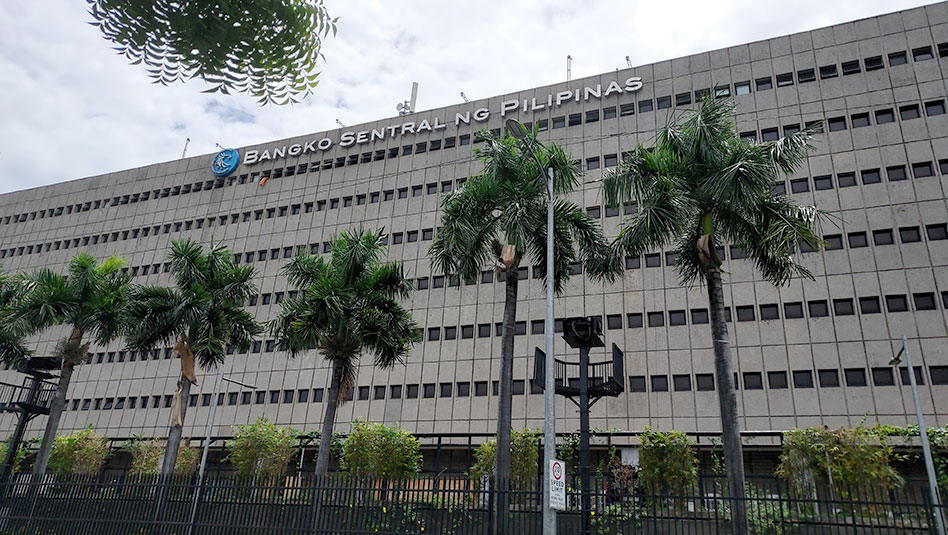
Policy Rate Updates: Policy rate updates to reassure 
DOWNLOAD
Man using his smartphone
Reports
Fed to cut just once 
DOWNLOAD
View all Reports
Metrobank.com.ph How To Sign Up
Follow us on our platforms.

How may we help you?

TOP SEARCHES
  • Where to put my investments
  • Reports about the pandemic and economy
  • Metrobank
  • Webinars
  • Economy
TRENDING ARTICLES
  • Investing for Beginners: Following your PATH
  • On government debt thresholds: How much is too much?
  • Philippines Stock Market Outlook for 2022
  • Deficit spending remains unabated

Login

Access Exclusive Content
Login to Wealth Manager
Visit us at metrobank.com.ph How To Sign Up
Access Exclusive Content Login to Wealth Manager
Search
MODEL PORTFOLIO THE GIST
NEWS AND FEATURES
Global Philippines Fine Living
INSIGHTS
INVESTMENT STRATEGY
Economy Stocks Bonds Currencies
THE BASICS
Investment Tips Explainers Retirement
WEBINARS
2024 Mid-Year Economi Briefing, economic growth in the Philippines
2024 Mid-Year Economic Briefing: Navigating the Easing Cycle
June 21, 2024
Investing with Love
Investing with Love: A Mother’s Guide to Putting Money to Work
May 15, 2024
retirement-ss-3
Investor Series: An Introduction to Estate Planning
September 1, 2023
View All Webinars
DOWNLOADS
Container ship carrying container boxes import export dock with quay crane. Business commercial trade global cargo freight shipping logistic and transportation worldwide oversea concept. Generative AI
Economic Updates
Philippines Trade Update: Wider deficit on strong imports
March 27, 2026 DOWNLOAD
Frick collection with palm trees 
Economic Updates
Policy Rate Updates: Policy rate updates to reassure 
March 26, 2026 DOWNLOAD
Man using his smartphone
Reports
Fed to cut just once 
March 19, 2026 DOWNLOAD
View all Reports

Archives: Business World Article

Yields on term deposits slip before BSP review

Yields on term deposits slip before BSP review

Yields on term deposits inched lower on Wednesday as the offer went undersubscribed ahead of the Bangko Sentral ng Pilipinas (BSP) monetary policy meeting.

The BSP’s term deposit facility (TDF) fetched bids amounting to PHP 105.851 billion on Wednesday, well below the P160 billion on the auction block and the PHP 179.018 billion for a PHP 180-billion offer seen a week ago.

Broken down, tenders for the eight-day term deposits reached just PHP 40.096 billion, lower than the PHP 80 billion auctioned off by the central bank and the PHP 90.542 billion in bids seen the previous week.

Banks asked for yields ranging from 6.4875% to 6.5215%, wider than the 6.495% to 6.52% band seen a week ago. This caused the average rate of the one-week deposits to drop by 0.36 basis point (bp) to 6.5119% from 6.5155% previously.

The one-week tenor was adjusted from the usual seven-day maturity as its settlement date was moved to Aug. 22 due to the Ninoy Aquino Day holiday on Aug. 21, the BSP said.

Meanwhile, bids for the 14-day term deposits amounted to PHP 65.755 billion on Wednesday, also below the PHP 80-billion offering and as well as the PHP 88.476 billion in tenders for the PHP 100-billion offer on Aug. 7.

Accepted rates for the two-week tenor were from 6.47% to 6.57%, also wider than the 6.53% to 6.57% margin seen a week ago. With this, the average rate for the term deposits declined by 0.83 bp to 6.544% from 6.5523% logged in the prior auction.

The BSP has not auctioned off 28-day term deposits for more than three years to give way to its weekly offerings of securities with the same tenor.

The term deposits and the 28-day bills are used by the central bank to mop up excess liquidity in the financial system and to better guide market rates.

Term deposit yields slipped ahead of the BSP’s rate-setting meeting on Thursday amid recent signals from the central bank governor on potentially keeping rates steady, Rizal Commercial Banking Corp. Chief Economist Michael L. Ricafort said in a Viber message.

The Monetary Board will hold its third-to-the-last policy review for the year today (Aug. 15).

A BusinessWorld poll showed that nine out of 16 analysts surveyed expect a 25-bp cut, which would bring the target reverse repurchase (RRP) rate to 6.25% from the current over-17-year high of 6.5%.

BSP Governor Eli M. Remolona, Jr. on Tuesday told reporters that there is “more room to stay tight” amid the stronger-than-expected gross domestic product growth seen last quarter.

The Philippine economy grew by 6.3% in the second quarter, its fastest expansion in five quarters or since the 6.4% in the first quarter of 2023.

Mr. Remolona also said that the BSP will have room to ease rates once inflation is back within their 2-4% annual target band.

Headline inflation accelerated to 4.4% in July, the fastest in nine months. It also ended seven straight months of inflation settling within the central bank’s target. — Luisa Maria Jacinta C. Jocson

‘More room to stay tight,’ BSP says

‘More room to stay tight,’ BSP says

The Bangko Sentral ng Pilipinas (BSP) on Tuesday said there is “more room to stay tight” after better-than-expected gross domestic product (GDP) growth in the second quarter.

“The 6.3% (GDP growth)… there’s more room to stay tight, right? But there are many factors,” BSP Governor Eli M. Remolona, Jr. told reporters on the sidelines of a Development Budget Coordination Committee briefing at the Senate.

“It’s not like the United States, their economy is weaker. They’re more inclined to ease. That’s just one number. We will look at all (the numbers),” he said in mixed English and Filipino.

The Philippine economy expanded by 6.3% in the second quarter, faster than 5.8% in the previous quarter and 4.3% a year ago. This was also the fastest growth in five quarters or since 6.4% in the first quarter of 2023.

“We look at all the components. Our models take into account different components of GDP,” Mr. Remolona added.

The BSP chief said the latest GDP performance “helps” the case for keeping rates steady as the risk of a hard landing is lessened.

“In the US, the risk for a hard landing is higher, but I also now see less of a hard landing in the US,” he added.

The Monetary Board is set to meet on Thursday for its third-to-the-last policy review for the year.

A BusinessWorld poll conducted last week showed that nine of 16 analysts surveyed expect the Monetary Board to deliver a 25-basis-point (bp) rate cut this week.

During the hearing, Mr. Remolona told senators the 6.5% benchmark rate is “tight.”

“It’s tight because we are trying to tame inflation… the direction is to of course eventually ease monetary policy, which means lower policy rate. So, we intend to ease when the conditions are right… when we feel inflation has been tamed.”

Mr. Remolona said the BSP does not want to keep rates high for an “unnecessarily” long time because this could lead to loss of output.

“As soon as we feel inflation is on the way to our target range, we will have room to ease the policy rate,” he added.

Headline inflation accelerated to 4.4% in July, the fastest in nine months. It also ended seven straight months of inflation settling within the central bank’s 2-4% target.

The BSP earlier said the spike in July inflation is temporary, and that inflation should return to target from August onwards.

For the rest of the year and until 2025, inflation should ease further and settle within target, Mr. Remolona said.

“We are relieved that monetary policy has evidently helped to tame inflation. This is reflected in our inflation projections… We expect average inflation to fall within our target range of 2-4% in 2024 and 2025,” he said.

The BSP expects inflation to average 3.3% this year and 3.1% in 2025. For the first seven months, headline inflation averaged 3.7%.

“We used to think we could ignore supply shocks because they would eventually dissipate. The hard lesson is large supply shocks change inflation expectations, which lead to inflationary second-round effects,” Mr. Remolona added.

Finance Secretary Ralph G. Recto, who is also a Monetary Board member, said he expects policy easing to begin soon.

“As far as my expectations are concerned, I think policy rates are going to be on the way down,” he said.

“It may be tomorrow, it may be in September, it could be in October, but I think for the next two quarters I could safely predict that we could probably reduce rates by 25 to 50 bps. I foresee in the next year and a half, we could reduce by another 100 bps by next year.” – Luisa Maria Jacinta C. Jocson, Reporter

Peso strengthens to PHP 56 level for 1st time since April

Peso strengthens to PHP 56 level for 1st time since April

The peso strengthened on Tuesday to the PHP 56-per-dollar level for the first time in four months, ahead of the central bank’s policy decision on Thursday.

The local unit closed at PHP 56.96 per dollar on Tuesday, up by 35.6 centavos from its PHP 57.316 finish on Monday, Bankers Association of the Philippines data showed.

This was the peso’s strongest finish since its PHP 56.808-per-dollar close on April 15.

Year to date, the peso has weakened by PHP 1.59 centavos from its PHP 55.37 finish on Dec. 29, 2023.

The peso opened Monday’s session at PHP 57.25 against the dollar. Its weakest showing was at PHP 57.985, while its intraday best was at PHP 56.92 versus the greenback.

Dollars exchanged jumped to USD 1.799 billion on Tuesday from USD 1.18 billion on Monday.

“The peso appreciated significantly below the PHP 57 level amid expectations of a softer US producer inflation report,” a trader said in an e-mail.

Another trader said the peso strengthened against the dollar amid position-taking ahead of the release of US inflation data on Wednesday.

“The Philippine peso and other Asian currencies appreciated against the US dollar, driven by a wave of risk-on sentiment. The (peso’s) rally is attributed to technical factors and market dynamics as investors anticipate key economic indicators: the US Producer Price Index (PPI) later (on Tuesday), the Consumer Price Index (on Wednesday), and the Philippine central bank’s policy decision on Thursday,” Security Bank Corp. Chief Economist Robert Dan J. Roces said in a Viber message.

The Monetary Board is set to hold its policy review on Thursday. A BusinessWorld poll conducted last week showed that nine of 16 analysts surveyed expect the Monetary Board to deliver a 25-basis-point (bp) rate cut that would bring the target reverse repurchase rate to 6.25%.

However, the second trader noted that the market expects the BSP to hold rates steady on Thursday.

BSP Governor Eli M. Remolona, Jr. told reporters on Tuesday there is still “room to stay tight” due to the strong second-quarter gross domestic product (GDP) data.

Philippine GDP expanded by an annual 6.3% in the April-to-June period, quicker than the revised 5.8% growth in the first quarter and 4.3% a year ago.

For the first semester, GDP growth averaged 6%, hitting the low end of the government’s target of 6%-7% this year.

Rizal Commercial Banking Corp. Chief Economist Michael L. Ricafort said in a Viber message the faster-than-expected inflation in July and strong second-quarter GDP growth reduced the likelihood of a rate cut this week.

Headline inflation accelerated to a nine-month high of 4.4% in July from 3.7% in June. It also marked the first time since November that inflation exceeded the central bank’s 2-4% annual target.

Meanwhile, Mr. Roces said the peso outlook for the rest of the year is still clouded as the BSP and the US Federal Reserve have not started easing.

For Wednesday, the first trader said the peso could continue strengthening ahead of US inflation data.

The first trader sees the peso moving between PHP 56.80 and PHP 57.05 a dollar, while the second trader expects it to range from PHP 56.80 to PHP 57.20. Mr. Ricafort sees the peso ranging from PHP 56.85 to PHP 57.05. – Aaron Michael C. Sy, Reporter

May FDI net inflows fall to 16-month low

May FDI net inflows fall to 16-month low

Net inflows of foreign direct investments (FDI) slipped to a 16-month low in May amid a decline in investments in equity capital, the Bangko Sentral ng Pilipinas (BSP) reported.

Preliminary data from the BSP showed FDI net inflows dipped by 1% to USD 499 million in May from USD 504 million a year ago.

Month on month, net inflows decreased by 10.3% from USD 556 million in April.

Net Foreign Direct Investment (May 2024)May saw the lowest monthly FDI inflow since USD 478 million in January 2023.

“This decline emanated mainly from the 31.7% drop in nonresidents’ net investments in equity capital (other than reinvestment of earnings),” the BSP said.

Central bank data showed net investments in equity capital other than reinvestment of earnings slid by 31.7% to USD 161 million from USD 235 million a year earlier.

Equity capital placements declined by 32.1% to USD 174 million, while withdrawals dropped by 36.9% to USD 14 million.

Reinvestment of earnings stood at USD 97 million, down by 3.7% from $101 million a year earlier.

Investments in equity and investment fund shares likewise slumped by 23.3% year on year to USD 257 million from USD 336 million a year ago.

On the other hand, nonresidents’ net investments in debt instruments of local affiliates jumped by 43.4% to USD 242 million in May from USD 169 million a year ago.

By source, equity placements were mainly from Japan (75%), followed by the United States (10%) and Hong Kong (7%).

These were invested mostly in manufacturing, real estate, and the arts, entertainment, and recreation sectors.

FIVE-MONTH FDI

For the first five months of the year, FDI net inflows climbed by 15.8% to USD 4.024 billion from USD 3.475 billion in the year-ago period.

Foreign investments in debt instruments inched up by 1.7% to USD 2.479 billion in the January-May period from USD 2.436 billion the year prior.

On the other hand, reinvestment of earnings dipped by 1% to USD 407 million as of end-May from USD 411 million last year.

Investments in equity and investment fund shares jumped by 48.8% to USD 1.545 billion in the period ending May from USD 1.038 billion a year ago.

Net foreign investments in equity capital surged by 81.4% to USD 1.139 billion in the five-month period from USD 628 million a year ago.

This as equity capital placements soared by 75.3% to USD 1.387 billion, while withdrawals rose by 51.7% to USD 248 million.

In the five-month period, these placements mostly came from the United Kingdom (56%), Japan (29%) and the United States (6%).

“While the overall trend for the first five months of the year remains positive with a 15.8% increase, the May data suggest a potential slowdown,” Security Bank Corp. Chief Economist Robert Dan J. Roces said in a Viber message.

“Factors such as global economic uncertainties, domestic challenges, and regional competition may have contributed to this,” he added.

Rizal Commercial Banking Corp. Chief Economist Michael L. Ricafort said the lower FDI was due to “risk aversion largely brought about by geopolitical risks in view of the unprecedented direct attacks between Iran and Israel (in April).”

Mr. Roces also noted the sensitivity of FDI inflows to interest rates.

“FDI data were also weighed down in recent months by the still relatively higher global and local prices and interest rates that increased borrowing costs for global and local investors and slowed down FDIs back to below pre-pandemic levels,” Mr. Ricafort added.

The BSP has kept its benchmark rate at 6.5% since October last year, its highest in over 17 years.

The central bank raised borrowing costs by 450 basis points (bps) from May 2022 to October 2023 to tame inflation.

The Monetary Board is set to meet on Thursday (Aug. 15) for its next rate-setting meeting. A BusinessWorld poll showed that nine of 16 analysts surveyed expect a 25-bp rate cut at the meeting.

“Achieving the USD 9.5-billion FDI target for 2024 will require sustained investor confidence and a favorable economic climate,” Mr. Roces said.

The BSP expects to record FDI net inflows of USD 9.5 billion this year. – Luisa Maria Jacinta C. Jocson, Reporter

Philippines needs 6-7% growth to achieve ‘A’ credit rating — Recto

Philippines needs 6-7% growth to achieve ‘A’ credit rating — Recto

The Philippine economy must grow by an average of 6-7% in the next four years and meet its fiscal targets to achieve an “A” credit rating, Finance Secretary Ralph G. Recto said.

“For as long as we grow 6-7% annually for the next four years, for as long as the deficit is reduced consistently for the next four years, for as long as our debt-to-GDP (gross domestic product) [ratio] continues to go down, we will get a credit upgrade,” he told a Senate hearing with the Development Budget Coordination Committee.

Economic managers are targeting 6-7% GDP growth this year, 6.5-7.5% in 2025 and 6.5-8% from 2026 to 2028.

The government aims to achieve an “A” level rating before the end of the Marcos administration in 2028.

In June, Fitch Ratings kept the Philippines’ “BBB” investment grade rating, with a “stable” outlook. A “BBB” rating indicates low default risk and reflects the economy’s adequate capacity to pay debt.

The Philippines also holds investment grade ratings of “Baa2” from Moody’s Ratings and “BBB+” from S&P Global Ratings. Both assigned a “stable” outlook to their ratings.

“We want to go even higher, which is ‘AA’ or even ‘A,’” Bangko Sentral ng Pilipinas (BSP) Governor Eli M. Remolona, Jr. told senators.

With a higher credit rating, the Philippines could lower borrowing costs and attract more foreign investments, he added.   

He said the government must focus on macroeconomic stability, fiscal sustainability, and good governance to achieve an “A” credit rating.

“In recent engagements with credit rating agencies, it’s the governance aspect that needs to be addressed,” Zeno Ronald R. Abenoja, Managing Director at the BSP’s Department of Economic Research Monetary and Economics Sector.

Mr. Abenoja said the government has made progress in ensuring transparency and accountability in the budget process and implementation.

Mr. Recto said achieving the government’s targets under the revised medium-term fiscal framework would also help the Philippines secure a better credit rating.

The passage of pending revenue measures in Congress, namely the excise tax on single-use plastics, rationalization of the mining fiscal regime, package 4 of the Comprehensive Tax Reform Program, and amendments to the Corporate Recovery and Tax Incentives for Enterprises (CREATE) Act would help ensure macroeconomic stability, Mr. Recto said. — Beatriz Marie D. Cruz

PHL likely to grow by 6% this year

PHL likely to grow by 6% this year

Philippine gross domestic product (GDP) growth is expected to average 6% this year, at the low end of the government’s 6-7% target, according to analysts. 

Fitch Solutions’ unit BMI lowered its Philippine GDP growth forecast to 6% this year from 6.2% previously, after weaker-than-expected second-quarter data.

“The latest growth outturn clearly showed that we have overestimated the health of the Philippine economy,” it said.

The Philippine Statistics Authority (PSA) last week reported that GDP expanded by 6.3% in the second quarter, quickening from the revised 5.8% in the first quarter and beating the 6% median estimate in a BusinessWorld poll.

BMI had earlier projected 6.5% GDP growth for the second quarter.

For the first half of the year, GDP growth averaged 6%. In order to meet the low end of the government’s 6-7% target, the economy would need to expand by at least 6% in the second semester.

“To reach our previous 6.2% growth projection for 2024, the economy must expand by around 6.4% in the second half, which we think is unlikely,” BMI said.

BMI said that the Philippines’ second-quarter growth print “paints a misleading picture of the economy’s health.”

“Reinforcing our view, the 0.5% quarter-on-quarter expansion recorded was the softest pace since the second quarter of 2023. Much of this weakness stemmed from a poor performance in the external sector, as we had expected,” it said.

On a seasonally adjusted quarter-on-quarter basis, GDP grew by just 0.5%, slower than the 1.1% in the first quarter.

“Indeed, exports contributed just 1.2 percentage points (ppts) to headline growth, halving the strong 2.4-ppt contribution in the prior quarter. Along with a strong pickup in imports, net exports detracted 0.8 ppt from the headline figure,” it added.

PSA data showed that exports of goods and services grew by 4.2% in the second quarter, much slower than the 8.4% growth a quarter ago.

“Against the backdrop of a slowing global economy in the second half, external demand will prove even less supportive over the coming quarters,” it added.

Despite this, BMI noted that domestic demand continues to hold up “pretty well.”

Growth in household consumption slowed to 4.6% from 5.5% a year ago. Private consumption accounts for about three-fourths of the economy.

“Despite a dip in private consumption contribution from 3.4 ppts in the first quarter to 3.2 ppts in the second quarter, the rebound in investment activity more than made up for it,” it said.

Gross capital formation or the investment component of the economy grew by 11.5% in the second quarter, faster than the 0.5% growth in the previous quarter and 0.7% a year ago.

“Contribution from gross fixed capital formation jumped from 0.5 ppt to 2.5 ppts, the highest level in almost two years. We expect imminent rate cuts by the Bangko Sentral ng Pilipinas (BSP) to provide a further lift to domestic activity,” it said.

CITI OUTLOOK

On the other hand, Citigroup, Inc. raised its GDP growth projection to 6% this year from 5.9% previously due to expectations of improving economic conditions.

“While household consumption is likely to only gradually recover, there are supporting factors such as strong employment, as well as the expected lower inflation and interest rates in the coming months,” Citi economist for the Philippines Nalin Chutchotitham said in a report.

Inflation is also seen to continue to ease after the spike in July. “We also agree with the BSP that inflation is projected to decline from August onwards,” it said.

Headline inflation rose to 4.4% in July from 3.7% in June, its fastest pace in nine months.

In the first seven months of the year, headline inflation averaged 3.7%. The BSP expects inflation to average 3.3% this year.

For 2025, Citi sees growth steady at 6%. This would be below the 6.5-7.5% government target.

“We maintain our expectation of 2025 growth at 6%, noting increasing external headwinds from the slowdown in several advanced economies (especially the US), which are the Philippines’ key trading partners and sources of overseas workers’ remittances,” Ms. Chutchotitham said.

EASING TO START

Meanwhile, Citi said that it expects the BSP to commence its easing cycle at its meeting on Thursday.

“We continue to expect a 25-bp rate cut starting at the Aug. 15 policy meeting despite a temporarily high inflation print in July,” Ms. Chutchotitham said.

Citi also expects the Monetary Board to cut rates by 25 bps at its October and December meetings, for a total of 75 bps for the full-year 2024.

“The BSP may, with some small probability, err on the cautious side and stand pat in August, given July’s inflation print at 4.4% year on year amid volatile food and energy prices,” Ms. Chutchotitham said.

A BusinessWorld poll conducted last week showed that nine out of 16 analysts surveyed expect the Monetary Board to deliver a 25-bp rate cut at Thursday’s review. This would bring the target reverse repurchase rate to 6.25% and would be the first reduction in benchmark borrowing costs since November 2020, or during the coronavirus pandemic.

BSP Governor Eli M. Remolona, Jr. last week said they may be “a little bit less likely” to cut rates at its upcoming meeting amid the uptick in July inflation.

At the same time, ING Bank N.V. Research Head and Chief Economist for Asia and the Pacific Robert Carnell said he now expects the BSP to keep rates on hold on Thursday due to recent market volatility.

“Were it me… I probably would leave it this month and wait until the market’s a little calmer,” he said at a briefing on Monday. “The thing that I think makes it more of a coin toss is the volatility of the market backdrop. We have been through a really, pretty hectic and volatile couple of weeks.”

Stronger-than-expected GDP data in the second quarter and July inflation also don’t support the August rate cut, Mr. Carnell said.

“The GDP numbers could have supported that had they been weaker… Having said that, the inflation numbers made it slightly less likely that they’d be easing in August,” he said.

Mr. Carnell also noted that the BSP should wait for other central banks to cut rates first to see how the market reacts.

He expects the Fed to cut by 100 bps this year — a 50-bp cut in September, a 25-bp cut in November and another 25-bp cut in December.

“I just think the optics will look a little bit better in a month’s time, and there’ll also be that sort of safety in numbers at that stage, because we will have the Fed easing by then,” he said.

Aside from its scheduled policy meetings, Mr. Carnell also said that the BSP could still implement an off-cycle rate cut, but this move carries the risk of unnecessarily alarming the market.

Mr. Remolona earlier said that they are “always open” to off-cycle rate cuts.

After its August policy meeting, the BSP only has two meetings in the fourth quarter — Oct. 17 and Dec. 19. — Luisa Maria Jacinta C. Jocson, Reporter, with Aaron Michael C. Sy

T-bill rates inch up before BSP decision

T-bill rates inch up before BSP decision

The government made a full award of the Treasury bills (T-bills) it offered on Monday as it saw strong demand and even as rates mostly inched up as the market awaits the Bangko Sentral ng Pilipinas’ (BSP) policy decision this week.

The Bureau of the Treasury (BTr) raised P20 billion as planned from the T-bills it auctioned off on Monday as total bids reached PHP 52.535 billion, or more than twice the amount on offer. This was higher than the PHP 47.298 billion in tenders recorded at the Aug. 5 T-bill auction.

Broken down, the BTr borrowed P6.5 billion as programmed from the 91-day T-bills as tenders for the tenor reached PHP 15.29 billion. The three-month papers were quoted at an average rate of 5.9%, 7.2 basis points (bps) above the 5.828% recorded last week. Accepted rates ranged from 5.878% to 5.929%.

The government likewise made a full PHP 6.5-billion award of the 182-day securities as bids for the tenor reached P17.26 billion. The average rate for the six-month T-bill stood at 6.093%, up by 3.1 bps from the 6.062% fetched last week, with accepted rates at 6.074% to 6.1%.

Lastly, the Treasury raised the planned PHP 7 billion via the 364-day debt papers as demand totaled PHP 19.985 billion. The average rate of the one-year debt inched down by 1.2 bps to 6.062% from the 6.074% quoted for the tenor last week, with the BTr only accepting bids with this yield.

At the secondary market before the auction, the 91-, 182-, and 364-day T-bills were quoted at 5.8429%, 6.1056%, and 6.1977%, respectively, based on PHP Bloomberg Valuation Service Reference Rates data provided by the Treasury.

The government made a full award of the T-bills as the offer was met with strong demand, with investors seeking to lock in returns from longer tenors in anticipation of the start of the BSP’s easing cycle, a trader said in a text message.

“Treasury bill average auction yields were again mostly slightly higher after the faster inflation rate in July and the faster-than-expected GDP (gross domestic product) growth rate that could reduce the possibility of a BSP policy rate cut as early as Aug. 15,” Rizal Commercial Banking Corp. Chief Economist Michael L. Ricafort said in a Viber message on Monday.

Analysts are divided on the Monetary Board’s rate decision this week as faster inflation in July caused BSP Governor Eli M. Remolona, Jr. to take a less dovish policy stance.

A BusinessWorld poll showed that nine out of 16 analysts surveyed expect the central bank to deliver a 25-bp rate cut at Thursday’s review.

This would bring the target reverse repurchase rate to 6.25% and would be the first reduction in benchmark borrowing costs since November 2020, or during the height of the coronavirus pandemic.

The BSP has kept its policy rate at an over 17-year high of 6.5% since October 2023 following cumulative increases worth 450 bps.

The Monetary Board is now “a little bit less likely” to cut rates at this week’s policy meeting following the elevated July inflation print, Mr. Remolona said last week, adding that they remain open to off-cycle moves.

Headline inflation picked up to a nine-month high of 4.4% in July from 3.7% in June, the Philippine Statistics Authority (PSA) reported last week. This was slower than the 4.7% print in the same month a year ago and was within the BSP’s 4%-4.8% forecast for the month.

However, this was the fastest print in nine months or since the 4.9% clip in October 2023. It also marked the first time since November that inflation exceeded the central bank’s 2-4% annual target.

Meanwhile, Philippine GDP expanded by an annual 6.3% in the second quarter, the PSA reported separately last week. It was stronger than the revised 5.8% growth in the first quarter and 4.3% in the second quarter of 2023.

For the first semester, economic growth averaged 6%, hitting the low end of the government’s 6%-7% target.

On Tuesday, the BTr will offer PHP 30 billion in reissued seven-year Treasury bonds (T-bonds) with a remaining life of six years and 11 months.

It wants to raise PHP 220 billion from the domestic market this month, or PHP 80 billion through T-bills and PHP 140 billion via T-bonds.

The government borrows from local and foreign sources to help fund its budget deficit, which is capped at PHP 1.48 trillion or 5.6% of gross domestic product for this year. — A.M.C. Sy

PSEi drops in cautious trade ahead of BSP review

PSEi drops in cautious trade ahead of BSP review

Philippine shares closed in the red on Monday as investors stayed on the sidelines ahead of the Bangko Sentral ng Pilipinas’ (BSP) policy meeting on Thursday.

The Philippine Stock Exchange index (PSEi) fell by 0.51% or 34.44 points to end at 6,613.36 on Monday, while the broader all shares index dropped by 0.26% or 9.70 points to finish at 3,598.54.

“The local market declined this Monday as investors took a cautious stance while waiting for the BSP’s policy meeting set this week,” Philstocks Financial, Inc. Senior Research Analyst Japhet Louis O. Tantiangco said in a Viber message. “Investors are seen to be pricing in the possibility that the BSP will still hold policy rates unchanged in light of the recent inflation, labor market, and gross domestic product figures.”

“Trading was tepid… as many stayed out amid the uncertainties,” he added. Value turnover went down to PHP 3.67 billion on Monday with 505.37 million shares changing hands from the PHP 6.13 billion with 856.95 million issues traded on Friday.

A BusinessWorld poll conducted last week showed that nine out of 16 analysts surveyed expect the Monetary Board to deliver a 25-basis-point (bp) rate cut at its meeting on Thursday (Aug. 15), bringing the target reverse repurchase rate to 6.25% from the current over 17-year high of 6.5%.

On the other hand, seven others expect the BSP to keep rates steady this week.

The last time the BSP reduced rates was in November 2020, when it delivered a 25-bp cut and brought the key rate to 2% to support economic recovery amid the coronavirus pandemic.

From May 2022 to October 2023, the BSP hiked borrowing costs by 450 bps.

“Philippine investors kept to cash as many awaited the latest results of the MSCI rebalancing which will be out later, while also waiting for the US to kick off their trading week,” Regina Capital Development Corp. Head of Sales Luis A. Limlingan said in a Viber message.

“In addition, many will be making bets ahead of the BSP meeting on Thursday, as many are jostling what will be the Monetary Board’s stance with policy rates,” he added.

Almost all sectoral indices closed lower on Monday, with services being the lone gainer, rising by 1.29% or 26.59 points to end at 2,079.21.

Mining and oil dropped by 1.71% or 143.21 points to 8,191.94; holding firms retreated by 1.52% or 88.56 points to 5,718.01; financials went down by 0.6% or 12.01 points to 1,987.87; property declined by 0.52% or 13.75 points to 2,605.03; and industrials lost 0.28% or 25.29 points to close at 8,995.27.

“Of the index members, Century Pacific Food, Inc. was at the top, rising 2.79%. Nickel Asia Corp. was the worst performing index member for the day, plunging 5.07%,” Mr. Tantiangco said.

Market breadth was negative as decliners outnumbered advancers, 105 versus 79, while 52 names closed unchanged.

Net foreign buying rose to PHP 205.66 million on Monday from PHP 87.45 million on Friday. — R.M.D. Ochave

Peso weakens on geopolitical concerns, policy easing bets

Peso weakens on geopolitical concerns, policy easing bets

The peso inched down against the dollar on Monday amid renewed geopolitical concerns and market caution ahead of the Bangko Sentral ng Pilipinas’ (BSP) policy meeting.

The local unit closed at PHP 57.316 per dollar on Monday, dropping by 3.6 centavos from its PHP 57.28 finish on Friday, Bankers Association of the Philippines data showed.

The peso opened Monday’s session slightly weaker at PHP 57.299 against the dollar. Its worst showing was at PHP 57.42, while its intraday best was at PHP 57.25 versus the greenback.

Dollars exchanged went down to USD 1.18 billion on Monday from USD 1.5 billion on Friday.

The peso weakened against the dollar as sentiment soured amid escalating tensions in the Middle East and amid a lack of catalysts, a trader said by phone.

US Defense Secretary Lloyd Austin has ordered the deployment of a guided missile submarine to the Middle East, the Pentagon said on Sunday, as the region braces for possible attacks by Iran and its allies after the killing of senior members of Hamas and Hezbollah, Reuters reported.

While the USS Georgia, a nuclear-powered submarine, was already in the Mediterranean Sea in July, according to a US military post on social media, it was a rare move to publicly announce the deployment of a submarine.

In a statement after Austin spoke with his Israeli counterpart, the Pentagon said Austin had ordered the Abraham Lincoln strike group to accelerate its deployment to the region.

“Secretary Austin reiterated the United States’ commitment to take every possible step to defend Israel and noted the strengthening of US military force posture and capabilities throughout the Middle East in light of escalating regional tensions,” the statement added.

The US military had already said it will deploy additional fighter jets and Navy warships to the Middle East as Washington seeks to bolster Israeli defenses.

“The peso weakened due to market caution ahead of the BSP policy meeting this week,” a second trader said in an e-mail.

A BusinessWorld poll conducted last week showed that nine out of 16 analysts surveyed expect the Monetary Board to deliver a 25-basis-point (bp) rate cut at Thursday’s review.

This would bring the target reverse repurchase rate to 6.25% and would be the first reduction in benchmark borrowing costs since November 2020, or during the coronavirus pandemic.

The Monetary Board has kept its policy rate at an over 17-year high of 6.5% since October 2023 following cumulative hikes worth 450 bps.

BSP Governor Eli M. Remolona said last week that the Monetary Board is now “a little bit less likely” to cut rates at its Aug. 15 policy meeting following the worse-than-expected July inflation print.

Headline inflation accelerated to a nine-month high of 4.4% in July from 3.7% in June, slower than the 4.7% print in the same month a year ago and within the BSP’s 4%-4.8% forecast.

For Tuesday, the first trader sees the peso moving between PHP 57.10 and PHP 57.50 a dollar as the market awaits the BSP’s policy meeting.

The second trader sees the peso ranging from PHP 57.20 to PHP 57.45 ahead of the release of key US inflation reports. — AMCS with Reuters

Poll: BSP to cut rates by 25 bps on Aug. 15

Poll: BSP to cut rates by 25 bps on Aug. 15

The Bangko Sentral ng Pilipinas (BSP) may cut rates for the first time in nearly four years at its policy-setting meeting this week, according to a majority of analysts polled by BusinessWorld.

A BusinessWorld poll conducted last week showed that nine out of 16 analysts surveyed expect the Monetary Board to deliver a 25-basis-point (bp) rate cut at its meeting on Thursday (Aug. 15), bringing the target reverse repurchase (RRP) rate to 6.25% from the current over 17-year high of 6.5%.

On the other hand, seven others expect the BSP to keep rates steady this week.

Analysts’ Expectations on Policy Rates (August 2024)The last time the BSP reduced rates was in November 2020, when it delivered a 25-bp cut and brought the key rate to 2% to support economic recovery amid the coronavirus pandemic.

From May 2022 to October 2023, the BSP hiked borrowing costs by 450 bps.

Analysts said that the central bank will likely take into consideration the second-quarter gross domestic product (GDP) growth data, which reflected “anemic” household spending amid high interest rates and elevated inflation.

“We expect the BSP to cut the RRP by 25 bps on Aug 15. We think the BSP took note of the components of second-quarter GDP growth showing a sustained weakness in household consumption demand and sustained anemic performance of private construction,” Bank of the Philippine Islands Lead Economist Emilio S. Neri, Jr. said.

Philippine GDP expanded by 6.3% in the second quarter, faster than 5.8% in the previous quarter and 4.3% a year ago. This was also the fastest pace of growth in five quarters or since 6.4% in the first quarter of 2023.

In the second quarter, household consumption also slowed to 4.6% from 5.5% a year ago. Private consumption accounts for about three-fourths of the economy.

“We expect the BSP to cut rates by 25 bps at the Aug. 15 monetary policy meeting, driven by several factors. While second-quarter GDP growth was strong year on year, the quarter-on-quarter growth of 0.5% fell well below the 1.5% trend, suggesting waning momentum,” Security Bank Corp. Chief Economist Robert Dan J. Roces said.

On a seasonally adjusted basis, GDP grew by 0.5% in the second quarter, slowing from 1.1% in the prior quarter.

“The decision remains finely balanced against the strong annual GDP figure and inflation uptick, making the upcoming meeting a close call between maintaining current rates and implementing the expected cut. The outcome will be particularly significant for the Philippines’ economic outlook,” Mr. Roces added.

Metropolitan Bank & Trust Co. Chief Economist Nicholas Antonio T. Mapa said BSP Governor Eli M. Remolona, Jr. has earlier signaled it can cut ahead of the US Federal Reserve.

“If Mr. Remolona adopts a forward-looking approach to monetary policy, we could see the BSP follow through with a rate reduction as early as next week,” he said in a report.

“After carrying out an aggressive tightening cycle in the face of similar US Fed rate hikes and domestic inflation, as well as an ‘emergency’ rate hike last October, it appears Mr. Remolona is pining to cut rates at the soonest opportunity,” he added.

HOLD RATES?

On the other hand, some analysts said they expect the BSP to keep rates steady as the inflation outlook is a bit clouded.

If the BSP holds on Aug. 15, it would mark the seventh straight meeting that the central bank would leave rates unchanged.

“With GDP growth upbeat on an annual basis, but sharply lower quarter on quarter, with a technical recession ‘only’ for consumption, the BSP may delay its rate cut on the 15th, as policymakers will prioritize the return of disinflation later in the year,” Ruben Carlo O. Asuncion, chief economist at Union Bank of the Philippines, Inc., said in an e-mail.

Household spending fell by 0.1% quarter on quarter, extending the 0.2% dip seen in the first quarter.

National Economic and Development Authority Secretary Arsenio M. Balisacan last week said the GDP growth was not as strong as expected, amid the impact of elevated inflation and high interest rates.

Sarah Tan, an economist from Moody’s Analytics, said that the BSP could stand pat amid concerns that inflation could potentially reaccelerate.

“Even though we expect July’s inflation reading to be the peak, the outlook for Philippine inflation has become a little murkier of late. Damage caused by Typhoon Carina could linger over the coming months and electricity rates are also expected to tick up,” she said in an e-mail.

Headline inflation accelerated to a nine-month high of 4.4% in July. The July print also ended seven straight months of inflation settling within the central bank’s 2-4% target band.

For the first seven months, headline inflation averaged 3.7%, above the central bank’s 3.3% full-year forecast.

Mr. Remolona last week said that they are “a little bit less likely” to cut rates at the August meeting amid “slightly worse-than-expected” inflation print.

The central bank chief said they could consider cutting if growth is ‘unexpectedly weak” and if inflation expectations suggest lower inflation going forward. 

Mr. Asuncion expects the BSP to cut rates by October, in line with the Fed’s schedule.

“More broadly, the BSP is unlikely to leapfrog the US Federal Reserve. We expect the Fed’s first rate cut to come in September, with the BSP following suit in October,” Ms. Tan added.

The Fed at the end of July kept the policy rate in the same 5.25%-5.5% range it has been for more than a year but signaled that a rate cut could come as soon as September if inflation continued to cool, Reuters reported.

De La Salle University economist Mitzie Irene P. Conchada also noted other external developments that could prompt the BSP to keep rates unchanged.

“Given the recent developments (slowdown) in the stock market in major economies such as the US, I think the BSP will maintain its rates this Aug. 15.  The possible recession in the US could affect developing economies such as the Philippines,” she said in an e-mail.

OUTLOOK

Patrick M. Ella, economist at Sun Life Investment Management and Trust Corp., said the central bank should be able to push through with its easing cycle for the rest of the year.

“Any inflation uptick for July or even August should not distract from the rate-cutting plan of the BSP as these inflationary trends in July and August are transitory due to the weather disturbance,” he said.

HSBC economist for ASEAN (Association of Southeast Asian Nations) Aris D. Dacanay said that the BSP could cut rates by a total of 50 bps this year, bringing the benchmark rate to 6% by yearend.

“For 2025, we expect the BSP to ease monetary policy faster than the Fed, reaching the end of its easing cycle at 5% by the third quarter of 2025,” he added.

Analysts also noted the possibility of an off-cycle rate cut.

“An off-cycle BSP rate cut, if the Fed initiates rate easing in September, cannot be dismissed as well. We are expecting a modest 25-bp cut if the BSP does proceed with the off-cycle rate cut,” Mr. Asuncion said.

Mr. Remolona earlier said that they are “always open” to off-cycle rate cuts.

The BSP last delivered an off-cycle move in October 2023, when it hiked rates by 25 bps.

“Still, we won’t be surprised if BSP waits for one or two more inflation prints before they decide to carry out their first 25-bp cut. If not in August, they can do an off-cycle reduction in early September or during their scheduled meeting in October,” Mr. Neri said.

Mr. Mapa said the expected BSP easing could help “reinvigorate investment outlays which have been dominated by government spending of late.”

“If BSP opts to pause next week, we believe the rhetoric from both the BSP governor and Finance secretary suggests that rate cuts may be carried via an ‘emergency’ policy meeting, potentially once the August inflation is reported in early September,” he said.

After Aug. 15, the Monetary Board’s remaining policy-setting meetings this year are on Oct. 17 and Dec. 19. – Luisa Maria Jacinta C. Jocson, Reporter


Posts navigation

Older posts
Newer posts

Recent Posts

  • Investment Ideas: April 1, 2026
  • Metrobank US-Iran Risk Index: Signals of an end
  • Eye on Earnings: Demand for connection supports telcos
  • Inflation Preview: March madness
  • Investment Ideas: March 31, 2026

Recent Comments

No comments to show.

Archives

  • April 2026
  • March 2026
  • February 2026
  • January 2026
  • December 2025
  • November 2025
  • October 2025
  • September 2025
  • August 2025
  • July 2025
  • June 2025
  • May 2025
  • April 2025
  • March 2025
  • February 2025
  • January 2025
  • December 2024
  • November 2024
  • October 2024
  • September 2024
  • August 2024
  • July 2024
  • June 2024
  • May 2024
  • April 2024
  • March 2024
  • February 2024
  • January 2024
  • December 2023
  • November 2023
  • October 2023
  • September 2023
  • August 2023
  • July 2023
  • June 2023
  • May 2023
  • April 2023
  • March 2023
  • February 2023
  • January 2023
  • December 2022
  • November 2022
  • October 2022
  • September 2022
  • August 2022
  • July 2022
  • June 2022
  • May 2022
  • March 2022
  • December 2021
  • October 2021

Categories

  • Bonds
  • BusinessWorld
  • Currencies
  • Economy
  • Equities
  • Estate Planning
  • Explainer
  • Featured Insight
  • Fine Living
  • How To
  • Investment Tips
  • Markets
  • Portfolio Picks
  • Rates & Bonds
  • Retirement
  • Reuters
  • Spotlight
  • Stocks
  • Uncategorized

You are leaving Metrobank Wealth Insights

Please be aware that the external site policies may differ from our website Terms And Conditions and Privacy Policy. The next site will be opened in a new browser window or tab.

Cancel Proceed
Get in Touch

For inquiries, please call our Metrobank Contact Center at (02) 88-700-700 (domestic toll-free 1-800-1888-5775) or send an e-mail to customercare@metrobank.com.ph

Metrobank is regulated by the Bangko Sentral ng Pilipinas
Website: https://www.bsp.gov.ph

Quick Links
The Gist Webinars Wealth Manager Explainers
Markets
Currencies Rates & Bonds Equities Economy
Wealth
Investment Tips Fine Living Retirement
Portfolio Picks
Bonds Stocks
Others
Contact Us Privacy Notice Terms of Use
© 2026 Metrobank. All rights reserved.

Access this content:

If you are an existing investor, log in first to your Metrobank Wealth Manager account. ​

If you wish to start your wealth journey with us, click the “How To Sign Up” button. ​

Login HOW TO SIGN UP