MODEL PORTFOLIO
THE GIST
NEWS AND FEATURES
Global Philippines Fine Living
INSIGHTS
INVESTMENT STRATEGY
Economy Stocks Bonds Currencies
THE BASICS
Investment Tips Explainers Retirement
WEBINARS
2024 Mid-Year Economi Briefing, economic growth in the Philippines
2024 Mid-Year Economic Briefing: Navigating the Easing Cycle
June 21, 2024
Investing with Love
Investing with Love: A Mother’s Guide to Putting Money to Work
May 15, 2024
retirement-ss-3
Investor Series: An Introduction to Estate Planning
September 1, 2023
View All Webinars
DOWNLOADS
Container ship carrying container boxes import export dock with quay crane. Business commercial trade global cargo freight shipping logistic and transportation worldwide oversea concept. Generative AI
Economic Updates
Philippines Trade Update: Wider deficit on strong imports
DOWNLOAD
Frick collection with palm trees 
Economic Updates
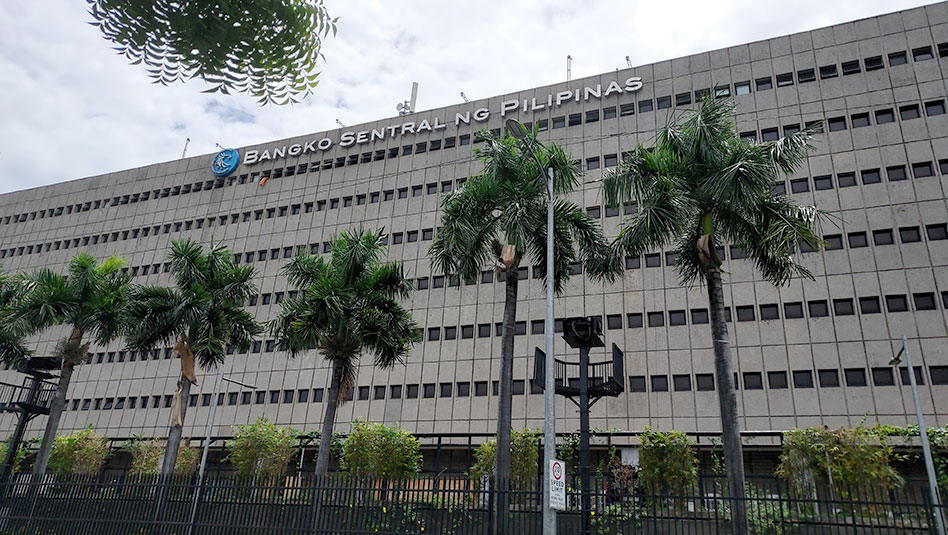
Policy Rate Updates: Policy rate updates to reassure 
DOWNLOAD
Man using his smartphone
Reports
Fed to cut just once 
DOWNLOAD
View all Reports
Metrobank.com.ph How To Sign Up
Follow us on our platforms.

How may we help you?

TOP SEARCHES
  • Where to put my investments
  • Reports about the pandemic and economy
  • Metrobank
  • Webinars
  • Economy
TRENDING ARTICLES
  • Investing for Beginners: Following your PATH
  • On government debt thresholds: How much is too much?
  • Philippines Stock Market Outlook for 2022
  • Deficit spending remains unabated

Login

Access Exclusive Content
Login to Wealth Manager
Visit us at metrobank.com.ph How To Sign Up
Access Exclusive Content Login to Wealth Manager
Search
MODEL PORTFOLIO THE GIST
NEWS AND FEATURES
Global Philippines Fine Living
INSIGHTS
INVESTMENT STRATEGY
Economy Stocks Bonds Currencies
THE BASICS
Investment Tips Explainers Retirement
WEBINARS
2024 Mid-Year Economi Briefing, economic growth in the Philippines
2024 Mid-Year Economic Briefing: Navigating the Easing Cycle
June 21, 2024
Investing with Love
Investing with Love: A Mother’s Guide to Putting Money to Work
May 15, 2024
retirement-ss-3
Investor Series: An Introduction to Estate Planning
September 1, 2023
View All Webinars
DOWNLOADS
Container ship carrying container boxes import export dock with quay crane. Business commercial trade global cargo freight shipping logistic and transportation worldwide oversea concept. Generative AI
Economic Updates
Philippines Trade Update: Wider deficit on strong imports
March 27, 2026 DOWNLOAD
Frick collection with palm trees 
Economic Updates
Policy Rate Updates: Policy rate updates to reassure 
March 26, 2026 DOWNLOAD
Man using his smartphone
Reports
Fed to cut just once 
March 19, 2026 DOWNLOAD
View all Reports

Archives: Business World Article

BIR misses end-July collection goal by 8%

BIR misses end-July collection goal by 8%

The Bureau of Internal Revenue (BIR) fell short of its end-July collection target by 8.2%, data from the Department of Finance (DoF) showed.

Preliminary data posted on the DoF’s Facebook page showed that BIR collections as of end-July stood at PHP 1.68 trillion, falling short of its PHP 1.83-trillion collection goal for the period by 8.2%.

The tally as of end-July represents 55.08% of the BIR’s PHP 3.05-trillion collection target for 2024.

Year on year, the BIR’s seven-month revenues jumped by 12.58% from PHP 1.49 trillion in the same period a year ago.

At the same time, the Bureau of Customs (BoC) collections rose by 6% to PHP 536.42 billion during the January-to-July period from PHP 506.49 billion last year.

This accounted for 57.08% of the Customs’ PHP 939.69-billion collection goal for this year.

For the first seven months of the year, revenues from the BIR and BoC — the National Government’s main tax collecting agencies — jumped by 10.89% to PHP 2.22 trillion from PHP 2 trillion a year ago.

A DoF statement said Finance Secretary Ralph G. Recto held a BIR and BoC command conference on Aug. 16 to assess the agencies’ performance and plans to meet the targets.

At the event, the DoF said the BIR committed to “bolster its digitalization programs, intensify its tax enforcement, and run after delinquent accounts.”

“The BoC will continue to improve on its assessment and collection of duties and taxes on importation, ensure importer’s compliance with customs’ laws, and strengthen border protection to detect undervalued and misclassified commodities,” the DoF said.

Mr. Recto said the government should boost collections as economic growth is expected to accelerate with the recent rate cut by the Bangko Sentral ng Pilipinas (BSP) and the credit rating upgrade by Rating and Investment Information, Inc. (R&I).

Last week, Japan-based R&I upgraded the Philippines’ investment grade rating to “A-” to reflect the country’s strong growth prospects. This was one notch up from the country’s previous rating of “BBB+” assigned in August 2023.

The BSP last week cut interest rates for the first time in nearly four years. The Monetary Board reduced the target reverse repurchase rate by 25 basis points to 6.25% from the over 17-year high of 6.5%. — B.M.D.Cruz

Cash remittances hit six-month high in June

Cash remittances hit six-month high in June

​​Cash remittances from overseas Filipino workers (OFWs) rose to a six-month high in June, the Bangko Sentral ng Pilipinas (BSP) said late on Thursday.

Data from the central bank showed that cash remittances grew by 2.5% to USD 2.88 billion in June from USD 2.81 billion in the same month a year ago.

This was the highest level of remittances since the USD 3.28 billion in December 2023.

Overseas Filipinos’ Cash Remittances

However, the year-on-year growth in cash remittances eased from the 3.6% pace seen a month earlier.

Month on month, remittances increased by 11.6% from the USD 2.58 billion in May.

“The expansion in cash remittances in June 2024 was due to the growth in receipts from land- and sea-based workers,” the BSP said.

Remittances from land-based workers rose by 2.5% to USD 2.35 billion in June, while money sent by sea-based workers went up by 2.1% to USD 535.6 million.

Meanwhile, personal remittances increased by 2.5% to USD 3.21 billion from USD 3.13 billion a year earlier.

“The increase in personal remittances in June 2024 was due to higher remittances sent by land-based workers with work contracts of one year or more and sea- and land-based workers with work contracts of less than one year,” the central bank said.

Ruben Carlo O. Asuncion, chief economist at Union Bank of the Philippines, Inc., said the increase cash remittances recorded in June may be due to the weaker peso, which made it “attractive for OFWs to exchange their hard-earned money.”

The peso mostly traded at the P58-per-dollar level in June and averaged PHP 58.6963 for the month, based on central bank data.

Mr. Asuncion added that OFWs likely sent more money home for the education-related expenses of their families.

“The latest month-on-month pick up came after some seasonal increase in remittances to finance some holiday-related spending during the school vacation season amid better weather conditions and some tuition and other school opening-related expenses at the early stage that could last until early August,” Rizal Commercial Banking Corp. Chief Economist Michael L. Ricafort likewise said.

FIRST-HALF REMITTANCES

In the January-June period, cash remittances jumped by 2.9% year on year to $16.25 billion from USD 15.8 billion.

The BSP expects cash remittances to grow by 3% this year.

The United States accounted for nearly half or 40.9% of overall remittances in the first semester. This was followed by Singapore (6.9%), Saudi Arabia (6%), Japan (5%), and the United Kingdom (5%).

Other sources of remittances were the United Arab Emirates (4.1%), Canada (3.4%), Qatar (2.9%), Korea (2.8%) and Taiwan (2.7%).

Meanwhile, personal remittances in the first half rose by 2.9% to USD 18.1 billion from USD 17.6 billion in the year-ago period.

“For the coming months, modest growth in OFW remittances could still continue as OFW families still need to cope with relatively higher prices locally that would require the sending of more remittances,” Mr. Ricafort said.

BSP cuts rate for 1st time since 2020

BSP cuts rate for 1st time since 2020

The Bangko Sentral ng Pilipinas (BSP) on Thursday cut policy rates for the first time in nearly four years amid an improving inflation outlook.

The Monetary Board on Thursday reduced the target reverse repurchase (RRP) rate by 25 basis points (bps) to 6.25% from the over 17-year high of 6.5%. This was in line with the expectations of nine out of 16 analysts surveyed in a BusinessWorld poll last week.

Rates on the overnight deposit and lending facilities were also lowered to 5.75% and 6.75%, respectively.

This was the first time that the BSP reduced rates in close to four years or since November 2020, when it last delivered a 25-bp cut amid the coronavirus disease 2019 (COVID-19) pandemic.

“With inflation on a target-consistent path, the current macroeconomic outlook supports a calibrated shift to a less restrictive monetary policy stance,” BSP Governor Eli M. Remolona, Jr. said at a briefing.

He said the BSP remains “mindful of lingering upside risks to prices.”

“The balance of risks to the inflation outlook continues to lean toward the downside for 2024 and 2025 with a modest tilt to the upside for 2026,” Mr. Remolona said.

The BSP adjusted its baseline forecasts to 3.4% for 2024 (from 3.3% previously), 3.1% for 2025 (from 3.2% previously), and 3.2% for 2026 (from 3.3% previously).

It also revised its risk-adjusted inflation forecasts for 2024 to 3.3% (from 3.1% previously), and 2.9% for 2025 (from 3.1%). The risk-adjusted forecast for 2026 was set at 3.3%.

Despite inflation accelerating to 4.4% in July, Mr. Remolona said inflation is expected to trend downward to within the government’s 2-4% target range.

“The downside risks are linked mainly to lower import tariffs on rice, while upside risks could come from higher electricity rates and external factors,” he added.

In June, President Ferdinand R. Marcos, Jr. ordered that tariff on rice imports be lowered to 15% until 2028 from 35% previously.

Rice inflation, which accounts for nearly half of overall inflation, eased to 20.9% in July from 22.5% a month prior. This marks the fourth straight month of slower rice inflation.

Mr. Remolona also noted the impact of the latest economic growth figures on the decision to begin easing rates. The economy expanded by 6.3% in the second quarter, faster than 5.8% in the previous quarter and 4.3% a year ago.

“We’re somewhat more confident in the inflation numbers coming down than in the gross domestic product (GDP) numbers going up,” he said.

“Consumption was relatively weak. So, it doesn’t look like something that could easily be sustained. And so we went for a cut, partly because of that.”

Household consumption, which accounts for about three-fourths of the economy, slowed to 4.6% in the second quarter from 5.5% a year ago.

“Despite tight financial conditions, second-quarter GDP growth has been solid, and the unemployment rate has declined. Public investment alongside easing price pressures and robust employment conditions are expected to support economic activity,” Mr. Remolona added.

OUTLOOK

Meanwhile, the BSP chief signaled another 25-bp cut for the remainder of the year.

“My views have been consistent with a 25-bp cut today and another 25 bps sometime during the year, either in October or December. And we’ll see what happens in 2025,” Mr. Remolona said.

“By the way, the most relevant policy horizon for us is actually 2025 when looking at inflation, because there are long lags in the transmission mechanism of monetary policy. The decision we made today (Thursday) will mainly affect 2025,” he added.

The Monetary Board’s remaining policy-setting meetings this year are on Oct. 17 and Dec. 19.

Mr. Remolona said he also expects the US Federal Reserve to begin cutting rates next month.

“Possibly, 50 bps in September and then 100 bps until the end of 2024. And then maybe another 125 bps in 2025,” he said.

Mr. Remolona noted the impact of the interest rate differential once the Fed begins cutting rates.

“That would mean a wider differential. You know, the (US) policy rate is below our policy rate. But if they cut by more than we do, then the differential will be even wider.  That may exert pressure on the peso a little bit. But given that the peso has been appreciating already, it’s not a big deal.”

Mild US inflation readings this week have cemented hopes that the Federal Reserve will lower borrowing costs in September for the first time in four and a half years, Reuters reported.

Mr. Remolona said the central bank is trying to avoid any off-cycle moves. “Off-cycle decisions are either you think you fell behind the curve or you think you’re facing a hard landing. Otherwise, we avoid off-cycle decisions.”

BIGGER CUTS?

Meanwhile, Gareth Leather, senior Asia economist at Capital Economics, said he expects 25-bp cuts each at the Monetary Board’s last two meetings for the year.

“With inflation set to drop back further and growth likely to struggle, we expect another 50 bps of cuts before the end of the year,” he said in a note.

Easing price pressures will help reinforce the BSP’s decision to reduce rates further, Mr. Leather said.

“We expect inflation to drop back to target in August on the back of beneficial base effects and remain low throughout the rest of the year. If we are right, this should give the central bank the confidence it needs to loosen policy further over the coming months,” he said.

Pantheon Macroeconomics Chief Emerging Asia Economist Miguel Chanco said that with the Fed expected to also begin its easing cycle, this may give the BSP room to deliver bigger rate cuts.

“We now see the Board cutting by a further 25 bps each in October and December, though the chances of much larger 50-bp moves, particularly in December, likely will rise if we’re right about the Fed pursuing more aggressive easing in the fourth quarter,” he said in a note.

The BSP can also continue cutting rates through next year, he added.

“All told, the BSP will have much more room for more rate cuts next year; our inflation forecasts see the annual average dropping further to 2.5% in 2025 from an estimated 3.5% this year, down from 6% in 2023,” Mr. Chanco said.

“The urgency and onus on the BSP to start providing the economy with some support is clear, especially with fiscal policy still constrained by the lagging consolidation efforts from the pandemic-era budget blowout.” – Luisa Maria Jacinta C. Jocson, Reporter

Approved foreign investments surge in Q2

Approved foreign investments surge in Q2

Approved foreign investment pledges surged in the second quarter, driven by improved investor confidence, preliminary data from the Philippine Statistics Authority (PSA) showed on Thursday.

Foreign investment commitments jumped by 220.7% year on year to PHP 189.5 billion in the April-to-June period, a turnaround from the revised 64% contraction in the first quarter.

It was the fastest year-on-year increase since the 4,445.6% surge seen in the first quarter of 2023.

The amount of foreign investment pledges in the second quarter was the biggest since the PHP 394.46 billion approved in the fourth quarter of 2023.

“The quarter-on-quarter expansion of the Philippine economy was apparently taken as indication of market growth, at least in the short and medium term, prompting an increase in investment pledges and approved investments,” University of Asia and the Pacific Senior Economist Cid L. Terosa said in an e-mail interview.

The Philippine economy grew by 6.3% year on year in the second quarter, faster than the revised 5.8% in the first quarter and 4.3% in the April-to-June period in 2023.

In the second quarter, Switzerland was the top source of foreign investment pledges with P172.04 billion. This accounted for 90.8% of the total.

The PSA compiles the investment pledges from the government’s six investment promotion agencies: Board of Investments (BoI), BoI-Bangsamoro Autonomous Region in Muslim Mindanao (BoI-BARMM), Clark Development Corp. (CDC), Philippine Economic Zone Authority (PEZA), Subic Bay Metropolitan Authority (SBMA), and Zamboanga City Special Economic Zone Authority (ZCSEZA).

The BoI approved PHP 175.08 billion in foreign investment pledges, accounting for 92.4% of this quarter’s total.

PEZA came in second with PHP 14.03 billion in foreign investment pledges which accounted for 7.4% of the total. This was followed by SBMA with PHP 124.09 million, BoI-BARMM with PHP 110.06 million, CDC with PHP 107.81 million and ZCSEZA with PHP 49.65 million.

Negros Island Region cornered nearly half (45.6%) of the foreign investment commitments with PHP 86.46 billion. This was followed by Calabarzon and Central Visayas with PHP 6.93 billion and PHP 4.35 billion, respectively.

Meanwhile, investment pledges from Filipino nationals rose annually by 103.6% to PHP 525.51 billion in the second quarter. It accounted for 73.5% of the combined pledges worth PHP 715.01 billion.

Foreign and local investments pledged during the second quarter are expected to generate 26,915 jobs once the projects are realized.   

Electricity, gas, steam, and air-conditioning supply industry received the largest amount of approved commitments at PHP 172.74 billion or 91.2% of the total. This was followed by manufacturing with PHP 12.39 billion and administrative and support service activities with PHP 2.84 billion.

“Pledges are pledges. Until we see the approved and actual investment happening, we will have to wait-and-see. This is not to rain on the parade of the great investment pledges performance so far, particularly this [second quarter]. But reality has to set in and approved and actual investments are still the best thing,” Ruben Carlo O. Asuncion, chief economist at Union Bank of the Philippines, Inc., said in an e-mail interview.

Mr. Asuncion said the higher investment pledges are a direct result of President Ferdinand R. Marcos, Jr.’s foreign trips, where he promoted the country as an investment destination.

“Hopefully, this bump in investment pledges will be sustained,” he said.

Mr. Terosa said the weaker peso in the second quarter made investments in certain sectors in the Philippines more attractive.

For the rest of the year, he said a possible recession in some developed countries, the continued weakness of China’s economy and geopolitical tensions may affect investment flows in developing countries like the Philippines.

“I expect investments to be restrained by these conditions in the second half of the year,” Mr. Terosa said.

Foreign investment pledges, which may materialize in the future, differ from the actual foreign direct investments data tracked by the Bangko Sentral ng Pilipinas (BSP). Aside from the projects, the BSP’s monitoring includes other items such as reinvested earnings and lending to Philippine units via their debt instruments. – Lourdes O. Pilar, Researcher

Filipino households’ average annual income up 15% in 2023

Filipino households’ average annual income up 15% in 2023

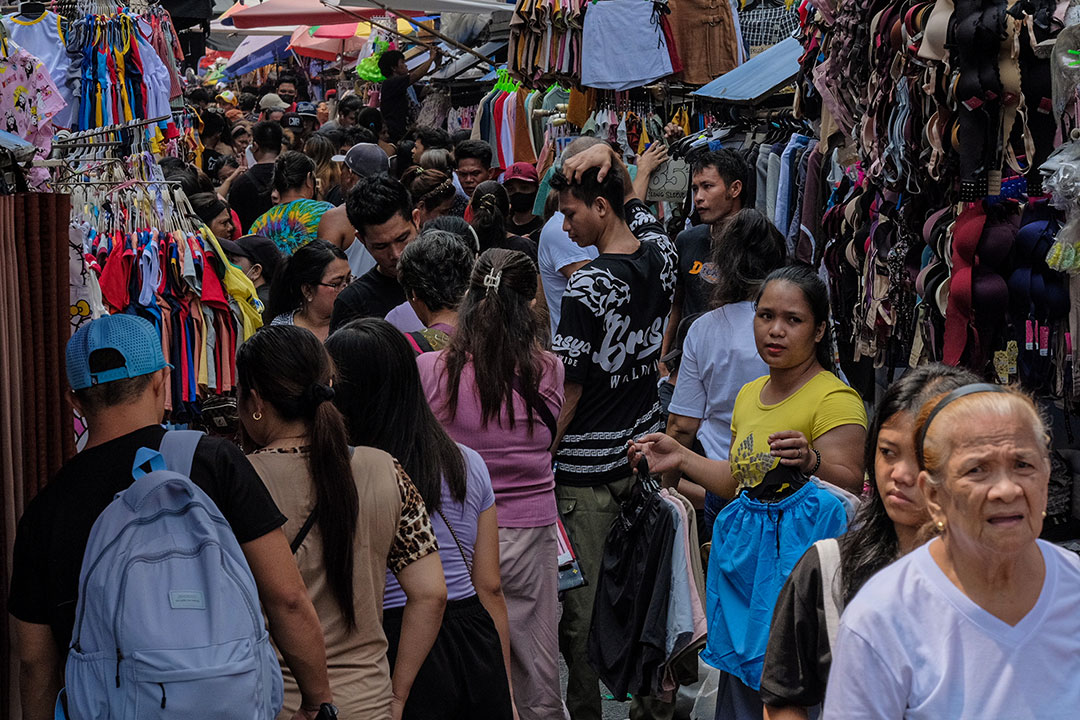
The average annual income of Filipino families increased by 15% in 2023, as wages and quality of jobs improved, the Philippine Statistics Authority (PSA) said.

Preliminary data from the PSA showed that the average annual income of Filipino households rose to PHP 353,230 in 2023 from PHP 307,190 in 2021.

In 2023, the average annual spending of Filipino families went up by 12.8% to PHP 258,050 from PHP 228,800 in 2021.

How did average income and spending of a filipino family fare between 2021 and 2023?

The increase in income was attributed to the uptick in wages, salaries and entrepreneurial activities for the period, Undersecretary and National Statistician Claire Dennis S. Mapa told a news briefing.

By region, the National Capital Region (NCR) had the highest average annual family income in 2023 at PHP 513,520, up by 22.9% from PHP 417,850 in 2021.

Calabarzon followed in second place with PHP 426,530 in 2023, up by 18.1% from PHP 361,030 in 2021. This was followed by Central Luzon at PHP 375,240 in 2023, 14.2% higher than PHP 328,540 in 2021.

On the other hand, Bangsamoro Autonomous Region in Muslim Mindanao (BARMM) posted the lowest average annual family income at PHP 206,880 in 2023, followed by Zamboanga Peninsula at PHP 257,140 and Negros Island Region at PHP 266,290.

In terms of expenditure, NCR also had the biggest annual average family spending at PHP 385,050 in 2023, followed by Calabarzon at PHP 310,320 and Central Luzon at PHP 298,700.

BARMM also had the smallest average family expenditure at PHP 168,910, followed by Mimaropa Region at PHP 189,770 and Eastern Visayas at PHP 199,910.

National Economic and Development Authority (NEDA) Secretary Arsenio M. Balisacan told BusinessWorld that the government is looking to improve the quality of jobs to increase Filipinos’ household incomes in the next few years,

“Quality of employment is the foremost priority of this administration because… we have historically low unemployment rate already. You can’t do any better than that now you know because that’s the kind of rate that you see in very mature economies,” he said.

In 2023, the jobless rate fell to a record low 4.3%. The underemployment rate — or the proportion of employed Filipinos looking for more work or longer working hours — declined to 12.3% in 2023 from 14.2% in 2022.

“The three-legged sources of economic growth, such as BPOs (business process outsourcing), OFW remittances, and tourism should be supplemented by growth in the manufacturing sector,” Union Bank of the Philippines, Inc., Chief Economist Ruben Carlo O. Asuncion said in a Viber message.

Mr. Asuncion also said the government must build the necessary digital infrastructure to help bolster growth.

How income inequality compared across regions in 2023

PSA data also showed the Gini coefficient, which measures income inequality, slipped to 0.3909 in 2023 from 0.4063 in 2021, PSA data showed. A Gini coefficient reading of “0” would mean perfect equality, while “1” suggests perfect inequality.

POVERTY

Data from the PSA also showed the poverty rate dropped to 15.5% in 2023 from 18.1% in 2021 amid elevated inflation.

The number of poor Filipinos declined by 12.26% to 17.54 million in 2023 from 19.99 million in 2021.

“It’s good that the income increases faster than the food inflation. But, if food inflation will be lower, of course, the reduction in poverty could be much, much bigger,” Mr. Mapa said.

Inflation averaged 6% for 2023, the highest in 14 years. It also marked the second straight year that inflation breached the BSP’s 2-4% target band.

The PSA said a family with five members needed to have at least PHP 13,873 a month to meet their minimum basic food and nonfood needs in 2023.

Among the regions, nine had poverty thresholds higher than the national average, led by Central Luzon with PHP 16,046, followed by NCR with PHP 15,713, and Calabarzon with PHP 15,457.

On the other hand, the Soccsksargen Region posted the lowest poverty threshold with PHP 12,241.

By region, the NCR recorded the lowest poverty incidence among the population at 1.8%, while the BARMM had the highest rate at 32.4%.

Meanwhile, the national poverty incidence among families with five members improved to 10.9% in 2023 from 13.2% in 2021. This is equivalent to 2.99 million Filipino families that do not have enough income to meet their basic food and nonfood needs.

Among the regions, NCR had the lowest poverty incidence at 1.1%, while the Zamboanga Peninsula had the highest at 24.2%.

The Caraga Administrative Region showed the biggest improvement as its poverty incidence declined by 11 percentage points to 14.9% in 2023 from 25.9% in 2021.

FOOD THRESHOLD

According to the PSA, the food threshold for a family of five rose by 14.7% to PHP 9,581 in 2023 from PHP 8,353 in 2021, mainly due to high food inflation. This would mean the food threshold per person in a day is at PHP 64.

Food threshold refers to the minimum income an individual or a family needs to meet their basic food needs, “which satisfies the nutritional requirements for economically necessary and socially desirable physical activities.”

Mr. Mapa said the food threshold is based on a sample food bundle with three meals and snacks.

Based on the national food bundle, breakfast is composed of scrambled egg, coffee, and boiled rice or rice-corn mix, while lunch is boiled monggo with malunggay and dried dilis, banana, and boiled rice. Dinner is composed of fried fish or boiled pork, vegetables, and boiled rice, while snacks include bread and boiled root crops.

“This is really basic,” Mr. Mapa said. “Most probably, a lot of people will not be happy about it. But that’s how the bundle was arrived at. And of course, there’s science to it.”

Mr. Mapa said the PSA is reviewing the methodology used for the food poverty threshold.

“There is a review process that we’re doing and as I said we have already initiated to the technical staff ng PSA to review our methodology, the menu,” Mr. Mapa said in mixed English and Filipino. — BMDC


PSE says up to PHP 48.36-B fundraising set for rest of 2024

PSE says up to PHP 48.36-B fundraising set for rest of 2024

The local bourse could see up to PHP 48.36 billion in fundraising activities for the remainder of the year, which could help boost market activity, according to the top official of the Philippine Stock Exchange (PSE).

“In terms of listing, our fund-raising pipeline at this time includes five follow-on offerings (FOOs), one stock rights offering (SRO), and one initial public offering (IPO), which will generate up to PHP 48.36 billion in capital,” PSE President and Chief Executive Officer Ramon S. Monzon said in an e-mailed statement on Thursday.

According to the PSE, three of the five FOOs are expected to proceed in September, while the IPO, SRO, and the remaining two FOOs are tentatively scheduled for the fourth quarter.

 “We hope to see more active trading for the rest of the year on expectations of a rate cut and the record first-half earnings of banks and other listed firms,” Mr. Monzon said.

As of now, the PSE has completed three IPOs, reaching halfway to its target of six IPOs for the year. The completed IPOs include OceanaGold Philippines, Inc., Citicore Renewable Energy Corp., and NexGen Energy Corp.

For the second quarter, the PSE saw a 28% decline in its attributable net income to PHP 155.74 million from PHP 215.06 million last year.

Second-quarter revenue surged by 3.2% to PHP 369.4 million compared with PHP 357.8 million in 2023.

For the first half, the PSE saw a 4.8% drop in its attributable net income to PHP 398.53 million from PHP 418.7 million in 2023.

Revenue fell by 2.3% to PHP 722.75 million due to a 10.7% drop in average trading value during the semester, which reduced income from service fees by P6.2 million and transaction fees by PHP 9.07 million.

Listing-related revenues grew by 0.2% as listing fees surged by 0.2% to PHP 290.98 million. Other income rose by 20% to PHP 161.98 million due to interest income and foreign exchange translation gains.

Total expenses increased by 9.4% to PHP 416.13 million from PHP 380.5 million.

During the first half, the PSE saw two IPOs, three FOOs, one SRO, and three private placements.

“Persistent high interest rates and geopolitical concerns contributed to tepid trading in the first half,” Mr. Monzon said.

“PSE continues to pursue projects that will sustain the company’s growth over the years. This includes the planned acquisition of the Philippine Dealing System Holdings Corp., which we target to complete in the next few months,” he added.

On Thursday, PSE shares rose by 2.27% or PHP 4 to PHP 180 apiece. — Revin Mikhael D. Ochave

Peso hits 4-month high as BSP starts easing cycle

Peso hits 4-month high as BSP starts easing cycle

The peso hit a four-month high against the dollar on Thursday as the Bangko Sentral ng Pilipinas (BSP) cut benchmark rates for the first time in nearly four years.

The local unit closed at PHP 56.90 per dollar on Thursday, strengthening by 5.5 centavos from its PHP 56.955 finish on Wednesday, Bankers Association of the Philippines data showed.

This was the peso’s best finish in four months or since its PHP 56.808-a-dollar close on April 15.

The peso opened Thursday’s session stronger at PHP 56.97 against the dollar. Its weakest showing was at PHP 57.14, while its intraday best was its close of PHP 56.90 versus the greenback.

Dollars exchanged went down to USD 1.33 billion on Thursday from USD 1.34 billion on Wednesday.

The peso appreciated against the dollar after the central bank cut benchmark interest rates, Rizal Commercial Banking Corp. Chief Economist Michael L. Ricafort said in a Viber message.

“The Philippine peso initially depreciated by as much as 0.3% after the Bangko Sentral ng Pilipinas slashed its key interest rate by 25 basis points (bps). However, the currency quickly recovered its losses as market participants shifted their attention to the broader economic outlook,” Security Bank Corp. Chief Economist Robert Dan J. Roces said in a Viber message.

The Monetary Board on Thursday cut benchmark interest rates for the first time since November 2020 amid expectations of easing inflation and an improving economic outlook.

The central bank reduced its target reverse repurchase rate by 25 bps to 6.25%, as expected by nine out of 16 analysts in a BusinessWorld poll conducted last week.

Prior to the cut, the BSP kept its policy rate at an over 17-year high of 6.5% since October 2023 following cumulative hikes worth 450 bps to combat inflation.

“With inflation on a target-consistent path, the current macroeconomic outlook supports a calibrated shift to a less restrictive monetary policy stance. Nonetheless, monetary authorities remain mindful of lingering upside risks to prices,” BSP Governor Eli M. Remolona, Jr. said at a briefing on Thursday. “Going forward, the Monetary Board will continue to take a measured approach in ensuring price stability conducive to balanced and sustainable growth of the economy and employment.”

The BSP revised its risk-adjusted inflation forecasts for 2024 to 3.3% from 3.1% previously and 2.9% for 2025 from 3.1%. It also set its risk-adjusted forecast for 2026 at 3.3%. The baseline forecasts were also adjusted to 3.4% from 3.3% for 2024, 3.1% from 3.2% for 2025, and 3.2% from 3.3% for 2026.

Meanwhile, Philippine gross domestic product expanded by 6.3% in the second quarter, faster than 5.8% in the previous quarter and 4.3% a year ago.

For Friday, Mr. Ricafort sees the peso ranging from PHP 56.80 to PHP 57 per dollar.

SOFT DOLLAR

The dollar was soft on Thursday after data showed US inflation was slowing, underpinning wagers that the Federal Reserve could lower borrowing costs next month, Reuters reported.

The dollar index, which measures the US unit versus six rivals, was last at 102.59, not far from the eight-month low of 102.15 it touched last week. The index is on course for its fourth straight week in the red, a run it last had in March-April 2023.

Data on Wednesday showed the consumer price index rose moderately, in line with expectations, and the annual increase in inflation slowed to below 3% for the first time since early 2021.

The figures add to the mild increase in producer prices in July, suggesting that inflation is on a downward trend, although traders are now anticipating the Fed to be not as aggressive on rate cuts as they had hoped.

Markets are now pricing in 64% chance of a 25 bps cut next month and a 36% chance of a 50 bps reduction, the CME FedWatch tool showed. Traders were evenly split at the start of the week between the two cut options following last week’s sell-off. Markets anticipate 100 bps of cuts this year from the Fed. — A.M.C. Sy with Reuters

R&I upgrades PHL credit rating to ‘A-’

R&I upgrades PHL credit rating to ‘A-’

Japan-based Rating and Investment Information, Inc. (R&I) upgraded the Philippines’ investment grade rating to “A-” amid the country’s strong economic performance.

“Based on macroeconomic stability and high economic growth path as well as expected continuous improvement in fiscal balance, R&I has upgraded the Foreign Currency Issuer Rating to ‘A-,’” it said in a document posted on its website.

This was one notch up from the country’s previous rating of “BBB+” assigned in August a year ago.

The credit rater also assigned a “stable” outlook for the Philippines from “positive” previously. According to R&I, a positive or negative outlook is not a statement indicating a future change of a rating. If neither a positive nor negative outlook is appropriate, it assigns a stable outlook.

“The Philippine economy will likely see stable growth and continuous improvement in the level of national income against the backdrop of active public and private sector investments, development of domestic business sectors such as business process outsourcing, and favorable demographics, among other elements,” R&I said.

The Philippine economy expanded by 6.3% in the second quarter, the fastest in five quarters or since 6.4% in the first quarter of 2023.

“The Philippine economy has been showing fast growth among the major economies in Southeast Asia,” it added.

At 6.3%, the Philippines’ second-quarter gross domestic product (GDP) growth was the second fastest in Southeast Asia, only behind Vietnam (6.9%) and ahead of Malaysia (5.8%) and Indonesia (5%).

The government is targeting 6-7% growth this year and 6.5-7.5% for 2025.

R&I also noted the country’s improved fiscal management as debt remains “affordable, given the manageable burden of interest payment.”

“The fiscal balance as a share of GDP, which had deteriorated during the COVID-19 (coronavirus disease 2019) pandemic, has improved and the government debt ratio will likely start falling in a year or two,” it added.

As of the second quarter, the government’s deficit-to-GDP ratio stood at 5.3%, still below the 5.6% deficit ceiling set for this year.

Meanwhile, the debt-to-GDP ratio eased to 60.9% in the second quarter from 61% a year earlier. It is expected to ease further to 60.6% by end-2024.

R&I also said that the Philippines’ current account deficit is also “not necessarily a negative element” in its assessment.

“The foreign exchange reserves stand at a sufficient level in comparison with that of imports. Despite the liabilities in excess of financial assets of international investment position, the gap between liabilities and assets remains at a low level relative to GDP. R&I, thus, believes that the external risk is limited.”

The central bank projects a USD 4.7-billion current account deficit for 2024, equivalent to 1% of GDP. The current account deficit stood at USD 1.7 billion in the first quarter, equivalent to 1.6% of GDP.

Meanwhile, Finance Secretary Ralph G. Recto said in a statement that this was the Marcos administration’s first credit rating upgrade.

“Our refined Medium-Term Fiscal Program is our blueprint for our ‘road to A rating,’” he said.

“This ensures that we can reduce our deficit and debt gradually in a realistic manner, while creating more jobs, increasing our people’s incomes, growing the economy further, and decreasing poverty in the process. Sticking to this program can help us get there faster.”

The Department of Finance said that improved credit rating from R&I will help attract foreign investors and access more affordable borrowing terms.

“This allows the government to channel funds that would have otherwise been allotted for interest payments towards more development programs such as more infrastructure projects, improved social services, better healthcare system, and quality education.”

The Bangko Sentral ng Pilipinas (BSP) said that the credit upgrade means lower credit risk which “allows a country to access funding from development partners and international debt capital markets at lower cost.”

“The BSP is committed to delivering on its mandate of promoting price stability, financial stability, and a safe and efficient payments and settlements system as this broadly supports sustained and inclusive economic growth,’’ BSP Governor Eli M. Remolona, Jr. said.

Rizal Commercial Banking Corp. Chief Economist Michael L. Ricafort said that the latest credit upgrade puts the Philippines three notches above the minimum investment grade rating.

“This is already similar and somewhat moved in line with the ‘A-’ credit rating given by another Japanese credit rating agency, JCR,” he added.

The Philippines currently holds a “A-” rating from the Japan Credit Rating Agency (JCR), “BBB” from Fitch Ratings, “Baa2” from Moody’s Ratings, and “BBB+” from S&P Global Ratings.

The government is targeting to achieve an “A” level rating before the end of the administration. – Luisa Maria Jacinta C. Jocson, Reporter

BSP likely to be patient in keeping policy rates steady — GlobalSource

BSP likely to be patient in keeping policy rates steady — GlobalSource

The Bangko Sentral ng Pilipinas (BSP) will likely maintain policy rates in the meantime, GlobalSource Partners said, adding that any off-cycle cuts could impact inflation expectations.

“It is our expectation that the BSP will be patient in keeping its policy rate steady. After all, for the BSP, it is not simply about increasing or decreasing interest rates,” GlobalSource country analysts Diwa C. Guinigundo and Wilhelmina C. Mañalac said in a report.

“Keeping the rate steady seems to be gaining more ground given the ‘evolving inflation conditions,’” it added.

The Monetary Board is scheduled to hold a policy meeting today (Aug. 15).

BSP Governor Eli M. Remolona, Jr. on Tuesday said there is “more room to stay tight” amid the faster-than-expected gross domestic product (GDP) growth in the second quarter.

Second-quarter GDP grew by 6.3%, its fastest growth in five quarters or since 6.4% in the first quarter of 2023.

GlobalSource noted that these latest comments from Mr. Remolona are a departure from the BSP’s earlier signals of cutting rates, possibly by 25 basis points, as early as this month.

“In previous weeks, the BSP, the country’s monetary authority, was viewed as being confident in cutting policy rates even ahead of the US Fed. Given the latest inflation information, however, there has been some retreat in the messaging this week,” it added.

Headline inflation accelerated to 4.4% in July, the fastest in nine months. It also ended seven straight months of inflation settling within the central bank’s 2-4% target.

GlobalSource also noted that the Monetary Board’s decision to keep rates unchanged at their June meeting was a “right decision.”

“If the BSP had eased monetary policy two months ago, its decision would have been awkward in the face of the 4.4% July inflation,” it said.

“While this may be a blip that may not result in a long-term trend, this single point might be enough to affect inflation expectations, disrupt capital inflows and drive the weakness of the peso, all of which are undesirable for controlling inflation,” it said.

The central bank earlier said the spike in July inflation is temporary, and that inflation should return to target beginning August.

“The BSP’s conservative stance has appropriately taken into account the likelihood of out-of-target June and July inflation rates, which could eventually dislodge short-term inflation expectations — the delay in the reduction of tariff rates on imported rice and the effects of supply constraints, particularly food are too unpredictable,” GlobalSource said.

‘NOT GOOD FOR OPTICS’

Meanwhile, GlobalSource in its report advised the central bank against any off-cycle moves.

“However, this would not be good for optics because it would show that the patience of the BSP was too prolonged and well behind the curve. Nor is it good for keeping inflation expectations anchored,” it said.

Mr. Remolona had earlier said that the central bank is “always open” to any off-cycle moves.

GlobalSource said that a change in monetary policy is “not crucial at this point” due to robust growth and improved labor conditions, among other positive macroeconomic indicators.

“More important, the favorable impact of the reduced rice tariff on prices has still to be reflected in subsequent inflation numbers,” it added.

Rice prices are expected to go down with the entry of imports at lower tariffs. Last June, President Ferdinand R. Marcos, Jr. signed an executive order slashing tariffs on rice imports to 15% from 35% previously until 2028.

“Moving forward, BSP should be mindful of the remaining upside risks to inflation coming from higher food prices, transport charges, higher power rates, and global fuel prices.”

GlobalSource also noted that monetary policy should be about “ensuring that inflation is at an appropriate level that both business and households, and even governments, can ignore because price stability has produced the right costs for goods, services, and money for them.”

It said that monetary policy does not concern itself with reducing lending costs to allow the government to secure cheap borrowing.

“Appropriate monetary policy is not about enabling consumers to borrow from lending institutions to spend on travel and other personal effects, even if that is within their discretion,” it added.

PESO IMPACT

Meanwhile, Finance Secretary Ralph G. Recto, who is also a Monetary Board member, said that the peso’s recent rebound will be a factor in the BSP’s potential easing cycle.

“It’s a positive factor. That’s a factor for easing,” he told reporters on the sidelines of a Senate hearing on Wednesday.

The local unit closed at PHP 56.955 per dollar on Wednesday, strengthening by half a centavo from its PHP 56.96 finish on Tuesday.

This was the peso’s strongest finish in almost four months or since its PHP 56.808-per-dollar close on April 15.

On the other hand, the strong growth and employment figures support the case for keeping rates steady, Mr. Recto said.

“Based on the data, we will make a decision (on Thursday). We will be voting on that… but safe to say, as I mentioned, I do not think that there will be an increase in rates within the year. If at all, it should go down,” he added. — Luisa Maria Jacinta C. Jocson

Recto says Maharlika fund still identifying potential investments

Recto says Maharlika fund still identifying potential investments

The Maharlika Investment Corp. (MIC) plans to decide on potential investments by the end of the year, Finance Secretary Ralph G. Recto said on Wednesday.

“Admittedly it is taking time to identify investments that Maharlika can make,” he told a Senate Finance Committee hearing with the Development Budget Coordination Committee.

The country’s first sovereign wealth fund has not yet made any investments since Republic Act No. 11954, which created the Maharlika Investment Fund, was signed into law in July 2023.

“As you know it is like a startup, we just passed the law last year, so it has been in operation for about six to seven months right now,” Mr. Recto said.

He said the Maharlika’s board, composed of the Land Bank of the Philippines (LANDBANK), the Development Bank of the Philippines (DBP), the President, and private sector representatives, was “working and complete.”

Mr. Recto, who serves as the board’s chairman, said the corporation was still setting up its office. The board members have not received salaries, he added.

He noted that MIC Chief Executive Officer (CEO) Rafael D. Consing, Jr. is “looking for opportunities” but has not sought the board’s approval for investments.

During past board meetings, Mr. Recto said Mr. Consing mentioned prioritizing investments in the energy sector, particularly on off-grid power projects and infrastructure projects.

“These (priority areas of investment) are very general, nothing final yet,” the Finance secretary said. “Hopefully, by the end of the year, there will be decisions where to invest.”

Mr. Consing earlier said the corporation’s priority sectors include energy, physical and digital infrastructure, food security, aviation and aerospace, mineral processing, transportation, and tourism.

He has said the corporation seeks to raise about $1 billion for energy projects that include grid modernization, electricity distribution, and new sources to “diversify supply and create price stability.”

Mr. Recto said the MIC should focus on investment opportunities locally, not abroad.

“We are anticipating that Maharlika will make significant investments in infrastructure,” Senate Finance Committee Chairperson Mary Grace Sonora N. Poe-Llamanzares said at the same hearing.

The MIC has an authorized capital stock of PHP 500 billion. Its initial capital of PHP 125 billion comes from contributions from the LANDBANK (PHP 50 billion), DBP (PHP 25 billion) and the National Government (PHP 50 billion).

Mr. Recto said the PHP 75 billion released to the MIC is currently invested in the Treasury.

“We just invested in the Treasury, and the interest income is what they are using in their operations,” he said.

Senate Deputy Minority Floor Leader Ana Theresia N. Hontiveros-Baraquel asked Mr. Recto to confirm if for every PHP 1 billion taken from the MIC’s capital stock, PHP 9 billion would be taken from the loanable funds of LANDBANK and DBP, which the Finance chief responded with “possibly.”

“That (P9 billion reduced in loanable funds assumes that everything is correct, with the nine times multiplier effect, but in many instances, LANDBANK and DBP, many of those resources, investable funds, are also invested in the Treasury,” he said.

Leonardo A. Lanzona, who teaches economics at the Ateneo de Manila University, said that the delay in getting investments showed the government’s failure to justify the MIC’s existence.

“The main task of this corporation was to identify a number of top-notch financial persons who will [place its resources in high-yielding investments,” he said in a Facebook Messenger chat.

“The cost of having dormant funds, which this corporation was formed to eliminate, remains.”

Jonathan L. Ravelas, senior adviser at professional service firm Reyes Tacandong & Co., said it was understandable for the MIC to go through a “meticulous process” of setting up shop.

“This cautious strategy is essential in a volatile global climate, where careful planning and gradual progress are key to long-term success,” he said in a Viber message.

“By the end of the year, we hope that Maharlika will have identified strategic investments that align with its goals, contributing positively to the economic landscape.”

But Jose Enrique A. Africa, executive director of the think tank IBON Foundation, said the government must ensure there is transparency in MIC’s investments.

“The governance issues, lack of public funds for such an investment vehicle, unfavorable investment conditions from a shaky domestic and global economy, also mean risks for public funds,” he said in a Viber message. – John Victor D. Ordoñez, Reporter

Posts navigation

Older posts
Newer posts

Recent Posts

  • Investment Ideas: April 1, 2026
  • Metrobank US-Iran Risk Index: Signals of an end
  • Eye on Earnings: Demand for connection supports telcos
  • Inflation Preview: March madness
  • Investment Ideas: March 31, 2026

Recent Comments

No comments to show.

Archives

  • April 2026
  • March 2026
  • February 2026
  • January 2026
  • December 2025
  • November 2025
  • October 2025
  • September 2025
  • August 2025
  • July 2025
  • June 2025
  • May 2025
  • April 2025
  • March 2025
  • February 2025
  • January 2025
  • December 2024
  • November 2024
  • October 2024
  • September 2024
  • August 2024
  • July 2024
  • June 2024
  • May 2024
  • April 2024
  • March 2024
  • February 2024
  • January 2024
  • December 2023
  • November 2023
  • October 2023
  • September 2023
  • August 2023
  • July 2023
  • June 2023
  • May 2023
  • April 2023
  • March 2023
  • February 2023
  • January 2023
  • December 2022
  • November 2022
  • October 2022
  • September 2022
  • August 2022
  • July 2022
  • June 2022
  • May 2022
  • March 2022
  • December 2021
  • October 2021

Categories

  • Bonds
  • BusinessWorld
  • Currencies
  • Economy
  • Equities
  • Estate Planning
  • Explainer
  • Featured Insight
  • Fine Living
  • How To
  • Investment Tips
  • Markets
  • Portfolio Picks
  • Rates & Bonds
  • Retirement
  • Reuters
  • Spotlight
  • Stocks
  • Uncategorized

You are leaving Metrobank Wealth Insights

Please be aware that the external site policies may differ from our website Terms And Conditions and Privacy Policy. The next site will be opened in a new browser window or tab.

Cancel Proceed
Get in Touch

For inquiries, please call our Metrobank Contact Center at (02) 88-700-700 (domestic toll-free 1-800-1888-5775) or send an e-mail to customercare@metrobank.com.ph

Metrobank is regulated by the Bangko Sentral ng Pilipinas
Website: https://www.bsp.gov.ph

Quick Links
The Gist Webinars Wealth Manager Explainers
Markets
Currencies Rates & Bonds Equities Economy
Wealth
Investment Tips Fine Living Retirement
Portfolio Picks
Bonds Stocks
Others
Contact Us Privacy Notice Terms of Use
© 2026 Metrobank. All rights reserved.

Access this content:

If you are an existing investor, log in first to your Metrobank Wealth Manager account. ​

If you wish to start your wealth journey with us, click the “How To Sign Up” button. ​

Login HOW TO SIGN UP