




MODEL PORTFOLIO
THE GIST
NEWS AND FEATURES
Global Philippines Fine Living
INSIGHTS
INVESTMENT STRATEGY
Economy Stocks Bonds Currencies
THE BASICS
Investment Tips Explainers Retirement
WEBINARS
2024 Mid-Year Economi Briefing, economic growth in the Philippines
2024 Mid-Year Economic Briefing: Navigating the Easing Cycle
June 21, 2024
Investing with Love
Investing with Love: A Mother’s Guide to Putting Money to Work
May 15, 2024
retirement-ss-3
Investor Series: An Introduction to Estate Planning
September 1, 2023
View All Webinars
DOWNLOADS
Container ship carrying container boxes import export dock with quay crane. Business commercial trade global cargo freight shipping logistic and transportation worldwide oversea concept. Generative AI
Economic Updates
Philippines Trade Update: Wider deficit on strong imports
DOWNLOAD
Frick collection with palm trees 
Economic Updates
Policy Rate Updates: Policy rate updates to reassure 
DOWNLOAD
Man using his smartphone
Reports
Fed to cut just once 
DOWNLOAD
View all Reports
Metrobank.com.ph How To Sign Up
Follow us on our platforms.

How may we help you?

TOP SEARCHES
  • Where to put my investments
  • Reports about the pandemic and economy
  • Metrobank
  • Webinars
  • Economy
TRENDING ARTICLES
  • Investing for Beginners: Following your PATH
  • On government debt thresholds: How much is too much?
  • Philippines Stock Market Outlook for 2022
  • Deficit spending remains unabated

Login

Access Exclusive Content
Login to Wealth Manager
Visit us at metrobank.com.ph How To Sign Up
Access Exclusive Content Login to Wealth Manager
Search
MODEL PORTFOLIO THE GIST
NEWS AND FEATURES
Global Philippines Fine Living
INSIGHTS
INVESTMENT STRATEGY
Economy Stocks Bonds Currencies
THE BASICS
Investment Tips Explainers Retirement
WEBINARS
2024 Mid-Year Economi Briefing, economic growth in the Philippines
2024 Mid-Year Economic Briefing: Navigating the Easing Cycle
June 21, 2024
Investing with Love
Investing with Love: A Mother’s Guide to Putting Money to Work
May 15, 2024
retirement-ss-3
Investor Series: An Introduction to Estate Planning
September 1, 2023
View All Webinars
DOWNLOADS
Container ship carrying container boxes import export dock with quay crane. Business commercial trade global cargo freight shipping logistic and transportation worldwide oversea concept. Generative AI
Economic Updates
Philippines Trade Update: Wider deficit on strong imports
March 27, 2026 DOWNLOAD
Frick collection with palm trees 
Economic Updates
Policy Rate Updates: Policy rate updates to reassure 
March 26, 2026 DOWNLOAD
Man using his smartphone
Reports
Fed to cut just once 
March 19, 2026 DOWNLOAD
View all Reports

Archives: Business World Article

‘BSP has room for 2 more rate cuts’

‘BSP has room for 2 more rate cuts’

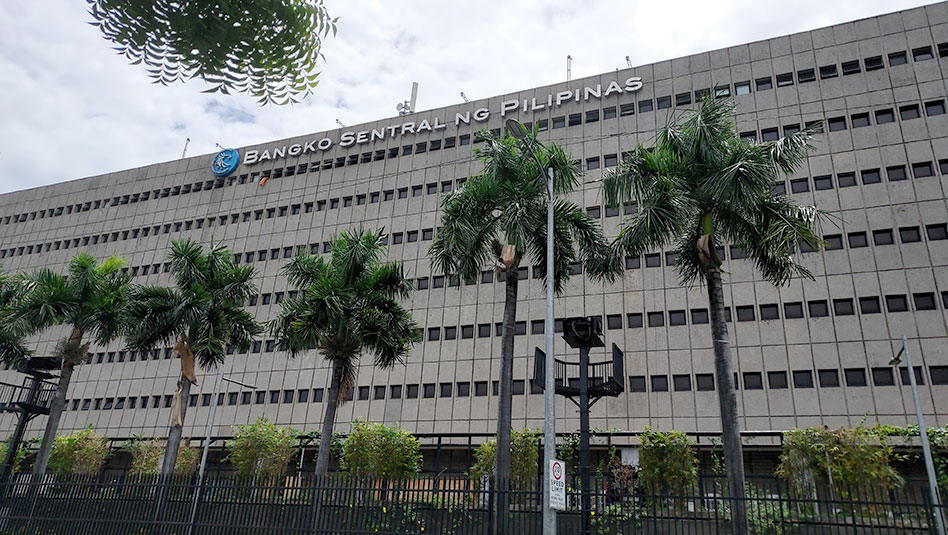
The Bangko Sentral ng Pilipinas (BSP) may have room for two more rate cuts this year, Metropolitan Bank & Trust Co. (Metrobank) said.

“For now, we are holding on to our ‘2+1’ rate cut call (two cuts with a possibility of a third cut) for 2024, with up to 75 basis points (bps) worth of easing slated for early 2025,” Metrobank Chief Economist Nicholas Antonio T. Mapa said in a report.

“The main argument for rates to slip to 5% by mid-2025 lies in the outlook for growth and inflation,” he added.

The Monetary Board last week reduced the target reverse repurchase (RRP) rate by 25 bps to 6.25% from the over 17-year high of 6.5%.  This was the first time that the central bank cut rates in nearly four years. 

BSP Governor Eli M. Remolona, Jr. had also signaled the possibility of a 25-bp cut in the fourth quarter. The Monetary Board’s remaining meetings this year are on Oct. 17 and Dec. 19.

Metrobank expects the central bank to implement a “modest” easing cycle.

“Given the BSP’s forecasts pointing to inflation remaining within target all the way through to 2026, we believe that BSP has the price stability objective in hand for the moment,” Mr. Mapa said.

The BSP expects inflation to average 3.4% this year, 3.1% in 2025, and 3.2% in 2026. This would put full-year inflation settling within the central bank’s 2-4% target until 2026.

For his part, GlobalSource Partners country analyst and former BSP Deputy Governor Diwa C. Guinigundo said that the BSP’s inflation outlook supports further easing.

“This gives the BSP room to maneuver into a less restrictive monetary stance, lower cost of borrowing and stimulate credit and business activities,” he said in a Viber message.

“If between now and the next two meetings of the BSP for the rest of the year nothing changes in the balance of risks, there could be space for another rate cut and more in 2025.”

Mr. Mapa noted that the Monetary Board’s decision to cut rates also took economic growth into account.

“The move suggests that rates are not at ‘normal’ levels and that the restrictive stance would impose a toll on economic growth if kept at elevated levels for much longer,” he said.

Mr. Remolona had earlier said that the previous 6.5% key rate was “tight.”

“Tight policy rates may have been imperative when inflation was well-above the target, but with inflation on the downtrend, it appeared that tight policy was no longer the right prescription for a growing economy,” Mr. Mapa said.

The Philippine economy expanded by 6.3% in the second quarter, faster than 5.8% in the previous quarter and 4.3% a year ago. On a seasonally adjusted quarter-on-quarter basis, gross domestic product (GDP) expanded by 0.5%, slowing from 1.1% in the first quarter.

“Barring any supply-side shocks, the BSP appears to have more than enough room to engineer a ‘soft takeoff’ for the Philippine investment sector, which for the most part has been operating at a very measured pace,” Mr. Mapa said.

“The latest GDP growth numbers plus the BSP’s own forecasts pointing to growth staying below 6% this year and the next suggest that the BSP does have scope to ease off the brake pedal and shift to the accelerator at a ‘measured pace.’”

Meanwhile, Mr. Mapa said the BSP may continue its easing cycle once the Fed begins cutting rates.

“If inflation remains well-behaved, the Fed proceeds with three rate cuts and growth remains constrained, we could see BSP cutting rates by another 50 bps before the end of the year.”

However, Mr. Guinigundo said that the BSP must still be wary of the Fed’s moves.

“I would rather have the BSP shift to a less restrictive monetary policy after the US Fed’s expected easing,” he said.

“This would help mitigate the risk of capital outflow should the interest rate differential moves in favor of dollar-denominated assets. Additional price pressures might be triggered by a weak peso.”

The focus this week will be on Federal Reserve Chair Jerome H. Powell’s speech in Jackson Hole as investors look for cues on whether the Fed will start with a 25-bp or 50-bp cut in September.

“I do maintain that patience continues to be relevant in future monetary policy discussion because the real sector remains robust and the labor market generally firm,” Mr. Guinigundo said.

“The tight monetary policy has succeeded in stabilizing inflation without dislodging the anchors of economic growth,” he added. – Luisa Maria Jacinta C. Jocson, Reporter


PHL stock market seen to get much-needed lift from BSP easing cycle

PHL stock market seen to get much-needed lift from BSP easing cycle

Further rate cuts by the Bangko Sentral ng Pilipinas (BSP) are expected to give the Philippine stock market a much-needed boost, analysts said.

The Philippine Stock Exchange index (PSEi) has been flirting with the 7,000 level since the BSP began its easing cycle with a 25-basis-point (bp) rate cut on Aug. 15.

“The dovish shift in monetary policy should bode well for the stock market. Lower interest rates mean lower borrowing costs and improved equity valuations,” China Bank Capital Corp. Managing Director Juan Paolo E. Colet told BusinessWorld in a Viber message.

“Better market performance, a stable exchange rate, and sustained economic growth due to well-calibrated rate cuts would also help attract foreign fund flows that can significantly lift trading volumes,” he added.

First Metro Investment Corp. Head of Research Cristina S. Ulang said the PSEi is “already within striking distance” of the 7,000 level following the BSP rate cut.

The PSEi on Tuesday closed higher for a third day in a row, ending the day up by 0.79% or 54.89 points to 6,944.76. It reached as high as 7,005.27 during the session.

The Monetary Board last Thursday delivered a 25-bp rate cut, bringing the benchmark rate to 6.25% from the over 17-year high of 6.5%. This was the first time the BSP reduced rates since November 2020.

BSP Governor Eli M. Remolona, Jr. has said there is room for another rate cut, possibly by 25 bps, in the fourth quarter.

Globalinks Securities and Stocks, Inc. Trader Mark V. Santarina said in a Viber message that he expects the PSEi rising above the 7,000 level before yearend, “reflecting growing investor confidence and market strength.”

“The Philippine market is likely to see a generally positive trend in the remaining months of 2024, driven by the expected rate cuts from the BSP and Federal Reserve. These cuts should enhance liquidity and lower borrowing costs, which could stimulate economic growth and boost corporate earnings,” he said.

Mr. Santarina said there may be increased market volatility following the rate cuts. 

“Volatility may increase in response to the rate cuts as markets adjust to the new monetary policy environment,” he said. “Initially, we might see a spike in trading volumes as investors react to the news and reposition their portfolios, seeking higher returns in equities over fixed income.”

SECTORS TO BENEFIT

Property firms and real estate investment trusts (REITs), as well as consumer goods companies, are among those that will benefit from the central bank’s rate cuts, analysts said.

“The rate cuts will bode well for REITs, banks, and consumer-related stocks,” Ms. Ulang said in a Viber message.

Mr. Santarina said that consumer-related stocks may also get a lift as household spending is likely to pick up ahead of the holiday season.

“Specific sectors that are likely to benefit from the rate cuts include consumer discretionary, real estate, and financials. Consumer discretionary sectors could see a boost from increased consumer spending, as lower interest rates make financing more accessible,” he said.

Meanwhile, COL Financial Group, Inc. Chief Equity Strategist April Lynn Lee-Tan said she maintains a cautiously optimistic stock market outlook for the rest of the year as high inflation may further dampen consumer spending.

“Lower rates are good, but a bigger factor would be earnings. If corporate earnings continue to be affected by consumers that are still recovering from high prices, then it will be difficult to expect a continuous increase in share prices,” she said in a Viber message.

Household consumption, which accounts for about three-fourths of the economy, slowed to 4.6% in the second quarter from 5.5% a year ago, reflecting the impact of elevated inflation and high interest rates.

Ms. Tan said there is also the risk of a possible recession in the United States.

“Also, at this point there is still a risk that the US will suffer from a recession and a bear market. Historically, we always suffered from a contagion when this happens,” she added.

Mr. Colet flagged other risks such as geopolitical tensions, a potential economic slowdown, and natural calamities.

Inclusive growth key to lower poverty incidence — Balisacan

Inclusive growth key to lower poverty incidence — Balisacan

The Philippine Government is banking on increased investments in the manufacturing and services sectors to make growth more inclusive and lift more Filipinos out of poverty by 2028, the National Economic and Development Authority (NEDA) said.

“Inequality of opportunities is what we want to reduce — whether that inequality is in the form of access to education, health, wealth, credit, technology,” NEDA Secretary Arsenio M. Balisacan told BusinessWorld last week.

The country’s poverty rate fell to 15.5% in 2023 from 18.1% in 2021, the Philippine Statistics Authority (PSA) said. The number of poor Filipinos declined by 12.26% to 17.54 million in 2023 from 19.99 million in 2021.

The government is aiming to reduce poverty incidence to 9% by 2028 or the end of the Marcos administration.

To be able to achieve this target, around seven million Filipinos must be lifted out of poverty annually in the next four years, NEDA said.

This would be possible if economic growth in the next few years is sustained and inclusive, Mr. Balisacan said.

The Philippine economy is expected to grow by 6-7% this year and 6.5-7.5% next year. It also expects gross domestic product (GDP) growth at 6.5-8% from 2026 to 2028.

“When we say more inclusive, technically, it means the Gini (coefficient) ratio will fall or will at least remain the same… If it will increase, it weakens the impact of economic growth,” Mr. Balisacan said.

The Gini coefficient, which measures how unevenly distributed a country’s annual income is, fell to 0.3909 in 2023 from 0.4063 in 2021. A Gini coefficient reading of “0” suggests perfect equality, while “1” denotes perfect inequality.

Mr. Balisacan also highlighted the need for the “structural transformation of the economy” by increasing the value of high productivity sectors such as manufacturing, services, and tourism.

“If you can infuse even more dynamism into the services sector, this is where the people will go,” he said.

As an example, integrating the medical technology sector with the business process outsourcing (BPO) industry could also help create more job opportunities, Mr. Balisacan said.

“Since we’re a global supplier of nurses and doctors, and if we can get the medtech (medical technology) industry here in conjunction with a strong BPO, you can have a very strong pillar of poverty reduction and economic growth,” he said.

‘UNREALISTIC’ THRESHOLD

Meanwhile, IBON Foundation Executive Director Jose Enrique A. Africa said the improved poverty rate is not the result of the creation of more productive and high-paying jobs.

“It is for instance striking that job creation accompanying recent supposedly rapid economic growth is mostly in low-paying and low-productivity sectors that are notorious for informality,” he said in a Viber message.

Mr. Africa also noted that the poverty threshold used by the PSA remains “low and unrealistic,” and was likely offset by the expansion of social protection or ayuda programs.

The poverty threshold or the minimum income needed to meet the basic food and nonfood requirements of a family of five is currently at PHP 13,873 per month, PSA data showed.

The food threshold or the minimum income needed by a family of five to meet their monthly basic food needs was at PHP 9,581 or about PHP 64 per person per day.

Ateneo de Manila University economics professor Leonardo A. Lanzona said that people who are considered above the poverty threshold but receive government subsidies are still vulnerable to economic shocks.

“We have this huge category of nonpoor people hovering just above the threshold. Because of this, any economic shock such as high inflation or COVID-19 (coronavirus disease 2019) can result in substantial increases again in poverty, making it very difficult to reduce poverty permanently to single-digit levels,” he said in a Facebook Messenger chat.

The government must focus on developing the domestic agriculture and industry sectors to ensure “truly sustainable and inclusive” growth, Mr. Africa said.

Last week, Mr. Balisacan defended the use of these poverty and food thresholds, saying these are metrics used to determine the inclusiveness of economic growth and the effectiveness of policies.

“They are not, and were never intended to be, prescribed budgets for a decent standard of living. They do not dictate how much a family should spend on food, nor do they provide an idea of a desirable household budget,” he said in a statement. – Beatriz Marie D. Cruz, Reporter

T-bonds fetch lower rates on BSP, Fed easing bets

T-bonds fetch lower rates on BSP, Fed easing bets

The government made a full award of the reissued Treasury bonds (T-bonds) it offered on Tuesday as yields declined on expectations of rate cuts from the Bangko Sentral ng Pilipinas (BSP) and the US Federal Reserve in the coming months.

The Bureau of the Treasury (BTr) raised PHP 25 billion as planned via the reissued 20-year bonds it auctioned off on Tuesday as total bids reached PHP 54.601 billion, or more than double the amount on offer.

This brought the outstanding volume for the series to PHP 164.3 billion, the Treasury said in a statement.

The bonds, which have a remaining life of 14 years and five months, were awarded at an average rate of 6.103%. Accepted yields ranged from 6.05% to 6.125%.

The average rate of the reissued papers dropped by 67.8 basis points (bps) from the 6.781% fetched for the series’ last award on June 19. This was also 64.7 bps lower than the 6.75% coupon for the issue.

It was likewise 0.9 bp below the 6.112% seen for the same bond series and 3.4 bps lower than the 6.137% quoted for the 15-year bond, the tenor closest to the remaining life of the papers on offer, at the secondary market before Tuesday’s auction, based on PHP Bloomberg Valuation Service Reference Rates data provided by the BTr.

The government fully awarded its T-bond offer as the average rate fetched was lower than the bond series’ prevailing secondary market rate and previous average yield quoted for the issue, the BTr said.

The T-bonds auctioned off on Tuesday fetched lower yields amid “aggressive buying” for long tenors as the market expects the monetary easing cycles of both the BSP and the Fed to extend until next year, a trader said in a phone interview.

The BSP’s first rate cut in nearly four years and signals of more cuts ahead, as well as expectations that it would match future Fed easing moves, led to the lower awarded yields for the T-bonds on offer, Rizal Commercial Banking Corp. Chief Economist Michael L. Ricafort likewise said in a Viber message.

The Philippine central bank on Thursday cut benchmark interest rates for the first time in almost four years to mark the start of a “calibrated” easing cycle amid an improving inflation and economic outlook, with the BSP chief signaling at least one more reduction before the end of the year.

The Monetary Board reduced its target reverse repurchase rate by 25 bps to 6.25%. This was in line with the expectations of nine out of 16 analysts surveyed in a BusinessWorld poll.

Prior to the cut, the BSP kept its policy rate at an over 17-year high of 6.5% for six straight meetings following cumulative hikes worth 450 bps between May 2022 and October 2023 to combat inflation.

“With inflation on a target-consistent path, the current macroeconomic outlook supports a calibrated shift to a less restrictive monetary policy stance,” BSP Governor Eli M. Remolona, Jr. said at a briefing.

He said they could cut rates by another 25 bps within the year. The Monetary Board’s remaining policy-setting meetings this year are scheduled for Oct. 17 and Dec. 19.

Analysts expect the BSP’s easing cycle to continue until next year amid stabilizing inflation, with at least 100 bps in rate cuts seen in 2025.

Meanwhile, the BSP expects the Fed to begin cutting rates next month, possibly by 50 bps, and by 100 bps more until the end of 2024 and by 125 bps in 2025, Mr. Remolona said last week.

Fed policy makers have in recent days signaled a potential rate easing in September, priming markets for a similar tone from Fed Chair Jerome H. Powell and other speakers at the annual meeting of global central bankers and other policy makers in Jackson Hole, Wyoming, Reuters reported.

Investors largely expect Mr. Powell to acknowledge the case for a rate cut and will parse his words for cues on whether the Fed will start with a 25-bp cut or a 50-bp cut in September.

While labor market deterioration led to the markets expecting a bigger rate cut in September, data since has been mixed, with upbeat retail sales still signaling a resilient consumer.

Markets are pricing in a 24.5% chance of a 50-bp cut in September, down from 50% a week ago, with a 25-bp reduction having odds of 75.5%, the CME FedWatch Tool showed. Traders are pricing in a total of 93 bps of cuts this year.

A slim majority of economists polled by Reuters expect the US central bank to cut rates by 25 bps at each of the remaining three meetings of 2024.

The BTr wants to raise PHP 220 billion from the domestic market this month, or PHP 80 billion through Treasury bills and PHP 140 billion via T-bonds.

The government borrows from local and foreign sources to help fund its budget deficit, which is capped at PHP 1.48 trillion or 5.6% of gross domestic product for this year. — A.M.C. Sy with Reuters

July BoP position swings to surplus

July BoP position swings to surplus

The country’s balance of payments (BoP) position swung to a surplus in July, data from the Bangko Sentral ng Pilipinas (BSP) showed.

The USD 62-million surplus was a turnaround from the USD 53-million deficit a year ago and the USD 155-million deficit in June. 

“The BoP surplus in July 2024 reflected inflows mainly from the net income from the BSP investments abroad and the National Government’s (NG) net foreign currency deposits with the BSP,” the central bank said in a statement.

Philippines: Balance of Payments (BoP) Position

The BoP measures the country’s transactions with the rest of the world. A surplus shows that more money entered the Philippines, while a deficit means more funds left.

At its end-July position, the BoP reflected a final gross international reserve (GIR) level of USD 106.7 billion, slightly higher than USD 105.2 billion as of end-June.

The dollar reserves were enough to cover 6.1 times the country’s short-term external debt based on original maturity and 3.8 times based on residual maturity.

It was also equivalent to 7.9 months’ worth of imports of goods and payments of services and primary income.

An ample level of foreign exchange buffers safeguards an economy from market volatility and is an assurance of the country’s capability to pay debts in the event of an economic downturn.

Rizal Commercial Banking Corp. Chief Economist Michael L. Ricafort said the BoP surplus in July was due to “continued inflows of overseas Filipino worker  remittances, business process outsourcing revenues, foreign tourism receipts, foreign direct investments (FDI) and other structural US dollar inflows of the country.”

Earlier data from the BSP showed that cash remittances grew by 2.5% to a six-month high of USD 2.88 billion in June. This brought the January-to-June remittances to USD 16.25 billion, up 2.9% from a year ago.

Net inflows of FDIs climbed by 15.8% to USD 4.024 billion in the first five months from USD 3.475 billion in the year-ago period.

7-MONTH PERIOD
Meanwhile, the country’s BoP position registered a USD 1.504-billion surplus in the January-to-July period. This was lower than the USD 2.207-billion surplus recorded a year ago.

“Based on preliminary data, this cumulative BoP surplus reflected mainly the narrowing trade in goods deficit alongside the continued net inflows from personal remittances, net foreign direct investment, trade in services, net foreign borrowings by the NG, and net foreign portfolio investments,” the BSP said.

In the first half of the year, the trade deficit narrowed by 9.5% to USD 25 billion. The country’s balance of trade in goods has been in a deficit for nine years or since the USD 64.95-million surplus in May 2015.

Mr. Ricafort said the BoP position in the January-July period was lower than a year ago due to the bigger proceeds from global bond sales last year.

The government raised USD 3 billion from its dollar bond sale in January 2023. This year, it raised USD 2 billion from its dual-tranche dollar bond offering in May.

“While the year-to-date surplus is lower than 2023, the country’s GIR of USD 106.7 billion remains ample,” Security Bank Corp. Chief Economist Robert Dan J. Roces said in a Viber message.

“A narrowing trade deficit and consistent inflows from remittances, FDI and portfolio investments contribute to a cautiously optimistic outlook for the Philippine economy,” he added.

For the coming months, Mr. Ricafort said the BoP position could further improve amid the expected foreign bond offerings for the rest of the year.

The government is eyeing to raise about $5 billion from the issuance of global bonds this year. Finance Chief Ralph G. Recto has said they might offer dollar or Samurai bonds.

For 2024, the BSP expects the country’s BoP position to end at a USD 1.6-billion surplus, equivalent to 0.3% of GDP. – Luisa Maria Jacinta C. Jocson, Reporter

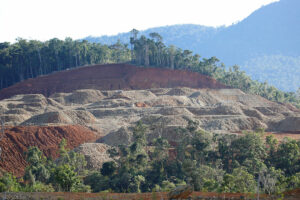
DoF lowers revenue projections from mining fiscal reform bill to PHP 6.3 billion

DoF lowers revenue projections from mining fiscal reform bill to PHP 6.3 billion

The Department of Finance (DoF) has lowered its yearly revenue estimates to PHP 6.3 billion from PHP 10.23 billion in the next four years from a proposed five-tier margin-based tax system for the mining industry amid lower metal prices.

The government is expected to earn PHP 4.48 billion from royalty tax on miners inside mineral reservations, PHP 1.07 billion from those outside reservations, and PHP 730 million from windfall profit tax, Finance Assistant Secretary Karlo Adriano S. Fermin told a Senate hearing on Monday.

The DoF is now proposing to impose a 1.5-5% margin-based royalty rate with five tiers for miners outside mineral reservations, as well as a 1-10% windfall profit tax with five tiers.

It still wants to keep the regime where large-scale metallic mining operations inside mineral reservations pay the government 5% of their gross output.

Under its previous four-tier proposal, the DoF had expected to generate PHP 5.5 billion from royalties from miners operating within mineral reservations, PHP 1.31 billion from royalties on miners outside reservations, and PHP 3.37 billion from windfall profit tax.

Mr. Fermin said the revenue projections were revised to reflect the latest data and lower prices in the world market.

“Number one, this comes from new data and number two, metallic prices have gone down,” he told BusinessWorld on the sidelines of the hearing.

Based on Aug. 15 data from the Mines and Geosciences Bureau, nickel prices dropped by 19.1% to USD 16,035 per metric ton (/MT) from USD 19,825/MT a year earlier. Gold prices stood at USD 2,449 per ounce, up by 28.5% from $1,906 per ounce a year ago, while copper prices rose by 8.1% to USD 8,906/MT from USD 8,242/MT.

Mr. Fermin said the five-tier system was a compromise made after consultations with mining stakeholders, who expressed fears about a higher effective tax rate for the industry.

“Of course, with more tiers, you have more rates, right?” he told BusinessWorld in Filipino. “But with fewer tiers, there are fewer rates, but the advance might be larger.”

The DoF’s latest proposal differs from House Bill No. 8937, approved in September 2023, which proposed that large-scale miners in mineral reservations pay the government only 4% of their gross output. The House version also included a margin-based royalty rate of 1.5-5% with eight tiers, and a 1-10% windfall profit tax with 10 tiers.

“We think the net effect (of the five-tier system) will be the same (compared with the four-tier system),” Chamber of Mines of the Philippines Executive (CoMP) Director Ronald S. Recidoro told BusinessWorld after the hearing.

“It’s just a simpler implementation and as the assistant secretary (Mr. Fermin) said, it will disincentivize aggressive accounting since too many tiers would encourage this.”

Mr. Recidoro said the measure would ease the uncertainty surrounding the Philippine mining sector and encourage more foreign investors to come in.

“This (measure) will really provide a good environment for foreign investors, to show that there is stability in our tax regime,” Philex Mining Corp. Senior Vice-President and Chief Financial Officer Romeo B. Bachoco told the same hearing.

The existing tax system for mining companies requires them to pay corporate income tax, excise tax, royalty, local business tax, real property tax, and fees to indigenous communities.

The DoF’s proposal also includes a provision treating mining contractors as separate taxable entities under law “with respect to each and every mineral agreement it holds or operates,” Mr. Fermin said.

“The passage of a new tax law should not only boost our nation’s revenue coffers,” CoMP Chairman Michael T. Toledo said told the Senate panel.

“Among other policy challenges that need to be addressed, it is crucial to establish a stable and predictable mining tax regime.” – John Victor D. Ordoñez, Reporter

Gov’t hikes T-bill award as rates go down

Gov’t hikes T-bill award as rates go down

The government upsized the volume of Treasury bills (T-bills) it awarded on Monday as the papers fetched strong demand and mostly lower rates after the Bangko Sentral ng Pilipinas (BSP) began its easing cycle last week.

The Bureau of the Treasury (BTr) raised PHP 22.6 billion from the T-bills it auctioned off on Monday, higher than the planned PHP 20 billion, as total bids reached PHP 61.297 billion or more than thrice the amount on offer. This was higher than the PHP 52.535 billion in tenders recorded at the Aug. 12 T-bill auction.

Broken down, the BTr borrowed PHP 6.5 billion as programmed from the 91-day T-bills as tenders for the tenor reached PHP 15.003 billion. The three-month papers were quoted at an average rate of 5.94%, 4 basis points (bps) higher than the 5.9% recorded last week. Accepted rates ranged from 5.875% to 5.975%.

Meanwhile, the government upsized the award for the 182-day securities to PHP 9.1 billion versus the PHP 6.5-billion plan as bids reached PHP 21.874 billion. The average rate for the six-month T-bill stood at 5.989%, down by 10.4 bps from the 6.093% fetched last week, with accepted rates at 5.95% to 6.035%.

Lastly, the Treasury raised PHP 7 billion as planned via the 364-day debt papers as demand for the tenor totaled PHP 24.42 billion. The average rate of the one-year debt inched down by 3.9 bps to 6.023% from the 6.062% quoted last week, with accepted rates at 6% to 6.04%.

At the secondary market before the auction, the 91-, 182-, and 364-day T-bills were quoted at 5.9503%, 6.1152%, and 6.1489%, respectively, based on PHP Bloomberg Valuation Service Reference Rates data provided by the Treasury.

The government increased its T-bill award on Monday as all tenors fetched average yields that were lower than secondary market benchmark rates, the BTr said in a statement on Monday.

“The auction was 3.1 times oversubscribed…, prompting the committee to increase the accepted noncompetitive bids for the 182-day securities,” it added.

“The lower awarded T-bill rates reflected the recent BSP policy rate cut. The increased volume offering can be attributed to increased investor demand for relatively higher-yielding short-term notes amid market expectations of further policy rate reductions in the coming months,” a trader said in an e-mail.

Longer T-bill tenors fetched lower rates week on week, while the three-month paper saw its average yield inch up from the previous award as the market consolidated, a second trader said in a phone interview.

“The market is just correcting itself,” the second trader said.

The Monetary Board on Thursday cut its policy rate for the first time in nearly four years amid an improving inflation and economic outlook, with the BSP chief signaling at least one more reduction before the end of the year.

The BSP slashed its target reverse repurchase rate by 25 bps to 6.25%, as expected by nine out of 16 analysts in a BusinessWorld poll. Rates on its overnight deposit and lending facilities were also lowered to 5.75% and 6.75%, respectively.

This was the first time that the Monetary Board cut rates since November 2020, when it delivered a 25-bp cut amid the coronavirus pandemic.

Prior to last week’s move, the BSP kept its policy rate at an over 17-year high of 6.5% for six straight meetings following cumulative hikes worth 450 bps between May 2022 and October 2023 to rein in inflation.

“With inflation on a target-consistent path, the current macroeconomic outlook supports a calibrated shift to a less restrictive monetary policy stance,” BSP Governor Eli M. Remolona, Jr. said at a briefing.

Mr. Remolona said they could cut rates by another 25 bps before yearend. The Monetary Board’s remaining policy-setting meetings this year are scheduled for Oct. 17 and Dec. 19.

On Tuesday, the BTr will offer PHP 25 billion in 20-year Treasury bonds (T-bonds) with a remaining life of 14 years and five months.

The Treasury wants to raise PHP 220 billion from the domestic market this month, or PHP 80 billion through T-bills and PHP 140 billion via T-bonds.

The government borrows from local and foreign sources to help fund its budget deficit, which is capped at PHP 1.48 trillion or 5.6% of gross domestic product for this year. — A.M.C. Sy

External debt service declines at end-May

External debt service declines at end-May

The country’s external debt payments declined by 14.8% as of end-May, preliminary data from the Bangko Sentral ng Pilipinas (BSP) showed.

The Philippines’ debt service burden on its external borrowings fell to USD 5.62 billion from USD 6.595 billion a year ago.

Central bank data showed principal payments slumped by 37.1% to USD 2.412 billion from USD 3.832 billion in the year-ago period.

On the other hand, interest payments rose by 16% to USD 3.207 billion from USD 2.764 billion a year earlier.

Rizal Commercial Banking Corp. Chief Economist Michael L. Ricafort said the decline was mainly due to the smaller amount of maturing external debt this year compared with last year.

“This could be a function of lower debt maturities versus year-ago levels. Lower commercial and multilateral foreign debt maturities are the main driver of the decline,” he said in a Viber message.

Mr. Ricafort also noted the weaker peso and elevated borrowing costs might have partly increased interest payments and some principal payments.

The peso sank to the PHP 58-per-dollar level in May, the first time since November 2022.

The Monetary Board raised rates by 450 basis points (bps) from May 2022 to October 2023 to tame inflation. This brought the key rate to an over-17 year high of 6.5%.

The BSP has since reduced the rates by 25 bps last week, bringing the benchmark rate to 6.25%. This was the first time the central bank cut rates since November 2020.

As of the first quarter, the debt service burden as a share of gross domestic product (GDP) stood at 3% from 4.3% a year ago.

Outstanding external debt rose by 8.3% to a record USD 128.7 billion as of end-March, earlier data from the BSP showed.

This brought the external debt-to-GDP ratio to 29% from 28.9% a year earlier. Broken down, 17.8% came from the public sector, while 11.2% was from the private sector.

The BSP’s external debt data cover borrowings of Philippine residents from nonresident creditors, regardless of sector, maturity, creditor type, debt instruments, or currency denomination.

The BSP gathers data on external debt through the reports submitted by borrowers and banks, as well as reports from major foreign creditors. — Luisa Maria Jacinta C. Jocson

Peso surges vs dollar on dovish Fed hopes

Peso surges vs dollar on dovish Fed hopes

The peso surged to a new four-month high against the dollar on Monday on expectations of dovish signals from the US Federal Reserve chief this week.

The local unit closed at PHP 56.64 per dollar on Monday, strengthening by 60.5 centavos from its PHP 57.245 finish on Friday, Bankers Association of the Philippines data showed.

This was the peso’s strongest finish in more than four months or since its PHP 56.53-per-dollar close on April 12.

The peso opened Monday’s session stronger at PHP 57.05 against the dollar, which was already its weakest showing for the day. Its intraday best was at PHP 56.63 versus the greenback.

Dollars exchanged rose to USD 1.61 billion on Monday from USD 1.44 billion on Friday.

The peso strengthened against a generally weaker dollar on Monday due to market expectations of dovish sentiment from the minutes of the Federal Open Market Committee’s July policy meeting and Fed Chair Jerome H. Powell’s speech at the Jackson Hole Symposium this week, a trader said by phone.

The local unit gained on “softer US economic data lately and mostly dovish signals from most Fed officials recently that could support future Fed rate cuts,” Rizal Commercial Banking Corp. Chief Economist Michael L. Ricafort said in a Viber message.

The dollar slid on Monday on expectations the US economy would dodge a recession and cooling inflation would kick off a cycle of interest rate cuts, Reuters reported.

The dollar lapsed 1% to 146.12 yen, while the euro firmed to USD 1.1040, just below last week’s peak of USD 1.1047.

Federal Reserve members Mary Daly and Austan Goolsbee were out over the weekend to flag the possibility of easing in September, while minutes of the last policy meeting due this week should underline the dovish outlook.

Meanwhile, Mr. Powell speaks in Jackson Hole on Friday and investors assume he will acknowledge the case for a cut.

Futures are fully priced for a quarter-point move, and imply a 25% chance of 50 basis points with much depending on what the next payrolls report shows.

For Tuesday, the trader sees the peso moving between PHP 56.60 and PHP 56.90 per dollar, while Mr. Ricafort expects the peso to range from PHP 56.55 to PHP 56.75. — AMCS with Reuters

Policy rate seen at 4.5-5% in 2025

Policy rate seen at 4.5-5% in 2025

The Bangko Sentral ng Pilipinas’ (BSP) rate-cutting cycle is expected to continue into early 2025, with the terminal rate seen as low as 4.5-5%, analysts said.

“This is not likely to be a one-and-done rate cut,” ING Bank N.V. Research Head and Chief Economist for Asia and the Pacific Robert Carnell said in a report.

“We see inflation stabilizing around the 3.5% level in 2025, so allowing for some positive real (inflation-adjusted) policy rate, a terminal rate for BSP policy rates could be around 4.5%-5%, a further 125-175 bps (basis points) lower than today,” he said.

HSBC said it expects the BSP to deliver another 25-bp cut this year and 100 bps in reductions in 2025 to bring the policy rate to 5%.

HSBC economist for ASEAN (Association of Southeast Asian Nations) Aris D. Dacanay said that the BSP’s easing cycle will likely be gradual.

“We think the BSP can afford to gradually cut policy rates since nothing terrible is happening in growth. In fact, the labor market remains very strong with employment exceeding what the demographic trend would suggest,” he said in a report.

The Monetary Board last Thursday delivered a 25-bp rate cut, bringing the benchmark rate to 6.25% from the over 17-year high of 6.5%.

This was the first time the BSP reduced rates since November 2020.

BSP Governor Eli M. Remolona, Jr. said that the central bank will support a “calibrated shift to a less restrictive monetary policy stance” as it sees that risks to the inflation outlook continue to lean on the downside for this year and 2025.

Mr. Remolona said there is room for another rate cut in the fourth quarter, possibly by 25 bps. The Monetary Board’s last two policy-setting meetings for the year are on Oct. 17 and Dec. 19.

ANZ Research likewise expects a 25-bp cut in the fourth quarter due to “weak private consumption and an improving inflation outlook,” with the rate-cutting cycle to continue into early 2025.

Mr. Carnell said that the BSP’s continued easing cycle is due to expectations of an inflation downtrend.

“Philippine inflation is likely to slow substantially in the months ahead as rice prices at worst stay elevated but fail to deliver a further boost to inflation as last year’s price increases drop out of the year-on-year comparison,” Mr. Carnell added.

Inflation accelerated to a nine-month high of 4.4% in July. The BSP expects inflation to return to target in August onwards.

The central bank sees inflation averaging 3.4% this year and 3.1% in 2025.

“We could see BSP tracking the Fed one-for-one in the coming months as the Fed finally begins its own easing cycle — depending on how the (peso) behaves. And further easing looks probable in 2025,” Mr. Carnell said.

Financial markets are betting on a 74.5% likelihood that the Fed will cut its key policy rate by 25 bps as it ends its September policy meeting, with a diminishing 25.5% chance of a super-sized 50-bp cut, CME’s FedWatch tool showed, Reuters reported.

“This is about the first regular rate cut of any Asia-Pacific central bank, and coming ahead of anticipated Federal Reserve easing makes the move all the more gutsy,” Mr. Carnell added.

Mr. Dacanay said that monetary policy will now be more data-dependent.

“Each incremental rate cut will depend on what direction inflation goes relative to expectations (upside or downside),” he added.

IMPACT ON PESO

The BSP’s easing cycle is also unlikely to significantly impact the local currency, analysts said.

“The peso is still one of the top-performing Asian currencies month-to-date. With the Fed set to cut in September and the (US dollar index) softening, the BSP rate cut is unlikely to cause major renewed weakness,” ANZ Research said.

The local unit closed at PHP 57.245 per dollar on Friday, weakening by 34.5 centavos from its PHP 56.90 finish on Thursday. The peso has been slowly recovering since it fell to the PHP 58-per-dollar level in May.

“The immediate market response has been for the Philippine peso to weaken only slightly, suggesting that this is not seen as an extravagant move,” Mr. Carnell said.

Meanwhile, Enrico P. Villanueva, a senior lecturer at the University of the Philippines Los Baños Economics Department, said that the rate cut “should have been sooner with both actual inflation and forecast numbers already within target.”

“As a result of continued high rates, consumption and investment have been tepid. The second-quarter rise in investment was largely a result of government spending on infrastructure spilling onto allied private construction industry,” he said via Messenger.

Household consumption, which accounts for about three-fourths of the economy, slowed to 4.6% in the second quarter from 5.5% a year ago.

“Nonetheless, the change in policy stance and actual rate cut are still a welcome development. They signaled policy direction of the government and reduced the uncertainty over when monetary easing will actually begin,” Mr. Villanueva added.

RRR CUT
Meanwhile, analysts expect that the BSP can soon begin reducing banks’ reserve requirement ratio (RRR).

“The BSP can hopefully start cutting the 9.5% RRR sometime later this year and hopefully a good part of 2025,” Bank of the Philippine Islands (BPI) Lead Economist Emilio S. Neri, Jr. said in a Viber message.

“The Monetary Board has the room to alternate the RRP and RRR cuts as long as liquidity and monetary conditions remain supportive of their price stability mandate,” he added.

BSP Governor Eli M. Remolona, Jr. last week said that the RRR should be reduced “substantially” as it is currently at a “ridiculous” level. Mr. Remolona earlier said that it can be reduced to as low as 5%.

Bringing down the reserve requirement must be timed correctly and implemented during a period in which the central bank is already easing, he earlier said.

The current level “distorts” financial intermediation and drives a wedge between lending and deposit rates, he added.

The RRR is the percentage of bank deposits and deposit substitute liabilities that banks cannot lend out and must set aside in deposits with the BSP.

The BSP reduced the ratio for big banks and nonbank financial institutions with quasi-banking functions by 250 bps to 9.5% in June 2023.

The central bank has brought down the RRR for universal and commercial banks to a single-digit level from a high of 20% in 2018.

“Every 1% cut in RRR is estimated to release about P150 billion worth of banking liquidity, or equivalent to 18% of net RPGB (Republic of the Philippines Government Bonds) supply in the financial year, though much of it would likely be absorbed into the BSP’s monetary operation tools,” ANZ Research said.

Security Bank Corp. Chief Economist Robert Dan J. Roces said that lowering the RRR would “inject more liquidity into the banking system, technically leading to increased lending, lower borrowing costs, and stronger economic growth.”

“The BSP will weigh the pros and cons, and as the governor has said, the optimal timing and magnitude of an RRR reduction will depend on factors such as inflation, economic growth, and financial system stability,” he said in a Viber message.

On the other hand, Mr. Dacanay said that the current 6.25% policy level is still restrictive.

“We think the discussion of reducing the RRR will come to the fore when the policy rate is normalized to a more neutral level,” he added. – Luisa Maria Jacinta C. Jocson, Reporter

Posts navigation

Older posts
Newer posts

Recent Posts

  • Investment Ideas: April 1, 2026
  • Metrobank US-Iran Risk Index: Signals of an end
  • Eye on Earnings: Demand for connection supports telcos
  • Inflation Preview: March madness
  • Investment Ideas: March 31, 2026

Recent Comments

No comments to show.

Archives

  • April 2026
  • March 2026
  • February 2026
  • January 2026
  • December 2025
  • November 2025
  • October 2025
  • September 2025
  • August 2025
  • July 2025
  • June 2025
  • May 2025
  • April 2025
  • March 2025
  • February 2025
  • January 2025
  • December 2024
  • November 2024
  • October 2024
  • September 2024
  • August 2024
  • July 2024
  • June 2024
  • May 2024
  • April 2024
  • March 2024
  • February 2024
  • January 2024
  • December 2023
  • November 2023
  • October 2023
  • September 2023
  • August 2023
  • July 2023
  • June 2023
  • May 2023
  • April 2023
  • March 2023
  • February 2023
  • January 2023
  • December 2022
  • November 2022
  • October 2022
  • September 2022
  • August 2022
  • July 2022
  • June 2022
  • May 2022
  • March 2022
  • December 2021
  • October 2021

Categories

  • Bonds
  • BusinessWorld
  • Currencies
  • Economy
  • Equities
  • Estate Planning
  • Explainer
  • Featured Insight
  • Fine Living
  • How To
  • Investment Tips
  • Markets
  • Portfolio Picks
  • Rates & Bonds
  • Retirement
  • Reuters
  • Spotlight
  • Stocks
  • Uncategorized

You are leaving Metrobank Wealth Insights

Please be aware that the external site policies may differ from our website Terms And Conditions and Privacy Policy. The next site will be opened in a new browser window or tab.

Cancel Proceed
Get in Touch

For inquiries, please call our Metrobank Contact Center at (02) 88-700-700 (domestic toll-free 1-800-1888-5775) or send an e-mail to customercare@metrobank.com.ph

Metrobank is regulated by the Bangko Sentral ng Pilipinas
Website: https://www.bsp.gov.ph

Quick Links
The Gist Webinars Wealth Manager Explainers
Markets
Currencies Rates & Bonds Equities Economy
Wealth
Investment Tips Fine Living Retirement
Portfolio Picks
Bonds Stocks
Others
Contact Us Privacy Notice Terms of Use
© 2026 Metrobank. All rights reserved.

Access this content:

If you are an existing investor, log in first to your Metrobank Wealth Manager account. ​

If you wish to start your wealth journey with us, click the “How To Sign Up” button. ​

Login HOW TO SIGN UP