



MODEL PORTFOLIO
THE GIST
NEWS AND FEATURES
Global Philippines Fine Living
INSIGHTS
INVESTMENT STRATEGY
Economy Stocks Bonds Currencies
THE BASICS
Investment Tips Explainers Retirement
WEBINARS
2024 Mid-Year Economi Briefing, economic growth in the Philippines
2024 Mid-Year Economic Briefing: Navigating the Easing Cycle
June 21, 2024
Investing with Love
Investing with Love: A Mother’s Guide to Putting Money to Work
May 15, 2024
retirement-ss-3
Investor Series: An Introduction to Estate Planning
September 1, 2023
View All Webinars
DOWNLOADS
Container ship carrying container boxes import export dock with quay crane. Business commercial trade global cargo freight shipping logistic and transportation worldwide oversea concept. Generative AI
Economic Updates
Philippines Trade Update: Wider deficit on strong imports
DOWNLOAD
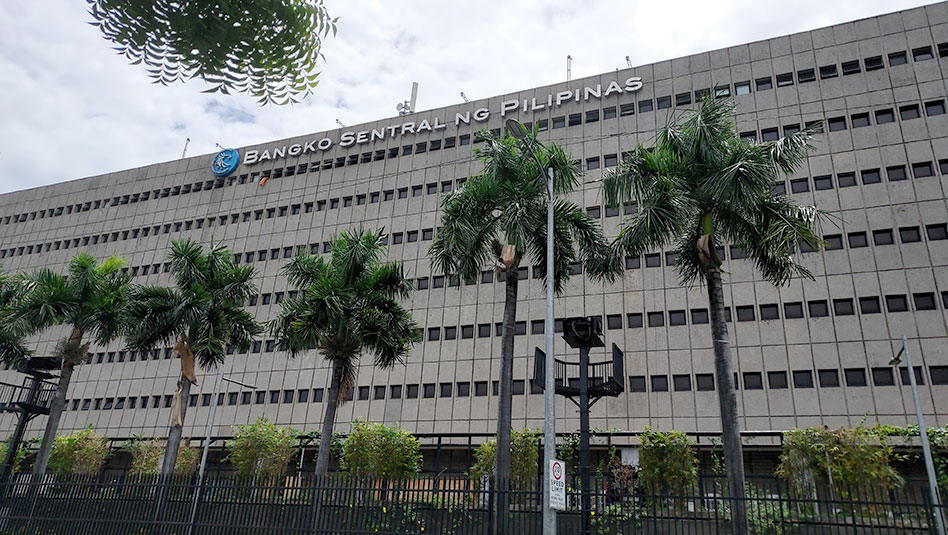
Frick collection with palm trees 
Economic Updates
Policy Rate Updates: Policy rate updates to reassure 
DOWNLOAD
Man using his smartphone
Reports
Fed to cut just once 
DOWNLOAD
View all Reports
Metrobank.com.ph How To Sign Up
Follow us on our platforms.

How may we help you?

TOP SEARCHES
  • Where to put my investments
  • Reports about the pandemic and economy
  • Metrobank
  • Webinars
  • Economy
TRENDING ARTICLES
  • Investing for Beginners: Following your PATH
  • On government debt thresholds: How much is too much?
  • Philippines Stock Market Outlook for 2022
  • Deficit spending remains unabated

Login

Access Exclusive Content
Login to Wealth Manager
Visit us at metrobank.com.ph How To Sign Up
Access Exclusive Content Login to Wealth Manager
Search
MODEL PORTFOLIO THE GIST
NEWS AND FEATURES
Global Philippines Fine Living
INSIGHTS
INVESTMENT STRATEGY
Economy Stocks Bonds Currencies
THE BASICS
Investment Tips Explainers Retirement
WEBINARS
2024 Mid-Year Economi Briefing, economic growth in the Philippines
2024 Mid-Year Economic Briefing: Navigating the Easing Cycle
June 21, 2024
Investing with Love
Investing with Love: A Mother’s Guide to Putting Money to Work
May 15, 2024
retirement-ss-3
Investor Series: An Introduction to Estate Planning
September 1, 2023
View All Webinars
DOWNLOADS
Container ship carrying container boxes import export dock with quay crane. Business commercial trade global cargo freight shipping logistic and transportation worldwide oversea concept. Generative AI
Economic Updates
Philippines Trade Update: Wider deficit on strong imports
March 27, 2026 DOWNLOAD
Frick collection with palm trees 
Economic Updates
Policy Rate Updates: Policy rate updates to reassure 
March 26, 2026 DOWNLOAD
Man using his smartphone
Reports
Fed to cut just once 
March 19, 2026 DOWNLOAD
View all Reports

Archives: Business World Article

Assets of Philippines’ biggest banks rose by 11% in Q2

Assets of Philippines’ biggest banks rose by 11% in Q2

The combined assets of the Philippines’ biggest banks rose in the second quarter amid faster economic growth.

The latest edition of BusinessWorld’s quarterly banking report showed that the collective assets of 43 out of 44 universal and commercial banks grew by 10.7% year on year to PHP 25.09 trillion in the second quarter from PHP 22.67 trillion in the same period a year ago.

This was slightly faster than the 10.54% growth logged in the first three months of the year, and the fastest since 11.25% in the first quarter of 2023.

Big banks’ asset and loan growth rises in Q2

Total loans of these big lenders went up by 14.01% to P12.81 trillion in the April-to-June period, faster than 8.22% last year.

This was also the fastest loan growth in over five years or since 15.13% in the final quarter of 2018.

The growth in assets and lending may be attributed to the Philippine economy’s faster growth. Gross domestic product (GDP) expanded by 6.3% in the April-to-June period, the fastest pace since the 6.4% in the first quarter of 2023. Businesses are likely to borrow more to support investment plans while consumers may take out loans when they expect higher incomes.

Meanwhile, the share of bad loans to the total loan portfolio, also known as the nonperforming loan (NPL) ratio, slipped to 3.25% in the second quarter from 3.6% in the previous quarter and 3.58% a year ago.

Loans are considered nonperforming if any principal and/or interest are left unpaid for over 90 days from the contractual due date or accrued interests for more than 90 days have been capitalized, refinanced, or delayed by agreement.

Meanwhile, the net NPL ratio went down to 1.49% in the second quarter from 1.5% in the first quarter.

The banks’ median return on equity (RoE), which is an indicator of profitability, jumped to 8.93% in the second quarter from 7.91% in the same period a year ago and 8.02% in the first quarter of 2024.

Additionally, the big banks’ median capital adequacy ratio (CAR) — which reflects the lender’s ability to absorb losses from risk-weighted assets — fell to 18.8% for the period from 21.75% in the same period last year,

The ratio remained well above the regulatory minimum of 10% set by the BSP as well as the international minimum standard of 8% under the Basel III framework.

The leverage ratio — which gauges the institution’s ability to absorb shocks by measuring the bank’s capital relative to total exposure — stood at a median of 11.17% during the period. This exceeded the central bank’s 5% guideline as well as the international standard of 3%.

Meanwhile, the net interest margin inched up to 3.42% from 3.41% in the previous quarter.

During the April-to-June period, the return on assets, which measures the profit generated per peso of an asset, slipped to 1.42% from 1.61% in the first quarter.

BDO Unibank, Inc. (BDO) remained the largest bank in terms of total assets with PHP 4.63 trillion, followed by Metropolitan Bank & Trust Co. (Metrobank) with PHP 3.41 trillion, and Land Bank of the Philippines (LANDBANK) with PHP 3.34 trillion.

The Sy-led BDO also led the industry in loans with PHP 3 trillion, followed by Bank of the Philippine Islands (BPI) with PHP 2.07 trillion, and Metrobank with PHP 1.63 trillion.

BDO also had the most deposits with PHP 3.73 trillion, followed by LANDBANK and BPI with PHP 2.97 trillion and PHP 2.45 trillion, respectively.

Among banks with at least PHP 100 billion assets, Security Bank Corp. logged the fastest year-on-year asset growth with 31.32%, followed by The Hongkong & Shanghai Banking Corp. Ltd. (23.32%) and China Banking Corp.  (19.53%).

Meanwhile, Maybank Philippines, Inc. posted the largest growth in loans at 36.8%, followed by Philippine Trust Co. with 32.43% and MUFG Bank Ltd. with 26.7%.

The report does not include Citibank N.A.’s statement of condition (SoC), which was not available during the collection period ending Aug. 30.

BusinessWorld Research has been tracking the financial performance of the country’s large banks quarterly since the late 1980s using banks’ published SoCs. – Karis Kasarinlan Paolo D. Mendoza, Researcher

Gov’t raises USD 2.5B from global bonds

Gov’t raises USD 2.5B from global bonds

The government has raised USD 2.5 billion from its sale of triple-tranche US dollar-denominated global bonds, its second foray into the international debt market this year.

“We are very pleased to see the overwhelming investor interest in our new USD 2.5-billion triple-tranche global bonds,” Finance Secretary Ralph G. Recto said in a statement. “In fact, compared with our regional peers, the Philippines’ issuance achieved among the best pricing in all of our tranches this year. This is a resounding vote of confidence in our country’s solid credit profile.”

The total amount raised was in line with Mr. Recto’s earlier target of USD 2 billion to USD 2.5 billion.

The Bureau of the Treasury (BTr) said the 5.5-year bonds, maturing on March 5, 2030, have a yield of 4.375%. This was priced 35 basis points (bps) tighter than the initial guidance.

The new 10.5-year bonds, maturing on March 5, 2035, were priced at 4.75%, 30 bps tighter than the initial guidance.

The new 25-year sustainability bonds, which will mature on Sept. 5, 2049, have a yield of 5.175%. This was 32.5 bps tighter than the earlier guidance.

The BTr said it issued the bonds as benchmark yields were moderating due to the dovish US Federal Reserve stance, supporting market expectations of a rate cut in September.

“The 5.5-year spread is the tightest among all US dollar 5/5.5-year issuances by the (Philippines) since June 2021, while the all-in yield for the 10.5- and 25-year is the tightest among all US dollar 10/10.5-year and 25-year issuances by the (Philippines) since March 2022,” the BTr said.

National Treasurer Sharon P. Almanza said the tight pricing of the global bonds reflects “continued confidence in the country’s creditworthiness and robust economic performance.”

“The exceptionally tight pricing across all offerings enables the government to conserve on interest payments, thereby allowing more fiscal space to flow into transformative investments,” she said in a statement.

IFR reported that the government raised USD 500 million from 5.5-year bonds; USD 1.1 billion from 10.5-year notes; and USD 900 million from sustainability bonds.

Total bids reached USD 4.86 billion, IFR said. The 5.5-year notes fetched bids worth USD 860 million from 65 accounts.

For the 10.5-year bonds, bids reached over USD 2.2 billion from 121 accounts. Books for the 25-year bonds reached over USD 1.8 billion from 103 accounts.

BNP Paribas, Citigroup, Goldman Sachs, HSBC, JPMorgan, Morgan Stanley, Standard Chartered and UBS were tapped as joint lead managers and bookrunners. HSBC, Standard Chartered and UBS were joint sustainability structuring banks.

The government plans to borrow USD 5 billion this year, of which USD 2 billion was raised from the issuance of global bonds in May. The USD 2.5 billion raised from the latest dollar bond issuance, leaves USD 500 million that has yet to be raised.

In a text message, Mr. Recto said the remaining amount in the government’s offshore borrowing plan would come form either euro bonds or Samurai bonds.

Rizal Commercial Banking Corp. Chief Economist Michael L. Ricafort said in a Viber message the rates awarded were at narrow spreads compared with the benchmark US Treasury yields.

“Spreads below 100 basis points are considered unusually low/cheap for the National Government,” he said.

“Thus, the government saved on borrowing/financing costs with yields among the lowest in more than seven months and spreads among the tightest.”

Union Bank of the Philippines, Inc. Chief Economist Ruben Carlo O. Asuncion said in a Viber message the awarded yields were attractive to investors as rates are expected to continue declining as the US Federal Reserve begins its easing cycle.

“These are attractive yields and have investors very interested. As an investor, you’re locked in before US Fed rate cuts happen and yields start to dwindle further,” he said.

Bank of the Philippine Islands Lead Economist Emilio S. Neri, Jr. in a Viber message said the government had timed the issuance well as benchmark rates could move higher in the coming weeks, which would have cost the government more.

“The issuances are timed pretty well resulting in relatively tight ranges across the announced tenors versus their global benchmarks. Benchmark rates could move higher in the coming weeks, which could cost the BTr a lot more,” he said.

Fitch Ratings assigned a “BBB” rating to the bonds, while Moody’s Ratings gave it “Baa2” and S&P Global Ratings assigned it “BBB+.” These mirror the Philippines’ issuer ratings.

The bonds were drawn from the Philippine government’s existing shelf program, which includes tranches maturing in 2030, 2035 and 2049. — Aaron Michael C. Sy with inputs from Beatriz Marie D. Cruz


DA won’t recommend hike on rice tariffs yet

DA won’t recommend hike on rice tariffs yet

The Department of Agriculture said that it would not yet recommend raising tariffs on imported rice since retail prices have not gone down.

“Before 400,000 metric tons (MT) were shipped per month, since June, July, and August, almost 150,000 MT of rice have entered… So, it’s not enough stock for us to recommend the raising of tariffs,” Agriculture Secretary Francisco P. Tiu Laurel, Jr. told reporters on the sidelines of a poultry and livestock event on Wednesday.

Between the months of June and August, rice imports at a 15% tariff averaged about 150,000 MT per month, he said.

As of Aug. 22, Philippine rice imports amounted to 2.72 million MT, data from the Bureau of Plant Industry showed.

“The price of rice in the market has not yet decreased. Besides, the problem is, konti pa lang ang pumasok na bigas at 15% (few shipments came in at 15%),” Mr. Tiu Laurel said.

President Ferdinand R. Marcos, Jr. signed Executive Order No. (EO) 62, which reduced tariffs on imported rice to 15% from 35% until 2028, in an effort to lower the price of the staple.

EO 62, which took effect in July, mandated a review of the tariff policy every four months to reflect changes in global prices and supply. A review will be conducted by November.

Earlier, Mr. Tiu Laurel said the DA would propose to raise rice import tariffs once local prices fall to about P42-P45 per kilo.

Imported well-milled rice in Metro Manila markets was sold at P45-P55 per kilo, while local well-milled rice was sold at P48-P50 per kilo, according to DA’s price monitor as of Aug. 28

On the other hand, imported regular milled rice was sold at P46-P50 per kilo, while local rice was sold at P45-P50.

“I’ve always said that once you lower tariffs… it does not mean that the price will drop immediately because from January to June, a lot of rice was imported, almost 450,000 MT a month,” he added.

Mr. Tiu Laurel said that in the first half of the year, imports were in excess of the country’s 320,000 MT monthly requirement for rice.

“So, may excess talaga na nabili at nabayaran ng buwis nang mahal... Aabot ng mga mid-October or end of October para maubos ’yung old stocks (So, there is indeed an excess supply of rice that was purchased and taxed at higher prices. The old stocks could only be depleted by the middle or end of October),” he added.

The Agriculture chief said world rice prices remain elevated amid the ban on rice exports by the Indian government.

India last year banned on non-basmati white rice exports, citing the need to safeguard domestic supply.

“Plus, Indonesia and Malaysia are again buying rice for their buffer stocks, that is why international prices are not declining,” he added.

The Philippines remains the world’s top importer of rice, according to the US Department of Agriculture (USDA).

Asked to comment, Roehlano M. Briones, a senior research fellow at the Philippine Institute for Development Studies said traders are hesitant to import rice as various agricultural groups filed a petition asking the Supreme Court to nullify EO 62.

“There is no guarantee that the tariff valid on the date of making a purchase order will be the same tariff upon unloading at Customs,” he said in a Viber message.

Earlier, industry and farmer groups have questioned the validity of the EO 62, claiming a lack of public consultation and the threat it poses to local rice producers.

“In the market, they are saying that the price of rice will drop by P6 to P7 a kilo, but that would not happen because the traders have already imported the rice at a higher tariff,” Teodoro C. Mendoza, an agronomist and a retired professor at the University of the Philippines Los Baños, said in a phone call.

Foundation for Economic Freedom (FEF) President Calixto V. Chikiamco said the government should permanently lower rice import tariffs to 15% or adopt a variable tariff rate.

“(There should be) lower tariffs during lean season and higher tariffs during harvest season,” Mr. Chikiamco said in a Viber message. – Adrian H. Halili, Reporter

Yields on term deposits mixed

Yields on term deposits mixed

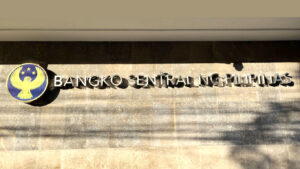
Yields on the Bangko Sentral ng Pilipinas’ (BSP) term deposits were mixed on Thursday after the Bureau of the Treasury launched its second dollar bond offer for this year.

The central bank’s term deposit facility (TDF) attracted bids amounting to PHP 231.77 billion on Thursday, above the PHP 200 billion on the auction block and the PHP 164.441 billion seen a week ago for a PHP 160-billion offer.

Broken down, tenders for the six-day papers reached PHP 133.79 billion on Thursday, higher than the PHP 100 billion auctioned off by the central bank. This was also more than the PHP 85.501 billion in bids for the PHP 80-billion offer seen the previous week.

Banks asked for yields ranging from 6.2595% to 6.35%, a narrower band compared with the 6.24% to 6.5% recorded a week ago. This caused the average rate of the deposits to go down by 0.9 basis point (bp) to 6.3033% from 6.3123% previously.

Meanwhile, bids for the 13-day term deposits amounted to PHP 97.98 billion on Wednesday, lower than the PHP 100-billion offering but above the PHP 78.94 billion in tenders for the PHP 80 billion placed on the auction block last week.

Accepted rates for the tenor were at 6.285% to 6.535%, slightly narrower than the 6.25% to 6.55% margin recorded a week ago. With this, the average rate for the deposits inched up by 1.95 bps to 6.3672% from the 6.3477% logged in the prior auction.

This week’s TDF auction date and tenors were adjusted due to the suspension of work in government agencies on Aug. 28 amid inclement weather.​

The BSP has not auctioned off 28-day term deposits for more than three years to give way to its weekly offerings of securities with the same tenor.

The term deposits and the 28-day BSP bills are used by the central bank to mop up excess liquidity in the financial system and to better guide market rates.

TDF yields’ week-on-week movements were mixed amid the government’s latest global bond issuance, Rizal Commercial Banking Corp. Chief Economist Michael L. Ricafort said in a Viber message.

Mr. Ricafort said the dollar bond offer “siphoned off some of the excess liquidity in the financial system, though this would help reduce the need for the National Government to borrow locally.”

The National Government raised USD 2.5 billion from its offering of triple-tranche US dollar-denominated bonds, fixed-income news provider IFR reported on Thursday.

Broken down, it generated USD 500 million via 5.5-year notes, USD 1.1 billion from 10.5-year bonds, and USD 900 million from the 25-year sustainability tranche.

This was in line with Finance Secretary Ralph G. Recto’s expectation of raising USD 2 billion to USD 2.5 billion from the issue.

Proceeds from the bonds will be used for general purposes, including budgetary support. Funds raised from the sustainability bond tranche will go to eligible projects under the government’s Sustainable Finance Framework.

“TDF average auction yields also mixed, as some investors tend to lock in interest rates for longer-term tenors amid widely expected US Federal Reserve and BSP rate cuts for the coming months, as affirmed recently by Fed Chair Jerome H. Powell and most Fed officials during the Jackson’s Hole Economic Symposium over the weekend,” Mr. Ricafort added.

Markets have fully priced in a 25-bp rate cut from the Fed next month, with a 34.5% chance of an outsized 50-bp reduction, according to the CME FedWatch tool, Reuters reported.

Investor bets for imminent US rate cuts were further cemented by Mr. Powell’s remarks at Jackson Hole last week that the “time has come” to cut rates, joining a chorus of Fed policymakers who have signaled the same in recent times.

Meanwhile, the BSP’s policy-setting Monetary Board this month reduced its target reverse repurchase rate by 25 bps to 6.25% from a near 17-year high of 6.5%, marking its first easing move in nearly four years.

BSP Governor Eli M. Remolona, Jr. said they could cut rates by another 25 bps within the year. The Monetary Board’s remaining policy-setting meetings this year are on Oct. 17 and Dec. 19. — Luisa Maria Jacinta C. Jocson with Reuters

PSEi drops to 6,800 level as investors pocket gains

PSEi drops to 6,800 level as investors pocket gains

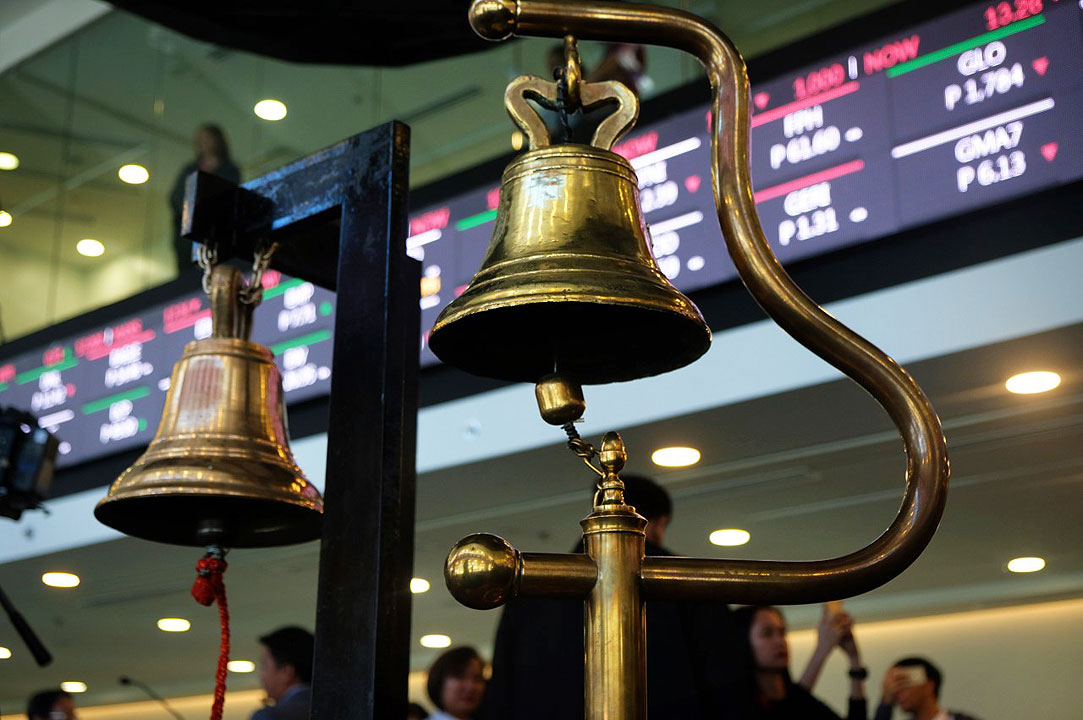
Philippine shares dropped to the 6,800 level on Thursday, tracking Wall Street’s decline overnight, as investors continued to book profits before the month’s close.

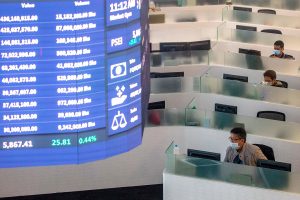
The Philippine Stock Exchange index (PSEi) fell by 0.95% or 66.46 points to end at 6,891.55 on Thursday, while the broader all shares index dropped by 0.69% or 26.26 points to finish at 3,733.29.

This was the PSEi’s worst close in almost two weeks or since it finished at 6,889.87 on Aug. 19.

“The local bourse extended its decline amid continuous profit-taking after the market failed to break the 7,000 resistance,” Philstocks Financial, Inc. Research Analyst Claire T. Alviar said in a Viber message.

“Negative cues from Wall Street further weighed on the market, affecting Asian peers as well,” she added.

Asian shares followed Wall Street futures lower on Thursday as Nvidia’s results disappointed some bullish investors, Reuters reported.

MSCI’s broadest index of Asia-Pacific shares outside Japan fell 0.3% as tech stocks dragged. The Nikkei eased 0.2% while South Korea dropped 1%.

Nvidia’s third-quarter revenue forecast of USD 32.5 billion surpassed Wall Street estimates, but the results still failed to impress the most bullish investors, who have driven a dizzying rally in its shares.

Wall Street’s main indexes finished lower on Wednesday. The Dow Jones Industrial Average fell 0.39% to 41,091.42; the S&P 500 lost 0.6% to 5,592.18; and the Nasdaq Composite lost 1.12% to 17,556.03.

“Philippine shares slipped just below the 6,900 level as investors sold ahead of the August closing and the MSCI rebalancing [on Friday],” Regina Capital Development Corp. Head of Sales Luis A. Limlingan said in a Viber message.

“Sentiment also was pulled down from across the region, with US stocks dipping Wednesday, led by a decline in Nvidia Corp. as investors awaited its earnings report and the upcoming July personal consumption expenditures price index,” he added.

Majority of sectoral indices closed lower on Thursday. Holding firms retreated by 1.98% or 115.59 points to 5,717.44; financials dropped by 1.37% or 29.43 points to 2,104.28; services went down by 0.51% or 11.35 points to 2,201.47; and industrials declined by 0.1% or 10 points to 9,291.35.

Meanwhile, mining and oil climbed by 0.33% or 27.74 points to 8,263.42 and property increased by 0.13% or 3.72 points to 2,769.98.

“Among the index members, Ayala Land, Inc. led the gainers, up by 2.5%, while Converge ICT Solutions, Inc. was at the bottom, losing 4.29%,” Ms. Alviar said.

Value turnover increased to PHP 6.64 billion on Thursday with 959.59 million issues changing hands from the PHP 5.34 billion with 1.27 billion shares traded on Wednesday.

Decliners outnumbered advancers, 117 versus 79, while 51 names were unchanged.

Net foreign buying climbed to PHP 888.76 million on Thursday from PHP 687.06 million on Wednesday. — R.M.D. Ochave with Reuters

PHL eyes up to USD 2.5B from dollar bonds

PHL eyes up to USD 2.5B from dollar bonds

The government is looking to raise between USD 2 billion and USD 2.5 billion from an offering of US dollar-denominated global bonds, Finance Secretary Ralph G. Recto said in a text message on Wednesday.

In a statement late on Wednesday, the Bureau of the Treasury (BTr) said the Philippines began offering the triple tranche 5.5-year, 10.5-year, and 25-year sustainable US dollar global bonds.

“The Republic will partially allocate the 25-year Global Bond sale proceeds to assets under the Republic’s Sustainable Finance Framework,” the BTr said.

Moody’s Ratings said that the global bond offering will be benchmark-sized. A benchmark size for a dollar bond offering is USD 500 million.

Fitch Ratings assigned a “BBB” rating to the bonds, while Moody’s Ratings gave “Baa2” and S&P Global Ratings assigned “BBB+.” These mirror the Philippines’ issuer ratings.

Moody’s in a note said the bonds will be drawn from the Philippine government’s existing shelf program, which includes tranches maturing in 2030, 2035, and 2049.

“The proceeds from the bonds are intended for general purposes including budgetary support,” it said.

Moody’s said part of the tranche maturing in 2049 is “also intended for eligible projects under the Philippines’ Sustainable Finance Framework.”

“We think the demand for this will remain pretty solid considering that the outlook for the Philippines remains rosy given the improving fundamentals of the economy,” Bank of the Philippine Islands (BPI) Lead Economist Emilio S. Neri, Jr. said in a Viber message.

The government plans to borrow USD 5 billion this year, of which USD 2 billion was raised from the issuance of global bonds last May. This leaves USD 3 billion that has yet to be raised.

Mr. Recto previously said the government was also considering issuing Samurai bonds this year. The Philippines last issued Samurai bonds in April 2022, raising ¥70.1 billion.

“With easing monetary policy, many foreign firms can take advantage of the issue, especially the ones located locally. Selling these bonds will be in favor of the National Government (NG) because of the weak US dollar and declining interest rates,” Union Bank of the Philippines, Inc. Chief Economist Ruben Carlo O. Asuncion said in a Viber message.

The BSP cut benchmark interest rates for the first time in almost four years to mark the start of a “calibrated” easing cycle amid an improving inflation and economic outlook. The Monetary Board slashed the target reverse repurchase rate by 25 bps to 6.25% from an over-17-year high of 6.5%.

Rizal Commercial Banking Corp. Chief Economist Michael L. Ricafort said the timing of the offering is favorable.

“Relatively lower long-term interest rates that reduce the borrowing/financing costs of the NG amid appreciating peso exchange rate recently, thereby could reduce debt servicing of the NG,” he said in a Viber message.

The local unit closed at PHP 56.281 per dollar on Tuesday, strengthening by 5.2 centavos from its P56.333 finish last Thursday, Bankers Association of the Philippines data showed. This was the peso’s strongest finish in almost five months or since its PHP 56.255-per-dollar close on April 1.

Year to date, the peso has declined by 91.1 centavos from its PHP 56.281 finish on Dec. 23, 2023.

“Some investors are also locking in interest rates before the Fed and other central bank rates go down further in the coming months,” Mr. Ricafort said.

The US Federal Reserve is widely expected to begin cutting interest rates in September following Chairman Jerome H. Powell’s dovish stance last week.

Analysts also expect the BSP’s easing cycle to continue until next year, with at least 100 bps in rate cuts seen in 2025.

The government’s borrowing program is set at PHP 2.57 trillion this year, 20% of which will come from foreign sources.

The government borrows from external and local sources to fund a budget deficit capped at 5.6% of the gross domestic product. – Aaron Michael C. Sy, Reporter


Gov’t anticipates more affordable borrowings

Gov’t anticipates more affordable borrowings

The government is anticipating much lower borrowing costs moving forward amid further rate cuts by the Bangko Sentral ng Pilipinas (BSP) and improved credit ratings.

“Our recent credit rating upgrade will help reduce our borrowing costs. The reduction of BSP rates will help increase economic growth and also reduce our domestic borrowing costs,” Finance Secretary Ralph G. Recto told BusinessWorld in a text message.

Earlier this month, Japan-based Rating and Investment Information, Inc. upgraded the Philippines’ investment grade rating to “A-.”

The country also currently holds a “A-” rating from the Japan Credit Rating Agency but has yet to secure an “A” rating from the “big three” credit raters.

Mr. Recto said that the government has no plans to increase or revise its borrowing program for now.

“We have a fiscal plan to follow. There are no plans to increase our borrowings,” he added.

The National Government’s (NG) borrowing program is set at P2.57 trillion this year, of which 75% will come from domestic sources. It borrows from external and local sources to fund a budget deficit capped at 5.6% of the gross domestic product.

The latest data from the Treasury showed that debt payments jumped by 41.29% to PHP 1.28 trillion in the first half. The government has allocated PHP 2.03 trillion in debt servicing for this year.

National Treasurer Sharon P. Almanza likewise said that the current borrowing plan has “taken into account” the central bank’s easing cycle.

The Monetary Board earlier this month delivered a 25-basis-point (bp) rate cut, bringing the benchmark rate to 6.25% from the over-17 year high of 6.5%.

The central bank could cut rates by another 25 bps in the fourth quarter, BSP Governor Eli M. Remolona, Jr. earlier said.

“Upcoming monetary policy easing will bode well for NG’s borrowing plan because it will now be cheaper,” Ruben Carlo O. Asuncion, chief economist at Union Bank of the Philippines, Inc., said.

Apart from monetary easing, the country’s investment grade ratings will help support cheaper borrowings.

“The recent upgrade and affirmation of current credit ratings from the aforementioned ratings agencies gives the NG more borrowing opportunities abroad,” Mr. Asuncion said.

Last week, Moody’s Ratings affirmed the Philippines’ investment grade rating of “Baa2” with a “stable” outlook. The country also holds ratings of “BBB” from Fitch Ratings and “BBB+” from S&P Global Ratings.

“If the NG continues with its consolidation plan and follows through, the A-rating is very possible. Simply put, the coveted A-rating is really doable and reachable,” Mr. Asuncion said.

Philippine Institute for Development Studies Senior Research Fellow John Paolo R. Rivera said upgraded credit ratings will help the country attract investments and support overall growth.

“Upgrades in investment grade ratings of the Philippines will allow our government to position the economy as an investment destination, given stabilizing macroeconomic indicators, relaxing of interest rates in the foreseeable future, and ability of the government to support a conducive investment environment,” he said.

The government is aiming to achieve an “A” rating status by the end of the administration or by 2028.

“Should the Philippine economy continue to demonstrate stable macroeconomic fundamentals, the economy is on track to achieve successive rating upgrades,” Mr. Rivera said. – Luisa Maria Jacinta C. Jocson, Reporter

Budget gap shrinks in July

Budget gap shrinks in July

The National Government’s (NG) budget deficit sharply shrank in July as revenues posted double-digit growth, the Bureau of the Treasury (BTr) said.

Data from the BTr on Wednesday showed that the budget gap narrowed by 39.67% to PHP 28.85 billion in July from PHP 47.81 billion in the same month a year ago.

Month on month, it shrank by 86.2% from the PHP 209.08-billion deficit in June.

National Government fiscal performanceIn July, revenues increased by 11.09% to PHP 457.37 billion from PHP 411.73 billion in the same month last year.

Broken down, tax revenues climbed by 15.46% to PHP 402.82 billion in July from PHP 348.88 billion in the same month in 2023. This made up 88% of total revenues, the BTr said.

The Bureau of Internal Revenue’s (BIR) collections increased by 17.09% to PHP 319.81 billion in July, which is net of a PHP 175-million tax refund.

Collections by the Bureau of Customs (BoC) went up by 9.99% to PHP 80.36 billion, net of a PHP 645-million tax refund, in July.

Tax revenues from other offices declined by 1.38% to PHP 2.65 billion in July.

Meanwhile, nontax revenues in July fell by 13.2% to PHP 54.55 billion from PHP 62.77 billion in the same month a year ago.

BTr said its income slumped by 60.82% to PHP 19.91 billion “primarily due to the BSP’s (Bangko Sentral ng Pilipinas) one-off remittance of PHP 31.9 billion last year, as well as reduced income from BTr-managed funds and NG deposits.”

Collections from other offices surged by 188.2% to PHP 34.6 billion in July.

Meanwhile, state spending rose by 5.8% to PHP 486.22 billion in July from PHP 459.54 billion a year ago “partly due to the higher National Tax Allotment (NTA) share of local government units (LGUs),” the BTr said.

Interest payments jumped by 24.99% to PHP 79.43 billion in July from PHP 63.55 billion a year prior.

“This was due to the higher cost of financing and depreciation of the peso observed throughout the year,” BTr said.

Data from the Bankers Association of the Philippines showed that the peso appreciated by 24.5 centavos to PHP 58.365 per dollar as of end-July from PHP 58.610 per dollar as of end-June.

Primary spending — which refers to total expenditures net of interest payments — went up by 2.73% year on year to PHP 406.8 billion in July.

Rizal Commercial Banking Corp. Chief Economist Michael L. Ricafort said the narrower deficit “may largely have to do with improvement in recurring tax revenue collections by the BIR with no more coronavirus pandemic restrictions for more than a year.”

The Finance department reported on Tuesday that the budget deficit widened by 7.21% to PHP 642.8 billion in the first seven months of the year as revenue growth outpaced expenditures.

The fiscal gap is expected to narrow in the coming months if the NG continues to see double-digit revenue growth, Union Bank of the Philippines, Inc. Chief Economist Ruben Carlo O. Asuncion said.

“The better news is that the government has leeway to allot more for primary expenditures versus interest payments if the narrowing trend continues,” he said in a Viber message.

The Philippine and US central banks’ expected rate cuts should help narrow the budget shortfall, Mr. Ricafort said.

IMPROVEMENT

Meanwhile, the deficit-to-gross domestic product (GDP) ratio averaged 4.87% in the first six months of 2024 from 4.8% a year ago. This is still below the government’s deficit ceiling of PHP 1.48 trillion, equivalent to 5.6% of GDP.

Revenue effort improved to 17.06% as of end-June from 16.17% a year ago. This was above the government’s programmed 16.12% revenue-to-GDP ratio for 2024.

Revenue effort covers the share of tax revenues, nontax revenues, and other government revenues in relation to GDP.

Tax effort inched up to 14.57% in the first half from 14.5% a year prior. Tax effort refers to total tax revenue, including social security contributions, as a share of GDP.

Expenditure effort jumped to 21.94% as of end-June from 20.96% last year. It was higher than the 21.72% programmed spending-to-GDP ratio for the year.

Expenditure effort refers to the share of spending on public goods and services to GDP. — B.M.D.Cruz

Treasury fully awards reissued 20-year bonds

Treasury fully awards reissued 20-year bonds

The government made a full award of the 20-year Treasury bonds (T-bonds) it offered on Wednesday as rates were mostly in line with secondary market levels following dovish hints from the US Federal Reserve.

The Bureau of the Treasury (BTr) raised PHP 25 billion as planned via the reissued 20-year bonds it auctioned off on Wednesday as total bids reached PHP 45.114 billion, or almost double the amount on offer.

This brought the outstanding volume for the series to PHP 102.7 billion, the Treasury said in a statement.

The bonds, which have a remaining life of 19 years and nine months, were awarded at an average rate of 6.198%. Accepted yields ranged from 6.174% to 6.22%.

The average rate of the reissued papers dropped by 66.2 basis points (bps) from the 6.86% fetched for the series’ last award on June 26. This was also 67.7 bps lower than the 6.875% coupon for the issue.

However, it was 0.6 bp above the 6.192% seen for the same bond series and 2 bps higher than the 6.178% quoted for the 20-year bond at the secondary market before Tuesday’s auction, based on PHP Bloomberg Valuation Service Reference Rates data provided by the BTr.

“The higher tendered rate for the bond auction today reflected the upward correction in bond yields following the recent declines from the dovish hints from the FOMC (Federal Open Market Committee) minutes and the Jackson Hole Symposium,” a trader said in an e-mail on Wednesday.

Demand for longer bond tenors has also declined in recent months as more global central banks embark on their monetary easing cycles, Rizal Commercial Banking Corp. Chief Economist Michael L. Ricafort said in a Viber message.

Federal Reserve Chair Jerome H. Powell on Friday endorsed an imminent start to interest rate cuts, saying further cooling in the job market would be unwelcome and expressing confidence that inflation is within reach of the US central bank’s 2% target, Reuters reported.

“The time has come for policy to adjust,” Mr. Powell said in a highly anticipated speech to the Kansas City Fed’s annual economic conference in Jackson Hole, Wyoming. “The direction of travel is clear, and the timing and pace of rate cuts will depend on incoming data, the evolving outlook, and the balance of risks.”

Analysts and financial markets had already widely expected the Fed to deliver its first rate cut at its Sept. 17-18 policy meeting, a view that was cemented after a readout of the central bank’s July meeting said a “vast majority” of policymakers agreed the policy easing likely would begin next month.

With its policy rate currently in the 5.25%-5.50% range, the Fed has “ample room” to reduce borrowing costs to cushion the economy, Mr. Powell said.

Investors are unanimous in bets that the Fed will begin cutting interest rates next month following Mr. Powell’s dovish tilt last week, with the debate now centered on whether or not it will be a super-sized 50-bp cut.

The current pricing sits at a 36% chance for the larger cut, up from 29% a week ago, according to the CME Group’s FedWatch Tool.

Markets, which are fully priced for a 25-bp cut next month, see just over 100 bps worth of easing by the end of the year.

Wednesday’s auction was the last T-bond offering for the month. The government raised the programmed P140 billion from the long-tenored papers as it fully awarded its offerings at all five auctions.

In total, the BTr raised PHP 225.2 billion from the local market in August, higher than the PHP 220-billion plan as it upsized its Treasury bill (T-bill) awards at two auctions.

In September, the Treasury wants to raise PHP 195 billion from the domestic market, or PHP 80 billion from T-bills and PHP 115 billion from T-bonds.

The government borrows from local and foreign sources to help fund its budget deficit, which is capped at PHP 1.48 trillion or 5.6% of gross domestic product for this year. — A.M.C. Sy with Reuters

Stocks inch lower on last-minute profit taking

Stocks inch lower on last-minute profit taking

Philippine stocks slipped on Wednesday due to last-minute profit-taking after the main index breached the 7,000 level intraday and following two consecutive days of gains.

The bellwether Philippine Stock Exchange index (PSEi) dropped by 0.22% or 15.40 points to end at 6,958.01 on Wednesday, while the broader all shares index fell by 0.04% or 1.73 points to close at 3,759.55.

The PSEi opened the session at 6,985.56, higher than Tuesday’s close of 6,973.41. It climbed to an intraday high of 7,016.04 but was unable to hold on to its gains, closing at its lowest level for the day.

“Late-day profit-taking brought the local market down. Investors booked gains after the market climbed for two straight days. Chart-wise, the market retested but still failed to take its 7,000 resistance level,” Philstocks Financial, Inc. Senior Research Analyst Japhet Louis O. Tantiangco said in a Viber message.

Trading was “lethargic,” he added.

Value turnover declined to PHP 5.34 billion on Wednesday with 1.27 billion shares changing hands from the PHP 6.8 billion with 831.25 million issues traded on Tuesday.

“Investors are watching out for more economic data that will reinforce a potential rate cut in September. The prospect of easing monetary policy has many investors taking positions, reflecting broader market cautious optimism both locally and globally,” Regina Capital Development Corp. Head of Sales Luis A. Limlingan said in a Viber message.

Investors are unanimous in bets that the US Federal Reserve will begin cutting interest rates next month following Fed Chair Jerome H. Powell’s dovish tilt last week, with the debate now centered on whether or not it will be a super-sized 50-basis-point (bp) cut, Reuters reported.

The current pricing sits at a 36% chance for the larger cut, up from 29% a week ago, according to the CME Group’s FedWatch Tool. Markets, which are fully priced for a 25-bp cut next month, see just over 100 bps worth of easing by the end of the year.

A preliminary estimate for US gross domestic product in the second quarter is due later this week, along with the core personal consumption expenditures index, the Fed’s preferred inflation measure.

Sectoral indices were mixed on Wednesday. Services went down by 0.73% or 16.29 points to 2,212.82; holding firms dropped by 0.53% or 31.36 points to 5,833.03; and property declined by 0.42% or 11.87 points to 2,766.26.

On the other hand, mining and oil rose by 0.85% or 69.48 points to 8,235.68; industrials went up by 0.69% or 63.73 points to 9,301.35; and financials climbed by 0.57% or 12.29 points to 2,133.71.

“Nickel Asia Corp. was the top index gainer, jumping 4.92% to PHP 3.41. PLDT Inc. was the main index laggard, falling 3.14% to PHP 1,511,” Mr. Tantiangco said.

Advancers outnumbered decliners, 99 versus 90, while 54 names were unchanged.

Net foreign buying declined to PHP 687.06 million on Wednesday from PHP 897.83 million on Tuesday. — R.M.D. Ochave with Reuters

Posts navigation

Older posts
Newer posts

Recent Posts

  • Investment Ideas: April 1, 2026
  • Metrobank US-Iran Risk Index: Signals of an end
  • Eye on Earnings: Demand for connection supports telcos
  • Inflation Preview: March madness
  • Investment Ideas: March 31, 2026

Recent Comments

No comments to show.

Archives

  • April 2026
  • March 2026
  • February 2026
  • January 2026
  • December 2025
  • November 2025
  • October 2025
  • September 2025
  • August 2025
  • July 2025
  • June 2025
  • May 2025
  • April 2025
  • March 2025
  • February 2025
  • January 2025
  • December 2024
  • November 2024
  • October 2024
  • September 2024
  • August 2024
  • July 2024
  • June 2024
  • May 2024
  • April 2024
  • March 2024
  • February 2024
  • January 2024
  • December 2023
  • November 2023
  • October 2023
  • September 2023
  • August 2023
  • July 2023
  • June 2023
  • May 2023
  • April 2023
  • March 2023
  • February 2023
  • January 2023
  • December 2022
  • November 2022
  • October 2022
  • September 2022
  • August 2022
  • July 2022
  • June 2022
  • May 2022
  • March 2022
  • December 2021
  • October 2021

Categories

  • Bonds
  • BusinessWorld
  • Currencies
  • Economy
  • Equities
  • Estate Planning
  • Explainer
  • Featured Insight
  • Fine Living
  • How To
  • Investment Tips
  • Markets
  • Portfolio Picks
  • Rates & Bonds
  • Retirement
  • Reuters
  • Spotlight
  • Stocks
  • Uncategorized

You are leaving Metrobank Wealth Insights

Please be aware that the external site policies may differ from our website Terms And Conditions and Privacy Policy. The next site will be opened in a new browser window or tab.

Cancel Proceed
Get in Touch

For inquiries, please call our Metrobank Contact Center at (02) 88-700-700 (domestic toll-free 1-800-1888-5775) or send an e-mail to customercare@metrobank.com.ph

Metrobank is regulated by the Bangko Sentral ng Pilipinas
Website: https://www.bsp.gov.ph

Quick Links
The Gist Webinars Wealth Manager Explainers
Markets
Currencies Rates & Bonds Equities Economy
Wealth
Investment Tips Fine Living Retirement
Portfolio Picks
Bonds Stocks
Others
Contact Us Privacy Notice Terms of Use
© 2026 Metrobank. All rights reserved.

Access this content:

If you are an existing investor, log in first to your Metrobank Wealth Manager account. ​

If you wish to start your wealth journey with us, click the “How To Sign Up” button. ​

Login HOW TO SIGN UP