



MODEL PORTFOLIO
THE GIST
NEWS AND FEATURES
Global Philippines Fine Living
INSIGHTS
INVESTMENT STRATEGY
Economy Stocks Bonds Currencies
THE BASICS
Investment Tips Explainers Retirement
WEBINARS
2024 Mid-Year Economi Briefing, economic growth in the Philippines
2024 Mid-Year Economic Briefing: Navigating the Easing Cycle
June 21, 2024
Investing with Love
Investing with Love: A Mother’s Guide to Putting Money to Work
May 15, 2024
retirement-ss-3
Investor Series: An Introduction to Estate Planning
September 1, 2023
View All Webinars
DOWNLOADS
Container ship carrying container boxes import export dock with quay crane. Business commercial trade global cargo freight shipping logistic and transportation worldwide oversea concept. Generative AI
Economic Updates
Philippines Trade Update: Wider deficit on strong imports
DOWNLOAD
Frick collection with palm trees 
Economic Updates
Policy Rate Updates: Policy rate updates to reassure 
DOWNLOAD
Man using his smartphone
Reports
Fed to cut just once 
DOWNLOAD
View all Reports
Metrobank.com.ph How To Sign Up
Follow us on our platforms.

How may we help you?

TOP SEARCHES
  • Where to put my investments
  • Reports about the pandemic and economy
  • Metrobank
  • Webinars
  • Economy
TRENDING ARTICLES
  • Investing for Beginners: Following your PATH
  • On government debt thresholds: How much is too much?
  • Philippines Stock Market Outlook for 2022
  • Deficit spending remains unabated

Login

Access Exclusive Content
Login to Wealth Manager
Visit us at metrobank.com.ph How To Sign Up
Access Exclusive Content Login to Wealth Manager
Search
MODEL PORTFOLIO THE GIST
NEWS AND FEATURES
Global Philippines Fine Living
INSIGHTS
INVESTMENT STRATEGY
Economy Stocks Bonds Currencies
THE BASICS
Investment Tips Explainers Retirement
WEBINARS
2024 Mid-Year Economi Briefing, economic growth in the Philippines
2024 Mid-Year Economic Briefing: Navigating the Easing Cycle
June 21, 2024
Investing with Love
Investing with Love: A Mother’s Guide to Putting Money to Work
May 15, 2024
retirement-ss-3
Investor Series: An Introduction to Estate Planning
September 1, 2023
View All Webinars
DOWNLOADS
Container ship carrying container boxes import export dock with quay crane. Business commercial trade global cargo freight shipping logistic and transportation worldwide oversea concept. Generative AI
Economic Updates
Philippines Trade Update: Wider deficit on strong imports
March 27, 2026 DOWNLOAD
Frick collection with palm trees 
Economic Updates
Policy Rate Updates: Policy rate updates to reassure 
March 26, 2026 DOWNLOAD
Man using his smartphone
Reports
Fed to cut just once 
March 19, 2026 DOWNLOAD
View all Reports

Archives: Business World Article

Yields on central bank’s term deposits inch up

Yields on central bank’s term deposits inch up

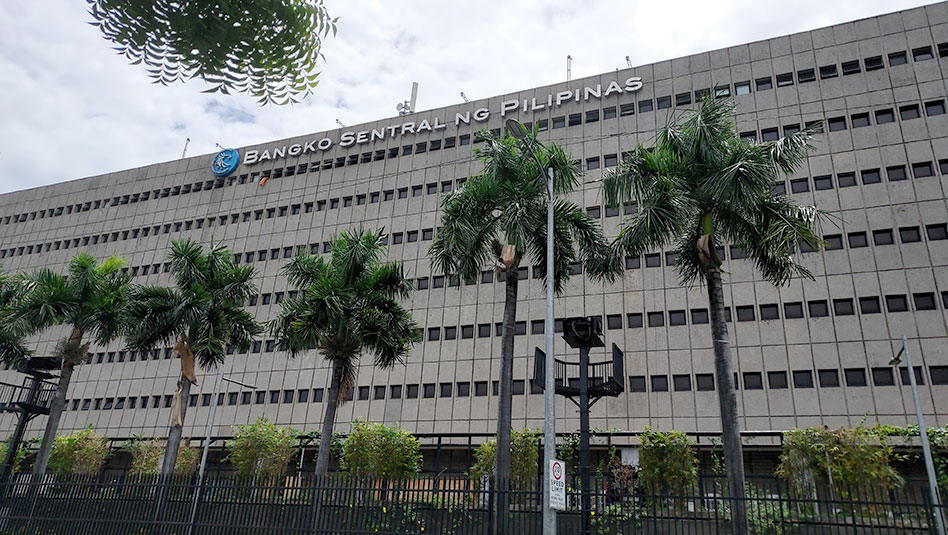
Yields on the term deposits of the Bangko Sentral ng Pilipinas (BSP) rose slightly on Wednesday as investors seek to lock in high returns amid expectations of further monetary easing here and abroad.

Demand for the central bank’s term deposit facility (TDF) amounted to PHP 239.937 billion on Wednesday, above the PHP 220-billion offering and the PHP 231.77 billion in bids for a PHP 200-billion offer a week ago.

Broken down, tenders for the seven-day papers reached PHP 127.289 billion, higher than the PHP 120 billion on the auction block but below the PHP 133.79 billion in bids for the PHP 100-billion offering of six-day deposits in the previous week.

Banks asked for yields ranging from 6.2475% to 6.35%, a wider band compared with the 6.2595% to 6.35% seen a week ago. With this, the average rate of the one-week term deposits went up by 0.61 basis point (bp) to 6.3094% from 6.3033% previously.

Meanwhile, the 14-day papers fetched bids amounting to PHP 112.648 billion, above the PHP 100-billion offer and the PHP 97.98 billion in tenders for the same volume of 13-day term deposits auctioned off last week.

Accepted rates for the tenor were from 6.285% to 6.465%, narrower than the 6.285% to 6.535% range seen last week. This caused the average rate of the two-week papers to increase by 1.15 bps to 6.3787% from 6.3672% in the prior auction.

The central bank has not offered 28-day term deposits for more than three years to give way to its weekly auctions of securities with the same tenor.

The term deposits and 28-day bills are used by the BSP to mop up excess liquidity in the financial system and to better guide market rates.

“Some investors in recent weeks locked in investable funds in longer-dated tenors amid the easing trend in local and global bond yields after the local policy rate cut on Aug. 15 and the widely expected Federal Reserve rate cut [this month]…,” Rizal Commercial Banking Corp. Chief Economist Michael L. Ricafort said in a Viber message.

The BSP last month cut benchmark interest rates for the first time in almost four years amid an improving inflation and economic outlook, with its governor signaling at least one more reduction before the end of the year.

The Monetary Board on Aug. 15 reduced its policy rate by 25 bps to 6.25%.

BSP Governor Eli M. Remolona, Jr. said they could cut rates by another 25 bps within the year. The Monetary Board’s last two policy-setting meetings this year are on Oct. 17 and Dec. 19.

Meanwhile, markets widely expect a rate cut at the US central bank’s Sept. 17-18 meeting following Fed Chair Jerome H. Powell’s dovish speech at the Jackson Hole Symposium last month.

Mr. Powell last month endorsed an imminent start to interest rate cuts, saying further cooling in the job market would be unwelcome and expressing confidence that inflation is within reach of the US central bank’s 2% target.

“The time has come for policy to adjust,” Mr. Powell said in a highly anticipated speech to the Kansas City Fed’s annual economic conference in Jackson Hole, Wyoming. “The direction of travel is clear, and the timing and pace of rate cuts will depend on incoming data, the evolving outlook, and the balance of risks.”

Soft US manufacturing data released on Tuesday fanned worries about a hard landing for the world’s biggest economy, with traders already nervous ahead of crucial monthly payrolls data on Friday, Reuters reported.

Risks to the US soft-landing scenario — which had been gaining traction recently in markets — saw traders raise odds of a 50-bp Fed interest rate cut this month to 38% from 30% a day earlier, according to the CME Group’s FedWatch Tool.

Economists surveyed by Reuters expect Friday’s report to show an increase of 165,000 US jobs in August, up from a rise of 114,000 in July.

Ahead of that, investors will keep a close eye on job openings data due later on Wednesday and the jobless claims report on Thursday.

TDF yields rose as the National Government’s latest global bond issuance “siphoned off some of the excess liquidity from the financial system,” Mr. Ricafort added.

The government last week raised $2.5 billion from its sale of triple-tranche dollar-denominated global bonds, which marked its second foray into the international debt market this year.

IFR reported that the government raised USD 500 million from 5.5-year bonds, USD 1.1 billion from 10.5-year notes, and USD 900 million from 25-year sustainability bonds. — Luisa Maria Jacinta C. Jocson with Reuters

NG debt hits PHP 15.7 trillion

NG debt hits PHP 15.7 trillion

The National Government’s (NG) outstanding debt hit a fresh high of PHP 15.69 trillion as of end-July amid an increase in domestic and external borrowings, the Bureau of the Treasury (BTr) said.

Data from the BTr on Tuesday showed that the NG’s debt level rose by 1.33% as of end-July from PHP 15.48 trillion as of end-June.

“The NG’s debt portfolio has increased by PHP 206.49 billion or 1.3% from the end-June 2024 level, primarily driven by the net issuance of both domestic and external debt,” the BTr said in a press release.

National Government outstanding debtYear on year, outstanding debt jumped by 10.15% from PHP 14.24 trillion as of end-July 2023.

The debt stock as of end-July already represents 97.71% of the P16.06-trillion total debt projection by yearend, according to the latest Budget of Expenditures and Sources of Financing data.

More than half (68.54%) of the debt came from domestic sources, while the rest (31.46%) came from foreign sources, the BTr said.

Domestic debt as of end-July rose by 1.7% to PHP 10.75 trillion from PHP 10.57 trillion last month. Year on year, it jumped by 9.6% from PHP 9.81 trillion in July 2023.

“The rise in domestic debt was mainly due to the PHP 180.52-billion net issuance of government securities, although partially tempered by the PHP 0.49-billion downward revaluation effect of peso appreciation on US dollar-denominated domestic securities,” the BTr said.

The peso closed at PHP 58.488 at the end of July, strengthening by 17 centavos from PHP 58.659 at end-June.

Government securities accounted for nearly all of domestic debt at PHP 10.752 trillion, according to BTr data.

On the other hand, external debt inched up by 0.54% to PHP 4.94 trillion as of end-July from PHP 4.91 trillion at the end of June. Year on year, foreign debt increased by 11.4% from PHP 4.43 trillion.

“The rise in external debt can be attributed to the net availments of project loans of PHP 5.25 billion and third-currency upward revaluation of PHP 35.44 billion, albeit partially attenuated by the PHP 14.23-billion impact of peso appreciation against the US dollar,” the Treasury bureau said.

External debt is comprised of PHP 2.32 trillion in loans and PHP 2.62 trillion in government securities. The latter consisted of PHP 2.22 trillion in US dollar bonds, PHP 218.49 billion in euro bonds, PHP 67.32 billion in Japanese yen bonds, PHP 58.49 billion in Islamic certificates, and PHP 54.77 billion in peso global bonds.

As of end-July, the NG’s guaranteed obligations edged up by 0.3% to PHP 344.79 billion from PHP 343.65 billion as of end-June.

“The rise in NG guarantees was mainly due to the PHP 3.57-billion effect of third-currency adjustments against the US dollar which outweighed the PHP 1.96-billion reduction from domestic and external net repayments as well as the PHP 0.47-billion downward revaluation brought about by peso appreciation,” the BTr said.

Year on year, guaranteed obligations declined by 5.1% from PHP 363.39 billion.

Ruben Carlo O. Asuncion, chief economist at Union Bank of the Philippines, Inc., said NG debt levels will continue to increase but at a slower pace.

“Now that we are not in an emergency situation… we expect the debt levels to still rise but at a slower pace… especially that we are on the cusp of the start of monetary easing cycle of the US Federal Reserve, while the Bangko Sentral ng Pilipinas (BSP) has already began its cuts,” he said in a Viber message.

Last month, the Monetary Board reduced interest rates by 25 basis points (bps), bringing the benchmark rate to 6.25%. The central bank is also likely to cut rates by another 25 bps in the fourth quarter, BSP Governor Eli M. Remolona, Jr. has said.

The US Federal Reserve is also widely expected to begin cutting rates this month.

Jonathan L. Ravelas, senior adviser at professional service firm Reyes Tacandong & Co., said the government must minimize “unnecessary expenses” to manage debt.

In a Viber message, he said the government should also fast-track infrastructure spending to attract investments.

Rizal Commercial Banking Corp. Chief Economist Michael L. Ricafort said the government’s intensified tax collections and other fiscal reform measures would also help narrow the NG’s budget deficit and slow the rise in debt.

“New and higher taxes could be a final option if inflation eases further in an effort to bring down the NG debt-to-GDP ratio to below the international threshold of 60%, alongside faster GDP growth,” he said via Viber.

The NG’s debt-to-GDP ratio, or the ratio between how much a country owes and how much its economy produces to pay off debt, stood at 60.9% as of end-June.

This is still above the 60% threshold deemed manageable by multilateral lenders for developing economies. The government expects the debt-to-GDP ratio to end the year at 60.6%.

The government’s borrowing program for this year is set at PHP 2.57 trillion, with PHP 1.92 trillion from domestic sources and PHP 646.08 billion from foreign sources. – Beatriz Marie D. Cruz, Reporter

Analysts see improving foreign investment outlook for PHL

Analysts see improving foreign investment outlook for PHL

Lower interest rates will help drive the entry of more foreign direct and portfolio investments into the Philippines, analysts said.

“The outlook for foreign direct investment (FDI) and foreign portfolio investment (FPI) in the Philippines appears promising, with current trends suggesting the country could meet or potentially exceed the Bangko Sentral ng Pilipinas’ (BSP) targets,” Security Bank Corp. Chief Economist Robert Dan J. Roces said in a Viber message.

The BSP expects to record FDI net inflows of USD 9.5 billion this year. For foreign portfolio investments, it forecasts USD 3.1 billion in net inflows by yearend.

“The BSP’s forecast for the year sounds reasonable, as it wouldn’t be too far a stretch, with that sort of level of annual FDI coming into the Philippines almost consistently over this period, barring the coronavirus-hit year in 2020,” Pantheon Macroeconomics Chief Emerging Asia Economist Miguel Chanco said in an e-mail.

In the January-to-May period, FDI net inflows jumped by 15.8% year on year to USD 4.024 billion, data from the BSP showed.

Meanwhile, short-term foreign investments yielded a net inflow of USD 1.46 billion in the January-July period, surging from the USD 157.3-million net inflows in the same period a year ago.

FDIs are considered long-term investments, while portfolio investments or “hot money” are seen as more fickle due to the ease by which these funds enter and leave the economy.

Ruben Carlo O. Asuncion, chief economist at Union Bank of the Philippines, Inc., said the BSP’s investment targets are doable amid easing interest rates.

“Offering attractive rates will be the key. All around will be declining key rates, thus, offering sensible investments now will lock in gains for prospective investors. I would like to believe that there is time,” he added.

Mr. Roces said the further reduction in policy rates this year and next year “should stimulate investment activity, particularly for FDI, by making borrowing more attractive.”

At its August meeting, the Monetary Board cut rates for the first time in nearly four years or since November 2020. It reduced borrowing costs by 25 basis points (bps), bringing the benchmark rate to 6.25% from the previous over 17-year high of 6.5%.

The central bank could also deliver another 25-bp rate hike in the fourth quarter, BSP Governor Eli M. Remolona, Jr. said earlier.

The US Federal Reserve is expected to start its easing cycle later this month, which also bodes well for investor sentiment, analysts said.

“The biggest catalyst for FDI and FPI into the country is the expected series of Fed rate cuts that could be matched locally, thereby leading to improvements in global investments, trade, and other economic activities,” Rizal Commercial Banking Corp. Chief Economist Michael L. Ricafort said in a Viber message.

Apart from reduced borrowing costs, analysts said that the country’s strong macroeconomic indicators will help attract more investments.

“Key drivers for achieving these targets include sustained economic fundamentals, political stability, an improved regulatory environment, ongoing infrastructure developments, and the country’s competitive advantages in sectors like BPO (business process outsourcing) and manufacturing,” Mr. Roces said.

Mr. Asuncion said investors are likely to be attracted to the Philippines because of its upbeat economic growth.

“If foreign investors see real opportunity in investing in the Philippines, I do not think it will be a huge problem getting these investors on board,” he added.

The Philippine economy grew by 6.3% in the second quarter, marking the fastest growth in five quarters or since the 6.4% in the first quarter of 2023.

On the other hand, Leonardo A. Lanzona, Jr., an economics professor at the Ateneo de Manila University, said that lower borrowing costs may favor short-term investments over long-term ones.

“The low interest rates of BSP can stimulate economic activity. However, this can only boost short-term investments as borrowing becomes cheaper,” he said in an e-mail.

“It can depress long-term investments if the returns on longer-term projects are deemed insufficient relative to the risks.”

Mr. Chanco also cited risks to this investment outlook, noting the country’s “policy stasis.”

“The Philippines’ nearest neighbors and biggest competitors remain quite aggressive in their pursuit of more open trade borders and a better infrastructure environment for businesses, something that the Philippines is still struggling with,” he added.

The government’s policies may also benefit short-term investments, Mr. Lanzona said.

“Also, the government implements policies or incentives that encourage immediate spending or investment, such as tax breaks or stimulus checks. These policies can boost short-term investments but may not have the same impact on long-term projects that require sustained funding and are subject to continuous risks,” he said.

Mr. Ricafort also noted that the investment targets remain achievable, barring any further geopolitical risks.

“However, global economic conditions and exchange rate stability will also play crucial roles. While the current trajectory remains positive, risks such as geopolitical uncertainties and domestic policy changes will have an impact on these projections,” Mr. Roces said.

Mr. Ricafort also noted that the country’s improving credit rating outlook will also support foreign investment growth by boosting the confidence of international investors and creditors.

Japan-based Rating and Investment Information, Inc. last month upgraded the Philippines’ investment grade rating to “A-.”

The country also secured an “A-” rating from the Japan Credit Rating Agency but has yet to secure an “A” rating from the “big three” credit raters.

The Philippines currently holds a “Baa2” rating from Moody’s Ratings, “BBB” from Fitch Ratings, and “BBB+” from S&P Global Ratings.

The government is targeting to achieve an “A” rating by the end of the Marcos administration. – Luisa Maria Jacinta C. Jocson, Reporter


Gov’t makes full award of reissued 20-year bonds

Gov’t makes full award of reissued 20-year bonds

The government made a full award of the reissued 20-year Treasury bonds (T-bonds) it offered on Tuesday amid strong demand and as the average rate fetched was largely in line with secondary market levels on expectations that headline inflation eased anew in August.

The Bureau of the Treasury (BTr) raised PHP 30 billion as planned via the reissued 20-year bonds it auctioned off on Tuesday as total bids reached PHP 49.435 billion, well above the amount on offer.

This brought the outstanding volume for the series to PHP 121.1 billion, the Treasury said in a statement.

The bonds, which have a remaining life of three years and one day, were awarded at an average rate of 6.025%. Accepted yields ranged from 5.975% to 6.05%.

The average rate of the reissued papers went up by 1.6 basis points (bps) from the 6.009% fetched for the series’ last award on July 30. Still, this was 260 bps lower than the 8.625% coupon for the issue.

This was likewise 2 bps above the 6.005% seen for the same bond series and 0.8 bp higher than the 6.017% quoted for the three-year bond — the tenor closest to the remaining life of the papers — at the secondary market before Tuesday’s auction, based on PHP Bloomberg Valuation Service (BVAL) Reference Rates data provided by the BTr.

The government made a full award of its T-bond offer as rates fetched were largely in line with market expectations, a trader said in a text message.

“This bond looks attractive, especially at above 6%, since the longer securities are just a few basis points higher,” the trader said.

“The Treasury bond average auction yield at 6.025% is almost the same as the comparable three-year PHP BVAL yield of 6.02% as of Sept. 3… ahead of the latest headline inflation data that is expected to ease back to within the Bangko Sentral ng Pilipinas’ (BSP) target range of 2-4%,” Rizal Commercial Banking Corp. Chief Economist Michael L. Ricafort said in a Viber message.

Slowing inflation would give the BSP confidence to cut benchmark interest rates further, which could match potential easing moves by the US Federal Reserve in the coming months, Mr. Ricafort added.

Philippine headline inflation likely eased last month and returned within the central bank’s 2-4% annual target amid lower prices of rice and fuel, analysts said.

A BusinessWorld poll of 15 analysts yielded a median estimate of 3.7% for the August consumer price index (CPI), within the BSP’s 3.2-4% forecast.

If realized, the August CPI would be slower than the nine-month high of 4.4% seen in July and the 5.3% print in the same month a year ago.

The Philippine Statistics Authority will release August inflation data on Thursday (Sept. 5).

With inflation likely on a downtrend, analysts expect that the central bank will be able to continue its easing cycle.

The BSP last month cut benchmark interest rates for the first time in almost four years amid an improving inflation and economic outlook, with its governor signaling at least one more reduction before the end of the year.

The Monetary Board on Aug. 15 reduced its policy rate by 25 bps to 6.25%.

BSP Governor Eli M. Remolona, Jr. said they could cut rates by another 25 bps within the year. The Monetary Board’s last two policy-setting meetings this year are on Oct. 17 and Dec. 19.

Meanwhile, markets widely expect a rate cut at the US central bank’s Sept. 17-18 meeting following Fed Chair Jerome H. Powell’s dovish speech at the Jackson Hole Symposium last month.

Mr. Powell last month endorsed an imminent start to interest rate cuts, saying further cooling in the job market would be unwelcome and expressing confidence that inflation is within reach of the US central bank’s 2% target.

“The time has come for policy to adjust,” Mr. Powell said in a highly anticipated speech to the Kansas City Fed’s annual economic conference in Jackson Hole, Wyoming. “The direction of travel is clear, and the timing and pace of rate cuts will depend on incoming data, the evolving outlook, and the balance of risks.”

Futures are 100% priced for a cut of 25 bps this month, and imply a 33% probability of 50 bps, Reuters reported. They also have 100 bps of cuts priced in by December, and 120 bps for 2025.

Crucial for the Fed will be the payrolls report on Friday, where analysts look for a rise of 165,000 in jobs and a dip in the unemployment rate to 4.2%.

The BTr wants to raise PHP 195 billion from the domestic market this month, or PHP 80 billion through Treasury bills and PHP 115 billion via T-bonds.

The government borrows from local and foreign sources to help fund its budget deficit, which is capped at PHP 1.48 trillion or 5.6% of gross domestic product for this year. — A.M.C. Sy with Reuters

Peso sinks to two-week low before US data

Peso sinks to two-week low before US data

The peso declined to a two-week low against the dollar on Tuesday on expectations of strong US economic data, which may affect the US Federal Reserve’s policy decision this month.

The local unit closed at PHP 56.61 per dollar on Tuesday, weakening by 23 centavos from its PHP 56.38 finish on Monday, Bankers Association of the Philippines data showed.

This was the peso’s worst finish in more than two weeks or since it ended at PHP 56.64 against the greenback on Aug. 19.

The peso opened Tuesday’s session sharply weaker at PHP 56.50 against the dollar. Its intraday best was at PHP 56.45, while its weakest showing was at PHP 56.735 versus the greenback.

Dollars exchanged jumped to USD 1.83 billion on Tuesday from USD 802.6 million on Monday.

“The peso continued to weaken due to market positioning ahead of a likely strong US manufacturing purchasing managers’ index in August,” a trader said in an e-mail.

The peso was also dragged down by a stronger dollar due to expectations of a better US jobs data, Rizal Commercial Banking Corp. Chief Economist Michael L. Ricafort said in a Viber message.

The dollar inched higher and held close to a two-week high on Tuesday as investors geared up for a slew of economic data, including Friday’s US payrolls, that could influence the size of an expected interest rate cut from the Fed, Reuters reported.

The dollar index, which measures the US currency against six rivals, was 0.11% higher at 101.77, just shy of the two-week high of 101.79 it touched on Monday. The index fell 2.2% in August on expectations of US rate cuts.

Investor focus this week will squarely be on the US payrolls data due on Friday after Fed Chair Jerome H. Powell last month endorsed an imminent start to interest rate cuts in a nod to the worries over the labor market.

Ahead of that, job openings data on Wednesday and the jobless claims report on Thursday will be in the spotlight.

Markets are pricing in a 69% chance of a 25-basis-point cut when the Fed meets on Sept. 17-18, with a 31% probability of a 50-bp cut, CME FedWatch tool showed.

For Wednesday, the trader sees the peso moving between PHP 56.45 and PHP 56.70 per dollar, while Mr. Ricafort expects it to range from PHP 56.50 to PHP 56.70. — A.M.C. Sy with Reuters

Philippine shares slip on profit taking, weak peso

Philippine shares slip on profit taking, weak peso

Philippine shares dropped anew on Tuesday due to profit-taking and a weak peso, with investors also staying on the sidelines before the release of August Philippine inflation data.

The Philippine Stock Exchange index (PSEi) dropped by 0.58% or 40.49 points to end at 6,882.92 on Tuesday, while the broader all shares index fell by 0.55% or 20.63 points to close at 3,730.78.

“The local market declined this Tuesday as investors took profits after a two-day climb. The local currency’s depreciation against the dollar also weighed on the market,” Philstocks Financial, Inc. Senior Research Analyst Japhet Louis O. Tantiangco said in a Viber message.

“Trading has been tepid as investors continue to wait for catalysts, primarily the Philippines’ August inflation data to be released this week,” he added.

The peso closed at PHP 56.61 per dollar on Tuesday, slumping by 23 centavos from its PHP 56.38 finish on Monday, according to Bankers Association of the Philippines data.

This was the local unit’s worst finish in more than two weeks or since it ended at PHP 56.64 against the greenback on Aug. 19.

Meanwhile, the Philippine Statistics Authority will release August inflation data on Thursday (Sept. 5).

A BusinessWorld poll of 15 analysts yielded a median estimate of 3.7% for the August consumer price index, within the central bank’s 3.2-4% forecast for the month.

“Philippine shares slipped into the red as investor await the return of foreign funds after the US was on holiday for the Labor Day weekend. US stock futures held steady Monday night as traders braced for a potentially challenging September after a volatile August,” Regina Capital Development Corp. Head of Sales Luis A. Limlingan said in a Viber message.

“With markets closed for Labor Day, focus shifts to Friday’s August jobs report. Historically, September has been the worst month for the S&P 500 over the past decade,” he added.

Most sectoral indices closed lower on Tuesday, with holding firms being the lone gainer, rising by 0.11% or 6.54 points to 5,744.54.

Meanwhile, services dropped by 1.23% or 27.07 points to 2,173.67; financials declined by 0.77% or 16.54 points to 2,105.88; industrials went down by 0.6% or 55.85 points to 9,254.86; property decreased by 0.36% or 10.2 points to 2,784.40; and mining and oil retreated by 0.29% or 23.57 points to 8,016.01.

“Century Pacific Food, Inc. was the top index gainer, climbing 1.38% to PHP 36.70. Wilcon Depot, Inc. was the main index loser, dropping 3.53% to PHP 17.50,” Mr. Tantiangco said.

Value turnover rose to PHP 5.08 billion on Tuesday with 699.6 million shares switching hands from the PHP 4.89 billion with 555.41 million issues traded on Monday.

Decliners beat advancers, 109 versus 83, while 52 names were unchanged.

Net foreign buying dropped to PHP 20.57 million on Tuesday from PHP 419.29 million on Monday. — R.M.D. Ochave

Manufacturing growth steady in Aug.

Manufacturing growth steady in Aug.

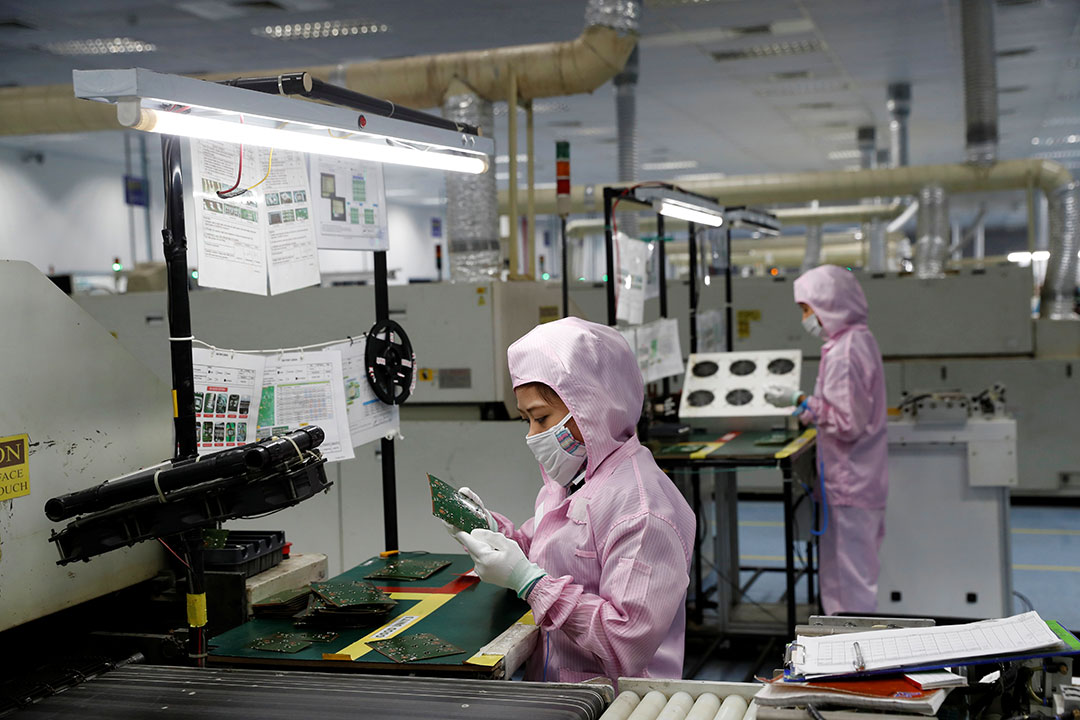
Factory activity in the Philippines expanded at a steady pace in August amid a “modest” improvement in operating conditions, with firms ramping up production, S&P Global said.

The S&P Global Philippines Manufacturing Purchasing Managers’ Index (PMI) stood at 51.2 in August, the same reading in July.

A PMI reading above 50 denotes improved operating conditions from the previous month.

Manufacturing Purchasing Managers’ Index (PMI) of select ASEAN economies, August 2024“The Filipino manufacturing sector showed sustained and modest gains midway through the third quarter. Growth in output and new orders accelerated on the month, thereby highlighting improving demand trends,” S&P Global Market Intelligence economist Maryam Baluch said in a report.

“However, employment fell, and buying activity cooled, suggesting that manufacturers remain cautious about growth prospects,” she added.

Based on the latest PMI data, the Philippines had the second-highest reading out of five Southeast Asian countries, only behind Thailand (52). Meanwhile, Malaysia (49.7), Indonesia (48.9), and Myanmar (43.4) all showed contractions.

As of publishing time, there were no data on Vietnam and Singapore.

The headline PMI measures manufacturing conditions through the weighted average of five indices — new orders (30%), output (25%), employment (20%), suppliers’ delivery times (15%) and stocks of purchases (10%).

For the Philippines, S&P Global data showed that overall growth in new orders was the strongest in three months.

“However, demand from foreign customers faltered in August, as new exports sales fell for the first time since the start of the year. The data thus suggesting that demand was domestically driven,” it said.

The pace of production accelerated in August from the four-month low in July.

S&P Global noted growth in business requirements prompted manufacturers to increase purchasing activity in August, although the rate of increase was the slowest in five months.

“The slowdown in buying activity was reflected in a softer buildup of pre-production inventories held at manufacturers. The upturn was slight and the weakest in the current six-month period of accumulation,” it said.

Post-production inventories dropped for the first time since February after five straight months of stock building, it added.

Philippine manufacturers were hesitant to hire new staff in August, reversing the uptick seen in July.

“Contractions have now been noted in three of the past four survey periods. Moreover, the tenacity of goods producers to complete workloads efficiently, despite a contraction in workforce numbers, highlighted sufficient capacity,” S&P Global said.

Inflationary pressures eased in August as input costs rose moderately, it said.

“Selling prices for goods were raised at a softer and only a slight pace, indicating that firms are in part absorbing costs in a bid to boost sales and remain competitive,” it said.

There were still delays in input from suppliers, with vendor performance deteriorating for the fourth month in a row. However, S&P Global said the recent delays were the “least pronounced” since May.

“The (manufacturing) slowdown could partly be attributed to the ghost month, inclement weather that led to some work/production disruptions,” Rizal Commercial Banking Corp. Chief Economist Michael L. Ricafort said.

Looking ahead, S&P Global said that Philippine manufacturers expect output to expand further in the next 12 months, with its PMI reading to likely stay well above the 50 mark.

However, the latest data showed a dip in the firms’ level of confidence.

“Confidence levels also waned in the latest survey period and hit a four-month low, further confirming that expectations surrounding the production outlook have softened,” Ms. Baluch said.

The central bank’s recent rate cut and expected easing in the fourth quarter are seen stimulating factory activity in the coming months, Security Bank Corp. Chief Economist Robert Dan J. Roces said.

“The Aug. 15 rate cut and the anticipated 25-basis-point (bp) reduction in the fourth quarter could positively impact purchasing activity in the coming months, as it may encourage businesses to invest in their operations, leading to increased demand for materials and supplies,” he said in a Viber message.

The Monetary Board cut rates by 25 bps at its August meeting, bringing the benchmark rate to 6.25% from the over 17-year high of 6.5%.

Bangko Sentral ng Pilipinas Governor Eli M. Remolona, Jr. has also said the central bank can cut rates by another 25 bps before yearend.

Lower borrowing costs may also boost consumer spending, increasing the demand for manufactured goods, Mr. Roces added.

Mr. Ricafort said that further policy easing by the Philippine and US central banks may lead to cheaper credit for manufacturers, and bolster trade and investment activity.

Markets are widely expecting the US Federal Reserve to begin cutting rates this month. – Beatriz Marie D. Cruz, Reporter

T-bill yields mostly steady ahead of CPI

T-bill yields mostly steady ahead of CPI

The government hiked the volume of Treasury bills (T-bills) it awarded on Monday as average yields were mostly steady amid strong investor demand and ahead of the release of August inflation data.

The Bureau of the Treasury (BTr) raised PHP 22.6 billion from the T-bills it auctioned off on Monday, higher than the planned PHP 20 billion, as total bids reached PHP 53.105 billion or more than twice the amount on offer, and just a tad lower than the PHP 53.4 billion in tenders recorded at the Aug. 27 auction.

“The auction was 2.7 times oversubscribed …, prompting the committee to increase the accepted non-competitive bids for the 182-day securities,” the Treasury said in a statement.

Broken down, the BTr borrowed PHP 6.5 billion as programmed from the 91-day T-bills as tenders for the tenor reached PHP 18.01 billion. The three-month papers were quoted at an average rate of 5.947%, 1.9 basis points (bps) lower than 5.966% recorded last week. Accepted rates ranged from 5.94% to 5.96%.

Meanwhile, the government hiked its award of 182-day securities to PHP 9.1 billion versus the original PHP 6.5-billion plan as bids for the tenor reached PHP 19.26 billion. The average rate of the six-month T-bill stood at 6.002%, up by 0.6 bp from the 5.996% fetched last week, with accepted rates at 5.98% to 6.02%.

Lastly, the Treasury raised PHP 7 billion as planned via the 364-day debt papers as demand for the tenor totaled PHP 15.835 billion. The average rate of the one-year debt inched up by 1.8 bps to 6.04% from the 6.022% quoted last week, with accepted rates at 6% to 6.055%.

At the secondary market before the auction, the 91-, 182-, and 364-day T-bills were quoted at 5.9154%, 5.9986%, and 6.0825%, respectively, based on PHP Bloomberg Valuation Service (BVAL) Reference Rates data provided by the Treasury.

The government upsized its T-bill award as the offer was met with strong demand, a trader said in an e-mail.

“The substantial auction volumes this week reflected strong investor demand for shorter-term issuances. Likewise, the mixed movement in yields is likely from uncertainty ahead of the Philippine inflation report this week,” the trader said.

Headline inflation likely eased in August and returned within the central bank’s 2-4% target band amid a drop in prices of rice and fuel, analysts said.

A BusinessWorld poll of 15 analysts conducted last week yielded a median estimate of 3.7% for the August consumer price index (CPI). This is within the 3.2-4% forecast of the Bangko Sentral ng Pilipinas (BSP) for the month.

If realized, this would be slower than the nine-month high of 4.4% in July and the 5.3% print in the same month a year ago.

The Philippine Statistics Authority will release August inflation data on Thursday (Sept. 5).

“Treasury average auction yields were again mostly slightly higher, similar to the week-on-week rise in the comparable short-term PHP BVAL yields, after the latest USD 2.5-billion Philippine government global bond issuance siphoned off some of the excess liquidity from the financial system… Nevertheless, most T-bill average auctions yields were still slightly below the comparable short-term PHP BVAL yields,” Rizal Commercial Banking Corp. Chief Economist Michael L. Ricafort said in a Viber message.

The government last week raised USD 2.5 billion from its sale of triple-tranche dollar-denominated global bonds, which marked its second foray into the international debt market this year. IFR reported that the government raised USD 500 million from 5.5-year bonds, USD 1.1 billion from 10.5-year notes, and USD 900 million from 25-year sustainability bonds.

Some investors are also locking in high returns on expectations of monetary easing here and abroad, Mr. Ricafort added.

Markets widely expect a rate cut at the US central bank’s Sept. 17-18 meeting following Fed Chair Jerome H. Powell’s dovish speech at the Jackson Hole Symposium last month. Futures are 100% priced for a cut of 25 bps this month, and imply a 33% probability of 50 bps, Reuters reported. They also have 100 bps of cuts priced in by December, and 120 bps for 2025.

Crucial for the Fed will be the payrolls report on Friday, where analysts look for a rise of 165,000 in jobs and a dip in the unemployment rate to 4.2%.

Meanwhile, the BSP last month cut benchmark interest rates for the first time in almost four years amid an improving inflation and economic outlook, with its governor signaling at least one more reduction before the end of the year.

The Monetary Board on Aug. 15 reduced its policy rate by 25 bps to 6.25%.

BSP Governor Eli M. Remolona, Jr. said they could cut rates by another 25 bps within the year. The Monetary Board’s remaining policy-setting meetings this year are on Oct. 17 and Dec. 19.

On Tuesday, the BTr will offer PHP 30 billion in reissued 20-year Treasury bonds (T-bonds) with a remaining life of three years and one day.

The Treasury wants to raise P195 billion from the domestic market this month, or PHP 80 billion through T-bills and PHP 115 billion via T-bonds.

The government borrows from local and foreign sources to help fund its budget deficit, which is capped at PHP 1.48 trillion or 5.6% of gross domestic product for this year. — AMCS with Reuters

Peso weakens vs the dollar

Peso weakens vs the dollar

The peso dropped against the dollar on Monday as the market consolidated after the local currency hit a five-month high on Friday.

The local unit closed at PHP 56.38 per dollar on Monday, weakening by 26.9 centavos from its PHP 56.111 finish on Friday, Bankers Association of the Philippines data showed. Friday’s close was the peso’s best showing in more than five months or since its PHP 56.03-a-dollar finish on March 21.

The peso opened Monday’s session at PHP 56.22 against the dollar, which was already its intraday best. Its weakest showing was at PHP 56.40 versus the greenback.

Dollars exchanged fell to USD 604.9 million on Monday from USD 1.24 billion on Friday.

Only interbank foreign exchange trading pushed through on Monday after the suspension of government work due to inclement weather caused by Tropical Storm Enteng.

“The peso weakened from bargain hunting by market participants after the local currency reached near the P56 level last Friday,” a trader said in an e-mail.

The market also reacted to the release of July US personal consumption expenditures (PCE) price index data over the weekend, which affirmed expectations of a rate cut by the Federal Reserve this month, Rizal Commercial Banking Corp. Chief Economist Michael L. Ricafort said in a Viber message.

The US PCE price index rose 0.2% in July after an unrevised 0.1% gain in June, the Commerce department said on Friday, matching economists’ forecasts, Reuters reported.

The data look unlikely to divert the Fed, which tracks the PCE price measures as an inflation gauge for monetary policy, from lowering interest rates by at least 25 basis points (bps) this month.

In the 12 months through July, the PCE price index increased 2.5%, matching June’s gain and beating the 2.6% gain expected by economists polled by Reuters.

The Fed has maintained its policy rate in the current 5.25%-5.5% range for more than a year, having raised it by 525 bps in 2022 and 2023.

For Tuesday, the trader said the peso could weaken ahead of a likely a likely robust US manufacturing report.

The trader sees the peso moving between PHP 56.30 and PHP 56.55 per dollar, while Mr. Ricafort expects it to range from PHP 56.25 to PHP 56.45.

Meanwhile, the dollar edged down on Monday but remained within striking distance of its highest level in almost two weeks, as investors’ focus moved to a US jobs report due at the end of this week, Reuters reported.

The dollar index weakened by 0.10% to 101.65, after hitting 101.79, a level not seen since Aug. 20.

US payrolls, due on Friday, will be crucial after Fed Chair Jerome H. Powell pivoted from a battle against inflation to a readiness to protect against job losses.

Economists surveyed by Reuters expect the addition of 165,000 US jobs in August, up from an increase of 114,000 in the previous month, and the unemployment rate ticking lower to 4.2%.

Analysts say the job figures will determine the magnitude of the Federal Reserve’s expected rate cut. Markets have already priced in for weeks a cut of 25 bps.

Traders currently lay 33% odds of a 50-bp Fed rate cut this month, while fully pricing in a quarter-point cut. A week earlier, expectations were 36% for the larger reduction. — A.M.C. Sy with Reuters

Stocks inch up on expectations of easing inflation

Stocks inch up on expectations of easing inflation

Philippine stocks inched up on Monday, tracking US shares’ performance on Friday, on expectations that Philippine headline inflation slowed anew in August.

The Philippine Stock Exchange index (PSEi) rose by 0.37% or 25.87 points to end at 6,923.41 on Monday, while the broader all shares index went up by 0.23% or 8.60 points to close at 3,751.41.

“The local market rose this Monday as expectations that inflation declined last August compared to July’s 4.4% drove market sentiment,” Philstocks Financial, Inc. Senior Research Analyst Japhet Louis O. Tantiangco said in a Viber message.

“Investors also took cues from Wall Street’s positive performance in last week’s close,” he said.

Headline inflation likely eased in August and returned within the central bank’s 2-4% target band amid a drop in prices of rice and fuel, analysts said.

A BusinessWorld poll of 15 analysts yielded a median estimate of 3.7% for the August consumer price index, within the BSP’s 3.2%-4% forecast for the month.

If realized, this would be slower than the nine-month high of 4.4% in July, which also marked the first time since November 2023 that headline inflation exceeded the BSP’s 2-4% goal. This would also be below the 5.3% print recorded in August 2023.

Meanwhile, US markets closed higher on Friday. The Dow Jones Industrial Average Index improved by 0.55% or 228.03 points to 41,563.08; the S&P 500 Index surged by 1.01% or 56.44 points to 5,648.40; and the Nasdaq Composite Index climbed by 1.13% or 197.20 points to 17,713.63.

“Philippine shares got off to a lukewarm start for September despite several private and public institutions suspending work due to the heavy downpour,” Regina Capital Development Corp. Head of Sales Luis A. Limlingan said in a Viber message.

“Sentiment got a boost from the US as well, which saw their equity markets close in the green over the weekend,” Mr. Limlingan added.

Sectoral indices ended mixed on Monday. Holding firms climbed by 1.27% or 71.98 points to 5,738; services rose by 0.89% or 19.51 points to 2,200.74; and financials went up by 0.55% or 11.79 points to 2,122.42.

Meanwhile, mining and oil fell by 2.27% or 187.26 points to 8,039.58; property dropped by 0.97% or 27.62 points to 2,794.60; and industrials declined by 0.39% or 36.67 points to 9,310.71.

“JG Summit Holdings, Inc. led the market’s climb, jumping 3.62% to PHP 24.35. Wilcon Depot, Inc. was at the tail end, falling 3.51% to PHP 18.14,” Mr. Tantiangco said.

Value turnover dropped to PHP 4.89 billion on Monday with 555.41 million shares changing hands from the PHP 13.31 billion with 1.74 billion issues traded on Friday.

Advancers outnumbered decliners, 105 to 84, while 56 names closed unchanged.

Net foreign buying reached PHP 419.29 million on Monday versus the PHP 306.25 million in net selling recorded on Friday. — Revin Mikhael D. Ochave

Posts navigation

Older posts
Newer posts

Recent Posts

  • Ask Your Advisor: How do I gain exposure to gold?
  • Stock Market Weekly: Iffy negotiations
  • Metrobank US-Iran Risk Index: No time to settle down
  • Investment Ideas: March 30, 2026
  • Peso GS Weekly: Yields recede amid BSP’s pause

Recent Comments

No comments to show.

Archives

  • March 2026
  • February 2026
  • January 2026
  • December 2025
  • November 2025
  • October 2025
  • September 2025
  • August 2025
  • July 2025
  • June 2025
  • May 2025
  • April 2025
  • March 2025
  • February 2025
  • January 2025
  • December 2024
  • November 2024
  • October 2024
  • September 2024
  • August 2024
  • July 2024
  • June 2024
  • May 2024
  • April 2024
  • March 2024
  • February 2024
  • January 2024
  • December 2023
  • November 2023
  • October 2023
  • September 2023
  • August 2023
  • July 2023
  • June 2023
  • May 2023
  • April 2023
  • March 2023
  • February 2023
  • January 2023
  • December 2022
  • November 2022
  • October 2022
  • September 2022
  • August 2022
  • July 2022
  • June 2022
  • May 2022
  • March 2022
  • December 2021
  • October 2021

Categories

  • Bonds
  • BusinessWorld
  • Currencies
  • Economy
  • Equities
  • Estate Planning
  • Explainer
  • Featured Insight
  • Fine Living
  • How To
  • Investment Tips
  • Markets
  • Portfolio Picks
  • Rates & Bonds
  • Retirement
  • Reuters
  • Spotlight
  • Stocks
  • Uncategorized

You are leaving Metrobank Wealth Insights

Please be aware that the external site policies may differ from our website Terms And Conditions and Privacy Policy. The next site will be opened in a new browser window or tab.

Cancel Proceed
Get in Touch

For inquiries, please call our Metrobank Contact Center at (02) 88-700-700 (domestic toll-free 1-800-1888-5775) or send an e-mail to customercare@metrobank.com.ph

Metrobank is regulated by the Bangko Sentral ng Pilipinas
Website: https://www.bsp.gov.ph

Quick Links
The Gist Webinars Wealth Manager Explainers
Markets
Currencies Rates & Bonds Equities Economy
Wealth
Investment Tips Fine Living Retirement
Portfolio Picks
Bonds Stocks
Others
Contact Us Privacy Notice Terms of Use
© 2026 Metrobank. All rights reserved.

Access this content:

If you are an existing investor, log in first to your Metrobank Wealth Manager account. ​

If you wish to start your wealth journey with us, click the “How To Sign Up” button. ​

Login HOW TO SIGN UP