MODEL PORTFOLIO
THE GIST
NEWS AND FEATURES
Global Philippines Fine Living
INSIGHTS
INVESTMENT STRATEGY
Economy Stocks Bonds Currencies
THE BASICS
Investment Tips Explainers Retirement
WEBINARS
2024 Mid-Year Economi Briefing, economic growth in the Philippines
2024 Mid-Year Economic Briefing: Navigating the Easing Cycle
June 21, 2024
Investing with Love
Investing with Love: A Mother’s Guide to Putting Money to Work
May 15, 2024
retirement-ss-3
Investor Series: An Introduction to Estate Planning
September 1, 2023
View All Webinars
DOWNLOADS
Container ship carrying container boxes import export dock with quay crane. Business commercial trade global cargo freight shipping logistic and transportation worldwide oversea concept. Generative AI
Economic Updates
Philippines Trade Update: Wider deficit on strong imports
DOWNLOAD
Frick collection with palm trees 
Economic Updates
Policy Rate Updates: Policy rate updates to reassure 
DOWNLOAD
Man using his smartphone
Reports
Fed to cut just once 
DOWNLOAD
View all Reports
Metrobank.com.ph How To Sign Up
Follow us on our platforms.

How may we help you?

TOP SEARCHES
  • Where to put my investments
  • Reports about the pandemic and economy
  • Metrobank
  • Webinars
  • Economy
TRENDING ARTICLES
  • Investing for Beginners: Following your PATH
  • On government debt thresholds: How much is too much?
  • Philippines Stock Market Outlook for 2022
  • Deficit spending remains unabated

Login

Access Exclusive Content
Login to Wealth Manager
Visit us at metrobank.com.ph How To Sign Up
Access Exclusive Content Login to Wealth Manager
Search
MODEL PORTFOLIO THE GIST
NEWS AND FEATURES
Global Philippines Fine Living
INSIGHTS
INVESTMENT STRATEGY
Economy Stocks Bonds Currencies
THE BASICS
Investment Tips Explainers Retirement
WEBINARS
2024 Mid-Year Economi Briefing, economic growth in the Philippines
2024 Mid-Year Economic Briefing: Navigating the Easing Cycle
June 21, 2024
Investing with Love
Investing with Love: A Mother’s Guide to Putting Money to Work
May 15, 2024
retirement-ss-3
Investor Series: An Introduction to Estate Planning
September 1, 2023
View All Webinars
DOWNLOADS
Container ship carrying container boxes import export dock with quay crane. Business commercial trade global cargo freight shipping logistic and transportation worldwide oversea concept. Generative AI
Economic Updates
Philippines Trade Update: Wider deficit on strong imports
March 27, 2026 DOWNLOAD
Frick collection with palm trees 
Economic Updates
Policy Rate Updates: Policy rate updates to reassure 
March 26, 2026 DOWNLOAD
Man using his smartphone
Reports
Fed to cut just once 
March 19, 2026 DOWNLOAD
View all Reports

Archives: Business World Article

Peso may strengthen further vs dollar as jobs data boost Fed easing expectations

Peso may strengthen further vs dollar as jobs data boost Fed easing expectations

The peso could strengthen further against the dollar this week after US unemployment increased less than expected in August, bolstering expectations of a rate cut by the US Federal Reserve this month.

The local unit closed at PHP 55.905 per dollar on Friday, strengthening by 30.5 centavos from its PHP 56.21 finish on Thursday, Bankers Association of the Philippines data showed.

This was the peso’s first time to return to the PHP 55-per-dollar level in almost six months. It was also its best finish since its PHP 55.58-a-dollar close on March 18.

Week on week, the peso appreciated by 20.6 centavos from its PHP 56.111 finish on Aug. 30.

The peso surged against the dollar on Friday following the US employment data released the day prior, Security Bank Corp. Chief Economist Robert Dan J. Roces said in a Viber message.

The dollar’s broad decline on Friday before the release of US nonfarm payrolls data that night also boosted the peso, Rizal Commercial Banking Corp. Chief Economist Michael L. Ricafort said in a Viber message.

The dollar briefly hit a one-month low versus the yen and a one-week low against the euro on Friday, as a mixed bag of US job market indicators bred caution ahead of a crucial monthly payrolls report later in the day, Reuters reported.

For this week, Mr. Roces said the peso’s movement against the dollar will depend on the US nonfarm payrolls report released on Friday.

US employment increased less than expected in August, but a drop in the jobless rate to 4.2% suggested the labor market was not falling off the cliff to warrant a half-point interest rate cut from the Federal Reserve this month, Reuters reported.

The closely watched employment report from the Labor department on Friday also showed solid wage growth last month, which should help to support consumer spending and keep the economy out of recession for now. Nonetheless, labor market momentum has slowed, with 86,000 fewer jobs added in June and July than previously reported.

The report led to a chorus of Fed officials declaring that the US central bank was ready to start cutting rates at its policy meeting in about two weeks. Higher borrowing costs are curbing overall demand in the economy.

The release of August US consumer inflation data on Sept. 11 (Wednesday) could also affect peso-dollar trading this week, Mr. Ricafort added.

He expects the peso to range from PHP 55.60 to PHP 56.10 against the dollar this week. — A.M.C. Sy with Reuters


Philippines’ growth outlook clouded by inflation risks

Philippines’ growth outlook clouded by inflation risks

By Luisa Maria Jacinta C. Jocson, Reporter

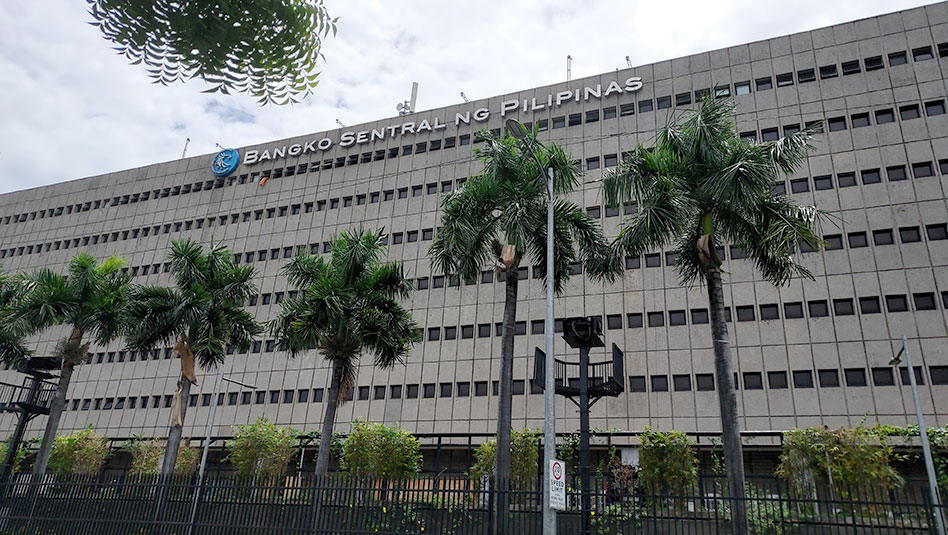
THE Philippines is likely to continue its stable growth trajectory in the medium term, although inflation and elevated interest rates remain major risks to this outlook, analysts said.

“First, inflation remains one of the main downside risks to growth for the year,” Gonzalo Varela, World Bank lead economist and program leader of the Equitable Growth, Finance and Institutions Practice Group for Philippines, Malaysia, and Brunei Darussalam, said in an e-mail.

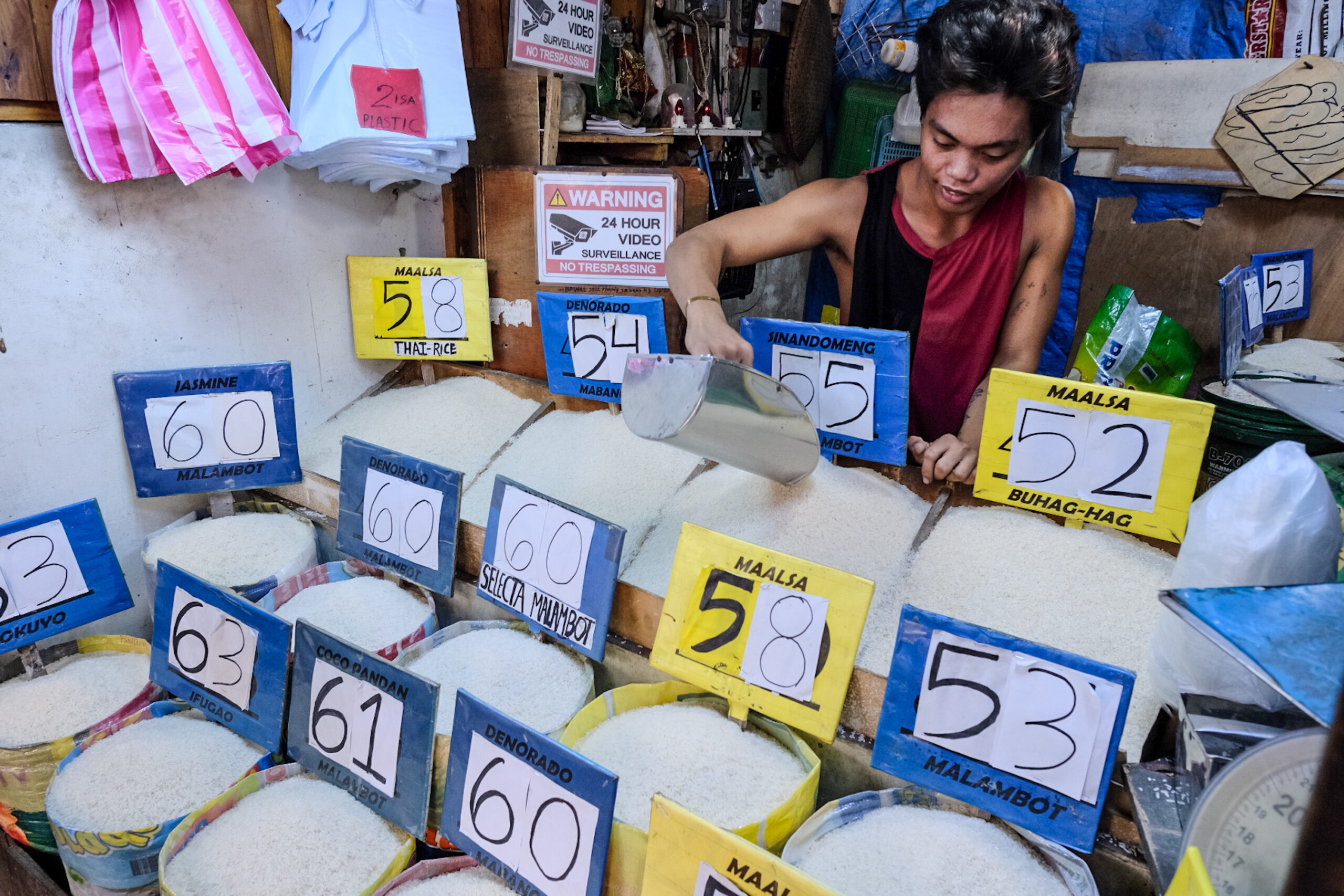
“While inflation is back to within the Bangko Sentral ng Pilipinas’ (BSP) target, inflation for key commodities, such as rice, remains high.”

Since 2022, the Philippines has faced rising inflation due to a spike in global commodity prices and supply chain disruptions. Inflation averaged 5.8% in 2022 and 6% in 2023, well-above the BSP’s 2-4% target range.

The BSP expects inflation to average 3.4% this year.

To tame persistent inflation, the government has employed various monetary and non-monetary measures such as raising interest rates and lowering tariffs on certain commodities.

“Our (economic) performance would have been even better if not for the high inflation, particularly in food. But we expect those inflation pressures to diminish, allowing us to go back to the 2-4% inflation target,” National Economic and Development Authority (NEDA) Secretary Arsenio M. Balisacan told BusinessWorld.

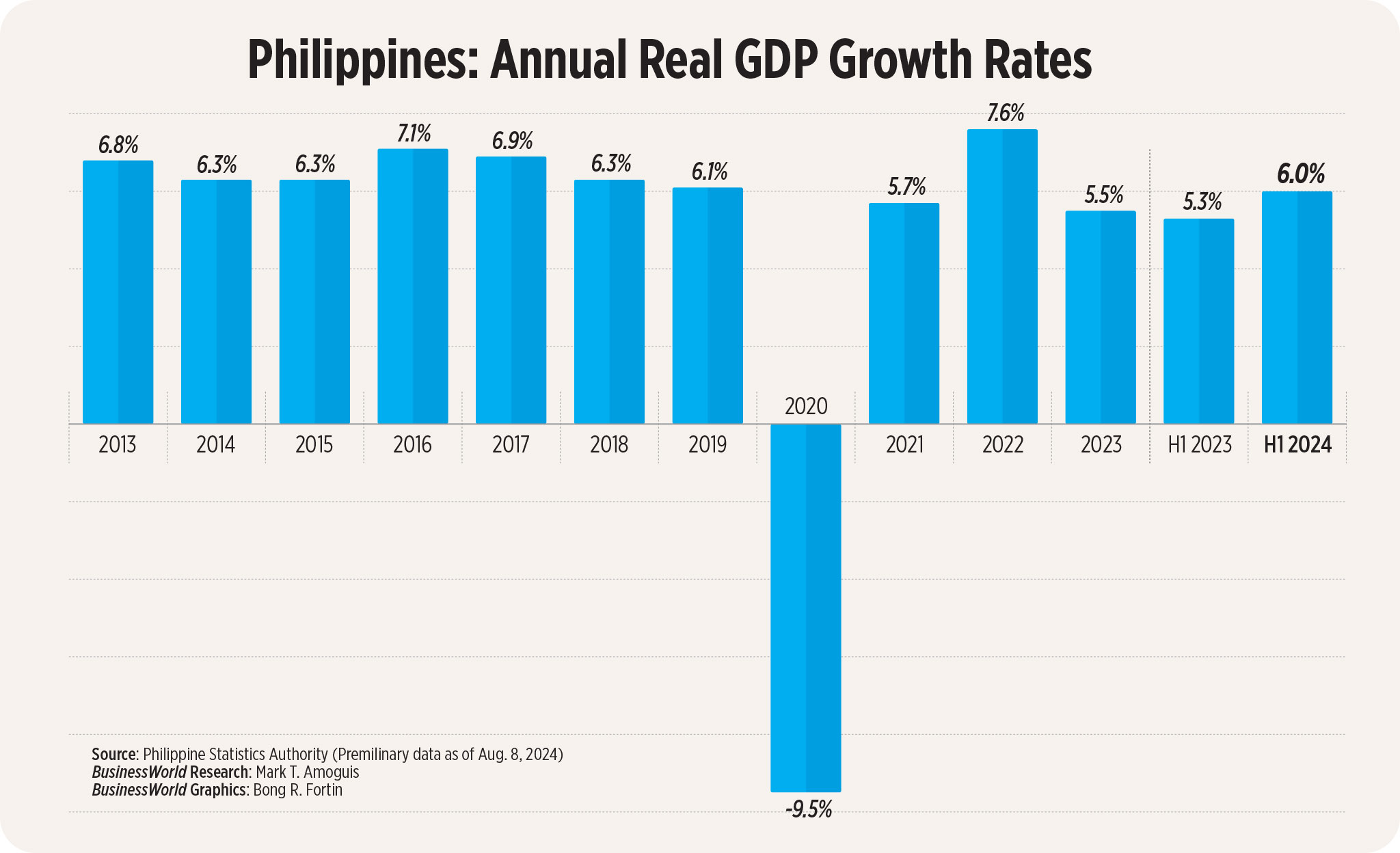
The Philippine economy grew by 7.6% in 2022 but slowed to 5.5% in 2023.

The Development Budget Coordination Committee (DBCC) has set the country’s gross domestic product (GDP) growth at 6-7% this year, 6.5-7.5% next year, and 6.5-8% from 2026 to 2028.

Over the past months, the DBCC has trimmed its growth targets due to external headwinds.

“We stick to that (targets), and we have our fiscal consolidation program to ensure that even as we aim for high growth, we remain fiscally sound, externally sound, so that you can sustain the growth momentum even beyond the administration,” Mr. Balisacan said.

Many multilateral institutions’ Philippine GDP forecasts either fall short or settle at the low end of the government’s growth target.

ASEAN+3 Macroeconomic Research Office (AMRO) Senior Economist Andrew Tsang said that the Philippine government’s medium-term targets are “ambitious as they are higher than the trend growth rate.”

“My general sense is that the GDP growth targets in recent and in coming years are overly optimistic considering a few key factors,” Pantheon Chief Emerging Asia Economist Miguel Chanco said.

“The damage caused by COVID-19 (coronavirus disease 2019) and the cost-of-living crisis to household balance sheets in the Philippines is quite substantial and will take many years to repair,” he added.

PANDEMIC IMPACT
Mr. Balisacan admitted the economy is still reeling from the pandemic due to the “extraordinarily” long lockdowns.

“The pandemic and (the government’s) response to it, caused the sharp contraction of the economy. That easily wiped out three years of economic growth,” he said, referring to the 9.6% GDP contraction in 2020.

“Nonetheless, for the past two years, the objective was to restore the economy to pre-pandemic levels and to recover many of the losses. Many of these losses, like learning losses, take many years to recover.”

Despite expectations of below-target growth, most multilateral institutions’ forecasts still place the country among the fastest-growing economies in Southeast Asia or even the Asia-Pacific region.

The World Bank expects the country to grow by an average of 5.9% from this year until 2026. It sees GDP growth averaging 5.8% in 2024.

“This level of growth puts the Philippines as one of the top growth performers in the East Asia Pacific region (close to Cambodia’s 6.1% average and Vietnam’s 6% average,” Mr. Varela said.

AMRO sees Philippine growth averaging 6-6.2% from 2026 to 2028. This year, it projects GDP growth averaging 6.1%, which places it as the second-fastest expected growth in the ASEAN+3 region, after Vietnam.

“The Philippines will register one of the fastest growth in the ASEAN+3 region during 2024-2025 and will continue to grow steadily in the medium term,” Mr. Tsang said.

“The Philippines’ economy will outperform many of its regional peers in terms of growth. That is largely a catch-up following its long and deep downturn during the pandemic,” Sarah Tan, an economist from Moody’s Analytics, said in an e-mail.

However, Ms. Tan noted that economic output is still below around 10% of its pre-pandemic levels, which is much lower than the average 6-7% seen in other Association of Southeast Asian Nations (ASEAN) countries.

“We expect the economy to narrowly miss the government’s growth target of 6-7% as high borrowing costs keep a lid on private consumption — its main engine of growth.”

“Likewise, high interest rates will also slow private investment growth,” Ms. Tan added, as Moody’s expects GDP growth to average 5.9% this year.

Meanwhile, the International Monetary Fund (IMF) expects GDP to settle at 6% this year.

IMF Representative to the Philippines Ragnar Gudmundsson said this will be driven by a “recovery in exports and accelerate further to 6.2% in 2025 amid declining inflation and lower interest rates.”

“GDP growth is expected to remain at around 6-6.5% over the medium term, in line with the economy’s potential growth. This would make the Philippines one of the fastest-growing economies in the region, reflecting recent strong performance,” he added.

Aris D. Dacanay, economist for ASEAN at HSBC Global Research, said the country’s growth trajectory is “promising” but there is still much to be done.

“The odds are in the Philippines’ favor, and we expect that despite a backdrop of weak global growth, the Philippines’ medium-term outlook for growth is a promising one,” he said.

“The country has re-achieved stability. And in truth, the country will still grow respectably even when the status quo is maintained. But stability is different from prosperity, and to achieve prosperity requires going the extra mile,” Mr. Dacanay added.
INFLATION RISKS
Mr. Balisacan said that inflation is one of the primary concerns that the government must address.

“Inflation is linked with or breeds other problems. High inflation prompted the BSP to raise the policy rate, which is not good for business and not good for consumers,” the NEDA chief said.

“So, if you are able to reduce that, reduce the inflation, then there’s a lower likelihood that you’ll have your interest rates rising in the future,” he said.

The BSP at its Aug. 15 meeting reduced the target reverse repurchase (RRP) rate by 25 basis points (bps) to 6.25% from the over 17-year high of 6.5%. This was the first time the central bank cut rates since November 2020.

BSP Governor Eli M. Remolona, Jr. has also signaled the possibility of another 25-bp cut in the fourth quarter.

Managing inflation will continue to be crucial, Mr. Varela said. “Keeping inflation in check is important to ensure that the process of monetary policy normalization, or the reduction in the key interest rate by the BSP, is not delayed,” he said.

In the short term, Mr. Tsang said that the country’s growth prospects may be dampened by high inflation, particularly due to possible supply shocks which could stoke food prices.

“Inflation is still one of the main concerns given how private consumption is the largest contributor to GDP by expenditure. While we expect inflation to recede through the year and stabilize in the next, elevated food inflation threatens to slow the deceleration,” Ms. Tan said.

“That’s partly a function of poor food supply as the country is vulnerable to natural disasters like droughts and floods,” she added.

The Philippines is one of the countries most affected by storms, with an average of 20 typhoons per year.

The agriculture sector is still recovering from the impact of the El Niño, which caused P15.3 billion in total farm damage from June 2023 to August 2024.

“A key downside risk stems from the threat of climate and extreme weather-related events. For example, a stronger-than-expected La Niña and more destructive storms could cause disruptions to business activity and damage to farm output which could put pressure on food prices,” Mr. Varela said.

IMF’s Mr. Gudmundsson said that the balance of risks to the near-term growth outlook has improved but remains tilted to the downside.

“On the downside, higher-for-longer interest rates or spillovers from fiscal risks in the United States could result in tighter financial conditions than expected in the Philippines and larger-than-expected capital outflows,” he said.

Barring these risks, inflation is widely expected to begin easing for the rest of the year and in 2025.

“Inflation is expected to stay within the target range in the second half of 2024 and 2025, benefiting from the continued easing of international commodity prices and reduction in tariffs on imports, although the upside risks, such as peso depreciation, and wage increases, remain,” Mr. Tsang said.

The tariff cut is also widely expected to boost household consumption, Mr. Dacanay said.

“Households in the Philippines usually spend 9% of their budgets on rice so potentially lowering rice prices by a fifth can help lower the pressure on household budgets and unleash as much as 1.1% of GDP. That’s a lot of potential growth waiting on the sidelines.”

In June, President Ferdinand R. Marcos, Jr. approved a reduction on tariffs on rice imports to 15% from 35% previously, until 2028.

OTHER RISKS
Apart from inflation, analysts also cited other factors that could derail the country’s growth path.

Mr. Varela noted delays in the implementation of key investment and productivity-enhancing reforms, which could hinder the entry of foreign investments.

“Greater investment in physical infrastructure and human capital is still needed, while the Philippines has a lot of catching up to do in terms of signing and joining major free trade agreements with the world’s largest markets,” Mr. Chanco said.

In the long term, Mr. Tsang said that lagged effects from the pandemic could continue to constrain growth amid the “slow upgrading of the labor force and weak recovery in private investment.”

“Meanwhile, the potential growth is also affected by the pace of infrastructure development, prolonged geopolitical risks, and natural disasters caused by climate change. These factors underscore an urgent need for action to foster resilient, sustainable, and inclusive long-term growth,” he added.

To achieve higher growth, Mr. Tsang said the economy should address the scarring effects of the pandemic “by implementing human capital policy and investment policy in a timely manner and continue to embark on infrastructure development.”

Mr. Gudmundsson also noted that an escalation in geopolitical tensions could “disrupt trade and put pressure on the peso.”

GROWTH DRIVERS
Meanwhile, the NEDA secretary said that the government is ensuring that growth will be felt across all sectors.

“In the meantime, we are pushing every policy lever that we can use that ensures growth is not just high, but also inclusive. Despite the inflation pressure, growth has been broadly inclusive,” Mr. Balisacan said.

Mr. Varela said the economic growth potential for the Philippines remains high over the medium and long term.

“If the government commits to a combination of fiscal prudence and ambitious investment and productivity-enhancing reforms, the economy could be growing at higher rates than the already high rates at which it is growing today,” he said.

The government must also ensure the timely implementation of reforms to strengthen competition and boost productivity, Mr. Varela said.

“In an increasingly competitive environment, further efforts to attract FDIs (foreign direct investments) and measures to ensure knowledge transfer will be needed,” Mr. Tsang said.

Infrastructure development will also be key to supporting robust growth.

“The pace of infrastructure development is one of the key challenges facing the Philippine economy. Infrastructure investment should be stepped up through strategic prioritization among different sectors and effective utilization of various funding sources,” Mr. Tsang said.

The Marcos administration plans to spend 5-6% of GDP on infrastructure annually.

Mr. Dacanay noted that infrastructure must be well-planned and well-designed to “prioritize the overall mobility and welfare of all Filipinos, regardless of income.”

He said infrastructure development must also incorporate climate mitigation to make sure Filipinos become more resilient in the face of stronger typhoons.

“Looking forward, accelerating reforms to raise productivity, reduce infrastructure and education gaps, and harness benefits from the digital economy and demographic dividends could boost the country’s potential growth,” Mr. Gudmundsson said.

Policies must also strengthen social protection schemes and address climate issues, Mr. Gudmundsson added.

“In addition, policies that aim to close the physical and human capital investment gaps for the country will be important to boost our long-term growth prospects. This will allow the Philippines to continue to expand its potential growth,” Mr. Varela said.

UPSKILLING
The government must also focus on upskilling the labor force, analysts said.

“Overcoming the scarring effects of the pandemic mandates a sustained focus on upgrading and upskilling the workforce to embrace a more technology-driven economy,” Mr. Tsang said.

“In particular, the government should closely collaborate with the industries and training providers to formulate action plans and implement the plans to ensure that the supply of skilled labor is matched with industries’ demand,” he added.

Robust investments to generate quality employment is one of the priorities of the administration, Mr. Balisacan said.

“Our push is for investments, massive investments that we need to do because then the returns of labor will be higher in those places where there are investments.”

Mr. Balisacan said the government should address Filipino students’ learning losses from the pandemic as its effect will be felt when they join the workforce in a few years.

The NEDA in 2021 said that the lack of face-to-face schooling for one year during the pandemic may result in over P11 trillion in productivity losses over the next four decades.

Mr. Dacanay noted that skills training must also incorporate emerging technologies such as artificial intelligence (AI).

“Skills training needs to be prioritized, particularly in AI, to maintain the momentum seen in the country’s digital space,” he said.

By sector, the services industry is seen to continue being a key driver of growth. It is typically the biggest contributor to the economy among major industries.

“Within services, growth will be led by wholesale and retail trade as monetary policy easing reduces pressure on households’ budgets, giving consumer spending a lift,” Ms. Tan said.

Mr. Tsang said that the business process outsourcing (BPO) industry will “expand robustly going forward.”

“The BPO sector will continue to grow given the ongoing trend of digitalization and steady rise in external demand for IT-BPM services for cost optimization.”

Tourism is also seen as a bright spot for the Philippines, Mr. Tsang said.

“In the coming years, there is potential in the tourism industry with strong domestic tourism, and the level of international tourists is expected to surpass the pre-pandemic level,” he said.

In 2023, tourism accounted for 8.6% of GDP, up from 6.4% a year ago. The industry’s direct gross value added, which measures the value generated from various tourism-related activities, was P2.09 trillion.

The country should also continue to enhance the manufacturing of semiconductors, its top export.

“Over the near to medium term, the Philippine semiconductor industry is expected to benefit from the upturn of the global semiconductor cycle (it is expected to last until mid-2025) and the US semiconductor diversification strategy,” Mr. Tsang said.

Ms. Tan said that enhancing semiconductor production to move up the value chain will “attract investment and talent, improving the sector’s competitiveness.”

“Rising factory output is crucial to maintaining economic expansion; since the end of the pandemic, manufacturing output growth has lagged service-providing industries by half,” she added.


PHL inflation cools in boon for rate cuts

PHL inflation cools in boon for rate cuts

Inflation slowed, as expected, to a seven-month low in August due to a moderate rise in food and a decline in transport costs, making the case for the Philippine central bank to deliver more interest rate cuts next quarter to boost economic growth.

Consumer prices rose by 3.3% from 4.4% in July and 5.3% a year earlier, the Philippine Statistics Authority (PSA) said on Thursday.

The increase was within the Bangko Sentral ng Pilipinas’ (BSP) 3.2-4% forecast for the month and below the 3.7% median estimate of 15 analysts in a BusinessWorld poll last week.

Inflation rates in the Philippines

Declining inflation could justify further policy easing, Michael L. Ricafort, chief economist at Rizal Commercial Banking Corp., said in an e-mail.

“It is possible for inflation to sustain its 3% levels for the rest of 2024,” he said. “That could justify further BSP rate cuts that would match any future Federal Reserve rate cuts from 2024 to 2026.”

The Monetary Board cut benchmark interest rates by 25 basis points (bps) to 6.25% at its Aug. 15 meeting, the first cut in almost four years. BSP Governor Eli M. Remolona, Jr. has signaled another 25-bp cut before the year ends.

In a note, Pantheon Macroeconomics said inflation risks “remain skewed to the downside, as the recent cut in rice tariffs has yet to have a meaningful impact on prices.”

But Chinabank Research noted that while rice prices could decline in the coming months, recent bad weather poses supply-side risks that could drive food prices up.

“Base effects will help push down inflation in September, which could help offset any potential upward price pressures from the typhoon and monsoon rains,” it said in a note.

August ended six straight months of acceleration, with inflation returning to the Philippine central bank’s 2-4% target.

Month on month, consumer prices declined by 1.1%. Stripping out seasonality factors, prices decreased by 0.1%.

Core inflation, which excludes volatile prices of food and fuel, slowed to 2.6% from 2.9% in July and 6.1% a year ago. Inflation averaged 3.6% in the first eight months of the year.

How much did each commodity group contribute to August inflation?

At a news briefing, National Statistician Claire Dennis S. Mapa said August inflation was mainly driven by the slower price increases in food and nonalcoholic beverages, which slowed to 3.9% from 6.4% in July.

It accounted for 69.9% of the overall inflation downtrend.

Also contributing to the downtrend was transport, with an annual drop of 0.2%. In August, pump price adjustments stood at a net decrease of PHP 2.70 a liter for gasoline, PHP 2.80 for diesel, and PHP 3.70 for kerosene.

Food inflation slowed to 4.2% from 6.7% in July, mostly due to the slower increases in the prices of rice at 14.7%. This was followed by vegetables, tubers, plantains, cooking bananas and pulses with a year-on-year decline of 4.3%.

The average price of a kilo of regular milled rice fell to P50.66 in August from P50.90 a month earlier, while well-milled rice prices declined to P55.56 from P55.85, PSA data showed.

MONITORING RISKS

The PSA also reported faster annual declines in the indices of fish and other seafood at 3.1%, and sugar, confectionery, and desserts at 3.8%.

Lower inflation rates were also noted in flour, bread, and other bakery products, pasta products, and other cereals at 2.4%; meat and other parts of slaughtered land animals at 4%; and ready-made food and other food products not elsewhere classified at 5.5%.

On the other hand, inflation for housing, water, electricity, gas, and other fuels accelerated to 3.8% in August from 2.3% in July, mainly due to higher electricity prices.   

“Our expectation is that it will increase until October,” Mr. Mapa said.   

In a statement, Finance Secretary Ralph G. Recto said the government “will not be complacent” with the latest inflation figures. “While we are now seeing the positive results of our measures, we are proactively monitoring potential inflationary risks to address them in a timely and targeted manner.”

The government is prepared to counter the impacts of La Niña on inflation, National Economic and Development Authority Secretary Arsenio M. Balisacan said in a separate statement.

These include improved early warning systems and the use of communication systems to warn about dam openings, as well as measures against the potential spread of livestock diseases, he added.

President Ferdinand R. Marcos, Jr. vowed to put up more state-assisted farm-to-market outlets and speed up the rollout of swine vaccines to temper rising costs. In a statement, he attributed slowing inflation to lower rice tariffs.

Mr. Marcos said putting more stores under the state’s Kadiwa program, which allows farmers to sell directly to consumers, in central and southern Philippines ensures prices would be affordable.

There were 265 regular Kadiwa stores nationwide and 119 Kadiwa pop-up stores that operated for a limited time as of May.

Mr. Marcos said the government would start the controlled rollout of African Swine Fever vaccines to ensure sufficient and affordable pork supply.

The President also said the government was exerting all efforts to ensure stable gasoline prices.

The Philippines was battered this week by heavy rains from Severe Tropical Storm Yagi and the southwest monsoon, with the Agriculture department estimating farm damage at P350.85 million. The agency said production losses hit 14,814 metric tons spanning 8,893 hectares of land. Rice accounted for P333.08 million of the total damage. — – Beatriz Marie D. Cruz, Reporter, with Kyle Aristophere T. Atienza

PHL banks’ earnings to remain strong this year

PHL banks’ earnings to remain strong this year

Philippine banks’ earnings are expected to stay robust this semester with the Bangko Sentral ng Pilipinas (BSP) kicking off its easing cycle last month, but profit growth may moderate as their margins level off, market analysts said.

Most listed banks’ earnings ended at record levels in the first half of the year and still have room to grow as their net interest margins (NIM) remain high on the back of elevated borrowing rates and low funding costs, First Metro Investment Corp. Head of Research Cristina S. Ulang said in a Viber message.

“The local banking industry’s second-quarter performance showed resilience, with the biggest gainers being BDO Unibank, Inc., Bank of the Philippine Islands (BPI), and Metropolitan Bank & Trust Co. (Metrobank). These banks benefited from strong loan growth, improved NIMs, and robust fee-based income,” Regina Capital Development Corp. Head of Sales Luis A. Limlingan said in a Viber message.

BDO saw its net profit climb by 53.18% to PHP 18.72 billion in the second quarter amid higher net interest earnings. This brought its attributable net income for the first half to PHP 35.25 billion, 11.21% higher year on year.

Meanwhile, BPI’s net earnings grew by 17.5% year on year to PHP 15.3 billion in the second quarter on the back of strong revenue growth, bringing its first-half net profit to a record PHP 30.6 billion, up by 21.5% from the year-ago level.

Lastly, Metrobank booked a net income of PHP 11.61 billion last quarter, up 11.44% year on year, on higher net interest earnings amid an expanded loan book and elevated rates. This brought its net profit for the first semester to a record PHP 23.61 billion, rising by 12.95% from the year prior.

Latest data from the central bank showed that the Philippine banking system’s combined net income stood at P190.26 billion in the first half, rising by 4.1% from P182.76 billion a year prior.

Analysts said the BSP’s move to begin its monetary easing cycle could spur lending activity, which would boost Philippine banks, but also cause their margins to narrow.

The BSP’s policy-setting Monetary Board on Aug. 15 cut its policy rate by 25 basis points (bps) to 6.25% from a near 17-year high of 6.5%, marking its first easing move in nearly four years.

BSP Governor Eli M. Remolona, Jr. has said they could cut rates by another 25 bps within the year. The Monetary Board’s remaining policy-setting meetings this year are on Oct. 17 and Dec. 19.

“Net interest margins are showing signs of plateauing, which was expected. We observed a slight uptick in nonperforming loans, which was more evident in second-tier banks that are focused on high-yield consumer loans. We expect the rest of the year to be more of the same,” AP Securities, Inc. Research Head Alfred Benjamin R. Garcia said in a Viber message. 

Bank margins may continue to erode in the coming months as interest rates decline further, he said.

“Some banks may have been more aggressive in locking in high rates, which may delay this margin erosion, but generally we expect banks to experience some pain before it gets better for them. Eventually, lower margins will be offset by rising loan volumes as lower rates entice more borrowers,” Mr. Garcia added.

“For the rest of the year, continued solid performance is expected, but there’s a good chance that the pace may moderate due to rising competition for deposits and potential loan quality concerns. The recent rate cut, and the possibility of more, should support loan demand but may compress NIMs,” Mr. Limlingan added.

For her part, Ms. Ulang said the lower cost of credit will boost borrowings and investments.

“Banks will push loan volume as the economy grows, with ample opportunities in infrastructure, manufacturing and funding for capital expenditures,” she added. — Aaron Michael C. Sy

Peso surges on bets of big Fed rate cut

Peso surges on bets of big Fed rate cut

The peso surged against the dollar on Thursday amid renewed market expectations of a big rate cut by the US Federal Reserve following weak US data and on slower-than-expected Philippine inflation last month.

The local unit closed at PHP 56.21 per dollar on Thursday, strengthening by 37 centavos from its PHP 56.58 finish on Wednesday, Bankers Association of the Philippines data showed.

The peso opened Thursday’s session stronger at PHP 56.50 against the dollar. Its intraday best was its closing level, while its weakest showing was at PHP 56.51 versus the greenback.

Dollars exchanged went down to USD 1.57 billion on Thursday from USD 1.57 billion on Wednesday.

The peso appreciated against a broadly weaker dollar on bets of an aggressive Fed cut, a trader said by phone.

“Asian currencies strengthened against the dollar following the US job openings data that fell below expectations, fueling speculation of a dovish Federal Reserve stance,” Security Bank Corp. Chief Economist Robert Dan J. Roces said in a Viber message.

Most emerging market currencies edged up against a wavering dollar on Thursday as bets on bigger interest rate cuts by the Federal Reserve grew, with focus on more US data due later in the day, Reuters reported.

MSCI’s index for emerging market currencies gained 0.2%.

The dollar struggled for direction after data on Wednesday showed US job openings dropped to a 3-1/2-year low in July, suggesting the labor market was losing steam, while a Fed survey showed US economic activity expanded more slowly from the middle of July through late August.

The peso was also supported by easing Philippine inflation, the trader added.

The slower-than-expected inflation print will give the Bangko Sentral ng Pilipinas (BSP) more leeway to continue its rate cut cycle, Mr. Roces said.

Headline inflation eased to a seven-month low of 3.3% in August from 4.4% in July and 5.3% in the same month a year ago, the Philippine Statistics Authority reported on Thursday.

This was within the BSP’s 3.2-4% forecast for the month and was well below the 3.7% median estimate in a BusinessWorld poll of 15 analysts conducted last week.

The Philippine central bank on Aug. 15 reduced its policy rate by 25 basis points (bps) to 6.25%, marking its first easing move in nearly than four years.

BSP Governor Eli M. Remolona, Jr. has said they could cut rates by another 25 bps within the year.

The Monetary Board’s last two policy-setting meetings this year are on Oct. 17 and Dec. 19.

For Friday, the trader sees the peso moving between PHP 56 and PHP 56.50 versus the dollar. — AMCS with Reuters

Stocks up on slower-than-expected Aug. inflation

Stocks up on slower-than-expected Aug. inflation

Philippine shares recovered on Thursday following the release of data showing that headline inflation slowed more than expected last month.

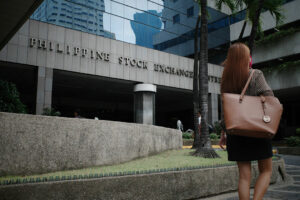
The Philippine Stock Exchange (PSEi) index rose by 0.37% or 25.85 points to end at 6,907.97 on Thursday, while the broader all shares index climbed by 0.26% or 9.75 points to close at 3,739.27.

“The local market moved sideways as investors weighed the decline of the Philippines’ inflation last August against lingering concerns over the health of the US economy. In the end, the bourse was able to post gains,” Philstocks Financial, Inc. Senior Research Analyst Japhet Louis O. Tantiangco said in a Viber message.

“Philippine shares overcame the negative price action overseas to finish higher… Investor sentiment got a boost as the latest August consumer price index data came in better than expected,” Regina Capital Development Corp. Head of Sales Luis A. Limlingan said in a Viber message.

Philippine headline inflation eased to a seven-month low of 3.3% in August from 4.4% in July and 5.3% in the same month a year ago, the government reported on Thursday. This was within the central bank’s 3.2-4% forecast for the month and was well below the 3.7% median estimate in a BusinessWorld poll of 15 analysts conducted last week.

Meanwhile, US stocks finished slightly lower in choppy trading on Wednesday following labor market data and comments from a US Federal Reserve official that bolster the case for an interest rate cut, Reuters reported.

The Dow Jones Industrial Average rose 38.04 points or 0.093% to 40,974.97; the S&P 500 lost 8.86 points or 0.16% to 5,520.07; and the Nasdaq Composite lost 52 points or 0.3% to 17,084.30.

Labor department data showed that US job openings fell to a three-and-a-half-year low in July, indicating continued easing of labor market tightness that could strengthen the Fed’s hand to begin cutting rates at its next meeting later this month.

Raphael Bostic, Atlanta Fed president, said on Wednesday the central bank must not keep interest rates too high much longer or it risks causing too much harm to employment.

At home, sectoral indices were split. Services went up by 1.8% or 39.22 points to 2,208.57; industrials increased by 0.97% or 89.30 points to 9,249.42; and financials climbed by 0.71% or 15.23 points to 2,141.91.

Meanwhile, property fell by 1.23% or 34.40 points to 2,752.79; holding firms dropped by 0.35% or 20.14 points to 5,719.07; and mining and oil slid by 0.25% or 20.39 points to 8,018.51.

Value turnover declined to PHP 5.07 billion on Thursday with 517.79 million shares changing hands from the PHP 5.56 billion with 653.58 million issues traded on Wednesday.

Advancers edged out decliners, 96 versus 94, while 46 names closed unchanged.

Net foreign buying rose to PHP 258.97 million on Thursday from PHP 145.73 million on Wednesday. — Revin Mikhael D. Ochave

Veteran banker appointed to MB

Veteran banker appointed to MB

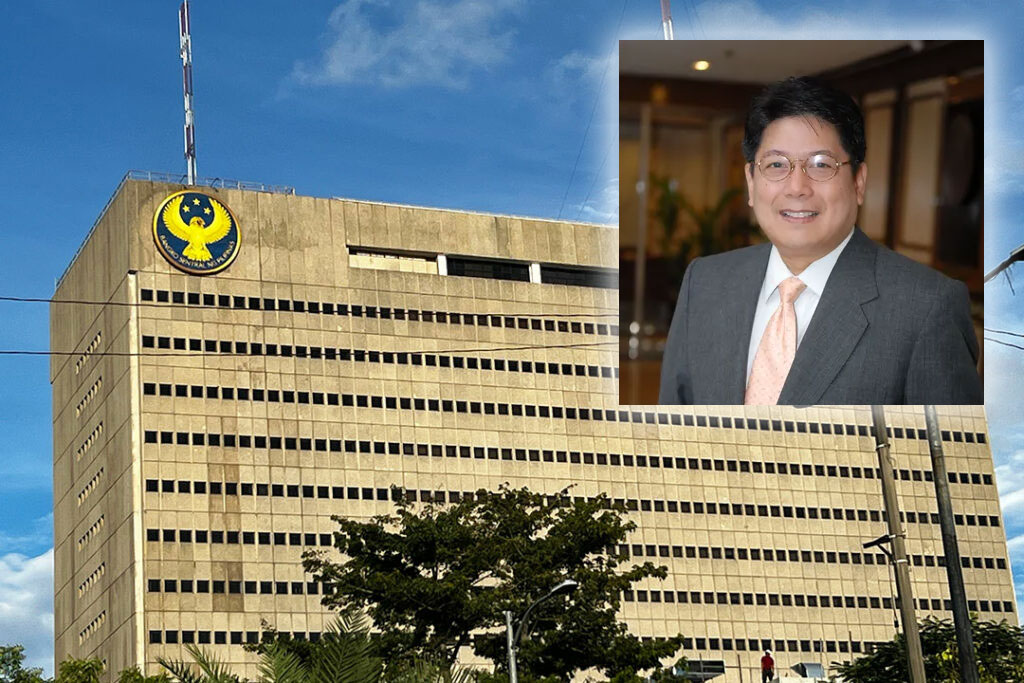
President Ferdinand R. Marcos, Jr. has appointed a veteran banker to the last seat of the Monetary Board (MB), completing the seven-member policy-making body of the Philippine central bank.

Jose L. Querubin will take his oath at the Bangko Sentral ng Pilipinas (BSP) complex on Sept. 5, central bank Governor Eli M. Remolona, Jr. said in a text message on Wednesday.

Before his appointment, the banker served as president and chief executive officer of state-owned United Coconut Planters’ Bank from 2003 to 2007. He also held positions at Solid Bank and Citibank.

Ruben Carlo O. Asuncion, chief economist at Union Bank of the Philippines, Inc., said Mr. Querubin’s experience as a banker would benefit the Monetary Board.

“He’s a veteran of the banking industry and I am sure his vast experience will be a great addition to the MB,” he said in a Viber message.

Mr. Querubin’s appointment would “result in more diversified decision-making with more perspectives,” Michael L. Ricafort, chief economist at Rizal Commercial Banking Corp., told BusinessWorld in a Viber message.

Mr. Querubin took up BS Mathematics (cum laude) and Mechanical Engineering at De La Salle University in Manila and holds a Master of Business Administration from Wharton Business School at the University of Pennsylvania, according to the website of Gawad Kalinga Canada, where he was vice-chairman.

He was secretary of the Bankers Association of the Philippines and president and chairman of Megalink, Inc.

He was also active in civic organizations like the Philippine National Red Cross where he served as governor, Operation Smile Philippines where he served as chairman, and the Rotary Club of Makati West where he was president, according to the website.

In July, veteran banker Walter C. Wassmer was also appointed to the Monetary Board after the resignation of two board members who got embroiled in a scandal involving “ghost employees” at the Philippine central bank.

Malacañang had accepted the resignation of MB members Anita Linda R. Aquino and V. Bruce J. Tolentino effective June 30, Bloomberg reported.

Mr. Querubin and Mr. Wassmer will complete the unexpired terms of Ms. Aquino and Mr. Tolentino until July 2026.

The Monetary Board exercises the powers and functions of the BSP including the conduct of monetary policy.

Mr. Querubin’s appointment completes the seven-member board, which is led by Mr. Remolona.

The other members are Finance Secretary Ralph G. Recto, former BSP Governor and Finance Secretary Benjamin E. Diokno, ex-Finance Undersecretary Romeo L. Bernardo, and former National Treasurer Rosalia V. de Leon.

The Monetary Board’s remaining policy meetings this year are scheduled for Oct. 17 and Dec. 19.

At its Aug. 15 meeting, the Monetary Board cut the benchmark interest rate by 25 basis points (bps) to 6.25% from the over 17-year high of 6.5%.

This was the first time the central bank had cut rates since November 2020, when it last delivered a 25-bp cut amid a global coronavirus pandemic.

Mr. Remolona has signaled the possibility of another 25-bp cut in the fourth quarter. – Luisa Maria Jacinta C. Jocson, Reporter

BSP easing cycle to reverse slowing consumption growth — Metrobank

BSP easing cycle to reverse slowing consumption growth — Metrobank

The Philippine central bank’s expected easing cycle could reverse anemic household spending in a country where consumption accounts for more than two-thirds of the economy.

“As the BSP’s policy easing takes effect, Filipinos can look forward to a more favorable economic environment,” Marian Monette Q. Florendo, a research and business analytics officer at Metropolitan Bank & Trust Co. (Metrobank), said in a report.

“The combination of lower policy rates and easing inflation is anticipated to provide support for both private consumption and investments, potentially reversing the adverse effects of prolonged high interest rates,” she added.

The Bangko Sentral ng Pilipinas’ (BSP) Monetary Board cut borrowing costs by 25 basis points (bps) last month, bringing the key rate to 6.25% from the over 17-year high of 6.5%. This was the first time it cut rates in nearly four years.

“This policy shift is expected to have far-reaching effects on the Philippine economy, particularly in stimulating private consumption and investments.”

Metrobank said there had been a “significant slowdown” in household final consumption expenditure amid elevated interest rates.

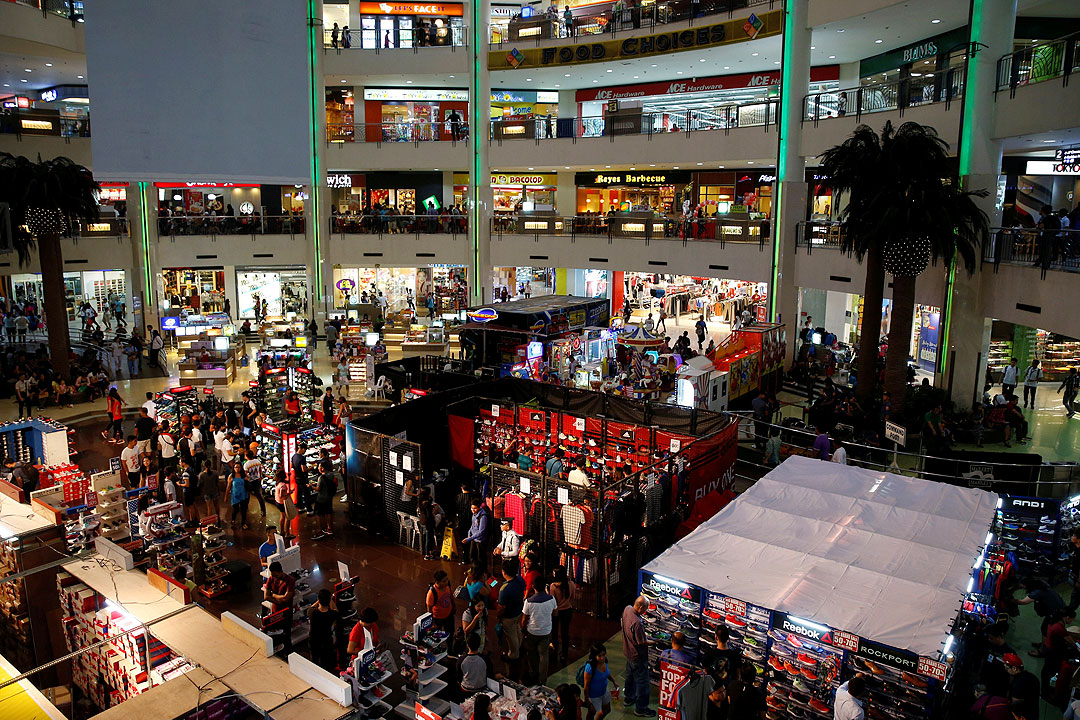
Growth in household spending, which accounted for 67.8% of Philippine economic output in the second quarter, slowed to 4.6% from 5.5% a year ago, according to the local statistics agency.

It was also the slowest growth since the 4.8% decline in the first quarter of 2021.

Excluding the pandemic years, Metrobank said this was the slowest pace of spending since 2010. “This tepid growth falls below the 10-year pre-pandemic average, indicating a constrained consumer spending environment,” Ms. Florendo said.

Further policy rate reductions could serve as the “catalyst to reinvigorate the Philippine economy.”

Metrobank expects the benchmark rate to end the year at 5.75% and further down to 5% by next year.

“This aligns with expectations that the US Federal Reserve will also begin its easing cycle in September,” it added.

Investors are pricing in a 42% probability of a 50-basis-point rate cut at the Sept. 17-18 meeting of the Fed, up from 30%, Reuters reported, citing the CME FedWatch Tool.

Meanwhile, the BSP’s rate-cutting cycle could pave the way for lower credit card rates and affordable loan terms. This would “provide immediate relief to consumers burdened by high-interest credit card debt.”

“As policy rates decrease, overall loan rates are likely to follow suit,” Ms. Florendo said. “This opens up opportunities for Filipinos to avail [themselves] of new loans at more favorable rates or to negotiate better terms for existing loans.”

Lower loan rates could free up cash flow for households, allowing them to either pay down existing debt more quickly or rebuild their savings, she pointed out.

Metrobank expects inflation to settle at 3.3% this year and 3.1% in 2025, within the BSP’s 2-4% target.

The forecast is supported by expected easing rice prices, backed by government policies and a balanced assessment of other inflation risks, it added.

Inflation likely slowed to 3.7% in August, according to the median estimate of 15 analysts in a BusinessWorld poll. It hit a nine-month high of 4.4% in July. — Luisa Maria Jacinta C. Jocson

PSEi may stack up well amid easing prices and rate cuts

PSEi may stack up well amid easing prices and rate cuts

The Philippine Stock Exchange index (PSEi) is projected to close the year at as high as more than 7,600 points, spurred by easing inflation and expected interest rate cuts.

The benchmark index could end the year at 6,998.71 to 7,665.26 points, with a 5% to 15% earnings growth for PSEi companies, Philstocks Research said in a report.

“For now, we see the possibility of the downside risks occurring to be low,” it said. “Hence, the market is expected to rally further towards the year’s end.”

The stock brokerage noted that with a robust labor market and easing inflation, it expects strong demand within the economy, which would trickle down to corporate revenues. “With easing inflation, we also expect the increase in production costs to be tempered. All of these would benefit our companies’ bottom line,” it added.

The PSEi finished 2023 at 6,450.04 points, 1.8% or 116.35 points lower than the previous year’s close.

On Wednesday, the index shed 0.01% or 0.8 point to close at 6,882.12 points. The broader all-share index dropped by 0.03% or 1.26 points to 3,729.52.

Inflation likely slowed to 3.7% in August, according to the median estimate of 15 analysts in a BusinessWorld poll. It hit a nine-month high of 4.4% in July. The local statistics agency will release August inflation data on Sept. 5.

Index members posted modest combined financial results, with revenue up by 8.43% year on year and net income rising by 4.96% amid the challenging macroeconomic backdrop in the first half, Philstocks said.

Alfred Benjamin R. Garcia, research head at AP Securities, Inc. expects the PSEi to hit 7,355 points by yearend, as the Philippine central bank continues its rate cut cycle in the fourth quarter.

“Our base case scenario of 50-basis-point (bp) rate cut this year still holds, as we’re still expecting the next rate cut to come in December,” he told BusinessWorld in a Viber message. “Earnings were also mostly in line with our expectations.”

“At this point, there’s minimal risk of inflation reigniting. I guess the only major risk is that consumer spending might not pick up as quickly as we hope,” he added.

Last month, the Monetary Board cut the benchmark interest rate by 25 bps to 6.25% after keeping it at a more than 17-year high in almost four years.

Bangko Sentral ng Pilipinas Governor Eli M. Remolona, Jr. earlier said they could deliver another 25-bp cut next quarter. The central bank’s last two policy meetings of the year will be on Oct. 17 and Dec. 19.

April Lynn C. Lee-Tan, chief equity strategist at COL Financial Group, Inc., said the PSEi could hit 7,100 by yearend.

“Risks would be weak economic and corporate earnings numbers, a recession in the United States and a weak stock market there,” she said in a Viber message.

ECONOMIC GROWTH

Cristina S. Ulang, research head at First Metro Investment Corp., kept the brokerage’s initial estimate of 7,000 to 7,500 points for the PSEi by yearend.

“The risks are a US recession and resurgent local inflation, while the catalysts for PSEi include easing food inflation, especially rice, and foreign buying on a sustained basis,” she told BusinessWorld in a Viber message.

Rice inflation slowed for the fourth straight month to 20.9% in July. Rice typically accounts for almost half of overall inflation.

Michael L. Ricafort, chief economist at Rizal Commercial Banking Corp., said the benchmark index could finish the year at 7,000 to 7,500, spurred by the country’s economic growth.

The Philippine economy expanded by 6.3% in the second quarter compared with the 5.8% growth a quarter earlier on higher state spending and investments.

“It is possible to sustain gross domestic product growth near or at 6% levels in the coming quarters due to favorable demographics and the continued recovery of some industries such as tourism and the possible increase in government spending to prepare for the May 2025 midterm elections,” he said in a Viber message.

Juan Paolo E. Colet, managing director at China Bank Capital Corp., sees a tamer increase for the index at 7,100 by the end of the year. “It could possibly be higher depending on incoming data,” he said in a Viber message.

At a news briefing last week, Unicapital Head of Research Wendy B. Estacio-Cruz lowered their estimate for the PSEi to 7,000 by end-2024 from 7,200.

“That’s a 9% gain from end-2023,” she said. “That’s based on our bottom-up analysis, which is based on an 11% earnings per share growth rate and at 12.5% target price-to-earnings,” she said. – Revin Mikhael D. Ochave, Reporter

‘Trump 2.0’ may hurt Philippine economy, according to Nomura

‘Trump 2.0’ may hurt Philippine economy, according to Nomura

The protectionist policies of a potential Donald J. Trump presidency could hurt the Philippine economy through lower dollar remittances and revenues in the service sector, according to Nomura Global Markets Research.

“We remain of the view that, similar to Trump’s first term, the Philippines will be among the most vulnerable through various channels,” it said in a report.

Nomura said a Mr. Trump victory could dampen the Philippines’ economic growth. “Overall, we estimate through these channels GDP growth could be lower by 0.2 percentage point (ppt) than our baseline, though this is still manageable as we forecast GDP growth of 6.1% year on year for 2025,” it added.

The Philippine economy grew by 6.3% in the second quarter. The government is targeting 6-7% growth this year.

“The direct exposure comes from the country’s goods trade surplus with the US, which has risen in the last few years, and exports are likely to be hurt by the 10% tariffs proposed by Trump,” Nomura said.

Mr. Trump, the Republican nominee, has been loud about his intention to go big with trade restrictions, vowing to impose tariffs of 60% or higher on all Chinese goods. He has also floated the idea of a 10% universal tariff, according to Reuters.

The US remained the top destination for Philippine-made goods in June, with exports valued at $897.8 million or 16.1% of the country’s total, according to data from the local statistics agency.

The Philippines’ business process outsourcing (BPO) sector could also be hurt by Mr. Trump’s policies, Nomura said.

“In addition, the services surplus is now slightly larger than the goods surplus at 1% of GDP (gross domestic product), partly reflecting the fact that most of the country’s BPO sector caters to US companies,” it said.

“While Trump has not been explicit about ‘bringing back jobs to America,’ the risk is similar policies might affect BPO revenues, which was clearly the case in his first term — services exports growth to the US [was] halved to 5.1% year on year in 2017-2019 versus the prior years.”

The information technology and business process management industry booked a USD 35.5-billion revenue last year. This year, the sector’s revenue is projected to hit $40 billion.

Remittances, which are a key contributor to the Philippines’ foreign exchange coffers, could also be hit by a Trump win.

“By the same token, remittance growth also slowed during Trump 1.0, suggesting that a tightening in US immigration policy might affect workers’ remittances from the US which are even more sizeable (3.1% of GDP),” Nomura said. 

Cash remittances jumped by 2.9% year on year to $16.25 billion in the first half, data from the Bangko Sentral ng Pilipinas (BSP) showed. The US accounted for 40.9% of the total.

“Among the less export-oriented economies, the Philippines does not have a similar cushion and instead will be at risk from various channels, including the impact on workers’ remittances from a possible tightening of US immigration policy as well as the outsourcing sector,” Nomura said.

It also cited potential geopolitical tensions between China and the Philippines due to the “lack of security support from the US under Trump.”

“An indirect channel is the impact of a possible rise in geopolitical tensions in the South China Sea if the US, which is the country’s strongest ally, provides less regional security and reduces its military presence under Trump.”

On the other hand, Nomura said the Philippine central bank’s easing cycle is unlikely to be affected.

“Meanwhile, a pause in the Fed’s cutting cycle to assess the impact of Trump’s tariffs on US inflation is unlikely to derail BSP’s cutting cycle, which is already underway and should be completed by the first half of 2025 based on our forecasts, unless the tariffs are implemented much earlier,” it added. — Luisa Maria Jacinta C. Jocson

Posts navigation

Older posts
Newer posts

Recent Posts

  • Ask Your Advisor: How do I gain exposure to gold?
  • Stock Market Weekly: Iffy negotiations
  • Metrobank US-Iran Risk Index: No time to settle down
  • Investment Ideas: March 30, 2026
  • Peso GS Weekly: Yields recede amid BSP’s pause

Recent Comments

No comments to show.

Archives

  • March 2026
  • February 2026
  • January 2026
  • December 2025
  • November 2025
  • October 2025
  • September 2025
  • August 2025
  • July 2025
  • June 2025
  • May 2025
  • April 2025
  • March 2025
  • February 2025
  • January 2025
  • December 2024
  • November 2024
  • October 2024
  • September 2024
  • August 2024
  • July 2024
  • June 2024
  • May 2024
  • April 2024
  • March 2024
  • February 2024
  • January 2024
  • December 2023
  • November 2023
  • October 2023
  • September 2023
  • August 2023
  • July 2023
  • June 2023
  • May 2023
  • April 2023
  • March 2023
  • February 2023
  • January 2023
  • December 2022
  • November 2022
  • October 2022
  • September 2022
  • August 2022
  • July 2022
  • June 2022
  • May 2022
  • March 2022
  • December 2021
  • October 2021

Categories

  • Bonds
  • BusinessWorld
  • Currencies
  • Economy
  • Equities
  • Estate Planning
  • Explainer
  • Featured Insight
  • Fine Living
  • How To
  • Investment Tips
  • Markets
  • Portfolio Picks
  • Rates & Bonds
  • Retirement
  • Reuters
  • Spotlight
  • Stocks
  • Uncategorized

You are leaving Metrobank Wealth Insights

Please be aware that the external site policies may differ from our website Terms And Conditions and Privacy Policy. The next site will be opened in a new browser window or tab.

Cancel Proceed
Get in Touch

For inquiries, please call our Metrobank Contact Center at (02) 88-700-700 (domestic toll-free 1-800-1888-5775) or send an e-mail to customercare@metrobank.com.ph

Metrobank is regulated by the Bangko Sentral ng Pilipinas
Website: https://www.bsp.gov.ph

Quick Links
The Gist Webinars Wealth Manager Explainers
Markets
Currencies Rates & Bonds Equities Economy
Wealth
Investment Tips Fine Living Retirement
Portfolio Picks
Bonds Stocks
Others
Contact Us Privacy Notice Terms of Use
© 2026 Metrobank. All rights reserved.

Access this content:

If you are an existing investor, log in first to your Metrobank Wealth Manager account. ​

If you wish to start your wealth journey with us, click the “How To Sign Up” button. ​

Login HOW TO SIGN UP