




MODEL PORTFOLIO
THE GIST
NEWS AND FEATURES
Global Philippines Fine Living
INSIGHTS
INVESTMENT STRATEGY
Economy Stocks Bonds Currencies
THE BASICS
Investment Tips Explainers Retirement
WEBINARS
2024 Mid-Year Economi Briefing, economic growth in the Philippines
2024 Mid-Year Economic Briefing: Navigating the Easing Cycle
June 21, 2024
Investing with Love
Investing with Love: A Mother’s Guide to Putting Money to Work
May 15, 2024
retirement-ss-3
Investor Series: An Introduction to Estate Planning
September 1, 2023
View All Webinars
DOWNLOADS
Container ship carrying container boxes import export dock with quay crane. Business commercial trade global cargo freight shipping logistic and transportation worldwide oversea concept. Generative AI
Economic Updates
Philippines Trade Update: Wider deficit on strong imports
DOWNLOAD
Frick collection with palm trees 
Economic Updates
Policy Rate Updates: Policy rate updates to reassure 
DOWNLOAD
Man using his smartphone
Reports
Fed to cut just once 
DOWNLOAD
View all Reports
Metrobank.com.ph How To Sign Up
Follow us on our platforms.

How may we help you?

TOP SEARCHES
  • Where to put my investments
  • Reports about the pandemic and economy
  • Metrobank
  • Webinars
  • Economy
TRENDING ARTICLES
  • Investing for Beginners: Following your PATH
  • On government debt thresholds: How much is too much?
  • Philippines Stock Market Outlook for 2022
  • Deficit spending remains unabated

Login

Access Exclusive Content
Login to Wealth Manager
Visit us at metrobank.com.ph How To Sign Up
Access Exclusive Content Login to Wealth Manager
Search
MODEL PORTFOLIO THE GIST
NEWS AND FEATURES
Global Philippines Fine Living
INSIGHTS
INVESTMENT STRATEGY
Economy Stocks Bonds Currencies
THE BASICS
Investment Tips Explainers Retirement
WEBINARS
2024 Mid-Year Economi Briefing, economic growth in the Philippines
2024 Mid-Year Economic Briefing: Navigating the Easing Cycle
June 21, 2024
Investing with Love
Investing with Love: A Mother’s Guide to Putting Money to Work
May 15, 2024
retirement-ss-3
Investor Series: An Introduction to Estate Planning
September 1, 2023
View All Webinars
DOWNLOADS
Container ship carrying container boxes import export dock with quay crane. Business commercial trade global cargo freight shipping logistic and transportation worldwide oversea concept. Generative AI
Economic Updates
Philippines Trade Update: Wider deficit on strong imports
March 27, 2026 DOWNLOAD
Frick collection with palm trees 
Economic Updates
Policy Rate Updates: Policy rate updates to reassure 
March 26, 2026 DOWNLOAD
Man using his smartphone
Reports
Fed to cut just once 
March 19, 2026 DOWNLOAD
View all Reports

Archives: Business World Article

Gov’t debt yields rally following Fed, RRR cuts

Gov’t debt yields rally following Fed, RRR cuts

Yields on government debt rallied across the board last week after the US Federal Reserve kicked off its long-awaited easing cycle with a jumbo cut.

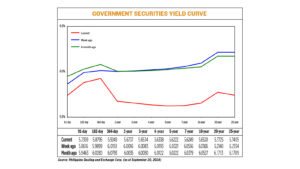
Debt yields, which move opposite to prices, went down by an average of 32.61 basis points (bps) week on week at the secondary market, data from the PHP Bloomberg Valuation Service Reference Rates as of Sept. 20 published on the Philippine Dealing System’s website showed.

Rates went down across all tenors last week. At the short end, yields on the 91-, 182-, and 364-day Treasury bills (T-bills) dropped by 12.57 bps (to 5.7359%), 11.04 bps (5.8795%), and 8.69 bps (5.9249%), respectively.

At the belly, the rates of the two-, three-, four-, five-, and seven-year Treasury bonds (T-bond) fell by 32.79 bps (to 5.6737%), 35.49 bps (5.6354%), 38.55 bps (5.6338%), 40.99 bps (5.6222%), and 43.07 bps (5.6249%), respectively.

Lastly, at the long end, the 10-, 20-, and 25-year T-bonds declined 44.06 bps, 44.15 bps, and 47.29 bps to fetch 5.652%, 5.7725%, and 5.7405%, respectively.

The volume of government securities (GS) traded jumped to P113.58 billion on Friday from P50.29 billion on Sept. 13.

The week-on-week decline in GS yields was driven by the Fed’s policy decision, as well as the cut in domestic banks’ reserve requirement ratios (RRR) announced by the Bangko Sentral ng Pilipinas (BSP) on Friday, Jonathan L. Ravelas, senior adviser at Reyes Tacandong & Co., said in a Viber message.

“Prior to the week, domestic market participants were expecting the US Federal Reserve to deliver a 25-bp rate cut in its policy meeting. However, as subtle market indications that the US central bank is actually considering to reduce policy rates more aggressively, domestic yields followed suit, with yields falling by at least 25 bps over the week,” a bond trader said in an e-mail.

“Local market participants were firmly awaiting on the US Federal Reserve decision over the week. While most market players already expect the BSP to continue reducing domestic policy rates for the rest of the year, this massive cut from the Fed would provide more leeway for the BSP to consider loosening monetary settings more aggressively. as evidenced by the recent announcement of the 250-bp cut in reserve requirement ratio for universal banks,” the trader added.

The US central bank on Wednesday kicked off an anticipated series of interest rate cuts with a larger-than-usual half-percentage-point reduction that Federal Reserve Chair Jerome H. Powell said was meant to show policymakers’ commitment to sustaining a low unemployment rate now that inflation has eased, Reuters reported.

“We made a good strong start and I am very pleased that we did,” Mr. Powell said at a press conference after the Fed, noting its increased confidence that the country’s bout with high inflation was over, reduced its benchmark policy rate by 50 bps to the 4.75%-5% range. “The logic of this both from an economic standpoint and from a risk management standpoint was clear.”

In addition to approving the half-percentage-point cut on Wednesday, Fed policymakers projected the benchmark interest rate would fall by another half of a percentage point by the end of this year, a full percentage point next year, and half of a percentage point in 2026, though they cautioned that the outlook that far into the future is necessarily uncertain.

The move marks a significant pivot in US monetary policy and a recognition of the Fed’s growing comfort with inflation continuing to ease to its target. It is currently about half a percentage point above it.

The Fed had kept its policy rate in the 5.25%-5.5% range since last July, when it ended an 18-month rate-hike campaign that was meant to control a surge in inflation, which soared in 2022 to a 40-year high.

Mr. Powell declined to declare victory on that front, but he did say inflation is now near the Fed’s 2% goal, and labor conditions are consistent with the central bank’s other goal of maximum employment.

Rate futures traders moved to price in even more easing than projected by the Fed, with the policy rate now expected to be in the 4%-4.25% range by end of this year.

Analysts have said that the start of the Fed’s easing cycle gives the BSP more room to cut benchmark interest rates further.

The Monetary Board on Aug. 15 reduced its policy rate by 25 bps to 6.25% from the over 17-year high of 6.5%, which marked its first cut in nearly four years.

BSP Governor Eli M. Remolona, Jr. has said that the central bank can deliver another 25-bp cut in the fourth quarter. The Monetary Board’s remaining meetings this year are scheduled for Oct. 17 and Dec. 19.

Meanwhile, the BSP on Friday said it will reduce the RRR for universal and commercial banks and nonbank financial institutions with quasi-banking functions by 250 bps to 7% effective on Oct. 25.

It will also cut the RRR for digital banks by 200 bps to 4%, while the ratio for thrift lenders will be reduced by 100 bps to 1%. Rural and cooperative banks’ RRR will likewise go down by 100 bps to 0%.

“The magnitude of future BSP rate cuts will depend mainly on Philippine inflation readings in the coming months. However, the BSP has also previously acknowledged that they are willing to consider a measured approach in cutting more aggressively if Philippine economic performance showed significant downside risks,” the bond trader said.

For this week, the trader said GS yields may continue to go down.

“Yields could potentially decline further [this] week amid expectations of a further softening in the US personal consumption expenditure (PCE) inflation for August, which is the primary inflation gauge of the Federal Reserve,” the trader said. August US PCE price index data will be released on Sept. 27 (Friday).

Mr. Ravelas added that he expects GS rates to move sideways to down in the near term. — K.K.P.D. Mendoza with Reuters
Peso may move sideways vs dollar as market awaits PCE price index data

Peso may move sideways vs dollar as market awaits PCE price index data

The peso could trade sideways against the dollar this week as the market awaits the release of the August US personal consumption expenditure (PCE) price index data for hints on the Federal Reserve’s next policy move.

The local unit closed at PHP 55.69 per dollar on Friday, weakening by eight centavos from its PHP 55.61 finish on Thursday, Bankers Association of the Philippines data showed.

Still, week on week, the peso surged by 30.5 centavos from its PHP 55.995 finish on Sept. 13.

The peso weakened against the dollar on Friday after the Bangko Sentral ng Pilipinas (BSP) announced a surprise cut in banks’ reverse requirement ratios (RRR), Rizal Commercial Banking Corp. Chief Economist Michael L. Ricafort said in a Viber message.

The BSP on Friday said it will reduce the RRR for universal and commercial banks and nonbank financial institutions with quasi-banking functions by 250 basis points (bps) to 7% effective on Oct. 25.

It will also cut the RRR for digital banks by 200 bps to 4%, while the ratio for thrift lenders will be reduced by 100 bps to 1%. Rural and cooperative banks’ RRR will likewise go down by 100 bps to 0%.

“The US dollar gained some strength due to positive US jobs data, but the dollar-peso pair traded with caution amid a broader risk-on rally. This trend was influenced by offshore central bank decisions and the BSP’s announcement of an RRR cut. The Indonesian rupiah outperformed other Asian currencies, while the Chinese yuan benefited from a stronger reference rate set by the People’s Bank of China,” Security Bank Corp. Chief Economist Robert Dan J. Roces added in a Viber message.

The dollar strengthened against the yen on Friday, hitting its highest level in two weeks, after the Bank of Japan (BoJ) left interest rates unchanged and indicated that it was not in a hurry to hike them again, Reuters reported.

The BoJ could afford to spend time eyeing the fallout from global economic uncertainties, Governor Kazuo Ueda said in a press conference following the central bank’s move, adding that its monetary policy decision will be based on “economic, price and financial developments.” The BoJ kept rates steady at 0.25%, a move that was widely expected.

The dollar rose as high as 144.50 yen, reaching its highest level since early September. It was last up 0.92% at 143.92.

The dollar has traded in a choppy fashion since the Fed kicked off its monetary policy easing cycle. The US dollar index, which measures the greenback against major currencies, gained slightly to 100.75 and just above a one-year low.

Markets imply nearly a 49% chance the Fed will deliver another 50-bp rate cut in November and have priced in 74.8 bps of cuts by the end of this year. The Fed’s policy rate is expected by the end of 2025 to be at 2.85%, which is now thought to be the Fed’s estimate of the neutral rate.

For this week, Mr. Roces said the US PCE data, the Fed’s preferred inflation gauge, will be the main driver of foreign exchange trading. August US PCE price index data will be released on Sept. 27 (Friday).

Investors are looking for data to support expectations that the economy is navigating a “soft landing,” during which inflation moderates without badly hurting growth.

Mr. Ricafort sees the peso ranging from PHP 55.60 to PHP 55.80 per dollar on Monday. — AMCS with Reuters

Fed cut gives BSP more space to ease

Fed cut gives BSP more space to ease

The US Federal Reserve’s long-awaited rate cut paves the way for the Bangko Sentral ng Pilipinas (BSP) to continue its own easing path, analysts said.

“The new monetary stance of the US, highly anticipated by now, could in fact provide the BSP more space to ease, expand domestic liquidity, and stimulate growth,” Diwa C. Guinigundo, country analyst for the Philippines of GlobalSource Partners, said in a Viber message.

The US central bank on Wednesday kicked off an anticipated series of interest rate cuts with a larger-than-usual half-percentage-point reduction that Federal Reserve Chair Jerome H. Powell said was meant to show policy makers’ commitment to sustaining a low unemployment rate now that inflation has eased, Reuters reported.

“We made a good strong start, and I am very pleased that we did,” Mr. Powell said at a press conference after the Fed, noting its increased confidence that the country’s bout with high inflation was over, reduced its benchmark policy rate by 50 basis points (bps) to the 4.75%-5% range. “The logic of this both from an economic standpoint and from a risk management standpoint was clear.”

In addition to approving the half-percentage-point cut on Wednesday, Fed policymakers projected the benchmark interest rate would fall by another half of a percentage point by the end of this year, a full-percentage point next year, and half of a percentage point in 2026.

“With the Fed cutting by 50 bps, (the BSP) has more than enough space to cut the target reverse repurchase (RRP) by 25 bps in October with September inflation possibly dipping to 2.3%,” Metropolitan Bank & Trust Co. (Metrobank) Chief Economist Nicholas Antonio T. Mapa said on X.

Last month, the Monetary Board reduced the RRP rate by 25 bps to 6.25% from the over-17-year high of 6.5%. This was the first time that the BSP reduced rates in close to four years.

BSP Governor Eli M. Remolona, Jr. has said that the central bank can deliver another 25-bp cut in the fourth quarter. The Monetary Board’s remaining meetings this year are scheduled for Oct. 17 and Dec. 19.

Patrick M. Ella, economist at Sun Life Investment Management and Trust Corp., said the BSP would likely cut by at least 25 bps at its meeting next month.

“I expect another 25-bp cut in the next meeting (at least) because if the Fed hikes another 50 bps, the BSP has to match the magnitude of the cut in order to tame the expected strength in Asian currencies due to the Fed’s cutting cycle,” he said in an e-mail.

Mr. Ella said that if the Fed continues its pace of 50-bp sized cuts, the BSP may need to follow suit.

The Fed had kept its policy rate in the 5.25%-5.5% range since last July, when it ended an 18-month rate-hike campaign that was meant to control a surge in inflation, which soared in 2022 to a 40-year high, Reuters reported.

Rate futures traders moved to price in even more easing than projected by the Fed, with the policy rate now expected to be in the 4%-4.25% range by end of this year.

Mr. Mapa said the “door is wide open” for the BSP to deploy further policy easing in October and reserve requirement ratio (RRR) cuts in the near term.

He noted that if the BSP would keep rates steady in October, the Fed would still have two meetings in between the Monetary Board’s own December meeting. “Makes perfect sense for BSP to front load cuts,” he added.

The Federal Open Market Committee’s (FOMC) last two meetings this year are set for Nov. 6-7 and Dec. 17-18.

Bank of the Philippine Islands (BPI) Lead Economist Emilio S. Neri, Jr. said that the BSP has room to reduce the benchmark rate two more times this year, but forecasts just one more rate cut.

“Most activity indicators remain robust even if policy rates are close to 6% and the Monetary Board needs to reduce the RRR meaningfully and build up its gross international reserve (GIR) buffer while it still has the space to do so,” he said.

“Related to GIR accumulation, the BSP can probably become as aggressive as the FOMC in the cuts if our GIR is brought up closer to the Philippine economy’s USD 130-billion external debt,” he added.

External debt hit a record USD 130.182 billion at the end of June, up by 10.4% from  a year ago.

Gross dollar reserves inched up by 0.18% to USD 106.92 billion as of end-August from USD 106.74 billion as of end-July. This was the highest level of dollar reserves in 29 months or since the USD 107.3 billion in March 2022.

“The BSP hasn’t been able to build up its GIR significantly since the rate hike cycle in mid-2022. The beginning of the US easing cycle opens up the window as long as we have a comfortable differential between Philippine and US policy rates,” Mr. Neri said.

He also noted that latest macroeconomic data show “robust economic activity,” citing easing inflation, strong employment figures and double-digit lending growth.

Headline inflation slowed to 3.3% in August from a nine-month high of 4.4% in July.

“The current Monetary Board doesn’t seem to be rushing to cut rates as it also needs to proactively give room for the planned ‘substantial reduction’ in our RRR and will need to rebuild a bigger GIR buffer given the rapid expansion in the country’s external debt,” Mr. Neri added.

Mr. Guinigundo also noted the risk of further rate cuts as well as RRR reductions.

“The only challenge I could foresee is the possible resurgence of price pressures from higher liquidity, especially when RRR is slashed by a few hundred basis points,” he added.

Mr. Remolona this week said that the BSP plans to “substantially” reduce the reserve requirement this year.

In June 2023, the central bank reduced the ratio for big banks and nonbank financial institutions with quasi-banking functions by 250 bps to 9.5%.

The BSP chief earlier said that the RRR should be slashed to as low as 5%. – Luisa Maria Jacinta C. Jocson, Reporter, with Reuters

PHL slumps to near bottom of global talent index

PHL slumps to near bottom of global talent index

The Philippines slumped to the near bottom of an annual global ranking of countries’ ability to attract and retain a skilled workforce, a report by the Institute for Management Development (IMD) World Competitiveness Center showed.

In the IMD’s World Talent Ranking (WTR) 2024, the Philippines slipped three spots to 63rd out of 67 countries, from 60th out of 64 economies last year. This is the country’s worst ranking from as early as 2005.

The Philippines’ talent competitiveness continued to fall behind Asia-Pacific neighbors. It ranked 13th out of 14 Asia-Pacific countries, better only than Mongolia.

Philippines drops further in IMD World Talent ranking

Singapore was the highest-ranking economy in the Asia-Pacific, as it finished second overall. It was followed by Hong Kong (9th), Australia (14th), Taiwan (18th), South Korea (26th), Malaysia (33rd), China (38th), New Zealand (39th), Japan (43rd), Indonesia (46th) and Thailand (47th), and India (58th).

The talent index was again dominated by European economies led by Switzerland (1st overall), Luxembourg (3rd), Sweden (4th), and Denmark (5th).

The WTR rankings are based on three factors: “appeal,” or the extent to which an economy attracts foreign talent and retains local talent; “investment and development,” which refers to the measurement of resources allotted to develop a homegrown workforce; and “readiness,” or the quality of the skills in a country’s talent pool.

José Caballero, a senior economist at IMD World Competitiveness Center, said in an e-mail interview that the drop in the Philippines’ talent ranking was due to the decline in the investment and development and readiness factors.

“At the indicator level, the main aspect affecting its performance in investment and development is the inadequate implementation of apprenticeship programs and the limited prioritization of employee training by the private sector,” he said.

The Philippines had the lowest ranking in investment and development, falling to 64th this year from 62nd last year. This was due to a significant drop in the ranking for apprenticeships and employee training.

The Philippines also ranked among the lowest in terms of public expenditure on education per student (63rd) and pupil-teacher ratio for primary (60th) and secondary (63rd) education.

On the readiness factor, the country slipped a spot to 52nd place.

“In terms of readiness, there is a general decline in all measures of the impact of the country’s talent development efforts,” Mr. Caballero said. “There is also a decline in the prioritization of talent attraction and retention among companies (57th) and workers’ motivation (47th), which feed into brain drain (54th). The latter is one of the key drivers of talent readiness.”

The low scores of 15-year Filipino students in the  Programme for International Student Assessment (PISA) are one of the Philippines’ top weaknesses. Filipino students were among the world’s weakest in math, reading and science, according to the 2022 PISA. The Philippines ranked 77th out of 81 countries and performed worse than the global average in all categories.

Mr. Caballero said that the country’s low investment in education and the quality of the system are fundamental to understanding why is it lagging behind its regional counterparts.

On appeal, the Philippines went up a notch to 54th spot, as it performed well in terms of cost-of-living (20th) and collected personal income tax (20th). However, it ranked low in terms of quality of life (57th).

“The Philippines’ appeal is also a factor. Although it has a relatively strong cost of living, its quality of life is lacking, as is its performance in measures of institutional strength, which are crucial for attracting highly qualified talent,” Mr. Caballero added.

To improve, he said that the country must revisit its overall talent development strategy, which will help streamline its investment in the education sector.

“This should be a carefully considered strategy, not a matter of just increasing expenditure, but one that aligns investment with the outcome of the system, that is, the skills and competencies that the Philippines’ economy needs to perform efficiently,” he added.

Jose Enrique “Sonny” A. Africa, executive director of think tank IBON Foundation, said that the country lags in talent competitiveness due to its failure to prioritize education and public health.

“Asia-Pacific countries like Japan, South Korea, Taiwan, Singapore, Malaysia, and Thailand have done better because they have focused on building comprehensive education systems, investing in public health, and different levels of national industrial policy,” Mr. Africa said via Viber. 

“In contrast, the Philippines continues to struggle with reckless liberalization, underfunded institutions, and shortsighted economic strategies,” he added.

Mr. Africa said the government can achieve immediate gains by investing more in education, health, and social protection, which will ensure a more capable and productive workforce.

“The government can build more and better public educational infrastructure, ensure universal access to quality education, and improve vocational and technical training,” he said.

Meanwhile, Benjamin B. Velasco, assistant professor at the School of Labor and Industrial Relations at the University of the Philippines Diliman, said that it is not surprising that the country ranks very low in the talent index.

“Many of the indicators for talent are dependent on education, for example, the program for PISA rankings, student-teacher ratios, and the budget for education,” Mr. Velasco said in a Viber message.

“In this objective set of indicators, we do not do well. Our education system is in crisis,” he added.

To improve its education system, Mr. Velasco said that the country will have to increase the budget for public education, improve pay to attract talent to the teaching profession, and provide books, gadgets, and classrooms.

“The private sector should pay more, not less, taxes to increase public revenues. These are hardly original ideas. Many have said this before. It is not that our public officials do not have talent. But they lack the will to just do it. They seem busy in their games of thrones,” he added.

Jamil Paolo S. Francisco, executive director of the Asian Institute of Management Rizalino S. Navarro Policy Center for Competitiveness, said the Philippines lags behind its peers due to its low public expenditure on education as a percentage to gross domestic product and on a per student level.

“Our relatively weaker investment in human capital development has negative implications for the future readiness of our workforce. Further complicating this challenge is the fact that we continue to lose globally competitive talent to more ‘appealing’ countries,” Mr. Francisco said in an e-mail interview.

“This is disappointing because while one of the few bright areas cited by respondents to the executive opinion survey is still the availability of skilled labor in the Philippines, insufficient investment in education and workforce development undermines the readiness of our future workforce and therefore the productivity and overall competitiveness of our economy in the future,” he added.

Moving forward, Mr. Francisco said the country must significantly improve the quality of education to see better results.

“The future workforce will need to learn how to work with advanced digital technologies to remain competitive,” he said.

Being a largely service-sector-driven an d labor-abundant economy, we need to invest in equipping our current workforce and preparing our future workforce for this type of human-machine collaboration to leverage on the much-needed potential productivity gains,” he added. – Justine Irish D. Tabile, Reporter

Rice prices seen to further fall

Rice prices seen to further fall

Domestic rice prices are likely to decline further with the entry of more imports under lowered tariffs, the National Economic and Development Authority (NEDA) said.

“There’s a great amount of imports coming in from the effects of the tariff reduction plus of course the development of the global market,” NEDA Secretary Arsenio M. Balisacan told reporters on the sidelines of an event late on Tuesday.

President Ferdinand R. Marcos, Jr. issued Executive Order No. 62, which slashed tariffs on rice imports to 15% from 35% previously, until 2028. The lower tariff rates on rice took effect on July 5.

Agriculture officials have previously said the lower tariffs are expected to bring down rice prices by P6-P7 per kilo.

“We should expect a greater translation of the tariff reduction into lower prices. But don’t expect too much because the world prices are still high,” Mr. Balisacan said.

The Food and Agriculture Organization’s (FAO) All Rice Price Index, which follows rice prices in key exporting countries, rose to 137.3 as of end-August from 127.9 in the same period a year ago. A higher price index means a rise in commodity prices over the period, while a lower index means otherwise. 

In a Viber message, Rizal Commercial Banking Corp. Chief Economist Michael L. Ricafort said the full effect of lower tariffs on rice imports will likely be felt as early as the fourth quarter “as a function of competition from local and import rice amid lower world prices of rice.”

Leonardo A. Lanzona, an economics professor at the Ateneo de Manila University, said rice prices may fall by October.

“It is possible for prices to fall next month as a series of typhoons had destroyed domestic production. Importers would usually store their rice in anticipation of higher prices. Since immediate price increases are expected, then the release of imports would also be immediate,” he said in a Facebook Messenger chat.

However, Mr. Lanzona noted that rice prices may not drop “significantly” despite the lower tariffs.

“Port congestion can delay the influx of imported rice in the market. But more than this, since domestic production is weak, importers or through their collusions now have an incentive to control and limit the decrease in rice price,” he said.

To avoid this, Mr. Lanzona said the government should encourage greater domestic production.

“But government support for local production is also hampered by the decreased tariffs. In effect, we are caught in a situation where rice prices can still remain high and market supply is below the needs of the households,” he said.

Agriculture Secretary Francisco P. Tiu Laurel, Jr. on Monday said port congestion has caused delays in the release of rice imports. He said rice prices are projected to begin dropping in October, but a more significant drop is likely by January 2025.

“But since demand for food usually spikes in December, we anticipate seeing a more substantial drop in rice prices by January,” he said in a statement.

On Wednesday, the Philippine Ports Authority noted that consignees are taking longer to withdraw rice container shipments, leading to “possible artificial increases in rice prices.”

Despite this, the PPA recorded a 70% yard utilization, indicating that the country’s ports are not congested.

Mr. Balisacan also called on the need to invest in port development to lessen shipment traffic.

The latest data from the Agriculture department showed that imported regular milled rice costs PHP 46.73 per kilogram this week, a PHP 3.73 increase from PHP 43 in the same period last year.

On the other hand, the price of well milled rice is at PHP 51.45 per kilo, PHP 6.45 higher than the PHP 45 recorded a year ago. — B.M.D.Cruz

PSEi rises to 7,200 level as Fed starts easing cycle

PSEi rises to 7,200 level as Fed starts easing cycle

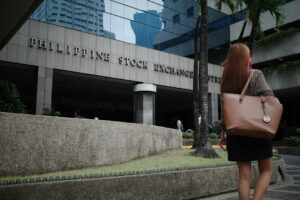
The main index on Thursday rebounded and closed at the 7,200 level for the first time since March 2022 after the US Federal Reserve delivered a supersized rate cut to mark the start of its long-awaited easing cycle.

The Philippine Stock Exchange index (PSEi) rose by 0.64% or 46.26 points to close at 7,202.16, while the broader all shares index went up by 0.61% or 23.72 points to end at 3,871.68.

This was the PSEi’s first time to finish above the 7,200 mark and was its best close in over 29 months or since it ended at 7,203.47 on March 31, 2022.

“Philippine shares closed above the 7,200 mark on Thursday, buoyed by the Fed’s first rate cut in four years, lowering interest rates by 50 bps (basis points) to a range of 4.75% to 5.00%,” Regina Capital Development Corp. Head of Sales Luis A. Limlingan said in a Viber message.

“We think the Fed’s decision to cut rates by 50 basis points played a big part in the PSEi’s resumption of its rally,” AP Securities, Inc. Research Head Alfred Benjamin R. Garcia said in a Viber message. “But at these levels, the market is ripe for a pullback as we are already trading at overbought levels.”

Majority of sectoral indices closed higher. Mining and oil went up by 2.42% or 200.25 points to 8,451.51; financials increased by 1.95% or 42.67 points to 2,227.98; property climbed by 0.93% or 27.14 points to 2,932.14; services rose by 0.19% or 4.28 points to 2,199.75; and holding firms gained 0.03% or 2.37 points to end at 6,136.69.

Industrials was the lone decliner, losing 0.12% or 11.66 points to close at 9,537.17.

Value turnover climbed to PHP 8.16 billion on Thursday with 698.31 million issues changing hands from the PHP 6.14 billion with 879.65 million issues traded on Wednesday.

Advancers beat decliners, 113 versus 78, while 62 names were unchanged.

Net foreign buying surged to PHP 1.69 billion on Thursday from PHP 773.87 million on Wednesday.

The US central bank on Wednesday kicked off an anticipated series of interest rate cuts with a larger-than-usual half-percentage-point reduction that US Federal Reserve Chair Jerome H. Powell said was meant to show policy makers’ commitment to sustaining a low unemployment rate now that inflation has eased, Reuters reported.

In addition to approving the half-percentage-point cut on Wednesday, Fed policy makers projected the benchmark interest rate would fall by another half of a percentage point by the end of this year, a full percentage point next year, and half of a percentage point in 2026, though they cautioned that the outlook that far into the future is necessarily uncertain.

The move marks a significant pivot in US monetary policy and a recognition of the Fed’s growing comfort with inflation continuing to ease to its target. It is currently about half a percentage point above it.

Rate futures traders moved to price in even more easing than projected by the Fed, with the policy rate now expected to be in the 4%-4.25% range by end of this year. — R.M.D. Ochave with Reuters

Fed unveils oversized rate cut as it gains ‘greater confidence’ about inflation

Fed unveils oversized rate cut as it gains ‘greater confidence’ about inflation

WASHINGTON – The US central bank on Wednesday kicked off an anticipated series of interest rate cuts with a larger-than-usual half-percentage-point reduction that Federal Reserve Chair Jerome Powell said was meant to show policymakers’ commitment to sustaining a low unemployment rate now that inflation has eased.

“We made a good strong start and I am very pleased that we did,” Powell said at a press conference after the Fed, noting its increased confidence that the country’s bout with high inflation was over, reduced its benchmark policy rate by 50 basis points to the 4.75%-5.00% range. “The logic of this both from an economic standpoint and from a risk management standpoint was clear.”

So clear in fact that Powell, who has championed policy-by-consensus since becoming Fed chief in 2018, saw the first dissent from a Fed governor since 2005 when Michelle Bowman voted against the decision in favor of a smaller quarter-percentage-point rate cut – evidence some analysts said of his motivation to start the Fed’s easing cycle in a compelling way.

Powell called the move a “recalibration” to account for the sharp decline in inflation since last year; he noted that the economy remained strong but the central bank wanted to stay ahead of and stave off any weakening in the job market; analysts saw a nod to what has been an overarching aim of his to avoid unnecessarily trading higher unemployment to reach the central bank’s 2% inflation target.

“A soft landing is within reach, which would seal his legacy as Fed Chairman,” said Diane Swonk, the chief economist at KPMG.

In addition to approving the half-percentage-point cut on Wednesday, Fed policymakers projected the benchmark interest rate would fall by another half of a percentage point by the end of this year, a full percentage point next year, and half of a percentage point in 2026, though they cautioned that the outlook that far into the future is necessarily uncertain.

The move marks a significant pivot in US monetary policy and a recognition of the Fed’s growing comfort with inflation continuing to ease to its target. It is currently about half a percentage point above it.

Despite coming only about seven weeks before the US presidential election, the Fed’s policy decision elicited a fairly muted reaction, initially at least, from the presidential candidates.

Vice President Kamala Harris, the Democratic presidential candidate, called the rate cut “welcome news” for Americans.

“I know prices are still too high for many middle-class and working families,” she said in a statement.

Republican nominee Donald Trump, who as president first appointed Powell to lead the Fed, said the size of the cut suggested the economy may be in trouble.

“To cut it by that much, assuming they’re not just playing politics, the economy would be very bad,” Trump told reporters.

Powell, however, said the economy remained strong, with many job market indicators like unemployment claims and even the current 4.2% unemployment rate not at worrying levels.

But he nodded to the same issues economists and analysts raise with inflation: That it takes time for changes in monetary policy to have an impact and that, between anecdotal information from companies and slowed hiring rates, officials felt they needed to preempt further labor market weakness just as others have argued for fast action to preempt inflation.

“There is thinking that the time to support the labor market is when it is strong, and not when you begin to see layoffs,” Powell said.

‘WITH A BANG’

The Fed had kept its policy rate in the 5.25%-5.50% range since last July, when it ended an 18-month rate-hike campaign that was meant to control a surge in inflation, which soared in 2022 to a 40-year high.

Powell declined to declare victory on that front, but he did say inflation is now near the Fed’s 2% goal, and labor conditions are consistent with the central bank’s other goal of maximum employment.

US stocks gained following the release of the statement and updated quarterly economic projections before reversing course to close lower on the day. The US dollar was slightly stronger against a basket of currencies, while yields on US Treasuries rose.

Rate futures traders moved to price in even more easing than projected by the Fed, with the policy rate now expected to be in the 4.00%-4.25% range by end of this year.

“The Fed ended the pause with a bang. It’s a strong signal that they cut by 50 basis points and expect another 50 basis points of cuts this year. This was controversial,” said Brian Jacobsen, chief economist at Annex Wealth Management.

Inflation, based on the Fed’s preferred measure, is currently about half a percentage point above the 2% level, and the new economic projections now show the annual rate of increase in the personal consumption expenditures price index falling to 2.3% by the end of this year and down to 2.1% by the end of 2025. The unemployment rate is seen ending this year at 4.4% and remaining there through 2025. Economic growth is projected to be 2.1% through 2024 and 2% next year, the same as in the last round of projections issued in June. — Reuters


BSP to cut RRR ‘substantially’ this year

BSP to cut RRR ‘substantially’ this year

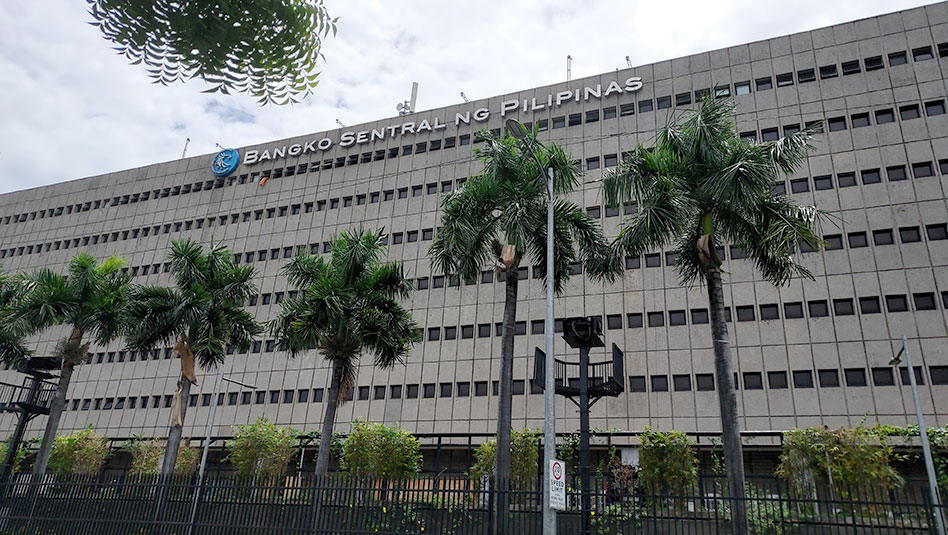
The Bangko Sentral ng Pilipinas (BSP) plans to reduce the reserve requirement ratio (RRR) “substantially” this year, its top official said.

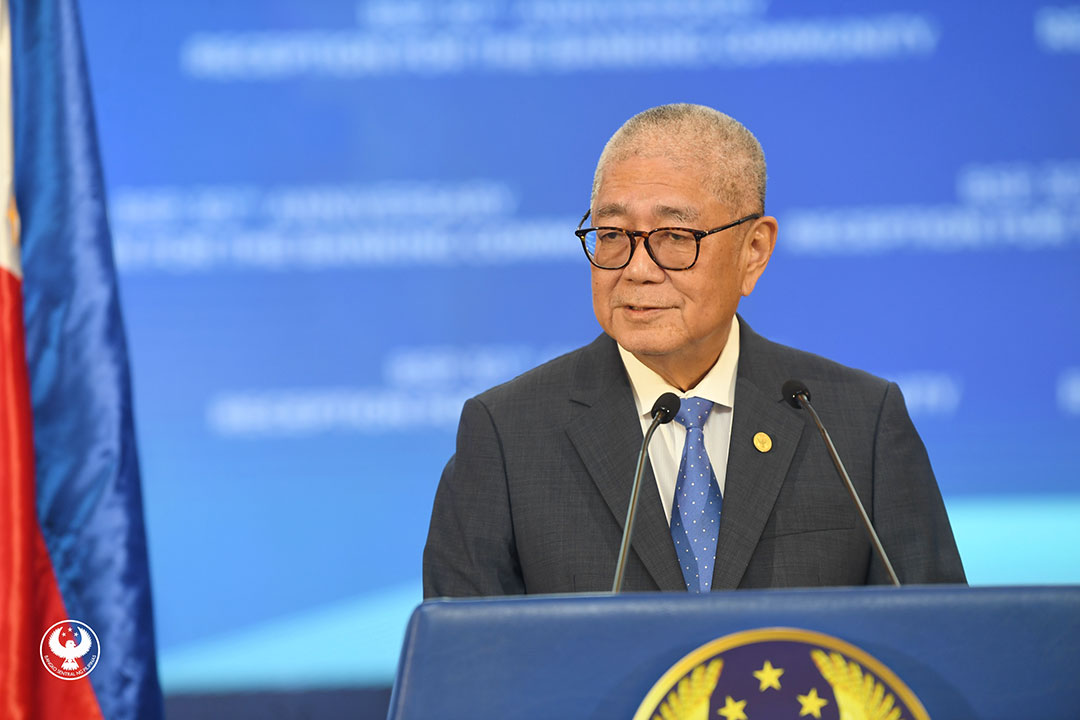
“We’re considering it. We’ve discussed the timing of it. I would say it’s going to happen this year,” BSP Governor Eli M. Remolona, Jr. said in a press chat on Wednesday.

“We will reduce reserve requirements substantially this year and then there may be further reductions by next year,” he added.

The RRR is the portion of reserves that banks must hold onto rather than lending out.

The BSP reduced the ratio for big banks and nonbank financial institutions with quasi-banking functions by 250 bps to 9.5% in June 2023.

It also lowered the ratio for digital banks by 200 bps to 6% and by 100 bps for thrift banks, and rural and cooperative banks to 2% and 1%, respectively.

The central bank has since brought down the RRR for universal and commercial banks to a single-digit level from a high of 20% in 2018.

“The banks want a reduction of the reserve requirement and they’re saying ‘if you do reduce it, we’ll do this other thing for you,’ reduce transaction costs on payments, for example,” Mr. Remolona said.

“We’re trying to manage that. But the idea is to reduce the reserve requirements in a substantial way,” he added.

The BSP governor earlier said that they are eyeing to bring down the RRR to as low as 5%.

Meanwhile, Mr. Remolona said that the RRR cuts’ impact on the economy will not be immediate.

“Our transmission mechanism has long lags. That’s partly because the markets are not deep and liquid. We take account of those lags,” he said.

“At the same time, we’re trying to improve the liquidity of the markets to shorten those lags. But that’s an effort that will take some time.”

BSP Assistant Governor Zeno R. Abenoja said that slashing the RRR could spur lending activities and economic growth.

“We are hoping additional liquidity will be deployed to help expand productive economic activities. However, that will take time,” he said.

“So, some of it will be deployed by banks in various financial markets, including government securities, equity, but some of it may still reside in their accounts, including depositing it back to the BSP.”

The RRR cuts in June last year coincided with the expiration of the BSP’s pandemic relief measures, which allowed banks to count their lending to small businesses as part of their compliance with the reserve requirement for deposit liabilities and substitutes.

“In terms of liquidity, the reserves for the reserve requirement are on our balance sheet on the same side, on the liabilities side. So, if we cut the reserve requirement, that part will go down and we want to compensate for that,” Mr. Remolona said.

“So, that’s more liquidity for the bank system and we want to compensate for that by absorbing back some of that liquidity, which will go into some other part of our balance sheet,” he added.

The BSP chief earlier said that the Philippines’ current RRR is among the highest in Asia. He also said reserve requirements “drive a wedge” between deposit rates and lending rates.

When a bank is required to hold a lower reserve ratio, it has more funds to lend to borrowers. This increases the bank’s lending capacity, impacting its ability to support economic growth and meet the credit needs of individuals and businesses. – Luisa Maria Jacinta C. Jocson, Reporter

Central bank has no plans to offer long-term bonds

Central bank has no plans to offer long-term bonds

The Bangko Sentral ng Pilipinas (BSP) has no plans of issuing long-term securities, its top official said.

“We have no plans for that. Now, it’s just a liquidity issue. Longer-term bonds are for financing of say, government operations, but what we are doing now is purely a liquidity effort,” BSP Governor Eli M. Remolona, Jr. said in a press chat on Wednesday.

The BSP absorbs excess cash from the financial system through its monetary instruments, which include its overnight reverse repurchase (ON RRP) facility, short-term liquidity management tools, and standing liquidity facilities.

Data from the central bank showed that around 50% of its market operations are done through short-term BSP bills.

As of end-September, the central bank siphoned off PHP 1.77 trillion in excess money supply through its monetary operations. Of this, PHP 804 billion was mopped up by BSP bills.

“Maturities are shorter in general than what the National Government (NG) does when it issues its own government securities. Since 2019, we’ve been able to use this facility, and it has helped us very much in terms of managing the liquidity of the whole system,” Mr. Remolona said.

BSP Assistant Governor Zeno R. Abenoja said the BSP bills were created in close coordination with the Bureau of the Treasury (BTr).

“When we crafted the BSP bills, the tenor was carefully calibrated so it will not overlap with the Treasury bills (T-bills). The T-bills run from three months onwards to a year, so the BSP has been operating below that horizon,” he said.

The BSP can technically issue any tenor but ensures its securities do not crowd out different instruments currently in the market, Mr. Abenoja added.

Short-term instruments also offer more stability and predictability.

“If you rely on shorter maturities, then we have to do more issuances every day and every one and two weeks. To provide some stability in the operation, sometimes there’s benefit to that. That’s one reason why we are focusing on these particular BSP bills,” he said.

These are also considered “high-quality liquid assets” and grants more flexibility for banks versus term deposit facilities (TDFs), which are not tradable, he added.

Mr. Abenoja said there are currently more than 80 participants using BSP facilities, composed of banks, nonbanks and trust entities.

‘REFINEMENTS’

The central bank is also continuing to look for ways to make its facilities more “market friendly” and broaden access to help improve liquidity absorption.

“We continue to refine it in response to changes in the operating environment, in response to the demand or the requirements of the banking system,” Mr. Abenoja said.

“It can have an important part moving forward in the push to develop the overall capital financial markets of the country,” he added.

Mr. Remolona said there is “a lot of liquidity” along the yield curve, which the BSP is currently working to manage.

“We want to improve liquidity for the whole yield curve, not just our part of the yield curve, but also the Treasury’s part of the yield curve. There’s many small issues with regard to that, but it’s one of our strategic objectives to have a yield curve that is liquid and reliable,” Mr. Remolona said.

“What we’re doing with our BSP bills is to manage liquidity for the system as a whole. Not necessarily to manage liquidity of a particular market,” he added.

So far, the BSP has employed various refinements to its securities facilities to improve liquidity management, such as the introduction of multiple tenors; additional guidance from month-ahead indicative offer volumes; and relaxation of anti-cornering rule.

In terms of marketability, the central bank also allowed the minimal share of nonresident funds in the BSP bills’ secondary market and expanded access to trust entities through unit investment trust funds (UITFs) in the secondary and primary market.

The BSP is looking at broadening the participants of its facilities.

“We had already initial steps, the UITFs of trust funds are already included in our eligible counterparties. We may consider, see which part of the industry could also join in this particular facility,” Mr. Abenoja said.

“Nonresident funds have been there. Maybe it could be something that could be also considered in the future. So that’s one part, broadening the participants,” he added.

Mr. Abenoja said that they are consulting banks to consider other refinements or improvements to any instruments. — Luisa Maria Jacinta C. Jocson

Vehicle sales up by 6.6% in August

Vehicle sales up by 6.6% in August

Philippine automotive sales grew by an annual 6.6% in August, despite a decline in passenger car sales, according to an industry report.

A joint report by the Chamber of Automotive Manufacturers of the Philippines, Inc. (CAMPI) and the Truck Manufacturers Association (TMA) showed vehicle sales rose to 39,155 units in August from 36,714 units in the same month last year.

Month on month, car sales inched down by 0.4% from the 39,331 units sold in July.

Auto Sales (August 2024)August sales were dampened by the 5.6% drop in passenger car sales to 9,529 units from 10,094 units sold a year ago.

Month on month, passenger car sales slumped by 12.76% from 10,923 units in July.

However, this was offset by the 11.3% annual jump in commercial vehicle sales to 29,626 units in August from 26,620 a year ago. Commercial vehicles accounted for 75.66% of the industry’s total sales.

Month on month, sales of commercial vehicles increased by 4.3%.

Broken down, light commercial vehicle sales went up by 3.3% year on year to 21,812 units, while sales of Asian utility vehicles (AUV) surged by 53.5% to 6,829 units.

Sales of medium trucks slid by 4.9% to 312, while sales of heavy trucks fell by 64.8% to 45. Light-duty truck and bus sales went up by 5.2% to 628 units.

For the first eight months, vehicle sales went up by 10.3% to 304,765 units from 276,215 units a year ago, CAMPI-TMA data showed.

Passenger car sales jumped by 14% to 80,327 units in the January-to-August period, while commercial vehicle sales increased by 9.1% to 224,438 units.

Rizal Commercial Banking Corp. Chief Economist Michael L. Ricafort said new vehicle launches and improving employment data are driving the growth of car sales in recent months.

“Newer models, more brands, more electric and hybrid vehicles [launches], favorable demographics, and improving employment data in recent months are still driving the demand for vehicles,” Mr. Ricafort said in a Viber message.

“[This was] reflected in the double-digit growth in consumer loans, particularly auto loans, defying relatively higher interest rates,” he added.

A preliminary report from the Bangko Sentral ng Pilipinas showed that consumer loans to residents grew by 24.3% to PHP 1.42 trillion as of end-July, with motor vehicle loans going up by 19.9% to P424.93 billion.

“For the coming months, lower Federal Reserve and local policy rates could increase demand for auto loans and also vehicle purchases,” Mr. Ricafort said.

In August, the Bangko Sentral ng Pilipinas (BSP) cut policy rates for the first time in nearly four years. The benchmark rate was trimmed by 25 basis points to 6.25%, from the nearly 17-year high of 6.5%.

Toby Allan C. Arce, head of sales trading at Globalinks Securities and Stocks, Inc., said the auto industry’s sales were driven by commercial vehicles.

“These vehicles cater more to businesses, logistics, and transport needs, reflecting a shift towards utility and functionality, possibly in response to increased demand for delivery services, logistics support, or business expansions in the post-pandemic era,” said Mr. Arce via Viber.

“The passenger car segment saw a notable drop in August. However, the continued strong performance in the commercial sector more than offset this decline, suggesting that businesses, rather than individuals, are leading the market’s recovery,” he added.

In the first eight months, Toyota Motor Philippines Corp. remained the market leader with sales of 140,654 units, up by 10.9% from 126,795 units a year ago. Toyota sales accounted for 46.15% of the industry’s total.

Mitsubishi Motors Philippines Corp. ranked second with a market share of 19.2%. Mitsubishi sales jumped by 16% to 58,513 units in the first eight months.

In third spot was Ford Motor Co. Phils., Inc. which saw sales drop by 3.8% to 18,961 units. This accounted for 6.22% of the industry.

Rounding out the top five were Nissan Philippines, Inc., whose sales went up by 2.2% to 18,270, while Suzuki Phils., Inc. posted an 11.7% rise in sales to 13,206 units.

Last month, CAMPI raised its sales target to 500,000, from 468,300 initially. If realized, this will be the industry’s highest annual sales to date and will represent a 16.3% increase from last year’s 429,807 units sold. – Justine Irish D. Tabile, Reporter

Posts navigation

Older posts
Newer posts

Recent Posts

  • Stock Market Weekly: Iffy negotiations
  • Metrobank US-Iran Risk Index: No time to settle down
  • Investment Ideas: March 30, 2026
  • Peso GS Weekly: Yields recede amid BSP’s pause
  • Navigating precarious times with cost averaging

Recent Comments

No comments to show.

Archives

  • March 2026
  • February 2026
  • January 2026
  • December 2025
  • November 2025
  • October 2025
  • September 2025
  • August 2025
  • July 2025
  • June 2025
  • May 2025
  • April 2025
  • March 2025
  • February 2025
  • January 2025
  • December 2024
  • November 2024
  • October 2024
  • September 2024
  • August 2024
  • July 2024
  • June 2024
  • May 2024
  • April 2024
  • March 2024
  • February 2024
  • January 2024
  • December 2023
  • November 2023
  • October 2023
  • September 2023
  • August 2023
  • July 2023
  • June 2023
  • May 2023
  • April 2023
  • March 2023
  • February 2023
  • January 2023
  • December 2022
  • November 2022
  • October 2022
  • September 2022
  • August 2022
  • July 2022
  • June 2022
  • May 2022
  • March 2022
  • December 2021
  • October 2021

Categories

  • Bonds
  • BusinessWorld
  • Currencies
  • Economy
  • Equities
  • Estate Planning
  • Explainer
  • Featured Insight
  • Fine Living
  • How To
  • Investment Tips
  • Markets
  • Portfolio Picks
  • Rates & Bonds
  • Retirement
  • Reuters
  • Spotlight
  • Stocks
  • Uncategorized

You are leaving Metrobank Wealth Insights

Please be aware that the external site policies may differ from our website Terms And Conditions and Privacy Policy. The next site will be opened in a new browser window or tab.

Cancel Proceed
Get in Touch

For inquiries, please call our Metrobank Contact Center at (02) 88-700-700 (domestic toll-free 1-800-1888-5775) or send an e-mail to customercare@metrobank.com.ph

Metrobank is regulated by the Bangko Sentral ng Pilipinas
Website: https://www.bsp.gov.ph

Quick Links
The Gist Webinars Wealth Manager Explainers
Markets
Currencies Rates & Bonds Equities Economy
Wealth
Investment Tips Fine Living Retirement
Portfolio Picks
Bonds Stocks
Others
Contact Us Privacy Notice Terms of Use
© 2026 Metrobank. All rights reserved.

Access this content:

If you are an existing investor, log in first to your Metrobank Wealth Manager account. ​

If you wish to start your wealth journey with us, click the “How To Sign Up” button. ​

Login HOW TO SIGN UP