




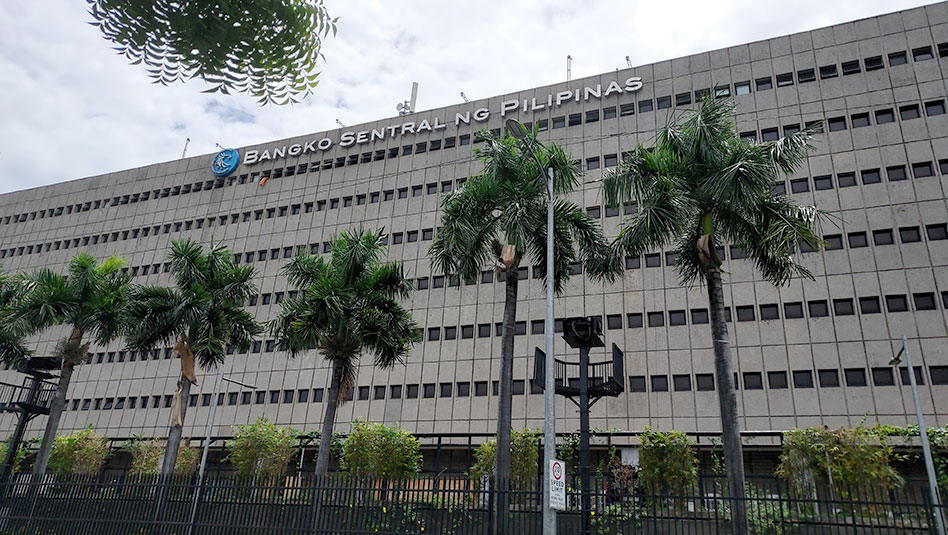


MODEL PORTFOLIO
THE GIST
NEWS AND FEATURES
Global Philippines Fine Living
INSIGHTS
INVESTMENT STRATEGY
Economy Stocks Bonds Currencies
THE BASICS
Investment Tips Explainers Retirement
WEBINARS
2024 Mid-Year Economi Briefing, economic growth in the Philippines
2024 Mid-Year Economic Briefing: Navigating the Easing Cycle
June 21, 2024
Investing with Love
Investing with Love: A Mother’s Guide to Putting Money to Work
May 15, 2024
retirement-ss-3
Investor Series: An Introduction to Estate Planning
September 1, 2023
View All Webinars
DOWNLOADS
Container ship carrying container boxes import export dock with quay crane. Business commercial trade global cargo freight shipping logistic and transportation worldwide oversea concept. Generative AI
Economic Updates
Philippines Trade Update: Wider deficit on strong imports
DOWNLOAD
Frick collection with palm trees 
Economic Updates
Policy Rate Updates: Policy rate updates to reassure 
DOWNLOAD
Man using his smartphone
Reports
Fed to cut just once 
DOWNLOAD
View all Reports
Metrobank.com.ph How To Sign Up
Follow us on our platforms.

How may we help you?

TOP SEARCHES
  • Where to put my investments
  • Reports about the pandemic and economy
  • Metrobank
  • Webinars
  • Economy
TRENDING ARTICLES
  • Investing for Beginners: Following your PATH
  • On government debt thresholds: How much is too much?
  • Philippines Stock Market Outlook for 2022
  • Deficit spending remains unabated

Login

Access Exclusive Content
Login to Wealth Manager
Visit us at metrobank.com.ph How To Sign Up
Access Exclusive Content Login to Wealth Manager
Search
MODEL PORTFOLIO THE GIST
NEWS AND FEATURES
Global Philippines Fine Living
INSIGHTS
INVESTMENT STRATEGY
Economy Stocks Bonds Currencies
THE BASICS
Investment Tips Explainers Retirement
WEBINARS
2024 Mid-Year Economi Briefing, economic growth in the Philippines
2024 Mid-Year Economic Briefing: Navigating the Easing Cycle
June 21, 2024
Investing with Love
Investing with Love: A Mother’s Guide to Putting Money to Work
May 15, 2024
retirement-ss-3
Investor Series: An Introduction to Estate Planning
September 1, 2023
View All Webinars
DOWNLOADS
Container ship carrying container boxes import export dock with quay crane. Business commercial trade global cargo freight shipping logistic and transportation worldwide oversea concept. Generative AI
Economic Updates
Philippines Trade Update: Wider deficit on strong imports
March 27, 2026 DOWNLOAD
Frick collection with palm trees 
Economic Updates
Policy Rate Updates: Policy rate updates to reassure 
March 26, 2026 DOWNLOAD
Man using his smartphone
Reports
Fed to cut just once 
March 19, 2026 DOWNLOAD
View all Reports

Archives: Business World Article

Weak economic growth to persist in near term

Weak economic growth to persist in near term

Philippine economic growth is seen to remain subdued in the near term amid slow fiscal consolidation and weakening remittances, Capital Economics said.

“GDP (gross domestic product) growth in the Philippines slowed again in the second quarter of the year, and we expect the economy to remain weak over the coming quarters,” Capital Economics Senior Asia Economist Gareth Leather and Economist Placement Student Harry Chambers said in a report.

Capital Economics expects GDP to grow by 5.1% this year and 5.5% in 2025, which would both miss the government’s 6-7% and 6.5-7.5% targets, respectively.

The Philippine economy grew by 6.3% in the April-to-June period, the fastest in five quarters.

In order to meet the lower end of the government’s target, the economy would need to grow by at least 6% in the second half.

“Tighter fiscal policy and weakening remittances will weigh on economic growth in the Philippines,” it added.

Latest data from the central bank showed that cash remittances rose by 2.9% to USD 19.332 billion in the first seven months. The BSP expects remittances to grow by 3% this year.

“Fiscal policy is also likely to hold back growth. The government is aiming to reduce government debt, which shot up during the pandemic, to more sustainable levels,” Capital Economics said.

Capital Economics also cited other risks to its growth outlook, including the tensions between China and the Philippines.

“The worsening relationship between the Philippines and China poses a downside risk to the outlook. However, the fact that the Philippines is not closely integrated into China’s economy means the fallout should be limited.”

For 2026, Capital Economics sees Philippine growth to average 6.5%, which is at the low-end of the government’s 6.5-8% target.

Meanwhile, S&P Global Ratings in a separate report said it “nudged down” the Philippines’ growth forecast.

It trimmed its GDP projection for the Philippines to 5.7% this year from 5.8% previously.

“Southeast Asian growth has remained generally solid, benefiting from the export recovery and robust domestic demand,” S&P Global Ratings Asia-Pacific Chief Economist Louis Kuijs and Asia-Pacific Senior Economist Vishrut Rana said.

S&P’s growth forecast for the Philippines this year makes it the third-fastest economy in the Asia-Pacific region, after India (6.8%) and Vietnam (6.2%).

However, it raised the Philippines’ growth forecast for 2025 to 6.2% from 6.1% earlier. This still places it as the country with the third-fastest projected growth, after India (6.9%) and Vietnam (6.8%).

“Asia-Pacific growth remains largely intact, driven by a continued export recovery and, in most emerging markets (EMs), solid domestic demand,” it said.

The credit rater now also sees Philippine growth averaging 6.4% in 2026 and 6.5% in 2027.

LOWER INFLATION

Meanwhile, Capital Economics noted that easing inflation and lower interest rates should give a boost to domestic demand.

“We expect inflation to remain subdued over the coming months, helped by a combination of weak growth, beneficial base effects and government efforts to boost the supply of agricultural goods,” Capital Economics said, as it sees inflation settling at 3.3% this year.

Meanwhile, S&P Global expects inflation to average 3.4%, in line with the central bank’s own projection.

Capital Economics also expects the Bangko Sentral ng Pilipinas (BSP) to further reduce interest rates.

“With economic growth set to struggle and inflation likely to stay subdued, we expect further rate cuts by the central bank over the coming months,” it added.

The Monetary Board delivered a 25-basis-point (bp) rate cut last month, its first time reducing rates in nearly four years. There could be another 25-bp cut in the fourth quarter, BSP Governor Eli M. Remolona, Jr. earlier said.

Capital Economics forecasts the BSP to cut by 75 bps this year and end the policy rate at 5.75%. It also sees 100 bps worth of cuts next year to bring the key rate to 4.75%.

Meanwhile, S&P Global expects the benchmark rate to end at 5.5% this year and 4.25% in 2025.

“Regional central banks have nevertheless generally refrained from lowering policy rates. The Philippines, New Zealand, and Indonesia have been exceptions; rate setters there have recently agreed on cuts of 25 bps,” S&P Global added.

RRR

Meanwhile, HSBC Global Research said that the recent reserve requirement ratio (RRR) cut will not impact the BSP’s policy easing cycle.

“Though the RRR cut does increase the funding flexibility of banks (which may be understood as a form of easing), we don’t think the RRR cut significantly alters the monetary policy outlook, nor does it tilt the chances of an October rate cut,” HSBC economist for ASEAN (Association of Southeast Asian Nations) Aris D. Dacanay said in a report.

“We don’t think this is a change in the BSP’s monetary stance since the liquidity injected can be re-absorbed by the BSP through its bill issuances.”

HSBC expects the RRR cut to inject PHP 450 billion into the economy initially.

Starting Oct. 25, the BSP will reduce the RRR for banks and nonbank financial institutions with quasi-banking functions by 250 bps to 7% from 9.5%.

Mr. Dacanay noted that the BSP’s recent signals show they are not in a rush to loosen monetary settings.

“This has also been our long-held view. But with the Fed cutting by 50 bps (last week), we think the risk of the BSP cutting by 50 bps in 4Q 2024 also increased,” he said.

“What matters still for monetary policy is inflation and growth. We continue to expect the BSP to follow a data-dependent approach. With risks to inflation tilted to the upside for September due to Typhoon Yagi, we expect the BSP to keep its easing cycle at a gradual pace, only cutting by 25 bps in December.” – Luisa Maria Jacinta C. Jocson, Reporter


Palay production may decline due to La Niña

Palay production may decline due to La Niña

The anticipated La Niña weather pattern is expected to pull down the Philippines’ palay (unmilled rice) production for the rest of the year amid risks of heavy rains and intense flooding, analysts said.

In a report, Fitch Solutions’ unit BMI said the impact of La Niña on rice production in Southeast Asia “will be shaped via the precise timing of the onset of La Niña conditions (and the extent to which it overlaps with critical stages of crop development) as well as the eventual duration and severity of the event itself.”

“The likelihood of a La Niña event posing headwinds to regional rice production will increase with both the duration and severity of the event,” it added.

Latest data from the Philippine Atmospheric, Geophysical and Astronomical Services Administration (PAGASA) showed that there is a 66% chance of La Niña occurring from September to November and will likely persist until the first quarter.

BMI said the impact of La Niña-linked above-average rainfall on farming in Southeast Asia would depend on the severity of the weather event.

Aside from intense rainfall and flooding, BMI said there is also the risk of rain-induced waterlogging.

PAGASA earlier said that the La Niña heightens the likelihood of tropical cyclones, low-pressure areas, and the Intertropical Convergence Zone (ITCZ), and intensifies the Southwest Monsoon.

Former Agriculture Secretary William D. Dar said he expects a drop in annual palay production this year due to La Niña.

“The number one problem is the impact of La Niña coupled with the late distribution of agricultural inputs provided by the National Government. There will be a decline of production from the 20 million MT (metric tons) last year,” he said in a text message.

In 2023, palay production reached 20.06 million MT.

The Department of Agriculture (DA) earlier trimmed its palay production estimate to 20.1 million MT for 2024 from 20.44 million MT previously.

Fermin D. Adriano, a former Agriculture undersecretary, said in a Viber message that palay production would likely drop to between 19.3 million MT and 19.5 million MT this year.

“With El Niño and then recent flooding in rice growing areas of Central Luzon, I don’t know whether DA will get 1% to 2% growth rate (for agricultural production),” Mr. Adriano said in a Viber message.

The DA had set a 1-2% growth target for agricultural production this year, taking into account the impact of the El Niño and La Niña weather events.

“The possibility of an increase in output for 2024 is bleak, given the 500,000 (MT) drop in palay harvests in the first semester, plus the potential impact of La Niña on standing crops in the coming months,” Federation of Free Farmers National Manager Raul Q. Montemayor said in a Viber message.

Mr. Montemayor said that the projected drop in palay production may be attributed to delayed planting by rice farmers. This would push back the palay harvest to the fourth quarter, he added.

PAGASA has so far logged nine tropical cyclones which have entered the Philippine Area of Responsibility this year.

Farm damage from weather disturbances was estimated at PHP 23.19 billion from January to Sept. 4, according to the DA. This includes the effects of the El Niño, shearline, Southwest Monsoon, Typhoon Aghon, Typhoon Carina, and the Severe Tropical Depression Enteng.

The estimated volume loss for rice was at 373,000 MT, during the nine-month period. The DA projects an average of 500,000 MT to 600,000 MT in rice losses every year.

“The damage reports don’t sound so bad, I’m not surprised if we hit 20 million MT (this year),” Roehlano M. Briones, a senior research fellow with the Philippine Institute for Development Studies, said in a Viber message.

Samahang Industriya ng Agrikultura (SINAG) Executive Director Jayson H. Cainglet said that the country’s rice supply would remain sufficient given the increase in rice imports.

“Those damaged by Habagat (Southwest Monsoon) and heavy rain, farmers just need to be assisted immediately to replant,” he said in a Viber message.

“What we are worried about is the big drop in farmgate price of palay during these lean months — an indication there is a lot of rice in the market, and this would further decrease once the harvest season begins,” Mr. Cainglet added.

Philippine rice imports have totaled 3.09 million MT as of Sept. 19, data from the Bureau of Plant Industry showed.

Meanwhile, BMI said above-average rainfall in the region can either be beneficial or detrimental to rice production, BMI said.

The La Niña event increases the likelihood of excess rainfall, which poses a threat to rice cultivation, BMI said.

“Land that is subject to drought or an extended period of below-average rainfall could also be more at risk of wildfires during Southeast Asia’s fire season. Conversely, low soil moisture levels accumulated during the El Niño period can be vulnerable to water logging in the event of intense rainfall,” it added.

PAGASA in its latest farm weather advisory also called on farmers to “prepare for wetter conditions.”

“Wet weather promotes fungal development and can cause damage to stored farm products, reduce the quality, viability and market price of the grains. Thus, it is advised to keep barns and crop storage rooms in good, dry, and well-ventilated condition,” the state weather service said.

BMI also noted that many agricultural producers in Southeast Asia continue to feel the impact of El Niño through “low soil moisture levels and depleted irrigation water reservoirs.”

“Moreover, several areas of Southeast Asia remained in drought conditions as of July 2024, including parts of Cambodia, Myanmar, Malaysia, the Philippines, Thailand, and Vietnam.”

The latest PAGASA bulletin showed that four provinces in Luzon, 12 provinces in the Visayas, and 10 provinces in Mindanao experienced meteorological drought; 17 provinces in Mindanao were under dry spell, and six provinces in Luzon experienced dry conditions.

However, BMI data also showed that the impact of La Niña on rice production “tends to be weaker” than the El Niño.

“We find that the El Niño Southern Oscillation (ENSO) events pose a downside risk to rice production in Southeast Asia, but that El Niño events tend to have a more significant impact on observed rice yield anomalies than La Niña events,” it said.

“In addition, we find that the relationship between La Niña events and regional rice production is not unidirectional, with weak events tending to support output levels and strong events posing headwinds to output.”

Certain countries in the region are also more vulnerable to La Niña than others, it added. – Adrian H. Halili and Luisa Maria Jacinta C. Jocson, Reporters

Treasury fully awards reissued 20-year bonds at lower yields

Treasury fully awards reissued 20-year bonds at lower yields

The government made a full award of the reissued Treasury bonds (T-bonds) it auctioned off on Tuesday at a lower average rate ahead of a cut in banks’ reserve requirement ratios (RRR) and amid expectations of further monetary policy easing at home and abroad.

The Bureau of the Treasury (BTr) raised PHP 25 billion as planned via the reissued 20-year bonds on Tuesday as total bids reached PHP 44.147 billion, or almost twice the amount on offer.

This brought the outstanding volume for the series to PHP 127.7 billion, the Treasury said in a statement.

The bonds, which have a remaining life of 19 years and eight months, were awarded at an average rate of 5.861%. Accepted yields ranged from 5.75% to 5.899%.

The average rate of the reissued papers fell by 33.7 basis points (bps) from the 6.198% fetched for the bonds when they were last awarded on Aug. 28. This was also 101.4 bps lower than the 6.875% coupon rate for the issue.

However, the average rate was 3.3 bps above the 5.828% quoted for the same bond series and 11.6 bps higher than the 5.745% fetched for the 20-year bond at the secondary market before Tuesday’s auction, based on PHP Bloomberg Valuation Service Reference Rates data provided by the BTr.

The government fully awarded its T-bond offer as the issue’s average rate was lower compared with the level fetched for previous award after the Bangko Sentral ng Pilipinas (BSP) announced that it would cut banks’ reserve ratios in October, Rizal Commercial Banking Corp. Chief Economist Michael L. Ricafort said in a Viber message.

The RRR cut will free up almost P400 billion in liquidity, which banks can lend and put in instruments like government debt, he said.

A trader noted that the average rate fetched for the reissued 20-year bond was close to the 5.583% fetched for the one-year Treasury bill at Monday’s auction despite being a longer tenor.

The BSP on Friday said it will reduce the RRR for universal and commercial banks and nonbank financial institutions with quasi-banking functions by 250 bps to 7% effective on Oct. 25.

It will also cut the RRR for digital banks by 200 bps to 4%, while the ratio for thrift lenders will be reduced by 100 bps to 1%. Rural and cooperative banks’ RRR will likewise go down by 100 bps to 0%.

Mr. Ricafort added that signals of further BSP rate cuts also caused T-bond rates to go down.

Finance Secretary Ralph G. Recto, who sits on the central bank’s Monetary Board, said on Tuesday the monetary authority can afford to slash interest rates further and match the size of the US Federal Reserve’s rate cut, Reuters reported.

“The Fed reduced by 50 basis points. I think we can also do half a percent,” Mr. Recto a told a media briefing.

Inflation would likely ease to 2.5% in September, he said, the slowest in nearly four years, after rising at an annual pace of 3.3% the previous month. Mr. Recto said that could settle at 3.4% this year, within the central bank’s 2% to 4% target range.

Slowing inflation allowed the central bank to cut its benchmark borrowing rate by 25 bps to 6.25% in August, its first rate cut since November 2020, ahead of major central banks, including the Fed.

The Fed started cutting rates on Sept. 18 with a larger-than-usual half-percentage-point reduction, which will likely be followed by a 25-bp cut in both November and December, according to a Reuters poll.

BSP Governor Eli M. Remolona, Jr. had earlier flagged there was room for one more interest rate cut this year. The BSP’s next meeting is on Oct. 17.

Tuesday’s T-bond auction was the last for the month. The government raised the planned PHP 115 billion from long-term papers in September as it made full awards at all its auctions and even made a tap facility award of reissued 10-year bonds worth PHP 5 billion on Sept. 17 amid strong demand.

The BTr has yet to release its domestic borrowing plan for the fourth quarter. — A.M.C. Sy with Reuters

Senate ratifies PHL-South Korea FTA

Senate ratifies PHL-South Korea FTA

The Senate on Monday ratified the free trade agreement (FTA) between the Philippines and South Korea, a move that will pave the way for increased exports of Philippine bananas and processed pineapples to Seoul.

Twenty-one senators voted in favor of the ratification of the free trade pact, which will remove Philippine tariffs on 96.5% of goods from South Korea, while Seoul will lift tariffs on around 94.8% of Philippine products.

The Constitution requires concurrence by two-thirds of the Senate’s members for ratification of international agreements and treaties.

The Philippines and South Korea signed the free trade pact in September last year, which will boost trade between the two countries.

However, the deal is still undergoing the ratification process at the Korean National Assembly.

Under the deal, the Philippines secured the elimination of 1,531 tariff lines on agricultural goods, of which 1,417 would be removed after the FTA enters into force.

It will also remove 9,909 tariff lines of industrial goods, 9,747 of which will be removed after the deal enters into force.

“It presents an opportunity to expand the number of our commodities that can access the Korean market,” Philippine Chamber of Commerce and Industry President Enunina V. Mangio told BusinessWorld in a Viber message.

“To fully benefit from the FTA, we should improve our infrastructure and regulatory environment to attract investments from Korea.”

She also cited the need for the government to upgrade the technological capabilities of local industries to make them more competitive.

South Korean automakers are expected to benefit from the FTA, which will remove the 5% import duties on Korean-made automobiles. Tariffs on Korean electric and hybrid vehicles would also be eliminated within five years.

The Philippines is expected to attract as much as P200 billion worth of foreign direct investments for the electric vehicle industry and agricultural processing sector within three years, according to estimates from the Department of Trade and Industry.

The Philippines is also seen to increase banana and processed pineapple exports to Seoul. Tariffs on Philippines bananas, which currently have a 30% tariff, will be removed within five years. At the same time, the 36% tariff on processed pineapples from the Philippines will be removed in seven years.

“This is a good development for our banana and pineapple industries as they can get a bigger market in South Korea,” former Agriculture Undersecretary Fermin D. Adriano said in a Viber message.

Based on data from the United Nations Commodity Trade Statistics Database, South Korea was the Philippines’ third-biggest market for fresh banana last year with exports reaching $164.54 million, after China ($359.77 million) and Japan ($562.58 million).

South Korean Ambassador to the Philippines Lee Sang-hwa previously said that he is banking on the FTA to be a “game-changer” for trade and investment between Manila and Seoul.

In 2023, South Korea was the Philippines’ fifth-largest trading partner with total trade reaching about $12 billion, according to data from the Philippine Statistics Authority. Exports to South Korea last year were valued at $3.53 billion, while imports were at $8.49 billion.

This is the third FTA involving the Philippines and South Korea, after the Korea-ASEAN FTA and the Regional Comprehensive Economic Partnership.

However, Jose “Sonny” A. Africa, executive director at the think tank IBON Foundation, said the expected increase in exports of these agricultural products is unlikely to substantially boost the economy, saying that the government is better off adopting an industrial policy.

“The proposed FTA is going to be entered into outside of a real strategy for national industrialization and so will be a policy step backward,” he said in a Viber message. “These investments have to be more embedded in the local economy to contribute to broader national industrial development.”

Federation of Free Farmers National Manager Raul Q. Montemayor said the free trade pact gives no assurance that Philippine farmers “will gain much” compared with the Korean automakers that will have improved market access to the Philippines.

“Our other concern is that most of the benefits, if any, go to big multinationals who capture most of the profits from exports,” he said. – John Victor D. Ordoñez, Reporter

Falling oil prices to ease inflation pressure in Philippines

Falling oil prices to ease inflation pressure in Philippines

The expected decline in global oil prices will help tame inflation in Asia, with the Philippines among the countries seen to most benefit from this, ANZ Research said.

“Despite gains in recent days, average global oil prices in September so far have softened materially, and the transmission to pump prices in several economies in the region is underway,” it said in a report.

“If the weakness in global oil prices persists, disinflation will gather pace, and most of the region’s external positions will improve. Thailand and the Philippines will see the biggest drag to inflation.”

Data from ANZ showed that the estimated pass-through of a 10% decline in global oil prices is a -0.2-percentage-point (ppt) change in Philippine headline inflation.

“Thailand and the Philippines are likely to see relatively larger drags on inflation, with a pass-through of 0.2-0.3% for every 10% fall in global oil prices,” it said.

Headline inflation slowed to a seven-month low of 3.3% in August from 4.4% in July and 5.3% a year ago.

Transport inflation contracted by 0.2% in August as pump price adjustments stood at a net decrease of PHP 2.70 a liter for gasoline, PHP 2.80 for diesel, and PHP 3.70 for kerosene during the month.

The Bangko Sentral ng Pilipinas (BSP) earlier said that inflation is expected to ease further from August onwards.

ANZ estimates also showed that a 5% decline in benchmark gasoline pump prices would have an -0.12-ppt impact on September headline inflation for the Philippines.

“The fastest channel of transmission from falling global oil prices is typically through inflation. The Philippines, Thailand, South Korea, mainland China and Taiwan have already seen local gasoline pump prices adjust, with declines ranging from 1-5% relative to their August average,” it said.

The local statistics authority is set to release September inflation data on Oct. 4.

ANZ noted that the impact of inflation also depends on the weight of vehicle fuels. “While the Philippines has seen the largest fall in pump prices, vehicle fuels make up a smaller share of its inflation basket,” it added.

Meanwhile, ANZ also noted the impact of lower oil prices on food inflation.

“Another angle to consider is the food price channel, as oil is a key input in agricultural production. While isolating the impact of oil price changes on food prices is challenging, there is generally a positive correlation,” it said.

Food inflation eased to 4.2% in August from 6.7% a month ago, largely driven by easing rice prices. Rice inflation slowed to 14.7% from 20.9% a month prior.

“Assuming all other factors influencing food prices remain constant, economies with a higher proportion of food in their inflation basket are more likely to experience a greater reduction in inflation from lower global oil prices,” ANZ said.

“Within Asia, food has the highest weight in the inflation baskets of India, Thailand and the Philippines,” it added.

The heavily weighted food and non-alcoholic beverages index is typically the main contributor to headline inflation in the Philippines, with rice accounting for almost half of overall inflation.

Easing inflation will also make the case for further rate cuts, ANZ said.

“The combination of lower inflation and stronger external positions will open up scope for a deeper-than-anticipated rate-cutting cycle in the region, particularly if weaker global growth is a key driver keeping energy prices subdued,” it said.

Last month, the Monetary Board reduced the target reverse repurchase (RRP) rate by 25 basis points (bps) to 6.25% from the over 17-year high of 6.5%.

BSP Governor Eli M. Remolona, Jr. signaled another 25-bp cut in the fourth quarter. The Monetary Board’s remaining meetings this year are on Oct. 17 and Dec. 19. — Luisa Maria Jacinta C. Jocson

PSEi rallies to 7,400 level after jumbo RRR cut

PSEi rallies to 7,400 level after jumbo RRR cut

The main index surged to the 7,400 level on Monday, notching its best finish since February 2022 and marking its return to bull market territory, after the Bangko Sentral ng Pilipinas (BSP) announced a jumbo cut in banks’ reserve ratios.

The Philippine Stock Exchange index (PSEi) rose by 2.27% or 164.93 points to end at 7,417.25 on Monday, while the broader all shares index gained by 1.6% or 62.40 points to finish at 3,958.02.

This was the PSEi’s best close in 31 months or since it finished at 7,440.91 close on Feb. 22, 2022. It was also the first time the index ended above the 7,400 mark since March 2022.

“The benchmark index continued its very bullish momentum to close at its highest level since February 2022 on the back of the BSP’s significant reduction of the reserve requirement ratio (RRR) and strong foreign fund flows,” Chinabank Capital Corp. Managing Director Juan Paolo E. Colet said in a Viber message.

He added that the PSEi is now in bull market territory as it is now up by more than 20% from the 52-week low of 6,158.48 logged on June 21, 2024.

“The market is technically overbought and we expect a pullback very soon,” Mr. Colet said.

The BSP on Friday said it will reduce the RRR for universal and commercial banks and nonbank financial institutions with quasi-banking functions by 250 basis points (bps) to 7% effective on Oct. 25.

It will also cut the RRR for digital banks by 200 bps to 4%, while the ratio for thrift lenders will be reduced by 100 bps to 1%. Rural and cooperative banks’ RRR will likewise go down by 100 bps to 0%.

“The local bourse opened the week above 7,400 ahead of key data releases. In the US, the durable goods report on Thursday and the core personal consumption expenditures inflation report on Friday will be closely monitored for inflation signals,” Regina Capital Development Corp. Head of Sales Luis A. Limlingan said in a Viber message.

“Several Federal Reserve officials are also set to speak, potentially providing insights into monetary policy,” he said.

Almost all sectoral indices closed higher on Monday. Financials climbed by 3.68% or 84.05 points to 2,362.18; services surged by 2.01% or 44.72 points to 2,264.75; holding firms increased by 1.95% or 120.65 points to 6,297.69; property went up by 1.71% or 50.02 points to 2,961.74; and industrials inched up by 1.06% or 102.93 points to 9,747.52.

Meanwhile, mining and oil inched down by 0.01% or 1.04 points to 8,527.22.

Value turnover declined to PHP 8.72 billion on Monday with 698.15 million issues changing hands from the PHP 16.98 billion with 1.09 billion shares traded on Friday.

Advancers outnumbered decliners, 121 versus 93, while 52 names were unchanged.

Net foreign buying went up to PHP 1.77 billion on Monday from PHP 1.28 billion on Friday. — Revin Mikhael D. Ochave

Stronger peso likely to hurt exports, services

Stronger peso likely to hurt exports, services

The peso could strengthen further following the start of the US Federal Reserve’s rate-cutting cycle, analysts said, but warned that these could impact exports and services.

“Philippine markets will be closely monitoring the potential impact of the US Federal Reserve rate cut on the domestic economy,” Security Bank Corp. Chief Economist Robert Dan J. Roces said in a Viber message.

“A stronger peso, which could result from the move, could negatively affect exports and other entities such as business process outsourcing companies (BPOs), but positively influence domestic prices,” he added.

This after the Fed delivered a 50-basis-point (bp) rate cut last week and amid expectations of further easing by the US central bank throughout this year and the next.

Markets imply nearly a 49% chance the Fed will deliver another 50-bp rate cut in November and have priced in 75 bps of cuts by the end of this year, Reuters reported.

The Fed’s policy rate is expected by the end of 2025 to be at 2.85%, which is now thought to be the Fed’s estimate of the neutral rate.

“The bigger accommodation in the US policy rate on balance reduces the certainty of the possible capital outflow should the interest rate spread move against the peso,” Diwa C. Guinigundo, a country analyst for the Philippines of GlobalSource Partners, said.

“If we manage to get all macroeconomic indicators going in the right direction, there’s a good chance the peso will remain more stable with a strengthening bias,” he added.

The peso closed at PHP 55.97 against the greenback on Monday, depreciating by 28 centavos from its PHP 55.69 finish on Friday, Bankers Association of the Philippines data showed.

The local currency previously fell to as low as the PHP 58-per-dollar level in May and hit a 20-month low of PHP 58.86 on June 26.

Metropolitan Bank & Trust Co. (Metrobank) Research in a commentary expects the peso to close at PHP 55.30 per dollar by yearend, stronger than its earlier forecast of PHP 57.20.

It also sees the local unit closing at PHP 54.50 in 2025 from PHP 56.30 previously.

“These forecasts also take into consideration the expected net dollar inflows from remittances in the fourth quarter, which would be partially offset by a projected wider trade deficit,” Metrobank Research added.

However, Pantheon Macroeconomics Chief Emerging Asia Economist Miguel Chanco noted there is still a need to be cautious about the peso’s performance for the rest of the year.

“Regardless of what the Fed does, and despite the peso’s upward retracement over the past few weeks, I’m still somewhat cautious on the peso’s outlook given the economy’s twin deficits on the current and fiscal accounts,” he said in an e-mail.

The current account deficit stood at USD 7.1 billion in the first half of the year, equivalent to -3.2% of GDP. The BSP expects the current account deficit to reach USD 6.8 billion this year (-1.5% of GDP).

The central bank last week trimmed its projections for goods and services exports this year. It now sees good exports growing by 4% this year from 5% previously, while services exports are seen expanding by 13% from 14% previously.

Meanwhile, latest data from the Treasury showed that the budget deficit widened by 7.21% to PHP 642.8 billion in the first seven months of the year.

“All up, the peso will surely act up, but nobody knows in which direction because it cannot be delinked from other counterweights like better inflation and growth outcomes, the quality of public policy, the resolution of those political conflicts,” Mr. Guinigundo added.

FURTHER EASING

The Fed’s highly anticipated rate cut last week also gives the Bangko Sentral ng Pilipinas (BSP) more room to possibly deliver bigger rate reductions, analysts said.

“The first — faster and more ambitious than expected — start to its easing cycle will certainly give the BSP a lot more room to pursue more aggressive rate cuts in the coming meetings,” Mr. Chanco said.

BSP Governor Eli M. Remolona, Jr. earlier said that they could cut by another 25 bps in the fourth quarter. This after the central bank reduced borrowing costs by 25 bps at its August meeting, bringing the key rate to 6.25%.

The Monetary Board’s next meeting is on Oct. 17 while its last meeting for the year is scheduled for Dec. 19.

“Indeed, our base case before the Fed’s decision is that the Board will step up the size of its rate cuts to 50 bps each time from December, as we’ve long held a view that the Fed would pursue equally large cuts from the fourth quarter,” Mr. Chanco said.

Meanwhile, Metrobank Research expects the BSP to cut by a total of 75 bps this year, bringing the key rate to 5.75% by yearend.

“On the domestic front, the Fed move opens the door for a 25-bp cut in October by the BSP,” it said.

The central bank could reduce rates by 25 bps each at its last two meetings this year, Metrobank added.

“This would bring the BSP’s target reverse repurchase (RRP) rate down to 5.75% by year-end. The interest rate differential between the BSP and the US Fed would settle at 125 bps.”

“Previously, (Mr.) Remolona signaled a modest 50 bps of cumulative cuts for the year. A BSP pause in October suggests the BSP would only get a chance to adjust policy rates after two more projected Fed rate cuts,” it added.

For next year, Metrobank Research expects the BSP to cut by a total of 100 bps. This would bring the benchmark rate to 4.75%.

Mr. Chanco also noted Mr. Remolona’s repeated signals of the BSP being independent of the Fed.

“Most central banks in the region (not just in the Philippines) tend to only fret about Fed action when rates are going the other way around (i.e. up), given that this normally exerts a lot of downside pressure on regional currencies,” he added. – Luisa Maria Jacinta C. Jocson, Reporter
Central bank raises BoP projection

Central bank raises BoP projection

The Bangko Sentral ng Pilipinas (BSP) expects the country’s balance of payment (BoP) position to post a bigger surplus this year, but also anticipates a wider current account deficit.

In a statement late on Friday, the central bank said it raised its BoP forecast amid “sustained positive global and domestic economic growth prospects, decelerating inflation, as well as the pickup in world trade activity.”

The BSP’s latest projections show the BoP will register a surplus of USD 2.3 billion, equivalent to 0.5% of gross domestic product (GDP) this year, higher than its earlier projection of USD 1.6 billion (0.3% of GDP).

The BoP provides a glimpse of the country’s transactions with the rest of the world. A surplus indicates that more money entered the economy, while a deficit indicates that more funds left.

“Based on the foregoing and the actual figures recorded in the first half of 2024, the overall BoP position is projected to register a higher surplus relative to the previous projection round for this year and the next,” the central bank said.

Latest BSP data showed that the country’s BoP level in the January-August period stood at a USD 1.6-billion surplus, lower than the USD 2.1-billion surplus a year ago.

“Meanwhile, the Philippine economy is seen to maintain its growth momentum, supported by resilient domestic demand, lower inflation trajectory, and timely enactment of the national budget,” the BSP said.

It also noted that the improved BoP outlook is driven by the government’s continued efforts to improve the business environment by ramping up infrastructure development and implementing reforms to boost investments.

The Philippine economy grew by 6.3% in the second quarter, the fastest since 6.4% in the first quarter of 2023.

For the first half of the year, GDP averaged 6%. The government is targeting 6-7% growth this year.

Meanwhile, the BSP said emerging risks to the BoP outlook “remain broadly balanced.”

“On the downside, commodity price volatility due to geopolitical and extreme weather events, trade tensions, as well as possible mobility risks from emergence/re-emergence of highly infectious diseases (e.g., mpox), weigh down on the country’s external sector prospects,” it said.

For next year, the BSP expects the BoP surplus to reach USD 1.7 billion, equivalent to 0.3% of GDP.

“For 2025, the overall BoP position is likely to settle at a higher surplus relative to the previous projection exercise, with net inflows from the financial account continuing to be a major contributor alongside a narrowing current account gap.”

Next year’s BoP outlook is driven by expectations of sustained global demand and trade activity, the BSP said.

“While there are reasons for optimism on the BoP outlook for next year, the assessment remains subject to downside risks from potential market instability and from escalations in geopolitical and geoeconomic risks including the brewing conflict in the Middle East and US-China trade tensions.”

CURRENT ACCOUNT DEFICIT

Meanwhile, the central bank now projects the current account deficit to reach USD 6.8 billion, equivalent to -1.5% of GDP.

This is wider than its earlier forecast of USD 4.7 billion (-1% of GDP). The current account covers transactions involving goods, services and income.

For 2025, the BSP expects the current account deficit to hit USD 5.5 billion (-1.1% of GDP), also bigger than USD 2 billion (-0.4% of GDP) previously.

In the first half, the current account deficit stood at USD 7.1 billion, accounting for 3.2% of GDP.

“The wider current account deficit in 2024 was due to the reduction in the growth forecasts for goods and services exports,” the BSP said.

It lowered its 2024 forecast for goods exports to 4% from 5% but retained its 6% projection for next year.

The central bank said merchandise exports are expected to show “subdued performance.”

“The local semiconductor industry, with its heavy reliance on legacy products and downstream assembly, does not appear to be benefiting from the AI-induced upturn in global electronics demand,” the BSP said.

“Compensating in part for the expected weakness in semiconductors are exports of other electronic products (e.g., electronic data processing, consumer electronics, telecommunications, medical/industrial instrumentation, and automotive electronics) which are seen to be driven by the tech replacement cycle and overall recovery in global demand.”

The central bank kept its growth forecasts for goods imports at 2% this year and 5% for 2025.

Meanwhile, the BSP anticipates service exports to expand by 13% this year, a tad lower than the earlier projection of 14%. It kept its forecast for service exports at 10% for 2025.

The central bank also maintained its projections for services imports at 13% this year and 6% next year.

“Growth in service exports is also likely to be modest following the weaker-than-expected performance of the BPO sector due to lower receipts from other business services, particularly contact centers,” it said.

“Nonetheless, the current account outlook continues to be supported by robust growth prospects for travel receipts, along with the steady inflows of overseas Filipino [worker] (OFW) remittances.”

The growth forecast for BPO receipts was trimmed to 6% this year from 7%. It maintained the 7% BPO revenue growth projection for next year.

Meanwhile, the central bank also kept its forecasts for cash remittances at 3% this year and the next.

For the first seven months, remittances from OFWs rose by 2.9% to USD 19.332 billion from USD 18.785 billion a year ago.

As for the financial account, it is expected that outflows may reach USD 10.5 billion this year, which is higher than the previous estimate of USD 7.7-billion outflows.

The financial account records transactions between residents and nonresidents involving financial assets and liabilities.

Financial account outflows stood at USD 10.5 billion in the first semester, latest data from the BSP showed.

“The higher net inflow in the financial account was due largely to the notable rise in portfolio investments driven, in turn, by stronger global and domestic growth prospects, which will also benefit from the indications of a shift in the monetary policy stance toward easing by the US Fed,” the BSP said.

“These factors should continue to shore up higher levels of both foreign direct investments (FDI) and foreign portfolio investments (FPI) for the remainder of the year,” it added.

The BSP also hiked its forecast for FDI net inflows to USD 10 billion this year from USD 9.5 billion.

The latest central bank data showed FDI net inflows increased by 7.9% year on year to USD 4.4 billion in the first half of the year.

The central bank also raised its FPI net inflow projection to USD 4.2 billion for this year, up from USD 3.1 billion. Short-term foreign investments yielded a net inflow of USD 1.46 billion in the first seven months, skyrocketing by 830.7% from a year ago.

Gross international reserves (GIR) are expected to reach USD 106 billion this year, higher than the previous forecast of USD 104 billion.

Dollar reserves has risen by an annual 7.39% to USD 106.92 billion as of end-August.

“Given prospects of continued foreign exchange inflows into the economy, there is scope to expect further buildup in the GIR for 2024-2025,” the BSP added. – Luisa Maria Jacinta C. Jocson, Reporter

 

Jumbo RRR cut seen to inject over PHP 300 billion into economy

Jumbo RRR cut seen to inject over PHP 300 billion into economy

More than PHP 300 billion could be released into the Philippine economy after the central bank slashed the reserve requirement ratio (RRR), analysts said.

“We estimate the impact of the 250-basis-point (bp) RRR cut to be a liquidity injection of around PHP 310-330 billion (around 1.2% of full-year 2024 gross domestic product), which is relatively substantial,” Nomura Global Markets Research said in a commentary.

The Bangko Sentral ng Pilipinas (BSP) on Friday said it would reduce the RRR for big banks and nonbank financial institutions with quasi-banking functions by 250 bps to 7% from 9.5%, effective Oct. 25.

It will also reduce the ratio for digital banks by 200 bps to 4%; thrift banks by 100 bps to 1%; and rural banks and cooperative banks by 100 bps to 0%.

Rizal Commercial Banking Corp. Chief Economist Michael L. Ricafort said that for every one-percentage-point (ppt) reduction in the RRR, at least PHP 150 billion would be injected into the financial system.

The 250-bp or 2.5-ppt cut for big banks and nonbanks could lead to at least PHP 375 billion released by large banks, he said. Accounting for all banks, a total of PHP 400 billion could be injected into the financial system.

The RRR is the portion of reserves that banks must hold onto rather than lending out. When a bank is required to hold a lower reserve ratio, it has more funds to lend to borrowers.

Nomura said it expects the BSP to further cut the RRR next year.

“In our view, BSP’s goal is to reach 5% in 2025, so we would expect more RRR reductions next year, owing to our expectation that headline inflation remains within BSP’s target.”

BSP Governor Eli M. Remolona, Jr. earlier said they are eyeing to bring down the RRR to as low as 5% as the country’s reserve requirements are among the highest in the region.

“We also did not see any urgency for the adjustment based on limited signs of liquidity tightening,” Nomura said. “We believe the move is just BSP getting back to its longer-term commitment to reduce the RRR to low single-digit levels which was previously targeted by 2023 but was delayed due to rising inflation risks.”

The central bank has since brought down the RRR for universal and commercial banks to a single-digit level from a high of 20% in 2018.

In its statement, the BSP said the RRR cut is in line with efforts to “reduce distortions in the financial system.”

“The reductions will lower intermediation costs and promote better pricing for financial services,” it added.

Mr. Ricafort said the lower reserve requirement would spur demand for loans.

“Furthermore, there would be more pesos that could be invested in the financial markets such as bonds and other fixed-income investments, stocks, foreign currencies, property, among others that would help support price gains than otherwise,” he added.

RISKS

Meanwhile, Enrico P. Villanueva, a senior lecturer at the University of the Philippines Los Baños Economics Department, said the RRR cut has “serious repercussions on financial stability.”

“While the reduction of reserve requirements lowers intermediation costs, reserves remain a monetary tool for liquidity risk management and financial stability.”

Mr. Villanueva said that while there may be space to further slash the reserve requirements of big banks, this might not be the case for smaller banks.

“The very low RR for thrift, rural and cooperative banks is disconcerting given that most of the bank failure incidents in the Philippines are in this sector. Those RR levels might need a reassessment from a financial stability perspective,” he said.

With the BSP’s recent RRR reduction, rural and cooperative banks essentially do not need to keep any reserve requirements as their ratios were slashed to 0%.

“In the Philippine financial system where episodes of bank failures emanate mostly from  thrift and rural banks, what will help stabilize that fragile sector if their reserve ratio ranges from 0-1%?” he added.

Mr. Villanueva also noted that the RRR cut would not immediately translate to savings for consumers.

“A cut in the required reserve ratio will certainly lower banks’ cost of funds. However, there is no automatic and full transfer of rate cost savings to borrowers,” he said.

“The degree of past-through of savings to borrowers will depend on the level of bank competition, elasticity of demand for loans, and business clout of borrowers. Institutional clients will likely benefit most; high-risk retail clients probably the least.”

The RRR cut will have a “muted” impact on bank lending in the short term, Mr. Villanueva said, adding that loan demand and credit standards would “significantly improve” in the long term amid more certainty on the country’s economic outlook.

“The sooner the calibrated rate cuts are completed, the more certainty and confidence to do investment and loan planning,” he added.

“If reserve ratio reductions eventually lead to loanable funds far exceeding loan demand by creditworthy borrowers, banks may be enticed to relax credit standards and give in to too much subprime lending… Banks may be encouraged to invest in higher risk assets like lesser-rated corporate funds,” Mr. Villanueva said.

He said the BSP should be vigilant in “mopping up excess liquidity and preventing excessive risk-taking and asset bubbles.”

Meanwhile, Filomeno S. Sta. Ana III, coordinator of Action for Economic Reforms, said that the RRR cut does not necessarily lead to increased investments despite expectations of higher loan demand.

“The caveat is that this positive development by itself will not guarantee that businessmen will start pouring investments into the Philippine economy,” he said via Facebook Messenger.

“The administration must address the prevailing policy uncertainty arising from other bad policies that for example have constricted fiscal space, intensified political conflict and abetted geopolitical tension,” he added.

Leonardo A. Lanzona, Jr., an economics professor at the Ateneo de Manila University, said this could attract short-term rather than long-term investments.”

“In other words, this can only push aggregate demand but leave aggregate supply constant, thus resulting in inflation,” he said in an e-mail.

For his part, Mr. Villanueva said the RRR cut’s impact on inflation would likely be minimal.

“While reduction in required reserves will initially release more funds into the money in circulation, they may eventually end up as more loans, higher bank placements with BSP, or more bond holdings. BSP may do mopping up operations if there is excessive money supply.”

“The RRR cut may be inflationary in the unlikely (but possible) event that banks channel the extra funds into conspicuous consumption loans or speculative real estate lending.”

Nomura said that the RRR reduction reflects the central bank’s “greater confidence” on easing inflation.

“With inflation remaining on a downward path, BSP has scope to further remove the restrictiveness of its monetary stance,” it said.

Nomura expects the BSP to cut by another 25 bps each at the Monetary Board’s remaining meetings this year on Oct. 17 and Dec. 19. It also forecasts 75 bps worth of cuts early next year, bringing the key rate to 5% by May 2025.

“The Fed’s cutting cycle should also support more BSP rate cuts ahead, in our view, but we see these RRR cuts as supportive of our view that BSP sticks to a measured approach, i.e. 25-bp clips, despite the Fed delivering an outsized 50 bps this week, in part because some of the easing is already done via the RRR reduction,” it added. – Luisa Maria Jacinta C. Jocson, Reporter
Rates of Treasury bills, bonds may drop further

Rates of Treasury bills, bonds may drop further

Rates of the Treasury bills (T-bills) and Treasury bonds (T-bonds) on offer this week could decline further after the US Federal Reserve began its easing cycle and the Bangko Sentral ng Pilipinas (BSP) announced a reduction in lenders’ reserve requirement ratios (RRR).

The Bureau of the Treasury (BTr) will auction off PHP 20 billion in T-bills on Monday, or PHP 6.5 billion in 91- and 182-day papers and PHP 7 billion in 364-day debt.

On Tuesday, the government will offer PHP 25 billion in reissued 20-year T-bonds with a remaining life of 19 years and eight months.

Yields of the T-bills and T-bonds on offer this week could decline to track the week-on-week rally in secondary market rates, Rizal Commercial Banking Corp. Chief Economist Michael L. Ricafort said in a Viber message.

The reissued 20-year bonds could fetch rates ranging from 5.75% to 5.8% on strong demand, with the offer expected to be oversubscribed by over three times, a trader said in an e-mail.

At the secondary market, the 91-, 182-, and 364-day T-bills saw their yields go down by 12.57 basis points (bps), 11.04 bps, and 8.69 bps week on week to end at 5.7359%, 5.8795%, and 5.9249%, respectively, based on PHP Bloomberg Valuation Service Reference Rates data as of Sept. 20 published on the Philippine Dealing System’s website.

The 20-year bond also saw its yield fall by 44.15 bps week on week to end at 5.7725% on Friday.

Secondary market rates declined last week as the Fed kicked off its easing cycle with a big cut, and after the BSP announced that it would cut banks’ RRRs effective next month, both analysts said.

The US central bank on Wednesday kicked off an anticipated series of interest rate cuts with a larger-than-usual half-percentage-point reduction that Federal Reserve Chair Jerome H. Powell said was meant to show policy makers’ commitment to sustaining a low unemployment rate now that inflation has eased, Reuters reported.

“We made a good strong start and I am very pleased that we did,” Mr. Powell said at a press conference after the Fed, noting its increased confidence that the country’s bout with high inflation was over, reduced its benchmark policy rate by 50 bps to the 4.75%-5% range. “The logic of this both from an economic standpoint and from a risk management standpoint was clear.”

In addition to approving the half-percentage-point cut on Wednesday, Fed policy makers projected the benchmark interest rate would fall by another half of a percentage point by the end of this year, a full percentage point next year, and half of a percentage point in 2026, though they cautioned that the outlook that far into the future is necessarily uncertain.

The move marks a significant pivot in US monetary policy and a recognition of the Fed’s growing comfort with inflation continuing to ease to its target. It is currently about half a percentage point above it.

The Fed had kept its policy rate in the 5.25%-5.5% range since last July, when it ended an 18-month rate-hike campaign that was meant to control a surge in inflation, which soared in 2022 to a 40-year high.

Mr. Powell declined to declare victory on that front, but he did say inflation is now near the Fed’s 2% goal, and labor conditions are consistent with the central bank’s other goal of maximum employment.

Rate futures traders moved to price in even more easing than projected by the Fed, with the policy rate now expected to be in the 4.00%-4.25% range by end of this year.

Meanwhile, the BSP on Friday said it will reduce the RRR for universal and commercial banks and nonbank financial institutions with quasi-banking functions by 250 bps to 7% effective on Oct. 25.

It will also cut the RRR for digital banks by 200 bps to 4%, while the ratio for thrift lenders will be reduced by 100 bps to 1%. Rural and cooperative banks’ RRR will likewise go down by 100 bps to 0%.

Last week, the BTr raised PHP 20 billion as planned from the T-bills it auctioned off, with bids reaching PHP 77.899 billion, or more than thrice the amount on offer.

The BTr borrowed PHP 6.5 billion in 91-day T-bills as tenders for the tenor reached PHP 28.624 billion. The three-month debt was quoted at an average rate of 5.743%, 9.7 bps lower week on week. Accepted yields were at 5.72% to 5.774%.

The government also fully awarded PHP 6.5 billion in 182-day T-bills as bids for the tenor reached PHP 24.71 billion. The average rate for the six-month debt was 5.94%, down by 4 bps. Accepted rates were 5.9% to 5.965%

The Treasury likewise raised PHP 7 billion from 364-day T-bills as demand for the tenor reached PHP 24.565 billion. The average rate of the one-year debt fell by 5.6 bps to 5.973%. Accepted rates were 5.95% to 5.975%.

Meanwhile, the reissued 20-year bonds on offer on Tuesday were last auctioned off on Aug. 28, where the BTr raised PHP 25 billion as planned at an average rate of 6.198%, below the 6.875% coupon.

The Treasury wants to raise PHP 195 billion from the domestic market this month, or PHP 80 billion through T-bills and PHP 115 billion via T-bonds.

The government borrows from local and foreign sources to help fund its budget deficit, which is capped at PHP 1.48 trillion or 5.6% of gross domestic product for this year. — A.M.C. Sy with Reuters

Posts navigation

Older posts
Newer posts

Recent Posts

  • Investment Ideas: March 30, 2026
  • Navigating precarious times with cost averaging
  • Trade Update: Wider trade deficit in February
  • Metrobank US-Iran Risk Index: No swift end seen
  • Investment Ideas: March 27, 2026

Recent Comments

No comments to show.

Archives

  • March 2026
  • February 2026
  • January 2026
  • December 2025
  • November 2025
  • October 2025
  • September 2025
  • August 2025
  • July 2025
  • June 2025
  • May 2025
  • April 2025
  • March 2025
  • February 2025
  • January 2025
  • December 2024
  • November 2024
  • October 2024
  • September 2024
  • August 2024
  • July 2024
  • June 2024
  • May 2024
  • April 2024
  • March 2024
  • February 2024
  • January 2024
  • December 2023
  • November 2023
  • October 2023
  • September 2023
  • August 2023
  • July 2023
  • June 2023
  • May 2023
  • April 2023
  • March 2023
  • February 2023
  • January 2023
  • December 2022
  • November 2022
  • October 2022
  • September 2022
  • August 2022
  • July 2022
  • June 2022
  • May 2022
  • March 2022
  • December 2021
  • October 2021

Categories

  • Bonds
  • BusinessWorld
  • Currencies
  • Economy
  • Equities
  • Estate Planning
  • Explainer
  • Featured Insight
  • Fine Living
  • How To
  • Investment Tips
  • Markets
  • Portfolio Picks
  • Rates & Bonds
  • Retirement
  • Reuters
  • Spotlight
  • Stocks
  • Uncategorized

You are leaving Metrobank Wealth Insights

Please be aware that the external site policies may differ from our website Terms And Conditions and Privacy Policy. The next site will be opened in a new browser window or tab.

Cancel Proceed
Get in Touch

For inquiries, please call our Metrobank Contact Center at (02) 88-700-700 (domestic toll-free 1-800-1888-5775) or send an e-mail to customercare@metrobank.com.ph

Metrobank is regulated by the Bangko Sentral ng Pilipinas
Website: https://www.bsp.gov.ph

Quick Links
The Gist Webinars Wealth Manager Explainers
Markets
Currencies Rates & Bonds Equities Economy
Wealth
Investment Tips Fine Living Retirement
Portfolio Picks
Bonds Stocks
Others
Contact Us Privacy Notice Terms of Use
© 2026 Metrobank. All rights reserved.

Access this content:

If you are an existing investor, log in first to your Metrobank Wealth Manager account. ​

If you wish to start your wealth journey with us, click the “How To Sign Up” button. ​

Login HOW TO SIGN UP