MODEL PORTFOLIO
THE GIST
NEWS AND FEATURES
Global Philippines Fine Living
INSIGHTS
INVESTMENT STRATEGY
Economy Stocks Bonds Currencies
THE BASICS
Investment Tips Explainers Retirement
WEBINARS
2024 Mid-Year Economi Briefing, economic growth in the Philippines
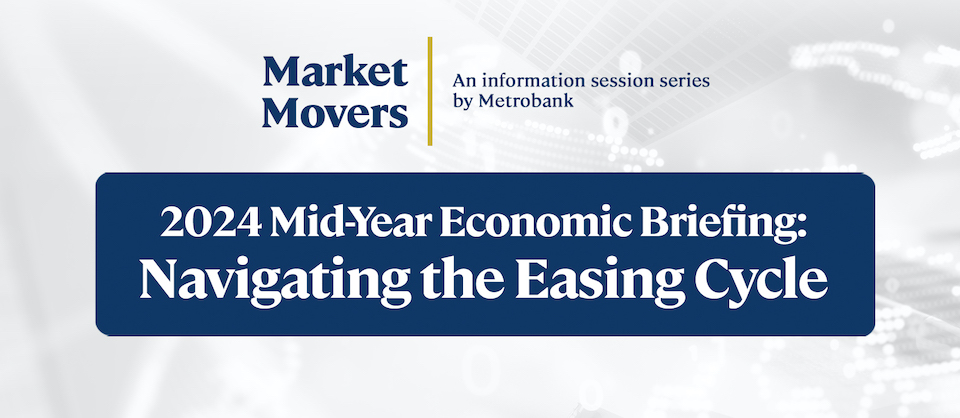
2024 Mid-Year Economic Briefing: Navigating the Easing Cycle
June 21, 2024
Investing with Love
Investing with Love: A Mother’s Guide to Putting Money to Work
May 15, 2024
retirement-ss-3
Investor Series: An Introduction to Estate Planning
September 1, 2023
View All Webinars
DOWNLOADS
Container ship carrying container boxes import export dock with quay crane. Business commercial trade global cargo freight shipping logistic and transportation worldwide oversea concept. Generative AI
Economic Updates
Philippines Trade Update: Wider deficit on strong imports
DOWNLOAD
Frick collection with palm trees 
Economic Updates
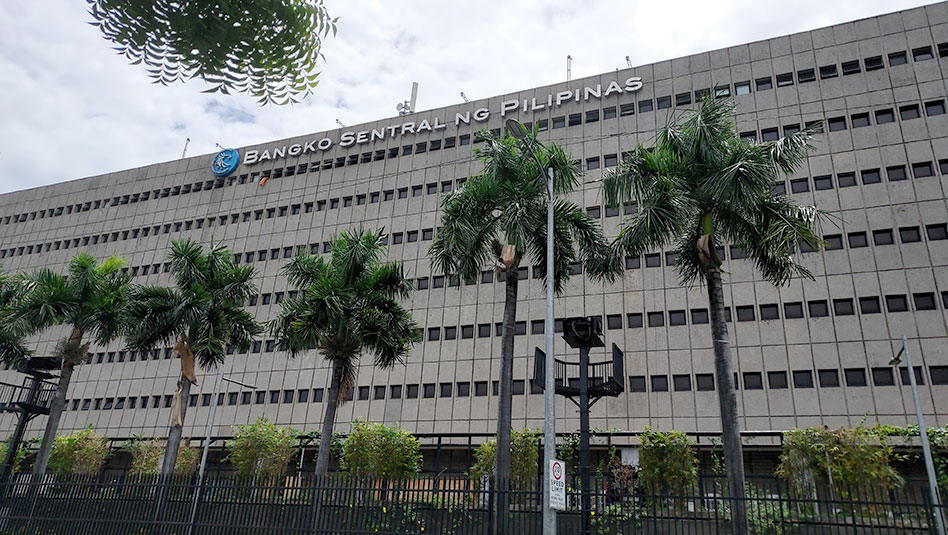
Policy Rate Updates: Policy rate updates to reassure 
DOWNLOAD
Man using his smartphone
Reports
Fed to cut just once 
DOWNLOAD
View all Reports
Metrobank.com.ph How To Sign Up
Follow us on our platforms.

How may we help you?

TOP SEARCHES
  • Where to put my investments
  • Reports about the pandemic and economy
  • Metrobank
  • Webinars
  • Economy
TRENDING ARTICLES
  • Investing for Beginners: Following your PATH
  • On government debt thresholds: How much is too much?
  • Philippines Stock Market Outlook for 2022
  • Deficit spending remains unabated

Login

Access Exclusive Content
Login to Wealth Manager
Visit us at metrobank.com.ph How To Sign Up
Access Exclusive Content Login to Wealth Manager
Search
MODEL PORTFOLIO THE GIST
NEWS AND FEATURES
Global Philippines Fine Living
INSIGHTS
INVESTMENT STRATEGY
Economy Stocks Bonds Currencies
THE BASICS
Investment Tips Explainers Retirement
WEBINARS
2024 Mid-Year Economi Briefing, economic growth in the Philippines
2024 Mid-Year Economic Briefing: Navigating the Easing Cycle
June 21, 2024
Investing with Love
Investing with Love: A Mother’s Guide to Putting Money to Work
May 15, 2024
retirement-ss-3
Investor Series: An Introduction to Estate Planning
September 1, 2023
View All Webinars
DOWNLOADS
Container ship carrying container boxes import export dock with quay crane. Business commercial trade global cargo freight shipping logistic and transportation worldwide oversea concept. Generative AI
Economic Updates
Philippines Trade Update: Wider deficit on strong imports
March 27, 2026 DOWNLOAD
Frick collection with palm trees 
Economic Updates
Policy Rate Updates: Policy rate updates to reassure 
March 26, 2026 DOWNLOAD
Man using his smartphone
Reports
Fed to cut just once 
March 19, 2026 DOWNLOAD
View all Reports

Archives: Business World Article

Gov’t fully awards bond offer as yields drop on rate cut bets

Gov’t fully awards bond offer as yields drop on rate cut bets

The government made a full award of the reissued Treasury bonds (T-bonds) it offered on Tuesday at a lower average rate amid strong demand as investors locked in returns amid expectations of further rate cuts by the Philippine central bank.

The Bureau of the Treasury (BTr) raised PHP 15 billion as planned via the reissued seven-year bonds it auctioned off on Tuesday as total bids reached PHP 86.38 billion, or almost six times the amount on offer.

This brought the outstanding volume for the series to PHP 234.7 billion, the Treasury said in a statement.

The bonds, which have a remaining life of four years and seven months, were awarded at an average rate of 5.508%. Accepted yields ranged from 5.5% to 5.525%.

The average rate of the reissued papers fell by 55 basis points (bps) from the 6.058% fetched for the bonds when they were last awarded on Sept. 10. This was also 99.2 bps lower than the 6.5% coupon rate for the issue.

It was likewise 8.8 bps below the 5.596% quoted for the same bond series and 6.3 bps lower than the 5.571% fetched for the five-year bond at the secondary market before Tuesday’s auction, based on PHP Bloomberg Valuation Service Reference Rates data provided by the BTr.

“The 7-year Treasury Bond (07-67) reissuance attracted strong demand, prompting the Auction Committee to fully award the security at today’s auction,” the BTr said on Tuesday, adding that the average rate fetched for the papers was lower than what was quoted for the previous reissuance and the prevailing secondary market rates.

Investors swamped the bond offer as they wanted to lock in relatively higher yields before the Bangko Sentral ng Pilipinas (BSP) eases its policy stance further, a trader said in a text message.

BSP Governor Eli M. Remolona, Jr. last week said the Monetary Board could slash benchmark interest rates by 50 bps more this year and deliver two more 25-bp cuts at its next two meetings scheduled for Oct. 16 and Dec. 19.

The central bank began its easing cycle in August, cutting its policy rate for the first time in nearly four years by 25 bps to 6.25% from the over 17-year high of 6.5%.

On Monday, Mr. Remolona said that while the BSP has the space to reduce borrowing costs by 50 bps in one meeting, this would only be done in a “hard-landing” scenario.

The upcoming reduction in banks’ reserve requirement ratios (RRR) also caused T-bond yields to go down, as this would inject fresh liquidity into the financial system, Rizal Commercial Banking Corp. Chief Economist Michael L. Ricafort said in a Viber message.

The BSP last month announced that it would reduce the RRR for universal and commercial banks and nonbank financial institutions with quasi-banking functions by 250 bps to 7% from 9.5% effective on Oct. 25.

It will also cut the RRR for digital banks by 200 bps to 4%, while the ratio for thrift lenders will be reduced by 100 bps to 1%. Rural and cooperative banks’ RRR will likewise go down by 100 bps to 0%.

The RRR is the portion of reserves that banks must hold onto rather than lending out. When a bank is required to hold a lower reserve ratio, it has more funds to lend to borrowers.

Mr. Remolona on Monday said big banks’ RRR could be brought down to as low as zero before his term ends in 2029. He earlier said the BSP wants to cut this ratio to as low as 5% from a high of 20% in 2018 as the country’s reserve requirements are among the highest in the region.

The BTr plans to borrow PHP 145 billion from the domestic market in October, or PHP 100 billion through Treasury bills and PHP 45 billion via T-bonds.

The government borrows from local and foreign sources to help fund its budget deficit, which is capped at PHP 1.48 trillion or 5.6% of gross domestic product this year. — A.M.C. Sy

Weak US outlook to hit remittances

Weak US outlook to hit remittances

A slowdown in US consumption could hurt Philippine remittances and exports, though this is still outweighed by domestic risks, Fitch Ratings said.

“Fitch expects some of the main channels of impact would be via weaker US demand for goods imports and outbound tourism, lower remittances and the effects on financial channels and commodity prices,” it said in a report.

The rating firm expects US consumption growth to decelerate gradually over the next 12 months and slow to 1.4% in 2025 from 2.2% this year.

“A notably sharper slowdown could have big implications for emerging market sovereigns, though we view this risk as low,” it added.

US consumer confidence dropped by the most in three years in September amid mounting fears over the labor market, though more households planned to buy a home in the next six months, Reuters reported.

The Conference Board’s consumer confidence index dropped to 98.7 last month from an upwardly revised 105.6 in August. The decline was the largest since August 2021. Economists polled by Reuters had forecast the index rising to 104 from the previously reported 103.3.

The Philippines is among the countries that could experience spillover effects from the anticipated weakness, Fitch Ratings said.

“The report mentions the Philippines as one of the countries with relatively smaller, but still potentially significant, exposure to US consumer spending,” Krisjanis Krustins, director at Fitch Ratings’ Asia-Pacific Sovereigns team and primary analyst for the Philippines, said in an e-mail.

The report showed the impacts of muted consumption on various channels in emerging markets (EM) like the Philippines, such as exports. “The US is the most important export market for many EMs, so weaker US domestic demand could have significant repercussions for their export earnings,” it said.

It noted that the Philippines is among the countries where goods exports to the US account for 3-5% of economic output.  This indicates a “slightly lower, but still potentially significant exposure.”

Latest data from the local statistics authority showed that the United States remained the top destination for Philippine-made goods in July, with exports valued at $1.06 billion, equivalent to 16.9% of the total for the month.

“In some cases, such as China’s, this metric may understate exposure as goods exports to other countries may be part of industrial supply chains that ultimately depend on US consumer demand,” Fitch Ratings added.

Meanwhile, remittance inflows may also be dampened by the expected slump in US consumer demand.

“A slowdown in US consumption generally affects US economic activity more broadly, with negative repercussions for the country’s labor market and income growth.”

Fitch Ratings said this could affect the value of remittances sent to emerging markets “as a high share of migrant workers are employed in service sectors that are more likely to be hit if consumption slows.”

“The US’ large migrant and diaspora communities mean it is also a leading source of remittances for many other EMs,” it said. “These include both countries where remittances are large as a share of GDP (gross domestic product) — as in Armenia, Cabo Verde, Georgia, Ghana, Nigeria, the Philippines and Tunisia,” it added.

Data from the Philippine central bank showed that cash remittances from overseas Filipino workers (OFWs) rose by 2.9% to USD 19.332 billion from January to July. The US accounted for 41.1% of the cash remittances.

In 2023, personal remittances hit a record USD 37.2 billion and accounted for 8.5% of the Philippine economy.

“Nonetheless, we believe there would likely need to be a large impact on US labor markets to have a significant impact on remittance flows from the US,” Fitch Ratings said.

“Remittances tend to be resilient and are more stable than capital flows, as they are influenced by many factors beyond economic activity levels in the source country, including altruistic motives driven by circumstances in the receiving country,” it said. “Remittances held up well during the economic disruption associated with the COVID-19 (coronavirus disease 2019) pandemic.”

Meanwhile, Mr. Krustins said domestic factors continue to pose a bigger risk for the Philippines than external headwinds.

“Still, domestic demand is the key driver of the Philippines’ 5-6% growth at the moment, so in terms of magnitude, more local risks represent the main potential downsides,” he said. “These could include a renewed spike in inflation, which has been weighing heavily on consumer spending. Climate is also a persistent risk.”

Inflation eased to a seven-month low of 3.3% in August from 4.4% in July. The central bank expects inflation to settle at 3.4% this year.

“Structurally, one of the key challenges for the Philippines’ economy is addressing weaknesses in infrastructure, human capital, and the regulatory framework, to enable more private and foreign investment; in the absence of this, growth could stabilize at lower levels,” he added.

The government targets to spend 5-6% of economic output on infrastructure annually.

DOLLAR WEAKNESS

Meanwhile, emerging market currencies could get a boost from a weaker US dollar, Fitch Ratings said.

“A sharper-than-expected US consumption slowdown could affect the outlook for US interest rates, which could be lower than under the baseline, and the US dollar, which could consequently be weaker,” it said.

“A weaker US dollar could support export competitiveness in EMs with dollarized economies. It would also reduce the burden of repaying US dollar-denominated debt in local currency terms,” it added.

Mr. Krustins said the start of the US Federal Reserve’s rate-cutting cycle would also support the peso.

“The start of the Fed easing cycle should in general be supportive of the value of the Philippine peso, similar to other EM currencies and indeed, the peso has strengthened from its weak point in June,” he said.

The Federal Reserve last month cut interest rates by 50 basis points to 4.75%-5%, the first reduction since 2020 that Fed Chairman Jerome H. Powell said was meant to demonstrate policymakers’ commitment to sustaining a low unemployment rate.

“However, we expect the Bangko Sentral ng Pilipinas to maintain a relatively low interest rate differential with respect to the Fed, compared with historical norms,” Mr. Krustins said. “This, combined with a shift to a structural current account deficit position, could limit the upside for the Philippines’ currency.” – Luisa Maria Jacinta C. Jocson, Reporter

BSP and BAP set to enhance swap, GS repo markets

BSP and BAP set to enhance swap, GS repo markets

The Bangko Sentral ng Pilipinas (BSP) and Bankers Association of the Philippines (BAP) will enhance the interest rate swap market and the repurchase agreement (repo) market for government debt to improve benchmarks for a smoother yield curve.

“This year, we are introducing an enhancement in the Philippine Interest Rate Swap (Peso IRS) instrument and the repo market for government securities (GS) — tools that will benefit the banking clients to better manage their risks and exposures and eventually grow our market,” BAP Open Market Committee Chairman Paul Raymond A. Favila said at an event on Monday.

These initiatives will enhance short-term benchmarks and further deepen the country’s capital markets, he said.

“A benchmark yield curve will help in the pricing of bank loans and corporate bonds, and thus strengthen the transmission mechanism for monetary policy,” BSP Governor Eli M. Remolona, Jr. added.

Mr. Remolona earlier said that he planned to revive the domestic swap market.

A swap is a derivative contract where one party exchanges the values or cash flows of one asset for another. Interest rate, equity, credit default and currency swaps are the most common types of swaps.

The BAP will create the enhanced Peso IRS overnight reference rate (ORR) based on the BSP’s variable overnight reverse repurchase rate (ORRP) that is set in an active daily auction.

The BSP launched the ORRP in September last year.

“Not only did it support the monetary tool of the BSP, but it provided a solution to the industry’s Peso IRS reference rate,” Mr. Favila said. “The enhanced Peso IRS facility addresses existing gaps in the market by providing a more relevant robust hedging option for market participants.”

The swap market would also “generate a more robust long-term funding market which is critical to help sustain long-term investment and economic growth,” he added.

Mr. Favila said the IRS will not be replacing other instruments.

“We are not anticipating necessarily a replacement. In any jurisdiction, the determination of the benchmark is actually determined by the users themselves. So, what we are trying to do is to provide options — hopefully deeper, better options — and let the market evolve accordingly.”

Mr. Remolona said the PHP Bloomberg Valuation Service (BVAL) yield curve is “choppy,” and the IRS curve will help enhance it.

“Ultimately, I think, as has happened in other markets, there will be a small spread between BVAL and the swaps curve,” he said. “The swaps curve will be a bit higher than the government curve, if I may call BVAL that. That spread will represent counter-party risk among the dealers in the swaps market.”

There are 15 BAP-member banks that have committed to be market makers in the IRS market: BDO Unibank, Inc.; Bank of the Philippine Islands; China Banking Corp.; Metropolitan Bank & Trust Co.; Philippine National Bank; Security Bank Corp.; Rizal Commercial Banking Corp.; Union Bank of the Philippines, Inc.; ANZ Bank; Citigroup, Inc.; Deutsche Bank; HSBC; ING Bank; JPMorgan Chase; and Standard Chartered Bank.

“These market makers are committed to quote two-may prices for the one-month, three-month, and six-month Peso IRS,” Mr. Favila said. “These market-based quotes from large and active member banks will form a more robust short-term benchmark that banks and borrowers can use for pricing loans.”

Tenors will range from one, two, three, four, five, seven, and 10 years, he added.

Meanwhile, five banks signed up as regular participants: BDO Private Bank, Inc.; Maybank Investment Banking Group; Mizuho Bank, Ltd.; Mitsubishi UFJ Financial Group; and Sumitomo Mitsui Banking Corp.

The IRS can be up and running as soon as this year, Mr. Favila said, once the International Swaps and Derivatives Association (ISDA) acknowledges the ORR. The BAP is looking to have the ORR approved by ISDA by November.

“As soon as we get positive confirmation that the ORR is already recognized by ISDA… the market is ready to begin trading,” he said.

Bloomberg is expected to serve as the trading platform for the swap market, while the BSP will be the publisher of the daily variable reverse repurchase rate benchmark.

Meanwhile, the BSP and BAP are also working to expand the GS repo market to boost trading and provide an alternative benchmark for short-term loan rates.

“Currently, the BSP “tags” securities to banks that place cash with it via the reverse repo window. The central bank is now working on shifting from tagging to full delivery of these securities in line with global market practice. This will allow banks to trade these securities, vastly expanding the market,” the BSP and BAP said in a statement.

This will boost liquidity in the primary and secondary bond markets, they said, facilitate bond price discovery and transparency, develop hedging tools, and help reduce credit risks and costs, which could help attract more investors to the Philippine GS market.

“These benchmarks are expected to provide market participants with a better avenue to price interest rates for bonds and loans. By better management of relevant risks, the overall Philippine market will benefit due to greater confidence from both local and foreign investors and financial institutions — thus leading to more robust market activity in the future,” BAP President Jose Teodoro K. Limcaoco said.

“Enhancement in the benchmarks will support the evolution and generation of financial products for hedging longer-term exposures through the Philippine Peso Interest Rate Swap and government securities repo markets,” he added.

DERIVATIVES

Meanwhile, the Securities and Exchange Commission (SEC) is looking to develop a futures market in the Philippines, it said on Monday.

The corporate regulator held a Derivative Market Oversight and Regulatory Scheme Training with the United States Commodity Futures Trading Commission (CFTC) on Aug. 12-16 in preparation for the possible creation of a local derivatives market, it said in a statement.

“The Derivative Market Oversight and Regulatory Scheme… complements our ongoing efforts to develop regulatory frameworks for commodity futures and an electricity derivatives market, in pursuit of our mandate to deepen capital markets,” SEC Commissioner McJill Bryant T. Fernandez said.

“Developments in the derivatives market as a whole have contributed to more complete financial markets, improved market liquidity, and increased the capacity of the financial system to price and bear risk effectively — ultimately, ushering in stronger economic growth over time,” he added.

Derivatives are types of investments wherein an investor does not own the underlying asset, but instead makes a bet on the direction of the price movement of the underlying asset through an agreement with another party. These include options and futures contracts.

The training with CTFC covered the legal frameworks and regulatory elements of derivatives, investor protection and regulation, and contract design and transaction clearing mechanisms, the SEC said.

“The SEC remains committed to finding new and innovative solutions to further develop the capital market in order to provide businesses more accessible funding for their growth, as well as more investment options that cater to the different risk profiles of the investing public,” SEC Chairperson Emilio B. Aquino said.

China Bank Capital Corp. Managing Director Juan Paolo E. Colet said the having a derivatives market will boost the “sophistication and appeal of our financial markets.”

“The creation of a local derivatives market is long overdue as many of our neighbors already have their own organized derivatives or futures markets,” Mr. Colet said in a Viber message.

However, such a market may not be “appropriate for all types of investors given the level of risk involved,” he said.

“Sophisticated investors will most likely be the primary users and traders of derivatives. It will take a lot of investor education to make the domestic retail market ready for derivatives,” Mr. Colet said. “An immediate challenge for regulators is to design a robust, market-friendly, and cost-efficient framework for the origination, trading, and settlement of derivatives. If it is too onerous, then it might discourage investors and stunt the development of the derivatives market.”

“They have good intentions. Having more products is better than less. However, there’s no guarantee it will be a popular product,” COL Financial Group, Inc. Chief Equity Strategist April Lynn Lee-Tan added in a Viber message. — Luisa Maria Jacinta C. Jocson and Revin Mikhael D. Ochave


Central bank chief looks to bring down big banks’ RRR to zero within term

Central bank chief looks to bring down big banks’ RRR to zero within term

The Philippine central bank chief said big lenders’ reserve requirement ratio (RRR) could be brought down to as low as zero before his term ends in 2029.

Asked if the RRR could be reduced to zero during his six-year term, Bangko Sentral ng Pilipinas (BSP) Governor Eli M. Remolona, Jr. said this is “possible.”

“We’ve been discussing bringing it down to 5%, but we still don’t know when. But we will get there. The 7% is still high,” he said in mixed English and Filipino on the sidelines of an event on Monday.

The BSP last month announced that it would reduce the RRR for universal and commercial banks and nonbank financial institutions with quasi-banking functions by 250 basis points (bps) to 7% from 9.5% effective on Oct. 25.

It will also cut the RRR for digital banks by 200 bps to 4%, while the ratio for thrift lenders will be reduced by 100 bps to 1%. Rural and cooperative banks’ RRR will likewise go down by 100 bps to 0%.

The RRR is the portion of reserves that banks must hold onto rather than lending out. When a bank is required to hold a lower reserve ratio, it has more funds to lend to borrowers.

Mr. Remolona is serving a six-year term, which began last year and will end in 2029.

He earlier said the BSP is eyeing to bring down big banks’ RRR to as low as 5% from a high of 20% in 2018 as the country’s reserve requirements are among the highest in the region.

LARGE RATE CUT

Meanwhile, Mr. Remolona said the central bank has room to cut benchmark interest rates by 50 bps in one meeting but reiterated that this would only be done in a “hard-landing” scenario.

“I think there is (space). But usually, you’re worried about a hard landing when you consider 50 bps,” he said.

“If there’s no risk of a hard landing, 25-25 (for now), 25 bps is normal; 50 bps, you’re worried that there might be a hard landing.”

The central bank in August reduced borrowing costs for the first time in nearly four years, cutting its policy rate by 25 bps to 6.25% from the over 17-year high of 6.5%.

The Monetary Board’s policy meeting this month has been rescheduled to Oct. 16 from Oct. 17, Mr. Remolona said, while its last review for the year will be held on Dec. 19.

The BSP chief last month said they could deliver a 25-bp rate cut each at their October and December meetings. This would bring the policy rate to 5.75% by end-2024. — Luisa Maria Jacinta C. Jocson

T-bill yields continue to ease amid rate cut bets

T-bill yields continue to ease amid rate cut bets

The government on Monday fully awarded Treasury bills (T-bills) as the market awaited further rate cuts by the Philippine central bank.

The Bureau of the Treasury (BTr) raised PHP 20 billion as planned from the T-bills it auctioned off as total bids reached PHP 76.445 billion, almost four times as much as the amount on offer, but lower than PHP 93.257 billion in tenders last week.

The Treasury borrowed PHP 6.5 billion via the 91-day T-bills as tenders for the tenor reached PHP 24.37 billion. The three-month paper was quoted at an average rate of 5.196%, 18.4 basis points (bps) lower than last week. Bids were 5.15% to 5.248%.

The government also fully awarded PHP 6.5 billion in 182-day securities, with bids reaching PHP 26.245 billion. The average rate of the six-month debt was 5.005% to 5.48%, down by 47.5 bps from last week.

The Treasury likewise raised PHP 7 billion via the 364-day debt as demand reached PHP 25.83 billion. The average rate of the one-year debt fell by 9.6 bps to 5.487% from last week, with accepted rates at 5.4% to 5.525%.

At the secondary market before the auction, the 91-, 182- and 364-day T-bills were quoted at 5.2578%, 5.3818% and 5.5599%, based on PHP Bloomberg Valuation Service Reference Rates data from the Treasury.

Investors were aggressive in locking in yields on expectations of further rate cuts by the Bangko Sentral ng Pilipinas (BSP), a trader said in a text message.

T-bill yields continued declining after Finance Secretary Ralph G. Recto said he would support a bigger rate cut at the central bank’s October meeting, Michael L. Ricafort, chief economist at Rizal Commercial Banking Corp., said in a Viber message.

Mr. Recto, who is also a Monetary Board member, has said the board could afford to slash interest rates further and match the size of the US Federal Reserve’s 50-bp rate cut.

“The Fed reduced by 50 basis points. I think we can also do half a percent,” he told a news briefing last week.

Inflation likely eased to 2.5% in September, he said, the slowest in nearly four years, after rising by 3.3% in the previous month. Mr. Recto said it could settle at 3.4% this year, within the central bank’s 2% to 4% target.

Slowing inflation allowed the central bank to cut the benchmark rate by 25 bps to 6.25% in August, its first rate cut since November 2020, ahead of major central banks including the Fed.

On Tuesday, the Treasury will offer PHP 15 billion in reissued seven-year T-bonds with a remaining life of four years and seven months.

The BTr plans to borrow PHP 145 billion from the domestic market in October — PHP 100 billion in T-bills and PHP 45 billion in T-bonds.

The government borrows from local and foreign sources to help fund its budget deficit, which is capped at PHP 1.48 trillion or 5.6% of economic output this year. – Aaron Michael C. Sy, Reporter

PSEi drops on profit taking after 4 weeks of rally

PSEi drops on profit taking after 4 weeks of rally

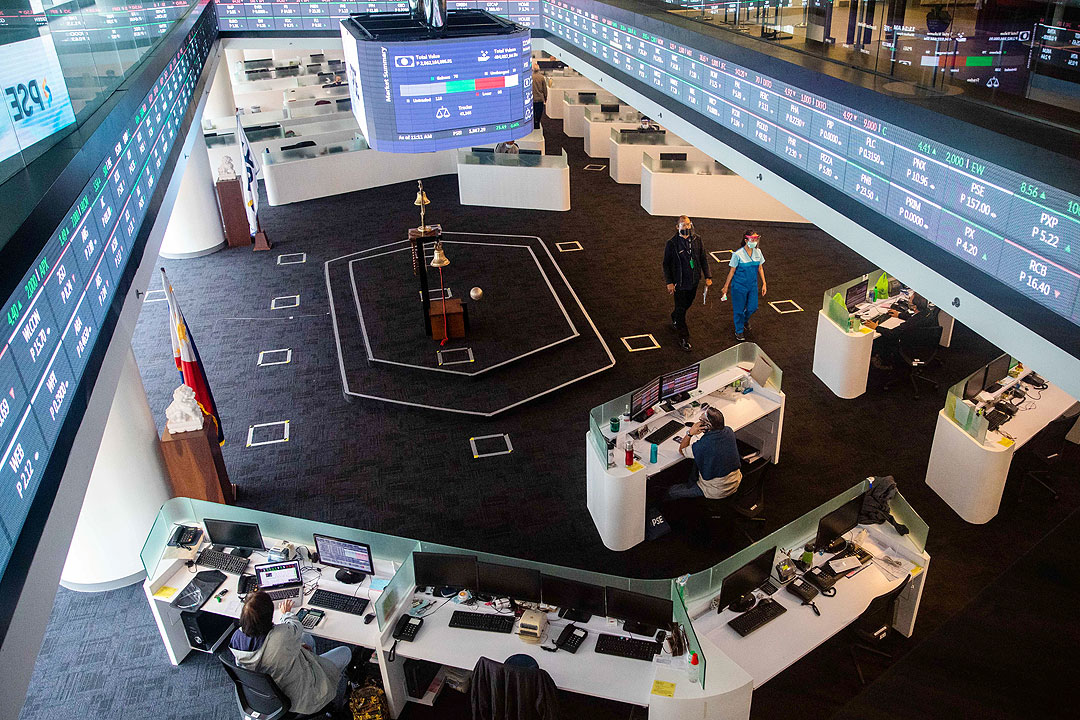
Philippine closed lower on Monday as investors booked gains after a four-week rally.

The bellwether Philippine Stock Exchange index (PSEi) fell by 2.09% or 155.65 points to 7,272.65. The broader all-share index lost 1.3% or 51.75 points to 3,918.68.

“The local market plunged as investors continued with their profit-taking,” Japhet Louis O. Tantiangco, senior research analyst at Philstocks Financial, Inc., said in a Viber message. “Investors decided to book gains as the market has already been on a four-week rally.”

The market also took a cautious stance while waiting for September inflation data due this week, he added. Inflation data will be released on Friday.

Philippine inflation eased to a seven-month low of 3.3% in August from 4.4% in July and 5.3% a year earlier.

“Philippine shares fell due to profit–taking ahead of September consumer price index data on Friday,” Luis A. Limlingan, head of sales at Regina Capital Development Corp., said in a Viber message.

He said the September S&P Manufacturing Purchasing Managers’ Index and August producer price index are also due this week.

In the US, key data releases include job openings and labor turnover survey report, ISM Manufacturing Index on Tuesday and the employment report on Friday, aside from speeches from US Federal Reserve Chairman Jerome H. Powell and other officials, he added.

Back home, all of the market’s sectoral indices closed lower, led by holding firms which dropped by 2.84% or 180.06 points to 6,150.15. The property index fell by 1.95% or 58.37 points to 2,930.63, while the financial index lost 1.78% or 41.76 points to 2,297.62.

Services declined by 1.32% or 29.95 points to 2,231.26, while mining and oil retreated by 1.31% or 115.75 points to 8,675.63. The industrial index fell by 1.09% or 107.01 points to 9,710.68.

Value turnover rose to PHP 7.22 billion covering 1.1 billion shares from PHP 6.97 billion involving 1.37 billion shares on Friday.

Decliners beat advancers 115 to 93, while 45 stocks were unchanged. Net foreign buying dropped to PHP 87.71 million from PHP 175.76 million. – Revin Mikhael D. Ochave, Reporter

Inflation may ease to near 4-year low

Inflation may ease to near 4-year low

Headline inflation likely slowed to a near four-year low in September amid falling prices of rice and fuel, giving the Bangko Sentral ng Pilipinas (BSP) room to cut benchmark interest rates further, analysts said.

A BusinessWorld poll of 15 analysts conducted last week yielded a median estimate of 2.5% for the September consumer price index (CPI).

If realized, September inflation would be sharply slower than 3.3% in August and 6.1% in the same month a year ago.

Analysts’ September inflation rate estimates

This would also be the lowest monthly print in nearly four years or since the 2.3% clip in October 2020.

The Philippine Statistics Authority is scheduled to release September inflation data on Friday (Oct. 4). The BSP has yet to release its month-ahead inflation forecast.

Easing rice prices likely caused the CPI to go down this month, analysts said.

“Price pressures will ease on rice, which makes up a significant proportion in the heavily weighted food basket. Prices for the staple soared in 2023 when India banned the export of non-basmati white rice,” Sarah Tan, an economist from Moody’s Analytics, said in an e-mail.   

Rice inflation eased to 14.7% in August from 20.9% in July. Rice typically accounts for nearly half of overall inflation.

The Agriculture department earlier this month said they are eyeing to bring down rice inflation to single-digit levels.

“The cut in the tariff on imported rice, which took effect at the end of June and will last until year’s end, will help bring down inflation for this staple,” Ms. Tan added.

In June, President Ferdinand R. Marcos, Jr. issued Executive Order No. 62, cutting tariffs on rice imports to 15% from 35% until 2028.

“Food price base effects will remain quite favorable, stemming from last year’s rice price surge. This should pull food inflation down quite sharply, even if there is no material change month to month,” Pantheon Macroeconomics Chief Emerging Asia Economist Miguel Chanco said.

Philippine National Bank economist Alvin Joseph A. Arogo said the steady food and non-alcoholic beverage index in August also “provides buffer against the potential adverse impact of the current and upcoming typhoons on overall food prices.”

Lower fuel prices may have led to slower September inflation, analysts added.

“Disinflation may come largely from broad food and transport CPI. Particularly, we expect declines from rice prices and lower gasoline/diesel prices from declining global prices,” Union Bank of the Philippines, Inc. Chief Economist Ruben Carlo O. Asuncion said in an e-mail.

In September, pump price adjustments stood at a net decrease of PHP 0.95 a liter for gasoline, PHP 2.10 for diesel and PHP 2.35 for kerosene.

“Retail fuel prices fell by as much as 7% month on month on the back of lower oil prices globally and a stronger peso against the US dollar,” Aris D. Dacanay, economist for ASEAN (Association of Southeast Asian Nations) at HSBC Global Research, said.

“Transport deflation should also deepen, further pulling down headline inflation, thanks to the rolling over in domestic pump prices, which reflect the weakness in global oil prices,” Mr. Chanco added.

“(Inflation) was likely within the target band as an effect of easing supply-chain constraints, slowdown in oil prices, and inflow of agricultural imports. However, it is still threatened by natural calamities that can disrupt food supplies,” Oikonomia Advisory & Research, Inc. said.

MORE ROOM FOR RATE CUTS

The expected downtrend in inflation in the coming months will give the BSP more space to continue its policy easing cycle, analysts said.

“For the coming months, it is possible for inflation to sustain at 3% levels for the rest of 2024, or well within the BSP inflation target range of 2-4%, that could justify further BSP rate cuts that would match any future Fed rate cuts from 2024-2026,” Rizal Commercial Banking Corp. Chief Economist Michael L. Ricafort said.

“With CPI inflation remaining on a downward path and the US Fed already starting its cutting cycle, BSP has plenty of scope to further remove the restrictiveness of its monetary stance,” Nomura Global Markets Research Chief ASEAN Economist Euben Paracuelles said. “We still forecast BSP to cut by 25 bps at each of the October and December meetings, and by 75 bps in the first three meetings in 2025, bringing the policy rate to 5%.”

BSP Governor Eli M. Remolona, Jr. last week signaled that the central bank could deliver a 25-bp rate cut each at its remaining two meetings.

The Monetary Board in August reduced borrowing costs by 25 bps, bringing the key rate to 6.25% from the over 17-year high of 6.5%.

It will have its next policy review on Oct. 17, while its last meeting for the year is scheduled for Dec. 19.

Meanwhile, the Fed this month kicked off its easing cycle with a supersized 50-bp cut, bringing its target rate to the 4.75-5% range.

Markets are fully pricing in a cut of at least 25 bps at the Fed’s November meeting according to CME’s FedWatch Tool, Reuters reported.

“A cooling inflation print for September will convince the BSP that inflation has returned to target for good after July’s spike. Coupled with the recent 50-bp cut by the US Federal Reserve, this increases the chances for an October rate cut in the Philippines,” Moody’s Analytics’ Ms. Tan said.

“Indeed, the start of the monetary policy easing cycle in the US gives the BSP room to further loosen its monetary policy. The BSP could move with two 25-bp cuts in the fourth quarter across their two meetings in October and December,” Ms. Tan added.

Pantheon Macroeconomics’ Mr. Chanco said that if there is no “major shock” until the next inflation release, then the Monetary Board could implement another 25-bp cut at its October meeting.

“However, potential risks from oil and typhoons may keep the BSP cautious about interest rate cuts. The central bank is likely to opt for a gradual approach, with 25-bp reductions in October and December,” Security Bank Corp. Chief Economist Robert Dan J. Roces added.

Zamros Bin Dzulkafli, an economist at Maybank Investment Banking Group, likewise expects the BSP to reduce rates by a total of 75 bps this year, “supported by the recent ‘aggressive’ 50-bp rate cut by the US Fed.” – Luisa Maria Jacinta C. Jocson, Reporter

PEZA investment approvals reach PHP 54.19B in Sept.

PEZA investment approvals reach PHP 54.19B in Sept.

The Philippine Economic Zone Authority (PEZA) approved PHP 54.19 billion in investment pledges in September, almost four times as much as the PHP 14.04 billion okayed in the same month last year.

The investment promotion agency’s (IPA) board approved 16 new and expansion projects at a meeting on Sept. 23, it said in a statement on Sunday.

The pledges approved last week are expected to generate USD 541.04 million in exports and 4,044 new jobs, PEZA said.

Eight of these projects are in export manufacturing, five are in the information technology and business process management sector, one is in facilities development, and one each in economic zone (ecozone) logistics services and development.

In terms of investment destination, 11 of the projects will be put up in Calabarzon, two in Region VII, two in the National Capital Region, and one will be in Central Luzon.

One of the pledges approved this month is for a PHP 50-billion project that the PEZA said may be eligible for an incentive package for highly desirable projects under the CREATE or Corporate Recovery and Tax Incentives for Enterprises law.

The September approvals also include a PHP 988.29-million new ecozone development by a Filipino developer in Lima, Batangas.

“Such big-ticket investment plays a pivotal role in driving investment opportunities across the country, aligning with President Ferdinand R. Marcos, Jr.’s vision of elevating the Philippines to upper middle-income status,” PEZA said.

The green-lit commitments for this month brought PEZA-approved investment pledges for the first nine months to 179 projects, which have a combined cost of PHP 115.89 billion. This represents a 4.21% increase from the investments approved in the same period last year.

The year-to-date approvals are expected to generate USD 2.51 billion in exports and 35,871 jobs.

“These approvals… strengthen the outlook for reaching the P200-billion investment target of PEZA for the year,” it said.

It added that it recorded an “exceptional surge” in investment approvals in the third quarter.

“With significant increases across various sectors, the Philippines is poised for an even more robust performance in the final quarter of 2024,” it added.

SUPPORT FOR MSMEs

PEZA said in a separate statement that it is working on programs that will support micro, small, and medium (MSME) enterprises.

To date, there are 722 Filipino PEZA-registered business enterprises (RBEs) that are micro-, small-, and medium-sized, representing 20% of the businesses registered with the IPA.

A PEZA survey showed that 89% of its registered MSMEs source their materials locally, such as packaging materials, raw materials, and machinery and equipment.

The survey, which was conducted from Aug. 7 to Sept. 9 and had 579 RBEs across different ecozones as respondents, also showed that MSMEs also engage in subcontracting non-PEZA registered companies for die-cutting services, sewing, and manpower and security services.

The IPA has been conducting reverse trade fairs to connect MSMEs with local suppliers, it said, as well as putting up a startup accelerator hub inside ecozones, producing an online PEZA digital marketplace, and promoting investments in labor-intensive manufacturing sectors, among others.

“PEZA recognizes that the steady growth of MSMEs will strengthen the Philippines’ competitive advantage as the source of high-quality materials that cater to both domestic and international markets,” it added. — Justine Irish D. Tabile

Government borrowings climb 40% in August

Government borrowings climb 40% in August

The national Government’s (NG) gross borrowings rose by 40.28% year on year in August as domestic debt jumped on increased issuances of government securities, the Bureau of the Treasury (BTr) reported.

Treasury data showed that gross borrowings increased to PHP 174.03 billion in August from PHP 124.06 billion in the same month a year ago.

However, month on month, state borrowings declined by 7.75% from PHP 188.65 billion in July.

Domestic debt accounted for the bulk or 95.98% of the government’s gross borrowings last month, Treasury data showed.

Gross domestic borrowings surged by 42.33% to PHP 167.05 billion in August from PHP 117.37 billion in the same month in 2023.

Broken down, domestic debt in August consisted of PHP 140 billion in fixed-rate Treasury bonds (T-bonds) and PHP 27.05 billion in net issuances of Treasury bills (T-bills).

These were higher than the PHP 110.235 billion in T-bonds and the net PHP 7.139 billion in T-bills issued in the same month last year.

On the other hand, gross external borrowings also rose by 4.64% to PHP 6.99 billion in August from PHP 6.68 billion a year ago, according to BTr data. This was entirely made up of new project loans.

Rizal Commercial Banking Corp. Chief Economist Michael L. Ricafort attributed the higher borrowings for the month to increased issuances amid maturing debt.

“The increase in the NG gross borrowings may have been attributed to higher maturing debt in August 2024 that required new borrowings to serve the matured government securities,” he said in a Viber message.

Year to date, gross borrowings as of end-August increased by 16.97% to PHP 1.93 trillion from PHP 1.65 trillion in the same period in 2023, Treasury data showed.

For the first eight months, 85.49% of NG borrowings came from the domestic market.

Gross domestic borrowings jumped by 32% to PHP 1.65 trillion in the period from PHP 1.25 trillion a year ago.

These were made up of PHP 904.21 billion in fixed-rate T-bonds, PHP 584.86 billion in retail Treasury bonds, and PHP 161.7 billion in net issuances of T-bills.

On the other hand, external gross borrowings dropped by 28.41% to PHP 282.46 billion as of August from PHP 394.56 billion in the comparable year-ago period.

Broken down, these consisted of PHP 115.25 billion in global bonds, PHP 100.5 billion in program loans, and PHP 66.72 billion in new project loans.

“Borrowings increased due to the persistent budget deficit, albeit narrowing due to fiscal consolidation,” John Paolo R. Rivera, senior research fellow at the Philippine Institute for Development Studies, said in a Viber message. “It can also be due to increased funding requirements given unforeseen outlays like calamity response, reconstruction, among others.”

The government’s budget deficit narrowed by 4.85% to P697 billion in the January-August period from PHP 732.5 billion a year prior.

“For the coming months, NG debt borrowings and debt servicing could be tempered by the narrower budget deficit recently, and further US Federal Reserve rate cuts in the coming months that could be matched locally,” Mr. Ricafort added.

The Fed this month started its long-awaited easing cycle with a 50-basis-point (bp) cut, bringing its target rate to the 4.75-5% range. Markets are pricing in more reductions at the US central bank’s Nov. 6-7 and Dec. 17-18 reviews.

Meanwhile, BSP Governor Eli M. Remolona, Jr. last week said the central bank could deliver a 25-bp cut at each of its remaining meetings for the year scheduled for Oct. 17 and Dec. 19.

The Monetary Board in August reduced borrowing costs by 25 bps, bringing the key rate to 6.25% from the over 17-year high of 6.5%. This marked its first easing move in nearly four years.

For this year, the NG plans to borrow PHP 2.57 trillion, with 75% coming from local sources and 25% from external sources, to help fund its PHP 1.48-trillion budget deficit that is equivalent to 5.6% of gross domestic product. — Beatriz Marie D. Cruz

PHL T-bill, bond yields may ease on rate cut bets

PHL T-bill, bond yields may ease on rate cut bets

Rates of Treasury bills (T-bills) and Treasury bonds (T-bonds) on offer this week are expected to fall due to dovish signals from Philippine Finance Secretary Ralph G. Recto.

The Bureau of the Treasury (BTr) will auction off PHP 20 billion in T-bills on Monday — PHP 6.5 billion each in 91- and 182-day debt and PHP 7 billion in 364-day securities.

On Tuesday, the government will offer PHP 15 billion in reissued seven-year T-bonds with a remaining life of four years and seven months.

The T-bond sale could be “fairly received,” with a rate ranging from 5.5% to 5.6% amid a still bullish government securities market, a trader said in an e-mail.

Yields on T-bills and T-bonds on offer this week could follow the easing of secondary market rates after Mr. Recto said he would support a 50-basis-point (bp) rate cut at the BSP’s October meeting, Michael L. Ricafort chief economist at Rizal Commercial Banking Corp., said in a Viber message.

At the secondary market, yields of the 91-, 182- and 364-day T-bills dropped by 47.81 basis points (bps), 49.77 bps, and 36.5 bps week on week to close at 5.2578%, 5.3818%, and 5.5599%, respectively, according to PHP Bloomberg Valuation Service Reference Rates data on Sept. 27 posted on the Philippine Dealing System website.

The seven-year yield went up by 1.67 bps to 5.6416%, while the five-year rate, the tenor closest to the remaining life of the T-bonds, slipped by 3.48 bps to 5.5874%.

Mr. Recto, who is also a Monetary Board member, has said the board could afford to slash interest rates further and match the size of the US Federal Reserve’s rate cut.

“The Fed reduced by 50 basis points. I think we can also do half a percent,” he told a news briefing last week.

Inflation would likely ease to 2.5% in September, he said, the slowest in nearly four years, after rising by 3.3% in the previous month. Mr. Recto said it could settle at 3.4% this year, within the central bank’s 2% to 4% target.

Slowing inflation allowed the central bank to cut the benchmark rate by 25 bps to 6.25% in August, its first rate cut since November 2020, ahead of major central banks including the Fed.

Yields also mostly dropped on Friday as the market awaited the local consumer price index (CPI) data release for August, Mr. Ricafort said. 

September inflation likely continued to slow at 2.5%, according to a median estimate of 15 analysts in a BusinessWorld poll. This could be the slowest in nearly four years.

Last week, the Treasury bureau raised PHP 20 billion as planned from the T-bills it auctioned off, as total bids reached PHP 93.257 billion.

The Treasury borrowed PHP 6.5 billion via 91-day T-bills, as tenders reached PHP 29.64 billion. The average rate for the three-month debt fell by 36.3 bps to 5.38% a week earlier.

The government likewise made fully awarded PHP 6.5-billion in 182-day securities, with bids reaching PHP 24.66 billion. The average rate of the six-month T-bill stood at 5.48%, down by 46 bps.

The Treasury also raised PHP 7 billion via the 364-day debt, as demand reached PHP 38.957 billion. The average rate of the one-year debt fell by 39 bps to 5.583%, with accepted rates at 5.58% to 5.6%.

The reissued seven-year bonds on offer on Tuesday were last auctioned off on Sept. 10, when the BTr raised PHP 30 billion at an average rate of 6.058%, below the 6.5% coupon.

The government plans to borrow PHP 145 billion from the domestic market in October, or PHP 100 billion in T-bills and PHP 45 billion in T-bonds.

The government borrows from local and foreign sources to help fund its budget deficit, which is capped at PHP 1.48 trillion or 5.6% of economic output this year. – Aaron Michael C. Sy, Reporter

Posts navigation

Older posts
Newer posts

Recent Posts

  • Navigating precarious times with cost averaging
  • Trade Update: Wider trade deficit in February
  • Metrobank US-Iran Risk Index: No swift end seen
  • Investment Ideas: March 27, 2026
  • BSP Update: First rate hike likely in June 

Recent Comments

No comments to show.

Archives

  • March 2026
  • February 2026
  • January 2026
  • December 2025
  • November 2025
  • October 2025
  • September 2025
  • August 2025
  • July 2025
  • June 2025
  • May 2025
  • April 2025
  • March 2025
  • February 2025
  • January 2025
  • December 2024
  • November 2024
  • October 2024
  • September 2024
  • August 2024
  • July 2024
  • June 2024
  • May 2024
  • April 2024
  • March 2024
  • February 2024
  • January 2024
  • December 2023
  • November 2023
  • October 2023
  • September 2023
  • August 2023
  • July 2023
  • June 2023
  • May 2023
  • April 2023
  • March 2023
  • February 2023
  • January 2023
  • December 2022
  • November 2022
  • October 2022
  • September 2022
  • August 2022
  • July 2022
  • June 2022
  • May 2022
  • March 2022
  • December 2021
  • October 2021

Categories

  • Bonds
  • BusinessWorld
  • Currencies
  • Economy
  • Equities
  • Estate Planning
  • Explainer
  • Featured Insight
  • Fine Living
  • How To
  • Investment Tips
  • Markets
  • Portfolio Picks
  • Rates & Bonds
  • Retirement
  • Reuters
  • Spotlight
  • Stocks
  • Uncategorized

You are leaving Metrobank Wealth Insights

Please be aware that the external site policies may differ from our website Terms And Conditions and Privacy Policy. The next site will be opened in a new browser window or tab.

Cancel Proceed
Get in Touch

For inquiries, please call our Metrobank Contact Center at (02) 88-700-700 (domestic toll-free 1-800-1888-5775) or send an e-mail to customercare@metrobank.com.ph

Metrobank is regulated by the Bangko Sentral ng Pilipinas
Website: https://www.bsp.gov.ph

Quick Links
The Gist Webinars Wealth Manager Explainers
Markets
Currencies Rates & Bonds Equities Economy
Wealth
Investment Tips Fine Living Retirement
Portfolio Picks
Bonds Stocks
Others
Contact Us Privacy Notice Terms of Use
© 2026 Metrobank. All rights reserved.

Access this content:

If you are an existing investor, log in first to your Metrobank Wealth Manager account. ​

If you wish to start your wealth journey with us, click the “How To Sign Up” button. ​

Login HOW TO SIGN UP