



MODEL PORTFOLIO
THE GIST
NEWS AND FEATURES
Global Philippines Fine Living
INSIGHTS
INVESTMENT STRATEGY
Economy Stocks Bonds Currencies
THE BASICS
Investment Tips Explainers Retirement
WEBINARS
2024 Mid-Year Economi Briefing, economic growth in the Philippines
2024 Mid-Year Economic Briefing: Navigating the Easing Cycle
June 21, 2024
Investing with Love
Investing with Love: A Mother’s Guide to Putting Money to Work
May 15, 2024
retirement-ss-3
Investor Series: An Introduction to Estate Planning
September 1, 2023
View All Webinars
DOWNLOADS
Container ship carrying container boxes import export dock with quay crane. Business commercial trade global cargo freight shipping logistic and transportation worldwide oversea concept. Generative AI
Economic Updates
Philippines Trade Update: Wider deficit on strong imports
DOWNLOAD
Frick collection with palm trees 
Economic Updates
Policy Rate Updates: Policy rate updates to reassure 
DOWNLOAD
Man using his smartphone
Reports
Fed to cut just once 
DOWNLOAD
View all Reports
Metrobank.com.ph How To Sign Up
Follow us on our platforms.

How may we help you?

TOP SEARCHES
  • Where to put my investments
  • Reports about the pandemic and economy
  • Metrobank
  • Webinars
  • Economy
TRENDING ARTICLES
  • Investing for Beginners: Following your PATH
  • On government debt thresholds: How much is too much?
  • Philippines Stock Market Outlook for 2022
  • Deficit spending remains unabated

Login

Access Exclusive Content
Login to Wealth Manager
Visit us at metrobank.com.ph How To Sign Up
Access Exclusive Content Login to Wealth Manager
Search
MODEL PORTFOLIO THE GIST
NEWS AND FEATURES
Global Philippines Fine Living
INSIGHTS
INVESTMENT STRATEGY
Economy Stocks Bonds Currencies
THE BASICS
Investment Tips Explainers Retirement
WEBINARS
2024 Mid-Year Economi Briefing, economic growth in the Philippines
2024 Mid-Year Economic Briefing: Navigating the Easing Cycle
June 21, 2024
Investing with Love
Investing with Love: A Mother’s Guide to Putting Money to Work
May 15, 2024
retirement-ss-3
Investor Series: An Introduction to Estate Planning
September 1, 2023
View All Webinars
DOWNLOADS
Container ship carrying container boxes import export dock with quay crane. Business commercial trade global cargo freight shipping logistic and transportation worldwide oversea concept. Generative AI
Economic Updates
Philippines Trade Update: Wider deficit on strong imports
March 27, 2026 DOWNLOAD
Frick collection with palm trees 
Economic Updates
Policy Rate Updates: Policy rate updates to reassure 
March 26, 2026 DOWNLOAD
Man using his smartphone
Reports
Fed to cut just once 
March 19, 2026 DOWNLOAD
View all Reports

Archives: Business World Article

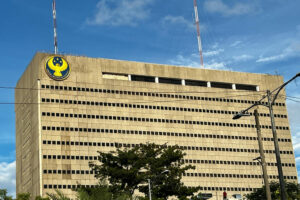
Inflation on track to fall within target — World Bank

Inflation on track to fall within target — World Bank

Philippine inflation is likely to slow this year and fall within the central bank’s target range, but higher transport charges and domestic rice production pose upside risks, the World Bank said.

In its latest monthly update, the World Bank said that the entry of more rice imports under lower tariffs should help keep inflation within the government’s 2-4% target.

“Inflation resumed its downward trend in August and is on track to fall within target this year,” the Washington-based lender said.

The consumer price index (CPI) eased to 3.3% in August from 4.4% in July. Inflation averaged 3.6% in the first seven months.

The Bangko Sentral ng Pilipinas (BSP) projects inflation to average 3.4% this year.

“The balance of risks to the outlook has shifted toward the downside given expected reductions in rice prices as more imports arrive under the reduced tariff regime,” the World Bank said.

An executive order cutting tariffs on rice to 15% from 35% took effect in July. This helped rice inflation ease to 14.7% in August from 20.9% in July.

However, the World Bank said higher transport and electricity charges, as well as possible global oil and food price shocks still provide upside risks to the inflation outlook.

“Domestic rice production and prices also remain vulnerable with the La Niña weather phenomenon expected to bring more rainfall and intense typhoons in the remaining months of the year,” the World Bank said.

Meanwhile, the World Bank said recent external and domestic developments have given the BSP more space for policy easing.

“Peso appreciation, driven by a wider US interest rate differential, supports domestic disinflation. This gives more room for further normalization of domestic monetary policy,” it said.

The BSP began its easing cycle in August by cutting the target reverse repurchase (RRP) rate by 25 bps to 6.25% from the over 17-year high of 6.5%.

BSP Governor Eli M. Remolona, Jr. earlier said the Monetary Board could implement two more rate cuts at its last two meetings on Oct. 16 and Dec. 19.

The latest policy adjustments will also support faster bank lending, the World Bank said.

“Along with lower inflation, the reductions in the real interest rate, and lower reserve requirements could spur demand for credit in the near term by improving business and consumer sentiment,” World Bank said.

“The BSP estimates the full impact of these policy adjustments will be felt with a lag of 12-15 months.”

This month, the BSP will reduce the RRR for big banks and nonbank financial institutions with quasi-banking functions by 250 bps to 7% from 9.5%.

It will also reduce the ratio for digital banks by 200 bps to 4%, thrift banks by 100 bps to 1%, and rural banks and cooperative banks by 100 bps to 0%.

The World Bank noted the beginning of the US Federal Reserve’s easing cycle also helped increase inflows into the Philippines’ financial markets.

“Aggressive rate cuts by the US Federal Reserve have made assets in emerging economies more attractive to international investors and enhanced capital inflows,” the World Bank said.

The US Federal Reserve cut rates by 50 basis points last month, bringing its key policy rate within 4.75-5%.

Meanwhile, the World Bank said manufacturing sector’s performance will likely remain “modest” amid weak external demand for Philippine exports. — BMDC


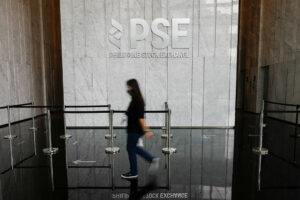
PSE index ends lower on last-minute profit taking

PSE index ends lower on last-minute profit taking

The main index slipped on Thursday as investors booked profits amid the escalating conflict in the Middle East and ahead of the release of September Philippine inflation data.

The benchmark Philippine Stock Exchange index (PSEi) dropped by 0.18% or 13.89 points to 7,388.92 on Thursday, while the broader all shares index rose by 0.29% or 11.80 points to 3,982.66.

“The local market closed lower this Thursday. The bourse was in positive territory for the most part of the day but was dragged by last-minute profit taking,” Philstocks Financial, Inc. Senior Research Analyst Japhet Louis O. Tantiangco said in a Viber message.

The PSEi opened at 7,406.79 and reached a high of 7,470.39 before succumbing to profit-taking.

“Philippine shares ended slightly lower on rising Middle East tensions, following Iran’s missile attack on Israel. Investors are bracing for more uncertainty as Israel starts a ground operation in Lebanon and tensions escalate with Hezbollah,” Regina Capital Development Corp. Head of Sales Luis A. Limlingan said in a Viber message.

Israel bombed Beirut early on Thursday, killing at least six people, after its forces suffered their deadliest day on the Lebanese front in a year of clashes with Iran-backed Hezbollah, Reuters reported.

Israel said it had conducted a precise air strike on the Lebanese capital. Reuters witnesses reported hearing a massive blast, and a security source said it targeted a building in the district of Bachoura near parliament, the closest an Israeli strike has come to the central downtown district of Beirut.

“Locally, easing inflation expectations and strong manufacturing growth kept the market from drifting lower,” Mr. Limlingan added.

A BusinessWorld poll of 15 analysts yielded a median estimate of 2.5% for the September headline inflation.

If realized, this would be the slowest print in nearly four years or since 2.3% in October 2020. This would also be slower than 3.3% in August and 6.1% in the same month a year ago.

September consumer price index data will be released on Friday (Oct. 4).

Sectoral indices closed mixed on Thursday. Services dropped by 0.34% or 7.82 points to 2,274.57; holding firms went down by 0.24% or 15.03 points to 6,256.11; and property slipped by 0.02% or 0.62 points to 2,995.66.

On the other hand, mining and oil surged by 2.57% or 229.50 points to 9,146.91; industrials climbed by 0.38% or 37 points to 9,744.87; and financials rose by 0.23% or 5.57 points to 2,358.49.

Value turnover went up to PHP 7.38 billion on Thursday with 1.01 billion shares traded from the PHP 4.33 billion with 1.16 billion issues changing hands on Wednesday.

Advancers outnumbered decliners, 124 versus 83, while 49 names were unchanged.

Net foreign buying went down to PHP 287.5 million on Thursday from PHP 540.05 million on Wednesday. — R.M.D. Ochave with Reuters

IMF trims Philippine growth forecasts

IMF trims Philippine growth forecasts

The International Monetary Fund (IMF) trimmed its economic growth forecasts for the Philippines as elevated inflation is likely to continue weighing on domestic demand.

The multilateral institution cut the country’s gross domestic product (GDP) outlook for this year to 5.8% from 6% previously. It also now sees GDP expanding by 6.1% in 2025, a tad lower than the previous forecast of 6.2%.

The IMF’s growth estimates fall short of the government’s 6-7% and 6.5-7.5% GDP forecasts for this year and 2025, respectively.

“The downward revision from our July forecast mainly reflects our view that private consumption is going to grow slightly with less momentum,” IMF Mission Chief Elif Arbatli Saxegaard said at a press briefing on Wednesday.

“I would like to highlight that the downgrade is very small and reflects the fact that the first-half private consumption growth was lower than what we had anticipated, and this might be in part driven by the high food prices.”

The Philippine economy grew by 6.3% in the second quarter, the fastest growth in five quarters. However, household spending continued to be “anemic” as it rose by just 4.6% in the second quarter from 5.5% a year ago.

“With the ongoing efforts, including non-monetary efforts to reduce food prices and especially rice prices, we do think that this will be supportive of consumption growth going forward,” Ms. Saxegaard said.

She said that risks to the growth outlook are tilted to the downside, with risks stemming from an anticipated slowdown in major economies, commodity price volatility, supply shocks, and geopolitical tensions.

“On the upside, an easing of global financial conditions or faster-than-anticipated private investment, for example, linked to the public-private partnerships or larger foreign direct investment (FDI) inflows could stimulate higher growth,” she said.

Ms. Saxegaard also noted its growth projections for the Philippines remain one of the highest in the region.

“It’s 6.1% growth for 2025 is a very respectable growth rate… so it’s a very small adjustment reflecting the outturn in the first half.”

She also noted that the Philippine economy “holds significant potential” in its natural resources, blue economy and demographic dividend.

“In our view, what will be very critical for the medium term is the potential to unlock this medium-term growth potential through comprehensive and well-sequenced structural reforms.”

Meanwhile, the IMF sees headline inflation averaging 3.3% in 2024 and 3% in 2025.

These are slightly lower than the Bangko Sentral ng Pilipinas’ (BSP) full-year forecasts of 3.4% and 3.1% for this year and in 2025, respectively.

“That would be supported by lower food and core inflation remaining well within the target,” Ms. Saxegaard said.

Ms. Saxegaard said that risks to the inflation outlook remain tilted to the upside due to recurring commodity price shocks and any potential supply shocks.

“We believe that the decisive monetary tightening and other measures have helped mitigate inflationary pressures in the Philippines, recent tariff cuts on imported rice and other non-monetary measures helped reduce food prices and should further reduce headline inflation by the year-end,” she said.

‘GRADUAL REDUCTION’

The IMF said that the Philippine central bank can begin gradually reducing interest rates.

“With inflation already coming down to within the target band, also with inflation expectations coming down, and the opening of a small negative output gap, we do think that a gradual continued reduction in the policy rate is appropriate. That’s our current advice,” she said.

At its Aug. 15 meeting, the BSP began cutting interest rates for the first time in nearly four years. It reduced the benchmark interest rate by 25 basis points to 6.25% from the over 17-year high of 6.5%.

“The data-dependent approach and careful communication around policy settings will help manage expectations and uncertainty and more frequent supply-side shocks,” Ms. Saxegaard said.

IMF Representative to the Philippines Ragnar Gudmundsson said that the BSP should also take into account that there are still both upside and downside risks to inflation.

“This is why the data-dependent approach is very important. So, yes, there is loosening, but caution is still necessary in the coming months because of an uncertain environment,” he added. – Luisa Maria Jacinta C. Jocson, Reporter

Marcos signs law imposing 12% VAT on Netflix, Amazon

Marcos signs law imposing 12% VAT on Netflix, Amazon

Philippine President Ferdinand R. Marcos, Jr. on Wednesday signed into law a bill taxing nonresident digital service providers (DSP) including Netflix and Amazon, from which it expects to collect PHP 100 billion in the next five years.

Republic Act No. 12023, which amended the National Revenue Code of 1997, imposes a 12% value-added tax (VAT) on foreign digital service providers. A 5% VAT will also be slapped on registered foreign players providing services to the government.

The law covers online search engines, online marketplaces, cloud services, online media and advertising, online platforms, and any digital content providers.

However, digital services sold on a subscription basis to educational institutions recognized by the Department of Education, the Commission on Higher Education, and state universities and colleges will be exempted from the VAT policy.

“For the next five years, we estimate to collect P105 billion from this measure,” Mr. Marcos said in a speech during the ceremonial signing event in Malacañang. “This is enough to build 42,000 classrooms, more than 6,000 rural health units, 7,000 kilometers of farm-to-market roads.”

“With this law, we say that if your presence in the Philippine market is as real as your profits, then your tax responsibilities should also be equally tangible.”

The law requires nonresident DSPs to register for VAT payments if their gross sales or receipts for the past year have exceeded P3 million.

Under the law, 5% of VAT collections will be used for the development of the local creatives industry for five years.

Concerned agencies should come up with the law’s implementing rules and regulations (IRR) within 90 days of the law’s effectivity.

The Bureau of Internal Revenue should also establish an implementation system 120 days from the effectivity of the IRR.

Under the law, foreign DSPs should designate a representative office or agent in the Philippines.

At a briefing for Malacañang reporters, Bureau of Internal Revenue Commissioner Romeo Lumagui, Jr. said the government expects to generate more than PHP 100 billion in revenues from VAT collections under the new law, citing revenue data of Google, Netflix, Spotify, and Amazon from website Statista.

“The thing is, since Statista is also limited, the DSPs there are not complete, so the revenues could be bigger,” Department of Finance Director Euvimil Nina Asuncion said at the same briefing.

Senate President Francis Joseph G. Escudero said there are currently no pending revenue-generating bills except the measure imposing an excise tax on single-use plastics.

The government aims to generate PHP 4.27 trillion in revenues, including PHP 3.83 trillion from tax collections, this year.

“The 12% tax though results in significant tax revenues may not still be enough to cover the rising needs of the government given a 10.1% increase in the proposed budget next year,” Leonardo A. Lanzona, who teaches economics at the Ateneo de Manila University, said in an e-mail.

He said the BIR’s PHP 100-billion revenue projection from the digital services VAT may not be met as consumers may adjust or lessen their spending on digital services.

Before the law’s passage, Finance Secretary Ralph G. Recto had said the government had no plans to introduce new taxes apart from the reform measures that were pending in Congress at that time.

BIR’s Mr. Lumagui said the new law should not automatically translate to price increases since the Philippines is actually a laggard when it comes to imposing VAT on digital services.

In Southeast Asia, Singapore, Malaysia and Indonesia have started imposing a VAT on nonresident DSPs since 2020. Thailand followed suit in 2021.

“Note that they already have this in other countries. They have been complying — actually, we are late in the game, in collecting from our nonresident digital service providers,” Ms. Asuncion said, noting that the law would have no significant impact on the digital economy.

The digital economy’s share to the Philippines’ gross domestic product (GDP) went down to 8.4% last year from 8.6% in 2022, according to the Philippine Statistics Authority (PSA). This was the digital economy’s lowest share to GDP since 2018.

In terms of gross value added, the digital sector grew by 7.7% to PHP 2.05 trillion in 2023.

Mr. Lanzona said the new law would have an impact on gig workers, potentially worsening the country’s employment and unemployment figures.

It could also lead to piracy of more digital content, he added.

The new VAT law is “just the latest regressive step in the country’s tax system, which is increasingly skewed towards indirect consumption taxes and away from more progressive direct taxes on income and wealth,” said IBON Foundation Executive Director Jose Enrique “Sonny” A. Africa.

“The impact of consumption taxes like VAT on consumers is cumulative and should not be dismissed so lightly,” he said in a Messenger chat.

He explained the share of consumption taxes like VAT and excise taxes in total BIR tax revenues has increased from 26% in 2008 to 31% in 2023, “corresponding to higher prices paid by consumers.”

“Corporate taxes, however, fell from 37% to 22% over that same period, corresponding to increased corporate profits,” Mr. Africa said.

“The added burden on poor and middle-class consumers whose incomes are stagnant and whose savings are falling amid rising prices is grossly insensitive,” he said.

Consumer group SUKI Network said that even though the 12% VAT will be imposed on digital service providers, companies usually pass the charges on to consumers. – Kyle Aristophere T. Atienza, Reporter

BSP may cut by 100 bps more this year

BSP may cut by 100 bps more this year

The Bangko Sentral ng Pilipinas (BSP) may cut by a total of 100 basis points (bps) in the last three months of 2024, Fitch Solutions’ unit BMI said, amid a downtrend in inflation and the start of the US Federal Reserve’s own easing cycle.

“We expect the BSP to ease more aggressively over the coming months,” BMI said in a report.

“Crucially, we now forecast the Fed to cut by a total of 125 bps in 2024. On this projection, we think that the BSP will have more policy room to maneuver with a 100-bp cut of its own.”

If the BSP cuts by a cumulative 100 bps this year, this would bring the key rate to 5.5% by yearend.

BSP Governor Eli M. Remolona, Jr. earlier this week said that the central bank has room to deliver a 50-bp rate cut in one meeting, but this would only be in a “hard-landing” scenario.

The Monetary Board in August reduced the benchmark rate by 25 bps to 6.25% from 6.5%.

BMI previously projected two 25-bp rate cuts for the year but revised this outlook after the US Federal Reserve delivered a jumbo 50-bp cut in September.

“Such a move essentially provides the BSP with leeway to ease more aggressively,” it said.

BMI now expects the Monetary Board to deliver a 50-bp cut on Oct. 16 and another 25-bp cut on Dec. 19.

“We have highlighted that the economy is in need of support following second-quarter gross domestic product (GDP) data,” BMI said.

The Philippine economy grew by 6.3% in the second quarter, driven by the 11.5% expansion in gross capital formation. On the other hand, private consumption rose by 4.6% from 5.5% a year ago.

“The boost received from a surge in investment activity will prove difficult to sustain against the backdrop of high interest rates. In the face of an economic slowdown, policymakers will likely seek to unwind restrictive policy settings to bolster growth at the earliest possible time,” it added.

The government is targeting 6-7% growth this year. To meet the lower end of the target, the economy should expand by 6% in the second half.

“The BSP’s decision to lower interest rates ahead of the Fed is a sign that policymakers are starting to grow increasingly concerned about the economy’s health,” BMI said.

Easing inflation will help support further easing by the central bank, it said.

“For starters, inflation has become less of a concern. At 3.3% in August, the headline figure is now comfortably within the central bank’s target range of 2-4%.”

September inflation likely slowed to 2.5%, according to the median estimate in a BusinessWorld poll of 15 analysts conducted last week. If realized, this would also be the slowest inflation print in nearly four years or since the 2.3% clip in October 2020.

The recent tariff cut on rice imports is likely to lower inflation by 1.2 percentage points (ppts), which may bring inflation to 2.8% by end-2024,” BMI said. 

“What is more reassuring is that we think the Fed is set for another 50-bp cut in December, providing the BSP with more policy room to maneuver without external stability constraints. If we are right, nominal interest rate differentials between the two countries will be maintained at current levels of around 125 bps,” BMI said.

For next year, BMI said that the BSP will be able to continue on its easing cycle, likely cutting rates by a total of 100 bps.

“We expect the terminal rate to settle around 4.5%. This would represent 200 bps worth of cuts from the peak to the trough, bringing interest rates back to pre-pandemic levels,” it said.

It noted that this outlook is driven by anticipations of the Fed’s easing cycle to be in “full swing” by next year and expectations of inflation settling within the BSP’s 2-4% target range, barring any external shocks.

“Moreover, our 6.2% growth projection for 2025 is still below trend. And policymakers will look to lower rates further to bolster growth in the absence of additional constraints.”

The government is targeting 6.5-7.5% growth next year.

On the other hand, BMI flagged risks to its monetary policy outlook.

“While we are confident that the BSP will continue to loosen policy, we are less sure of its magnitude. The October meeting could very well conclude with just a 25-bp cut if policymakers adopt a more cautious approach towards easing following cuts in the reserve requirement ratio.”

The recent cuts in banks’ reserve requirement ratios (RRR) would give the central bank “less flexibility” to ease policy rates, BMI said.

The BSP last month announced it would reduce the RRR of banks and nonbanks, effective on Oct. 25. It will slash the ratio for big banks and nonbank financial institutions with quasi-banking functions by 250 bps to 7% from 9.5%.

“On top of that, our BSP forecast hinges on the Fed’s interest rate trajectory. If the Fed chooses to cut by 25 bps in December instead of 50 bps, the BSP could stand pat in December,” BMI added. — Luisa Maria Jacinta C. Jocson

Shares climb on expectations of slower inflation

Shares climb on expectations of slower inflation

Philippine stocks climbed on Wednesday after the Bangko Sentral ng Pilipinas (BSP) said that headline inflation may have eased further last month.

The Philippine Stock Exchange index (PSEi) rose by 0.3% or 22.49 points to close at 7,402.81 on Wednesday, while the broader all shares index gained 0.18% or 7.5 points to end at 3,970.86.

“The local market extended its climb this Wednesday. Investors bought into the market on the back of expectations that inflation last September further slowed down,” Philstocks Financial, Inc. Senior Research Analyst Japhet Louis O. Tantiangco said in a Viber message.

“The PSEi continued to rise after a huge slide to end the third quarter, supported by potential Federal Reserve rate cuts and optimism over further slowing inflation in September,” Regina Capital Development Corp. Head of Sales Luis A. Limlingan said in a Viber message.

The BSP’s month-ahead forecast showed that inflation likely settled within the 2-2.8% range in September. This would be slower than 3.3% in August and 6.1% in the same month a year ago.

A BusinessWorld poll of 15 analysts yielded a median estimate of 2.5% for the September consumer price index. This would be the slowest print in nearly four years or since 2.3% in October 2020.

The Philippine Statistics Authority will release September inflation data on Friday (Oct. 4).

“Philippine shares still managed to eke out gains despite rising Middle East tensions weighing on investor sentiment…,” Mr. Limlingan added.

The Israeli military said on Wednesday that regular infantry and armored units were joining ground operations in southern Lebanon, stepping up pressure on Hezbollah, as Israel prepared to retaliate against a barrage of Iranian missile strikes, Reuters reported.

Already battling Hamas in Gaza, Israel is beefing up its presence in south Lebanon in its conflict with Hezbollah a day after it was attacked by Iran, raising fears the oil-producing Middle East could be engulfed in a wider conflict.

Iran said on Wednesday its missile attack on Israel, its biggest military assault on the country, was over, barring further provocation, while Israel and the United States promised to hit back.

Back home, majority of sectoral indices ended higher. Mining and oil rose by 2.17% or 189.65 points to 8,917.41; services climbed by 1.35% or 30.42 points to 2,282.39; financials went up by 0.95% or 22.22 points to 2,352.92; and holding firms increased by 0.21% or 13.26 points to 6,271.14.

On the other hand, industrials fell by 0.7% or 68.41 points to 9,707.87, and property dropped by 0.11% or 3.52 points to 2,996.28.

Value turnover declined to PHP 4.33 billion on Wednesday with 1.16 billion issues changing hands from the PHP 6.04 billion with 1.13 billion shares traded on Tuesday.

Decliners beat advancers, 114 to 91, while 56 names were unchanged.

Net foreign buying increased to PHP 540.05 million on Wednesday from PHP 463.82 million on Tuesday. — Revin Mikhael D. Ochave with Reuters

Inflation likely below 3% in Sept. — BSP

Inflation likely below 3% in Sept. — BSP

Inflation likely eased below 3% in September, the Bangko Sentral ng Pilipinas (BSP) said, as food and fuel costs declined.

The central bank’s month-ahead forecast showed that inflation likely settled within the 2-2.8% range.

This would be slower than 3.3% in August and 6.1% a year ago.

A BusinessWorld poll of 15 analysts conducted last week yielded a median estimate of 2.5% for the September consumer price index (CPI). This would also be the slowest print in nearly four years or since 2.3% in October 2020.

“Negative base effects along with lower prices of food commodities including rice, meat and vegetables, as well as lower domestic oil prices, and the appreciation of the peso are the primary sources of downward price pressures for the month,” the BSP said in a statement.

The Philippine Statistics Authority (PSA) will release September inflation data on Friday (Oct. 4).

“Recent available data from the Department of Agriculture and PSA indicate a decline in rice prices from last month, especially with the continuous implementation of the reduction in tariffs on imported rice and the decline in global rice prices,” Metropolitan Bank & Trust Co. (Metrobank) said in a report.

An executive order, which slashed tariffs on rice imports to 15% from 35% until 2028, took effect in July.

In August, rice inflation eased to 14.7% from 20.9% in July. Rice typically accounts for nearly half of overall inflation.

Metrobank expects rice inflation hitting single-digit levels, possibly at around 6%, amid high base effects.

De La Salle University economist Mitzie Irene P. Conchada said the decline in fuel prices would also bring down the prices of other key commodities.

“Inflation for September is expected to slow down due to lower fuel prices. Because of this, food and other basic commodity prices have stayed the same or lower,” she said in an e-mail.

In September, pump price adjustments stood at a net decrease of PHP 0.95 a liter for gasoline, PHP 2.10 for diesel and PHP 2.35 for kerosene.

The peso appreciated by 8.1 centavos to PHP 56.03 a dollar at end-September from its PHP 56.111 finish at end-August.

The central bank said lower food and fuel prices likely offset the higher prices of fish, fruits and electricity.

“Fish prices this month went up due to supply disruptions brought on by inclement weather,” Metrobank said.

“Inclement weather brought about by the southwest monsoon disrupted the supply of agricultural commodities, driving select vegetable prices up. With lowland vegetables like ampalaya, eggplants and carrots the most affected, prices of some highland vegetables also increased,” it added.

For September, Manila Electric Co. (Meralco) raised the overall rate by PHP 0.1543 per kilowatt-hour (kWh) to PHP 11.7882 per kWh from PHP 11.6339 per kWh in the previous month.

Meanwhile, the BSP said the Monetary Board “will continue to take a measured approach in ensuring price stability conducive to balanced and sustainable growth of the economy and employment.”

The improving inflation path would give the BSP room to continue its policy reductions, Metrobank said.

“This also provides more space for the central bank to deliver two more 25-basis-point (bp) cuts each at the remaining Monetary Board meetings this year to help economic growth as inflation slows,” it said.

The Monetary Board’s next meeting was rescheduled to Oct. 16 from Oct. 17. Its final meeting for the year is set for Dec. 19.

BSP Governor Eli M. Remolona, Jr. on Monday said there is scope to cut interest rates by 50 bps in one meeting, but this would only be done in a “hard-landing” scenario.

If there is no risk of a hard landing, he noted the likelihood of delivering 25-bp rate cuts during each of the two remaining meetings.

In August, the central bank reduced borrowing costs for the first time in nearly four years, cutting its policy rate by 25 bps to 6.25% from the over 17-year high of 6.5%. – Luisa Maria Jacinta C. Jocson, Reporter

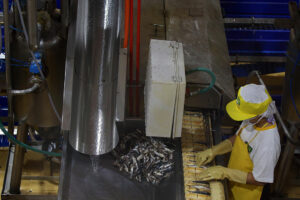
Factory activity at 2-year high in Sept.

Factory activity at 2-year high in Sept.

Philippine manufacturing activity continued to expand in September, hitting its highest in two years and outperforming its peers in Southeast Asia, S&P Global said in a report.

The Philippine Manufacturing Purchasing Managers’ Index (PMI) rose to 53.7 in September, from 51.2 in August. It was the fastest reading since the 53.8 clip in June 2022.

“The Filipino manufacturing sector showed a significant improvement at the end of the third quarter, as indicated by the latest PMI data,” Maryam Baluch, economist at S&P Global Market Intelligence, said in a report.

Manufacturing Purchasing Managers’ Index (PMI) of select ASEAN economies, September 2024An above 50 PMI reading shows better operating conditions than in the last month.

The Philippines’ PMI — a composite single-figure indicator of manufacturing performance — has posted an above 50 reading every month since September 2023.

The Philippines’ PMI reading was the highest among five Association of Southeast Asian Nations (ASEAN) countries in September. It was ahead of Thailand, which posted a 50.4 reading.

On the other hand, Malaysia (49.5), Indonesia (49.2), Vietnam (47.3) and Myanmar (45.5) showed contractions.

Philippine PMI was also above the region’s average of 50.5, S&P Global said.

The headline PMI measures manufacturing conditions based on the weighted average of five indices — new orders (30%), output (25%), employment (20%), suppliers’ delivery times (15%) and stocks of purchases (10%).

S&P Global said the strong expansion in new orders fueled a rise in production volume, which also boosted hiring and purchasing activity.

“The respective seasonally adjusted indexes signaled a quicker pace of growth on the month, ticking up to a 20- and 10-month high, respectively. Anecdotal evidence pointed to improving underlying demand trends, new client wins and the successful launch of new products,” it said.

Despite the increase in new orders, Ms. Baluch noted that demand for Filipino goods have dropped “notably” in international markets.

New export orders for Filipino goods have dropped for a second straight month in September, “with the latest downturn the most severe in over four years,” S&P Global said.

“While weak international demand and supply-chain issues will act as headwinds, robust domestic demand is expected to drive growth,” Ms. Baluch noted.

S&P Global said manufacturers increased their hiring and purchasing activities in September to cope with the overall rise in new orders.

“The rate of employment growth, though modest, was the strongest since March. Nonetheless, growing levels of new work fed through to a rise in backlogs of work in September, thereby marking a first month of accumulation since May 2023,” S&P Global said.

In September, buying activity hit a 20-month high, as some firms expect more sales in the next few months and “to protect themselves from predicted supply-chain disruptions.”

However, S&P Global noted the drop in vendor performance was also the biggest since December 2022.

“Inflationary pressures also intensified in September, with firms attributing this to higher supplier prices and weather events,” it said, adding that the rate of input price inflation rose to a seven-month high.

“Price pressures also rose due to supplier charge increases and recent weather events affecting raw material costs. However, inflationary pressures remain historically subdued, which supports the central bank’s recent decision to ease monetary policy,” Ms. Baluch said.

Looking ahead, firms remained confident of the manufacturing sector’s performance in the coming months, with their confidence level the highest since May.

Manufacturers also expect demand trends will still improve, which will support production growth.

“Operational efficiencies and a better interest rate environment might have contributed to improved manufacturing performance,” Terry L. Ridon, a public investment analyst and convenor of think tank InfraWatch PH, said in a Viber message.

In August, the Monetary Board cut interest rates for the first time in nearly four years. It reduced the benchmark rate by 25 basis points to 6.25% from the over 17-year high of 6.5%.

Leonardo A. Lanzona, who teaches economics at the Ateneo de Manila University, said external headwinds had affected demand for Philippine-made goods in the international market.

“Shocks, including war, climate change, geopolitical tensions, resurgent nationalism and growing focus on national security have resulted in inflationary pressures, rising costs of capital, fiscal distress and declining fiscal space, and challenges in meeting sustainability goals,” he said in a Facebook Messenger chat. — Beatriz Marie D. Cruz

End-Aug. outstanding debt dips to PHP 15.5T

End-Aug. outstanding debt dips to PHP 15.5T

The national government’s (NG) outstanding debt slipped to PHP 15.55 trillion as of end-August due to a stronger peso and the net repayment of foreign debt, the Bureau of the Treasury (BTr) said.

Data from the BTr showed that the NG’s debt portfolio fell by 0.9% month on month from the record-high PHP 15.69 trillion as of end-July.

This marked the first decline in the government’s debt stock since end-March, when the debt dropped by 1.67% to PHP 14.93 trillion.

National Government outstanding debt

“This decline was primarily attributed to the revaluation effect of peso appreciation and the net repayment of external debt,” the Treasury bureau said in a statement.

Year on year, outstanding debt increased by 8.4% from PHP 14.35 trillion at the end of August 2023.

Of the total debt, 69.4% was from domestic sources, while 30.6% was from external sources.

Domestic debt inched up by 0.4% to PHP 10.79 trillion as of end-August from PHP 10.75 trillion in the previous month. Government securities accounted for nearly all of domestic debt.

“The increase stemmed from the net issuance of government securities amounting to PHP 45.05 billion, albeit partially offset by the PHP 6.59-billion downward revaluation effect of the peso appreciation on US-dollar-denominated domestic securities,” BTr said.

The peso strengthened by PHP 2.31 to PHP 56.18 a dollar at end-August from its PHP 58.49 finish at end-July.

On the other hand, foreign debt fell by 3.6% to PHP 4.76 trillion at end-August, from PHP 4.94 trillion a month earlier.

“The decline was brought about mainly by the peso appreciation, which trimmed PHP 194.9 billion, as well as net repayments of PHP 4.17 billion, although stronger third currencies added PHP 20.82 billion in valuation effects,” BTr said.

Foreign debt was composed of PHP 2.25 trillion in loans and PHP 2.51 trillion in debt securities.

Debt securities consisted of PHP 2.13 trillion in US dollar bonds, PHP 214.17 billion in euro bonds, PHP 58.24 billion in Japanese yen bonds, PHP 56.18 billion in Islamic certificates and PHP 54.77 billion in peso global bonds.

As of end-September, the NG’s guaranteed obligations rose by 5.6% to PHP 364.03 billion from PHP 344.79 billion at end-July.

“The increase reflects PSALM’s (Power Sector Assets and Liabilities Management) availment of new guarantees amounting to PHP 24.33 billion and escalation in the valuation of third currency-denominated component of PHP 1.38 billion, while the favorable peso movement provided a downward offset of PHP 6.47 billion,” according to the Treasury.

The drop in debt in August can be attributed to the peso, which strengthened amid expectations of the US Federal Reserve’s easing cycle at the time, Jonathan L. Ravelas, senior adviser at professional service firm Reyes Tacandong & Co., said in a Viber message.

The Fed began its easing cycle last month as it cut rates by 50 basis points, bringing its key policy rate within 4.75-5%.

“The stronger peso exchange rate versus the US dollar, the strongest for the peso in about six months, also led to the reduced peso equivalent of the NG outstanding foreign debt,” Rizal Commercial Banking Corp. Chief Economist Michael L. Ricafort said in a Viber chat.

He added that the decline in outstanding debt was also due to the repayment of maturing government securities.

In the coming months, he said the stronger peso and more maturing Treasury bonds could drive debt levels lower.

“However, there are no large NG maturing debt in November-December, in view of the holidays in towards the end of the year, though there are also reduced borrowing activities near the holiday season, so new NG borrowings could largely be a function of the budget deficit and peso exchange rate trend,” he added.

The USD 2.5-billion dollar bond issuance in August could be added to the NG’s debt stock in September, Mr. Ricafort added.

The government’s borrowing program for this year is set at PHP 2.57 trillion, with PHP 1.92 trillion to be raised from domestic sources and PHP 646.08 billion from the foreign market.

Latest data from the Budget department showed that the NG’s debt stock is projected to reach PHP 16.06 trillion by the end of 2024. — B.M.D.Cruz

August hot money inflows hit USD 534M

August hot money inflows hit USD 534M

More short-term foreign investments flowed into the Philippines in August, data from the Bangko Sentral ng Pilipinas (BSP) showed.

Transactions on foreign investments registered with the central bank through authorized banks posted a net inflow of USD 533.95 million, surging by 248% from the USD 153.46-million inflow posted a year ago.

Month on month, inflows fell by 61.4% from USD 1.38 billion in July.

These foreign portfolio investments are also called “hot money” due to the ease by which these funds enter and leave the economy.

BSP data showed gross inflows stood at USD 1.37 billion in August, down by 4.9% from USD 1.44 billion a year ago.

During the month, investment inflows came mostly from Singapore, the United States, United Kingdom, Luxembourg and Malaysia. These five economies accounted for 81.5% of foreign portfolio investment inflows.

A little over half (51.2%) of these investments went into Philippine Stock Exchange-listed securities of banks; transportation services; holding firms; property; and food, beverage and tobacco. The rest (48.8%) were invested in peso government securities.

Meanwhile, gross outflows of hot money declined by 35% to USD 836.78 million in August from USD 1.29 billion a year earlier.

“The US remains to be the top destination of outflows, receiving USD 436.33 million (or 52.1%) of total outward remittances.”

In the January-August period, BSP-registered foreign investments yielded a net inflow of USD 1.998 billion, surging by 542.9% from the USD 310.77 billion net inflows a year ago.

Gross net inflows stood at USD 11 billion, while net outflows amounted to USD 9 billion in the eight-month period.

Rizal Commercial Banking Corp. Chief Economist Michael L. Ricafort said the higher net inflow of hot money was largely due to the BSP’s recent policy rate cut.

The Monetary Board in August reduced borrowing costs by 25 basis points (bps), bringing the key rate to 6.25% from the over 17-year high of 6.5%. This was its first policy reduction in nearly four years.

“The Fed also started to cut rates by a jumbo (50 bps) on Sept. 18 to a new target range of 4.75%-5% that could be matched locally later this year,” Mr. Ricafort added.

US Federal Reserve Chairman Jerome H. Powell on Monday struck a hawkish tone on the economy, saying the central bank is not “in a hurry to cut rates quickly.”

Mr. Powell said he also sees two more rate cuts, totaling 50 bps, this year “if the economy performs as expected.”

John Paolo R. Rivera, a senior research fellow at the Philippine Institute for Development Studies (PIDS), said the continued inflows of short-term capital were due to the improving business environment.

“It might be explained by improving investor confidence brought about by lagged effects of liberalization measures, completion of some infrastructure projects, fiscal consolidation, robust macroeconomic fundamentals, economic outlook due to managed inflation and lowering of interest rates, and the trajectory of the Philippines towards upper middle-income status,” he said.

“However, this is threatened by political risks and the electoral season where a slowdown is expected due to emphasis on campaign activities,” he added.

For the coming months, more short-term investments could enter the country after the BSP slashed the reserve requirement ratio (RRR) for banks.

“The RRR cuts would increase banks’ loanable funds by about P400 billion with reduced intermediation costs and borrowing costs, thereby would help increase the demand for loans that, in turn, would boost economic growth and investment valuations,” Mr. Ricafort said.

The BSP last month said that it would reduce the RRR for universal and commercial banks and nonbank financial institutions with quasi-banking functions by 250 bps. This would bring the ratio to 7% from 9.5%, effective later this month.

It will also cut the RRR for digital banks by 200 bps to 4%, while the ratio for thrift lenders will be reduced by 100 bps to 1%. Rural and cooperative banks’ RRR will likewise go down by 100 bps to 0%.

The BSP expects foreign portfolio investments to yield a net inflow of USD 4.2 billion in 2024. — Luisa Maria Jacinta C. Jocson


Posts navigation

Older posts
Newer posts

Recent Posts

  • Navigating precarious times with cost averaging
  • Trade Update: Wider trade deficit in February
  • Metrobank US-Iran Risk Index: No swift end seen
  • Investment Ideas: March 27, 2026
  • BSP Update: First rate hike likely in June 

Recent Comments

No comments to show.

Archives

  • March 2026
  • February 2026
  • January 2026
  • December 2025
  • November 2025
  • October 2025
  • September 2025
  • August 2025
  • July 2025
  • June 2025
  • May 2025
  • April 2025
  • March 2025
  • February 2025
  • January 2025
  • December 2024
  • November 2024
  • October 2024
  • September 2024
  • August 2024
  • July 2024
  • June 2024
  • May 2024
  • April 2024
  • March 2024
  • February 2024
  • January 2024
  • December 2023
  • November 2023
  • October 2023
  • September 2023
  • August 2023
  • July 2023
  • June 2023
  • May 2023
  • April 2023
  • March 2023
  • February 2023
  • January 2023
  • December 2022
  • November 2022
  • October 2022
  • September 2022
  • August 2022
  • July 2022
  • June 2022
  • May 2022
  • March 2022
  • December 2021
  • October 2021

Categories

  • Bonds
  • BusinessWorld
  • Currencies
  • Economy
  • Equities
  • Estate Planning
  • Explainer
  • Featured Insight
  • Fine Living
  • How To
  • Investment Tips
  • Markets
  • Portfolio Picks
  • Rates & Bonds
  • Retirement
  • Reuters
  • Spotlight
  • Stocks
  • Uncategorized

You are leaving Metrobank Wealth Insights

Please be aware that the external site policies may differ from our website Terms And Conditions and Privacy Policy. The next site will be opened in a new browser window or tab.

Cancel Proceed
Get in Touch

For inquiries, please call our Metrobank Contact Center at (02) 88-700-700 (domestic toll-free 1-800-1888-5775) or send an e-mail to customercare@metrobank.com.ph

Metrobank is regulated by the Bangko Sentral ng Pilipinas
Website: https://www.bsp.gov.ph

Quick Links
The Gist Webinars Wealth Manager Explainers
Markets
Currencies Rates & Bonds Equities Economy
Wealth
Investment Tips Fine Living Retirement
Portfolio Picks
Bonds Stocks
Others
Contact Us Privacy Notice Terms of Use
© 2026 Metrobank. All rights reserved.

Access this content:

If you are an existing investor, log in first to your Metrobank Wealth Manager account. ​

If you wish to start your wealth journey with us, click the “How To Sign Up” button. ​

Login HOW TO SIGN UP