



MODEL PORTFOLIO
THE GIST
NEWS AND FEATURES
Global Philippines Fine Living
INSIGHTS
INVESTMENT STRATEGY
Economy Stocks Bonds Currencies
THE BASICS
Investment Tips Explainers Retirement
WEBINARS
2024 Mid-Year Economi Briefing, economic growth in the Philippines
2024 Mid-Year Economic Briefing: Navigating the Easing Cycle
June 21, 2024
Investing with Love
Investing with Love: A Mother’s Guide to Putting Money to Work
May 15, 2024
retirement-ss-3
Investor Series: An Introduction to Estate Planning
September 1, 2023
View All Webinars
DOWNLOADS
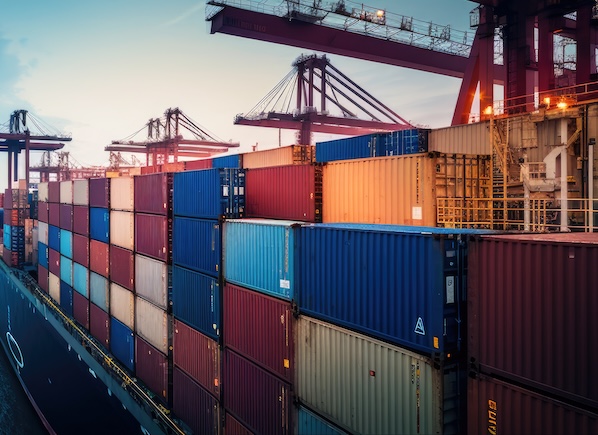
Container ship carrying container boxes import export dock with quay crane. Business commercial trade global cargo freight shipping logistic and transportation worldwide oversea concept. Generative AI
Economic Updates
Philippines Trade Update: Wider deficit on strong imports
DOWNLOAD
Frick collection with palm trees 
Economic Updates
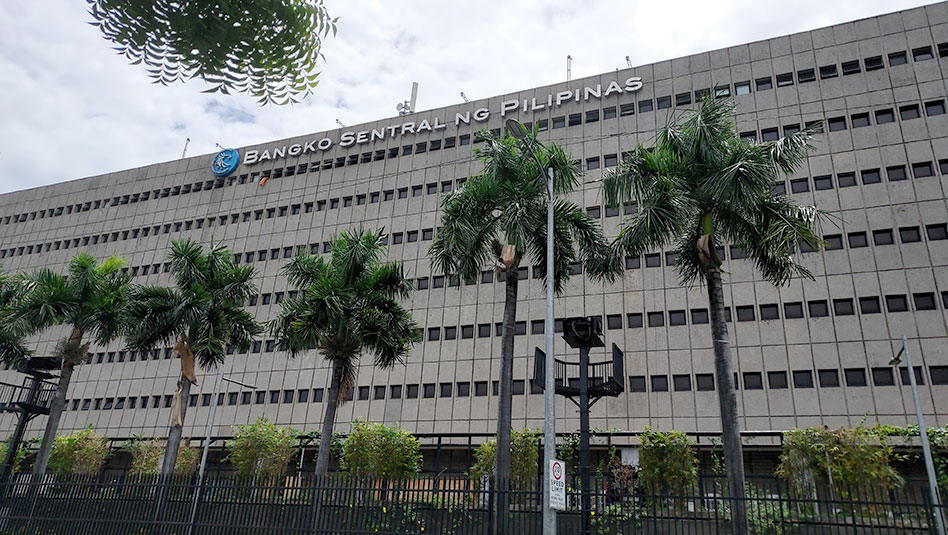
Policy Rate Updates: Policy rate updates to reassure 
DOWNLOAD
Man using his smartphone
Reports
Fed to cut just once 
DOWNLOAD
View all Reports
Metrobank.com.ph How To Sign Up
Follow us on our platforms.

How may we help you?

TOP SEARCHES
  • Where to put my investments
  • Reports about the pandemic and economy
  • Metrobank
  • Webinars
  • Economy
TRENDING ARTICLES
  • Investing for Beginners: Following your PATH
  • On government debt thresholds: How much is too much?
  • Philippines Stock Market Outlook for 2022
  • Deficit spending remains unabated

Login

Access Exclusive Content
Login to Wealth Manager
Visit us at metrobank.com.ph How To Sign Up
Access Exclusive Content Login to Wealth Manager
Search
MODEL PORTFOLIO THE GIST
NEWS AND FEATURES
Global Philippines Fine Living
INSIGHTS
INVESTMENT STRATEGY
Economy Stocks Bonds Currencies
THE BASICS
Investment Tips Explainers Retirement
WEBINARS
2024 Mid-Year Economi Briefing, economic growth in the Philippines
2024 Mid-Year Economic Briefing: Navigating the Easing Cycle
June 21, 2024
Investing with Love
Investing with Love: A Mother’s Guide to Putting Money to Work
May 15, 2024
retirement-ss-3
Investor Series: An Introduction to Estate Planning
September 1, 2023
View All Webinars
DOWNLOADS
Container ship carrying container boxes import export dock with quay crane. Business commercial trade global cargo freight shipping logistic and transportation worldwide oversea concept. Generative AI
Economic Updates
Philippines Trade Update: Wider deficit on strong imports
March 27, 2026 DOWNLOAD
Frick collection with palm trees 
Economic Updates
Policy Rate Updates: Policy rate updates to reassure 
March 26, 2026 DOWNLOAD
Man using his smartphone
Reports
Fed to cut just once 
March 19, 2026 DOWNLOAD
View all Reports

Archives: Business World Article

Dollar reserves hit record USD 112 billion

Dollar reserves hit record USD 112 billion

The Philippines’ gross international reserves (GIR) rose to a record high at end-September, the Bangko Sentral ng Pilipinas (BSP) said on Monday.   

Central bank data showed dollar reserves increased by 3.8% to USD 112 billion at the end of September from USD 107.9 billion at the end of August.

“The month-on-month increase in the GIR level reflected mainly the National Government’s (NG) net foreign currency deposits with the BSP, which include proceeds from the NG issuance of Republic of the Philippines global bonds,” the BSP said in a statement.

In August, the NG raised USD 2.5 billion from its sale of triple-tranche US dollar-denominated global bonds. This was the government’s second global bond offering this year.

Year on year, gross international reserves jumped by 14.2% from USD 98.1 billion.

BSP data showed the level of dollar reserves was enough to cover about 6.3 times the country’s short-term external debt based on original maturity and 4.4 times based on residual maturity.

It was also equivalent to 8.1 months’ worth of imports of goods and payments of services and primary income.

Ample foreign exchange buffers protect an economy from market volatility and ensure that a country can pay its debts in the event of an economic downturn.

VALUATION OF GOLD RESERVES RISE

The central bank also attributed the rise in dollar reserves to “upward valuation adjustments in the BSP’s gold holdings due to the increase in the price of gold in the international market, and net income from the BSP’s investments abroad.”

The central bank’s foreign investments went up by 2.4% to USD 94.5 billion as of September from USD 92.3 billion in the previous month. Year on year, foreign investments climbed by 13.9% from USD 83 billion.

Reserves in the form of gold were valued at USD 10.9 billion as of end-September, up by 6.9% from USD 10.2 billion as of end-August. It was also higher by 11.2% from USD 9.8 billion a year ago.

The BSP earlier defended its sale of gold holdings in the first half, saying that it took advantage of favorable prices as part of its active management strategy.

The sale of gold had “generated additional income without compromising the primary objectives for holding gold, which are insurance and safety,” it added.

Data from the central bank showed foreign currency deposits soared by 157% to USD 2.03 billion in September from USD 789.5 million a month earlier. It likewise surged from USD 834.4 million in the previous year.

Net international reserves increased to USD 112 billion at end-September from USD 107.8 billion at end-August, the BSP said.

Net international reserves are the difference between the BSP’s reserve assets or GIR and reserve liabilities, such as short-term foreign debt and credit and loans from the International Monetary Fund (IMF).

The country’s reserve position in the IMF inched up by 0.7% to USD 731.1 million as of September from USD 725.9 million in the prior month but declined by 6% from USD 778.1 million a year ago.

Special drawing rights — the amount the country can tap from the IMF — was unchanged at UDS 3.85 billion for the second straight month.

“It’s very possible the BSP proactively built up its GIR. If not for some healthy FX (foreign exchange) market intervention, the peso would have overshot (strengthened) too quickly,” Bank of the Philippine Islands (BPI) Lead Economist Emilio S. Neri, Jr. said in a Viber message.

Rizal Commercial Banking Corp. Chief Economist Michael L. Ricafort said international reserves increased due to proceeds from the NG’s dollar bond issuance, as well as continued growth in remittances, foreign tourism receipts, and foreign direct investments.

“The country’s strong external position would also support the country’s favorable credit ratings of one to three notches above the minimum investment grade,” he added.

John Paolo R. Rivera, a senior research fellow at the Philippine Institute for Development Studies, likewise said this was mainly due to the surge in remittances.

“It’s that time of the year again when remittances surge as the holiday season enters, the enrollment period comes in. Also, returns and dividends to foreign investments are being collected,” he said via Viber message.

“The sale of gold may have also contributed when the BSP did asset reclassification from gold to US dollars. In short, there have been inflows recently,” he added.

In the January-July period, cash remittances went up by 2.9% year on year to USD 19.332 billion.

Mr. Neri noted that the start of the US Federal Reserve’s  easing cycle also supported the GIR.

“The space to build import cover and debt coverage usually opens up whenever the Federal Reserve pivots to policy easing,” he said.

The US central bank reduced its benchmark policy rate by 50 basis points (bps) to the 4.75%-5% range in September, its first rate cut in four years.

“The import cover is more than double the international standard of 3-4 months that would continue to provide buffer support for the peso exchange rate,” Mr. Ricafort added.

Mr. Neri said the current USD 112-billion GIR level is just around USD 20 billion less than the country’s external debt.

Outstanding external debt hit a record USD 130.182 billion at the end of June, separate data from the BSP showed.

“With more US rate cuts expected, the BSP can accumulate further as long as it doesn’t cut the reverse repurchase rate much more aggressively than the Fed,” Mr. Neri added.

BSP chief Eli M. Remolona, Jr. has said the Monetary Board can possibly deliver 25-bps rate cuts at its remaining two meetings this year on Oct. 16 and Dec. 19.

The BSP expects the country’s GIR to hit USD 106 billion by end-2024. – Luisa Maria Jacinta C. Jocson, Reporter


PHL, Korea to study Bataan Nuclear Power Plant revival

PHL, Korea to study Bataan Nuclear Power Plant revival

The Philippines and South Korea on Monday signed six agreements, including one that calls for a feasibility study on the rehabilitation of the mothballed Bataan Nuclear Power Plant (BNPP), as they upgraded bilateral ties to a strategic partnership.

At the center of this development is the effort by the two nations to boost bilateral trade, especially after the Philippine Senate last month ratified the free trade agreement (FTA) with South Korea.

“The time has come for us to elevate the ties between the Philippines and the Republic of Korea to a strategic relationship,” President Ferdinand R. Marcos, Jr. told South Korean President Yoon Suk Yeol during a bilateral meeting at the Presidential Palace in Manila.

“As the geopolitical environment is only becoming more complex, we must work together to achieve prosperity for our peoples and to promote a rules-based order governed by international law,” he said, citing the 1982  United Nations Convention on the Law of the Sea (UNCLOS) and the 2016 arbitration ruling that invalidated China’s expansive claims in the South China Sea.

Mr. Yoon arrived on Sunday for a two-day visit to the Philippines, the first leg of his three-nation Southeast Asian trip. He and his wife Kim Keon Hee visited the Korean War Memorial Hall at the Libingan Ng Mga Bayani to pay tribute to Filipino soldiers who died during the 1950-53 Korean War. Around 7,400 Philippine troops were deployed to Korea during the war, 112 of whom were killed.

Mr. Yoon said his visit was an “opportunity to not only further enhance our trade and economic cooperation, but also widen the scope of our partnership to include future-oriented sectors such as security, digital technology, and energy.”

During their meeting, Mr. Marcos and Mr. Yoon signed several memoranda of understanding  (MoU), including one for the conduct of a feasibility study of the Bataan Nuclear Power Plant, which was completed in 1985 but was never used due to safety concerns.

The Department of Energy said the two-phase feasibility study that will commence in January is designed to generate critical information to guide the Philippine government’s decision-making process not only on the BNPP but also in “exploring other nuclear technologies and potential alternative sites for nuclear energy development.”

“This study will play a key role in assessing the feasibility, safety, and sustainability of various nuclear energy options, helping the government make well-informed choices that align with the country’s long-term energy goals,” the DoE said in a statement.

All costs associated with the feasibility study will be shouldered by the Korea Hydro & Nuclear Power Co., Ltd. (KHNP) while the Philippine government is “under no legal obligation to proceed with the rehabilitation of the BNPP or to engage KHNP based on the study’s findings,” it added.

“The study is exploratory in nature, and any subsequent actions will be subject to further evaluation and decision by the government,” it said.

The DoE said the first phase of the study will involve an assessment of the BNPP’s condition, while the second phase will involve an evaluation on whether or not the plant can be refurbished using the most optimal model.

SECURITY
Following their bilateral meeting, Mr. Yoon said the two nations agreed to “strengthen strategic partnership  on the security front,” with Seoul vowing to take an active part in the third phase of the modernization program for the Armed Forces of the Philippines.

“Also based on the maritime cooperation MoU signed today, our two countries will reinforce maritime security partnership in such areas as tackling transnational crime, information sharing and conducting search and rescue missions,” he added.

Mr. Yoon said he and his Philippine counterpart also agreed to “work together in order to deliver tangible benefits to the citizens of both countries by stepping up economic cooperation.”

Bilateral trade between the two nations hit USD 17.5 billion in 2022, USD 12.3 billion of which were exports and USD 5.2 billion were imports, according to data from South Korea’s foreign ministry.

The Philippine Senate in September ratified the FTA between the Philippines and South Korea. South Korea’s National Assembly has yet to ratify the deal.

Mr. Yoon said he and Mr. Marcos agreed to make sure the FTA enters into force “at the earliest date possible.”

Manila and Seoul also signed MoUs on an economic innovation partnership program, which seeks to advance national, regional, and urban development in the Philippines, and for strategic cooperation on critical raw material supply chains.

They also signed a loan agreement for the Samar Coastal Road II Project, as well as MoUs for the Laguna Lakeshore Road Network Project Phase I (Stage I) and the Panay-Guimaras-Negros Island Bridges Project.

The Philippines and South Korea also signed an MoU to boost maritime cooperation between their coast guards.

The Philippine Coast Guard (PCG) has been at the receiving end of China’s aggression into Manila’s exclusive economic zone in the South China Sea, which Beijing claims almost in its entirety based on a 1940s map that a 2016 arbitration award said had no basis.

Joshua Bernard B. Espeña, vice-president at the Manila-based International Development and Security Cooperation, said helping boost the PCG is strategic for Seoul since it’s known for shipbuilding and as it has a growing concern over China’s aggression at sea.

“The Republic of Korea, like others, realizes that China frames its creeping invasion of the waters as a matter of law enforcement. So, anything that can counter such a feat is needed, like in the case of boosting PCG capabilities, whose principal surface combatants are limited,” he said in a Facebook Messenger chart.

Mr. Espeña said the strategic partnership between the Philippines and South Korea is timely “given how the two states have been diversifying their relations with other regional states.”

The Philippines and South Korea are also US allies which share common concerns over China, “a revisionist power against the rules-based order,” Mr. Espeña said.

Aside from Mr. Yoon’s visit, Seoul had initiated 10 high-level engagements with Manila since 2010, most of which were in 2015, according to its foreign ministry.

“Seoul and Manila are not treaty allies, but since they are co-US allies confronted by a revisionist power, a more flexible yet proactive approach is needed,” Mr. Espeña said, noting that the six deals signed between the countries were largely addressing development issues.

The Philippines under Mr. Marcos has been active in condemning nuclear threats from North Korea, saying in July that its ballistic missile test provoked “tensions” and undermined “economic progress, peace, and stability in the Korean Peninsula and the lndo-Pacific region.”

“South Korea is becoming a more strategic economic and security partner given the geopolitical issues in the South China Sea and also in East Asia,” said Philip Arnold P. Tuaño, dean of the Ateneo School of Government.

Mr. Tuaño said via Messenger chat that it is important for the Philippines to strengthen its alliance with partners to ensure security issues are adddressed.

“South Korea has been seen to be an important supplier of maritime and aeronautical defensive capabilities and an important technological partner to strengthen our manufacturing capacities,” he said.

Mr. Marcos, speaking at a business forum organized by the Philippine Chamber of Commerce and Industry and the Federation of Korean Industries, touted that the Philippine Congress was already at the last stages of the legislative process to enact a bill that seeks to further lower corporate income tax.

“Anchored on the Corporate Recovery and Tax Incentives for Enterprises (CREATE) Act of 2021, it will further strengthen our fiscal and non-fiscal incentives in strategic industries,” he said in a speech.

The bill seeks to simplify the approval process for tax deductions, streamline the value-added tax refund system, and align tax incentives with global standards.

“We aim to make the Philippines a top destination for sustainability, and to be sustainable in our strategic investments,” he said. – Kyle Aristophere T. Atienza, Reporter

Economic managers may meet to review targets before yearend

Economic managers may meet to review targets before yearend

The Development Budget Coordination Committee (DBCC) may raise the gross domestic product (GDP) growth target for this year amid slowing inflation and improved government spending, Budget Secretary Amenah F. Pangandaman said on Monday.

This comes after inflation slowed to below 2% in September as food and transport costs declined.

“Given this new development, I actually asked the team already, maybe we can have a special DBCC (meeting) again and we’ll try to look at the numbers,” Ms. Pangandaman, who chairs the DBCC, told reporters on the sidelines of an event.

She noted the DBCC can hold a special, off-cycle meeting within the fourth quarter.

“Maybe we can do it this quarter, especially that the budget is going to be passed soon,” she said in mixed English and Filipino.

The House of Representatives on Sept. 25 approved on final reading the P6.352-trillion national budget for 2025. The Senate plans to approve its version of the General Appropriations Bill by the second week of December.

Asked if economic managers will likely raise this year’s growth target, Ms. Pangandaman said: “Maybe we can revise upward. Let’s see.”

At its last meeting in June, the DBCC retained the 6-7% GDP growth target.

The original target of 6.5-7.5% growth was lowered at the DBCC’s meeting in April, as economic managers took into account ongoing trade and geopolitical tensions and the 5.6% GDP expansion in 2023.

“So, maybe we can review our targets again and hopefully, we will catch up on all the targets that we have,” Ms. Pangandaman said.

The DBCC also targets 6.5-7.5% GDP growth for 2025, and 6.5-8% from 2026 to 2028.

The Budget chief said the September inflation print may prompt the DBCC to revisit its macroeconomic assumptions and targets.

“We’re very happy. So, I think all our reforms are taking place now,” Ms. Pangandaman said, citing the lower import tariffs on rice.

Headline inflation slowed to 1.9% year on year in September from 3.3% in August and 6.1% a year ago. The September print was the slowest in over four years (52 months) or since the 1.6% print in May 2020.

In the first nine months, headline inflation averaged 3.4%, which is also the central bank’s full-year forecast.

The DBCC expects inflation to settle at 3-4% by end-2024 and return to the 2-4% target range from 2025 to 2028.

The slowing inflation print also gives the Bangko Sentral ng Pilipinas “more room to be aggressive” in its policy easing cycle to help the economy grow at a faster rate, Finance Secretary Ralph G. Recto said last week, citing September inflation data.

BSP Governor Eli M. Remolona, Jr. earlier said the Monetary Board can deliver a 25-basis-point cut at its Oct. 16 meeting, followed by another cut at its Dec. 19 meeting.

Ms. Pangandaman also said she expects better state spending to drive economic growth.

“On the part of the DBM (Department of Budget and Management) and the National Government agencies, we are looking at their expenses and (budget) utilization,” she said in mixed English and Filipino.

“Hopefully the agencies were able to unload all their budgets, procure by this time, and are in their implementation stages. So, I hope that contributes to our growth.”

The latest data from the Budget department showed that state agencies posted a cash utilization rate of 95%, using PHP 2.96 trillion of the PHP 3.12-trillion worth of notices of cash allocation released as of end-August. — B.M.D.Cruz

PSEi ends above 7,500, posts near five-year high

PSEi ends above 7,500, posts near five-year high

Philippine shares surged to the 7,500 level on Monday to post their best close since January 2020 as inflation slowed to an over four-year low in September, giving the central bank space to bring down borrowing costs further.

The bellwether Philippine Stock Exchange index (PSEi) rose by 1.16% or 86.76 points to 7,554.68 on Monday, while the broader all shares index climbed by 1.02% or 41.32 points to 4,082.97.

Monday’s finish was the PSEi’s best close in almost five years (over 56 months) or since it ended at 7,587.63 on Jan. 27, 2020.

The main index also reached an intraday high of 7,604.61 during Monday’s session.

“Strong buying interest, including net foreign inflows of PHP 1.35 billion, propelled the market to its highest close since Jan. 27, 2020, as investors reacted to the combination of a surprisingly low Philippine headline inflation and a positive US jobs report,” Chinabank Capital Corp. Managing Director Juan Paolo E. Colet said in a Viber message.

“The local market rose further this Monday. Investors continued to cheer the significant slowdown of the Philippines’ inflation last September as it strengthens the case for further monetary policy easing by the Bangko Sentral ng Pilipinas (BSP),” Philstocks Financial, Inc. Senior Research Analyst Japhet Louis O. Tantiangco likewise said in a Viber message. “Hopes that the Fed will also deliver more rate cuts also spurred optimism.”

Philippine headline inflation slowed to 1.9% in September from 3.3% in August and 6.1% a year ago, the government reported on Friday.

This was the slowest pace seen in over four years or since the 1.6% print in May 2020. It was also below the BSP’s 2%-2.8% forecast for the month and the 2.5% median estimate yielded in a BusinessWorld poll of 15 analysts.

Analysts have said the improving inflation outlook will give the BSP more than enough room to further reduce benchmark rates.

BSP Governor Eli M. Remolona, Jr. last week said the Monetary Board can deliver a 25-basis-points cut at its Oct. 16 meeting, followed by another at its Dec. 19 meeting.

The BSP in August cut benchmark borrowing costs by 25 bps to kick off its easing cycle, bringing its policy rate to 6.25%.

Majority of sectoral indices ended higher on Monday. Property went up by 2.04% or 60.64 points to 3,025.70; services rose by 1.89% or 43.48 points to 2,337.06; industrials climbed by 1.21% or 120.79 points to 10,054.26; and holding firms increased by 1.2% or 76.34 points to 6,405.78.

Meanwhile, financials dropped by 0.46% or 11 points to 2,382.77, and mining and oil lost 0.39% or 35.57 points to end at 9,042.29.

Value turnover rose to PHP 7.87 billion on Monday with 1.36 billion shares traded from PHP 6.14 billion with 792.47 million issues exchanged on Friday.

Advancers outnumbered decliners, 129 to 79, while 49 names ended unchanged.

Net foreign buying surged to PHP 1.35 billion on Monday from PHP 607.93 million on Friday. — R.M.D. Ochave

Lending growth fastest in nearly 2 years

Lending growth fastest in nearly 2 years

Bank lending growth hit a 20-month high in August, data from the Bangko Sentral ng Pilipinas (BSP) showed.

Outstanding loans of universal and commercial banks rose by 10.7% year on year to PHP 12.25 trillion in August from PHP 11.07 trillion a year ago.

This was also the fastest growth rate since the 13.7% logged in December 2022.

On a seasonally adjusted basis, big banks’ outstanding loans inched up by 0.8% month on month. Bank lending grew by 10.4% in July.

Central bank data showed outstanding loans to residents picked up by 10.9% in August from 10.4% a month earlier. On the other hand, the growth of loans to nonresidents sharply slowed to 1.5% from 9.2% in July.

Loans for production activities climbed by 9.4% year on year to PHP 10.47 trillion in August from PHP 9.58 trillion a year ago. It was also faster than the 8.8% clip in July.

“This growth was largely driven by loans to key industries such as real estate activities (13.2%); wholesale and retail trade, repair of motor vehicles and motorcycles (10.7%); manufacturing (9.8%); transportation and storage (23.4%); electricity, gas, steam & air-conditioning supply (7%),” the BSP said.

Double-digit increases were also seen in loans for water supply, sewerage, waste management and remediation activities (44.9%); professional, scientific and technical services (22%); and mining and quarrying (21.7%).

Meanwhile, the growth in consumer loans to residents eased to 23.7% in August from 24.3% a month prior.

This as slower loan growth was recorded in credit cards (27.4% in August from 28.2% in July), motor vehicles (19.3% from 19.9%), and salary-based general purpose consumption loans (16.4% from 16.5%).

Rizal Commercial Banking Corp. Chief Economist Michael L. Ricafort said the jump in lending growth was due to the BSP’s rate cut in August, its first policy reduction in close to four years.

The central bank in August reduced the target reverse repurchase (RRP) rate by 25 basis points (bps) to 6.25% from the over 17-year high of 6.5%.

The Monetary Board has two remaining meetings this year, on Oct. 16 and Dec. 19. BSP Governor Eli M. Remolona, Jr. has signaled the possibility of cutting by 25 bps at the next two meetings.

Easing inflation and further rate cuts would also “help spur greater demand for loans or credit due to lower borrowing costs,” Mr. Ricafort added.

Headline inflation eased to 1.9% in September from 3.3% in August and 6.1% a year ago. This was also its slowest print in over four years or since the 1.6% print in May 2020.

MONEY SUPPLY

Meanwhile, separate BSP data showed that domestic liquidity (M3) rose by 5.5% in August, slower than the 7.3% posted a month ago.

M3 — which is considered as the broadest measure of liquidity in an economy — increased to PHP 17.4 trillion in August from PHP 16.5 trillion a year earlier. Month on month, M3 slipped by 0.1%.

Domestic claims jumped by 10% in August, slower than the 11.4% expansion in July.

“Claims on the private sector grew by 11.9% in August from 12% in July (revised), driven by sustained expansion in bank lending to nonfinancial private corporations and households,” the BSP said.

“Net claims on the central government increased by 8.5% from 14.1% in the previous month (revised), due to continued borrowings by the National Government,” it added.

Central bank data showed net foreign assets (NFA) in peso terms went up by 2.4% year on year in August, much slower than 11.2% in the previous month.

“The BSP’s NFA grew by 7.7%, while the NFA of banks contracted, largely due to higher bills and bonds payable.”

Mr. Ricafort said that domestic liquidity growth could pick up after the latest cut in banks’ reserve requirement ratio (RRR).

The central bank last month said it will cut big banks’ RRR to 7% from 9.5% effective on Oct. 25.

Mr. Remolona has said that they are looking to reduce the ratio to zero within his term, which ends in 2029.

“Any further RRR cuts, which add more peso liquidity in the financial system, would be gradual in the coming years,” Mr. Ricafort added.

BAD LOANS

Meanwhile, separate BSP data showed the banking industry’s gross nonperforming loan (NPL) ratio continued to rise in August, hitting a fresh two-year high.

Preliminary data from the BSP showed the banking industry’s gross NPL ratio went up to 3.59% in August from 3.58% in July and 3.41% a year ago.

This was also the highest bad loan ratio in 26 months or since 3.6% in June 2022.

Bad loans inched up by 0.9% to PHP 512.7 billion in August from PHP 508.1 billion in July. Year on year, it rose by 15.8% from PHP 442.6 billion.

Loans are considered nonperforming once they remain unpaid for at least 90 days after the due date. These are deemed as risk assets since borrowers are unlikely to pay.

In August, past due loans were up by 0.9% to PHP 631.4 billion from PHP 625.7 billion in July and by 19.6% from PHP 527.9 billion a year ago.

This brought the past due ratio to 4.42% in August, higher than 4.4% in July and 4.15% a year earlier.

Restructured loans went up by 0.7% to P293.2 billion in August from PHP 291.1 billion a month prior. Year on year, it declined by 4.2% from PHP 306 billion.

Restructured loans accounted for 2.05% of the industry’s total loan portfolio, steady from a month ago but lower than 2.36% last year.

Banks’ loan loss reserves increased by 0.7% to PHP 482.5 billion from PHP 479.2 billion a month ago. It also rose by 5.8% from P456 billion year on year.

This brought the loan loss reserve ratio to 3.37%, steady from July but lower than 3.52% in August 2023.

Lenders’ NPL coverage ratio, which gauges the allowance for potential losses due to bad loans, slipped to 94.11% in August from 94.32% in July and 103.02% a year ago. – Luisa Maria Jacinta C. Jocson, Reporter
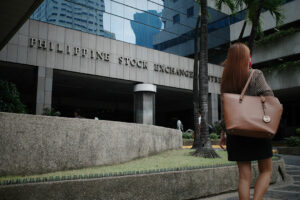
Slowing inflation gives Philippine central bank room for more cuts

Slowing inflation gives Philippine central bank room for more cuts

The latest September inflation print and improving outlook will give the Bangko Sentral ng Pilipinas (BSP) more than enough room to cut benchmark rates further, analysts said.

“With an even better inflation outlook on the horizon, the risk of the BSP cutting its policy rate again twice this year is largely increasing,” HSBC economist for ASEAN (Association of Southeast Asian Nations) Aris D. Dacanay said in a report.

The consumer price index (CPI) sharply slowed to 1.9% in September from 3.3% in August. September marked the first time in over four years that inflation was below 2%.

“In terms of monetary policy, the decline in headline inflation reinforces our view that BSP will continue to cut rates this year after kicking off its easing cycle early,” Nomura Global Markets Research analysts Euben Paracuelles and Nabila Amani said in a commentary.

The BSP in a statement on Friday said the September print affirms its outlook that inflation will continue its downward trend in the succeeding quarter.

The Bank of the Philippine Islands (BPI) in a commentary said that inflation may have reached its lowest this year and could potentially rebound in the fourth quarter amid fading base effects.

“Nevertheless, we expect inflation to remain under control, potentially staying below 3% in the absence of supply shocks. This favorable condition could extend into 2025,” BPI said.

‘BATTLE IS FINALLY OVER’

In the first nine months, headline inflation averaged 3.4%, which is also the central bank’s full-year forecast for 2024.

“Last time inflation was this low, the Philippines was in lockdown due to the COVID-19 (coronavirus disease 2019) pandemic. It almost feels too good to be true as the Philippine economy went through an inflation surge that lasted for almost two years,” Mr. Dacanay said.

“But we think the September CPI marks the day that the BSP’s inflation battle is finally over — all because of a mix of both hard work and luck.”

Mr. Dacanay attributed this to both monetary and non-monetary measures over the past year, such as the BSP’s aggressive tightening cycle from May 2022 to October 2023 and lowering of trade barriers for key commodities.

Moving forward, he said inflation would ease further after India lifted trade restrictions on non-basmati white rice.

“This comes at an opportune time for the Philippines since retail rice prices haven’t decreased yet, even with the tariff rate cut in July. A better outlook for the global supply of the grain should help grease things up for retail rice prices to finally slide,” Mr. Dacanay added.

In September, rice inflation sharply slowed to 5.7% from 14.7% in August and 17.9% last year partly due to low base effects. This also marked the lowest rice inflation since the 4.2% print in July 2023.

Meanwhile, Nomura expects inflation to settle at 3.1% this year and 2.3% in 2025.

“Our forecast pencils in CPI inflation at around 1.9% by fourth quarter 2024, slightly below the BSP’s 2-4% target,” it said.

“We still assume the impact of the rice tariff cuts will become evident from October, but this could be partly mitigated by a likely snap back of those food items that provided the biggest drag in September,” it added.

On the other hand, BPI noted risks to this inflation outlook, citing the impact of La Niña and African Swine Fever (ASF).

“Inflation in the Philippines remains sensitive to climate conditions, and another extreme weather event could trigger a spike. On the other hand, stable commodity prices amid China’s economic slowdown may offset these risks. We now expect full-year inflation to settle at 3.2% in 2024 and 2.8% in 2025,” it added.

The “favorable” outlook on inflation gives the central bank the flexibility to continue its policy easing path, BPI said.

“We anticipate two more policy rate cuts in 2024, with more cuts likely in 2025, potentially bringing the policy rate down to 4.5% to 5% by the end of 2025,” it said.

BSP Governor Eli M. Remolona, Jr. last week said the Monetary Board can deliver a 25-basis-point (bp) cut at its Oct. 16 meeting, followed by another at its Dec. 19 meeting.

The central bank chief has said that they are seeking to slash the key rate to as low as 4.5% by end-2025 in order to support the economy.

“But with inflation risks largely dissipating, largely due to rice, the room to cut policy rates in both the October and December rate-setting meetings is vastly increasing,” Mr. Dacanay said.

Nomura likewise expects the BSP to cut by 25 bps each at the last two meetings of the year.

“Beyond that, we also expect BSP to cut in the first three meetings of 2025 before pausing. This would bring the RRP rate to 5% by May 2025 (i.e., a total of 150-bp cuts in this cycle).”

However, analysts noted that the BSP is unlikely to be aggressive in its policy reductions.

“There are several uncertainties right now in the current environment, with inflation risks tied to supply constraints both locally and globally, heightened by geopolitical risks. As such, we don’t expect interest rates to return to the low levels seen in the past decade,” BPI said.

“The Fed’s rate cuts also support further easing by BSP, but we still think BSP is unlikely to be more aggressive with 50 bp clips, like the Fed was last month,” Nomura said.

Ruben Carlo O. Asuncion, chief economist at Union Bank of the Philippines, Inc., also noted the possibility of delayed easing by the BSP.

“We think that BSP will not rescind its commitment to further easing. However, it may be delayed amidst a massive escalation of Middle East tensions that may bring global prices higher, unhinging inflation expectations in the short to medium term,” he said in a Viber message.

RRR CUTS

BPI Lead Economist Emilio S. Neri, Jr. said that the central bank’s latest decision to slash banks’ reserve requirement ratio (RRR) will also support the BSP delivering 25-bp-sized cuts.

“It’s possible that BSP’s substantial RRR cut sufficiently complements a measured approach in reducing the RRP 25 bps at a time so there may be no need to do a jumbo RRP reduction either in October or December,” he said in a Viber message.

The BSP last month announced that it would reduce the RRR for universal and commercial banks and nonbank financial institutions with quasi-banking functions by 250 bps to 7% from 9.5% effective on Oct. 25.

It will also cut the RRR for digital banks by 200 bps to 4%, while the ratio for thrift lenders will be reduced by 100 bps to 1%. Rural and cooperative banks’ RRR will likewise go down by 100 bps to 0%.

Mr. Remolona earlier said that the RRR could be brought down to as low as zero before his term ends in 2029.

“In addition to potential rate cuts, the inflation outlook may also allow the BSP to reduce the RRR further,” BPI said.

BPI said that a 1% cut in the RRR will free up P150 billion in deposits. “The recent 250-bp reduction is expected to release PHP 375 billion in deposits. As a result, we expect intermediation costs to decline, which could drive down lending rates. This could also lead to improvements in the capital markets and banking system as banks will be able to allocate their resources more efficiently,” it added.

Further RRR cuts are also unlikely to stoke inflation, BPI said.

“The BSP has robust liquidity management tools in place to absorb any excess funds released into the system. These tools have been effectively utilized over the years, ensuring that liquidity levels remain within the BSP’s control,” it said. — Luisa Maria Jacinta C. Jocson

DoE, DENR grant rights to access offshore areas for energy dev’t

DoE, DENR grant rights to access offshore areas for energy dev’t

The government is seeking to fast-track the development of offshore wind projects in the Philippines, aiming to deliver power from these by 2028 by further streamlining permit processing.

The Department of Energy (DoE) and the Department of Environment and Natural Resources (DENR) signed a memorandum of agreement (MoA) on Friday last week, allowing access to offshore and auxiliary areas.

The agencies are granting rights to offshore areas covered by offshore wind energy service contracts, including auxiliary areas, to accelerate the exploration, utilization, and development of the projects, the DoE said in a statement over the weekend.

Under the agreement, developers with contracts will have access to the areas during the exploration, development, and commercial development phases of the projects, subject to necessary DENR requirements.

The DoE will provide the DENR with a list of identified offshore wind projects within 30 days after the execution of the agreement.

It noted that the list will be regularly updated, in collaboration with the DENR, to reflect new offshore wind service contracts and development activities.

The DENR has the right to impose additional conditions or deny access altogether if an area falls within an environmentally critical zone or is subject to prior vested rights, the DoE said.

“This landmark agreement streamlines the process of exploring, utilizing, and developing offshore wind projects, while ensuring that environmental safeguards are in place at every stage,” the agency said.

Under the current system, renewable energy projects are required to secure various compliances with the DENR, such as foreshore lease agreements, forest land use agreements, and miscellaneous lease agreements, before proceeding with exploration and development.

However, with the agreement, offshore wind energy service contracts now provide sufficient authority to advance these projects without needing separate agreements.

“This MoA is a crucial step in realizing the goal of the administration of President Ferdinand Marcos Jr. to deliver the first kilowatt-hours from offshore wind projects by 2028,” Energy Secretary Raphael P.M. Lotilla said.

“By streamlining the process for accessing critical areas, we are paving the way for a rapid and responsible rollout of offshore wind projects, which will contribute significantly to our clean energy transition,” he added.

While the Philippines is seizing opportunities that renewable energy can provide, DENR Secretary Maria Antonia Yulo-Loyzaga said the country “must also remain vigilant in addressing any unintended consequences on our ecosystems.”

“The exploration, development, and utilization of offshore wind resources have to be approached with care to protect our marine, terrestrial, and socio-economic environments as well,” she said in her speech.

The DoE has already awarded 92 offshore wind energy service contracts to 38 renewable energy developers with a total potential capacity of 66.101 gigawatts.

Last month, the DoE said that the Philippine Ports Authority (PPA) had initiated immediate steps to repurpose three priority ports to fulfill the operational requirements of offshore wind projects.

The DoE identified the Port of Currimao in Ilocos Norte, Port of Batangas in Sta. Clara, Batangas City, and Port of Jose Panganiban in Camarines Norte, given their proximity to high-potential offshore wind energy service contracts.

Energy Undersecretary Sharon S. Garin said the government will be able to determine the investment needed for the repurposing of ports after the completion of the asset evaluation.

“It won’t be a one-year project, probably a two-year project or multi-year,” she said. – Sheldeen Joy Talavera, Reporter

T-bill rates may decline further as inflation slows

T-bill rates may decline further as inflation slows

Rates of the Treasury bills (T-bills) on offer this week could ease further after Philippine headline inflation slowed to an over four-year low in September, which gives the central bank room to continue its policy easing cycle.

The Bureau of the Treasury (BTr) will auction off PHP 20 billion in T-bills on Monday, or PHP 6.5 billion in 91- and 182-day papers, and PHP 7 billion in 364-day debt.

T-bill rates may drop further to track the movement of secondary market yields on Friday following the slower-than-expected September inflation print, Rizal Commercial Banking Corp. Chief Economist Michael L. Ricafort said in a Viber message.

Mr. Ricafort said the slower September CPI “could fundamentally justify further or even more aggressive local policy rate cuts.”

“Some knee-jerk reaction was seen. However, heavy profit taking still dominated the market,” a trader added in an e-mail.

“We expect a defensive sentiment in the meantime on lack of local catalysts and as market is wary of the oil price surge on the back of geopolitical tensions in the Middle East,” the trader said.

At the secondary market on Friday, the 91-, 182-, and 364-day T-bills saw their yields decline by 14.25 basis points (bps), 8.96 bps, and 5.13 bps week on week to end at 5.1153%, 5.29225086%, and 5.5086%, respectively, based on PHP Bloomberg Valuation Service Reference Rates data as of Oct. 4 published on the Philippine Dealing System’s website.

Headline inflation sharply slowed to an over four-year low in September amid lower food and transport prices, the Philippine Statistics Authority reported on Friday.

The consumer price index (CPI) eased to 1.9% year on year in September from 3.3% in August and 6.1% a year ago.

This was the slowest CPI in 52 months or since the 1.6% print in May 2020.

The September print was also below the Bangko Sentral ng Pilipinas’ (BSP) 2%-2.8% forecast for the month and the 2.5% median estimate in a BusinessWorld poll of 15 analysts.

In the first nine months of the year, Philippine headline inflation averaged 3.4%, matching the BSP’s full-year forecast and within its 2-4% target range for 2024.

Analysts said the lower September CPI gives the BSP space to bring down benchmark interest rates further.

BSP Governor Eli M. Remolona, Jr. has said the Monetary Board could slash benchmark interest rates by 50 bps more this year and deliver two more 25-bp cuts at its next two meetings scheduled for Oct. 16 and Dec. 19.

The central bank began its easing cycle in August, cutting its policy rate for the first time in nearly four years by 25 bps to 6.25% from the over 17-year high of 6.5%.

Meanwhile, oil prices rose and settled with their biggest weekly gains in over a year on Friday on the mounting threat of a region-wide war in the Middle East, but gains were limited as US President Joseph R. Biden discouraged Israel from targeting Iranian oil facilities, Reuters reported.

Investors remained anxious about how Israel would respond after Iran fired missiles at it on Tuesday. Supreme Leader Ayatollah Ali Khamenei said earlier that Iran and its regional allies will not back down.

US crude settled up 0.9% at USD 74.38 a barrel and Brent settled at USD 78.05 per barrel, up 0.55% on the day.

Last week, the BTr raised PHP 20 billion as planned from the T-bills it auctioned off as total bids reached PHP 76.445 billion or almost four times as much as the amount on offer.

The Treasury borrowed the programmed PHP 6.5 billion via the 91-day T-bills as tenders for the tenor reached PHP 24.37 billion. The average rate for the three-month paper eased by 18.4 bps to 5.196% from the previous week, with accepted yields ranging from 5.15% to 5.248%.

The government also fully awarded PHP 6.5 billion in 182-day securities, with bids reaching PHP 26.245 billion. The average rate of the six-month debt was down by 47.5 bps to 5.005%. Accepted bid yields were at 5% to 5.02%

The Treasury likewise raised PHP 7 billion as planned via the 364-day debt as demand reached PHP 25.83 billion. The average rate of the one-year debt fell by 9.6 bps to 5.487% from last week, with accepted rates at 5.4% to 5.525%.

The BTr plans to borrow PHP 145 billion from the domestic market in October, or PHP 100 billion via T-bills and PHP 45 billion through Treasury bonds.

The government borrows from local and foreign sources to help fund its budget deficit, which is capped at PHP 1.48 trillion or 5.6% of economic output this year. — A.M.C. Sy with Reuters

PHL has room for new taxes — IMF

PHL has room for new taxes — IMF

With the Philippines’ fiscal consolidation slowing this year, the International Monetary Fund (IMF) said the country still has room to introduce new tax measures.

“On the fiscal policy side, we see fiscal consolidation proceeding in 2024, although it will be more moderate than envisioned in earlier projections,” IMF Mission Chief Elif Arbatli Saxegaard said at a press briefing on Wednesday.

“In terms of spending, we actually see more spending on the public side. We see that being offset or financed by higher revenues,” she added.

The IMF projects the fiscal deficit to settle at 5.6% of gross domestic product (GDP) this year and in 2025. However, it noted that its deficit definition is different from the National Government’s (NG) as it uses a different standard in capturing the deficit.

“Based on our definition of the deficit, we expect the deficit to go from 6.1% in 2023 to 5.6% this year and to remain at 5.6% in 2025,” she said.

The NG set its budget deficit ceiling at 5.6% of GDP this year, equivalent to PHP 1.48 trillion. Next year, the deficit is projected to settle at 5.3% or PHP 1.54 trillion.

The IMF noted that there is room for additional tax measures that will create more fiscal space.

“Over the medium term, the fiscal consolidation plans remain appropriate and should be supported by a sustainable plan to raise tax revenues and implement expenditure reforms,” Ms. Saxegaard said.

The Philippine government can look into excise taxes as an option to generate revenues “sufficiently and quickly,” she said.

Last year, then-Finance Secretary Benjamin E. Diokno pushed for an excise tax on “junk food” and higher taxes on sweetened beverages. These taxes were projected to generate up to P76 billion in the first year of implementation.

However, the Department of Finance (DoF) earlier this year said there are no plans to introduce new tax measures apart from the ones already pending in Congress.

“In terms of other areas over the medium term, there could be a lot of different options that could be considered. One area is improving the efficiency of the value-added tax (VAT) system,” Ms. Saxegaard said.

Last year, the DoF said that the Philippines has one of the lowest VAT efficiencies in Southeast Asia despite having the region’s highest VAT rate at 12%.

From 2016 to 2020, the country collected an average of PHP 723 billion from VAT, which is only around 40% of the expected VAT collection.

Ms. Saxegaard also noted the possibility of pursuing a carbon tax.

“We understand that there’s also different tradeoffs playing out here. The cost of power and electricity in the Philippines is quite high,” she said.

The Finance department has been studying various carbon pricing options for the country, including a carbon tax and emissions trading system (ETS). This as it seeks to encourage businesses to shift to sustainable practices.

The Philippines currently does not have any explicit form of carbon pricing.

“As a growing economy, the Philippines has to weigh different considerations in thinking about a carbon tax. It is one option for their consideration that can support the transition to a green economy to promote renewable energy, to shift consumption patterns away from polluting energy to more green energy sources,” Ms. Saxegaard said.

“In that respect, it could stay on the table. But it’s a complicated issue, so it needs to be considered very carefully.”

Meanwhile, IMF Representative to the Philippines Ragnar Gudmundsson said that the government should also pay close attention to granting tax incentives.

“What we would also recommend is continuing to monitor closely tax incentives as they’re being granted and ensuring that they contribute effectively to additional investments and momentum for growth.”

“There also may be a sense of provisions to these incentives so that eventually, once those investments have come to the Philippines and contributed to growth and that they’re sustainable over time, there will also be a contribution through, for instance, income tax over time.”

‘NEUTRAL’

For next year, the IMF said that the fiscal stance will be “neutral.”

“That means that the impulse from the fiscal policy is neither contractionary nor too expansionary,” Ms. Saxegaard said.

Financial conditions are also seen to improve as both the Bangko Sentral ng Pilipinas (BSP) and US Federal Reserve are expected to continue easing.

BSP Governor Eli M. Remolona, Jr. has said that the central bank can cut rates further in the fourth quarter, possibly by up to 50 bps. The Monetary Board’s remaining meetings are on Oct. 16 and Dec. 19.

“All of these financial sector developments, including the reserve requirement cut as well, can support the more favorable financial conditions. That will support a pickup in investment, private investment, and also some pickup in private consumption next year, allowing the fiscal side to be sort of more neutral,” Ms. Saxegaard said.

The BSP will slash the reserve requirement ratios (RRR) of big banks by 250 bps to 7% from 9.5% later this month.

SLOW FISCAL RECOVERY

In a separate report, Fitch Solutions’ unit BMI said that the Philippines’ recovery in its fiscal position will be more gradual.

It said that the proposed PHP 6.352-trillion national budget marks an increase in public spending, which will derail consolidation efforts.

“This will reverse the country’s fiscal consolidation efforts. Admittedly, the Philippines fiscal recovery has already fallen behind regional counterparts and the latest budget certainly does not help this cause,” it said.

BMI said the government will “fall short” of its fiscal targets, projecting the budget gap to hit 5.9% of GDP this year.

The NG will also struggle to bring down debt levels, BMI said.

“While the authorities aim to reduce public debt as a proportion of GDP to 55.9% by 2028, we believe that this is unlikely to be met. To achieve this, the deficit must be maintained at 3.6% of GDP over the subsequent three years (2026-2028),” it said.

“But this would necessitate spending cuts of almost 1.0 percentage points, based on our estimates, making it challenging for the current administration to balance its economic agenda.”

Latest Treasury data showed that the NG’s outstanding debt dipped to PHP 15.55 trillion as of end-August.

In the first half, the debt-to-GDP ratio stood at 60.9%. The government expects the debt ratio to end at 60.6% of GDP this year.

“Instead, we forecast the budget shortfall to average 4.6% over the same period. Consequently, public debt will recede more slowly, eventually reaching 58.8% of GDP in 2028.”

On the other hand, BMI noted that the government could surpass its revenue targets.

“Revenue targets are relatively watered down in comparison. The government is forecasting revenue collection to dip from 16.1% of GDP in 2024 to 15.8% in 2025. In our view, this is a tad too conservative especially when the macroeconomic backdrop is set to improve next year.”

In the eight-month period, revenue collections jumped 15.91% to PHP 2.99 trillion from PHP 2.58 trillion last year.

“Philippine policy makers tend to underestimate their revenue targets, as seen in the past two years. Currently, we have projected revenue collection to be around 16% of GDP, which is already higher than the government’s expectation of 15.8%. If revenue exceeds even our projections, we could anticipate a smaller budget deficit.” – Luisa Maria Jacinta C. Jocson, Reporter

PHL likely to be ASEAN+3’s 2nd fastest-growing economy

PHL likely to be ASEAN+3’s 2nd fastest-growing economy

The Philippines will likely post the second-fastest growth in the Association of Southeast Asian Nations Plus 3 (ASEAN+3) region this year and in 2025, driven by faster government spending and easing interest rates, according to a regional think tank.

In its October update, the ASEAN+3 Macroeconomic Research Office (AMRO) retained its gross domestic product (GDP) growth forecast for the Philippines at 6.1% this year and 6.3% next year.

“We didn’t change the forecast for the Philippines. As you can see, we expect growth to be at 6.1%, which will be an improvement from last year’s 5.6%,” AMRO Chief Economist Hoe Ee Khor told a virtual briefing on Thursday.

“This is mainly because we expect government investment spending to be higher this year, together with services exports,” he said.

The AMRO’s projection is within the government’s 6-7% target for 2024. However, its 2025 forecast is below the government’s 6.5-7.5% goal.

Mr. Khor said Philippine economic growth remains one of the strongest in the ASEAN+3 region, which includes members of the ASEAN, China, Hong Kong, Japan, and South Korea.

AMRO’s growth forecast for the Philippines is just behind Vietnam (6.2%), and ahead of Cambodia (5.6%), Indonesia (5.1%), China (5%), Malaysia (4.7%), Laos (4.5%), Brunei Darussalam (4%), Hong Kong (3.3%), Thailand (2.8%), South Korea (2.5%), Singapore (2.4%), Myanmar (1.8%) and Japan (0.5%).

Philippine growth is also projected to be above the projected ASEAN+3 average of 4.2% this year. This was slightly lower than the previous forecast of 4.4%.

“Growth for the region will be driven by continued recovery in external trade, resilient domestic demand, and a boost in tourism due to relaxed visa policies in some economies,” AMRO said.

For 2025, the ASEAN+3 region’s growth forecast was upgraded to 4.4% from 4.3% previously, in line with expectations of steady global growth.

“The region is on track to achieve steady growth this year and the next and this will be underpinned by resilient domestic demand and the ongoing recovery in exports,” AMRO Principal Economist Allen Ng told the briefing.

The global demand for artificial intelligence will drive ASEAN+3 exports, AMRO said.

“Leading indicators also suggest sustained demand for a wide range of manufactured goods beyond semiconductors, indicating a broad-based export recovery in the region,” according to the report.

Cost pressures have also eased as global freight rates stabilized, which would help boost regional trade, it added.

For ASEAN, AMRO lowered its growth forecast to 4.7% this year from 4.8% previously. However, it raised its 2025 projection to 4.9% from 4.8% previously.

“Household consumption in most ASEAN economies has remained robust, supported by favorable employment conditions and moderating inflation,” Mr. Ng said.

INFLATION

Meanwhile, AMRO kept its inflation forecast for the Philippines at 3.3% in 2024 and 3.1% in 2025 amid expectations of continued policy easing.

“I think that if it (inflation) continues to trend down, it will provide room for the BSP (Bangko Sentral ng Pilipinas) to cut rates further,” Mr. Khor said.

The central bank began its easing cycle in August by cutting the benchmark rate by 25 bps to 6.25% from the over 17-year high of 6.5%. This was the first time the BSP reduced rates in nearly four years.

AMRO lowered its ASEAN+3 inflation forecast, which excludes Laos and Myanmar, to 1.9% this year from 2.1% previously.

“The moderation in inflation in 2024 reflects the continuing impact of tight monetary policy, softer food prices, and lower imported inflation,” AMRO said.

AMRO kept its inflation forecast for ASEAN+3 (excluding Laos and Myanmar) at 2.3% in 2025.

“Overall, inflationary pressure remains well contained in the region, in line with the baseline expectation of normalization of global inflationary trend,” the think tank added.

For ASEAN, the inflation forecast was cut to 6.1% from 6.3% previously, while its 2025 projection was raised to 4.9% from 4.4% in July.

RISKS

AMRO identified several key risks that could affect the baseline growth forecasts for this year and next year, such as a sharp growth slowdown in the US, Europe, and China and a rise in financial market volatility.

“Looking ahead, uncertainties surrounding US monetary policy trajectories, the upcoming presidential election, and the potential for further unwinding of large financial positions could affect market functioning and amplify financial stresses. This could trigger further disorderly market conditions, impacting the region’s macro-financial stability,” it said.

A spike in global commodity and shipping prices due to weather disturbances and geopolitical conflicts could also hurt the region’s export recovery and stoke inflation, AMRO noted.

“The potential escalation of protectionist policies following the US presidential election is another key risk for the region,” Mr. Khor said.

Former US President Donald Trump, who is known for his populist and protectionist policies, is set to face Vice-President Kamala Harris in the presidential election on Nov. 5.

“Based on AMRO staff estimates, a severe escalation of protectionist measures by the US, such as the implementation of universal tariffs on imports, could lower the region’s growth by almost one percentage point — resulting in the lowest regional growth since the Asian Financial Crisis, with the exception of the pandemic years of 2020 and 2022,” the think tank said.

In the long term, the ASEAN+3 region faces significant challenges arising from aging populations and failure to address climate change.

“The broader trend of geoeconomic fragmentation and continued geopolitical tensions will likely negatively affect the longer-term growth of the region, especially for the trade-dependent economies,” AMRO said.

Mr. Khor said the easing cycle of global central banks, as well as China’s measures to boost its economy, will have favorable spillover effects in the region.

“However, rising external and geopolitical uncertainties underscore the need to continue strengthening resilience and enhancing cooperation in the region,” he added. — B.M.D.Cruz

Posts navigation

Older posts
Newer posts

Recent Posts

  • Navigating precarious times with cost averaging
  • Trade Update: Wider trade deficit in February
  • Metrobank US-Iran Risk Index: No swift end seen
  • Investment Ideas: March 27, 2026
  • BSP Update: First rate hike likely in June 

Recent Comments

No comments to show.

Archives

  • March 2026
  • February 2026
  • January 2026
  • December 2025
  • November 2025
  • October 2025
  • September 2025
  • August 2025
  • July 2025
  • June 2025
  • May 2025
  • April 2025
  • March 2025
  • February 2025
  • January 2025
  • December 2024
  • November 2024
  • October 2024
  • September 2024
  • August 2024
  • July 2024
  • June 2024
  • May 2024
  • April 2024
  • March 2024
  • February 2024
  • January 2024
  • December 2023
  • November 2023
  • October 2023
  • September 2023
  • August 2023
  • July 2023
  • June 2023
  • May 2023
  • April 2023
  • March 2023
  • February 2023
  • January 2023
  • December 2022
  • November 2022
  • October 2022
  • September 2022
  • August 2022
  • July 2022
  • June 2022
  • May 2022
  • March 2022
  • December 2021
  • October 2021

Categories

  • Bonds
  • BusinessWorld
  • Currencies
  • Economy
  • Equities
  • Estate Planning
  • Explainer
  • Featured Insight
  • Fine Living
  • How To
  • Investment Tips
  • Markets
  • Portfolio Picks
  • Rates & Bonds
  • Retirement
  • Reuters
  • Spotlight
  • Stocks
  • Uncategorized

You are leaving Metrobank Wealth Insights

Please be aware that the external site policies may differ from our website Terms And Conditions and Privacy Policy. The next site will be opened in a new browser window or tab.

Cancel Proceed
Get in Touch

For inquiries, please call our Metrobank Contact Center at (02) 88-700-700 (domestic toll-free 1-800-1888-5775) or send an e-mail to customercare@metrobank.com.ph

Metrobank is regulated by the Bangko Sentral ng Pilipinas
Website: https://www.bsp.gov.ph

Quick Links
The Gist Webinars Wealth Manager Explainers
Markets
Currencies Rates & Bonds Equities Economy
Wealth
Investment Tips Fine Living Retirement
Portfolio Picks
Bonds Stocks
Others
Contact Us Privacy Notice Terms of Use
© 2026 Metrobank. All rights reserved.

Access this content:

If you are an existing investor, log in first to your Metrobank Wealth Manager account. ​

If you wish to start your wealth journey with us, click the “How To Sign Up” button. ​

Login HOW TO SIGN UP