MODEL PORTFOLIO
THE GIST
NEWS AND FEATURES
Global Philippines Fine Living
INSIGHTS
INVESTMENT STRATEGY
Economy Stocks Bonds Currencies
THE BASICS
Investment Tips Explainers Retirement
WEBINARS
2024 Mid-Year Economi Briefing, economic growth in the Philippines
2024 Mid-Year Economic Briefing: Navigating the Easing Cycle
June 21, 2024
Investing with Love
Investing with Love: A Mother’s Guide to Putting Money to Work
May 15, 2024
retirement-ss-3
Investor Series: An Introduction to Estate Planning
September 1, 2023
View All Webinars
DOWNLOADS
Container ship carrying container boxes import export dock with quay crane. Business commercial trade global cargo freight shipping logistic and transportation worldwide oversea concept. Generative AI
Economic Updates
Philippines Trade Update: Wider deficit on strong imports
DOWNLOAD
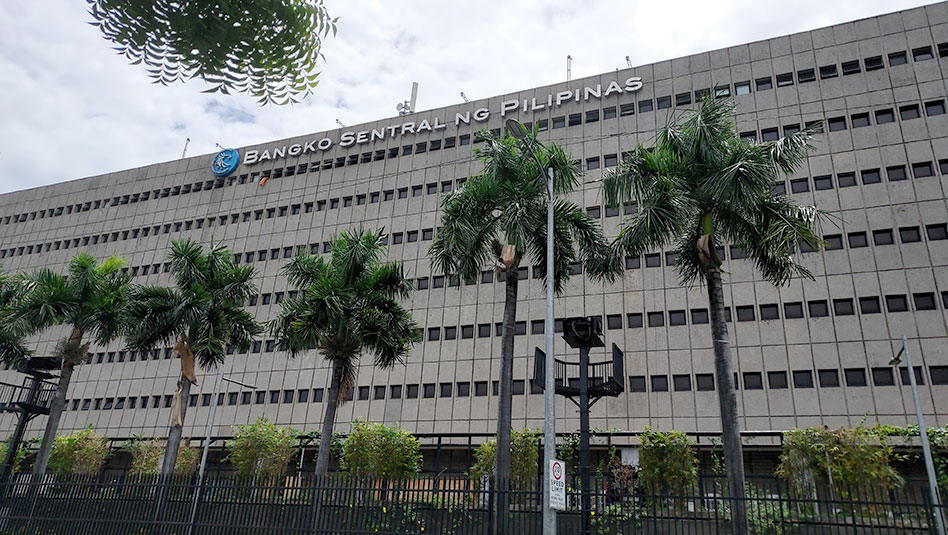
Frick collection with palm trees 
Economic Updates
Policy Rate Updates: Policy rate updates to reassure 
DOWNLOAD
Man using his smartphone
Reports
Fed to cut just once 
DOWNLOAD
View all Reports
Metrobank.com.ph How To Sign Up
Follow us on our platforms.

How may we help you?

TOP SEARCHES
  • Where to put my investments
  • Reports about the pandemic and economy
  • Metrobank
  • Webinars
  • Economy
TRENDING ARTICLES
  • Investing for Beginners: Following your PATH
  • On government debt thresholds: How much is too much?
  • Philippines Stock Market Outlook for 2022
  • Deficit spending remains unabated

Login

Access Exclusive Content
Login to Wealth Manager
Visit us at metrobank.com.ph How To Sign Up
Access Exclusive Content Login to Wealth Manager
Search
MODEL PORTFOLIO THE GIST
NEWS AND FEATURES
Global Philippines Fine Living
INSIGHTS
INVESTMENT STRATEGY
Economy Stocks Bonds Currencies
THE BASICS
Investment Tips Explainers Retirement
WEBINARS
2024 Mid-Year Economi Briefing, economic growth in the Philippines
2024 Mid-Year Economic Briefing: Navigating the Easing Cycle
June 21, 2024
Investing with Love
Investing with Love: A Mother’s Guide to Putting Money to Work
May 15, 2024
retirement-ss-3
Investor Series: An Introduction to Estate Planning
September 1, 2023
View All Webinars
DOWNLOADS
Container ship carrying container boxes import export dock with quay crane. Business commercial trade global cargo freight shipping logistic and transportation worldwide oversea concept. Generative AI
Economic Updates
Philippines Trade Update: Wider deficit on strong imports
March 27, 2026 DOWNLOAD
Frick collection with palm trees 
Economic Updates
Policy Rate Updates: Policy rate updates to reassure 
March 26, 2026 DOWNLOAD
Man using his smartphone
Reports
Fed to cut just once 
March 19, 2026 DOWNLOAD
View all Reports

Archives: Business World Article

Meralco, Samsung C&T partner for nuclear energy initiative

Meralco, Samsung C&T partner for nuclear energy initiative

Manila Electric Co. (Meralco) and South Korea’s Samsung C&T Corporation Engineering & Construction Group have entered into a partnership to advance the adoption of nuclear energy projects in the Philippines, supporting the government’s long-term goals for energy security.

Under the memorandum of understanding (MoU), the two companies will discuss the technical design and capabilities of nuclear technology, as well as the prevailing regulatory framework, energy landscape, and necessary grid infrastructure, Meralco said in a statement on Monday.

“Through this MoU, Meralco stands to gain a comprehensive understanding of the critical aspects of nuclear energy development that will ensure that our future decisions are well-informed and aligned with international best practices,” said Ronnie L. Aperocho, Meralco’s vice-president and chief operating officer.

“This aligns well with Meralco’s continuous efforts to work with global knowledge and technology partners to help us in our transition towards more diversified and sustainable energy sources,” he added.

With the execution of the agreement, Samsung C&T plans to actively engage in the construction of large nuclear power plant projects and small modular reactor projects in the Philippines, Meralco said.

Manuel V. Pangilinan, chairman and chief executive officer of Meralco, said that the company’s collaboration with Samsung C&T is a “strategic move that cements its commitment” to contributing to the government’s efforts to integrate nuclear energy into the power supply mix.

“As we collectively work on the safe and secure adoption of this next-generation technology, we remain focused on our ultimate goal of ensuring energy security and achieving sustainable and inclusive growth in the Philippines,” Mr. Pangilinan said.

The government aims to have commercially operational nuclear power plants with a capacity of at least 1,200 megawatts (MW) by 2032 and 2,400 MW by 2040.

Meralco’s partnership with Samsung C&T follows the recent announcement of collaboration between the Philippines and South Korea to conduct a feasibility study on the revival of the mothballed Bataan Nuclear Power Plant (BNPP).

Last week, the company said it has also inked an MoU with Doosan Enerbility Co., Ltd., another South Korean firm, to explore collaborations on developing low-carbon energy projects in the Philippines, including the rehabilitation of the BNPP.

Meralco’s controlling stakeholder, Beacon Electric Asset Holdings, Inc., is partly owned by PLDT, Inc.

Hastings Holdings, Inc., a unit of PLDT Beneficial Trust Fund subsidiary MediaQuest Holdings, Inc., has an interest in BusinessWorld through the Philippine Star Group, which it controls. — Sheldeen Joy Talavera

BSP to cut rates by 25 bps — poll

BSP to cut rates by 25 bps — poll

The Bangko Sentral ng Pilipinas (BSP) will likely continue its easing cycle with another 25-basis-point (bps) rate cut at its meeting on Wednesday, analysts said. 

A BusinessWorld poll conducted last week showed that 16 out of 19 analysts expect the Monetary Board to reduce rates by 25 bps at its policy review meeting on Oct. 16.

If realized, this would bring the target reverse repurchase rate to 6% from the current 6.25%.

On the other hand, two analysts expect the central bank to cut by 50 bps, while one analyst sees the BSP keeping policy rates unchanged on Wednesday.

The Monetary Board began its easing cycle with a 25-bps cut in August, the first time it reduced borrowing costs in nearly four years.

“I’m expecting the Board to cut further (this) week, by an additional 25 bps. This is especially so in the wake of the extremely soft September print, which undershot expectations, including the BSP’s own forecast range,” Pantheon Macroeconomics Chief Emerging Asia Economist Miguel Chanco said in an e-mail.

Mr. Chanco said that the decision to cut will be “fairly ‘easy’ as the BSP has “so much room to continue normalizing policy without risking going overboard, in view of how fast and how much inflation has fallen in recent months.”

Patrick M. Ella, economist at Sun Life Investment Management and Trust Corp., said that slowing inflation makes a “solid case” for the BSP to cut rates.

Headline inflation sharply eased to 1.9% in September from 3.3% in August. This was also the slowest print in over four years or since the 1.6% clip in May 2020.

“Better still, inflation eased in the heavily weighted food basket on the back of lower tariffs on rice. This gives BSP the assurance that inflation is back in the bottle, and will stay on track over the coming months,” Sarah Tan, an economist from Moody’s Analytics, said.

Food inflation slowed to 1.4% in September from 4.2% in August and 10% a year ago.

Nomura Global Markets Research Chief ASEAN Economist Euben Paracuelles said that easing inflation will “allow the BSP to reduce further the restrictiveness of its monetary stance in a measured way.”

“The lower-than-expected September inflation supports the continuation of monetary easing,” Philippine National Bank economist Alvin Joseph A. Arogo added.

Maybank Investment Banking Group Senior Economist Zamros Bin Dzulkafli said that markets are anticipating inflation to stay within range in the next few months, due to the tariff cut on rice imports and India’s decision to lift the export ban on non-basmati white rice.

“Headline inflation is expected to remain within or even below target in the coming months due to favorable base effects and the improving outlook for food supply especially for rice,” Bank of the Philippine Islands Lead Economist Emilio S. Neri, Jr. said.

In the first nine months of the year, headline inflation averaged 3.4%. This was also the BSP’s full-year forecast.

BSP Governor Eli M. Remolona, Jr. earlier said that inflation is now on a “target-consistent path” which allows it to shift to a less restrictive policy stance.

“With the latest CPI and likelihood that lackluster demand has contributed to these benign inflation estimates, we believe the BSP has room to cut by another 25 bps at the next Monetary Board meeting,” Ruben Carlo O. Asuncion, chief economist at Union Bank of the Philippines, Inc., said.

“We believe there is scope for our consumer price index (CPI) given the food price slippage, and waning electricity rate hike effects, to absorb higher imported inflation due to recent oil price adjustments,” he added.

GRADUAL EASING

While the central bank will continue easing rates, analysts said this will likely be done in a gradual manner.

“However, the BSP may opt for a small cut, mindful of the impact of geopolitical tensions in the Middle East on the inflation outlook, the recent depreciation of the peso against the US dollar, and the repricing of Fed rate cut expectations. Additionally, BSP Governor Remolona alluded to favoring a gradual pace of rate cuts,” China Bank Research said.

The Monetary Board would likely go for 25-bps rate cuts over 50 bps, Mr. Remolona said earlier, as the latter would be more appropriate for a “hard-landing” scenario.

Mr. Neri said that the BSP is also likely to “opt for a modest 25-bp rate cut rather than a more aggressive 50-bps reduction.”

“While inflation has slowed to 1.9% in September, there are several factors that warrant a more cautious approach,” Mr. Neri added.

Chinabank Research also noted risks to the inflation outlook, citing rising global oil prices.

“Hence, the BSP may decide on a small cut in next week’s meeting to mitigate inflationary pressures, especially since higher oil prices could lead to second-order effects,” Chinabank Research said.

“The risks we see here are oil supply shocks (in the form of geopolitical blow-ups) and food-related supply disruptions (like weather) that will interrupt the BSP’s pace of cuts,” Mr. Ella added.

Mr. Asuncion said they revised its inflation forecast to 3.2% this year and 2.5% next year.

“Caveat to this benign inflation outlook is the Middle East event risk featuring the escalation of Israel-Iran hostilities that can sustain oil price volatility and renewed US dollar strength,” he added.

Mr. Neri also cited other risks that could lead to supply disruptions such as the La Niña weather event and a spike in African Swine Fever cases.

The latest bulletin from the state weather bureau showed that there is a 71% chance of La Niña forming in the September-November season and will likely persist until the first quarter next year.

“A gradual reduction in the policy rate would help the economy withstand the impact of these risks in case they materialize,” Mr. Neri added.

“Among the factors for this potential decision include Philippine inflation being well within target, resilient gross domestic product (GDP) growth, and expectations for the Fed to gradually reduce rates by 25 bps next month,” Security Bank Vice-President and Research Division Head Angelo B. Taningco said.

Ms. Tan said that the 50-bps rate cut by the Fed also gives room for the BSP to further lower policy rates.

The latest economic growth also paves the way for more calibrated rate reductions.

“Recent economic activity prints and emerging growth prospects also suggest that aggressive monetary easing isn’t necessary,” Mr. Neri said.

Philippine GDP expanded by 6.3% in the second quarter, the fastest in five quarters or since the 6.4% in the first quarter of 2023.

“Election-related spending, better weather and slower inflation in the coming months are likely to underpin more solid growth prints, reducing the need for massive rate cuts,” Mr. Neri added.

PESO

Meanwhile, Chinabank Research also noted that the BSP will take into consideration the recent peso depreciation.

“This month, the peso has depreciated back to the PHP 57 level against the US dollar as markets pulled back expectations of another jumbo 50-bps cut by the Fed this year after a strong jobs report and as the conflict in the Middle East remains at risk of further escalation,” it said.

The local unit closed at P57.205 per dollar on Friday, strengthening by 15.5 centavos from its PHP 57.36 finish on Thursday. Week on week, however, the peso sank by 91 centavos from its PHP 56.295 finish on Oct. 4.

“Several Fed officials, including Chair Powell, have voiced their support for a more gradual pace of easing following their initial 50-bp reduction in September,” Chinabank Research said.

“A 25-bps cut by the BSP next week would keep the interest rate differential between the BSP’s and the Fed’s policy rate at 100 bps, thereby exerting less downward pressure on the peso,” it added.

Meanwhile, Oikonomia Advisory & Research, Inc. said they expect a 50-bp reduction this week as the “significant slowdown in inflation (gives) BSP a longer runway to cut rates.”

Rizal Commercial Banking Corp. Chief Economist Michael L. Ricafort also sees a 50-bp reduction in order to match the Fed’s latest rate cut.

“By matching all Fed rate cuts in lockstep, to optimize monetary easing and support economic growth,” he said in an e-mail.

On the other hand,  Jonathan L. Ravelas, senior adviser at professional service firm Reyes Tacandong & Co., said that the BSP may keep rates steady and opt to cut by 25 bps later on in December, citing inflationary risks such as the recent reserve requirement ratio cut, election-related spending, and elevated fuel prices.

Mr. Ravelas said that easing must be implemented “slowly but surely” and flagged the possibility of October inflation breaching the 3% level. – Luisa Maria Jacinta C. Jocson, Reporter


Government debt payments decline in August

Government debt payments decline in August

The national government’s (NG) debt service payments slipped year on year in August as principal payments for domestic borrowings dropped, the Bureau of the Treasury (BTr) reported.

The latest data from the BTr showed that debt payments declined by 1.49% to PHP 186.22 billion in August from PHP 189.03 billion in the same month in 2023.

Debt service refers to payments made by the government on domestic and foreign borrowings.

Principal payments accounted for the bulk or 71.66% of debt payments for the month.

In August, amortization payments fell by 8.83% to PHP 133.44 billion from PHP 146.36 billion in the same month in 2023.

Broken down, principal payments on domestic debt dropped by 13.83% to PHP 122.03 billion in August from PHP 141.62 billion a year ago.

Principal payments to foreign creditors surged by 140.52% to PHP 11.4 billion in August from PHP 4.74 billion last year.

On the other hand, interest payments jumped by 23.7% to PHP 52.78 billion in August from PHP 42.67 billion a year ago.

Domestic interest payments went up by 33.26% to PHP 39.36 billion in August from PHP 29.54 billion last year. Interest paid to foreign creditors also inched up by 2.19% to PHP 13.42 billion in August from PHP 13.13 billion last year.

In August, interest payments on local borrowings comprised of PHP 18.7 billion in fixed-rate Treasury bonds, PHP 16.87 billion in retail Treasury bonds, PHP 3.74 billion in Treasury bills (T-bills), and others (PHP 50 million).

“The decline in overall debt payments in August is mainly due to the drop in principal payments, likely from the government’s strategic debt management efforts,” Jonathan L. Ravelas, senior adviser at professional service firm Reyes Tacandong & Co., said in a Viber message.

“The increase in interest payments is due to higher interest rates on new and existing debt,” he added.

Rizal Commercial Banking Corp. Chief Economist Michael L. Ricafort said the lower debt payments were largely due to the smaller amount of maturing National Government debt as well as the stronger peso.

The peso strengthened by PHP 2.254 to PHP 56.111 against the dollar at end-August from its PHP 58.365 finish at end-July.

Mr. Ricafort said the central bank’s 25-basis-point (bps) rate cut in August may have also reduced annual debt payments.

The Bangko Sentral ng Pilipinas (BSP) cut its policy rate for the first time in nearly four years, bringing the key rate to 6.25% from an over 17-year high of 6.5%.

EIGHT-MONTH PERIOD

In the January-August period, the NG’s debt service bill jumped by 33.49% to PHP 1.55 trillion from PHP 1.16 trillion in the comparable year-ago period.

Amortization payments accounted for 67.14% of the eight-month tally.

Principal payments rose by 34.7% to PHP 1.04 trillion in the first eight months from PHP 772.64 billion last year. Amortization payments on domestic debt reached PHP 879.65 billion, while payments on external debt stood at PHP 161.09 billion.

Meanwhile, interest payments rose by 31.07% to P509.44 billion in the first eight months from P388.68 billion a year prior.

Interest paid on domestic debt amounted to PHP 362.72 billion, while those on external debt stood at PHP 146.72 billion.

“Looking ahead, debt payments will be influenced by interest rates and the government’s borrowing strategy. High interest rates may keep pressure on interest payments, but debt management efforts could help mitigate costs,” Mr. Ravelas said.

BSP Governor Eli M. Remolona, Jr. recently said the Monetary Board could reduce interest rates by 50 bps more this year by delivering two more 25-bps cuts at its Oct. 16 and Dec. 19 meetings.

“The debt servicing bill for the coming months would largely be a function of maturing NG debt/government securities as well as the future trend of the budget deficits that need to be financed partly through NG borrowings,” Mr. Ricafort said in a Viber message.

As of end-August, the budget gap narrowed by 4.86% to PHP 697 billion from PHP 732.5 billion last year, according to Treasury data.

 This year’s borrowing plan is set at PHP 2.57 trillion, with PHP 1.92 trillion to be borrowed from local sources and PHP 646.08 billion from overseas. – Beatriz Marie D. Cruz, Reporter

Finance Chief Recto says ‘wealth tax’ is not necessary in Philippines

Finance Chief Recto says ‘wealth tax’ is not necessary in Philippines

Finance Secretary Ralph G. Recto is not in favor of a “wealth tax,” saying there are already enough taxes.

“I think we have a lot of wealth taxes also to a certain degree,” Mr. Recto told reporters on the sidelines of an event on Oct. 8.

This is after debt-watch group Freedom from Debt Coalition recently pushed for the imposition of a wealth tax on individuals whose net worth exceeds PHP 300 million.

Mr. Recto said that he is willing to study wealth tax proposals, but said these taxes could be “counterproductive.”

“But I’m telling you, why should you also tax those who are working hard,” he said.

In the Philippines, different versions of a wealth tax have been proposed in recent years but none have been approved by Congress.

In 2022, the Makabayan bloc filed House Bill No. 258, which seeks to impose a 1-3% tax on the “super-rich” or people with net value of taxable assets exceeding PHP 1 billion. It estimated that the tax would raise PHP 236.7 billion annually from the top 50 richest Filipinos.

“We have real property taxes on land and buildings. The more land, the more houses you have, the more tax you get,” Mr. Recto said.

Sought for comment, Freedom from Debt Coalition said the country’s current tax system is regressive, as it relies heavily on consumption taxes than income and property taxes.

“Based on the proportion of income, the poor are slapped higher taxes due to consumption tax,” a representative said in a Viber message.

The group called on the need for a more progressive tax system, citing Article VI Section 28 in the 1987 Constitution.

“Those who have more in life should have more in taxes. To follow this provision [in the Constitution], billionaires must be taxed,” it said.

Meanwhile, IBON Foundation Executive Director Jose Enrique “Sonny” A. Africa said that a wealth tax would not be inflationary.

“Unlike the consumption taxes so favored by the government and economic managers that always add to inflationary pressure at the time of imposition as well as permanently raise the general price level, the billionaire wealth tax already filed and refiled in Congress does not affect inflation or prices at all,” he said via Viber message.

Former Finance Secretary Benjamin E. Diokno had previously said the government prefers consumption taxes over wealth or luxury taxes.

Mr. Africa said countries that impose wealth taxes include Norway, Spain, Switzerland, Argentina, Colombia, Uruguay and Bangladesh.

“Others like France, Italy, the Netherlands, Belgium and Portugal tax more specific wealth like financial assets or real property. Tax rates range from 0.1% to 3.5%,” he added.

Implementing the House’s proposed 1-3% wealth tax could generate at least P500 billion in annual revenues, Mr. Africa said.

“Most of this or around PHP 280 billion will even come from just the 50 richest Filipinos. The impact on them is negligible and just equivalent to stock market, forex or interest rate movements that they easily absorb every day,” he said.

“The Philippines infamously has among the worst income and wealth inequalities in the world. Implementing a billionaire wealth tax will send a strong signal of governance that is serious about social justice and economic progress,” he added. – Beatriz Marie D. Cruz, Reporter

Tariff cuts result in nearly PHP 9B in foregone revenues

Tariff cuts result in nearly PHP 9B in foregone revenues

Tariff cuts on imported rice and electric vehicles (EVs) resulted in nearly PHP 9 billion in foregone revenues, the Bureau of Customs (BoC) said on Sunday.

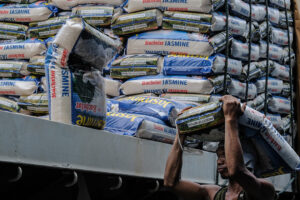
“Recent policy changes, particularly the implementation of Executive Order (EO) No. 62, which reduced rice tariffs from 35% to 15%, resulted in a revenue loss of PHP 6.09 billion from rice imports,” the BoC said in a statement.

EO 62, which took effect on July 5, cut import tariffs on rice to 15% until 2028 to tame inflation.

The same order also extended the zero-tariff policy on electric vehicles and parts through 2028. It also expanded the coverage of the zero-tariff policy to e-motorcycles, e-bicycles, nickel metal hydride accumulator batteries, e-tricycles and quadricycles, hybrid EVs and plug-in hybrid EV (PHEV) jeepneys or buses.

“EO 62 expanded the zero-import duties under EO 12 to include battery electric vehicles (BEVs), hybrid electric vehicles (HEVs), plug-in HEVs, and specific parts and components, leading to an additional revenue loss of PHP 2.9 billion,” Customs said.

For the first nine months of the year, Customs collected PHP 690.84 billion, missing its target for the period by 0.44%.

However, this was 4.61% higher than PHP 660.39 billion collected in the same period last year.

The end-September collection also made up 72% of the bureau’s PHP 959-billion collection goal for this year.

The BoC said it remains optimistic of hitting its revenue targets for this year as it boosts its collection of nontraditional revenues like post-entry audit and auction.

“Our commitment to transparency and efficiency in customs operations empowers us to build a stronger economy for all Filipinos,” Customs Commissioner Bienvenido Y. Rubio was quoted as saying. — B.M.D. Cruz

Trade gap widens to USD 4.38 billion in August

Trade gap widens to USD 4.38 billion in August

The Philippines’ trade gap widened year on year in August as growth in imports still outpaced the increase in exports, even as the value of outbound shipments was the highest in 11 months, the government reported on Thursday.

Preliminary data from the Philippine Statistics Authority showed that the country’s trade-in-goods balance — the difference between exports and imports — stood at a USD 4.375-billion deficit in August, 6.6% bigger than the USD 4.105-billion gap in the same month last year.

However, month on month, the trade gap shrank by 10.25% from the USD 4.88-billion deficit posted in July.

Philippine Merchandise Trade Performance (August 2024)

Year to date, the trade deficit narrowed by 4.35% to USD 34.3 billion from the USD 35.86-billion gap a year ago.

The country’s balance of trade in goods has been in a deficit for 111 straight months (over nine years) or since the USD 64.95-million surplus recorded in May 2015.

Total external trade in goods amounted to USD 17.87 billion in August, up 1.8% year on year. Of the total, 62.2% was imported goods, while the remaining 37.8% was made up of exports.

In August, export sales inched up by 0.3% to USD 6.75 billion from USD 6.73 billion in the same month in 2023, logging a second straight month of increase.

This was the biggest export value in 11 months or since the USD 6.77 billion in September last year.

Month on month, exports increased by 7.97%.

In the first eight months of the year, exports grew by an annual 2.27% to USD 49.41 billion.

Pantheon Macroeconomics Chief Emerging Asia Economist Miguel Chanco said in an e-mail that the rebound in exports seen since July “has been driven primarily by a comeback in demand from nontraditional markets and, to a smaller extent, recovering shipments to both the US and Japan.”

“By contrast, exports to China and Hong Kong have remained essentially flat in comparison.”

Meanwhile, the value of imported goods rose by 2.7% to USD 11.12 billion in August from USD 10.83 billion a year prior. Month on month, imports inched down by 0.02%.

Year to date, imports declined by an annual 0.55% to USD 83.7 billion.

Rizal Commercial Banking Corp. Chief Economist Michael L. Ricafort attributed the year-on-year increase in August imports to the peso’s appreciation versus the dollar.

“The faster growth in imports compared to exports may be partly attributed to the stronger peso exchange rate that made imports cheaper from the point of view of the locals, thereby increasing demand,” he said in a Viber message.

The stronger peso also made Philippine exports more expensive for international buyers, thus leading to a wider deficit, Mr. Ricafort added.

The peso closed at P56.111 versus the dollar at end-August, stronger by PHP 2.254 from its PHP 58.365 finish the previous month.

The Development Budget Coordination Committee (DBCC) projects 3% and 4% growth in exports and imports, respectively, this year.

KEY EXPORTS DECLINE

Manufactured goods, which accounted for 81.2% of the country’s export receipts, slipped by 0.6% to USD 5.48 billion in August from USD 5.51 billion a year ago.

Electronic products, which made up most of manufactured exports, declined by 8.2% year on year to USD 3.57 billion in August.

Semiconductor exports likewise dropped by 13.8% to USD 2.69 billion in August. Exports of mineral products slumped by 13.4% to USD 582.36 million.

The United States remained the top destination of Philippine-made goods in August with an export value of $1.22 billion, accounting for 18.1% of the total.

This was followed by Hong Kong with USD 942.56 million (14% of the total), Japan (USD 935.33 million or 13.9%), China (USD 849.38 million or 12.6%) and South Korea (USD 332.64 million or 4.9%). Other top export markets include the Netherlands, Singapore, Taiwan, Germany, and Thailand.

IMPORTS

Meanwhile, imports of raw materials and intermediate goods grew by 5.2% year on year to $4.06 billion in August. This made up 36.5% of total imports.

Imported capital goods picked up by 9.6% annually to USD 3 billion, while imports of consumer goods was steady at $2.24 billion.

Imports of mineral fuels, lubricants and related materials slid by 9.1% to USD 1.79 billion in August.

“Real import demand is still wobbling, with purchases of consumer goods remaining stagnant, at best, while demand for imported capital goods remains depressed,” Mr. Chanco said.

China was the biggest source of imports valued at USD 2.79 billion, accounting for a quarter of the total import bill in August.

It was followed by Indonesia (USD 972.4 million or 8.7% of the total), South Korea (USD 925.36 million or 8.3%), Japan (USD 827.11 million or 7.4%) and the United States (USD 707.33 million or 6.4%). – Beatriz Marie D. Cruz, Reporter

FDI net inflows rise to five-month high in July

FDI net inflows rise to five-month high in July

Net inflows of foreign direct investments (FDIs) into the Philippines rose by 5.5% year on year in July to hit a five-month high, the Bangko Sentral ng Pilipinas (BSP) said on Thursday.

Data from the central bank showed FDI net inflows increased to USD 820 million in July from USD 778 million in the same month a year ago.

This was the highest FDI inflow in five months or since the USD 1.366 billion recorded in February.

Net Foreign Direct InvestmentMonth on month, net inflows of FDIs more than doubled from USD 394 million in June.

FDI inflows are a key source of jobs and capital for the economy.

“The improvement in FDI was driven by higher net inflows across all components,” the BSP said.

Nonresidents’ net investments in debt instruments of local affiliates went up by 2.7% to USD 610 million in July from USD 594 million a year ago.

Meanwhile, investments in equity and investment fund shares rose by 14.2% to USD 211 million from USD 184 million.

Broken down, foreigners’ net investments in equity capital other than reinvestment of earnings jumped by 16.8% year on year to USD 76 million from USD 65 million.

This came as equity capital placements surged by 65.8% to USD 135 million, while withdrawals more than tripled (262.7%) to USD 59 million.

The bulk of equity placements in July were mainly from Japan (73%), followed by the United States (13%) and Singapore (8%). These were invested mostly in the manufacturing and real estate industries.

For its part, reinvestment of earnings climbed by 12.8% to USD 135 million in July from $120 million a year prior.

SEVEN-MONTH FDI

For the first seven months, FDI net inflows rose by 7.5% to USD 5.256 billion from USD 4.888 billion in the same period in 2023.

BSP data showed that nonresidents’ investments in equity and investment fund shares jumped by 30.4% to USD 1.921 billion in the January-July period from USD 1.474 billion a year ago.

Net foreign investments in equity capital stood at USD 1.273 billion during the period, 58.3% higher than USD 804 million seen in the previous year.

Equity capital placements climbed by 58.5% to USD 1.592 billion, while withdrawals soared by 59.4% to $319 million.

Most of these placements were from the United Kingdom (48%), Japan (34%) and the United States (7%).

Meanwhile, reinvestment of earnings went down by 3.2% to USD 648 million from USD 670 million in the comparable year-ago period.

On the other hand, net foreign investments in debt instruments dropped by 2.3% to USD 3.335 billion in the first seven months from USD 3.414 billion a year prior.

The BSP expects to record FDI net inflows of $10 billion at end-2024.

“Improved economic conditions and positive growth prospects likely boosted investor confidence,” Jonathan L. Ravelas, senior adviser at professional service firm Reyes Tacandong & Co., said in a Viber message.

“Additionally, policy reforms aimed at creating a more business-friendly environment, such as easing regulations and offering tax incentives, played a significant role.”

Rizal Commercial Banking Corp. Chief Economist Michael L. Ricafort said the higher FDI inflows were also driven by the country’s “attractive demographics and economic growth still among the fastest in Asia.”

The Philippine economy grew by 6.3% in the second quarter, the fastest in five quarters or since 6.4% in the first quarter of 2023.

“Investment commitments generated from overseas trips of the administration for more than a year already would help improve the FDI data going forward, if some of these investments are eventually realized,” he added.

The latest data from the Department of Trade and Industry showed that investment promotion agencies have approved P2.73-trillion worth of investment pledges in the first two years of the Marcos administration.

“Sectoral opportunities, particularly in high-growth areas like technology and renewable energy, attracted substantial investments. Lastly, strategic investments by companies looking to expand their global footprint and acquire new technologies contributed to the surge in inflows,” Mr. Ravelas added.

For the coming months, further benchmark rate cuts could help spur investments as these would lead to lower borrowing costs, he said.

The BSP kicked off its easing cycle in August with a 25-basis-point (bps) rate cut, bringing the policy rate to 6.25%.

BSP Governor Eli M. Remolona, Jr. has said the Monetary Board could slash benchmark interest rates by 50 bps more this year by delivering two more 25-bp cuts at its next two meetings scheduled for Oct. 16 and Dec. 19.

“The free trade agreement signed between the Philippines and South Korea earlier in September 2023 could further boost trade, investments from South Korea and from other countries, employment, and overall economic growth,” Mr. Ricafort added.

He added that the Corporate Recovery and Tax Incentives for Enterprises to Maximize Opportunities for Reinvigorating the Economy (CREATE MORE) bill would also “attract more FDIs with enhanced investment incentives for locators” once signed into law.

The CREATE MORE bill, a priority measure of the administration, was ratified by Congress in September. The measure seeks to address investor concerns on the grant of fiscal and non-fiscal incentives to locators. – Luisa Maria Jacinta C. Jocson, Reporter

Industrial sector still operating below ‘normal’ capacity

Industrial sector still operating below ‘normal’ capacity

The Philippines industrial sector is still not operating at full capacity, Pantheon Macroeconomics said, though this has helped tame price pressures.

“Underlying price pressures in the Philippine economy remain contained in more ways than one. One main aspect is the fact that heavy industry is still operating below ‘normal’ capacity,” Pantheon Macroeconomics Chief Emerging Asia Economist Miguel Chanco said in a report.

The latest data from the Bangko Sentral ng Pilipinas’ (BSP) Business Expectations Survey showed that the average capacity utilization of the industry and construction sectors edged lower to 71.9% in the third quarter from 72% a quarter earlier.

“This is still below the historical average of 73.3%, a benchmark that has yet to be hit in the post-pandemic period,” Mr. Chanco said.

Based on available data, he said that the utilization rate hit a low of 66.8% in the third quarter of 2020.

“This rate has dipped and moved largely sideways ever since, indicating that the current rate of growth in the construction and industrial sectors continues to pose no real fundamental threat to inflation,” Mr. Chanco said.

Philippine headline inflation sharply slowed to 1.9% in September from 3.3% in August. This was also the slowest print in over four years or since the 1.6% clip in May 2020.

In the first nine months, headline inflation averaged 3.4%, matching the central bank’s full-year forecast and falling within its 2-4% annual target.

“The outlook for construction looks bleak; the post-COVID catch-up is exhausted — it probably ended in the third quarter, as construction spending in the national accounts hit 98.7% of its pre-pandemic peak in the second quarter,” he added.

Philippine gross domestic product (GDP) expanded by an annual 6.3% in the April-to-June period, the fastest in five quarters or since 6.4% in the first quarter of 2023, latest data from the Philippine Statistics Authority (PSA) showed.

This was faster than the revised 5.8% growth in the first quarter and 4.3% in the second quarter of 2023.

Among the main contributors to second-quarter GDP growth were construction (16%); wholesale and retail trade, repair of motor vehicles and motorcycles (5.8%), and financial and insurance activities (8.2%).

Gross capital formation, the investment component of the economy, grew by 11.5% in the second quarter, faster than the 0.5% growth in the previous quarter and 0.7% a year ago.

Public construction grew by 21.8% in the second quarter, faster than 12.1% a year ago as the government ramped up infrastructure and rehabilitation projects. Private construction also rose by 9.9%, faster than 5.3% a year ago, with commercial construction increasing by 13.6%.

Meanwhile, PSA data showed that building permit applications dropped 2.4% in July to 14,343 from 14,689 a year ago.

“Overall, business investment plans, while rising gradually, remain historically subdued. And their post-COVID recovery continues to be underwhelming, at least when juxtaposed against the last upswing after the Global Financial Crisis,” Mr. Chanco added.

BSP data showed that business sentiment in the construction sector was more optimistic in the third quarter this year amid new clients and contracts, easing inflation and more business opportunities and potential expansions.

However, business sentiment for the fourth quarter was “less buoyant” due to expectations of a lack of new clients and fewer projects.

“The share of businesses which have expansion plans in the next quarter has risen to a new post-pandemic high of 21.7% as in the third quarter, according to our seasonal adjustment and on an annual rolling basis to smooth out quarterly volatility,” Mr. Chanco said.

“Keeping this in perspective though, it is still just 69% of its end-2019 level, a recovery rate that would fall to 61% if judged against the pre-pandemic high of the year before.” — Luisa Maria Jacinta C. Jocson

Electricity transmission rates decrease in October — NGCP

Electricity transmission rates decrease in October — NGCP

Electricity consumers may see a reduction in their bills for October due to a decline in overall transmission charges, according to the National Grid Corporation of the Philippines (NGCP).

“There is a downward trend in the transmission rates, from PHP 1.22 per kilowatt-hour (kWh) to PHP 1.19 per kWh,” Julian Ryan Datingaling, NGCP’s head of revenue management department, said during a briefing on Thursday.

Mr. Datingaling said that ancillary services (AS) rates for the September supply period went down by 7.3% to PHP 0.5680 per kWh.

Ancillary services are deployed by grid operators to support the transmission of power from generators to consumers to maintain reliable operations. These are pass-through charges billed by the grid operator and remitted directly to generation companies.

The transmission wheeling rate, or what NGCP charges for its primary services of delivering power, climbed by 3.68% to P0.4936 per kWh, attributed to the decrease in electricity consumption in September.

“With a fixed revenue and a decrease in consumption, the tendency is an increase in the rates,” Mr. Datingaling said.

For Luzon, transmission charges went down by an estimated PHP 0.09 per kWh. Rates in the Visayas increased by PHP 0.29 per kWh, while rates in Mindanao declined by PHP 0.02 per kWh.

“For this month, more than 50% of our billing is for ancillary services, and that proportion is largely driven by market prices in the reserve market,” NGCP Spokesperson Cynthia P. Alabanza said.

The NGCP clarified that it does not earn from AS and did not benefit from the increase in prices as it is a pass-through cost and is collected for generation companies.

“Of the overall transmission charge, only 49 centavos is charged by NGCP for the delivery of its services to power consumers. This month’s transmission charge is comprised mainly of AS charges remitted directly to power generators providing ancillary services to the grid,” the grid operator said.

Transmission charges usually account for 3% of a monthly electricity bill.

Meanwhile, Ms. Alabanza said that the company is looking forward to the release of the decision from the Energy Regulatory Commission (ERC) regarding its rate reset process.

“NGCP is more than capable of pursuing all its transmission projects, but we do need to have our reset issued and our applications acted on,” Ms. Alabanza said.

“It is very critical for us to have a fair recovery mechanism and completion of the reset process to ensure what level of capex (capital expenditure) we can spend,” she added.

The rate reset process is usually a “forward-looking” exercise that requires the regulated entity to submit forecast expenditures and proposed projects over a five-year regulatory period.

NGCP’s rate reset process accounts for the fourth regulatory period, which covers the years 2016 to 2020 and includes the lapsed period of two years.

ERC Commissioner Catherine P. Maceda told a Senate budget hearing on Wednesday that the commission was preparing to publish the final draft determination within the month. — Sheldeen Joy Talavera

Finance Chief Recto sees 6% growth in third quarter

Finance Chief Recto sees 6% growth in third quarter

The Philippine economy likely grew by 6% in the third quarter as declining inflation may have fueled a rebound in consumer spending, Finance Secretary Ralph G. Recto said.

“I’m still hoping 6%, more so that inflation is declining,” Mr. Recto told reporters on the sidelines of an event late on Tuesday.

“The biggest [driver] would be household consumption, which is 75% of the economy,” he added.

For as long as household consumption grows by 6%, Mr. Recto said, the economy would likely grow by 6%. 

Economic managers are targeting 6-7% growth this year. 

In the second quarter, gross domestic product (GDP) expanded by 6.3% as improved government spending and investments offset weak consumption growth. Household spending in the April-June period grew by 4.6% year on year, the weakest since the first quarter of 2021. 

For the first half, GDP growth averaged 6%. The economy has to grow by at least 6% in the second half to hit the low end of the target.

The statistics agency is expected to release third-quarter GDP data on Nov. 7.

Mr. Recto said slowing inflation likely helped drive growth in the July-to-September period.

The consumer price index eased to a four-year low of 1.9% year on year in September from 3.3% in August as food and transport costs declined.

Year to date, inflation averaged 3.4%, settling within the 2-4% target range of the Bangko Sentral ng Pilipinas (BSP).

Mr. Recto said the Development Budget Coordination Committee (DBCC) could meet before yearend to review the macroeconomic assumptions and targets.

“I think the DBCC should meet but maybe in December… not really to adjust but just to review not only growth targets but take a look at the entire macro-fiscal framework,” he said.

Mr. Recto said that any adjustments to the government’s growth and fiscal targets should be for next year, as economic managers also have to consider other factors such as external headwinds.

“We have to take a look at what’s happening globally also. For example, we have to prepare just in case you have more tensions in the Middle East,” he said.

At its last meeting in June, the DBCC kept the 2024 GDP growth target at 6-7% and 6.5-7.5% GDP expansion for 2025. It targets 6.5-8% growth from 2026 to 2028.

Earlier this week, Budget Secretary and DBCC Chairperson Amenah F. Pangandaman raised the possibility of an upward revision of this year’s growth target amid slowing inflation and improved state spending.

Meanwhile, Albay Rep. Jose Ma. Clemente S. Salceda, who also heads the House Committee on Ways and Means, gave a 5.7-6.1% GDP growth forecast for the third quarter.

“Inflation, while obviously slowing down, would still have had some real impact on the consumption patterns of consumers. I expect robust consumption of basic goods to have persisted, but some weakness in discretionary spending,” he said in a Viber message.

Rizal Commercial Banking Corp. Chief Economist Michael L. Ricafort said he sees at least 6% economic growth in the July-to-September period, driven by better jobs data.

“Easing inflation trend would boost consumer spending… amid the net improvement in employment data in recent months to among the best in 19 years,” he said in a Viber message.

The unemployment rate eased to 4% in August from 4.7% in July and 4.4% in August last year. This translated 2.07 million unemployed Filipinos, down by 305,000 from July and by 149,000 from a year earlier.

The employment rate in August rose to 96%, equivalent to 49.15 million employed Filipinos, from 95.3% in July and 95.6% a year ago. — Beatriz Marie D. Cruz

Posts navigation

Older posts
Newer posts

Recent Posts

  • Navigating precarious times with cost averaging
  • Trade Update: Wider trade deficit in February
  • Metrobank US-Iran Risk Index: No swift end seen
  • Investment Ideas: March 27, 2026
  • BSP Update: First rate hike likely in June 

Recent Comments

No comments to show.

Archives

  • March 2026
  • February 2026
  • January 2026
  • December 2025
  • November 2025
  • October 2025
  • September 2025
  • August 2025
  • July 2025
  • June 2025
  • May 2025
  • April 2025
  • March 2025
  • February 2025
  • January 2025
  • December 2024
  • November 2024
  • October 2024
  • September 2024
  • August 2024
  • July 2024
  • June 2024
  • May 2024
  • April 2024
  • March 2024
  • February 2024
  • January 2024
  • December 2023
  • November 2023
  • October 2023
  • September 2023
  • August 2023
  • July 2023
  • June 2023
  • May 2023
  • April 2023
  • March 2023
  • February 2023
  • January 2023
  • December 2022
  • November 2022
  • October 2022
  • September 2022
  • August 2022
  • July 2022
  • June 2022
  • May 2022
  • March 2022
  • December 2021
  • October 2021

Categories

  • Bonds
  • BusinessWorld
  • Currencies
  • Economy
  • Equities
  • Estate Planning
  • Explainer
  • Featured Insight
  • Fine Living
  • How To
  • Investment Tips
  • Markets
  • Portfolio Picks
  • Rates & Bonds
  • Retirement
  • Reuters
  • Spotlight
  • Stocks
  • Uncategorized

You are leaving Metrobank Wealth Insights

Please be aware that the external site policies may differ from our website Terms And Conditions and Privacy Policy. The next site will be opened in a new browser window or tab.

Cancel Proceed
Get in Touch

For inquiries, please call our Metrobank Contact Center at (02) 88-700-700 (domestic toll-free 1-800-1888-5775) or send an e-mail to customercare@metrobank.com.ph

Metrobank is regulated by the Bangko Sentral ng Pilipinas
Website: https://www.bsp.gov.ph

Quick Links
The Gist Webinars Wealth Manager Explainers
Markets
Currencies Rates & Bonds Equities Economy
Wealth
Investment Tips Fine Living Retirement
Portfolio Picks
Bonds Stocks
Others
Contact Us Privacy Notice Terms of Use
© 2026 Metrobank. All rights reserved.

Access this content:

If you are an existing investor, log in first to your Metrobank Wealth Manager account. ​

If you wish to start your wealth journey with us, click the “How To Sign Up” button. ​

Login HOW TO SIGN UP