



MODEL PORTFOLIO
THE GIST
NEWS AND FEATURES
Global Philippines Fine Living
INSIGHTS
INVESTMENT STRATEGY
Economy Stocks Bonds Currencies
THE BASICS
Investment Tips Explainers Retirement
WEBINARS
2024 Mid-Year Economi Briefing, economic growth in the Philippines
2024 Mid-Year Economic Briefing: Navigating the Easing Cycle
June 21, 2024
Investing with Love
Investing with Love: A Mother’s Guide to Putting Money to Work
May 15, 2024
retirement-ss-3
Investor Series: An Introduction to Estate Planning
September 1, 2023
View All Webinars
DOWNLOADS
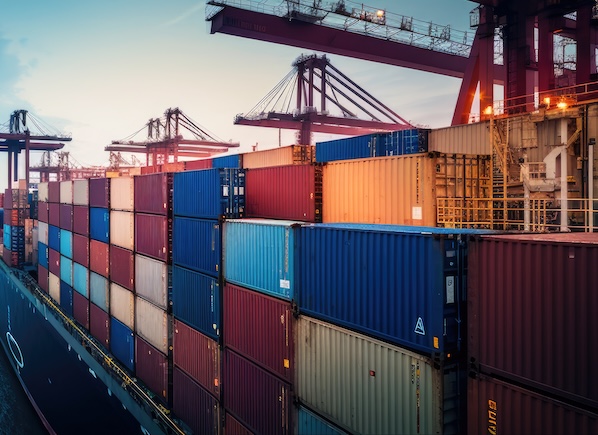
Container ship carrying container boxes import export dock with quay crane. Business commercial trade global cargo freight shipping logistic and transportation worldwide oversea concept. Generative AI
Economic Updates
Philippines Trade Update: Wider deficit on strong imports
DOWNLOAD
Frick collection with palm trees 
Economic Updates
Policy Rate Updates: Policy rate updates to reassure 
DOWNLOAD
Man using his smartphone
Reports
Fed to cut just once 
DOWNLOAD
View all Reports
Metrobank.com.ph How To Sign Up
Follow us on our platforms.

How may we help you?

TOP SEARCHES
  • Where to put my investments
  • Reports about the pandemic and economy
  • Metrobank
  • Webinars
  • Economy
TRENDING ARTICLES
  • Investing for Beginners: Following your PATH
  • On government debt thresholds: How much is too much?
  • Philippines Stock Market Outlook for 2022
  • Deficit spending remains unabated

Login

Access Exclusive Content
Login to Wealth Manager
Visit us at metrobank.com.ph How To Sign Up
Access Exclusive Content Login to Wealth Manager
Search
MODEL PORTFOLIO THE GIST
NEWS AND FEATURES
Global Philippines Fine Living
INSIGHTS
INVESTMENT STRATEGY
Economy Stocks Bonds Currencies
THE BASICS
Investment Tips Explainers Retirement
WEBINARS
2024 Mid-Year Economi Briefing, economic growth in the Philippines
2024 Mid-Year Economic Briefing: Navigating the Easing Cycle
June 21, 2024
Investing with Love
Investing with Love: A Mother’s Guide to Putting Money to Work
May 15, 2024
retirement-ss-3
Investor Series: An Introduction to Estate Planning
September 1, 2023
View All Webinars
DOWNLOADS
Container ship carrying container boxes import export dock with quay crane. Business commercial trade global cargo freight shipping logistic and transportation worldwide oversea concept. Generative AI
Economic Updates
Philippines Trade Update: Wider deficit on strong imports
March 27, 2026 DOWNLOAD
Frick collection with palm trees 
Economic Updates
Policy Rate Updates: Policy rate updates to reassure 
March 26, 2026 DOWNLOAD
Man using his smartphone
Reports
Fed to cut just once 
March 19, 2026 DOWNLOAD
View all Reports

Archives: Business World Article

Philippine aeronautics body, local carriers to discuss proposed fees

Philippine aeronautics body, local carriers to discuss proposed fees

The Civil Aeronautics Board (CAB) is set to meet with local carriers on Friday (Oct. 18) to discuss the airlines’ proposal to collect terminal enhancement fees from passengers amid the rising cost of using the Ninoy Aquino International Airport (NAIA).

Manila International Airport Authority (MIAA) General Manager Eric Jose C. Ines said the CAB is currently studying the proposal of three airlines to collect these additional fees from passengers.

“The deliberation is ongoing, the CAB will look into it immediately,” Mr. Ines said by phone on Wednesday.

“MIAA’s part is just consultative, we will meet with CAB and the three local carriers on Friday so that they can justify their reasons,” he added.

MIAA, which has transitioned to its sole regulatory function for NAIA, serves as a consultative body for the proposed collection of terminal enhancement fees, Mr. Ines said.

The local airlines are reportedly seeking an average PHP 300 per flight to cover the higher cost of operating at NAIA.

Aside from the three local carriers: Philippine Airlines operated by PAL Holdings, Inc.; Cebu Pacific operated by Cebu Air, Inc.; and Philippines AirAsia, Inc. (AirAsia Philippines), Mr. Ines said other foreign carriers operating at NAIA may also seek the same relief.

“I think the airlines anticipated that the moment NNIC (New NAIA Infra Corp.) took over there would be an increase in fees. To cover up for that expense, they filed this. It is still under request, whether it will be approved or not, it is being evaluated by CAB,” Mr. Ines said, noting that the petition was filed in September.

NNIC, the new operator of the Ninoy Aquino International Airport (NAIA), took over the operations and maintenance of the country’s main gateway on Sept.  14. Landing and take-off fees, a charge collected from airlines for using airport facilities and services, were increased starting this month.

A higher passenger service charge is also scheduled to be implemented by September 2025.

Enrico P. Villanueva, a senior lecturer at the University of the Philippines Los Baños Economics Department, said airline companies are expected to pass on additional charges to passengers.

“As a business, airlines have to pass on extra charges at terminals. It is a misnomer to call the fee enhancement, if the latter has not yet happened,” Rene S. Santiago, former president of the Transportation Science Society of the Philippines, said in a Viber message.

“The first order of the day should be for the Transport department and the MIAA to ask the new operator for a comprehensive list of the new airport fees that it seeks to implement on passengers and other airport stakeholders,” said Terry L. Ridon, a public investment analyst and convenor of think tank InfraWatch PH.

Nigel Paul C. Villarete, a senior adviser on public-private partnership (PPP) at the technical advisory group Libra Konsult, Inc., said the proposed terminal enhancement fees are justified since the new operator of NAIA is set to implement enhancements at the airport.

“These will be incorporated in their set fares which they can adjust anytime anyway so they may simply adjust the airport fees accordingly,” Mr. Villarete said in a Viber message.

AirportWatch Philippines Spokesperson Danilo Lorenzo S. Delos Santos called the higher fees imposed by NNIC as unreasonable and premature because no improvements yet have been implemented at NAIA.

“Clearly, these airport fee increases by Administrative Order 1 are unjustified because these are imposed on the public long before any impact from the rehabilitation efforts are felt by everyone,” Mr. Lorenzo said.

To recall, NNIC explained earlier that all fee increases implemented are only in accordance with the parameters and financial terms set by the Transportation department, MIAA, and its project transaction advisor Asian Development Bank during the bidding of the NAIA PPP partnership (PPP) project. – Ashley Erika O. Jose, Reporter
Vehicle sales growth slows in September

Vehicle sales growth slows in September

Philippine automotive sales growth slowed to 2.4% in September, amid flat sales of commercial vehicles, according to an industry report.

A joint report by the Chamber of Automotive Manufacturers of the Philippines, Inc. (CAMPI) and the Truck Manufacturers Association (TMA) showed vehicle sales rose to 39,542 units in September from 38,628 units in the same month last year.

The 2.4% sales growth in September was the slowest since March when vehicle sales inched up by 1.6%.

Auto Sales (September 2024)Month on month, car sales rose by 1% from the 39,155 units sold in August. 

“The increase can be attributed to new stock arrivals and improved promotions from the brands,” CAMPI President Rommel R. Gutierrez said in a statement on Wednesday.

“There were no new model releases last September, possibly due to the brands’ preparation for the upcoming Philippine International Motor Show in October where we expect new launches will be made,” he added.

September sales were driven by a 9.2% increase in passenger car sales to 10,438 units from 9,558 units sold a year ago. Month on month, passenger car sales went up by 9.54%.

On the other hand, sales of commercial vehicles inched up by 0.1% to 29,104 units in September from 29,070 a year ago. Commercial vehicles accounted for 73.6% of the industry’s total sales.

Month on month, sales of commercial vehicles declined by 1.8%.

Among commercial vehicles, Asian utility vehicle (AUV) sales surged by 43.8% year on year to 7,123 units, while sales of medium trucks grew by 23.4% to 401.

However, sales of light commercial vehicles fell 9.2% to 20,964 units, while sales of light and heavy trucks fell by 11% and 11.1% to 544 and 72, respectively.

For the first nine months of 2024, vehicle sales went up by 9.4% to 344,307 units from 314,843 units a year ago, CAMPI-TMA data showed.

Passenger car sales jumped by 13.4% to 90,765 units in the January-to-September period, while commercial vehicle sales increased by 8% to 253,542 units.

Rizal Commercial Banking Corp. Chief Economist Michael L. Ricafort said the annual sales growth rate in September was slower than the double-digit growth rates seen a few months ago.

“This may be partly attributed to higher normalizing base or denominator effects and still relatively higher interest rates in recent months,” he said in a Viber message.

“But the year-to-date vehicle sales growth is still faster than the economic growth, which is a bright spot for the economy,” he added.

Regina Capital Development Corp. Head of Sales Luis A. Limlingan attributed the slower growth to seasonal demand.

“Seasonal trends played a role, with sales dipping after August’s promotions, leading to declines in segments like light commercial vehicles and heavy-duty trucks,” said Mr. Limlingan in a Viber message.

“Additionally, the strong sales momentum in August likely pulled forward some demand, resulting in more subdued growth in September,” he added.

Mr. Limlingan said higher interest rates and elevated inflation could have also weighed on consumers’ decisions when making big-ticket purchases like cars.

In the first nine months, Toyota Motor Philippines Corp. remained the market leader with sales of 159,088 units, up by 10.3% from 144,232 units a year ago. Toyota sales accounted for 46.2% of the industry’s total.

Mitsubishi Motors Philippines Corp. ranked second with a market share of 19.18%, as sales jumped by 13.7% to 66,028 units in the first nine months.

In third spot was Ford Motor Co. Phils., Inc. which saw sales drop by 7.2% to 21,438 units. This accounted for 6.23% of the industry.

Rounding out the top five were Nissan Philippines, Inc., whose sales went up by 1.4% to 20,322, while Suzuki Phils., Inc. posted an 11.1% rise in sales to 14,990 units.

CAMPI set a sales target of 500,000 this year. If realized, this will be the industry’s highest annual sales to date and will represent a 16.3% increase from last year’s 429,807 units sold. – Justine Irish D. Tabile, Reporter

Philippines’ economic freedom improves

Philippines’ economic freedom improves

The Philippines’ ranking jumped nine spots in a global index on economic freedom due to higher scores in trade freedom and property rights, according to the Canada-based think tank Fraser Institute.

The country placed 59th out of 165 economies in the conservative think tank’s Economic Freedom of the World index which uses 2022 data. Its ranking improved from 68th place in the previous index which used 2021 data.

This was the Philippines’ highest placement since it ranked 57th in 2016.

Philippines’ Economic Freedom improved in 2022

The country received a score of 7.01 out of 10, a tad higher than the revised 6.93 in 2021. Its latest score was higher than the global average of 6.56.

Among Asia-Pacific jurisdictions, the Philippines lagged behind Hong Kong (8.58), Singapore (8.55), New Zealand (8.39), Australia (7.98), Japan (7.90), Taiwan (7.71), Malaysia (7.56), and South Korea (7.52).

However, the Philippines was ahead of Brunei Darussalam (6.99), Indonesia (6.96), Thailand (6.94), Mongolia (6.86), Cambodia (6.85), Vietnam (6.23), China (6.14), Papua New Guinea (6.02), Fiji (5.99), Laos (5.86), Timor-Leste (5.77), and Myanmar (4.54).

The Philippines had its highest score in the sound money category with 9.04, ranking 11th out of the 164 other countries. But it was down from 9.51 in 2021.

The country — yet again — performed worst in legal system and property rights with a score of 4.51, slightly higher than 2021’s 4.49.

The Philippine score in size of government declined to 7.83 from 7.91 in 2021. Among subcategories, it scored 8.83 in government investment and 6.91 in government consumption.

“The lesson from this is clear: a small fiscal size of government is insufficient to ensure prosperity,” Fraser Institute said. “The other areas of economic freedom — the rule of law and property rights, sound money, trade openness, and limited regulations — are also required.”

Manila’s score in the freedom to trade internationally category rose to 7.14 from 6.53 in 2021.

Its score in regulation slipped to 6.51 from 6.62 in 2021. Among sub-categories, the Philippines had its lowest score at 4.59 in business regulation and the highest score at 8.27 in credit market.

Leonardo A. Lanzona, an economics professor at the Ateneo de Manila University, said fiscal consolidation remains a key problem for the government’s economic policy.

It leads to “too much intervention in the markets,” he said in a Facebook Messenger chat.

Finance Secretary Ralph G. Recto in September said the Marcos government was on track with its medium-term fiscal consolidation program even as its debt remained at a record high due to pandemic-related loans.

“There is limited participation from the private sector as much of the economic growth is due to government spending,” Mr. Lanzona said. “Instead of the government spending directly, they should create the environment that allows greater public sector participation.”

Hong Kong topped the economic freedom index, followed by Singapore, Switzerland, New Zealand, the United States, Denmark, Ireland, Canada, Australia, and Luxembourg.

At the bottom of the list was Venezuela, followed by Zimbabwe, Sudan, Syria, Algeria, Myanmar, Argentina, Iran, Libya and Yemen.

The think tank said Ukraine (-0.94) and Moldova (-0.63) — the two nations that have either been invaded (Ukraine) or threatened militarily — saw the largest declines in ratings between 2021 and 2022.

The rating for Russia was also down (-0.30). “It may be obvious to point out, but war is very bad for economic freedom,” the think tank said.

Another important development in the index was the declining condition of Hong Kong, whose rating fell “precipitously” to 8.58 in 2022 from 9.05 in 2018.

“This is nearly half a standard deviation decline in just four years,” it said. “Thus, we continue to sound the alarm bell about signs of declining economic — and other — freedoms in Hong Kong.”

Sonny A. Africa, executive director of IBON Foundation, said the conservative index’s metrics “come from a narrow prioritization” of market freedoms and property rights, which “don’t align with a broader and more inclusive understanding of economic well-being and development.”

“This is why the so-called economic freedom scores are so inconsistent with the economic realities faced by the majority of Filipinos who remain poor and marginalized,” he said via Messenger chat.

Mr. Africa said the government’s fiscal consolidation was “evident in the distribution of the country’s declining score in size of government.”

“The relatively high score in government investment reflects the persistent emphasis on corporate-friendly infrastructure and pork barrel hard projects, while the lower government consumption reflects insufficient social services and safety nets,” he said.

“The increase in the score in the freedom to trade internationally category merely reflects continued liberalization that has worked so much against domestic agricultural and industrial development for decades,” he added.

Mr. Africa said the country’s nine-notch improvement in the index was “inconsistent” with important social indicators on a trajectory of decline.

The number of self-rated poor Filipino families has increased to 16.3 million or 59% of total families in September, while the number of households without savings rose to 19.2 million or 71% of total households in the third quarter, Mr. Africa explained, citing data from the Social Weather Stations and the central bank.

While the Philippines was ahead of Indonesia, Thailand, Vietnam, Laos, and Myanmar in the index, it has “much worse food insecurity than all these,” he said.

Mr. Africa cited a United Nations Food and Agriculture Organization report indicating that the Philippines has 44.1% of its total population suffering moderate or severe food insecurity, “which is more than the food insecurity of Indonesia (4.9%), Thailand (7.2%), Vietnam (10.8%), Laos (36.3%), and Myanmar (32%).”

“The Fraser Institute’s index focuses narrowly on market-oriented indicators such as trade freedom, property rights, and business regulation which are presumed to improve the economy,” Mr. Africa said. “In practice, these measures favor a deregulated economy that benefits large corporations and wealthy individuals at the expense of broader social development outcomes.”

In the report, the Fraser Institute noted that high-income industrial economies generally rank quite high for legal system and property rights, sound money, and freedom to trade internationally.

Their ratings were lower, however, for the size of government and regulation. – Kyle Aristophere T. Atienza, Reporter

Philippine hotels target 120,463 more rooms by 2028

Philippine hotels target 120,463 more rooms by 2028

THE PHILIPPINE hotel industry hopes to bridge the 120,463-room gap by 2028 to meet the 456,055-room demand.

The room supply currently stands at 335,592, according to the Philippine Hotel Industry Strategic Action Plan (PHISAP) 2023-2028, launched by the Department of Tourism (DoT) and the Philippine Hotel Owners Association, Inc. (PHOA) on Wednesday.

The roadmap aims to boost competitiveness, promote sustainable development, and support the expansion of the hotel sector.

“Our government is laying the groundwork to establish green lanes for strategic investments aimed at fast-tracking critical infrastructure projects, including those in tourism,” Tourism Secretary Ma. Esperanza Christina G. Frasco said during the launch.

Green lanes in government offices expedite permits and licenses for critical investment projects.

This is “coupled with an improved PPP (Public-Private-Partnership) law, as well as an expanded CREATE (Corporate Recovery and Tax Incentives for Enterprises) law and public-private partnerships to enhance airport facilities and improve transport services,” Ms. Frasco added.

The CREATE MORE bill seeks to impose a 20% corporate income tax on local and foreign corporations under the enhanced deduction income tax regime.

Ms. Frasco added that the DoT continues to work with local government units to stress the necessity of creating a business-friendly environment for investments.

“We’re hopeful that we will be able to address this gap by way of the PHISAP, on one hand, which is a framework for hotel infrastructure development, as well as all the supporting legislation and policies of the Marcos administration that encourage investment, as well as public-private partnerships,” she said.

Leechiu Property Consultants, Inc. (LPC) said in its third-quarter report that the Philippines is expected to surpass 2023’s foreign arrival numbers of 5.5 million but fall short of the 7.7 million target for this year.

LPC said the foreign tourist arrivals reached 4.4 million in the first three quarters of 2024, up from four million in the same period last year.

According to the 2024 Philippine Accommodation Pipeline Report by PHOA and LPC, private sector hotel developers have committed to 158 new accommodation projects, totaling 40,084 rooms and generating PHP 250 billion in investments. — Aubrey Rose A. Inosante

OFW remittances up by 3.2% in August

OFW remittances up by 3.2% in August

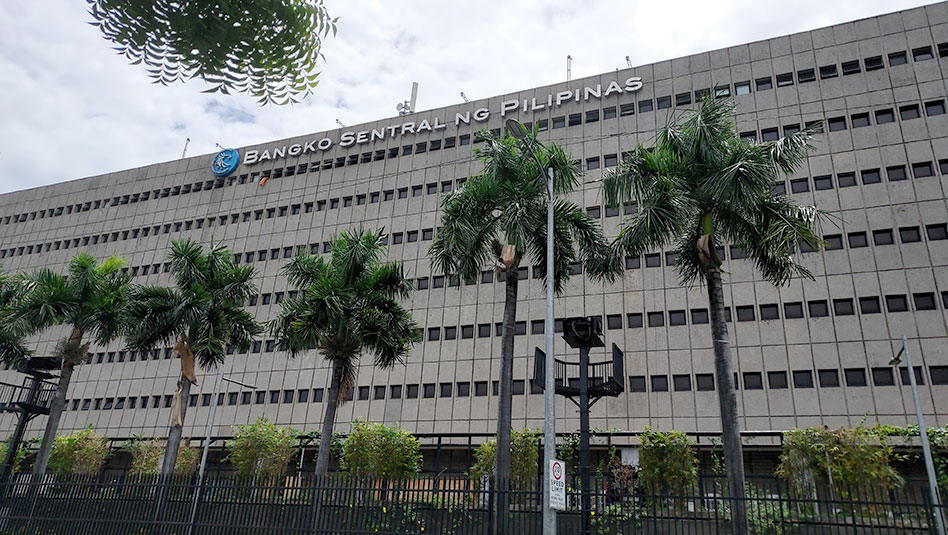
Cash remittances from overseas Filipino workers (OFW) rose by an annual 3.2% in August, the Bangko Sentral ng Pilipinas (BSP) said.

Data from the central bank showed that cash remittances grew by 3.2% to USD 2.89 billion from USD 2.8 billion a year ago.

“The growth in cash remittances in August 2024 was due to the growth in receipts from land- and sea-based workers,” the BSP said in a statement.

Overseas Filipinos’ Cash Remittances

Remittances from land-based workers increased by 3.9% year on year to USD 2.28 billion, while money sent by sea-based workers inched up by 0.7% to USD 603.216 million.

Month on month, cash remittances slipped from USD 3.08 billion posted in July.

Personal remittances, which include inflows in kind, increased by 3.3% to USD 3.2 billion in August from USD 3.1 billion a year earlier.

“The expansion in personal remittances in August 2024 was due to higher remittances from land-based workers with work contracts of one year or more and sea- and land-based workers with work contracts of less than one year,” the central bank said.

Remittances from workers with contracts of one year or more went up by 3.7% to USD 2.47 billion, while money sent home by workers with contracts of less than a year edged higher by 1.4% to USD 670 million.

EIGHT-MONTH PERIOD
In the January-August period, cash remittances expanded by 2.9% to USD 22.22 billion from USD 21.58 billion a year earlier.

“The growth in cash remittances from the United States, Saudi Arabia, United Arab Emirates and Singapore contributed mainly to the increase in remittances in January-August 2024,” the BSP said.

The United States accounted for nearly half or 41.3% of overall remittances in the first eight months. It was followed by Singapore (7%), Saudi Arabia (6.1%), the United Kingdom (4.9%) and Japan (4.8%).

Other sources of remittances were the United Arab Emirates (4.2%), Canada (3.5%), Qatar (2.9%), Taiwan (2.7%) and South Korea (2.6%).

Meanwhile, personal remittances increased by 3% to USD 24.74 billion as of end-August from $24.01 billion a year ago.

Rizal Commercial Banking Corp. Chief Economist Michael L. Ricafort said the steady growth in remittances is a “good signal” for the economy.

“Philippine remittances from overseas workers have consistently been the fourth largest in the world after India, Mexico and China, amounting to more than USD 40 billion per year — a sign of resilience — and has always been a bright spot for the Philippine economy for many years,” he said in a Viber message.

Mr. Ricafort noted that the stronger peso in August also contributed to the lower remittances on a month-on-month basis.

“For the month of August, the US dollar-peso exchange rate declined, mostly at PHP 56-57 levels, versus the PHP 58 levels in July 2024 that somewhat reduced the peso equivalent of OFW remittances and effectively partly increased the year-on-year growth in OFW remittances in recent months.”

The peso strengthened to PHP 56.111 a dollar on Aug. 30 from its close of PHP 58.365 on July 31.

Mr. Ricafort said he expects continued single-digit growth in remittances in the coming months amid the “normalization of spending by households for both essentials and nonessentials.”

The upcoming holiday season is also seen to drive remittance growth.

“Remittances are expected to increase during the holiday season after increased deployment of workers contributed [to the August growth],” John Paolo R. Rivera, a senior research fellow at the Philippine Institute for Development Studies, said.

The central bank expects cash remittances to grow by 3% this year. – Luisa Maria Jacinta C. Jocson, Reporter

Oil price shocks could fuel inflation anew

Oil price shocks could fuel inflation anew

Further volatility in oil prices and potential price adjustments could threaten the inflation downtrend and derail the Bangko Sentral ng Pilipinas’ (BSP) easing cycle, analysts said.

“If the latest fuel price volatility continues to depend on what is happening in Gaza and the rest of the Middle East, we might be looking at some potentially disruptive oil price adjustments,” GlobalSource Research Country Analyst Diwa C. Guinigundo said in a Viber message.

Oil prices shot up after Iran launched a missile attack on Israel in early October. Prices have since slid after Israel signaled it was not planning to attack Iranian nuclear or oil targets.

Pump prices on Tuesday jumped for a fourth straight week for gasoline, and a third straight week for diesel and kerosene as global crude oil prices continued to rise amid heightened tensions in the Middle East. Fuel retailers raised gasoline prices by PHP 2.65 per liter, diesel by PHP 2.70 per liter and kerosene by PHP 2.60 per liter.

“I believe the BSP’s (inflation) forecasts are anchored on a global fuel price of at least USD 100 per barrel of oil,” Mr. Guinigundo, a former BSP deputy governor, said.

“If this critical level is tipped, and tipped long, there is a likelihood higher global oil prices could affect the supply side, dislodge inflation expectations and risk breaching the inflation target for the next four months,” he added.

The central bank sees inflation averaging 3.4% this year and 3.1% in 2025.

Mr. Guinigundo said the oil price spikes would not necessarily stoke inflation but warned that prolonged or larger adjustments could be inflationary.

“It’s one of those regular adjustments of fuel prices to reflect global prices, among others. If not sustained over a longer period, and at significant measure, higher fuel price adjustments will not significantly affect inflation and its path.”

The latest Development Budget Coordination Committee (DBCC) assumptions show that Dubai crude oil will likely range from USD 70 to USD 85 per barrel this year.

The BSP in its latest Monetary Policy Report predicted a scenario where inflation could breach the 2-4% target if Dubai crude prices breach USD 90 per barrel in 2025 and above USD 100 per barrel in 2026.

Leonardo A. Lanzona, Jr., an economics professor at the Ateneo de Manila University, also flagged a possible inflation spike with the hefty oil price adjustment.

“The oil price hike will certainly impact inflation. The surprising decrease in inflation in the last few weeks has nothing to do with any reforms the government purportedly implemented,” he said in an e-mail.

Mr. Lanzona said the country might be “vulnerable to the inflation resurgence and greater geopolitical tensions expected in the coming weeks.”

Headline inflation slowed to 1.9% in September from 3.3% in August. This was the slowest since 1.6% in May 2020.

This brought nine-month inflation to 3.4%, matching the central bank’s full-year forecast.

BSP Governor Eli M. Remolona, Jr. earlier said inflation remains on a “target-consistent path.”

Mr. Guinigundo said the central bank might need to be cautious about aggressively reducing rates.

“This, plus the possible weakening of the peso on account of general monetary easing in the region, could make monetary authorities think twice before easing by an amount greater than 25 basis points (bps),” he said.

The Monetary Board is set to meet on Oct. 16 for its policy review.

A BusinessWorld poll conducted last week showed that 16 of 19 analysts expect the Monetary Board to reduce rates by 25 bps, which would bring the target reverse repurchase rate to 6% from 6.25%.

“Again, the future decision of the BSP will remain data-dependent—what the actual inflation is telling us, and the prognosis in the next two years,” he added.

Mr. Remolona earlier said the central bank would likely opt for 25-bp rate cuts over 50 bps. — Luisa Maria Jacinta C. Jocson

Social services, food security to get PHP 292-B boost in 2025 budget

Social services, food security to get PHP 292-B boost in 2025 budget

A small committee tasked by the House of Representatives to propose changes to the 2025 General Appropriations bill has increased funding for social services, food security and social safety nets by PHP 292.23 billion, in the face of weak economic growth that could go below the government’s target through next year.

In a statement on Tuesday, House Appropriations Committee Chairman and Ako Bicol Party-list Rep. Elizaldy S. Co said the additional allocation is on top of the PHP 591.8 billion already set aside for cash assistance to poor families.

“The additional funding is crucial for supporting those in need,” he said.

The House last month approved the PHP 6.352-trillion national budget for 2025. The Senate is conducting hearings on the proposed budget.

Mr. Co said the small committee had approved an additional PHP 39.8 billion for Assistance to Individuals in Crisis Situations (AICS), and another PHP 39.8 billion for the Ayuda sa Kapos ang Kita Program (AKAP). Next year’s budget for AKAP, which provides cash assistance to people earning PHP 21,000 or less monthly, has surged 206% from the PHP 13 billion allocated for 2024.

The committee also set aside PHP 3.4 billion for the state’s sustainable livelihood program for low-income families.

Appropriations Committee Senior Vice-Chairman and Marikina Rep. Stella Luz A. Quimbo said the Labor department would receive an extra PHP 20.28-billion funding for the Tulong Panghanapbuhay sa Ating Disadvantaged/Displaced Workers and the Government Internship Program.

The committee also allocated an additional PHP 30.01 billion to provide scholarships for underprivileged students pursuing higher education. The funds will be evenly distributed between the Commission on Higher Education’s Tertiary Education Subsidy and Tulong Dunong programs.

The House panel approved an additional PHP 7 billion for the Department of Education to build new school facilities and repair existing ones.

Meanwhile, the Armed Forces of the Philippines (AFP) will get an additional PHP 8.44 billion to boost the subsistence allowances of military personnel. Upon approval, the daily subsistence for soldiers will rise by 67% to PHP 250.

Amid increasing tensions in the South China Sea, the panel allotted PHP 3.2 billion for the AFP to finalize the airport expansion on Pag-asa Island and to develop a shelter port in Lawak, Palawan.

To bolster food security, the committee has realigned PHP 30 billion for the Department of Agriculture’s initiatives, including the Philippine Irrigation Network Piping System, solar-powered irrigation systems and cold storage projects.

The National Irrigation Administration will also receive an extra PHP 44 billion to establish pump irrigation and solar-driven pump irrigation projects.

The House committee also allotted an additional PHP 56.87 billion for the Department of Health’s programs such as health facility enhancement, medical assistance for indigent patients and improvement of specialty and legacy hospitals.

An additional PHP 1 billion has been allocated for the upgrade of the University of the Philippines-Philippine General Hospital.

The remaining PHP 8.43 billion, according to Mr. Co’s office, will be distributed across several sectors, such as to university service centers, vehicle acquisition for local governments, skill development programs and for tourism market development.

Additional funds will also support intelligence, marine research and security programs of the Department of Transportation, and the rehabilitation of the Cultural Center of the Philippines main building.

IMPLEMENTATION ISSUES

University of the Philippines School of Labor and Industrial Relations Assistant Professor Benjamin B. Velasco said the issue is about the implementation of social safety nets.

“It is coursed through politicians and thus becomes entangled in the patronage systems of local and dynastic politics,” he said in a Facebook Messenger chat, adding that incumbent politicians could distribute these AKAP and AICS funds to their constituents.

“We should find a way to disburse aid without the beneficiaries being identified by politicians,” he added, noting that one way to do this is through a national database of indigents, informal workers and migrant families as the pool of legitimate beneficiaries.

Mr. Velasco said increasing social programs could also boost the economy because the money will end up in the hands of consumers.

Federation of Free Workers President Jose Sonny G. Matula also called for an evaluation of those social assistance programs.

“While these programs may provide short-term relief, we need to focus on strengthening and expanding unemployment insurance under the Social Security System and Government Service Insurance System and enhancing training and reskilling programs for displaced or jobless workers to ensure long-term, sustainable support,” he said in a Viber message.

However, Leonardo A. Lanzona, Jr., an economics professor at the Ateneo de Manila University, said the move to increase the budget allocation for social services could stoke inflation.

“It can actually just increase inflation since these are not related to production. Just like in a carnival, when owners know that people have money, they will just raise prices,” he said in a Facebook Messenger chat.

“In the end, people just remain dependent on these dole-outs, thus enhancing the dynasty,” he added.

Economic managers are targeting 6-7% growth this year, and 6.5-7.5% growth in 2025.

The Philippine economy grew by 6% in the first half, as high inflation and elevated interest rates dampened consumption. 

To meet the lower end of the target, GDP expansion should average 6% for the remainder of the year.

Third-quarter economic data will be released on Nov. 7.

Meanwhile, Teodoro C. Mendoza  a retired agronomy professor at the University of the Philippines Los Baños, said instead of investing in production, the government should just buy the products of farmers.

“Buy the farmers’ rice at PHP 25 per kilogram, and they will be happy. They will be motivated to produce more rice,” he said in a telephone call, noting the solar irrigation systems he saw in the past years were not entirely successful.

The House of Representatives might have violated a Philippine Constitution provision disallowing amendments on bills passed on final reading, analysts earlier told BusinessWorld. This could open the House to potential lawsuits that could derail the government’s spending plan next year.

Congressmen approved House Bill (HB) No. 10800, the General Appropriations bill, on final reading last month. The House adopted committee amendments to the spending plan during plenary deliberations while deferring proposed individual reallocations to a later date to meet its self-imposed September deadline.

“No amendment… shall be allowed” after a measure’s last reading, according to Sec. 26 of the 1987 Charter. – Chloe Mari A. Hufana, Reporter

Five more PPP projects to be awarded this year, early 2025

Five more PPP projects to be awarded this year, early 2025

Five more public-private partnership (PPP) projects worth around PHP 28 billion are expected to be awarded this year and by early 2025, the government said.

This, as the state pushes the modernization of several airports to decongest the capital region and boost the tourism sector.

The Public-Private Partnership (PPP) Center in an e-mail said among the projects with a total estimated cost of PHP 27.95 billion that are expected to be awarded in the second half or early in 2025 is the upgrade of the New Bohol International Airport in Panglao, Bohol province.

The Aboitiz group, through its infrastructure arm Aboitiz InfraCapital, Inc. secured an original proponent status (OPS) for the operations and maintenance of the Bohol airport for 25 years. A Swiss challenge is scheduled within the fourth quarter.

Also on the list of projects expected to be awarded within the year or by early 2025 is a 300-bed, state-of-the-art cancer hospital to be built within the compound of the University of the Philippines-Philippine General Hospital (UP-PGH) in Manila.

In April, NEDA said the UP-PGH Cancer Center project’s cost increased to PHP 9.49 billion from PHP 6.05 billion following changes in project terms.

Other projects expected to be awarded this year include the Bislig City Bulk Water Supply project, Bislig City Septage project and the Dialysis Center for the Renal Center Facility of the Baguio General Hospital and Medical Center.

The PPP Center said eight more PPP projects, with a total estimated cost of PHP 270.65 billion, may also be awarded in 2025, “if all required approvals are secured by the respective implementing agencies by early next year.”

These include the upgrade, operation and maintenance of the Iloilo International Airport, Kalibo International Airport and Puerto Princesa International Airport.

The operations and maintenance of the Metro Manila Subway and North South Commuter Railway, as well as the rehabilitation, operations and maintenance of the Metro Rail Transit (MRT) Line 3 are also expected to be awarded next year.

Also to be awarded next year are the Boracay Bridge project and the Philippine Automatic Fare Collection System, the PPP Center said.

The Marcos administration has vowed to harness PPPs to boost Philippine infrastructure. In December, President Ferdinand R. Marcos, Jr. signed the PPP Code or Republic Act No. 11966, which amended the Build-Operate-Transfer (BOT) law to create a unified legal framework for all PPPs at the national and local levels.

The PPP Center said under the new law, PPPs are designed to respond to the needs of the country’s green transition, with the law itself and its implementing rules requiring climate resiliency and sustainability “as early as project development and project approval.”

“The use of green financing instruments as one of the alternative sources of PPP financing was also introduced,” it said.

The law allows performance-based payments, incentivizing private sector players to meet the environmental performance standards or indicators for their projects as set in their contracts, it added.

“The PPP Center is also working with development partners to translate these climate resiliency considerations, which are surfaced during project development and approval, into concrete key performance indicators that could be embedded in PPP contracts and objectively monitored during contract implementation.”

In his State of the Nation Address in July, Mr. Marcos said the government aims to complete 350 airport and seaport projects by 2028. — Kyle Aristophere T. Atienza

PSE seen to miss IPO target

PSE seen to miss IPO target

The Philippine Stock Exchange (PSE) will likely miss its target of six initial public offerings (IPOs) this year, as analysts expect better market conditions in 2025.

“This year, definitely there’s not enough time remaining for the PSE to reach its target of 6 IPOs,” AP Securities, Inc. Research Head Alfred Benjamin R. Garcia told BusinessWorld in a Viber message.

So far this year, there have only been three IPOs, namely, gold and copper mining company OceanaGold (Philippines), Inc., renewable energy companies Citicore Renewable Energy Corp., and NexGen Energy Corp.

The Securities and Exchange Commission has cleared the PHP s2.87-billion IPO of Top Line Business Development Corp. The Cebu-based fuel retailer is planning to go public in November.

“Given the trend so far, it appears unlikely that any major IPO will occur before the end of 2024. However, this cannot be completely ruled out, as smaller-scale listings may still emerge unexpectedly,” Globalinks Securities and Stocks, Inc. Trader Mark V. Santarina said in a Viber message.

Mr. Santarina said the window for companies to prepare and launch an IPO this year is shrinking.

China Bank Capital Corp. Managing Director Juan Paolo E. Colet said more equity deals are expected in 2025 amid the current bullishness in the stock market.

“If we sustain the momentum into 2025, then we should anticipate more equity deals — IPOs, follow-on offerings, and stock rights offerings — next year,” Mr. Colet said in a Viber message.

Mr. Colet said there could be six IPOs in 2025, with candidates coming from the gaming, renewable energy, infrastructure, consumer, and real estate investment trust (REIT) sectors.

“If the stock market stays strong till next year, and economic conditions really improve next year, conditions will be more conducive for IPOs,” COL Financial Group, Inc. Chief Equity Strategist April Lynn C. Lee-Tan said in a Viber message.

The PSE index surged past the 7,500 level on Oct. 7, posting its best finish since January 2020. Investor sentiment has been improving amid expectations of further easing by the Philippine central bank.

The Bangko Sentral ng Pilipinas (BSP) began its easing cycle with a 25-basis-point cut at its Aug. 15 meeting, bringing the key rate to 6.25% from a 17-year high of 6.5%.

Meanwhile, Mr. Garcia said he expects a minimum of four IPOs next year, but his optimistic forecast is six to seven IPOs.

“For next year, we’re hoping that Razon’s Prime Infrastructure Capital, Inc. (Prime Infra) will finally push through with its massive IPO. Other than that, we’re seeing more consumer-centric IPOs like restaurants, retail and gaming,” he said.

Mr. Santarina said the outlook for IPOs is more promising next year amid the improving macroeconomic environment.

“With the PSE looking into new rules for Global Philippine Depositary Receipts (GPDR) and an improving macroeconomic environment, 2025 could see a return of IPO activity. This would be in line with broader market recovery expectations and companies waiting for a more favorable investment climate,” he said.

The PSE recently issued the draft guidelines for the GPDR, which refers to peso-denominated instruments representing economic interest in an underlying security listed on an overseas stock exchange.

The market operator said that GPDR’s introduction to the local bourse will allow for cross-border trading in the PSE and will enable investors to diversify their portfolio and hold foreign securities without having to directly trade in overseas markets.

Mr. Santarina said he expects several big names to go public next year.

“In 2025, GCash, Prime Infra, and SM Prime Holdings, Inc.’s REIT could lead major IPOs in the Philippines. GCash may go public, leveraging its large user base and financial tech services. Prime Infra might list to support its sustainable infrastructure projects, while SM Prime could offer another REIT, capitalizing on its extensive real estate assets for income-seeking investors,” he said.

SM Prime has deferred its planned REIT IPO, while Razon-led Prime Infra also postponed its first share sale, citing lackluster market conditions.

GCash is still waiting for the right market conditions to conduct an IPO at the local bourse but has floated the possibility of an overseas listing as well. – Revin Mikhael D. Ochave, Reporter

Philippines is least exposed to China’s economy — Nomura

Philippines is least exposed to China’s economy — Nomura

The Philippines is the least exposed to China’s economy, potentially limiting the impact of the latter’s stimulus measures, Nomura Global Markets Research said.

“Among the various uncertainties surrounding Asia’s economic outlook — US economic strength, US elections, the speed of Fed rate cuts and geopolitical tensions — China’s recent stimulus blitz is the latest addition,” it said in a report.

The report said that the Philippines and India are the least exposed within the region amid its “weak trade and investment linkages with China.”

Based on Nomura’s exposure scorecard, the Philippines has the least exposure to China’s economy with a score of 19. The scorecard assesses the potential transmission of exposure to exports, commodities, investment, and financial markets.

This is compared with India (35), Japan (54), Indonesia (79), South Korea (85), Thailand (108), Hong Kong (117) and Singapore (179). Meanwhile, Australia was seen to have the most exposure to China with a score of 190.

“The Philippines has the lowest exposure, more so in recent years, in part because, in our view, geopolitical tensions have limited foreign direct investment (FDI) inflows from China and supply chain re-orientation benefits,” it added.

Tensions between the Philippines and China have worsened in the past year as Beijing continues to block resupply missions at Second Thomas Shoal, where Manila has a handful of soldiers stationed at a World War II-era ship that it grounded in 1999 to bolster its sea claim.

In terms of monetary policy, Nomura said China’s growth outlook will weigh the most on Singapore.

“For Bank Indonesia and Bangko Sentral ng Pilipinas, which have already started their easing cycles, we expect they will remain measured in their approach and will weigh other external factors that impact FX (foreign exchange) stability, such as the Fed and geopolitical risks, more heavily than China’s growth prospects,” it said.

In August, the central bank began its easing cycle with a 25-basis-point cut. The Monetary Board is set to meet on Wednesday (Oct. 16) for its next policy review.

Nomura noted ties between China and the rest of the region have weakened in the last few years.

“China matters, but the spillovers from China to the rest of Asia have weakened over the last decade, due to a fall in Asia’s export share to China,” it said, adding that tourist arrivals from China have also dropped across Asia.

Since Sept. 24, China has announced monetary policy easing and liquidity support for equity markets. China on Saturday pledged to “significantly increase” debt to boost economic activity but lacked details on the size and timing.

Nomura sees China’s gross domestic product (GDP) growth at 4.6% this year, before slowing to 4% in 2025.

The proposed stimulus measures by China will not necessarily lead to inflationary pressures for the region, it said.

“Any China stimulus is typically seen as inflationary for Asia. However, if China stimulus is aimed more at the supply side, such as more incentives or loan support for manufacturing, this can exacerbate existing overcapacity issues over time,” Nomura said.

Nomura noted Asia’s exports to China are most sensitive to China’s property construction investment, followed by China’s retail consumption.

“If Beijing announces faster construction of infrastructure projects, then Asia may benefit less, but if fiscal stimulus is announced for property and this propels property investment higher, it could broaden Asia’s exports recovery and lift commodity prices,” it said.

Nomura said it is unclear if China’s current stimulus measures will lead to a sustained economic recovery, but noted there will be market and currency spillovers.

“In the short term, our equity strategists note that there is a possibility of further rotation, as investors fund their reallocations to China to more neutral weightings by cutting back on India, ASEAN (Association of Southeast Asian Nations) and even Korea,” it said.

The report was authored by Nomura research analysts Euben Paracuelles, Sonal Varma, Andrew Ticehurst, Jeong Woo Park, Si Yung Toh, Aurodeep Nandi, Charnon Boonnuch, Nabila Amani and Yiru Chen. — Luisa Maria Jacinta C. Jocson

Posts navigation

Older posts
Newer posts

Recent Posts

  • Navigating precarious times with cost averaging
  • Trade Update: Wider trade deficit in February
  • Metrobank US-Iran Risk Index: No swift end seen
  • Investment Ideas: March 27, 2026
  • BSP Update: First rate hike likely in June 

Recent Comments

No comments to show.

Archives

  • March 2026
  • February 2026
  • January 2026
  • December 2025
  • November 2025
  • October 2025
  • September 2025
  • August 2025
  • July 2025
  • June 2025
  • May 2025
  • April 2025
  • March 2025
  • February 2025
  • January 2025
  • December 2024
  • November 2024
  • October 2024
  • September 2024
  • August 2024
  • July 2024
  • June 2024
  • May 2024
  • April 2024
  • March 2024
  • February 2024
  • January 2024
  • December 2023
  • November 2023
  • October 2023
  • September 2023
  • August 2023
  • July 2023
  • June 2023
  • May 2023
  • April 2023
  • March 2023
  • February 2023
  • January 2023
  • December 2022
  • November 2022
  • October 2022
  • September 2022
  • August 2022
  • July 2022
  • June 2022
  • May 2022
  • March 2022
  • December 2021
  • October 2021

Categories

  • Bonds
  • BusinessWorld
  • Currencies
  • Economy
  • Equities
  • Estate Planning
  • Explainer
  • Featured Insight
  • Fine Living
  • How To
  • Investment Tips
  • Markets
  • Portfolio Picks
  • Rates & Bonds
  • Retirement
  • Reuters
  • Spotlight
  • Stocks
  • Uncategorized

You are leaving Metrobank Wealth Insights

Please be aware that the external site policies may differ from our website Terms And Conditions and Privacy Policy. The next site will be opened in a new browser window or tab.

Cancel Proceed
Get in Touch

For inquiries, please call our Metrobank Contact Center at (02) 88-700-700 (domestic toll-free 1-800-1888-5775) or send an e-mail to customercare@metrobank.com.ph

Metrobank is regulated by the Bangko Sentral ng Pilipinas
Website: https://www.bsp.gov.ph

Quick Links
The Gist Webinars Wealth Manager Explainers
Markets
Currencies Rates & Bonds Equities Economy
Wealth
Investment Tips Fine Living Retirement
Portfolio Picks
Bonds Stocks
Others
Contact Us Privacy Notice Terms of Use
© 2026 Metrobank. All rights reserved.

Access this content:

If you are an existing investor, log in first to your Metrobank Wealth Manager account. ​

If you wish to start your wealth journey with us, click the “How To Sign Up” button. ​

Login HOW TO SIGN UP