



MODEL PORTFOLIO
THE GIST
NEWS AND FEATURES
Global Philippines Fine Living
INSIGHTS
INVESTMENT STRATEGY
Economy Stocks Bonds Currencies
THE BASICS
Investment Tips Explainers Retirement
WEBINARS
2024 Mid-Year Economi Briefing, economic growth in the Philippines
2024 Mid-Year Economic Briefing: Navigating the Easing Cycle
June 21, 2024
Investing with Love
Investing with Love: A Mother’s Guide to Putting Money to Work
May 15, 2024
retirement-ss-3
Investor Series: An Introduction to Estate Planning
September 1, 2023
View All Webinars
DOWNLOADS
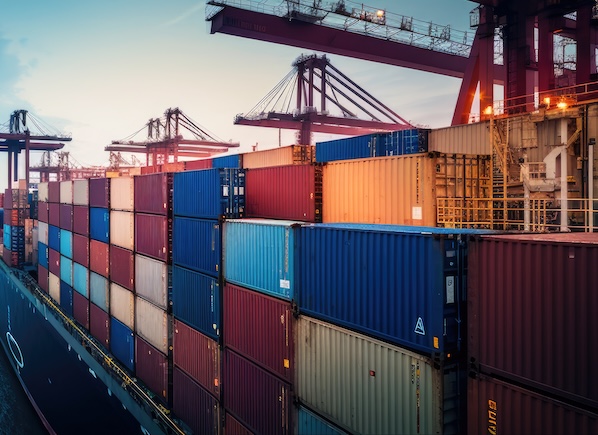
Container ship carrying container boxes import export dock with quay crane. Business commercial trade global cargo freight shipping logistic and transportation worldwide oversea concept. Generative AI
Economic Updates
Philippines Trade Update: Wider deficit on strong imports
DOWNLOAD
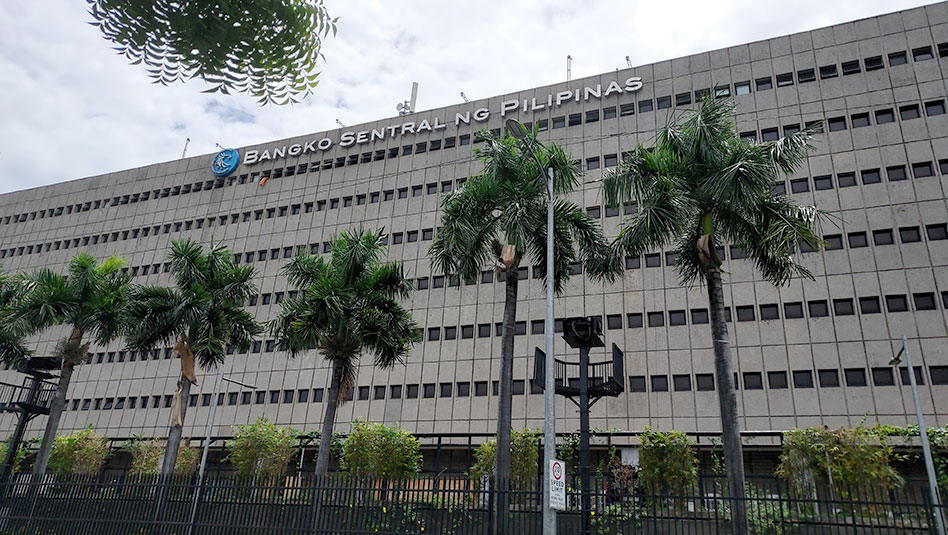
Frick collection with palm trees 
Economic Updates
Policy Rate Updates: Policy rate updates to reassure 
DOWNLOAD
Man using his smartphone
Reports
Fed to cut just once 
DOWNLOAD
View all Reports
Metrobank.com.ph How To Sign Up
Follow us on our platforms.

How may we help you?

TOP SEARCHES
  • Where to put my investments
  • Reports about the pandemic and economy
  • Metrobank
  • Webinars
  • Economy
TRENDING ARTICLES
  • Investing for Beginners: Following your PATH
  • On government debt thresholds: How much is too much?
  • Philippines Stock Market Outlook for 2022
  • Deficit spending remains unabated

Login

Access Exclusive Content
Login to Wealth Manager
Visit us at metrobank.com.ph How To Sign Up
Access Exclusive Content Login to Wealth Manager
Search
MODEL PORTFOLIO THE GIST
NEWS AND FEATURES
Global Philippines Fine Living
INSIGHTS
INVESTMENT STRATEGY
Economy Stocks Bonds Currencies
THE BASICS
Investment Tips Explainers Retirement
WEBINARS
2024 Mid-Year Economi Briefing, economic growth in the Philippines
2024 Mid-Year Economic Briefing: Navigating the Easing Cycle
June 21, 2024
Investing with Love
Investing with Love: A Mother’s Guide to Putting Money to Work
May 15, 2024
retirement-ss-3
Investor Series: An Introduction to Estate Planning
September 1, 2023
View All Webinars
DOWNLOADS
Container ship carrying container boxes import export dock with quay crane. Business commercial trade global cargo freight shipping logistic and transportation worldwide oversea concept. Generative AI
Economic Updates
Philippines Trade Update: Wider deficit on strong imports
March 27, 2026 DOWNLOAD
Frick collection with palm trees 
Economic Updates
Policy Rate Updates: Policy rate updates to reassure 
March 26, 2026 DOWNLOAD
Man using his smartphone
Reports
Fed to cut just once 
March 19, 2026 DOWNLOAD
View all Reports

Archives: Business World Article

Philippine-US alliance to remain stable, analysts say

Philippine-US alliance to remain stable, analysts say

Philippine-US economic and defense ties are not expected to change abruptly regardless of who wins the US presidential race, with both ex-President Donald Trump and Vice-President Kamala Harris likely to keep the trend of rising trade restrictions and strategic competition with China, analysts said.

Heightened geopolitical tension and de-risking trends will prevail especially in Asia, where the implications will be significant regardless of who wins, they added.

Growing bipartisan focus on the Indo-Pacific region amid the United States’ efforts to catch up with China’s manufacturing might — and against the backdrop of growing concern with the Asian superpower’s expansionist ambition — helps cement its ties with the Philippines on the economic front, said Joshua Bernard B. Espeña, vice-president at the international Development and Security Cooperation.

“The bipartisan consensus puts a steady trend that the alliance will continually be relevant,” he said in an e-mail. “The relationship between the two will remain stable after all pressures at the global security and economic levels.”

Millions of Americans on Tuesday began voting in what is considered to be one of the most important presidential elections in decades. Mr. Trump and Ms. Harris are almost tied in opinion polls, with experts saying the winner will likely be determined by voters in swing states.

Mr. Trump has pushed protectionist policies and pledged to turn the US into a manufacturing superpower. He is seeking 60% or higher tariffs on all Chinese goods and a 10% universal tariff.

Ms. Harris, who became the Democratic Party’s candidate after President Joseph R. Biden withdrew from the race, has pushed abortion rights and vowed to help working and middle-class families by restoring child tax credits and earned income tax credits, and pledged to increase taxes on corporations and long-term capital gains.

Ms. Harris has also vowed to make the US a leader in the “industries of the future” such as semiconductors, clean energy and artificial intelligence.

“It is unlikely that the US will back off from its economic and national security commitments to the Philippines, given the strategic importance of this alliance,” said Victor Andres C. Manhit, president of think tank Stratbase ADR.

“The US has consistently emphasized its commitment to supporting the Philippines, especially in the context of shared democratic values and regional stability in the Indo-Pacific.”

It was Mr. Trump who promoted the concept of a “free and open Indo-Pacific,” mentioning it during the Asia-Pacific Economic Forum in the Philippines in 2017.

Mr. Biden has widely supported the concept, launching an Indo-Pacific Economic Framework (IPEF) in 2022 with a dozen initial partners.

Manila joined the informal economic grouping in the same year and signed a supply-chain agreement along with other members in 2023.

Under IPEF’s Partnership Global Infrastructure and Investment (PGI), the US and its biggest ally in the region, Japan, will support connectivity between Subic Bay, Clark, Manila and Batangas.

Called the Luzon Economic Corridor, the project seeks to focus on “high-impact” infrastructure such as rails and ports and strategic investments involving semiconductors, clean energy, and supply chains.

“The Philippines has a trade surplus with the US in 2023. However, unlike China, the Philippine’s trade surplus does not appear to be a big threat to US interests,” said George N. Manzano, who teaches trade at the University of Asia and the Pacific.

“The Philippines is deemed to be an important ally of the US, and this would weigh in the context of security issues in the West Philippine Sea,” he said in an e-mail.

The US has consistently cited its “ironclad commitment” to the Philippines amid China’s intrusions into Manila’s exclusive economic zone in the South China Sea, which has become one of the major geopolitical hotspots in recent years.

China is the Philippines’ largest source of imports and second-biggest export market. The US, meanwhile, is the largest market for Philippine exports, and the fourth-largest source of imports last year.

While Philippine-US ties on the economic front will likely remain stable whoever wins in the race, Manila should keep a close eye on the potential impact of a Trump presidency on the Philippine business processing outsourcing (BPO) sector, said public investment analyst and InfraWatch PH convenor Terry L. Ridon.

“We should monitor the impact of a second Trump presidency on the country’s BPO sector, which is a major pillar of our economic growth, given that he is proposing an America First policy on jobs,” he said in a Facebook Messenger chat.

Defense and security concerns will be the most stable aspects of Philippine-US ties whoever wins in the US presidential race, Mr. Espeña said.

“However, both candidates do not demonstrate signals regarding the Philippines’ opportunity to acquire cheaper defense packages, say the Multirole Fighter (MRF) Acquisition Project,” he noted. “So, they need to step up on this one.”

Philip Arnold Tuaño, dean of the Ateneo School of Government, said a Trump victory could lead to a gradual withdrawal of American leadership from geopolitical issues, which may include the South China Sea.

“Foreign assistance and defense cooperation will be more constrained under a Trump administration, and the cooperation in forwarding democratic norms and human rights will take a backseat in our relationships,” he said in an e-mail.

“It is also possible that we will also see an increase in tariffs of American imports from the Philippines given candidate Trump’s announcements of greater trade barriers with other countries,” he added.

Still, Philippines-US relations would not change substantially immediately after the US elections “given that American and Philippine bureaucracies have had good relationships and have strengthened communication ties, especially after a couple of years of resetting of the ties by the Marcos administration.”

One thing is for sure, said Mr. Tuaño, and that is whoever wins, “the Marcos government will still continue to press for an expansion of US-Philippine relationships given that the US is our traditional security and economic ally in the face of geopolitical tensions.”

Hansley A. Juliano, who teaches politics at the Ateneo, said the Democratic Party is inclined to continue the “pivot to Asia” and persist in playing its part in global governance amid China’s increasing aggression.

“The Republican Party is clearly a machinery of patronage that intends to contract American commitments to global governance in the name of white supremacy and support for authoritarian regimes,” he added.

Mr. Manhit said the Marcos administration has made efforts to cement US-Philippine ties, citing the expansion of the 2015 Enhanced Defense Cooperation Agreement and high-level visits by US officials to Manila.

“Over the past year, the Philippines has shown a clear commitment to strengthening ties with the US through various strategic moves and agreements, particularly in defense and economic collaboration,” he said. – Kyle Aristophere T. Atienza, Reporter

Stocks back above 7,200 after within-target inflation

Stocks back above 7,200 after within-target inflation

Philippine shares rebounded to the 7,200 level on Tuesday as October inflation remained within the central bank’s annual target.

The benchmark Philippine Stock Exchange index (PSEi) rose by 1.7% or 121.84 points to close at 7,257.94 on Tuesday, while the broader all shares index increased by 1.05% or 41.85 points to end at 3,993.51.

“The local market bounced back this Tuesday as inflation remained near the lower end of the government’s 2-4% target,” Philstocks Financial, Inc. Senior Research Analyst Japhet Louis O. Tantiangco said in a Viber message.

“Philippine shares made a huge comeback as the October consumer price index came in within expectations as at 2.3%,” Regina Capital Development Corp. Head of Sales Luis A. Limlingan said in a Viber message.

Headline inflation picked up to 2.3% in October from 1.9% in September, the Philippine Statistics Authority reported on Tuesday.

Still, this was slower than the 4.9% print in the same month last year. This was also within the Bangko Sentral ng Pilipinas’ (BSP) 2%-2.8% forecast for the month and a tad below the 2.4% median estimate in a BusinessWorld poll of 11 analysts.

For the first 10 months, the consumer price index averaged 3.3%, well within the BSP’s 2-4% target for the year but above its 3.1% baseline forecast.

“Wall Street slipped Monday as investors eyed the upcoming US presidential election and a potential US Federal Reserve rate cut. The 10-year Treasury yield fell to 4.3%, signaling a shift to safe assets ahead of election day,” Mr. Limlingan added.

US stock indexes were trading flat to lower on Monday, as investors braced for a pivotal week for global markets in which Americans will elect a new president and the Federal Reserve is likely to cut its benchmark policy rate, Reuters reported.

Choppy trading is likely in the wait for the election outcome and due to a lack of clarity on the policy implications. Investors, meanwhile, remained largely sure of a 25-basis-point rate cut by the Fed in its November meeting, whose decision is expected on Thursday.

Back home, all sectoral indices closed higher on Tuesday. Property gained by 3.37% or 93.03 points to end at 2,849; financials climbed by 1.73% or 40.04 points to 2,351.13; industrials surged by 1.44% or 142.33 points to 9,970.31; services went up by 0.64% or 14.22 points to 2,204.98; holding firms increased by 0.63% or 38.42 points to 6,135.48; and mining and oil rose by 0.01% or 1.57 points to 8,488.76.

Value turnover increased to PHP 4.97 billion on Tuesday with 1.03 billion shares changing hands from the PHP 4.65 billion with 588.45 million issues traded on Monday.

Advancers outnumbered decliners, 115 versus 89, while 52 names were unchanged.

Net foreign selling dropped to PHP 58.2 million on Tuesday from PHP 777.98 million on Monday. — R.M.D. Ochave with Reuters

Manufacturing growth slows in October

Manufacturing growth slows in October

Philippines manufacturing expanded for a 14th month in a row in October, but the pace of growth slowed month on month amid a softer rise in new orders and output, S&P Global said on Monday.

At the same time, manufacturing firms ramped up hiring, with job creation hitting an 88-month high.

The S&P Global Philippine Manufacturing Purchasing Managers’ Index (PMI) stood at 52.9 in October, slowing from the 27-month high of 53.7 in September. This was the second-fastest reading since January 2023.

Manufacturing Purchasing Managers’ Index (PMI) of select ASEAN economies, October 2024

An above 50 PMI reading signals an improvement in operating conditions, while a reading below 50 indicates a deterioration.

“October PMI data indicated a slight easing in — but still solid — growth across the Filipino manufacturing sector. The expansion in new orders was again robust, allowing goods producers to raise their output again,” Maryam Baluch, economist at S&P Global Market Intelligence said in a report.

The Philippines’ PMI — a composite single-figure indicator of manufacturing performance — has posted an above 50 reading every month since September 2023.

The Philippines logged the highest PMI reading among the five Association of Southeast Asian Nations (ASEAN) countries in October, followed by Vietnam (51.2) and Thailand (50).

Meanwhile, Malaysia (49.5), Indonesia (49.2), and Myanmar (48.4) recorded contractions in October.

Philippine PMI was also above the region’s average reading of 50.5, which was unchanged from September, S&P Global said.

The headline PMI measures manufacturing conditions based on the weighted average of five indices. It includes new orders (30%), output (25%), employment (20%), suppliers’ delivery times (15%) and stocks of purchases (10%).

S&P Global said Philippines PMI data reflected a “sustained and solid” improvement in manufacturing operating conditions in October.

Despite a slowdown, new orders grew for the 15th consecutive month, while output expanded for a seventh straight month.

“The recent increases outpaced their series averages, driven by a growing customer base that strengthened underlying demand trends,” it said.

Stronger demand allowed manufacturing firms to significantly raise staffing levels in October.

“Filipino goods producers ramped up hiring, with the recent wave of job creation marking the most significant increase since mid-2017,” it said.

With more workers, manufacturing firms managed to address the slight buildup of backlogs and keep up with current production requirements.

At the same time, the improvement in demand allowed companies to boost purchasing activity, but at a weaker pace than the previous month.

“Firms stated that higher prices of raw materials often dissuaded firms from purchasing inputs,” S&P Global said.

This prompted firms to use their existing inventory for orders, with pre-production inventories falling for the first time since February. Stocks of finished goods were depleted for a third month in a row, and at the sharpest rate since January 2022.

Supply chains continued to be stretched in October, with shortages of raw materials due to port congestion.

“Firms revealed supply-side challenges, with material shortages resulting in longer delivery times, and cooling buying activity. It was also one of the key factors for rising input prices, which was further exacerbated by the depreciation of the peso against the dollar,” Ms. Baluch said.

S&P Global noted the rate of input price inflation rose to an eight-month high in October.

The peso closed at P58.10 per dollar on Oct. 31, weakening from the P56.03 close on Sept. 30.

Manufacturing firms are positive that current demand trends will continue in the next 12 months.

“Nonetheless, firms remain optimistic with more than half of respondents anticipating expansion in the year ahead,” Ms. Baluch said.

‘Bright spot’

“The Philippines is the only real lone bright spot in terms of recent momentum, though its September pop to 53.7 cooled to 52.9 last month and the impact of this still-sturdy gain won’t really be felt regionally due to the country’s relatively small manufacturing sector,” Pantheon Macroeconomics said in an e-mailed statement.

For the ASEAN region, Pantheon said the result was “softer than we expected” as the manufacturing sector recovered from typhoons.

“The generally improved PMI rates in the last two months can be attributed to pent-up demand which had been released by lower inflation rates as the easing of interest rates,” Leonardo A. Lanzona, an economics professor at the Ateneo de Manila University told BusinessWorld via Facebook Messenger.

He noted that companies typically boost production in the months ahead of the holidays in anticipation of stronger demand.

“As the country’s manufacturing base increases and the Christmas season completes by the end of the year, expect the growth rate of PMI to be much lower,” Mr. Lanzona said.

However, he noted supply-side issues, including the lack of skills and the poor adaptation of new technologies, continue to weigh on the manufacturing sector.

“Manufacturing may continue to grow given increased local demand during the holidays and foreign demand as trade liberalization takes further effect,” John Paolo R. Rivera, president, and chief economist at Oikonomia Advisory & Research, Inc. told BusinessWorld via Viber Message.

Meanwhile, Ma. Teresita Jocson-Agoncillo, executive director at the Confederation of Wearable Exporters of the Philippines, said wearables manufacturing remains slow as of end-September.

“We are at an average — 3% to 5% growth vis-a-vis at the same period last year. The recent wage hike increase across major regions — Regions 3, 4A and B, Region 7, and NCR — had an impact on Spring-Summer 2025 orders. These orders were directed to more competitive ASEAN countries,” she told BusinessWorld in a Viber message. – Aubrey Rose A. Inosante, Reporter

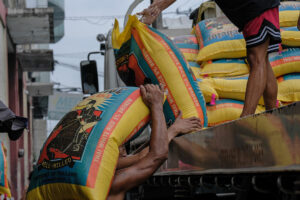
Rice inflation seen to further ease

Rice inflation seen to further ease

The continued decline in rice prices, which typically accounts for nearly half of overall inflation, is set to pave the way for further monetary easing, analysts said.

“With the price of the biggest staple in the Filipino consumer basket set to ease further, we think the door for the central bank to continue its measured easing cycle remains wide open,” Aris D. Dacanay, economist for ASEAN (Association of Southeast Asian Nations) at HSBC Global Research said.

“With low tariffs and the harvest season, rice prices in Metro Manila appear to be on a downtrend,” Metrobank Research said in a report.

The executive order slashing tariffs on rice imports, which took effect in July, has led to a decline in rice prices on a monthly basis.

President Ferdinand R. Marcos, Jr. ordered rice tariffs to be cut to 15% from 35% previously, until 2028.

At end-October, the average price of well-milled rice ranged from PHP 43 to PHP 54 per kilogram, lower than the PHP 47-to-PHP 55 range at end-September, data from the Agriculture department showed.

Meanwhile, regular milled rice cost PHP 40 to PHP 50 per kilogram from PHP 45 to PHP 50 per kilogram a month ago.

“Still, costs of the grain remain above their October 2023 levels. We expect annual rice inflation to be positive in October, though it should remain in the single digits due to a high base from a year ago,” Metrobank Research said.

Rice inflation sharply slowed to 5.7% in September from 14.7% in August and 17.9% a year ago. This also marked the lowest rice inflation since the 4.2% print in July 2023.

Headline inflation likely quickened to 2.4% in October from 1.9% in September, according to a BusinessWorld poll of 11 analysts conducted last week.

“We believe inflation quickened to 2.3% in October from 1.9% in September. We expect that the recent typhoons resulted in higher prices for key food items such as vegetables, fruits, and fish,” Philippine National Bank economist Alvin Joseph A. Arogo said in an e-mail.

Mr. Dacanay said that while base effects caused inflation to reaccelerate in October, overall, the headline print is seen to “have remained benign.”

“The biggest deflationary pressure was rice as global rice prices finally eased,” he added.

Chinabank Research said that inflation will likely continue to stay below 3% amid the lower rice tariffs and base effects.

“Looking ahead, we expect inflation to remain within target, barring any unexpected shocks… This favorable inflation outlook, combined with anticipated further rate cuts from the Fed, boosts the case for another rate cut by the BSP at its next policy meeting in December,” it added.

Bangko Sentral ng Pilipinas (BSP) Governor Eli M. Remolona, Jr. has said that the Monetary Board could possibly cut rates by another 25 basis points (bps) at its last meeting this year on Dec. 19.

The central bank has so far cut borrowing costs by a total of 50 bps since it began its easing cycle in August.

Mr. Remolona has also signaled further rate cuts next year, possibly by a total of 100 bps.

Metrobank Research also expects inflation to continue to settle within the 2-4% target band.

“Should price risks — from oil and other commodities amid geopolitical tensions and extreme weather disturbances — not materialize, Metrobank Research maintains that full-year headline inflation should remain within the BSP’s target,” it added.

On the other hand, Federation of Free Farmers National Manager Raul Q. Montemayor said that rice prices have not fallen fast enough even with the tariff cut.

“The reduction in prices for both regular and well-milled rice are far off initial expectations of a PHP 6 to PHP 7 fall in prices per kilo arising from the tariff cut,” he said in a Viber message.

“Clearly, the tariff reduction has not worked in reducing retail prices. In the meantime, tariff revenues have fallen together with palay prices.”

Mr. Montemayor said that retail prices normally fall during harvest months due to the added supply.

“But the recent typhoons could temper the reduction in retail prices because of their impact on supply,” he said.

“Imports continue to come in, but it seems that the importers and traders are keeping most of the tariff savings for themselves instead of passing it on to consumers,” he added.

The Department of Agriculture earlier said that palay (unmilled rice) production will likely decline by 3.24% this year amid crop losses due to adverse weather conditions. – Luisa Maria Jacinta C. Jocson, Reporter

AI adoption may slow office space demand — Cushman & Wakefield

AI adoption may slow office space demand — Cushman & Wakefield

The adoption of artificial intelligence (AI) among businesses, especially in the information technology-business process outsourcing (IT-BPO) industry, may slow the growth in demand for office spaces, according to real estate services firm Cushman & Wakefield.

“The increasing use of AI advancements, especially in the IT-BPM industry, could potentially limit the demand growth for office spaces in key markets if stakeholders do not fully adapt to these changes,” Claro dG. Cordero, Jr., director and head of research, consulting & advisory services at Cushman & Wakefield, said in a report released on Monday.

“AI-driven technologies like virtual assistants, chatbots, and automated customer service interfaces have replaced human roles due to their improved efficiency, service quality, and cost-effectiveness,” he added.

Despite AI advancements, Mr. Cordero also said, human intervention is needed for data analytics and complex customer service.

Last month, BMI, a unit of Fitch Solutions, said the Philippines’ BPO industry might shrink as AI use in workplaces grows.

AI helps companies bring call centers back to developed countries at a lower cost, BMI Head of Asia Country Risk Darren Tay said in a webinar.

“It is crucial for industry stakeholders to develop policies and programs that equip and upskill workers…with the necessary technical skills,” Mr. Cordero said.

AI is just one of the key factors disrupting the market, alongside global geopolitical events, according to Cushman & Wakefield.

In the Philippines, the immediate challenges are the total ban on Philippine Offshore Gaming Operators (POGOs) and the implementation of the CREATE MORE Bill, which supports flexible work arrangements and will likely result in more vacant spaces, according to the real estate services firm.

By the end of the third quarter, the vacancy rates for prime and grade “A” office buildings in Metro Manila increased by 280 basis points (bps) from the previous quarter and by 136 bps year over year, Cushman & Wakefield said.

The average vacancy rate hit 18.2%, the highest recorded by Cushman & Wakefield Research since the second quarter of 2004, reflecting a rise of over 1,380 bps since the second quarter of 2020.

In the third quarter, the market saw an influx of 114,000 square meters (sq.m.) of new office space.

Coupled with a substantial amount of office space being vacated as major corporations reassessed their office requirements, this has led to an increase in the overall volume of vacant office space, the consultancy firm said.

Average asking rents for prime and grade A office spaces saw a slight decline in the third quarter, continuing a trend of four consecutive quarters of decreases.

The average headline rent for these developments in Metro Manila settled at PHP 1,003 per sq.m. per month, down by 67 bps from PHP 1,010 per sq.m. per month in the previous quarter, and by 363 bps from PHP 1,041 per sq.m. per month in the same quarter last year, the firm said.

“The Metro Manila office market is exhibiting a slower-than-expected recovery in Q3 2024. Overall vacancy rates have steadily increased and average headline rents have marginally declined again this quarter, making the market more favorable for tenants,” said Tetet Castro, director and head of Tenant Advisory Group at Cushman & Wakefield.

“The initial effects of the total POGO ban and amendments to the CREATE Bill are already being felt in Q3 2024. Several returns of office space are observed, this coupled with the completion of new developments, have resulted in the increase in overall vacancies. In the medium term, elevated vacancy rates and lower headline rents in the Metro Manila office market are expected.” — B.M.D. Cruz

Poll: GDP growth likely cooled in Q3

Poll: GDP growth likely cooled in Q3

The Philippine economy likely slowed in the third quarter as household spending remained muted after the central bank cut interest rates in August.

A BusinessWorld poll of 12 economists and analysts conducted last week yielded a median gross domestic product (GDP) annual growth estimate of 5.7% for the July-to-September period.

If realized, it would mark a slowdown from the 6.3% growth in the previous quarter and the 6% expansion in the third quarter of 2023.

Q3 2024 GDP growth forecast

This would also bring the year-to-date growth to 5.9%, just below the 6-7% target for the year.

The Philippine Statistics Authority (PSA) is scheduled to release third-quarter GDP data on Thursday (Nov. 7). 

Most economists polled by BusinessWorld said GDP growth likely slowed as elevated inflation may have tempered household spending in the third quarter.

“On the demand side, household consumption was still the primary driver of growth, though it may have remained subdued due to persisting price pressures,” said Chinabank Research, which projected a 5.7% GDP growth in the third quarter.

Inflation quickened to a nine-month high of 4.4% in July but slowed to 3.3% in August. Inflation further eased to a four-year low of 1.9% in September, settling below the 2-4% target. In the first nine months, consumer price growth averaged 3.4%, which is also the central bank’s forecast for the year.

“We expect growth in 3Q 2024 to have cooled to 5.7% year on year as public spending, both in consumption and investment, moderated. Though the central bank did begin its easing cycle during the quarter, we don’t think the change in the monetary stance had affected [the third-quarter] growth,” HSBC ASEAN (Association of Southeast Asian Nations) economist Aris D. Dacanay said in an e-mail.

The Bangko Sentral ng Pilipinas (BSP) began its easing cycle with a 25-basis-point (bp) cut at its Aug. 15 meeting, followed by another 25-bp reduction at its Oct. 16 meeting. This brought the target reverse repurchase rate to 6%.

“Private consumption will stay muted as it will take time for the recent rate cuts to filter through the economy,” said Sarah Tan, an economist at Moody’s Analytics.

Patrick M. Ella, economist at Sun Life Investment Management and Trust Corp., said third-quarter GDP likely expanded by 6%. This, as he expects household spending to have grown by 5%-5.5% in the period ending September from 4.6% seen in the second quarter.

He noted the rate cut’s effect could be seen in “both improved liquidity and a firmer expectation of lower forward inflation.”

Angelo B. Taningco, vice-president and Research Division head at Security Bank Corp., said third-quarter growth may have also been driven by “healthy” government spending, “resilient” capital formation, and a wider trade deficit.

Government spending jumped by more than a tenth to PHP 4.26 trillion in the first nine months, breaching the PHP 4.22-trillion program for the period.

So far, the government has already disbursed almost three-fourths of its PHP 5.8-trillion revised spending program this year.

“Continued public and private construction activities continued to support growth in capital formation,” said Chinabank Research.

Ser Percival K. Peña-Reyes, director of the Ateneo Center for Economic Research and Development, said in an e-mail that construction, transport and storage, and accommodation and food service activities also likely drove GDP expansion to 6.5% in the third quarter.

However, some economists noted adverse weather conditions in the July-to-September period may have hurt agricultural output, which accounts for around 10% of GDP.

“With farm output challenged by recent typhoons and strong monsoon rains, the nonfarm GDP driven by private sector spending, would probably do much of the heavy lifting for 3Q24 GDP to rise by 6.2% year on year,” Ruben Carlo O. Asuncion, chief economist of Union Bank of the Philippines, said.

Chinabank Research said agriculture likely remained “a drag” on third-quarter growth as output declined due to bad weather.

For instance, the effect of Super Typhoon Carina and the enhanced southwest monsoon left around PHP 4.73 billion worth of agricultural damage, affecting farmers and fisherfolk mostly in Luzon.

Third-quarter agricultural output data will be released on Wednesday.

“On the supply side, services continued to power the economy but may have moderated amid lackluster consumption,” Chinabank Research said.

Mr. Asuncion also noted that recent disinflation, strong employment generation by the services sector in August, and robust manufacturing are “clear signals of positive macro catalysts during the quarter.”

Outlook

“Overall, we expect the Philippine economy to grow 5.9% in 2024,” Moody’s Analytics’ Ms. Tan said. “That will be just shy of the government’s 6% to 7% target for the year but will again outperform many of its regional peers in terms of growth.”

Harumi Taguchi, principal economist at S&P Global Market Intelligence, said they expect “lower borrowing costs and softer financial conditions to lift household and business sentiment and lift credit growth in 2025.”

“Overall economic performance is expected to remain on an uptick even though the impact from previous policy rate hikes suppress investment in the private sector. While robust infrastructure spending will drive economic activity, a steady increase in remittance will support private consumption,” Ms. Taguchi said.

John Paolo R. Rivera, senior research fellow at Philippine Institute for Development Studies, said he maintains an optimistic outlook for the rest of the year as a rise in remittances ahead of the holidays is expected to boost consumer spending.

HSBC’s Mr. Dacanay said he expects growth in household consumption to “finally change direction for the better as inflation significantly eased over the quarter.”

“Services exports also likely remained unperturbed with the BPO (business process outsourcing) sector leading the charge while goods exports likely held its ground,” he said. — Pierce Oel A. Montalvo

GOCC subsidies decline by 14% in September

GOCC subsidies decline by 14% in September

Subsidies provided to government-owned and -controlled corporations (GOCCs) dropped by an annual 14% in September, according to the Bureau of the Treasury (BTr).

The latest data from the Treasury showed that budgetary support to GOCCs declined by 14.33% to PHP 18.22 billion in September from PHP 21.26 billion in the same month a year ago.

Month on month, GOCC subsidies doubled (100.19%) from PHP 9.1 billion in August.

State-owned firms receive monthly subsidies from the National Government (NG) to support their daily operations if their revenue is insufficient.

In September, the Philippine Health Insurance Corp. (PhilHealth) received the biggest amount of subsidies at PHP 9.34 billion, accounting for 51.27% of the total.

This was the second time PhilHealth received subsidies this year, after the PHP 260 million it got in June.

The National Irrigation Authority (NIA) received the second-biggest amount of government subsidies for the month at PHP 5.5 billion, followed by the National Electrification Administration at PHP 1.01 billion.

Several GOCCs received at least PHP 200 million in subsidies, including the Philippine Crop Insurance Corp. (PHP 353 million), Philippine Heart Center (PHP 348 million), Social Housing Finance Corp. (PHP 284 million), and the National Kidney and Transplant Institute (PHP 223 million).

At least PHP 100 million in subsidies were given to the Philippine National Railways (PHP 171 million), Philippine Children’s Medical Center (PHP 151 million), National Power Corp. PHP (144 million), and the Philippine Coconut Authority (P112 million).

State-owned corporations that received at least PHP 50 million include the Cultural Center of the Philippines with PHP 80 million, Light Rail Transit Authority with PHP 72 million, Lung Center of the Philippines with PHP 70 million, Development Academy of the Philippines with P64 million, and the Tourism Promotions Board with PHP 54 million.

In September, no subsidies were given to the Bangko Sentral ng Pilipinas, National Home Mortgage Finance Corp., Philippine Deposit Insurance Corp., Small Business Corp., and the National Housing Authority.

GOCCs that also received zero subsidies during the month include the National Food Authority, Bases Conversion and Development Authority, Philippine Fisheries Development Authority, Philippine Postal Corp., Power Sector Assets and Liabilities Management Corp. (PSALM), and the Tourism Infrastructure and Enterprise Zone Authority.

In the January-September period, GOCC subsidies fell by 23.25% to PHP 105.24 billion from PHP 137.13 billion in the same period last year.

The NIA remained the top recipient of subsidies in the nine-month period with PHP 54.38 billion, followed by PhilHealth (PHP 9.6 billion), and PSALM (PHP 8 billion).

Rizal Commercial Banking Corp. Chief Economist Michael L. Ricafort said that GOCCs received less subsidies in September “amid the need to better manage/narrow the NG budget deficit through more disciplined government spending.”

As of end-September, the NG’s fiscal gap slightly narrowed by 1.35% to PHP 970.2 billion from PHP 983.5 billion a year ago.

“Subsidies decline for a host of reasons, likely due to: funding reallocation from subsidy to calamity response and recovery, social amelioration and protection programs; and the increased profits of GOCCs — warranting the NG to reallocate funds for other pressing matters like infrastructure spending, DRRM (disaster risk reduction and management) response, and social protection programs,” Philippine Institute for Development Studies Senior Research Fellow John Paolo R. Rivera said via Viber.

In the coming months, the government must increase its subsidies to GOCCs that are involved in education and nutrition, Mr. Ricafort said.

“GOCCs [that should receive higher subsidies] include those needed by the poorest of the poor, and those that would have the greatest impact in society such as healthcare, nutrition, even others related to education and boosting productivity,” he said in a Viber message. — Beatriz Marie D. Cruz

National government debt hits record PHP 15.89 trillion

National government debt hits record PHP 15.89 trillion

The national government’s (NG) outstanding debt rose to a fresh high of PHP 15.89 trillion as of end-September, but the Bureau of the Treasury (BTr) said this level is still “manageable.”

Data from the BTr on Wednesday showed that outstanding debt jumped by 2.2% to PHP 15.89 trillion as of end-September from PHP 15.55 trillion as of end-August.

“The total outstanding debt had a minimal increase of 2.2% compared to the end-August 2024 level due to the net availment of new external and domestic debt,” the BTr said in a statement.

National Government outstanding debtYear on year, the debt stock increased by 11.4% from PHP 14.27 trillion a year ago.

“Nevertheless, the NG’s strategic focus on local fundraising allows the government to limit external risk exposure to only 31.19% of its debt portfolio, while enabling the development of the local bond market and providing Filipinos with quality investment vehicles to grow their savings,” the Treasury said.

The bulk, or 68.81% of the total debt stock, came from domestic sources.

As of end-September, outstanding domestic debt inched up by 1.3% to PHP 10.94 trillion from PHP 10.79 trillion in the previous month. Government securities accounted for nearly all of domestic debt.

Year on year, domestic debt increased by 12.3% from PHP 9.73 trillion.

“This (increase) was mainly driven by PHP 145.11-billion net issuance of new government securities, which was slightly offset by a PHP 460-million decrease in the value of US dollar-denominated securities due to the appreciation of the Philippine peso,” the BTr said.

Meanwhile, external debt rose by 4.2% to PHP 4.96 trillion at end-September from PHP 4.76 trillion at end-August, the BTr said. It also jumped by 9.3% from PHP 4.53 trillion in the same period a year ago.

The uptick in foreign debt was due to the P200.89 billion in net foreign borrowings, including the PHP 140.99 billion or USD 2.5-billion issuance of triple-tranche US dollar-denominated global bonds, BTr said. The transaction was finalized in September.

“Nevertheless, favorable foreign exchange adjustments contributed a substantial decrease of P2.43 billion in the overall external debt.”

The peso closed at PHP 56.017 against the US dollar at the end of September, appreciating by 16.2 centavos from its PHP 56.179 finish at the end of August.

External debt comprised of PHP 2.32 trillion in loans and PHP 2.64 trillion in global bonds.

Broken down, government securities consisted of PHP 2.25 trillion in US dollar bonds, PHP 215.23 billion in Euro bonds, PHP 59.11 billion in Japanese yen bonds, PHP 56.02 billion in Islamic certificates and PHP 54.77 billion in peso global bonds.

Meanwhile, the NG’s guaranteed obligations at end-September increased by 2.4% to PHP 372.86 billion from PHP 364.03 billion as of end-August. It also picked up by 2.9% from P362.22 billion in the same period in 2023.

“This was mainly driven by the PHP 12.3 billion in new guarantees for the Power Sector Assets and Liabilities Management Corp. (PSALM) and the National Food Authority (NFA), as well as PHP 940 million in upward revaluation of third currency-denominated guarantee,” the Treasury said.

“Net repayments of PHP 3.95 billion and P460 million downward revaluation of US dollar-denominated guarantees tempered the increase,” it added.

Rizal Commercial Banking Corp. Chief Economist Michael L. Ricafort said in a Viber message that the increase in debt was mainly due to increased borrowings to plug the budget deficit.

For the first nine months of 2024, the budget deficit narrowed by 1.35% to PHP 970.2 billion from PHP 983.5 billion a year ago.

“Some maturity of government securities in October 2024 and seasonally lower NG borrowings towards the end of the year in view of the Christmas holiday season could at least temper the rise in additional NG debt,” Mr. Ricafort said.

At the end of June, the NG’s debt as a share of gross domestic product (GDP) was at 60.9%, still above the 60% threshold deemed by multilateral lenders as manageable for developing economies. It aims to lower the debt-to-GDP ratio to 60.6% by the end of 2024.

The NG’s debt stock is expected to hit PHP 16.06 trillion at the end of 2024, with PHP 10.92 trillion coming from domestic sources and PHP 5.13 trillion from foreign sources. — Beatriz Marie D. Cruz

Domestic demand key to insulating Philippines from US trade risks

Domestic demand key to insulating Philippines from US trade risks

The Philippines needs to boost domestic demand to insulate its economy from a potential setback on multilateralism, which is likely to happen if Donald J. Trump returns to power in the United States, according to economists.

“It’s not only the Philippines which will be adversely affected should the US pivot away from multilateralism, something of a certainty under a Trump presidency,” Diwa C. Guinigundo, country analyst for the Philippines of GlobalSource Partners, said in an e-mail.

The United States’ trading partners “will suffer from the consequences of a fundamentally closed trading system — higher tariffs will actually reduce US imports and growth, while its trading partners will have compressed markets, lower trading gains and economic growth,” he said.

Mr. Trump, the Republican candidate, faces Democratic rival and Vice-President Kamala Harris in the Nov. 5 presidential elections.

If he wins, Mr. Trump has said he will impose a 10% tariff on imports from all countries and 60% tariff on imports from China.

Philippine Finance Secretary Ralph G. Recto last week said a potential Trump presidency poses risks to global growth as increased protectionism could weaken global trade.

“We are concerned that there will be a setback on multilateralism, particularly in trade as well… We know that the driver of global growth is more trade. So, that is a concern,” Mr. Recto said at a briefing of the Intergovernmental Group of Twenty-Four (G24) Board of Governors in Washington, D.C. on Oct. 22.

Mr. Recto said the Philippines is counting on its relationship with the US to encourage firms to do more offshoring to the Philippines.

“If the US adopts a more protectionist stance, the Philippines, as a net exporter with a USD 2.3-billion trade surplus in goods trade with the US in 2023, could be negatively affected,” George N. Manzano, who teaches trade at the University of Asia and the Pacific, said in an e-mail.

“An across-the-board tariff increase by the US would adversely impact Philippine exports.”

But Mr. Manzano said it is an advantage for the Philippines that electronic products account for a huge chunk of its exports to the US, thanks in large part to a 1990s World Trade Organization (WTO) agreement that eliminated all import duties on many information technology products.

“Approximately 67% of the Philippines’ goods trade with the US in 2023 was in the electronics sector, which currently benefits from duty-free access, likely due to the Information Technology Agreement (ITA) under the WTO,” he said.

Electronic products accounted for 52.9% of the country’s total exports in August, with total earnings of USD 3.57 billion, according to the statistics agency.

The United States was the top destination of Philippine-made goods in August with an export value of USD 1.22 billion, accounting for 18.1% of the total. This was followed by Hong Kong (USD 942.56 million), Japan (USD 935.33 million), People’s Republic of China (USD 849.38 million), and Republic of Korea (USD 332.64 million).

Impact on BPO sector

“The Philippines could likely be more affected in the business process outsourcing (BPO) area considering our comparative advantage in this sector relative to other Southeast Asian countries,” said Mr. Guinigundo, a former central bank deputy governor.

The IT and Business Process Association of the Philippines (IBPAP) is aiming to generate USD 38 billion in revenues and increase the headcount to 1.82 million this year. The group is targeting to generate as much USD 59 billion and employ 2.5 million by 2028.

However, the IT-BPM sector is under pressure due to a talent and skills gap, rising operating costs, and increased global competition.

Fitch Solutions’ BMI unit said earlier this month that the Philippine BPO sector is at a disadvantage amid the growing shift to artificial intelligence, noting a possible reshoring of call centers to “even developed economies cost effectively.”

“This is no win-win situation. Everybody would ultimately lose,” Mr. Guinigundo said, “China’s retaliatory response could in fact worsen this scenario.”

Mr. Trump’s recent policy remarks, including his famous America first policy and an emphasis on burden sharing, have stoked concerns that Washington could adopt an inward-looking and an isolationist approach.

During his presidency, Mr. Trump withdrew from various global institutions including the Paris Climate Agreement and the Trans-Pacific Partnership.

On the economic front, Mr. Trump has been citing the need to raise tariffs for the US to usher in an era of “manufacturing renaissance.”

On the other hand, Ms. Harris, the Democratic candidate, has vowed to “strengthen, not abdicate” America’s “global leadership.”

“The president of the United States must not look at the world through the narrow lens of ideology, petty partisanship, or as an instrument for their own ambitions,” read a recent X post by Ms. Harris, who is expected to uphold the Biden government’s strategy of cementing a network of US allies and partners to confront shared challenges.

Mr. Marcos has pursued closer ties with the United States amid China’s intrusions into Philippine waters, giving it access to four more military bases under the 2014 Enhanced Defense Cooperation Agreement.

US-Philippine ties on the economic front have also reached new highs, with a business delegation led by US Commerce Secretary Gina Raimondo in March vowing to help the Philippines set up a wafer fabrication plant and double the number of its semiconductor plants.

Weeks later, the US announced a plan to put up an economic corridor on the main island of Luzon, following a trilateral meeting among Mr. Marcos, Mr. Biden, and Japanese Prime Minister Fumio Kishida.

The project, a “key deliverable” under the Partnership for Global Infrastructure and Investment component of the US-led Indo-Pacific Economic Framework, will be pursued by Washington with the help of Japan.

Mr. Manzano said the US would likely be compelled to step up its ties with Asia-Pacific countries “to keep pace with the increasing influence of China in the Southeast Asian region.”

“The US will continue to deepen its relationship with the Philippines. President Marcos is inclined to deal more with the US than with China given the developments in the West Philippine Sea,” he said.

A report by Moody’s Analytics in July said the Asia-Pacific region faces the risk of an abrupt shift in US trade policy in case of a Republican sweep in the US presidential election.

But it expects “minimal retaliation” from the Philippines against potentially higher US tariffs given its strong defense ties with Washington.

Among Asia-Pacific economies, Moody’s said only China is likely to retaliate considering its ongoing trade with the US since 2018, when Mr. Trump slapped investment controls and tariffs on hundreds of billions of dollars’ worth of Chinese products due mainly to alleged unfair trade practices by Beijing.

Mr. Guinigundo said amid the trade risks, the Philippines needs to prioritize boosting domestic demand and enhancing trade with the ASEAN+3, which includes Japan, China and South Korea.

“Two things which may not completely offset possible trade shocks: one is to promote domestic demand, and two is to further stimulate our trade in both goods and services with our ASEAN+3 partners.”

Mr. Guinigundo said promoting domestic demand is anchored on lower inflation and higher economic growth driven by personal consumption and investments.

“The latest prognosis is quite positive because price movements have started to ease while GDP (gross domestic product) growth may be as targeted — between 6% and 7%,” he said.

He noted the Philippines has improved trade ties with its neighbors.

“Expanding the liberalized list and lowering tariffs can help in this direction,” he added. “Moreover, higher intra-ASEAN+3 financial linkages could further stimulate regional trade.”

Should there be a shift in US trade and foreign policies, Mr. Guinigundo said Manila should continue to improve its investment climate “to ensure private US business will continue to increase their stake here.”

“Trump’s public policy could restrict international trade only to a certain extent. If the Philippines is able to convince US businessmen and investors that the Philippines is good for business in the long term, they will and they will come,” he said.

“Let’s continue to ensure there is good governance here, corruption is under control, there is rule of law and respect for property rights and ease of doing business,” he added.

Meanwhile, Leonardo A. Lanzona, who teaches economics at the Ateneo de Manila University, said the Philippines is unlikely to suffer much from a potential protectionist trade policy in the US because the Southeast Asian nation has not benefited significantly from free trade.

“Trade works well if institutions are also reformed to encourage competition and greater efficiency. None of these has happened, resulting in a moribund manufacturing sector,” he said in an e-mail.

“Industries and elite power continued to drain the economy of its energy and vigor. Whether or not Trump wins, the overseas Filipino workers will remain our saving grace.” – Kyle Aristophere T. Atienza, Reporter

Households reliant on remittances may be more vulnerable to shocks

Households reliant on remittances may be more vulnerable to shocks

Filipino households’ heavy reliance on remittances could leave them more vulnerable during economic shocks, according to a Bangko Sentral ng Pilipinas (BSP) discussion paper, citing the low savings and investments among families.

The paper, authored by BSP Assistant Governor Veronica B. Bayangos and Research Associate Cymon Kayle Lubangco, said that households dependent on remittances could be at risk of external headwinds.

“A substantial decline in remittances would have serious consequences at both the macroeconomic and household levels. Vulnerable remittance-receiving households could face reduced access to education and healthcare, negatively affecting their quality of life,” the paper said.

“Local communities that rely heavily on remittances could experience economic disruptions. For instance, during the COVID-19 (coronavirus disease 2019) pandemic, families of overseas Filipino workers (OFWs) saved and invested less.”

BSP data showed the percentage of households that used remittances as savings dropped to 31.7% in the fourth quarter of 2021 from 33.4% in the same quarter of 2020. However, this improved to 32.1% in the first quarter of 2024.

Households that used remittances for investments also fell to 6.2% in the first quarter of 2024 from 11% in the third quarter of 2021.

“In our analysis, we find that OFW households prioritize immediate consumption over saving and investing,” the paper said.

In the first quarter of this year, the bulk (96.6%) of surveyed OFW households used their remittances for food and household needs.

“The saving rate for cash remittances peaked in 2009, where an average of 13.1% of cash remittances were allocated for savings. Since 2009, the average saving rate for cash remittances among OFW households has slightly declined to around 9.0-10.0%.”

“Despite slower remittance growth, data show that many households and rural communities still rely on remittances for their livelihood,” it added.

The BSP paper showed that migrant households’ immediate consumption is geared towards nonfood spending compared with non-migrant households.

“These nonfood commodities are largely welfare-inducing commodities such as health, education, and housing. The allocation towards productive consumption goods shows that remittances are treated as transitory income,” it added.

Unemployment and wages also impact remittance receipts, highlighting the “altruistic motivation of sending remittances,” according to the paper.

“However, given the global effect of such shocks, this may also expose remittance-receiving households to risks if their overseas Filipino members cannot send remittances due to the economic conditions in their respective host countries,” it said.

Household spending

Meanwhile, the BSP paper also showed that cash remittances “significantly affect household spending.”

“The inflow of remittances is positively influenced by the number of OFWs abroad, the unemployment rate, and the depreciation of the peso. Conversely, higher regional wages and bank transaction costs reduce remittances,” it said.

Latest data from the BSP showed cash remittances grew by 2.9% to USD 22.22 billion in the January-August period from USD 21.58 billion a year earlier.

The United States accounted for nearly half or 41.3% of overall remittances in the first eight months. This was followed by Singapore (7%), Saudi Arabia (6.1%), the United Kingdom (4.9%) and Japan (4.8%).

The BSP paper said that remittances are a key contributor to the economy as these “augment foreign currency reserves, alleviate pressure on the exchange rate, and reduce the need for foreign borrowing.”

“They also support capital market development, enabling recipients to accumulate productive assets and invest in financial instruments, while enhancing human capital. Remittances can also alleviate government financial burdens for social welfare programs.”

The central bank noted that as household income rises, consumption likewise increases.

It cited studies showing that household spending increases as migrants send home money to support their families, which is prominently seen in countries with “high unemployment and debt-laden households.”

However, the paper also noted that remittances have remained somewhat stable despite shocks such as the COVID-19 pandemic.

“Several factors explain the resilience of remittance flows to the Philippines during extreme economic conditions, such as the COVID-19 pandemic. Overseas Filipinos (OFs) are a diverse group, and their ability to remit varies with employment stability,” it said.

“OFs in essential sectors, such as healthcare, likely continued sending remittances, while those in more vulnerable sectors experienced declines.” – Luisa Maria Jacinta C. Jocson, Reporter

Posts navigation

Older posts
Newer posts

Recent Posts

  • Navigating precarious times with cost averaging
  • Trade Update: Wider trade deficit in February
  • Metrobank US-Iran Risk Index: No swift end seen
  • Investment Ideas: March 27, 2026
  • BSP Update: First rate hike likely in June 

Recent Comments

No comments to show.

Archives

  • March 2026
  • February 2026
  • January 2026
  • December 2025
  • November 2025
  • October 2025
  • September 2025
  • August 2025
  • July 2025
  • June 2025
  • May 2025
  • April 2025
  • March 2025
  • February 2025
  • January 2025
  • December 2024
  • November 2024
  • October 2024
  • September 2024
  • August 2024
  • July 2024
  • June 2024
  • May 2024
  • April 2024
  • March 2024
  • February 2024
  • January 2024
  • December 2023
  • November 2023
  • October 2023
  • September 2023
  • August 2023
  • July 2023
  • June 2023
  • May 2023
  • April 2023
  • March 2023
  • February 2023
  • January 2023
  • December 2022
  • November 2022
  • October 2022
  • September 2022
  • August 2022
  • July 2022
  • June 2022
  • May 2022
  • March 2022
  • December 2021
  • October 2021

Categories

  • Bonds
  • BusinessWorld
  • Currencies
  • Economy
  • Equities
  • Estate Planning
  • Explainer
  • Featured Insight
  • Fine Living
  • How To
  • Investment Tips
  • Markets
  • Portfolio Picks
  • Rates & Bonds
  • Retirement
  • Reuters
  • Spotlight
  • Stocks
  • Uncategorized

You are leaving Metrobank Wealth Insights

Please be aware that the external site policies may differ from our website Terms And Conditions and Privacy Policy. The next site will be opened in a new browser window or tab.

Cancel Proceed
Get in Touch

For inquiries, please call our Metrobank Contact Center at (02) 88-700-700 (domestic toll-free 1-800-1888-5775) or send an e-mail to customercare@metrobank.com.ph

Metrobank is regulated by the Bangko Sentral ng Pilipinas
Website: https://www.bsp.gov.ph

Quick Links
The Gist Webinars Wealth Manager Explainers
Markets
Currencies Rates & Bonds Equities Economy
Wealth
Investment Tips Fine Living Retirement
Portfolio Picks
Bonds Stocks
Others
Contact Us Privacy Notice Terms of Use
© 2026 Metrobank. All rights reserved.

Access this content:

If you are an existing investor, log in first to your Metrobank Wealth Manager account. ​

If you wish to start your wealth journey with us, click the “How To Sign Up” button. ​

Login HOW TO SIGN UP