



MODEL PORTFOLIO
THE GIST
NEWS AND FEATURES
Global Philippines Fine Living
INSIGHTS
INVESTMENT STRATEGY
Economy Stocks Bonds Currencies
THE BASICS
Investment Tips Explainers Retirement
WEBINARS
2024 Mid-Year Economi Briefing, economic growth in the Philippines
2024 Mid-Year Economic Briefing: Navigating the Easing Cycle
June 21, 2024
Investing with Love
Investing with Love: A Mother’s Guide to Putting Money to Work
May 15, 2024
retirement-ss-3
Investor Series: An Introduction to Estate Planning
September 1, 2023
View All Webinars
DOWNLOADS
Container ship carrying container boxes import export dock with quay crane. Business commercial trade global cargo freight shipping logistic and transportation worldwide oversea concept. Generative AI
Economic Updates
Philippines Trade Update: Wider deficit on strong imports
DOWNLOAD
Frick collection with palm trees 
Economic Updates
Policy Rate Updates: Policy rate updates to reassure 
DOWNLOAD
Man using his smartphone
Reports
Fed to cut just once 
DOWNLOAD
View all Reports
Metrobank.com.ph How To Sign Up
Follow us on our platforms.

How may we help you?

TOP SEARCHES
  • Where to put my investments
  • Reports about the pandemic and economy
  • Metrobank
  • Webinars
  • Economy
TRENDING ARTICLES
  • Investing for Beginners: Following your PATH
  • On government debt thresholds: How much is too much?
  • Philippines Stock Market Outlook for 2022
  • Deficit spending remains unabated

Login

Access Exclusive Content
Login to Wealth Manager
Visit us at metrobank.com.ph How To Sign Up
Access Exclusive Content Login to Wealth Manager
Search
MODEL PORTFOLIO THE GIST
NEWS AND FEATURES
Global Philippines Fine Living
INSIGHTS
INVESTMENT STRATEGY
Economy Stocks Bonds Currencies
THE BASICS
Investment Tips Explainers Retirement
WEBINARS
2024 Mid-Year Economi Briefing, economic growth in the Philippines
2024 Mid-Year Economic Briefing: Navigating the Easing Cycle
June 21, 2024
Investing with Love
Investing with Love: A Mother’s Guide to Putting Money to Work
May 15, 2024
retirement-ss-3
Investor Series: An Introduction to Estate Planning
September 1, 2023
View All Webinars
DOWNLOADS
Container ship carrying container boxes import export dock with quay crane. Business commercial trade global cargo freight shipping logistic and transportation worldwide oversea concept. Generative AI
Economic Updates
Philippines Trade Update: Wider deficit on strong imports
March 27, 2026 DOWNLOAD
Frick collection with palm trees 
Economic Updates
Policy Rate Updates: Policy rate updates to reassure 
March 26, 2026 DOWNLOAD
Man using his smartphone
Reports
Fed to cut just once 
March 19, 2026 DOWNLOAD
View all Reports

Archives: Business World Article

Balance of payments swings to deficit in Oct.

Balance of payments swings to deficit in Oct.

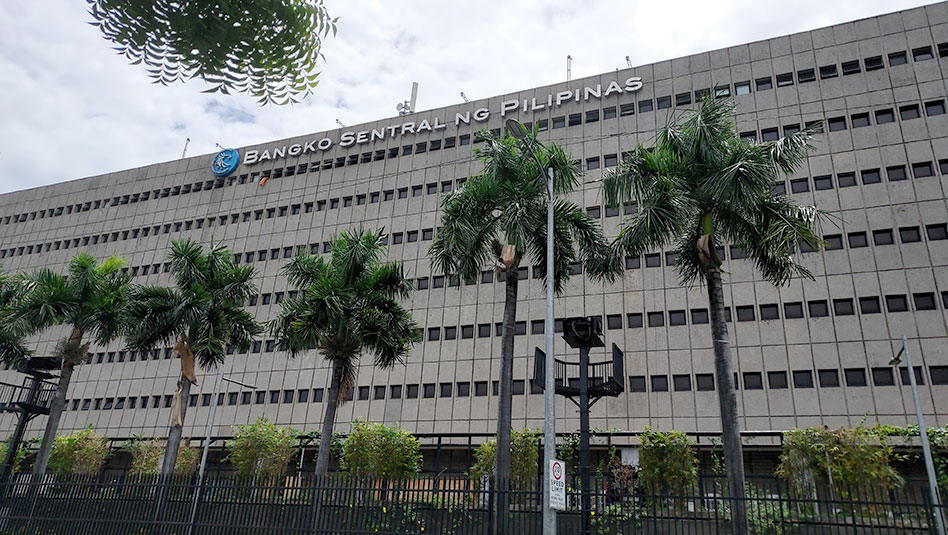
The country posted posted a balance of payments (BoP) deficit of USD 724 million in October as the government repaid external debt, the Bangko Sentral ng Pilipinas (BSP) said.

This was a reversal of the USD 1.51-billion surplus a year ago and USD 3.526-billion surfeit in September.

“The BoP deficit in October 2024 reflected the National Government’s (NG) net foreign currency withdrawals from its deposits with the BSP to settle its foreign currency debt obligations and pay for its various expenditures,” the BSP said in a statement.

The BoP summarizes the country’s transactions with the rest of the world. A deficit means more funds left the country, while a surplus shows that more money came in.

Latest data from the Bureau of the Treasury (BTr) showed that the NG’s outstanding debt rose to a record-high PHP 15.89 trillion as of end-September.

The bulk (68.81%) of the debt stock came from domestic sources while the remainder was from foreign creditors.

External debt rose by 9.3% to PHP 4.96 trillion at end-September from a year ago.

Central bank data showed the BoP reflected a final gross international reserve (GIR) level of USD 111.1 billion as of end-October, down from USD 112.7 billion a month earlier.

Michael L. Ricafort, chief economist at Rizal Commercial Banking Corp., said that despite the decline, the reserve level has been above the USD 100-billion mark for over a year or 13 straight months.

“Still a relatively high GIR, the second highest on record, partly due to net income from the BSP’s foreign investments amid gains in most global financial markets recently on market expectations on the series of Fed rate cuts from 2024-2026,” he added.

The US Federal Reserve began its rate-cutting cycle in September with a half-percentage-point reduction and delivered another quarter of a percentage-point cut earlier this month.

Markets are anticipating another quarter-point rate cut at its last meeting for the year in December.

Data from the central bank showed the dollar buffer was enough to cover 4.4 times the country’s short-term external debt based on residual maturity.

It was also equivalent to eight months’ worth of imports of goods and payments of services and primary income.

An ample level of foreign exchange buffers safeguards an economy from market volatility and is an assurance of the country’s capability to pay debts in the event of an economic downturn.

Mr. Ricafort said the deficit position in October was due to the country’s continued trade deficit.

The Philippines’ trade-in-goods balance stood at a USD 5.09-billion deficit in September, the widest in 20 months.

The country’s balance of trade in goods has been in the red for over nine years since the USD 64.95-million surplus recorded in May 2015.

Mr. Ricafort also noted volatility due to geopolitical risks and markets pricing in the incoming Trump administration’s restrictive trade policies.

10-month surplus

Meanwhile, the country’s BoP position registered a USD 4.393-billion surplus in the 10-month period, widening from the USD 3.246-billion surplus a year ago.

“The surplus reflected in part the continued net inflows from personal remittances, trade in services, and net foreign borrowings by the NG,” the central bank said.

“Furthermore, net foreign direct and portfolio investments contributed to the BoP surplus,” it added.

Latest data from the BSP showed foreign direct investment (FDI) net inflows rose by 3.9% year on year to USD 6.07 billion in the first eight months.

Meanwhile, foreign portfolio investments yielded a net inflow of USD 3.02 billion in the January-September period, significantly higher than the USD 387.24-million inflow last year.

“For the coming months, the BoP data could improve, thereby could also lead to better GIR, partly due to the proceeds of the National Government’s foreign currency-denominated borrowings from both commercial sources that would also be added to the country’s BoP and GIR,” Mr. Ricafort said.

He also noted continued growth in overseas Filipino worker remittances, business process outsourcing  revenues, exports and foreign tourism receipts.

“Going forward, any improvement in BoP data and in GIR data for the coming months could still help provide a greater cushion for the peso exchange rate (against) the US dollar especially versus any speculative attacks, as well as help strengthen the country’s external position,” he added.

The BSP expects a USD 2.3-billion BoP surplus by yearend, equivalent to 0.5% of economic output. – Luisa Maria Jacinta C. Jocson, Reporter


Inflationary pressure may prompt pause in December – BSP Chief

Inflationary pressure may prompt pause in December – BSP Chief

Inflationary pressure could prompt the Philippine central bank to pause its easing cycle, but a slowdown in growth may leave room for another rate cut, its governor said on Wednesday.

“Inflation pressures may cause us maybe to pause a bit, but weak growth may cause us to cut,” Bangko Sentral ng Pilipinas (BSP) Governor Eli M. Remolona, Jr. told reporters on the sidelines of an event on Wednesday.

Depending on the data, he said the Monetary Board may cut or pause at its Dec. 19 meeting.

This year, the BSP has delivered a total of 50 basis points (bps) worth of rate cuts in increments of 25-bp reductions at its August and October meetings.

“Based on our readings, there are still pressures on inflation, and the economy is also a bit weak as seen in the third quarter number,” he said in mixed English and Filipino.

Philippine gross domestic product (GDP) slowed to 5.2% in the July-to-September period from 6.4% in the second quarter and 6% a year ago.

This was also the weakest growth since the 4.3% expansion in the second quarter of last year.

In the first nine months, GDP grew by 5.8%. The economy would need to grow by at least 6.5% in the fourth quarter to meet the lower end of the government’s 6-7% target.

Mr. Remolona said November inflation is likely to remain within the 2-4% target band based on the BSP’s latest projections.

Headline inflation picked up to 2.3% in October, bringing the 10-month average to 3.3%.

The BSP’s baseline forecasts see inflation settling at 3.1% this year, 3.2% in 2025 and 3.4% in 2026.

The central bank also earlier said the balance of risks to the inflation outlook for 2025 and 2026 shifted to the upside but will likely continue to remain within target.

BSP Assistant Governor Zeno R. Abenoja said that November inflation may reflect the typhoon damage in October, but the impact from the multiple storms that hit the country in November will likely be reflected in December inflation data.

“Based on the Department of Agriculture (DA), they estimated that about 70% of the harvest was done when the typhoons started coming in, the last four typhoons,” he said.

“Hopefully, the impact will be limited, but it’s the next cycle that may be affected,” he added.

Latest data from the DA showed that the combined agriculture damage due to tropical cyclones Kristine and Leon, which made landfall in the country in late October, reached P9.81 billion.

Meanwhile, the BSP chief said that the peso’s performance is not a factor that the central bank considers in its monetary policy decisions.

“Usually, they’re different, the exchange rate and the policy rate. We don’t use the policy rate to control the exchange rate. That’s a different matter,” Mr. Remolona said.

The peso has been recently trading at the P58-per-dollar range, teetering closer to the P59 level.

Mr. Remolona earlier said he is not worried about the peso’s weakness, though the central bank has been intervening in “small amounts” following the peso depreciation amid the announcement of Donald J. Trump’s election as US President. – Luisa Maria Jacinta C. Jocson, Reporter
Peso slides to over two-year low

Peso slides to over two-year low

The peso sank to an over two-year low on Wednesday amid escalation in the Russia-Ukraine war as well as further signals on US President-elect Donald J. Trump’s economic policies.

The local unit closed at PHP 58.91 per dollar on Wednesday, weakening by 10 centavos from its PHP 58.81 finish on Tuesday, Bankers Association of the Philippines data showed.

This was the peso’s weakest close in 25 months or since its PHP 58.94 close on Oct. 20, 2022.

The peso opened the session at PHP 58.80 against the dollar with its intraday best at PHP 58.77. Meanwhile, it dropped to as low as PHP 58.925 versus the greenback.

Dollars exchanged went down to USD 1.096 billion on Wednesday from USD 1.473 billion on Tuesday.

The first trader said in a phone call that the peso slipped amid an escalation in the Russia-Ukraine war.

“The US dollar-peso exchange rate is also higher amid some geopolitical risks related to the Russia-Ukraine war lately,” Rizal Commercial Banking Corp. Chief Economist Michael L. Ricafort said in a Viber message.

Reuters reported that Russian President Vladimir Putin on Tuesday lowered the threshold for a nuclear strike in response to a broader range of conventional attacks, days after reports said Washington had allowed Ukraine to use US-made weapons to strike deep into Russia.

Ukraine used United States-made Army Tactical Missile System (ATACMS) missiles to strike Russian territory on Tuesday. However, Moscow said the use of ATACMS, the longest-range missiles Washington has supplied to Ukraine so far, was a clear signal the West wanted to escalate the conflict.

The second trader in an e-mail said that the peso depreciated after reports that Mr. Trump has narrowed his choice for Treasury secretary.

Bloomberg News reported Mr. Trump was set to interview former Federal Reserve Governor Kevin Warsh and Apollo Global Management Chief Executive Officer Marc Rowan for the post of Treasury secretary.

“However, (Mr. Warsh’s) previous experience in the Fed might give him an edge over other candidates for the position… his pick is widely viewed as supportive of his alternative approach to the US central bank, falling in line with the US economic plans by Trump,” the trader said.

Mr. Ricafort also noted the latest balance of payments (BoP) data, which posted a deficit position.

The country posted a BoP deficit of $724 million in October, a reversal of the USD 1.51-billion surplus a year ago and USD 3.526-billion surfeit in September, latest central bank data showed.

The second trader said the peso may stay close to the PHP 59-per-dollar level in the near term.

“The peso is likely to remain elevated near the PHP 59 level as growing geopolitical concerns and uncertainties on Trump policies continue to drive demand for the greenback,” the second trader said.

In October 2022, the peso hit a record low of PHP 59 against the dollar, which led to inflationary pressures and prompted the central bank to intervene.

BSP Governor Eli M. Remolona, Jr. has said that the peso’s recent weakness is not a cause for concern as it was expected that the dollar strengthened after Mr. Trump was elected US President.

However, he said that the central bank has had to intervene in “small amounts.”

For Thursday, the first trader expects the peso to move between PHP 58.60 and PHP 58.95 while the second trader sees the peso trading from PHP 58.75 to PHP 59.

Meanwhile, Mr. Ricafort expects it to range from PHP 58.75 to PHP 58.95. — L.M.J.C.Jocson

Easing cycle still underway — BSP

Easing cycle still underway — BSP

CEBU — The Philippine central bank’s easing cycle is still underway though it may opt to keep rates steady at its December meeting, its top official said.

“We’re still in the easing cycle. Either we cut in December, or we cut in the next meeting, but gradually,” Bangko Sentral ng Pilipinas (BSP) Governor Eli M. Remolona, Jr. told reporters on the sidelines of the BSP-International Monetary Fund (IMF) Systemic Risk Dialogue in Mactan, Cebu on Tuesday.

Asked if the central bank could keep interest rates steady at its December meeting, Mr. Remolona said in mixed English and Filipino: “Yes, of course. It depends on the data. We are still not sure about December.”

Mr. Remolona reiterated that the central bank will continue to make rate cuts in 25-basis-point (bp) increments.

He earlier said the BSP may not necessarily reduce rates at every quarter or every meeting.

Since it began its easing cycle in August, the BSP has reduced borrowing costs by a total of 50 bps so far.

The Monetary Board has delivered a 25-bp cut at its meetings in August and October, bringing the benchmark to 6%.

Mr. Remolona had earlier signaled the possibility of a 25-bp cut on Dec. 19, the Monetary Board’s final policy meeting this year.

Meanwhile, he said the weak gross domestic product (GDP) growth in the third quarter was likely an “aberration” and that growth would likely recover in the fourth quarter.

The Philippine economy grew by a weaker-than-expected 5.2% in the third quarter, its slowest growth in five quarters.

This brought GDP growth in the nine-month period to 5.8%. The economy needs to grow by at least 6.5% in the fourth quarter to ensure it can hit the low end of the government’s 6-7% full-year target.

Instead, the central bank is monitoring closely the latest inflation data, Mr. Remolona said.

“The next number to expect is the November inflation number, we’ll see what that is. Our expectation is that it will still be within the target band.”

Headline inflation picked up to 2.3% in October, bringing the 10-month average to 3.3%. This was still within the BSP’s 2-4% target range.

For 2025, the BSP chief said that the Monetary Board could likely deliver rate cuts at the 100-bp range.

“That’s not exact. It could be more, could be less, but that’s in the ballpark,” he added.

Peso performance

Meanwhile, the BSP governor said he is not worried about the peso’s recent performance.

“It’s below PHP 59. We don’t worry so much about whether the peso depreciates, appreciates. We worry about the pass-through effect. Right now, it’s still okay,” Mr. Remolona said.

The peso closed at PHP 58.81 per dollar on Tuesday, depreciating by 13 centavos from its PHP 58.68 finish on Monday, Bankers Association of the Philippines data showed.

Markets are keeping an eye out for whether the peso will sink to the P59-per-dollar level. The peso fell to the record low of PHP 59 per dollar in October 2022.

However, he said the central bank has been intervening in “small amounts.” “A little bit just so it won’t (depreciate sharply against the dollar),” he said.

“We leave it to the guys in the financial markets area, but if it depreciates very sharply, then we talk. If it’s not too sharp, it doesn’t become inflationary. It’s inflationary if it’s sharp and persistent.”

He said the recent peso weakness was expected after Donald J. Trump was elected US president. The US dollar has been on the rise amid market expectations Mr. Trump would implement higher tariffs that could fuel inflation and slow the Federal Reserve’s planned rate cuts.

“We monitor the swings that take place over a few months, not day by day. It is usually expected that the night before, this kind of news will put pressure on the peso.” – Luisa Maria Jacinta C. Jocson, Reporter
Gaming, energy firms seen to lead IPOs in ’25

Gaming, energy firms seen to lead IPOs in ’25

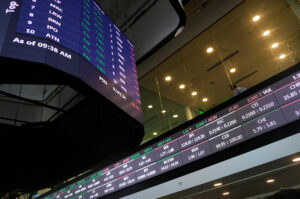
Professional services company Deloitte is cautiously optimistic about the initial public offerings (IPOs) at the Philippine Stock Exchange (PSE) for 2025, which could be led by the gaming and energy firms.

“The buzzword is cautious optimism,” Deloitte Singapore Transactions Accounting Support Partner Darren Ng said in a virtual briefing on Tuesday.

“I think from that perspective, if you look at what’s in the pipeline for the Philippines as well, there should be more IPOs happening in 2025 and in a mix of different industries.”

There could be IPOs from companies in the gaming, energy and resources sectors in 2025.

“There are two gaming companies, Okada Manila and Hann Resorts, and with a continued interest in energy and resources, we do think that there should be more IPOs coming for the Philippines,” Mr. Ng said.

The PSE previously said it expects to have six IPOs for 2025.

Several big names such as SM Prime Holdings, Inc.’s real estate investment trust, Razon-led Prime Infrastructure Capital, Inc., Maynilad Water Services, Inc. and electronic wallet GCash, are said to be planning IPOs but with no definite timeline.

This year, there were only three IPOs, falling short of the PSE’s target of six. These were mining company OceanaGold Philippines, Inc. and renewable energy companies Citicore Renewable Energy Corp. and NexGen Energy Corp.

“In the first three quarters of 2024, the PSE saw three IPOs in energy and resources industry that raised USD 203 million, achieving market capitalization of USD 972 million,” Mr. Ng said.

A fourth IPO was initially scheduled this year, but Cebu-based fuel retailer Top Line Business Development Corp. (Topline) decided to postpone it.

Topline announced on Monday that it is moving the offer period of its maiden issuance to the first quarter of 2025 as the company accommodates institutional investors.

Based on Deloitte data, the Philippines is fourth among Southeast Asian countries in terms of IPO amount raised this year. Malaysia topped the region with USD 1.54 billion, followed by Thailand (USD 756 million), and Indonesia (USD 368 million).

The country is ahead of Vietnam (USD 37 million) and Singapore (USD 34 million).

“Southeast Asia’s strong consumer base, growing middle class, and strategic importance in sectors like real estate, healthcare, and renewable energy remain attractive to investors,” Deloitte said.

“On the same breadth, momentum for real estate investment trusts and artificial intelligence infrastructure are expected to pick up as large tech companies are investing into the region, which offers lower costs, reliable power source, and geopolitical neutrality,” it added.

Local analysts had blamed the lackluster market conditions for the lack of IPOs this year. The Philippine Stock Exchange index (PSEi) has been on a slump since closing at a near five-year high of 7,554.68 on Oct. 7. On Tuesday, the PSEi closed at 6,803.19, up 0.61% from Monday’s close.

Luna Securities, Inc. President and Co-Founder Francis Patrick T. Diaz said they have adopted a “wait-and-see” stance when it comes to IPOs next year.

“Given our recent slide, we are more wait-and-see. Aside from waiting on specifics on United States policy such as interest rates, note that next year is also an election year,” he said in a Viber message.

“Ultimately, it will be the economy and consequent market conditions that will set the pace for IPO activity. You can see how easy it is for prospective companies to postpone their IPO plans if market conditions are not as bullish as they expect,” he added.

Rizal Commercial Banking Corp. Chief Economist Michael L. Ricafort said in a Viber message rising volatility in markets since Donald J. Trump’s victory may prompt investors to stay on the sidelines.

“The increased volatility in the global and local financial markets since Mr. Trump won the US presidential elections could realistically lead to some wait-and-see attitude for some stock market fundraising deals as issuers would like to sell shares at the highest prices and valuations as much as possible as a matter of financial prudence,” he said.

Mr. Ricafort noted Mr. Trump’s protectionist policies and tougher immigration rules could stoke inflation in the US.

“There are also possible pro-US business and economic policies such as tax cuts which would lead to higher US inflation and could reduce the need for future Fed rate cuts that in turn could temper the gains in the financial markets, including the local stock market,” he added. –Revin Mikhael D. Ochave, Reporter

IMF says ‘tit-for-tat’ tariffs can hurt Asia’s growth

IMF says ‘tit-for-tat’ tariffs can hurt Asia’s growth

CEBU — “Tit-for-tat” retaliatory tariffs could hurt the growth outlook for the Asia-Pacific region, the International Monetary Fund (IMF) said.

“In a region like Asia, which has benefited a lot from globalization, from greater integration with the rest of the world, any kind of tariff or trade restrictions will have an impact,” Krishna Srinivasan, director of the IMF’s Asia and Pacific Department, said at the Bangko Sentral ng Pilipinas (BSP)-IMF Systemic Risk Dialogue here on Tuesday.

“Our analysis shows that over the long run, everybody hurts because the size of the pie becomes that much smaller. So, every country, including the Philippines, will hurt in the long run.”

Mr. Srinivasan said that “tit-for-tat retaliatory tariffs” could threaten growth prospects across the region as it could disrupt supply chains.

“When you have fragmentation, which is across trade and investment and so on, all the work we have done shows that in the long run, every country hurts.”

Global trade could be upended if US President-elect Donald J. Trump pushes through with his campaign promise to impose a 60% tariff on Chinese-made goods and at least a 10% tariff on all other imports.

Such a move could stoke inflation and derail the Federal Reserve’s easing cycle, as well as negatively impact growth in exporting countries like the Philippines.

National Economic and Development Authority Secretary Arsenio M. Balisacan earlier said Mr. Trump’s tariff plan is a cause for worry due to its potential impact on the global economy.

The Philippines heavily relies on the United States for business and economic activity, as it is the top destination of Philippine-made goods and is the biggest source of overseas Filipino worker remittances.

“If China slows down because of fragmentation, it’s going to affect you. If the US slows down, it’s going to affect you,” Mr. Srinivasan said.

“One way or the other, over the long run, all countries will hurt from fragmentation and the risks we have seen have only increased over the past few years,” he added.

Escalating trade tensions could impact financial markets, increase trade costs and affect domestic demand, Mr. Srinivasan said.

In its World Economic Outlook, the IMF expects economic growth in Asia to average 4.4% in 2025, faster than the 3.2% growth for the global economy.

IMF data show that Asia is forecasted to contribute about 60% to global growth this year.

“Growth outlook in Asia remains robust and inflation pressures have eased, thanks to the region’s central banks’ ability to anchor inflation and inflation expectations effectively,” Mr. Srinivasan said.

The IMF sees Philippine gross domestic product (GDP) expanding by 6.1% in 2025.

On the other hand, BSP Governor Eli M. Remolona, Jr. said that the exact spillover effects from Mr. Trump’s policies on the Philippines remain to be seen.

“We don’t know exactly what the tariffs will be because of the size of the tariffs that are being contemplated. We don’t really know what the effects will be. So we have to wait and see, and then we’ll figure it out,” he said.

The BSP chief said that the country’s balance of payments (BoP) is less likely to be impacted by tariff measures.

“In the case of the Philippines, our BoP shows that our service exports are just as large as our goods exports. Our services exports, you have business process outsourcing (BPO) revenues and then we have remittances from abroad,” he said.

“These are less easily subject to tariffs, because these things, BPO business goes over the internet. Whereas remittances, the workers are abroad, or they’re on ships. So maybe we’re a little bit insulated from the tariffs.”

Mr. Remolona also noted the impact of the tariff restriction on Chinese-made goods.

“At the same time, China remains our number one source of imports to the Philippines. If those imports cannot enter the United States easily, then they might send us more of those imports, probably less expensive imports than before. Those are kind of second-round effects that we have to figure out.”

Other risks

Meanwhile, Mr. Srinivasan also flagged the risks that less regulated, nonbank fi
nancial institutions (NBFI) pose to the overall financial system.

“These developments could amplify negative shocks, especially given the worsening risk landscape and increased uncertainties with significant implications for financial stability.”

“For instance, the nonbank financial institutions being more agile and subject to fewer constraints can leverage AI in many ways that pose challenges for financial regulators.”

Mr. Remolona also noted the rapid growth of NBFIs.

“The nonbank financial sector has noticeably grown since the Global Financial Crisis. On one hand, this is welcome news because it addresses some of the concentration risks that arise from relying too much on the banking industry,” he said.

Latest data from the BSP showed that NBFIs’ total resources rose by 5.3% to PHP 5.525 trillion as of end-June from PHP 5.248 trillion a year ago.

“On the other hand, financial markets are never an ‘either- or.’ There is much diversity within nonbank financial institutions, just as there are inter linkages with nonbanks and banks,” Mr. Remolona said.

“In exchanging interlinkages, its opportunities and risks should be of great interest to regulators and practitioners.” — Luisa Maria Jacinta C. Jocson

TMP says auto parts exports may rise 5% next year

TMP says auto parts exports may rise 5% next year

Toyota Motor Philippines Corp. (TMP) is projecting a potential 5% growth in auto parts exports next year as demand recovers in other countries, a company official said.

“If next year it will increase, more or less… it will be 5%,” TMP First Vice-President for Purchasing Richard B. Valdez told reporters on Tuesday.

Exports are so far flat this year, he noted. “Every year, at least we would like to increase, but that will still depend on the sales of other countries.”

In 2023, the Toyota group accounted for 30% or USD 1.26 billion of the total Philippine auto parts exports. These represented USD 665 million in export revenues.

However, the car manufacturer’s share in the auto parts exports that year was lower than 33% a year prior.

“It’s a little bit down because since we are exporting, these (represent) the sales of other countries like Thailand and other ASEAN (Association of Southeast Asian Nations) markets,” Mr. Valdez said.

There are lower sales in other markets due to issues with financing as interest rates remain elevated, he noted.

Data from the ASEAN Automotive Federation (AAF) showed that motor vehicle sales in Thailand declined 9% to 775,780 units last year.

Meanwhile, Thailand’s motor vehicle sales from January to September dropped 23.5% to 438,303 units.

Rizal Commercial Banking Corp. Chief Economist Michael L. Ricafort said it is possible for the country’s total auto parts exports to increase next year.

“This is consistent with the fact that the Philippines is one of the fastest growing in vehicle sales and production in ASEAN in recent years,” he said.

AAF statistics showed that Philippine motor vehicle production grew 18.3% in the January-to-September period to 97,139 units. It was the second-fastest in the region.

Meanwhile, a joint report by the Chamber of Automotive Manufacturers of the Philippines, Inc. and Truck Manufacturers Association showed that auto sales grew 8.9% to 384,310 units as of October.

Mr. Ricafort added that since Toyota is one of the world’s biggest automakers, it is possible for the company to further diversify its global supply chains.

“It will be prudent for them to diversify the auto parts exported from the Philippines to the rest of [its] production facilities worldwide,” he said.

In 2016, TMP established Toyota Motor Philippines Logistics, Inc. (TLI) to strengthen its indirect exports of OEM (original equipment manufacturer) and aftermarket parts and accessories to Toyota’s global network.

As of the end of 2023, TLI has 13 indirect export suppliers, which generate around $200 million annually.

According to Mr. Valdez, the top destinations for Philippine-made parts last year were Thailand, South Africa, Brazil, Taiwan, and India. — Justine Irish D. Tabile

Below-target growth likely until 2025

Below-target growth likely until 2025

The Philippines’ gross domestic product (GDP) is likely to expand slower than the government’s target until 2025, Citigroup, Inc. (Citi) said.

Citi cut its GDP growth forecast for the Philippines to 5.8% this year but kept its 6% growth forecast for 2025.

This is below the government’s 6-7% target this year and 6.5-7.5% goal next year.

“We lowered 2024 GDP growth slightly from 6% to 5.8%, mainly due to a weak third-quarter outturn that had been a result of several temporary, weather-related factors,” Citi economist for Thailand and the Philippines Nalin Chutchotitham said in a report.

The Philippine economy slowed to 5.2% in the July-to-September period from 6.4% in the second quarter and 6% a year ago.

This was also the weakest growth since the 4.3% expansion in the second quarter of last year.

“Nonetheless, we think it would be misleading to view the weaker third-quarter expansion as the start of a slowdown as several negative factors in the third quarter are one-off events,” Ms. Chutchotitham said.

She said the weakness in third-quarter economic growth mainly stemmed from the drop in agriculture production, construction activity and net exports.

Despite the weak third quarter, Citi expects growth to accelerate in the fourth quarter as domestic demand is seen to pick up due to easing inflation and lower rates.

“We expect fourth-quarter 2024 GDP growth to accelerate to 6% year on year. Household consumption is expected to continue improving, supported by lower interest rates and improved consumer sentiment as inflation continues to stabilize.”

In the first nine months, GDP grew by 5.8%. The economy would need to grow by at least 6.5% in the fourth quarter to meet the lower end of the government’s 6-7% target.

“With the storm season passing soon, we also expect infrastructure projects’ progress to proceed at a faster clip in the fourth quarter and first quarter of 2025,” Ms. Chutchotitham said.

Domestic demand will also likely be sustained by improving employment conditions, remittance growth and bank lending.

“The RRR (reserve requirement ratio) cut of 250 basis points (bps), effective on Oct. 25, would also release more liquidity into the banking system and likely continue to support strong credit expansion,” Ms. Chutchotitham added.

The central bank last month reduced the RRR for universal and commercial banks and nonbank financial institutions with quasi-banking functions by 250 bps to 7%.

“We also maintain our expectation of 6% growth in 2025 but see some upside risks due to tailwinds from more rate cuts,” Citi said.

The Bangko Sentral ng Pilipinas (BSP) will likely cut by 25 bps in December and by a total of 75 bps next year, according to Citi.

This year so far, the central bank has reduced interest rates by 50 bps since August. The Monetary Board is set to hold its last rate-setting meeting of the year on Dec. 19.

BSP Governor Eli M. Remolona, Jr. has said it is possible to deliver a 25-bp rate cut by then. This could bring the benchmark rate to 5.75% by end-2024.

“Looking ahead, the recent enactment of CREATE MORE (Corporate Recovery and Tax Incentives for Enterprises to Maximize Opportunities for Reinvigorating the Economy) bill should help to lower costs for businesses through lower corporate income tax, larger deductions of electricity expenses, and simpler local tax and VAT regulations,” Ms. Chutchotitham said.

Last week, President Ferdinand R. Marcos, Jr. signed into law the CREATE MORE bill.

The law expands fiscal incentives and lowers corporate income tax on certain foreign enterprises.

“In response to the post-pandemic world, the CREATE MORE law allows firms in special economic zones to implement flexible/hybrid work arrangements while continuing to enjoy their other incentives,” she added. — Luisa Maria Jacinta C. Jocson

Peso may sink to PHP 59 per dollar level anew

Peso may sink to PHP 59 per dollar level anew

The Philippine peso could return to the PHP 59-per-dollar level this year, as the US dollar continues to strengthen, analysts said.

The local unit closed at PHP 58.68 against the greenback on Monday, strengthening by 5.2 centavos from its PHP 58.732 finish on Friday.

“(The Philippine peso) was one of the worst performers in Asia last month, with rate cut expectations by BSP (Bangko Sentral ng Pilipinas) next month adding fuel to the fire,” ING Bank said in a report.

“A move to 59 looks likely, however, further downside in the near term should be limited,” it added.

In October 2022, the peso hit a record low of PHP 59 against the dollar, which led to inflationary pressure and prompted the central bank to intervene.

The incoming Trump administration’s proposals to hike tariffs and impose stricter immigration policies could pose a risk to the peso, a trader said in a phone call.

“The likelihood that it will reach P59 is (due) to the risk of the US tariffs, because that would boost the dollar,” the trader said.

On the other hand, the surge in remittances this upcoming holiday season would support the local currency, the trader said, which would make it unlikely for the peso to go beyond the PHP 59-per-dollar level.

Markets expect the incoming Trump administration to impose trade tariffs and tighten immigration, as well as deepen the deficit, measures deemed to be inflationary, Reuters reported.

Meanwhile, ING said the “upside beyond PHP 59” could be limited due to several factors, such as latest inflation data.

“(The Philippine peso) has historically been vulnerable to inflation risk. With Brent oil price settling in the mid-70s and rice prices correcting noticeably, the trade deficit is likely to remain contained,” it said.

Headline inflation picked up to 2.3% in October, bringing the 10-month average to 3.3%. This is within the central bank’s 2-4% target.

The Bangko Sentral ng Pilipinas (BSP) expects inflation to settle at 3.1% this year, 3.2% in 2025 and 3.4% in 2026.

ING also noted the Philippine central bank’s “historical preference of defending the PHP 59 level.”

BSP Governor Eli M. Remolona, Jr. earlier said the central bank intervenes in the foreign exchange market when necessary to “smoothen excessive volatility and restore order during periods of stress.”

The BSP had to intervene in “small amounts” when the peso fell to the PHP 58-per-dollar level back in May, its first time hitting the level since 2022.

Meanwhile, the peso is also seen to have “relatively low sensitivity to CNY (Chinese yuan) weakness,” ING said.

“In the aftermath of Trump’s election victory and the National People’s Congress (NPC) meeting, the CNY moved weaker from 7.10 to 7.18. The CNY will likely be dragged along by broader dollar trends but should remain a low volatility currency versus other Asian FX,” it said.

Further weakening

On the other hand, Capital Economics said in a separate report it expects the peso to end the year at the PHP 59-per-dollar level, and further depreciate to PHP 62 in 2025.

It likewise said currencies in Asia in general are at risk due to  Mr. Trump’s proposed policies, which will keep US Treasury yields elevated over the coming year and exert upward pressure on the dollar.

“We think Asian currencies will weaken by 3-10% against the greenback between now and the end of next year, with the biggest falls being in the renminbi (since China faces larger tariffs). The risks are tilted towards these moves being even more pronounced.”

“Weaker currencies can push up the cost of imported goods and add to inflationary pressures. But given the weakness of inflation across the region, this is unlikely to be a major concern to policy makers,” it added.

Capital Economics said most Asian countries may even favor weaker currencies to “offset the impact of higher tariffs.” — Luisa Maria Jacinta C. Jocson

Air passenger volume up 21% in first 9 months — CAB

Air passenger volume up 21% in first 9 months — CAB

Air passenger volume jumped by 21% in the first nine months, as international travelers surged by 40%, according to the Civil Aeronautics Board (CAB).

Data from CAB showed that overall passenger volume grew by 21.2% to 44.09 million for the January-to-September period.

The nine-month tally is on track to surpass the air passenger volume of 53.78 million for the full year of 2023.

International passenger traffic surged by 40.5% to 20.41 million in the nine-month period from 14.53 million a year ago.

Foreign carriers accounted for 52.57% of international passenger traffic with 10.73 million as of end-September, while domestic carriers ferried 9.68 million international passengers.

Among local carriers, Philippine Airlines ferried 4.5 million passengers to international destinations, followed by Cebu Pacific with 4.04 million and Philippines AirAsia with 1.05 million passengers.

Meanwhile, domestic passenger volume rose by 8.4% to 23.68 million as of end-September from 21.85 million during the same period.

Data from CAB showed Cebu Pacific flew 10.73 million passengers to domestic destinations, while its regional brand CebGo flew 1.71 million passengers.

Flag carrier Philippine Airlines and its low-cost brand PAL Express accounted for 418,144 and 6.51 million domestic passenger traffic, respectively.

Angelito A. Alvarez, general manager of New NAIA Infra Corp. (NNIC), said they are now preparing for the surge in passengers at the country’s main gateway during the holidays. The company expects around 50 million air passengers to have passed through NAIA by yearend.

San Miguel Corp.-led NNIC is the operator of the NAIA.

SMC Chairman and Chief Executive Officer Ramon S. Ang said passengers can expect at least 50% improvement from last year’s situation at the airport.

More than two months since the private operator took over the operations of NAIA on Sept. 14, NNIC has outlined its plans for the airport such as landside improvements including the expansion of roads and curbside enhancements; terminal upgrades and reassignments.

Cebu Air, Inc., the listed operator of Cebu Pacific, has said previously that it is planning to launch new international and local routes.

Philippine Airlines has said that it is expecting passenger volume to rise by 20% in 2024.

AirAsia Philippines is aiming to reach eight million passengers by the end of the year. — AEOJ

Posts navigation

Older posts
Newer posts

Recent Posts

  • Navigating precarious times with cost averaging
  • Trade Update: Wider trade deficit in February
  • Metrobank US-Iran Risk Index: No swift end seen
  • Investment Ideas: March 27, 2026
  • BSP Update: First rate hike likely in June 

Recent Comments

No comments to show.

Archives

  • March 2026
  • February 2026
  • January 2026
  • December 2025
  • November 2025
  • October 2025
  • September 2025
  • August 2025
  • July 2025
  • June 2025
  • May 2025
  • April 2025
  • March 2025
  • February 2025
  • January 2025
  • December 2024
  • November 2024
  • October 2024
  • September 2024
  • August 2024
  • July 2024
  • June 2024
  • May 2024
  • April 2024
  • March 2024
  • February 2024
  • January 2024
  • December 2023
  • November 2023
  • October 2023
  • September 2023
  • August 2023
  • July 2023
  • June 2023
  • May 2023
  • April 2023
  • March 2023
  • February 2023
  • January 2023
  • December 2022
  • November 2022
  • October 2022
  • September 2022
  • August 2022
  • July 2022
  • June 2022
  • May 2022
  • March 2022
  • December 2021
  • October 2021

Categories

  • Bonds
  • BusinessWorld
  • Currencies
  • Economy
  • Equities
  • Estate Planning
  • Explainer
  • Featured Insight
  • Fine Living
  • How To
  • Investment Tips
  • Markets
  • Portfolio Picks
  • Rates & Bonds
  • Retirement
  • Reuters
  • Spotlight
  • Stocks
  • Uncategorized

You are leaving Metrobank Wealth Insights

Please be aware that the external site policies may differ from our website Terms And Conditions and Privacy Policy. The next site will be opened in a new browser window or tab.

Cancel Proceed
Get in Touch

For inquiries, please call our Metrobank Contact Center at (02) 88-700-700 (domestic toll-free 1-800-1888-5775) or send an e-mail to customercare@metrobank.com.ph

Metrobank is regulated by the Bangko Sentral ng Pilipinas
Website: https://www.bsp.gov.ph

Quick Links
The Gist Webinars Wealth Manager Explainers
Markets
Currencies Rates & Bonds Equities Economy
Wealth
Investment Tips Fine Living Retirement
Portfolio Picks
Bonds Stocks
Others
Contact Us Privacy Notice Terms of Use
© 2026 Metrobank. All rights reserved.

Access this content:

If you are an existing investor, log in first to your Metrobank Wealth Manager account. ​

If you wish to start your wealth journey with us, click the “How To Sign Up” button. ​

Login HOW TO SIGN UP