



MODEL PORTFOLIO
THE GIST
NEWS AND FEATURES
Global Philippines Fine Living
INSIGHTS
INVESTMENT STRATEGY
Economy Stocks Bonds Currencies
THE BASICS
Investment Tips Explainers Retirement
WEBINARS
2024 Mid-Year Economi Briefing, economic growth in the Philippines
2024 Mid-Year Economic Briefing: Navigating the Easing Cycle
June 21, 2024
Investing with Love
Investing with Love: A Mother’s Guide to Putting Money to Work
May 15, 2024
retirement-ss-3
Investor Series: An Introduction to Estate Planning
September 1, 2023
View All Webinars
DOWNLOADS
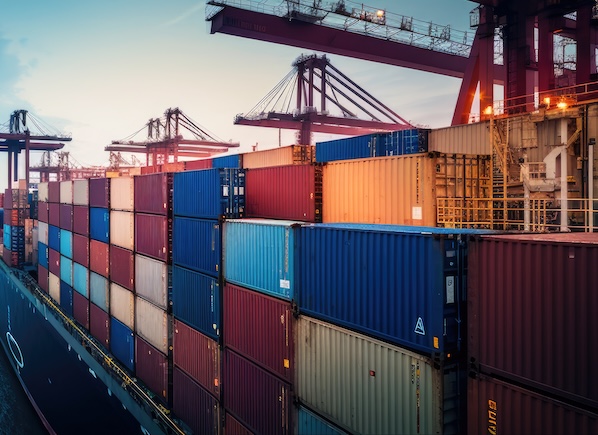
Container ship carrying container boxes import export dock with quay crane. Business commercial trade global cargo freight shipping logistic and transportation worldwide oversea concept. Generative AI
Economic Updates
Philippines Trade Update: Wider deficit on strong imports
DOWNLOAD
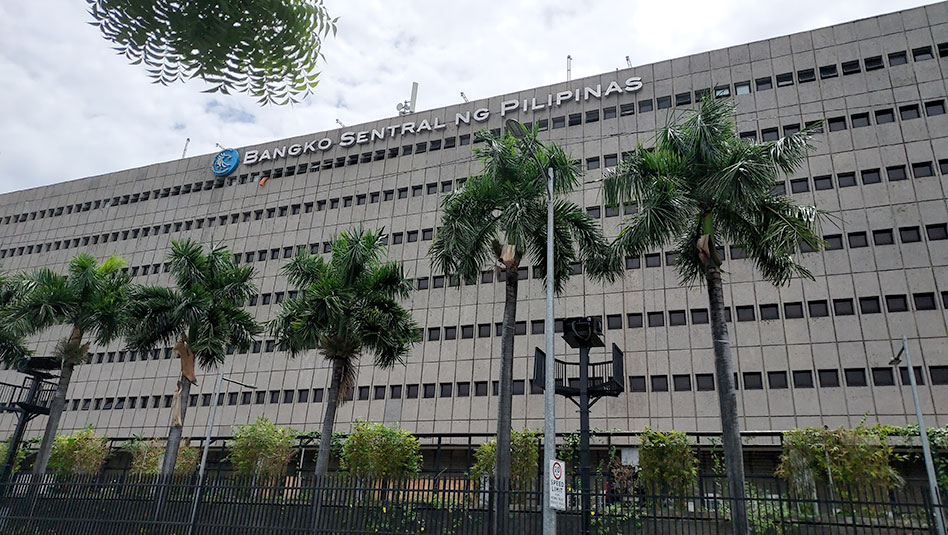
Frick collection with palm trees 
Economic Updates
Policy Rate Updates: Policy rate updates to reassure 
DOWNLOAD
Man using his smartphone
Reports
Fed to cut just once 
DOWNLOAD
View all Reports
Metrobank.com.ph How To Sign Up
Follow us on our platforms.

How may we help you?

TOP SEARCHES
  • Where to put my investments
  • Reports about the pandemic and economy
  • Metrobank
  • Webinars
  • Economy
TRENDING ARTICLES
  • Investing for Beginners: Following your PATH
  • On government debt thresholds: How much is too much?
  • Philippines Stock Market Outlook for 2022
  • Deficit spending remains unabated

Login

Access Exclusive Content
Login to Wealth Manager
Visit us at metrobank.com.ph How To Sign Up
Access Exclusive Content Login to Wealth Manager
Search
MODEL PORTFOLIO THE GIST
NEWS AND FEATURES
Global Philippines Fine Living
INSIGHTS
INVESTMENT STRATEGY
Economy Stocks Bonds Currencies
THE BASICS
Investment Tips Explainers Retirement
WEBINARS
2024 Mid-Year Economi Briefing, economic growth in the Philippines
2024 Mid-Year Economic Briefing: Navigating the Easing Cycle
June 21, 2024
Investing with Love
Investing with Love: A Mother’s Guide to Putting Money to Work
May 15, 2024
retirement-ss-3
Investor Series: An Introduction to Estate Planning
September 1, 2023
View All Webinars
DOWNLOADS
Container ship carrying container boxes import export dock with quay crane. Business commercial trade global cargo freight shipping logistic and transportation worldwide oversea concept. Generative AI
Economic Updates
Philippines Trade Update: Wider deficit on strong imports
March 27, 2026 DOWNLOAD
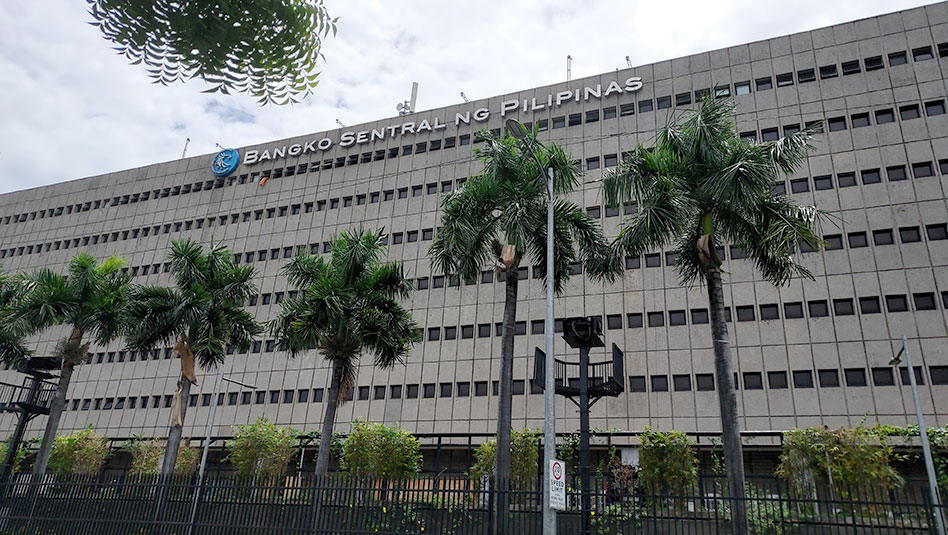
Frick collection with palm trees 
Economic Updates
Policy Rate Updates: Policy rate updates to reassure 
March 26, 2026 DOWNLOAD
Man using his smartphone
Reports
Fed to cut just once 
March 19, 2026 DOWNLOAD
View all Reports

Archives: Business World Article

Philippines’ trillion-dollar economy goal feasible but not easy

Philippines’ trillion-dollar economy goal feasible but not easy

Sustained economic growth the next few years and targeted investments could help the Philippines reach its “ambitious” goal to become a trillion-dollar economy despite domestic and external challenges.

“The path to a trillion-dollar economy is not easy. It’s a very ambitious target. But it is feasible if the Philippines were to again invest in capabilities to better equip for a competitive global economy,” Zafer Mustafaoğlu, World Bank country director for the Philippines, Malaysia, and Brunei, said in a speech at the BusinessWorld Forecast 2025 forum on Tuesday.

Reaching this goal would require “significant annual growth” between now and 2033, Mr. Mustafaoğlu said.

“But it’s not the matter of whether it’s 2033 or 2035, but the point is more on sustaining that growth and chasing that potential to reach the trillion-dollar economy,” he added.

The World Bank expects the Philippines to grow by an average of 6% from 2024 to 2026. In the first nine months, Philippine gross domestic product expanded by 5.8%, slightly below the government’s goal of 6-7% growth this year.

To ensure sustained growth, the country must build an enabling environment for investments, address climate change to reduce its economic impact, and boost the economy’s resilience amid external challenges such as geopolitical risks and protectionism, Mr. Mustafaoğlu said.

The government also needs to “collect revenues effectively, increase spending efficiency, and also mobilize private sector resources to address those global challenges,” he said.

The Philippines must also invest in boosting employment, especially in productive sectors like construction and manufacturing, he added.

Jesus Felipe, a distinguished professor at the De La Salle University Carlos L. Tiu School of Economics, likewise said that becoming a trillion-dollar economy requires “a very strong level of growth.”

“That requires investing in your human capital, strengthening your market, flexibility, competition, investing in digital,” he said.

Solid fundamentals

Pavit Ramachandran, country director for the Philippines at the Asian Development Bank (ADB), said while the country’s growth trajectory remains “very promising,” risks to the outlook remain, such as an unexpected slowdown in major economies, geopolitical tensions, and supply chain disruptions.

ADB expects the Philippine economy to grow by 6% this year and 6.2% in 2025, driven by strong domestic demand, public investment, and infrastructure development.

“The global environment today is presenting unprecedented challenges for highly integrated economies like the Philippines,” he said in a speech delivered via video. “Shifts in trade policies and foreign relations among major advanced economies, such as the United States, Japan, the Europe area, alongside the People’s Republic of China, are reshaping supply chains and investment patterns.”

“Yet, these interdependencies are vulnerable to geopolitical and geoeconomic challenges, which often spill over into commodity and financial markets, affecting investor confidence and consumer sentiment,” he said.

The Philippines is well-positioned to navigate these challenges amid its solid macroeconomic fundamentals, Mr. Ramachandran said.

“The government’s focus on market mobilization, improving the investment climate, and enhancing public financial management again provides a strong foundation for such growth,” he said.

Department of Finance Undersecretary and Chief Economist Domini S. Velasquez said the government’s fiscal consolidation efforts will allow it to increase investments in its priority sectors.

“The Philippines is poised to ascend to upper middle-income in 2025, signifying a stronger and more prosperous economy,” Ms. Velasquez said. “We are steadily reducing our deficit and debt in a way that enables us to finance long-term investments, Corporate Recovery and Tax Incentives for Enterprises to Maximize Opportunities for Reinvigorating the Economy Act, and better jobs, uplift incomes, and ultimately reach our goal of reducing our poverty rate to single-digit levels by 2028.”

The government is also looking to enact reforms to increase foreign direct investments, such as reducing the tax on stock transactions to help boost the Philippine capital markets, she added.

Miguel G. Belmonte, president and chief executive officer of BusinessWorld Publishing Corp., said building a supportive policy environment that encourages investment and fosters resilience is needed to ensure sustained and inclusive Philippine economic growth.

“The government has already made strides and reforms aimed at creating a more favorable business environment for investors. And we’re off to a good start,” Mr. Belmonte said. “With fiscal discipline and measures to secure food and energy supplies, we are better positioned to mitigate shocks and maintain stability.”

“We have a bold but achievable vision to transform the Philippines into a trillion-dollar economy. While it’s not going to be easy to fulfill our goals, especially when challenges loom so large, the dream of sustained and meaningful growth in 2025 is well within our grasp.” – Aubrey Rose A. Inosante, Reporter


Small Philippine firms fail to scale in absence of capital

Small Philippine firms fail to scale in absence of capital

Eva P. Gozon, 36, withdrew her life insurance fund and combined it with her bonus from her job as an outsourcing agent to fund her fried siopao business in Pasay City near the Philippine capital.

She considered applying for a small business loan worth PHP 200,000 at a local bank, but decided against it due to high interest rates. “I got scared,” she told BusinessWorld by telephone.

“After much study, I found out that I would have had to use all my profits to pay for the loan,” she said. “There were also too many paper requirements. It really wasn’t worth it.”

Philippine banks have failed to lend 10% of their loan portfolio to micro-, small- and medium-sized enterprises (MSME), as required by law, and would rather pay the fine than risk not being paid.

Data from the Philippine central bank showed that as of end-June, banks only lent 4.52% or PHP 488.13 billion of their PHP 10.8-trillion loan portfolio to MSMEs, which are known for their crucial role in fostering broad-based development, acting as the backbone of the economy.

These firms account for more than 99% of all businesses in the Philippines and provide jobs to many Filipinos, making them a key player in shaping the economic landscape.

Under the law, 8% of banking loans must go to micro and small enterprises, and 2% to medium-sized firms. But as of end-June, banks only lent 1.82% of their loans to micro and small enterprises and 2.7% to medium-sized businesses.

Banks barely know the owners and the nature of their businesses and consider them risky clients, Diwa C. Guinigundo, Philippine analyst at GlobalSource Partners and a former deputy governor at the Bangko Sentral ng Pilipinas (BSP), said in a Viber message.

“They have little knowledge about small businesses’ track record and when information is limited, banks would rather pay their fines than expose themselves to what they consider to be risky clients,” he said.

MSMEs have a limited financial history and a “higher vulnerability to economic downturns,” said Ben Joshua A. Baltazar, president and chief executive officer at the state-owned Credit Information Corp.

“This was further exacerbated by banks’ experience during and after the pandemic when some MSMEs were not able to repay loans on time due to lockdowns and physical distancing, which affected the businesses’ profitability,” he said in an e-mail.

There is also an information gap on smaller firms’ credit records, Mr. Baltazar said, adding that MSMEs’ financial history and collaterals should be properly documented so banks could use these as the basis for their loans.

“Banks want to minimize nonperforming loans while increasing loans to the creditworthy,” he said. “However, they are unable to collect this information reliably and MSMEs have no established method to prove good credit behavior.”

Meanwhile, small entrepreneurs are reluctant to avail themselves of a loan due to high interest rates especially if they lack collateral, Mr. Baltazar said.

“Being a segment where businesses are thriving or transitioning, many MSMEs are afraid of applying for a loan, anticipating similar requirements and processes as that of the commercial loan facilities,” BDO Network Bank, the country’s biggest rural bank, said in an e-mailed reply to questions.

When applying for a bank loan, MSMEs are usually asked to prepare personal financial and bank statements, references from business networks and a risk assessment, BDO Unibank, Inc.’s rural banking arm pointed out.

‘Asymmetry of informantion’

In the first half, universal and commercial banks lent PHP 134.1 billion to micro and small enterprises, or 1.35% of their total loans, and PHP 235.8 billion or 2.38% of their total lending to medium enterprises. Thrift banks allotted 3.74% of their loans to micro and small enterprises, and 5.39% to medium-sized businesses.

Digital banks lent PHP 250 million or 1.41% of their total credits to micro and small businesses, and PHP 30 million or 0.16% to medium enterprises, BSP data showed.

On the other hand, rural and cooperative lenders have been more generous in lending to MSMEs, probably because they are more familiar with their conditions on the ground.

During the period, these institutions released loans worth PHP 37.9 billion to micro and small enterprises, equivalent to 17.61% of their total credit books. Their loans to medium enterprises hit PHP 19.9 billion or 9.26% of the total. These are both well beyond the minimums required by law.

“There is asymmetry of information between the big banks and smaller institutions like rural banks, which are mostly compliant,” Mr. Guinigundo said. “They are on the ground, and they know their clients.”

“A good credit information bureau that caters to all banks would provide a level playing field for both banks and their small business clients,” he added.

Banks need “data-driven and risk-based” lending to expand their MSME base, Mr. Baltazar said. “The demand-side barriers that continue to hamper MSMEs’ access to finance are lenders’ conservative high interest rates and collateral requirements, which deter borrowers.”

Mr. Guinigundo noted that if banks were more transparent about their lending policies, and small business clients too about their creditworthiness, “perhaps a better pricing discovery can be established, leading to more loans to small business and more decent interest rates on the loans.”

Banks also have the duty to diversify their financial products through flexible payment options and timelines to attract more MSME borrowers.

BDO Network Bank said big banks that deal with MSMEs are usually focused on lending under the “term loan” format — a fixed amount is borrowed for a specified period, typically ranging from one to 10 years, to be paid in regular installments over time.

“Diversifying into other credit options such as providing lines of credit that are revolving or loans that mature quickly for easy rollover will further support MSME growth,” it added.

Banks should also have flexible collateral requirements and financial literacy programs to make their loan products less intimidating to small firms. “Banks should have the ability to provide secured loans with collateral requirements that are more flexible compared with the conventional secured loan standards.”

But Anna Angeli B. Alberto, 41, could not be bothered by banks’ paper requirements. Instead of going to the bank, she used her credit card to set up a stall for her frozen meat and cooked rice meal business inside a food court at SOMO Market in Bacoor, Cavite province.

“It’s hassle-free,” she said by phone. “There are no requirements needed, and the loan release is instant.” – Beatriz Marie D. Cruz, Reporter

Philippines eyes re-inclusion in JPMorgan bond index

Philippines eyes re-inclusion in JPMorgan bond index

The Philippines may find it difficult to reenter JPMorgan Chase & Co.’s widely tracked emerging market bond index (EMBI) by next year if investor issues remain unresolved, the National Treasurer said.

“That’s difficult. Let’s just say that we are trying to address all the issues that the investors raise, which include liquidity and tax,” National Treasurer Sharon P. Almanza told reporters on Monday.

Earlier this month, Bloomberg reported the Philippines missed the cut for the JPMorgan bond index this year.

The Finance department was earlier hoping the Philippines could re-enter JPMorgan’s EMBI, which tracks the performance of sovereign and quasi-sovereign bonds issued by emerging market countries.

Ms. Almanza said the next JPMorgan review will likely happen in the first quarter to mid-second quarter of 2025, before another round of consultations.

She noted the government is working on addressing issues raised by investors.

“We have implemented the tax treaty, so hopefully, that will address the issue of withholding tax because right now we have tax treaty with many countries including the big investors like the United States and the United Kingdom,” Ms. Almanza said.

Earlier this month, the Bureau of the Treasury (BTr) announced the implementation of a streamlined tax treaty procedure for the nonresident investors of government securities.

This was part of the BTr’s ongoing efforts to boost offshore participation and strengthen the domestic capital market.

Last week, Department of Finance (DoF) Secretary Ralph G. Recto met with senior officials of JPMorgan to explore potential areas of collaboration and initiatives in the Philippine capital market. 

The DoF said it discussed JPMorgan’s ongoing operations in the Philippines, avenues for partnership, and progress in the inclusion of the Philippine government-issued securities in the JPMorgan bond index. It said that inclusion in the EMBI would “enhance foreign investor access to peso-denominated government bonds, reduce friction costs, and strengthen the country’s investment attractiveness.”

Meanwhile, asked if there are plans for more external borrowings before yearend, Ms. Almanza said: “We’re close. We’re just finishing the program loans. But for the commercial ones, we’re done. Then it’s just the auction, and that’s it. We’re almost complete for the year.”

So far this year, the National Government (NG) has only raised USD 4.5 billion out of its USD 5-billion plan to borrow from the international debt market.

The government has issued US dollar-denominated global bonds this year, raising USD 2 billion in May, and another USD 2.5 billion in August.

For 2025 to 2027, the NG plans to source at least 80% of its borrowing program from domestic sources, and 20% from foreign lenders, according to the 2025 Budget of Expenditures and Sources of Financing. — A.R.A. Inosante

Philippines seeks investments from ASEAN pension funds

Philippines seeks investments from ASEAN pension funds

The Philippines is eyeing to secure investments from other pension funds in Southeast Asia, which has around USD 1.3 trillion in collective assets, the top official of the Government Service Insurance System (GSIS) said.

This as the Philippines assumes the chairmanship of the Association of Southeast Asian Nations (ASEAN) Social Security Association (ASSA), a nongovernmental group.

“This is really a good opportunity. But what’s more important is the ability for all of these long-term fund managers also, now that they’re in the Philippines, to understand the key needs of our country,” GSIS President and General Manager Jose Arnulfo “Wick” A. Veloso told reporters on the sidelines of the 41st ASSA Meetings on Monday.

ASSA is a regional cooperation platform for social security institutions in the ASEAN. The GSIS accounts for around $31 billion of ASSA’s collective assets.

“Please take note for example for power opportunities in the Philippines there may be the same energy opportunities in Malaysia. Toll road (operators) in the Philippines can have toll roads in the rest of ASEAN,” Mr. Veloso said.

“Food security concerns in the Philippines are a priority and a concern for other countries. And we have not identified where all of these are existing for us to be able to invest.”

Asked which sectors these ASEAN pension funds can invest in the Philippines, Mr. Veloso said there are opportunities in infrastructure, education, food security and medical facilities.

Mr. Veloso said ASSA members can benefit from the ASEAN free trade agreement.

“The $1.3 trillion in collective assets under our management represents more than just financial strength. It positions us members as significant players in global capital markets and demonstrates our capacity to influence economic trends,” he said.

Meanwhile, ASSA Chairperson Ahmad Zulqarnain Onn of Malaysia said there is an opportunity in terms of greater collaboration in investing.

“I can speak for my own institution, which is that we have great interest in investing in infrastructure all throughout the region,” he said.

During the meeting, ASSA member institutions will finalize a sustainability pledge.

“The Philippines, like many of our ASEAN neighbors, is deeply committed to these priorities. We are digitalizing our services, fortifying cybersecurity, exploring sustainable investment strategies, and extending social protection coverage among all sectors,” President Ferdinand R. Marcos, Jr. said in his statement as read by National Treasurer Sharon P. Almanza.

Mr. Marcos also said the signing of the ASSA Sustainability Pledge — a declaration that aligns our mission with the principles of sustainability, inclusivity, and environmental stewardship is a step forward.

“With the adoption of ASSA Board Circular Resolution No. 1/2024, we formalize this pledge and reaffirm our commitment to a future where sustainability and social security walk hand in hand,” he added.

The members of the Philippine Security Association are the GSIS, the Social Security System, The Philippine Health Insurance Corp. (PhilHealth), the Employees’ Compensation Commission, and the Philippine Charity Sweepstakes Office. — Aubrey Rose A. Inosante

Infrastructure spending jumps 17%

Infrastructure spending jumps 17%

State spending on infrastructure went up by 16.9% in September fueled by disbursements for finished transport projects, the Department of Budget and Management (DBM) said.

In the latest National Government disbursement report, spending on infrastructure and other capital outlays rose by PHP 19.8 billion to PHP 137.1 billion in September from PHP 117.3 billion in the same month last year.

Month on month, infrastructure spending went up by 26.24% from PHP 108.6 billion in August.

The DBM attributed the uptick in September disbursement to the payment for completed road network and bridge programs of the Department of Public Works and Highways (DPWH).

Higher disbursements were also made for various foreign-assisted projects of the Department of Transportation.

It also noted capital outlays for local counterpart requirements for implementing the Metro Manila Subway Project Phase 1, North-South Commuter Railway System, and the Davao Public Transport Modernization Project.

Funds were also used for the Department of National Defense’s (DND) Armed Forces of the Philippines modernization program, as well as the construction and repair of justice halls nationwide and implementation of the Department of Education’s computerization program.

In the January-to-September period, infrastructure spending rose by 14.6% to PHP 982.4 billion from PHP 857.6 billion in the same period in 2023.

“The robust spending growth for the period was largely credited… to infrastructure and other capital outlays with significant disbursements recorded in the DPWH for its banner infrastructure projects and the DND for its defense modernization projects,” the DBM said.

Overall infrastructure disbursements, which included transfers to local government units and subsidies to government-owned and -controlled corporations, went up by 12% to PHP 1.14 trillion as of end-September.

“This was equivalent to 6.1% of GDP (gross domestic product) vis-a-vis 5.9% outturn for the same period last year and the 5.6% full-year target this year,” it said.

Philip Arnold “Randy” P. Tuaño, dean of the Ateneo School of Government, said the increase in infrastructure spending is likely to be sustained in the short term.

“(The increase was) due to a significant balance from various budget sources that remain available for release, and the prioritization of large-scale transport projects such as the Metro Manila Subway,” Mr. Tuaño said in an e-mail over the weekend.

He also expects a surge in infrastructure spending given that the 2025 midterm election is five months away.

“It should first be noted that infrastructure spending year on year had increased, and this will further increase going into the 2025 national budget,” Terry L. Ridon, a public investment analyst and convenor of think tank InfraWatch PH, said in a Viber message. “This is the underlying reason for spending improvements this year.”

The government’s infrastructure program for this year is set at PHP 1.472 trillion, equivalent to 5.6% of GDP.

Mr. Ridon urged infrastructure agencies to improve absorptive capacity “particularly as 2025 is an election year in which the law mandates a suspension of project implementation for a specific period of time.”

“The challenges are that the absorption and burn rate by our key agencies, especially in infrastructure and agriculture, have been quite low,” former National Economic and Development Authority Secretary Cielito F. Habito, said at a conference at the University of the Philippines School of Economics on Friday.

Mr. Habito raised that there have been “questionable priorities” on allocations and utilization in some sectors.

“We allocate a lot of budget but it turns out it can’t be spent within the period it was meant to be used,” he said in mixed English and Filipino.

“This is a very important issue in our fiscal policy in general. It’s not so much the fiscal policy, but the implementation of the fiscal policies in that sense.”

Mr. Habito also mentioned the propensity of DPWH to “reblock” roads, calling it a “seemingly misplaced allocation of the budgets.”

He also said the government needs more public-private partnership types of projects given the shortage of public funds. — Aubrey Rose A. Inosante

Military pension reform ‘not dead’ — DBM chief

Military pension reform ‘not dead’ — DBM chief

The government is now crafting an improved version of the bill seeking to reform the pension system for military and uniformed personnel (MUP), Department of Budget and Management (DBM) Secretary Amenah F. Pangandaman said.

“MUP is not dead,” she said during the Fiscal Policy Conference on Friday last week.

“It’s a different version from what Secretary Ben [Diokno] has intended from the very beginning. Hopefully we’ll be able to come up with a nice version that will still be a bit better version than what was expected.”

Ms. Pangandaman made the statement after former Finance chief Benjamin E. Diokno said he does not think the current version of MUP reform is likely to make a difference.

“I think the military pension bill is dead… The measure that they’re coming up with is not what we wanted. It won’t make any much difference. In fact, it might worsen the situation,” Mr. Diokno said.

The Department of Finance (DoF) under Mr. Diokno had earlier pushed for a version of the bill that required contributions from all active personnel and new entrants and removed the full indexation of pensions.

Mr. Diokno had previously insisted that there is a need to overhaul the MUP pension system, noting that there is a risk of “fiscal collapse.”

Last year, the House of Representatives approved a version of the MUP reform bill, which does not require mandatory contributions from active personnel. The House version also provides for the automatic indexation of MUP pensions at 100% of the increase in the base pay of active personnel.

“Discussions are still ongoing, there will be updating. There is still no discussion but it will be dependent on the end of the 19th Congress and beginning of the 20th Congress,” Budget Undersecretary and Principal Economist Joselito R. Basilio told BusinessWorld on the sidelines of a forum.

In an interview with BusinessWorld, Finance Secretary Ralph G. Recto said “there is no update” on the MUP bill.

“Chances are there will be no bill on the MUP,” he said on the sidelines of a Senate budget hearing on Nov. 6.

Mr. Recto pushed for the changes in the pension scheme of the MUP but only for new entrants.

The Senate version of the MUP reform bill has been awaiting second reading approval since November 2023.

Senate Bill No. 2501 seeks to set monthly retirement pay at 50% of the base pay for the last position held by retired MUPs. It also requires new MUPs to contribute to the new pension fund system.

Under the Senate bill, members of the military would be required to contribute 7% of their base monthly salary, with the National Government contributing 14%.

The House version, on the other hand, sets a member contribution rate of 9% of monthly salary for new entrants and a 12% top-up form the government.

“The ideal is, or the standard is GSIS (Government Service Insurance System) — 9% and 11%. (The standard should be) 21-24% to make it sustainable and to have a good actuarial life,” Mr. Basilio said.

“That’s the idea. So, things would play around that. The contribution can be 5-4%.”

The MUP covers eight agencies such as the Armed Forces of the Philippines, the Philippine National Police, Philippine Coast Guard, Bureau of Fire Protection, Bureau of Jail Management and Penology, Bureau of Corrections, the National Mapping and Resource Information Authority and Philippine Veterans Affairs Office. – Aubrey Rose A. Inosante, Reporter
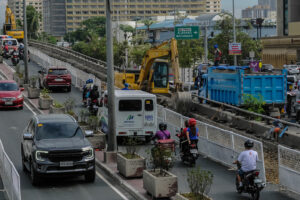
Vehicle sales may top 500,000 next year as interest rates go down

Vehicle sales may top 500,000 next year as interest rates go down

Automotive sales may hit 500,000 units next year as lower interest rates and upcoming elections spur economic activity, according to the Federation of Automotive Industries of the Philippines, Inc.

“We can hit that (target) in 2025, and the growth factors will be the election, interest rates that are starting to go down, plus the economy is again most likely to grow by another 5-6%,” Vicente T. Mills, the federation’s president, told reporters last week.

“But the demand for vehicles is still there because the fleet is still old, so there’s fleet replacement, and then, of course, fleet growth because gross domestic product will go up,” he added.

The Bangko Sentral ng Pilipinas (BSP) started its easing cycle last August, cutting rates by 50 basis points to 6%. More cuts are expected in 2025 as inflation is expected to stay within the 2-4% target range.

Economic managers are targeting 6.5-7.5% gross domestic product growth for 2025, and 6.5-8% from 2026 to 2028.

Mr. Mills said that compared with Thailand and Indonesia, the local vehicle density is still lower per population, which explains the still huge local demand.

“So, it will really go up; it is just that our countrymen do not have enough buying power… but now that the central bank is bringing down the interest rates, it will be more affordable,” he said.

“And as business improves, they will start to buy. And naturally, as the economy improves, vehicle population improves because that’s how it is. It goes together,” he added.

Mr. Mills said sales growth next year will also be driven by commercial vehicles, which comprised 73.77% of the total industry sales as of October.

A joint report by the Chamber of Automotive Manufacturers of the Philippines, Inc. and the Truck Manufacturers Association showed that total industry sales reached 384,310 in the first 10 months, up 8.9% from 352,971 in the same period last year.

Broken down, sales of commercial vehicles reached 283,501 units as of October, up 7.8% from the 262,875 units sold in the same period last year, while the industry sold 100,809 units of passenger cars, which represented an 11.9% increase from 90,096 last year.

Regina Capital Development Corp. Head of Sales Luis A. Limlingan said the auto industry could reach its sales target if the BSP continues to cut policy rates.

“Lower inflation and interest rates could help reach the target… as this would effectively lower the cost for borrowing across the board,” said Mr. Limlingan in a Viber message.

Toby Allan C. Arce, head of sales trading at Globalinks Securities and Stocks, Inc. said that the launch of new models could drive sales growth.

“Fresh and diverse vehicle offerings, including EVs (electric vehicles), hybrids, and fuel-efficient models, could attract a broader customer base and stimulate demand,” Mr. Arce said in a Viber message.

“Favorable government policies or tax incentives for EVs and other eco-friendly vehicles may catalyze market growth, especially as environmental sustainability becomes a focus,” he added.

Despite the positive outlook for the automotive sector, Mr. Mills said road traffic remains an issue.

“That is another problem. Infrastructure and mass transit must improve. But still, in all countries, vehicles for individuals and for commercial vehicles are still going up,” he said.

According to Mr. Arce, the improvement of road networks will help to increase the demand for new vehicles.

“Ongoing infrastructure projects improving road networks could encourage consumers to invest in private vehicles for convenience,” said Mr. Arce.

“As urban areas expand, the need for personal transportation could rise, bolstering sales in the automotive sector,” he added. – Justine Irish D. Tabile, Reporter

Peso falls to PHP 59 vs US dollar

Peso falls to PHP 59 vs US dollar

The Philippine peso on Thursday hit a record-low PHP 59-a-dollar level for the first time in more than two years as the dollar continued its rally.

The peso closed at PHP 59 against the greenback at the end of trading, weaker by nine centavos from its PHP 58.91 finish on Wednesday.

This marked the first time the peso returned to the PHP 59-a-dollar level since Oct. 17, 2022.

The peso opened Thursday’s trading session at PHP 58.93 versus the dollar. Its intraday best was PHP 58.92, while its weakest showing was its close of PHP 59.

Dollars traded dropped to USD 842.68 million from USD 1.09 billion on Wednesday.

“The USD/PHP weakness reflects the recent rise in (10-year US Treasury yields), reflecting Trump 2.0 policies and causing the dollar to rise,” Jonathan L. Ravelas, senior adviser at professional service firm Reyes Tacandong & Co., said.

Economists have been warning that US President-elect Donald J. Trump’s proposed tariffs and tax cuts could stoke inflation and potentially hamper the US Federal Reserve’s easing cycle. 

Reuters reported that markets are pricing in a 52% chance of a 25-basis-point (bp) cut at the Fed’s December meeting, down from 82.5% a week ago, according to CME’s FedWatch Tool.

A Reuters poll showed most economists expect the Fed to cut rates at its December meeting, with shallower cuts in 2025 than expected a month ago due to the risk of higher inflation from Mr. Trump’s policies.

The first trader said the peso slump was also due to the “function of a stronger dollar and uncertainty of the Fed direction under Trump, plus mixed signals from the Bangko Sentral ng Pilipinas (BSP).”

“This also reflects expectations of rate cuts by BSP. This could persist in 2025. The near-term risk is PHP 60,” Mr. Ravelas added.

BSP Governor Eli M. Remolona, Jr. this week gave mixed signals, saying the Monetary Board can either keep or cut rates at its Dec. 19 policy meeting.

He said inflationary pressures would warrant a pause, while weaker-than-expected growth would pave the way for another rate cut.

Since August, the BSP has delivered a total of 50 bps worth of rate cuts, bringing the benchmark to 6%.

“The peso continued to depreciate, closing at the 59 level, with the ongoing uncertainty on the composition of Trump’s economic team,” the second trader said.

Mr. Trump’s pool for a Treasury secretary pick widened to include Apollo Global Management Chief Executive Marc Rowan and former Federal Reserve Governor Kevin Warsh, Reuters reported.

Mr. Trump said he would nominate Howard Lutnick, chief executive of Wall Street brokerage firm Cantor Fitzgerald, as head of the Commerce Department.

The second trader also noted “escalating tensions between Russia and Ukraine exert increased safe-haven demand for the greenback.”

Russia launched an intercontinental ballistic missile from its southern Astrakhan region during a morning attack on Ukraine on Thursday, Reuters reported, citing Kyiv’s air force. It was the first time Russia has used such a powerful, long-range missile during the war.

The air force reported the launch after Ukraine fired US and British missiles at targets inside Russia this week, despite warnings by Moscow that it would see such action as a major escalation in the 33-month-old war. — Luisa Maria Jacinta C. Jocson with Reuters

BSP monitoring lenders behaving like digital banks

BSP monitoring lenders behaving like digital banks

Some lenders behaving like online banks might be required to obtain digital banking licenses to curb arbitrage and improve oversight, the Bangko Sentral ng Pilipinas (BSP) said.

“We’re busy right now determining which among the digi-centric institutions that we have right now can already be considered as operating like a digital bank,” BSP Director for Technology Risk and Innovation Supervision Department Melchor T. Plabasan told reporters on the sidelines of an event in Mactan, Cebu on Wednesday.

He said lenders operating like online banks might be obliged to also undergo the process of securing digital bank licenses.

“If the BSP has a basis for us to convert their license, then we will require them. That means all the requirements for digital banks will have to be complied with by these institutions,” he said.

In August, the Monetary Board lifted the moratorium on new digital banking licenses starting Jan. 1, 2025.

The BSP will now allow four more digital banks to operate in the country, which would bring the total to 10. These can either be new applicants or banks that will convert their existing license to a digital one.

Mr. Plabasan said the BSP could also convert the license of a rural or thrift bank into one for a digital bank.

“Because if you’re already behaving like a digital bank, you should be regulated like a digital bank, not a rural bank. That’s why the intention really is to minimize the arbitrage,” he added.

Once applicants secure approval from the central bank, they can begin operations as soon as their technology and infrastructure are ready, Mr. Plabasan said.

“Normally, the chartering is completed within three to four months, assuming that they have already submitted all the requirements,” he added.

BSP Governor Eli M. Remolona, Jr. earlier said these applicants must “bring something new to the table.”

Applicants will also undergo a “rigorous” licensing process that will evaluate their value proposition, business models and resource capabilities.

They must also comply with the standard licensing criteria, which cover capital adequacy and corporate governance and risk management, among others.

The BSP also said applicants must have the potential to reach untapped or underserved markets and push credit inclusion.

“We will not complete the four (licenses), just to say we granted all four licensees. If no one meets the additional requirements, then we will stay with the existing number,” Mr. Plabasan added.

So far, he said there has been equal interest from both new entrants and existing players seeking to convert their licenses.

“There are also foreign players that have signified interest to enter the Philippine market. We have already received some queries about certain legal requirements, regulatory requirements… By Jan. 1, probably we also will have done some assessment of the existing players there,” he said.

In 2021, the BSP capped the number of digital banking licenses at six to boost regulatory capacity and supervision of the sector.

The six digital lenders in the country are Tonik Digital Bank, Inc.; GoTyme Bank of the Gokongwei group and Singapore-based Tyme; Maya Bank of Voyager Innovations, Inc.; Overseas Filipino Bank, a subsidiary of Land Bank of the Philippines; UNObank of DigibankASIA Pte. Ltd.; and UnionDigital Bank of Union Bank of the Philippines, Inc.

The BSP defines a digital bank as a lender that offers financial products and services that are processed end-to-end through a digital platform or electronic channels with no physical branch. — Luisa Maria Jacinta C. Jocson

PHL breaks ground on world’s largest solar and battery storage facility

PHL breaks ground on world’s largest solar and battery storage facility

The Philippines on Thursday signaled the start of construction of a PHP 200-billion solar and battery storage project that is expected to supply power to over two million households by 2027.

President Ferdinand R. Marcos, Jr. led the groundbreaking of Meralco Terra (MTerra) Solar project, which consists of a 3,500-megawatt-peak (MWp) solar power plant and a 4,500-megawatt-hour (MWh) battery energy storage system in Nueva Ecija and Bulacan.

Once fully operational by 2027, the project would deliver 3,500 megawatts of solar power to the Luzon grid, Mr. Marcos said in a speech, adding that it would become the “largest integrated solar and battery storage facility in the world.”

“A 13-kilometer, 500-kilovolt transmission line will connect this project to the power grid, ensuring that clean energy reaches Filipino homes and businesses with efficiency,” he added.

Once completed, the MTerra Solar is expected to supply clean energy to about 2.4 million households through a 20-year, 850-MW mid-merit power supply deal with Manila Electric Co. (Meralco).

The project is being developed by Terra Solar Philippines, Inc., a unit of SP New Energy Corp. (SPNEC).

The initial block with 600 MW of capacity is scheduled for delivery by February 2026, while the remaining 250 MW will follow in 2027.

“Numbers alone fail to articulate the full significance of this project, we are making a statement today that the Philippines is not only keeping pace with the global energy transition but more so express our intention — the Philippines’ intention — to lead the migration from thermal to renewables,” Meralco Chairman and Chief Executive Officer Manuel V. Pangilinan said.

In his speech, Mr. Marcos said the project would also “reduce carbon emissions by more than 4.3 million metric tons annually.”

“To put that into perspective, it is equivalent to removing three million gasoline-powered cars from our roads — a decisive action towards helping address global warming and climate change,” he added.

Energy Secretary Raphael P.M. Lotilla said major investments in energy such as the MTerra project will help the Philippines reach its renewable energy goal faster.

“The major investment in solar and energy storage technology is a crucial step toward achieving our goal of increasing the share of renewables in the energy mix, reducing our carbon footprint and addressing electricity demand in Luzon,” he said.

The project aligns with the Philippines’ goal of increasing the share of renewable energy in its power generation mix to 35% by 2030 and 50% by 2040.

The MTerra Solar was certified by the Energy department as an “energy project of national significance” and secured “green lane certification” from the Board of Investments, enabling it to benefit from streamlined and expedited permit processing.

Opportunities

“The country should be quick to capitalize on opportunities towards green transition, such as the Nueva Ecija MTerra Solar project, particularly as there is a real demand for cheaper electricity and the current prices proposed by these renewable energy (RE) facilities can actually compete with traditional base load plants,” said public investment analyst Terry L. Ridon, who started InfraWatchPH.

“We should however be allowed to transition at our own pace, based on the actual conditions of the economy,” he said in a Facebook Messenger chat.

Mr. Ridon said public support for the green transition would get stronger as the prices of electric vehicles are expected to be cheaper than internal combustion engines due to lower production costs and advanced manufacturing methods.

Mr. Marcos said the MTerra Solar project, which features five million solar panels, is expected to create as many as 10,000 jobs.

“It will stimulate local economies and open countless opportunities for growth and development in those communities,” he said.

“Over the next decade, it is poised to generate nearly PHP 23 billion in financial benefits — resources that will pave the way for even greater progress.”

Meralco’s controlling stakeholder, Beacon Electric Asset Holdings, Inc., is partly  owned by PLDT Inc.

Hastings Holdings, Inc., a unit of PLDT Beneficial Trust Fund subsidiary MediaQuest Holdings, Inc., has an interest in BusinessWorld through the Philippine Star Group, which it controls. — Kyle Aristophere T. Atienza and Sheldeen Joy Talavera

Posts navigation

Older posts
Newer posts

Recent Posts

  • Navigating precarious times with cost averaging
  • Trade Update: Wider trade deficit in February
  • Metrobank US-Iran Risk Index: No swift end seen
  • Investment Ideas: March 27, 2026
  • BSP Update: First rate hike likely in June 

Recent Comments

No comments to show.

Archives

  • March 2026
  • February 2026
  • January 2026
  • December 2025
  • November 2025
  • October 2025
  • September 2025
  • August 2025
  • July 2025
  • June 2025
  • May 2025
  • April 2025
  • March 2025
  • February 2025
  • January 2025
  • December 2024
  • November 2024
  • October 2024
  • September 2024
  • August 2024
  • July 2024
  • June 2024
  • May 2024
  • April 2024
  • March 2024
  • February 2024
  • January 2024
  • December 2023
  • November 2023
  • October 2023
  • September 2023
  • August 2023
  • July 2023
  • June 2023
  • May 2023
  • April 2023
  • March 2023
  • February 2023
  • January 2023
  • December 2022
  • November 2022
  • October 2022
  • September 2022
  • August 2022
  • July 2022
  • June 2022
  • May 2022
  • March 2022
  • December 2021
  • October 2021

Categories

  • Bonds
  • BusinessWorld
  • Currencies
  • Economy
  • Equities
  • Estate Planning
  • Explainer
  • Featured Insight
  • Fine Living
  • How To
  • Investment Tips
  • Markets
  • Portfolio Picks
  • Rates & Bonds
  • Retirement
  • Reuters
  • Spotlight
  • Stocks
  • Uncategorized

You are leaving Metrobank Wealth Insights

Please be aware that the external site policies may differ from our website Terms And Conditions and Privacy Policy. The next site will be opened in a new browser window or tab.

Cancel Proceed
Get in Touch

For inquiries, please call our Metrobank Contact Center at (02) 88-700-700 (domestic toll-free 1-800-1888-5775) or send an e-mail to customercare@metrobank.com.ph

Metrobank is regulated by the Bangko Sentral ng Pilipinas
Website: https://www.bsp.gov.ph

Quick Links
The Gist Webinars Wealth Manager Explainers
Markets
Currencies Rates & Bonds Equities Economy
Wealth
Investment Tips Fine Living Retirement
Portfolio Picks
Bonds Stocks
Others
Contact Us Privacy Notice Terms of Use
© 2026 Metrobank. All rights reserved.

Access this content:

If you are an existing investor, log in first to your Metrobank Wealth Manager account. ​

If you wish to start your wealth journey with us, click the “How To Sign Up” button. ​

Login HOW TO SIGN UP