MODEL PORTFOLIO
THE GIST
NEWS AND FEATURES
Global Philippines Fine Living
INSIGHTS
INVESTMENT STRATEGY
Economy Stocks Bonds Currencies
THE BASICS
Investment Tips Explainers Retirement
WEBINARS
2024 Mid-Year Economi Briefing, economic growth in the Philippines
2024 Mid-Year Economic Briefing: Navigating the Easing Cycle
June 21, 2024
Investing with Love
Investing with Love: A Mother’s Guide to Putting Money to Work
May 15, 2024
retirement-ss-3
Investor Series: An Introduction to Estate Planning
September 1, 2023
View All Webinars
DOWNLOADS
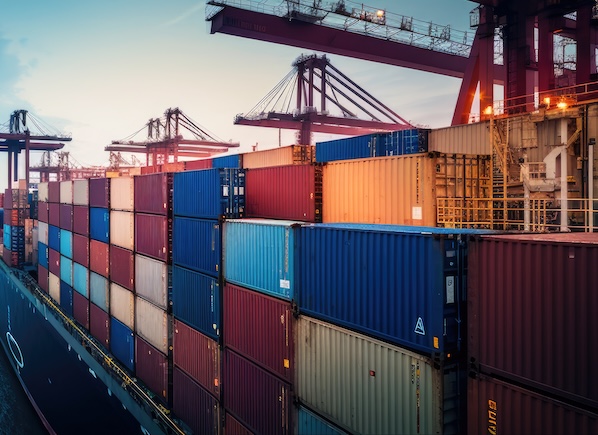
Container ship carrying container boxes import export dock with quay crane. Business commercial trade global cargo freight shipping logistic and transportation worldwide oversea concept. Generative AI
Economic Updates
Philippines Trade Update: Wider deficit on strong imports
DOWNLOAD
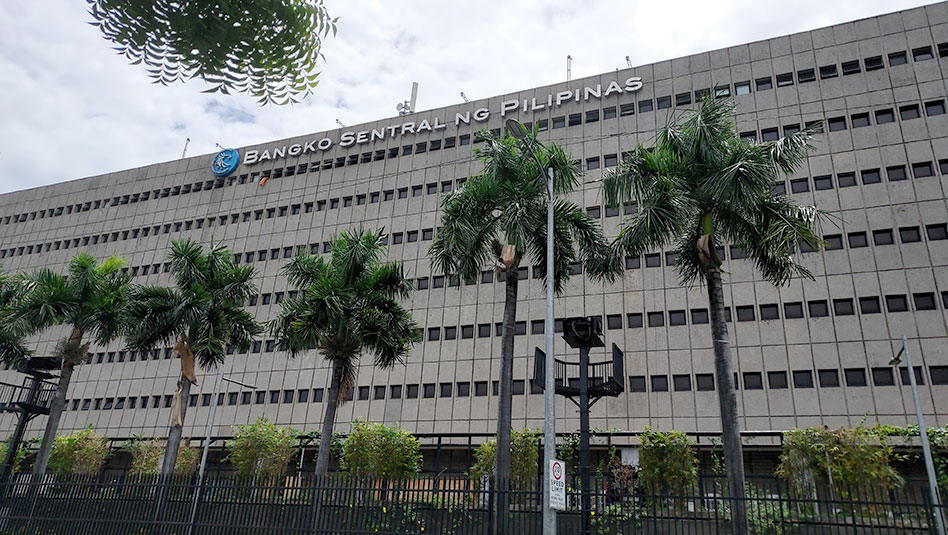
Frick collection with palm trees 
Economic Updates
Policy Rate Updates: Policy rate updates to reassure 
DOWNLOAD
Man using his smartphone
Reports
Fed to cut just once 
DOWNLOAD
View all Reports
Metrobank.com.ph How To Sign Up
Follow us on our platforms.

How may we help you?

TOP SEARCHES
  • Where to put my investments
  • Reports about the pandemic and economy
  • Metrobank
  • Webinars
  • Economy
TRENDING ARTICLES
  • Investing for Beginners: Following your PATH
  • On government debt thresholds: How much is too much?
  • Philippines Stock Market Outlook for 2022
  • Deficit spending remains unabated

Login

Access Exclusive Content
Login to Wealth Manager
Visit us at metrobank.com.ph How To Sign Up
Access Exclusive Content Login to Wealth Manager
Search
MODEL PORTFOLIO THE GIST
NEWS AND FEATURES
Global Philippines Fine Living
INSIGHTS
INVESTMENT STRATEGY
Economy Stocks Bonds Currencies
THE BASICS
Investment Tips Explainers Retirement
WEBINARS
2024 Mid-Year Economi Briefing, economic growth in the Philippines
2024 Mid-Year Economic Briefing: Navigating the Easing Cycle
June 21, 2024
Investing with Love
Investing with Love: A Mother’s Guide to Putting Money to Work
May 15, 2024
retirement-ss-3
Investor Series: An Introduction to Estate Planning
September 1, 2023
View All Webinars
DOWNLOADS
Container ship carrying container boxes import export dock with quay crane. Business commercial trade global cargo freight shipping logistic and transportation worldwide oversea concept. Generative AI
Economic Updates
Philippines Trade Update: Wider deficit on strong imports
March 27, 2026 DOWNLOAD
Frick collection with palm trees 
Economic Updates
Policy Rate Updates: Policy rate updates to reassure 
March 26, 2026 DOWNLOAD
Man using his smartphone
Reports
Fed to cut just once 
March 19, 2026 DOWNLOAD
View all Reports

Archives: Business World Article

NEDA says 2024 growth target ‘still achievable’

NEDA says 2024 growth target ‘still achievable’

The Philippines can still achieve its 6-7% gross domestic product (GDP) growth target this year, National Economic and Development Authority (NEDA) Secretary Arsenio M. Balisacan said on Friday.

“We remain optimistic about the fourth quarter economic performance. Holiday spending, more stable commodity prices, robust remittance inflow, and labor market give us confidence that our 6 to 7% growth target is still achievable,” he said during a press conference on Friday.

Mr. Balisacan said fourth quarter GDP growth will likely be faster than the third quarter, amid easing inflation and lower interest rates.

“I think all these, we believe that the fourth quarter could be better than the third quarter,” he said.

Mr. Balisacan said these “positive forces” could outweigh the expected contraction in agricultural output due to weather disturbances.

In the third quarter, GDP expanded by 5.2%, as bad weather hurt agricultural output and slowed government spending. This was slower than the revised 6.4% in the second quarter and and 6% a year ago.

It was also the weakest growth in five quarters or since the 4.3% expansion in the second quarter of 2023.

For the first nine months, GDP growth averaged 5.8%. The economy has to grow by 6.5% in the fourth quarter in order to reach the lower end of the government’s 6-7% target for 2024.

Mr. Balisacan said that even if Philippine GDP expands by an average of 5.9% to 6.1% for the full year, this would still be a “very respectable growth” compared to most emerging economies.

For 2025, Mr. Balisacan said the economy will likely benefit from rate cuts by the Bangko Sentral ng Pilipinas’ (BSP).

Since starting its easing cycle in August, the BSP has cut borrowing costs by 50 basis points, bringing the benchmark rate to 6%.

Trump impact

Meanwhile, Mr. Balisacan said the Philippines is “ready to work with any economy” as Donald J. Trump is set to assume the presidency in the United States in January.

He said the Philippines will adjust its policies accordingly as it continuously built “solid” relationships with the US and other countries.

Mr. Trump has proposed to impose 60% tariffs on US imports of Chinese goods, as well as a universal tariff of up to 20%.

“The best hope we could make is that what was stated during the campaign would be different from what will actually happen. So that we won’t get into these high tariffs, increasing tariffs,” he said.

It would be “bad” for the global economy as a whole as it could reduce trade, inflows, and more, Mr. Balisacan said.

“We expect that we hope that we won’t go there, but still our priority, even before this development and as reflected in our PDP [Philippine Development Plan], is to diversify the economy so that we have all these growth pillars kicking in,” he said. — Aubrey Rose A. Inosante

PSE targets PHP 120-billion capital raising

PSE targets PHP 120-billion capital raising

The Philippine Stock Exchange (PSE) is aiming to raise PHP 120 billion in capital next year as it anticipates increased market activity.

“This year, we have PHP 79 billion in capital raising. Next year, I think we can do about P120 billion in capital raising, about a 50% increase. These include follow-on offering (FOO), stock rights offering, and private placements,” PSE President Ramon S. Monzon told reporters on the sidelines of a forum in Makati City on Thursday.

Last month, Mr. Monzon said the PSE expects to have six initial public offerings (IPO) and to raise up to PHP 150 billion in capital for 2025.

The PSE only had three IPOs this year, missing the market’s operator target of six. These were mining company OceanaGold (Philippines), Inc. as well as renewable energy companies Citicore Renewable Energy Corp., and NexGen Energy Corp.

The market operator also fell short of its goal to raise PHP 175 billion in capital this year.

“We only had three IPOs — small ones. But we had big preferred FOOs,” Mr. Monzon said.

The PSE was supposed to have its fourth IPO this year with the public listing of Cebu-based fuel retailer Topline Business Development Corp. (Topline).

However, Topline announced on Nov. 18 that it opted to move its offer period to the first quarter of 2025 to accommodate institutional investors.

Mr. Monzon said there is some uncertainty next year as US President-elect Donald J. Trump assumes office on Jan. 20. Mr. Trump had vowed to implement higher tariffs on imports, conduct mass deportation of illegal immigrants and focus on domestic manufacturing.

“There is uncertainty. We don’t know what’s going to happen. (Mr. Trump plans to) deport the illegal immigrants. I think there are a few Filipino immigrants. If he does a massive importation, then our (overseas) remittances will drop. It’s a very important stabilizing factor for an economy,” he said.

“He’s also trying to penalize companies that go outside. Our information technology and business process management industry (IT-BPM) employs about 1.9 million employees. Those are the uncertainties that we don’t know what will happen,” he added.

The Philippines is one of US firms’ top destinations for outsourcing services.

An earlier report by the Center for Strategic and International Studies (CSIS) showed 395 US firms have invested USD 22.4 billion in the Philippines between 2003 and 2021, of which USD 7.8 billion or 35% went to the IT-BPM sector.

China Bank Capital Corp. Managing Director Juan Paolo E. Colet said in a Viber message that the PSE’s capital-raising target for 2025 is attainable.

“The PSE’s target is doable assuming market conditions are bullish for equity fundraising next year. For example, if SM Prime Holdings, Inc.’s real estate investment trust (REIT) and GCash will do their IPOs in the Philippines next year, then those two deals alone could easily raise PHP 120 billion,” he said.

“At this point, the outlook for our stock market is very fluid given the anticipated challenges and opportunities from Trump 2.0, so the target may still change,” he added.

Rizal Commercial Banking Corp. Chief Economist Michael L. Ricafort said in a Viber message that lower interest rates could help boost stock market activity.

“It is achievable amid better economic and market conditions, in view of possible further Federal Reserve rate cuts and local policy rate cuts that would reduce borrowing costs, increase demand for loans that would increase investments, create more jobs and more economic activities that would lead to more earnings of listed companies,” Mr. Ricafort said.

“If local stock market prices go up further in 2025, then that would make it more attractive for more share sales at the highest price possible, especially if those that deferred share sales would eventually push through,” he added.

Sy-led SM Prime’s REIT, Razon-led Prime Infrastructure Capital, Inc., Maynilad Water Services, Inc. and electronic wallet GCash are some of the big names said to be planning IPOs but with no definite timeline.

On Thursday, the bellwether PSE index dropped by 0.95% or 64.05 points to 6,638.54, while the broader all shares index retreated by 0.66% or 25.14 points to 3,734.94.

Acquisition

Meanwhile, Mr. Monzon said the PSE is hoping to finalize a move to acquire the Philippine Dealing System Holdings Corp. (PDS Group) before yearend.

“We’re still hoping. It’s just November. We still have a month to go. It is still a work in progress,” he said.

The PSE is looking to purchase up to 100% of the PDS, the operator of the Philippine Dealing & Exchange Corp., which caters to the fixed-income market by providing trading infrastructure.

Currently, the PSE has a 20.98% stake of the issued and outstanding capital stock of the PDS Group, while the Bankers Association of the Philippines members and institutions have a 21% stake. – Revin Mikhael D. Ochave, Reporter

Debt-to-GDP ratio unlikely to return to pre-pandemic level

Debt-to-GDP ratio unlikely to return to pre-pandemic level

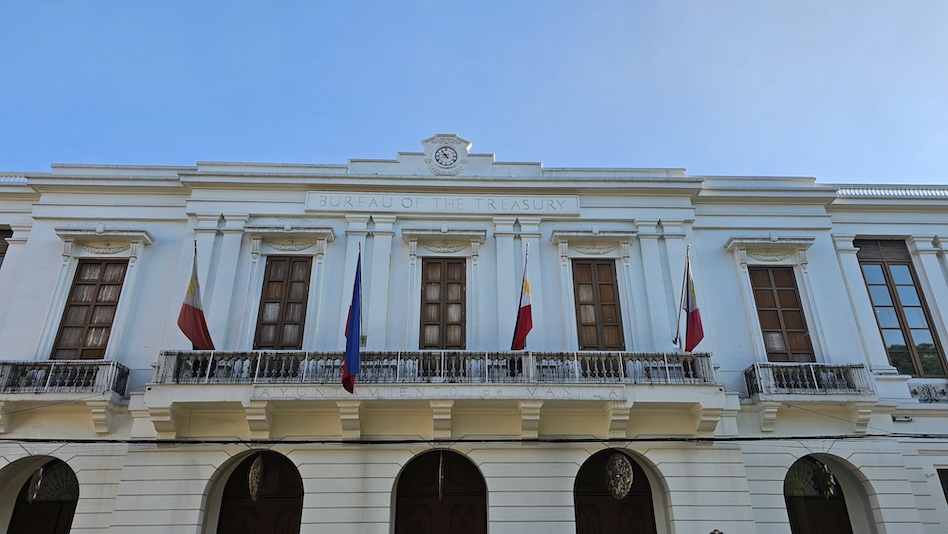
The Philippines’ debt-to-gross domestic product (GDP) ratio is unlikely to return to the pre-pandemic level as debt remains elevated in the medium term, the Bureau of the Treasury (BTr) said.

But the National Government’s (NG) medium-term fiscal consolidation plan will make sure it can continue to invest in its economic priorities while keeping debt obligations sustainable, the BTr added.

“It should also be said that an aggressive return to the pre-pandemic debt-to-GDP ratio of 39.6% is technically and politically infeasible,” BTr said in its annual report released on Nov. 27.

The Treasury said this would require a “more dramatic” fiscal adjustment where the government should have consistent budgetary surpluses.

But this approach would deprive the country of the needed public investments, it added.

The NG’s debt-to-GDP ratio stood at 61.3% at the end of September, higher than the year-earlier 60.2%.

This is still above the 60% threshold deemed by multilateral lenders as manageable for developing economies.

The government seeks to bring this down to 60.6% by the end of 2024, and below 60% by 2028.

Rizal Commercial Banking Corp. Chief Economist Michael L. Ricafort said the government incurs “relatively wider budget deficits” as it requires additional government borrowings that increase the outstanding debt.

“Faster GDP (gross domestic product) growth would also been an essential element to bring down the ratio below the 60% international threshold,” Mr. Ricafort said.

Mr. Ricafort said new tax and fiscal reform measures are needed to further narrow the budget deficit.

As of end-September, the deficit-to-GDP ratio stood at 5.14%, well below the 5.6% target for 2024.

“While debt-to-GDP will remain elevated compared with historical levels, the strong and sustained economic growth of 5.6%, coupled with steady reduction in budgetary deficits and a favorable negative real effective interest rate of 1.3% on the NG’s issuances will drive support for debt sustainability,” the Treasury said.

Foundation for Economic Freedom President Calixto V. Chikiamco said the government is “unlikely” to reduce the debt-to-GDP ratio since “the government has a spending plan to hit the GDP targets.”

“There are more uncertainties presently with Trump in office and launching a global trade war. Therefore, there are more uncertainties in the government reaching its debt-to-GDP ratio. However, if inflation is kept under control, more likely than not, the government can reach its GDP targets,” Mr. Chikiamco said.

Economic managers are targeting 6-7% GDP growth this year and 6.5-7.5% growth in 2025. — A.R.A.Inosante

‘Business as usual’ for Cabinet amid political tensions, says Balisacan

‘Business as usual’ for Cabinet amid political tensions, says Balisacan

The National Economic and Development Authority (NEDA) on Thursday said rising political tensions in the Philippines will have minimal, if any, impact on the economy.

The Philippine government is focused on upgrading infrastructure, boosting the country’s resiliency in the face of climate change, and diversifying its economy amid geopolitical risks, NEDA added.

It’s “business as usual,” NEDA Secretary Arsenio M. Balisacan said at a Palace briefing after attending a Cabinet meeting that largely focused on the prospects for the 2025 national budget.

He said the business community is more concerned with the sustainability of the country’s economic agenda.

“As also seen in recent economic history, for so long the government stays in course within its development economic priorities and programs, this will continue to maintain their confidence in the economy,” he added.

“So, I think the impact of [political] noises such as what we have now, if there’s anything, will be quite minimal and the last 12 or so years bear on that.”

Due largely to the impacts of weather disturbances and slower government spending, the Philippine economy grew by 5.2% in the third quarter — the weakest in five quarters.

President Ferdinand R. Marcos, Jr. on Monday vowed to fight back and never to allow the country to be dragged into gutter-level politics. This after his erstwhile ally and Vice-President Sara Z. Duterte-Carpio claimed she hired an assassin to kill the President, his wife and  House Speaker Ferdinand Martin G. Romualdez.

Ms. Duterte on Wednesday said her broken ties with the President’s camp had reached a “point of no return.”

The country’s second-highest official has been grumbling amid congressional probes into confidential funds at the Office of the Vice-President and the Department of Education.

Mr. Balisacan claimed that since the late 1990s, the Philippine economy “continued to progress despite the political noises.”

“In this administration, we are so focused on ensuring that the goals and targets and strategies that we have outlined in the Philippine Development Plan will be achieved,” he said.

Mr. Balisacan said it is important for the public to know that economic momentum is sustained.

“We can do ‘business as usual’ amid conflicts between former political allies. Indeed, it may not translate to macroeconomic disturbances, but it would affect our image among global partners which could be potential sources of investment,” said Emy Ruth Gianan, who teaches economics at the Polytechnic University of the Philippines.

“More importantly, it adversely affects the morale of ordinary Filipinos. They would eventually choose to leave the country given petty political fights,” she said in a Facebook Messenger chat.

Leonardo A. Lanzona, who teaches economics at the Ateneo de Manila University, said amid all the dramas, the major issue remains the same — “that the root cause was the misuse of public funds, otherwise known as confidential funds.”

“Sure, the government is focused on the economy. But the key issue is trust,” he said via Messenger chat.

“The loss of P125 million of confidential money in 11 days should be already a cause of concern for the economic managers, and its consequences cannot be offset by future committed work especially if no one is being held accountable for it.”

Terry L. Ridon, a public investment analyst and convenor of InfraWatchPH, said rising political tensions can create an “atmosphere of instability” from the point of view of the international community.

“This may compel foreign investors to reconsider the Philippines as its next investment destination and rechannel their funds towards economies with a more stable political status quo,” he added.

“Nonetheless, Congress and the President should resolve this political instability in the soonest time, whether through impeachment proceedings or through legal proceedings being initiated by various government agencies.”

‘More stable’

Mr. Balisacan said the economic meeting with Mr. Marcos earlier in the day largely focused on the 2025 national budget and “the need to prioritize the funding of the high-priority projects.”

Mr. Romualdez and Senate President Francis Joseph “Chiz” G. Escudero were present at the meeting.

Mr. Balisacan said the Congress vowed to cooperate with the Executive branch in ensuring funding for its flagship projects for next year.

Asked whether this would mean new taxes, the NEDA chief said: “It’s the same. We haven’t changed the priorities with respect to new measures.”

He said the Legislative-Executive Development Advisory Council will convene in two weeks.

Mr. Balisacan said the President has instructed the economic team to “tighten our practices” in releasing rules and guidelines for infrastructure projects to ensure that they can withstand the floods and typhoons.

Aside from infrastructure, the economic team is also focused on the need to “diversify the economy and to strengthen its fundamentals,” the NEDA chief said, citing “threats of high tariffs and the possible responses of other countries to such tariffs.”

US President-elect Donald J. Trump seeks 60% or higher tariffs on all Chinese goods and a 10% universal tariff.

“I think that over the years, and I’m quite confident, that our economy now is more stable than any other time in the past, that it’s more diversified than actually in the past but we need to continue and improve working and developing other pillars of growth,” Mr. Balisacan said.

Also on Thursday, Mr. Balisacan said NEDA was set to submit its periodic review of the reduced tariff rate for rice on Friday.

“It basically presents the picture of the rice market at this time, providing an analysis of where we are, particularly with respect to production, to supply, to demand, to prices and what to expect in the coming four months and beyond,” he said. – Kyle Aristophere T. Atienza, Reporter


Philippine banking industry deposits hit PHP 19.6 trillion

Philippine banking industry deposits hit PHP 19.6 trillion

The Philippine banking system’s total deposits hit PHP 19.58 trillion as of end-September, data from the Bangko Sentral ng Pilipinas (BSP) showed.

The banking sector’s total deposits rose by 7% from PHP 18.29 trillion recorded in the same period a year ago.

The number of deposit accounts jumped by 17.5% to 138.33 million as of end-September from 117.75 million a year prior.

Likewise, the number of depositors stood at 124.38 million, up by 14.8% from 108.34 million in the previous year.

Big banks’ deposits, which accounted for 93.8% of the total, rose by 6.9% year on year to PHP 18.36 trillion at end-September from PHP 17.18 trillion.

BSP data showed universal and commercial banks had a total of 91.39 million accounts and 83.72 million depositors.

Meanwhile, deposits of thrift banks increased by 5.5% to PHP 804.12 billion from PHP 761.96 billion a year ago. Thrift bank deposit accounts stood at 7.16 million, with 6.9 million depositors.

Rural and cooperative banks recorded deposits of PHP 327.26 billion, rising by 15.5% from PHP 283.23 billion. These banks had a total of 23.53 million deposit accounts and 23.2 million depositors.

Data from the central bank showed digital banks received PHP 87.39 billion in total deposits at end-September, up by 34% from PHP 65.18 billion a year ago.

The number of deposit accounts from digital banks hit 16.25 million with 10.55 million depositors.

By type, savings deposits comprised 43.4% of the banking sector’s total deposits, equivalent to PHP 8.5 trillion.

This was followed by regular savings (PHP 6.92 trillion), time certificate of deposits (PHP 5.67 trillion), demand deposits (PHP 5.38 trillion), kiddie and teen savings (PHP 53.99 billion), and basic deposits (PHP 28.52 billion).

“The increase in online business transactions led to the faster growth in online banking accounts and e-wallets, all of which led to greater financial inclusion and also led to the corresponding increase in deposit accounts, especially through digital banking channels,” Rizal Commercial Banking Corp. Chief Economist Michael L. Ricafort said.

Earlier data from the BSP showed the share of online payments in the total volume of monthly retail transactions rose to 52.8% last year.

Mr. Ricafort also noted the boom in digital transactions and transfers through InstaPay and PESONet as an alternative to bank checks.

“This (necessitates) the creation of more deposit accounts to facilitate more e-commerce and digital banking transactions,” he added.

Separate data from the BSP showed the value of transactions done through the automated clearing houses InstaPay and PESONet jumped by 34.6% to PHP 13.99 trillion as of October.

“On top of the rapid growth in digital business transactions in the local economy, the faster growth in deposits is also consistent with the much faster growth in bank loans,” he added.

Bank lending jumped by 11% year on year to P12.4 trillion in September, its fastest growth since the 13.7% posted in December 2022.

The BSP earlier attributed the growth in deposits to “strong depositor confidence, particularly from resident individuals and private corporations.”

This allows banks to have a reliable funding source that “shields the banking system from significant funding withdrawals arising from global financial market fluctuations and reduces banks’ exchange rate risk and vulnerability,” it said in its latest report on the Philippine financial system. – Luisa Maria Jacinta C. Jocson, Reporter

Philippine fiscal position swings to surplus in Oct.

Philippine fiscal position swings to surplus in Oct.

The national government’s fiscal position swung to a surplus in October, driven by a 23% jump in revenues, the Bureau of the Treasury (BTr) said on Wednesday.   

The NG posted a PHP 6.3-billion budget surplus in October, a turnaround from the PHP 34.4-billion deficit in the same month a year ago.

This was the first budget surplus since the PHP 42.7-billion surplus posted in April.

National Government fiscal performanceMonth on month, the budget balance swung to a surplus from the PHP 273.2-billion deficit in September.

Data from the BTr showed government revenues increased by 22.63% to PHP 473.1 billion in October from PHP 385.8 billion a year ago, as tax revenues jumped by 16.94% to PHP 414.9 billion.

The bulk of tax revenues came from the Bureau of Internal Revenue (BIR), which collected PHP 325.5 billion in October, up 18.62% year on year.

“The double-digit growth in October can be attributed to higher collections on value-added tax (VAT), personal income tax (PIT), documentary stamp tax (DST), corporate income tax (CIT), excise tax on tobacco products, and percentage taxes,” BTr said.

Collections by the Bureau of Customs jumped by an annual 11.5% to PHP 86.9 billion in October, while collections by other offices were flat at PHP 2.4 billion.

On the other hand, non-tax revenues also went up by 87.65% year on year to PHP 58.3 billion in October. Treasury revenues declined by 13.5% to PHP 14.5 billion, due to “the base effect of early remittances of dividends from government-owned and -controlled corporations last year.”

Collections by other offices surged by 206.72% to PHP 43.7 billion.

Meanwhile, expenditures rose by 11.08% to PHP 466.8 billion in October from PHP 420.2 billion a year ago.

“This was mainly attributed to higher personnel services expenses due to the first tranche of the salary adjustments of qualified civilian government employees and the release of FY 2022 Performance-Based Bonus of the Department of Education,” it said.

Spending also got a boost from the implementation of infrastructure projects of the Department of Public Works and Highways and foreign-assisted rail projects of the Department of Transportation, as well as social protection and health programs.

Interest payments slipped by 6% to PHP 55.4 billion, while other expenditures jumped by 13.89% to PHP 411.4 billion.

“Budget surplus (in October) may stem from low budget utilization rate of several agencies due to various factors such as procurement and disbursement issue,” John Paolo R. Rivera, a senior research fellow at the Philippine Institute for Development Studies, said in a Viber message.

10-month deficit

In the first 10 months, the budget deficit narrowed to PHP 963.9 billion from PHP 1.02 trillion in 2023.

As of end-October, the shortfall represents only 64.94% of the PHP 1.48-trillion deficit ceiling for the year.

Revenue collections jumped by 16.83% to PHP 3.77 trillion in the January-to-October period. This accounted for 88.2% of the revised PHP 4.27-trillion revenue program for this year.

Taxes, which made up 86% of the total revenues, increased by 11.4% to PHP 3.23 trillion.

Revenues generated by the BIR rose by 13.49% to PHP 2.42 trillion as of end-October, making up 84.95% of the PHP 2.85-trillion revised full-year program.

“The 10-month year-on-year growth is due to higher VAT, a total of 12 months’ worth of VAT was already collected with the change of filing schedule from monthly to quarterly. The other sources of higher BIR collection are PIT, CIT, combined taxes on bank deposits and government securities, DST, and percentage taxes,” the Treasury said.

Customs collections went up by 5.32% to PHP 777.6 billion, representing 82.75% of the revised PHP 939.7-billion program.

Nontax revenues, which accounted for 14.32% of the total revenues, jumped by 64.93% to PHP 539.4 billion.

On the other hand, expenditures increased by 11.52% to PHP 4.73 trillion in the first 10 months from PHP 4.24 trillion in the comparable period last year.

Interest payments rose by 23.03% to PHP 638.7 billion from PHP 519.1 billion a year ago.

“The better budget balance data for the month of October 2024 and for the first 10 months of the year may be attributed to faster growth in recurring tax revenues especially from the BIR as the economy reopened further,” Rizal Commercial Banking Corp. Chief Economist Michael L. Ricafort said in a Viber message.

He said many businesses reported improved sales, which resulted in higher tax revenue collections.

“Going forward, the CREATE MORE (Corporate Recovery and Tax Incentives for Enterprises to Maximize Opportunities for Reinvigorating the Economy) would lead to some foregone tax revenue collections,” he said.

But this could be offset “by increased foreign direct investments, more jobs, and increased business/economic activities in the country that would result in more recurring tax revenue collections,” Mr. Ricafort said.

The Treasury said revenue effort for the first three quarters improved to 17.5% of gross domestic product (GDP), slightly higher than 16.4% a year ago and exceeded the 16.1% target for 2024.

Tax effort also went up to 14.91% in the first three quarters versus 14.72% in 2023, and above the 14.42% full-year target.

Expenditure effort rose to 22.6%, up from 22.13% a year ago and surpassed the full-year target of 21.72%.

“The fiscal deficit-to-GDP ratio stands at a manageable 5.14% of GDP for the first three quarters of 2024. This is lower than the 5.7% level during the same period last year and well below the 5.6% target for 2024,” the Treasury said. – Aubrey Rose A. Inosante, Reporter

Trump policies may hurt outsourcing in Philippines

Trump policies may hurt outsourcing in Philippines

US President-elect Donald J. Trump’s protectionist policies could spell trouble for the Philippines’ business process outsourcing (BPO) sector, economists warned.

GlobalSource Country Analysts Diwa C. Guinigundo and Wilhelmina C. Mañalac said Mr. Trump has repeatedly claimed Americans have lost jobs to other countries and vowed to “punish” American firms that manufacture outside of the United States.

“This policy stance could negatively impact the Philippines’ business process outsourcing (BPO) industry, especially since it has been reported that around 70% of its earnings come from the US,” they said in a commentary.

Mr. Guinigundo and Ms. Mañalac said the BPO industry has been one of the Philippine economy’s fastest-growing sectors, generating much-needed foreign exchange revenues and jobs.

“The BPO industry has in fact been comparable to foreign exchange revenues sourced from overseas Filipino workers’ remittances. Thus, executing these (protectionist) policies may have a stifling effect on the growth of the BPO industry,” they said.

The information technology and business process management (IT-BPM) industry is expected to book between USD 38 billion and USD 40 billion in revenue this year. It also aimed to increase staffing to between 1.82 million and 1.84 million by yearend.

The industry caters to the banking, financial services and insurance, healthcare, retail and IT sectors.

“Given the size of business in the BPO sector and the high attrition rate in the industry at 40% due to limited career progression, low pay and an unhealthy work-life balance, the uncertainty of the Trump policy on the business contracting industry could therefore have non-trivial effects on the Philippines’ output growth and employment,” the GlobalSource analysts said.

The Philippines is one of the top destinations for US firms seeking to outsource services.

An earlier report by the Center for Strategic and International Studies showed 395 US firms have invested USD 22.4 billion in the Philippines between 2003 and 2021, of which USD 7.8 billion or 35% went to IT-BPM.

Mr. Trump, who had pushed for an “America First” policy during his first term, is expected to continue his protectionist stance when he assumes office in January.

“On the basis of Trump’s ‘America First’ policy under his mantra ‘Make America Great Again,’ a reduction in foreign assistance extended by the US globally, including the Philippines, may also be expected,” the GlobalSource analysts said.

During his election campaign, Mr. Trump has also vowed to deport millions of immigrants living in the United States illegally.

“Stricter immigration policies may make it more difficult for overseas Filipino workers to find job opportunities in the US, even the highly skilled ones,” Mr. Guinigundo and Ms. Mañalac said.

“Considering that an average of 40.9% of total cash remittances from 2021 to 2023 came from the US, the implementation of more stringent immigration policies may result in lower remittances, without consideration of other foreign job markets.”

Cash remittances increased 3% to USD 28.07 billion in the January-to-September period from USD 27.24 billion a year ago.

The US accounted for the biggest share (41.3%) of cash remittances in the first nine months.

Mr. Guinigundo and Ms. Mañalac also flagged the possible negative impact of Mr. Trump’s trade policy.

Mr. Trump on Monday said he will slap a 25% tariff on all products from Mexico and Canada, and will charge goods from China an additional 10% tariff on his first day in office. He had earlier threatened to impose tariffs of up to 20% on imports from other countries.

“The US is a major destination for Philippine exports, making up an average of about 16% of total export trade for the last five years. While the share-to-total has slightly declined due to the trade diversification policy of the Philippine government in recent years, a further drop in exports to the US definitely does not bode well for the country,” the GlobalSource analysts said. — ARAI

Philippine retailers urged to adapt to consumers, AI

Philippine retailers urged to adapt to consumers, AI

Local retailers should adapt to rapid digitalization, the growing use of artificial intelligence (AI), and changing consumer preferences to ensure sustained growth, industry players said.

“Digitalization is here to stay. The use of artificial intelligence is really picking up. It really says a lot about how digitally fluent the Filipinos are,” Metro Retail Stores Group, Inc. Chairperson Sherisa P. Nuesa said during a panel discussion at the BusinessWorld Forecast 2025 forum on Tuesday.

The e-commerce sector saw significant growth in the country during the pandemic as consumers turned to online shopping. This prompted many businesses to continue expanding in the e-commerce space.

Ms. Nuesa said Filipino consumers have become smarter when it comes to spending.

“They choose and are ready to switch to cheaper alternatives. What has happened is that digitalization has empowered customers with many choices,” she added.

Household consumption accounts for over 70% of the Philippine economy.

“Consumption has always been a strong component of the Philippine economy. We have a young population and they still need a lot of consumer goods,” Ms. Nuesa said.

Vicky V. Abad, country manager for global research company Ipsos in the Philippines, said that AI is poised to transform the retail industry.

“AI is going to change the way retailers will adapt to how consumers are utilizing this technology. There’s a lot that retailers can learn about the consumers like offering these things that they’re going to look for,” she said.

“We’ve already seen examples in omnichannel strategies wherein technology has been used to create a seamless process for consumers to navigate from identifying a need they’re looking, to their journey and search, and to the actual fulfillment of their needs and wants in the retail store,” she added.

Ms. Abad said local retailers should focus on retaining the trust of consumers amid rapid digitalization.

“In the age of digitalization, we need to be able to trust companies we work with that they will protect our data, that they will protect our money. The importance of trust as a currency amongst brands and consumers will be paramount,” she said.

“Retailers should remain authentic to who they are, what they stand for, and what they believe in. They must not lose those as they adapt to the different kinds of consumers,” she added.

Jennifer Jane G. Echevarria, Globe Telecom, Inc. Vice-president for enterprise data and strategic services, said retailers should cultivate customer trust.

“Offering the lowest price will not guarantee any retailer success because at the end of the day, trust has become the new currency for Filipinos,” she said.

“What we can bank on as companies and brands is knowing that there will always be a budget for our customers. If we are able to make them feel that it is worth spending and trusting their money with us, we just need to be able to deliver,” she added.

Ms. Echevarria said retailers should give customers an array of options, instead of only focusing on setting the lowest price.

“Since most Filipinos have irregular sources of income, what’s important for retail today is to make sure there’s always flexibility by offering flexible deals and customizable options,” she said.

“It is up to us (retailers) to understand our customer base and make sure that we’re not leaving money on the table and that we offer what is best for them. If the customer is at the center of everything that you do, you could never go wrong,” she added.

Meanwhile, Ms. Nuesa said that retailers should recalibrate their strategies in order to keep up with changing consumer preferences.

“We in business should also be daring enough to experiment, respond, and adapt our strategies to changing behavior and environment. There’s no such thing as brand loyalty because the younger generation try new things,” she said.

“Consumers today really focus a lot on their individuality. There is a lot more promise in helping them express themselves,” she added. – Revin Mikhael D. Ochave, Reporter

S&P raises Philippine outlook to ‘positive’

S&P raises Philippine outlook to ‘positive’

S&P Global Ratings affirmed the Philippines’ investment grade rating on Tuesday and raised its outlook to “positive” from “stable” to reflect the economy’s strong growth potential amid improved institutional strength on the back of “effective policy making.”

The debt watcher on Tuesday affirmed its “BBB+” long-term credit rating for the country, which is a notch below the “A” level grade targeted by the government. It also kept its “A-2” short-term rating for the Philippines.

Still, S&P Global raised its rating outlook to “positive” from “stable.” A positive outlook means the Philippines’ credit rating could be raised over the next two years if improvements are sustained.

“Our improved institutional assessment drives our positive outlook on the Philippines. We believe the strengthening of the country’s institutional settings, which had contributed to a significant enhancement in the sovereign’s credit metrics over the past decade, will continue,” S&P Global said in a statement. “This is demonstrated by the strong economic recovery in the last two years, and ongoing reforms to support business and investing conditions.”

“This improvement could lead to stronger sovereign support over the next 12-24 months if the Philippines’ economy maintains its external strength, healthy growth rates, and that fiscal performance will strengthen.”

Bangko Sentral ng Pilipinas (BSP) Governor Eli M. Remolona, Jr. said the debt watcher’s upgraded outlook “reflects the work the government has done to improve the economic, fiscal, and monetary environment, enabling strong growth to continue.”

Finance Secretary Ralph G. Recto likewise said this “reaffirms our stable economic and political environment and that we are on track to achieve a growth-enhancing fiscal consolidation.”

“We have a comprehensive ‘Road to A’ initiative to ensure that we secure more upgrades soon,” he added.

S&P Global said the Philippines’ sovereign rating reflects the economy’s “above-average growth potential.”

“This strength underpins constructive development outcomes. The ratings also benefit from the country’s strong external position,” it added.

For the first nine months of the year, the Philippine economy expanded by 5.8%, slightly below the government’s goal of 6-7% gross domestic product (GDP) growth this year.

The government is targeting 6.5-7.5% GDP growth next year and 6.5-8% growth from 2026 to 2028.

S&P Global expects Philippine GDP growth to average 5.5% this year, driven by exports and easing inflationary pressures.

“Ongoing reform on the business, investment, and tax fronts should benefit growth over the next three to four years.”

The Philippine economy will likely grow at an average of 6.2% a year over the next three years, it added.

“Solid household and corporate balance sheets, and sizable remittance inflows underpin the Philippine economy’s positive medium-term trajectory,” S&P Global said.

“Ongoing efforts to address infrastructure gaps, and improvements in the business climate through regulatory and tax reforms should also support growth in economic productivity.”

Fiscal reforms

The government’s fiscal reforms have also boosted the economic outlook, the credit rater said.

“We believe that effective policy making in the Philippines has delivered structural improvements to the country’s credit metrics. Fiscal reforms have raised government revenue as a share of GDP and helped to fund public investment. Improved infrastructure and policy environment have helped to keep economic growth strong in much of the past decade,” it said.

“The government’s fiscal and debt settings had deteriorated due to the economic fallout from the pandemic and the associated extraordinary policy responses. Fiscal buffers built through a long record of prudence before the pandemic thinned, but consolidation has begun with the economic recovery well on track. The Philippines’ low GDP per capita relative to other investment-grade sovereigns temper these strengths,” it added.

Latest data from the Treasury showed that the budget deficit narrowed by 1.35% to P970.2 billion in the first nine months.

The government is seeking to bring the deficit-to-GDP ratio to 5.6% this year and further down to 3.7% by 2028.

“The Philippine government has generally enacted effective and prudent fiscal policies over the past decade. Improvements to the quality of expenditure, manageable fiscal deficits, and relatively low general government indebtedness testify to this,” S&P Global said.

However, the credit rater said restoring fiscal and debt settings to pre-pandemic levels will be challenging and likely be a gradual process.

“The ongoing economic recovery in the Philippines should facilitate a reduction in the general government deficit and a further stabilization of the debt burden,” it said. “It will, however, take several years for fiscal balances to recover to pre-pandemic levels given the eroded fiscal headroom.”

S&P Global added that it expects the country’s net general government debt to gradually decline amid continued fiscal consolidation.

Moving forward, the debt watcher said it could upgrade the Philippines’ credit rating if the current account deficit and fiscal position remain well-managed.

“We may raise the ratings if our expectations of current account deficits tapering over the forecast period are realized such that buffers in the Philippines’ narrow net external asset position are maintained and if the government achieves more rapid fiscal consolidation,” it said.

S&P Global expects the country’s current account deficit to persist but at “modest levels.”

The BSP estimates the current account deficit to reach $6.8 billion this year, equivalent to 1.5% of GDP. In the first half of the year, the country’s current account deficit stood at $7.1 billion, accounting for 3.2% of economic output.

On the other hand, the rating outlook could be revised down to “stable” if economic recovery slows down or if the government’s fiscal and debt positions deteriorate.

“If persistently large current account deficits lead to a structural weakening of the Philippines’ external balance sheet, we would also revise the outlook to stable,” S&P Global added. – Luisa Maria Jacinta C. Jocson, Reporter

GDP growth on track to reach 6-7% target

GDP growth on track to reach 6-7% target

The country is still on track to meet the government’s gross domestic product (GDP) growth targets for this year and the next, the Department of Finance and Department of Budget and Management said.

“For growth, I think achievable, of course. This year, it may be nearer the lower end. For next year, it’s still achievable, 6.5%,” Finance Undersecretary and Chief Economist Domini S. Velasquez told reporters on the sidelines of the BusinessWorld Forecast 2025 forum on Tuesday.

The government is targeting 6-7% GDP growth this year and 6.5-7.5% expansion for 2025.

Separately, Budget Secretary Amenah F. Pangandaman said that the economic team is still confident that they can meet their growth goals.

“As of now, we’re still confident that we will be able to hit our targets, so we will see,” she told reporters on the sidelines of an event in Makati City.

The government is working to expedite the release of the budget and encourage agencies to spend for programs and projects, which would contribute to growth, she said.

In the first nine months, Philippine GDP growth averaged 5.8%. To meet the lower end of this year’s 6-7% target, the economy would need to grow by at least 6.5% in the fourth quarter.

The Development Budget Coordination Committee (DBCC) is set to have its next review in December.

The DBCC last met in June and kept its growth targets for this year up to 2028 but recalibrated its fiscal program.

Ms. Pangandaman said the DBCC will “most likely” revise its macroeconomic assumptions next month but noted that these changes would be “very minimal.”

“Actually, I’m not sure if they can take into consideration the new administration of President (Donald J.) Trump. I think it’s also nice to look at it. That’s what the technical working group is looking at.”

They are also studying the DBCC’s peso assumptions and may consider the incoming Trump administration’s proposed policies and its expected impact on the currency, she said.

“We’re studying that. The recommendation is the previous numbers we saw before. The new administration of President Trump, among others,” Ms. Pangandaman said.

On Tuesday, the peso slipped by a centavo to close at its record low of P59 per dollar, which it last hit on Nov. 21.

The peso sank to the P58 level in late October amid the greenback’s strength in the run-up to the US presidential election.

Mr. Trump’s win in the Nov. 5 vote caused the local unit to hit multi-month lows and eventually return to its all-time trough of P59 last seen in October 2022 as the dollar continued to soar on safe-haven demand as global markets await the new administration’s policy direction.

The DBCC expects the peso to range from P56-58 per dollar this year.

For her part, Ms. Velasquez said reforms such as the Corporate Recovery and Tax Incentives for Enterprises to Maximize Opportunities for Reinvigorating the Economy (CREATE MORE) Act will help drive investments and fuel growth.

Earlier this month, President Ferdinand R. Marcos, Jr. signed into law the CREATE MORE Act, which expands fiscal incentives and lowers corporate income tax on certain foreign enterprises.

Ms. Pangandaman said the economic team will likely conduct international roadshows to promote CREATE MORE to investors.

“We’re just finishing the implementing rules and regulations. By next year probably, we have a chance to go out and promote CREATE MORE.”

These roadshows will likely take place in the United States, Japan, Korea and the Middle East, she said.

“Maybe the US because there’s a new administration and then new policies in terms of their investment decisions,” Ms. Pangandaman added. — Luisa Maria Jacinta C. Jocson

Posts navigation

Older posts
Newer posts

Recent Posts

  • Navigating precarious times with cost averaging
  • Trade Update: Wider trade deficit in February
  • Metrobank US-Iran Risk Index: No swift end seen
  • Investment Ideas: March 27, 2026
  • BSP Update: First rate hike likely in June 

Recent Comments

No comments to show.

Archives

  • March 2026
  • February 2026
  • January 2026
  • December 2025
  • November 2025
  • October 2025
  • September 2025
  • August 2025
  • July 2025
  • June 2025
  • May 2025
  • April 2025
  • March 2025
  • February 2025
  • January 2025
  • December 2024
  • November 2024
  • October 2024
  • September 2024
  • August 2024
  • July 2024
  • June 2024
  • May 2024
  • April 2024
  • March 2024
  • February 2024
  • January 2024
  • December 2023
  • November 2023
  • October 2023
  • September 2023
  • August 2023
  • July 2023
  • June 2023
  • May 2023
  • April 2023
  • March 2023
  • February 2023
  • January 2023
  • December 2022
  • November 2022
  • October 2022
  • September 2022
  • August 2022
  • July 2022
  • June 2022
  • May 2022
  • March 2022
  • December 2021
  • October 2021

Categories

  • Bonds
  • BusinessWorld
  • Currencies
  • Economy
  • Equities
  • Estate Planning
  • Explainer
  • Featured Insight
  • Fine Living
  • How To
  • Investment Tips
  • Markets
  • Portfolio Picks
  • Rates & Bonds
  • Retirement
  • Reuters
  • Spotlight
  • Stocks
  • Uncategorized

You are leaving Metrobank Wealth Insights

Please be aware that the external site policies may differ from our website Terms And Conditions and Privacy Policy. The next site will be opened in a new browser window or tab.

Cancel Proceed
Get in Touch

For inquiries, please call our Metrobank Contact Center at (02) 88-700-700 (domestic toll-free 1-800-1888-5775) or send an e-mail to customercare@metrobank.com.ph

Metrobank is regulated by the Bangko Sentral ng Pilipinas
Website: https://www.bsp.gov.ph

Quick Links
The Gist Webinars Wealth Manager Explainers
Markets
Currencies Rates & Bonds Equities Economy
Wealth
Investment Tips Fine Living Retirement
Portfolio Picks
Bonds Stocks
Others
Contact Us Privacy Notice Terms of Use
© 2026 Metrobank. All rights reserved.

Access this content:

If you are an existing investor, log in first to your Metrobank Wealth Manager account. ​

If you wish to start your wealth journey with us, click the “How To Sign Up” button. ​

Login HOW TO SIGN UP