



MODEL PORTFOLIO
THE GIST
NEWS AND FEATURES
Global Philippines Fine Living
INSIGHTS
INVESTMENT STRATEGY
Economy Stocks Bonds Currencies
THE BASICS
Investment Tips Explainers Retirement
WEBINARS
2024 Mid-Year Economi Briefing, economic growth in the Philippines
2024 Mid-Year Economic Briefing: Navigating the Easing Cycle
June 21, 2024
Investing with Love
Investing with Love: A Mother’s Guide to Putting Money to Work
May 15, 2024
retirement-ss-3
Investor Series: An Introduction to Estate Planning
September 1, 2023
View All Webinars
DOWNLOADS
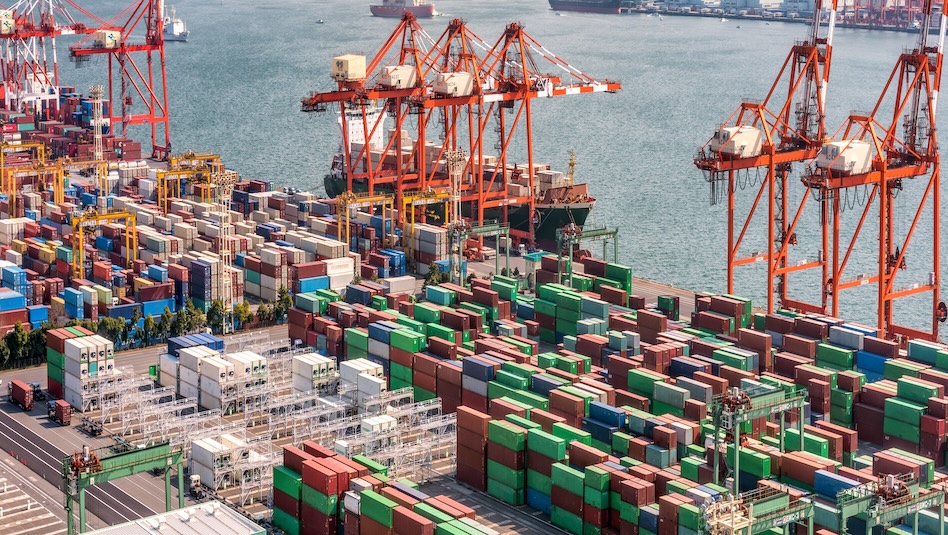
Container ship carrying container boxes import export dock with quay crane. Business commercial trade global cargo freight shipping logistic and transportation worldwide oversea concept. Generative AI
Economic Updates
Philippines Trade Update: Wider deficit on strong imports
DOWNLOAD
Frick collection with palm trees 
Economic Updates
Policy Rate Updates: Policy rate updates to reassure 
DOWNLOAD
Man using his smartphone
Reports
Fed to cut just once 
DOWNLOAD
View all Reports
Metrobank.com.ph How To Sign Up
Follow us on our platforms.

How may we help you?

TOP SEARCHES
  • Where to put my investments
  • Reports about the pandemic and economy
  • Metrobank
  • Webinars
  • Economy
TRENDING ARTICLES
  • Investing for Beginners: Following your PATH
  • On government debt thresholds: How much is too much?
  • Philippines Stock Market Outlook for 2022
  • Deficit spending remains unabated

Login

Access Exclusive Content
Login to Wealth Manager
Visit us at metrobank.com.ph How To Sign Up
Access Exclusive Content Login to Wealth Manager
Search
MODEL PORTFOLIO THE GIST
NEWS AND FEATURES
Global Philippines Fine Living
INSIGHTS
INVESTMENT STRATEGY
Economy Stocks Bonds Currencies
THE BASICS
Investment Tips Explainers Retirement
WEBINARS
2024 Mid-Year Economi Briefing, economic growth in the Philippines
2024 Mid-Year Economic Briefing: Navigating the Easing Cycle
June 21, 2024
Investing with Love
Investing with Love: A Mother’s Guide to Putting Money to Work
May 15, 2024
retirement-ss-3
Investor Series: An Introduction to Estate Planning
September 1, 2023
View All Webinars
DOWNLOADS
Container ship carrying container boxes import export dock with quay crane. Business commercial trade global cargo freight shipping logistic and transportation worldwide oversea concept. Generative AI
Economic Updates
Philippines Trade Update: Wider deficit on strong imports
March 27, 2026 DOWNLOAD
Frick collection with palm trees 
Economic Updates
Policy Rate Updates: Policy rate updates to reassure 
March 26, 2026 DOWNLOAD
Man using his smartphone
Reports
Fed to cut just once 
March 19, 2026 DOWNLOAD
View all Reports

Archives: Business World Article

Inflation flagged as water rate hike OK’d

Inflation flagged as water rate hike OK’d

Water prices in Metro Manila will go up starting January after the regulator approved the rate increases sought by the region’s two concessionaires, which could add to inflationary pressures.

The Metropolitan Waterworks and Sewerage System (MWSS) Regulatory Office approved a PHP 5.95-per-cubic-meter increase for Manila Water Co., Inc. and PHP 7.32 per cubic meter for Maynilad Water Services, Inc.

The rates will take effect on Jan. 1, 2025, Patrick Lester N. Ty, MWSS Regulatory Office chief regulator, told a news briefing on Thursday.

Customers served by Manila Water in the east zone who consume 10 cubic meters or less will have to pay PHP 24.68 more to PHP 254.83 a month, according to a rate matrix provided by the regulator.

Those who consume 20 and 30 cubic meters will see their monthly bills go up by PHP 54.79 and PHP 111.83, respectively. Low-income customers who consume less than 10 cubic meters will see a PHP 2.87 increase to PHP 91.40 a month.

Meanwhile, Maynilad customers in the west zone who consume 10 cubic meters and below will have to pay PHP 20.08 more, while those who consume 20 cubic meters will see their bills increase by PHP 75.89. Customers who consume 30 cubic meters will pay PHP 155.32 more.

Low-income lifeline customers who consume 10 cubic meters of water will pay PHP 10.56 more to PHP 151.04 a month.

The rate increases would likely add to inflationary pressures, said Jonathan L. Ravelas, senior adviser at professional service firm Reyes Tacandong & Co.

These would increase household expenses and raise the production costs of industries that rely on water. These companies could pass on the costs to consumers by raising prices, he pointed out.

While necessary for infrastructure improvement, these hikes will add to short-term inflationary pressures,” Mr. Ravelas said in a Viber message. “Policy makers will need to monitor and manage these impacts carefully.”

The increase is the third tranche of approved tariffs for the 2023-2027 rate rebasing period. In 2022, the MWSS board greenlit higher rates on a staggered basis for five years starting in January 2023.

Rate rebasing is done every five years, accompanied by a performance review and validation of the two concessionaires’ projected cash flows. It also sets the water rates in a manner that allows the water suppliers to recover their expenditures.

“We monitor their capex (capital expenditure) spending [if] they are actually spending the necessary capex for the rate rebasing,” Mr. Ty told reporters. “Before we allow them to increase their tariff, we will check the actual spending, not just their target.”

“As long as you reach a reasonable target, we will then approve the tariff adjustment,” he added.

Manila Water had spent PHP 32.67 billion of its capex as of November, 81% of the target for 2023 to 2024, he said. Maynilad’s capex spending has hit PHP 47.59 billion, 83% of the target for the two-year period.

In a statement, Maynilad said its commitment to invest over PHP 163 billion to improve the water and wastewater infrastructure in the west zone “necessitates the timely implementation of these staggered adjustments.”

“We remain vigilant in meeting our business plan commitments and are pleased that the corresponding tariff adjustments are being implemented as planned,” it added.

Philippine inflation quickened to 2.5% in November from 2.3% in October, though still within the central bank’s 2.2%-3% forecast for the month.

Manila Water serves the east zone network of Metro Manila, covering parts of Marikina, Pasig, Makati, Taguig, Pateros, Mandaluyong, San Juan, portions of Quezon City and Manila, and several towns in Rizal province.

Maynilad serves the cities of Manila, except San Andres and Sta. Ana. It also operates in Quezon City, Makati, Caloocan, Pasay, Parañaque, Las Piñas, Muntinlupa, Valenzuela, Navotas and Malabon. It also supplies water to the cities of Cavite, Bacoor and Imus, and the towns of Kawit, Noveleta and Rosario, all in Cavite province.

Metro Pacific Investments Corp., which has a majority stake in Maynilad, is one of three Philippine units of Hong Kong-based First Pacific Co. Ltd., the others being Philex Mining Corp. and PLDT Inc.

Hastings Holdings, Inc., a unit of PLDT Beneficial Trust Fund subsidiary MediaQuest Holdings, Inc., has an interest in BusinessWorld through the Philippine Star Group, which it controls. –Sheldeen Joy Talavera, Reporter

Slowing Philippine growth may continue next year

Slowing Philippine growth may continue next year

Philippine economic growth could weaken further next year, falling short of the government’s target amid an incomplete post-coronavirus disease 2019 (COVID-19) fiscal consolidation and still high interest rates, analysts said.

Pantheon Macroeconomics in its Emerging Asia Outlook report said it expects a “continued slowdown” in growth next year. It expects the economy to grow 5.4% this year and slow to 5.2% in 2025.

These are both well below the government’s 6-6.5% and 6-8% targets for 2024 and 2025, respectively.

The Philippine economy grew 5.2% in the third quarter, weaker-than-expected and the slowest in five quarters.

“Surveys show that a slowing rebuild of household savings in the Philippines from COVID and a cost-of-living crisis damage cushioned the slump in consumption growth this year, albeit at the likely expense of delaying a real recovery in GDP (gross domestic product) growth,” Pantheon said.

It added that the country’s economic output would “remain hampered by incomplete post-COVID fiscal consolidation and historically tight monetary policy.”

ANZ Research in its latest quarterly report said it expects economic growth to slow to 5.6% in 2025 from 5.7% this year. It said its outlook for 2025 is “downbeat, complicated by the lack of domestic growth catalysts amid fading exports.”

Consumer confidence has remained static and below pre-pandemic levels in most economies in Asia, it pointed out.

“Consumer surveys in both Indonesia and the Philippines suggest a fall in household savings over the last few years.”

The Institute of International Finance said it expects Philippine growth to average 5.8% this year and in 2025.

“Countries that are more reliant on dollar financing such as Malaysia, Korea and the Philippines are likely to face increased pressure from a strong US dollar and ‘higher-for-longer’ US Fed Funds policy rate,” it said.

The peso sank to the P59-a-dollar level twice last month, hitting a record low on Nov. 21 and Nov. 26.

“The Philippines, in particular, stands out due to its higher external financing needs, given its larger twin current account and fiscal deficits,” the institute said.

Meanwhile, both Pantheon and ANZ expect inflation to settle at 3.2% this year, compared with the Bangko Sentral ng Pilipinas’ (BSP) 3.1% estimate.

The central bank is also expected to continue its rate-cutting cycle next year. ANZ expects the policy rate to end at 5.75% this year and 5% by end-2025.

“Real rates are likely to stay elevated in Indonesia, South Korea and the Philippines where 50-to-100-basis-point (bp) rate cuts are likely in 2025,” it said.

“The efficacy of rate cuts in Indonesia and the Philippines will be limited by the need to rebuild household savings,” it added.

Pantheon also expects the key rate to end at 5.75% this year but sees it falling further to 4.75% by the end of next year.

The Philippine central bank started its easing cycle in August with a 25-bp rate cut. It delivered another 25-bp cut in October, bringing the key rate to 6%.

The Monetary Board will hold its final policy review of the year on Dec. 19.

BSP Governor Eli M. Remolona, Jr. earlier signaled the possibility of another 25-bp cut at the meeting. – Luisa Maria Jacinta C. Jocson, Reporter

Philippines told to boost hotel supply on expected tourist rush

Philippines told to boost hotel supply on expected tourist rush

The Philippines should boost its hotel supply to accommodate an expected influx of foreign tourists after a law was passed letting them apply for a value-added tax (VAT) refund on certain purchases, a Cabinet council said on Thursday.

In a statement, the Private Sector Advisory Council (PSAC) said the law, which offers VAT refunds to foreign tourists with at least PHP 3,000 (USD 51) in local purchases from accredited stores, could “stimulate tourism spending, promote Filipino craftsmanship and position the Philippines as a premier global destination.”

The measure is expected to boost tourism spending by 30% and create opportunities for micro, small and medium enterprises that sell local products.

Roberto S. Claudio, a member of the council’s tourism sector, said that the law would help uplift local industries.

“This initiative not only aligns with global best practices but also highlights the unique creativity and entrepreneurial spirit of Filipino artisans,” he said. “It fosters sustainable growth, while promoting our diverse products to the world.”

But the council noted that the country should match the hotel capacity of neighboring countries to complement the VAT refund program.

“Expanding the Philippines’ hotel capacity is crucial for attracting more tourists and ensuring they experience world-class accommodations,” Lourdes Josephine Gotianun-Yap, PSAC’s tourism sector member and vice chairperson of Filinvest Development Corp., said in the statement.

She added that the recently enacted Corporate Recovery and Tax Incentives for Enterprises to Maximize Opportunities for Reinvigorating the Economy Act could encourage hotel expansions and renovations.

The council further noted that allowing income tax holidays for businesses that start generating income and a 50% deduction for reinvestments from taxable income would also help.

“PSAC is also advocating for tourism to be classified under Tier III incentives, granting six to seven years of income tax holiday for hotel development projects,” it said.

The council said their recommendations would help the Department of Tourism (DoT) hit its target of more than 445,000 hotel rooms by 2028.

“PSAC continues to collaborate with the DoT, Tourism Infrastructure and Enterprise Zone Authority and Board of Investments to revise the Strategic Investment Priority Plan and drive impactful reforms that benefit the tourism industry and local communities alike,” it added.

Joey Roi H. Bondoc, research director at property consultant Colliers Philippines, said the VAT refund program is a positive development for the Philippines tourism industry.

“It is a plus, especially because we want to attract the high-spending, long-haul foreign tourists,” he told BusinessWorld by telephone. “We want them to stay here longer and spend more.”

He cited the need for one-stop shop for VAT refunds, such as a VAT refund center in every international airport.

He added that if the Philippines breaches eight million foreign tourist arrivals next year, the country would need to raise its hotel room count. “At more than eight million, we will probably reach an occupancy rate of more than 70%, so raising our hotel room count is also crucial.”

He said that the country must improve foreign hotel brand penetration, now at 40%, to bring hotel fees lower.

“More supply will eventually result in lower hotel rates and will attract more tourists here, and that should be complemented by the VAT refund for foreign visitors,” he added.

Mr. Bondoc said the government should offer more incentives to foreign hotel operators. “What is interesting is that we’re now on the radar of these foreign hotel operators for hotels or even the condo hotels,” he said.

“So, it is important that we improve not just our infrastructure, our airports, but also the regulatory framework, meaning we provide more tax incentives because we want to make sure that we send a signal that the Philippines is open for business for these foreign hotel operators,” he added. – Justine Irish D. Tabile, Reporter

Bad loans ratio highest in over two years

Bad loans ratio highest in over two years

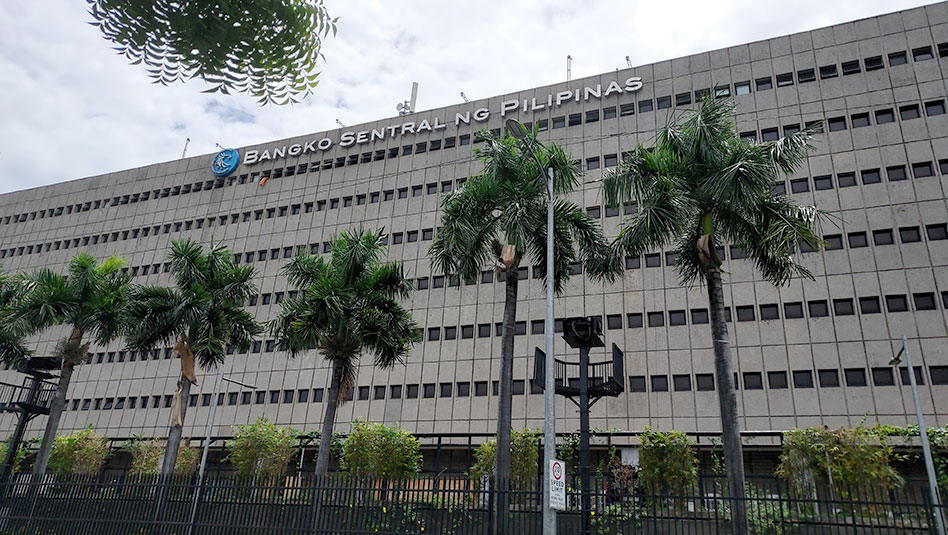
Philippine banks’ asset quality continued to worsen as the industry’s gross nonperforming loan (NPL) ratio rose to an over two-year high in October.

Preliminary data from the Bangko Sentral ng Pilipinas (BSP) showed the ratio rose to 3.6% from 3.47% in September and 3.44% a year ago.

This was the highest bad loan ratio since 3.75% in May 2022. It matched the 3.6% NPL ratio in June 2022.

Data from the BSP showed that soured loans rose by 1.3% to PHP 524.31 billion in October from PHP 517.45 billion a month earlier.

Year on year, bad loans jumped by 16.7% from PHP 449.45 billion.

Loans are considered nonperforming once they remain unpaid for at least 90 days after the due date. These are deemed as risk assets since borrowers are unlikely to pay.

The total loan portfolio of the banking system stood at PHP 14.55 trillion, down by 2.4% from PHP 14.9 trillion at end-September. However, it rose by 11.3% from PHP 13.07 trillion a year ago. 

Past due loans went up by 1.3% to PHP 640.88 billion in October from PHP 632.87 billion in the month prior. It likewise climbed by 15% from P557.27 billion a year earlier.

This brought the past due ratio to 4.4%, higher than 4.25% in September and 4.26% a year ago.

On the other hand, restructured loans dropped by 0.6% month on month to PHP 292.75 billion from PHP 294.53 billion in September and by 5.3% from PHP 309.16 billion in the previous year.

Restructured loans accounted for 2.01% of the industry’s total loan portfolio, higher than the 1.98% in the month prior but lower than 2.36% in October 2023.

Banks’ loan loss reserves stood at PHP 487.52 billion, up by 1% from PHP 482.84 billion in September and rising by 5.7% from PHP 461.41 billion a year earlier.

This brought the loan loss reserve ratio to 3.35%, from 3.24% last month and 3.53% a year ago.

Lenders’ NPL coverage ratio, which gauges the allowance for potential losses due to bad loans, slipped to 92.28% in October from 93.31% in September and 102.66% in 2023.

Rizal Commercial Banking Corp. Chief Economist Michael L. Ricafort said the spike in NPLs could be due to the start of the BSP’s monetary easing cycle.

The central bank kicked off its policy easing cycle in August with a 25-basis-point (bp) rate cut. It delivered another 25-bp reduction in October, bringing the key rate to 6%.

BSP Governor Eli M. Remolona, Jr. earlier said they could cut or keep rates steady at the Monetary Board’s final policy review of the year on Dec. 19.

“The series of storm damage could have led to some business disruptions that could have led to some losses, both actual and opportunity losses that partly led to higher gross NPL ratio,” Mr. Ricafort said.

In October, the country was hit by Severe Tropical Storm Kristine and Super Typhoon Leon.

Mr. Ricafort also cited geopolitical risks and tensions in the Middle East which “weighed on global investments, trade, and other business activities.” – Luisa Maria Jacinta C. Jocson, Reporter

Lawmakers ratify 2025 national budget

Lawmakers ratify 2025 national budget

Philippine lawmakers on Wednesday evening ratified the bicameral conference committee report on the PHP 6.352-trillion national budget for 2025. 

The committee earlier on Wednesday approved the final version of the budget bill. After the measure is ratified by Congress, it will be sent to Malacañang.

Presidential Communications Office Secretary Cesar B. Chavez told reporters in a Viber message that Philippine President Ferdinand R. Marcos Jr. is “tentatively” scheduled to sign the 2025 General Appropriations Act on Dec. 20.

In the bicameral report, lawmakers scrapped the PHP 74-billion subsidy for Philippine Health Insurance Corp. (PhilHealth) under next year’s budget, saying the agency needs to use its PHP 600-billion reserve funds to boost its services.

“PhilHealth has P600 billion in reserve funds and they should use these to address delayed reimbursements, and we will use this (funding subsidy) to fund departments that need it more,” Senate Finance Commitee Chairperson Mary Grace Natividad S. Poe-Llamanzares said in mixed English and Filipino.

Ms. Poe said PhilHealth would still have funding for its operations, but she did not give the exact figures.

Senator Joseph Victor G. Ejercito, one of the authors of the Universal Health Care (UHC) Act, said the legality of slashing the PhilHealth subsidy could be challenged since it is mandated under the sin tax and UHC laws.

“By law, this is really earmarked for PhilHealth’s use and for indirect contributors such as persons with disabilities, senior citizens and those who cannot pay for their premiums,” he told reporters later in the afternoon.

Senator Sherwin T. Gatchalian said PhilHealth could continue to provide services without the PHP 74-billion yearly subsidy.

“It’s a question of spending, not cash flow,” he told reporters. “If you look at the balance sheet of PhilHealth, they’re very healthy and the reserve funds are quite substantial.”

In a statement, Senate Deputy Minority Floor Leader Ana Theresia N. Hontiveros-Baraquel opposed the removal of the subsidy for PhilHealth since it is mandated by the Constitution for the government to pay for the premiums of its indirect members.

“Despite these ‘excess or reserve funds’ there are still laws that mandate this, and it is illegal, unfair and potentially unconstitutional to remove it,” she said in a statement in mixed English and Filipino.

“If the government abandons this obligation, ordinary citizens will be burdened by their monthly contributions to PhilHealth.”

In August, the Senate passed on final reading a bill that seeks to cut PhilHealth premiums to 3.25% next year from 5% this year under the Universal Health Care Act.

Ms. Poe said the 2025 budget does not include a provision allowing the National Government to sweep unused funds of government-owned or -controlled corporations (GOCC).

A provision in this year’s national budget authorized a cash sweep from GOCCs. The Supreme Court had blocked the transfer of PHP 29.9 billion, the last tranche of PhilHealth’s P90 billion excess funds, to the Treasury.

The excess PhilHealth funds would have been used to support unprogrammed appropriations worth PHP 203.1 billion, for state health, infrastructure and social service programs.

Filomeno S. Sta. Ana III, coordinator of Action for Economic Reforms (AER), said taking out the subsidy from the spending plan would worsen PhilHealth’s financial situation and make it harder for contributors to sustain the agency’s programs.

“What they removed are the contributions from those who do not have the ability to pay PhilHealth premiums,” he said in a Facebook Messenger chat.

“That also means direct contributors are the ones that will bear the sole burden of sustaining PhilHealth.”

Zy-za Nadine M. Suzara, a public budget analyst and former executive director of policy think tank Institute for Leadership, Empowerment and Democracy, said giving a “zero budget” for the PhilHealth subsidy is the same as slashing funding for the needs of indirect members.

“The General Appropriations Act cannot amend the Universal Health Care Law and the Sin Tax Law,” she said in a Viber message. “PhilHealth should have a reserve fund for two years or projected expenditures.”

Meanwhile, the bicameral committee also reduced the budget for the Ayuda Para sa Kapos ang Kita Program (AKAP) to PHP 26 billion, Ms. Poe said.

The House earlier proposed a PHP 39-billion budget for the Department of Social Welfare and Development (DSWD) financial aid program for workers with incomes lower than the poverty threshold.

The Senate earlier deleted the AKAP as a line item in DSWD’s proposed budget, opting instead to merge it with another DSWD aid program.

Leonardo A. Lanzona, who teaches economics at the Ateneo de Manila University, said the cut in AKAP’s funding next year would make it more difficult for the government to deal with rising prices and low salaries.

“This leaves the private sector with the burden to carry out the needs of society and in the process weakens the whole economy,” he said in a Facebook Messenger chat.

In a statement, House Speaker Ferdinand Martin G. Romualdez said lawmakers increased the daily subsistence allowance for soldiers to PHP 350 from PHP 150 or to PHP 10,500 monthly.

Party-list Rep. and House Appropriations Committee Chairperson Elizaldy S. Co said P16 billion was allotted for soldiers’ allowances under the budget.

Before the plenary, Mr. Gatchalian told reporters the allocation for DSWD was cut by nearly PHP 96 billion, while the Department of Health’s budget was reduced by more than PHP 20 billion.

However, he said their budgets were still in an acceptable range.

The DSWD was given a budget of PHP 217.34 billion next year, lower than the PHP 313.26 proposed by the House and the PHP 226.67 under the National Expenditure Plan (NEP), based on a copy of the amendments included in the harmonized budget measure provided by the Senate Public Relations and Information Bureau via Viber.

“We’re talking about the DSWD still having about PHP 200 billion so it’s still within the NEP proposal and my benchmark is keeping it close to the NEP,” Mr. Gatchalian said in mixed English and Filipino.

The DoH received a PHP 247.92 billion budget for 2025, lower than the PHP 273.72 billion proposed by the House and higher than the PHP 217.39 proposed by the Budget department.

Mr. Gatchalian said the final budget bill had a shortfall of PHP 4 billion for the government’s free college education programs

The Department of Education has an approved budget of PHP 737.08 billion, which is lower than the PHP 748.65 billion proposed by the House, based on the reconciled version.

State universities and colleges will get PHP 122.16 billion under the reconciled budget.

Mr. Ejercito lamented the decision to cut next year’s budget for the Armed Forces of the Philippines’ revised modernization plan by PHP 5 billion to PHP 35 billion amid tensions in the South China Sea.

“At least it (the modernization plan funding) was not set to zero next year,” he told reporters in mixed English and Filipino. – John Victor D. Ordoñez, Reporter

ADB keeps PHL growth forecasts for 2024, 2025

ADB keeps PHL growth forecasts for 2024, 2025

The Asian Development Bank (ADB) has kept its Philippine economic growth forecasts for this year and 2025, with expansion expected to be driven by easing inflation and lower interest rates.

Philippine gross domestic product (GDP) is expected to expand by 6% this year and 6.2% in 2025, the ADB said in its December 2024 Asian Development Outlook report, unchanged from its September forecasts.

Both projections are within the government’s revised GDP growth targets of 6%-6.5% for 2024 and 6%-8% for 2025.

“Household consumption and investment continue to drive the economy with both rising faster in the third quarter. Moderating inflation and monetary policy easing should continue to support growth,” the multilateral lender said in a report on Wednesday.

“On the supply side, buoyant services sector, construction, and manufacturing are contributing to overall growth,” the ADB said.

Services will remain a major growth driver for the Philippines, “with retail trade, tourism, and information technology–business process outsourcing as major contributors,” it added.

“Public infrastructure projects continue to lift growth, along with brisk private construction,” the ADB said.

It expects the Philippines to be the second-fastest growing economy in Southeast Asia this year, behind Vietnam with 6.4% and ahead of Indonesia (5%), Malaysia (5%), Singapore (3.5%), and Thailand (2.6%).

“While Vietnam sees rising foreign investment, other Southeast Asian economies like Indonesia and the Philippines are on track to meet previous growth forecasts,” the ADB said.

“However, geopolitical tensions, trade fragmentation, and severe weather events—such as Typhoon Yagi and Tropical Storm Trami — pose risks to growth, particularly in agriculture and infrastructure,” it added.

A series of storms hit the Philippines in November, resulting in about P10 billion worth of farm damage, according to the Department of Agriculture.

The World Bank on Tuesday trimmed its GDP growth projection for the Philippines to 5.9%, from 6%, reflecting the impact of typhoons.

At the same time, the ADB cut its inflation forecast for the Philippines this year to 3.6% from 3.3%. It kept its inflation projection at 3.2% for 2025.

“Inflation is expected to remain within the central bank’s 2% to 4% target, providing scope for further monetary policy easing,” it said.

Since August, the Bangko Sentral ng Pilipinas has cut rates by 50 basis points, bringing the benchmark rate to 6%.

The Monetary Board is set to hold its final policy-setting meeting of the year on Dec. 19.

US policy risks

Meanwhile, developing Asia is likely to grow more slowly than previously thought this year and next, and the outlook could worsen if President-elect Donald J. Trump makes swift changes to US trade policy, the ADB said.

Developing Asia, which includes 46 Asia-Pacific countries stretching from Georgia to Samoa — and excludes Japan, Australia and New Zealand — is projected to grow 4.9% this year and 4.8% next year, slightly lower than the ADB’s forecasts of 5% and 4.9% in September.

The downgraded growth estimates reflect lackluster economic performance in some economies in the third quarter and a weaker outlook for consumption, the bank said.

Growth forecasts for China remain unchanged at 4.8% for 2024 and 4.5% for 2025, but the ADB lowered its projections for India to 6.5% for 2024 from 7% previously, and to 7% for next year from 7.2%.

“Changes to US trade, fiscal, and immigration policies could dent growth and boost inflation in developing Asia,” the ADB said in its report, though it noted most effects were likely to manifest beyond the 2024-2025 forecast horizon.   

Mr. Trump, who takes office on Jan. 20, has threatened to impose tariffs in excess of 60% on US imports of Chinese goods, crackdown on illegal migrants, and extend tax cuts.

“Downside risks persist and include faster and larger US policy shifts than currently envisioned, a worsening of geopolitical tensions, and an even weaker PRC (People’s Republic of China) property market,” the ADB said.

It lowered its inflation forecasts for 2024 and 2025 to 2.7% and 2.6%, respectively, from 2.8% and 2.9%, due to softening global commodity prices. — Aubrey Rose A. Inosante and Reuters

FDI inflows sink to over 4-year low

FDI inflows sink to over 4-year low

Net inflows of foreign direct investments (FDI) fell to their lowest level in over four years in September, data from the Bangko Sentral ng Pilipinas (BSP) showed.

The central bank on Tuesday reported FDI net inflows slumped by 36.2% to USD 368 million in September from USD 577 million in the same month a year ago.

This was also the lowest monthly FDI inflow in 53 months or since the USD 314 million recorded in April 2020. To recall, strict lockdowns to curb the spread of the coronavirus disease 2019 (COVID-19) were in effect in April 2020.

Net Foreign Direct Investments

Month on month, net inflows likewise plunged by 54.8% from USD 815 million.

“The downturn in FDI net inflows in September 2024 was due largely to the decline in nonresidents’ net investments in debt instruments,” the BSP said.

Nonresidents’ net investments in debt instruments of local affiliates dropped by 32.8% to USD 277 million in September from USD 413 million a year prior.

Net investments in equity capital other than reinvestment of earnings plummeted by 91.2% to USD 7 million in September from USD 83 million a year earlier.

Equity capital placements slid by 53.4% year on year to USD 82 million, while withdrawals dropped by 19.7% to USD 75 million.

By source, equity placements were mainly from Japan (60%), followed by the United States (25%), and Singapore (8%).

These were invested mostly in manufacturing (58%), real estate (19%), information and communication (8%), and wholesale and retail trade (5%).

Meanwhile, investments in equity and investment fund shares stood at USD 91 million in September, down by 44.6% from USD 164 million a year ago.

On the other hand, reinvestment of earnings went up by 3.6% to USD 84 million in September from USD 81 million last year.

Nine-month FDI

For the first nine months of the year, FDI net inflows rose by 3.8% to USD 6.66 billion from USD 6.42 billion in the similar period a year ago.

Investments in equity and investment fund shares jumped by 20.4% to USD 2.3 billion in the period ending September from USD 1.91 billion a year ago.

Net foreign investments in equity capital surged by 46.9% to USD 1.36 billion as of end-September from USD 923 million a year ago.

This as equity capital placements climbed by 28.1% to USD 1.79 billion, while withdrawals dipped by 8.5% to USD 434 million.

In the nine-month period, these placements mostly came from the United Kingdom (43%), Japan (37%), the United States (9%), and Singapore (4%).

Meanwhile, foreign investments in debt instruments decreased by 3.3% to USD 4.35 billion in the January-September period from USD 4.5 billion.

Reinvestment of earnings dipped by 4.2% to USD 949 million as of end-September from USD 991 million a year ago.

“The relatively lower FDI inflows could be largely brought about by a wait-and-see stance by some foreign investors while waiting for the CREATE MORE to be passed into law,” Rizal Commercial Banking Corp. Chief Economist Michael L. Ricafort said in a Viber message.

In November, President Ferdinand R. Marcos, Jr. signed the Corporate Recovery and Tax Incentives for Enterprises to Maximize Opportunities for Reinvigorating the Economy (CREATE MORE) Act, which expands fiscal incentives and lowers corporate income tax on certain foreign enterprises.

Mr. Ricafort also noted the “still relatively high” interest rates, which may have weighed on foreign investments.

The BSP embarked on its rate-cutting cycle in August this year with a 25-basis-point (bp) rate cut. It later delivered another 25-bp cut in October, bringing the key rate to 6%.

“Persistently high global interest rates, led by the US Fed have made emerging market investments like the Philippines less attractive,” John Paolo R. Rivera, a senior research fellow at the Philippine Institute for Development Studies, said.

“Investors often prefer safe-haven assets in advanced economies under these conditions,” he added.

The US Federal Reserve kicked off its easing cycle with a 50-bp cut in mid-September.

Mr. Rivera also noted “heightened geopolitical tensions and economic uncertainties may have also further dampened investor confidence globally.”

“Likewise, slowing economic growth could have raised concerns among foreign investors. Economic growth was slightly weaker than anticipated in the third quarter of 2024, which may have influenced investment sentiment,” he added.

The Philippine economy grew by weaker-than-expected 5.2% in the July-to-September period, its slowest growth in five quarters or since the 4.3% expansion in the second quarter of 2023.

“For the coming months, the CREATE MORE law would now make international investors more decisive to locate in the country with better incentives that could compete better with other Asian countries,” Mr. Ricafort said.

Further rate cuts by the BSP and Fed would also increase demand for loans and attract more FDIs moving forward, he added.

The Monetary Board is set to have its final policy review on Dec. 19. BSP Governor Eli M. Remolona, Jr. has signaled the possibility of reducing or keeping rates steady.

Meanwhile, Reuters reported that traders are pricing in an 86% chance of another quarter-percentage-point rate cut from the Fed at its Dec. 17-18 meeting.

On the other hand, Mr. Ricafort flagged US President-elect Donald J. Trump’s protectionist trade policies.

“More protectionist policies by a Trump presidency starting in 2025 would discourage some US companies from investing and creating more jobs outside the US, as well as a potential trade war between the US and China or other countries that could slow down the world economy and global trade,” he added.

Mr. Trump has pledged to slap an additional 10% tariff on Chinese goods in a bid to force Beijing to do more to stop the trafficking of chemicals used to make fentanyl, Reuters reported.

Mr. Trump has previously said he would introduce tariffs in excess of 60% on Chinese goods.

The BSP expects to record FDI net inflows of USD 10 billion this year. – Luisa Maria Jacinta C. Jocson, Reporter

October trade gap widest in over two years

October trade gap widest in over two years

The Philippines’ trade-in-goods deficit ballooned to nearly USD 6 billion in October, the biggest trade gap in over two years, as exports continued to decline while imports grew at its fastest pace in six months, the Philippine Statistics Authority (PSA) reported on Tuesday.

Preliminary data from the PSA showed the country’s trade-in-goods balance — the difference between exports and imports — stood at a deficit of USD 5.8 billion in October, up 36.8% from the USD 4.24-billion deficit in October last year.

Month on month, the trade gap widened by 13.8% from the revised USD 5.1 billion in September.

Philippine Merchandise Trade Performance

October saw the widest trade deficit in 26 months or since the USD 5.99-billion gap in August 2022.

For the first 10 months, the trade deficit widened by 3.6% to USD 45.22 billion from the USD 43.64-billion gap a year ago.

The value of exports declined for the second straight month in October, falling by 5.5% year on year to USD 6.16 billion from USD 6.52 billion a year ago. In September, exports dropped by a revised 7.6%.

October’s export haul was the lowest level since USD 5.57 billion in June this year.

For the first 10 months, exports reached USD 61.83 billion, inching up by 0.4% from USD 61.6 billion in the same period a year ago.

On the other hand, merchandise imports rose by 11.2% to USD 11.96 billion in October from USD 10.76 billion last year. This marked the fourth straight month of imports growth and was the fastest pace since 13% in April.

The import value in October was the highest level in 25 months or since USD 12.01 billion in September 2022.

Year to date, imports went up 1.7% to USD 107.05 billion.

Slower global export markets coupled with a strong demand for imports ahead of the holiday season explained the larger deficit in October, University of Asia and the Pacific Senior Economist Cid L. Terosa said in an e-mail interview.

“Exports declined because of lethargic global export markets. Imports grew further because of strengthening demand for production goods needed to produce more goods and services for the holidays,” he said.

Mr. Terosa also noted the value of imports went up due to the peso’s weakness.

The peso closed at P58.1 per dollar at end-October, weakening from the P56.03 finish at end-September.

“The stronger peso exchange rate versus the dollar in October made exports more expensive for international buyers; while also making imports cheaper from the point of view of local buyers that also partly increased demand for imports,” Rizal Commercial Banking Corp. Chief Economist Michael L. Ricafort said in a Viber message.

This year, the Development Budget Coordination Committee (DBCC) expects 4% and 2% growth in exports and imports, respectively.

Exports slump

Manufactured goods, which made up the bulk of the country’s exports, fell by 11.2% to USD 4.72 billion in October from USD 5.31 billion in the same month last year.

On the other hand, exports of mineral products expanded by 9.7% to USD 681.57 million while exports of agro-based products jumped by 41.3% to USD 591.98 million.

By commodity group, electronic products, which accounted for over half of exported manufactured goods, dropped by 23.3% annually to USD 2.87 billion.

Semiconductors, which accounted for the bulk of outgoing electronic products, slumped by 33.8% to USD 1.95 billion.

Exports of other manufactured goods increased by 57.9% to USD 510.58 million, while other mineral products fell by 6.4% to USD 297.87 million in October.

The United States remained the top destination for Philippine-made goods, with exports valued at USD 995.26 million accounting for 16.2% of the total.

It was followed by Japan with USD 940.98 million (15.3% share), China with USD 853.52 million (13.9%), Hong Kong with USD 592.23 million (9.6%), and Thailand with USD 304.96 million (4.9%).

Imports

Meanwhile, imports of raw materials and intermediate goods grew by 5.5% to USD 4.17 billion in October.

Imports of capital goods climbed by 21% to USD 3.46 billion, while consumer goods increased by 29% to USD 2.6 billion.

By commodity group, electronic products had the highest import value at USD 2.67 billion, up 21% in October from USD 2.21 billion a year ago.

Imports of semiconductors, which accounted for the bulk of electronic products, went up by 18.1% to USD 1.81 billion.

Imports of mineral fuels, lubricants and related materials, on the other hand, fell by 10.4% year on year to USD 1.69 billion, while transport equipment jumped by 37.4% to USD 1.22 billion.

China was the biggest source of imports in October with USD 3.07 billion worth of goods, accounting for 25.6% of the total import bill.

It was followed by Indonesia with USD 1.01 billion (8.5% share), South Korea with USD 989.72 million (8.3%), Japan with USD 926.8 million (7.7%), and the United States with USD 754.16 million (6.3%).

Mr. Terosa said he expects imports to increase further as the holiday season approaches while exports will continue to face “sleepy global markets” due to geopolitical instability around the world, further widening the deficit in November and December.

In a note, Chinabank Research said weakness in exports could persist until next year.

“Potentially muted demand for electronics next year could keep export growth restrained… Combined with rising import demand, this could result in wider trade deficits. On the other hand, increasing demand for both consumer goods and production inputs bodes well for consumption and business activities,” it added. – Karis Kasarinlan Paolo D. Mendoza, Researcher

Most Filipinos expect inflation to continue to rise — survey

Most Filipinos expect inflation to continue to rise — survey

MOST FILIPINOS see inflation rising over the next year and do not expect the pace of price increases to normalize anytime soon, according to a survey by Ipsos.

In its latest Cost of Living Monitor, Ipsos found that 80% of Filipinos see the rate of inflation to rise in the next year.

“While economists point out that inflation — and interest rates — have fallen in many countries, you might assume that consumers should be feeling more positive by now about their own financial situation and more optimistic about where their country’s economy is headed in 2025,” Ipsos Chief Executive Officer Ben Page said.

“In fact, they are the opposite. The legacy of high inflation over the past few years is that an expectation of price rises is now hard-wired into the public consciousness,” he added.

The Philippines’ outcome is also much higher than the 65% overall average across 32 countries.

“This is something that is felt across the board. In 21 of the 32 countries surveyed people are more likely to think prices will rise at a faster rate than they did earlier this year,” Ipsos said.

Most Filipinos think that inflation has yet to normalize, the survey showed, with 28% expecting inflation to never return to normal. On the other hand, 27% see prices normalizing after next year, within the next year (26%), within the next six months (5%), and within the next three months (7%).

Only 6% of respondents said that inflation had already normalized.

Inflation quickened to 2.5% in November from 2.3% in October as food prices rose after a series of typhoons hit the country. In the 11-month period, headline inflation averaged 3.2%.

This year so far, inflation has settled within the 2-4% range, except for the 4.4% spike in July.

The central bank expects inflation to settle at 3.1% this year, 3.2% in 2025 and 3.4% in 2026. However, the Bangko Sentral ng Pilipinas (BSP) has said that the risks to the inflation outlook for next year until 2026 have shifted to the upside.

“While inflation rates are going down, people are not feeling it in the way policy makers and central banks would have hoped,” Ipsos said. “People expect price rises across all areas of spending, from utilities to food.”

Globally, 70% of respondents attribute the state of the global economy as the biggest contributor to the rising cost of living. This is followed by government policies (69%), interest rates (66%), businesses making excessive profits (62%) and the Russia-Ukraine war (58%).

Meanwhile, 75% of Filipinos expect interest rates to rise over the next year.

The BSP began its easing cycle in August this year, delivering a total of 50 basis points (bps) worth of rate cuts so far. This brought the benchmark to 6%.

The Monetary Board could deliver another 25-bp cut at its final policy review of the year on Dec. 19.

“There is often a time lag between inflation rates subsiding and consumer confidence returning. But this time things feel rather different. What we are now seeing in many countries is a rise in the number of people who say they are financially struggling,” according to Ipsos.

The survey also showed that 10% of Filipinos expect their own standard of living to fall over the next 12 months.

In terms of financial management, only 37% of Filipinos are “doing alright.” This is compared to the respondents that said they are “just about getting by” (26%), “finding it quite difficult” (20%), “finding it very difficult” (9%), and “living comfortably” (9%).

Meanwhile, 48% of Filipinos see the economy as being currently in a recession, as far as they are aware. On the other hand, 28% say the opposite while 23% do not know.

Tax cuts

“Across 32 countries people say they prefer tax cuts even if it means less money for public services, over spending more and paying greater taxes,” Ipsos said.

“However, this masks big differences across countries. Türkiye, Romania and the Philippines back tax cuts, while Indonesia and Sweden want better public services.”

The survey found more than half (52%) of Filipinos prefer that their personal taxes be cut even if it means there will be less government spending on public services.

The survey also found 70% of Filipinos expect the taxes that they pay to rise over the next year.

The Department of Finance  has said it does not plan to introduce new taxes this year and potentially until the end of the Marcos administration, apart from those already pending in Congress.

The department’s priority tax measures include the value-added tax on digital service providers, excise taxes on single-use plastics and pickup trucks, the rationalization of the mining fiscal regime, and the motor vehicle road user’s charge, among others. — Luisa Maria Jacinta C. Jocson

Semiconductor group sees flat export growth

Semiconductor group sees flat export growth

Philippine exports of semiconductor and electronic products are likely to be flat in 2025 amid a slump in demand, the Semiconductor and Electronics Industries in the Philippines Foundation, Inc. (SEIPI) said.

SEIPI President Danilo C. Lachica said the board affirmed its earlier projection of a 10% decline in semiconductor and electronics exports this year.

“We just finished our board meeting last week. The 10% contraction forecast for 2024 is the same, while exports in 2025 are flat,” he said in a Viber message on Monday.

Mr. Lachica said exports will likely be flat in 2025 as the semiconductor and electronics industry is being affected by a “tough business environment and low demand.”

Exports of electronic products accounted for 55% of the Philippines’ total exports of USD 55.67 billion in the January-to-September period.

In the first nine months, the Philippines exported USD 30.6 billion worth of electronic products, falling 2.2% from the USD 31.28 billion a year ago amid soft demand.

Sought for comment, Rizal Commercial Banking Corp. Chief Economist Michael L. Ricafort said that the expected protectionist policies of US President-elect Donald J. Trump and trade wars could affect Philippine exports, including electronic products.

“Trump protectionist policies could lead to higher tariffs, and trade wars could slow down global trade and global economic or business activities,” said Mr. Ricafort in a Viber message.

In a report dated Nov. 25, GlobalSource country analysts Diwa C. Guinigundo and Wilhelmina C. Mañalac said that Mr. Trump’s plan of imposing 60% tariffs on Chinese goods and up to 20% tariffs on goods from other countries could hurt the Philippines’ exports to the US.

“The US is a major destination for Philippine exports, making up an average of about 16% of total export trade for the last five years,” the analysts said.

“While the share-to-total has slightly declined due to the trade diversification policy of the Philippine government in recent years, a further drop in exports to the US definitely does not bode well for the country,” they added.

Previously, Mr. Lachica said that the country will need more investments to improve its exports mix and make it more globally competitive.

“One of the comments I heard when we were in the US is that the Philippines fell asleep as far as the semiconductor and electronics industry is concerned, referring to the previous administrations,” he said in a panel discussion at the National Exporters Week on Dec. 4.

“In fact, we have significant capital flights from the electronics industry because of the incentive rationalization,” he added.

Mr. Lachica said the “good news” is that the Marcos administration is fixing the issues on incentive rationalization through the Corporate Recovery and Tax Incentives for Enterprises to Maximize Opportunities for Reinvigorating the Economy (CREATE MORE).

Mr. Marcos last month signed the Republic Act No. 12066 or CREATE MORE Act, which seeks to improve the country’s fiscal incentives policies.

The CREATE MORE Act extended the maximum duration of availment of tax incentives to 27 years from 17 years, as well as reduced corporate income tax for registered business enterprises.

Mr. Lachica said he recognized the government’s efforts to reduce the cost of power and logistics through the Luzon Economic Corridor.

The Luzon Economic Corridor is being undertaken via a trilateral agreement among the Philippines, US and Japan. It is part of a broader collaboration supported by the G7 Partnership for Global Infrastructure and Investment.

“So, we are very optimistic, at least from the industry perspective, to announce that the Philippines is back,” he said. “Of course there are some other issues that we need to face. But the ease of doing business has improved, the infrastructure is improving, and power is improving, so I think it is really a call to action [for our partners] to reconsider the Philippines.” – Justine Irish D. Tabile, Reporter

Posts navigation

Older posts
Newer posts

Recent Posts

  • Navigating precarious times with cost averaging
  • Trade Update: Wider trade deficit in February
  • Metrobank US-Iran Risk Index: No swift end seen
  • Investment Ideas: March 27, 2026
  • BSP Update: First rate hike likely in June 

Recent Comments

No comments to show.

Archives

  • March 2026
  • February 2026
  • January 2026
  • December 2025
  • November 2025
  • October 2025
  • September 2025
  • August 2025
  • July 2025
  • June 2025
  • May 2025
  • April 2025
  • March 2025
  • February 2025
  • January 2025
  • December 2024
  • November 2024
  • October 2024
  • September 2024
  • August 2024
  • July 2024
  • June 2024
  • May 2024
  • April 2024
  • March 2024
  • February 2024
  • January 2024
  • December 2023
  • November 2023
  • October 2023
  • September 2023
  • August 2023
  • July 2023
  • June 2023
  • May 2023
  • April 2023
  • March 2023
  • February 2023
  • January 2023
  • December 2022
  • November 2022
  • October 2022
  • September 2022
  • August 2022
  • July 2022
  • June 2022
  • May 2022
  • March 2022
  • December 2021
  • October 2021

Categories

  • Bonds
  • BusinessWorld
  • Currencies
  • Economy
  • Equities
  • Estate Planning
  • Explainer
  • Featured Insight
  • Fine Living
  • How To
  • Investment Tips
  • Markets
  • Portfolio Picks
  • Rates & Bonds
  • Retirement
  • Reuters
  • Spotlight
  • Stocks
  • Uncategorized

You are leaving Metrobank Wealth Insights

Please be aware that the external site policies may differ from our website Terms And Conditions and Privacy Policy. The next site will be opened in a new browser window or tab.

Cancel Proceed
Get in Touch

For inquiries, please call our Metrobank Contact Center at (02) 88-700-700 (domestic toll-free 1-800-1888-5775) or send an e-mail to customercare@metrobank.com.ph

Metrobank is regulated by the Bangko Sentral ng Pilipinas
Website: https://www.bsp.gov.ph

Quick Links
The Gist Webinars Wealth Manager Explainers
Markets
Currencies Rates & Bonds Equities Economy
Wealth
Investment Tips Fine Living Retirement
Portfolio Picks
Bonds Stocks
Others
Contact Us Privacy Notice Terms of Use
© 2026 Metrobank. All rights reserved.

Access this content:

If you are an existing investor, log in first to your Metrobank Wealth Manager account. ​

If you wish to start your wealth journey with us, click the “How To Sign Up” button. ​

Login HOW TO SIGN UP