


MODEL PORTFOLIO
THE GIST
NEWS AND FEATURES
Global Philippines Fine Living
INSIGHTS
INVESTMENT STRATEGY
Economy Stocks Bonds Currencies
THE BASICS
Investment Tips Explainers Retirement
WEBINARS
2024 Mid-Year Economi Briefing, economic growth in the Philippines
2024 Mid-Year Economic Briefing: Navigating the Easing Cycle
June 21, 2024
Investing with Love
Investing with Love: A Mother’s Guide to Putting Money to Work
May 15, 2024
retirement-ss-3
Investor Series: An Introduction to Estate Planning
September 1, 2023
View All Webinars
DOWNLOADS
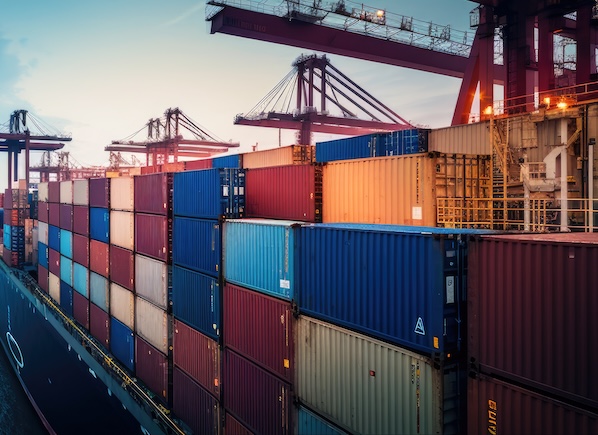
Container ship carrying container boxes import export dock with quay crane. Business commercial trade global cargo freight shipping logistic and transportation worldwide oversea concept. Generative AI
Economic Updates
Philippines Trade Update: Wider deficit on strong imports
DOWNLOAD
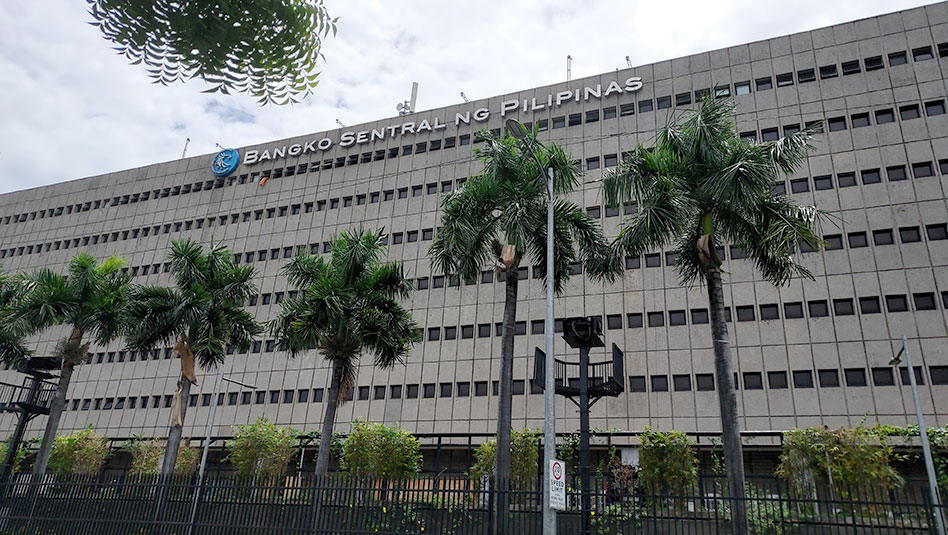
Frick collection with palm trees 
Economic Updates
Policy Rate Updates: Policy rate updates to reassure 
DOWNLOAD
Man using his smartphone
Reports
Fed to cut just once 
DOWNLOAD
View all Reports
Metrobank.com.ph How To Sign Up
Follow us on our platforms.

How may we help you?

TOP SEARCHES
  • Where to put my investments
  • Reports about the pandemic and economy
  • Metrobank
  • Webinars
  • Economy
TRENDING ARTICLES
  • Investing for Beginners: Following your PATH
  • On government debt thresholds: How much is too much?
  • Philippines Stock Market Outlook for 2022
  • Deficit spending remains unabated

Login

Access Exclusive Content
Login to Wealth Manager
Visit us at metrobank.com.ph How To Sign Up
Access Exclusive Content Login to Wealth Manager
Search
MODEL PORTFOLIO THE GIST
NEWS AND FEATURES
Global Philippines Fine Living
INSIGHTS
INVESTMENT STRATEGY
Economy Stocks Bonds Currencies
THE BASICS
Investment Tips Explainers Retirement
WEBINARS
2024 Mid-Year Economi Briefing, economic growth in the Philippines
2024 Mid-Year Economic Briefing: Navigating the Easing Cycle
June 21, 2024
Investing with Love
Investing with Love: A Mother’s Guide to Putting Money to Work
May 15, 2024
retirement-ss-3
Investor Series: An Introduction to Estate Planning
September 1, 2023
View All Webinars
DOWNLOADS
Container ship carrying container boxes import export dock with quay crane. Business commercial trade global cargo freight shipping logistic and transportation worldwide oversea concept. Generative AI
Economic Updates
Philippines Trade Update: Wider deficit on strong imports
March 27, 2026 DOWNLOAD
Frick collection with palm trees 
Economic Updates
Policy Rate Updates: Policy rate updates to reassure 
March 26, 2026 DOWNLOAD
Man using his smartphone
Reports
Fed to cut just once 
March 19, 2026 DOWNLOAD
View all Reports

Archives: Business World Article

Philippines to borrow PHP 629B locally in first quarter

Philippines to borrow PHP 629B locally in first quarter

The National Government (NG) is planning to borrow P629 billion from the domestic market in the first quarter of 2025, as it seeks to frontload borrowings ahead of the May elections, the Bureau of the Treasury (BTr) said on Monday.

In a notice on its website, the BTr said it seeks to raise P264 billion from the issuance of Treasury bills (T-bills) and PHP 365 billion via Treasury bonds (T-bonds) in the January-to-March period.

“Higher offering amounts per auction of Treasury bills and Treasury bonds could also frontload/hedge some NG borrowings before the May 2025 midterm elections,” Rizal Commercial Banking Corp. Chief Economist Michael L. Ricafort told BusinessWorld.

In January, the government plans to borrow P213 billion domestically, consisting of PHP 88 billion in T-bills and PHP 125 billion in T-bonds.

The government will hold four auctions for T-bills in January and will try to raise PHP 7 billion via the 91- and 182-day tenors at each auction. It will also offer P8 billion in 364-day T-bills weekly.

Next month’s T-bill auctions will be held on Jan. 6, 13, 20, and 27.

The Treasury will offer PHP 30 billion in five-year T-bonds on Jan. 7, PHP 30 billion in seven-year T-bonds on Jan. 14, and PHP 30 billion in 10-year T-bonds on Jan. 21.

It also seeks to generate P35 billion from the auction of three-year and 25-year bonds on Jan. 28.

In February, the BTr will try to raise PHP 203 billion — PHP 88 billion via T-bills and P115 billion via T-bonds. It will borrow PHP 7 billion via the 91- and 182-day tenors at each auction, as well as PHP 8 billion via the 364-day T-bills.

T-bill auctions are scheduled on Feb. 3, 10, 17, and 24.

For the long-term debt, the government will offer P30 billion each in five-year T-bonds on Feb. 4, seven-year debt paper on Feb. 11, and 10-year T-bonds on Feb. 18. It seeks to raise P25 billion from 20-year T-bonds on Feb. 25.

For March, the Treasury seeks to borrow PHP 213 billion from the domestic market, comprised of PHP 88 billion from T-bills and PHP125 billion from T-bonds.

It scheduled four T-bill auctions in March. It will sell PHP 7 billion each in 91-day and 182-day T-bills, and PHP8 billion in 364-day T-bills at the auctions on March 3, 10, 17 and 24.

The BTr has four T-bond auctions scheduled for March. It will sell PHP 30 billion in five-year debt paper on March 4, PHP 30 billion in seven-year T-bonds on March 11, and PHP 30 billion in 10-year bonds on March 18.

The Treasury seeks to borrow a combined PHP 35 billion via three-year and 25-year bonds on March 25.

“We’re only able to see an expected increase in volume [in the borrowing plan] because there was a reduction in the fourth quarter,” a trader told BusinessWorld in a phone interview, adding the BTr will front-load its requirements this year.

In the fourth quarter of 2024, the government planned to borrow PHP 310 billion from the domestic market, but actually raised PHP 312.6 billion.

The trader also said that offering two T-bond tenors in the same auction is not an “extraordinary” event, noting it was done a few years ago.

For 2025, the NG plans to borrow PHP 2.55 trillion, 0.97% lower than PHP 2.57 trillion this year. Of this, domestic borrowings are set at PHP 2.04 trillion, while external borrowings are pegged at PHP 507.41 billion.

For 2025 to 2027, the NG plans to source at least 80% of its borrowing program from domestic sources, and 20% from foreign lenders.

The NG’s outstanding debt inched up to a fresh high of P16.02 trillion as of end-October amid the peso’s depreciation against the US dollar. Of the total debt stock, 67.98% came from domestic sources. — A.R.A.Inosante

Philippine crypto service regulation may boost adoption

Philippine crypto service regulation may boost adoption

A plan by the Securities and Exchange Commission (SEC) to regulate cryptocurrency asset service providers in the Philippines could boost investor protection and entice more Filipinos to adopt the digital currency, analysts said. 

“This marks an important step toward a more organized and secure crypto landscape in the Philippines,” Arlone P. Abello, founding chairman at Innovative Movement of the Philippine Association of Crypto Traders, said in an e-mailed reply to questions.

“The proposed rules are an important milestone in providing investor protection, while creating a structure that can guide both new and established players in the crypto space,” he added.

Mr. Abello, also the chief executive officer at Global Miranda Miner Group, a crypto education platform, said the draft rules are also critical for traders. “Clearer regulations will help prevent fraud, reduce risks for traders and foster a more transparent market.”

“As the crypto industry in the Philippines continues to grow, these rules can help ensure that traders have a clearer understanding of their rights and obligations, creating a safer environment for everyone involved,” he added.

On Dec. 20, the corporate regulator issued draft rules on crypto service providers. Comments on the draft rules may be submitted until Jan. 18, 2025.

Under the rules, crypto providers must be a SEC-registered stock corporation, have at least four staff members living in the Philippines and meet the minimum capital requirements.

Service providers must be able to prevent and detect market abuse. The rules prohibit market manipulation, insider trading and disclosure of material and nonpublic information.

“Overall, it is very good to see… local regulations toward crypto players,” Jiro Luis S. Reyes, chief executive officer at crypto education platform Bitskwela, said in an e-mail. “I would like to stress the importance of support for educational efforts in the Philippines.”

He suggested a separate subclassification for crypto service providers that operate differently, such as a company offering trading of crypto assets versus a marketing company.

Mr. Reyes also sought clearer rules on the circumstances where the SEC can remove a crypto asset on an exchange to protect investors. “The phrase ‘in the interest of investor protection’ has been misused locally and internationally a lot of times.”

Nancy M. Ocampo-Omadto, chief legal counsel at crypto over-the-counter service Moneybees, said the SEC might have forgotten to include transitory provisions for the benefit of existing virtual asset service providers registered with the Bangko Sentral ng Pilipinas (BSP).

BSP Circular No. 1108, dated Jan. 26, 2021 treats crypto as virtual assets.

The government imposed a three-year moratorium on virtual asset service provider licenses due to risks to the financial system. The moratorium may be lifted next year. – Revin Mikhael D. Ochave, Reporter

Vehicle sales up 8.5% in November

Vehicle sales up 8.5% in November

Vehicle sales in the Philippines jumped by 8.5% year on year in November, mainly driven by demand for commercial vehicles, an industry report.

In a joint report by the Chamber of Automotive Manufacturers of the Philippines, Inc. (CAMPI) and the Truck Manufacturers Association (TMA) showed vehicle sales rose to 40,898 units in November from 37,683 units in the same month in 2023.

Month on month, vehicle sales inched up by 2.2% from the 40,003 units sold in October.

Auto Sales (November 2024)Sales of commercial vehicles, which made up 76% of the industry’s total sales, jumped by 10.5% to 31,062 units in November from 28,114 units a year ago.

Month on month, sales of commercial vehicles grew by 3.7% from 29,959 units in October.

Broken down, light commercial vehicle sales rose by 3.2% year on year to 22,115 units, while sales of Asian utility vehicles (AUV) jumped by 40.7% to 7,890 units and sales of light-duty trucks and buses grew by 2.5% to 665 units.

However, sales of medium-duty trucks and buses dropped by 4.8% to 318 units, while those of heavy trucks declined by 22.1% to 74 units.

On the other hand, sales of passenger cars, which accounted for a fourth of the industry’s total, rose by 2.8% to 9,836 units in November from 9,569 units a year ago.

Month on month, passenger car sales slipped by 2.07% from 10,044 units sold in October.

In the first 11 months of the year, vehicle sales increased by 8.8% to 425,208 units from 390,654 units in the same period in 2023.   

“This growth is reflected in the market share distribution, where passenger cars accounted for 26.02% of the market with 110,645 units sold, an 11% rise from the previous year,” CAMPI-TMA said in a statement.

Sales of commercial vehicles went up by 8.1% to 314,563 units in the January-to-November period from 290,989 units in the same period in 2023, mainly driven by AUV sales.

CAMPI-TMA noted the AUV segment “exhibited remarkable growth” with year-to-date sales of 74,989 units as of end-November, up 37.3% year on year.

Light commercial vehicles, classified under Category II, rose by 1.4% to 229,313 units in the 11-month period.

Sales of heavy-duty trucks and buses plunged by 33.5% to 638 units as of end-November.

Rizal Commercial Banking Corp. Chief Economist Michael L. Ricafort said the annual increase in vehicle sales in November was a good indicator of the Philippine economy’s growth.

“Local vehicle sales and production growth rates (have) sustained above GDP (gross domestic product) growth rate, as seen in recent months… (These) are good signals on the further growth and recovery of the Philippine economy,” Mr. Ricafort said in a Viber message.

“The lack of mass transport system in most parts of the country also increased the need for more Filipinos to purchase vehicles, with more brands and models to choose from amid increased competition from Asian or global automakers,” he added.

In the January-to-November period, Toyota Motor Philippines Corp. remained the market leader with 46.51% share. Toyota sales jumped by 9.6% to 197,756 units as of end-November from 180,480 units a year ago.

Mitsubishi Motors Philippines Corp. ranked second with a market share of 19.14%. Sales of Mitsubishi vehicles rose by 13.3% for the first 11 months to 81,401 units from 71,833 units.

Ford Motor Co. Phils., Inc. ranked third despite a 9.9% decline in sales to 25,770 units as of end-November from 28,586 a year ago. Ford’s sales accounted for 6.06% of the industry.

Rounding out the top five were Nissan Philippines, Inc., whose sales edged lower by 0.9% to 24,516, while Suzuki Phils., Inc. posted an 11% rise in sales to 18,515 units. Nissan had a market share of 5.77%, while Suzuki accounted for 4.35% of the market.

CAMPI-TMA data also showed 16 out of 31 firms saw a decline in sales as of end-November.

CAMPI had earlier set a target of 500,000 units sold for 2024, if realized this would be 16.3% higher than last year’s 429,807 units sold and the vehicle industry’s highest sales to date. — A.H.Halili

Inflation risks could slow BSP easing cycle next year, say analysts

Inflation risks could slow BSP easing cycle next year, say analysts

Upside risks to the inflation outlook could slow the Bangko Sentral ng Pilipinas’ (BSP) rate-cutting cycle, analysts said.

“Should these upside risks eventuate, we may not be looking at 100-basis-point (bp) reduction for 2025 but perhaps at a more modest 50- to 75-bp reduction. As the BSP would put it, the final decision will continue to be data-driven,” GlobalSource country analyst Diwa C. Guinigundo said in a report.

Last week, the Monetary Board delivered a third straight rate cut at its final policy review for the year. This brought the benchmark to 5.75% from 6%.

The central bank has slashed rates by a total of 75 bps this year since it began its easing cycle in August.

“We think that cumulative rate cuts in 2025 will amount to 75 bps. We will revise this forecast if adverse geopolitical developments result in higher-than-projected inflation,” ANZ Research said, noting that the central bank hinted a “shallower” rate-cutting cycle next year.

BSP Governor Eli M. Remolona, Jr. said that delivering 100 bps worth of cuts next year may be “too much.”

The central bank will likely keep reducing rates in “baby steps” as an “insurance against a possible increase in inflation,” Mr. Remolona added.

Mr. Guinigundo said it was appropriate for the BSP to gradually shift to a less restrictive monetary stance.

“Given the risks, the BSP must be conserving its ammunition and chose to remain data-dependent,” he said.

He noted that the BSP also continued to flag upside risks to the inflation outlook. “This would partly explain the BSP’s decision to go slow in its easing mode,” Mr. Guinigundo said.

The BSP said the balance of risks to the inflation outlook continues to remain tilted to the upside for 2025 until 2026.

It raised several of its baseline and risk-adjusted forecasts for 2025 and 2026, though these all remain within the 2-4% target band. The central bank raised its baseline inflation forecast to 3.3% for 2025 (from 3.2%) and 3.5% for 2026 (from 3.4%). 

Meanwhile, the risk-adjusted forecasts were also increased to 3.4% for 2025 (from 3.3%). The risk-adjusted projection for 2026 was kept at 3.7%.

A report by Nomura Global Markets Research analysts Euben Paracuelles and Nabila Amani showed it expects the BSP to deliver a total of 75 bps worth of cuts before pausing in mid-2025.

“We maintain our forecast of 25 bps in rate cuts in each of the first three meetings in 2025, before pausing from there.”

“As is clear in BSP’s guidance in its last three decisions, the next decision by BSP will largely be driven by the inflation outlook for 2025 and 2026,” Nomura said.

It also noted that if headline inflation continues to ease, the BSP can “look to further remove the restrictiveness in the monetary stance to support a recovery in the growth outlook, which is facing downside risks.”

Meanwhile, Nomura said it also expects the BSP to deliver more rate cuts than the US Federal Reserve.

“As a result, we still think BSP can cut by more than the Fed, and indeed continue to decouple from its regional peers. In our view, BSP’s more orthodox approach is appropriate and provides much-needed clarity when the global environment is highly uncertain, enhancing BSP’s policy credibility,” it said.

Reuters reported that US central bankers now project they will make just two quarter-percentage-point rate reductions by the end of 2025.

That is half a percentage point less in policy easing next year than officials anticipated as of September, with Fed projections of inflation for the first year of the new Trump administration jumping from 2.1% in their prior projections to 2.5% in the current ones.

Capital Economics Assistant Economist Harry Chambers said the Philippines’ economic growth will also allow the central bank to pace its easing.

“A strong economy gives the BSP a platform to keep rate cuts gradual. GDP growth rebounded in the third quarter of the year, and while tight fiscal policy and weaker global demand will weigh on demand, strong consumption should ensure another year of solid growth in 2025,” he added.

Capital Economics expects 100 bps worth of rate cuts next year, bringing the key rate to 4.75% by end-2025.

Other risks

Meanwhile, Mr. Guinigundo flagged other upside risks that could stoke inflation in the near term.

“The plan to continue bringing down the country’s required reserve ratio may actually result in higher injection of liquidity which, other things being equal, may also turn out to be inflationary,” he said.

“This is one issue that the BSP may have to face in the future given its aggressive stance in reducing it to as low as zero.”

The BSP slashed the reserve requirement ratio for universal and commercial banks and nonbank financial institutions with quasi-banking functions by 250 bps to 7% from 9.5%, effective last Oct. 25.

Mr. Remolona has said big lenders’ reserve requirements could be brought down to as low as zero before his term ends in 2029.

Meanwhile, Mr. Guinigundo also cited geopolitical tensions and fewer-than-expected rate cuts by the US central bank.

He said the Fed may have to also “go slow in its easing stance because of the potential inflationary effects of the incoming Trump administration’s higher tariff policy, more tax cuts and mass deportation.”

“The hit on the peso cannot be dismissed for its pass through to inflation. The US Fed may be constrained from maximizing its flexibility to reduce its own target rate,” he added.

The peso closed at PHP 58.81 a dollar on Friday, strengthening by 19 centavos from its record-low P59 finish on Thursday. This year so far, the peso has sank to the PHP 59 mark thrice.

“Tension could remain elevated given the sustained hostility in the Middle East and Eastern Europe. They could have collateral impact on external trade and capital flows and ultimately, peso depreciation and domestic inflation,” Mr. Guinigundo added.  – Luisa Maria Jacinta C. Jocson, Reporter

External debt hits record USD 139.6B as of Sept.

External debt hits record USD 139.6B as of Sept.

The Philippines’ outstanding external debt hit another record high as of end-September, the Bangko Sentral ng Pilipinas (BSP) said.

Data from the central bank showed external debt jumped by 17.5% to USD 139.64 billion as of end-September from USD 118.83 billion in the same period in 2023.

The debt stock also rose by 7.3% from USD 130.18 billion as of end-June.

External debt includes all types of borrowings by residents from nonresidents.

“The increase was primarily driven by total net availments by both public and private sector borrowers as well as the net acquisition of Philippine debt securities by nonresidents,” the BSP said.

The annual increase in outstanding external debt was also driven by public sector net availments recorded at USD 7.94 billion for the 12-month period. Meanwhile, private sector borrowers accumulated net availments of $6.63 billion for the same period.

“Year-on-year net acquisitions of Philippine debt securities by nonresidents surged to USD 5.03 billion, reflecting sustained investor confidence in Philippine credit,” the BSP said.

“Positive FX (foreign exchange) revaluation of borrowings denominated in other currencies of USD 860.86 million and prior years’ adjustments of USD 347.63 million further contributed to the increase in debt stock,” it added.

However, the BSP said that the external debt as a percentage of gross domestic product (GDP) remains at a “prudent” level despite the rise in the debt stock.

The external debt-to-GDP ratio stood at 30.6% at end-September, up from 28.9% in the previous quarter.

The central bank said other key external debt indicators were still at “sustainable levels.”

As of end-September, gross international reserves (GIR) stood at USD 112.71 billion and represented 3.92 times cover for short-term debt based on the remaining maturity concept.

“The debt service ratio (DSR), which relates principal and interest payments (debt service burden) to exports of goods and receipts from services and primary income, rose to 11.6% from 10.4% for the same period last year due to the higher recorded debt service payments from January to September 2024.”

The DSR and the GIR cover for short-term debt is a gauge of the adequacy of foreign exchange earnings to meet maturing debt obligations.

Meanwhile, the central bank attributed the quarter-on-quarter rise in the debt stock due to the “liquidity requirements of the public and private sector as well as the increase in nonresidents’ investment appetite for onshore debt securities.”

“In particular, the National Government (NG) raised an aggregate of USD 4.17 billion during the quarter headlined by its triple-tranche fixed-rate global bonds issuance,” it said.

In August, the government raised USD 2.5 billion from its sale of triple-tranche US dollar-denominated global bonds, its second and final global bond offering for the year.

“The NG also raised USD 1.44 billion from official creditors to finance its various development programs/projects,” the BSP said.

“Private sector corporations likewise sought the offshore market to expand their funding base and augment their working capital with its net availments for the quarter aggregating USD 1.82 billion.”

The central bank also noted a USD 2.77-billion net acquisition by nonresidents of Philippine debt securities as investors sought yields in emerging markets due to the anticipated rate cut by the US Federal Reserve in September and a weaker dollar during the third quarter.

“The positive FX revaluation of borrowings denominated in other currencies due to the relative weakening of the US dollar (largely against the Japanese yen) further increased the US dollar value of the country’s debt stock by USD 1.56 billion.”

“Negative prior periods’ adjustments slightly tempered the increase by USD 248.77 million,” it added.

BSP data showed the private sector’s external debt went up by 4.8% to USD 52.76 billion at the end of September from $50.36 billion in end-June.

“The growth in private sector borrowings was mainly driven by a USD 2.52 billion increase in local banks’ other liabilities as they tapped the offshore markets to address their funding requirements and support asset growth,” it said.

Meanwhile, public sector debt increased by 8.8% quarter on quarter to USD 86.88 billion from USD 79.83 billion. This was driven by net availments of $3.56 billion and net acquisitions by nonresidents of Philippine peso-denominated government debt securities of $2.17 billion.

“Additionally, the relative depreciation of the US dollar against other currencies increased the US dollar equivalent of public sector borrowings denominated in other currencies by USD 1.4 billion,” it added.

In September, the peso was trading at the P55- to P56-per-dollar level.

Data showed the bulk (92.2%) of public sector obligations were from the NG while the rest came from borrowings of government-owned and -controlled corporations, government financial institutions, and the BSP.

As of end-September, the Philippines’ top creditor countries were Japan (USD 15.38 billion), the Netherlands (USD 4.61 billion), and the United Kingdom (USD 4.51 billion).

The external debt stock mix was composed mainly of US dollar-denominated debt (74.5%) followed by Philippine peso (9.1%) and Japanese yen (7.8%).

“The higher external debt largely due to wider budget deficits in some months this year and also to frontload some foreign borrowings amid geopolitical risks and possible protectionist policies by Trump that could lead to higher US inflation,” Rizal Commercial Banking Corp. Chief Economist Michael L. Ricafort said.

He also noted the government’s strategy of diversifying its funding sources and providing supply of Philippine debt in the global market which would result in “more trading and market liquidity of Philippine sovereign global bonds.”

“However, there is a need to manage forex risks involved in foreign borrowings amid exchange rate volatility in recent months that could add to debt servicing costs of the NG,” he added. — Luisa Maria Jacinta C. Jocson

BoP deficit widens in November

BoP deficit widens in November

The country’s balance of payments (BoP) deficit widened in November as the government made more repayments on foreign debt, the Bangko Sentral ng Pilipinas (BSP) said on Thursday.

Data from the central bank showed the BoP position widened to a USD 2.276-billion deficit in November from the USD 216-million gap a year ago. It also more than tripled from the USD 724-million deficit in October.

November also marked the widest deficit in 26 months or since the USD 2.339-billion shortfall recorded in September 2022.

Philippines: Balance of Payments (BoP) Position

The BoP measures the country’s transactions with the rest of the world at a given time. A deficit means more funds left the economy than what went in, while a surplus shows that more money entered the Philippines.

“The BoP deficit in November 2024 reflected the National Government’s (NG) net foreign currency withdrawals from its deposits with the BSP to settle its foreign currency debt obligations and pay for its various expenditures, and the BSP’s net foreign exchange operations,” it said.

Earlier data from the BSP showed that the Philippines’ external debt service burden declined by 3.8% to  USD 8.68 billion in the January-to-August period.

Outstanding external debt hit a record USD 130.182 billion at the end of June. This brought the external debt-to-gross domestic product (GDP) ratio to 28.9% at the end of the second quarter.

In the first 11 months, the BoP stood at a surplus of USD 2.117 billion, 30% lower than the USD 3.03-billion surfeit in the same period a year earlier.

“Based on preliminary data, the decline in the cumulative BoP surplus was due to lower net receipts from trade in services and net foreign borrowings by the NG,” the central bank said.

The country’s trade deficit widened by 36.8% year on year to USD 5.8 billion in October, its widest trade gap in 26 months or since August 2022, data from the local statistics authority showed.

For the first 10 months, the trade deficit widened by 3.6% to USD 45.22 billion from the USD 43.64-billion gap a year ago.

“However, this decline was partly muted by the continued net inflows from personal remittances as well as net foreign portfolio and direct investments,” the BSP added.

In the first 10 months, cash remittances grew by 3% to USD 28.3 billion from USD 27.49 billion a year prior.

In the same period, BSP-registered foreign investments yielded a net inflow of USD 2.49 billion, a turnaround from the USD 715.43-million outflow in 2023.

Meanwhile, foreign direct investment (FDI) net inflows rose by 3.8% to USD 6.66 billion in the first nine months from USD 6.42 billion a year ago.

At its end-November position, the BoP reflected a final gross international reserve (GIR) level of USD 108.5 billion, down by 2.3% from the USD 111.1 billion as of end-October.

The dollar reserves were enough to cover 4.3 times the country’s short-term external debt based on residual maturity.

It is also equivalent to 7.7 months’ worth of imports of goods and payments of services and primary income.

An ample level of foreign exchange buffers safeguards an economy from market volatility and is an assurance of the country’s capability to pay debts in the event of an economic downturn.

This year, the BSP expects the country’s BoP position to end at a USD 2.3-billion surplus, equivalent to 0.5% of GDP.

Rizal Commercial Banking Corp. Chief Economist Michael L. Ricafort said the depreciation of the peso impacted on the net payment of foreign debt maturities.

The peso fell to the record-low P59-per-dollar level twice in November.

“For the coming months, the country’s GIR and BoP could still be supported by the continued growth in the country’s structural inflows from OFW (overseas Filipino worker) remittances, BPO revenues, exports, and relatively fast recovery in foreign tourism revenues,” Mr. Ricafort said.

He said further fundraising activities such as global bond issuances could also boost the BoP position.

Finance Secretary Ralph G. Recto has said they are looking to issue dollar- and euro-denominated bonds in the first half of 2025.

“Thus, still relatively high GIR at USD 108.5 billion could still strengthen the country’s external position, which is a key pillar for the country’s continued favorable credit ratings,” Mr. Ricafort said. — Luisa Maria Jacinta C. Jocson

PHP slips to record-low 59 per USD on hawkish Fed cut

PHP slips to record-low 59 per USD on hawkish Fed cut

The peso sank to the all-time low of PHP 59 against the US dollar anew on Thursday, following the US Federal Reserve’s hawkish cut.

The local unit closed at PHP 59 per dollar on Thursday, weakening by one centavo from its PHP 58.99 finish on Wednesday, Bankers Association of the Philippines data showed.

This was the third time the peso hit its historic low this year on Nov. 26 and Nov. 21. It has yet to breach this record, which was first set in October 2022.

The peso opened at PHP 59 against the dollar, which was already its worst showing. Its intraday best was at PHP 58.98 versus the greenback.

Dollars exchanged dropped to USD 1.099 billion on Thursday from USD 884.55 million on Wednesday.

The peso slipped against the dollar as the market reacted to the Fed’s cut and hawkish guidance for next year, Regina Capital Development Corp. Head of Sales Luis A. Limlingan said in a Viber message.

Fed officials see only two 25-basis-point (bp) rate cuts for next year, which would bring the Fed funds rate to the 3.75-4% range by end-2025.

“The market is forecasting a shallower trend for 2025 vs previously estimated,” he added.

Markets have forecasted only one 25-bp rate cut by the Fed next year, only a quarter of the 100 bps in cuts previously seen, Reuters reported. This would bring the US central bank’s policy rate to the 4-4.25% range.

The Federal Open Market Committee (FOMC) on Wednesday lowered its policy rate by 25 bps to the 4.25-4.5% range.

Fed Chair Jerome H. Powell’s signals of requiring fresh inflation progress for future rate cuts also caused equity prices to fall, Reyes Tacandong & Co. Senior Adviser Jonathan L. Ravelas said in a Viber message.

The dollar was generally stronger at new two-year highs on Thursday after the Fed signaled fewer rate cuts next year, Rizal Commercial Banking Corp. Chief Economist Michael L. Ricafort said in a Viber message.

He noted that the dollar was also supported by a weaker euro.

Mr. Ravelas added it was likely that the peso could breach the PHP 59-per-dollar level within the year.

Mr. Ricafort said the Bangko Sentral ng Pilipinas (BSP) will continue to defend the peso against the dollar to keep it at below or at the PHP 59-per-dollar level.

“Going forward, the performance of the US dollar-peso exchange rate would still be partly a function of intervention/defense as consistently seen for more than two years already at the record high closing rate of PHP 59, which has been respected for now and since the latter part of September 2022,” he said.

For Friday, Mr. Ricafort sees the peso moving between PHP 58.85 and PHP 59 per dollar. – Aaron Michael C. Sy, Reporter

Gov’t initiatives seen to boost Islamic finance

Gov’t initiatives seen to boost Islamic finance

The Philippine Islamic finance sector is expected to expand further on the back of government and regulatory support and growing demand for related products, Fitch Ratings said.

“Government initiatives to develop the Islamic finance industry in the Philippines are likely to support the sector’s growth in the medium to long term,” the debt watcher said in a commentary.

“Islamic finance initiatives could help the Philippines establish closer economic ties with the Gulf Cooperation Council (GCC) and ASEAN countries, such as Indonesia and Malaysia, and attract foreign direct investment,” it added.

In December 2023, the Philippine government issued its first-ever Islamic bonds, raising $1 billion from the sale of 5.5-year dollar-denominated Sukuk bonds.

Sukuk or Islamic bonds are certificates that represent a proportional undivided ownership right in tangible assets, or a pool of tangible assets. These assets could be in a specific project or investment activity that is Shari’ah-compliant.

“The 2023 sovereign sukuk is the only sukuk issued by an entity in the Philippines to date. However, growth is anticipated in the long-term,” Fitch said.

“Investors from the Middle East took up around 30% of that issuance, which was part of the country’s broader agenda to develop Islamic finance and diversify its investor base.”

The credit rater said last year’s issuance helped the Philippines “diversify funding, tap GCC Islamic investors, deepen its debt capital market, and establish a reference curve for other Philippine issuers to issue sukuk.”

Finance Secretary Ralph G. Recto has said they are looking to issue Sukuk bonds next year amid growing investor appetite from the Middle East.

“The government also aims to boost financial inclusion among Filipino Muslims, who form about 6% of the population but are largely underbanked. Islamic banking is estimated to have below 1% market share in the majority-Catholic country,” Fitch said.

It noted the Philippines’ efforts to create a more enabling environment for Islamic financing, such as issuing regulations, incentives and issuing a tax neutrality law.

The Bangko Sentral ng Pilipinas (BSP) has been encouraging lenders to participate in Islamic banking after the sector was opened to new players.

Last year, the central bank approved the modified minimum capitalization requirement for conventional banks with an Islamic banking unit (IBU). The rules aim to provide flexibility in licensing an IBU of qualified traditional banks and give more Filipinos access to Shari’ah-compliant banking products and services.

These measures helped boost activity in the Islamic banking sector, Fitch said.

Currently, the three entities with Islamic banking operations in the country are the state-owned Al Amanah Islamic Investment Bank, Maybank Philippines, which began operations in August, and CARD Bank, Inc., which opened an Islamic banking branch in Cotabato City this year.

This year, PRU LIFE Insurance Corp. of UK Philippines was also granted the first takaful license in the country, followed by Etiqa Life & General Assurance Philippines, Inc.

Takaful is a type of Islamic insurance where members contribute a certain sum of money to a common pool. Takaful insurance needs to be compliant with Shari’ah law, which prohibits riba (interest), al-maisir (gambling), and al-gharar (uncertainty) principles.

Fitch also noted the potential of the unbanked population, especially in the Bangsamoro Autonomous Region in Muslim Mindanao (BARMM).

“According to a recent study by the Asian Development Bank, 70% of Filipinos (mostly Muslims) surveyed feel compelled to use interest-based products due to limited access to non-interest based financial solutions, and would prefer to use Islamic financial services,” Fitch said.

“The high remittance inflows from overseas Filipino workers, including in the GCC, many who use Islamic banks accounts, underscore the sector’s potential.”

Fitch also noted the public’s lack of awareness and understanding of Islamic banking.

“Moreover, the per capita income in Muslim-majority regions is relatively low, with generally low bankability and potentially more credit risks, making the region likely less attractive for banks. At present, there remains very few Islamic products in the market, with limited funding sources.” — Luisa Maria Jacinta C. Jocson

Philippines eyes euro, dollar bond issuance

Philippines eyes euro, dollar bond issuance

The government is looking to issue US dollar- or euro-denominated bonds in the first half of 2025, the Finance chief said.   

“[We’ve approved] a potential double bond — US dollar and/or euro,” Finance Secretary Ralph G. Recto told reporters on Tuesday.

He added the government will look to raise at least PHP 300 billion from the issuance, which is the benchmark size of foreign issuances.

The Philippines’ last dollar bond issuance was in August this year. It raised USD 2.5 billion from the issuance of triple-tranche, US dollar-denominated global bonds.

In September, National Treasurer Sharon P. Almanza said the National Government (NG) will no longer push through with a planned euro bond issuance this year.

The National Government last issued euro bonds in April 2021, raising euro 2.1 billion (PHP 122.4 billion) amid the coronavirus pandemic.

The government has USD 500 million yet to be raised from the international debt market this year from its USD 5-billion external borrowing plan.

Mr. Recto on Tuesday said the government is also planning to issue Sukuk and Samurai bonds next year.

“I think it’s an opportune time that the yen is depreciating so it’s favorable for us. If we borrow from them, they’re depreciating, you know. But more importantly, I think you want to be on the radar screen of investors from Japan,” he said.

The Philippines last issued Samurai bonds in April 2022, raising yen 70.1 billion.

Mr. Recto said there is also demand from Middle East investors.

“Because there’s an appetite from the Middle East. You want more people buying our bonds, our notes, and so on and so forth. If they’re willing to finance government operations, why not?” he added.

The government first issued Islamic debt in December 2023, raising USD 1 billion from the sale of 5.5-year dollar-denominated Sukuk bonds.

The government set its borrowing program at PHP 2.55 trillion for 2025, of which PHP 507.41 billion will come from gross external borrowings.

The government could benefit from tapping the foreign debt market next year as the US Federal Reserve’s further easing is expected to reduce borrowing costs, Rizal Commercial Banking Corp. Chief Economist Michael L. Ricafort said in a Viber message.

However, the benefits could be offset by a stronger dollar and higher US Treasury yields, Philippine Institute for Development Studies Senior Research Fellow John Paolo R. Rivera said in a Viber message.

“Timing is key in the issuance as the greenback and the 10-year US Treasury yields continue to rise. A Trump presidency is supportive of the greenback and 10-year yields,” Reyes Tacandong & Co. Senior Adviser Jonathan L. Ravelas likewise said in a Viber message.

Mr. Rivera added that demand for bond issuances from the Philippines could be dampened due to heightened global economic uncertainty brought by Mr. Trump’s proposed trade policies and potential tariffs on imports. — Aaron Michael C. Sy

BSP may slash rates by 75 bps in 2025 — Recto

BSP may slash rates by 75 bps in 2025 — Recto

The Bangko Sentral ng Pilipinas (BSP) could cut benchmark interest rates by 75 basis points (bps) in 2025, Finance Secretary Ralph G. Recto said.

Mr. Recto, who previously projected 100 bps of cuts in 2025, told reporters the pace of easing will depend on various factors, such as inflation and the US Federal Reserve’s next moves.

“It depends also on what happens, what the Fed does. So, we have to wait for the inflation numbers, wait for what the Fed does, I suppose. But more or less, my expectation is 75 bps,” he said.

BSP Governor Eli M. Remolona, Jr. had earlier signaled that the Monetary Board could deliver rate cuts in the 100-bp range next year.

On Wednesday, the US Federal Reserve was expected to lower rates by 25 bps, which would bring the policy rate to the 4.25%-4.5% range. However, the pace of the Fed’s easing cycle remains uncertain as US President-elect Donald J. Trump assumes office in January.

Philippine headline inflation stood at 2.5% in November, bringing the 11-month average to 3.2%. This is still well within the BSP’s 2-4% target band.

Mr. Recto, who is also a member of the Monetary Board, said there is a “great possibility” that the central bank would deliver a third straight 25-bp cut at its final policy meeting for the year today (Dec. 19).

“There is a great possibility, [and] probability. I agree with the market consensus of a 25-bp (decrease),” Mr. Recto said.

A BusinessWorld poll conducted last week showed that 13 out of 16 analysts expect the Monetary Board to reduce the target reverse repurchase rate by 25 bps at its meeting today.

If realized, this would bring the benchmark rate to 5.75% from the current 6%, or a total of 75 bps worth of cuts by the end of 2024.

If the BSP delivers another 75 bps worth of cuts next year, it would bring the key rate to 5% in 2025.

The central bank began its easing cycle in August with a 25-bp cut. It delivered another 25-bp reduction in October.

In a separate report, Capital Economics said it sees up to 100 bps worth of rate cuts in 2025.

“With growth set to moderate and inflation likely to remain low, we expect a further 100 bps of cuts in 2025. This will take the policy rate to 4.75% at the end of 2025,” it said in a report released on Dec. 13.

Capital Economics said the strength of gross domestic product (GDP) growth is “unlikely to last.”

Economic managers earlier this month revised their GDP target to 6-6.5% this year from 6-7% previously after weak third-quarter growth.

The economy grew by an annual 5.2% in the July-to-September period, the weakest growth in five quarters or since the 4.3% expansion in the second quarter of 2023.

For the first nine months of the year, Philippine GDP growth averaged 5.8%, slower than the 6% print a year ago.

“Consumption is likely to be boosted by the drop in inflation and further cuts to interest rates, but we doubt the pace of consumption growth in Q3 is sustainable. What’s more, growth in remittances and exports will slow, amid weaker global growth,” Capital Economics said.

It expects inflation to remain low in the next quarters “due to a combination of weaker economic growth and a decline in food inflation.”

The central bank expects inflation to settle at 3.1% this year. — A.R.A. Inosante

Posts navigation

Older posts
Newer posts

Recent Posts

  • Navigating precarious times with cost averaging
  • Trade Update: Wider trade deficit in February
  • Metrobank US-Iran Risk Index: No swift end seen
  • Investment Ideas: March 27, 2026
  • BSP Update: First rate hike likely in June 

Recent Comments

No comments to show.

Archives

  • March 2026
  • February 2026
  • January 2026
  • December 2025
  • November 2025
  • October 2025
  • September 2025
  • August 2025
  • July 2025
  • June 2025
  • May 2025
  • April 2025
  • March 2025
  • February 2025
  • January 2025
  • December 2024
  • November 2024
  • October 2024
  • September 2024
  • August 2024
  • July 2024
  • June 2024
  • May 2024
  • April 2024
  • March 2024
  • February 2024
  • January 2024
  • December 2023
  • November 2023
  • October 2023
  • September 2023
  • August 2023
  • July 2023
  • June 2023
  • May 2023
  • April 2023
  • March 2023
  • February 2023
  • January 2023
  • December 2022
  • November 2022
  • October 2022
  • September 2022
  • August 2022
  • July 2022
  • June 2022
  • May 2022
  • March 2022
  • December 2021
  • October 2021

Categories

  • Bonds
  • BusinessWorld
  • Currencies
  • Economy
  • Equities
  • Estate Planning
  • Explainer
  • Featured Insight
  • Fine Living
  • How To
  • Investment Tips
  • Markets
  • Portfolio Picks
  • Rates & Bonds
  • Retirement
  • Reuters
  • Spotlight
  • Stocks
  • Uncategorized

You are leaving Metrobank Wealth Insights

Please be aware that the external site policies may differ from our website Terms And Conditions and Privacy Policy. The next site will be opened in a new browser window or tab.

Cancel Proceed
Get in Touch

For inquiries, please call our Metrobank Contact Center at (02) 88-700-700 (domestic toll-free 1-800-1888-5775) or send an e-mail to customercare@metrobank.com.ph

Metrobank is regulated by the Bangko Sentral ng Pilipinas
Website: https://www.bsp.gov.ph

Quick Links
The Gist Webinars Wealth Manager Explainers
Markets
Currencies Rates & Bonds Equities Economy
Wealth
Investment Tips Fine Living Retirement
Portfolio Picks
Bonds Stocks
Others
Contact Us Privacy Notice Terms of Use
© 2026 Metrobank. All rights reserved.

Access this content:

If you are an existing investor, log in first to your Metrobank Wealth Manager account. ​

If you wish to start your wealth journey with us, click the “How To Sign Up” button. ​

Login HOW TO SIGN UP