



MODEL PORTFOLIO
THE GIST
NEWS AND FEATURES
Global Philippines Fine Living
INSIGHTS
INVESTMENT STRATEGY
Economy Stocks Bonds Currencies
THE BASICS
Investment Tips Explainers Retirement
WEBINARS
2024 Mid-Year Economi Briefing, economic growth in the Philippines
2024 Mid-Year Economic Briefing: Navigating the Easing Cycle
June 21, 2024
Investing with Love
Investing with Love: A Mother’s Guide to Putting Money to Work
May 15, 2024
retirement-ss-3
Investor Series: An Introduction to Estate Planning
September 1, 2023
View All Webinars
DOWNLOADS
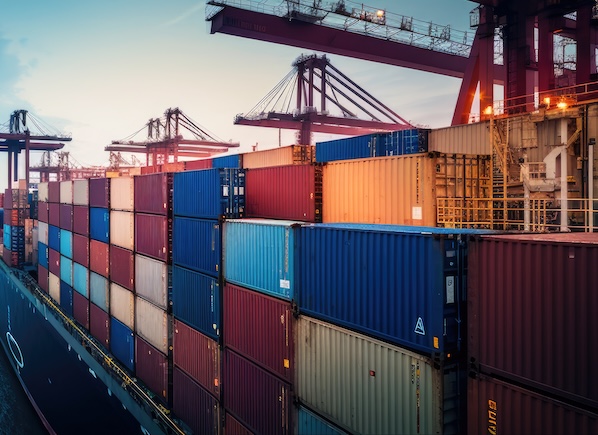
Container ship carrying container boxes import export dock with quay crane. Business commercial trade global cargo freight shipping logistic and transportation worldwide oversea concept. Generative AI
Economic Updates
Philippines Trade Update: Wider deficit on strong imports
DOWNLOAD
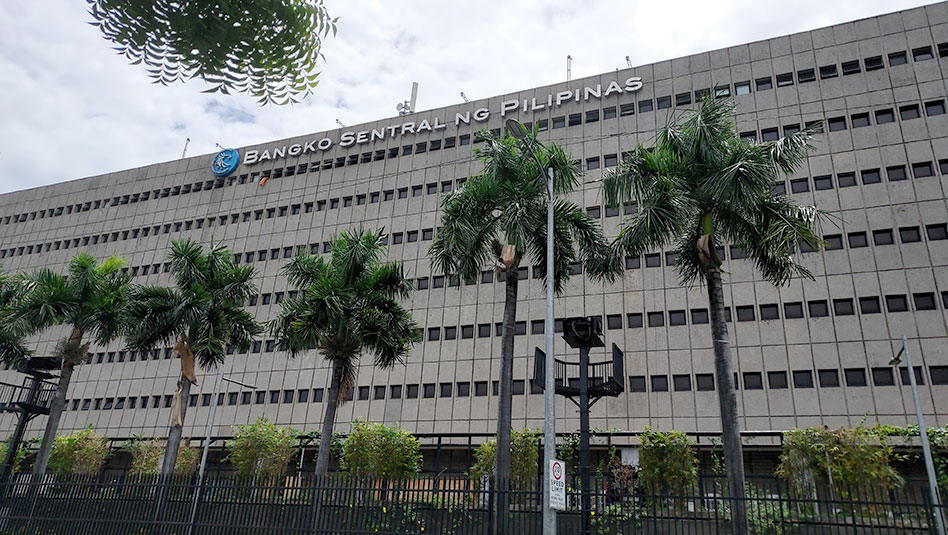
Frick collection with palm trees 
Economic Updates
Policy Rate Updates: Policy rate updates to reassure 
DOWNLOAD
Man using his smartphone
Reports
Fed to cut just once 
DOWNLOAD
View all Reports
Metrobank.com.ph How To Sign Up
Follow us on our platforms.

How may we help you?

TOP SEARCHES
  • Where to put my investments
  • Reports about the pandemic and economy
  • Metrobank
  • Webinars
  • Economy
TRENDING ARTICLES
  • Investing for Beginners: Following your PATH
  • On government debt thresholds: How much is too much?
  • Philippines Stock Market Outlook for 2022
  • Deficit spending remains unabated

Login

Access Exclusive Content
Login to Wealth Manager
Visit us at metrobank.com.ph How To Sign Up
Access Exclusive Content Login to Wealth Manager
Search
MODEL PORTFOLIO THE GIST
NEWS AND FEATURES
Global Philippines Fine Living
INSIGHTS
INVESTMENT STRATEGY
Economy Stocks Bonds Currencies
THE BASICS
Investment Tips Explainers Retirement
WEBINARS
2024 Mid-Year Economi Briefing, economic growth in the Philippines
2024 Mid-Year Economic Briefing: Navigating the Easing Cycle
June 21, 2024
Investing with Love
Investing with Love: A Mother’s Guide to Putting Money to Work
May 15, 2024
retirement-ss-3
Investor Series: An Introduction to Estate Planning
September 1, 2023
View All Webinars
DOWNLOADS
Container ship carrying container boxes import export dock with quay crane. Business commercial trade global cargo freight shipping logistic and transportation worldwide oversea concept. Generative AI
Economic Updates
Philippines Trade Update: Wider deficit on strong imports
March 27, 2026 DOWNLOAD
Frick collection with palm trees 
Economic Updates
Policy Rate Updates: Policy rate updates to reassure 
March 26, 2026 DOWNLOAD
Man using his smartphone
Reports
Fed to cut just once 
March 19, 2026 DOWNLOAD
View all Reports

Archives: Business World Article

Inflation could ease to around 2% this year

Inflation could ease to around 2% this year

Headline inflation could fall to around the 2% range this year amid easing price pressures, analysts said, which would be well below the projection of the Bangko Sentral ng Pilipinas (BSP).

“We maintain our forecast for consumer price index (CPI) inflation to average 2.7% in 2025 which is lower than the 3.2% in 2024, and below BSP’s baseline forecast of 3.3%,” Nomura Global Markets Research analysts Euben Paracuelles and Nabila Amani said in a commentary.

Inflation accelerated to 2.9% year on year in December from 2.5% in November.

This brought the full-year print to 3.2%, matching the Bangko Sentral ng Pilipinas’ (BSP) forecast for 2024. It also marked the first time that full-year inflation fell within the central bank’s 2-4% target since 2021, when inflation averaged 3.9%.

This year, the BSP expects inflation to average 3.3%. Accounting for risks, inflation could hit 3.4%.

HSBC economist for ASEAN Aris D. Dacanay said he expects inflation to average 2.5% in 2025, citing the continued drop in rice prices.

“Nonetheless, we think the acceleration in inflation may be short-lived, as downside risks to global oil prices persist while retail rice prices fall,” he said.

In December, rice inflation sharply slowed to 0.8% from 5.1% in November and 19.6% a year prior.

Rice is one of the biggest factors driving faster inflation, but prices have been declining since the government in July slashed tariffs on rice imports to 15% from 35% previously. This tariff regime is set to be implemented through 2028.

The Philippine Statistics Authority (PSA) has also noted the possibility for rice inflation to turn negative this month.

“Importantly, the output gap remains negative, and we continue to assume that the impact of lower rice import tariffs on food inflation will continue to play out in coming months,” Nomura said.

Nomura said inflation pressures are seen to be “well-contained” amid the government’s continued supply-side measures and its oil price assumptions.

“You also have the deflationary impulse from Chinese goods as trade gets rerouted. And at the same time, risks to global energy prices are tilted to the downside,” Mr. Dacanay said.

“Because if Fed rates are high while mainland China growth is weaker than before, the demand for global energy or at least oil, will actually get reduced, bringing down energy prices and bringing down inflation,” he added.

Meanwhile, Citi economist for the Philippines Nalin Chutchotitham projects inflation to average 3.1% this year, still below the BSP’s forecast.

She said inflation this year will continue to be “well-within policy target” despite upside risks from electricity rate increases.

“We revised up 2025 inflation from 2.8% to 3.1% on the back of planned increases in electricity rates during the first half, noting also potential further adjustments in the remainder of the year, although this may be partly offset by potentially lower oil prices,” Ms. Chutchotitham added.

With inflation expected to remain manageable, the BSP has room to continue its easing cycle.

“We see limited implications for our BSP forecasts because of the still-favorable inflation outlook, which is the main policy driver for BSP despite a more hawkish Fed,” Nomura said.

The BSP kickstarted its rate-cutting cycle in August last year, delivering a total of 75 bps for 2024. This brought the benchmark rate to 5.75% by yearend.

“We still have one more CPI print before the next BSP meeting, and unless we see another sharp pickup in headline inflation to well above 3%, we see no reason for BSP to pause,” Nomura added.

Nomura expects the BSP to deliver 75 bps worth of cuts this year in its first three meetings.

“Despite currency weakness, BSP may continue to cut rates and decouple from the Fed or regional peers, given its assessment of well-anchored inflation expectations and a limited FX (foreign exchange) pass-through,” it added.

The peso fell to the record-low PHP 59-per-dollar level thrice last year, twice in November and once in December.

Meanwhile, Mr. Dacanay sees up to 75 bps of rate cuts by the third quarter, in increments of 25 bps.

“We updated our policy rate forecast and expect a more gradual easing cycle, wherein the BSP — mindful of Fed moves and FX volatility — will cut in alternate rate-setting meetings until the policy rate reaches 5% by the third quarter,” he said.

“However, we do not think the upside surprise in headline inflation derails the policy rate outlook altogether. Looking under the hood, the inflationary pressures seem to be short-lived in nature,” he added.

BSP Governor Eli M. Remolona, Jr. has said the central bank prefers to reduce rates in “baby steps.”

“The current policy rate remains relatively high, and given the time lag in monetary policy, we expect the BSP to continue with its gradual 25-bp rate cuts in February, the second quarter and third quarter,” Ms. Chutchotitham said.

The BSP trimmed the number of Monetary Board meetings to six this year from seven previously, citing the need for more in-depth analysis of data.

“We expect 50 bps more likely to follow in 2026 if inflation stays close to the target midpoint, thus bringing real policy rate closer to historical level and continue to support economic growth,” Ms. Chutchotitham added. – Luisa Maria Jacinta C. Jocson, Reporter


LRT-1 operator seeks to increase train fares

LRT-1 operator seeks to increase train fares

Commuters using the Light Rail Transit Line 1 (LRT-1) are facing higher fares as its private operator, Light Rail Manila Corp. (LRMC), is seeking another round of fare hikes.

“We are confirming that we submitted a petition as part of the periodic fare adjustments process,” LRMC Spokesperson Jacqueline S. Gorospe said in a Viber message on Wednesday.

The Department of Transportation (DoTr) is set to hold a public hearing on the fare increase petition of LRMC on Jan. 9.

LRMC filed a petition for a fare increase before the DoTr’s railway regulatory unit on May 30, 2024. In 2023, the Transportation department approved petitions to increase ticket prices at the LRT-1 and LRT-2.

“Our current fare is approved in 2023. This public hearing is for the 2024 fare application (we submitted last year) which is based on an increase from 2022 fare application submission (different from what was approved in 2023),” Ms. Gorospe said.

The current base fare for the LRT-1 is PHP 13.29 for boarding and PHP 1.21 per kilometer for distance.

A copy of the petition obtained by BusinessWorld showed LRMC’s request would raise the total fare for an end-to-end trip on the LRT-1 to PHP 60 for a single-journey ticket. This is PHP 15 more than the current fare of PHP 45 from FPJ Station (formerly Roosevelt) in Quezon City to Baclaran Station in Pasay, including the last station of the Cavite extension Phase 1.

For users of stored value cards, the maximum fare would go up to PHP 58 from the current PHP 43 for end-to-end trips.

To justify the fare hike petition, LRMC said they have made substantial operational improvements and system upgrades “at a cost of PHP 24 billion” since it took over the LRT-1 in September 2015.

“While it is aware that an increase may be significant for some of its passengers, however, petitioner believes that passengers understand and accept fare increase in exchange for improvements in the system and service,” LRMC said.

In the petition, LRMC said the average fare increase would be PHP 7.48 for LRT-1 passengers who travel an average distance of 7.16 kilometers.

Mid-distance passengers that travel more than five kilometers to 16 kilometers would pay an average of PHP 6.02 more, while short-distance passengers would see their fares increase by PHP 8.65.

“An average increase of only PHP 12.50 for long-distance passengers, which are passengers that travel more than 16 kilometers on the existing system. Only 1.88% are long-distance passengers,” LRMC said.

Renato M. Reyes, Jr., secretary general of Bagong Alyansang Makabayan (Bayan), said they are opposing the proposed LRT fare hike, the second under the Marcos administration.

“We call on commuters to make their voices heard and to register their strong opposition to the fare hike. The Marcos regime is ultimately liable for the looming fare increase,” he said.

Transportation Assistant Secretary for railways Jorjette B. Aquino told BusinessWorld the DoTr will take into account the comments from the public before deciding on LRMC’s petition.

Ms. Aquino said the DoTr is expected to come up with a decision a month after the public hearing.

“As per the Rail Regulatory Unit Rules and Regulations, a maximum of 30 days from the day of public hearing. It is part of our job and commitment to do proper review and evaluation of their petition,” Ms. Aquino said.

Terry L. Ridon, a public investment analyst and convenor of think tank InfraWatch PH, said the DoTr must properly evaluate the fare adjustment petition filed by the LRMC.

“The DoTr must determine whether LRMC had already delivered on its prior commitments to build new infrastructure and adequately maintain the rail system,” Mr. Ridon said.

LRMC is the joint venture of Ayala Corp., Metro Pacific Light Rail Corp., and Macquarie Infrastructure Holdings (Philippines) Pte. Ltd. Metro Pacific Light Rail is a unit of Metro Pacific Investments Corp., which is one of three Philippine subsidiaries of Hong Kong’s First Pacific Co. Ltd., the others being PLDT Inc. and Philex Mining Corp.

Hastings Holdings, Inc., a unit of PLDT Beneficial Trust Fund subsidiary MediaQuest Holdings, Inc., maintains interest in BusinessWorld through the Philippine Star Group, which it controls. – Ashley Erika O. Jose, Reporter

Outstanding debt hits fresh high of PHP 16.09T

Outstanding debt hits fresh high of PHP 16.09T

The national government’s (NG) outstanding debt rose to a fresh high of PHP 16.09 trillion as of end-November, partly reflecting the impact of the peso depreciation on the value of foreign obligations, the Bureau of the Treasury (BTr) said.

Data from the BTr on Tuesday showed that outstanding debt inched up by 0.4% or PHP 70.7 billion to PHP 16.09 trillion as of end-November from PHP 16.02 trillion as of end-October.

Year on year, debt jumped by 10.9% from PHP 14.51 trillion.

The BTr attributed the higher debt level to “net financing and the impact of local currency depreciation on the valuation of foreign currency-denominated debt.”

The bulk or 67.87% of the total debt stock came from domestic sources.

As of end-November, outstanding domestic debt inched up by 0.3% to PHP 10.92 trillion from PHP 10.89 trillion at the end of October.

“The increment resulted from the PHP 30.67-billion net issuance of domestic securities and PHP 1.15-billion effect of peso depreciation on US dollar-denominated domestic debt,” the BTr said.

Government securities accounted for nearly all of domestic debt.

Year on year, domestic debt increased by 9% from PHP 10.02 trillion.

Meanwhile, external debt went up by 0.8% to PHP 5.17 trillion at end-November from PHP 5.13 trillion a month earlier.

“The significant depreciation of the peso led to a PHP 35.61-billion escalation in the local valuation of US dollar-denominated debt while net foreign loan availments added PHP 8.33 billion,” the BTr said.

The Treasury added that the “favorable third-currency movements” against the greenback had shrunk the external debt by PHP 5.06 billion.

Based on the data, the Treasury used a foreign exchange rate of P58.602 a dollar in November, against PHP 58.198 in October and PHP 54.77 in November 2023.

Year on year, external debt jumped by 15.3% from PHP 4.48 trillion a year earlier.

Government securities consisted of PHP 2.34 trillion in US dollar bonds, PHP 213.72 billion in euro bonds, PHP 59.32 billion in Japanese yen bonds, PHP 58.6 billion in Islamic certificates and PHP 54.77 billion in peso global bonds.

Meanwhile, NG-guaranteed obligations rose by 2.5% to PHP 422.04 billion at end-November from PHP 411.76 billion in October.

“This resulted from PHP 8.95 billion in new domestic guarantees, as well as PHP 1.85 billion in upward adjustments brought about by unfavorable foreign currency movements,” the BTr said.

Year on year, NG-guaranteed obligations jumped by 19.51% from PHP 353.14 billion.

The peso closed at PHP 58.62 a dollar at the end of November, weakening by 52 centavos from the PHP 58.1 finish at end-October. It also hit a record low PHP 59-a-dollar level on Nov. 21 and 26.

Rizal Commercial Banking Corp. Chief Economist Michael L. Ricafort said the government had to borrow more to fund persistent budget deficits.

The National Government’s budget deficit widened to P1.18 trillion in the first 11 months from P1.11 trillion a year earlier.

“Tax and fiscal reform measures would be realistically needed to bring down the country’s debt-to-GDP ratio to below the 60% international threshold to help sustain the country’s relatively favorable credit ratings of one to three notches above the minimum investment grade as consistently maintained since the pandemic,” Mr. Ricafort said.

At the end of September, the NG debt as a share of GDP stood at 61.3%, higher than 60.2% a year earlier and 60.1% at end-2023.

Mr. Ricafort said rate cuts by the Bangko Sentral ng Pilipinas and US Federal Reserve might help reduce debt service in the coming months.

Philippine Institute for Development Studies Senior Research Fellow John Paolo R. Rivera said the PHP 16.09-trillion debt remains “manageable” but has to be coupled with “prudent” fiscal management, more efficient tax collection and a broader the tax base.

“For December 2024, the year-end budgetary requirements and adjustments might have pushed debt levels slightly higher. However, seasonal remittances and higher government revenues in December 2024 could have helped cushion the deficit,” Mr. Rivera said.

For 2025, he said the NG is expected to balance its fiscal needs with “careful borrowing strategies,” such as leveraging concessional loans and managing foreign exchange exposure.

The NG’s debt stock is expected to have hit PHP 16.06 trillion at the end of 2024 and PHP 17.35 trillion for 2025. – Aubrey Rose A. Inosante, Reporter

Philippine dollar reserves drop to USD 106.8B

Philippine dollar reserves drop to USD 106.8B

The Philippines gross international reserves (GIR) inched lower at end-December, falling short of the central bank’s full-year projection.

Preliminary data released by the Bangko Sentral ng Pilipinas (BSP) on Tuesday showed reserves stood at USD 106.84 billion, down by 1.5% from USD 108.49 billion at end-November.

Year on year, dollar reserves rose by 3% from USD 103.75 billion a year earlier.

The GIR was below the BSP’s end-2024 projection of USD 109 billion.

“The month-on-month decrease in the GIR level reflected mainly the BSP’s net foreign exchange operations,” the central bank said.

Rizal Commercial Banking Corp. Chief Economist Michael L. Ricafort said the peso volatility in the fourth quarter might have weighed on the GIR level due to the “need to smoothen or manage the volatility.”

In 2024, the peso closed at its record low of PHP 59 thrice — on Nov. 21, Nov. 26 and Dec. 19.

At its end-December level, the GIR was enough to cover 7.5 months’ worth of imports of goods and payments of services and primary income.

“By convention, GIR is viewed to be adequate if it can finance at least three-months’ worth of the country’s imports of goods and payments of services and primary income,” the BSP said.

The dollar reserves were also equivalent to about 3.8 times the country’s short-term external debt based on residual maturity.

Having an ample level of foreign exchange buffers safeguards an economy from market volatility and is an assurance of the country’s capability for debt repayment in the event of an economic downturn.

The central bank said the lower GIR level was due to the “drawdown on the National Government’s (NG) deposits with the BSP to pay off its foreign currency debt obligations.”

Foreign currency deposits slumped by 20.6% to USD 1.37 billion as of end-December from USD 1.73 billion the month prior. It increased by 78.2% from USD 770.7 million as of end-2023.

The BSP also cited the downward valuation adjustments in its gold holdings due to the “decrease in the price of gold in the international market.”

The country’s gold reserves were valued at USD 11 billion as of end-2024, down by 0.2% from USD 11.03 billion at end-November. However, it was higher by 4.2% from USD 10.56 billion a year ago.

Central bank data showed reserves in the form of foreign investments declined by 1.4% to USD 90 billion as of December from USD 91.3 billion a month earlier. It rose by 2.5% from USD 87.85 billion at end-December 2023.

Net international reserves dropped by 1.5% to USD 106.83 billion from USD 108.46 billion a month ago.

Net international reserves are the difference between the BSP’s reserve assets (GIR) and reserve liabilities such as short-term foreign debt, and credit and loans from the International Monetary Fund (IMF).

The Philippines’ reserve position in the IMF went up by 1.1% month on month to USD 675.6 million from USD 668.2 million. Year on year, it decreased by 11.2% from $760.9 million.

Special drawing rights held by the Philippines — the amount the country can tap from the IMF — was steady at USD 3.76 billion at end-December. However, it slipped by 1.3% from USD 3.81 billion a year ago.

Mr. Ricafort said the dip in dollar reserves was due to lower foreign investments amid “global market volatility on possible Trump protectionist measures” and its impact on US inflation and interest rates.

Markets are pricing in US President-elect Donald J. Trump’s policies on the Philippine economy, which relies heavily on the US for trade, remittances and other key economic inflows.

He also cited the government’s payment of foreign debts and other foreign obligations towards the end of the year.

“For the coming months, continued growth in overseas Filipino worker (OFW) remittances, business process outsourcing revenues, foreign tourism receipts, and foreign investments would still support balance of payments and GIR data,” Mr. Ricafort added.

The BSP expects to have USD 110 billion in dollar reserves by end-2025. — Luisa Maria Jacinta C. Jocson

Philippines seeks maximum retail price on imported rice

Philippines seeks maximum retail price on imported rice

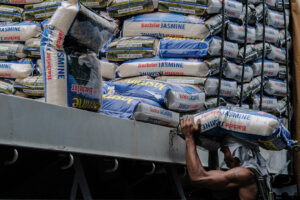
The Department of Agriculture (DA) is seeking to impose a maximum suggested retail price (MSRP) for imported rice in an effort to further lower rice prices and curb profiteering by traders.

“We will be coming up with an (MSRP) system very soon, hopefully by the end of January it should already be released,” Agriculture Secretary Francisco P. Tiu Laurel, Jr. told reporters on Monday.

“It’s like saying this should be the maximum price, but it’s not a price cap,” he added.

Last week, the DA said prices of some imported rice brands remained elevated despite lower import tariffs.

President Ferdinand R. Marcos, Jr. last year issued Executive Order No. 62 which slashed tariffs on rice imports to 15% from 35% previously until 2028.

The lower tariff rates on rice, which took effect on July 5, 2024, was aimed at bringing down prices and curbing inflation.

Mr. Tiu Laurel said the MSRP should further lower the price of imported premium and special rice, which remained as high as PHP 60 per kilogram in local markets as of Jan. 3.

“In our meetings with importers, and this week we will be meeting also some of the retailers and additional importers, it is clear to us that there should not be a PHP 60 per kilo of imported rice seen in the market,” Mr. Tiu Laurel said.

Also on Monday, DA Assistant Secretary and Spokesperson Arnel V. de Mesa said that the MSRP on imported rice would depend on the rice variety, but did not give a specific price ceiling.

“In effect, (we) are giving reference that the price of the commodity, especially rice, ay dapat hindi lalampas sa ganitong presyo, (it should not exceed a certain price)” he said at a media briefing.

Earlier, the DA said that it would remove labels for imported rice, which allegedly misled consumers and justified higher prices.

The department also banned the use of marketing terms like “premium” and “special” in the imported rice trade, which it said were pretexts for charging more.

Mr. De Mesa added that imported rice would now be labeled with the country of origin, type, and amount of broken rice content.

“One thing is clear, people are very brand conscious. The problem is in the label, but they are all the same; they are not premium or special,” Mr. Tiu Laurel added.

According to the DA’s price monitoring of Metro Manila markets, as of Jan. 4, a kilogram of imported special rice sells for between PHP 54 and PHP 65 lower compared with the PHP 58 and PHP 65 per kilo a year ago.

On the other hand, imported premium rice was seen between PHP 52 and PHP 60 per kilo as of Jan. 4 from PHP 54 and PHP 62 per kilo in 2024.

“The P60 per kilo price for imported rice seen in the market is already profiteering, in my opinion,” Mr. Tiu Laurel said.

The agency is also set to meet with the departments of Trade and Industry, and Interior and Local Government, the Bureau of Internal Revenue, and the Philippine National Police to finalize the guidelines of the MSRP and address the profiteering of rice traders.

“We need to sort out our remedies, on how it would be labeled as profiteering, we will use that, and hopefully people will follow,” he added.

Sought for comment, former Agriculture Undersecretary Fermin D. Adriano said in a Viber message that implementing price controls would not work “if DA does not go after big-time wholesalers and importers.”

In a Viber message, Federation of Free Farmers National Manager Raul Q. Montemayor warned that imported rice may be rebranded as local rice to avoid price controls.

“They must have a firm basis for setting the maximum prices,” Mr. Montemayor said, adding that various types, brands, and shipping costs should be taken into account when pricing imported rice.

He added that the DA should also determine if profiteering is being done by importers, wholesalers, and retailers.

“Right now, all the effort seems to be directed at retailers, but we also need to look at the margins of importers and wholesalers and check if these are not excessive,” he said.

In a Viber message, Samahang Industriya ng Agrikultura (SINAG) Executive Director Jayson H. Cainglet said the group had previously suggested the imposition of a price cap on rice, using Republic Act No. 12022 or the Anti-Agricultural Economic Sabotage Act as the basis.

Under the law, agricultural smuggling, hoarding, profiteering, and its financing are considered as economic sabotage.

The law also imposes fines equivalent to five times the value of any smuggled or hoarded agricultural products, with violators also facing the prospect of life imprisonment.

Mr. Cainglet said the government has not yet determined if there are cartels responsible for hoarding and manipulating rice supply and prices.

He noted imported rice should be priced between PHP 38 and PHP 40 per kilo after tariffs were lowered.

As of Jan. 4, imported well-milled rice was seen between PHP 40 and PHP 54 per kilo in Metro Manila markets, while a kilo of regular-milled rice fetched for PHP 40 to PHP 48 per kilo.  – Adrian H. Halili, Reporter

‘No new taxes’ stance likely to hamper fiscal consolidation

‘No new taxes’ stance likely to hamper fiscal consolidation

The Philippine government must consider passing “politically acceptable” tax measures, such as those related to wealth, luxury goods, and carbon emissions, if it wants to achieve its fiscal consolidation goals.

“The Marcos administration’s pledge to introduce ‘no new taxes’ has made things much worse from the standpoint of fiscal consolidation, especially with economic growth coming in much weaker than expected in the recent period,” Pantheon Macroeconomics Chief Emerging Asia Economist Miguel Chanco said in an e-mail.

Slower gross domestic product (GDP) growth is a risk to the government’s fiscal consolidation plan as it affects revenue collections, he said. This would also affect the administration’s goal to bring down both the deficit-to-GDP and debt-to-GDP ratios.

“From my perspective, there’s certainly a need to question the fundamental position to not introduce new taxes,” Mr. Chanco said.

Finance Secretary Ralph G. Recto has so far remained firm on his “no new taxes” stance, with the administration only pursuing reform measures pending in Congress and looking to improve tax collection efficiency.

“For now, we are interested in passing all our pending revenue measures in Congress including tweaked, enhanced Passive Income and Financial Intermediary Taxation Act (PIFITA) and the Capital Markets Efficiency Promotion Act substitute bills,” Mr. Recto said in a Viber message.

Other Department of Finance (DoF)-backed bills yet to be passed by lawmakers include the excise tax on single-use plastics, the rationalization of the mining fiscal regime, and the proposed hike to the motor vehicle road user’s charge.

John Paolo R. Rivera, a senior research fellow at the Philippine Institute for Development Studies, said the government’s “no new taxes” stance, while meant to ease consumers’ financial burden amid elevated inflation post-pandemic, limits the government’s ability to bridge the fiscal gap.

“As debt servicing increases and infrastructure spending remains a priority, sustaining this stance may become untenable beyond 2025, especially if growth slows,” Mr. Rivera said in a Viber message.

The Development Budget Coordination Committee (DBCC) in December said that through its medium-term fiscal framework (MTFF), it aims to reduce the budget deficit “in a more gradual and realistic manner, while also bolstering long-term investments that create more jobs, increase incomes, and decrease poverty incidence.”

The National Government’s budget deficit was capped at 5.7% of GDP in 2024. This is expected to go down to 5.3% of GDP in 2025, 4.7% in 2026, 4.1% in 2027 and to 3.7% by 2028, when the Marcos administration’s term ends.

Meanwhile, it aims to collect PHP 4.383 trillion in revenues in 2024, PHP 4.644 trillion in 2025, PHP 5.063 trillion for 2026, PHP 5.627 trillion for 2027, and PHP 6.249 trillion for 2028.

The government set a 6%-6.5% GDP growth target for 2024. The DBCC in December widened its growth assumption for 2025 to 2028 to 6%-8% to account for domestic and global uncertainties.

Mr. Chanco said the budget deficit may have ended at 6% of GDP in 2024 and narrow only to 5.5% and 5% in 2025 and 2026, respectively, as revenue growth is unlikely to outpace the increase in spending as the government continues to invest in its priority areas to boost economic growth.

According to the latest “Revenue Statistics in Asia and the Pacific” report published by the Organisation for Economic Co-operation and Development (OECD), the Philippines’ tax-to-GDP ratio averaged 19.3%, far below the 34% average of wealthy countries that are part of the OECD.

Multilateral and developmental institutions have said that the Philippines needs to widen its tax base to ensure sustainable growth.

“Mobilizing domestic revenues remains essential for successful fiscal consolidation and to sustainably finance the country’s inclusive development agenda. Reaching fiscal targets and sustainably financing the government’s inclusive growth agenda rely on a permanent increase in tax revenues. Despite tax reforms in previous years, tax revenue growth is expected to remain modest,” the World Bank said in a June 2024 report.

“Additional revenue efforts could focus on broadening the tax base for consumption and personal income taxes, rationalizing tax incentives, and strengthening tax administration. An inability to generate additional revenues could lead to further reductions in public expenditure, or an increase in borrowing which could lead to higher debt.”

For its part, the ASEAN+3 Macroeconomic Research Office said in a December report that it would be prudent for the government to “quicken the pace of fiscal consolidation if conditions allow, as restoring fiscal space remains critical to build greater resilience to external shocks amid elevated uncertainty.”

‘Politically acceptable’ taxes

However, pushing for new tax measures could face backlash as consumers continue to grapple with high cost of living.

“In current context, we need taxes that are politically acceptable or popular and at the same time, can generate significant revenues,” Filomeno S. Sta. Ana III, cofounder and coordinator of the Action for Economic Reforms, said in a Viber message.

Policy makers could consider imposing excise taxes on single-use plastics, mining activities, and carbon emissions, he said.

It could also increase “sin taxes” on alcoholic beverages and tobacco products, Mr. Sta. Ana said.

These measures would not only generate revenue but also support environmental goals and promote public health, Mr. Rivera said.

“Progressive taxes” that have long been pending in Congress, such as those on wealth and luxury goods, are “politically viable” sources of revenue, he added.

“These wealth and luxury taxes should target high-income earners and nonessential consumption to ensure fairness and avoid taxes that overly burden middle-class families or discourage productive investments,” Mr. Rivera said.

He said external and domestic headwinds could put both the government’s fiscal and growth targets at risk.

“Structural inefficiencies in revenue collection and dependence on specific sectors call for revisiting measures to ensure resilience.”

Albay Rep. Jose Ma. Clemente S. Salceda, who heads the House Ways and Means Committee, said he “personally does not subscribe to the idea of ‘no new taxes.’”

Mr. Salceda said they are studying proposals to tax luxury goods and impose higher levies on “sin” products as well as the “harmonization” of vape taxes.

He also noted the need to pass the bill increasing the motor vehicle user’s tax. The measure was approved by the House in December 2023, but a counterpart measure has yet to be filed in the Senate.

For next year, the committee is also looking to “retire outdated and old taxes like DSTs (documentary stamp taxes) on dozens of government transactions,” Mr. Salceda said.

“Getting them replaced with new appropriate taxes is part and parcel of managing an evolving economy,” he added.

Leakages

Similar to the government’s stance, Benedicta Du-Baladad, founding partner and chief executive officer of law firm Du-Baladad and Associates, said revenue collection efficiency must be improved before any new taxes are proposed.

She acknowledged that pursuing revenue reforms while wanting to encourage foreign investments and ramp up government spending is “like walking on a tightrope.”

“I think the National Government should first close all tax leakages before it imposes new taxes. According to the ADB, our tax collection performance is ‘below potential,’” she said in an e-mail. “Also, the leakages on the expenditure side must be plugged first.”

The government should also prioritize improving the implementation of revenue-generating measures, she added.

“Effective implementation should always be among the top considerations. Effective implementation should also mean effective coordination between the various government agencies involved in these tax measures.”

Ms. Du-Baladad said a key measure that should be fast-tracked is the PIFITA, which completes the Comprehensive Tax Reform Program crafted in 2018 to ensure a more equitable and efficient tax system.

“This is an important component to be addressed to promote capital markets. I believe PIFITA has the capability to help with fiscal consolidation because PIFITA has the potential to improve the state of the capital markets. Improving it would mean that business would have access to additional sources of capital which may be used to grow their businesses,” she said.

“Growing the business tends to lead to greater income which would translate to higher tax collection. The higher the tax collection is, the better it is for the government’s fiscal consolidation efforts.” — Beatriz Marie D. Cruz

Philippines, Japan renew currency swap arrangement

Philippines, Japan renew currency swap arrangement

The Philippines and Japan have renewed a bilateral currency swap arrangement, which will boost financial stability and cooperation between the two countries, the Bangko Sentral ng Pilipinas (BSP) said.

The BSP and the Bank of Japan (BoJ) have renewed their bilateral swap arrangement effective Jan. 1, the Philippine central bank said in a statement on Monday.

“The Bank of Japan, acting as agent for the Minister of Finance of Japan, and the Bangko Sentral ng Pilipinas signed the fourth Amendment and Restatement Agreement of the Third BSA,” it said.

“Japan and the Philippines believe that the BSA, which aims to strengthen and complement other financial safety nets, will further deepen financial cooperation between the two countries and contribute to regional and global financial stability,” the BSP said.

The BSA allows both central banks to swap their local currencies in exchange for the US dollar.

“The arrangement also enables the Philippines to swap the Philippine Peso against the Japanese Yen,” the BSP added.

The limit for the swap agreement remained unchanged at USD 12 billion or its equivalent amount in yen for the Philippines. Japan can swap up to as much as USD 500 million. — A.M.C. Sy

Philippine peso could break 59 per dollar level this year

Philippine peso could break 59 per dollar level this year

The peso could breach its record low of PHP 59 this year as Donald J. Trump’s presidency and the Philippine midterm elections may put pressure on the local currency.

“The PHP (Philippine peso) breaching the P59 mark depends on several key factors. Among these are external pressures such as the strength of the USD (US dollar), influenced by the Fed’s monetary policy, and domestic concerns like the trade deficit,” Philippine Institute for Development Studies Senior Research Fellow John Paolo R. Rivera said in a Viber message.

On Jan. 3, the local unit closed at PHP 58.20 per dollar, weakening by 29 centavos from its PHP 57.91 finish on Tuesday, Bankers Association of the Philippines data showed.

The Development Budget Coordination Council (DBCC) has said it expects the peso to “broadly stabilize” at PHP 56 to PHP 58 against the US dollar in 2025.

“In the near term, we expect the currency to range between PHP 57.75 and PHP 58.25. The US dollar has managed to still gain its momentum ahead of Trump’s assumption of office on Jan. 20,” Reyes Tacandong & Co. Senior Adviser Jonathan L. Ravelas said in a Viber message.

Mr. Ravelas said the peso could weaken to as low as PHP 60 per dollar this year, noting that Mr. Trump’s protectionist policies and an “assertive stance” on China could influence trade and investment flows.

“The forex rate is anticipated to range within the PHP 57.75 to PHP 60 levels this year, with the USD/PHP closing at around PHP 58.90 by the end of 2025,” he said.

Mr. Rivera said the US dollar’s strength is likely to persist under Mr. Trump’s presidency.

“A stronger USD is likely under Trump, given the previous administration’s fiscal policies, which may keep US Treasury yields high and attract capital back to the US, weakening emerging-market currencies like the PHP,” he said.

On the other hand, the midterm elections in May could increase forex volatility, Mr. Rivera said.

“Markets may anticipate shifts in economic policy or investor confidence depending on the candidates’ platforms and perceived stability post-election,” he said.

Other factors that could influence the peso’s movements this year include global oil prices and remittances from overseas Filipino workers.

“A persistent trade deficit and the narrowing gap in remittance growth could weigh on the PHP further,” he said.

While the volatility can be managed by the central bank’s active intervention, Mr. Rivera said “sustained structural reforms and enhanced economic fundamentals will be necessary to counter global headwinds and stabilize the PHP in the long term.”

University of the Philippines Los Baños economics senior lecturer Enrico P. Villanueva said he is more concerned about forex volatility than the level of the peso against the US dollar.

“I do not foresee significant volatility in the currency, unless a local or geopolitical event happens. Even then, I am confident in BSP’s ability to cushion drastic rate changes,” he said. – Aaron Michael C. Sy, Reporter

Philippine energy companies upbeat as projects go online

Philippine energy companies upbeat as projects go online

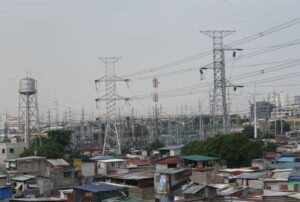
Some listed energy companies are bullish for growth this year as power projects that are expected to go online provide additional power supply to the grid.

“The year 2024 was a wake-up call, not only for the energy sector but for the entire country,” Antonio Miguel B. Alcantara, chief executive officer (CEO) at Alsons Power Group, told BusinessWorld in an interview. “The red and yellow alerts experienced across the country underscore the urgent need to enhance the Philippines’ power supply, demand management and transmission reliability.”

Last year, the Philippines’ main grids were placed under 16 red alerts and 62 yellow alerts, leading to brownouts.

“At Alsons Power, we are optimistic that 2025 will be another remarkable year,” Mr. Alcantara said.

The company is set to launch its first large-scale solar power plant as part of its plan to diversify its energy portfolio.

Alsons’ power generation facilities are concentrated in Mindanao. It has four power facilities with a combined capacity of 468 megawatts (MW).

Last year, the company started commercial operations of its first renewable energy project, the 14.5-MW Siguil Hydro Power Plant in Maasim, Sarangani.

“In Mindanao, the Department of Energy noted an adequate power supply outlook for the region,” Mr. Alcantara said. “Nevertheless, there is a pressing need to enhance generation capacity to address the expected growth in energy demand over the coming years, as well as to account for the frequent provision of power to the Visayas.”

Meanwhile, power distributor Manila Electric Co. (Meralco) cited the need to enhance its distribution network’s resilience and smartness through grid modernization projects, storm-hardening program and continued investments in advanced technologies, Executive Vice-President and Chief Operating Officer Ronnie L. Aperocho said.

This includes capital-intensive projects such as smart substations and the rollout of smart meters for Meralco’s eight million customers.

“With an upbeat economic growth forecast for the Philippines for 2025, we are optimistic that this will be mirrored in Meralco’s growth prospects, supported by our strategic efforts to invest, innovate and increase the value of the services that we deliver to our stakeholders, which include our customers and the country,” Mr. Aperocho said.

ACEN Corp., the listed energy unit of Ayala Corp., expects a “better supply situation” this year as large thermal plants start operations, along with new renewable energy plants in the next 12 to 18 months.

“Given the variable nature of renewables, we need to step up efforts to integrate more energy storage into the grid,” Eric T. Francia, president and CEO at ACEN, said in a Viber message.

The company has about 2,400 MW of renewable capacity in the Philippines, about 1,000 MW of which is under construction.

Mr. Francia said ACEN seeks to participate in the government’s green energy auctions and build up capacity to support the company’s retail electricity business.

“We aspire to further scale our renewable capacity in the Philippines by over three times for the balance of the decade,” he said.

Meanwhile, Alternergy Holdings Corp. sees 2024 as a “transformative year” as it managed to raise P20 billion in just 15 months as a listed company. This is expected to fuel the company’s growth and lay the groundwork to achieve its target of 500-MW capacity by 2026.

Last year, the company started building its three projects — Tanay and Alabat Wind Power projects and Balsik Solar Power project. Construction of the Dupinga Run-of-River Power project and the first phase of Kiangan Run-of-River Power project continue.

“We are bullish at Alternergy as we aim for the complete construction of four of our wind, solar and hydro projects by the end of 2025,” Vicente S. Perez, Jr., chairman at Alternergy, said in a Viber message.

The company is gearing up for the next phase of capital-raising to meet the equity needs of its project pipeline.

Energy projects covering 5,485.28 MW are scheduled to start commercial operations in 2025, according to data from Energy department. – Sheldeen Joy Talavera, Reporter

Philippine builders to benefit from state infra spending

Philippine builders to benefit from state infra spending

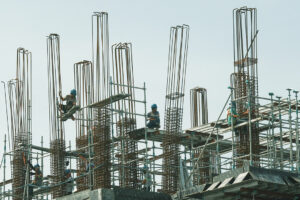
Listed Philippine construction companies are expected to deliver strong results in 2025 — an election year — driven by increased state infrastructure spending, analysts said.

“[Construction companies] are set for growth due to the country’s favorable demographics, as well as preparations for the May 2025 midterm elections especially before the election ban,” Michael L. Ricafort, chief economist at Rizal Commercial Banking Corp., said in a Viber message.

He said infrastructure projects are expected to be expedited before the Commission on Elections (Comelec) enforces a public works ban before the May 2025 elections.

He added that the expected rate cuts by the US Federal Reserve are expected to increase demand for loans from property developers and construction companies.

“Increased government infrastructure spending would benefit construction companies that are part of the supply chain of the various infrastructure projects around the country,” Mr. Ricafort said.

State infrastructure spending rose 2.52% in October from a year earlier, according to data from the Department of Budget and Management.

“Overall, the profitability outlook for 2025 appears cautiously optimistic, contingent on favorable economic policies and the execution of planned projects,” Toby Allan C. Arce, head of sales trading at Globalinks Securities and Stocks, Inc., said in a Viber message.

He said the profitability of construction and infrastructure companies in 2025 depend on factors such as government infrastructure spending, private sector projects and macroeconomic conditions.

“The Philippine government’s ongoing infrastructure development through different initiatives can stimulate demand for construction services,” he added.

But the growth of the sector is expected to be underpinned by raw material costs including steel and cement, which are influenced by global markets and foreign exchange volatility.

Megawide Construction Corp. returned to profit in the third quarter, posting an attributable net income of PHP 142.7 million from a net loss of PHP 29.85 million a year earlier. Revenue rose 10.9% to PHP 5 billion.

EEI Corp. had an attributable net loss of PHP 31.75 million in the third quarter from an attributable net income of PHP 406 million a year earlier as gross revenue fell 27.8% to PHP 3.14 billion.

Phinma Corp., which has a construction material unit, posted an attributable net income of PHP 144.86 million in the third quarter, 75.1% lower than a year earlier, even as revenue rose 0.5% to PHP 6.61 billion. Gross expense increased by 2.4% to PHP 5.5 billion.  –  Ashley Erika O. Jose, Reporter

Posts navigation

Older posts
Newer posts

Recent Posts

  • Navigating precarious times with cost averaging
  • Trade Update: Wider trade deficit in February
  • Metrobank US-Iran Risk Index: No swift end seen
  • Investment Ideas: March 27, 2026
  • BSP Update: First rate hike likely in June 

Recent Comments

No comments to show.

Archives

  • March 2026
  • February 2026
  • January 2026
  • December 2025
  • November 2025
  • October 2025
  • September 2025
  • August 2025
  • July 2025
  • June 2025
  • May 2025
  • April 2025
  • March 2025
  • February 2025
  • January 2025
  • December 2024
  • November 2024
  • October 2024
  • September 2024
  • August 2024
  • July 2024
  • June 2024
  • May 2024
  • April 2024
  • March 2024
  • February 2024
  • January 2024
  • December 2023
  • November 2023
  • October 2023
  • September 2023
  • August 2023
  • July 2023
  • June 2023
  • May 2023
  • April 2023
  • March 2023
  • February 2023
  • January 2023
  • December 2022
  • November 2022
  • October 2022
  • September 2022
  • August 2022
  • July 2022
  • June 2022
  • May 2022
  • March 2022
  • December 2021
  • October 2021

Categories

  • Bonds
  • BusinessWorld
  • Currencies
  • Economy
  • Equities
  • Estate Planning
  • Explainer
  • Featured Insight
  • Fine Living
  • How To
  • Investment Tips
  • Markets
  • Portfolio Picks
  • Rates & Bonds
  • Retirement
  • Reuters
  • Spotlight
  • Stocks
  • Uncategorized

You are leaving Metrobank Wealth Insights

Please be aware that the external site policies may differ from our website Terms And Conditions and Privacy Policy. The next site will be opened in a new browser window or tab.

Cancel Proceed
Get in Touch

For inquiries, please call our Metrobank Contact Center at (02) 88-700-700 (domestic toll-free 1-800-1888-5775) or send an e-mail to customercare@metrobank.com.ph

Metrobank is regulated by the Bangko Sentral ng Pilipinas
Website: https://www.bsp.gov.ph

Quick Links
The Gist Webinars Wealth Manager Explainers
Markets
Currencies Rates & Bonds Equities Economy
Wealth
Investment Tips Fine Living Retirement
Portfolio Picks
Bonds Stocks
Others
Contact Us Privacy Notice Terms of Use
© 2026 Metrobank. All rights reserved.

Access this content:

If you are an existing investor, log in first to your Metrobank Wealth Manager account. ​

If you wish to start your wealth journey with us, click the “How To Sign Up” button. ​

Login HOW TO SIGN UP