MODEL PORTFOLIO
THE GIST
NEWS AND FEATURES
Global Philippines Fine Living
INSIGHTS
INVESTMENT STRATEGY
Economy Stocks Bonds Currencies
THE BASICS
Investment Tips Explainers Retirement
WEBINARS
2024 Mid-Year Economi Briefing, economic growth in the Philippines
2024 Mid-Year Economic Briefing: Navigating the Easing Cycle
June 21, 2024
Investing with Love
Investing with Love: A Mother’s Guide to Putting Money to Work
May 15, 2024
retirement-ss-3
Investor Series: An Introduction to Estate Planning
September 1, 2023
View All Webinars
DOWNLOADS
Container ship carrying container boxes import export dock with quay crane. Business commercial trade global cargo freight shipping logistic and transportation worldwide oversea concept. Generative AI
Economic Updates
Philippines Trade Update: Wider deficit on strong imports
DOWNLOAD
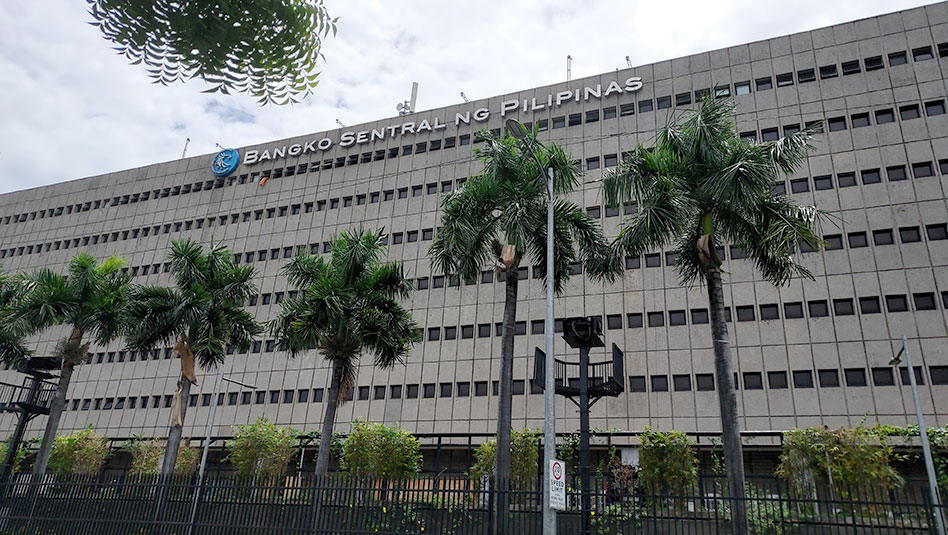
Frick collection with palm trees 
Economic Updates
Policy Rate Updates: Policy rate updates to reassure 
DOWNLOAD
Man using his smartphone
Reports
Fed to cut just once 
DOWNLOAD
View all Reports
Metrobank.com.ph How To Sign Up
Follow us on our platforms.

How may we help you?

TOP SEARCHES
  • Where to put my investments
  • Reports about the pandemic and economy
  • Metrobank
  • Webinars
  • Economy
TRENDING ARTICLES
  • Investing for Beginners: Following your PATH
  • On government debt thresholds: How much is too much?
  • Philippines Stock Market Outlook for 2022
  • Deficit spending remains unabated

Login

Access Exclusive Content
Login to Wealth Manager
Visit us at metrobank.com.ph How To Sign Up
Access Exclusive Content Login to Wealth Manager
Search
MODEL PORTFOLIO THE GIST
NEWS AND FEATURES
Global Philippines Fine Living
INSIGHTS
INVESTMENT STRATEGY
Economy Stocks Bonds Currencies
THE BASICS
Investment Tips Explainers Retirement
WEBINARS
2024 Mid-Year Economi Briefing, economic growth in the Philippines
2024 Mid-Year Economic Briefing: Navigating the Easing Cycle
June 21, 2024
Investing with Love
Investing with Love: A Mother’s Guide to Putting Money to Work
May 15, 2024
retirement-ss-3
Investor Series: An Introduction to Estate Planning
September 1, 2023
View All Webinars
DOWNLOADS
Container ship carrying container boxes import export dock with quay crane. Business commercial trade global cargo freight shipping logistic and transportation worldwide oversea concept. Generative AI
Economic Updates
Philippines Trade Update: Wider deficit on strong imports
March 27, 2026 DOWNLOAD
Frick collection with palm trees 
Economic Updates
Policy Rate Updates: Policy rate updates to reassure 
March 26, 2026 DOWNLOAD
Man using his smartphone
Reports
Fed to cut just once 
March 19, 2026 DOWNLOAD
View all Reports

Archives: Business World Article

Meralco lowers power rates for Jan.

Meralco lowers power rates for Jan.

Residential Customers in areas served by Manila Electric Co. (Meralco) will see a reduction in their electricity bills this month, mainly due to lower generation charges for the period.

The overall rate will go down by PHP 0.2189 per kilowatt-hour (kWh) to PHP 11.7428 per kWh in January from PHP 11.9617 per kWh in December, the power distributor said in a statement on Monday.

This will translate to a downward adjustment of around PHP 44 in the total electricity bill of residential customers consuming 200 kWh. Those consuming 300 kWh, 400 kWh, and 500 kWh will see a reduction of PHP 66, PHP 89, and PHP 112, respectively, in this month’s bills.

Meralco said it slashed power rates after the generation charge declined by PHP 0.1313 per kWh to PHP 6.8358 per kWh primarily due to lower costs from the Wholesale Electricity Spot Market (WESM) and independent power producers (IPPs). 

WESM charges decreased by PHP 0.8840 per kWh due to the improved supply situation in the Luzon grid as both average peak demand and average capacity on outage went down.

Charges from IPPs declined by PHP 0.1593 per kWh because of the peso appreciation, which affected 97% of the costs that were dollar denominated. The lower cost of fuel and higher dispatch of the First Gas-Sta. Rita plant also contributed to the decrease.

The peso closed at PHP 57.845 on Dec. 27, appreciating by PHP 0.775 from its PHP 58.62 finish on Nov. 29.

“These reductions tempered the P0.5638 per kWh increase in charges from power supply agreements (PSAs) due to lower plant dispatch,” the company said.

WESM, IPPs, and PSAs accounted for 34%, 30%, and 36%, respectively, of Meralco’s total energy requirement for the period.

On other components, transmission and other charges dropped by PHP 0.0876 per kWh.

Pass-through charges for generation and transmission are paid to the power suppliers and the grid operator, respectively. Taxes, universal charges, and Feed-in Tariff Allowance are all remitted to the government.

Meralco’s distribution charge has remained unchanged at PHP 0.0360 per kWh since August 2022.

“While electricity rates decreased this month, we would like to remind our customers to continue practicing energy efficiency as a way of life especially with the dry season is fast approaching,” said Joe R. Zaldarriaga, Meralco’s vice-president and head of corporate communications.

Meanwhile, Meralco customers may expect a slight reduction in their power bills in February as the Energy Regulatory Commission (ERC) earlier directed distribution utilities to refund all collected and unutilized regulatory reset expert costs. All future collection of these costs was also stopped.

“For Meralco, this means a one-time refund of 22.6 centavos per kWh plus another refund that will be reflected as a separate line item in the bill of PHP 0.0023 per kWh. So, this will be reflected in the February bills of customers,” Lawrence S. Fernandez, Meralco’s vice-president and head of utility economics, said at a briefing.

To recall, the ERC has also allowed the recovery of the remaining PHP 3.277 billion for power generators that supplied the reserve market in February and March 2024.

The approved amount will be billed to the consumers in Luzon over a period of three months, adding PHP 0.12 per kWh in the transmission charge starting February.

The reserve market allows the system operator to procure power reserves from the WESM to meet the reserve requirements of the energy system. Its full commercial operations commenced in January last year.

Meralco’s controlling stakeholder, Beacon Electric Asset Holdings, Inc., is partly owned by PLDT Inc. Hastings Holdings, Inc., a unit of PLDT Beneficial Trust Fund subsidiary MediaQuest Holdings, Inc., has an interest in BusinessWorld through the Philippine Star Group, which it controls. –  Sheldeen Joy Talavera, Reporter

Trump policies may force central banks to keep rates elevated

Trump policies may force central banks to keep rates elevated

Interest rates may need to be kept higher for longer as US President-elect Donald J. Trump’s policies could delay the US Federal Reserve’s rate cuts and forcing other central banks to do the same, analysts said.

“The inflation problem in the US is likely to last a little longer and be persistent, therefore really the Fed cannot lower interest rates as quickly as Mr. Trump would like it to,” University of the Philippines (UP) School of Economics Professor Maria Socorro Gochoco-Bautista said at a forum on Monday.

“(This) means that all the rest of us also have to more or less toe the line and keep interest rates high,” she added.

Economies around the world are bracing for potential inflationary pressures arising from Mr. Trump’s proposals of import tariffs, tax cuts and tighter immigration measures. He is set to assume the presidency on Jan. 20.

“The dominance of the United States and the US dollar may be threatened by increased uncertainty, perceived erosion of the rule of law and credibility of institutions, an anticipated larger budget deficit and expected higher inflation that will necessitate higher interest rates,” Asian Financial Regulatory Committee Chair Martin Young said at the same event.

The US central bank began its rate-cutting cycle in September, slashing rates by a cumulative 100 basis points (bps) last year.

The Bangko Sentral ng Pilipinas (BSP), which cut ahead of the Fed in August, delivered a total of 75 bps worth of rate cuts last year.

The Monetary Board cut rates for three straight meetings, bringing the benchmark to 5.75%. BSP Governor Eli M. Remolona, Jr. has said the current policy rate is still in “restrictive territory.”

“As we can see, the dollar is appreciating. Studies have shown that whenever the US dollar appreciates, there are negative effects on the rest of the world,” Ms. Gochoco-Bautista said.

Ms. Gochoco-Bautista also noted the impact of currency depreciation on inflationary pressures and effects on output growth.

“The dollar isn’t just used as a means of transactions — it’s actually an asset, so in a world where there is so much uncertainty, there is already a natural tendency for countries to want to hold and acquire dollar assets,” she said.

“That also in and of itself, contributes to the strength of the US dollar independently of the fact that interest rates remain high in the US and somehow have to maintain the usual interest rate differential to prevent very large depreciations in our currency, which would compromise the inflation targets,” she added.

The peso closed at PHP 58.70 per dollar on Monday, weakening by 34 centavos from its PHP 58.36 finish on Friday.

This was its weakest finish in more than three weeks or since its PHP 58.81-per-dollar close on Dec. 20.

“The market euphoria in the US following Trump’s election and persistent high inflation will likely keep interest rates high and the US dollar strong. As other currencies weaken, inflationary pressures will rise and hinder economic growth in those countries,” Mr. Young said.

Philippine headline inflation averaged 3.2% last year, settling within the 2-4% target band.

However, the central bank has warned that risks remain tilted to the upside for the inflation outlook from 2025 to 2026.

Meanwhile, Ms. Gochoco-Bautista said that Asian countries were individually affected by the first Trump administration.

“The welfare losses in terms of inflation, output growth, and tariff revenues, were negative in almost all Asian countries except Singapore,” she said.

Among Mr. Trump’s proposals are a 60% tariff on Chinese goods and a 10% universal tariff.

“Using blanket and higher tariffs to contain China could harm it but may not significantly benefit the US. It will also impact other countries, especially in Asia,” Mr. Young said.

He said the proposed tariff on Chinese imports “could disrupt global supply chains and increase US inflation.”

“These tariffs will affect other Asian nations directly and indirectly,” he added.

The United States is the Philippines’ top destination for exports, typically accounting for around 17% of overall export goods.

“It’s going to be harder to have a united ASEAN (Association of Southeast Asian Nations) response to the tariffs because the effects on individual countries also vary to a great degree. There are winners and losers,” Ms. Gochoco-Bautista said.

“But in general, we know countries grew by being open economies, open to trade and investment. And anytime you have policies that restrict trade, in the end, nobody gains.” – Luisa Maria Jacinta C. Jocson, Reporter

Finance department pushing for key tax measures

Finance department pushing for key tax measures

The Department of Finance (DoF) is hoping several tax reform measures will be approved by Congress this year despite the upcoming midterm elections.

“The legislators have the option to do public hearings during the break. We can do the work then do just one committee meeting during the resumption to pass the committee report,” DoF Director and Organisation for Economic Co-operation and Development Representative Euvimil Nina R. Asuncion told reporters on the sidelines of an event on Jan. 8.

“We will continue working with the leadership of the House and the Senate to pass the measures.”

The 19th Congress resumes session on Jan. 14, but will adjourn on Feb. 8 as lawmakers prepare for the start of campaign period. The campaign period for national elective posts starts on Feb. 11, while the campaign for local posts starts on March 28. The elections are scheduled for May 12.

Lawmakers will resume session on June 2 and will adjourn sine die on June 13, formally closing the 19th Congress.

Ms. Asuncion said the DoF is pushing for the approval of the excise tax on single-use plastics (SUPs), the proposed Government Revenues Optimization through Wealth Tax Harmonization (GROWTH) bill, and reforms for the fiscal regime for the mining industry.

“Instead of doing the CMEPA (Capital Markets Efficiency Promotion Act), we want the GROWTH bill [passed] instead since it covers both capital markets and financial intermediates. Actually, all of the items that are in CMEPA are also in the GROWTH bill. The GROWTH bill is the new Passive Income and Financial Intermediary Taxation Act (PIFITA), basically,” she added.

Ms. Asuncion also said the DoF hopes Congress will approve the bill imposing an excise tax on single-use plastics.

“We’re pushing for that as well. Not just because of revenues, but we really have to start looking at our commitments on climate change… We really see it as causing plastic pollution, especially in our cities. We really have to push for a revenue measure that will really discourage the use,” she said.

The House of Representatives approved its version of the bill in November 2022, while a similar measure is pending with a Senate committee.

Ms. Asuncion said these measures should have been approved last year, and could be deliberated on by the 20th Congress, which will open on July 28.

“That’s a new Congress again. We will have to explain the measures again and convince different people, depending on who wins in the elections,” DoF’s Ms. Asuncion said.

Albay Rep. Jose Maria Clemente “Joey” S. Salceda, who chairs the House Ways and Means Committee, said in a Viber message that tax reforms would not be delayed by the elections.

“I am not that worried about the elections. We were able to pass significant reforms during the lame duck session last time,” he said.

He noted the CMEPA bill is “well on the way,” while the proposed mining fiscal regime reform bill has a “strong chance” of getting passed before the 19th Congress ends.

“My preference is we get the Motor Vehicle Road User’s Charge done before the 19th Congress ends. The rates have not been updated since 2004, and it could yield substantial revenues of up to 52 billion for public transport, road projects, and other transport improvements,” Mr. Salceda said.

Tax amnesty

Meanwhile, DoF’s Ms. Asuncion said the department is looking to introduce a general tax amnesty measure.

“So right now, the estate tax amnesty is still effective. The delinquencies are down. But this is what we will look at if we were to have general tax amnesty,” she said.

“Hopefully we get to introduce it this year. Whether this Congress or the next, that is the question,” she added.

In 2019, then President Rodrigo R. Duterte signed Republic Act 11213 or the Tax Amnesty Act but vetoed the provision for a general tax amnesty due to loopholes. Mr. Duterte only retained the provisions for estate tax amnesty.

“Tax amnesty is but a one-off measure but can result in tax decline in the long run as taxpayers would think they could always avail themselves of amnesty in the future,” Action for Economic Reforms Coordinator Filomeno S. Sta. Ana III said in a Viber message. — AMCS 

Philippine growth seen above 6% until 2026

Philippine growth seen above 6% until 2026

The Philippines’ gross domestic product (GDP) is expected to accelerate this year and in 2026 amid strong domestic demand, the United Nations (UN) said.

In its latest World Economic Situation and Prospects report, the UN said it expects the Philippine economy to expand by 6.1% in 2025 and 6.2% in 2026.

“The Philippines is one of the strongest growth performers among East Asian economies,” UN Department of Economic and Social Affairs Economic Affairs Officer Zhenqian Huang said in a follow-up e-mail.

“The anticipated sustained growth reflects robust domestic demand, ongoing public investments, and the positive effects of recent investment policy reforms, along with a vibrant labor market and a growing services sector.”

The UN’s forecasts are both within the government’s 6-8% growth target for this year and the next.

It noted that GDP growth likely averaged 5.6% in 2024, below the government’s 6-6.5% target.

For 2025, the Philippines is projected to be the second-fastest growing economy in the region, just after Vietnam (6.5%) and ahead of Cambodia (6%), Malaysia (4.6%), Thailand (3.1%) and Singapore (2.6%).

“In 2025 and 2026, economic growth in the Philippines is expected to be fueled by strong investment activity and robust private consumption,” Ms. Huang said.

“Monetary easing amid lower inflation will support domestic demand in the near term,” she added.

The Bangko Sentral ng Pilipinas (BSP) began its easing cycle in August, cutting interest rates by a total of 75 basis points (bps) last year. This brought the target reverse repurchase rate to 5.75%.

BSP Governor Eli M. Remolona, Jr. has signaled further cuts this year, citing that there is “still room to ease.”

Full-year inflation settled at 3.2% in 2024, in line with the BSP’s own forecast.

It also marked the first time that annual inflation fell within the central bank’s 2-4% target since 2021, when inflation averaged 3.9%.

Ms. Huang also noted “robust” remittance flows, which will help boost household spending.

Latest data from the central bank showed that cash remittances grew by 3% year on year to $28.3 billion in the January-October period.

“Despite ongoing fiscal consolidation, improved government revenue collection over the past decade has enabled sustained public spending on essential infrastructure to unlock long-term potential,” she said.

Latest data from the Bureau of the Treasury (BTr) showed the National Government’s (NG) budget deficit stood at PHP 1.18 trillion in the 11-month period. Revenues jumped by 15.16% year on year to PHP 4.11 trillion.

“Additionally, the global demand for AI (artificial intelligence)-related electronic products is expected to boost merchandise trade, while services trade will benefit from the ongoing recovery in international tourism.”

On the other hand, Ms. Huang flagged downside risks to the growth outlook.

“Increasing trade tensions, including the possibility of higher tariffs, could undermine merchandise trade performance,” she said.

US President-elect Donald J. Trump, who is set to take office next week, has pledged to impose a 10% universal tariff as well as a 60% tariff on Chinese goods.

“Current account deficits since the end of the pandemic make the economy susceptible to exchange rate volatility, especially if there are unexpected monetary policy shifts by major developed country central banks.”

She also noted how the country is vulnerable to climate shocks and natural disasters, which could lead to “significant economic and social losses.”

A recent study by the Asian Development Bank (ADB) showed the Philippines could potentially lose 18.1% of its GDP by 2070 due to climate change under a high emissions scenario.

Meanwhile, the UN expects headline inflation to remain steady at 3% this year until 2026.

“Inflation in the Philippines has been relatively benign and is projected to remain within the central bank’s target range in the near term,” Ms. Huang said.

This year, the BSP expects inflation to average 3.3%. Its risk-adjusted forecast is at 3.4%.

The downtrend in inflation will be mainly driven by easing price pressures on food, she said.

“While inflation is not a major policy concern at the moment, inflationary pressures are unlikely to dissipate entirely… Potential higher tariffs from trading partners, disruptions to supply chains and trade routes, and climate-related disasters could reignite upward pressure on prices,” Ms. Huang said. – Luisa Maria Jacinta C. Jocson, Reporter

Philippine government’s debt service bill surges in Nov.

Philippine government’s debt service bill surges in Nov.

The national government’s (NG) debt service bill surged year on year in November as both interest and amortization payments rose, data from the Bureau of the Treasury (BTr) showed.

The NG’s debt service bill soared by 65.3% to PHP 93.704 billion in November from PHP 56.674 billion in the same month a year ago.

Month on month, debt servicing fell by 56.8% from PHP 216.85 billion in October.

The debt service refers to payments made by the National Government on its domestic and foreign debt.

Interest payments accounted for the bulk or 71% of debt payments in November.

Data from the BTr showed interest payments jumped by 37.3% to PHP 66.653 billion in November from PHP 48.548 billion in the previous year.

Interest paid on local debt spiked by 38.8% to PHP 48.929 billion in November from PHP 35.257 billion in the same month in 2023.

Domestic interest payments were composed of PHP 29.512 billion in fixed-rate Treasury bonds, PHP 16.872 billion in retail Treasury bonds and PHP 2.017 billion in Treasury bills (T-bills).

Interest paid to foreign creditors rose by 33.4% year on year to PHP 17.724 billion in November from PHP 13.291 billion.

Treasury data showed amortization payments more than tripled (232.9%) to PHP 27.051 billion in November from PHP 8.126 billion in the same month last year.

Principal payments on domestic debt skyrocketed to PHP 18.297 billion from PHP 96 million in the year prior.

On the other hand, principal payments on external debt increased by 9% to PHP 8.754 billion from PHP 8.03 billion in 2023.

11-month debt service

In the January-November period, the NG debt service bill jumped by 27.3% to PHP 1.95 trillion from PHP 1.53 trillion in the same period last year.

Amortization payments climbed by 29.2% to PHP 1.25 trillion as of end-November from PHP 967.09 billion a year ago. It accounted for 63.9% of the overall debt service bill.

Broken down, principal payments on domestic debt stood at PHP 1.02 trillion, while external payments were recorded at PHP 230.973 billion.

Meanwhile, interest payments rose by 24.3% to PHP 705.334 billion in the 11-month period from PHP 567.655 billion a year ago.

Interest payments on domestic debt amounted to PHP 502.389 billion, while those on external debt stood at PHP 202.945 billion.

“The sharp year-on-year increase in the NG’s debt servicing bill could be attributed to higher debt maturities,” Rizal Commercial Banking Corp. Chief Economist Michael L. Ricafort said in a Viber message.

He also cited relatively elevated interest rates and a weaker peso that drove up foreign debt payments.

The peso closed at PHP 58.62 against the greenback at the end of November, depreciating by 52 centavos from its PHP 58.1 finish as of end-October.

The local unit also fell to the record low PHP 59-a-dollar level twice during the month, on Nov. 21 and 26.

“This also reflected the wider NG budget deficit for the period that required more NG borrowings, especially some short-term borrowings such as Treasury bills,” he added.

Separate BTr data showed the budget gap more than doubled to PHP 213 billion in November from PHP 93.3 billion a year ago.

This brought the 11-month fiscal deficit to PHP 1.18 trillion, wider than the PHP 1.11-billion shortfall last year. It also represented 79.29% of the PHP 1.5-trillion deficit ceiling for 2024.

“NG debt increased sharply since the COVID-19 (coronavirus disease 2019) pandemic since 2020 and some of which already started to mature, thereby leading to higher debt servicing costs,” Mr. Ricafort added.

Latest data from the BTr showed the NG’s outstanding debt rose to a fresh high of PHP 16.09 trillion as of end-November.

The debt stock is expected to have reached PHP 16.06 trillion at the end of 2024 and to PHP 17.35 trillion for this year. — Luisa Maria Jacinta C. Jocson

New mining reporting rules in effect

New mining reporting rules in effect

New mineral reporting rules take effect today, Jan. 13, requiring mining companies to submit exploration results both quarterly and annually, according to the Philippine Stock Exchange (PSE).

The PSE said in a notice dated Jan. 8 that the Securities and Exchange Commission (SEC) had approved the implementing rules and regulations (IRR) of the Philippine Mineral Reporting Code 2020 (PMRC 2020).

The IRR, which takes effect on Jan. 13, states that annual reports from mining companies must include exploration results, exploration targets, mineral resources, and mineral reserves.

The rules also say that quarterly reports must include any exploration results from that period.

“Only public reports that comply with the reporting standards under the PMRC 2020 and the guidelines under the PMRC 2020 IRR shall be accepted by the exchange for listing and/or disclosure purposes,” the PSE notice said.

The IRR also mandates the disclosure of environmental, social, and governance considerations, which may be voluntarily included in the companies’ technical reports until they are required to report using a reporting framework in accordance with international financial reporting standards (IFRS) S1, IFRS S2, and any future sustainability standards to be adopted by the SEC.

Meanwhile, the PSE said all public reports of covered entities submitted on or after Jan. 13 should comply with PMRC 2020 and its IRR.

The market operator added that there is a two-year transitory period for the submission of technical reports of all covered entities.

Companies are directed to provide technical reports on exploration results, exploration targets, mineral resources, mineral reserves, and metallurgical assessment and design to the PSE relevant to their mineral property within two years from the date of the IRR’s effectivity.

However, the PSE said the two-year transitory period is not applicable to companies with capital-raising activities through the bourse.

“For these companies, technical reports that are fully compliant with the provisions of the PMRC 2020 IRR must be submitted to the exchange upon filing of the relevant listing application,” the PSE said.

The value of the country’s metallic mineral production for the first nine months of 2024 climbed by 3.17% to PHP 195.92 billion, data from Mines and Geosciences Bureau showed.

“We fully support the PSE’s mandate to uphold transparency and accountability among listed mining companies,” Global Ferronickel Holdings, Inc. (FNI) President Dante R. Bravo said in a Viber message.

“Since FNI became public in 2014, we have ensured timely and comprehensive disclosure of exploration results, exploration targets, mineral resources, and mineral reserves as it aligns with our commitment to good governance, investor confidence, and responsible mining,” he added. — Revin Mikhael D. Ochave

Trade deficit narrows in November

Trade deficit narrows in November

The Philippines’trade deficit in November narrowed to its smallest in three months, as exports and imports both declined, data from the statistics office showed.

Preliminary data from the Philippine Statistics Authority (PSA) showed the country’s trade-in-goods balance — the difference between exports and imports — stood at a deficit of USD 4.767 billion in November, down by 0.04% from the USD 4.769-billion deficit in November 2023.

Month on month, the trade gap slimmed by 17.5% from the revised USD 5.78 billion in October.

Philippine Merchandise Trade Performance (November 2024)

November saw the narrowest trade deficit in three months or since the USD 4.39-billion gap in August.

Year to date, the trade deficit widened by 3.2% to USD 49.96 billion from the USD 48.41-billion gap a year ago.

In November, the value of exports declined for the third straight month, falling by 8.7% year on year to USD 5.69 billion from USD 6.23 billion a year ago. Exports dropped by 8.1% month on month.

Exports in November were at the lowest level since USD 5.57 billion in June 2024.

For the first 11 months, exports stood at USD 67.55 billion, slipping by 0.4% from USD 67.83 billion in the same period in 2023.

Meanwhile, imports of goods declined by 4.9% — ending four months of expansion — to USD 10.46 billion in November. This was a reversal of the 1.7% growth in November 2023 and the sharpest import drop since the 7.3% fall in June.

The import value in November was the lowest level in five months or since USD 9.89 billion in June 2024.

Year to date, imports went up by 1.1% to USD 117.51 billion from USD 116.25 billion in 2023.

For 2024, the Development Budget Coordination Committee (DBCC) expects 4% and 2% growth in exports and imports, respectively.

Electronics slump

“Exports were weighed down by soft electronics performance. Imports were down due to lower dollar value of energy imports. Meanwhile capital imports were also lower as an aircraft order that drove previous months’ imports numbers faded in November,” Metropolitan Bank & Trust Co. Chief Economist Nicholas Antonio T. Mapa said in an e-mail.

Manufactured goods, which accounted for bulk of the country’s total exports receipts, fell by 12.9% to USD 4.43 billion in November from USD 5.09 billion in the same month of 2023.

Electronic products, which made up nearly two-thirds of manufactured goods and almost half of total exports, decreased by 20.8% to USD 2.79 billion in November.

More than two-thirds of total exports were composed of semiconductors, which also fell by 33.1% to USD 1.91 billion in November.

Exports of mineral products declined by 5.6% to USD 563.17 million in November, while exports of agro-based products jumped by 51% to USD 456.53 million.

The United States remained the top destination for Philippine-made goods in November, with exports valued at USD 969.09 million accounting for 17% of the total export sales.

It was followed by Japan with USD 916.12 million (16.1% share), China with USD 786.35 million (13.8%), Hong Kong with USD 600.24 million (10.5%), and Singapore with USD 288.11 million (5.1%).

Meanwhile, imports of raw materials and intermediate goods fell by 1.9% to USD 3.849 billion in November, while capital goods dropped by 3.9% to USD 2.911 billion.

Imports of consumer goods increased by 3.7% to USD 2.353 billion in November, while imports of mineral fuels, lubricants and related materials declined by 24% to USD 1.3 billion.

By commodity group, electronic products had the highest import value at USD 2.46 billion in November, up 10.5% from USD 2.227 billion a year ago.

China was the biggest source of imports in November with USD 2.82 billion worth of goods, accounting for 27% of the total import bill.

It was followed by Indonesia with USD 877.77 million (8.4% share), Japan with USD 827.75 million (7.9%), South Korea with USD 774.55 million (7.4%) and United States with USD 621.3 million (5.9%).

Sergio R. Ortiz-Luis, Jr., president of the Philippine Exporters Confederation, Inc., said in a telephone interview that many “challenges,” especially geopolitical tensions, affected the trade performance in November.

“Exports and imports of electronics, which comprise 60% of the total exports, fell the most because of geopolitical issues. Agriculture products also declined amid slow investments coming in the country,” said Mr. Ortiz-Luis in a mix of Tagalog and English.

Mr. Ortiz-Luis also said that loss of investments, particularly from China, weighed on trade.

“Although there are investments coming, the Philippines is still behind compared with other neighboring countries, amid high fuel prices, red tapes, and some government issues in the country,” he said.

Mr. Ortiz-Luis said the trade performance has been improving but “investments are lacking.”

“We are the last choice of investors which preferred more our neighboring countries,” he said. – Lourdes O. Pilar, Researcher

Philippine central bank chief sees room to cut rates

Philippine central bank chief sees room to cut rates

The Philippine central bank still has room to continue cutting interest rates, its top official said.

“At this point, I can tell you we’re still in restrictive territory compared to what we think the ‘Goldilocks’ rate is. So, there’s still some room to ease,” Bangko Sentral ng Pilipinas (BSP) Governor Eli M. Remolona, Jr. said at a Rotary Club briefing on Thursday.

The Monetary Board slashed borrowing costs by a total of 75 basis points (bps) last year, bringing the target reverse repurchase rate to 5.75%. It delivered 25 bps worth of rate cuts at each of its August, October and December meetings.

“I think we’re in good shape. We’re well within the target range (for inflation). So, this time we don’t have to explain to the President monetary policy because we’ve achieved the government’s target of the inflation rate,” Mr. Remolona said.

Headline inflation accelerated to 2.9% in December, bringing full-year average inflation to 3.2%. This matched the BSP’s own forecast for the year and was well within the 2-4% target band.

“That’s where we stand and I think we’re in good shape and we’re better prepared to face the challenges ahead of us,” Mr. Remolona said.

“I would say that we’ve done the hard work. And as a result of that, we are what I would call firmer footing in the economy.”

However, the BSP chief said that it is still “too soon to declare victory.”

“We still have work to do. We’re facing new kinds of challenges, a very unusual kind of uncertainty. And so, we have to be a little more cautious than before,” he added.

Mr. Remolona noted the potential challenges arising from the uncertainty surrounding US President-elect Donald J. Trump’s policies.

“He has threatened tariffs, he has threatened to deport millions of people from the United States. There is likely to be some retaliation to the tariffs. There is likely to be a significant impact on the labor force in the United States, and it will also affect our own economy.”

Among Mr. Trump’s proposals are a 10% universal tariff and a 60% tariff on Chinese goods.

“With regard to tariffs, I would say we’re in better shape than many other countries because in our trade, a big chunk of our trade is services trade, business process outsourcing (BPOs) and remittances. That’s not so easy to impose tariffs on. Hopefully, our services trade will remain intact,” the BSP chief said.

Mr. Remolona also noted the potential impact of the US Federal Reserve’s own easing cycle. The Fed projects two rate cuts for 2025.

“The expectation is the next time the Fed will cut, if it does cut, will be after the middle of the year,” he said. “We don’t decide on monetary policy just on what the Fed does. We look at our own data, and what the Fed does is just another piece of data.”

Easing to slow?

Meanwhile, Fitch Solutions’ unit BMI said that the BSP’s pace of easing could slow this year amid expectations of fewer rate cuts by the Fed.

“The BSP is still on track to deliver another 25-bp cut at its next meeting. But broadly speaking we think that the pace of easing will slow against the backdrop of a more hawkish Fed,” it said in a separate report.

“To be clear, we think that the BSP will frontload interest rate cuts to support the economy. But its hands are tied when it comes to the extent of its loosening cycle.”

BMI noted that policy makers’ views “have grown considerably less dovish.”

It cited Mr. Remolona’s signals that cutting rates by 100 bps this year may be “too much.”

“The BSP’s hawkish tilt is not at all surprising. Central banks around the world have similarly signaled more restraint in monetary easing going forward, against the backdrop of policy uncertainty in the US,” BMI said.

It now expects the central bank to deliver 75-bp reductions this year to end the key rate at 5% by end-2025.  BMI previously forecasted the benchmark rate to be cut to 4.5% by yearend.

“This would represent 50 bps fewer rate cuts compared to our previous projection,” it said.

Rate cuts are also projected to be spaced out throughout the year, with 50 bps in the first half and 25 bps in the latter part of the year, BMI said.

“The main constraint is the Fed which has clearly signaled its appetite for fewer cuts this year. The Fed has dialed back on its own projections for interest rate cuts following Trump’s return to the White House.”

“Our team believes that monetary settings in the US will remain restrictive and are expecting just 100 bps of cuts in 2025 compared to 150 bps previously,” BMI added.

It also noted the impact on the local currency.

“Admittedly, the peso has since recovered slightly to PHP 58 (per dollar), but it would have been weaker had the BSP not intervened to curb excess volatility in the market… The bigger picture is that the BSP does not have the space to cut much more than the Fed if it hopes to preserve external stability,” it added.

Last year, the peso sank to the record-low P59 level thrice amid a strong dollar due to bets on slower Fed cuts.

“Our current forecasts are quite conservative, with risks skewed towards additional cuts. Although we see it as a tail risk, the imposition of 10-20% blanket tariffs by the US on all goods could further reduce the Philippines’ real GDP (gross domestic product) growth,” BMI said.

“The BSP will prioritize the economy in such a scenario even if it comes at the expense of currency stability.”

However, the BSP does not need to match the US central bank in its easing cycle.

“We think that this time it will be similar, with the BSP enacting the bulk of its policy rate cuts in the first half and the Fed in the second half.”

BMI said the Monetary Board is on track to deliver another 25-bp cut at its next meeting on Feb. 20. It is the only rate-setting meeting slated for the first quarter.

“Frontloading cuts in the first quarter will only materially impact growth later in the second half 2025 due to policy lags… But given the poor economic showing in the third quarter, policy makers will seek to unwind monetary policy settings at the earliest possible time,” it added.

The Philippines’ gross domestic product slowed to 5.2% in the third quarter, slowing from 6.4% in the second quarter and 6% a year ago. It was also the weakest growth in five quarters.

Meanwhile, BMI said the central bank has “very little to worry about when it comes to inflation.”

“Admittedly, we expect price pressures to pick up over the coming months. But broadly speaking, it will remain within the BSP’s targeted range of 2-4% in 2025 barring external shocks.”

BMI expects inflation to average 3.3% this year, in line with the central bank’s projection. – Luisa Maria Jacinta C. Jocson, Reporter

BSP eyes ‘subscription’ model instead of zero transaction fees

BSP eyes ‘subscription’ model instead of zero transaction fees

The Bangko Sentral ng Pilipinas (BSP) is studying the possibility of implementing a “subscription” model for small electronic fund transfers such as e-wallet payments to replace transaction fees.

“Because of what we call network externalities, there should be a subscription fee, which is fixed rather than a fee per transaction,” BSP Governor Eli M. Remolona, Jr. said at a Rotary Club briefing on Thursday.

“We’re still trying to figure out how exactly to do that. We’re talking to GCash, we’re talking to Maya, we’re talking to all the participants and we’re going to agree on something.”

The central bank earlier said it is seeking to eliminate transaction fees for person-to-person electronic fund transfers and payments to small businesses.

Since 2023, it has been encouraging banks to formalize the removal of these fees to help boost digital payments.

“As you know, the situation now is between an individual and a merchant. The merchant pays the fees. The individual doesn’t see it but it’s made part of the price that the person pays,” Mr. Remolona said.

“Between persons, between individuals, we’re thinking about making that zero. No fees between up to a certain threshold. We haven’t determined the threshold.”

However, Mr. Remolona noted that there has been a bit of pushback from banks.

“The banks complained that if you do that, the guys who are above the threshold will just divide their transaction so that they fall within the threshold. But there’s some more fundamental issue. It’s not about the fees per transaction. I think that’s the wrong model.”

In his keynote speech, Mr. Remolona said they have been working to study the best model for digital payments in order to boost financial inclusion.

“If you look at the payment system, every time you add one more participant, that’s a cost. It’s a small cost, but that extra participant adds value to the whole system. You have a bigger network of participants. That’s what we call a network externality,” he said.

“We want to try to maximize that by looking at the fee structure, rely less on fees per transaction, and rely more on subscriptions, which is kind of a fixed cost. We hope that will help us maximize network externalities in the payment system and hope that this will lead to greater financial inclusion.”

Latest data from the BSP showed the value of transactions done through automated clearing houses InstaPay and PESONet jumped by 35.2% to PHP 15.62 trillion as of end-November from a year ago.

Digital payments made up 52.8% of the volume of retail transactions in 2023, higher than the 42.1% share in 2022.

The central bank wants online payments to make up 60-70% of the country’s total retail transaction volume by 2028, in line with the Philippine Development Plan. — Luisa Maria Jacinta C. Jocson

Jobless rate drops to 5-month low

Jobless rate drops to 5-month low

The unemployment rate in November dropped to its lowest in five months as businesses ramped up hiring ahead of the holiday season, the statistics agency said on Wednesday.

Preliminary data from the Philippine Statistics Authority’s (PSA) Labor Force Survey showed the jobless rate fell to 3.2% in November, lower than the 3.9% in October and the 3.6% in the same month last year.

This translated to 1.66 million unemployed Filipinos in November, lower than the 1.97 million in October and 1.83 million a year prior.

Philippine Labor Force Situation

The 3.2% was the lowest unemployment rate since June 2024 when it slid to 3.1%.

For the first 11 months of the year, the jobless rate averaged 3.9%, easing from 4.5% a year ago.

Meanwhile, job quality also improved as the underemployment rate declined to 10.8% in November, the lowest since the 9.9% seen in May.  It was also lower than the 12.6% in October and 11.7% in the same month in 2023.

The number of underemployed Filipinos — those who want longer work hours or an additional job — decreased by 728,000 month on month to 5.35 million in November. Year on year, the number fell by 432,000 from 5.79 million.

The underemployment rate averaged 12% in the January-to-November period, falling from 12.4% a year ago.

“Our labor market remains robust, with consistently high employment rates and reduced underemployment. The next step is to expand business and employment opportunities to enable more Filipinos to actively and productively contribute to the economy,” National Economic and Development (NEDA) Secretary Arsenio M. Balisacan said in a statement.

PSA data also showed the employment rate rose to 96.8% in November from 96.1% in October and 96.4% in November 2023.

This is equivalent to 49.54 million employed Filipinos, higher than October’s 48.16 million but a tad lower than 49.64 million in November 2023.

Undersecretary and National Statistician Claire Dennis S. Mapa attributed the job gains in November to the holiday season when businesses hired more workers.

The manufacturing sector saw an annual increase of 784,000 workers to 3.71 million in November, with the majority working on consumer goods, he added.

Job Gains by IndustryOf the total, the manufactured bakery products sub-sector added 117,000 workers, while manufacturing of other food products, such as spices and condiments, hired 98,000 more.

On the other hand, accommodation and food service activities gained 528,000 workers to bring the total to 2.9 million in November. This included restaurants and other mobile service activities, which added 310,000 and short-term accommodation services, which hired 97,000 more.

“As expected, during the last quarter — those three months — we typically see growth in accommodation services, restaurants, and, of course, key inputs like food products,” Mr. Mapa said.

Other sectors that posted the most job gains annually were human health and social work activities (303,000); other service activities (239,000); and transportation and storage (190,000).

Month on month, the top five sub-sectors with the biggest job increases were wholesale and retail trade; repair of motor vehicles and motorcycles (746,000); accommodation and food service activities (389,000); other service activities (328,000); manufacturing (231,000); and transportation and storage (113,000).

Farm jobs

However, PSA data showed the agriculture sector shed 1.99 million jobs in November, due to several typhoons that hit the country. This brought the number of people employed in the agriculture sector to 8.71 million in November.

“During the month of November, when the labor force survey was conducted, we experienced [several] typhoons entering the country from Nov. 1 to Nov. 18. These significantly impacted our farmers and fisherfolk,” Mr. Mapa said.

“These are the two sectors that experienced a substantial year-on-year decline in the number of jobs or businesses,” he added.

Mr. Mapa noted corn farmers were “significantly affected” with 400,000 in job losses, while banana farmers lost 312,000 jobs.

Year on year, 213,000 paddy rice farmers lost their jobs in November. There were 298,000 jobs lost in planting, transplanting and other related activities, and 122,000 jobs lost in harvesting and other related activities, Mr. Mapa said.

For the fishing and aquaculture sector, marine fishing jobs fell by 286,000.

According to the PSA, the Labor Force Participation Rate (LFPR) — the economically active population, either employed or unemployed — rose to 64.6% in November from 63.3% in October but lower than 65.9% a year prior.

“While statistically, this drop is not significant (year on year), it still reflects a reduction in absolute numbers,” Mr. Mapa said.

The largest drop in the LFPR was in the 15-24 age group, which fell by 409,000, he added. The 35-44 age group saw an increase of 70,000.

When it comes to gender, the decline was more pronounced among females, with a year-on-year reduction of 239,000.

“This indicates mixed trends, with some age groups contributing to increases while others saw declines,” Mr. Mapa said.

Mr. Balisacan said the government must adopt alternative work arrangements to account for workers’ evolving preferences while considering organizations’ demands.

“We will encourage business upgrading and skills training programs to ensure that these jobs offer competitive wages as our workers raise their productivity by developing their human capital,” he said.

Job Losses by IndustryFinance Secretary Ralph G. Recto said the Philippine labor market continues to improve and strengthen due to the decline in inflation and faster economic growth.

“We can expect even more job opportunities to open up for our fellow Filipinos,” he said.

Labor Secretary Bienvenido E. Laguesma said he expects the jobs data to continue to improve in the coming months.

“We look forward and hope that increase in the employment rate will continue and be sustained, unemployment and underemployment rates to be on the downtrend,” he told BusinessWorld in a Viber chat.

Meanwhile, the passenger land transport sub-sector largely contributed to the decline of underemployment in November 2024 as demand increased during the holiday season.

“There was a reduction of approximately 144,000 in the number of underemployed individuals, with passenger land transport being a major contributor to this decrease. This sector also contributed to the earlier reported increase in employed persons, largely driven by activities related to the holiday season, such as transportation and storage,” he said in Filipino.

Another factor in the drop in underemployment was the “other personal service activities” sector, which added 239,000 jobs year on year.

“Many individuals in this sector appear to have transitioned to full-time employment,” Mr. Mapa noted.

“The decline in underemployment year on year was largely driven by transportation and storage, wholesale and retail trade, and domestic services,” he added.

University of the Philippines School of Labor and Industrial Relations Assistant Professor Benjamin B. Velasco said the drop in unemployment was due to the seasonal increase in economic activity in the run-up to the holidays.

He said the positive trend may continue up to the first few months of 2025 as the midterm elections spur an increase in “project-based” employment for ward leaders, election volunteers and political campaigners.

“The problem of course with such seasonal rise in employment (due to holidays or elections) is that it is temporary and part time. It does not respond to the structural constraints in the labor market which results in 4-5% unemployment and low LFPR, especially for women,” he said in a Facebook Messenger chat.

“One sign of the structural limits is the persistent bleak figures of youth employment, shown in the November LFS,” he added. – Chloe Mari A. Hufana, Reporter


Posts navigation

Older posts
Newer posts

Recent Posts

  • Navigating precarious times with cost averaging
  • Trade Update: Wider trade deficit in February
  • Metrobank US-Iran Risk Index: No swift end seen
  • Investment Ideas: March 27, 2026
  • BSP Update: First rate hike likely in June 

Recent Comments

No comments to show.

Archives

  • March 2026
  • February 2026
  • January 2026
  • December 2025
  • November 2025
  • October 2025
  • September 2025
  • August 2025
  • July 2025
  • June 2025
  • May 2025
  • April 2025
  • March 2025
  • February 2025
  • January 2025
  • December 2024
  • November 2024
  • October 2024
  • September 2024
  • August 2024
  • July 2024
  • June 2024
  • May 2024
  • April 2024
  • March 2024
  • February 2024
  • January 2024
  • December 2023
  • November 2023
  • October 2023
  • September 2023
  • August 2023
  • July 2023
  • June 2023
  • May 2023
  • April 2023
  • March 2023
  • February 2023
  • January 2023
  • December 2022
  • November 2022
  • October 2022
  • September 2022
  • August 2022
  • July 2022
  • June 2022
  • May 2022
  • March 2022
  • December 2021
  • October 2021

Categories

  • Bonds
  • BusinessWorld
  • Currencies
  • Economy
  • Equities
  • Estate Planning
  • Explainer
  • Featured Insight
  • Fine Living
  • How To
  • Investment Tips
  • Markets
  • Portfolio Picks
  • Rates & Bonds
  • Retirement
  • Reuters
  • Spotlight
  • Stocks
  • Uncategorized

You are leaving Metrobank Wealth Insights

Please be aware that the external site policies may differ from our website Terms And Conditions and Privacy Policy. The next site will be opened in a new browser window or tab.

Cancel Proceed
Get in Touch

For inquiries, please call our Metrobank Contact Center at (02) 88-700-700 (domestic toll-free 1-800-1888-5775) or send an e-mail to customercare@metrobank.com.ph

Metrobank is regulated by the Bangko Sentral ng Pilipinas
Website: https://www.bsp.gov.ph

Quick Links
The Gist Webinars Wealth Manager Explainers
Markets
Currencies Rates & Bonds Equities Economy
Wealth
Investment Tips Fine Living Retirement
Portfolio Picks
Bonds Stocks
Others
Contact Us Privacy Notice Terms of Use
© 2026 Metrobank. All rights reserved.

Access this content:

If you are an existing investor, log in first to your Metrobank Wealth Manager account. ​

If you wish to start your wealth journey with us, click the “How To Sign Up” button. ​

Login HOW TO SIGN UP