


MODEL PORTFOLIO
THE GIST
NEWS AND FEATURES
Global Philippines Fine Living
INSIGHTS
INVESTMENT STRATEGY
Economy Stocks Bonds Currencies
THE BASICS
Investment Tips Explainers Retirement
WEBINARS
2024 Mid-Year Economi Briefing, economic growth in the Philippines
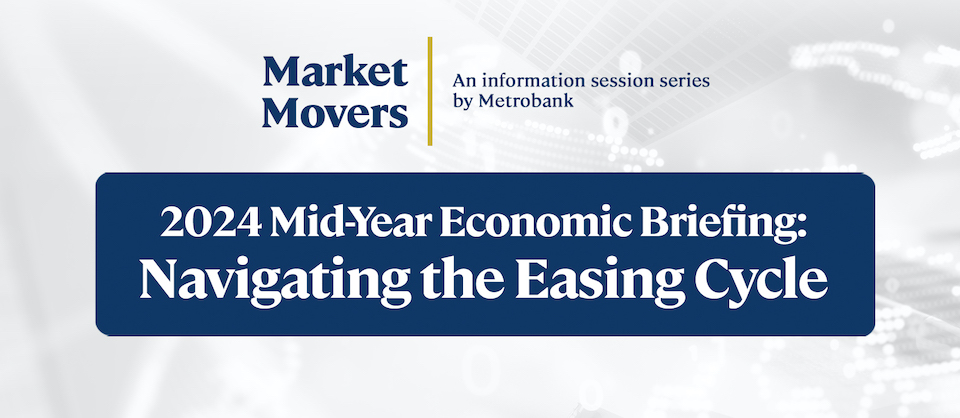
2024 Mid-Year Economic Briefing: Navigating the Easing Cycle
June 21, 2024
Investing with Love
Investing with Love: A Mother’s Guide to Putting Money to Work
May 15, 2024
retirement-ss-3
Investor Series: An Introduction to Estate Planning
September 1, 2023
View All Webinars
DOWNLOADS
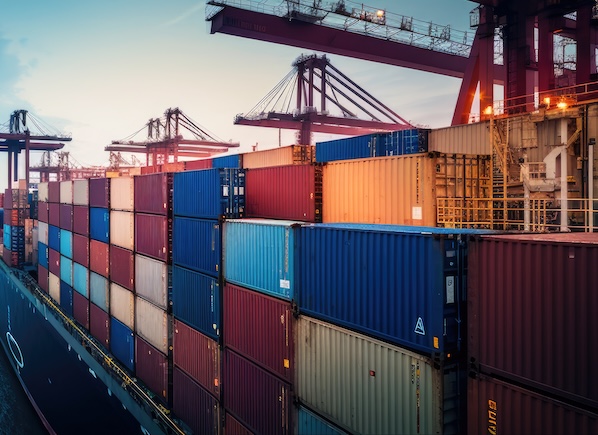
Container ship carrying container boxes import export dock with quay crane. Business commercial trade global cargo freight shipping logistic and transportation worldwide oversea concept. Generative AI
Economic Updates
Philippines Trade Update: Wider deficit on strong imports
DOWNLOAD
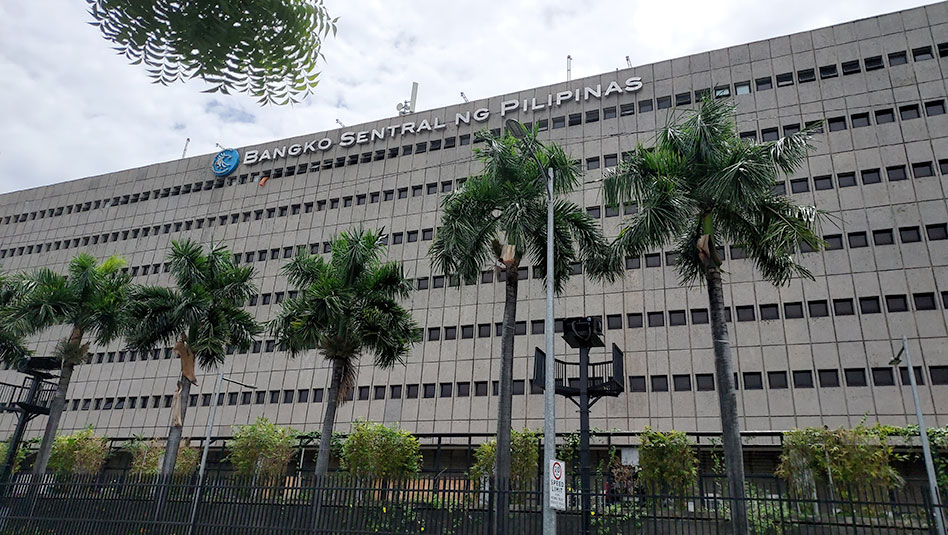
Frick collection with palm trees 
Economic Updates
Policy Rate Updates: Policy rate updates to reassure 
DOWNLOAD
Man using his smartphone
Reports
Fed to cut just once 
DOWNLOAD
View all Reports
Metrobank.com.ph How To Sign Up
Follow us on our platforms.

How may we help you?

TOP SEARCHES
  • Where to put my investments
  • Reports about the pandemic and economy
  • Metrobank
  • Webinars
  • Economy
TRENDING ARTICLES
  • Investing for Beginners: Following your PATH
  • On government debt thresholds: How much is too much?
  • Philippines Stock Market Outlook for 2022
  • Deficit spending remains unabated

Login

Access Exclusive Content
Login to Wealth Manager
Visit us at metrobank.com.ph How To Sign Up
Access Exclusive Content Login to Wealth Manager
Search
MODEL PORTFOLIO THE GIST
NEWS AND FEATURES
Global Philippines Fine Living
INSIGHTS
INVESTMENT STRATEGY
Economy Stocks Bonds Currencies
THE BASICS
Investment Tips Explainers Retirement
WEBINARS
2024 Mid-Year Economi Briefing, economic growth in the Philippines
2024 Mid-Year Economic Briefing: Navigating the Easing Cycle
June 21, 2024
Investing with Love
Investing with Love: A Mother’s Guide to Putting Money to Work
May 15, 2024
retirement-ss-3
Investor Series: An Introduction to Estate Planning
September 1, 2023
View All Webinars
DOWNLOADS
Container ship carrying container boxes import export dock with quay crane. Business commercial trade global cargo freight shipping logistic and transportation worldwide oversea concept. Generative AI
Economic Updates
Philippines Trade Update: Wider deficit on strong imports
March 27, 2026 DOWNLOAD
Frick collection with palm trees 
Economic Updates
Policy Rate Updates: Policy rate updates to reassure 
March 26, 2026 DOWNLOAD
Man using his smartphone
Reports
Fed to cut just once 
March 19, 2026 DOWNLOAD
View all Reports

Archives: Business World Article

IMF sees faster PHL growth until 2026

IMF sees faster PHL growth until 2026

The Philippine economy will continue to accelerate from this year to 2026 as domestic demand remains robust, the International Monetary Fund (IMF) said, but warned risks are tilted to the downside due to possible external shocks.

At the same time, Finance Secretary Ralph G. Recto said that the Philippines likely failed to hit its 6-6.5% growth goal for 2024, amid typhoons.

“If it hits 6% in the fourth quarter, I’ll be happy with that. I don’t think it will hit 6% for 2024, but I think it will surpass 6% in 2025,” Mr. Recto told reporters on Jan. 16.

For the first nine months of 2024, Philippine growth averaged 5.8%, the same as the IMF’s projection for the full year. Preliminary fourth-quarter and full-year gross domestic product (GDP) data will be released on Jan. 30.

In its latest World Economic Outlook  update, the IMF kept its GDP forecasts for the Philippines at 6.1% this year and 6.3% for 2026, the same as its projections in October.

These would fall within the government’s 6-8% GDP target for 2025 and 2026.

“Growth for 2025-2026 is projected to be primarily driven by domestic demand, namely consumption and investment,” an IMF spokesperson said in an e-mail.

“Consumption growth will be supported by lower food prices and gradual monetary policy easing,” it added.

Latest data from the Philippine Statistics Authority showed household consumption, which accounts for over three-fourths of the economy, jumped by 5.1% in the third quarter from 4.7% a quarter ago.

“Investment growth is expected to pick up on the back of a sustained public investment push, gradually declining borrowing costs and acceleration in the implementation of public-private partnership projects and foreign direct investments (FDI), following recent legislative reforms,” the IMF said.

Gross capital formation, the investment component of the economy, expanded by 13.1% in the third quarter, a turnaround from the 0.3% dip a year ago.

However, the IMF said that the balance of risks to the growth outlook is tilted to the downside, citing external risks.

“Some of the main downside risks include recurrent commodity price volatility, and new supply shocks, which may necessitate tighter monetary policy to anchor inflation expectations,” it said.

The IMF also cited shocks such as geopolitical tensions which could disrupt trade and other financial flows.

“Higher for longer policy rates in advanced economies (could cause) capital outflows, and tighter financial conditions,” it added.

The multilateral institution also cited climate shocks and extreme weather events which would lead to economic losses.

“There are also upside risks to the outlook, including from higher-than-expected growth in private investment through public-private partnerships, higher inward FDI following a faster-than-expected global recovery, or stronger reform momentum,” it added.

Inflation

Meanwhile, the IMF said it expects inflation to remain within the central bank’s 2-4% target range in the near to medium term.

It projects headline inflation to average 2.8% this year and 3% in 2026.

“However, risks are tilted to the upside, as rising geopolitical tensions, extreme climate events, and recurrent commodity price volatility continue to pose upside risks to inflation,” it said.

Headline inflation averaged 3.2% in 2024, well within the central bank target.

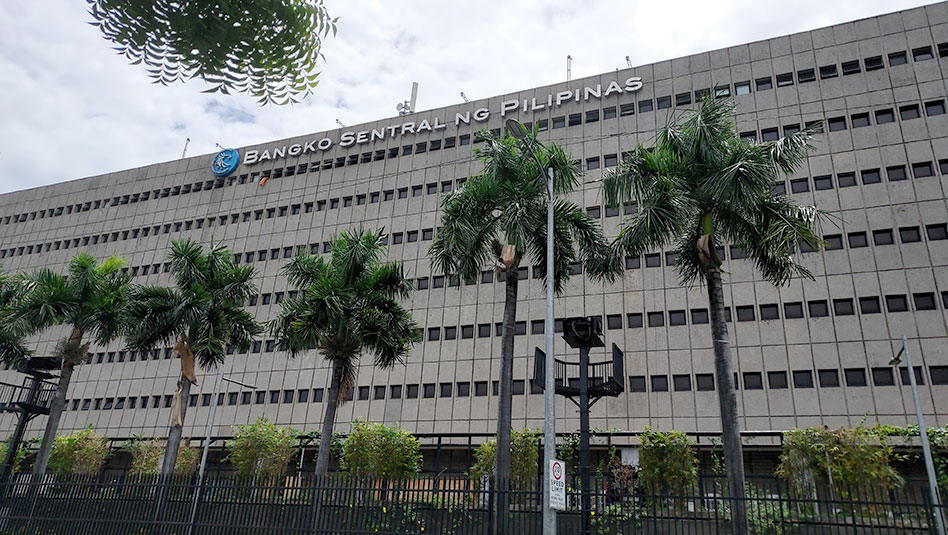
This year, the Bangko Sentral ng Pilipinas (BSP) expects inflation to average 3.3%.

The IMF said the central bank can gradually lower borrowing costs and “move toward a neutral stance.”

“With inflation and inflation expectations returning to the target and the opening of a negative output gap, continued reduction of the policy rate will be appropriate,” it said.

The BSP slashed interest rates by 75 basis points (bps) last year, delivering three straight rate cuts since it began its easing cycle in August.

The central bank has signaled further easing this year as the current policy rate at 5.75% is still in “restrictive territory,” BSP Governor Eli M. Remolona, Jr. earlier said.

“Along the declining rate path, the BSP must ensure that its stance continues to anchor inflation and inflation expectations firmly within the target band.”

“Amidst prevailing uncertainty, a data-dependent approach, and clear and effective communication around policy settings will be important to manage expectations and provide clarity on the BSP’s reaction function,” it added. – Luisa Maria Jacinta C. Jocson, Reporter
Government spending to slow in 1st half

Government spending to slow in 1st half

Government spending is likely to slow in the first half of 2025 due to the election ban on public works and congressional insertions in the national budget, the Department of Budget and Management (DBM) said.

Budget Assistant Secretary Romeo Matthew T. Balanquit said government spending in the first two quarters “might be lower” compared with the same period in 2024 due to the public works ban ahead of the May elections.

The Commission on Elections (Comelec) will implement a ban on public works on March 28 or 45 days before the May 12 elections. Social welfare dole-outs are also prohibited during the period.

The Development Budget Coordination Committee earlier said there “may be a slowdown in project execution during the first half of 2025 on account of the upcoming midterm national and local elections.”

However, the DBM said that infrastructure spending ahead of the election will not be “disrupted” by the election ban, as “the phasing of the projects is already planned, especially in the transport sector.”

“The only infrastructure projects affected are those worth PHP 707 billion, covering over 12,900 projects, the bulk of which are under the Department of Public Works and Highways (DPWH),” DBM Undersecretary Goddes Hope O. Libiran said.

At the same time, Mr. Balanquit said budget releases may be slower as the congressional adjustments under the 2025 General Appropriations Act will be subject to a process called For Issuance of Special Allotment Release Orders (FISARO) before being released.

The SARO will only be released once agencies meet the necessary requirements and secure approvals from the Executive Secretary and the Office of the President.

“Now, the release might not be that significant because of the PHP 757-billion [adjustments], which is around 11% or 12% of the total budget. So, it’s really a big amount,” Mr. Balanquit told reporters on Jan. 16.

Last year, most of the national budget was already released around the first month without the required conditions.

Meanwhile, former Finance Secretary Margarito B. Teves said that spending on public works usually falls in April and May during election years due to the 45-day ban.

“However, we see the impact as minimal given that the National Government always seeks the exemption of infrastructure projects from the ban, particularly those of national significance,” he told BusinessWorld in an e-mail over the weekend.

Mr. Teves added that the ban will affect projects at the local and district levels more than those at the national level.

“Historically, government spending and therefore gross domestic product spending has dipped slightly on a quarter-to-quarter basis, but an uptick is usually shown in the quarter after the elections,” Ateneo School of Government Dean Philip Arnold “Randy” P. Tuaño told BusinessWorld.

He added that the government had already disbursed a “significant amount” on infrastructure projects, months before the election period started.

The Comelec has exempted 48 infrastructure projects of the Public-Private Partnership  Center such as the Metro Manila Subway Project.

“We will expect a continuation of infrastructure growth in the run-up to the May period,” Mr. Tuaño said.

For the rest of 2025, Mr. Teves said the level of public spending on infrastructure will largely depend on the improvement in the absorptive capacity of the DPWH to carry out projects given that it received more than PHP 1 trillion in the national budget.

“Moreover, the frequency and severity of adverse weather conditions such as typhoons could cause disruptions and delays in the implementation of infrastructure projects especially those in the hard-hit areas,” he said. — Aubrey Rose A. Inosante

Second Trump term adds to PHL economic uncertainty

Second Trump term adds to PHL economic uncertainty

The second term of US President-elect Donald J. Trump could add more uncertainty to the Philippine economy, which could possibly impact trade prospects, financial flows, and monetary policy, analysts said.

However, the Philippines, which is heavily reliant on the US for business and economic activity, could also stand to gain from some of Mr. Trump’s policies, they added.

Mr. Trump is set to be sworn in as US president on Jan. 20. For his second term, he has vowed to impose tariffs of up to 60% on imports of Chinese goods and 25% for Canadian and Mexican imports, as well as a 10% universal tariff.

Finance Secretary Ralph. G. Recto told BusinessWorld that it is “too early to tell” what would be the economic implications of Mr. Trump’s policies on the Philippines.

“For now, there’s a lot of uncertainty. Having said that, there are also many opportunities,” he said in a Viber message.

Pantheon Macroeconomics Chief Emerging Asia Economist Miguel Chanco said that the economic impact of Trump 1.0 versus Trump 2.0 will be more global.

“Remember that during his first term he was focused mainly on punitive trade measures against China. This time around, he seems to be entering office with a more global anti-trade, protectionist agenda,” he said in an e-mail.

The International Monetary Fund (IMF) in its latest World Economic Outlook update warned about the “intensification of protectionist policies,” citing a “new wave of tariffs.”

These could “exacerbate trade tensions, lower investment, reduce market efficiency, distort trade flows, and disrupt supply chains, while also increasing inflationary pressures.”

“The impact of such policies would unfold differently across countries, influenced by trade and financial linkages, and would depend on the magnitude and nature of policy changes,” an IMF spokesperson said in an e-mail.

Opportunity

Mr. Recto, however, said he does not expect the US to impose very high tariffs on imports from all trading partners.

The United States is typically the top destination for Philippine-made goods. In November, exports to the US were valued at $969.09 million, accounting for 17% of the total export sales, data from the local statistics authority showed.

The tariffs could also present as an opportunity for the Philippines, Mr. Recto said. “In addition, western companies operating in China and Taiwan may move their operations to the Philippines.”

The recently passed Corporate Recovery and Tax Incentives for Enterprises to Maximize Opportunities for Reinvigorating the Economy Act could encourage investors to move to the Philippines, he added.

“It brings some certain level of comfort to me, however, that the economic team of (Mr. Trump) recently harped on a gradual application of additional tariffs that would give more time for different economies to adjust and recalibrate their own policies,”  Ruben Carlo O. Asuncion, chief economist at Union Bank of the Philippines, Inc. (UnionBank), said.

The Philippines is also not as reliant on exports as its neighbors, Mr. Chanco said.

“As such, should the future Trump administration push through with his campaign pledge to levy wholesale tariffs on all US imports, Philippine economic growth is unlikely to be as affected as its more trade-dependent neighbors,” he said.

“That being said, there’s no escaping the fact that the US remains one of the Philippines’ main export markets, so some pinch would be inevitable,” he added. 

First Metro Investment Corp. Head of Research Cristina S. Ulang said the Philippines could benefit from “friendshoring” given its decades-old alliance with the US.

Friendshoring is defined as a “growing trade practice where supply chain networks are focused on countries regarded as political and economic allies,” according to the World Economic Forum.

“Hopefully, if Mr. Trump’s attitude towards China would be more on bringing down the tensions, that should improve our trade,” Employers Confederation of the Philippines and President Sergio Ortiz-Luis, Jr. said via phone call. 

“We have lost a lot with China in terms of trade, in terms of tourism, and investment,” he added.

At the same time, the Philippines’ Information Technology and Business Process Management sector may face challenges but also opportunities under Mr. Trump’s second term.

“While a second Trump presidency may introduce new hurdles, such as potential shifts in outsourcing trends or tighter trade regulations, the demand for high-quality, technology-enabled services remains unwavering,” Jack Madrid, chief executive officer and president of the IT and Business Process Association of the Philippines, said.

“Protectionist policies, regardless of their origin, challenge us to innovate, upskill, and fortify our value proposition,” he added.

Tighter controls

Meanwhile, analysts warned of the impact of Mr. Trump’s tighter border controls and harsher immigration measures on remittances.

“At this stage, I’m more concerned about the remittance channel. We can’t hide from the fact that there is a not-insignificant number of undocumented Filipinos in the US,” Mr. Chanco said.

“If their status in the country is further compromised by the next administration’s immigration policies, then remittances from one of the country’s largest sources may be impinge.”

Mr. Asuncion also noted that remittance inflows are a “significant economic leg” of the Philippine economy. UnionBank expects overseas Filipino worker remittances to rise by 3% to USD 35.5 billion this year.   

“Downside risk to the remittance forecast would emanate from President-elect Trump’s tighter immigration policy, likely to reduce the number of unauthorized Filipino migrant workers in the US,” Mr. Asuncion said.

“Nonetheless, we maintain our view that the bulk of the remittances from the US are sent by nearly two million legal Filipino migrant workers all over the US.”

Economists also flagged the impact of these policies on the currency, inflation and monetary policy.

Markets are pricing in the inflationary pressures that could stem from Mr. Trump’s plans for tax cuts and tighter tariffs, which could slow the US central bank’s easing cycle.

GlobalSource Partners country analyst Diwa C. Guinigundo said the US Federal Reserve may keep policy rates higher for longer.

“Since Mr. Trump’s tax and tariff policies are potentially inflationary, the US Fed may not be as sanguine as to be more aggressive in its easing policy,” he said.

The Fed began its rate-cutting cycle in September, slashing rates by a cumulative 100 basis points (bps) last year.

“If this is the case, and with potential weakening of the peso this year, the BSP might be more careful in abandoning its fundamentally tight monetary policy,” Mr. Guinigundo said.

The peso fell to the record-low 59-per-dollar level thrice last year. Several economists, multilateral institutions and think tanks have forecasted that the local unit could breach the all-time low this year amid the stronger dollar.

“A stronger-than-expected US economy supports the strong US dollar narrative,” Mr. Asuncion added. 

Despite this, Mr. Chanco said this is unlikely to significantly impact the BSP’s own rate-cutting moves.

“I doubt, at this stage, that this will materially impact the BSP’s easing cycle, though, as the Monetary Board has plenty of room to ease — with inflation now subdued — given how aggressive its tightening cycle was in 2022-23,” Mr. Chanco said. 

“It’s worth remembering that unlike the US, the Philippine economy is clearly in the midst of a cyclical soft patch,” he added.

Mr. Asuncion said that within-target inflation should also allow the central bank to “ease its policy rate further and support its implicit goal of supporting growth past 6% and more employment.”

The BSP, which cut ahead of the Fed in August, delivered a total of 75 bps worth of cuts last year. This brought the policy rate to 5.75%.

Mr. Asuncion said they expect BSP to cut rates by another 75 bps this year to bring the benchmark to 5%.

“Front-loading the bulk of the three rate cuts this year of 25 bps each in the first half of 2025 would be appropriate amid offshore challenges likely to persist,” he added. – Luisa Maria Jacinta C. Jocson and Aubrey Rose A. Inosante, Reporters

External debt service burden rises at end-Oct.

External debt service burden rises at end-Oct.

The country’s external debt service burden jumped by almost 20% as of end-October, preliminary data from the Bangko Sentral ng Pilipinas (BSP) showed.

Debt servicing on external borrowings climbed by 19.8% to USD 14.475 billion in the January-October period from USD 12.078 billion in the same period in 2023. BSP data showed principal payments surged by 23.6% to USD 7.846 billion from USD 6.349 billion in the same period in 2023.

Amortization accounted for over half (54.2%) of debt servicing during the period.

Meanwhile, interest payments rose by 15.7% to USD 6.629 billion in the first 10 months from USD 5.73 billion in the previous year.

At end-September, the external debt service burden as a share of gross domestic product (GDP) stood at 3.9%, up from 3.5% in the previous year.

Separate data from the BSP showed the Philippines’ outstanding external debt hit a record USD 139.64 billion as of end-September, higher by 17.5% year on year.

Broken down, this was composed of USD 86.88 billion in public sector debt and USD 52.76 billion from private sector obligations.

This brought the external debt-to-GDP ratio to 30.6% at the end of the third quarter.

The BSP’s external debt data cover borrowings of Philippine residents from nonresident creditors, regardless of sector, maturity, creditor type, debt instruments or currency denomination. — L.M.J.C. Jocson

DA to declare food security emergency

DA to declare food security emergency

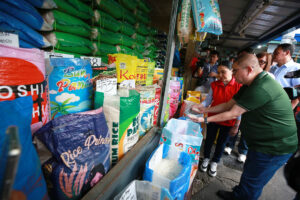
The Department of Agriculture (DA) on Thursday said it will likely declare a food security emergency for rice as prices of the staple grain remain stubbornly high.

Agriculture Secretary Francisco P. Tiu Laurel, Jr. said he expects the release of buffer stocks of local rice from the National Food Authority (NFA) by the first week of February, as it awaits the transmittal of a National Price Coordinating Council (NPCC) recommendation calling for the declaration of a food security emergency.

“I don’t have the official recommendation from the NPCC yet, the details are still with the working group. But once it comes to my table, the chances are we will declare, so that we can release the stocks of the NFA,” he told reporters during a market visit in Pasig City.

“Once I receive it, I will also consult the President for his comments,” he added.

The NPCC has approved a resolution urging the DA to declare a food security emergency for rice, which would pave the way for the NFA to release buffer stock to stabilize prices.

Under Republic Act (RA) No. 12708 or the Agricultural Tariffication Act, the Agriculture secretary can declare a food security emergency in case of rice supply shortages or extraordinary price spikes.

Prices of rice have remained stubbornly high despite lower tariffs for imports.

According to the DA’s price monitoring of Metro Manila markets as of Jan. 15, a kilogram of imported special rice was priced between PHP 53 and PHP 65 compared with the PHP 58 and PHP 65 per kilo a year ago.

The price of imported premium rice stood at PHP 50-P60 per kilo as of Jan. 15 from PHP 54-P62 per kilo last year.

On the other hand, imported well-milled rice is currently between PHP 44 and PHP 52, while imported regular milled rice is at PHP 40 to PHP 48 per kilo.

Trade Secretary Maria Cristina Aldeguer-Roque, who chairs the NPCC, said the resolution was made in response to the extraordinary increase in rice prices observed since 2023.

“All the markets must follow the directives of the DA to bring down imported rice prices for the consumers and, at the same time, also protect the wholesaler, the trader, and also the retailer,” she told reporters.

Mr. Tiu Laurel said the DA needs to release the buffer stock from NFA warehouses, which have reached 300,000 metric tons, ahead of the harvest season.

“Harvest season is coming. So, if our warehouses are full, we won’t be able to buy from farmers at a good price. We need to sell it immediately,” Mr. Tiu Laurel said.

Once the NFA’s buffer stocks are released, Mr. Tiu Laurel said the rice will be sold to local government units (LGU), Kadiwa, the Armed Forces of the Philippines, the Philippine National Police, and other government agencies.

The DA said last week that it is looking to sell some of the NFA’s old rice stock to LGUs to free up warehouse space ahead of the rice harvest season.

The NFA would have a buying price for palay, or unmilled rice, ranging from PHP 21 to PHP 23 per kilo for clean and dry, according to the Agriculture department chief.

The NFA would set a selling price of PHP 36 per kilo to LGUs by February and would be further lowered to PHP 33 per kilo by March.

Maximum price

Meanwhile, Mr. Tiu Laurel said that the maximum suggested retail price (SRP) on imported rice, which will be implemented in Metro Manila starting Jan. 20, would also address elevated rice prices.

The DA is set to impose a maximum SRP of PHP 58 per kilogram on imported rice with a 5% broken grain content, a move it says will further lower the retail price of imported rice.

“Every two to three weeks the (maximum SRP) may be adjusted until March,” Mr. Tiu Laurel told reporters.

“After two to three weeks we can adjust it to PHP 55 per kilo, after another two weeks maybe at PHP 52 per kilo. If world price goes down further, it could be just PHP 50 per kilo soon,” he added.

Mr. Tiu Laurel said that importers and retailers had earlier agreed to a profit margin of PHP 10 per kilo.

“I actually also consulted the private sector on this, and we had a meeting with retailers, importers, DTI (Department of Trade and Industry), PCC (Philippine Competition Commission), BIR (Bureau of Internal Revenue), and everybody,” he said. “This decision to peg it at PHP 58 was a decision not made arbitrarily. It’s made through consultation.”

Asked to comment, Federation of Free Farmers National Manager Raul Q. Montemayor said that there is no need to declare a food security emergency on rice due to ample domestic supply.

“I don’t think there is a national food security emergency on rice. There is no shortage in supply, there is no calamity, harvests will start again in March, and prices, while still high, are actually slowly going down,” Mr. Montemayor said in a Viber message.

He added that the government had failed to go after profiteering importers, wholesalers, and retailers.

“Instead of running after them, the government has instead opted to manipulate the law (RA 12708), so it gives them the legal basis for releasing NFA stocks to LGUs in an attempt to lower prices,” he said.

In a Viber message, former Agriculture Undersecretary Fermin D. Adriano said that the limited stock of the NFA may not be enough to influence rice prices.

“Very limited stock compared to the hands of the rice cartel, which controls around 70% of total supply,” Mr. Adriano added. — Adrian H. Halili, Reporter with inputs from Kyle Aristophere T. Atienza

Philippine financial system resources up 8.8% at end-Nov.

Philippine financial system resources up 8.8% at end-Nov.

The total resources of the Philippine financial system rose by 8.8% year on year as of end-November, preliminary data from the Bangko Sentral ng Pilipinas (BSP) showed.

BSP data showed the resources of banks and nonbank financial institutions (NBFIs) jumped to PHP 33.08 trillion as of end-November from PHP 30.39 trillion in the same period in 2023.

Month on month, total resources inched up by 0.9% from PHP 32.8 trillion at end-October.

Financial system resources include funds and assets such as deposits, capital, as well as bonds or debt securities.

Data from the BSP showed banks’ resources stood at PHP 27.55 trillion at end-November, higher by 9.6% from PHP 25.15 trillion in the previous year.

Resources of universal and commercial banks increased by 9.4% to PHP 25.79 trillion at end-November from PHP 23.56 trillion in the year prior. Big banks accounted for the bulk or 78% of total resources during the period.

Thrift banks’ resources amounted to PHP 1.15 trillion as of November, up by 7.1% from PHP 1.07 trillion in the previous year.

Total resources held by digital banks stood at PHP 119.5 billion as of end-November, jumping by 40% from PHP 85.4 billion in the previous year. The BSP began consolidating data from digital banks starting March 2023.

Rural and cooperative banks’ resources climbed by 17% to PHP 498.3 billion at end-November from PHP 425.8 billion from the prior year.

Meanwhile, latest data showed that nonbanks’ resources went up by 5.3% to PHP 5.52 trillion as of end-June from PHP 5.25 trillion in the year-ago period. There were no data as of end-November.

Nonbanks include investment houses, finance companies, security dealers, pawnshops and lending companies.

Institutions such as nonstock savings and loan associations, credit card companies, private insurance firms, the Social Security System and the Government Service Insurance System are also considered nonbank financial institutions.

John Paolo R. Rivera, a senior research fellow at the Philippine Institute for Development Studies said the growth in total resources reflects the “overall resilience and expansion of both banks and NBFIs.”

“The robust economic activity across key sectors fueled higher financial transactions and demand for credit,” he said in a Viber message.

“Banks and NBFIs also benefited from increased loan demand, particularly for housing, consumer, and corporate sectors,” he added.

Separate data from the BSP showed outstanding loans of universal and commercial banks rose by 11.1% year on year to P12.68 trillion in November.

This was the fastest loan growth in nearly two years or since the 13.7% logged in December 2022.

Oikonomia Advisory & Research, Inc. economist Reinielle Matt Erece said the rise in total resources was also due to the inflows of short-term foreign investments.

In the January-to-November period, BSP-registered foreign investments yielded a net inflow of USD 2.59 billion, a turnaround from the USD 43.66-million net outflow in the same period a year ago.

“Increased business activity supports deposit growth, lending, and investments, which are reflected in the financial system’s resources,” Mr. Rivera said.

The reduction in interest rates also encouraged borrowing and led to an expansion in assets, Mr. Rivera said.

“Further, the improvement of the financial resources is also a realization of the effects of lower key interest rates and expectations of further rate cuts, which also increases the demand for money, prompting banks to raise capital to accommodate this demand,” Mr. Erece added.

The BSP has lowered borrowing costs by a total of 75 basis points (bps) since it began its easing cycle in August, bringing the benchmark rate to 5.75%.

“Elevated liquidity in the financial system, driven by accommodative monetary policy (RRR reductions and rate cuts in 2024), allowed financial institutions to grow their asset base,” Mr. Rivera said.

The BSP slashed big lenders’ reserve requirement ratio (RRR) by 250 bps to 7% from 9.5%, effective in October.

Mr. Rivera said the rise in digital banking services also led to increased resources in the financial system.

“The acceleration of digital banking and financial services expanded access to previously underserved segments, bringing in new depositors and borrowers. This growth likely contributed to the rise in total financial resources.”

The Monetary Board lifted the moratorium on new digital banking licenses starting Jan. 1, 2025. –  Luisa Maria Jacinta C. Jocson, Reporter

PHL-EU free trade deal seen to bring economic ties to new level

PHL-EU free trade deal seen to bring economic ties to new level

Trade and investment between the Philippines and the European Union (EU) are still lower than the level of mutual ambitions and could be improved through a free trade agreement (FTA), the EU ambassador to the Philippines said.

“Trade and investment figures for the whole of 2024 have not yet been published, but we can already say that our bilateral exchanges are not at the level of our mutual ambitions. They are good, but they are not yet at the right level,” European Union Ambassador to the Philippines Massimo Santoro said at the 9th Joint Economic Briefing on Wednesday.

“While the EU remains, and it is good, the fourth-largest trading partner of the Philippines with a share of 11% of Philippine exports and 6% of imports, the Philippines is only the sixth economic partner of the EU amongst the ASEAN (Association of Southeast Asian Nations) countries,” he added.

Mr. Santoro said there is potential for bilateral trade and investments to grow further and that can be achieved through an FTA, citing that the target is to see a yearly increase.

“We can do more, considering the potential and the size of the Philippine market and the resources of the country. Thus, the objective of our FTA is to bring our bilateral economic ties to a new level,” he said.

“Through the FTA, we aim to facilitate not only merchandise trade but also trade in services and to create more incentives for investment. We believe that an FTA can serve as a catalyst for economic growth, benefiting businesses, workers, and consumers on both sides,” he added.

Last year, the EU and the Philippines formally resumed FTA negotiations seven years after talks were stalled due to the trade bloc’s concern over human rights violations under the previous administration.

The first round of negotiations took place in October in Brussels, Belgium, while the second round will be from Feb. 10 to Feb. 14 in Manila.

“These discussions started with a very positive momentum, and I am confident this very positive momentum will be kept in order for us, for both sides — the EU and the Philippines — to deliver well and deliver fast,” said Mr. Santoro.

He said the FTA is a priority since it will boost trade and economic bilateral ties between the EU and the Philippines.

For the second round of FTA talks, Mr. Santoro said both sides will continue working on the chapter that has been discussed in the previous round, as well as discuss other chapters. He declined to give other details.

“I am completely confident that the second round will be as productive as the first one, which means a lot,” he added.

President Ferdinand R. Marcos, Jr. is aiming to conclude the negotiations for the EU-Philippines FTA by 2027.  Philippine negotiators have set an internal target of concluding the negotiations by 2026.

DTI Undersecretary Allan B. Gepty earlier said that there is a need to conclude the FTA negotiations as early as 2026, as the Philippines is set to lose its preferential market access to the trade bloc once it hits upper middle-income status.

The Philippines participates in the EU’s Generalised Scheme of Preferences Plus (GSP+), a special incentive arrangement for low- and lower-middle-income countries. It grants the country zero duties on 6,274 locally made products.

Meanwhile, the Philippines is aiming to become an upper-middle-income economy this year and a predominantly middle-class society by 2040. — Justine Irish D. Tabile

Remittances jump 3.3% in November

Remittances jump 3.3% in November

Money sent home by overseas Filipino workers (OFW) rose by an annual 3.3% in November amid the peso depreciation against the US dollar, the Bangko Sentral ng Pilipinas (BSP) said.

Data from the central bank showed that cash remittances coursed through banks grew by 3.3% to USD 2.81 billion in November from USD 2.72 billion in the same month a year ago.

However, the amount of remittances in November was the lowest in six months or since the USD 2.58 billion posted in May.

Overseas Filipinos’ Cash Remittances

Month on month, cash remittances declined by 8.7% from USD 3.08 billion posted in October.

BSP data showed remittances from land-based workers jumped by 3.9% year on year to USD 2.22 billion in November, while money sent by sea-based workers inched up by 1% to USD 585.505 million.

Meanwhile, personal remittances, which include inflows in kind, increased by 3.5% to USD 3.12 billion in November from USD 3.02 billion a year earlier.

Remittances from workers with contracts of one year or more rose by 3.7% to USD 2.4 billion, while money sent home by workers with contracts of less than a year edged higher by 1.7% to USD 650 million.

11-month period

In the January-to-November period, cash remittances climbed by 3% to USD 31.11 billion from USD 30.21 billion a year earlier.

“Cash remittances are projected to increase by 3% for the full-year 2024,” the central bank said.

The end-November remittances accounted for 90.2% of the BSP’s full-year projection of USD 34.5 billion.

“The growth in cash remittances from the United States, Saudi Arabia, Singapore, and the United Arab Emirates (UAE) contributed mainly to the increase in remittances in January-November 2024,” the central bank said.

“In terms of country sources, the US accounted for the largest share of overall cash remittances January-November 2024, followed by Singapore and Saudi Arabia.”

The United States accounted for 40.9% of overall remittances in the 11-month period, followed by Singapore (7.1%), Saudi Arabia (6.3%), Japan (5%) and the United Kingdom (4.7%).

Other top sources of remittances were the UAE (4.4%), Canada (3.5%), Qatar (2.9%), Taiwan (2.8%) and South Korea (2.5%).

Personal remittances likewise expanded by 3% to USD 34.61 billion as of end-November from USD 33.59 billion a year ago.

Analysts said the recent peso depreciation may have affected cash remittances during the month.

“For the month of November, the US dollar-peso exchange rate mostly ranged at P58-59 levels versus the P56-58 levels in the previous month that somewhat increased the peso equivalent of OFW remittances,” Rizal Commercial Banking Corp. Chief Economist Michael L. Ricafort said.

Mr. Ricafort said this would “reduce the sending of more OFW remittances denominated in US dollars/other foreign currencies to pay for the same amount in pesos.”

The peso closed at P58.62 against the dollar at the end of November, weakening by 52 centavos from its P58.10 finish as of end-October.

The local unit also fell to the record low P59-a-dollar level twice during the month.

“The peso experienced a depreciation, indicating more pesos for the same foreign currency,” Leonardo A. Lanzona, an economics professor at the Ateneo de Manila University, said.

“Remittances are mainly by recipients used to meet their basic needs. The sender may have figured out that they don’t need to send more of their money to meet the needs of their family here,” he added.

Mr. Ricafort also added that the higher cost of living in OFWs’ host countries could have reduced remittances sent home.

For December, Mr. Ricafort said that remittances likely rose amid the holidays.

“OFW remittances could go up in December in view of the expected seasonal surge during the Christmas and New Year holiday season, the biggest spending by households in a typical year,” he said.

The central bank expects cash remittances to grow by 3% in 2024 and 2025. – Luisa Maria Jacinta C. Jocson, Reporter
NPL ratio eases in November

NPL ratio eases in November

The Philippine banking system’s gross nonperforming loan (NPL) ratio eased in November, preliminary data from the Bangko Sentral ng Pilipinas (BSP) showed.

The industry’s gross NPL ratio slipped to 3.54% in November from the over two-year high of 3.6% in October.

However, it rose from 3.41% in the same month a year ago.

Data from the BSP showed the amount of soured loans dipped by 0.7% to PHP 520.53 billion as of end-November from PHP 524.31 billion a month earlier. Year on year, bad loans rose by 14.6% from PHP 454.28 billion.

Loans are considered nonperforming once they remain unpaid for at least 90 days after the due date. These are deemed as risk assets since borrowers are unlikely to pay.

The loan portfolio of Philippine banks increased by 1.2% to PHP 14.72 trillion as of end-November from PHP 14.55 trillion at end-October. Year on year, it jumped by 10.4% from PHP 13.34 trillion in the same period in 2023.

Past due loans inched lower by 0.8% to PHP 635.62 billion as of November from PHP 640.88 billion a month earlier. Year on year, it climbed by 12.8% from PHP 563.38 billion.

This brought the past due ratio to 4.32% in November, lower than 4.4% in October but higher than 4.22% a year ago.

On the other hand, restructured loans stood at PHP 293.7 billion at end-November, up by 0.3% from PHP 292.75 billion in the previous month. However, it declined by 4% from PHP 305.81 billion in November 2023.

Restructured loans accounted for 2% of the industry’s total loan portfolio, lower than 2% in October and 2.29% in the same month in 2023.

Banks’ loan loss reserves edged lower by 0.5% to PHP 485.13 billion in November from PHP 487.52 billion in the previous month but rose by 5.2% from PHP 460.95 billion a year prior.

This brought the loan loss reserve ratio to 3.3% as of end-November from 3.35% at end-October and 3.46% in November 2023.

Lenders’ NPL coverage ratio, which gauges the allowance for potential losses due to bad loans, rose to 93.2% in November from 92.28% in October but was lower than 101.47% a year ago.

“The slight easing of the NPL ratio in November could be attributed to improved loan quality and better debt management by banks,” Reyes Tacandong & Co. Senior Adviser Jonathan L. Ravelas said in a Viber message.

Separate data from the BSP showed outstanding loans of universal and commercial banks rose by 11.1% year on year to PHP 12.68 trillion in November.

This was the fastest loan growth in nearly two years or since the 13.7% logged in December 2022.

“However, the year-on-year increase (in NPL ratio) suggests that economic challenges and higher interest rates might have impacted borrowers’ ability to repay loans,” Mr. Ravelas added.

Leonardo A. Lanzona, an economics professor at the Ateneo de Manila University, said the month-on-month easing of the NPL ratio is “fundamentally a market correction from the exceedingly high NPL rates (in October).”

“Furthermore, the BSP has signaled its easing policy on the interest rate may be tempered as inflationary pressures have gone up,” he said.

BSP Governor Eli M. Remolona, Jr. last week said there is still room to continue easing interest rates, but noted cutting rates by 100 basis points (bps) this year may be a bit “too much.”

The central bank slashed borrowing costs by a total of 75 bps last year, bringing the target reverse repurchase rate to 5.75%.

The Monetary Board is set to have its first rate-setting meeting this year on Feb. 20.

“Also, housing prices have declined, resulting in lower investment in real estate. Because of these, the banks and investors have been more prudent,” Mr. Lanzona added.

Latest BSP data showed the Residential Real Estate Price Index (RREPI) fell by 2.3% year on year in the July-to-September period.

This was also the first time the RREPI posted a decline since the 9.4% drop recorded in the second quarter of 2021. — Luisa Maria Jacinta C. Jocson

Corruption still Filipino executives’ top concern in 2025 — survey

Corruption still Filipino executives’ top concern in 2025 — survey

Corruption remained the top concern of business executives this year, according to a survey of members of the Management Association of the Philippines (MAP).

“We did a survey late last year, and we will certainly address the top seven concerns of MAP members,” said MAP President Alfredo S. Panlilio at the MAP Inaugural Meeting on Wednesday at Shangri-La The Fort.

Aside from corruption, the survey showed other top concerns of management executives include education, the economy, ease of doing business (EODB), climate change, cybersecurity, and dealing with local government units (LGUs).

The survey, conducted late last year, showed fewer MAP members or 45% said that corruption is a top concern for 2025. In the previous survey, 47% of the members said they see corruption as a top concern.

Rising concern over education was also seen in the survey results after 38% of members identified it as a top concern versus 25% in the previous survey.

Around 33% of MAP members are concerned about the economy this year, versus 40% in the previous survey.

According to Mr. Panlilio, MAP plans to address the top concerns through its four thrusts — member engagement; country competitiveness; environmental, social, and governance (ESG) and shared prosperity; and investing in the youth.

“Last year, there were five thrusts. This year, we will merge it into four. Last year’s cluster on innovation, technology, and digitalization has been merged into the cluster on country competitiveness,” he said.

“Not so much because there is less to do, but because our hope is that in focusing, we sharpen impact,” he added.

Mr. Panlilio said the MAP will also continue working with the Anti-Red Tape Authority to address issues on corruption, EODB, and LGUs.

The survey showed 21% of MAP members expressed concern about dealing with LGUs, versus 13% in the previous survey.

“You know, when I was in PLDT Inc. during the pandemic, we had some issues also, but ARTA came in a big way to help us. Actually, there was a directive by the President then to improve connectivity, and one of the hindrances at that time was the licensing and business permits,” Mr. Panlilio said. 

“There were like, 30-plus signatures that were needed to do a project. And because of ARTA, we were able to cut that process down,” he added.

He noted that any project that requires LGU involvement typically experiences delays.

“It is hard. We are talking about telco, power, and any project related to some involvement with LGU where there’s always a delay,” he said.

“So, I think that was a very big initiative that started during the pandemic but was extended by BBM (President Ferdinand R. Marcos, Jr.). So, those are ways that we can sort of help out on how we deal with the LGUs,” he added.

However, he said that improvements, particularly since ARTA ensures there is ease of doing business whenever projects require LGU approval.

“I commend ARTA for what they are doing,” he added. — Justine Irish D. Tabile

Posts navigation

Older posts
Newer posts

Recent Posts

  • Trade Update: Wider trade deficit in February
  • Metrobank US-Iran Risk Index: No swift end seen
  • Investment Ideas: March 27, 2026
  • BSP Update: First rate hike likely in June 
  • Ascendant opportunities in times of geopolitical conflict 

Recent Comments

No comments to show.

Archives

  • March 2026
  • February 2026
  • January 2026
  • December 2025
  • November 2025
  • October 2025
  • September 2025
  • August 2025
  • July 2025
  • June 2025
  • May 2025
  • April 2025
  • March 2025
  • February 2025
  • January 2025
  • December 2024
  • November 2024
  • October 2024
  • September 2024
  • August 2024
  • July 2024
  • June 2024
  • May 2024
  • April 2024
  • March 2024
  • February 2024
  • January 2024
  • December 2023
  • November 2023
  • October 2023
  • September 2023
  • August 2023
  • July 2023
  • June 2023
  • May 2023
  • April 2023
  • March 2023
  • February 2023
  • January 2023
  • December 2022
  • November 2022
  • October 2022
  • September 2022
  • August 2022
  • July 2022
  • June 2022
  • May 2022
  • March 2022
  • December 2021
  • October 2021

Categories

  • Bonds
  • BusinessWorld
  • Currencies
  • Economy
  • Equities
  • Estate Planning
  • Explainer
  • Featured Insight
  • Fine Living
  • How To
  • Investment Tips
  • Markets
  • Portfolio Picks
  • Rates & Bonds
  • Retirement
  • Reuters
  • Spotlight
  • Stocks
  • Uncategorized

You are leaving Metrobank Wealth Insights

Please be aware that the external site policies may differ from our website Terms And Conditions and Privacy Policy. The next site will be opened in a new browser window or tab.

Cancel Proceed
Get in Touch

For inquiries, please call our Metrobank Contact Center at (02) 88-700-700 (domestic toll-free 1-800-1888-5775) or send an e-mail to customercare@metrobank.com.ph

Metrobank is regulated by the Bangko Sentral ng Pilipinas
Website: https://www.bsp.gov.ph

Quick Links
The Gist Webinars Wealth Manager Explainers
Markets
Currencies Rates & Bonds Equities Economy
Wealth
Investment Tips Fine Living Retirement
Portfolio Picks
Bonds Stocks
Others
Contact Us Privacy Notice Terms of Use
© 2026 Metrobank. All rights reserved.

Access this content:

If you are an existing investor, log in first to your Metrobank Wealth Manager account. ​

If you wish to start your wealth journey with us, click the “How To Sign Up” button. ​

Login HOW TO SIGN UP