MODEL PORTFOLIO
THE GIST
NEWS AND FEATURES
Global Philippines Fine Living
INSIGHTS
INVESTMENT STRATEGY
Economy Stocks Bonds Currencies
THE BASICS
Investment Tips Explainers Retirement
WEBINARS
2024 Mid-Year Economi Briefing, economic growth in the Philippines
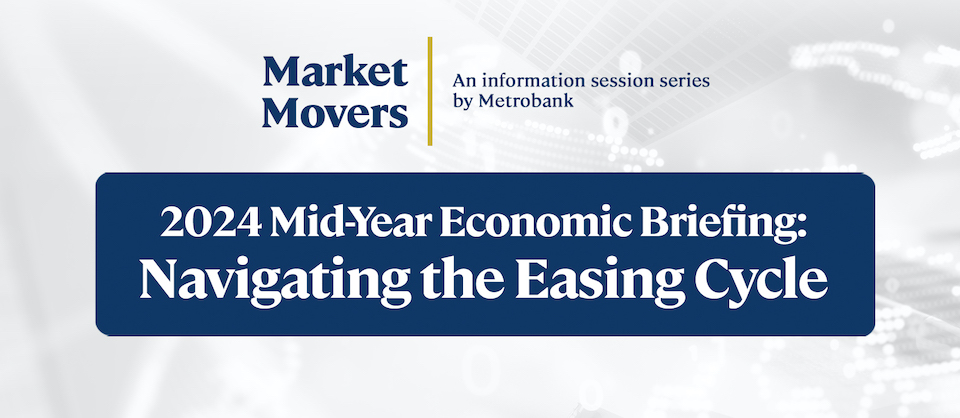
2024 Mid-Year Economic Briefing: Navigating the Easing Cycle
June 21, 2024
Investing with Love
Investing with Love: A Mother’s Guide to Putting Money to Work
May 15, 2024
retirement-ss-3
Investor Series: An Introduction to Estate Planning
September 1, 2023
View All Webinars
DOWNLOADS
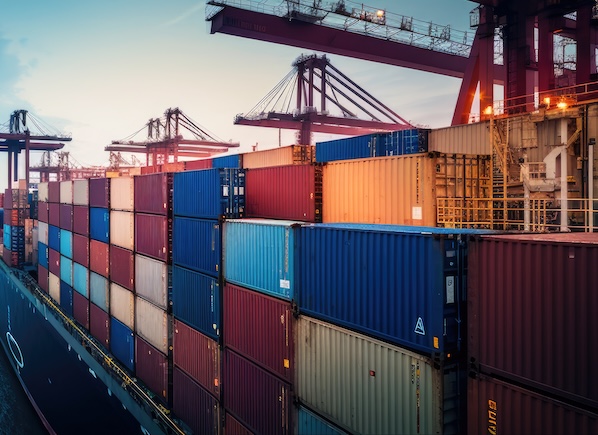
Container ship carrying container boxes import export dock with quay crane. Business commercial trade global cargo freight shipping logistic and transportation worldwide oversea concept. Generative AI
Economic Updates
Philippines Trade Update: Wider deficit on strong imports
DOWNLOAD
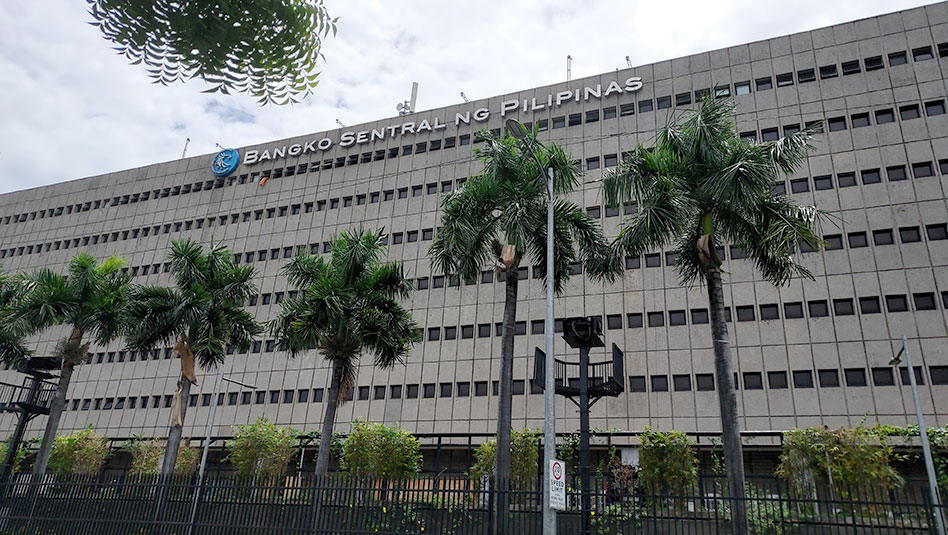
Frick collection with palm trees 
Economic Updates
Policy Rate Updates: Policy rate updates to reassure 
DOWNLOAD
Man using his smartphone
Reports
Fed to cut just once 
DOWNLOAD
View all Reports
Metrobank.com.ph How To Sign Up
Follow us on our platforms.

How may we help you?

TOP SEARCHES
  • Where to put my investments
  • Reports about the pandemic and economy
  • Metrobank
  • Webinars
  • Economy
TRENDING ARTICLES
  • Investing for Beginners: Following your PATH
  • On government debt thresholds: How much is too much?
  • Philippines Stock Market Outlook for 2022
  • Deficit spending remains unabated

Login

Access Exclusive Content
Login to Wealth Manager
Visit us at metrobank.com.ph How To Sign Up
Access Exclusive Content Login to Wealth Manager
Search
MODEL PORTFOLIO THE GIST
NEWS AND FEATURES
Global Philippines Fine Living
INSIGHTS
INVESTMENT STRATEGY
Economy Stocks Bonds Currencies
THE BASICS
Investment Tips Explainers Retirement
WEBINARS
2024 Mid-Year Economi Briefing, economic growth in the Philippines
2024 Mid-Year Economic Briefing: Navigating the Easing Cycle
June 21, 2024
Investing with Love
Investing with Love: A Mother’s Guide to Putting Money to Work
May 15, 2024
retirement-ss-3
Investor Series: An Introduction to Estate Planning
September 1, 2023
View All Webinars
DOWNLOADS
Container ship carrying container boxes import export dock with quay crane. Business commercial trade global cargo freight shipping logistic and transportation worldwide oversea concept. Generative AI
Economic Updates
Philippines Trade Update: Wider deficit on strong imports
March 27, 2026 DOWNLOAD
Frick collection with palm trees 
Economic Updates
Policy Rate Updates: Policy rate updates to reassure 
March 26, 2026 DOWNLOAD
Man using his smartphone
Reports
Fed to cut just once 
March 19, 2026 DOWNLOAD
View all Reports

Archives: Business World Article

Gov’t raises PHP 107 billion from FXTNs

Gov’t raises PHP 107 billion from FXTNs

The Government on Wednesday raised an initial PHP 107.072 billion from its second offering of new fixed-rate Treasury notes (FXTNs) that target institutional investors. 

The amount raised for the 10-year papers was more than three times the initial PHP 30-billion target as tenders reached PHP 328.467 billion.

The new Treasury bonds (T-bonds) fetched a coupon rate of 5.925%, producing an average rate of 5.893%, results of the rate-setting auction posted on the Treasury’s website showed.

Accepted bid yields ranged from 5.75% to 5.928%.

The coupon rate was 5 basis points (bps) above the 5.875% seen for the same bond series but 0.9 bp lower than the 5.934% seen for the 10-year notes based on PHP Bloomberg Valuation Service Reference Rates data as of Feb. 18 published on the Philippine Dealing System’s website before the auction. 

The public offer period as well as the exchange offer for the holders of bonds maturing over the next year will end on Feb. 20. The notes are scheduled to be issued on Feb. 23.

In April last year, the government raised PHP 300 billion via new 10-year benchmark notes, well above the PHP 30-billion program. It had initially raised PHP 135 billion from the rate-setting auction.

National Treasurer Sharon P. Almanza told reporters after the auction that they are aiming to raise at least P200 billion from the issuance but noted the total will also depend on the demand from the exchange program. 

The FXTN offering includes an exchange program for holders of securities maturing on April 8, Sept. 7, Sept. 20, Oct. 20, and Jan. 4, 2027.

Ms. Almanza said the coupon rate fetched by the notes was a “fair rate” despite investors asking for a higher yield ahead of the central bank’s policy meeting on Thursday.

“The demand for the 5.95% was higher, the concentration of bids was there…. And the main thing is the expectation that rates will still go down,” she said.

“If we awarded at 5.95%, we don’t need an offer period, since that was PHP 200 billion already.”

All 16 analysts in a BusinessWorld poll conducted last week expect the Monetary Board to deliver a sixth straight 25-bp cut at its first meeting for the year on Thursday. If realized, this will bring the policy rate to 4.25%.

The Bangko Sentral ng Pilipinas has lowered benchmark borrowing costs by a cumulative 200 bps since its easing cycle began in August 2024.

Ms. Almanza said that the strong liquidity in the country’s financial system also drove demand for the offering following the maturity of a Treasury bond on Feb. 16.

Rizal Commercial Banking Corp. Chief Economist Michael L. Ricafort also said in a Viber message that the PHP 232.8 billion in liquidity injected into the financial system due to the maturity of seven-year bonds on Feb. 13 added to the demand for fresh notes.

The offering of fresh fixed-rate Treasury notes is part of the Bureau of the Treasury’s (BTr) consolidation of issuances, Ms. Almanza said.

“We don’t want to introduce new ISIN (International Securities Identification Number) [bonds] so that the yield curve is not fragmented. There are already too much active ISIN series [bonds], so we’re retiring [them] and then we’re only introducing one or two [FXTN],” she said.

For this year, she said they will only issue FXTN once.

The awarded coupon rate was at the lower end of market expectations, a trader likewise said in a text message.

“Average yield and coupon are lower due to the continuous downward trend of yields this past week or so. Demand was incredibly high, leading to higher likelihood that the BTr will surpass the PHP 200-billion target.”

Dollar bonds

Meanwhile, Ms. Almanza said the government could tap the offshore debt market in the second half of the year to raise the remaining USD 2.5 billion from the government’s external borrowing plan.

“We have a remaining USD 2.5 billion. So, we’re monitoring US dollars because that’s the cheapest. But timing wise, we did just issue (global bonds in January).”

In January, the government raised PHP 2.75 billion from a triple-tranche dollar-denominated bond offering of 5.5-, 10-, and 25-year notes.

Asked if the government could issue offshore bonds in the second half, Ms. Almanza said: “Most probably. We’re also monitoring yen and euro.”

The BTr is also working with the Privatization and Management Office to identify assets the government could finance that will fall into the Sukuk category for an Islamic issuance this year.

The BTr first issued Sukuk bonds in December 2023, raising USD 1 billion from the sale of 5.5-year Sukuk bonds.

Sukuk or Islamic bonds are certificates that represent a proportional undivided ownership right in tangible assets, or a pool of tangible assets. These assets could be in a specific project or investment activity that is Shari’ah-compliant.

The markup takes the place of interest, which is illegal in Islamic law. Murabaha is not an interest-bearing loan but is an acceptable form of credit sale under Islamic law. A Sukuk al-Murabaha certificate cannot be traded on the secondary market.

Unlike usual bonds, Sukuk bond issuances must adhere to Islamic principles and must be structured to prohibit elements such interest, uncertainty and investments in businesses that deal with prohibited goods or services.

The government aims to raise PHP 308 billion from the domestic market this month or PHP 108 billion via Treasury bills and up to PHP 200 billion through T-bonds.

The government borrows from local and foreign sources to help fund its budget deficit, which is capped at PHP 1.647 trillion or 5.3% of gross domestic product this year. — Aaron Michael C. Sy, Reporter


DoE to launch auction for coal areas on Feb. 27

DoE to launch auction for coal areas on Feb. 27

The Department of Energy (DoE) is set to open a bid round on Feb. 27 for coal areas with verified reserves, including the area operated by the country’s largest coal miner.

In a statement on Wednesday, the DoE said it will hold a bidding process dedicated to offering pre-determined areas for coal development and production, as part of efforts to support broader energy security.

Under the bid round, three coal areas will be offered covering 18 coal blocks. These include 10 blocks in Semirara Island in Caluya, Antique; five blocks across the municipalities of Benito Soliven, Naguilian, Cauayan in Isabela; and three blocks spanning the municipalities of Amulung and Iguig in Cagayan province.

The auction will include the blocks covered under the coal operating contract that is currently held by Consunji-led Semirara Mining and Power Corp., the largest coal producer in the Philippines.

The government plans to open bidding for the contract, which ends next year, following the legal opinion that says it cannot be renewed.

From the day of the launch, interested parties will have 60 calendar days to submit their application documents. Opening of applications will be held on the same day as the deadline.

A pre-submission conference will be held 20 days after the launch to accommodate bidders’ inquiries and clarify requirements.

The bid round for pre-determined areas is a competitive process where identified resource areas are offered for development and production under a transparent evaluation and award mechanism.

The DoE said the auction aims to ensure “the orderly and responsible development and production of indigenous coal resources, while maintaining strict safeguards for public safety, environmental protection, and host-community welfare.”

The awarding of the contracts will be governed by the recently issued rules, which introduced a new type of contract that will accelerate the development of confirmed coal deposits.

Energy Secretary Sharon S. Garin said the government aims to “uphold the rule of law while safeguarding our indigenous energy resources.”

“Any future contract or continuation of operations must strictly comply with constitutional limits and demonstrably protect both the national interest and our host communities,” she said.

Asked for comment, Michael T. Toledo, chairman and president of Chamber of Mines of the Philippines, said that structured bid rounds show policy consistency, which helps build investor confidence, especially for long-term projects.

“Investors value stable rules, transparency, and responsible standards. Strengthening these benefits not only coal but the wider mining and natural resource sectors,” Mr. Toledo told BusinessWorld.

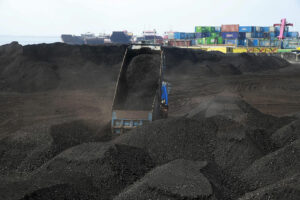
While coal dominates the Philippines’ power generation, it imports more than 90% of its requirements.

In 2024, the country imported 39.87 million metric tons of coal, up 12.2% from the previous year, data from the DoE as of April 2025 showed.

The country, however, is trying to move away from fossil fuels by aiming to increase the utilization of renewable energy to reduce exposure to volatile global prices and reduce carbon emissions.

“While the energy transition is underway, indigenous resources such as coal still play a role in ensuring reliable power supply and reducing dependence on imports,” Mr. Toledo said.

“Strategic development must therefore be guided by strong governance, environmental standards, and clear long-term policy direction,” he added. — Sheldeen Joy Talavera, Reporter

Peso soars to near five-month high as US-Iran talks soothe sentiment

Peso soars to near five-month high as US-Iran talks soothe sentiment

The peso jumped to a near five-month high against the dollar on Wednesday, supported by easing geopolitical concerns amid ongoing negotiations between the United States and Iran.

The local unit strengthened by 12.5 centavos to close at PHP 57.861 versus the greenback from its PHP 57.986 finish on Monday, data from the Bankers Association of the Philippines showed.

This was the peso’s strongest finish in close to five months or since it ended at PHP 57.461 on Sept. 24, 2025.

The local currency opened Wednesday’s trading session a tad stronger at PHP 57.94 against the dollar. Its weakest showing was at PHP 58.04, while its intraday high was at PHP 57.84 against the greenback.

Dollars traded rose to USD 1.046 billion from USD 896.5 million on Monday.

The peso was supported by easing global crude oil prices amid continued negotiations between the US and Iran, Rizal Commercial Banking Corp. Chief Economist Michael L. Ricafort said in a Viber message.

Oil prices steadied in Asian trade on Wednesday after falling about 2% in the previous session as investors assessed progress in US-Iran talks but remained cautious about the prospects of a final deal that could ease supply concerns, Reuters reported.

Brent futures rose 15 cents or 0.22% to USD 67.57 a barrel by 0737 GMT, while US West Texas Intermediate crude was up 12 cents or 0.19% at USD 62.45. Both are around two-week lows.

Iran and the US reached an understanding on Tuesday on main “guiding principles” in talks aimed at resolving their longstanding nuclear dispute, but that does not mean a deal is imminent, Iranian Foreign Minister Abbas Araqchi said.

But the dollar was broadly higher on Wednesday as geopolitical risks kept markets on edge and investors awaited minutes from the US Federal Reserve for signals on future rate cuts.

With many markets in Asia closed for Lunar New Year holidays, investors were looking ahead to the Fed’s readout of its last meeting and other key US economic data for trading catalysts.

The dollar index, which measures the greenback against a basket of currencies, rose 0.1% to 97.23 after a two-day advance.

The Fed’s Open Market Committee issues minutes from its January meeting later on Wednesday, while the Commerce department will release durable goods data for December and on Friday will issue its first estimate for fourth-quarter gross domestic product. Chicago Fed President Austan Goolsbee said on Tuesday that the central bank could approve “several more” rate cuts this year, depending on inflation.

“The peso appreciated further to recent highs amid expectations of a downbeat US durable goods report overnight,” a trader said in an e-mail.

For Thursday, the trader said the peso could weaken due to potentially hawkish statements in the Fed minutes and uncertainty ahead of the Bangko Sentral ng Pilipinas’ policy meeting. Both the trader and Mr. Ricafort see the peso moving between PHP 57.75 and PHP 58 per dollar. — Aaron Michael C. Sy with Reuters

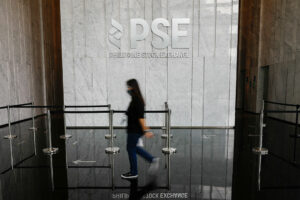
Bargain hunting lifts PSEi before rate decision

Bargain hunting lifts PSEi before rate decision

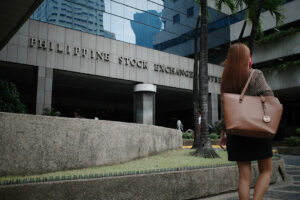
Stocks closed higher on Wednesday as investors bought cheap stocks after the market’s three-day slide and before the Bangko Sentral ng Pilipinas’ (BSP) policy meeting, where a rate cut is widely expected.

The benchmark Philippine Stock Exchange index (PSEi) rose by 0.41% or 26.22 points to close at 6,394.77, while the broader all shares index went up by 0.41% or 14.76 points to end at 3,542.05.

“The thinly-traded Philippine market snapped a three-day losing skid as investors positioned ahead of tomorrow’s Monetary Board decision, at which the BSP is expected to deliver another 25-bp (basis point) rate cut, driven by lackluster fourth-quarter 2025 economic growth and anchored by the cushioning effect of the depreciating dollar,” AP Securities, Inc. said in a market note.

“The PSEi ended higher as bargain hunters stepped in following three consecutive days of decline. Investors appeared to position themselves ahead of the BSP policy rate decision tomorrow,” Regina Capital Development Corp. Head of Sales Luis A. Limlingan likewise said in a Viber message. “The rebound was driven by selective buying in key index names amid cautious optimism over the central bank’s next move.”

All 16 analysts in a BusinessWorld poll expect the Monetary Board to cut benchmark borrowing costs by 25 bps for a sixth consecutive meeting at Thursday’s review to bring the policy rate to 4.25%.

The BSP has lowered benchmark borrowing costs by 200 bps since its easing cycle began in August 2024.

“The positive cues from Wall Street and the strengthening of the peso also helped in the climb,” Philstocks Financial, Inc. Research Manager Japhet Louis O. Tantiangco added in a Viber message.

The peso jumped by 12.5 centavos to close at PHP 57.861 versus the dollar on Wednesday, data from the Bankers Association of the Philippines showed. This was the currency’s best close since September last year.

Most sectoral indices closed in the green on Wednesday. Services rose by 1.64% or 43.60 points to 2,691.96; property increased by 0.91% or 19.87 points to 2,191.28; mining and oil went up by 0.35% or 63.98 points to 17,918.75; financials climbed by 0.17% or 3.64 points to 2,141.23; and holding firms advanced by 0.07% or 3.54 points to 5,055.15.

Meanwhile, industrials fell by 0.71% or 65.32 points to 9,023.44.

“DigiPlus Interactive Corp. was the day’s index leader, climbing 4.8% to PHP 14.42. Semirara Mining and Power Corp. remained as the main index laggard, plunging 13.6% to PHP 22.55,” Mr. Tantiangco said.

Advancers outnumbered decliners, 101 to 93, while 63 names closed unchanged.

Value turnover dropped to PHP 5.19 billion on Wednesday with 943.82 million shares traded from the PHP 5.28 billion with 1.04 billion issues that changed hands on Monday.

Net foreign buying was at PHP 467.67 million, a turnaround from the PHP 90.80 million in net selling in the previous session. — Alexandria Grace C. Magno

Financial system resources hit PHP 36.9T in 2025

Financial system resources hit PHP 36.9T in 2025

The total resources of the Philippine financial system climbed by 8.08% year on year to nearly PHP 37 trillion at the end of 2025, preliminary central bank data showed.   

Resources held by banks and nonbank financial institutions (NBFIs) rose to PHP36.932 trillion last year from PHP34.172 trillion in 2024, according to data released by the Bangko Sentral ng Pilipinas (BSP).

These resources include funds and assets such as deposits, capital, and bonds or debt securities.

Banks’ resources topped PHP30 trillion in 2025, as it jumped by 8.67% to PHP30.706 trillion from PHP28.256 trillion in 2024.

Of the total, universal and commercial banks had the bulk of the sector’s resources at PHP28.572 trillion, up 8.07% from PHP26.438 trillion in the previous year.

Thrift banks’ resources increased by 24.43% to PHP1.456 trillion at end-2025 from PHP 1.17 trillion at end-2024.

Digital banks’ resources also surged by an annual 41.98% to PHP 172.5 billion at end-2025 from PHP 121.5 billion previously.

Latest available data also showed that resources of rural and cooperative banks stood at PHP 505.9 billion as of end-September 2025. This was 4.02% lower than the PHP 527.1 billion seen for the entire 2024.

On the other hand, nonbanks had PHP 6.226 trillion worth of resources in the first nine months of 2025, exceeding 2024’s total of PHP 5.916 trillion by 5.25%.

There was no available end-2025 data for rural banks and nonbanks.

Nonbanks include investment houses, finance companies, security dealers, pawnshops, and lending companies.

Institutions such as nonstock savings and loan associations, credit card companies, private insurance firms, the Social Security System, and the Government Service Insurance System are also considered NBFIs.

Michael L. Ricafort, chief economist at Rizal Commercial Banking Corp., said the sustained growth in bank lending and deposits as well as the industry’s continued profitability boosted the full-year financial resources.

“This is nearly twice the economic growth of 4.4% in 2025 (and was) again largely due to the continued double-digit growth in bank loans, sustained growth in bank deposits, continued net income growth of banks, which are among the most profitable industries in the country consistently for many years,” he said in a Viber message.

Since May 2024, bank lending has grown at a double-digit pace monthly. The streak was only broken in December last year, when banks’ loan growth eased to a 22-month low of 9.2%.

Meanwhile, the latest available BSP data showed that bank deposits rose by 7.58% year on year to PHP 21.066 trillion as of September from PHP 19.581 trillion previously.

Recent policy easing also allowed banks to benefit from higher trading gains and investment earnings, Mr. Ricafort noted.

Since August 2024, the central bank has so far reduced key borrowing costs by a total of 200 basis points (bps) to its lowest in over three years at 4.5%.

On the other hand, the US Federal Reserve’s benchmark rate currently stands at 3.5%-3.75% range following a cumulative 175 bps in cuts since September 2024.

Jonathan L. Ravelas, a senior adviser at Reyes Tacandong & Co., also noted that the rise of banks and nonbanks’ financial resources last year “reflected resilience and confidence in the system.”

Mr. Ravelas said resources’ growth this year will be driven by banks’ lending to priority sectors such as infrastructure and consumption as well as the impact of capital market activity, trust funds and insurance on NBFIs.

“In 2026, growth will likely be more measured but still solid, with banks focusing on targeted lending to priority sectors like infrastructure and consumption, while nonbanks benefit from capital market activity, trust funds, and insurance,” he said via Viber. “The story this year shifts from rapid accumulation to disciplined, higher‑quality growth.”

Meanwhile, Mr. Ricafort said further monetary policy easing would “lead to higher trading gains and other investment gains, as well as greater demand for loans, that would again be the major growth drivers for total assets and resources of the banking system and the overall financial system.”

The Monetary Board is widely expected to trim the key policy rate by another 25 bps at its meeting on Thursday to bring it to 4.25%, based on a BusinessWorld poll of 16 analysts. — Katherine K. Chan, Reporter 

BSP fine-tunes monetary operations

BSP fine-tunes monetary operations

The Bangko Sentral ng Pilipinas (BSP) has limited its term deposit facility (TDF) and short-term securities to a single tenor each as it aims to enhance monetary policy transmission and push banks to better manage their liquidity.

“When we consulted with banks they (said they) can manage their liquidity positions even with fewer facilities,” BSP Deputy Governor Zeno Ronald R. Abenoja told BusinessWorld on the sidelines of an event last week.

“So, it’s really to improve the transmission of monetary policy and then also encourage banks to manage their liquidity on their own.”

Mr. Abenoja assured that the central bank’s decision to narrow the offerings of its facilities to single tenors was merely “fine-tuning” and not prompted by any market disruption.

“The banks knew about it well in advance. So, we discussed it beforehand,” he said. “So, (it was just) tweaking (and) small, fine-tuning. There aren’t any disruptions.”

The central bank uses facilities such as the overnight reverse repurchase (RRP) facility, TDF and BSP bills to mop up excess liquidity in the financial system and better guide market rates towards the target RRP rate.

The BSP first opened weekly auctions for the TDF in 2016 and the short-term securities in 2020.

For the TDF, it initially offered the seven-day and 28-day tenors and later added the 14-day papers in February 2018.

However, the BSP has not auctioned off the 28-day term deposits for over five years to give way to its weekly offerings of securities with the same tenor.

Meanwhile, the central bank began offering only a 28-day tenor for the BSP bills before adding the 56-day bill in 2023.

In November last year, the BSP stopped issuing the 14-day TDF, leaving only a single seven-day tenor. Since then, it has also limited its auction for the BSP bills to just the 28-day papers.

Mr. Abenoja told this paper that the central bank initially opted to decrease its monetary operations amid the anticipated high demand for liquidity during the holiday season.

In its monetary policy report (MPR) for December 2025, the BSP also said this was done to “rationalize the number of liquidity facilities and concentrate on tenors that would enhance monetary policy transmission.”

As of mid-November 2025, the BSP’s monetary operations have absorbed PHP 1.5 trillion in liquidity from the market. Of this, 42.4% was siphoned off through BSP securities, 34.6% from overnight reverse repurchase agreements, 17.6% via the overnight deposit facility, and 5.4% through the term deposit facility.

BSP Governor Eli M. Remolona, Jr. earlier said they are gradually shifting away from the issuance of short-term papers to manage liquidity as they want to boost activity in the money market.

Mr. Abenoja also noted that short-term rates are now near the central bank’s target policy rate, indicating that the existing instruments are effectively transmitting monetary policy.

“So, as long as you see money market rates — for example, those from BVAL (Bloomberg Valuation Service) or IBCL (Interbank Call Loan) — remain close to the policy rates with corresponding term premia, if it’s longer than the overnight (rate), then the scale of the operation, the volume and the instruments being used could be appropriate,” he said.

Still, the BSP deputy governor added that they could auction off the longer tenors again if they find gaps in monetary policy transmission.

According to the latest MPR, the interest rates in both facilities had fully reflected a total of 175 basis points (bps) in rate cuts.

The BSP has so far delivered a cumulative 200-bp rate cuts since it began its easing cycle in August 2024, which brought the benchmark policy rate to an over three-year low of 4.5%.

The Monetary Board will have its first policy meeting this year on Thursday. A BusinessWorld poll of 16 analysts showed that they are expected to trim the policy rate anew by 25 bps to 4.25%.  — Katherine K. Chan, Reporter

OFW remittances hit record USD 35.6B

OFW remittances hit record USD 35.6B

Money sent home by Filipinos abroad jumped to a record high of USD 35.634 billion in 2025, with the weak peso boosting gains from dollar conversion, the Bangko Sentral ng Pilipinas (BSP) reported on Monday.

BSP data showed total cash remittances rose by 3.3% year on year to USD 35.634 billion in 2025 from USD 34.493 billion in 2024.

The growth in cash remittances last year was well above the 3% growth projection of the BSP for 2025.

In December alone, cash remittances increased by 4.2% to USD 3.522 billion from USD 3.38 billion in the same month in 2024, as overseas Filipino workers (OFWs) sent more money home for the holiday season.

This was the highest monthly level of OFW remittances recorded in history.

Month on month, money sent home by OFWs surged by 21.03% from USD 2.91 billion in November.

The bulk or 39.7% of cash remittances in 2025 came from Filipinos in the United States, followed by Singapore (7.3%), Saudi Arabia (6.6%), Japan (5%), the United Kingdom (4.6%), the United Arab Emirates (4.6%), Canada (3.5%), Qatar (2.9%), Taiwan (2.8%) and Hong Kong (2.5%).

Full-year cash remittances from land-based workers stood at USD 28.495 billion, rising by an annual 3.4% from USD 27.552 billion.

In December, land-based Filipino workers remained the largest senders with USD 2.831 billion, up 4.5% from USD 2.712 billion in the same month in 2024.

In terms of sources, inflows from the US made up the bulk or 41.6% of the total land-based remittances. The rest were from Saudi Arabia (8.2%), Singapore (6.5%), the United Arab Emirates (5.7%) and Japan (4.5%).

On the other hand, remittances from sea-based OFWs rose by 2.9% to USD 7.139 billion in 2025 from USD 6.941 billion in 2024, driven by a 3.3% annual increase in December remittances to USD 691.037 million in December.

The US was still the top source of sea-based remittances with 32.2% of the total, followed by Singapore (10.3%), Japan (7.1%), the United Kingdom (5.4%) and Germany (5.4%).

Weak peso

Meanwhile, personal remittances, which include inflows in kind, climbed by 3.3% to a new high of USD 39.619 billion in 2025 from USD 38.341 billion in 2024.

In December, personal remittances went up by 4.2% to USD 3.892 billion from USD 3.733 billion in the same month in 2024.

BSP data showed that these were also the highest personal remittance levels on record.

“The record-high remittances in December and for full-year 2025 were driven by steady overseas employment, particularly in healthcare, maritime, and professional services, alongside seasonal year‑end transfers for household spending, tuition, and debt payments,” Union Bank of the Philippines Chief Economist Ruben Carlo O. Asuncion said in a Viber message.

He also attributed the remittance growth to the peso’s weak performance in the latter part of last year.

“In addition, the weaker peso for much of 2025 likely encouraged higher dollar conversions, boosting peso-equivalent inflows and supporting headline growth,” Mr. Asuncion added.

Late last year, the peso touched the PHP 58- to PHP 59-per-dollar level several times. It averaged PHP 58.8488 against the greenback in December, based on BSP data.

The peso ended 2025 weak after closing at PHP 58.79 against the greenback on Dec. 29, down by 94.5 centavos or 1.61% from its PHP 57.845-per-dollar finish on Dec. 27, 2024.

Meanwhile, Jonathan L. Ravelas, a senior adviser at Reyes Tacandong & Co., said the remittances surge in December signaled resilience of OFWs amid global uncertainties.

“This matters for growth: remittances likely added around half a percentage point to GDP (gross domestic product) by supporting consumption, housing, and services,” he said in a Viber message.

According to the central bank, cash remittances accounted for 7.3% of the Philippine GDP and 6.4% of the gross national income in 2025.

Mr. Asuncion said remittances are expected to remain resilient this year, driven by sustained labor demand abroad, steady deployment rates and OFWs’ modest income gains.

“However, upside may be tempered by slower global growth and normalization of post-pandemic labor demand, keeping remittances more of a stable income anchor rather than a strong cyclical growth driver this year,” he added.

Meanwhile, Mr. Ravelas noted that the US’ 1% remittance tax on cash payments, money orders and cashier’s checks for US-based senders could dampen inflows.

“The main risk ahead is the proposed US remittance tax — it won’t derail flows overnight, but higher costs could slow formal transfers and weigh on momentum over time,” he said.

A 1% tax means OFWs in the US are now being charged a dollar for every USD 100 they send to the Philippines.

“Bottom line: remittances remain a strong tailwind, but we can’t take them for granted,” Mr. Ravelas said.

For this year, the central bank expects cash remittances to grow 3% year on year to USD 36.6 billion. — Katherine K. Chan, Reporter


DA expecting a combined 300,000 MT of rice imports in March, April

DA expecting a combined 300,000 MT of rice imports in March, April

The Department of Agriculture (DA) said it expects rice import volumes to reach 150,000 metric tons (MT) per month in March and April, following consultations with rice traders and importers.

Agriculture Secretary Francisco P. Tiu Laurel, Jr. said the projected shipments are lower than the usual monthly average of about 400,000 MT, after importers agreed to scale back inbound shipments for the domestic harvest season.

“It’s not an order. It’s a voluntary measure among the industry and the DA. We are working together for the welfare of rice farmers,” Mr. Laurel said at the PHP 20 rice program launch in San Juan City on Friday.

If realized, the combined 300,000-MT import volume for March and April would translate into a 65.5% decrease from 869,321 MT recorded in the same period last year.

Data from the Bureau of Plant Industry showed that from Jan. 1 to Feb. 5, rice arrivals reached 409,377 MT against an expected volume of 613,700 MT for the first two months of the year.

Rice imports in January alone totaled 375,983 MT, up 34.31% from 279,940 MT in the same month in 2025.

The DA earlier said import volumes this year will likely come in at between 3.6 million MT and 3.8 million MT, levels which the agency said are sufficient to meet demand without depressing farmgate prices for local farmers.

The department also recently announced that it is considering a proposal to link eligibility to import rice to the volume of rice purchased from domestic farmers to protect the local industry.

Mr. Laurel said the proposal would require traders to buy palay (unmilled rice) or rice to receive import allocations.

He said the department is targeting initial implementation of the system in the second half of the year, possibly by July.

Former Agriculture Secretary William D. Dar said the proposed policy is expected to manage rice imports while helping local producers.

“It will be a good incentive for traders to buy local palay before they are given allocation to import rice,” he told BusinessWorld via Viber. “I suggest that for every 4 metric tons of palay bought, a ton of rice can be imported, hence a ratio of 4:1 in favor of local palay purchase.”

Raul Q. Montemayor, national manager of the Federation of Free Farmers, earlier told BusinessWorld that the proposed local purchase requirement “will not be a problem” as some rice importers and traders are also engaged in milling operations.

“For importers who have no local buying operations, they could easily tie up with local millers or traders or put up their own shell companies,” he said via Viber.

Mr. Montemayor said the proposed scheme would also benefit from additional requirements, such as proof of palay purchase at the floor price or higher. — Vonn Andrei E. Villamiel

Peso likely range-bound as market eyes BSP meet

Peso likely range-bound as market eyes BSP meet

The peso may move sideways against the dollar this week before an expected rate cut by the Bangko Sentral ng Pilipinas (BSP) and following the release of softer-than-expected US inflation data.

On Friday, the local unit closed at PHP 58.02 per dollar, rising by 9.5 centavos from its PHP 58.115 finish on Thursday, data from the Bankers Association of the Philippines showed.

This was the peso’s strongest finish in more than four months or since it ended at PHP 57.95 on Oct. 8, 2025.

Week on week, the peso surged by 56.5 centavos from its PHP 58.585 close on Feb. 06.

The local currency strengthened on Friday as the dollar stayed weak and with players positioning before the BSP’s policy meeting as the central bank is close to ending its current easing cycle, a trader said by phone.

All 16 analysts surveyed in a BusinessWorld poll conducted last week expect the Monetary Board to reduce the target reverse repurchase by 25 basis points (bps) for the sixth straight time at its first meeting of the year on Thursday (Feb. 19) to bring the policy rate to 4.25%.

The peso rose along with regional currencies on Friday, buoyed mainly by a stronger yen, Rizal Commercial Banking Corp. Chief Economist Michael L. Ricafort said in a Viber message.

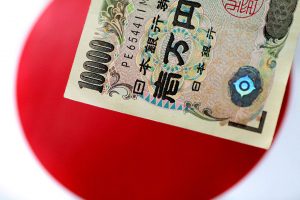
The yen was set for its strongest weekly gain in a year on Friday, after Japanese Prime Minister Sanae Takaichi’s historic election win allayed some investor worries about the government’s finances, Reuters reported.

On Friday, the yen traded on a weaker footing, leaving the dollar 0.5% higher at 153.46, but it was still headed for a gain of 2.4% for the week, its largest rise since February last year.

For this week, the trader said the peso could weaken ahead of the BSP’s expected rate cut, with the US inflation report released on Friday also expected to dictate the market’s direction to start this week’s trading.

The trader sees the peso moving between PHP 57.80 and PHP 58.20 per dollar this week, while Mr. Ricafort expects it to range from PHP 57.70 to PHP 58.25.

US consumer prices increased less than expected in January amid cheaper gasoline and a moderation in rental inflation, but households faced higher costs for services, suggesting little urgency for the Federal Reserve to resume cutting interest rates before summer, Reuters reported.

The report followed on the heels of news last week of an acceleration in job growth in January and a drop in the unemployment rate to 4.3% from 4.4% in December.

The consumer price index (CPI) rose 0.2% last month after an unrevised 0.3% gain in December, the Labor Department’s Bureau of Labor Statistics (BLS) said.

Economists polled by Reuters had forecast the CPI increasing 0.3%. With January’s CPI report, the BLS published recalculated seasonal adjustment factors to reflect 2025 price movements.

The report was slightly delayed by a three-day shutdown of the federal government. Some economists attributed January’s favorable headline reading to the volatility in the CPI data caused by last year’s longer shutdown that prevented the collection of prices for October.

In the 12 months through January, the CPI increased 2.4%. The slowdown in the year-on-year inflation rate from 2.7% in December mostly reflected last year’s higher readings dropping out of the calculation. The tamer inflation numbers were unlikely to resonate with consumers.

Financial markets raised the odds of a June rate cut. The Fed last month left its benchmark overnight interest rate in the 3.5%-3.75% range.

The Fed tracks the personal consumption expenditures (PCE) price indexes for its 2% inflation target. Both measures are running well above target. Based on the CPI data, economists’ estimates for the January increase in core PCE inflation ranged from 0.2% to 0.5%. Year-on-year estimates for January core PCE inflation were between an increase of 2.9% and 3.2%. The government will publish December PCE inflation data this week. — A.M.C. Sy with Reuters

2025 foreign investments fall 50%

2025 foreign investments fall 50%

Approved foreign investments in the Philippines plunged by 50.1% year on year to PHP 272.38 billion in 2025, its sharpest fall in five years, the Philippine Statistics Authority (PSA) reported on Thursday.

Preliminary data from the PSA showed that the value of foreign commitments approved by the country’s investment promotion agencies (IPA) in 2025 was lower than PHP 546.19 billion in 2024.

This was the steepest drop in foreign investments since the 71.3% drop recorded during the pandemic in 2020.

By value, this was the lowest amount of approved foreign investments since the PHP 241.89 billion recorded in 2022.

Singapore was the top source of investment pledges for 2025 after committing PHP 92.78 billion, or 34.1% of the total. It was followed by the Netherlands with PHP 35.98 billion (13.2% share) and Japan with PHP 34.03 billion (12.5%).

Analysts attributed the sharp drop in foreign investment pledges to the sluggish investor confidence in the Philippines arising from global trade uncertainties, natural disasters and the flood control corruption scandal.

“In a nutshell, the decline in approved foreign investment pledges in 2025 was driven by a mix of weaker investor confidence due to governance and corruption issues, global economic uncertainties, cautious corporate behavior, and an unusually high base of comparison from the previous year,” said Ser Percival K. Peña-Reyes, director of the Ateneo Center for Economic Research and Development.

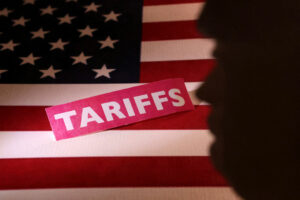
Marco Antonio C. Agonia, an economist at the University of Asia and the Pacific, said uncertainty over the US tariffs may have also dissuaded foreign investors from setting up operations in the Philippines.

The United States imposed a 19% tariff on most Philippine goods beginning Aug. 7, 2025.

“Similarly, weaker growth prospects from repeated natural disasters and the flood control scandal may have encouraged foreign companies to scrap or defer their investment plans in the country,” Mr. Agonia said in an e-mail.

The Board of Investments (BoI) approved PHP 150.34 billion worth of investment pledges in 2025, accounting for 55.2% of the total. It was followed by the Philippine Economic Zone Authority (PEZA) with investment pledges worth PHP 107.06 billion (39.3% share), and the Bases Conversion and Development Authority (BCDA) with PHP 7.01 billion (2.6%).

For 2025, about 45% or PHP 122.48 billion of the total approved foreign investments will go to the energy sector, followed by manufacturing with PHP 81.41 billion (29.9% share) and real-estate activities with PHP 26.31 billion (9.7%).

In 2025, Calabarzon (Cavite, Laguna, Batangas, Rizal, and Quezon) cornered around PHP 100.43 billion worth of these investment pledges. Central Luzon will get PHP 70.74 billion while the Bicol Region got PHP 50.76 billion.

Sharp rise in Q4

PSA data also showed foreign investment pledges surged by 79.1% to PHP 103.33 billion in the fourth quarter of 2025, from PHP 57.7 billion in the same period in 2024. This was the fastest growth since the third quarter of 2024 when approved foreign investments soared by 423.4% to PHP 143.74 billion.

“The jump in [fourth-quarter] approved foreign investments may be attributed to base effects. The Q4 2025 reading saw a rebound coming from the low base but is still historically lower than previous Q4 pledge readings,” said Mr. Agonia, noting that pledges fell sharply in the fourth quarter of 2024 over tariff uncertainties.

Mr. Peña-Reyes said agencies may have also “back-loaded” approvals of large investments in the last months of 2025.

“There was sectoral project momentum in strategic areas like energy, IT-BPM, and infrastructure,” he said. “There was relative improvement in sentiment and continued policy support, which encouraged the finalization of deals that had been delayed earlier in the year.”

In the fourth quarter, investment commitments were approved by six IPAs — BoI, PEZA, Subic Bay Metropolitan Authority (SBMA), BoI-Bangsamoro Autonomous Region in Muslim Mindanao, Clark International Airport Corp., and Zamboanga City Special Economic Zone Authority.

The BoI approved foreign pledges worth PHP 66.19 billion accounting for 64.1% of the total, followed by PEZA with PHP 35 billion (or 33.9% share) and SBMA with PHP 1.29 billion worth of commitments (1.2%).

In the fourth quarter, the Netherlands was the biggest source of approved investments with PHP 33.05 billion, accounting for 32% of the total. This was followed by Japan with commitments worth PHP 17.88 billion (17.3%) and Singapore with commitments worth PHP 17.66 billion (17.1% share).

During the October-to-December period, the Authority of the Freeport Area of Bataan, BCDA, Cagayan Economic Zone Authority, Clark Development Corp., Poro Point Management Corp., John Hay Management Corp., and Tourism Infrastructure and Enterprise Zone Authority did not approve any investment pledges.

The energy sector also cornered the largest approved foreign investments with PHP 49.41 billion in the fourth quarter, about 47.8% of the total pledges during the period.

Around 33.6% or PHP 34.68 billion of the approved foreign investments will go into the manufacturing industry, while 4.6% or PHP 4.76 billion worth of pledges will be invested in the information and communication industry.

For the period, 45.3% of the foreign investment commitments worth PHP 46.85 billion will go to projects located in Calabarzon.

Central Luzon cornered PHP 35.36 billion worth of investment commitments while Negros Island Region got PHP 7.79 billion.

Should these foreign commitments materialize, these projects are expected to generate 101,164 jobs, 0.8% lower than 101,966 projected jobs a year earlier.

Meanwhile, PSA data showed combined investment commitments from both foreign and Filipino investors surged by 193.8% to PHP 1.1 trillion in the fourth quarter, from PHP 373.7 billion in the same period in 2024. Filipino investors contributed PHP 994.44 billion, or 90.6% of the total.

In 2025, total investment commitments from foreign and Filipino nationals fell by 1.7% to PHP 1.92 trillion, from PHP 1.96 trillion in the previous year. Investment pledges by Filipinos reached PHP 1.65 trillion last year, accounting for 85.8% of the total.

Mr. Peña-Reyes said there will likely be a “moderate recovery” in foreign investment pledges in the first quarter of 2026.

“This view is supported by project pipelines and sector prospects, but it is still influenced by cautious investor sentiment,” he said.

“For the rest of the year, there could be gradual strengthening if reforms and policy clarity improve, with key sectors attracting sustained interest. Actual FDI (foreign direct investment) flows may lag pledges, but they could trend upward as confidence returns,” he added.

On the other hand, Mr. Agonia said investment pledges may remain subdued for the rest of the year.

“The fallout of a weaker growth outlook from the corruption scandal, its effects on government spending and consumer and investor confidence will likely extend into this year, barring any major improvements to the business environment,” he said.

The PSA data on foreign investment commitments, which may materialize shortly, differ from actual foreign direct investments tracked by the BSP. The central bank’s monitoring goes beyond the projects and includes other items such as reinvested earnings and lending to Philippine units via their debt instruments. — Heather Caitlin P. Mañago, Researcher

Posts navigation

Older posts
Newer posts

Recent Posts

  • Peso GS Weekly: Risk relief drives curve‑wide rally
  • Metrobank US-Iran Risk Index: Dire straits
  • Investment Ideas: April 6, 2026
  • Investment Ideas: April 1, 2026
  • Metrobank US-Iran Risk Index: Signals of an end

Recent Comments

No comments to show.

Archives

  • April 2026
  • March 2026
  • February 2026
  • January 2026
  • December 2025
  • November 2025
  • October 2025
  • September 2025
  • August 2025
  • July 2025
  • June 2025
  • May 2025
  • April 2025
  • March 2025
  • February 2025
  • January 2025
  • December 2024
  • November 2024
  • October 2024
  • September 2024
  • August 2024
  • July 2024
  • June 2024
  • May 2024
  • April 2024
  • March 2024
  • February 2024
  • January 2024
  • December 2023
  • November 2023
  • October 2023
  • September 2023
  • August 2023
  • July 2023
  • June 2023
  • May 2023
  • April 2023
  • March 2023
  • February 2023
  • January 2023
  • December 2022
  • November 2022
  • October 2022
  • September 2022
  • August 2022
  • July 2022
  • June 2022
  • May 2022
  • March 2022
  • December 2021
  • October 2021

Categories

  • Bonds
  • BusinessWorld
  • Currencies
  • Economy
  • Equities
  • Estate Planning
  • Explainer
  • Featured Insight
  • Fine Living
  • How To
  • Investment Tips
  • Markets
  • Portfolio Picks
  • Rates & Bonds
  • Retirement
  • Reuters
  • Spotlight
  • Stocks
  • Uncategorized

You are leaving Metrobank Wealth Insights

Please be aware that the external site policies may differ from our website Terms And Conditions and Privacy Policy. The next site will be opened in a new browser window or tab.

Cancel Proceed
Get in Touch

For inquiries, please call our Metrobank Contact Center at (02) 88-700-700 (domestic toll-free 1-800-1888-5775) or send an e-mail to customercare@metrobank.com.ph

Metrobank is regulated by the Bangko Sentral ng Pilipinas
Website: https://www.bsp.gov.ph

Quick Links
The Gist Webinars Wealth Manager Explainers
Markets
Currencies Rates & Bonds Equities Economy
Wealth
Investment Tips Fine Living Retirement
Portfolio Picks
Bonds Stocks
Others
Contact Us Privacy Notice Terms of Use
© 2026 Metrobank. All rights reserved.

Access this content:

If you are an existing investor, log in first to your Metrobank Wealth Manager account. ​

If you wish to start your wealth journey with us, click the “How To Sign Up” button. ​

Login HOW TO SIGN UP