Tax reforms: Revitalizing the Filipino consumer


As oil-slicked inflation bites into Filipino consumers’ budgets, the government eyes tax reforms to give one of the Philippines' biggest economic engines a new lease on life.
The question: How much can these revitalize household consumption?
At his latest State of the Nation Address, President Ferdinand Marcos Jr. unveiled a proposal to raise the floor on income taxes, possibly exempting millions of workers.

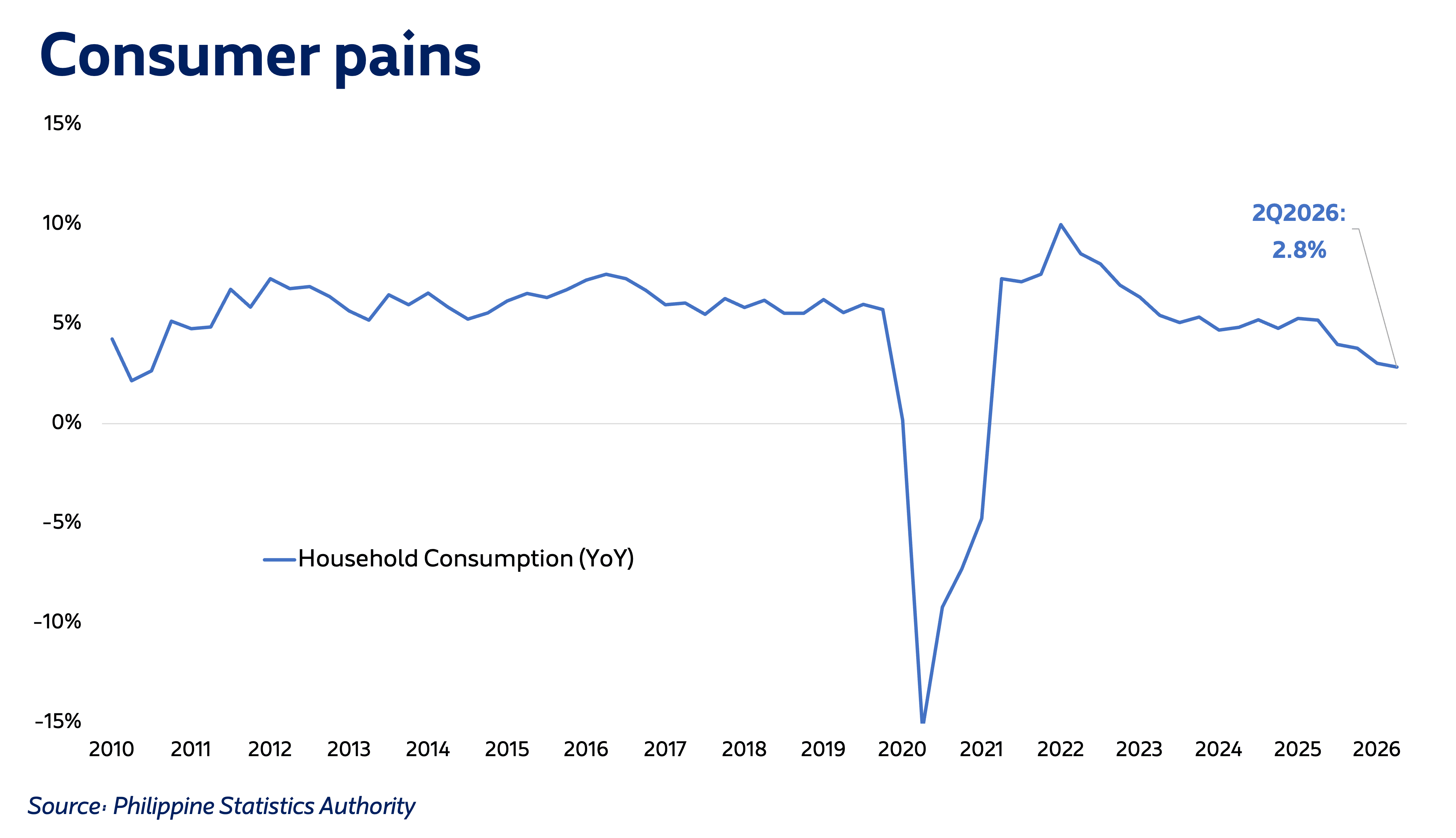
This comes as household consumption grew at its slowest pace since the Covid-19 pandemic last quarter. High consumer prices—fueled by elevated global energy costs—may be a factor, with cost of living rising faster than incomes.
Related article: Is the Philippine inflation story over?
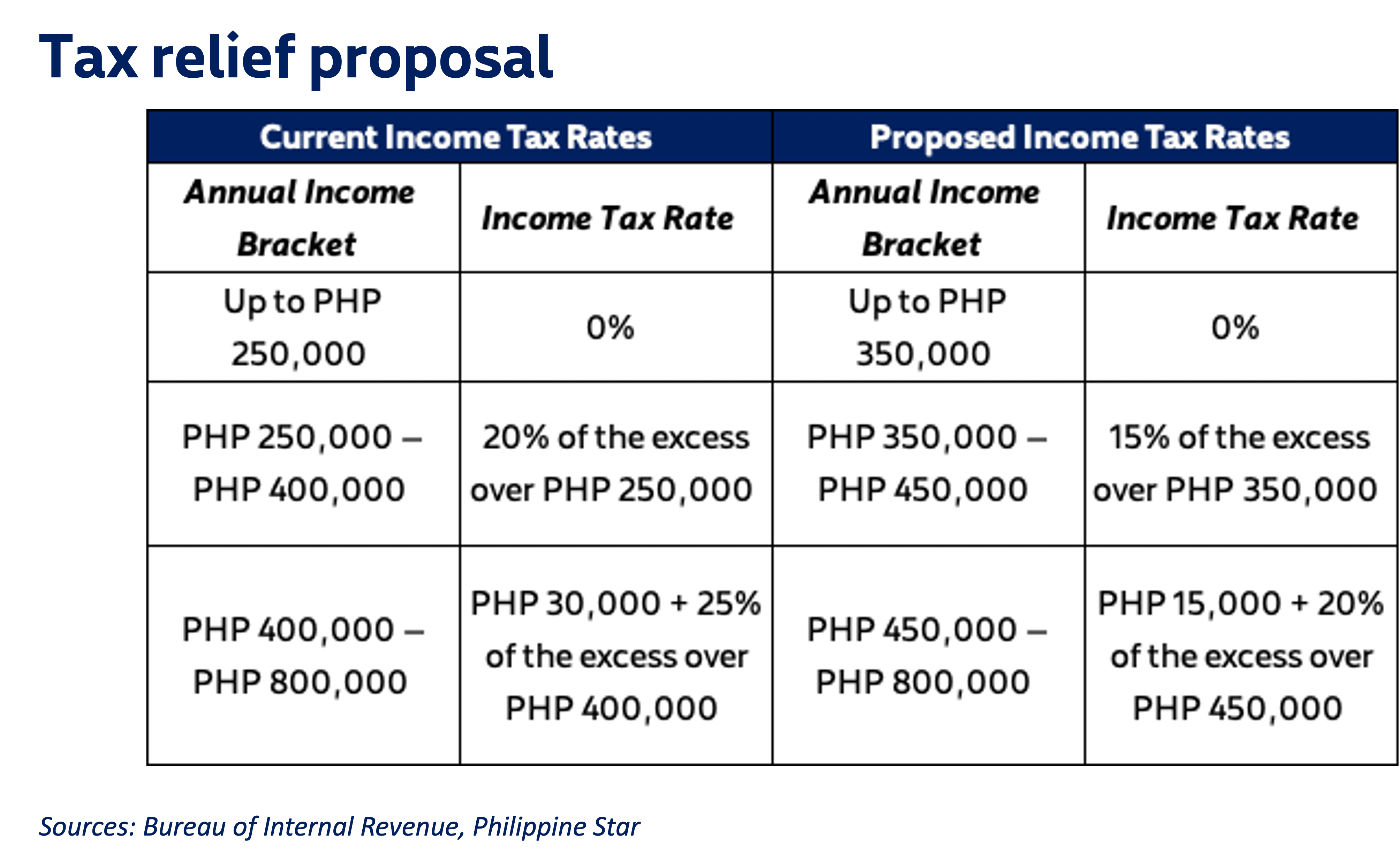
Dubbed by the Department of Finance (DoF) as the “Progress Bill”, the proposal overhauls the income tax thresholds and rates for Filipino workers.
This could raise the minimum annual income level subject to income tax from PHP 250,000 to PHP 350,000. Workers earning more than PHP 350,000 annually would be taxed lower, allowing for measured relief across incomes.

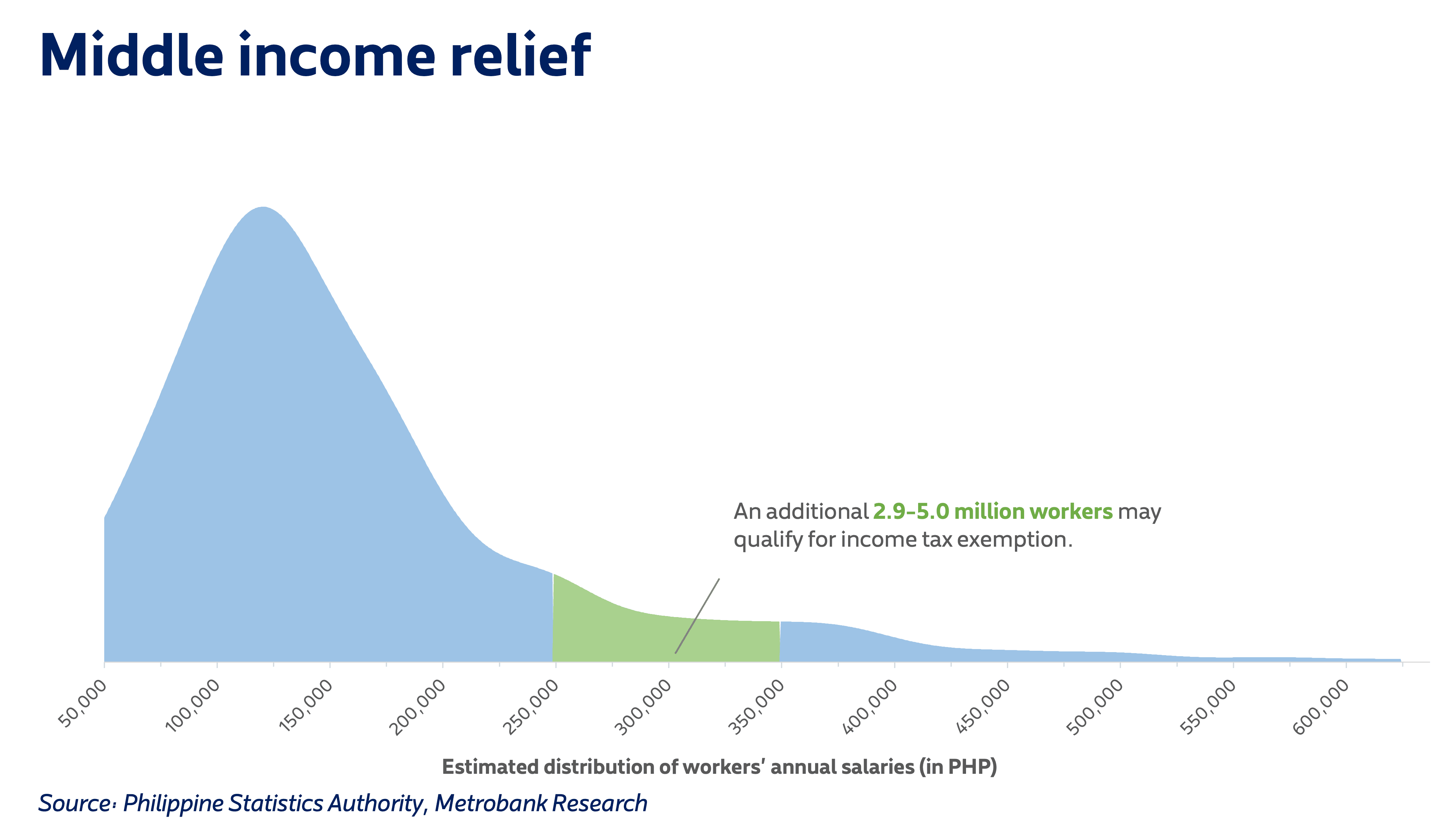
Metrobank estimates an additional 2.9-5.0 million Filipino workers may qualify for income tax exemption.
The DoF also forecasts that this will free up around PHP 61 billion worth of purchasing power for newly exempted workers, helping boost consumption growth.

To offset the forgone revenue, the DoF plans to expand taxes on products such as sweetened beverages, e-cigarettes, and luxury vehicles, among others. The DoF reportedly said that, on average, this may raise PHP 129.68 billion in additional revenue annually from 2027 to 2030.
While expanded taxes may lessen consumption for these products, the overall economic impact may be small.
Moreover, any demand-driven price rise due to increased purchasing power may be limited, as broader consumption may improve only on a gradual basis.
While these reforms create a decent springboard for consumption growth, other factors will likely temper the consumers’ outlook in the near-term.
Higher-for-longer interest rates due to elevated inflation suggests that monetary policy will not be as accommodative this year. This may keep consumer demand subdued, as growth in the economy’s money supply stays muted.
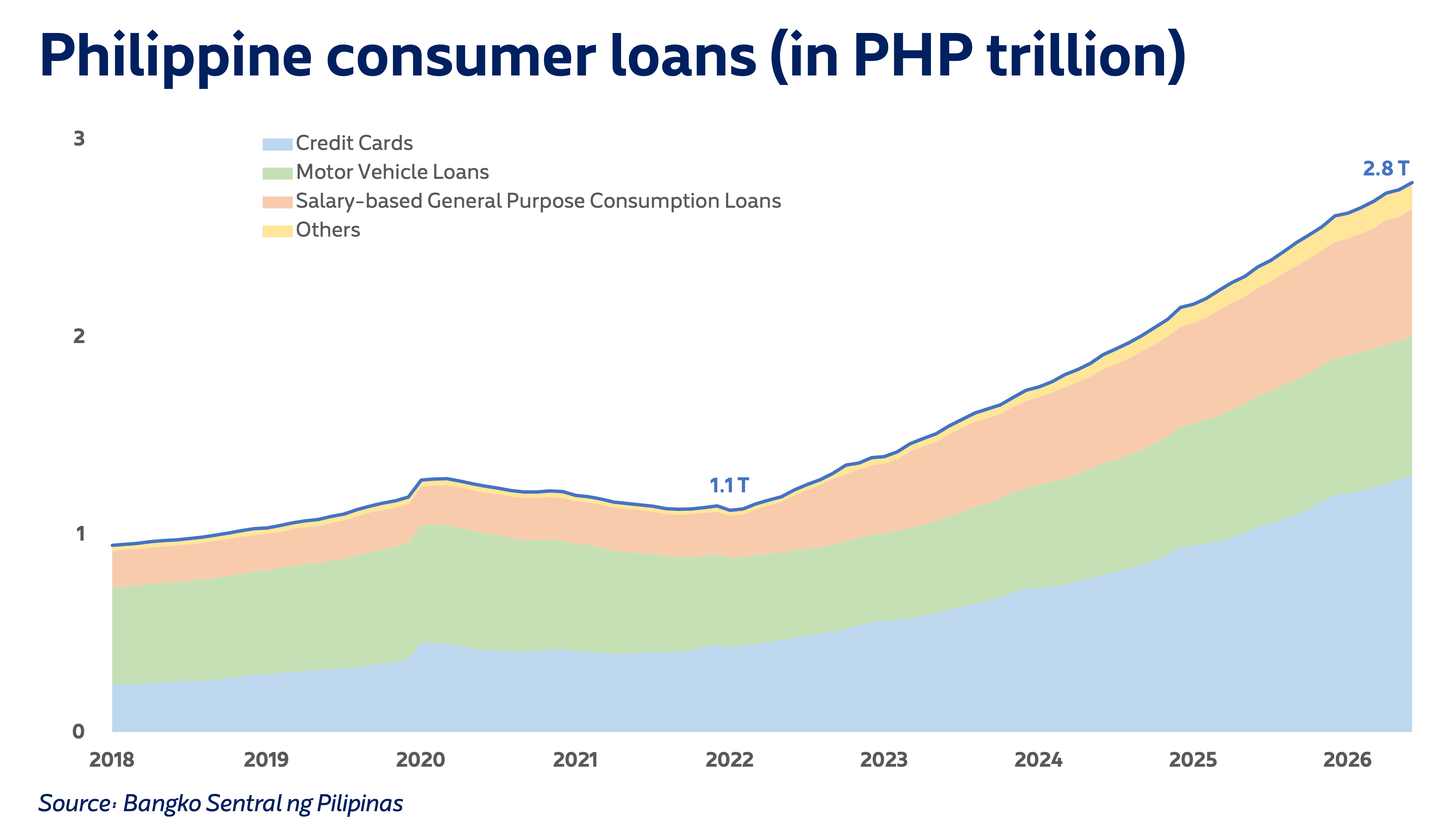
Another possible factor behind consumption’s underperformance is consumer debt. Data from the Bangko Sentral ng Pilipinas (BSP) shows household debt growing in the past few years, driven largely by mounting credit card loans.

The BSP’s latest Consumer Finance and Inclusion Survey also reports that nearly a third of Filipino borrowers use credit to pay for food and other basic needs.
Increased reliance on credit for daily necessities may lead Filipinos to spend more on debt payments, biting into their overall purchasing power.
Although more accommodative fiscal policy is a good starting point, indicators suggest household consumption’s recovery may be gradual rather than instant.
JOAQUIM “KIMI” PANTANOSAS is a Research Officer of the Macro Research Department, Markets Advisory Division, Financial Markets Sector, at Metrobank. He holds a BS in Statistics from the University of the Philippines Diliman, where he developed an interest in quantitative research as a tool for complex problem-solving. He enjoys a good laugh with the people he cares about.