


Economy3 MIN READ
SONA 2026: Near-term relief with some trade-offs
What can Filipinos expect after the president’s most recent State of the Nation Address?
July 31, 2026 by Joaquim Pantanosas
Share this article:

Geopolitical tensions and domestic headwinds set the stage for President Ferdinand Marcos Jr.’s fifth State of the Nation Address.
With the Philippine economy and financial markets facing a spate of challenges over the past year, did the President’s address offer a path toward recovery? If so, how long will it take to get there, and what trade-offs can we expect?
One of the highlights of the speech was the president’s plea to legislators to raise the minimum income level subject to income tax from PHP 250,000 to PHP 350,000 annually. He also called for waiving the corporate income tax for small businesses.
At the outset, this move should bolster consumption growth, as more consumers become eligible for an income tax exemption.
For example, workers in administrative and support service activities, who account for 6.3% of the Philippine labor force as of May, earn an average of more than PHP 300,000 per year, according to data from the statistics authority. A higher income tax threshold will provide relief for many of these workers.
Average annual salary of select industries in PHP
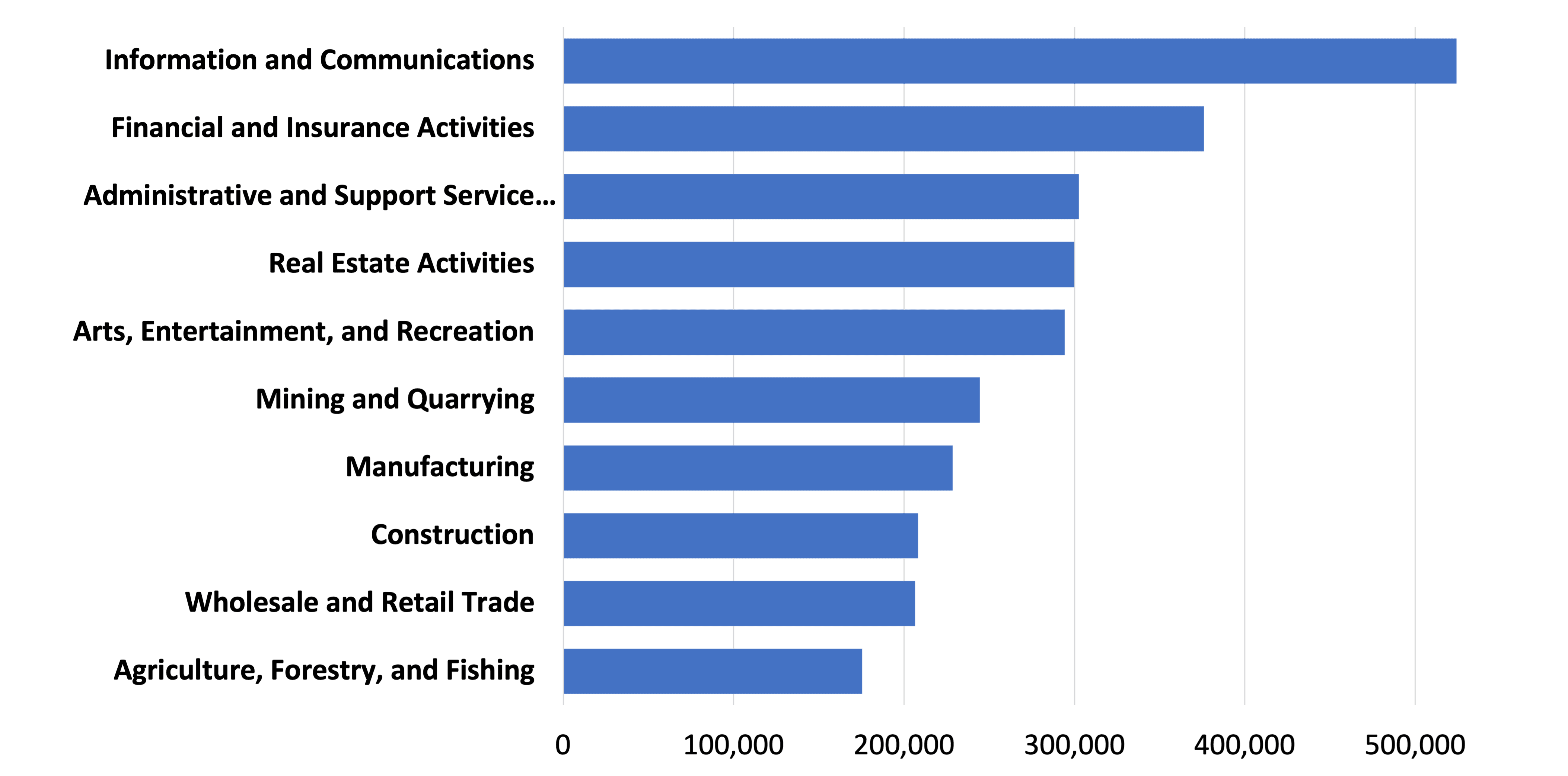
Source: Philippine Statistics Authority
Note: Figures are estimated from monthly average salaries according to the PSA’s 2024 Occupational Wages Survey.
In the local stock market, names in wholesale and retail, food and beverage, and conglomerates, among others, will also benefit from an uptick in consumption.
Still, some concerns remain. For one, the effects of raising the minimum income tax threshold on consumption may be marginal, given that a large proportion of laborers already fell below the initial PHP 250,000 threshold.
Moreover, it remains unclear how the government will finance a potential shortfall from reduced tax revenue. There’s a chance the government may increase its bond issuance next year, putting upside pressure on bond yields as supply increases. Otherwise, government spending could take a hit going into 2027.
Another salient point in the president’s speech was a push for greater energy security, given how Middle East tensions imperiled the country’s energy supply.
President Marcos Jr. announced that more than 200 energy projects were lined up for completion before the end of his term. These include renewable energy plants using geothermal, solar, hydro, and wind.
On top of this, the President also discussed the possibility of reviving the country’s nuclear energy production. Ideally, these moves will make the country more resilient to global oil shocks, such as the US-Iran war.
Greater energy security will also help bring down electricity costs and long-term inflation by improving supply. The president emphasized this further by calling for the removal of system loss charges from electricity bills.
The potential impact on equities in the energy sector will be mixed. While energy companies will benefit from greater investment, removing system loss charges may also hurt industry players, who may be forced to bear the cost of system failure, possibly reducing their earnings significantly.
President Marcos Jr. also mentioned a myriad of other projects underway to drive economic activity. These include increased AI investments through Pax Silica, a US-led project to build a resilient supply chain for AI infrastructure, semiconductors, and critical materials that support them. Free trade agreements and the creation of the country’s first spaceport next year are also on the list.
On paper, these initiatives should support long-term growth. In practice, it’s still too early to tell whether they will pan out, as other factors come into play.
Evidently, it will take some more time before we see a broader economic recovery, though the aforementioned plans may provide a solid springboard for long-term growth if properly executed.
In 2026, Metrobank still expects Gross Domestic Product (GDP) growth to remain below target, amid persistent global and domestic headwinds.
JOAQUIM “KIMI” PANTANOSAS is a Research Officer of the Macro Research Department, Markets Advisory Division, Financial Markets Sector, at Metrobank. He holds a BS in Statistics from the University of the Philippines-Diliman, where he developed an interest in quantitative research as a tool for complex problem-solving. He enjoys a good laugh with the people he cares about.