


Economy2 MIN READ
Very strong El Niño risk rises to one-in-three
Understand what a stronger El Niño could mean for Philippine inflation, financial markets, and your investment portfolio.
May 18, 2026 by Anna Cudia
Share this article:

The likelihood of an intense El Niño has increased, potentially stoking consumer price gains and impacting investments.
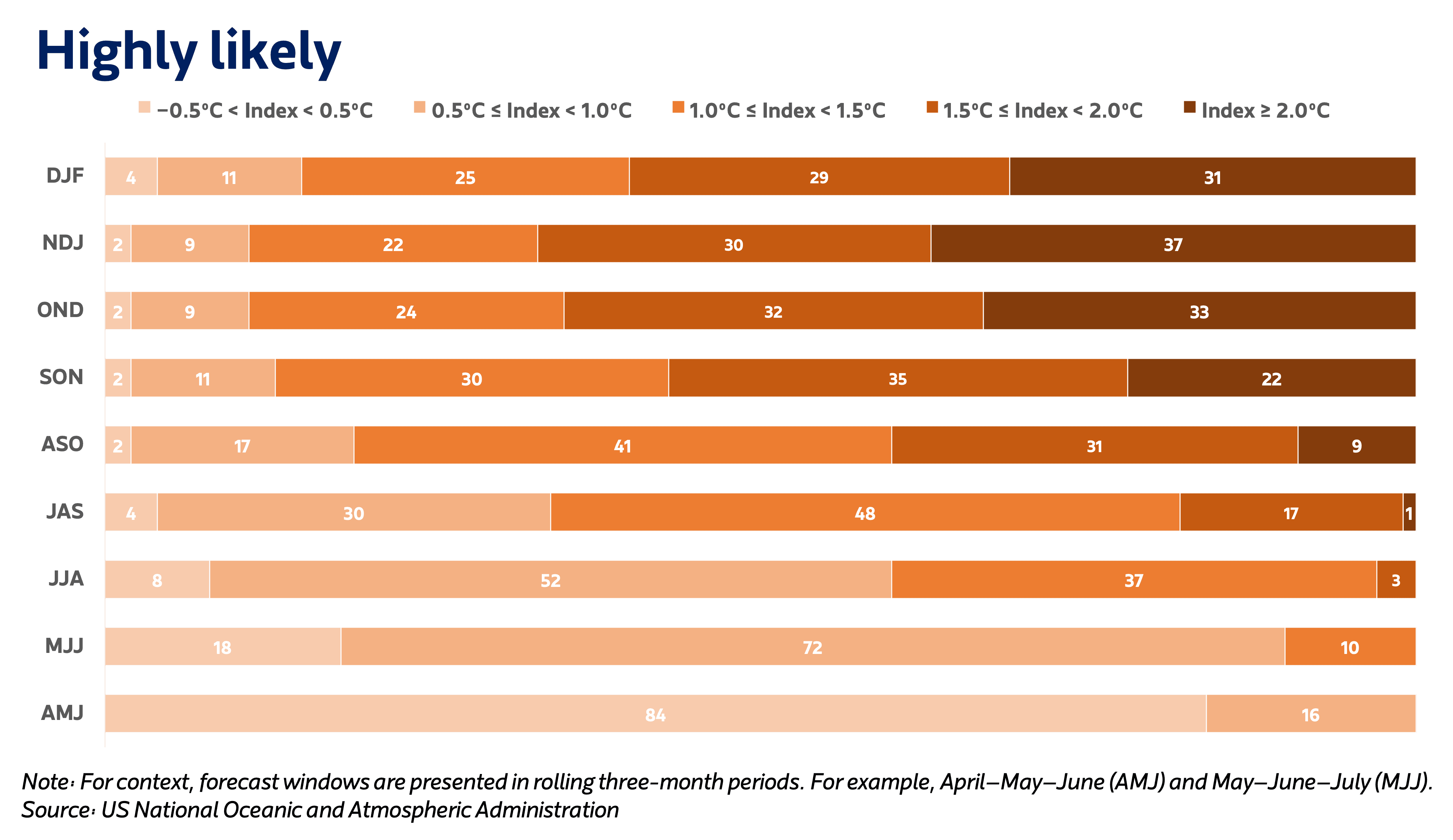
Probability of the complex weather pattern is now at 82% for May to July 2026 and rises to 96% for December 2026 to February 2027, according to the US National Oceanic and Atmospheric Administration. The likelihood of a very strong event, defined as an index of at least 2.0 degrees Celsius, has increased to 37%. Peak intensity is expected later this year.
Read related article: Turning up the heat: El Niño likely by mid-2026
The Philippines faces a more challenging inflation backdrop. The peso remains weak against the dollar. Rice tariffs can increase from 15% to as high as 35%. At the same time, oil prices are elevated and fertilizer costs have risen sharply in recent months, amid geopolitical tensions and supply constraints.
El Niño adds another layer of pressure. Drier weather can reduce agricultural output and raise food prices. It can also increase energy demand, especially for cooling. Together, these factors may fan inflation and widen the trade deficit in the coming quarters.
External risks also matter. Countries may impose export restrictions to protect domestic supply. This has happened before. Large producers of fertilizer and energy can limit global supply, raising input costs for agriculture.
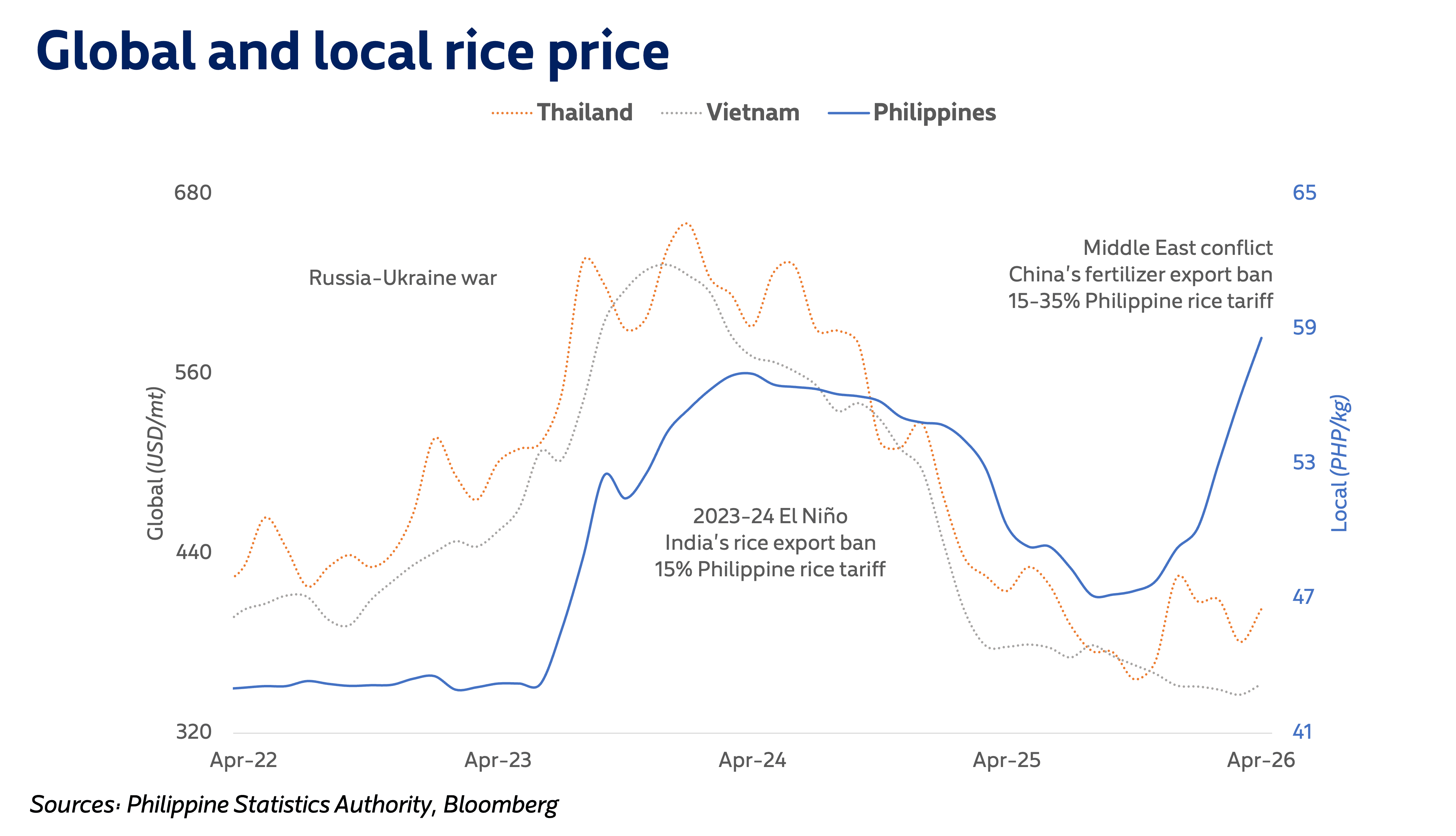
Rice markets are particularly sensitive. The Philippines relies heavily on imports from Vietnam and Thailand, which may also face weather-related disruptions. There is also the risk of renewed export curbs from India, the world’s largest rice exporter. In 2023, similar restrictions contributed to a sharp rise in global and local rice prices.
In short, supply risks are rising at a time when buffers are already thin.
Faster inflation can push bond yields higher. This creates downside risk for long-duration bonds. Shorter-duration instruments, such as those with two- to five-year tenors, may help manage volatility. Still, risk remains, as further monetary policy tightening can also affect shorter-tenor bonds.
Equity impact will likely be uneven. Some sectors may benefit. Beverage companies can see higher demand. Malls may attract more foot traffic. Power generators may benefit from stronger electricity demand.
Others may face pressure. Water-intensive industries, including certain food manufacturers, could see higher input costs or supply constraints. Water utilities may also face tighter supply conditions.
For investors, the key takeaway is balance. Inflation risks are rising, but impact will differ across assets. Positioning should remain selective and risk aware.
ANNA DOMINIQUE CUDIA, MBA, CSS, is part of Metrobank Research, where she contributes to macroeconomic and financial market analysis for clients. She previously led the Markets Research Department of Metrobank’s Trust Banking Group and was part of Investor Relations, supporting multi-billion peso and US dollar capital-raising initiatives. She holds an MBA in Finance, with distinction, from the University of London, and industry certifications in finance. She is a naturally curious person and likes to travel here and abroad.