


Economy2 MIN READ
Turning up the heat: El Niño likely by mid‑2026
Are we ready for a possible El Niño this year? The implications, if ever, are significant.
April 22, 2026 by Anna Cudia
Share this article:

Global temperatures in 2026 are projected to reach record highs.
This is according to the Climate Prediction Center (CPC), the reference agency of Philippine Atmospheric, Geophysical and Astronomical Services Administration, or PAGASA.
It also predicts a 61% chance of El Niño occurring in the period May to July 2026 and persist until the end of the year.
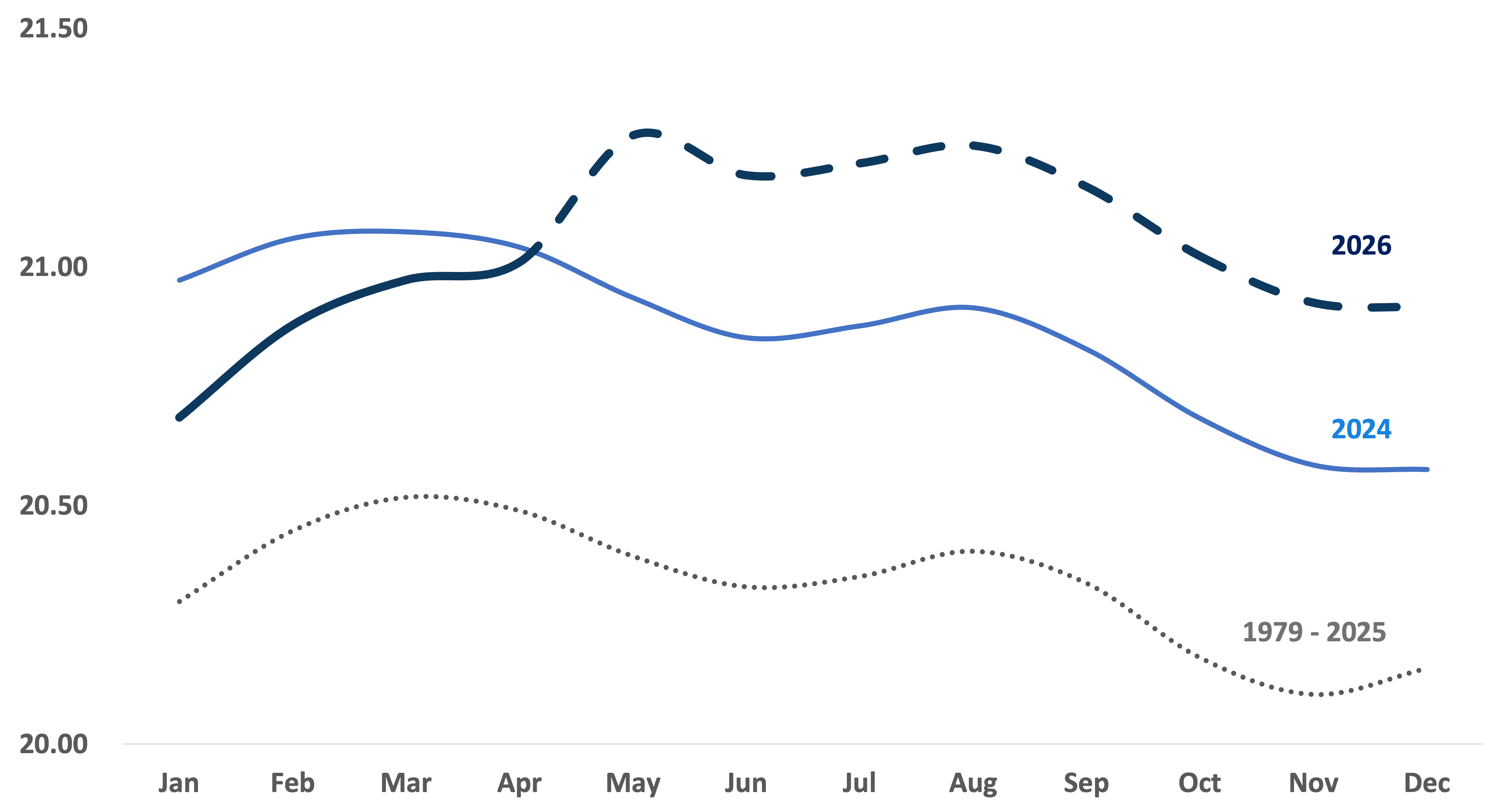
Sources: Columbia Climate School, National Oceanic and Atmospheric Administration, Metrobank Research
While a repeat of a strong El Niño episode is far from certain, compared with early 2023, current warning signals appear at least as pronounced. That said, the possible strength of the El Niño will depend heavily on wind patterns over the coming months, which remain uncertain at this stage.
Based on CPC probability estimates, there is roughly a 25% chance that the event could reach “very strong” intensity by December. Over the past five decades, such episodes have been recorded only four times – 1982, 1991, 1997, and 2016.
Notably, however, the year‑on‑year temperature increase during the strong El Niño in 2023 exceeded what was observed in 1997, underscoring that even non‑“very strong” episodes can have outsized economic effects.
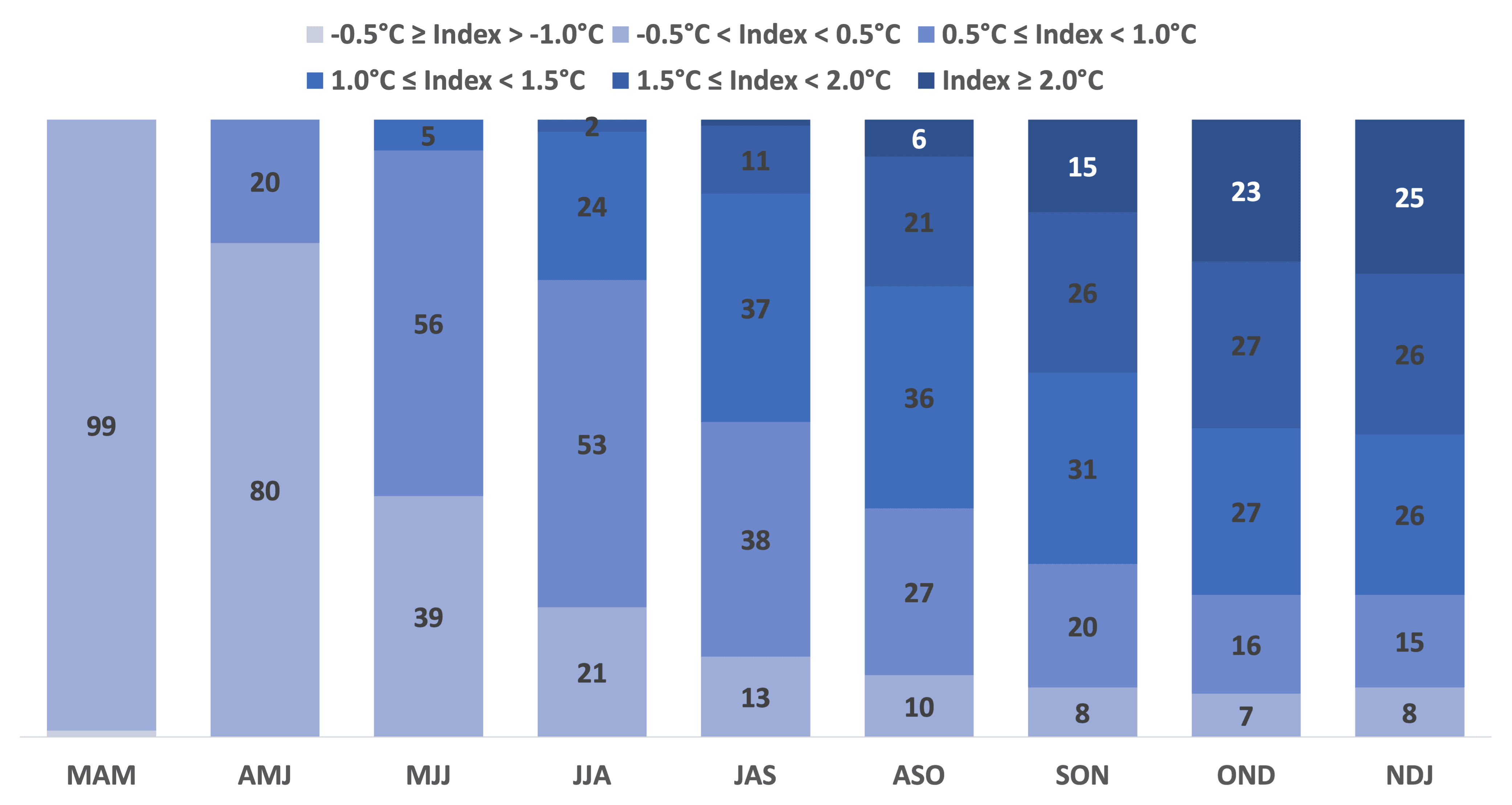
Acronyms refer to three-month periods such as March, April, and May (MAM), April, May, and June (AMJ), etc. Source: National Oceanic and Atmospheric Administration
The 2023 El Niño episode significantly disrupted agricultural output and contributed to a sharp rise in rice prices, placing pressure on household budgets and lifting inflation. The weather phenomenon alone accounted for more than 2 percentage points of headline inflation, compounded by India’s decision to impose a rice export ban amid tight global supplies.
More recently, India has begun warning that rainfall this year could be among the weakest in at least 25 years, raising the risk of renewed export restrictions. Against this backdrop, the inflationary implications are non‑trivial.
During 2023–2024 period, higher oil prices linked to the ongoing Russia-Ukraine war contributed roughly 2 to 3 percentage points to inflation, while rice added another 2 percentage points under strong El Niño conditions.
Together, these already amounted to around 5%, even before accounting for second‑round effects on other goods and services.
Should a similar weather shock hit us in 2026, food prices could spike – making people spend less, hurting profits of consumer-oriented firms, and causing interest rates and bond yields to stay high for a longer period to help tame inflation.
If you wish to know more about the implications of this possible scenario and strategic investment moves, you may reach out to your wealth advisor. If you’d like to start your wealth journey with us, please go to any Metrobank branch.
ANNA DOMINIQUE CUDIA, MBA, CSS, is the Head of Markets Research at Metrobank’s Trust Banking Group, spearheading the generation and presentation of financial markets insights to clients. She used to be with Metrobank’s Investor Relations, where she brought in international awards and took part in various multi-billion peso and dollar capital raising activities. She holds a Master of Business Administration (Finance) degree, with distinction, from the University of London, and industry certifications in finance. She is a naturally curious person and likes to travel here and abroad.