


Economy3 MIN READ
Why oil prices may ease—but normalize more slowly than expected
Recent drops in global oil prices and fuel rollbacks offer near‑term relief. But will it last?
June 23, 2026 by Anna Cudia
Share this article:

Oil prices are best understood as a macro signal rather than a weekly headline.
Recent rollbacks reflect changes in market sentiment and pricing expectations, not a full resolution of supply, logistics, and geopolitical risks in the Middle East.
Energy markets remain highly sensitive to both sentiment and physical flows, and the current environment continues to carry meaningful downside and upside risks.
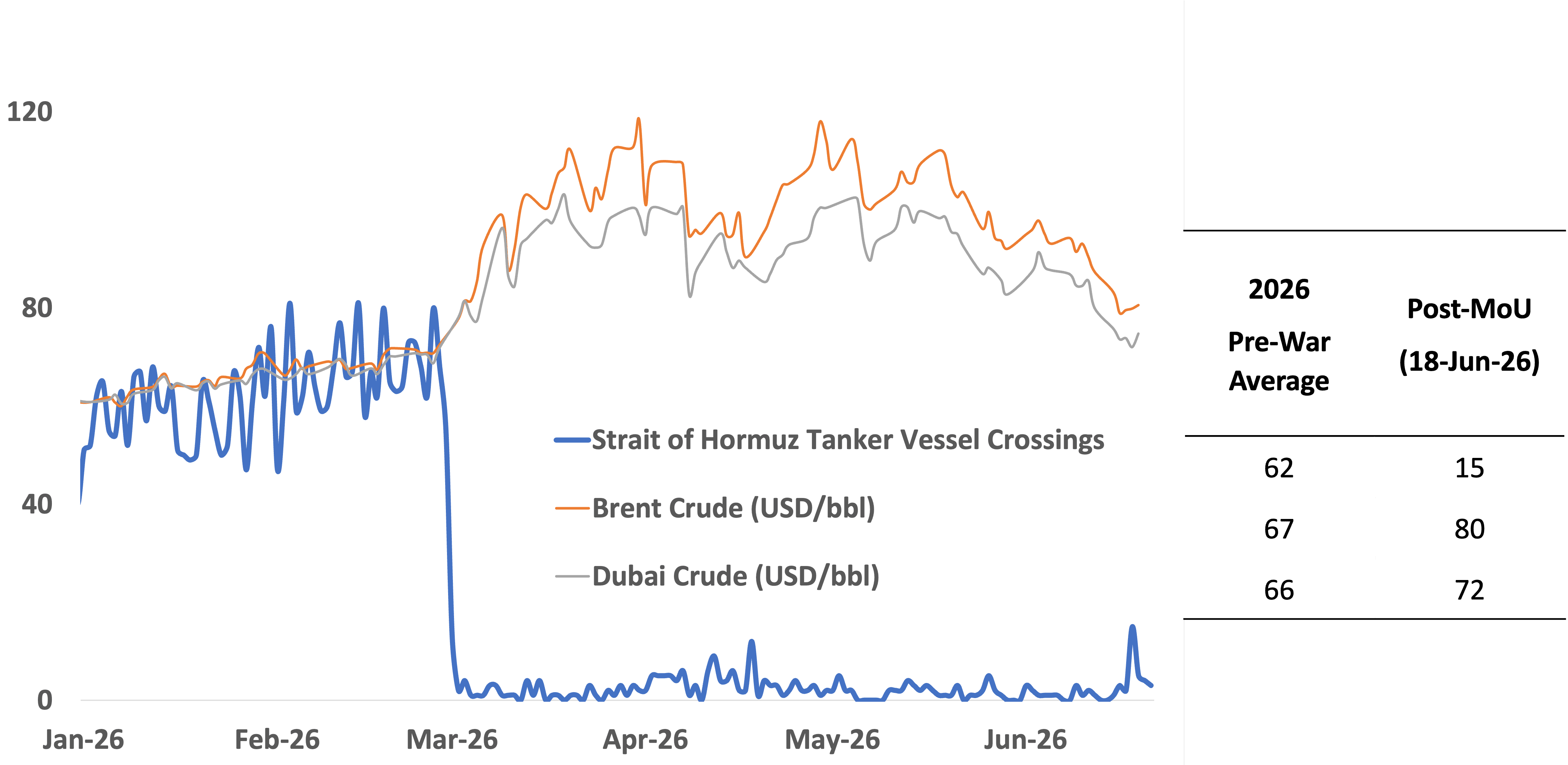
Oil prices have declined following reports of easing tensions and the signing of a Memorandum of Understanding (MoU) between the United States and Iran, raising expectations of improved conditions in the Middle East and partial reopening of the Strait of Hormuz. Markets, however, may be moving faster than actual oil flows.
Sources: Bloomberg, Metrobank Research
Reports indicate that some oil tankers remain outside the strait, while others have paused transit amid renewed uncertainty, including suspended US-Iran talks and fresh security incidents involving Israel. Shipping volumes through the chokepoint remain below pre‑conflict levels, and insurance premiums and routing risks continue to weigh on physical trade.
Price movements often adjust more quickly than logistics. Even as benchmark prices fall, delays in shipping, higher freight costs, and cautious inventory management can slow normalization.
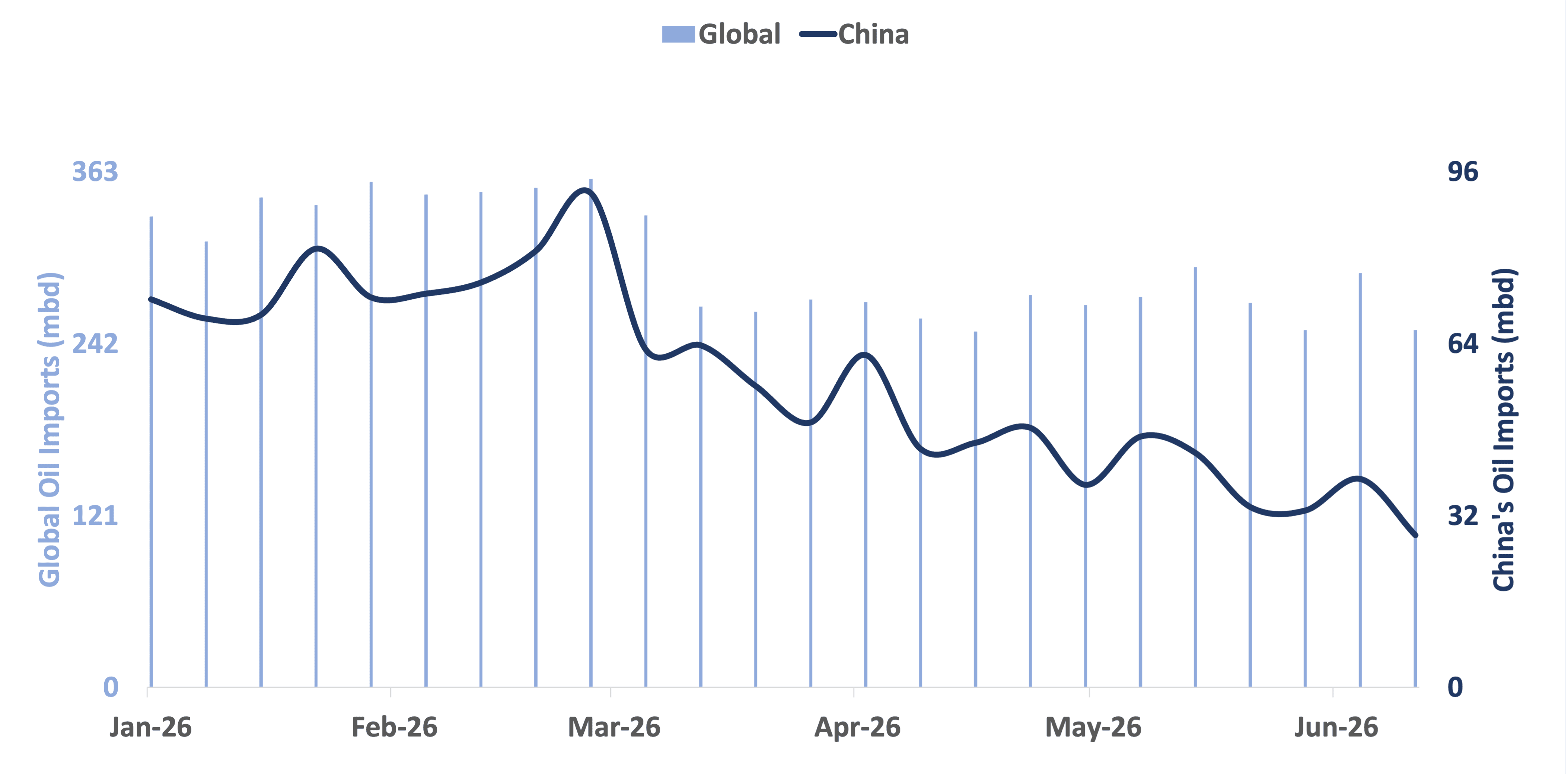
Demand risks also remain asymmetric. China, the world’s largest oil importer, has drawn down inventories in recent months and could re‑enter the market more actively once prices stabilize, adding renewed upside pressure.
In the near term, oil prices may remain volatile. Further rollbacks are possible if diplomatic progress is sustained, but history suggests that renewed disruptions reprice markets faster than downside relief fully passes through.
Medium‑term normalization depends on several factors aligning: sustained diplomatic momentum, restoration of production to pre‑conflict levels, and uninterrupted shipping through the Strait of Hormuz.
For now, negotiations remain fragile, production recovery may take months, and traffic through the strait is still uneven. Ongoing risks include mine threats, the potential for isolated attacks despite ceasefires, uncertainty over maritime control, and the possibility of transit fees or tolls.
On the demand side, rebuilding strategic reserves—particularly by large importers such as China—could tighten markets again after the initial drawdowns helped cushion prices.
Source: Bloomberg
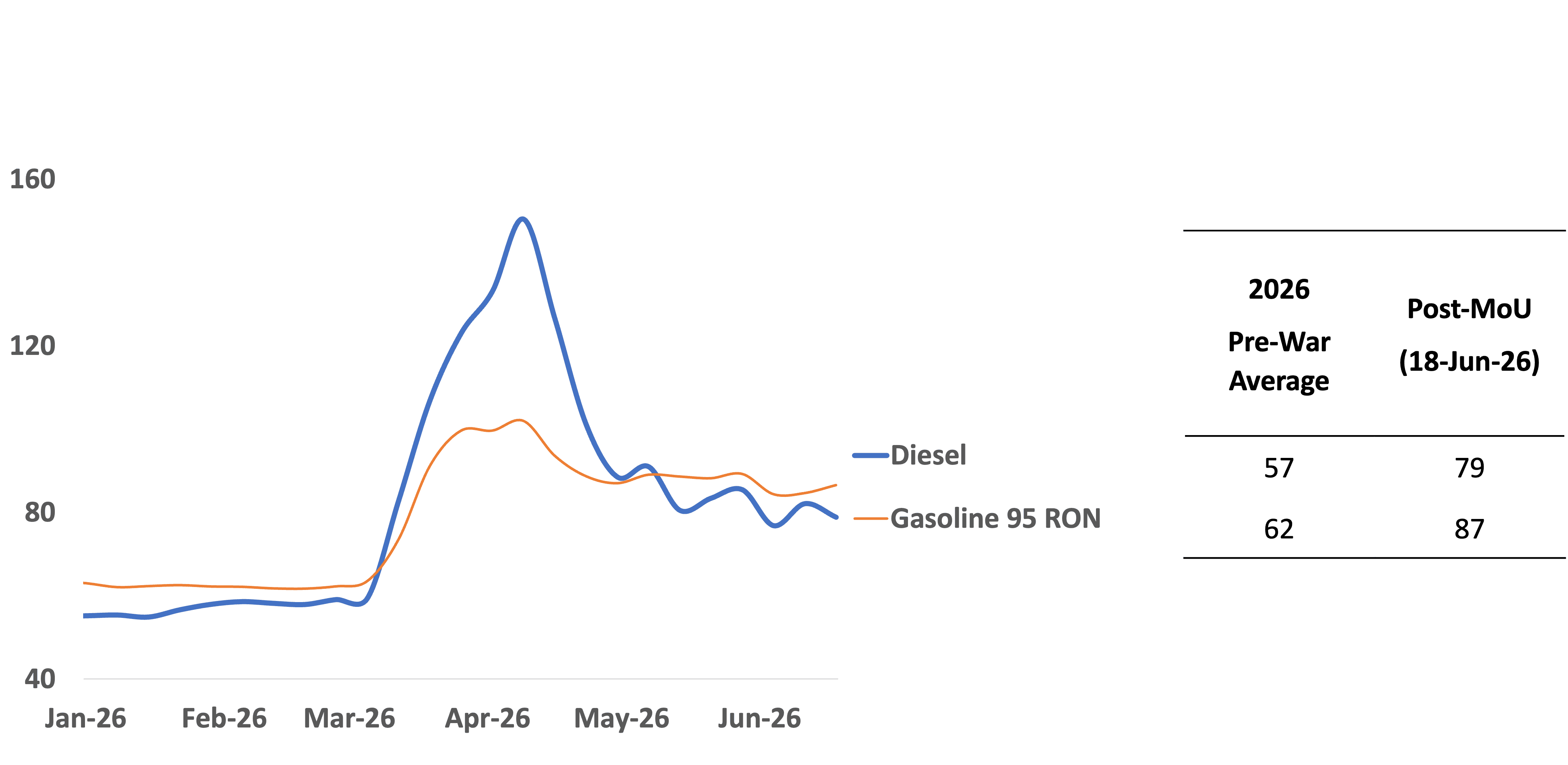
Domestic fuel pricing typically reflects moving averages, contractual lags, and actual shipment costs rather than spot market moves. Not all cargoes benefiting from recent global price declines have arrived, and distributors tend to wait for sustained stability before passing through reductions.
Sources: Bloomberg, Metrobank Research
Logistics uncertainty keeps pricing cautious, even as rollbacks occur. Foreign exchange dynamics further influence domestic fuel costs, particularly for net importers. In the Philippines, the peso also tends to weaken seasonally in the third quarter as imports rise ahead of year‑end demand, which can partially offset global price relief.
Related article: Why USD/PHP is at levels never seen before
Energy price volatility influences corporate margins, inflation dynamics, and policy flexibility. In this environment, understanding relative exposure and cost structures may matter more than making directional bets based on short‑term price moves.
Near‑term fuel rollbacks provide welcome relief, but structural supply, logistics, and demand constraints suggest oil prices may normalize gradually rather than return quickly to pre‑conflict levels. Context, not headlines, remains the more reliable guide.
Related Article: The domino effect: Unintended consequences of the Middle East conflict
ANNA DOMINIQUE CUDIA, MBA, CSS, oversees Metrobank’s Macro Research Department, steering macroeconomic and financial market analyses for clients. She previously led the Markets Research Department of Metrobank’s Trust Banking Group and was part of Investor Relations, supporting multi-billion peso and US dollar capital-raising initiatives. She holds an MBA in Finance, with distinction, from the University of London, and industry certifications in finance. Outside of work, she enjoys travel and exploring new perspectives.