The domino effect: Unintended consequences of the Middle East conflict


Energy prices remain high but relatively steady, and while supply chains are under pressure, they continue to function. However, the real issue is less about price spikes and more about how the impact of energy disruptions is being redistributed across countries and markets.
The key question is no longer whether there will be another oil shock, but which economies are bearing the cost as global energy flows and alliances shift.
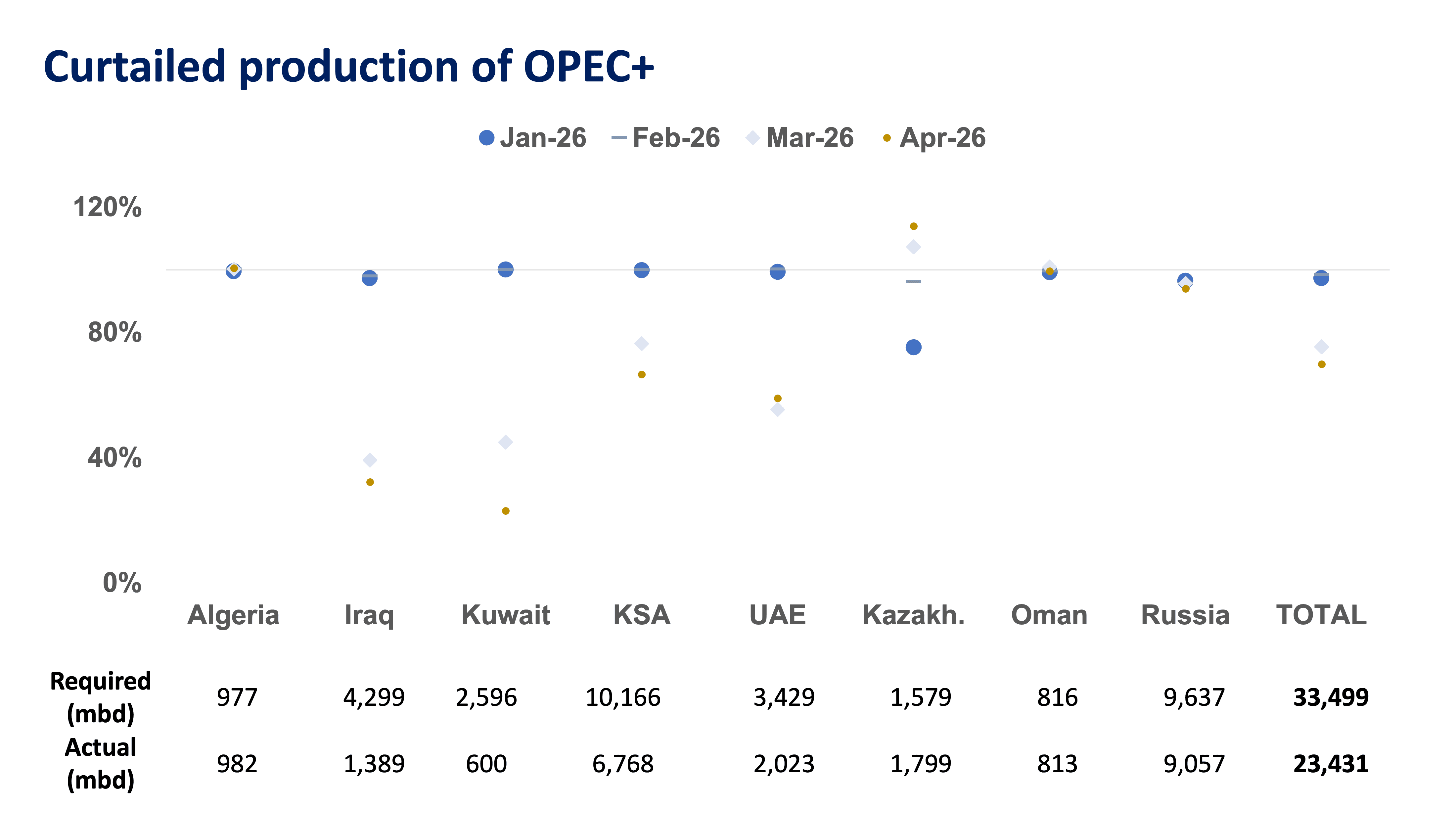
The Organization of the Petroleum Exporting Countries and allies (OPEC+) continue to play a major role in setting oil supply, but its ability to respond has been constrained by underproduction and geopolitical challenges.
Ongoing tensions in the Middle East have further reduced actual output below target levels in recent months. At the same time, shipping disruptions—such as rerouting vessels around Africa—are increasing transport time and costs.

Note: OPEC+ actual as a percentage of required production
Source: Organization of the Petroleum Exporting Countries
The closure of key transit routes like the Strait of Hormuz and damage to some Gulf production facilities have limited exports. Even where production is intact, storage constraints prevent countries from compensating for disrupted shipments. As a result, supply gaps persist.
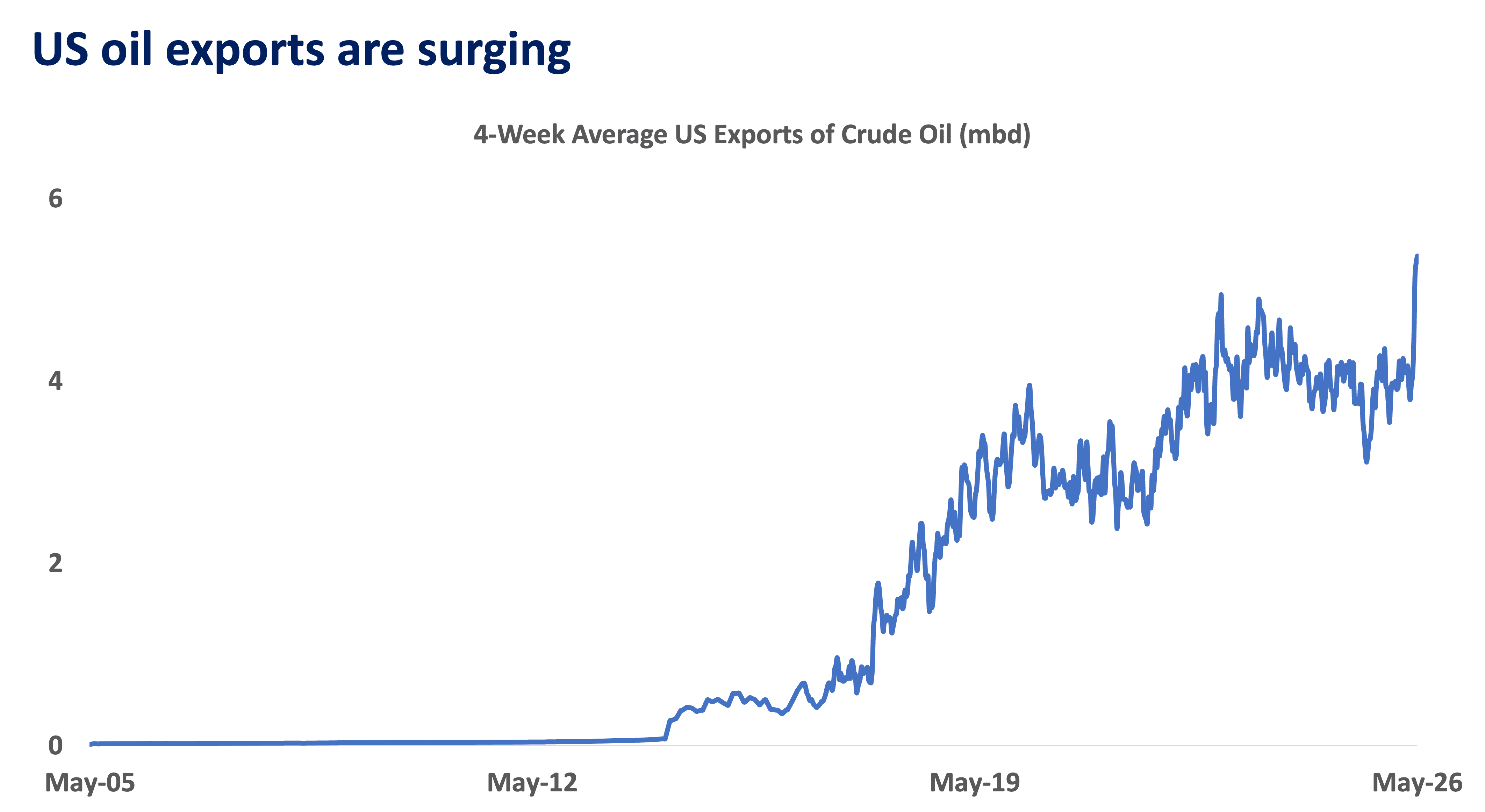
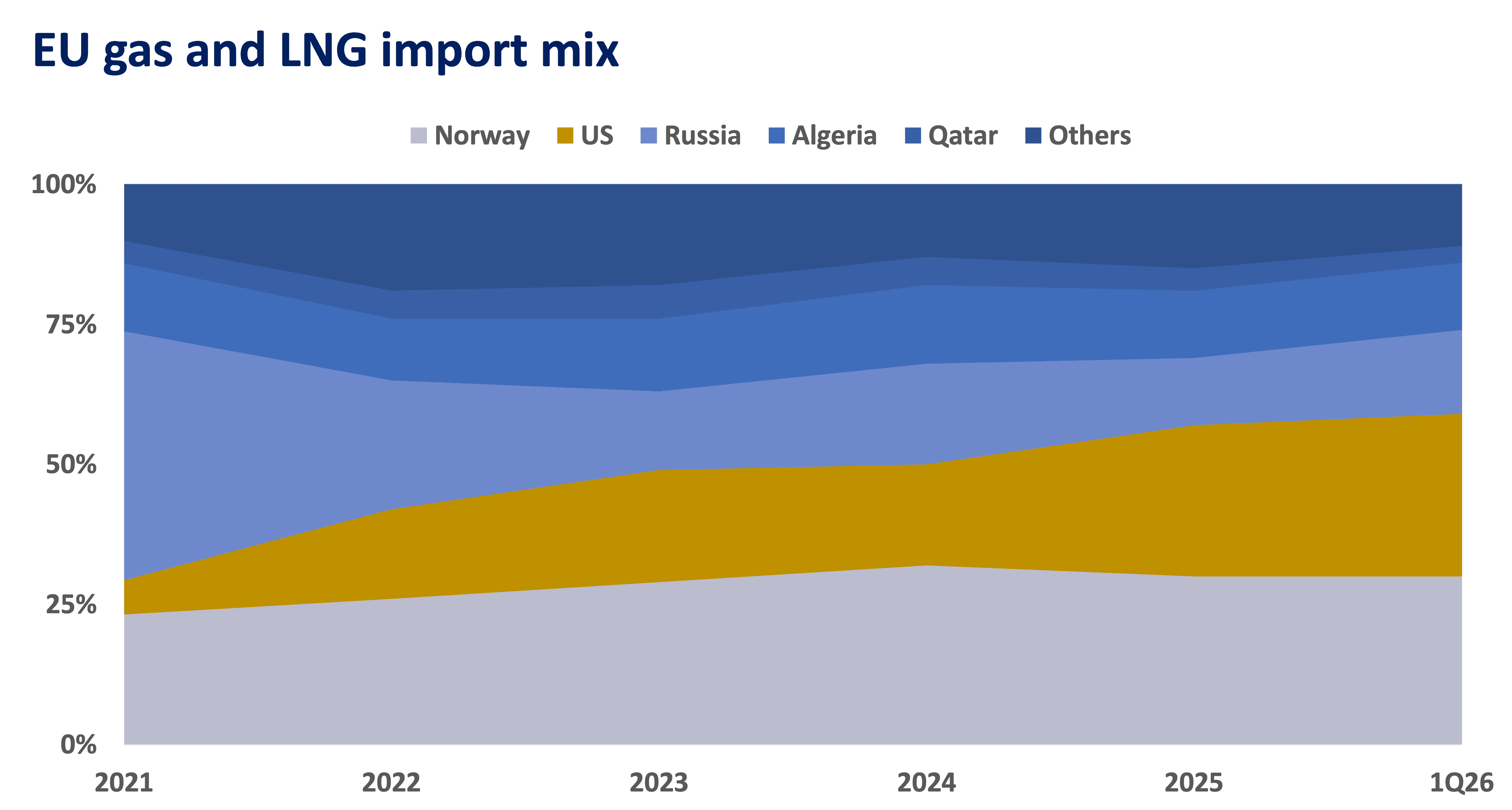
Some producers have stepped in to absorb part of the shock. The United States, for example, has increased oil and LNG exports, helping stabilize supply, particularly for Europe. Still, global markets are becoming more fragmented. Adjustments are happening through logistics, trade flows, and costs—not just prices.

Source: U.S. Energy Information Administration

Source: Institute for Energy Economics and Financial Analysis
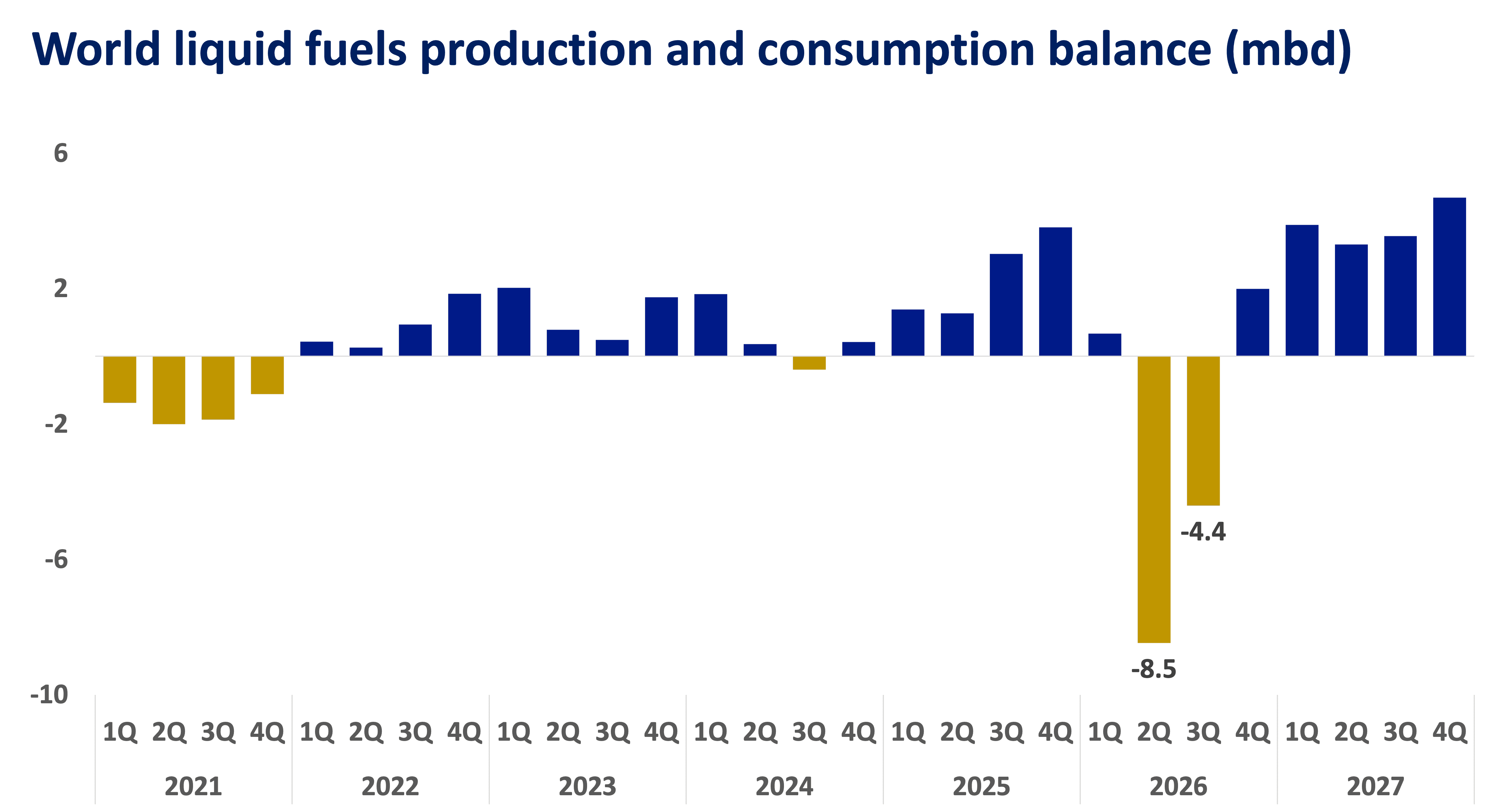
This indicates that the current situation is not only a price issue but also a supply risk. Even if disruptions ease, the system is unlikely to revert quickly to pre-conflict conditions. With supply deficits expected to persist in the near term, countries may continue drawing down strategic reserves to meet demand.

Source: US Energy Information Administration
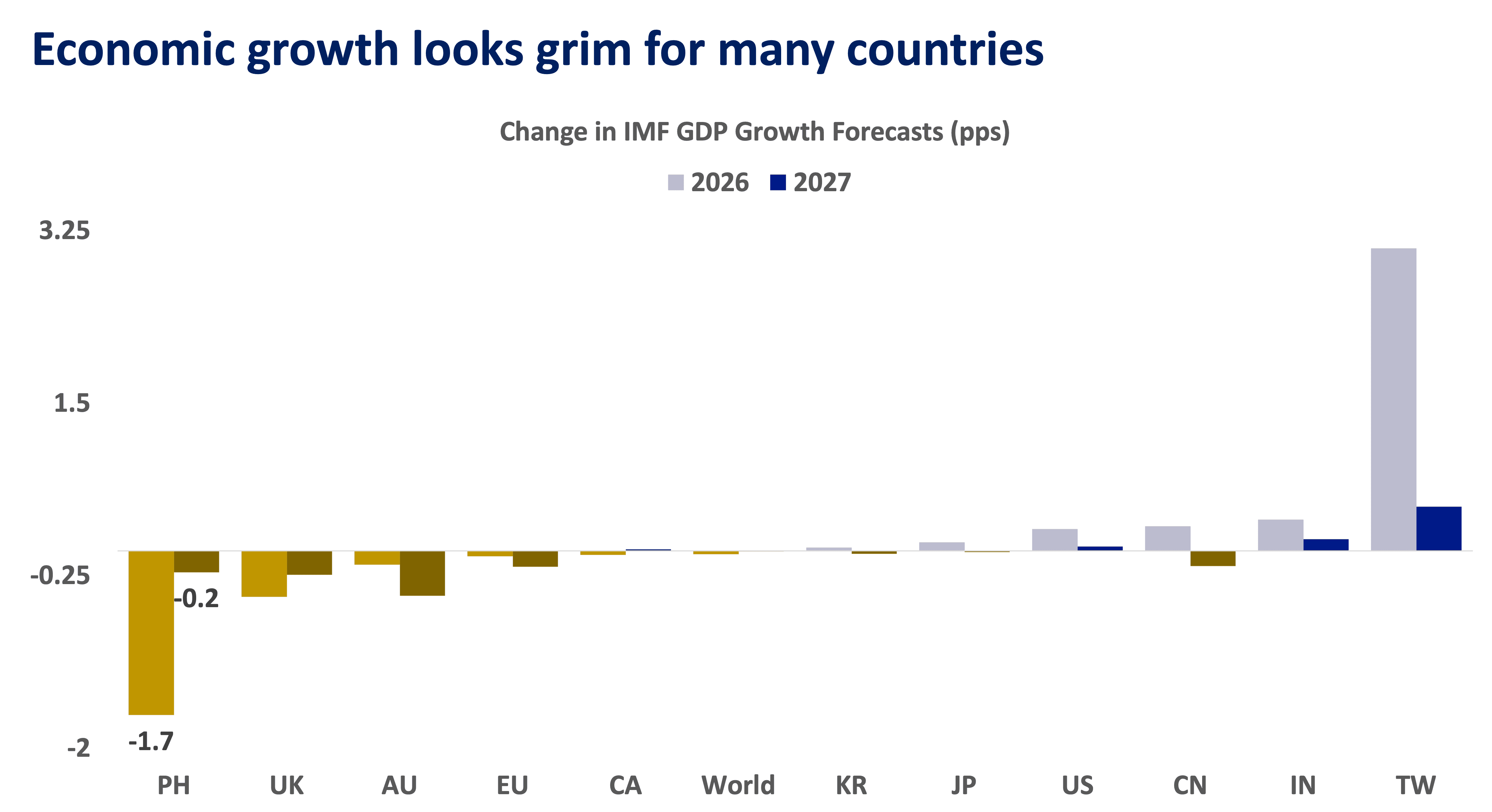
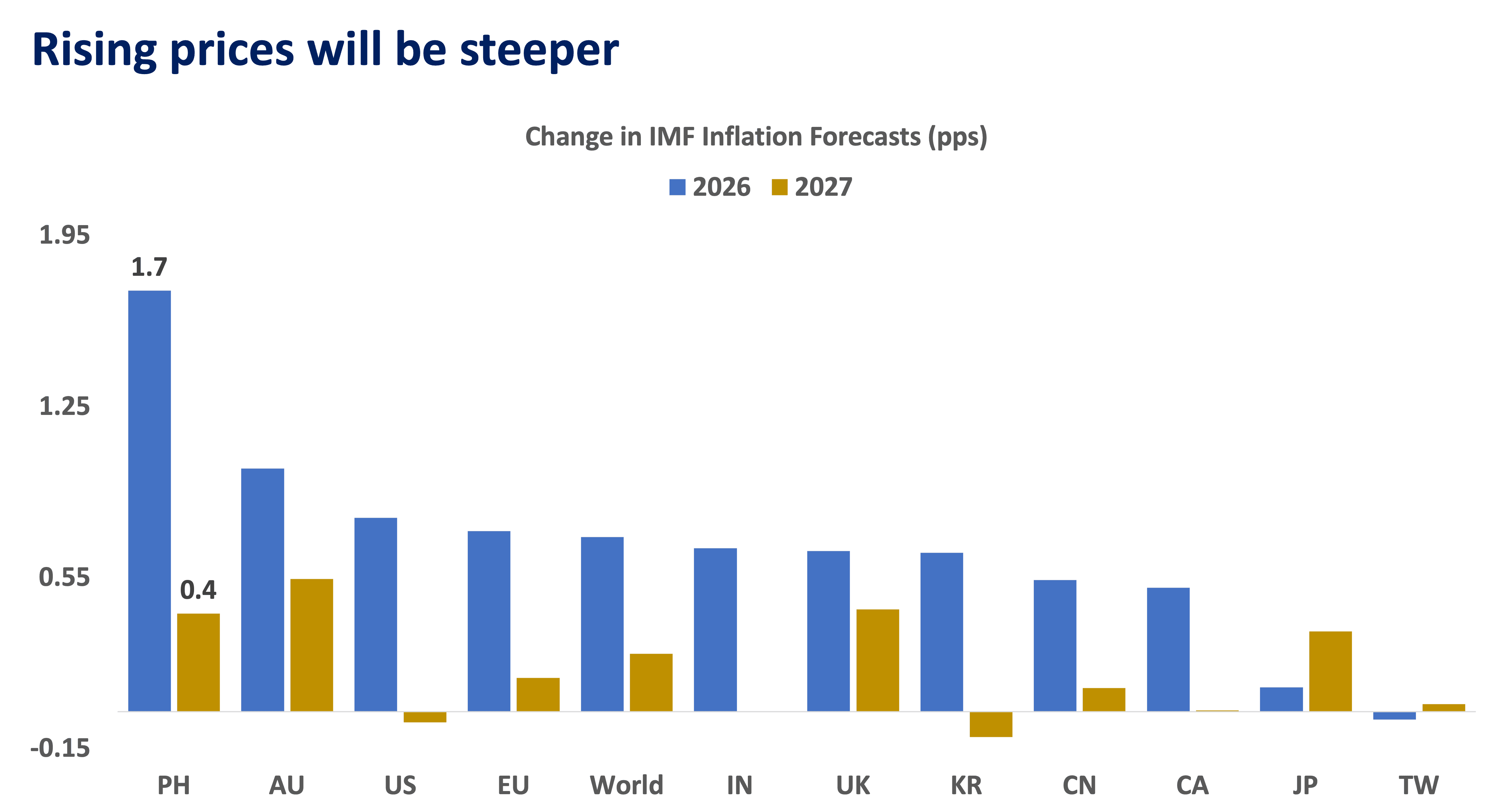
Higher energy and transportation costs are feeding into broader inflation. This raises the risk of stagflation—slower growth combined with elevated prices. Central banks may be forced to keep interest rates higher for longer, even as economic activity weakens.
The effects vary across countries. Energy exporters benefit from stronger revenues, while import-dependent economies face widening trade deficits, currency depreciation, and inflation pressures. Recent global forecasts already reflect slower growth and higher inflation, with some emerging markets particularly exposed.


Source: International Monetary Fund
Energy security concerns are influencing how countries manage the shift to cleaner energy. While high prices are encouraging investment in renewables, short-term supply risks are also pushing some economies back toward coal and other alternatives.
Countries such as South Korea, Taiwan, India, and parts of Europe are adjusting their energy mix based on availability and cost. This suggests that the transition to cleaner energy is becoming less predictable and more responsive to immediate constraints.
The conflict is also affecting geopolitical relationships. Differences in strategy have created strains among traditional allies, while military and financial resources are being redirected. These shifts are influencing global risk perceptions and investment flows.
Energy-exporting countries—and those less directly affected by the conflict—are gaining influence. In contrast, economies heavily reliant on imports are becoming more vulnerable to external shocks.
The current environment is creating clear winners and losers. Energy producers, shipping companies, defense firms, semiconductor providers, and safe-haven assets like gold are benefiting. Meanwhile, industries sensitive to fuel costs—such as airlines, consumer sectors, and manufacturing—are under pressure. Import-dependent economies and long-term bonds are also facing challenges.
Overall, energy has become more than a commodity—it is now a key factor in economic stability and geopolitical strength. While the system remains functional, it is undergoing a significant rebalancing. Future disruptions may not always lead to sharp price increases, but their broader economic impact could be deeper and more persistent.
ANNA DOMINIQUE CUDIA, MBA, CSS, is part of Metrobank Research, where she contributes to macroeconomic and financial market analysis for clients. She previously led the Markets Research Department of Metrobank’s Trust Banking Group and was part of Investor Relations, supporting multi-billion peso and US dollar capital-raising initiatives. She holds an MBA in Finance, with distinction, from the University of London, and industry certifications in finance. She is a naturally curious person and likes to travel here and abroad.