One often hears that higher oil prices have fueled the current inflation concerns. As a result, investors monitor the commodity to assess its impact on the broader economy. But what determines the price of oil in global markets?
What is crude oil?
When market players talk about oil prices, they usually refer to crude oil—the raw petroleum that gets shipped out after extraction for processing at refineries. The price of a single barrel of crude is tracked every trading day.
Brent crude is widely considered the global benchmark when pricing a barrel of oil. But investors also track others like West Texas Intermediate (WTI) and Dubai crude. They differ in where the oil is sourced and delivered, which explains differences in price levels.
Dubai crude is typically seen as the more accurate benchmark for oil imported by the Philippines, which sources most of its petroleum from the Middle East.
All crude is largely shaped by the same supply and demand dynamics, regardless of where it came from. Different oil benchmarks usually move in lockstep.
The supply side
Oil is essential for major economies. As such, oil prices rise when supply and trade of the commodity is disrupted.
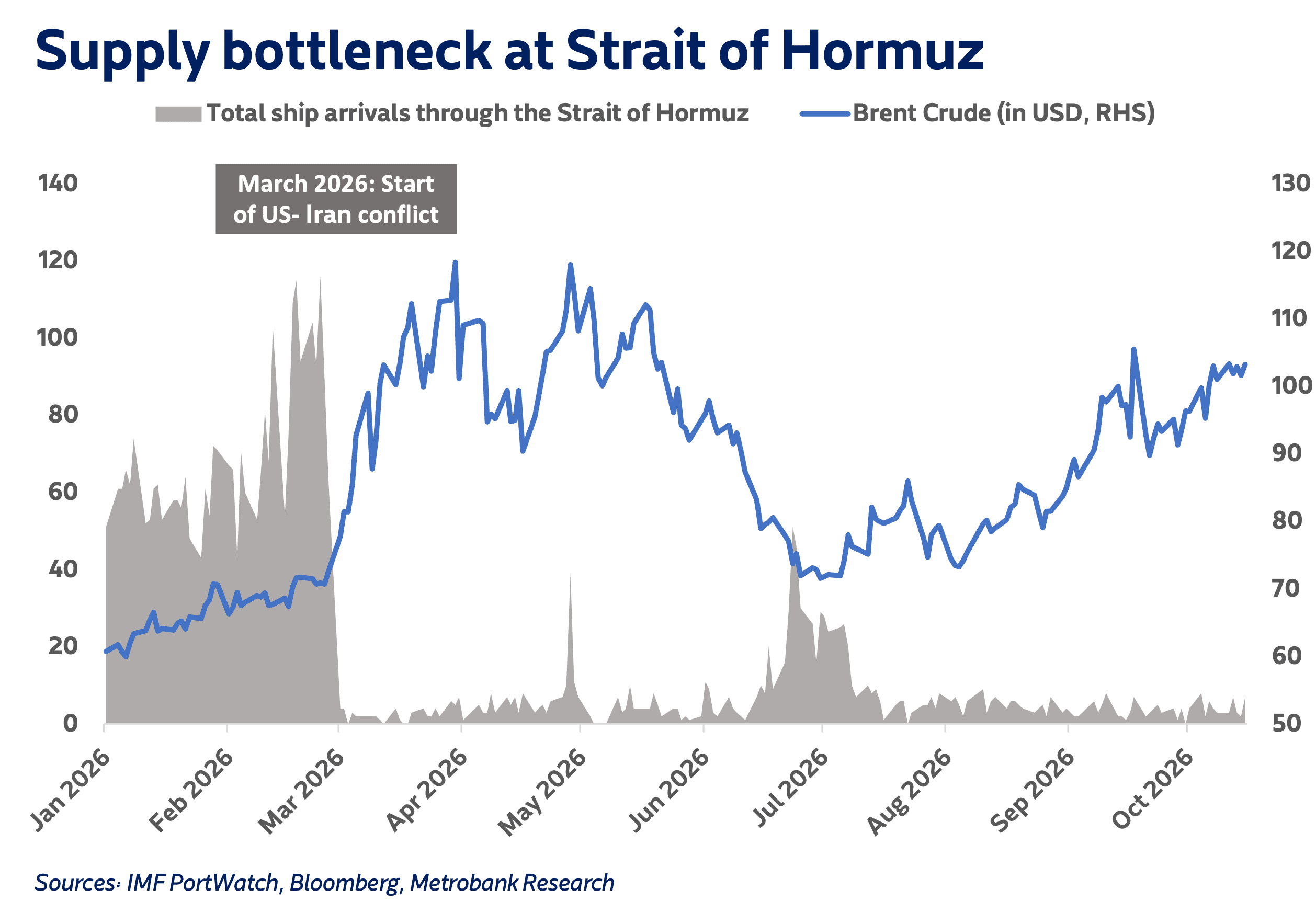
Market players reflected the upending of global oil trade due to the US-Iran conflict in early 2026, as transit through the Strait of Hormuz—which pre-conflict shepherded roughly 20% of the world’s oil shipments—ground to a near halt.
From averaging USD 60-70 pre-conflict, Brent crude rose to USD 100 per barrel less than a month after the conflict’s eruption. A similar episode occurred at the onset of the Russia-Ukraine conflict in 2022.
Statements by the Organization of the Petroleum Exporting Countries and its allies, or OPEC+, are also watched closely. Composed of some of the world’s largest petroleum-producing states, it sets oil production targets.
Typically, news of increased production lowers oil prices, while decreased production pushes prices upward. However, these adjustments may have minimal impact if geopolitical conditions stunt physical trade of the commodity.
Demand factors
Though not as common, changes in consumer behavior may affect the price of oil.
An example is the COVID-19 pandemic. With consumers stuck at home and firms halting production, global demand for petroleum dropped drastically. Crude prices reflected this, with Brent crude reaching as low as USD 20 per barrel.
Wider adoption of renewable energy may provide a more long-term backdrop for gradually easing oil demand. However, this shift still has not been material enough to offset current global demand.
Some sentiment involved
Like other assets, oil markets tend to be forward-looking. Because of this, geopolitical developments may also influence the commodity’s price ahead of any actual changes in physical supply.
Upon the announcement of an initial peace deal between the US and Iran in July 2026, oil prices fell, as market players priced in an eventual full reopening of the Strait of Hormuz.
This was quickly undone, however, when military hostilities reignited in the Middle East, and Brent crude rose to USD 100 per barrel territory anew.
What to look out for
Geopolitics may remain the main drivers of oil prices in the near term. Even in the event that the Strait of Hormuz reopens and oil transit regains traction, the conflict’s impact on Middle Eastern oil facilities may keep production subdued in the medium term and the commodity’s price relatively elevated.
Domestically, the Philippines, a major energy importer, is one of the more vulnerable countries when oil prices spike. Higher global oil prices push gasoline prices and agricultural costs higher, seeping into the cost of most other goods and services.
Related article: More than oil: The US-Iran conflict’s cost for the Philippines
These fan inflation, which affects investments in local and global financial markets. It then becomes important to ensure your portfolio remains resilient to external shocks linked to global oil markets.
(Metrobank Wealth Manager gives you access to fixed income investment opportunities, supported by expert insights. Speak with your Relationship Manager, Wealth Specialist, or Markets Sales Personnel to discover fixed income solutions that match your investment objectives and risk profile. )