US-Iran conflict shows remittances’ vulnerability to shocks


Remittances from overseas Filipinos grew at its slowest in nearly four years in April.
Inflation arrests purchasing power, possibly limiting the impact of the higher peso value of remittances.
Global politics and economic developments continue to largely impact the Philippine economy.
An army of overseas workers has helped fuel the Philippines’ growth.
The money they send back home supports their family, boosts consumption, and, as of last year, equals nearly one-tenth of the country’s economy. Now, the US-Iran conflict—like past global shocks—tests overseas Filipino remittances.
Over a million Filipinos worked in the Middle East last year, migrant workers department’s preliminary data show. Together, they are about half of total land-based Filipino labor deployed abroad.
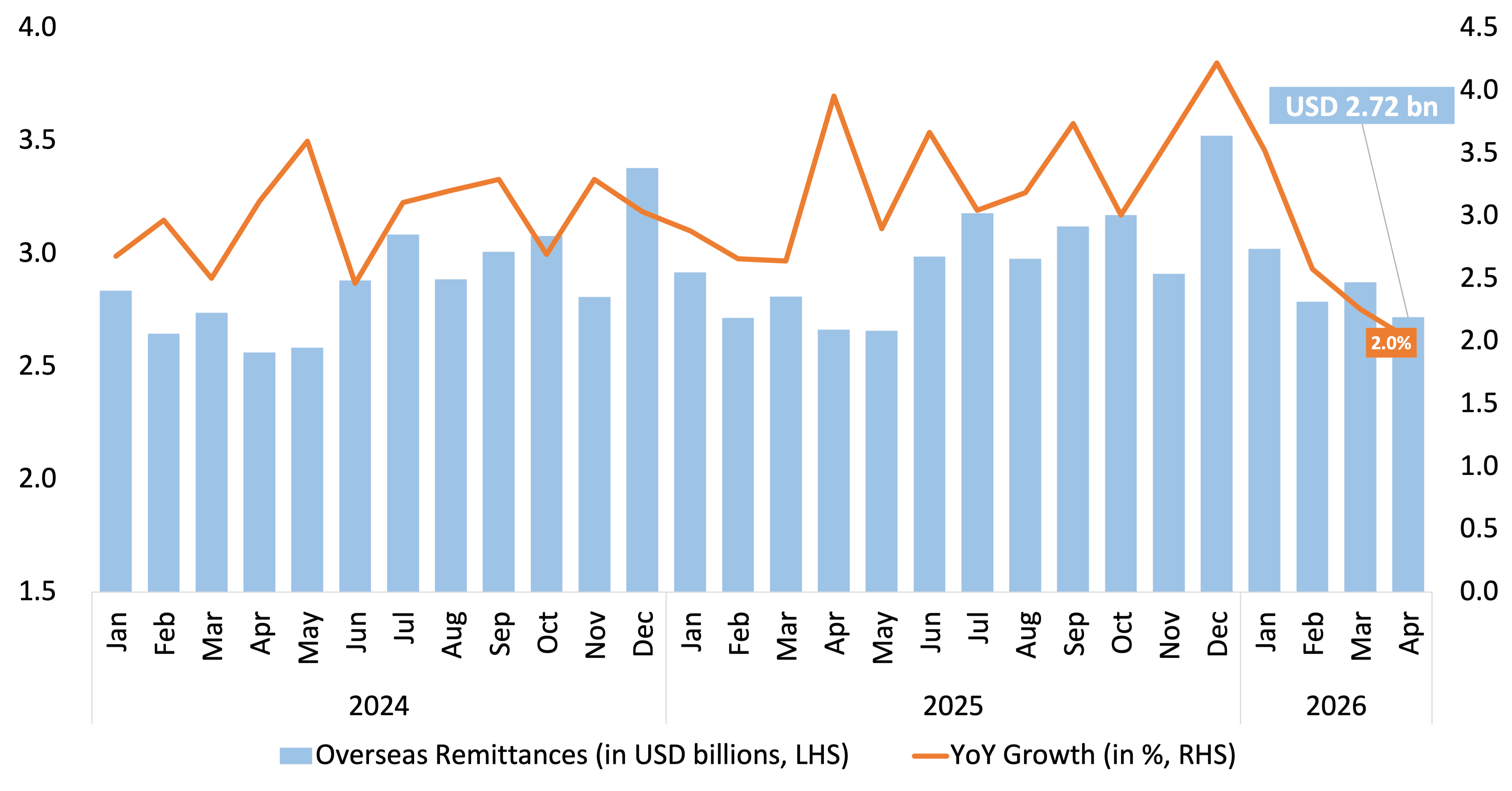
The conflict’s escalation risked the livelihood of Filipinos in the region and led to the repatriation of more than 10,000 as of May. Central bank data show remittances in US dollars grew at its slowest pace in nearly four years in April, two months since the conflict erupted.

Source: Bangko Sentral ng Pilipinas
With tensions continuing to rattle the global economy, how much support can the Philippines still expect from overseas remittances?
The US-Iran conflict exposes the vulnerability of Filipino workers and remittances to shocks, with April’s remittance growth of 2.0% year-on-year (YoY) being the slowest since 2022.

Source: Bangko Sentral ng Pilipinas
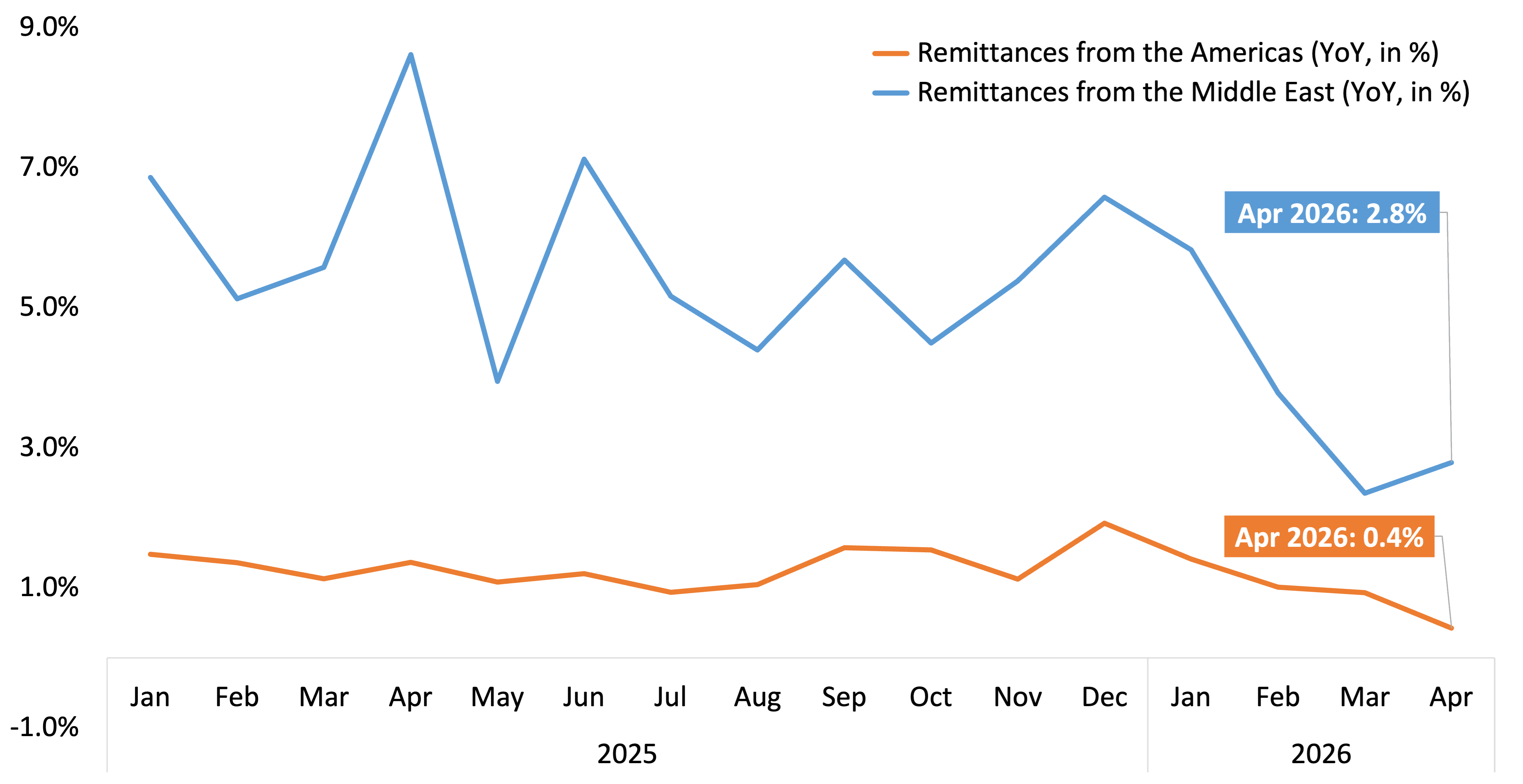
This may be attributed to sluggish growth in remittances from the Middle East and the US. Remittances from the Middle East grew by only 2.8% YoY in April, despite averaging 5.5% growth in the two years prior, according to central bank data.
Remittance growth slowdown from the Middle East may also explain the dollar flows from the US, since many overseas Filipinos course their remittances through US-based correspondent banks. Remittances from the US grew 0.4%.
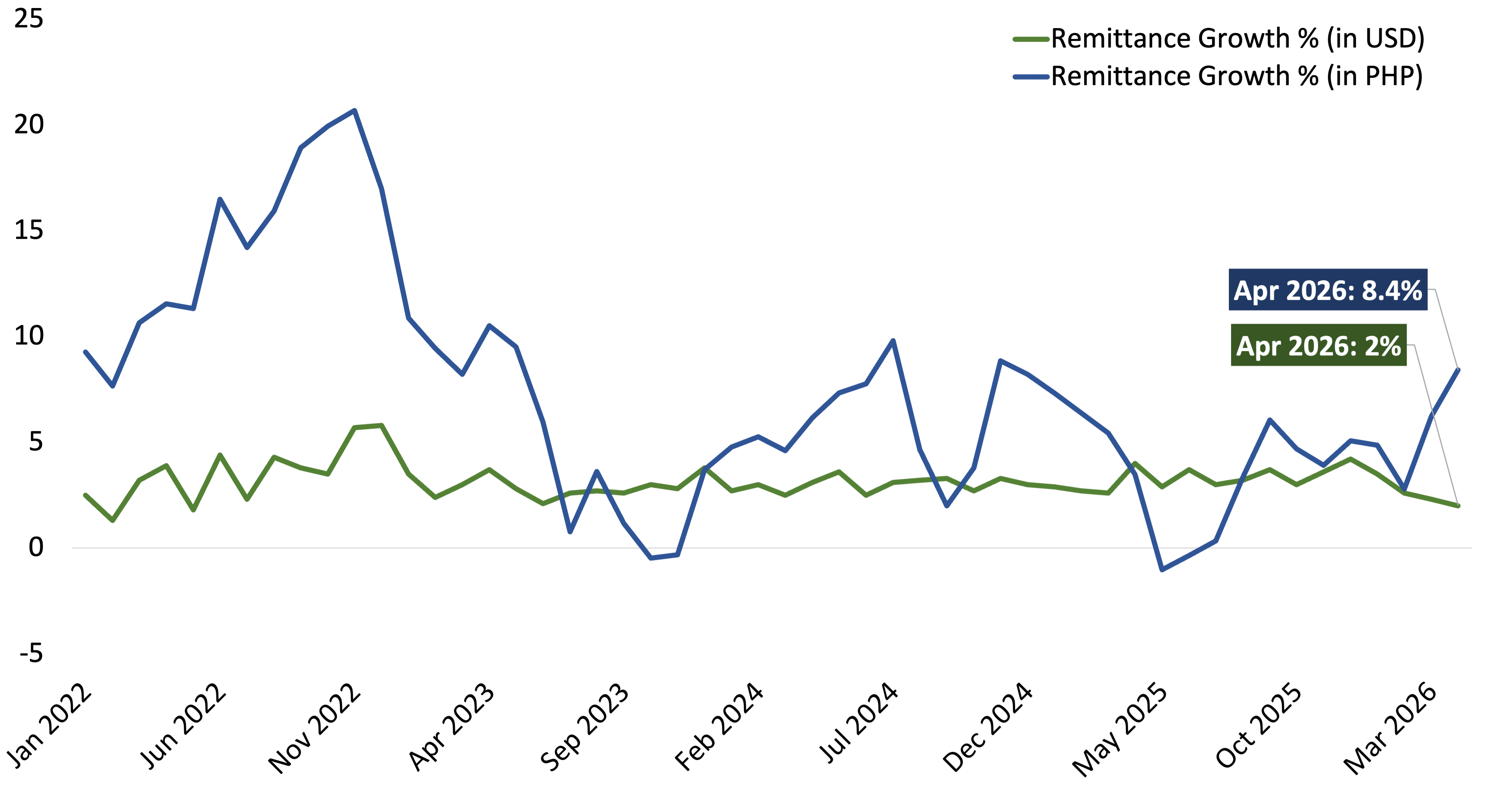
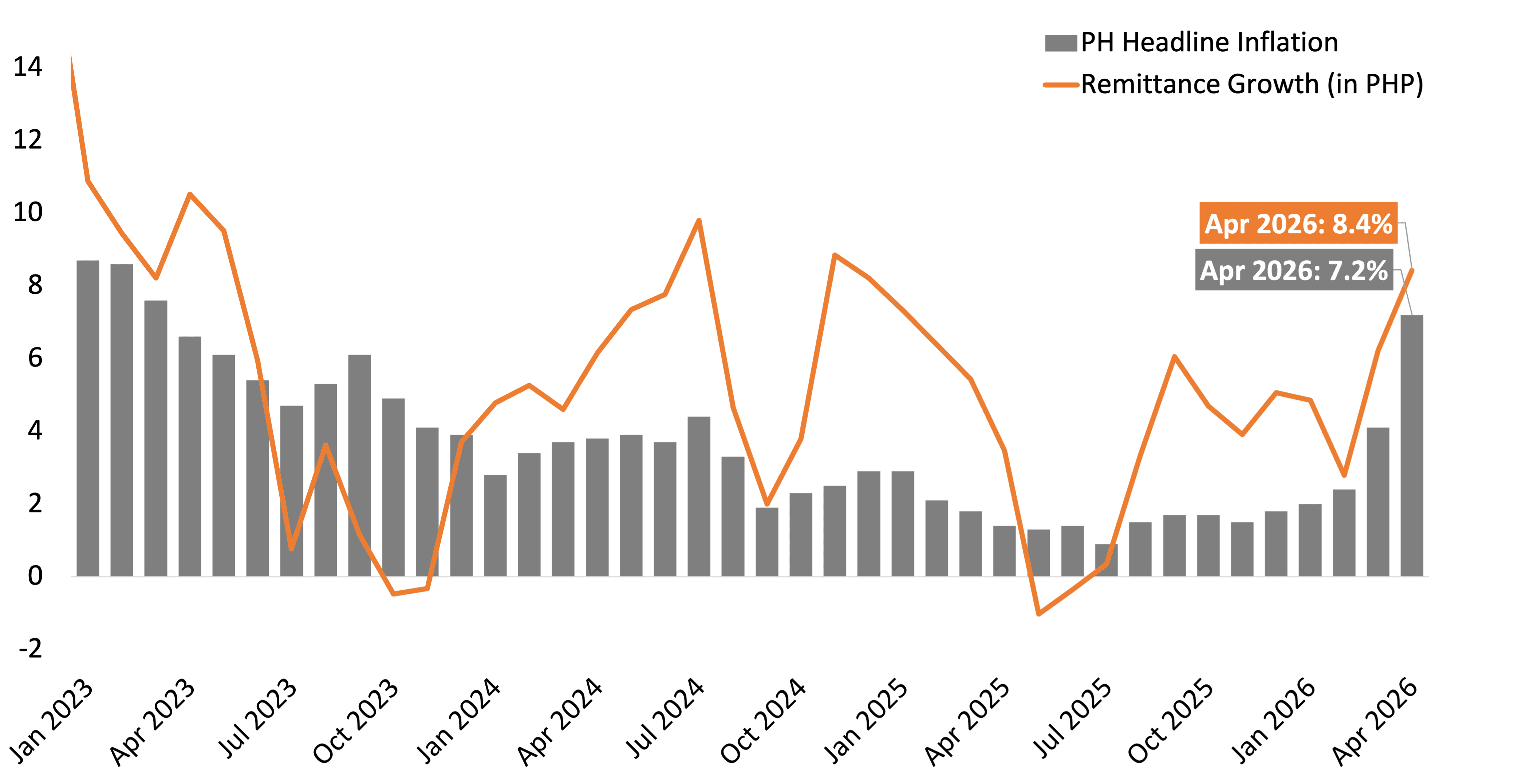
In terms of peso value, cash remittances grew by a quicker 8.4% in April as the peso depreciated against the dollar. This may have allowed overseas Filipinos to sustain support for their families back home.
The USD/PHP rate breached the 60-level shortly as the conflict escalated, reaching a record 61.75.

Source: Bangko Sentral ng Pilipinas, Bloomberg, Metrobank Research
Note: Foreign exchange conversion was average USD/PHP per month
Remittance-receiving households, however, will be challenged by fast inflation.
The Middle East crisis fanned the price of oil globally due to the closure of the Strait of Hormuz, a critical passage for global oil shipments. Expensive oil has stoked costs for basic food items and utilities domestically.
Even with recent peace talks and the strait’s planned reopening, oil supply is expected to stay constricted for a while.
For remittance-receiving households, any growth in peso remittances may be offset by higher prices. Over half of them allocate at least 75% of the funds they get on consumption, the statistic agency’s 2024 Survey of Overseas Filipinos show.

Source: Bangko Sentral ng Pilipinas, Philippine Statistics Authority
Most will feel the strain of inflation, as their purchasing power erodes. This may temper overall consumption growth this year.
Remittances tend to cushion the exchange rate, as dollar inflows prop up the peso. This typically manifests most in the fourth quarter, when bulk of holiday remittances and bonuses for the nation’s outsourcing employees arrive.
While this will likely continue this year, the extent of peso appreciation may be limited by other factors.
The Philippines’ current account balance, which measures the difference between dollars entering and exiting the country, is seen remaining in deficit this year largely due to costlier imports.
Related article: Why USD/PHP is at levels never seen before
Moreover, foreign direct investments to the Philippines contracted YoY in the first quarter of 2026, central bank data show.
Global uncertainties arising from the conflict and subdued domestic economic growth expectations are expected to keep foreign investments soft for the rest of the year.
These point toward sustained peso weakness in the near-term. While remittances may help support the peso toward the year-end, it may be a while before we see USD/PHP move below the 60-level in the current economic environment.
While remittances form a pillar of the Philippine economy, broader global geopolitical and macroeconomic developments also cloud the nation’s outlook—impacting inflation, consumption, and the current account.
As global tensions persist and the environment continues to be unpredictable, remittances to the Philippines will continue to be tested.
JOAQUIM PANTANOSAS is a Research Officer of the Macro Research Department, Markets Advisory Division, Financial Markets Sector, at Metrobank. He holds a BS in Statistics from the University of the Philippines-Diliman, where he developed an interest in quantitative research as a tool for complex problem-solving. He enjoys a good laugh with the people he cares about.