What the canceled Treasury bond auction is telling investors
The cancellation of a highly anticipated Treasury bond auction offers valuable clues about interest rates, market sentiment, and the government's borrowing strategy.
September 22, 2026 by Anna Cudia
Share this article:
Share this article:
The market had widely anticipated a large issuance, potentially a new 5-year Fixed Rate Treasury Note (FXTN). Instead, the auction was canceled, drawing attention from fixed-income investors. Large benchmark issuances are important because they allow the government to raise significant funding efficiently while improving liquidity in the secondary market.
The more important story, however, is not the cancellation itself but what it reveals about current market conditions and government financing strategy.
Rising yields changed the equation
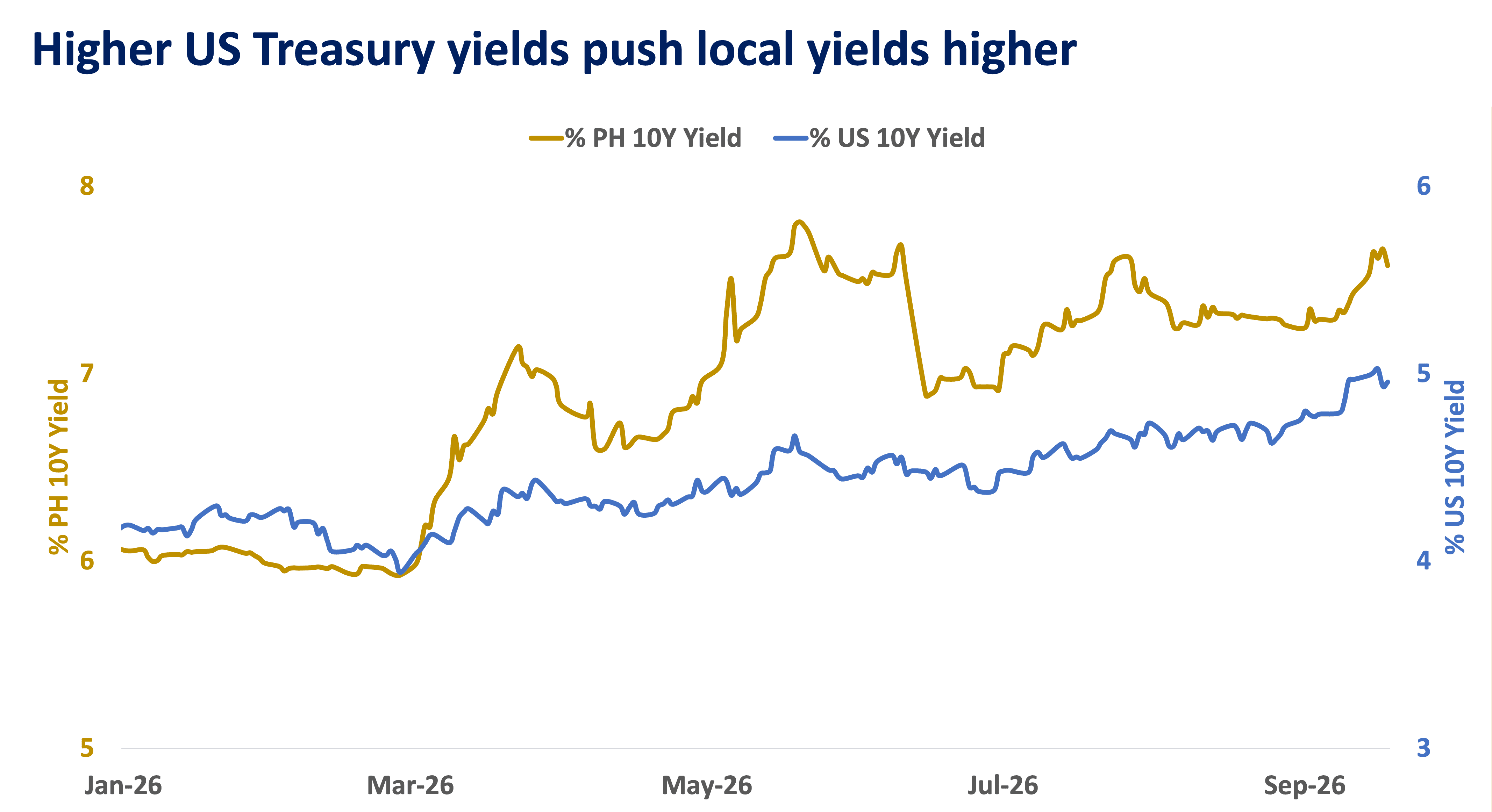
The Bureau of the Treasury's decision to postpone the auction was broadly consistent with prevailing market conditions. Philippine government bond yields have been trending higher in recent months, increasing the cost of long-term borrowing. Like companies and households, governments generally prefer to avoid locking in funding when borrowing costs rise sharply.
Source: Bloomberg
Bond yields rarely move because of a single factor. Higher US Treasury yields, persistent inflation concerns, elevated energy prices, geopolitical uncertainty, and expectations for tighter monetary policy have all contributed to upward pressure on local yields. Fiscal considerations, such as wider deficits or larger funding requirements, can have a similar effect.
The decision suggests that the government retains sufficient funding flexibility and may prefer to wait for more favorable borrowing conditions rather than lock in elevated long-term rates.
Why the Treasury can afford to wait
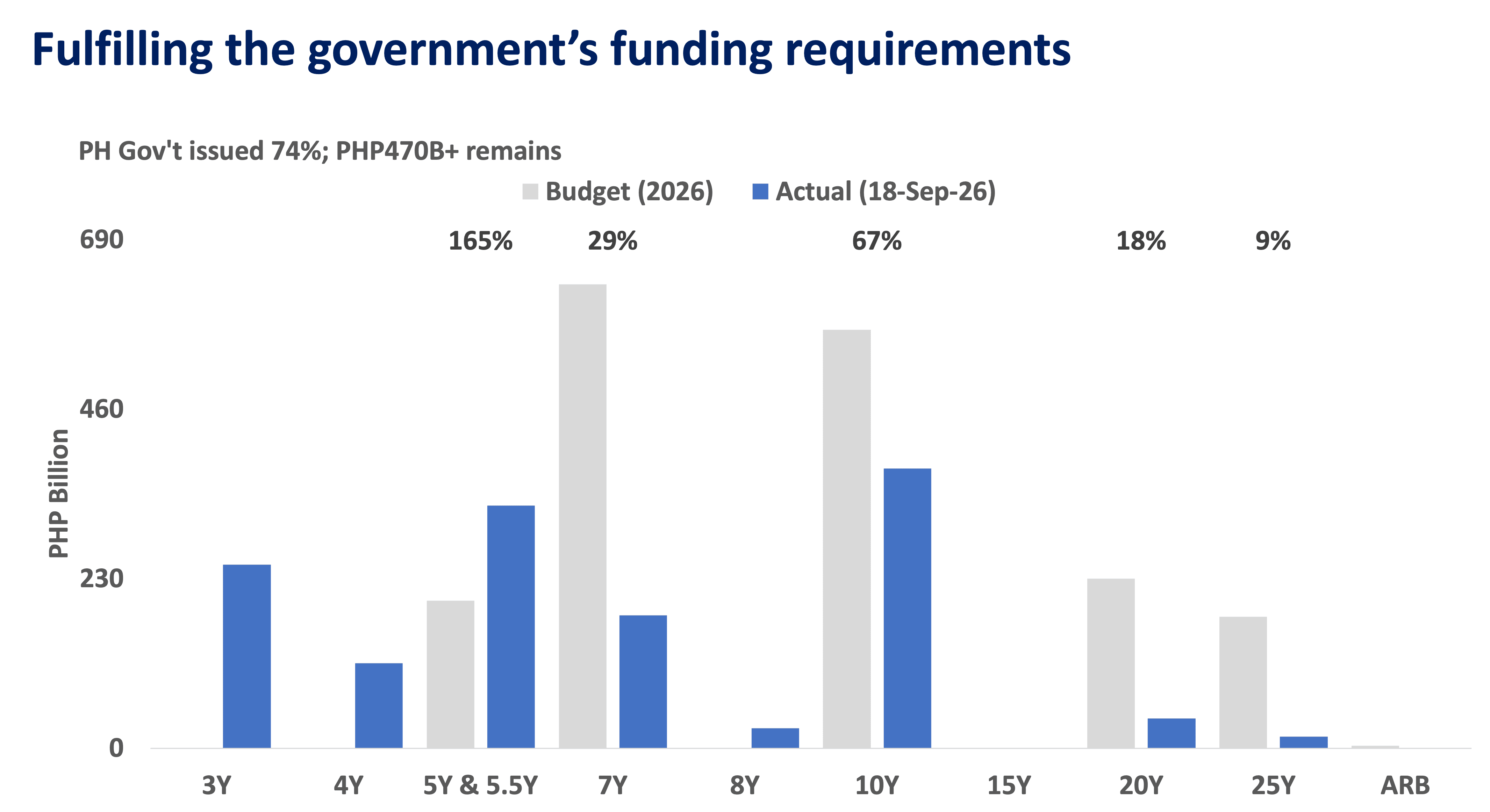
The cancellation should be viewed in the context of the government's broader borrowing program. If funding targets are largely being met, the Treasury has greater flexibility to postpone issuance rather than accept higher borrowing costs.
Sources: Department of Budget and Management, Bureau of the Treasury, Metrobank Treasury Group
With a significant portion of annual funding requirements already raised, the Treasury appears to have some room to adjust its issuance mix without materially affecting its overall financing program.
The government's funding position suggests that borrowing decisions are not being made in isolation. When financing requirements are manageable and alternative funding sources remain available, the Treasury gains the flexibility to be more selective about timing, tenor, and pricing.
This flexibility becomes particularly valuable when bond yields are elevated, allowing the government to wait for more favorable market conditions.
What it could mean for a future RTB
The Department of Finance has previously indicated interest in a potential Retail Treasury Bond (RTB) issuance in the second half of 2026. Unlike institutional jumbo offerings, RTBs are marketed to retail investors, where demand is less yield-volatile. This makes them a more attractive option than more expensive institutional borrowing.
Market conditions, investor appetite, and funding costs will likely influence the timing and structure of any future offering. The postponement may heighten focus on future retail funding options, particularly if market conditions improve and investor demand remains resilient.
Inflation. Persistent inflation tends to place upward pressure on bond yields and borrowing costs.
BSP policy expectations. Future policy decisions influence rate expectations across the yield curve. A higher-for-longer scenario indicates appealing short-term cash or T-bill yields for now.
Global yields. Movements in US Treasury yields continue to influence local fixed-income markets. If that eventually leads to the return of the 5-year note auction, it could present a favorable entry point for multi-year coupons.
Beyond the canceled auction
The cancellation of the planned 5‑year issuance highlights how quickly borrowing conditions can change in a volatile environment. Rather than signaling weakness, the decision reflects the government's flexibility in managing its borrowing program.
For investors, the more relevant question is not whether an auction was canceled, but what conditions need to improve before the government finds it attractive to return with a larger benchmark issuance.
(Looking to generate regular income and diversify your portfolio? Metrobank Wealth Manager gives you access to fixed income investment opportunities, supported by expert insights and personalized guidance. Speak with your Relationship Manager, Wealth Specialist, or Markets Sales Personnel to discover fixed income solutions that match your investment objectives and risk profile.)
(Disclaimer: This is general investment information only and does not constitute an offer or guarantee, with all investment decisions made at your own risk. The bank takes no responsibility for any potential losses.)
ANNA DOMINIQUE CUDIA, MBA, CSS, oversees Metrobank’s Macro Research Department, steering macroeconomic and financial market analyses for clients. She previously led the Markets Research Department of Metrobank’s Trust Banking Group and was part of Investor Relations, supporting multi-billion peso and US dollar capital-raising initiatives. She holds an MBA in Finance, with distinction, from the University of London, and industry certifications in finance. Outside of work, she enjoys travel and exploring new perspectives.