


Investment Tips 4 MIN READ
Time Deposits vs. Treasury Bills: Where to Park Your Money?
Choosing between a Time Deposit and a Treasury Bill? Here’s what you need to know
November 19, 2025 by Maria Christina Virtudazo
Share this article:
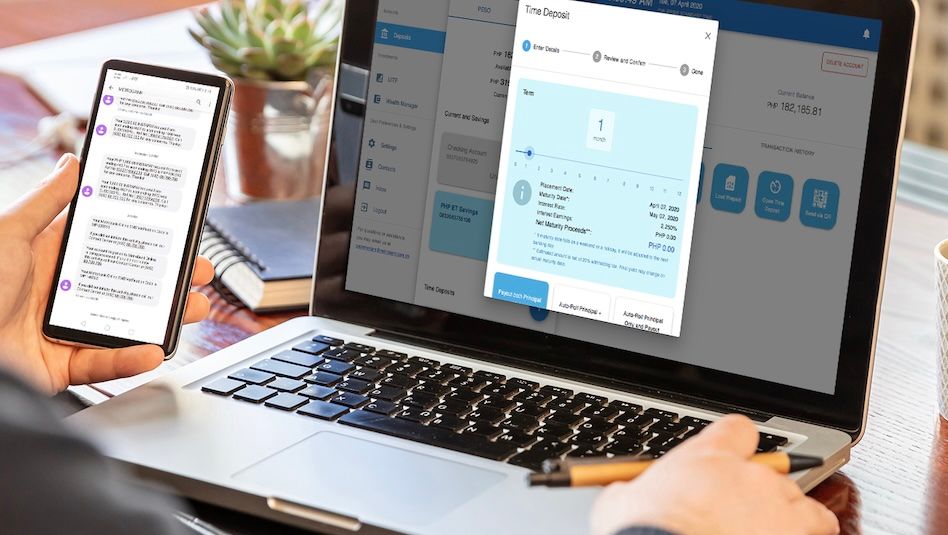
When it comes to finding a good parking spot for your idle cash to earn modest interest safely, two financial products often come up — Time Deposits and Treasury Bills. Both are favorites among conservative investors who want stable returns and peace of mind. But which one suits you best? Let’s find out.
A Time Deposit (TD) is a type of deposit product available through banks where you agree to keep your money locked in for a set period. This holding period can range from 30 to 364 days for short-term deposits, and one to five years for long-term options.
In exchange for keeping your funds in the institution, the bank pays the depositors a fixed interest rate. For example, Metrobank pays 4.125%–4.500% per annum (p.a.), depending on the deposit amount and term, through its Online Time Deposit facility. Interest earned is subject to a 20% final withholding tax, which is automatically deducted by the bank.
TDs are considered one of the safest investment options available in the financial market, as they are protected by the Philippine Deposit Insurance Corporation (PDIC) for up to PHP 1,000,000 per depositor per bank.
However, unlike regular savings deposit accounts, funds in a TD cannot be withdrawn freely before maturity. Otherwise, early withdrawal will result in pre-termination penalties.
A Treasury Bill (T-Bill) is a short-term fixed income security issued by the national government. In the Philippines, government securities such as T-Bills are issued by the Bureau of the Treasury (BTr). Their maturity profiles are typically 91-days, 182-days, and 364-days.
T-Bills are sold at a discount, which means investors buy them for less than their face value and receive the full amount at maturity. The difference between the face value and purchase amount will be your earned interest, which is also subject to a 20% final tax.
These securities can be accessed through banks like Metrobank, online investment platforms such as Metrobank’s Wealth Manager, or licensed brokers. Given that they are fully backed by the national government, T-Bills are considered virtually “risk-free” from default, and often serve as a benchmark for short-term interest rates.
Unlike TDs, T-Bills have no holding period, meaning investors can freely sell these securities to the secondary market. However, the selling price in the secondary market may result in a gain or loss, depending on prevailing interest rates. Additionally, once sold in the secondary market, investors forfeit the right to redeem the full face value at maturity.
As shown in the table above, T-Bills generally offer slightly higher yields than TDs, due to prevailing market rates and monetary policy trends. TDs, on the other hand, offer predictable returns and greater simplicity — suitable for investors who prefer a more hands-off approach.
Which one suits you best?
Having said all this, it all boils down to one question: Which one suits you best? The right choice depends on your financial goals and preferences.
If you want:
Then, choose Time Deposits.
If you want:
Then, choose Treasury Bills.
Conclusion
Both TDs and T-Bills are excellent choices for low-risk investments that can protect your capital while generating modest income.
In a volatile market, these instruments serve as a strong foundation for a balanced portfolio — steady, secure, and quietly compounding over time.
Once you have identified which product suits your preferences, getting started is easy. You can conveniently open a Time Deposit through the Metrobank App, Metrobank Online or Earnest App, or buy and sell Treasury Bills online via Wealth Manager by Metrobank — all in just a few taps.
If you wish to know more about Metrobank’s Online Time Deposits, you click here. To sign up to Wealth Manager to buy Treasury Bills and have access to Wealth Insights exclusive content, click here.
For a more personalized guidance, reach out to your investment specialist or relationship manager today.
MARIA CHRISTINA “YNA” VIRTUDAZO is an Investment Counselor at Metrobank’s Institutional Investors Coverage Division. Her work involves analyzing High Net Worth clients’ portfolios and providing actionable insights and recommendations to better enhance their portfolios’ overall returns. She is a licensed Fixed Income Market Salesperson of the Securities and Exchange Commission and a certified Unit Investment Trust Fund (UITF) salesperson. She graduated with a bachelor’s degree in business administration from the University of the Philippines – Diliman. She spends her free time listening to K-pop, writing fanfiction, and watching Netflix series and K-dramas.